Article

Energy Consumption of Electric Vehicles in Europe

1
Environmental Planning and Technology Department, Umwelt-Campus Birkenfeld, University of Applied Sciences Trier, P.O. Box 1380, 55761 Birkenfeld, Germany
2
Department of Mechanical Engineering, Colorado School of Mines, 1610 Illinois Street, Golden, CO 80401, USA
*
Authors to whom correspondence should be addressed.
Sustainability 2024, 16(17), 7529; https://doi.org/10.3390/su16177529
Submission received: 26 June 2024 / Revised: 19 August 2024 / Accepted: 21 August 2024 / Published: 30 August 2024

Abstract

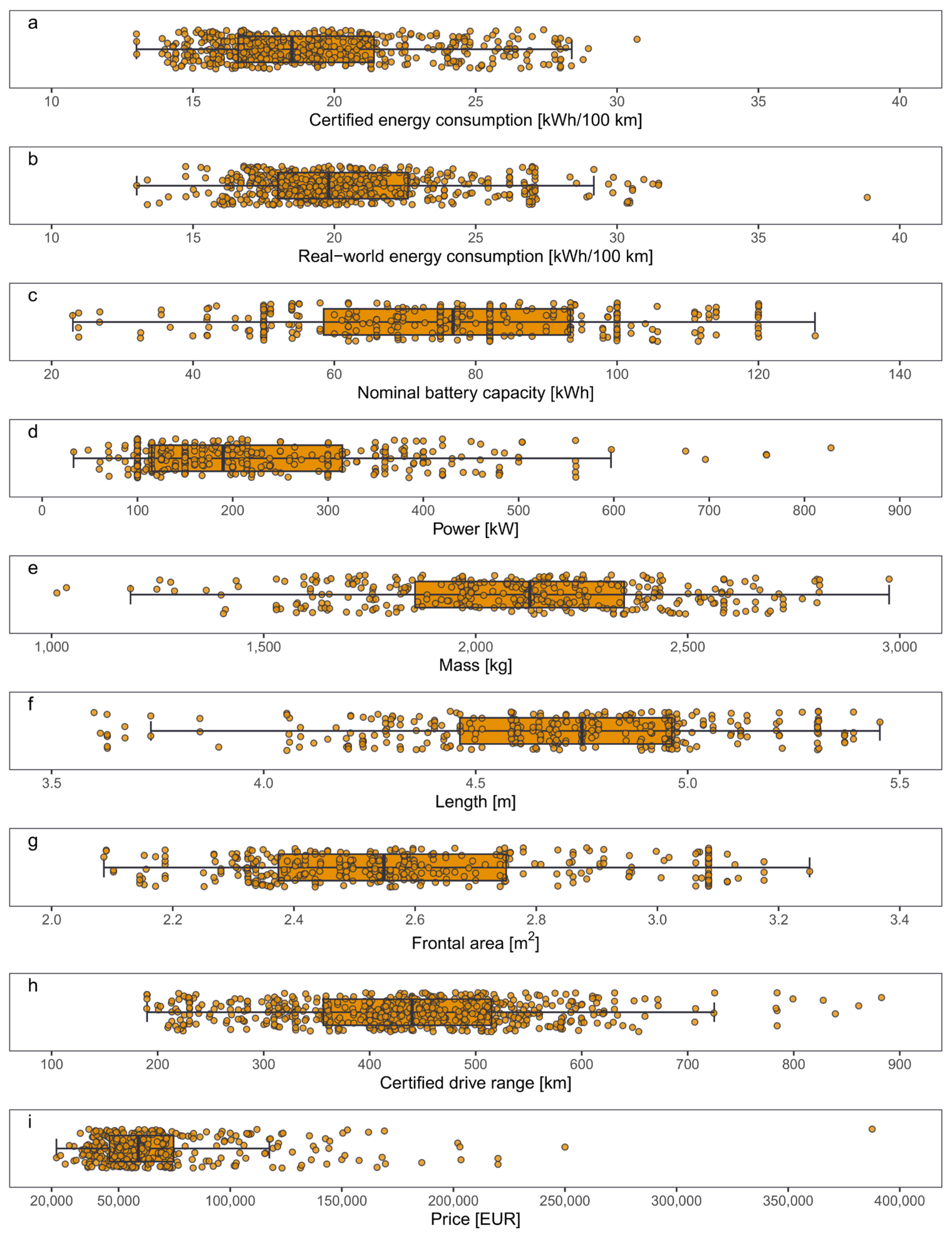
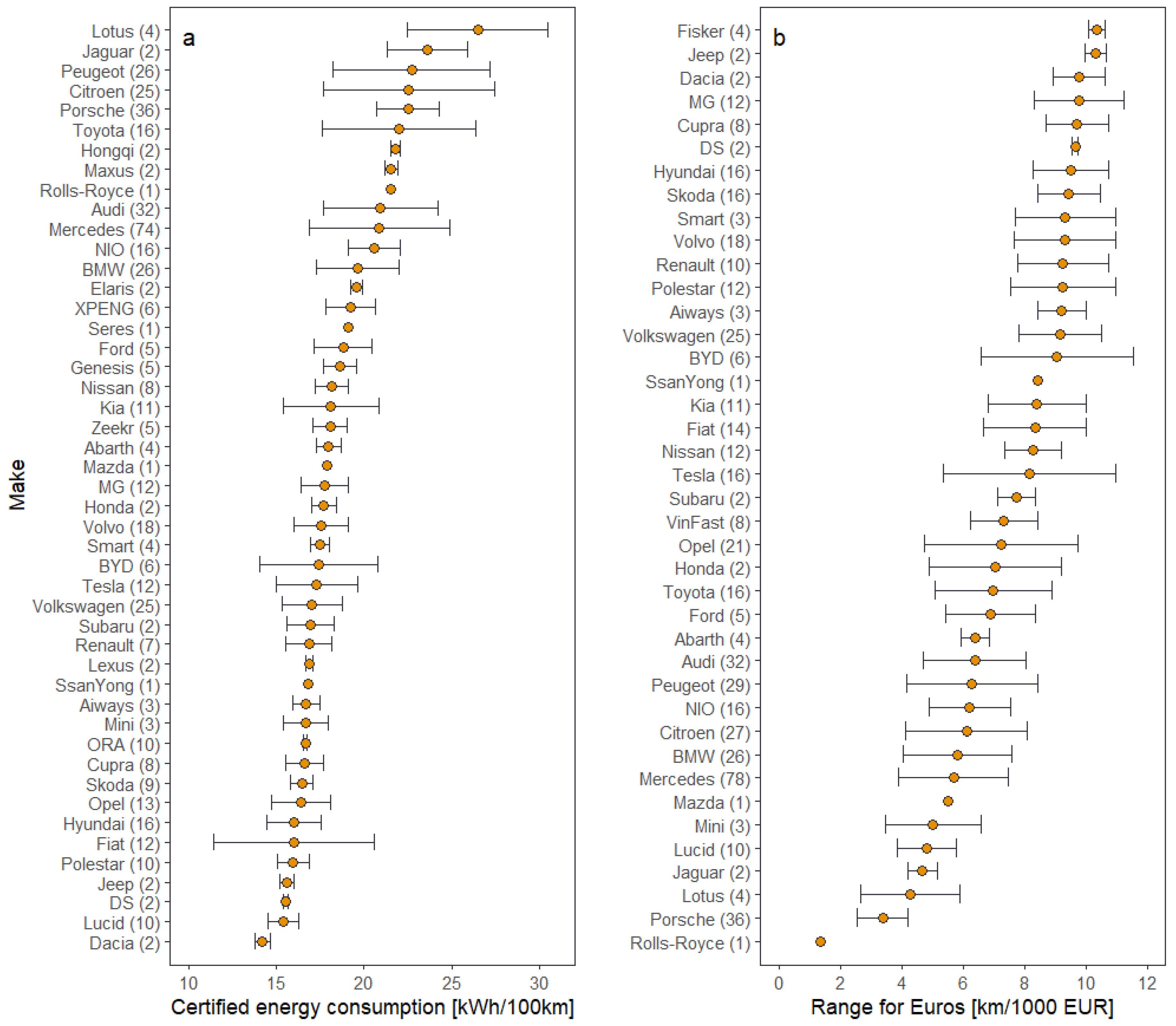
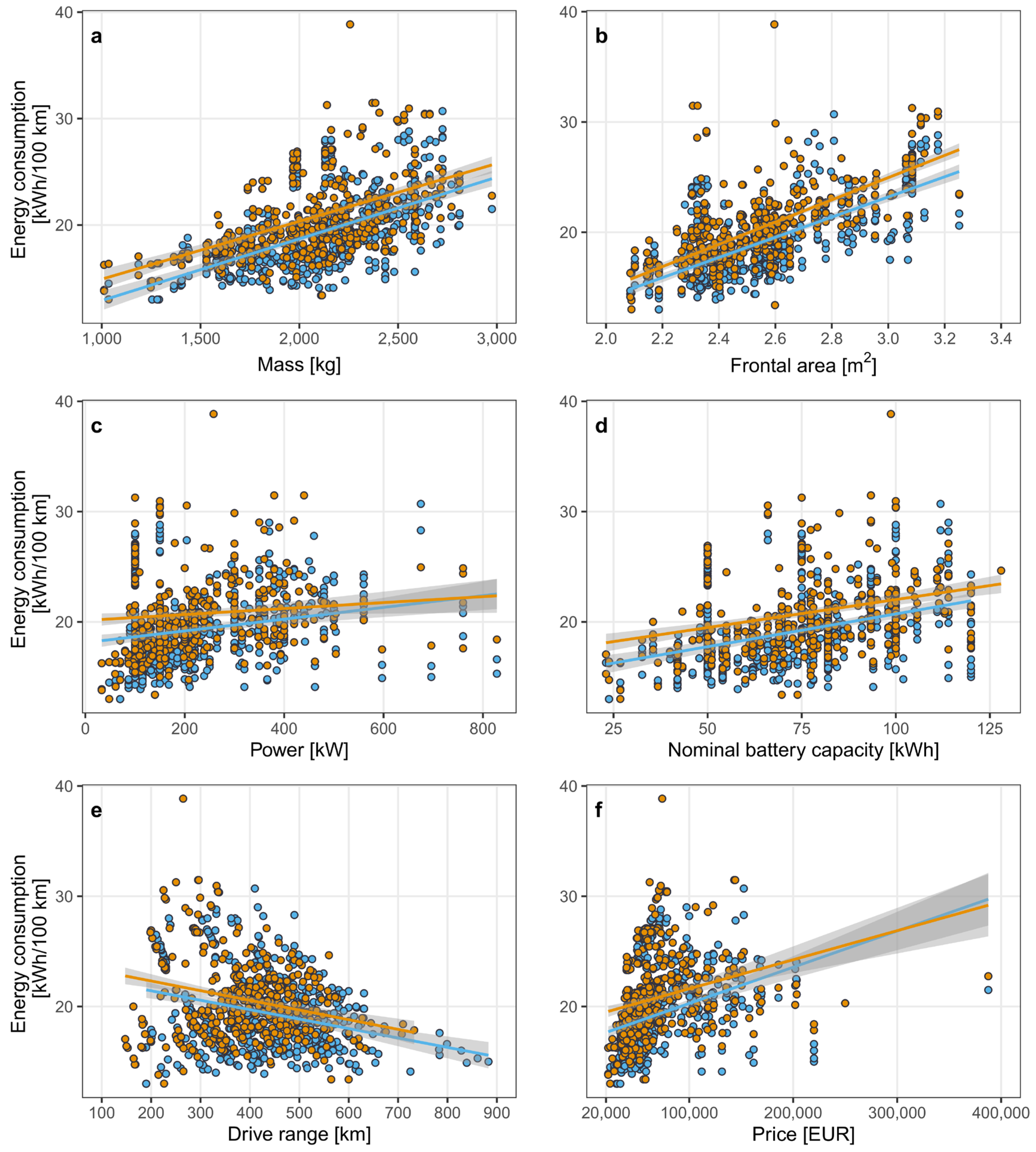
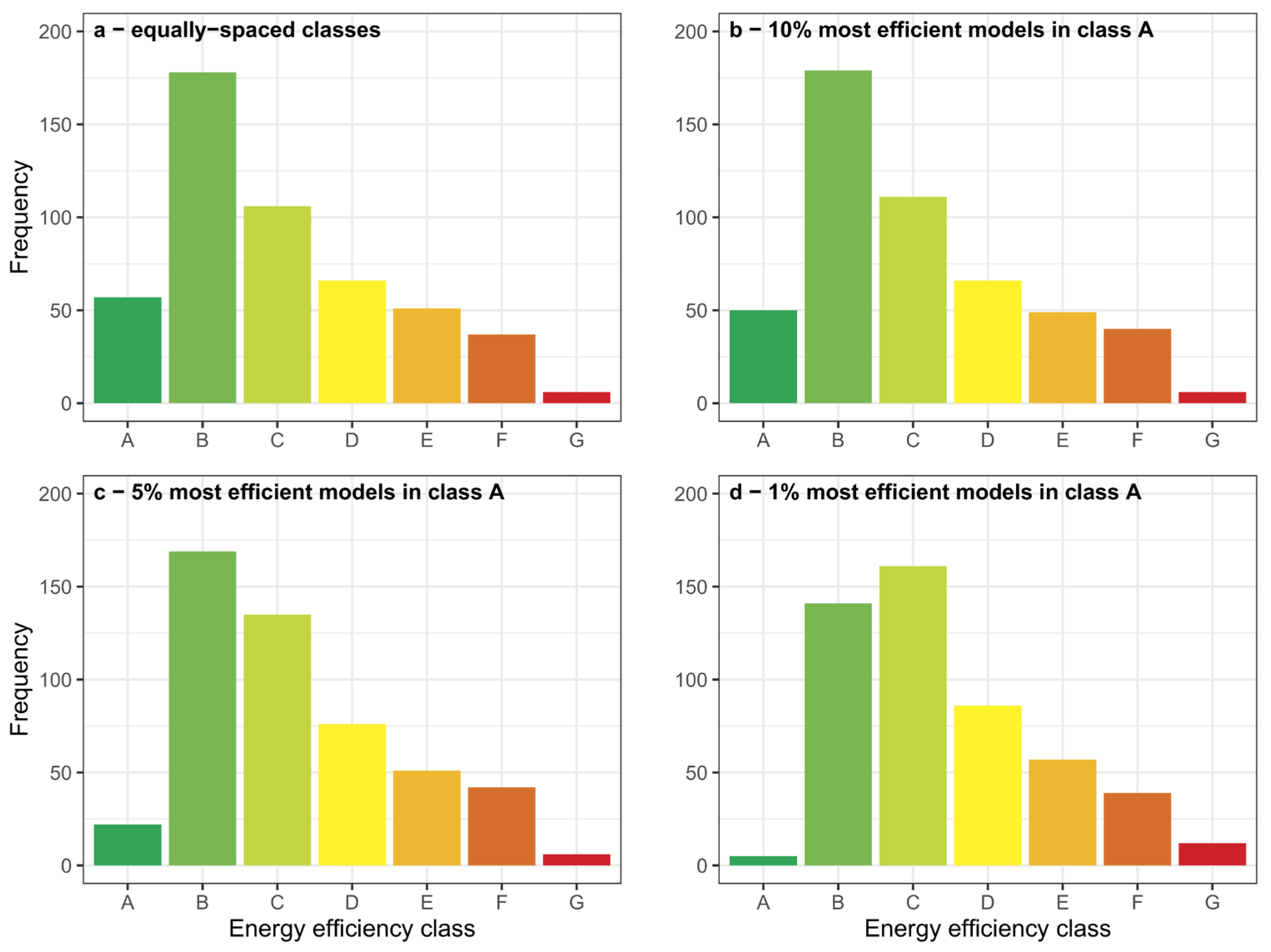
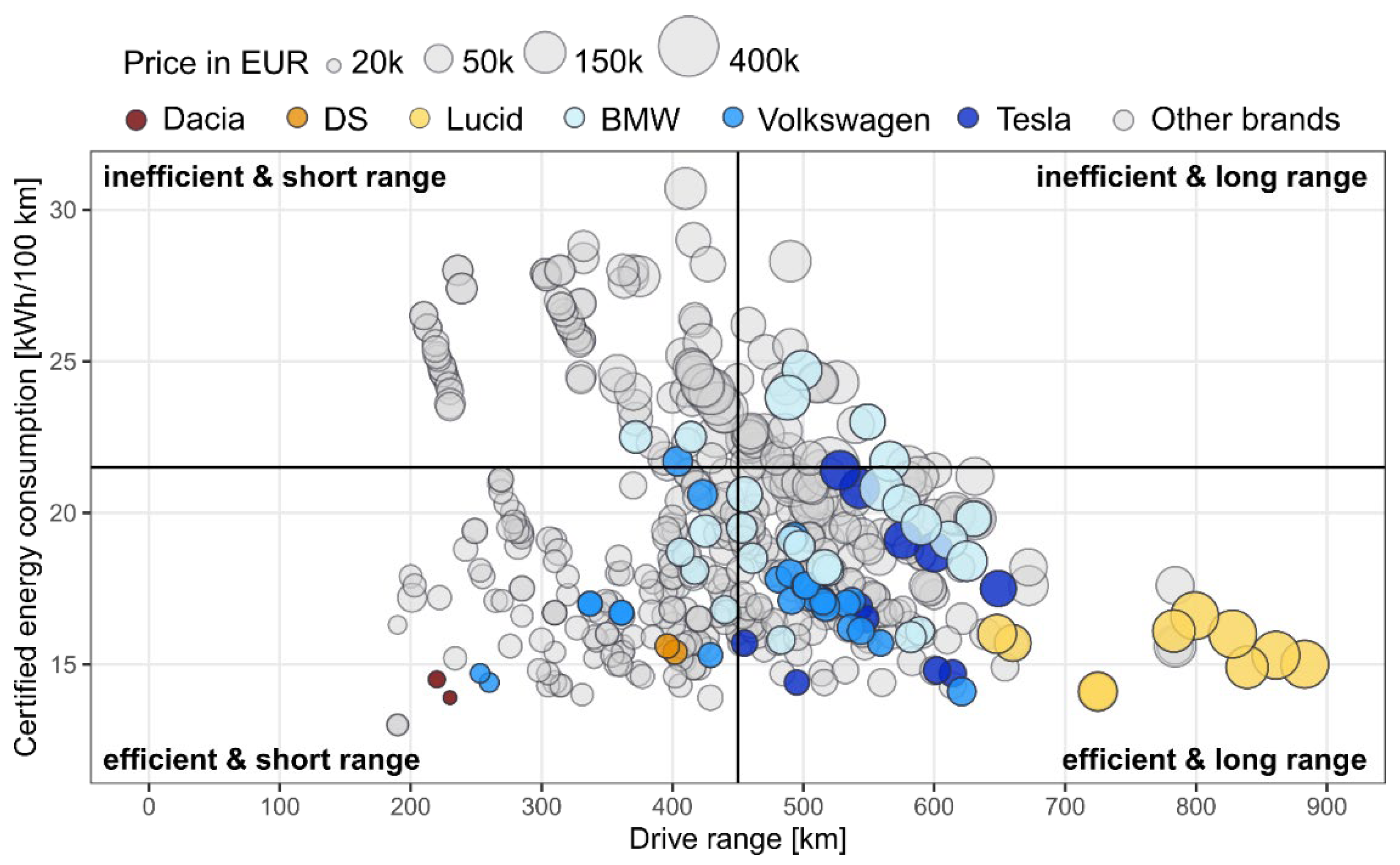
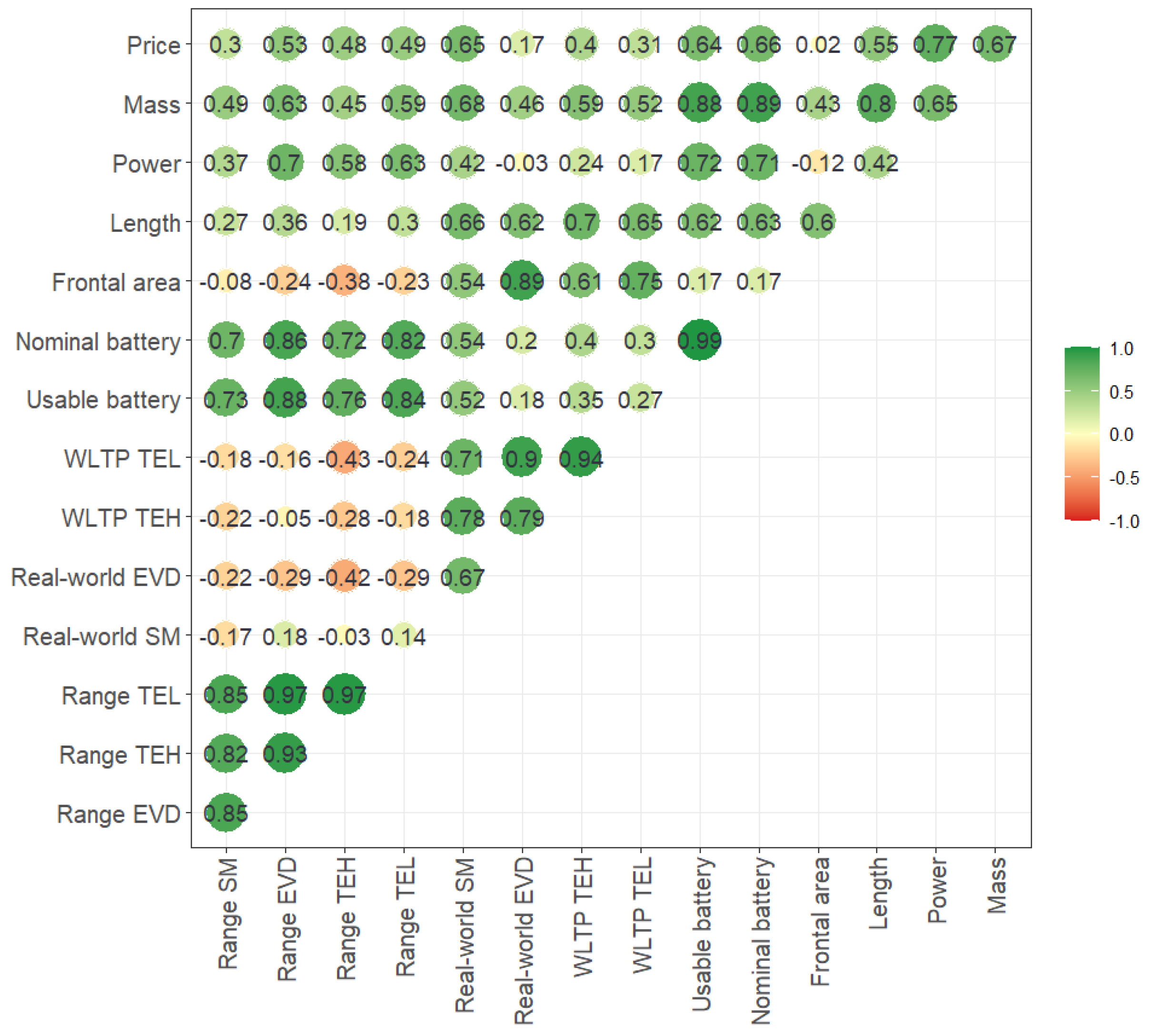
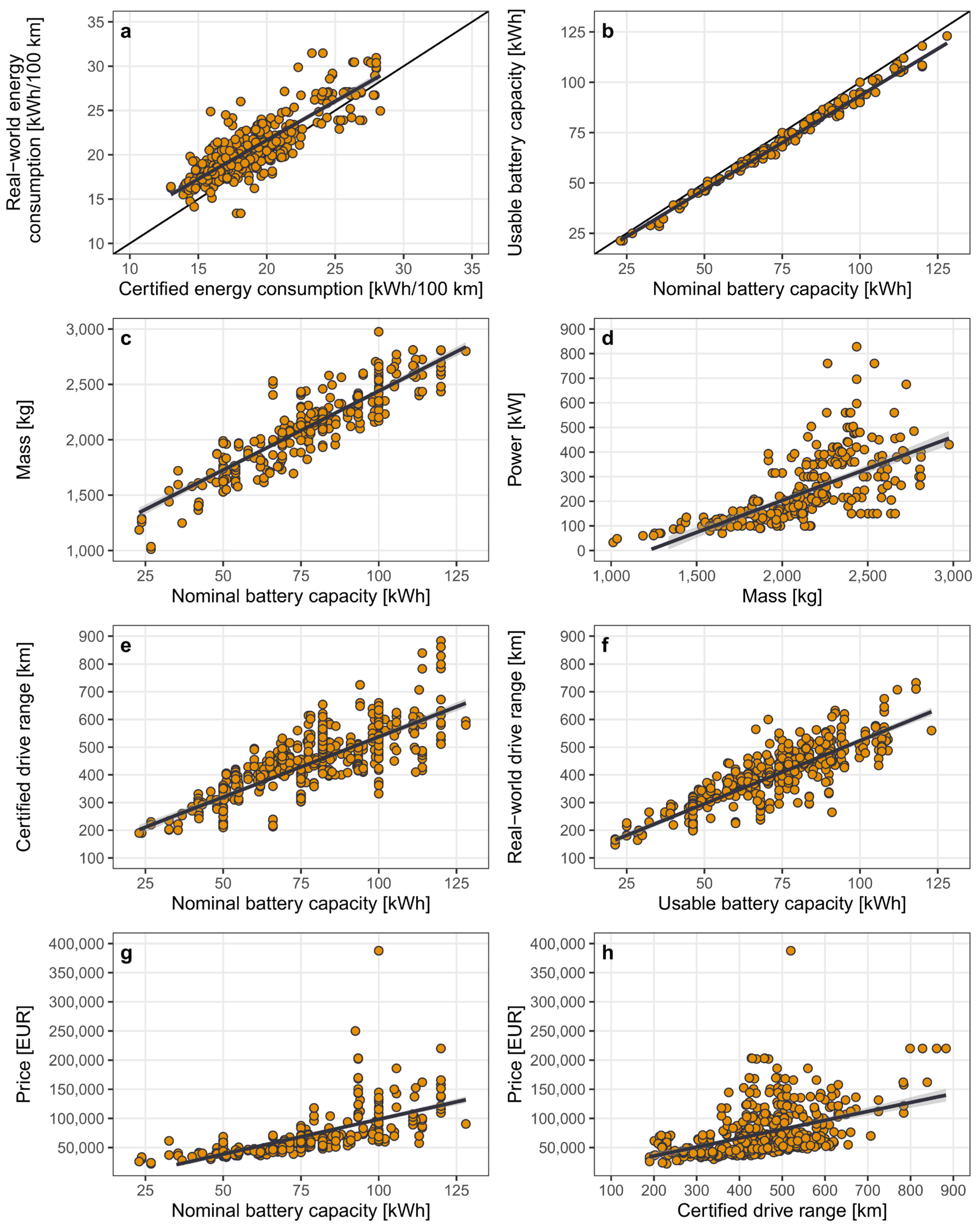
As the European Union advances its regulatory framework on energy efficiency, the introduction of an energy label for electric cars appears increasingly relevant. Anticipating this policy development, we present a scoping analysis of energy consumption and efficiency trade-offs across 342 fully electric cars available in Europe. Our results suggest that certified and real-world energy consumption average 19 ± 4 kWh/100 km and 21 ± 4 kWh/100 km, translating into drive ranges of 440 ± 120 km and 380 ± 110 km, respectively. Energy consumption is correlated with mass, frontal area, and battery capacity but less so with rated power and vehicle price. Each 100 kg of vehicle mass and 0.1 m2 of frontal area increases energy consumption by 0.2 ± 0.1 kWh/100 km and 0.9 ± 0.1 kWh/100 km, respectively. Raising battery capacity by 10 kWh elevates vehicle mass by 143 ± 4 kg, energy consumption by 0.6 ± 0.1 kWh/100 km, drive range by 44 ± 2 km, and vehicle price by 12,000 ± 600 EUR. Efficient cars are available at any price, but long drive ranges have a cost. These findings point to considerable efficiency trade-offs that could be revealed to consumers through a dedicated energy label. We propose several options for classifying vehicles on an efficiency scale from A to G, with and without drive range and battery capacity as utility parameters. Our analysis provides a rationale for the energy labeling of electric cars in the European Union and could inspire similar analyses for other vehicle categories such as e-scooters, lightweight electric three- and four-wheelers, e-busses, e-trucks, and electric non-road machinery.
Keywords: electric cars; fully electric vehicles; energy consumption; efficiency trade-offs; energy label; consumer information electric cars; fully electric vehicles; energy consumption; efficiency trade-offs; energy label; consumer information