Article

Determinants of Students’ Satisfaction with AI Tools in Education: A PLS-SEM-ANN Approach

Deanship of Human Resources and Technology, Jazan University, Alburj Campus, Jazan 82812, Saudi Arabia
Sustainability 2024, 16(13), 5354; https://doi.org/10.3390/su16135354
Submission received: 15 April 2024 / Revised: 13 June 2024 / Accepted: 17 June 2024 / Published: 24 June 2024
(This article belongs to the Section Sustainable Education and Approaches)

Abstract

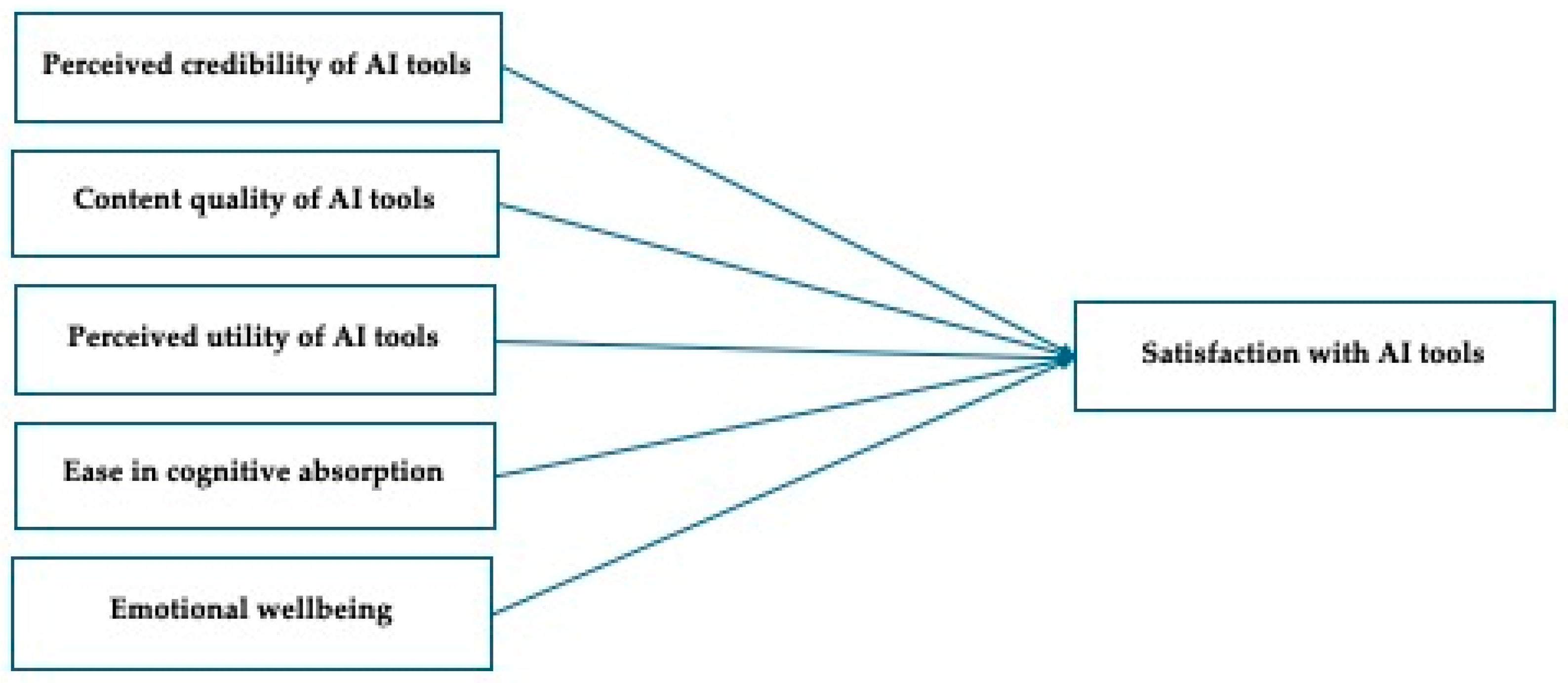
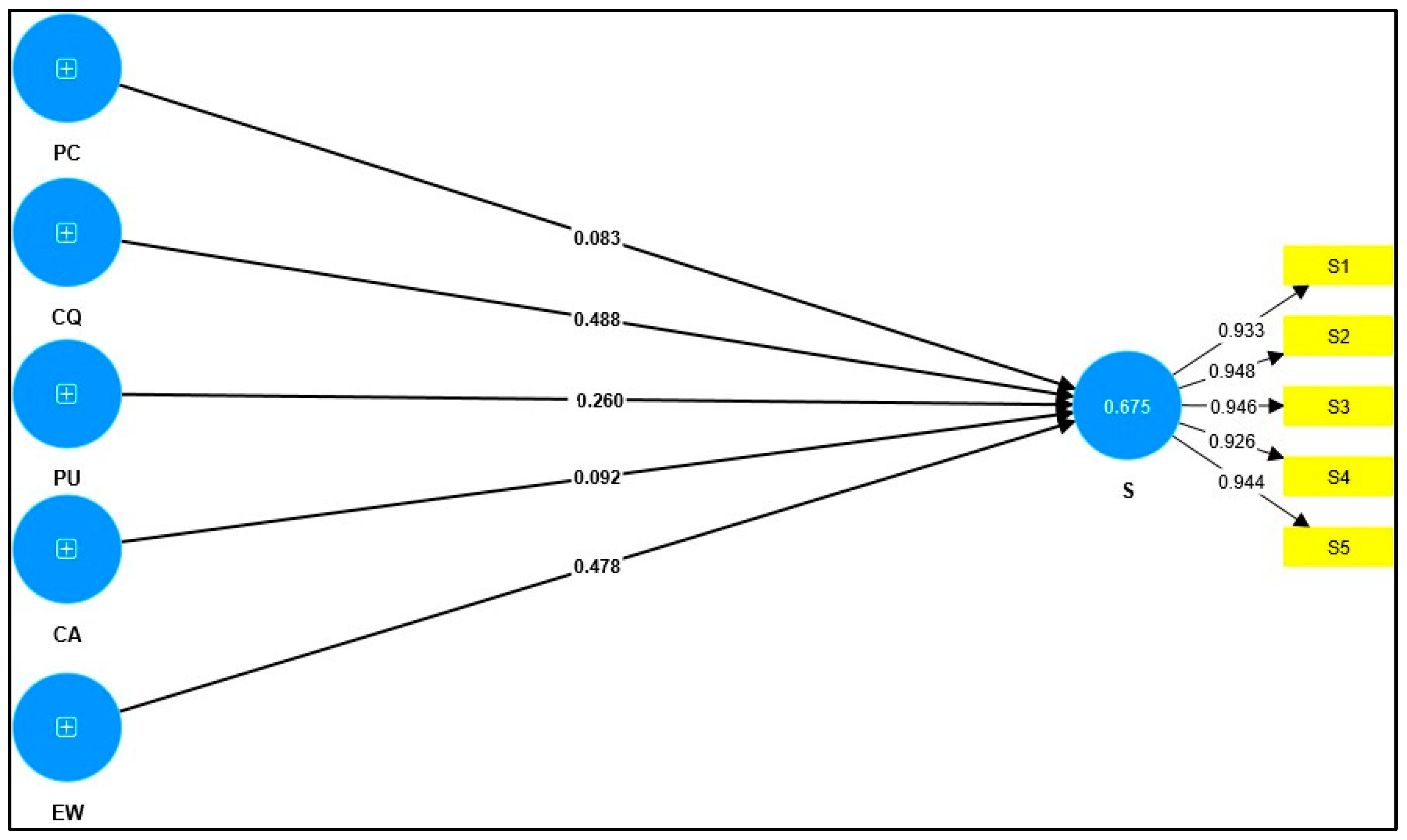
The emergence of Artificial Intelligence (AI) technology has significantly disrupted the educational landscape. The latest development in AI, generative AI that can generate new and tailored to specific content, has significantly impacted education. Given the value of AI technology in general and generative AI specific to users in education, such as students, the adaptability of these technologies has significantly increased. However, continuing and productive usage of AI tools depends upon students’ satisfaction with these tools. Drawing from the existing research, the present research has developed factors that affect students’ general satisfaction with AI tools. The research collected the data using a survey questionnaire from a Saudi Arabian university. The two-stage method of partial least squares structural equation modeling (PLS-SEM) and artificial neural network (ANN) have been employed. The two-stage method is applied in a way that PLS-SEM is used for testing the hypothesis and significance of the factor’s influence on satisfaction, and ANN is used to determine the relevant importance of the factor. The PLS-SEM results have shown that factors such as content quality, emotional wellbeing and perceived utility determine student satisfaction with AI tools. The ANN results show that emotional wellbeing is the most critical factor in satisfaction, followed equally by content quality and perceived utility.
Keywords: Artificial Intelligence; satisfaction; perceived utility; content; emotional wellbeing Artificial Intelligence; satisfaction; perceived utility; content; emotional wellbeing