Abstract
Sodium hydrosulfite is conventionally used for the color stripping of reactive dyes in the textile industry. However, research has been focused on eco-friendly processes to reduce wastewater generation in recent years. This study is aimed at estimating the color stripping efficacy of ozone according to reactive dyes’ chromophore groups. The dyed cotton-knitted fabric with three reactive dyes that have phthalocyanine (Reactive blue 21), diazo (Reactive black 5) and monoazo (Reactive yellow 84) chromophores was treated with ozone. The effect of the experimental parameters (pH, ozone dose and treatment time) was examined on the dyed fabric samples in terms of lightness and bursting strength properties. The results show that the decolorization efficiency of ozone varies with the type of chromophore group. The maximum color removal was achieved for the Reactive blue 21 dye of the phthalocyanine group at optimum process conditions (pH 3, Ozone dose 7 g/h, exposure time 40 min) followed by the reactive dyes that have dioazo and monoazo chromophore groups, respectively. The bursting strength of the fabric sample decolorized using ozone remained stable throughout the study. Moreover, the ozone-stripping effluent meets the environmental quality standards and can be reused up to at least four cycles without affecting the stripping efficiency. Hence, it can provide a sustainable alternative to reduce water consumption in the textile sector.
1. Introduction
Textile industries consume a huge quantity of water and chemicals in various pre-treatment processes before dyeing and the final finishing steps, which generates a massive amount of effluent [1]. Minor fluctuations in the dyeing process conditions result in defective or uneven dyeing, which is not acceptable by the consumer. Therefore, color stripping (decolorization) is required to correct the defective dyed cotton fabric to maintain the product quality as per the consumer’s demand [2]. Reactive dyes are strongly attached to the fabric through covalent bonding in the dyeing process, having chromophore groups such as azo, phthalocyanine and anthraquinone to impart specific color to the fabric, and reactive groups such as vinyl sulphone, monochlorotriazine, etc. [3]. The strong chemical bonds between the dye and cellulosic fabric resist to react with oxidizing and reducing agents. A number of factors such as the type of dye, fabric material and dyeing method, and the process parameters such as pH, time, oxidant concentration, etc., determine the efficiency of the stripping process [2]. Conventionally, sodium hydrosulphide (NaHS), along with auxiliary chemicals, is used for the color stripping of reactive dyes at 95 °C in a highly alkaline medium for 20–30 min, resulting in the generation of a highly polluted effluent [4,5]. Moreover, it is a highly toxic chemical and oxidizes into hydrogen sulfite, hydrogen sulfate and sulfur dioxide, which not only damages the environment, but also deteriorates the fabric quality. Thus, environmentally friendly technologies are required to reduce the harmful impacts of textile industries on the environment because of extreme environmental and social concerns [6].
Currently, research is being conducted to discover and invent eco-friendly sustainable technologies, thus substituting harmful chemicals that are commonly used in conventional methods to reduce water consumption in the textile sector [7,8,9,10,11]. Biological methods using enzymes and fungi have also been examined for the bleaching and color stripping of cotton fabric and are found not to be practically successful due to their low efficacy and time-consuming nature [12].
In recent years, ozone has gained attention as a powerful oxidant and disinfectant. However, it cannot be stored in the laboratory due to its highly reactive and unstable nature; hence, it is generated electrically using the corona discharge method at runtime [13]. Ozone gas is dissolved and dispersed in a liquid medium to react with the targeted compounds by diffusers and a venturi injection system [14]. Ozone has also been applied in various textile wet processes because of its high oxidative capacity (2.07 V) as well as its working low temperature and pH [15,16]. Moreover, it requires less water without the use of chemicals for bleaching and stripping processes as compared to the conventional methods. It has been successfully used for textile effluent treatment without generating sludge, which is a by-product of conventional wastewater treatment methods whose disposal results in soil and ground water pollution [17,18,19]. Many researchers have used ozone for the bleaching of various substrates such as cotton, silk, jute, etc., and discussed the role of various parameters on the efficacy of the ozonation process, but this technology has not been upgraded to the industrial scale because of its higher capital cost and non-selective reaction mechanism, resulting in the loss of strength [20,21]. Different studies have been conducted to improve the strength properties of ozone-treated cellulose fibres by adding various additives such as organic acids, alcohol and reducing agents [16]. These additives enhance the ozone selectivity either by decreasing its decomposition or by scavenging the free radical species. However, the addition of additives will increase the cost of the process and pollution load as well [22].
Moreover, it is also effective for reduction clearing and the wash off process for the removal of unfixed and hydrolyzed dyes [23,24,25,26]. It is also used to decolorize the residual dyeing effluent in the textile dyeing process. Ozone gas (O3) was injected in the dyeing machine after the completion of the dyeing process for the removal of color and COD from the effluent [27]. Recently, research has been focused on finding alternatives for water conservation by reusing the effluent rather than discharging it into water bodies. Senthilkumar and Muthukumar [28] reused the dye bath after treating with ozone for three times without compromising the dyeing quality. Wash-off dyebath liquor, after treating it with the electrocoagulation process, was also reused eight times in the same process and the dyeing quality remained the same as indicated by the ∆E (total color difference between fabric samples dyed in fresh bath (reference) and dyebath treated with electrocoagulation process) values ranging between 0.38 and 0.85 as the ∆E value of less than one is commercially acceptable [25]. Similarly, 20 different samples of raw cotton fabric were bleached with ozone using the same water bath, and the whiteness remained stable up to the 20th cycle [9]. The same process was also successfully upgraded to the pilot scale for up to five cycles [11].
Ozone has been used for the decolorization of defective dyed fabric both at the laboratory and pilot scale and provides the desired results at a minimum environmental cost in contrast to the conventional chemical methods [29,30,31,32,33]. However, more extensive research is required to study the ozone reactivity on various chromophore groups. Therefore, this study is aimed at developing a sustainable method for dyed cotton fabric stripping using ozone. To begin with, the ozonation process conditions (oxidant dose, pH, treatment time) were optimized to remove three dyes that have phthalocyanine (Reactive blue 21), diazo (Reactive black 5) and monoazo (Reactive yellow 84) chromophores. Subsequently, a novel approach was applied by reusing the same stripping water bath to strip dyed fabric samples for up to seven cycles. The dyed fabric samples were characterized in terms of color differences (L, ΔL) and bursting strength properties. The ozone stripping bath was also characterized after every reuse in terms of pH, electrical conductivity (EC), chemical oxygen demand (COD) and total dissolved solids (TDS) using standard methods.
2. Experimental
2.1. Apparatus Setup
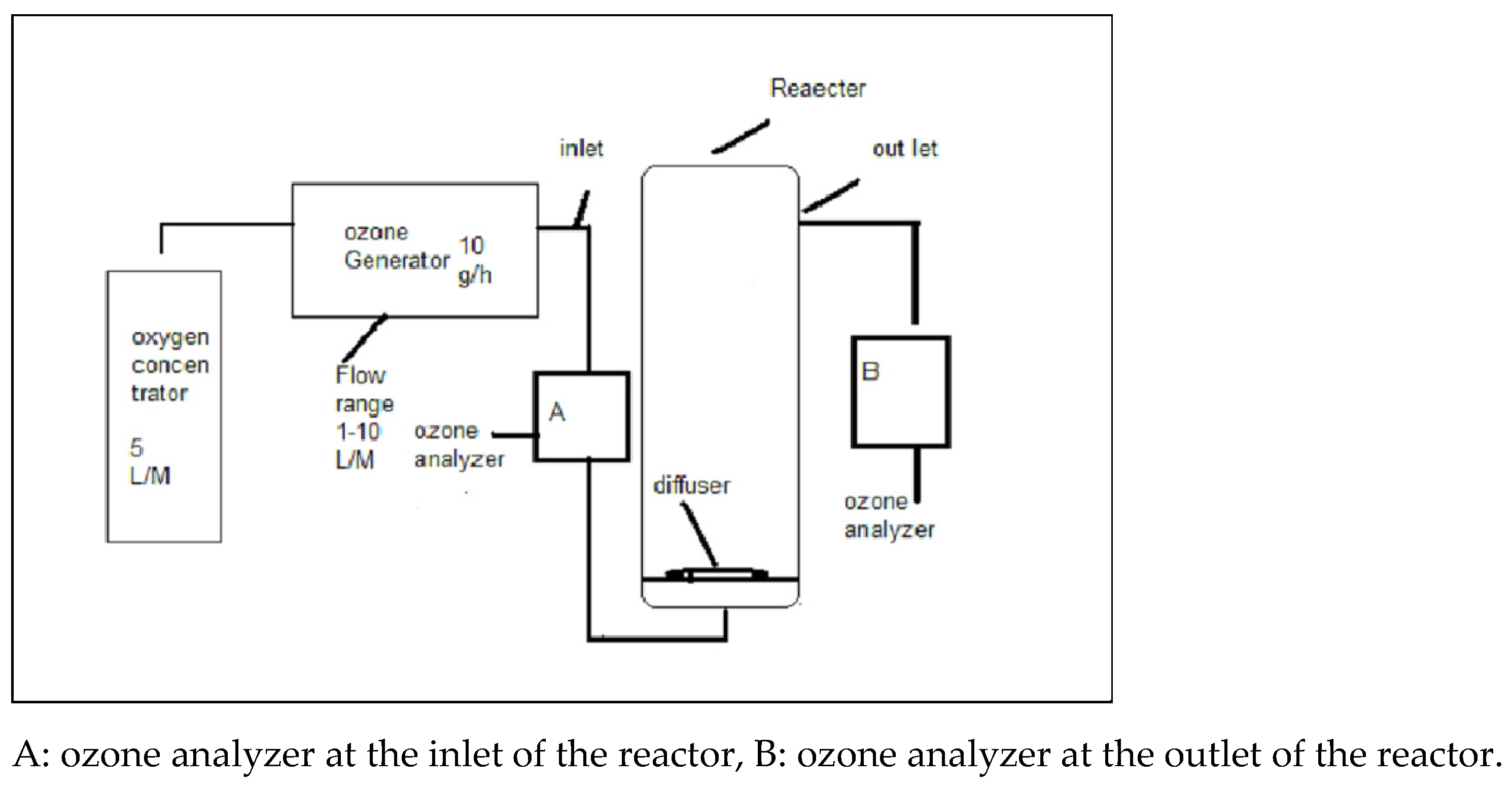
The apparatus consists of three components including the oxygen concentrator (Mark 5 of Purezone TM, USA), ozone generator (L10G of Faraday, USA) and reactor tube (60 cm height and 3.5 cm internal diameter) (Scheme 1) [34]. The ozone gas was generated from concentrated air (99% oxygen) using the corona discharge method, with the maximum capacity of 10 g/h. The ozone was introduced through a diffuser stone into the reactor to transfer it in the liquid medium for “cotton stripping”. The concentration of ozone gas (g/m3) was measured by the ozone analyzer (UVP 200 Ozonova, Germany) at the inlet of the reactor and was controlled by regulating the knob present on the ozone generator. The ozone dose (g/h) at a constant flow rate of 2 L/min was measured by the following equation given below:
Ozone dose (g/h) = ((Liter per minute × 60) × 0.001) × g/m3 (ozone concentration)
Scheme 1.
Schematic diagram of ozone setup (Arooj, 2014) [34].
2.2. Dyeing Procedure
The bleached cotton knitted fabric samples were dyed with 2% o.m.f (of the material of fabric) of three types of reactive dyes in a dyeing machine at a liquor ratio of 1:10 at 60 °C for 45 min. The initial pH of the dyebath was adjusted to 6.5 and the temperature was increased at a rate of 1.5 °C/min. After 15 min, sodium carbonate (Na2CO3) was added, which increased the pH to 11, and the dyeing process was continued for a further 30 min. The fabric samples were removed and cooled down, and subsequently treated with 0.1 g/L acetic acid to adjust the pH. Two hot washes were applied at 60 °C, and one at 80 °C, followed by rinsing with tap water. The samples were dried in open air for ozone treatment. The details of the dyes are given in Table 1.
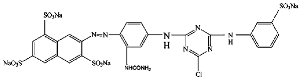
Table 1.
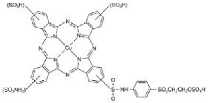
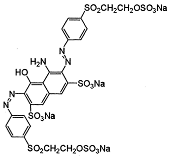
Chemical structures and chromophore groups of dyes.
2.3. Procedure for Ozone Treatment
A 4 g piece of dyed cotton fabric was treated with ozone in a bubble column reactor containing 50 mL water (1:10 liquor ratio), at room temperature. The effect of the process variables was assessed by varying the pH (3, 5, 7, 9), ozone dose (2 g/h, 5 g/h, 7 g/h, 10 g/h) and treatment time (30 min, 40 min, 50 min, 60 min). The ozone-stripped fabric samples were rinsed with tap water to remove ozonation by-products and unfixed dyes. The pH was adjusted by using acetic acid and sodium hydroxide (NaOH) for the acidic and alkaline media, respectively. The ozone-stripped fabric samples were rinsed with tap water to remove ozonation by-products and unfixed dyes. The quality of the stripped fabric samples was evaluated in terms of lightness (L) and bursting strength properties.
The optimized ozonation process was then used to decolorize multiple fabric samples dyed with reactive dyes by re-using the same stripping bath. The lightness values (L and ∆L) of the decolorized samples were measured after every reuse for up to seven cycles. The pH, EC, TDS and COD of the ozone stripping bath was also measured after every reuse and compared with the conventional chemical stripping method.
2.4. Fabric Evaluation
The lightness (L), lightness difference (ΔL) and whiteness of the stripped fabric samples were assessed using a spectrophotometer (SF 500+ Data Colour) [35]. The ball burst method was used to measure the bursting strength of the fabric samples (ASTMD-3787-16).
2.5. Characteristics of Effluents
The pH of the stripping bath was measured using a pH meter (JENCO 6173) which is calibrated regularly at PH 4 and PH 7. The electrical conductivity (EC) was measured using a calibrated EC meter (JENWAY 470). The chemical oxygen demand (COD) and total dissolved solids (TDS) of ozone-stripping effluents were measured using standard methods for the analysis of water and wastewater [36].
2.6. Statistical Analysis
The mean, variance and standard deviation values in triplicate measurements were calculated using descriptive stats. The multivariate test (ANOVA) was applied to check the impact of the input variables (pH, oxidant dose, treatment time) on the output (whiteness, lightness and bursting strength) of the process.
3. Results and Discussion
3.1. Effect of Ozonation Process on Lightness of Ozone-Stripped Fabric
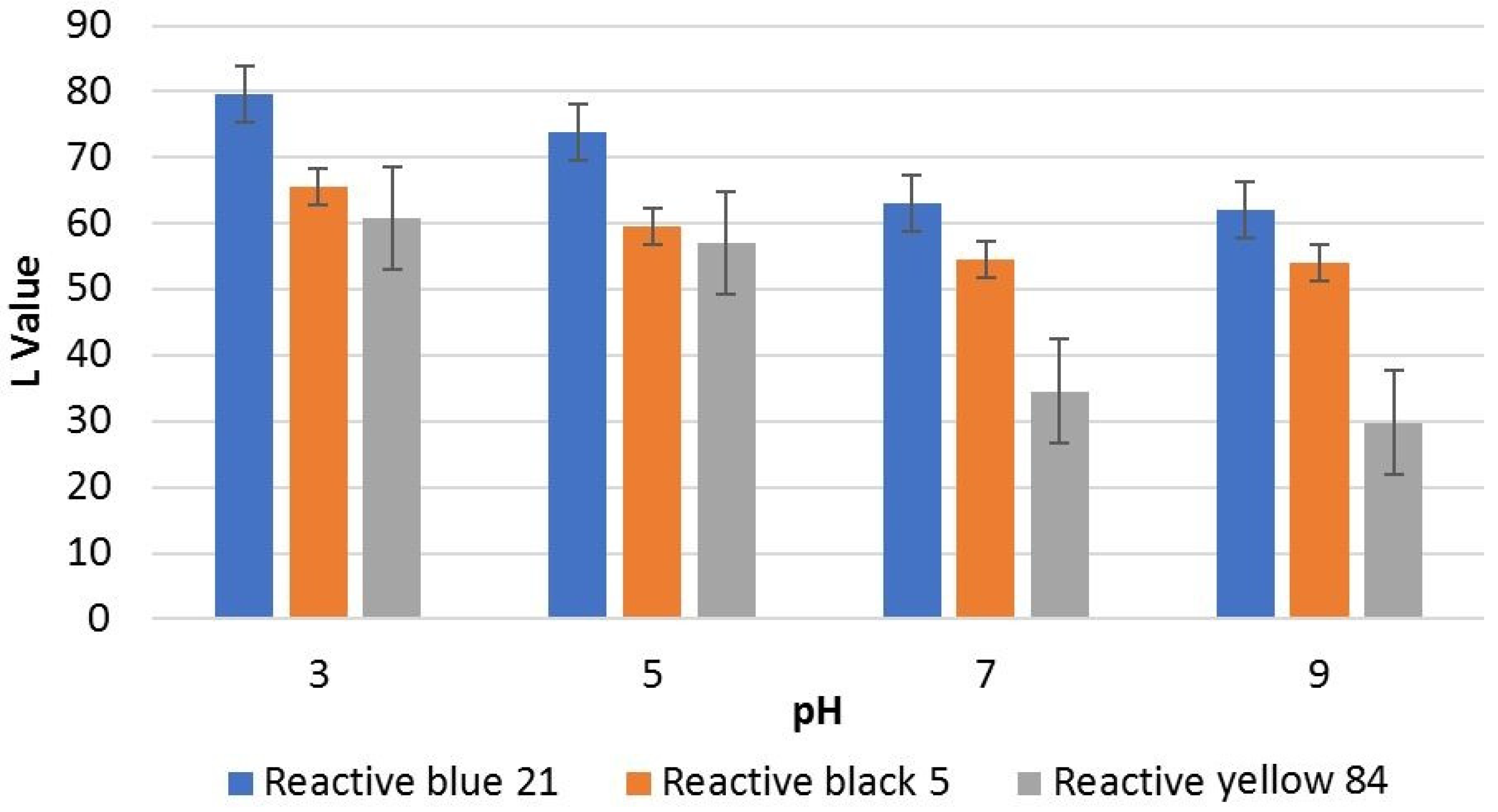
The experimental variables such as pH, ozone dose and treatment time determine the efficiency of the ozone stripping process [30]. The effect of pH on the ozone stripping method is shown in Figure 1. The results show that the lightness and lightness difference values (L, ∆L) decreased with the increase in pH for all types of reactive dyes. The L value of Reactive blue 21-dyed fabric samples after ozonation increased from 48.37 to 79.43, 73.81, 63.05 and 62.07 at the pH of 3, 5, 7 and 9, respectively. This is due to the higher ozone stability and direct attack, in molecular form, on the chromophore structures of the dyes in an acidic pH, while in a basic environment, it hydrolyzes into hydroxyl radicals, which is similar to the peroxymonosulphate oxidation process [37].). Similar behavior was observed for Reactive black 5 and Reactive yellow 84 as well. The optimum color stripping efficiency was attained while maintaining a pH of 3. However, the stripping efficiency observed in terms of the L value is the highest for Reactive blue 21 (phthalocyanine) as compared to Reactive black 5 (diazo) and Reactive yellow 84 (monoazo), mainly due to the difference in chromophore groups and the affinity of dyes to the textile fibers. Reactive dyes are composed of chromophore groups and anchor groups which determine the color removal efficiency of the oxidizing agent. The dye molecules attach to the fabric via covalent bonds which resist to the oxidizing and reducing agents. However, ozone strongly attacks the chromophore groups that have unsaturated bonds and removes the color efficiently. According to the results (Figure 1, Figure 2 and Figure 3), the group of reactive dyes that have vinyl sulphone anchor showed higher color removal as compared to the monochlorotriazine anchor group. However, the effect of the chromophore group also showed a difference in the stripping efficiency as Reactive blue 21 with phthalocyanine chromophore is more easily removed as compared to reactive black 5 with diazo chromophore. The relationship between the color stripping efficiency and dye type is also significant; p-value > 0.001 (Table 2).
Figure 1.
Effect of pH on the lightness (L) of ozone-stripped fabric samples. L values of untreated fabric are as follows: Reactive blue 21: 48.37, Reactive black 5: 13.92, Reactive Yellow 84: 49.23. Ozone dose: 7 g/h, treatment time: 40 min.
Figure 2.
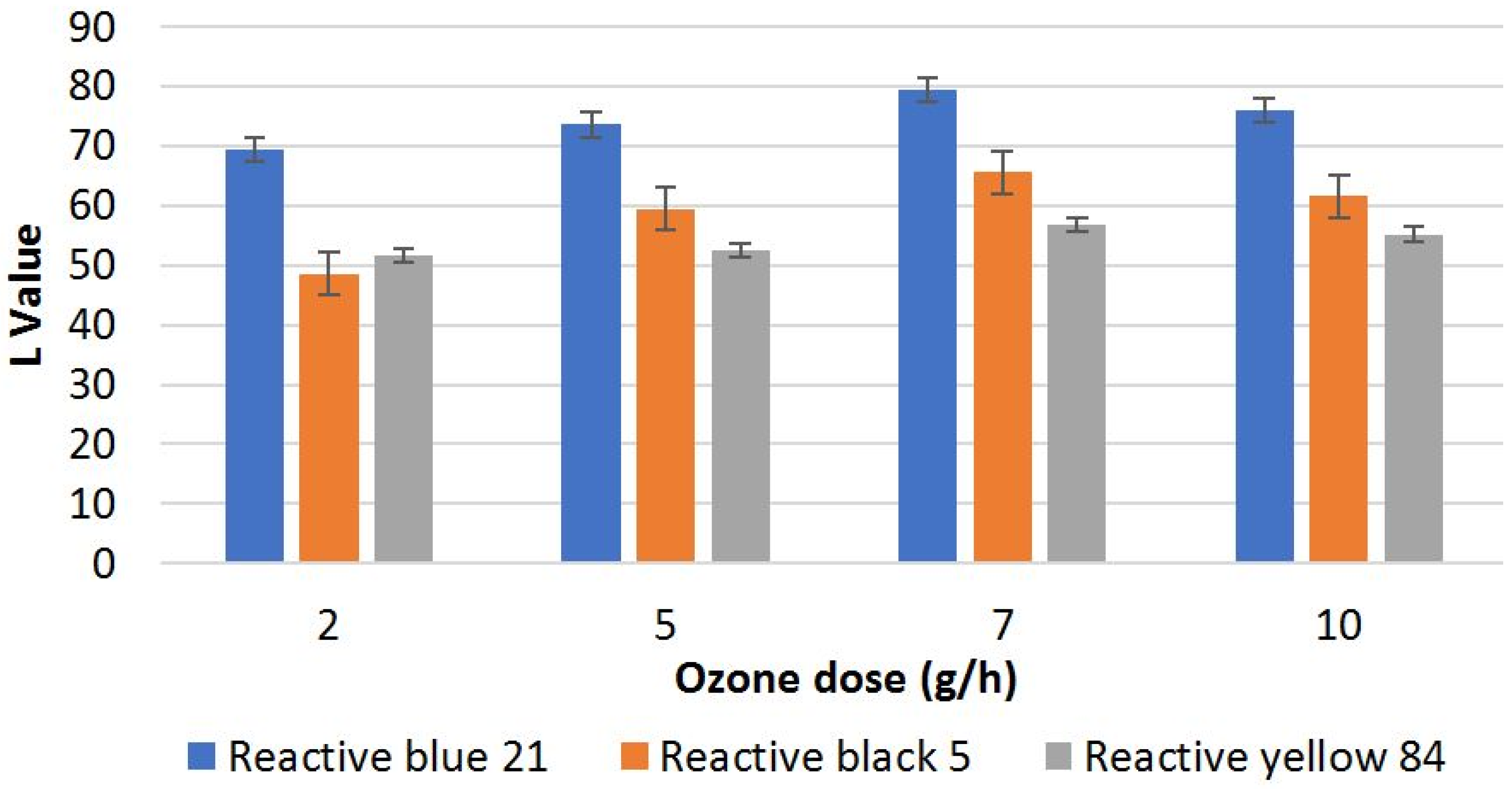
Effect of ozone dose on the lightness (L) of ozone-stripped fabric samples. L values of untreated fabric are as follows: Reactive blue 21: 48.37, Reactive black 5: 13.92, Reactive yellow 84: 49.23. pH: 5, treatment time: 40 min.
Figure 3.
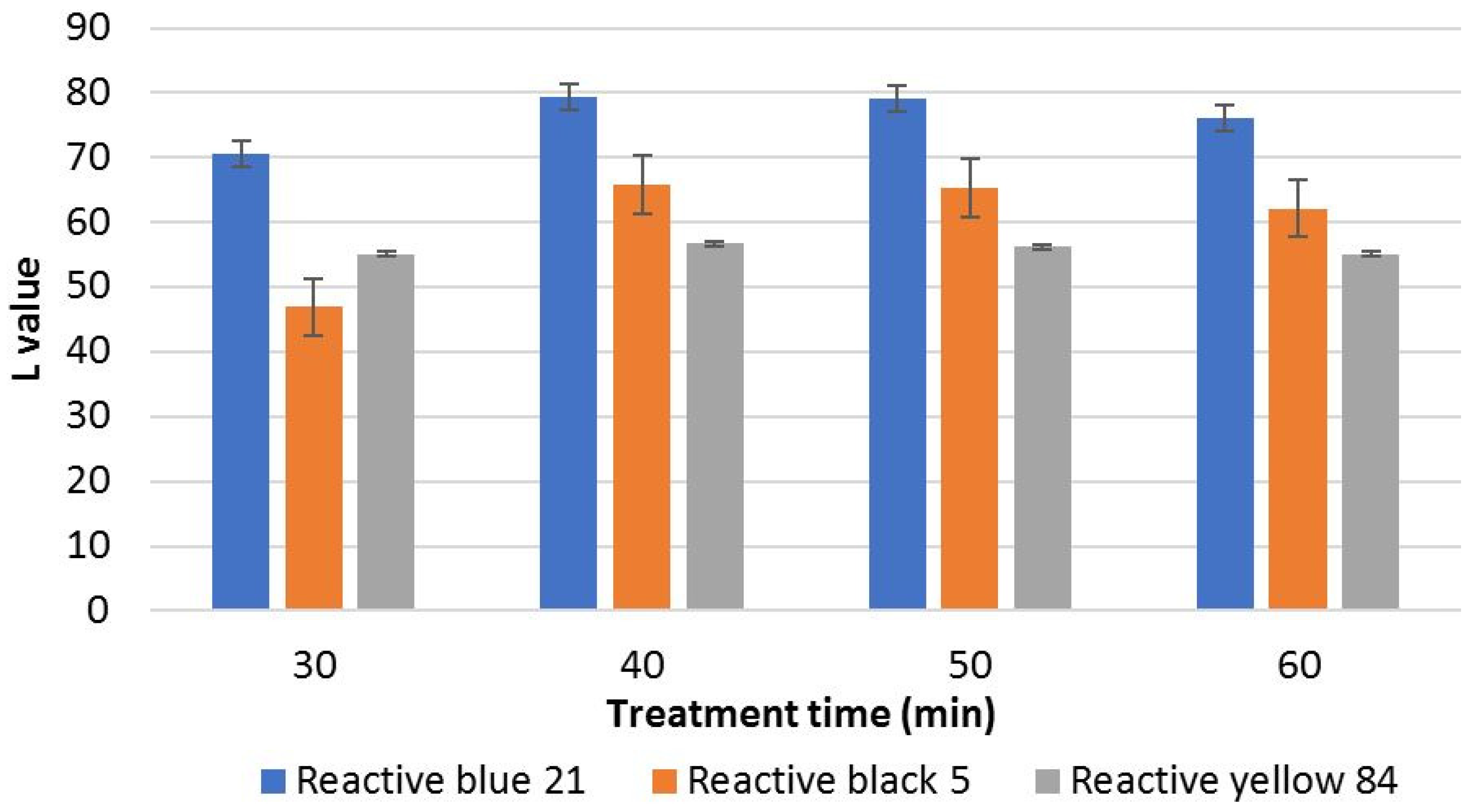
Effect of treatment time on the lightness (L) of ozone-stripped fabric samples. L values of untreated fabric are as follows: Reactive blue 21: 48.37, Reactive black 5: 13.92, Reactive yellow 84: 49.23. pH: 5, ozone dose: 10 g/h.
Table 2.
Results of Analysis of Variance for Lightness (L).
The results of various ozone doses on the L values of dyed stripped cotton fabric samples are shown in Figure 2. The L and ∆L values increase with the increase in ozone dose for all types of reactive dyes, which is due to the higher concentration of dissolved ozone, to react with the conjugated double bonds [38]. The L values of CI Reactive blue 21, CI Reactive black 5 and CI Reactive yellow 84 increased from 48.37 to 79.43, from 13.92 to 65.54, and from 49.23 to 56.7, respectively, by increasing the ozone dose from 2 g/h to 7 g/h. (Table 3). However, increasing the ozone dose higher than 7 g/h did not improve the lightness any further due to the conversion of unsaturated bonds into saturated ones that could not further react with ozone. Moreover, at a higher ozone dose, most of the gas does not react, resulting in the formation of by-products such as aldehydes and ketones, which cause further yellowing of the fabric. Therefore, 7 g/h is the optimum dose for the given setup depending on the weight of fabric, reactor size and dye concentration. The p-value < 0.001 represents that there is significant relationship between the lightness value and oxidant dose (Table 2).
Table 3.
Effect of pH, ozone dose and treatment time on colorimetric values of ozone-stripped fabric samples.
The effect of the treatment time on the lightness and lightness difference of dyed fabric samples stripped by ozone is shown in Figure 3 and Table 3. The lightness of the stripped fabric samples dyed with CI Reactive blue 21 at 30, 40, 50 and 60 min is 70.61, 79.43, 79.05 and 76.07, respectively. Similar results were observed for CI Reactive black 5 and CI Reactive yellow 84 dyes. This is due to the fact that ozone is more effective toward unsaturated bonds which have already been cleaved during the first 40 min. Hence, 40 min is the optimum treatment time for maximum color removal.
3.2. Effect of Ozonation Process on Bursting Strength of Ozone-Stripped Fabric
The effect of pH, ozone dose and treatment time on the bursting strength of ozone-stripped fabric samples is given in Table 4 and Table 5. The results showed that the pH had no significant effect on the bursting strength of the ozone-stripped fabric sample (p = 0.576) and only a minor variation was observed by varying the pH from 3 to 9. Similarly, the bursting strength almost remained stable at various ozone doses, as the bursting strength of the ozone-stripped fabric sample dyed with CI Reactive blue 21 at the ozone doses of 2, 5, 7 and 10 g/h are 882, 876, 862 and 848, respectively, which is also statistically non-significant (p = 0.141) (Table 5).
Table 4.
Effect of pH, ozone dose and treatment time on the bursting strength of ozone-stripped fabric.
Table 5.
Results of Analysis of Variance for Bursting strength.
There is a slight decrease in the bursting strength at 60 min treatment time, but overall, the bursting strength values ranging between 800 and 900 kPa showed that the ozone stripping method did not significantly reduce the strength of the cotton fabric.
3.3. Effect of Multiple Reuses of Ozone Stripping Bath on the Decolorization and Effluent Characteristics
The L values of fabric samples stripped by ozone in the same stripping bath reusing it up to seven times are shown in Table 6. The results indicated that the L values of the ozone-stripped fabric samples dyed with CI Reactive blue 21 remained stable from the first to the fourth reuse cycles as 79.05, 79.61, 78.97 and 79.02, respectively. However, the degree of lightness decreased at the fifth reuse and dropped down to 69.81 from 79.05 on the seventh reuse due to the accumulation of dyes, reaction by-products and chemicals after each reuse.
Table 6.
Fabric lightness and effluent characteristics of ozone stripping bath up to seven reuse cycles.
The characteristics of the ozone stripping bath that was reused for up to seven cycles for the stripping of dyed cotton fabric are given in Table 6. It can be seen that the pollution load (EC, TDS, COD) of the ozone stripping effluent increased with each reuse due to the accumulation of dyes and chemicals stripped from the dyed fabric. The COD, EC and TDS increased from 156 mg/L, 439 mg/L and 590 µS/cm after the first reuse to 1657 mg/L, 856 mg/L and 1360 µS/cm after the seventh reuse, respectively, indicating a strong correlation with the number of reuse cycles of the ozone stripping bath as shown by the r values (Table 7) and are also statistically significant (p < 0.001). The COD value of the conventional chemical stripping method is 2847 mg/L, almost 18 times higher than the ozonation process. The pH increased slightly after every cycle due to the formation of OH− radicals which are commonly generated in ozone oxidation processes [39]. However, the pollution load of the ozone stripping effluent, even after multiple reuses, is significantly less than the conventional stripping effluent. It is, therefore, concluded that the faulty dyed fabric sample can be stripped by ozone in one stripping bath up to four reuse cycles without deteriorating the quality of fabric as well as maintaining similar stripping results.
Table 7.
Correlation between pH, EC, TDS and COD.
4. Discussion
The experimental variables such as pH, ozone dose and treatment time determine the color removal efficiency of ozone. The pH plays a crucial role in the ozonation process depending on the type of substrate as in high acidic pH; its mode of action is direct and selective, while above pH 4, it hydrolyzes into free radicals which are non-selective in behavior and reacts with a variety of compounds [17]. In this study, the maximum color removal was achieved at pH 3, which is in agreement with the previous study [33] which concluded that maximum decolorization (98%) was achieved at pH 3 with less mechanical damage. Similarly, the best color removal efficiency was achieved at the optimum ozone dose (7 g/h) and treatment time (40 min) and further increase did not improve the decolorization due to unavailability of the reaction sites.
Moreover, its efficiency varies with the type of dye as the chromophore and anchor groups of reactive dyes determine the oxidation capability of the dye. The results showed that ozone is more effective for reactive dyes that have vinyl sulphone anchor groups as compared to the monochlorotriazine group. Similarly, the difference in the chromophore group is also reflected in the results as CI Reactive blue 21 that has phthalocyanine chromophore is more sensitive toward ozone than CI Reactive black 5 that has diazo chromophore, which is also in agreement with the study conducted by Eren et al., 2016 [40]. However, more extensive research is needed covering a larger number of the types of dyes to generalize the results.
Ozone reacts simultaneously with reactive dyes and water, thus making it possible to reuse the same ozone stripping bath for multiple times. Results showed that the ozone stripping bath can be reused up to four cycles without affecting the decolorization efficiency, which not only saves the water, but also reduces the cost of effluent treatment. Hence, the ozone stripping method with its repeated reuse of stripping bath provides an eco-friendly and sustainable alternative to conventional stripping methods for the textile industry.
5. Conclusions
This paper proposes an ozone stripping process for the decolorization of the reactive dyed cotton fabric with the multiple reuses of the ozone stripping bath. Three reactive dyes were selected that have phthalocyanine (Reactive blue 21), diazo (Reactive black 5) and monoazo (Reactive yellow 84) chromophores. The results indicate that the optimum experimental conditions including pH 3, ozone dose of 7 g/h and 40-minute treatment time gave the best decolorization results. The bursting strength of ozone-stripped fabric samples remained stable throughout the experiments irrespective of the process parameters. However, the stripping efficacy varies with the chromophore group of reactive dyes because each dye has its unique structure and properties. The results showed that the Reactive blue 21 that has phthalocyanine group was most easily removed as compared to Reactive black 5 and Reactive yellow 84 that have diazo and monazo chromophores, respectively. However, the ozonation process should be applied on a wide range of dyes to observe their behavior.
Moreover, the ozone stripping bath can be reused up to four times to decolorize dyed fabric without decreasing the lightness (L) value, as the L value dropped from 79.02 to 77.01, 72.32 and 62.81 at the fifth, sixth and seventh cycle. This decrease in lightness (L value) is mainly due to the build-up of removed chemicals and dyes from the stripped fabric. Hence, the ozonation process not only saves water, energy, chemicals and man-hours, but it also reduces the wastewater treatment expenditures and provides a sustainable solution to the textile industry.
Author Contributions
Conceptualization and supervision, F.A.; Formal analysis and investigation, A.Z.; Software, M.A.; Validation, M.R.; data curation, M.L.; resources, S.u.R.K.; Review and Editing, R.N. All authors have read and agreed to the published version of the manuscript.
Funding
The research received no external funding.
Institutional Review Board Statement
Not applicable.
Informed Consent Statement
Not applicable.
Data Availability Statement
Data will be made available whenever required.
Conflicts of Interest
The authors declare no conflict of interest.
References
- Tzanov, T.; Costa, S.; Guebitz, G.M.; Cavaco-Paulo, A. Dyeing in catalase-treated bleaching baths. Color. Technol. 2001, 117, 1–5. [Google Scholar] [CrossRef]
- Oğulata, R.T.; Balci, O. Investigation of the stripping process of the reactive dyes using organic sulphur reducing agents in alkali condition. Fibers Polym. 2007, 8, 25–36. [Google Scholar] [CrossRef]
- Wijannarong, S.; Aroonsrimorakot, S.; Thavipoke, P.; Kumsopa, C.; Sangjan, S. Removal of Reactive Dyes from Textile Dyeing Industrial Effluent by Ozonation Process. APCBEE Procedia 2013, 5, 279–282. [Google Scholar] [CrossRef]
- Eren, H.A.; Ozturk, D. The evaluation of ozonation as an environmentally friendly alternative for cotton preparation. Text. Res. J. 2010, 81, 512–519. [Google Scholar] [CrossRef]
- Islam, S.; Shaikh, I.A.; Firdous, N.; Ali, A.; Sadef, Y. A new approach for the removal of unfixed dyes from reactive dyed cotton by Fenton oxidation. J. Water Reuse Desalination 2019, 9, 133–141. [Google Scholar] [CrossRef]
- Felgueiras, C.; Azoia, N.G.; Gonçalves, C.; Gama, M.; Dourado, F. Trends on the Cellulose-Based Textiles: Raw Materials and Technologies. Front. Bioeng. Biotechnol. 2021, 9, 608–826. [Google Scholar] [CrossRef] [PubMed]
- Adeel, S.; Salman, M.; Usama, M.; Rehman, F.-U.; Ahmad, T.; Amin, N. Sustainable Isolation and Application of Rose Petals Based Anthocyanin Natural Dye for Coloration of Bio-Mordanted Wool Fabric. J. Nat. Fibers 2021, 19, 6089–6103. [Google Scholar] [CrossRef]
- Agrawal, P.B.; Nierstrasz, V.A.; Klug-Santner, B.G.; Gübitz, G.M.; Lenting, H.B.M.; Warmoeskerken, M.M.C.G. Wax removal for accelerated cotton scouring with alkaline pectinase. Biotechnol. J. 2007, 2, 306–315. [Google Scholar] [CrossRef] [PubMed]
- Arooj, F.; Ahmad, N.; Chaudhry, M.N. A Pilot-Scale Application of Ozone to Bleach Raw Cotton Fabric Using Various Additives. Ozone Sci. Eng. 2014, 37, 203–215. [Google Scholar] [CrossRef]
- Baig, U.; Khatri, A.; Ali, S.; Sanbhal, N.; Ishaque, F.; Junejo, N. Ultrasound-assisted dyeing of cotton fabric with natural dye extracted from Marigold flower. J. Text. Inst. 2020, 112, 801–808. [Google Scholar] [CrossRef]
- Hareem, T.; Arooj, F.; Kashif, S.U.R.; Farooq, Z. Economic Viability of Pilot-Scale Application of Ozone in Cotton Bleaching with Multiple Reuse of Water. J. Int. Ozone Assoc. 2018, 41, 197–203. [Google Scholar] [CrossRef]
- Chatha, S.; Mallhi, A.; Hussain, A.; Asgher, M.; Nigam, P. A Biological Approach for Color-Stripping of Cotton Fabric Dyed with C.I. Reactive Black 5 Using Fungal Enzymes from Solid State Fermentation. Curr. Biotechnol. 2014, 3, 166–173. [Google Scholar] [CrossRef]
- Iglesias, S.C. Degradation and Biodegradability Enhancement of Nitrobenzene and 2.4-dichlorophenol by Means of Advanced Oxidation Processes Based on Ozone. Ph.D. Thesis, Universidad de Barcelona, Barcelona, Spain, 2002; pp. 37–39. [Google Scholar]
- Bin, A.K.; Roustan, M. Basic Chemical Engineering Concepts for the Design of Ozone Gas-Liquid Reactors. In Proceedings of the 17th World Congress & Exhibition: Ozone and Related Oxidants, Innovative & Current Technologies, Strasbourg, France, 22–25 August 2005; pp. 99–131. [Google Scholar]
- Perincek, S.; Bahtiyari, M.; Körlü, A.; Duran, K. Ozone treatment of Angora rabbit fiber. J. Clean. Prod. 2008, 16, 1900–1906. [Google Scholar] [CrossRef]
- Roncero, M.; Queral, M.; Colom, J.F.; Vidal, T. Why Acid pH Increases the Selectivity of the Ozone Bleaching Processes. Ozone Sci. Eng. 2003, 25, 523–534. [Google Scholar] [CrossRef]
- Bilińska, L.; Blus, K.; Gmurek, M.; Ledakowicz, S. Brine Recycling from Industrial Textile Wastewater Treated by Ozone. By-Products Accumulation. Part 1: Multi Recycling Loop. Water 2019, 11, 460. [Google Scholar] [CrossRef]
- Khan, H.; Ahmad, N.; Yasar, A.; Shahid, R. Advanced oxidative decolourization of. Red cl-5B: Effect of dye concentration, process optimization and reaction kinetics. Pol. J. Environ. Stud. 2010, 19, 83–92. [Google Scholar]
- Rizvi, H.; Ahmad, N.; Yasar, A.; Bokhari, K.; Khan, H. Disinfection of UASB treated municipal wastewater by H2O2, UV, ozone, PAA, H2O2/sunlight and.advanced oxidation processes: Regrowth potential of pathogens. Pol. J. Environ. Stud. 2013, 22, 1153–1161. [Google Scholar]
- Prabaharan, M.; Rao, J.V. Study on Ozone Bleaching of Cotton Fabric–Process Optimisation, Dyeing and Finishing Properties. Color. Technol. 2001, 117, 98–103. [Google Scholar] [CrossRef]
- Perincek, S.; Bahtiyari, M.; Korlu, E.; Duran, K. Ozone bleaching of jute fabrics. AATCC Rev. 2007, 7, 34–39. [Google Scholar]
- Shatalov, A.; Pereira, H. Polysaccharide degradation during ozone-based TCF bleaching of non-wood organosolv pulps. Carbohyd. Polym. 2007, 67, 275–281. [Google Scholar] [CrossRef]
- Cogo, E.; Albet, J.; Malmary, G.; Coste, C.; Molinier, J. Effect of reaction medium on ozone mass transfer and applications to pulp bleaching. Chem. Eng. J. 1999, 73, 23–28. [Google Scholar] [CrossRef]
- Shaikh, I.A.; Ahmad, N. A pilot scale study to remove hydrolyzed reactive dyes using direct injection of ozone in jet dyeing machine. AATCC Rev. 2013, 13, 41–46. [Google Scholar]
- Nabeela, F.; Shaikh, I.A.; Islam, S.; Arooj, F. Multiple Reuse of Electrocoagulation Treated Reactive Dyeing Wash-Off: Colorimetric Properties and Water Saving. J. Environ. Anal. Chem. 2021, 8, 1–6. [Google Scholar]
- Eren, H.A. Simultaneous after clearing and decolorization by ozonation after disperse dyeing of polyester. Color. Technol. 2007, 123, 224–229. [Google Scholar] [CrossRef]
- Shaikh, I.A.; Ahmed, F.; Sahito, A.R.; Pathan, A.A. In-situ Decolorization of Residual Dye Effluent in Textile Jet Dyeing Machine by Ozone. Pak. J. Anal. Environ. Chem. 2014, 15, 1–6. [Google Scholar]
- Senthilkumar, M.; Muthukumar, M. Studies on the Possibility of Recycling Reactive Dye Bath Effluent after Decoloration Using Ozone. Dye. Pigment. 2007, 72, 251–255. [Google Scholar] [CrossRef]
- Kıcık, H.; Eren, H.A. Application of ozone gas for the stripping of fabric ink-jet-printed with reactive dyes. Color. Technol. 2017, 133, 485–490. [Google Scholar] [CrossRef]
- Arooj, F.; Ahmed, N.; Shaikh, I.A. Application of Ozone in Stripping of Cotton Fabric Dyed with Reactive Dyes. Ozone Sci. Eng. 2019, 42, 319–330. [Google Scholar] [CrossRef]
- Atav, R.; Yüksel, M.F.; Özkaya, S.; Buğdaycı, B. The Use of Ozone Technology for Color Stripping and Obtaining Vintage Effect on Reactive Dyed Cotton Fabrics. J. Nat. Fibers 2021, 19, 6648–6658. [Google Scholar] [CrossRef]
- Yigit, I.; Eren, S.; Eren, H.A. Ozone utilization for discharge printing of reactive dyed cotton. Color. Technol. 2018, 134, 13–23. [Google Scholar] [CrossRef]
- Powar, A.S.; Perwuelz, A.; Behary, N.; Hoang, L.; Aussenac, T. Application of Ozone Treatment for the Decolorization of the Reactive-Dyed Fabrics in a Pilot-Scale Process—Optimization through Response Surface Methodology. Sustainability 2020, 12, 471. [Google Scholar] [CrossRef]
- Arooj, F. Application of Advanced Oxidation Process for Bleaching Textile Materials; College of Earth and Environmental Sciences, University of the Punjab: Lahore, Pakistan, 2014. [Google Scholar]
- AATCC (American Association of Textile Chemists and colorists). Technical Manual of Standard Test Methods for Textiles; AATCC: Durham, NC, USA, 2007; Volume 82. [Google Scholar]
- APHA (American Public Health Association). Standard Methods for the Examination of Water and Wastewater, 20th ed.; APHA American Water Works Association and Water Pollution Control Federation: Washington, DC, USA, 1998. [Google Scholar]
- Li, J.; Zou, J.; Zhang, S.; Cai, H.; Huang, Y.; Lin, J.; Li, Q.; Yuan, B.; Ma, J. Sodium tetraborate simultaneously enhances the degradation of acetaminophen and reduces the formation potential of chlorinated by-products with heat-activated peroxymonosulfate oxidation. Water Res. 2022, 224, 119095. [Google Scholar] [CrossRef] [PubMed]
- Konsowa, A. Decolorization of wastewater containing direct dye by ozonation in a batch bubble column reactor. Desalination 2003, 158, 233–240. [Google Scholar] [CrossRef]
- Cai, H.; Zou, J.; Lin, J.; Li, J.; Huang, Y.; Zhang, S.; Yuan, B.; Ma, J. Sodium hydroxide-enhanced acetaminophen elimination in heat/peroxymonosulfate system: Production of singlet oxygen and hydroxyl radical. Chem. Eng. J. 2021, 429, 132438. [Google Scholar] [CrossRef]
- Eren, S.; Gumus, B.; Eren, H.A. Colour Stripping of Reactive Dyed Cotton by Ozone Treatment. Color. Technol. 2016, 132, 466–471. [Google Scholar] [CrossRef]
Disclaimer/Publisher’s Note: The statements, opinions and data contained in all publications are solely those of the individual author(s) and contributor(s) and not of MDPI and/or the editor(s). MDPI and/or the editor(s) disclaim responsibility for any injury to people or property resulting from any ideas, methods, instructions or products referred to in the content. |
© 2023 by the authors. Licensee MDPI, Basel, Switzerland. This article is an open access article distributed under the terms and conditions of the Creative Commons Attribution (CC BY) license (https://creativecommons.org/licenses/by/4.0/).