Imperatives, Benefits, and Initiatives of Green Human Resource Management (GHRM): A Systematic Literature Review


Abstract
1. Introduction
2. Materials and Methods
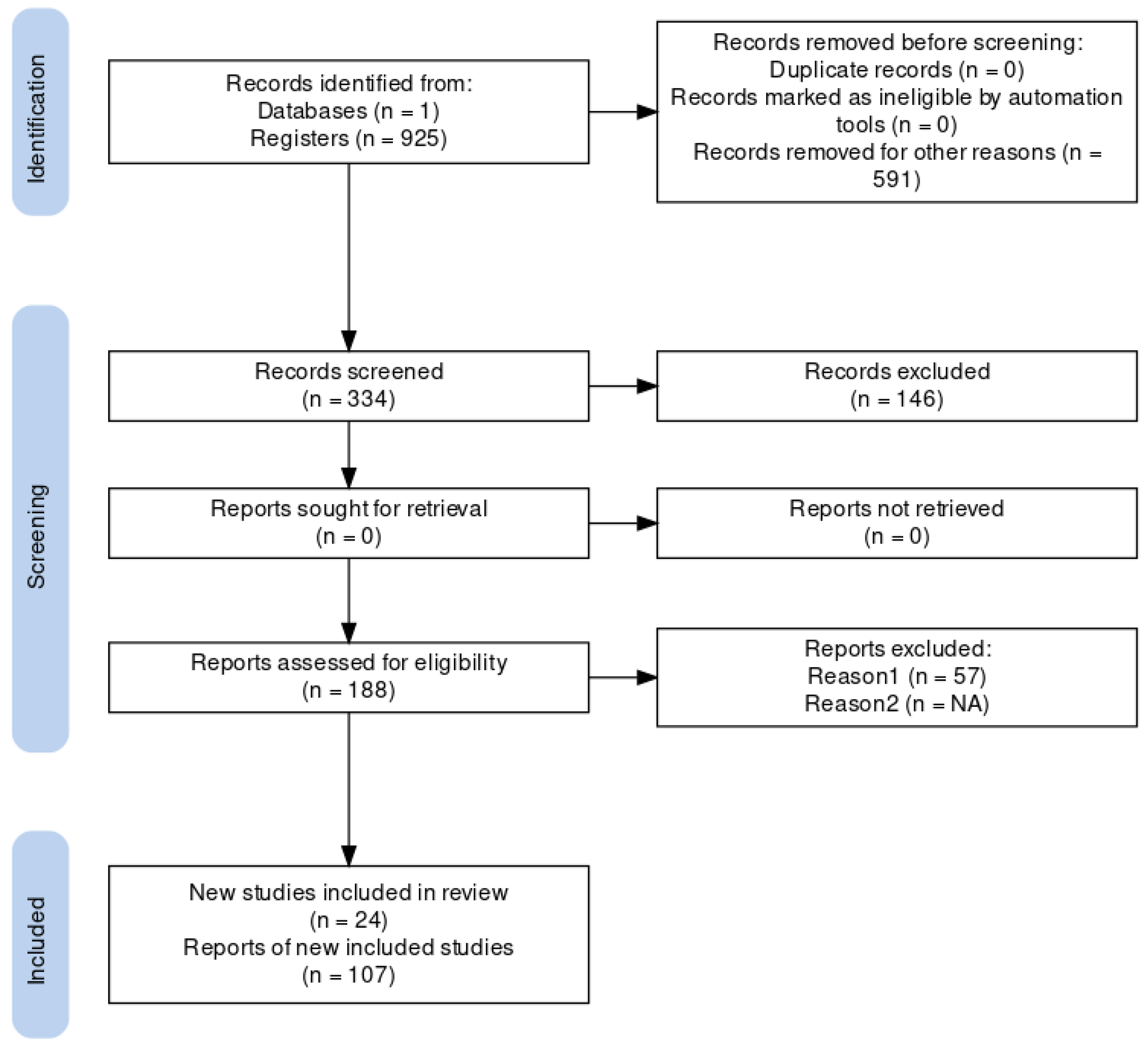
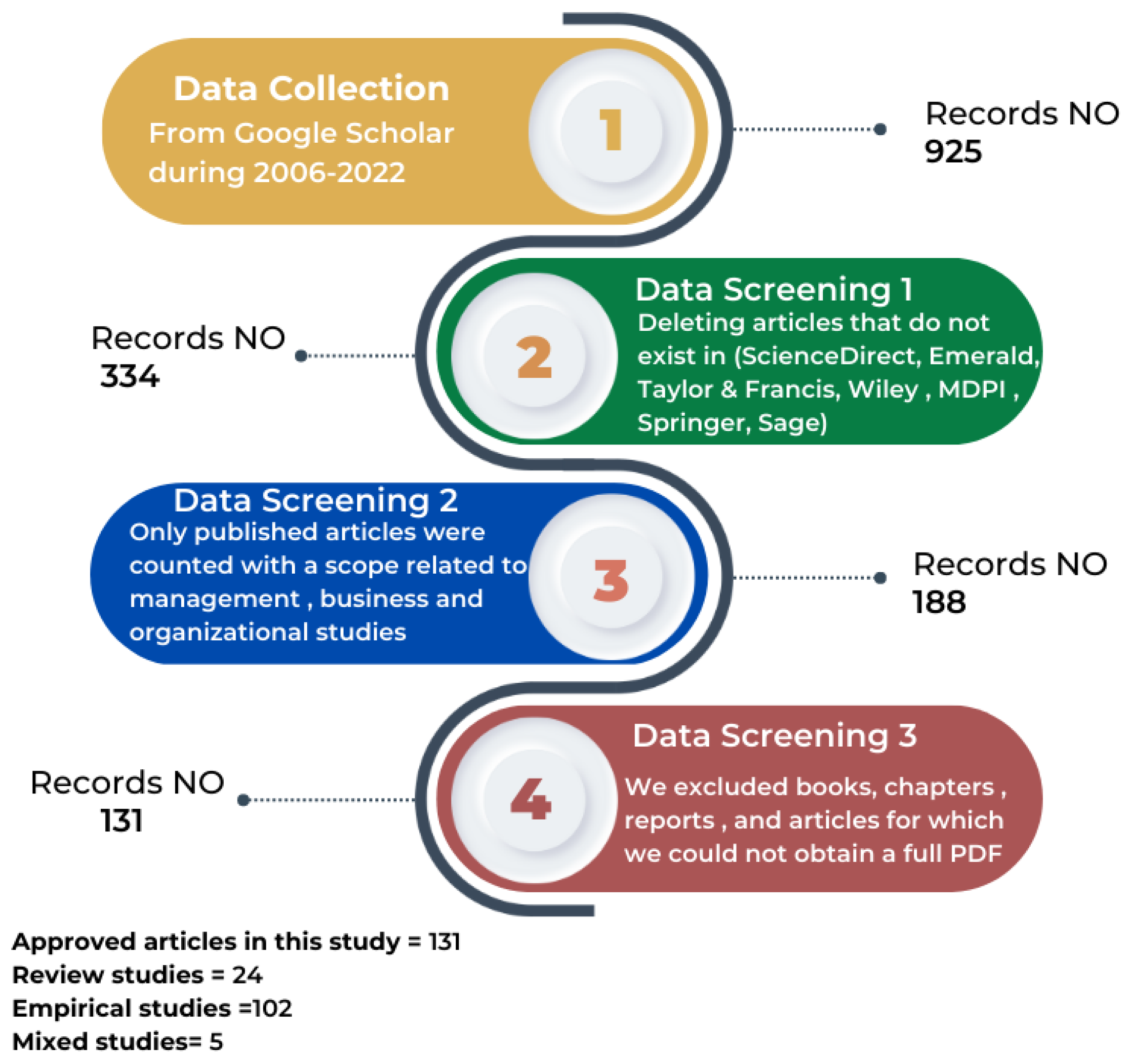
2.1. Data Collection
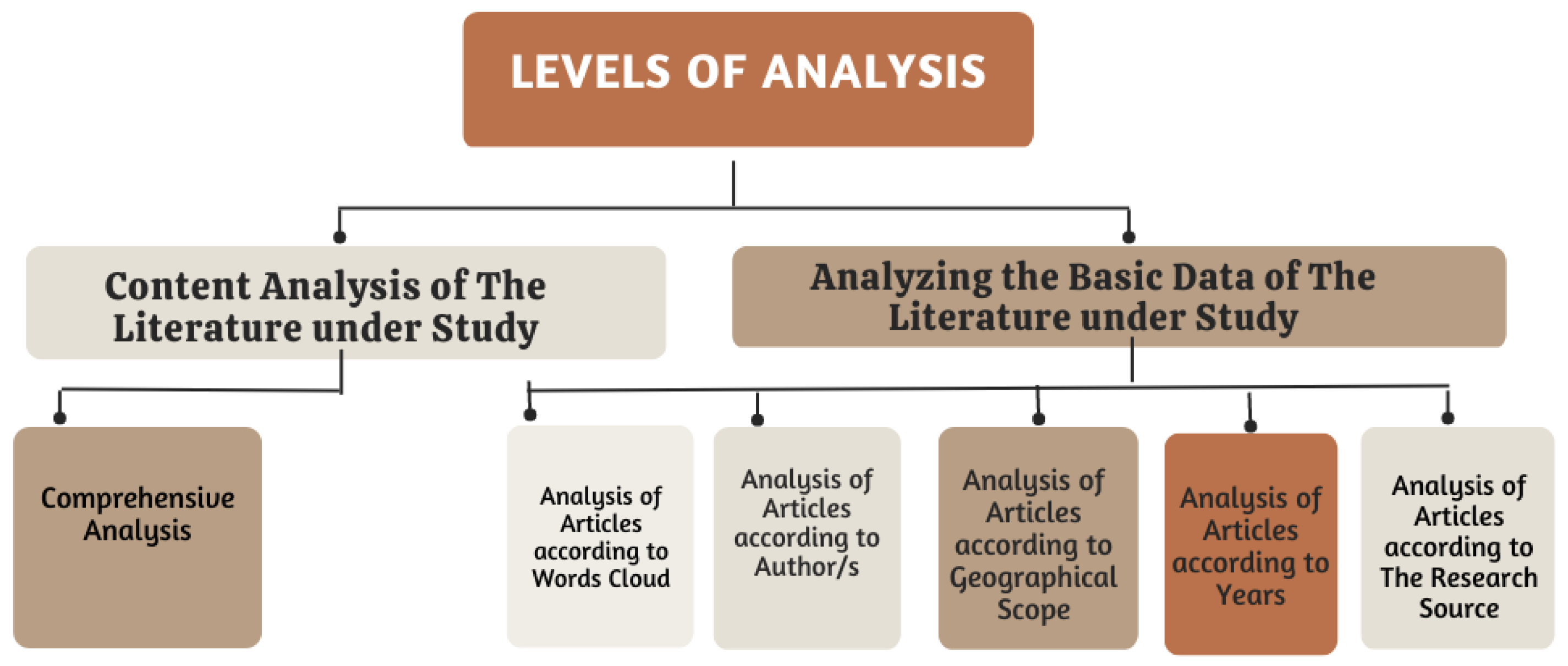
2.2. Levels of Analysis
3. Results
3.1. The Basic Information of the Literature under Study
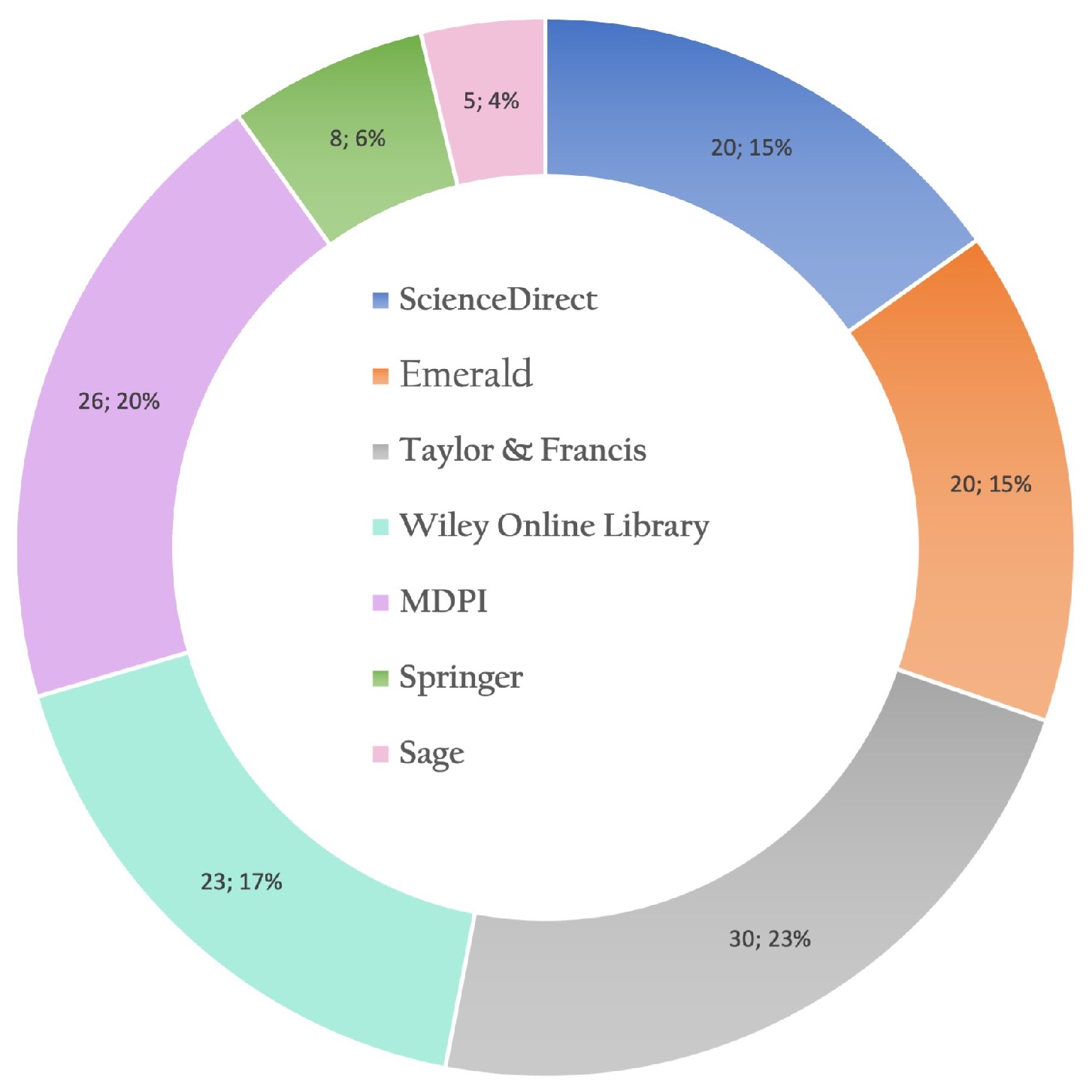
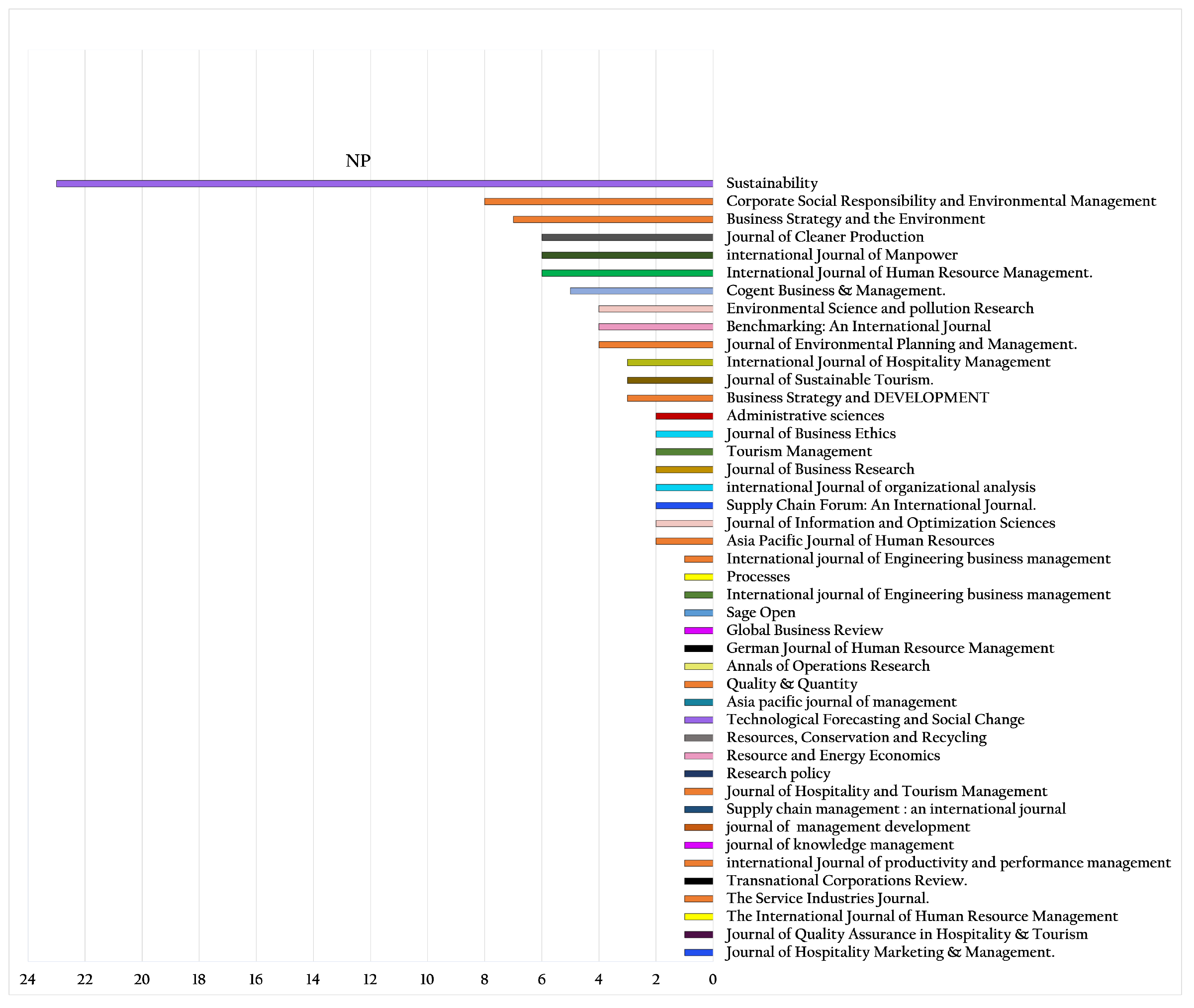
3.1.1. Analysis of Articles According to Research Source
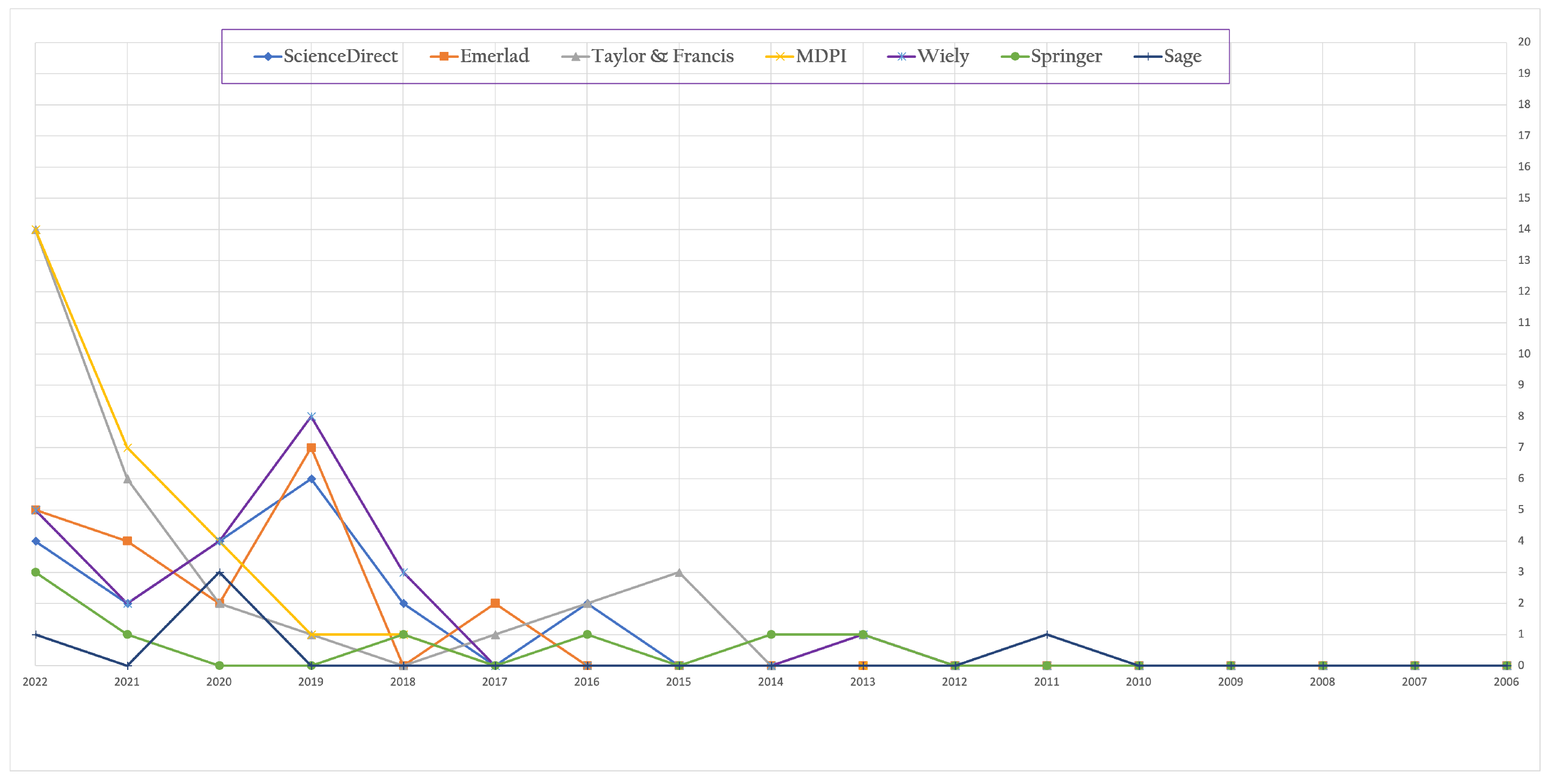
3.1.2. Analysis of Articles by Year
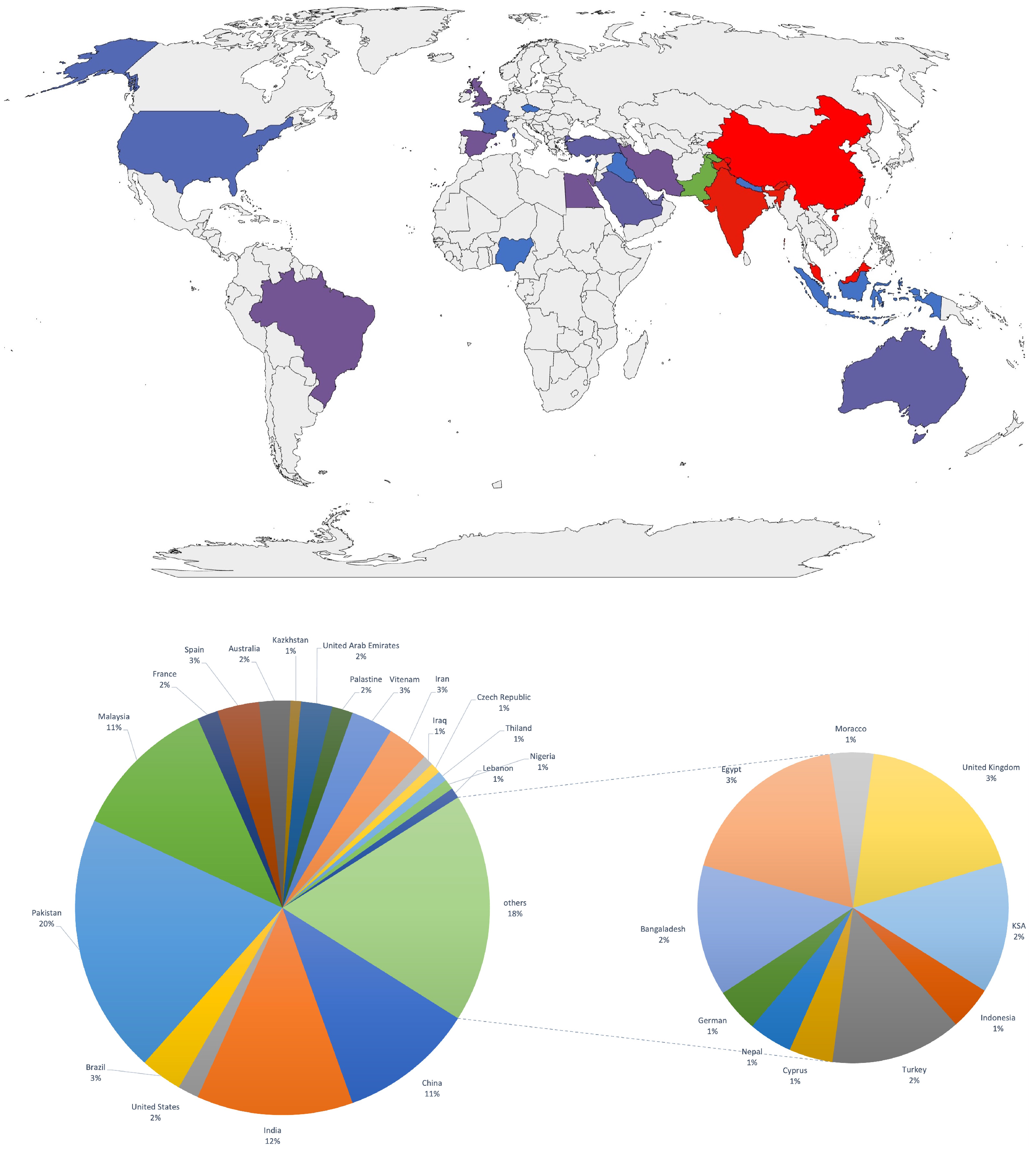
3.1.3. Analysis of Articles According to Geographical Scope
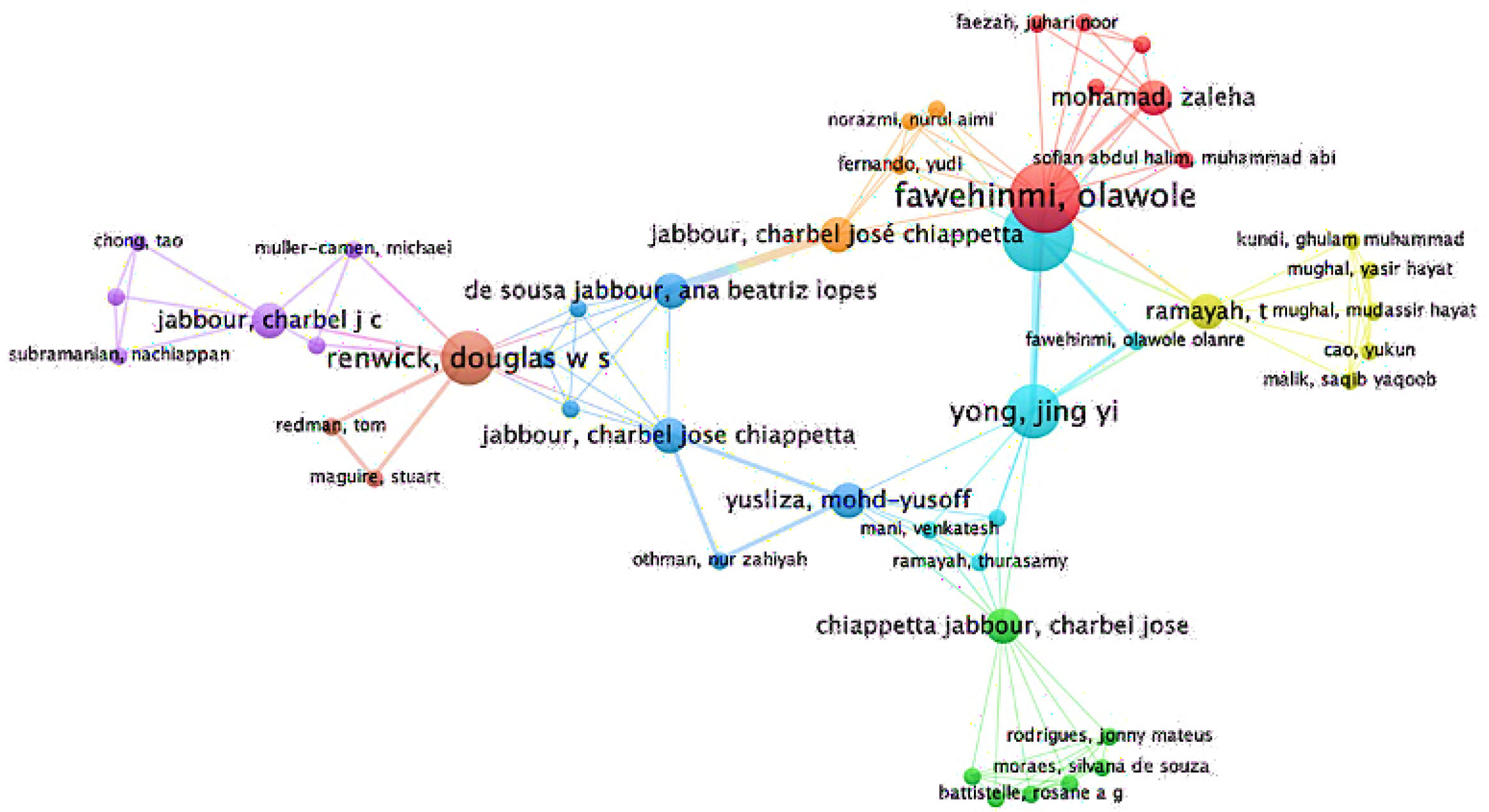
3.1.4. Analysis of Articles by Author
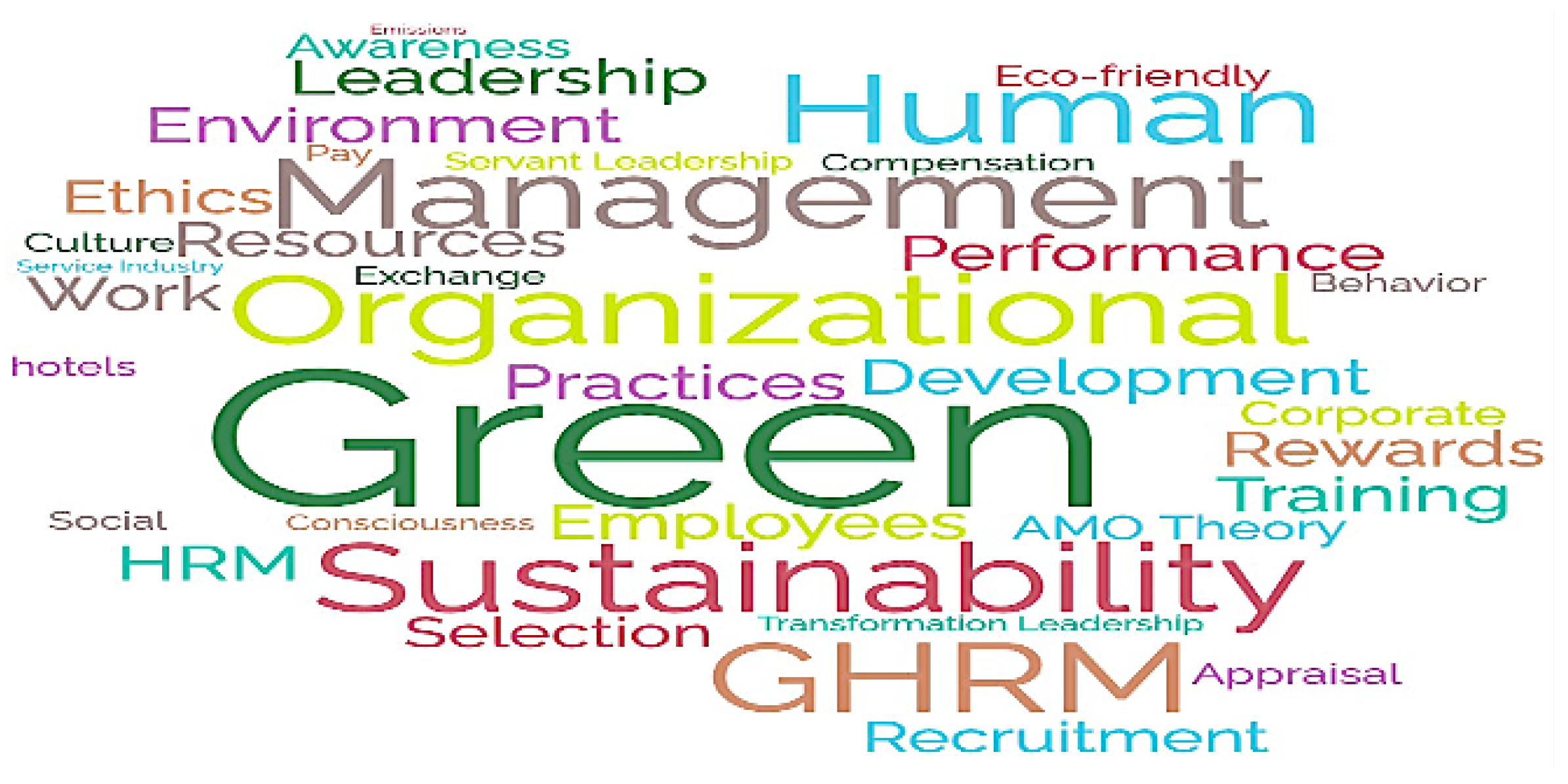
3.1.5. Analysis of Articles by Key Word
3.2. Content Analysis of the Literature under Study
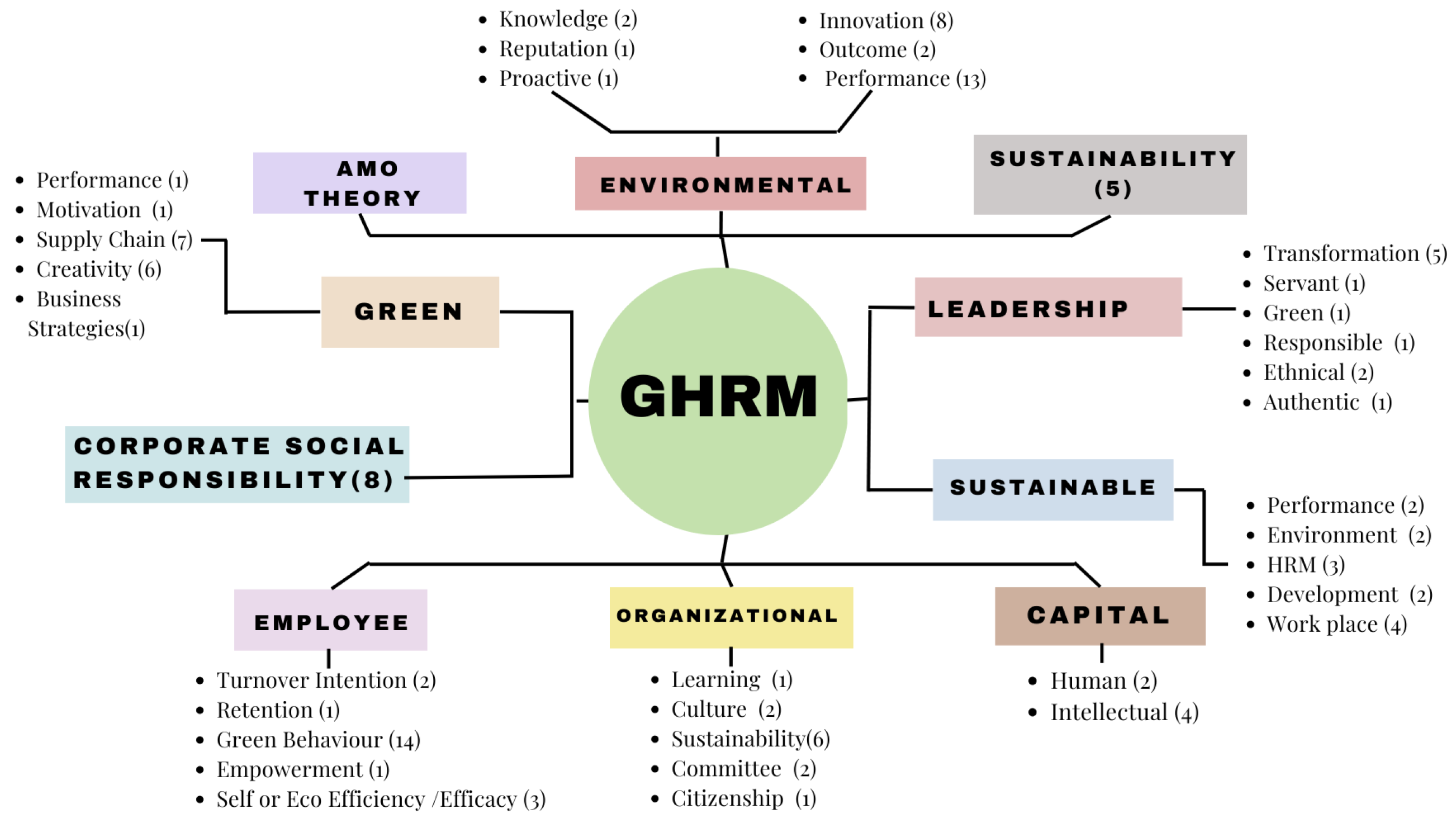
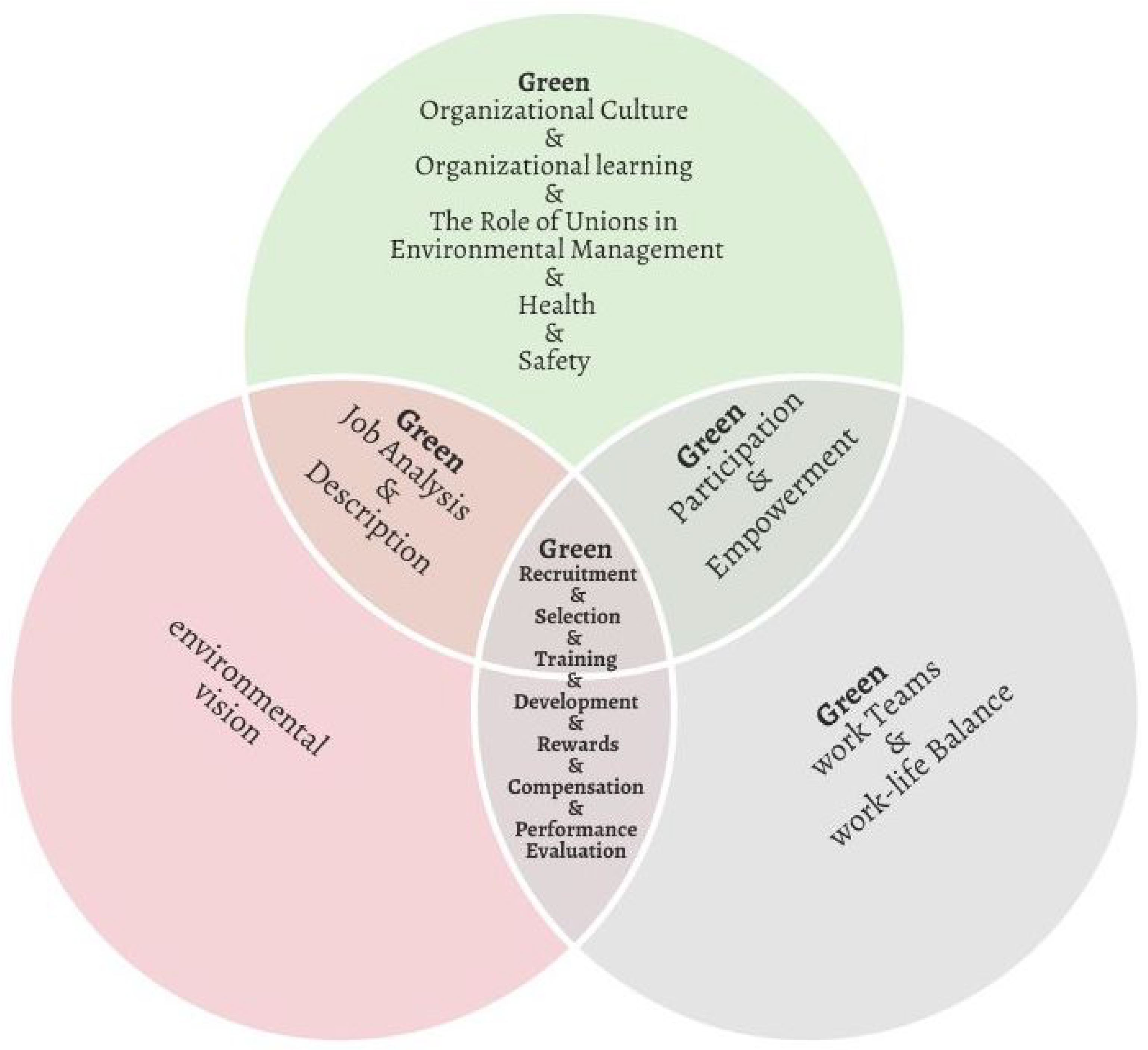
3.2.1. Analysis of Variables Associated with GHRM
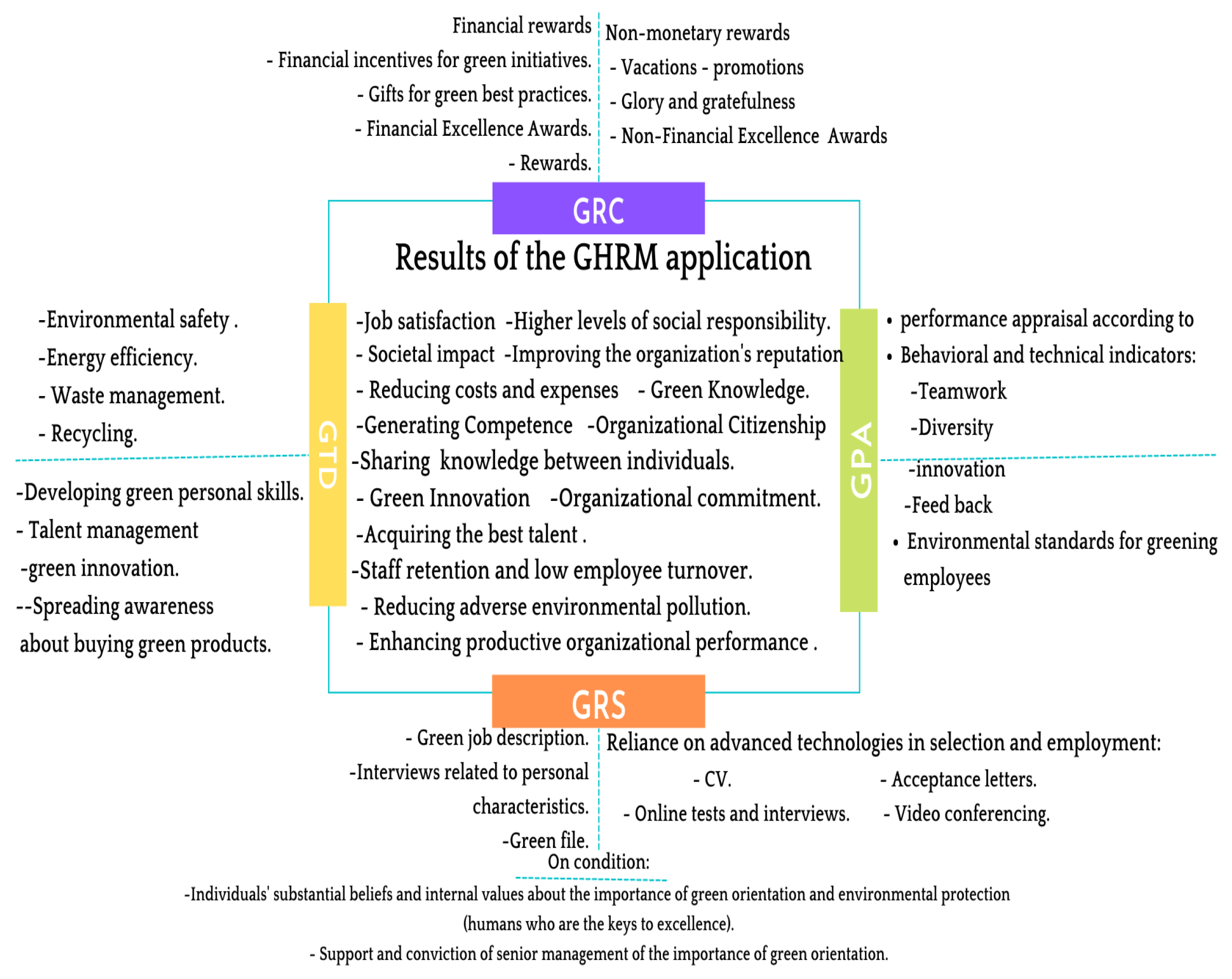
3.2.2. Analysis of GHRMPs, Nature of Study and Main Findings
4. Discussion
5. Conclusions, Contributions, Limitations, and Future Research
5.1. Conclusions
5.2. Contributions
5.3. Limitations
5.4. Future Research
Author Contributions
Funding
Institutional Review Board Statement
Informed Consent Statement
Data Availability Statement
Acknowledgments
Conflicts of Interest
Abbreviations
| GHRM | Green Human Resource Management |
| GHRMPs | Green Human Resource Management practices |
| GTD | Green Training and Development |
| GRS | Green Recruitment and Selection |
| GL | Green learning |
| GRC | Green reward and Compensation |
| GCL | Green Culture |
| GHS | Green Health and Safety |
| GWLQ | Green Work–Life Quality |
| GIV | Green Involvement |
| GC | Green Compensation |
| GER | Green Employee Relations |
| GPR | Green Pay and Reward |
| GJD | Green Job Design |
| GE | Green Engagement |
| GH | Green Hiring |
| GETS | Green Employing Talented Staff |
| GDJEI | Green Designing Jobs of employee Involvement |
| GT | Green Training |
| GCE | Green Control and Evaluation |
| GRW | Green Reward |
| GPA | Green Performance Appraisal |
| GTA | Green Teams |
| SSE | Support of Senior Executives |
| GS | Green Staffing |
| GIN | Green Induction |
| GTI | Green Training and Involvement |
| GEM | Green Empowerment |
| GJDS | Green Job Description |
| GPAS | Green Performance Assessment |
| GLR | Green Labor Relations |
| GCO | Green Career Opportunities |
| GWLB | Green Work–Life Balance |
| GPDM | Green Participation in Decision-Making |
| GPMC | Green Performance Management and Compensation |
| GSP | Green Separation |
| GPR | Green Promotion |
| CSR | Corporate Social Responsibility |
| GJAD | Green Job Analysis and Description |
References
- Cheema, S.; Javed, F. The effects of corporate social responsibility toward green human resource management: The mediating role of sustainable environment. Cogent Bus. Manag. 2017, 4, 1310012. [Google Scholar] [CrossRef]
- Irani, F.; Kiliç, H.; Adeshola, I. Impact of green human resource management practices on the environmental performance of green hotels. J. Hosp. Mark. Manag. 2022, 31, 570–600. [Google Scholar] [CrossRef]
- Goel, P.; Mehta, S.; Kumar, R.; Castaño, F. Sustainable Green Human Resource Management Practices in Educational Institutions: An Interpretive Structural Modelling and Analytic Hierarchy Process Approach. Sustainability 2022, 14, 12853. [Google Scholar] [CrossRef]
- Gilal, F.G.; Ashraf, Z.; Gilal, N.G.; Gilal, R.G.; Channa, N.A. Promoting environmental performance through green human resource management practices in higher education institutions: A moderated mediation model. Corp. Soc. Responsib. Environ. Manag. 2019, 26, 1579–1590. [Google Scholar] [CrossRef]
- Ercantan, O.; Eyupoglu, S. How Do Green Human Resource Management Practices Encourage Employees to Engage in Green Behavior? Perceptions of University Students as Prospective Employees. Sustainability 2022, 14, 1718. [Google Scholar] [CrossRef]
- Benevene, P.; Buonomo, I. Green Human Resource Management: An Evidence-Based Systematic Literature Review. Sustainability 2020, 12, 5974. [Google Scholar] [CrossRef]
- Mahmood, Q.U.A.; Ahmed, R.; Philbin, S.P. The moderating effect of big data analytics on green human resource management and organizational performance. Int. J. Manag. Sci. Eng. Manag. 2022, 1–13. [Google Scholar] [CrossRef]
- Tang, G.; Chen, Y.; Jiang, Y.; Paillé, P.; Jia, J. Green human resource management practices: Scale development and validity. Asia Pac. J. Hum. Resour. 2018, 56, 31–55. [Google Scholar] [CrossRef]
- Renwick, D.W.S.; Redman, T.; Maguire, S. Green Human Resource Management: A Review and Research Agenda *. Int. J. Manag. Rev. 2013, 15, 1–14. [Google Scholar] [CrossRef]
- Khan, M.H.; Muktar, S.N. A bibliometric analysis of green human resource management based on scopus platform. Cogent Bus. Manag. 2020, 7, 1831165. [Google Scholar] [CrossRef]
- Iftikar, T.; Hussain, S.; Malik, M.I.; Hyder, S.; Kaleem, M.; Saqib, A. Green human resource management and pro-environmental behaviour nexus with the lens of AMO theory. Cogent Bus. Manag. 2022, 9, 2124603. [Google Scholar] [CrossRef]
- Ahmed, M.; Guo, Q.; Qureshi, M.A.; Raza, S.A.; Khan, K.A.; Salam, J. Do green HR practices enhance green motivation and proactive environmental management maturity in hotel industry? Int. J. Hosp. Manag. 2021, 94, 102852. [Google Scholar] [CrossRef]
- Mukherji, A.; Bhatnagar, J. Conceptualizing and theorizing green human resource management: A narrative review. Int. J. Manpow. 2022, 43, 862–888. [Google Scholar] [CrossRef]
- Moher, D.; Liberati, A.; Tetzlaff, J.; Altman, D.G.; Group, P. Preferred reporting items for systematic reviews and meta-analyses: The PRISMA statement. Ann. Intern. Med. 2009, 151, 264–269. [Google Scholar] [CrossRef]
- Snyder, H. Literature review as a research methodology: An overview and guidelines. J. Bus. Res. 2019, 104, 333–339. [Google Scholar] [CrossRef]
- Banomyong, R.; Varadejsatitwong, P.; Oloruntoba, R. A systematic review of humanitarian operations, humanitarian logistics and humanitarian supply chain performance literature 2005 to 2016. Ann. Oper. Res. 2019, 283, 71–86. [Google Scholar] [CrossRef]
- Davis, J.; Mengersen, K.; Bennett, S.; Mazerolle, L. Viewing systematic reviews and meta-analysis in social research through different lenses. SpringerPlus 2014, 3, 1–9. [Google Scholar] [CrossRef]
- Jackson, S.E.; Renwick, D.W.S.; Jabbour, C.J.C.; Muller-Camen, M. State-of-the-art and future directions for green human resource management: Introduction to the special issue. Ger. J. Hum. Resour. Manag. 2011, 25, 99–116. [Google Scholar] [CrossRef]
- Kabil, M.; Ali, M.A.; Marzouk, A.; Dávid, L.D. Gender Perspectives in Tourism Studies: A Comparative Bibliometric Analysis in the MENA Region. Tour. Plan. Dev. 2022, 1–23. [Google Scholar] [CrossRef]
- Abbas, Z.; Sarwar, S.; Rehman, M.A.; Zámečník, R.; Shoaib, M. Green HRM promotes higher education sustainability: A mediated-moderated analysis. Int. J. Manpow. 2021, 43, 827–843. [Google Scholar] [CrossRef]
- Alavi, S.; Aghakhani, H. Identifying the effect of green human resource management practices on lean-agile (LEAGILE) and prioritizing its practices. Int. J. Product. Perform. Manag. 2021. [Google Scholar] [CrossRef]
- de Souza Freitas, W.R.; Caldeira-Oliveira, J.H.; Teixeira, A.A.; Stefanelli, N.O.; Teixeira, T.B. Green human resource management and corporate social responsibility. Benchmarking Int. J. 2020, 27, 1551–1569. [Google Scholar] [CrossRef]
- Abualigah, A.; Koburtay, T.; Bourini, I.; Badar, K.; Gerged, A.M. Towards sustainable development in the hospitality sector: Does green human resource management stimulate green creativity? A moderated mediation model. Bus. Strategy Environ. 2022. [Google Scholar] [CrossRef]
- Fawehinmi, O.; Yusliza, M.; Wan Kasim, W.Z.; Mohamad, Z.; Sofian Abdul Halim, M.A. Exploring the interplay of green human resource management, employee green behavior, and personal moral norms. Sage Open 2020, 10, 2158244020982292. [Google Scholar] [CrossRef]
- Darvazeh, S.S.; Mooseloo, F.M.; Aeini, S.; Vandchali, H.R.; Tirkolaee, E.B. An integrated methodology for green human resource management in construction industry. Environ. Sci. Pollut. Res. 2022, 1–19. [Google Scholar] [CrossRef]
- Darvishmotevali, M.; Altinay, L. Green HRM, environmental awareness and green behaviors: The moderating role of servant leadership. Tour. Manag. 2022, 88, 104401. [Google Scholar] [CrossRef]
- Wagner, M. ‘Green’human resource benefits: Do they matter as determinants of environmental management system implementation? J. Bus. Ethics 2013, 114, 443–456. [Google Scholar] [CrossRef]
- Kramar, R. Beyond strategic human resource management: Is sustainable human resource management the next approach? Int. J. Hum. Resour. Manag. 2014, 25, 1069–1089. [Google Scholar] [CrossRef]
- Ahmad, S. Green Human Resource Management: Policies and practices. Cogent Bus. Manag. 2015, 2, 1030817. [Google Scholar] [CrossRef]
- Renwick, D.W.; Jabbour, C.J.; Muller-Camen, M.; Redman, T.; Wilkinson, A. Contemporary developments in Green (environmental) HRM scholarship. Int. J. Hum. Resour. Manag. 2016, 27, 114–128. [Google Scholar] [CrossRef]
- Guerci, M.; Carollo, L. A paradox view on green human resource management: Insights from the Italian context. Int. J. Hum. Resour. Manag. 2016, 27, 212–238. [Google Scholar] [CrossRef]
- Haddock-Millar, J.; Sanyal, C.; Müller-Camen, M. Green human resource management: A comparative qualitative case study of a United States multinational corporation. Int. J. Hum. Resour. Manag. 2016, 27, 192–211. [Google Scholar] [CrossRef]
- Jabbour, C.J.C.; de Sousa Jabbour, A.B.L. Green human resource management and green supply chain management: Linking two emerging agendas. J. Clean. Prod. 2016, 112, 1824–1833. [Google Scholar] [CrossRef]
- Tariq, S.; Jan, F.A.; Ahmad, M.S. Green employee empowerment: A systematic literature review on state-of-art in green human resource management. Qual. Quant. 2016, 50, 237–269. [Google Scholar] [CrossRef]
- Mishra, P. Green human resource management. Int. J. Organ. Anal. 2017, 25, 762–788. [Google Scholar] [CrossRef]
- Tooranloo, H.S.; Azadi, M.H.; Sayyahpoor, A. Analyzing factors affecting implementation success of sustainable human resource management (SHRM) using a hybrid approach of FAHP and Type-2 fuzzy DEMATEL. J. Clean. Prod. 2017, 162, 1252–1265. [Google Scholar] [CrossRef]
- Jia, J.; Liu, H.; Chin, T.; Hu, D. The Continuous Mediating Effects of GHRM on Employees’ Green Passion via Transformational Leadership and Green Creativity. Sustainability 2018, 10, 3237. [Google Scholar] [CrossRef]
- Longoni, A.; Luzzini, D.; Guerci, M. Deploying environmental management across functions: The relationship between green human resource management and green supply chain management. J. Bus. Ethics 2018, 151, 1081–1095. [Google Scholar] [CrossRef]
- Ren, S.; Tang, G.; Jackson, S.E. Green human resource management research in emergence: A review and future directions. Asia Pac. J. Manag. 2018, 35, 769–803. [Google Scholar] [CrossRef]
- Zaid, A.A.; Jaaron, A.A.M.; Bon, A.T. The impact of green human resource management and green supply chain management practices on sustainable performance: An empirical study. J. Clean. Prod. 2018, 204, 965–979. [Google Scholar] [CrossRef]
- Al Kerdawy, M.M.A. The role of corporate support for employee volunteering in strengthening the impact of green human resource management practices on corporate social responsibility in the Egyptian firms. Eur. Manag. Rev. 2019, 16, 1079–1095. [Google Scholar] [CrossRef]
- Al-Romeedy, B.S. Green human resource management in Egyptian travel agencies: Constraints of implementation and requirements for success. J. Hum. Resour. Hosp. Tour. 2019, 18, 529–548. [Google Scholar] [CrossRef]
- Chams, N.; García-Blandón, J. On the importance of sustainable human resource management for the adoption of sustainable development goals. Resour. Conserv. Recycl. 2019, 141, 109–122. [Google Scholar] [CrossRef]
- Chaudhary, R. Green human resource management and job pursuit intention: Examining the underlying processes. Corp. Soc. Responsib. Environ. Manag. 2019, 26, 929–937. [Google Scholar] [CrossRef]
- Kim, Y.J.; Kim, W.G.; Choi, H.M.; Phetvaroon, K. The effect of green human resource management on hotel employees’ eco-friendly behavior and environmental performance. Int. J. Hosp. Manag. 2019, 76, 83–93. [Google Scholar] [CrossRef]
- Zhang, Y.; Luo, Y.; Zhang, X.; Zhao, J. How Green Human Resource Management Can Promote Green Employee Behavior in China: A Technology Acceptance Model Perspective. Sustainability 2019, 11, 5408. [Google Scholar] [CrossRef]
- de Souza Moraes, S.; Jabbour, C.J.C.; Battistelle, R.A.G.; Rodrigues, J.M.; Renwick, D.S.W.; Foropon, C.; Roubaud, D. When knowledge management matters: Interplay between green human resources and eco-efficiency in the financial service industry. J. Knowl. Manag. 2019, 23, 1691–1707. [Google Scholar] [CrossRef]
- Pham, N.T.; Tučková, Z.; Jabbour, C.J.C. Greening the hospitality industry: How do green human resource management practices influence organizational citizenship behavior in hotels? A mixed-methods study. Tour. Manag. 2019, 72, 386–399. [Google Scholar] [CrossRef]
- Roscoe, S.; Subramanian, N.; Jabbour, C.J.C.; Chong, T. Green human resource management and the enablers of green organisational culture: Enhancing a firm’s environmental performance for sustainable development. Bus. Strategy Environ. 2019, 28, 737–749. [Google Scholar] [CrossRef]
- Saeed, B.B.; Afsar, B.; Hafeez, S.; Khan, I.; Tahir, M.; Afridi, M.A. Promoting employee’s proenvironmental behavior through green human resource management practices. Corp. Soc. Responsib. Environ. Manag. 2019, 26, 424–438. [Google Scholar] [CrossRef]
- Shah, M. Green human resource management: Development of a valid measurement scale. Bus. Strategy Environ. 2019, 28, 771–785. [Google Scholar] [CrossRef]
- Pham, N.T.; Hoang, H.T.; Phan, Q.P.T. Green human resource management: A comprehensive review and future research agenda. Int. J. Manpow. 2020, 41, 845–878. [Google Scholar] [CrossRef]
- Yong, J.Y.; Yusliza, M.Y.; Fawehinmi, O.O. Green human resource management. Benchmarking Int. J. 2020, 27, 2005–2027. [Google Scholar] [CrossRef]
- Yusliza, M.Y.; Norazmi, N.A.; Jabbour, C.J.C.; Fernando, Y.; Fawehinmi, O.; Seles, B.M.R.P. Top management commitment, corporate social responsibility and green human resource management. Benchmarking Int. J. 2019, 26, 2051–2078. [Google Scholar] [CrossRef]
- Zhang, H.; Sun, S. Cognitive dissonance of self-standards: A negative interaction of green compensation and green training on employee pro-environmental behavior in China. Psychol. Res. Behav. Manag. 2021, 14, 1399. [Google Scholar] [CrossRef] [PubMed]
- Agyabeng-Mensah, Y.; Ahenkorah, E.; Afum, E.; Agyemang, A.N.; Agnikpe, C.; Rogers, F. Examining the influence of internal green supply chain practices, green human resource management and supply chain environmental cooperation on firm performance. Supply Chain. Manag. Int. J. 2020, 25, 585–599. [Google Scholar] [CrossRef]
- Ari, E.; Karatepe, O.M.; Rezapouraghdam, H.; Avci, T. A Conceptual Model for Green Human Resource Management: Indicators, Differential Pathways, and Multiple Pro-Environmental Outcomes. Sustainability 2020, 12, 7089. [Google Scholar] [CrossRef]
- Chaudhary, R. Green Human Resource Management and Employee Green Behavior: An Empirical Analysis. Corp. Soc. Responsib. Environ. Manag. 2020, 27, 630–641. [Google Scholar] [CrossRef]
- Davis, M.C.; Unsworth, K.L.; Russell, S.V.; Galvan, J.J. Can green behaviors really be increased for all employees? Trade-offs for “deep greens” in a goal-oriented green human resource management intervention. Bus. Strategy Environ. 2020, 29, 335–346. [Google Scholar] [CrossRef]
- Fawehinmi, O.; Yusliza, M.Y.; Mohamad, Z.; Faezah, J.N.; Muhammad, Z. Assessing the green behaviour of academics: The role of green human resource management and environmental knowledge. Int. J. Manpow. 2020, 41, 879–900. [Google Scholar] [CrossRef]
- Islam, M.A.; Hunt, A.; Jantan, A.H.; Hashim, H.; Chong, C.W. Exploring challenges and solutions in applying green human resource management practices for the sustainable workplace in the ready-made garment industry in Bangladesh. Bus. Strategy Dev. 2020, 3, 332–343. [Google Scholar] [CrossRef]
- Islam, M.A.; Jantan, A.H.; Yusoff, Y.M.; Chong, C.W.; Hossain, M.S. Green Human Resource Management (GHRM) practices and millennial employees’ turnover intentions in tourism industry in malaysia: Moderating role of work environment. Glob. Bus. Rev. 2020. [Google Scholar] [CrossRef]
- Jerónimo, H.M.; Henriques, P.L.; de Lacerda, T.C.; da Silva, F.P.; Vieira, P.R. Going green and sustainable: The influence of green HR practices on the organizational rationale for sustainability. J. Bus. Res. 2020, 112, 413–421. [Google Scholar] [CrossRef]
- Malik, S.Y.; Cao, Y.; Mughal, Y.H.; Kundi, G.M.; Mughal, M.H.; Ramayah, T. Pathways towards Sustainability in Organizations: Empirical Evidence on the Role of Green Human Resource Management Practices and Green Intellectual Capital. Sustainability 2020, 12, 3228. [Google Scholar] [CrossRef]
- Moktadir, M.A.; Dwivedi, A.; Ali, S.M.; Paul, S.K.; Kabir, G.; Madaan, J. Antecedents for greening the workforce: Implications for green human resource management. Int. J. Manpow. 2020, 41, 1135–1153. [Google Scholar] [CrossRef]
- Mousa, S.K.; Othman, M. The impact of green human resource management practices on sustainable performance in healthcare organisations: A conceptual framework. J. Clean. Prod. 2020, 243, 118595. [Google Scholar] [CrossRef]
- Pham, N.T.; Thanh, T.V.; Tučková, Z.; Thuy, V.T.N. The role of green human resource management in driving hotel’s environmental performance: Interaction and mediation analysis. Int. J. Hosp. Manag. 2020, 88, 102392. [Google Scholar] [CrossRef]
- Raut, R.D.; Gardas, B.; Luthra, S.; Narkhede, B.; Mangla, S.K. Analysing green human resource management indicators of automotive service sector. Int. J. Manpow. 2020, 41, 925–944. [Google Scholar] [CrossRef]
- Shafaei, A.; Nejati, M.; Yusoff, Y.M. Green human resource management. Int. J. Manpow. 2020, 41, 1041–1060. [Google Scholar] [CrossRef]
- Singh, S.K.; Giudice, M.D.; Chierici, R.; Graziano, D. Green innovation and environmental performance: The role of green transformational leadership and green human resource management. Technol. Forecast. Soc. Chang. 2020, 150, 119762. [Google Scholar] [CrossRef]
- Sobaih, A.E.E.; Hasanein, A.; Elshaer, I. Influences of Green Human Resources Management on Environmental Performance in Small Lodging Enterprises: The Role of Green Innovation. Sustainability 2020, 12, 10371. [Google Scholar] [CrossRef]
- Yong, J.Y.; Yusliza, M.Y.; Ramayah, T.; Chiappetta Jabbour, C.J.; Sehnem, S.; Mani, V. Pathways towards sustainability in manufacturing organizations: Empirical evidence on the role of green human resource management. Bus. Strategy Environ. 2020, 29, 212–228. [Google Scholar] [CrossRef]
- Amrutha, V.; Geetha, S. A systematic review on green human resource management: Implications for social sustainability. J. Clean. Prod. 2020, 247, 119131. [Google Scholar] [CrossRef]
- Al-Ghazali, B.M.; Afsar, B. Retracted: Green human resource management and employees’ green creativity: The roles of green behavioral intention and individual green values. Corp. Soc. Responsib. Environ. Manag. 2021, 28, 536. [Google Scholar] [CrossRef]
- Amjad, F.; Abbas, W.; Zia-UR-Rehman, M.; Baig, S.A.; Hashim, M.; Khan, A.; ur Rehman, H. Effect of green human resource management practices on organizational sustainability: The mediating role of environmental and employee performance. Environ. Sci. Pollut. Res. 2021, 28, 28191–28206. [Google Scholar] [CrossRef] [PubMed]
- Ansari, N.Y.; Farrukh, M.; Raza, A. Green human resource management and employees pro-environmental behaviours: Examining the underlying mechanism. Corp. Soc. Responsib. Environ. Manag. 2021, 28, 229–238. [Google Scholar] [CrossRef]
- Elshaer, I.A.; Sobaih, A.E.E.; Aliedan, M.; Azazz, A.M.S. The Effect of Green Human Resource Management on Environmental Performance in Small Tourism Enterprises: Mediating Role of Pro-Environmental Behaviors. Sustainability 2021, 13, 1956. [Google Scholar] [CrossRef]
- He, J.; Morrison, A.M.; Zhang, H. Being sustainable: The three-way interactive effects of CSR, green human resource management, and responsible leadership on employee green behavior and task performance. Corp. Soc. Responsib. Environ. Manag. 2021, 28, 1043–1054. [Google Scholar] [CrossRef]
- Islam, T.; Hussain, D.; Ahmed, I.; Sadiq, M. Ethical leadership and environment specific discretionary behaviour: The mediating role of green human resource management and moderating role of individual green values. Can. J. Adm. Sci. Rev. Can. Des Sci. L’Adm. 2021, 38, 442–459. [Google Scholar] [CrossRef]
- Jamal, T.; Zahid, M.; Martins, J.M.; Mata, M.N.; Rahman, H.U.; Mata, P.N. Perceived Green Human Resource Management Practices and Corporate Sustainability: Multigroup Analysis and Major Industries Perspectives. Sustainability 2021, 13, 3045. [Google Scholar] [CrossRef]
- Kumar, S.P.; Saha, S.; Anand, A. A green human resource management approach of participation in decision-making and behavioural outcomes—A moderated mediated model. Int. J. Organ. Anal. 2021. [Google Scholar] [CrossRef]
- Luu, T.T. Can green creativity be fostered? Unfolding the roles of perceived green human resource management practices, dual mediation paths, and perceived environmentally-specific authentic leadership. Int. J. Hum. Resour. Manag. 2021, 1–28. [Google Scholar] [CrossRef]
- Moin, M.F.; Omar, M.K.; Wei, F.; Rasheed, M.I.; Hameed, Z. Green HRM and psychological safety: How transformational leadership drives follower’s job satisfaction. Curr. Issues Tour. 2021, 24, 2269–2277. [Google Scholar] [CrossRef]
- Molina-Azorin, J.F.; López-Gamero, M.D.; Tarí, J.J.; Pereira-Moliner, J.; Pertusa-Ortega, E.M. Environmental management, human resource management and green human resource management: A literature review. Adm. Sci. 2021, 11, 48. [Google Scholar] [CrossRef]
- Muisyo, P.K.; Qin, S.; Julius, M.M.; Ho, T.H.; Ho, T.H. Green HRM and employer branding: The role of collective affective commitment to environmental management chAnge Environ. Reputation. J. Sustain. Tour. 2021, 1–18. [Google Scholar] [CrossRef]
- Nisar, Q.A.; Haider, S.; Ali, F.; Jamshed, S.; Ryu, K.; Gill, S.S. Green human resource management practices and environmental performance in Malaysian green hotels: The role of green intellectual capital and pro-environmental behavior. J. Clean. Prod. 2021, 311, 127504. [Google Scholar] [CrossRef]
- Paulet, R.; Holland, P.; Morgan, D. A meta-review of 10 years of green human resource management: Is Green HRM headed towards a roadblock or a revitalisation? Asia Pac. J. Hum. Resour. 2021, 59, 159–183. [Google Scholar] [CrossRef]
- Sathasivam, K.; Bakar, R.A.; Hashim, R.C. Embracing organisational environmental sustainability: Experiences in green human resource management. Bus. Strategy Dev. 2021, 4, 123–135. [Google Scholar] [CrossRef]
- Shoaib, M.; Abbas, Z.; Yousaf, M.; Zámečník, R.; Ahmed, J.; Saqib, S. The role of GHRM practices towards organizational commitment: A mediation analysis of green human capital. Cogent Bus. Manag. 2021, 8, 1870798. [Google Scholar] [CrossRef]
- Sinclair-Desgagné, B. Green human resource management—A personnel economics perspective. Resour. Energy Econ. 2021, 66, 101261. [Google Scholar] [CrossRef]
- Úbeda-García, M.; Claver-Cortés, E.; Marco-Lajara, B.; Zaragoza-Sáez, P. Corporate social responsibility and firm performance in the hotel industry. The mediating role of green human resource management and environmental outcomes. J. Bus. Res. 2021, 123, 57–69. [Google Scholar] [CrossRef]
- Zhao, F.; Kusi, M.; Chen, Y.; Hu, W.; Ahmed, F.; Sukamani, D. Influencing Mechanism of Green Human Resource Management and Corporate Social Responsibility on Organizational Sustainable Performance. Sustainability 2021, 13, 8875. [Google Scholar] [CrossRef]
- Zhu, J.; Tang, W.; Wang, H.; Chen, Y. The Influence of Green Human Resource Management on Employee Green Behavior—A Study on the Mediating Effect of Environmental Belief and Green Organizational Identity. Sustainability 2021, 13, 4544. [Google Scholar] [CrossRef]
- Ahmad, S.; Islam, T.; Sadiq, M.; Kaleem, A. Promoting green behavior through ethical leadership: A model of green human resource management and environmental knowledge. Leadersh. Organ. Dev. J. 2021. [Google Scholar] [CrossRef]
- Adubor, N.V.; Adeniji, A.A.; Salau, O.P.; Olajugba, O.J.; Onibudo, G.O. Exploring Green Human Resource Adoption and Corporate Sustainability in Nigerian Manufacturing Industry. Sustainability 2022, 14, 12635. [Google Scholar] [CrossRef]
- Agarwal, A.; Kapoor, K. Analysis of barriers in green human resource implementation for enhancing organizational sustainability: A DEMATEL approach. Transnatl. Corp. Rev. 2022, 1–15. [Google Scholar] [CrossRef]
- Ahmad, I.; Ullah, K.; Khan, A. The impact of green HRM on green creativity: Mediating role of pro-environmental behaviors and moderating role of ethical leadership style. Int. J. Hum. Resour. Manag. 2022, 33, 3789–3821. [Google Scholar] [CrossRef]
- Alipour, N.; Nazari-Shirkouhi, S.; Sangari, M.S.; Vandchali, H.R. Lean, Agile, Resilient, and Green Human Resource Management: The Impact On Organizational Innovation and Organizational Performance. Environ. Sci. Pollut. Res. 2022, 29, 82812–82826. [Google Scholar] [CrossRef]
- Bahuguna, P.C.; Srivastava, R.; Tiwari, S. Two-decade journey of green human resource management research: A bibliometric analysis. Benchmarking Int. J. 2022. [Google Scholar] [CrossRef]
- Burlea-Schiopoiu, A.; Shoukat, M.H.; Shah, S.A.; Ahmad, M.S.; Mazilu, M. The Sustainability of the Tobacco Industry in the Framework of Green Human Resources Management. Sustainability 2022, 14, 5671. [Google Scholar] [CrossRef]
- Chen, F.H.; Tsai, Y.T.; Oen, W.A. Configurations of green human resource management practices on supply chain integration. Int. J. Eng. Bus. Manag. 2022, 14, 18479790221146443. [Google Scholar] [CrossRef]
- Cheng, Y.; Liu, H.; Yuan, Y.; Zhang, Z.; Zhao, J. What Makes Employees Green Advocates? Exploring the Effects of Green Human Resource Management. Int. J. Environ. Res. Public Health 2022, 19, 1807. [Google Scholar] [CrossRef]
- Umrani, W.A.; Channa, N.A.; Ahmed, U.; Syed, J.; Pahi, M.H.; Ramayah, T. The laws of attraction: Role of green human resources, culture and environmental performance in the hospitality sector. Int. J. Hosp. Manag. 2022, 103, 103222. [Google Scholar] [CrossRef]
- Choudhary, P.; Datta, A. The significance of GHRM in fostering hospitality employees’ green creativity: A systematic literature review with bibliometric analysis. J. Inf. Optim. Sci. 2022, 43, 1709–1720. [Google Scholar] [CrossRef]
- Chreif, M.; Farmanesh, P. Applying Green Human Resource Practices toward Sustainable Workplace: A Moderated Mediation Analysis. Sustainability 2022, 14, 9250. [Google Scholar] [CrossRef]
- Fachada, J.; Rebelo, T.; Lourenço, P.; Dimas, I.; Martins, H. Green Human Resource Management: A Bibliometric Analysis. Adm. Sci. 2022, 12, 95. [Google Scholar] [CrossRef]
- Farooq, R.; Zhang, Z.; Talwar, S.; Dhir, A. Do green human resource management and self-efficacy facilitate green creativity? A study of luxury hotels and resorts. J. Sustain. Tour. 2022, 30, 824–845. [Google Scholar] [CrossRef]
- Huo, X.; Azhar, A.; Rehman, N.; Majeed, N. The Role of Green Human Resource Management Practices in Driving Green Performance in the Context of Manufacturing SMEs. Sustainability 2022, 14, 16776. [Google Scholar] [CrossRef]
- Islam, M.A.; Mendy, J.; Haque, A.K.M.A.; Rahman, M. Green human resource management practices and millennial employees’ retention in small and medium enterprises: The moderating impact of creativity climate from a developing country perspective. Bus. Strategy Dev. 2022, 5, 335–349. [Google Scholar] [CrossRef]
- Kara, K.; Edinsel, S. The mediating role of green product innovation (GPI) between green human resources management (GHRM) and green supply chain management (GSCM): Evidence from automotive industry companies in Turkey. Supply Chain. Forum Int. J. 2022, 1–22. [Google Scholar] [CrossRef]
- Liu, J.; Gao, X.; Cao, Y.; Mushtaq, N.; Chen, J.; Wan, L. Catalytic Effect of Green Human Resource Practices on Sustainable Development Goals: Can Individual Values Moderate an Empirical Validation in a Developing Economy? Sustainability 2022, 14, 14502. [Google Scholar] [CrossRef]
- Masud, M.M.; Jafrin, N.; Saif, A.N.M.; Al-Mamun, A. The moderating effect of corporate social responsibility between green human resource management and organizations’ environmental performance. J. Environ. Plan. Manag. 2022, 1–23. [Google Scholar] [CrossRef]
- Mehrajunnisa, M.; Jabeen, F.; Faisal, M.N.; Lange, T. The influence of green human resource management practices and employee green behavior on business performance in sustainability-focused organizations. J. Environ. Plan. Manag. 2022, 1–20. [Google Scholar] [CrossRef]
- Mohammed, A.A.; Fisal, M.Z. The nexus between green human resource management processes and the sustainability of educational institutions: The mediating effect of strategic excellence. J. Appl. Res. High. Educ. 2022. [Google Scholar] [CrossRef]
- Munawar, S.; Yousaf, H.Q.; Ahmed, M.; Rehman, S. Effects of green human resource management on green innovation through green human capital, environmental knowledge, and managerial environmental concern. J. Hosp. Tour. Manag. 2022, 52, 141–150. [Google Scholar] [CrossRef]
- Nawaz Khan, A. Is green leadership associated with employees’ green behavior? Role of green human resource management. J. Environ. Plan. Manag. 2022, 1–21. [Google Scholar] [CrossRef]
- Nisar, Q.A.; Haider, S.; Ali, F.; Gill, S.S.; Waqas, A. The Role of Green HRM on Environmental Performance of Hotels: Mediating Effect of Green Self-Efficacy & Employee Green Behaviors. J. Qual. Assur. Hosp. Tour. 2022, 1–34. [Google Scholar] [CrossRef]
- Omarova, L.; Jo, S.J. Employee Pro-Environmental Behavior: The Impact of Environmental Transformational Leadership and GHRM. Sustainability 2022, 14, 2046. [Google Scholar] [CrossRef]
- Paillé, P.; Valéau, P.; Carballo-Penela, A. Green rewards for optimizing employee environmental performance: Examining the role of perceived organizational support for the environment and internal environmental orientation. J. Environ. Plan. Manag. 2022, 1–22. [Google Scholar] [CrossRef]
- Patil, V.; Wadhwa, C.; Bhalerao, K.; Nair, D.; Khandare, D.M. Green human resource management enabled business sustainability. J. Inf. Optim. Sci. 2022, 43, 1635–1650. [Google Scholar] [CrossRef]
- Qadri, S.U.; Bilal, M.A.; Li, M.; Ma, Z.; Qadri, S.; Ye, C.; Rauf, F. Work Environment as a Moderator Linking Green Human Resources Management Strategies with Turnover Intention of Millennials: A Study of Malaysian Hotel Industry. Sustainability 2022, 14, 7401. [Google Scholar] [CrossRef]
- Sharma, C.; Sakhuja, S.; Nijjer, S. Recent trends of green human resource management: Text mining and network analysis. Environ. Sci. Pollut. Res. 2022, 29, 84916–84935. [Google Scholar] [CrossRef]
- Subramanian, N.; Suresh, M. The contribution of organizational learning and green human resource management practices to the circular economy: A relational analysis–evidence from manufacturing SMEs (part II). Learn. Organ. 2022. [Google Scholar] [CrossRef]
- Tanova, C.; Bayighomog, S.W. Green human resource management in service industries: The construct, antecedents, consequences, and outlook. Serv. Ind. J. 2022, 42, 412–452. [Google Scholar] [CrossRef]
- Ullah, S.; Mehmood, T.; Ahmad, T. Green intellectual capital and green HRM enabling organizations go green: Mediating role of green innovation. Int. J. Innov. Sci. 2022. [Google Scholar] [CrossRef]
- Ye, J.; Zhang, X.; Zhou, L.; Wang, D.; Tian, F. Psychological mechanism linking green human resource management to green behavior. Int. J. Manpow. 2022, 43, 844–861. [Google Scholar] [CrossRef]
- Zahrani, A.A. Team Creativity and Green Human Resource Management Practices’ Mediating Roles in Organizational Sustainability. Sustainability 2022, 14, 12827. [Google Scholar] [CrossRef]
- Zhao, W.; Huang, L. The impact of green transformational leadership, green HRM, green innovation and organizational support on the sustainable business performance: Evidence from China. Econ.-Res.-Ekon. IstražIvanja 2022, 1–21. [Google Scholar] [CrossRef]
- Zhu, S.; Wu, Y.; Shen, Q. How Environmental Knowledge and Green Values Affect the Relationship between Green Human Resource Management and Employees’ Green Behavior: From the Perspective of Emission Reduction. Processes 2022, 10, 38. [Google Scholar] [CrossRef]
- lreahi, M.; Bujdos; Kabil, M.; Akaak, A.; Feket, B.K. Green Human Resources Management in the Hotel Industry: A Systematic Review. Sustainability 2022, 15, 99. [Google Scholar] [CrossRef]
- Aftab, J.; Abid, N.; Cucari, N.; Savastano, M. Green human resource management and environmental performance: The role of green innovation and environmental strategy in a developing country. Bus. Strategy Environ. 2022. [Google Scholar] [CrossRef]
- Vázquez-Brust, D.; Jabbour, C.J.C.; Plaza-Úbeda, J.A.; Perez-Valls, M.; de Sousa Jabbour, A.B.L.; Renwick, D.W. The role of green human resource management in the translation of greening pressures into environmental protection practices. Bus. Strategy Environ. 2022. [Google Scholar] [CrossRef]
- Yasin, R.; Huseynova, A.; Atif, M. Green human resource management, a gateway to employer branding: Mediating role of corporate environmental sustainability and corporate social sustainability. Corp. Soc. Responsib. Environ. Manag. 2022. [Google Scholar] [CrossRef]
- ul Mateen, A.; Nisar, Q.A.; Nasir, N. Fostering pro-environmental behaviors in the healthcare organizations: An empirical analysis of psychological and strategic factors. Asia Pac. Manag. Rev. 2022. [Google Scholar] [CrossRef]
- Ribeiro, N.; Gomes, D.R.; Ortega, E.; Gomes, G.P.; Semedo, A.S. The Impact of Green HRM on Employees’ Eco-Friendly Behavior: The Mediator Role of Organizational Identification. Sustainability 2022, 14, 2897. [Google Scholar] [CrossRef]
- Yusliza, M.Y.; Othman, N.Z.; Jabbour, C.J.C. Deciphering the implementation of green human resource management in an emerging economy. J. Manag. Dev. 2017, 36, 1230–1246. [Google Scholar] [CrossRef]
- Opatha, H.; Hewapathirana, R.A. Defining green and green human resource management: A conceptual study. Int. J. Arts Commer. 2019, 8, 129940. [Google Scholar] [CrossRef]





| Author/s | Nature of Study | The Practices | Major Finding |
|---|---|---|---|
| [18] | Literature review | (GPM), (GTD), (GL), (GRC), (GCU) | Country cultural differences present challenges in their quest to create an equally important and effective green organizational culture globally. |
| [9] | Literature review | (GPA), (GPR), (GI), (GE), (GC) | This review found significant proof of a positive influence of EM in emerging markets with proof of correlation with vital outputs for efficient use of resources, reduction of squandering and contamination, in addition to there are employee outcomes such as increased job satisfaction. |
| [27] | Empirical study | (GHS), (GWLQ) | Involvement of the HR function in this process can make an essential contribution to establishing socially complicated, puzzling, and hard-to-emulate resources that ultimately lead to an increased competitive edge. |
| [28] | Literature review | (GPA), (GPR), (GI), (GE), (GC) | It is essential to recognize that aspects of SHRM and PM are essential to sustainable human resource management. As a result, organizational outcomes such as ROI, market ration and profit remain part of SHRM, as do operational activities. |
| [29] | Literature review | (GR), (GPM), (GTD), (GC), (GER) | GHRM includes specific procedures and activities that align with the three foundations of sustainability—environmental, social and economic equilibrium. Great employees place a high value on the environment and demonstrate exceptional commitment and job satisfaction to an organization that is always prepared to take an ecological approach. |
| [30] | Literature review | (GH), (GTI), (GPM) | Organizations can work to detail the various affirmative results of green interventions to develop the business situation needed to improve green behaviors for volunteer staff. |
| [31] | Empirical study | (GR), (GPM), (GTD), (GC), (GER), (GI), (GJD) | There are eight paradoxes in human resource management that these organizations are aware of, including (personal agendas versus organizational sustainability agendas |
| [32] | Empirical study | (GT), (GE) | To attain proactive ecological management, the majority must be on organizational behaviors that support environmental involvement, as in commune-oriented business factor involvement, this is at the core of the organization’s success. |
| [31] | Empirical study | (GR), (GPM), (GTD), (GC), (GER), (GI), (GJD) | GPM and compensation permit organizations to treat individuals stress by improving environmental performance. GHRM intercede the effect of individuals stress on environmental performance through GTD and involvement, as well as GPM and compensation. |
| [33] | Literature review | (GRS), (GT), ( GPA), (GRC) | Green Supply Chain Management (GSCM) contribute to enterprises’ performance and then contributes to the capacity of firms to support human resources development and corporate social responsibility. |
| [34] | Literature review | (GETS), (GDJEI), (GT), (GCE), (GRW) | This research found that empowered workforce are more motivated to execute environmental tasks that deserve to be eco-friendly. HR is the backbone of any effective organization, so a motivated G-employee thoroughly influences social and organizational productivity. |
| [1] | Empirical study | (GRS), (GPA), (GRP), (GCu) | The results showed that GHRM creates a suitable environment for pursuing a sustainable one. The managerial role, selection and recruitment, rewards and payment systems, and performance and evaluation have positively impacted corporate social responsibility. |
| [35] | mixed study | (GRS), (GT), (GPA), (GR), (GI), (GTE) | Top management support and cross-departmental learning are critical to facilitating green behaviors among employees. |
| [36] | Empirical study | (GJD), (GP), (GS), (GT), (GHS), (GRC) | The sustainability of HRM depends on exploring external conditions for available opportunities, changes, movements, and risks and creating a balance between economic, social, and environmental conditions |
| [37] | Empirical study | (GRS), (GT), (GPM), (GRP), (GI) | To enhance G-creativity and earning G-competitiveness, organizations can concentrate on encouraging transformational leadership and making managers do a pivotal role by acting as actors in driving G-innovation. |
| [38] | Empirical study | (GH), (GT), (GPM), (GC) | The study indicates that GHRM and GSCM affect both environmental and financial interpretation and determine that GHRM and GSCM jointly use those implications. |
| [39] | Literature review | Organizations can implement GHRMPs at all levels, which can be accomplished, for example, by incorporating GHRM objectives and practices inside MIS. | |
| [8] | Empirical study | (GRS), (GT), (GPM), (GRP), (GI) | Organizations need to implement GPM activities, such as balancing metrics to measure environmental results and identifying how liability must be circulated all through the organization. |
| [40] | Empirical study | (GH), (GTI), (GPC) | Researchers affirm that both GHRM and GSCM positively influence sustainable performance. Organizations should manage their cross-functional implementation within various management systems and organizational units for effective environmental management. |
| [31] | Empirical study | (GR), (GPM), (GTD), (GC), (GER), (GI), (GJD) | There are eight paradoxes in human resource management that these organizations are aware of, including (personal agendas versus organizational sustainability agendas |
| [41] | Empirical study | (GS), (GT), (GPA), (GRR) | Managers must translate CSR strategies into GHRMPs or priorities to effectively achieve business objectives. Therefore, managers should consider increasing employee awareness of CSR activities. |
| [42] | Empirical study | (GJAD), (GP), (GRS), (GIN) | The findings highlighted the ought to improve a recompense system for owners of creative ideas in order to safeguard the environment, motivate and encourage employees to care for the environment and use eco-friendly practices. |
| [43] | Literature review | (GRS), (GT), (GPI), (GTE) | The GT and rotations in work handled by SHRM are primarily for creating G-proficiencies and simplifying the SDGs’ execution. |
| [44] | Empirical study | (GRS), (GT), (GPM), (GI) | Organizations need to build a favorable picture and reputation in the market to remain at the forefront of competition. Engagement with GHRM may offer organizations a distinction such that the study identifies organizational prestige due to GHRM. |
| [4] | Empirical study | (GR), (GS), ( GTD), (GPI), (GM) | To address environmental issues, HEIs must integrate ecological behaviors into their operations, which makes employees proud to consider their institutions’ role in protecting the environment. |
| [45] | Empirical study | (SSE), (GT), (GEM), (GR) | HR practitioners must supply their employees with education and training programs concerning environmental preservation. |
| [46] | Empirical study | (GAD), (GP), (GPA), (GRC), (GS) | A strong positive relationship exists between senior management obligation, corporate social responsibility, all dimensions of GHRM. However, unexpectedly, it was found that the relationship between CSR and GHRM is less significant than expected. |
| [47] | Empirical study | (EEP), (GT), (GE), (GTE) | Only environmental training positively affects environmental competence in the company studied. |
| [48] | Empirical study | (GT), (GPM), (GI) | GT has the most decisive effect on enhancing employees’ voluntary nature of G-behavior, and hotels need to pay more attention to evaluating employees’ G-performance. |
| [49] | Empirical study | (GJDS), ( GR), (GS), (GT), (GPAS), (GRC) | GHRM’s recruitment, training, assessment, and motivation practices are supported in the development of the enablers of G-organizational culture. Evidence shows that these catalysts encourage employees to proactively reduce waste, use fewer resources, develop recycling programs, and in doing so, improve the company’s EP. |
| [50] | Empirical study | (GRS), ( GTD), ( GPA), (GRC), (GE) | An environment-friendly psychological climate and environmental knowledge mediate between GHRM practices and behaviors protected by the environment. |
| [51] | Empirical study | (GJAD), (GRS), ( GTD), (GPM), (GC), (GHS), (GLR), (GI) | GJD emphasize incorporating green elements into the functions. It promotes the integration of environmental protection obligations in each position, with an emphasis on its actual practice within the organization. Organizations should incorporate their ecological and social requirements into job descriptions and specifications. |
| [52] | Empirical study | (GT), (GPM), (GI) | GT and GI are critical tools in directly motivating employee commitment OCBE, and hotels’ environmental performance; OCBE is instrumental in mediating the effects of GT and GPM . |
| [53] | Empirical study | (GA), (GPM), (GR), (GR), (GS), (GT) | Understanding the driving force behind the adoption of GHRM, recognizing the benefits associated with GHRM, is vital for manufacturers, and understand GHRM role in n supporting and advancing the sustainability of the business. |
| [53] | Literature review | (GT) | This paper has increased exponentially over the past 12 years focusing on GHRM.GHRM performance outcomes at the organizational and individual levels obtained the most concentration from the research community. |
| [54] | Empirical study | (GAD), (GP), (GPA), (GRC), (GS) | There is an important positive relation between senior management commitment, corporate social responsibility, and all dimensions of GHRM. However, unexpectedly, it was found that the relationship between CSR and GHRM is less significant than expected. |
| [55] | Empirical study | (GC), (GT) | The findings indicate that there is a greater need for information from management. Organizations can be more mindful of the role of top managers. |
| [56] | Empirical study | (GRS), (GT), (GE), (GPE), (GCU), (GRC), (GTE) | The outcomes indicate that adopting only Internal Green Supply Chain Practices (IGSCP) may adversely affect enterprises’ market and financial performance. However, implementing GHRM and Supply chain environmental cooperation may motivate IGSCP to improve company performance. |
| [57] | Literature review | (GS), (GT), (GEM), (GRC), (GCO), (GWLB), (GTE), (GPDM) | Effective implementation of GHRM plays an important function in the organization’s performance. The growing understanding of environmental sustainability has prompted businesses to integrate environmental topics into their assignment, goals and strategies. |
| [6] | Literature review | (GR), (GT), (GPA), (GI), (GRC) | Employees must be given opportunities to participate and engage in the organization’s green initiatives that will enable them to donate to achieving G-goals by offering more creative explanations to issues. |
| [58] | Empirical study | (GRS), (GPM), (GRC), (GI), (GT) | Workforce must be offered chances to experience and encounter the association’s G-initiatives, enabling them to contribute to acquiring G-goals by delivering more creative solutions to concerns. |
| [59] | Empirical study | Goal-directed interferences developed at the organizational level may encourage individuals not independently enhanced by the environment. To achieve the full effect for these undersized, environmentally concerned staffers. | |
| [24] | Empirical study | GT), (GPA), (GRC) | There was a significant positive relationship between GHRM and personal ethical standards and a significant positive relationship between personal ethical standards and green employee behavior. Hence, GHRM affected green employee behavior by mediating personal ethical standards. However, there was no significant direct relationship between green HRM and green employee behavior. |
| [60] | Empirical study | (GRS), (GT), (GPM), (GPR), (GI) | Environmental understanding fully moderates the relationship between green HRM and green employee behavior. |
| [22] | Empirical study | (GR), (GT), (GPA), (GTE), (GCU), (GRC) | The results show that performance appraisal, teamwork, recruitment and selection practices are the most important for improving CSR performance. |
| [61] | Empirical study | GPM), (GT), ( GRS), (GRC), (GI) | This study shows that green engagement, green pay, and reward only affect millennials’ turnover intent, whereas other GHRM practices do not directly affect millennials’ turnover intent. |
| [62] | Empirical study | (GPM), (GTD), ( GRS), (GRC), (GE) | This paper emphasizes that financial inducements are the procedure of improving G-practices in organizations in line with the study’s results. |
| [63] | Empirical study | (GH), (GT), (GRC) | This investigation promotes awareness of GHRMPs among practitioners that must be developed to maintain greater employee awareness of an organizational sustainability strategy based on age and gender. |
| [10] | Literature review | (GRS), (GTD), (GPA) | There is inhomogeneity in GHRM studies in devising and developing the world and manufacturing and service sectors; therefore, cross-cultural and multi-sector investigations must be performed. |
| [64] | Empirical study | (GRC), (GPA), (GT), (GRS), (GAJD) | The findings demonstrate that the two types of GHRMPs (GRS, GRS) and G-intellectual capital have a positive influence on firm sustainability. |
| [65] | Literature review | (GS), (GR), (GCU), (GHS), (GRP) | The results revealed that GS, GCU, G-procurement, G-strategy towards environmental and social services, Organizational strengths towards ES and “upper management commitment to greening the employees ” are the significant precursors for GHRMPs. |
| [66] | mixed study | (GH), (GT), (GI), (GPM), (GRC) | The numerous impactful GHRMPs were “GRC’’ and “GT’’ are the minor impactful G-practice was GPM and GRC toward improving employee behavior towards sustainable performance. |
| [67] | Empirical study | (GT), (GPM), (GI) | This review is important for researchers to introduce the research in GHRM by determining gaps and providing detailed recommendations. The first work proposes a complete research framework for future studies, especially suggestions of development related to green behavior outside organizations, the circular economy, and technology-based perspectives/Industry. |
| [68] | mixed study | (GTD), (GJD), (GST), (GS), (GCU), (GPA), (GHS), (GR) | GCU, adoption of the G-strategy, and GTD were essential practices for GHRM. In contrast, G-employee ties and collaboration management were discovered to be favorably pendant on the remainder of the indicators. |
| [69] | Empirical study | (GT), (GRC) | Organizational environmental culture is positively associated with GHRM, and GHRM is positively associated with enterprise environmental performance. On an individual level, GHRM positively affects employee job satisfaction. |
| [70] | Empirical study | (GRS), (GRC), (GPM) | GHRMPs require a development culture and organizational structure to help improve G-innovation to gain an endurable competitive edge. |
| [71] | Empirical study | (GRS), (GRC), (GTD), (GPA) | In contrast to the results of many previous studies, this research showed that The GHRM has no significant impact on the environmental performance of small tourism businesses; this can be due to the fact that most employees of small tourism businesses work part-time. |
| [72] | Empirical study | (GAJD), (GS), (GPA), (GRC) | Organizations can use GRC to engage top-quality prospects who can add value while considering possible prospects’ environmental concerns. GRC can create employees’ environmental learning, make their environmental cognition, promote their creativity for G-innovation, and encourage their environmental commitment, all of which contribute to improving environmental performance. |
| [73] | Literature review | (GEA), (GPA), (GRC), (GI) | The researchers conceptually examined a hypothetical model that suggests “G-employee manners in the workplace’’ is mediated between “GHRMPs’’ and the “social sustainability’’ of organizations. |
| [20] | Empirical study | (GRS), (GTD) | This article demonstrates that GTD and the greatest Management Commitment to Greening the Force positively correlated with sustainability. At the same time, sustainability did not support GRS. |
| [12] | Empirical study | (GCU), (GE), (GRC), ((GT), (GPA), (GTE) | GHRMPs have a positive relationship with G-internal and G-external incentives, preemptive ecological management, and worker ecological implementation. |
| [74] | Empirical study | (GRS), (GTD), (GPM), (GRC), (GE) | The preference for green HRM practices of recruitment, selection, empowerment, engagement, training, and development can improve g-employee creativity. |
| [21] | mixed study | (GRC), (GTD), (GPA), (GDM), (GSH), (GCD), (GS) | The consequences revealed a substantial approving effect of all GHRMPs on the flexible attitude. |
| [75] | Empirical study | (GTD), (GPA), (GRC) | This study promotes deeper employee involvement in achieving endurable ecological techniques for EP effectiveness. It is valuable for GTD and GPA in the industry under study. |
| [76] | Empirical study | Companies can use GHRMPs as a useful motivational tool for employees to display green behaviors. Additionally, Companies can make employees more environmentally committed and exhibit green behaviors that benefit all stakeholders by adopting GHRM practices | |
| [77] | Empirical study | (GRS), (GRC), (GTD), (GPA) | There is no substantial direct influence of GHRM on EP. Despite this, there was an influence of GHRM on EP through pro-ecological affiliated and assertive manners. |
| [78] | Empirical study | (GR), (GT), ( GPA), (GRC) | CSR planning and practice rely on GHRM support and trustworthy leadership. Therefore, organizations must use GHRM when selecting candidates and evaluating performance. Furthermore, the organization must train trustworthy leadership for sustainability concepts. |
| [79] | Empirical study | (GPA), (GP), (GS), (GT) | Deploying a leader with high ethical criteria can produce desired employee outcomes. When an organization adopts GHRMPs. When organizations and leaders adopt pro-green behavior and implement GHRM-level practices, employees tend to follow through by working outside their traditional roles. |
| [80] | Empirical study | (GRS), (GRP), (GI) | Green training is not closely related to company sustainability. One reason for these findings is that employees are increasingly forced into activities essential to daily operations in fast-paced business activities. Thus, other activities such as “training” are likely less critical. |
| [81] | Empirical study | The findings indicate that G-supportive culture is partially mediating the relationship between participation in decision-making and job satisfaction. | |
| [82] | Empirical study | (GRS), (GT), (GI), (GPM), (GRC) | GHRMPs should be chosen to allow G-creativity to flourish. Organizations should provide employees with GT options to promote their recognition of the importance of preserving the environment and the hazardous impacts of non-ecological activities. |
| [83] | Empirical study | (GRS), (GT), (GPR) | Hospital HRM must support management in selecting pro-environmental policies the transformational role to produce followers’ psychological well-being and job satisfaction. |
| [84] | Literature review | (GTD), (GRS), ( GTE), (GRC), (GI) | Studies should consider different countries’ perspectives and examine how exterior elements may contribute to environmental behaviors in the workplace. Companies must emphasize job elements, including environmental factors, when soliciting applicants. |
| [85] | Empirical study | (GPA), (GT), (GRC), (GS), (GPR) | The collective affective commitment to ecological management change and green reputation explains the relationship between GHRM and employee perception of the employer. |
| [86] | Empirical study | (GTD), (GDM) | Green training and development are the primary practice for building intellectual capital and promoting environmental behaviors. It can assist managers in building the intellectual capital to generate pro-environmental behaviors. |
| [87] | Literature review | (GT), (GRS), (GE) | As many companies struggle to survive the fallout from the pandemic, environmental goals—and GHRM may be left out of organizational goals as economic survival becomes paramount. |
| [88] | Empirical study | (GRS). (GT), (GPA), (GRC) | The results confirmed that GHRM practices enhance the nonprofit organization’s performance if implemented effectively. |
| [89] | Empirical study | (GRS), (GTD) | G-human capital is critical in implementing strategies to promote green practices. Training to increase eco-awareness is important because eco-capable employees are likelier to commit to pro-environmental attitudes. |
| [90] | Mixed study | (GS), (GT), (GPA), (GRC), (GDM) | This article has concentrated on a significant organizational flaw, the misallocation of managerial attention, and how corporate management will or should deal with this through human resource management (HRM) practices. |
| [91] | Empirical study | (GRS), (GTD), (GPM), (GCU), (GM) | Green HRM provides CSR actions via green skills growth, inspiration, and participation. |
| [92] | Empirical study | (GPA), (GT) | There is a close relationship between CSR, HRM and sustainability. HRM practices help advance biodiversity. As a result, there is a close relationship between CSR, HRM, and sustainability. |
| [93] | Empirical study | (GR), (GT), (GRC), (GPA) | This study shows that voluntary green behavior and task-related green behavior are related to GHRMPs, task-related ecological behaviors are straight linked to ecological training, ecological evaluation and award. |
| [94] | Empirical study | (GRS), (GT), (GI), (GPA), (GRC), (GTD), (GPA) | Organizational practitioners can encourage pro-environmental employee behavior by fully using the mediation of “green employee self-accountability. |
| [95] | Empirical study | (GRS), (GT), (GRC) | HR managers must incorporate eco-friendly practices into their HRM procedures. The results help organizations to improve their ecological achievements. |
| [96] | Empirical study | The significant barriers influencing green HRM implementation are the variables such as tribulation in measuring the effect of GHRM on the system, absence of leadership help, absence of G-infrastructure, development and keeping of G-culture, and absence of G-competencies. | |
| [97] | Empirical study | (GRC), (GT), (GR) | Organizations ought to set several evolutionary and cognition sessions to enable employees to work on green plans. |
| [98] | Empirical study | (GAJD), (GPA (GR), (GRC), (GS) and (GT) | GHRM is an essential precedent for green culture, which can further influence human behavior, and performance. |
| [99] | Literature review | (GH), (GT), (GRC) | Green HRM can recreate a strategic function enabling organizations to enforce and develop sustainable strategies and support them in reaching the TBL. |
| [100] | Empirical study | (GAJD), (GPA), (GR), (GRC), (GS), (GT) | Environmental management is critical to how GHRMPs influence employee behavior. Organizations should assess the effect of these G-practices on employees’ emotional obligation and G-skill outcomes. |
| [101] | Empirical study | (GRS), (GTD), (GPM), (GRP), (GI) | Organizations should perform GHRMPs to reinforce their ecological functioning. Primarily, GRS can consider employees’ importance and environmental abilities when recruiting and selecting appropriate prospects. |
| [102] | Empirical study | (GRS), (GTD), (GPM), (GRP), (GI) | Perceived organizational support modifies the relationship between GHRM and self-esteem based on the employee’s organization. |
| [103] | Empirical study | (GR), (GT), (GPA), (GRC) | Pro-environmental actions and green initiatives make organizations attractive to their existing workforce. GHRMPs support organizations in devising green strengths and raising green behaviors. |
| [104] | Literature review | (GEEI), (EGC), (GRS), (GTD), (GPM), (GRC) | Green employee creative behavior helps the organization attain its sustainability objectives with the benefit of creative solutions determined by the procedure owners. |
| [105] | Empirical study | (GP), (GT), (GS), (GRC) | A psychological climate encouraging green initiatives is crucial and can result in positive perceptions of company policies, values, systems, and strategies. Employees realize a climate that promotes G-behaviors out of a sociable mind means. |
| [25] | Empirical study | (GRS), (GI), (GE), (GPM), (GRC), (GHS), (GDM), (GTD), (GCU) | Green reward is the most influential factor of GHRM. Based on the results, GPM is the second influential element of Green HRM. |
| [26] | Empirical study | (GRS), (GRC), (GM), (GE) | Hospitality institutions must implant G-values into their GRS, GTD and GM. |
| [5] | Empirical study | (GRS), (GTD), (GPM), (GI) | Organizations can enhance project management by retaining environmental management goals in a performance evaluation, providing frequent feedback to workers to support them in achieving eco-goals or enhancing their EP. |
| [106] | Literature review | (GTD), (GPA), (GRC), (GRS) | Studying GHRM is still underrepresented in current studies focusing on emerging economies. |
| [107] | Empirical study | (GTD), (GPA), (GRC) | Employees must demonstrate pro-environmental behaviors that are best aligned with the sustainable development goals of their organizations. Transformational leadership maximizes the positive outcome of green HRM initiatives and the workforce’s trust that it can achieve G-goals, accomplish G-tasks and understand eco-issues. |
| [3] | Empirical study | (GRS), (GPM), (GTD), (GRP), (GR) | The study enhances that a clear vision and full management cooperation between these educational institutions are the primary supports to ensure sustainable GHRMPs. |
| [108] | Empirical study | (GRS), (GT), (GPR) | This study demonstrated that combining GHRMPs into SMEs has effective effects in green achievement. |
| [11] | Empirical study | (GRS), (GPA), (GRC), (GE) | The practices of GHRM have played a role in promoting the pro-environmental behavior of workforce. G-entrepreneurship and G-self-efficacy mediated the relationship between GHRM and the environmental behavior of employees. |
| [2] | Empirical study | (GT), (GR), (GPA), (GRC) | GHRMPs are the engine for enhancing the mental performance of organizations. GHRM’s practices are linked with employee environmental compliance (EEC) and green process innovation and positively impact environmental performance. |
| [109] | Empirical study | (GRS), (GTD), (GI), (GPM), (GR) | Green training and development are vital to improving millennial employee keeping. Employees who receive Green training and development become more skilled and appealing to other business owners. |
| [110] | Empirical study | (GT), (GPA), (GR), (GRC) | GHRM strategies influence green supply chain management strategies, and companies must adopt GHRM strategies to develop GSCM. Innovation is vital to both GHRM and GSCM. The human resource managing procurement processes accept the environmental perspective and contribute to creating GHRM approach. |
| [111] | Empirical study | (GRS), (GT), (GPM), (GRP), (GI) | GHRM positively correlates with green employee perspectives, employee skills, good jobs, endurable consumption, and production behavior. |
| [7] | Empirical study | (GRS), (GTD), (GPA), (GRC) | the mediating role of big data analytics contributes to a growing body of knowledge relevant to practitioners regarding the importance of timely and effective decision-making and resource conservation through adopting GHRM policies and practices. |
| [112] | Empirical study | (GE), (GH), (GTD), (GRC) | CSR improves the relations between the Green HRM and organizational environmental performance. Research enhances sustainability practices by investigating the direct relations between Green HRM and CSR. |
| [113] | Empirical study | (GRS), (GT), (GRC), (GPM) | The study’s findings provide important support to managers in creating a G-culture by promoting GT, GRC and the green initiatives of a sustainable organization. |
| [114] | Empirical study | (GT), (GI), (GPM) | GHRM processes greatly affect the sustainability of educational institutions through their strategic excellence. |
| [13] | Literature review | This paper implies that Green HRM can enhance organizational sustainability by efficiently enforcing and managing pro-environmental activities. | |
| [115] | Empirical study | (GRC), (GI), (GT) | Green behaviors increase employee commitment and enhance financial performance. Thus, hotels must focus on GHRMPs whether they should be rewarded and achieve environmentally sustainable objectives. |
| [116] | Empirical study | (GT), (GPA) | Green leadership and GHRM have an indirect positive exchange effect on green employee behavior. Green leadership practices and a green perspective may effectively encourage green behaviors. |
| [117] | Empirical study | (GR), (GT), (GRC) | Green self-efficiency explains the effect of GHRM on eco-execution. Moreover, this research helps show how GHRMPs can improve environmental performance through green self-efficiency and behavior. |
| [118] | Empirical study | (GRS), (GI), (GPA), (GRC) | Organizations that invest in developing transformational environmental leadership and GHRM policies may enhance their reputation among stakeholders, entice prospective skills, and improve their customer ground by attracting customers exposed to the environment. |
| [119] | Empirical study | (GR), (GI) | Employees’ perceptions of their environmental performance are only taken into account when people believe that environmental objectives are clear and consistent with the efforts of all people at all levels of the organization. |
| [120] | Empirical study | (GRS), (GT), (GPR), (GI) | Leadership and policymaking are essential components of green sustainable human resource management practices. GHRM methods impact business sustainability. Organizational commitment and employee satisfaction can be outcomes from GHRMPs to create a more sustainable society. |
| [121] | Empirical study | (GPR), (GPM), (GI), (GRS), (GT) | Managers who aim to increase financial and environmental outcomes must have internal HR procedures that positively impact both activities, particularly environmental ones. |
| [122] | Literature review | (GR), (GS), (GT), (GRC) | Organizations must participate in the green circle. Moreover, practices and guidelines should be handled universally through a shared platform with procedures. |
| [123] | Empirical study | ( GE), ( GDM), GHS, (GSE), (GI), (GJAD), (GR), (GS), (GTD), (GPM), (GRC) | This study revealed that GS factors and organizational learning culture have essential effects; it is pointed out that GPM and GHS are positively dependent on the residual characteristics of GHRM. |
| [124] | Literature review | (GGS), (GTD), (GPA), (GRC), (GPR) | Organizations should take into consideration their strategy, unique characteristics and context. HRM management through high-performance work practices/systems (HPWP/HPWS) and HRM “best practices’’ may not always have the same impact in different national contexts. |
| [125] | Empirical study | (GJA), (GR), (GS), (GT), (GPM), (GRC) | GIC and GHRM do not directly impact EP, and GI plays a mediating role in making GIC, GHRM and G-intellectual capital beneficial in improving the environmental performance of the enterprise EP. Additionally, environmental strategies play an essential role in EP and mediate the relationship between GI and EP. |
| [126] | Empirical study | (GT), (GPA), (GO) | The study shows the direct effect of GHRM on green behavior on the job and the additional role of new employees. |
| [127] | Empirical study | (GRS), (GTD), (GI), (GRC) (GPA) | G-Team Creativity and GHRMPs help accelerate sustainable performance. |
| [128] | Empirical study | (GRS), (GLD), (GPA), (GRC) | The results indicated that to achieve sustainable business performance; organizations must promote efficiently implement GHRMPs, and introduce green innovation into business operations. |
| [129] | Empirical study | (GR), (GT), (GPR), (GPA) | Companies need to highlight GTD, GPM and take specific measures to form a green climate to effect employees’ performance. |
| [130] | Literature review | (GR), (GT), (GPA), (GRC) | GHRMPs are essential in developing all actors responsible for the hotel industry, including employers, directors, providers and clients. |
| [23] | Empirical study | (GTD), (GRC), (GI) | Management’s commitment to the practical application of GHRM practices enhances organizational capabilities to promote the green creativity of employees. Strong spiritual leadership reinforced the relationship between GHRM and involvement in green action and creativeness. |
| [131] | Empirical study | (GR), (GTD), (GPM), (GER) | GHRM reflects the company’s strategic direction towards environmental management and motivates workers to offer pro-environmental behavior to decrease adverse environmental impacts that guide environmental performance. |
| [132] | Empirical study | (GT), (GRC), (GPA), (GTE) | The results show that the GHRM plays an essential mediator role in implementing software to protect the environment. GHRM corrects human problems. |
| [133] | Empirical study | (GRS), (GT), (GI), (GPA), (GRC) | GHRM supports organizations in building an unpolluted environment that is attractive to employees. Organizational practice and its employees play an essential role in corporate identity. |
| [134] | Empirical study | (GH), (GTI), (GPM) | This survey emphasizes the greatest importance of GT and the least importance of GPM and compensation practices. Organizations with limited resources can make greater investments in the GT than other practices. |
| [135] | Empirical study | (GRC), (GT), (GPA) | Effective implementation of GHRM guided by green organizational policies and improvement of green outcomes for employees may strengthen their organizational motivation and identification. |
Disclaimer/Publisher’s Note: The statements, opinions and data contained in all publications are solely those of the individual author(s) and contributor(s) and not of MDPI and/or the editor(s). MDPI and/or the editor(s) disclaim responsibility for any injury to people or property resulting from any ideas, methods, instructions or products referred to in the content. |
© 2023 by the authors. Licensee MDPI, Basel, Switzerland. This article is an open access article distributed under the terms and conditions of the Creative Commons Attribution (CC BY) license (https://creativecommons.org/licenses/by/4.0/).
Share and Cite
Mahdy, F.; Alqahtani, M.; Binzafrah, F. Imperatives, Benefits, and Initiatives of Green Human Resource Management (GHRM): A Systematic Literature Review. Sustainability 2023, 15, 4866. https://doi.org/10.3390/su15064866
Mahdy F, Alqahtani M, Binzafrah F. Imperatives, Benefits, and Initiatives of Green Human Resource Management (GHRM): A Systematic Literature Review. Sustainability. 2023; 15(6):4866. https://doi.org/10.3390/su15064866
Chicago/Turabian StyleMahdy, Fatimah, Mohammad Alqahtani, and Faiz Binzafrah. 2023. "Imperatives, Benefits, and Initiatives of Green Human Resource Management (GHRM): A Systematic Literature Review" Sustainability 15, no. 6: 4866. https://doi.org/10.3390/su15064866
APA StyleMahdy, F., Alqahtani, M., & Binzafrah, F. (2023). Imperatives, Benefits, and Initiatives of Green Human Resource Management (GHRM): A Systematic Literature Review. Sustainability, 15(6), 4866. https://doi.org/10.3390/su15064866