





Sustainable Management of Railway Companies Amid Inflation and Reduced Government Subsidies: A System Dynamics Approach


Abstract
1. Introduction
- Policymakers can utilize a proposed sustainability evaluation model to assess the current level of sustainability in passenger rail transport systems. This model incorporates the triple bottom line attributes of sustainability, which encompass the financial, social, and environmental impacts of these systems. The selection of TBL characteristics was based on extensive research conducted by specialists in railway transport systems. This methodology serves as a solid foundation for implementing sustainable measures in various passenger rail transport systems.
- The dynamic model employed in this study includes intricate details specific to rail transport management systems. Notably, the incorporation of previously overlooked factors such as inflation and government subsidies adds novel dimensions to the model.
- To validate the model, it underwent rigorous testing, including extreme condition tests.
2. Background of Sustainability in the Rail Transport System and System Dynamics
2.1. The Background of Sustainability in Transport Systems
2.2. System Dynamics Modelling
- Because of the system’s complexity and breadth, the analyst’s amnesia, or the element’s casual relationships, certain components are omitted.
- For many scenarios, a comparative approach is used.
- The system cannot be restarted from the beginning.
- It takes time for the effects of changes to show in the system [54].
3. Proposed Method
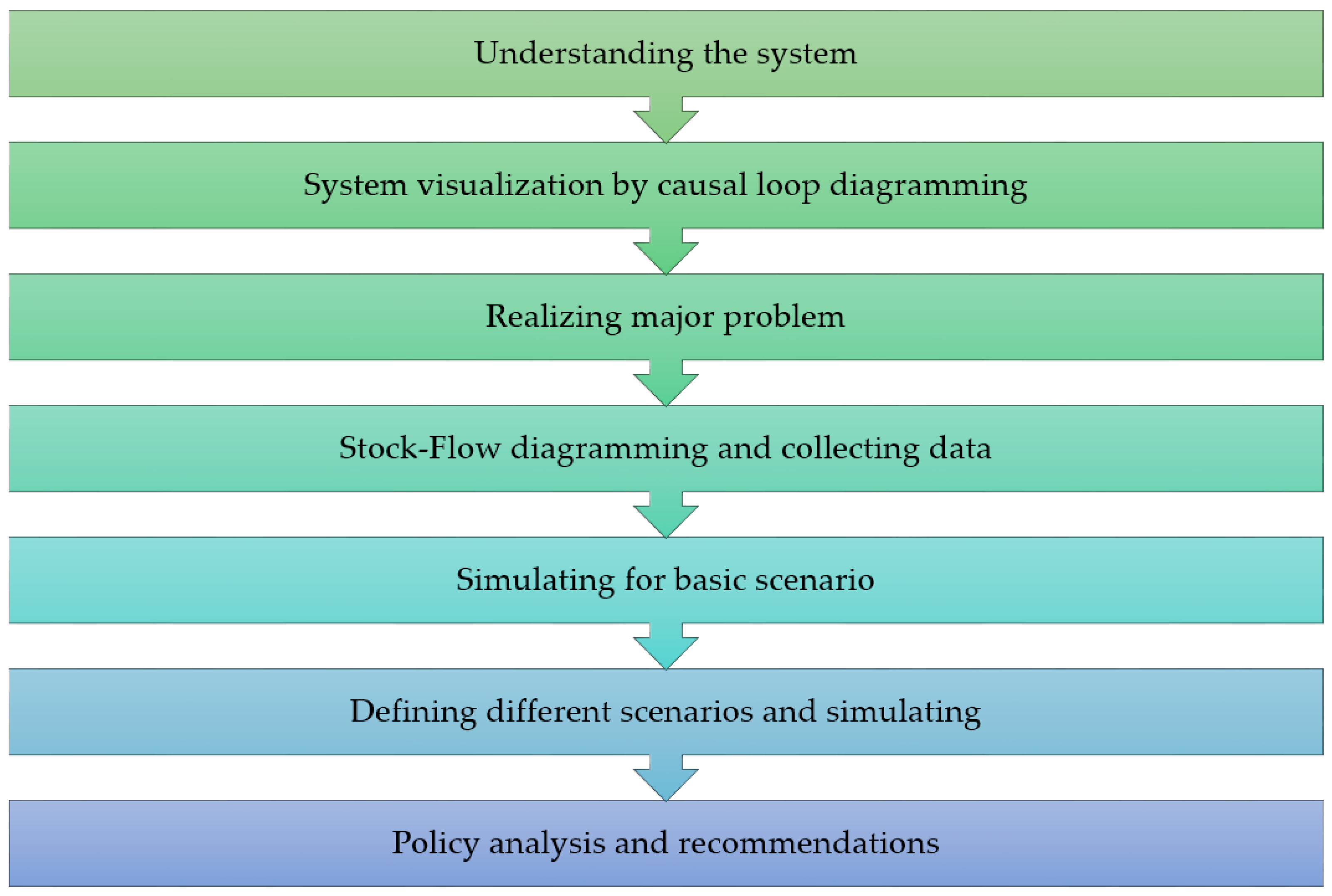
3.1. Problem Definition and Proposed Model
3.2. Key Indicators and Concepts of Railway Sustainability
3.3. Cause Loop Diagram
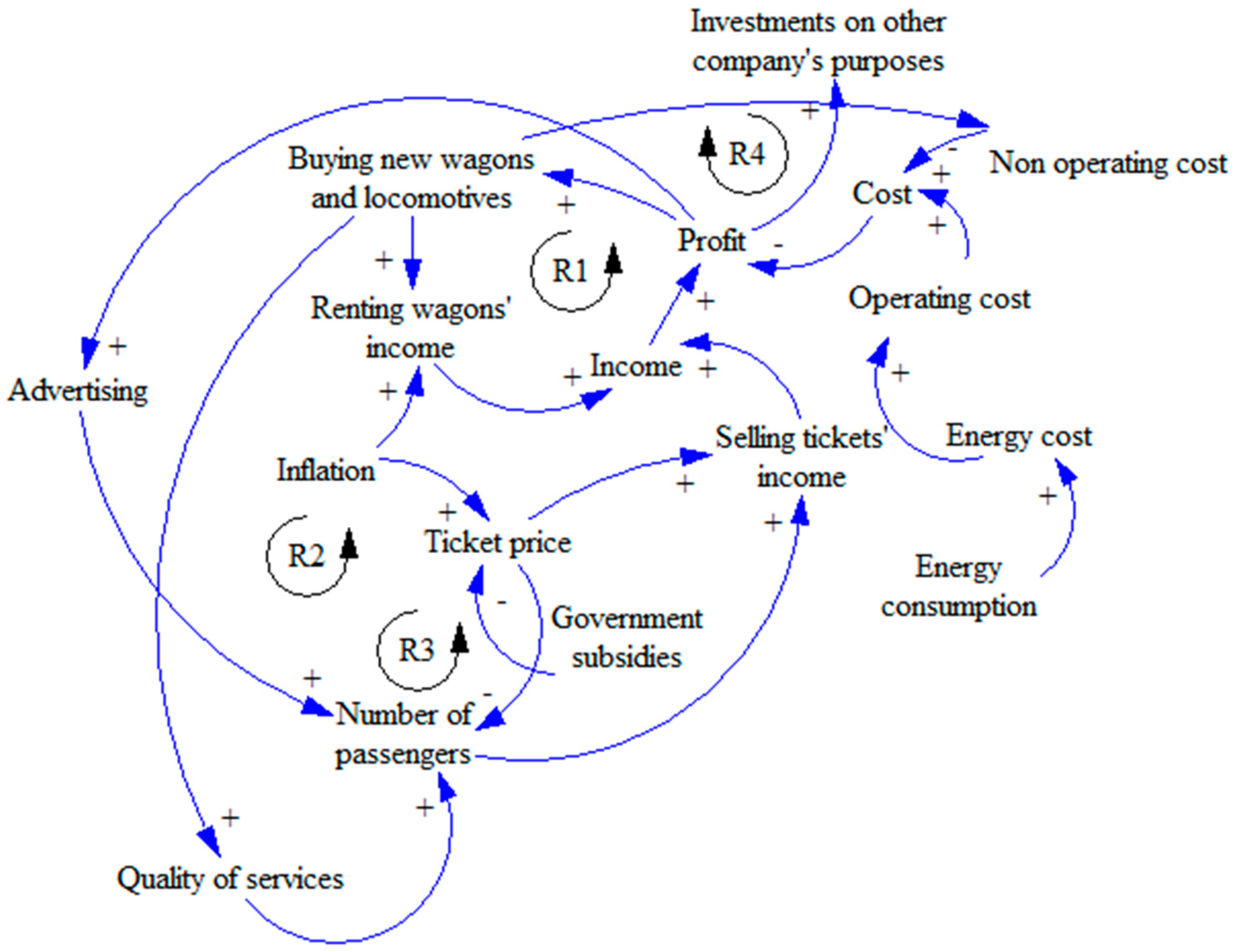
 “ A negative feedback loop features an unequal distribution of negative linkages, in contrast to the pos-itive feedback loop [72].
3.3.1. Financial Subsystem
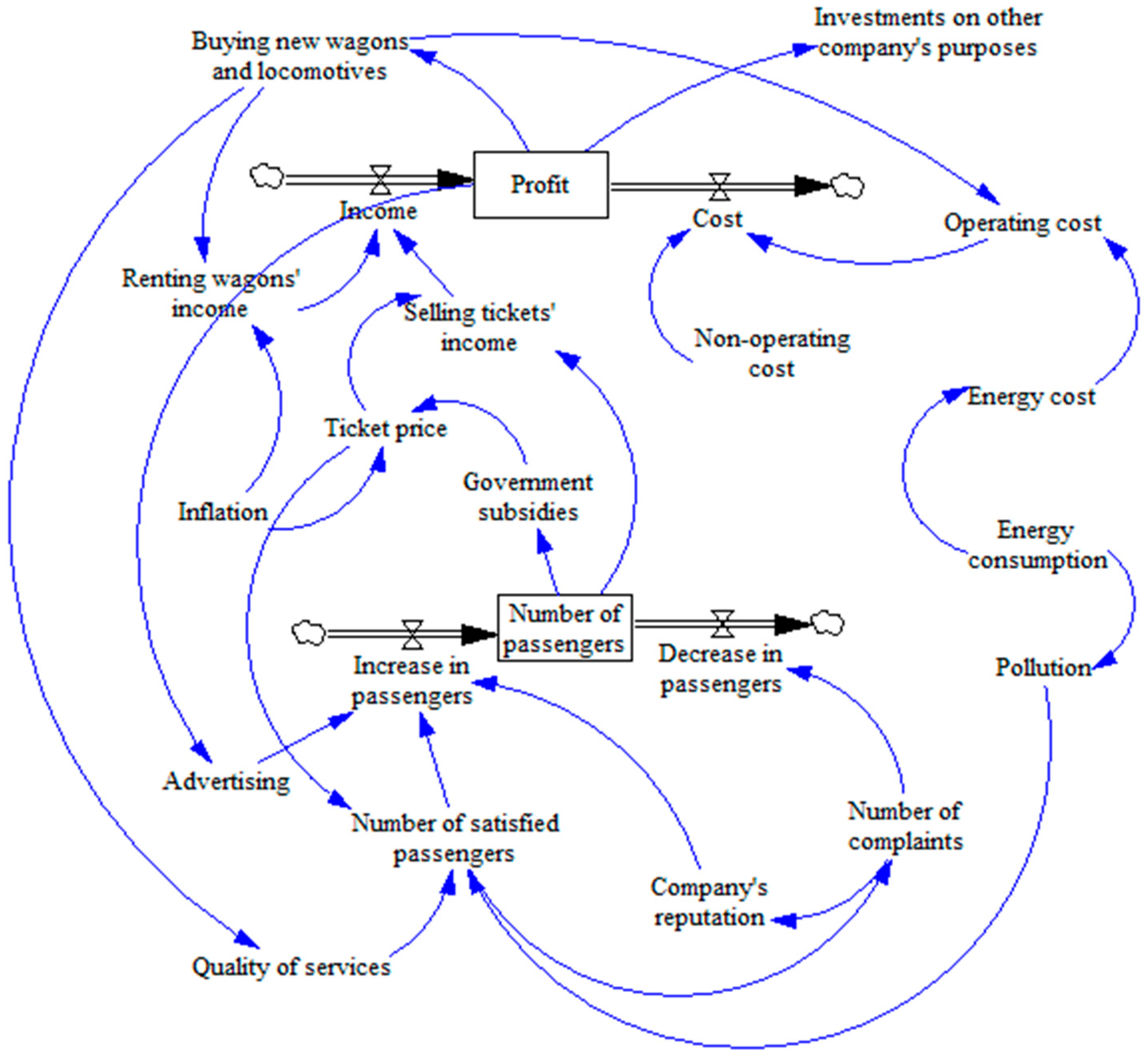
 ). The revenue from renting wagons swings in the same direction as the indicator of new wagon purchase whenever the railway company decides to purchase new wagons and locomotives. In truth, as more new wagons are purchased, more wagons are also rented out. Additionally, as the income from renting wagons changes, the income of the overall business also moves in the same way, creating a positive arrow between these two indications. The company’s profit fluctuates in the same direction as the income as the last indication in this loop. Profit should generally increase along with revenue in most cases. As a result, when the last indicator, profit, is changed and all of the arrows between indicators turn positive, the reinforcing loop is complete.). Whenever the number of passengers varies, the revenue from ticket sales changes in the same manner (), which affects both the company’s revenue and the revenue from ticket sales. As a result, the causal loop’s ultimate indicator, profit, changes in the same direction as income.). As a result, the number of passengers also changes along with these indicators in this loop. In actuality, the number of passengers rises as the quality of services improves and declines when the quality of services declines. The income from selling tickets and the company’s income both change in tandem with changes in the number of passengers, which affects the company’s profit.
 ). In fact, non-operating costs decline as more new wagons and locomotives are supplied. When non-operating costs vary, the company’s costs also move in the same direction (), which causes the profit indicators to shift in the opposite way (). Due to the even number of negative arrows in this loop, it follows that this loop is a reinforcing loop.
3.3.2. Social Subsystem
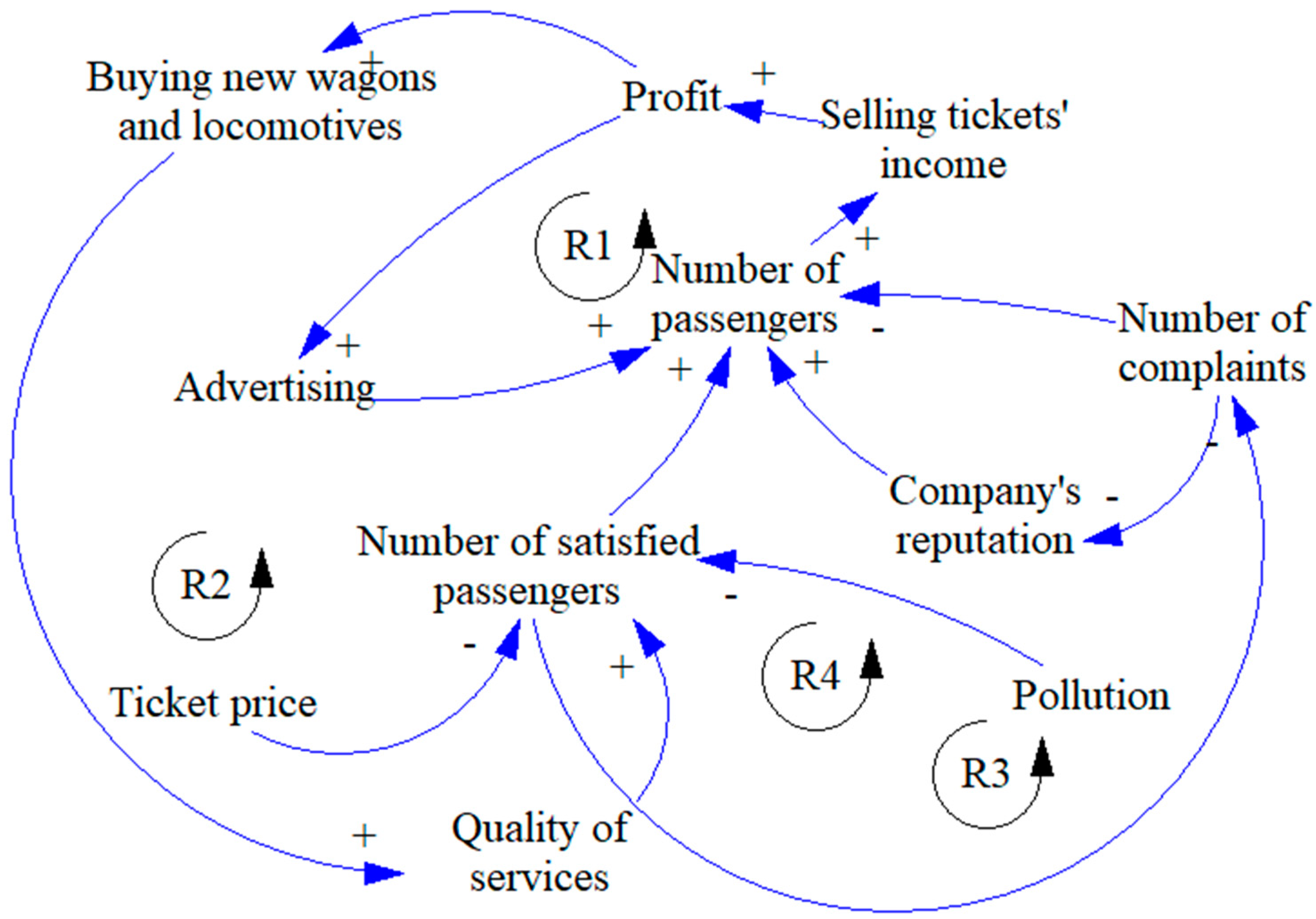
) as the policy for the company’s advertising in R1 once it has been modified, indicating that as the advertising policy improves, the number of passengers rises. The revenue from selling tickets fluctuates () when the number of passengers changes. The last indication in the loop, profit, shifts in the same direction () as the income from ticket sales when that indicator changes.), which would therefore raise customer satisfaction (). The number of passengers is altered () once the percentage of satisfied users has changed. The income from ticket sales and profit, being the final indications, move in the same direction () as a result of changes in the number of passengers.) in loop R3 once the number of new wagons and locomotives is adjusted. The number of passengers should change in the opposite direction () as the number of complaints, meaning that if the number of complaints rises, the number of passengers falls. This is because it is obvious that when the number of satisfied users changes, the number of complaints changes in the opposite direction. Therefore, the revenue from ticket sales and profits, which are final indicators like R2, vary in tandem with the number of passengers.) in the final reinforcing loop (R4) as they did in R3 whenever the number of new wagons and locomotives is adjusted. When the number of satisfied customers is altered, the number of complaints follows suit in the other way (), which has the opposite effect () on the company’s reputation as the number of complaints is changed. Due to this dynamic, the number of passengers, revenue from ticket sales, and profit all shift in line with the company’s reputation indicator ().3.3.3. Environmental Subsystem
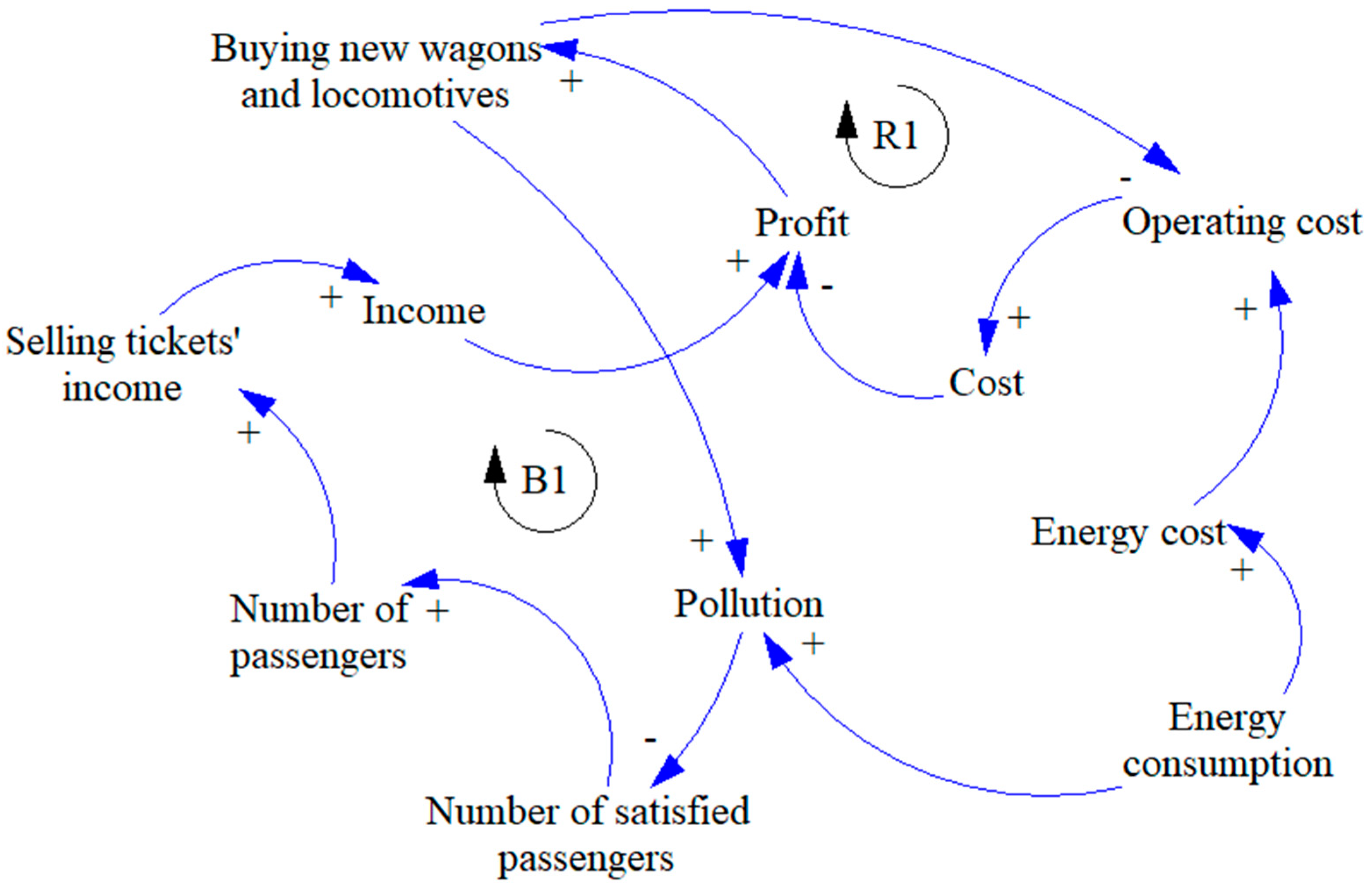
) as operating cost changes when operational costs vary. Purchasing new wagons and locomotives modifies the profit in the same way as buying them since a change in the cost indicator causes the profit to move in the other direction (). Thus, the loop R1 is created.). However, the number of satisfied users changes in the reverse way () once the pollution indicator changes. Additionally, when the number of satisfied users changes, so do other indicators, like the number of passengers, ticket sales revenue, company income, and profit.3.4. Passengers Railway Transport Flow Diagram
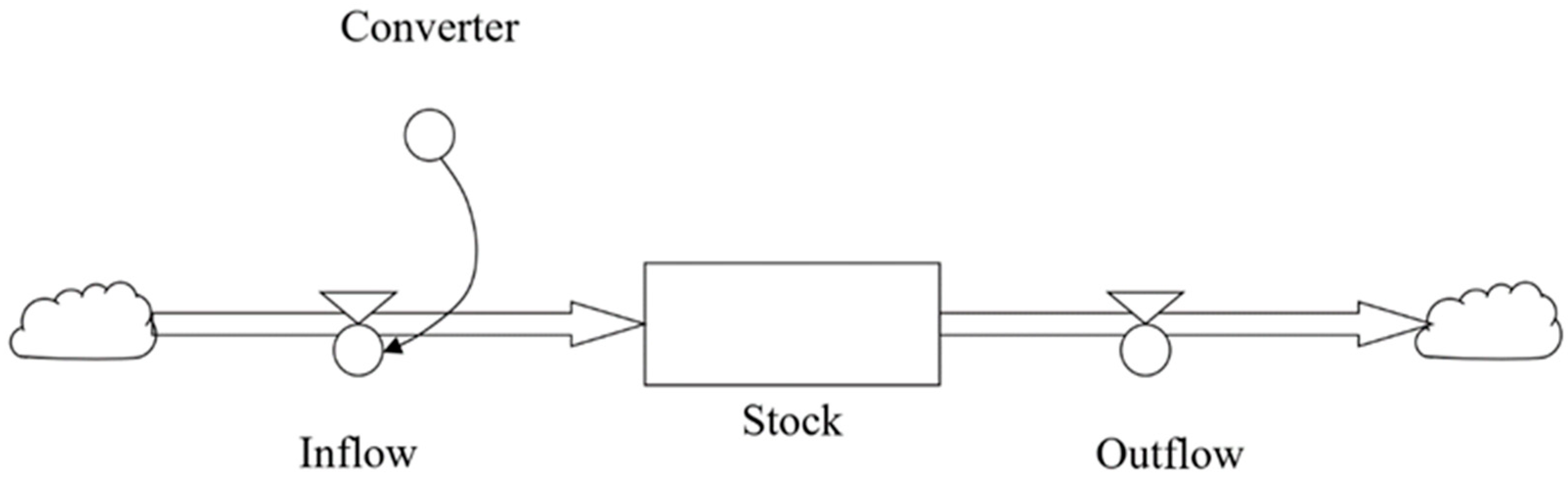
 ” designates this variable. Rate variable, which represents the rate of change in the system or the magnitude of a choice, defines the speed of the system’s cumulative effect and reflects changes in Level variables over time. It is represented by the symbol “
 ”. The intermediate variables that are used throughout the whole decision-making process are known as auxiliary variables.
4. Case Study
5. Results
5.1. The First Scenario
5.2. The Second Scenario
6. Discussion
7. Conclusions and Future Research Directions
Author Contributions
Funding
Institutional Review Board Statement
Informed Consent Statement
Data Availability Statement
Conflicts of Interest
References
- Hasselwander, M.; Bigotte, J.F.; Antunes, A.P.; Sigua, R.G. Towards sustainable transport in developing countries: Preliminary findings on the demand for mobility-as-a-service (MaaS) in Metro Manila. Transp. Res. Part A Policy Pract. 2022, 155, 501–518. [Google Scholar] [CrossRef]
- Broniewicz, E.; Ogrodnik, K. Multi-criteria analysis of transport infrastructure projects. Transp. Res. Part D Transp. Environ. 2020, 83, 102351. [Google Scholar] [CrossRef]
- Brundtland, G.H. Report of the World Commission on Environment and Development: “Our Common Future”; University of Cambridge: Cambridge, UK, 1987. [Google Scholar]
- Broniewicz, E.; Ogrodnik, K. A comparative evaluation of multi-criteria analysis methods for sustainable transport. Energies 2021, 14, 5100. [Google Scholar] [CrossRef]
- European Commission. A European Green Deal; European Commission: Brussels, Belgium, 2019.
- Sayyadi, R.; Awasthi, A. An integrated approach based on system dynamics and ANP for evaluating sustainable transportation policies. Int. J. Syst. Sci. Oper. Logist. 2020, 7, 182–191. [Google Scholar] [CrossRef]
- Chatti, W.; Majeed, M.T. Investigating the links between ICTs, passenger transportation, and environmental sustainability. Environ. Sci. Pollut. Res. 2022, 29, 26564–26574. [Google Scholar] [CrossRef]
- Hörcher, D.; Tirachini, A. A review of public transport economics. Econ. Transp. 2021, 25, 100196. [Google Scholar] [CrossRef]
- Abdullaevich, G.A.; Khikmatullaevna, S.M. A study of increasing the economic efficiency of transport services. South Asian J. Mark. Manag. Res. 2021, 11, 34–40. [Google Scholar] [CrossRef]
- Gyamfi, B.A.; Bekun, F.V.; Balsalobre-Lorente, D.; Onifade, S.T.; Ampomah, A.B. Beyond the environmental Kuznets curve: Do combined impacts of air transport and rail transport matter for environmental sustainability amidst energy use in E7 economies? Environ. Dev. Sustain. 2022, 24, 11852–11870. [Google Scholar] [CrossRef]
- European Commission. Transport in the European Union: Current Trends and Issues; Directorate-General for Mobility and Transport (DG MOVE); European Commission: Brussels, Belgium, 2018.
- European Commission. Decision of the European Parliament and of the Council on a European Year of Rail; European Commission: Brussels, Belgium, 2020.
- Zhao, X.; Ke, Y.; Zuo, J.; Xiong, W.; Wu, P. Evaluation of sustainable transport research in 2000–2019. J. Clean. Prod. 2020, 256, 120404. [Google Scholar] [CrossRef]
- Maheswari, B.U.; Nandagopal, R.; Kavitha, D. Sustainable development practices adopted by SMEs in a developing economy: An empirical study. IUP J. Manag. Res. 2018, 17, 7–19. [Google Scholar]
- Chatti, W. Moving towards environmental sustainability: Information and communication technology (ICT), freight transport, and CO2 emissions. Heliyon 2021, 7, e08190. [Google Scholar] [CrossRef]
- Santos, A.S.; de Abreu, V.H.S.; de Assis, T.F.; Ribeiro, S.K.; Ribeiro, G.M. An overview on costs of shifting to sustainable road transport: A challenge for cities worldwide. In Carbon Footprint Case Studies: Municipal Solid Waste Management, Sustainable Road Transport and Carbon Sequestration; Springer: Berlin/Heidelberg, Germany, 2021; pp. 93–121. [Google Scholar]
- Moradi, S.; Sierpiński, G.; Masoumi, H. System dynamics modeling and fuzzy MCDM approach as support for assessment of sustainability management on the example of transport sector company. Energies 2022, 15, 4917. [Google Scholar] [CrossRef]
- Erjaee, A.; Hendiani, S.; Moradi, S.; Bagherpour, M. Healthcare sustainability evaluation using a hybrid fuzzy multi-criteria decision-making model. Int. J. Fuzzy Syst. 2022, 24, 1182–1202. [Google Scholar] [CrossRef]
- Barrat, A.; Barthelemy, M.; Vespignani, A. The architecture of complex weighted networks: Measurements and models. In Large Scale Structure and Dynamics of Complex Networks: From Information Technology to Finance and Natural Science; World Scientific: Singapore, 2007; pp. 67–92. [Google Scholar]
- Wang, W.; Cai, K.; Du, W.; Wu, X.; Tong, L.C.; Zhu, X.; Cao, X. Analysis of the Chinese railway system as a complex network. Chaos Solitons Fractals 2020, 130, 109408. [Google Scholar] [CrossRef]
- Loo, B.P.; Comtois, C. Sustainable Railway Futures: Issues and Challenges; Ashgate Publishing: Farnham, UK, 2015. [Google Scholar]
- Fraszczyk, A.; Marinov, M. Sustainable Rail Transport; Springer: Berlin/Heidelberg, Germany, 2018. [Google Scholar]
- Zairi, M. Measuring Performance for Business Results; Springer Science & Business Media: Berlin/Heidelberg, Germany, 2012. [Google Scholar]
- Kane, L. Sustainable transport indicators for Cape Town, South Africa: Advocacy, negotiation and partnership in transport planning practice. Nat. Resour. Forum 2010, 34, 289–302. [Google Scholar] [CrossRef]
- Litman, T.; Burwell, D. Issues in sustainable transportation. Int. J. Glob. Environ. Issues 2006, 6, 331–347. [Google Scholar] [CrossRef]
- Nicolas, J.-P.; Pochet, P.; Poimboeuf, H. Towards sustainable mobility indicators: Application to the Lyons conurbation. Transp. Policy 2003, 10, 197–208. [Google Scholar] [CrossRef]
- Litman, T. Developing indicators for comprehensive and sustainable transport planning. Transp. Res. Rec. 2007, 2017, 10–15. [Google Scholar] [CrossRef]
- Pregl, M.; Perujo, A.; Dobranskyte-Niskota, A. Indicators to Assess Sustainability of Transport Activities; Publications Office: Luxembourg, 2007; ISBN 978-92-79-07802-6. [Google Scholar]
- Rossi, R.; Gastaldi, M.; Vescovi, R. A methodological approach to evaluating the sustainability level of a transport service. WIT Trans. Ecol. Environ. 2009, 120, 411–425. [Google Scholar]
- Shiau, T.-A.; Liu, J.-S. Developing an indicator system for local governments to evaluate transport sustainability strategies. Ecol. Indic. 2013, 34, 361–371. [Google Scholar] [CrossRef]
- Alonso, A.; Monzón, A.; Cascajo, R. Comparative analysis of passenger transport sustainability in European cities. Ecol. Indic. 2015, 48, 578–592. [Google Scholar] [CrossRef]
- Stefaniec, A.; Hosseini, K.; Xie, J.; Li, Y. Sustainability assessment of inland transportation in China: A triple bottom line-based network DEA approach. Transp. Res. Part D Transp. Environ. 2020, 80, 102258. [Google Scholar] [CrossRef]
- Janic, M.; Regglani, A.; Nijkamp, P. Sustainability of the European freight transport system: Evaluation of innovative bundling networks. Transp. Plan. Technol. 1999, 23, 129–156. [Google Scholar] [CrossRef]
- Kijewska, K.; Iwan, S.; Małecki, K. Applying multi-criteria analysis of electrically powered vehicles implementation in urban freight transport. Procedia Comput. Sci. 2019, 159, 1558–1567. [Google Scholar] [CrossRef]
- Bojković, N.; Anić, I.; Pejčić-Tarle, S. One solution for cross-country transport-sustainability evaluation using a modified ELECTRE method. Ecol. Econ. 2010, 69, 1176–1186. [Google Scholar] [CrossRef]
- Aghapour, R.; Sepasian, M.S.; Arasteh, H.; Vahidinasab, V.; Catalão, J.P. Probabilistic planning of electric vehicles charging stations in an integrated electricity-transport system. Electr. Power Syst. Res. 2020, 189, 106698. [Google Scholar] [CrossRef]
- Buzási, A.; Csete, M. Sustainability indicators in assessing urban transport systems. Period. Polytech. Transp. Eng. 2015, 43, 138–145. [Google Scholar] [CrossRef]
- Kłos, M.J.; Sierpiński, G. Building a model of integration of urban sharing and public transport services. Sustainability 2021, 13, 3086. [Google Scholar] [CrossRef]
- Joumard, R.; Nicolas, J.-P. Transport project assessment methodology within the framework of sustainable development. Ecol. Indic. 2010, 10, 136–142. [Google Scholar] [CrossRef]
- Sierpiński, G.; Staniek, M.; Kłos, M.J. Decision making support for local authorities choosing the method for siting of in-city ev charging stations. Energies 2020, 13, 4682. [Google Scholar] [CrossRef]
- Buenk, R.; Grobbelaar, S.S.; Meyer, I. A framework for the sustainability assessment of (Micro) transit systems. Sustainability 2019, 11, 5929. [Google Scholar] [CrossRef]
- Wątróbski, J.; Małecki, K.; Kijewska, K.; Iwan, S.; Karczmarczyk, A.; Thompson, R.G. Multi-criteria analysis of electric vans for city logistics. Sustainability 2017, 9, 1453. [Google Scholar] [CrossRef]
- Karjalainen, L.E.; Juhola, S. Framework for assessing public transportation sustainability in planning and policy-making. Sustainability 2019, 11, 1028. [Google Scholar] [CrossRef]
- Tian, N.; Tang, S.; Che, A.; Wu, P. Measuring regional transport sustainability using super-efficiency SBM-DEA with weighting preference. J. Clean. Prod. 2020, 242, 118474. [Google Scholar] [CrossRef]
- Marletto, G.; Mameli, F. A participative procedure to select indicators of policies for sustainable urban mobility. Outcomes of a national test. Eur. Transp. Res. Rev. 2012, 4, 79–89. [Google Scholar] [CrossRef]
- Federici, M.; Ulgiati, S.; Verdesca, D.; Basosi, R. Efficiency and sustainability indicators for passenger and commodities transportation systems: The case of Siena, Italy. Ecol. Indic. 2003, 3, 155–169. [Google Scholar] [CrossRef]
- Chou, J.-S.; Yeh, C.-P. Influential constructs, mediating effects, and moderating effects on operations performance of high speed rail from passenger perspective. Transp. Policy 2013, 30, 207–219. [Google Scholar] [CrossRef]
- Saleem, H.; Jiandong, W.; Zaman, K.; Elashkar, E.E.; Shoukry, A.M. The impact of air-railways transportation, energy demand, bilateral aid flows, and population density on environmental degradation: Evidence from a panel of next-11 countries. Transp. Res. Part D Transp. Environ. 2018, 62, 152–168. [Google Scholar] [CrossRef]
- Sdoukopoulos, A.; Nikolaidou, A.; Pitsiava-Latinopoulou, M.; Papaioannou, P. Use of social media for assessing sustainable urban mobility indicators. Int. J. SDP 2018, 13, 338–348. [Google Scholar] [CrossRef]
- Lane, D.C.; Oliva, R. The greater whole: Towards a synthesis of system dynamics and soft systems methodology. Eur. J. Oper. Res. 1998, 107, 214–235. [Google Scholar] [CrossRef]
- Kuzior, A.; Staszek, M. Energy Management in the Railway Industry: A Case Study of Rail Freight Carrier in Poland. Energies 2021, 14, 6875. [Google Scholar] [CrossRef]
- Liao, Y.-W.; Wang, Y.-M.; Wang, Y.-S.; Tu, Y.-M. Understanding the dynamics between organizational IT investment strategy and market performance: A system dynamics approach. Comput. Ind. 2015, 71, 46–57. [Google Scholar] [CrossRef]
- Coyle, R.G. System dynamics modelling: A practical approach. J. Oper. Res. Soc. 1997, 48, 544. [Google Scholar] [CrossRef]
- Erkut, G. The use of systems thinking and system dynamics in urban planning and education. In Proceedings of the 15th International System Dynamics Conference: Systems Approach to Learning and Education into the 21st Century, Istanbul, Turkey, 19–22 August 1997; Barlas, Y., Diker, V.G., Polat, S., Eds.; Istanbul, Turkey, Bogazici University, Series Title: “Systems” Education (1) (Parallel Session). Printing Office: Istanbul, Turkey, 1997; pp. 121–126. [Google Scholar]
- Jifeng, W.; Huapu, L.; Hu, P. System dynamics model of urban transportation system and its application. J. Transp. Syst. Eng. Inf. Technol. 2008, 8, 83–89. [Google Scholar]
- Awasthi, A.; Omrani, H. A hybrid approach based on AHP and belief theory for evaluating sustainable transportation solutions. Int. J. Glob. Environ. Issues 2009, 9, 212–226. [Google Scholar] [CrossRef]
- Wangai, A.W.; Rohacs, D.; Boros, A. Supporting the sustainable development of railway transport in developing countries. Sustainability 2020, 12, 3572. [Google Scholar] [CrossRef]
- Djordjević, B.; Mane, A.S.; Krmac, E. Analysis of dependency and importance of key indicators for railway sustainability monitoring: A new integrated approach with DEA and Pearson correlation. Res. Transp. Bus. Manag. 2021, 41, 100650. [Google Scholar] [CrossRef]
- Janic, M. Sustainable transport in the European Union: A review of the past research and future ideas. Transp. Rev. 2006, 26, 81–104. [Google Scholar] [CrossRef]
- Saeedi, S.; Poursabzi, O.; Ardalan, Z.; Karimi, S. A variable service rate queue model for hub median problem. J. Appl. Res. Ind. Eng. 2021, 10, 155–166. [Google Scholar] [CrossRef]
- Azzouz, L.; Jack, A. Benchmarking the sustainability reporting of high-speed railways (HSRs): Towards a state-of-the-art benchmarking and reporting framework for HSRs. J. Clean. Prod. 2020, 250, 119505. [Google Scholar] [CrossRef]
- Fraszczyk, A.; Lamb, T.; Marinov, M. Are railways really that bad? An evaluation of rail systems performance in Europe with a focus on passenger rail. Transp. Res. Part A Policy Pract. 2016, 94, 573–591. [Google Scholar] [CrossRef]
- Ćwil, M.; Bartnik, W.; Jarzębowski, S. Railway vehicle energy efficiency as a key factor in creating sustainable transportation systems. Energies 2021, 14, 5211. [Google Scholar] [CrossRef]
- Hansen, I.A.; Wiggenraad, P.; Wolff, J. Performance analysis of railway infrastructure and operations. In Proceedings of the 12th World Conference on Transport Research (WCTR 2013), Rio de Janeiro, Brazil, 15–18 July 2013; p. 2. [Google Scholar]
- Jabłoński, A.; Jabłoński, M. Social perspectives in digital business models of railway enterprises. Energies 2020, 13, 6445. [Google Scholar] [CrossRef]
- International Union of Railways. Sustainable Development: Making Railway Greener, Quieter and More Energy Efficient; International Union of Railways: Paris, France, 2018. [Google Scholar]
- Stopka, O.; Stopkova, M.; Rybicka, I.; Gross, P.; Jeřábek, K. Use of activity-based costing approach for cost management in a railway transport enterprise. Sci. J. Silesian Univ. Technol. Ser. Transp. 2021, 111, 151–160. [Google Scholar] [CrossRef]
- Tian, Z.; Zhang, G.; Zhao, N.; Hillmansen, S.; Tricoli, P.; Roberts, C. Energy evaluation for DC railway systems with inverting substations. In Proceedings of the 2018 IEEE International Conference on Electrical Systems for Aircraft, Railway, Ship Propulsion and Road Vehicles & International Transportation Electrification Conference (ESARS-ITEC), Nottingham, UK, 7–9 November 2018; pp. 1–6. [Google Scholar]
- Kadłubek, M.; Krzywda, D.; Skibińska, W. The Degree of Sustainable Development of Public Transport in Major Polish Cities. In Entrepreneurship, Business and Economics-Vol. 1; Springer: Berlin/Heidelberg, Germany, 2016; pp. 327–346. [Google Scholar]
- Yi, C.; Zhang, Q. Evaluation model of sustainable development for railway transportation based on BP neural network. In Proceedings of the 2013 Sixth International Symposium on Computational Intelligence and Design, Hangzhou, China, 28–29 October 2013; pp. 76–79. [Google Scholar]
- Przybyłowski, A. Sustainable transport development indicators. Sci. J. Silesian Univ. Technol. Ser. Transp. 2013, 80, 79–87. [Google Scholar]
- Cavana, R.Y.; Maani, K.E. A Methodological Framework for Systems Thinking and Modelling (ST&M) Interventions. In Proceedings of the ICSTM, Geelong, Australia, 8–10 November 2000. [Google Scholar]
- Raja Rail Transportation Co. 2022. Available online: https://www.raja.ir/menupages?id=RajafaCal (accessed on 4 October 2022).
- Senge, P.M.; Forrester, J.W. Tests for building confidence in system dynamics models. Syst. Dyn. TIMS Stud. Manag. Sci. 1980, 14, 209–228. [Google Scholar]
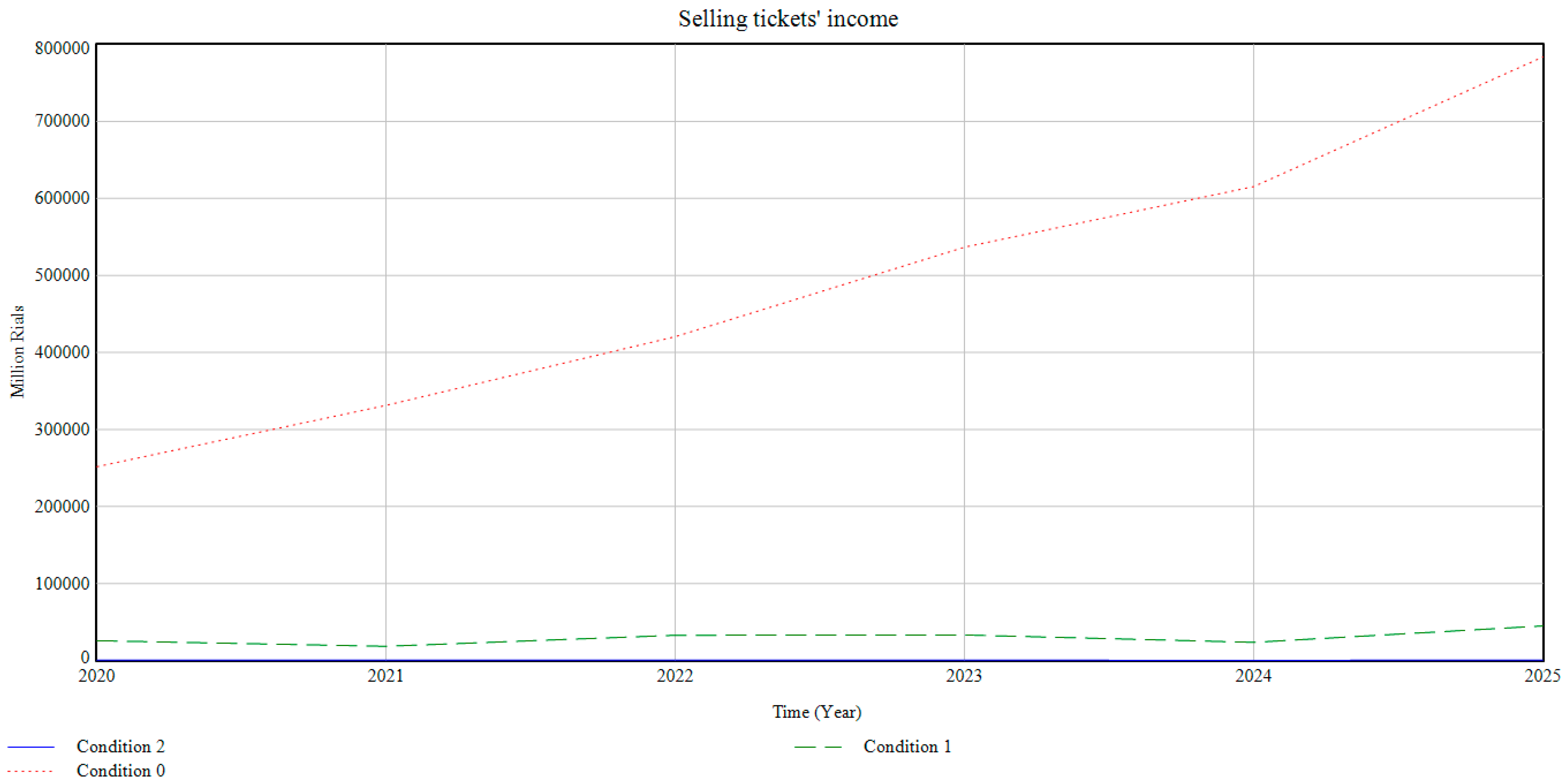
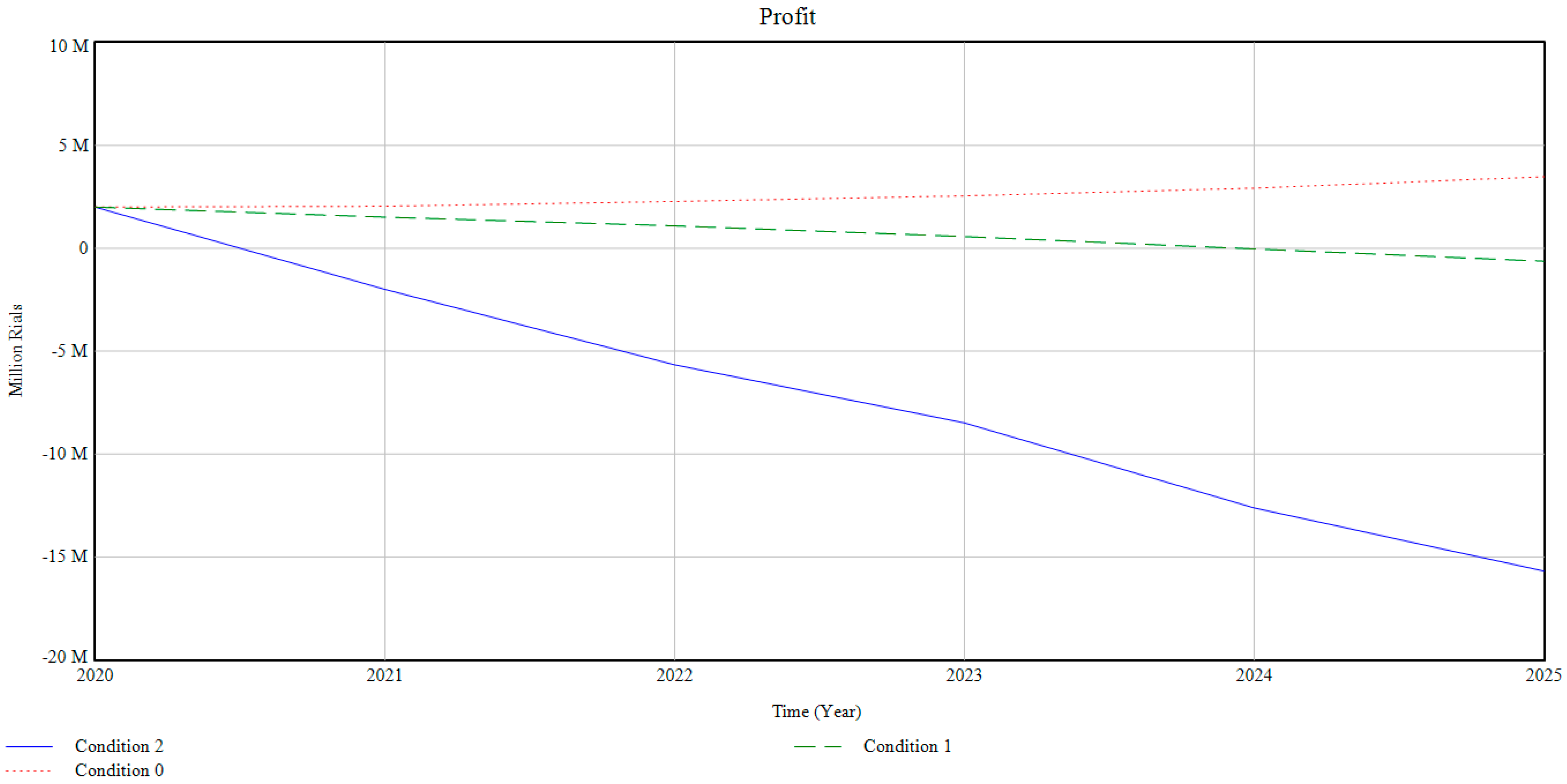

| Financial Dimension | Society Dimension | Environmental Dimension |
|---|---|---|
| Renting Wagon’s Income [61] | Number of Satisfied Passengers [38,62] | Energy Consumption [62,63] |
| Selling Tickets’ Income [61,64] | Quality of Services [62,65] | CO2 Emission from Railway Passenger Transport [66] |
| Energy Cost [67,68] | Advertising [62] | - |
| Operating Cost [61,64] | Company’s Reputation [62,69] | - |
| Non-Operating Cost [67,70] | Number of Complaints [62,71] | - |
| Buying New Wagons and Locomotives [Raja’s strategy map] | Number of Passengers [62] | - |
| Profit [61,64] | - | - |
| Income [61,64] | - | - |
| Cost [67,70] | - | - |
| Government Subsidies [Raja’s strategy map] | - | - |
| Inflation [Raja’s strategy map] | - | - |
| Lower Limit | Variable | Upper Limit |
|---|---|---|
| 30,000 | Energy consumption (thousands of litres) | 35,000 |
| 18,000 | Non-operating costs (million Rials (Iran’s Current Currency)) | 42,000 |
| 60 | Quality of services (percent) | 70 |
| 2500 | Ticket price (thousand Rials) | 5500 |
| Type | Variable | Equation | Unit |
|---|---|---|---|
| Stock | Profit | Income − Cost + Profit (t0) | Million Rials |
| Flow | Income | Renting wagons’ income + Selling tickets’ income | Million Rials |
| Flow | Cost | Non-operating cost + Operating cost | Million Rials |
| Type | Variable | Equation | Unit |
|---|---|---|---|
| stock | Number of passengers | Increase in number of passengers—Decrease in number of passengers + Number of passengers (t0) | Million People |
| Flow | Increase in number of passengers | (Number of satisfied passengers × 0.85) + Advertising × Number of passengers + IF THEN ELSE (Company’s reputation > 70, 2, 1) | Million People |
| Flow | Decrease in number of passengers | Number of complaints × 3 | Million People |
| Indicator | Number of Passengers (Million People) | Selling Tickets’ Income (Million Rials) | Profit (Million Rials) |
|---|---|---|---|
| Policy | |||
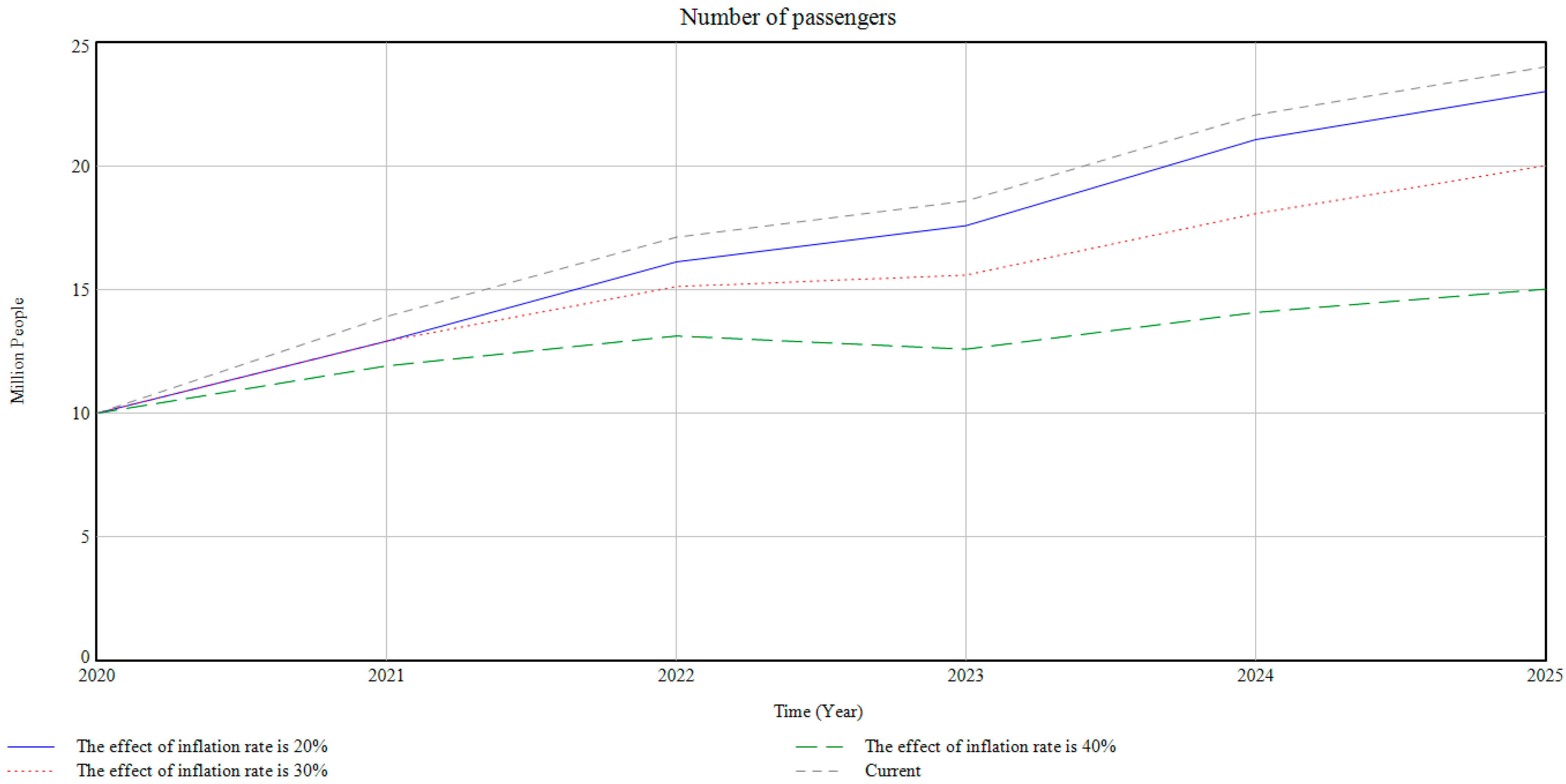
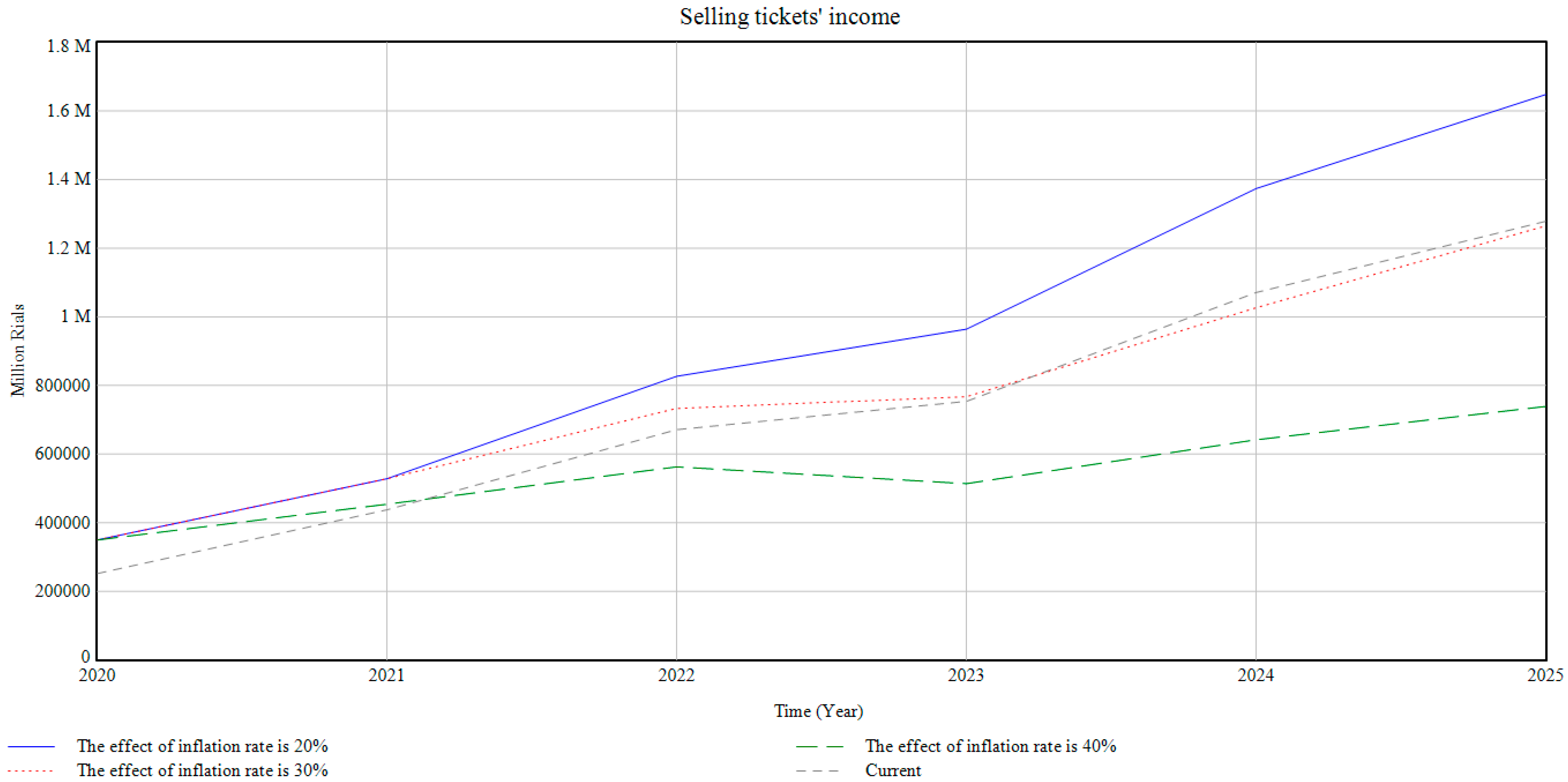
| Current | 24 | 1,270,000 | 4,610,000 |
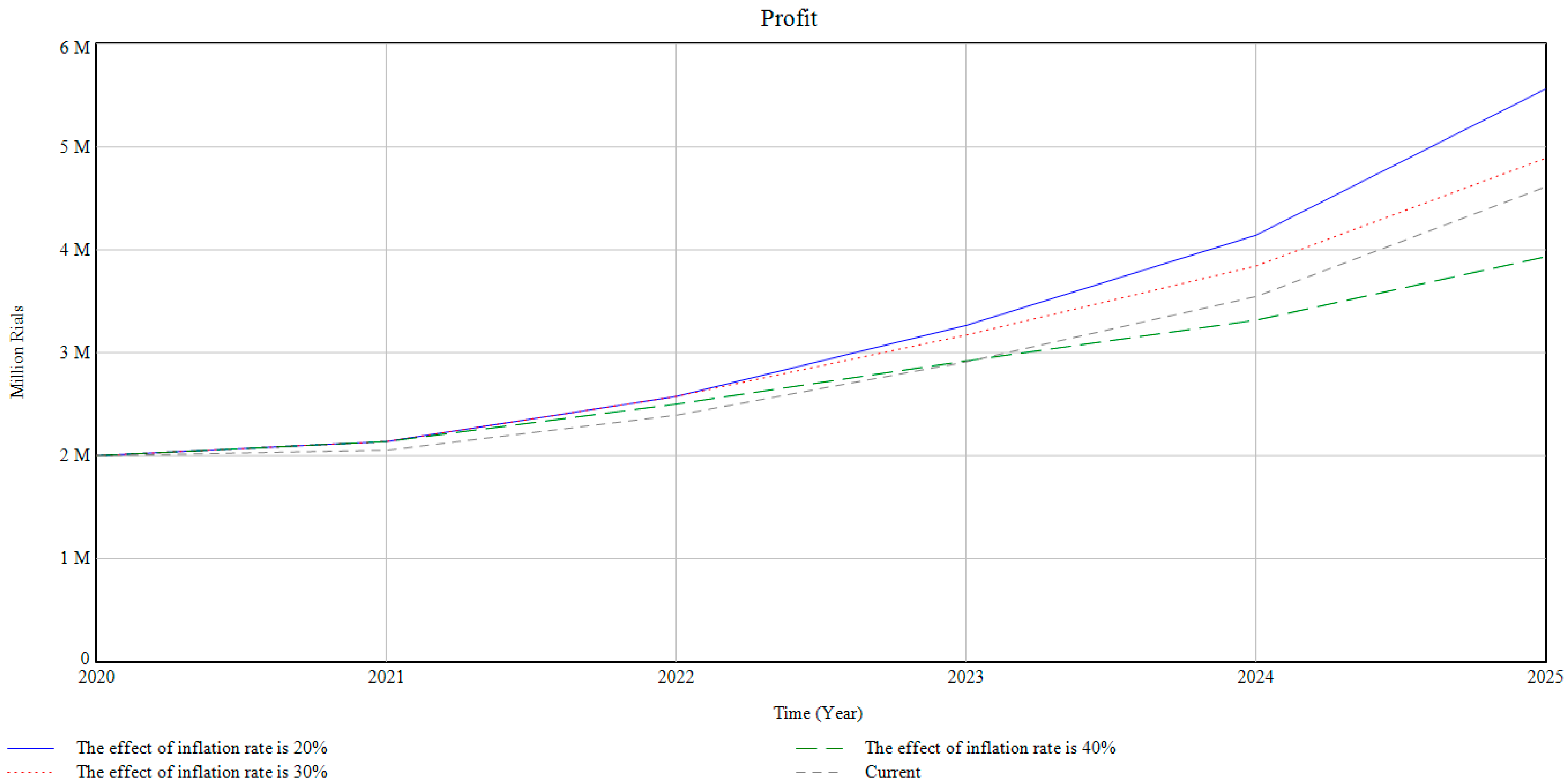
| The effect of the inflation rate is 20% | 23 | 1,640,000 | 5,560,000 |
| The effect of the inflation rate is 30% | 20 | 1,260,000 | 4,890,000 |
| The effect of the inflation rate is 40% | 15 | 738,898 | 3,930,000 |
| Indicator | Number of Passengers (Million People) | Selling Tickets’ Income (Million Rials) | Profit (Million Rials) |
|---|---|---|---|
| Policy | |||
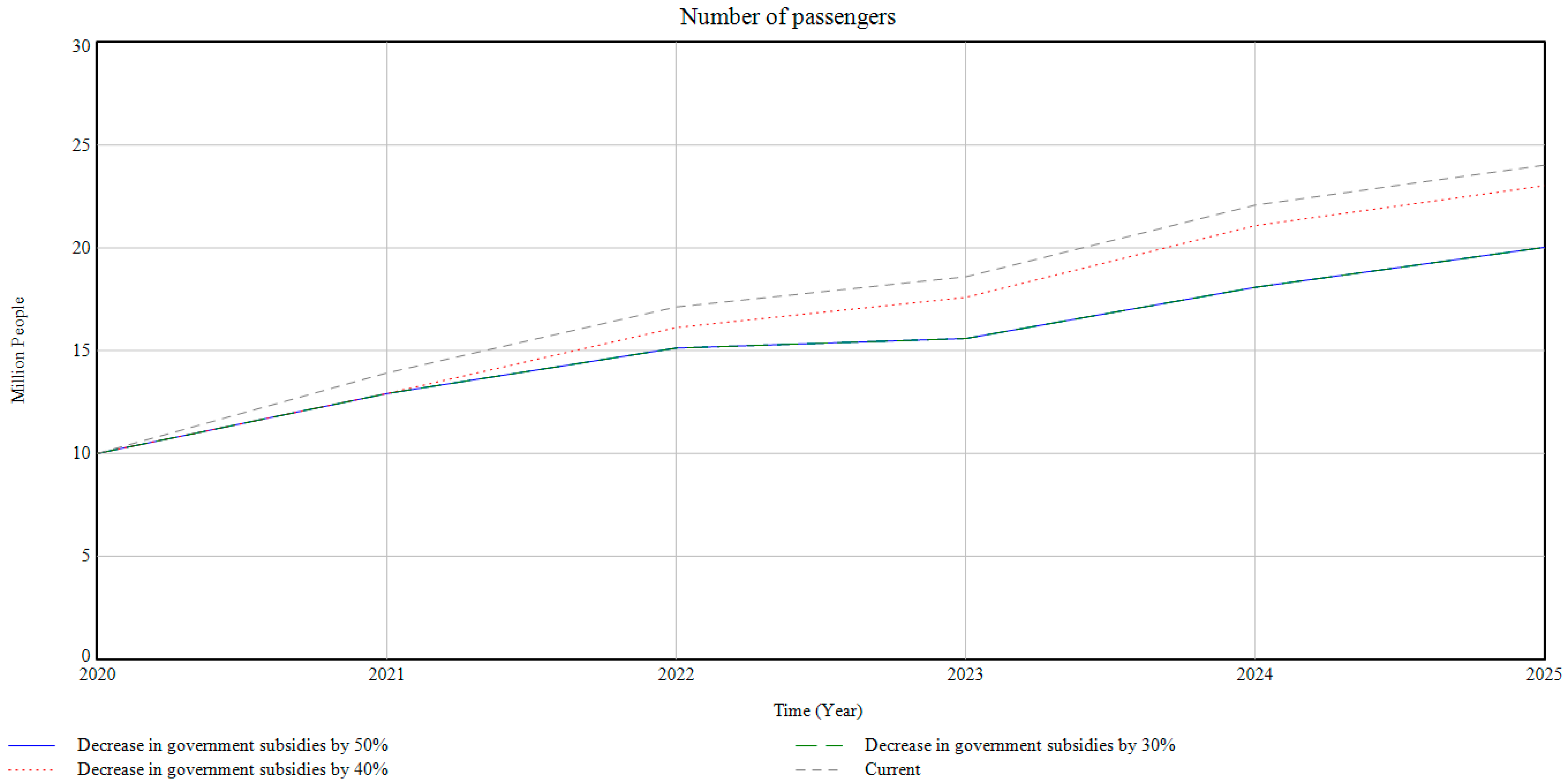
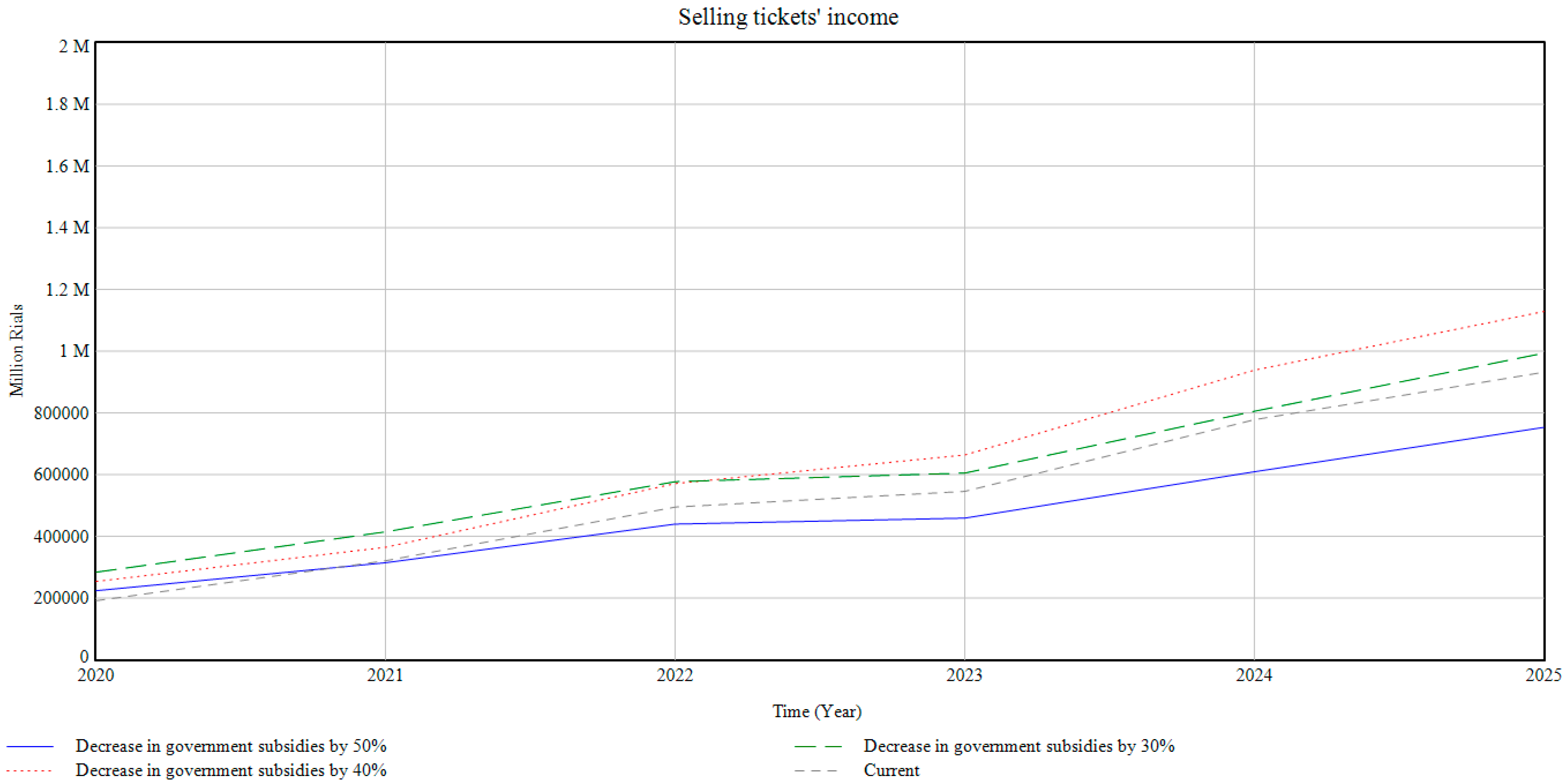
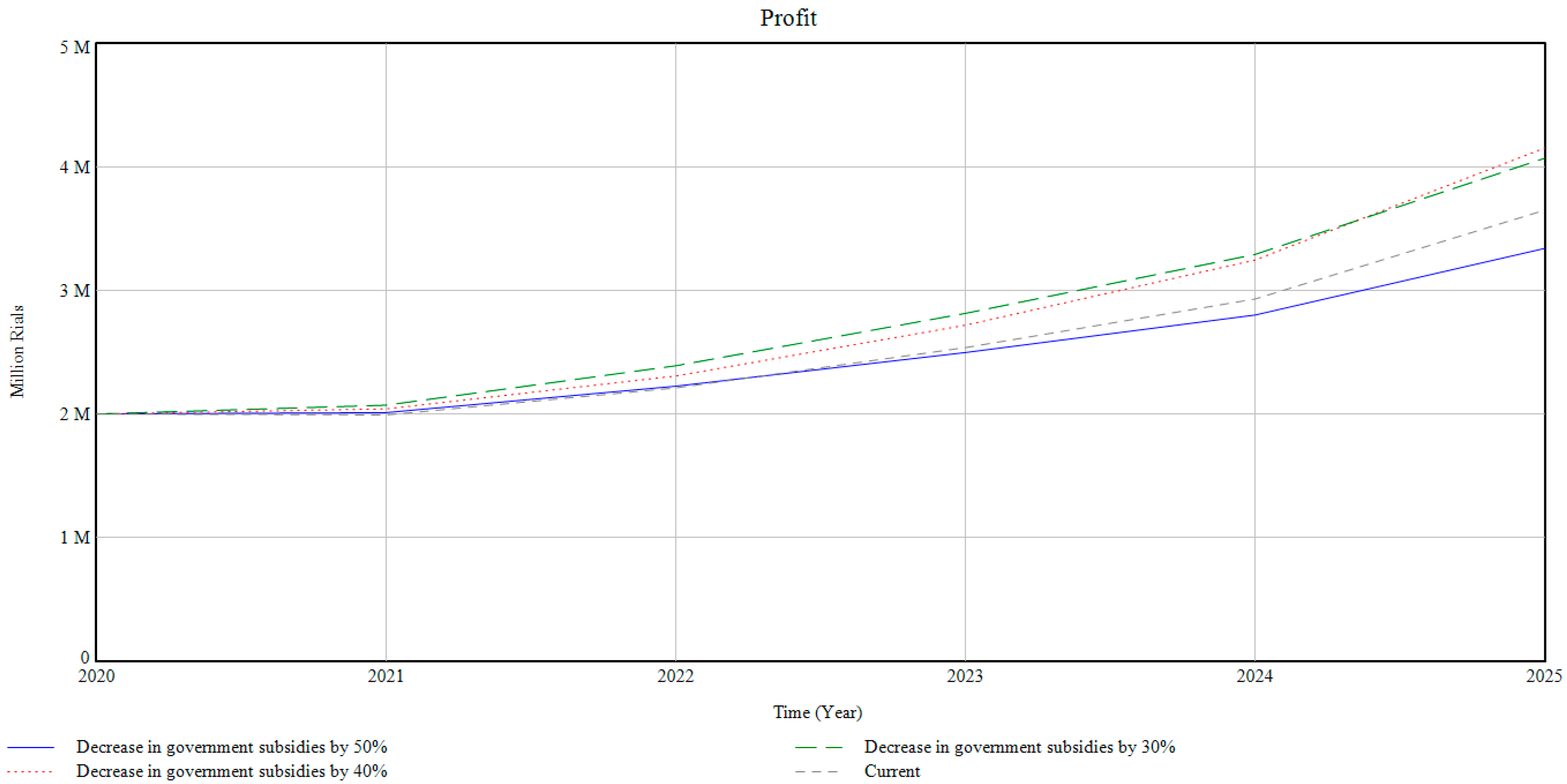
| Current | 24 | 932,238 | 3,650,000 |
| Decrease in the government subsidies by 30% | 20 | 994,122 | 4,070,000 |
| Decrease in the government subsidies by 40% | 23 | 1,120,000 | 4,150,000 |
| Decrease in the government subsidies by 50% | 20 | 753,507 | 3,340,000 |
Disclaimer/Publisher’s Note: The statements, opinions and data contained in all publications are solely those of the individual author(s) and contributor(s) and not of MDPI and/or the editor(s). MDPI and/or the editor(s) disclaim responsibility for any injury to people or property resulting from any ideas, methods, instructions or products referred to in the content. |
© 2023 by the authors. Licensee MDPI, Basel, Switzerland. This article is an open access article distributed under the terms and conditions of the Creative Commons Attribution (CC BY) license (https://creativecommons.org/licenses/by/4.0/).
Share and Cite
Moradi, S.; Ahadi, H.R.; Sierpiński, G. Sustainable Management of Railway Companies Amid Inflation and Reduced Government Subsidies: A System Dynamics Approach. Sustainability 2023, 15, 11176. https://doi.org/10.3390/su151411176
Moradi S, Ahadi HR, Sierpiński G. Sustainable Management of Railway Companies Amid Inflation and Reduced Government Subsidies: A System Dynamics Approach. Sustainability. 2023; 15(14):11176. https://doi.org/10.3390/su151411176
Chicago/Turabian StyleMoradi, Shohreh, Hamid Reza Ahadi, and Grzegorz Sierpiński. 2023. "Sustainable Management of Railway Companies Amid Inflation and Reduced Government Subsidies: A System Dynamics Approach" Sustainability 15, no. 14: 11176. https://doi.org/10.3390/su151411176
APA StyleMoradi, S., Ahadi, H. R., & Sierpiński, G. (2023). Sustainable Management of Railway Companies Amid Inflation and Reduced Government Subsidies: A System Dynamics Approach. Sustainability, 15(14), 11176. https://doi.org/10.3390/su151411176

