Article

Constructing the Transitions and Co-Existence of Rural Development Models
by
Marcelo Sili
1,*,
María Isabel Haag
2 and
María Belén Nieto
2
1
National Scientific and Technical Research Council (CONICET), Universidad Nacional del Sur, Bahía Blanca 8000, Argentina
2
Departamento de Geografía y Turismo, Universidad Nacional del Sur, Bahía Blanca 8000, Argentina
*
Author to whom correspondence should be addressed.
Sustainability 2022, 14(8), 4625; https://doi.org/10.3390/su14084625
Submission received: 2 February 2022 / Revised: 20 February 2022 / Accepted: 25 February 2022 / Published: 13 April 2022

Abstract

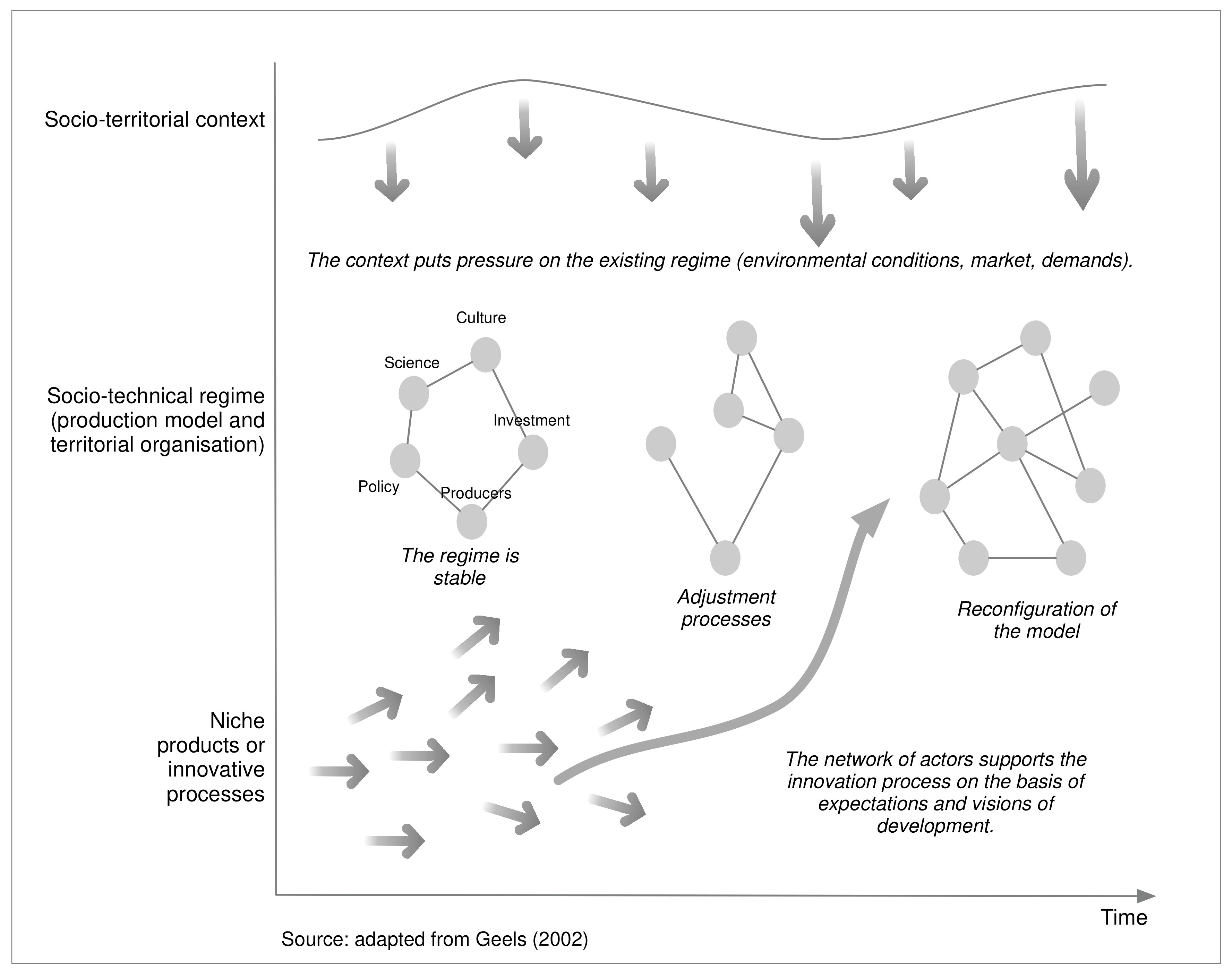
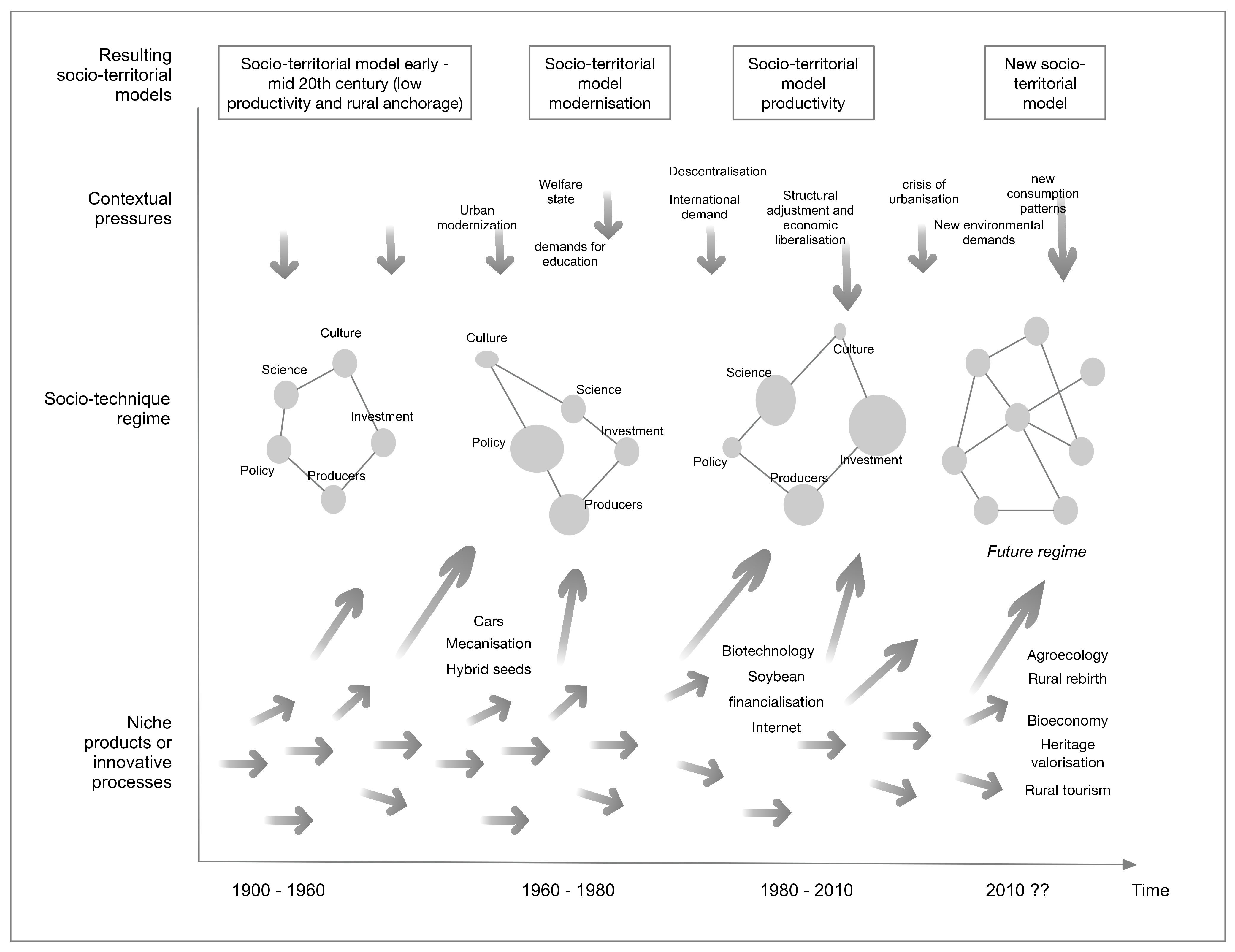
The rural world in Latin America is becoming more complex and diverse. In recent decades, new non-traditional productive activities have emerged, technological change has increased, local culture and tradition have been revalued and rural tourism has been developed, among other dynamics. Scientific and technological change, greater concern for the environment and new consumption patterns are at the root of these changes. It can be said that Latin America has begun a process of transition to new models of rural organization and development. Returning to the conceptual framework of innovation, the hypothesis underlying this work is that emerging initiatives constitute niche activities which, over time, become integrated into the territories, resulting in two types of situations: co-presence of activities and actors, with conflicts and competencies that prevent the construction of synergistic development dynamics, or co-existence, with shared articulations and projects between activities and actors. To account for this hypothesis, three experiences in Argentina are analyzed: one is the emergence of agroecological activities in regions dominated by production systems linked to exports; the second case of analysis is the emergence of tourism in traditional rural areas; the third, the emergence of more innovative and sustainable livestock farming. This research is qualitative and exploratory, based on interviews with key actors in all these activities.
Keywords: innovation; transition; rural areas; Argentina; co-existence; co-presence innovation; transition; rural areas; Argentina; co-existence; co-presence