Abstract
Research on traditional mindfulness-based interventions supports the position that they are effective in treating psychological problems and benefiting healthy people. However, more research is needed on the effectiveness of online interventions, a field that is growing and developing rapidly, especially with the onset of the pandemic, as many meditation groups have moved into cyberspace. There is little research on the difficulties that these groups face and the effectiveness of online mindfulness practice. In this work, we analyze the effects of the transition from training with physical presence to virtual training in mindfulness during the lockdown and subsequent period of social distancing due to SARS-CoV-2. Specifically, we analyze the changes in the means and the methodology and the effects of the transition to virtual presence; finally, we evaluate the results obtained through both training models. The investigation was carried out in a center where face-to-face training has been provided for twelve years and that, with the onset of the pandemic, moved its practice groups to cyberspace. The methodology is anthropological and is supported by quantitative and qualitative techniques. The results show that online training breaks the traditional chrono-topo complex and opens up new access possibilities, but limits bodily practices, decreases the intensity of the experience, and slows down the pace of learning. However, the effectiveness is maintained by showing equivalent result rates at the end of the training.
1. Introduction
Mindfulness meditation, as a tool for improving individual and social harmony, has been practiced in the East for more than two millennia in connection with different Buddhist schools. In Western culture, these practices were always marginal until, in the seventies of the 20th Century, Jon Kabat-Zinn developed the Mindfulness Based on Stress Reduction (MBSR) program, which aimed to reduce stress and chronic pain in patients at the University of Massachusetts Medical Center. This program was a milestone in the development and spread in the West of an adaptation of Buddhist meditative practices, which were known according to the term “mindfulness”. This change did not occur in isolation, but within a new context in the development of Western science.
In “Beyond the ego: Transpersonal Dimensions in Psychology”, Walsh and Vaughan [1] collected contributions from prestigious authors such as Abraham Maslow, Fritjof Capra, Ram Dass, Ken Wilber, Daniel Goleman, and Stanislav Grof, among others, and proposed overcoming the duality between mind and body, as well as compacting the traditions of Western science and Eastern thought. A new vision of human nature that favors the realization, at all levels, of individual potentialities resulted from this effort.
Advances in neuroscience [2] are revisiting the mind–body duality. Faced with a reductionist concept that limited intelligence to the ability to solve problems and logical reasoning, in the last thirty years, the recognition of the different “lines” or dimensions has increased since Gardner [3] spoke of “multiple intelligences”: linguistic, musical, logical–mathematical, corporal or kinesthetic, spatial or visual, intrapersonal, interpersonal, and naturopathic. Furthermore, in 1996, Rizzolati discovered the “mirror neurons” [4], Damasio [5] insisted on the importance of the emotional, and Goleman [6] revealed the existence of “emotional intelligence”, which, in recent years, has gained great relevance and diffusion with all of its repercussions. More recently still, “spiritual intelligence” has been studied [7]. If the former refers to the ability to name and manage one’s own emotions and to relate to others constructively, the second can be defined as the ability to transcend the self, separating consciousness from thoughts.
The most specific trait of people is the ability to be aware of themselves, that is, the possession of symbolic consciousness. As Álvarez Munárriz says [8]:
“It is so essential to people’s lives that to a certain extent we can say that we are our conscience. Indeed, the vitality of a human being is manifested and expressed in his capacity to consciously harmonize the thoughts, feelings and activities that make up his life cycle. The search for happiness is based on your ability to control and guide your conscious experiences and direct them towards creating a meaningful life. It is the faculty that dictates guidelines for a balanced and comprehensive exercise of our capacities in order to achieve a harmonious and healthy life”.
Consciousness not only allows healthy habits to be deployed in healthy people, but also helps to solve problems in people with physical or mental illnesses.
“Understanding consciousness is essential to understand ourselves and essential to diagnose patients suffering from any type of psychological, psychiatric or neurological problem. To judge how a person is doing, one cannot just base oneself on the question ‘How do you feel?’ The fundamental questions are: “How do you perceive and embrace the world” How do you attend to the world and become aware of it?"[9] (p. 144).
In this new scientific context, different techniques and methodologies are making their way to approach the human experience, consciousness, and the mind–body link in a new way, and among them is mindfulness. The term mindfulness is a translation of the word sati, a term from the Pāli language in which the Buddha’s discourses were written, and it denotes awareness, attention, and remembrance of our ability to maintain focused consciousness [10,11]. Mindfulness practice is more than just meditation and involves one’s mindfulness of moment-to-moment experiences [12]. It is a transformative act that opens us to the understanding of the impermanence of everything that exists because, as Harari says [13] (p. 338), “The body changes every moment, the brain changes every moment, the mind changes every moment. The more carefully we observe ourselves, the more evident it becomes that nothing lasts, not even from one moment to the next”. This apparent obviousness is one of the essential doctrines of Buddhism, called anicca (in the Pāli language) or anitya (in Sanskrit), and is shared in part by Hinduism; in the West, it appeared for the first time in the writings of Heraclitus (5th century BC) and his doctrine of the panta rei (Πάντα ῥεῖ; “Everything flows” in classical Greek).
Although definitions of mindfulness vary, they generally agree that it refers to paying sustained attention to the experience of the present moment with an attitude of openness to all that is experienced [14,15]. Mindfulness is a natural quality that everyone experiences at times. It is also something that can be cultivated through training—both formal meditation and informal practices. For Germer [16], the current meaning of mindfulness refers to: the theoretical construct; the techniques for developing mindfulness, especially meditation; and the psychological process that consists of focusing attention on a certain object, that is, being conscious or attentive.
The concept began to gain popularity as its importance was determined in various psychotherapies [17]. From there, many researchers have begun to explore the mechanisms involved and their efficacy. The practice of mindfulness has been effectively used as a complement to other forms of therapies, such as acceptance and commitment therapy (ACT) [18], dialectical behavior therapy (DBT) [19], stress reduction therapy based in mindfulness (MBSR), and mindfulness-based cognitive therapy (MBCT) [20].
Among the many mindfulness-based interventions, the most widely adopted are MBSR, which was launched by Jon Kabat-Zinn in 1979 [21], and MBCT, which was developed by Segal, Teasdale, and Williams based on MBSR [22,23]. Beyond these standardized and validated protocols, a multitude of mindfulness-based interventions (MBIs) have emerged that do not follow the strict criteria of the most frequent protocols in their structure and number of sessions [24]. MBIs are adaptations to diverse contexts; they are culturally different and oriented toward specific populations.
Most studies have suggested positive results, which has undoubtedly favored its spread to Western countries. The success is due to the fact that the practice of mindfulness positively affects at least three fundamental components of the human psychological experience: control of attention, regulation of emotions, and self-awareness [25].
The regulation of attention is a key element from the beginning of meditative practices [26,27], since to stay in meditation requires developing attentional control, something that increases with practice; in fact, the results showed that, after the first sessions, participants were already able to appreciate an improvement in attentional regulation [28].
The distance between the observing I-witness and the objects allows us to understand the constructed and impermanent nature of mental representations; thus, meditators progressively generate more and more detachment from their mental processes [29,30]. One effect of this continued practice is that self-referential evaluative processing decreases as awareness of present-moment experiences grows [31].
1.1. Benefits of Mindfulness
The literature on mindfulness-based interventions indicated a significant improvement in patients with different medical conditions, such as cancer [32,33], diabetes [34], and chronic pain [35]. Recent studies have found that mindfulness-based treatment is quite effective in reducing symptoms related to anxiety [36,37,38,39] and mood disorders [26,40,41,42], favors the development of a prosocial attitude [43], produces benefits in the treatment of obesity and other eating disorders, such as binge eating [44], and improves blood pressure, cortisol levels, and other physiological markers of stress [45], addictions [46], and attention deficit disorders [47,48], among other things. On the other hand, the practice generates a more positive self-representation and a higher self-esteem and favors a greater acceptance of oneself [29,30,49].
It is a proven fact that the greater capacity for self-regulation is correlated with greater physical health and wellbeing [50] and a greater longevity [51], as well as a reduction of addictions, such as to tobacco [52]. We are faced with an update of the Latin expression of “mens sana in corpore sano” proposed by the Roman author Decimo Junio Juvenal between the 1st and 2nd centuries AD, although it has been reinterpreted because, while in Roman times, the body was insisted on as the basis of mental health, at present, due to our scientific development, it is known that the mind supports the health of the body.
In addition, over time, mindfulness practice becomes a trait. Scientific research on long-time meditators shows changes in areas of the brain related to stress and anxiety [53]. Specifically, the prefrontal cortex, the cingulate cortex, and the hippocampus show increased activity, and the amygdala shows decreased activity, which is consistent with better emotional regulation.
However, beyond clinical applications, mindfulness practice is beneficial for the “healthy” population by reducing stress and improving emotional regulation and cognitive performance [54,55,56]. Mindfulness interventions have also been shown to result in sustained maintenance of better mental health three years after an intervention [57].
It is important to note that to practice mindfulness, one does not need anything special, simply perseverance and a desire to learn. In addition, the different techniques can be adapted to the entire population—adults, children, adolescents, and even people with intellectual disabilities [58,59].
Given these broad and long-lasting benefits, mindfulness shows promise as a method of improving mental health at the population level. Furthermore, these mindfulness interventions are increasingly being brought into cyberspace to be taught through online practice groups and, ultimately, autonomously; in addition, it appears that meditation techniques are easy to learn and easy to guide online [60,61].
1.2. Mindfulness Online
However, unlike that for interventions carried out in physical presence, research on online interventions is much scarcer, and it is now that their potential is beginning to be examined. We can affirm that virtual interventions of psychoeducation and practice of mindfulness are an area in its infancy. However, some studies are already available. In this sense, the meta-analysis carried out by Spijkerman, Pots, and Bohlmeijer [62] should be highlighted, where they estimated the general effects of online MBIs on mental health. The results showed a small but significant beneficial impact on depression, anxiety, wellbeing, and mindfulness. The findings indicated that online MBIs have the potential to contribute to improving mental health outcomes, particularly stress.
More recently, a systematic review on online interventions by Ahmad, Wang, and El Morr [63] analyzed the effectiveness of these interventions in improving symptoms of depression, anxiety, and stress, concluding that online interventions can have a positive impact on mental health in terms of stress, depression, and anxiety. Along the same lines, Sevilla-Llewellyn-Jones, Santesteban-Echarri, Pryor, McGorry, and Alvarez-Jimenez [64] conducted a systematic review and meta-analysis of studies investigating the effects of web-based mindfulness interventions in clinical populations. The results supported the effectiveness of web-based mindfulness interventions in reducing depression and anxiety and improving quality of life and mindfulness skills, particularly in those with clinical anxiety.
More recently, Sommers-Spijkerman et al. [65] conducted an updated meta-analysis of randomized controlled trials evaluating the effects of online MBIs on mental health and the possible moderators of these effects. The findings not only demonstrated that online MBIs are on the rise, but also corroborated previous findings that online MBIs are beneficial in improving mental health outcomes in a wide range of populations.
Furthermore, the online training experience does not require stable groups or classes, but can be directed through individual plans. Learning and practicing alone, without the support of a group and with a training plan that supplies a teacher, is a common offer and is within everyone’s reach, and this has become a highly demanded solution. Currently, there are a host of meditation apps available, such as Calm, Headspace, and Insight Timer, which people can use to support their own meditation practices. The SARS-CoV-2 pandemic has been a trigger for these practices—in the last week of March 2020, Headspace, an online meditation platform, “experienced a 19-fold increase in users” [66]. However, this step into the online environment is not a trivial matter, since it implies a break from the human experience based on a specific space and time to another where the “chrono-topo complex” is transformed.
1.3. The “Chrono-Topo Complex”
In this contribution, we understand the “chrono-topo complex” as “the union of the spatial and temporal elements in an intelligible and concrete whole” [67] (p. 259). To analyze the relevance that this complex has in anthropological studies, it is necessary to assume the definition of the human being as a bio-psycho-socio-cultural complex [68]. As corporeal and mortal beings, we live in a space for a time that modifies and conditions us. The confinement that the SARS-CoV-2 pandemic forced caused an abrupt modification of both. The pandemic’s uncertainty interrupted our routines and made the planning to which we were so accustomed difficult, especially for the inhabitants of Western society who focused on planning for the future, rather than living in the present.
During the pandemic, cyberspace has been a means of survival for many people, especially for those who live alone, but, in general, for everyone, as it has allowed us to continue working, studying, obtaining essential resources, sharing, and communicating. Cyberspace is accessible from anywhere, as many times as one wants and when one wants regardless of the temporal coincidence with others, giving rise to a new temporal perspective—a virtual time that is integrated as an “undifferentiated time equivalent to eternity” [69] (p. 499).
It is undeniable that interaction through a screen reduces the perception of reality, since life is three-dimensional, unlike virtual environments, which only include two dimensions. In this sense, presence is altered; in fact, virtual presence is a form of coincidence or synchrony of communicative interaction limited to one or two senses—vision and/or hearing. The eternity of virtual time of which Castells speaks would be based on that communication, which is not necessarily face to face, since a communicative interaction can occur without coincidence or temporal synchrony, as can be observed in the operation of forums, comments, and other elements of online interaction. We would be facing the characteristic that Maffesoli [70] grants to postmodernity, the cyclical perception of time. In Western society, life had a clear evolution; it had a sense that emanated from the order established by the rites of passage, as studied by Van Gennep [71]. However, as Maffesoli [72] says, we have gone from a linear perception of time to a circular one, in which there is no clear orientation, but rather an incorporation into a temporal spiral, in which we enter and leave the house, live alone or with others, we work or are unemployed, etc. All this occurs with increasing frequency and without having made a personal decision, but is driven by the vertigo of speed and the circumstances in which we are immersed due to our own technological development. The practice of mindfulness stands as a useful tool for managing the current situation of uncertainty, restlessness, isolation, etc. through the control of attention, the regulation of emotions, and self-awareness.
The organism–person is not a closed system or isolated from the environment in which it is born, grows, develops, and dies. It is an open system related to a varied and complex environment [8] (p. 1818) [73] (p. 90). Our vision of the world, the meaning we give to reality, and even, according to Merleau-Ponty [74], the very organic constitutions of the human, are given thanks to their conformation by space and the objects with which they are related.
The activities that people develop in spaces also contribute other meanings, and the cultural interpretation of the place, the meaning, is configured through a dialectical dynamic between the ways in which people understand the place and the experiences lived in it. It is through this dialectic that a place comes to acquire social force [75,76,77]. Augé [78] adds to this that the sense attached to a place arouses in people feelings of security and stability. There are codes of cultural interpretation to know what to do and what to expect. This reinforces the feeling of belonging and of rootedness, which sustains that feeling of security. Lefebvre [79] tells us that space is the meeting, condensation, and simultaneity of living beings, things, objects, works, signs, and symbols that, in their own emergence, acquire their particularity.
We consider that little is known about how mindfulness practice groups that traditionally practiced while being physically present are adapting to the online environment. Given the proven benefits of mindfulness practice and training, it is relevant to know the evolution of these trainings in the online environment to check their effectiveness and to guide more adaptive formulas for training groups.
In this research, we ask ourselves how communities for the practice of mindfulness with physical presence were transformed when transitioning to the online environment—what methodological adjustments occurred? What resources and technologies were necessary? What changed in virtual presence versus physical presence? What was the perception of the actors regarding learning and experience in both environments?
Faced with these questions, we set the following research objective: to analyze the effects of the transition from mindfulness training with physical presence to virtuality during confinement and the subsequent period of social distancing. This objective is broken down into:
- ▪
- Analyzing the change in the chrono-topo complex of the experience.
- ▪
- Analyzing the effects of the change from physical presence to virtual presence or non-presence.
- ▪
- Comparing the results of both training experiences on health.
- ▪
- Proposing elements for improvement in the design of online proposals.
2. Materials and Methods
This text belongs to a broader investigation that attempts to study various groups of practitioners of mindfulness-based interventions in Spain. This research was carried out over 25 months between October 2019 and November 2021. In the training center selected for our study, which is located in the Autonomous Community of the Region of Murcia (Spain), there is a female instructor who has taught mindfulness and transpersonal development for twelve years to several groups of students. On 20 March 2020, with the start of confinement due to the SARS-CoV-2 pandemic, this center moved its training courses to an online modality.
In this center, each year, the classes are held from October to May. The training consists of a psychoeducational intervention aimed at a healthy population that seeks an improvement in their lives. The students who participate do not suffer from any psychiatric pathologies, nor do they follow any psychological treatments. In total, 54 students were trained at the center between October 2019 and November 2021. Of them, 30 began in traditional training with physical presence, carrying out the first part of their training under this format, although upon arrival in confinement, they went on to online training; we categorize these students as the Physical Group (PhG). The rest, 24 students, joined after the start of confinement, and all of their training experience was exclusively online; we categorize these students as the Virtual Group (VG).
The methodology used in this research was that of social and cultural anthropology. Ethnographic field work has been carried out with participant observations and open interviews, which provided us with qualitative information. In addition, the information was supplemented with quantitative techniques, such as surveys.
Through the qualitative techniques of participant observation and open interviews, it was possible to access detailed information and understand meanings. The participant observation allowed us to capture what the practitioners did in their training contexts, while the open interviews gave us access to the discourses that were generated around the practice. With the quantitative technique of the surveys, the representativeness of the responses was sought.
Participant observation allowed us to access practices, rituals, social interactions, sociability, etc. in the classroom and outside of class. With the open interviews, we analyzed the speech and opinions of the selected informants. Through surveys with closed questionnaires, we sought the representativeness of the responses and their quantitative treatment. The application of different techniques allowed us to triangulate the results [80,81].
Through our direct and participant observations, we accessed the face-to-face mindfulness training classes from October 2019 to March 2020. From 20 March 2020, when the classes went online, we attended the virtual classes up to November 2021. During these 25 months, we conducted a total of 22 open interviews, of which one was conducted with the instructor, and 21 interviews were conducted with students. At the same time, we conducted 44 surveys of a total of 54 mindfulness students, with sex, age, and seniority or experience in the practice as variables. It should be noted that, of the total of 44 students surveyed, the majority were women (38), representing 86.4%, compared to the 6 men, who represented 13.75%. Regarding age, 50% were between 35 and 45 years old, and the other 50% were students between 46 and 67 years old. All of the participants were Spaniards of the middle social class with various professions, such as small businesspeople, teachers, nurses, bankers, etc. Regarding religion, 45% said that they were non-believers and 55% were believers, of which 90% were Christians and 10% were Buddhists.
The following table (Table 1) shows the characteristics of the informants to whom the open interview technique was applied.
Table 1.
Open interviews and informant details.
3. Results
3.1. The Breakdown of the Chrono-Topo Complex
3.1.1. Reconstruction of Space
The face-to-face methodology was articulated in a session of an hour and a half per week; the newer students attended on Mondays from 8:30 p.m. to 10:00 p.m., and the more experienced ones attended on Wednesdays from 8:30 p.m. to 10:00 p.m. The classes were held in a room set up for this purpose. The students came to the center from nearby towns or cities that were a maximum of 30 km away. The students were distributed in the room in chairs or on the floor in a circle. The session began at the exact time and was carried out in three sections.
First, the instructor began the class by sharing the week’s homework, since each week, a mindfulness activity was proposed to be practiced in daily life. The activities connected with the training program aimed at training attention, especially towards dysfunctional mental patterns as a prior step to their transformation. There was a clear focus on the beliefs that sustained attitudes and behaviors, which students were invited to observe, but also to rethink—not in a dogmatic way, but as a game or an investigation.
“For example, I invite you to focus your attention on the emotions, and observe each time an emotion appears, what happens in the body and in the mind, what sensations appear, what thoughts and what behaviors have been displayed. But, realizing it is only the first step, then I propose that you work on new beliefs as if it were a hypothesis and see what changes in your life when you do it ”(OI1).
In the class session, each one shared their observations, experiences, and reflections. The group itself, with the support of the instructor, reflected on the above and established conclusions. Throughout the session, the instructor encouraged reflection with questions and exemplified them with facts from everyday life. She, too, introduced mindful dynamics during the reflection process to observe the state of each one and not to fall into a mere debate of ideas. She sometimes used body techniques, such as small movements, dance, music, or small-group dynamics.
“We strengthen mindfulness throughout the learning experience, we constantly do exercises to regain attention”(OI1).
In the second section, the instructor proposed a new mindfulness topic for the week; its objective and the way to carry it out were discussed and specified. This would be a topic to which the student would pay attention and would individually introspect; in the next weekly group session, it would be shared and reflected collectively.
In the third section, the instructor guided a mindfulness meditation session of about twenty minutes. These sessions were varied, using body scans, attention to emotions, attention to breathing, etc. After the session, the students left in silence.
On March 2020, confinement was decreed in Spain. This national quarantine caused certain social and psychological situations for the Spanish population. The population had to adapt to the new reality quickly. The essential services remained active, and the rest closed or went virtual.
Like many other training centers, the mindfulness school hired the services of a videoconferencing platform and computer resources to be able to continue with the training through an online environment. A week after the start of the confinement, the group had already incorporated this new dynamic with a great disposition, adjusting to the new media.
“Maintaining the courses was really important, it gave us a certain sense of continuity and stability”(OI4).
The course continued until its completion in May, as planned, maintaining the original three-moment format, but abandoning bodily practices, movement, and small-group or pair dynamics. On the other hand, throughout the following course in 2020–2021, the same online format was continued, and new students were incorporated in each course; but now, they came from different locations in Spain, as access limitations due to distance disappeared. Ultimately, there was a transformation of the media and space. In the new environment, spatial distance disappeared, expanding the possibilities of access from anywhere and to anyone with the means to connect, but it also limited the bodily dynamics, which remained outside of the new online methodology.
“There are bodily practices that I can no longer use. Although they were not essential, from time to time he would introduce some dynamic of movement, even dance to change the state of the group”(OI1).
Among the methodological changes, not all were due to the limitations of the medium, but to the lack of digital competence of the instructor and the students themselves in taking advantage of all the possibilities of videoconferencing platforms.
“I know that the platform allows you to create rooms to organize participants into small groups, but I have not used it, I have not seen how it works”(OI1).
“I am very clumsy with technology, it took me some time to get used to handling the sound, and the camera, my daughter helped me at first. Now I have it under control”(OI10).
3.1.2. The Elasticity of Time in Cyberspace
The move to virtuality generated a new experience and a transformation of the media and the didactic methodology, which adapted to the new space, renouncing bodily dynamics. In this new “place” the participants experience a presence adapted to virtuality. This new presence is lived normally.
“Once you get used to the screen, you don’t notice that you are thousands of miles away. You feel the close people and you give yourself completely in a communication that is very satisfactory”(OI1).
In the virtual sessions, there was a synchronous visual and auditory communication, but it also allowed recordings of the class to be sent to the group, so that if someone was not able to attend, they could enjoy the class in a delayed manner. This asynchronous communication was one of the possibilities offered by the online training experience. The students did not have to be present during the training.
“I usually record and send all the sessions to the group, so if someone has been absent, they can listen to it, integrate what they have learned and know the activity of the week”(OI1).
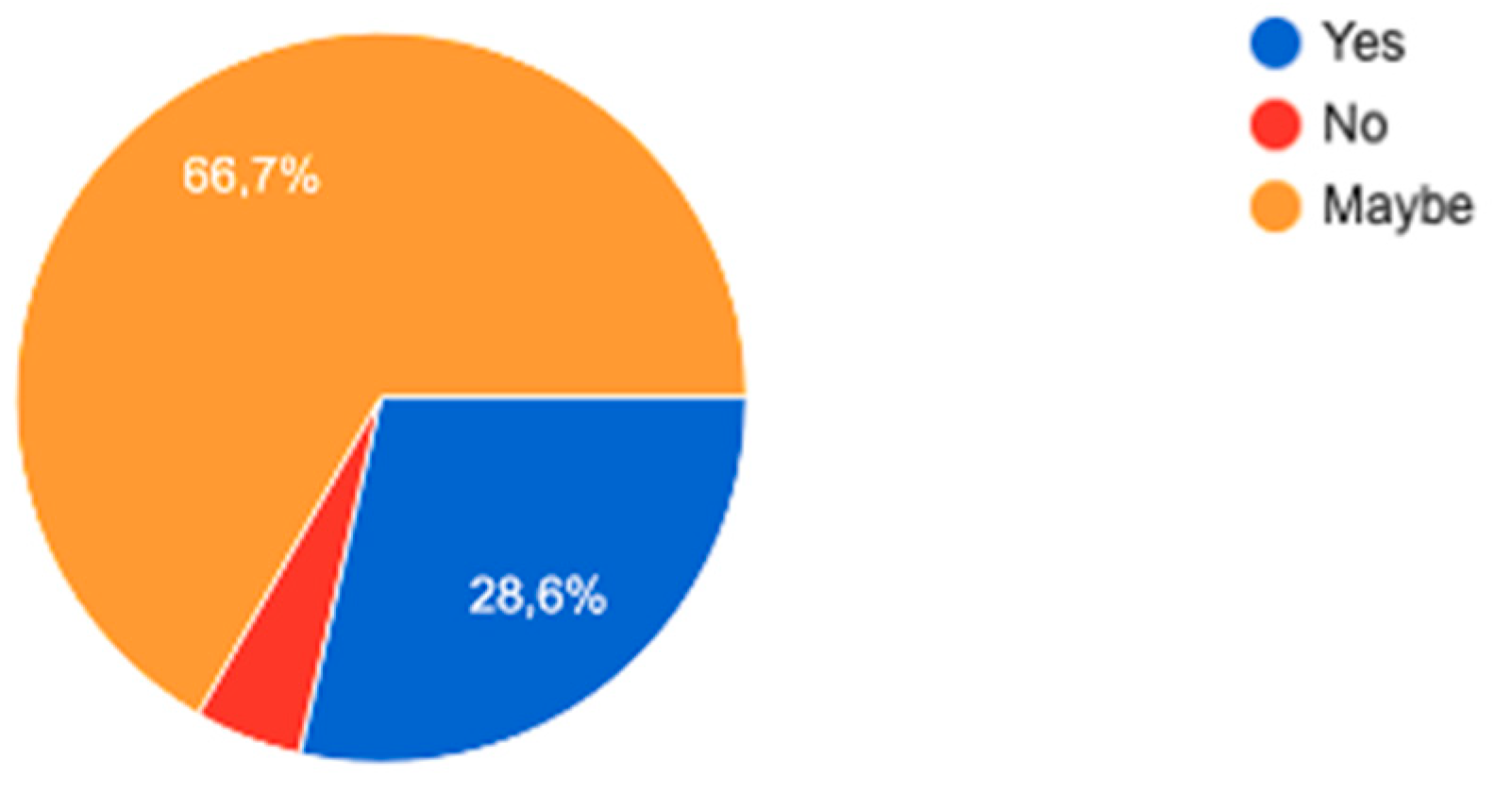
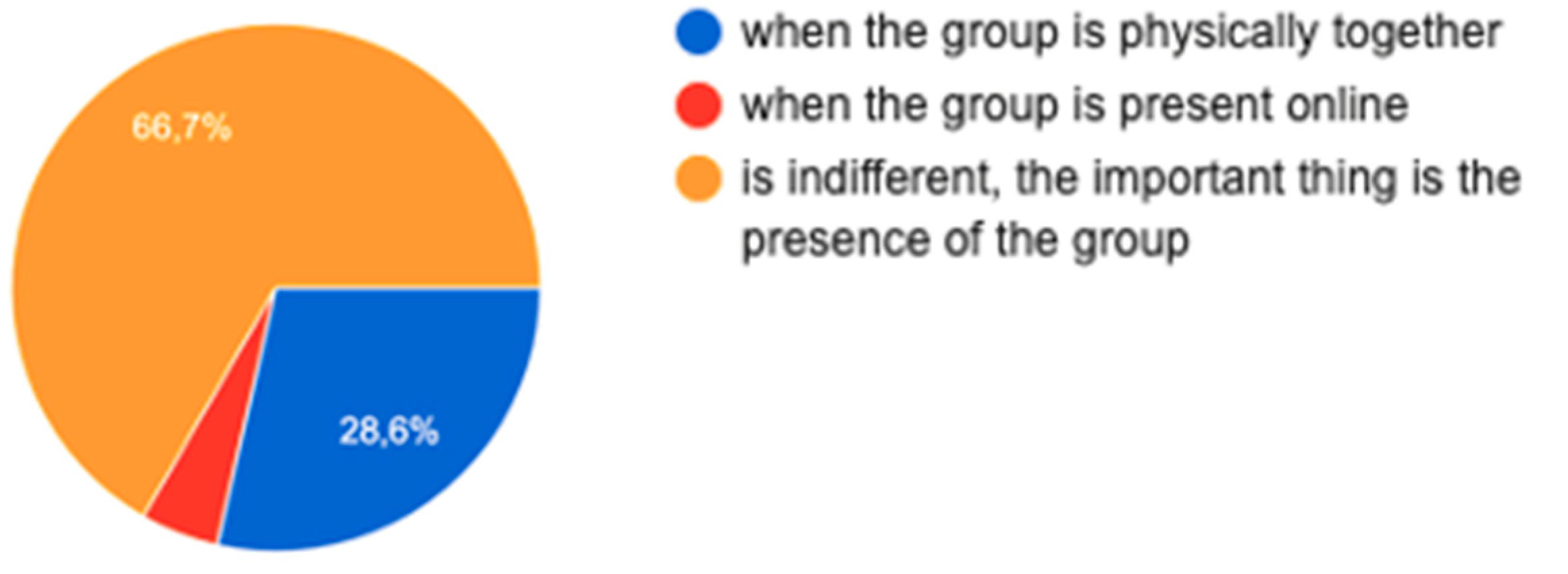
To delve into the idea of presence, the students were asked about the efficiency of the experience when the group was physically together, when it was present online, and if they were indifferent toward one or the other format. The result, as reflected in Figure 1, was that 28.6% considered it much more efficient for the group to be physically present, a small 4.7% considered the online presence better, and 66.7% considered themselves indifferent toward the online or physical format being the important thing to be present, that is, for a synchronous experience.
Figure 1.
Efficiency of the experience in physical and virtual presence. Source: self-made.
If we disaggregate this information between the two groups (PhG and VG), as shown in Table 2, we can see that in both cases, the majority thought that the format was unimportant as long as the group was present, but this appreciation was much greater in the VG (77.8%) compared to the PhG (58.3%), of whom 41.7% considered that the experience was more efficient when the group was physically together.
Table 2.
Efficiency of the experience in physical and virtual presence.
Another possibility that the online training opened up was asynchronous communication with no temporal coincidence. All group sessions were recorded and then sent, so those who could not attend could receive the information and be hooked on the training without having been present for it. According to the instructor, she only had two people who followed the course in this way for professional reasons, but it was not a model that she suggested. The students did not use this training mode either, although they appreciated having these recordings to listen to again.
“It is very good to have the recorded sessions, this allows us to review what we have been working on and deepen, sometimes when you listen to them again you see things that went unnoticed”(OI21).
“I work shifts and sometimes they coincide with the classes, the recordings allow me to follow the rhythm of the group and not get lost”(OI14).
3.2. Effects of Each Type of Training according to the Actors
Before addressing the effects of each training, it is necessary to highlight the motivations and expectations of the mindfulness practitioners who participated in this study. On the one hand, it is important to note that the training center had as a selection criterion that candidates did not suffer from psychological or psychiatric problems. In addition, in the survey, we asked them why they chose to receive mindfulness classes. Among their main answers to this open-ended question, we found the following motivations: to relieve anxiety, stress, discomfort, and negativity, manage uncertainty, meditate, deepen transpersonal development and personal self-knowledge, better manage emotions, calm the mind, focus, be more aware of everything, etc.
3.2.1. Advantages of Virtual Classes Compared to Those Based on Physical Presence
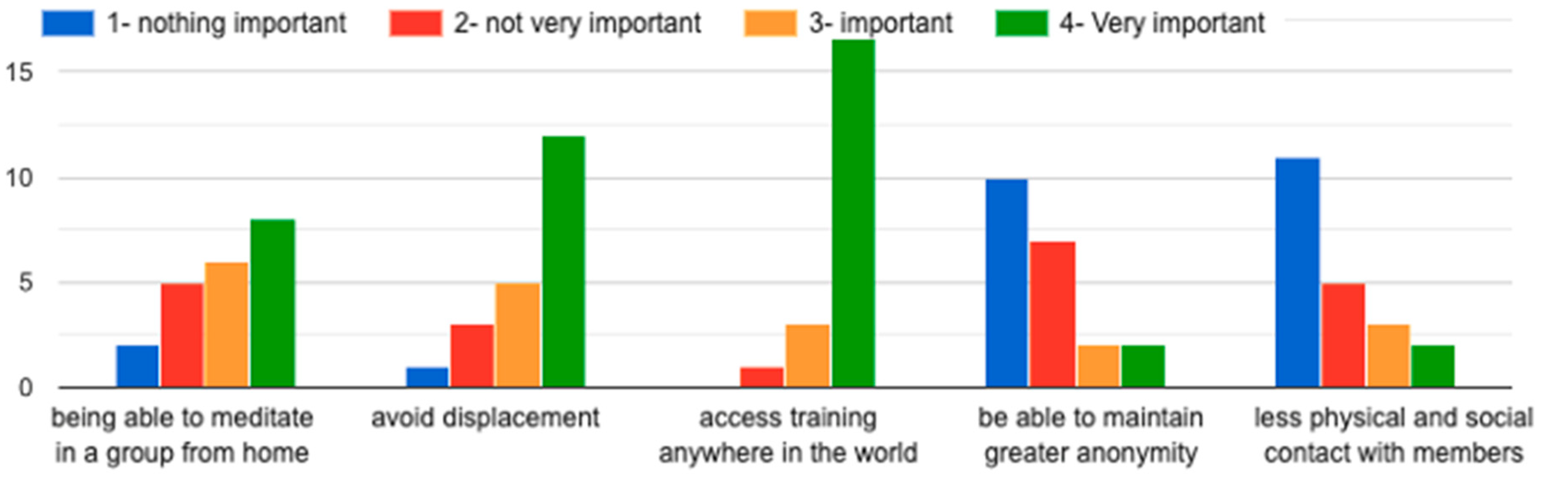
When students were asked generally about the advantages of online classes over face-to-face classes, they pointed out three factors as being very important (see Figure 2): The first was “accessing training anywhere in the world”; second, “avoiding travel”; third, “meditating in a group from home”. On the other hand, issues such as “being able to maintain greater anonymity” and “less physical and social contact with group members” were less or not at all important.
Figure 2.
Advantages of virtual classes over face-to-face classes. Source: self-made.
We disaggregated this information between the two groups to facilitate the comparison between both. The items “being able to meditate in a group from home” and “avoiding travel” were more important for the VG than for the PhG. The item “being able to maintain greater anonymity” was considered more important for the PhG than for the VG. On the other hand, the item “less physical and social contact of the members” was less or not important for both groups. In addition, both groups agreed on the advantages of “accessing training anywhere in the world”, as the majority considered it important or very important.
3.2.2. Advantages of Mindfulness Classes with Physical Presence Compared to Virtual Classes
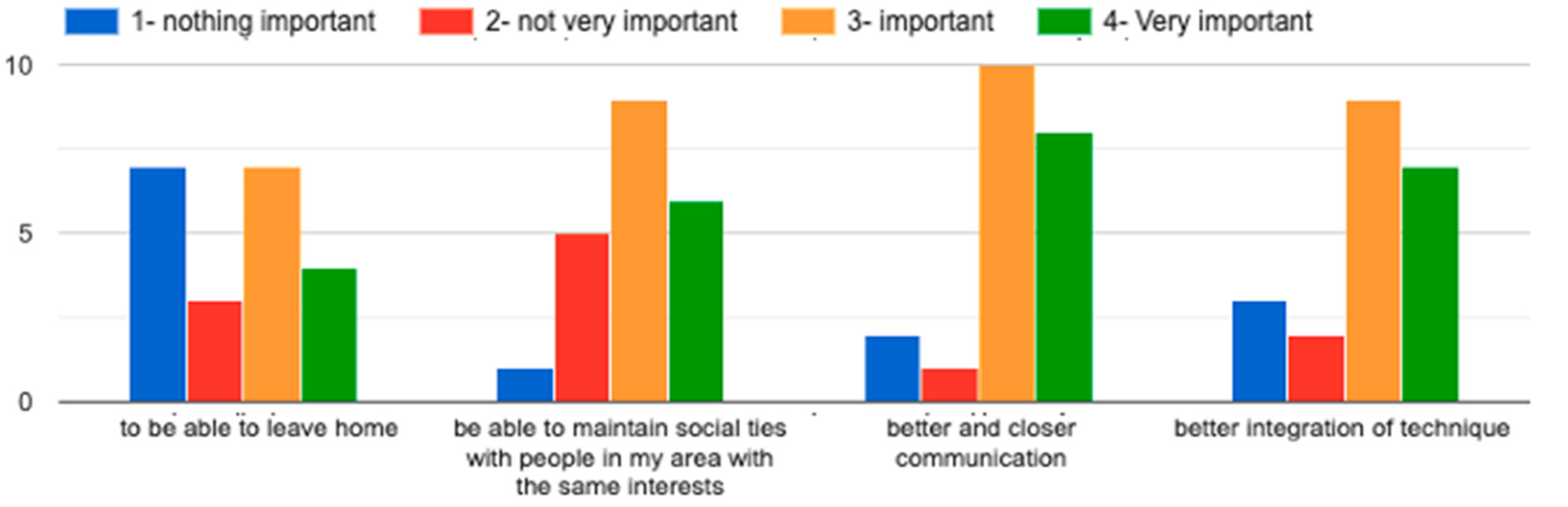
When asking the inverse question and investigating the students’ perception of the advantages of classes with physical presence compared to online classes (see Figure 3), globally, we found a clear agreement that physical presence produced “better communication and closer “, as well as “better integration of the technique” and “being able to maintain social ties with people in my area with the same interests”. For the item “being able to leave home”, the answers were distributed in a more homogeneous way—for 47.6%, it was less or not at all important, and for 52.4%, it was important or very important.
Figure 3.
Perception of advantages of classes with physical presence compared to virtual classes. Source: self-made.
The apparent contradiction between the desire for privacy and that of maintaining social ties with people in the area was discussed with the instructor and with the students interviewed. According to what they indicated, there was a need to find people with the same concerns and to generate socialization groups around these issues; however, in physical presence, as they were all from the same area, it is more difficult to gain enough trust to share certain intimate topics, while if one is with people done does not know and one will not meet on the street, it is more comfortable to share certain concerns and reflections.
We disaggregated this information for analysis. This showed a good deal of agreement between the two groups in the items “being able to leave home” and “being able to maintain social ties with people in my area with the same interests”. However, they differed with respect to the item “better and closer communication”; here, the PhG considered that it was a very important aspect (50%) or important (41.67%), while of the VG, only 22.22% considered it very important, and 55% very important. Something similar occurred with respect to the item “better integration of the technique”, although both groups considered it important or very important at rates of more than 75%; in the VG, 22.22% considered it very important compared to 41.67% of the PhG. In general, all of them pointed out that physical presence had a much greater experiential intensity.
“The group experience is different. Those who have not gone to [physical] face-to-face do not notice it, but those who have experienced it know that it is more intense, there is more group connection. The group improves learning, because to learn anything we associate it with an experience, the more pleasant the experience is, the more fruitful the learning is. It is not that you learn more, it is that you have a more intense experience and greater motivation”(OI1).
The students of the PhG, who met before the confinement and had the opportunity to be together in physical classes, generated deep bonds of trust and cohesion, which they maintained when moving to virtuality; in addition, they strove to be virtually present in all sessions.
“Students who come from physical classroom classes never fail, they always resolve their personal obligations to be able to attend the class live; however, students who have only known the online courses have generated less cohesion, and allow themselves to skip the [virtual] face-to-face classes and listen to them later”(OI1).
“I will always prefer the face-to-face class, but when it is not possible this is a good way to continue growing”(OI8).
3.2.3. Back to Normal
Although we are in a moment of uncertainty and the measures of social distancing and masks limit the levels of interaction from prior to the pandemic, it is to be assumed that they will return in the near future. We asked the informants if they planned to return to face-to-face classes when the pandemic ends. The results of this question can be seen in Figure 4. A total of 28.6% considered that they would return to face-to-face classes, 4.7% considered that they would not, and 66.7% considered that it depends.
Figure 4.
Level of intention to return to face-to-face classes when the pandemic ends. Source: self-made.
If we disaggregate this information between the two groups studied (Table 3), we can observe a certain coincidence, although there was a higher percentage of preference for returning to physical presence among those who had already participated in this experience (PhG (33.3%)) versus those who had only been in online training (GV (22.2%)).
Table 3.
Level of intention to return to face-to-face classes when the pandemic ends according to group.
The ambiguity of the answer “maybe” led us to ask the interviewed informants directly about what elements would condition their return to physical classes, who agreed on the aspects that had to do with the ease and comfort of being able to perform the exercise courses without moving and time availability.
“Although I would prefer in person, taking the car and driving several kilometers at night is not pleasant, it is more comfortable from home”(OI10).
“When you travel, you have to add at least another hour to the hour and a half of class, sometimes you don’t have all that time, much more with young children”(OI16).
3.2.4. Group Stability
One of the problems that exists in many types of training is the continuity of the participants (Table 4); we asked the trainer for information on enrollment and dropouts in the 2019–2020 and 2020–2021 academic years. The dropout rate was 13% in the 2019–2020 academic year and 9% in 2020–2021.
Table 4.
Degree of continuity in training.
The commitment of these students was quite high; there were no dropouts and there were no differences between those who started in physical presence (PhG) and those who had only been online (VG).
“The course is very long, it is eight months, every week. Of course, personal problems arise that make it necessary to leave the training, but in general the majority usually finish it”(OI1).
3.3. Perception of Changes in Health and Importance of the Practice for Students
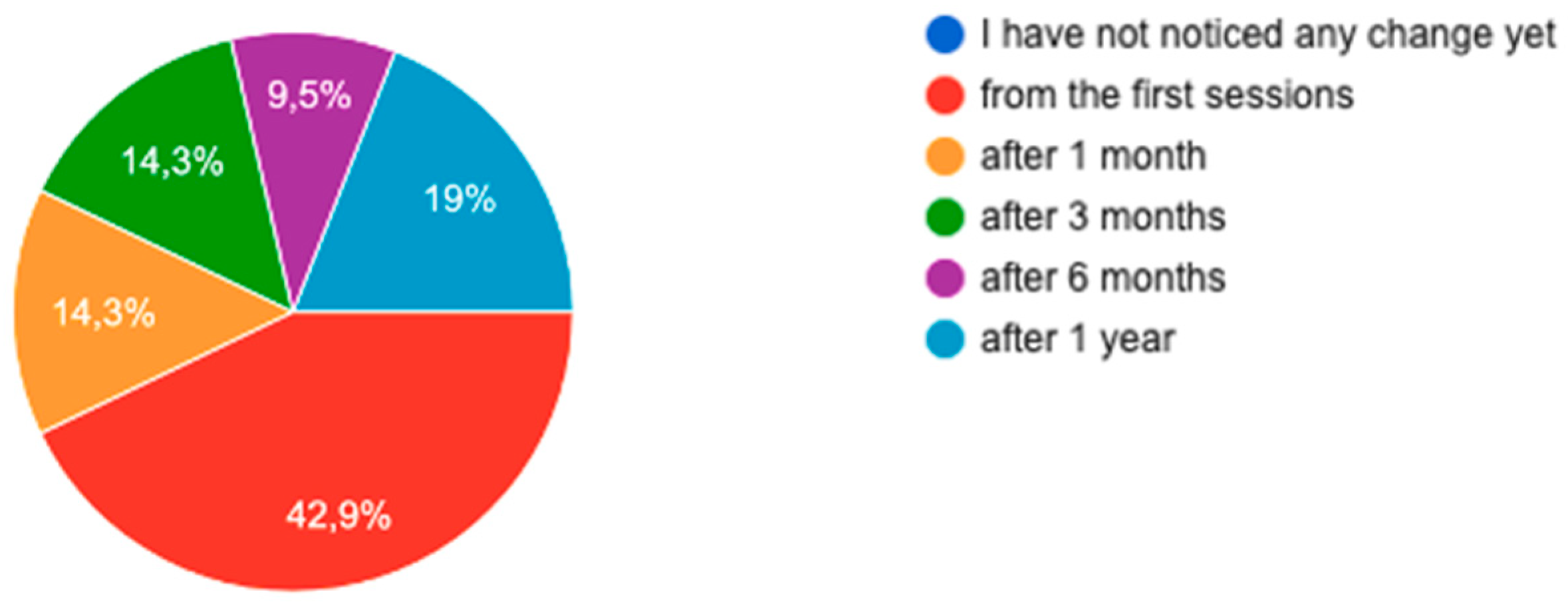
All those surveyed affirmed that the practice of mindfulness had an effect on their health. We asked them when they started to notice the changes. The results of this question can be seen in Figure 5. A total of 42.9% reported that they began to notice the changes from the first sessions, and only 19% noticed them after the year.
Figure 5.
Moment where students began to perceive changes. Source: self-made.
We disaggregated these data between the two groups to check if the physical classroom students noticed the changes at the same rate as the virtual ones (see Table 5). Among the students who started in physical presence (PhG), 50% indicated that they noticed changes “from the first sessions”, 16.7% after a month, 8% after 3 months, and 25% after one year.
Table 5.
Moment when students began to perceive changes according to the group.
On the other hand, of the students who started in virtual courses (VG), 33% noticed changes from the first sessions, 11% after a month, 22% after 3 months, and 33% after one year.
Therefore, there was a certain slowdown in the perception of the effects of practice in the case of online training, which was not as intense in the first sessions.
We asked the instructor about her perception regarding this difference in the efficiency of both models, and she informed us that in the physical face-to-face course, an intensity and cohesion of the group was generated that greatly favored learning and internalization of the practice. Even so, the online environment also allowed this change, but it was certainly less efficient, especially when not attending live sessions.
“My experience tells me that the face-to-face [physical] workshop is more effective, especially at first. As the experience is more intense, the degree of motivation increases, which helps to maintain enthusiasm throughout the period, which is quite long. The cohesion of the group that occurs in the classroom also favors the learning and integration of all the tools. The participants feel very sheltered and accompanied not only by me as an instructor but by the rest of the classmates. When people share intimate emotions and feelings in a group from a physical experience, very strong bonds are created, and this is a powerful fuel for motivation and, consequently, for learning”(OI1).
“In the online experience I have seen similar results when some sessions have already passed. Group cohesion is a bit slower and it is easier for students to disengage from attending videoconference sessions because they have the ability to listen to them on tape. It seems that it is useful for them to see them delayed, but they do not have the face-to-face experience and they cannot see the difference”(OI1).
Finally, we asked about the extent to which mindfulness practice had become essential in participants’ lives. In Table 6, it can be observed that there was a high agreement between both groups that the practice of mindfulness had become essential in their lives. On a scale of 1 to 5, 44.4% of virtual students and 50% of physical classroom students considered it very important, and 33.3% of both groups considered it important.
Table 6.
Degree of importance of mindfulness practice in participants’ lives.
“Once you know, practice and experience the results of mindfulness practice, there is no going back. Attention training becomes an essential instrument in your life experience because you have understood the degree of impact it has on it. In your day-to-day life, you realize that you can lose your way, but you have a built-in compass that helps you regain north. By experiencing the transformation firsthand, you can’t deny the evidence. Recovering balance, peace and harmony becomes your first goal, because you have become aware that this will put in order any conflict that at first seemed external, but was only a reflection of a wrong and inattentive look”(OI1).
4. Discussion
The transition from the group’s physical presence to virtuality meant a break in the chrono-topo complex of the participants’ experience. On the one hand, the spatial distance disappeared and the groups were made up of students from different parts of Spain; on the other hand, although the methodology in the online course maintained its structure and fundamental dynamics, practices that involved the body were abandoned, as well as those that involved interaction in a pair or a small group. This last limitation was not so much due to an imposition of the online environment, but rather due to the lack of skills in technology of the instructor and the participants.
For its part, the face-to-face experience was kept alive in virtuality; the majority of the students (66.7%) considered that the efficiency of group practices was equivalent as long as the group was synchronously together. This position was more widespread among those who only participated through online training (VG (77.8%)) than among those who started in physical presence (PhG (58.3%)). For the PhG students, 41.7% considered that it was more efficient if the group was physically together. This difference can be explained by the ability of the PhG students to compare physical and online experiences, since, as the instructor pointed out, “the intensity of the experience is much greater when the group is physically together”, implicitly assuming the appreciation of Augé [78], according to whom sharing a space generates feelings of security and stability, which reinforce the feeling of belonging and rootedness, thus promoting a greater experiential intensity in the practice of mindfulness.
In addition, the coincidence or synchronicity of the interaction was no longer totally necessary. The eternity of virtual time, which Castells talked about [69], would be based on this coincidence, which was not necessarily face to face, because when recording the session, any member of the group could view it (even if they did not participate) as many times as they wanted and at the time they preferred. We would be facing the characteristic that Maffesoli [70] granted to postmodernity—the cyclical perception of time.
The most important thing about online courses for both groups was to transcend the physical space and be able to access training anywhere in the world. This is an unquestionable advantage of online training that is revolutionizing education in all sectors. Being able to meditate in a group from home and avoiding travel were important issues for students who had only participated in online training; however, those who compared both systems did not find it so relevant. A contextualized anthropological analysis of these responses allows us to consider that they are due to the confluence of several factors: first of all, the fear of the contagion of SARS-CoV-2 that is still present; having an accommodating attitude so as not to leave their comfort zones and put themselves at risk; finally, ecological awareness regarding the pollution generated by travel.
Regarding the advantages of classes with physical presence, all of them pointed out that the communication was better and closer and that there was also a greater integration of techniques. A feeling of community and belonging was generated; as the informants indicated, physical presence fostered an environment of greater intensity and group cohesion, which improved motivation, that is, it resulted in positive emotions that stimulated learning. This appreciation is supported by recent research carried out in the field of neuroscience and psychology [82], where the importance of emotions in learning has been confirmed.
An apparent contradiction between the desire for privacy and that of maintaining social ties with people in the area appeared in the interviews and surveys. Investigating the informants with respect to this fact, we verified that two human needs are faced here, which are sometimes in conflict: first, finding people with the same concerns to create socialization groups around these issues; second, maintaining a certain degree of privacy when we expose issues that we consider intimate and make us feel vulnerable. In physical presence, since everyone was from the same area, it was more difficult to gain enough confidence to share certain intimate topics, while if one is with people done does not know and one will not meet on the street, it is more comfortable to share concerns and reflections. This is a very general perception in virtual environments and is one of the attractions of social networks. We face here an update of the great work of Johann Wolfgang von Goethe, Elective Affinities, in which it was exposed how social relationships can be established based on common concerns and stripped of all kinds of moral connotations [83].
All of the respondents affirmed that the practice of mindfulness had effects on their health, and many noticed these changes from the first sessions, especially those that began in physical presence, a fact that coincides with other studies [28]. However, the online students took longer to perceive these changes. We can assume that the learning and internalization process slowed down in virtual training due to the loss of the intensity of the experience and of group cohesion. There is abundant research that points out how the cohesion of groups favors learning and leads to higher performance, greater satisfaction, and greater motivation of students [84,85].
Finally, the forcefulness in the response to the importance that mindfulness had in their lives was relevant. The majority (80%) in both groups (77.7% of those of the VG and 83.3% of the students in the PhG) considered that mindfulness had become essential in their lives.
Although the positive effect that both types of training had according to students is undeniable, the fact that there was a certain slowdown in learning among the VG students can be explained by the difficulty in building group cohesion in the online environment. However, as the respondents pointed out, the limitations were not only of the medium, but also of the digital skills of the actors themselves. Therefore, better training and mastery of the possibilities of the environment could lead to an improvement in the effectiveness of online training based on mindfulness.
It is important to note that this study was limited to a specific training center in a specific human context, although it corroborated and expanded the results of previous studies. It is necessary to continue expanding the research to other groups and online environments in both similar and different socio-cultural contexts.
5. Conclusions
The research on interventions based on mindfulness with physical presence is broad and solid, showing the effectiveness of mindfulness in the management of different aspects of physical and mental health. With the onset of the pandemic, online interventions have multiplied and have made up a field that is rapidly growing and developing, as many activities, including meditation groups, have moved to cyberspace. At this time, there is little research on the difficulties that these groups have faced and the effectiveness of the practice of mindfulness online. In this work, we analyzed the effects of the transition from physical presence to virtual training in mindfulness during confinement and the subsequent period of social distancing in a training center. Specifically, we addressed an analysis that occurred in the chrono-topo complex of the experience of the participants and the effects of the change from physical presence to virtual presence or non-presence. Finally, we compared the results of both training experiences on health. The results show that online training breaks the traditional chrono-topo complex and opens up new access possibilities, but limits corporeal practices, decreases the intensity of the experience, and slows down the pace of learning. Efficiency is maintained by showing equivalent result rates at the end of the training. These results have room for improvement, since they did not take advantage of all of the possibilities offered by digital media due to the limited digital skills of the participants.
Consequently, mindfulness through online education is demonstrated as an efficient and economically viable training action for the improvement of physical and mental health, so it is urgent to do research on these adaptations to promote training reference frameworks that demonstrate greater effectiveness.
Author Contributions
Conceptualization, F.A.H., F.S.V., J.E.M.G. and A.T.I.; data curation, F.A.H., F.S.V., J.E.M.G. and A.T.I.; formal analysis, F.A.H., F.S.V., J.E.M.G. and A.T.I.; investigation, F.A.H., F.S.V., J.E.M.G. and A.T.I.; methodology, F.A.H., F.S.V., J.E.M.G. and A.T.I.; project administration, F.A.H., F.S.V., J.E.M.G. and A.T.I.; validation, F.A.H., F.S.V., J.E.M.G. and A.T.I.; visualization, F.A.H., F.S.V., J.E.M.G. and A.T.I.; writing—original draft, F.A.H., F.S.V., J.E.M.G. and A.T.I.; writing—review & editing, F.A.H., F.S.V., J.E.M.G. and A.T.I. All authors have read and agreed to the published version of the manuscript.
Funding
This research received no external funding.
Institutional Review Board Statement
Not applicable.
Informed Consent Statement
The research team has taken all of the necessary measures according to the practices of Social Anthropology. All of the elements that could identify people under study have been anonymized. In addition to what is indicated, we have the informed consent of the informants. In Social Anthropology, consent is never given in writing; it is always given orally to avoid any bias in the interviews. This is how we work in our discipline. With this approach, which is typical of ethnographic field work, all ethical concerns are resolved, and committee approval is not required.
Data Availability Statement
The data presented in this study are available on request from the corresponding author.
Acknowledgments
We want to thank the collaboration of the Center for Meditation and Transpersonal Development and the Yolanda Marín Arroyo (https://www.yolandamarinarroyo.es), as well as the students who shared their experiences during the research period. Without them, this investigation would not have been possible.
Conflicts of Interest
The authors declare no conflict of interest.
References
- Walsh, R.; Vaughan, F. (Compl.), Más Allá Del Ego. Textos de Psicología Transpersonal; Kairós: Barcelona, Spain, 1982. [Google Scholar]
- Nogués, R. La Espiritualidad Actual, Analizada Desde la Neurociencia Antropológica; Tendencias 21: Madrid, Spain, 2016; Available online: https://tendencias21.levante-emv.com/la-espiritualidad-actual-analizada-desde-la-neurociencia-antropologica_a41972.html (accessed on 10 December 2021).
- Gardner, H. La Inteligencia Reformulada. Las Inteligencias Múltiples en el Siglo XXI; Paidós: Barcelona, Spain, 2003. [Google Scholar]
- Rizzolatti, G.; Fadiga, L.; Gallese, V.; Fogassi, L. Premotor cortex and the recognition of motor actions. Cogn. Brain Res. 1996, 3, 131–141. [Google Scholar] [CrossRef]
- Damasio, A. Self Comes to Mind. Constructing the Conscious Brain; Pantheon Books: New York, NY, USA, 2010. [Google Scholar]
- Goleman, D. Inteligencia Emocional; Editorial Kairós: Barcelona, Spain, 1996. [Google Scholar]
- Firchsman, D. Inteligencia Espiritual en la Práctica. Cómo Aplicarla en la Vida y en la Empresa; Editorial Planeta: Lima, Peru, 2016. [Google Scholar]
- Álvarez Munárriz, L. La conciencia humana: Factores culturales. In Intellectum Valde Ama. Ama Intensamente la Inteligencia; Lazcano, R., Ed.; Editorial Rafael Lazcano: Madrid, Spain, 2019; Volume III, pp. 1815–1831. [Google Scholar]
- Ratey, J.J. El Cerebro: Manual de Instrucciones; Mondadori: Barcelona, Spain, 2002. [Google Scholar]
- García-Campayo, J.; Demarzo, M. Manual Práctico de Mindfulness: Curiosidad y Aceptación; Singlantana: Barcelona, Spain, 2014. [Google Scholar]
- Modrego, M.; García-Campayo, J.; Demarzo, M. Qué es mindfulness y compasión y por qué son útiles en la educación del bienestar emocional. In Bienestar Emocional y Mindfulness en la Educación; García-Campayo, J., Demarzo, M., Modrego, M., Eds.; Alianza Editorial: Madrid, Spain, 2017. [Google Scholar]
- Brown, K.W.; Ryan, R.M. The benefits of being present: Mindfulness and its role in psychological well-being. J. Pers. Soc. Psychol. 2003, 84, 822–848. [Google Scholar] [CrossRef] [PubMed] [Green Version]
- Harari, Y.N. 21 Lecciones Para el Siglo XXI; Debate: Barcelona, Spain, 2020. [Google Scholar]
- Brown, K.W.; Ryan, R.M.; Creswell, J.D. Mindfulness: Theoretical foundations and evidence for its salutary effects. Psychol. Inq. 2007, 18, 211–237. [Google Scholar] [CrossRef]
- Kabat-Zinn, J. Wherever You Go, There You Are: Mindfulness Meditation in Everyday Life; Hyperion: New York, NY, USA, 1994. [Google Scholar]
- Germer, C. El Poder de Mindfulness; Paidos: Barcelona, Spain, 2017. [Google Scholar]
- Martin, J.R. Limbering across cognitive-behavioral, psychodynamic and systems orientations. Retooling for Integration: Perspectives on the Training of Post-Licensed Psychotherapists. In Proceedings of the 13th Annual Conference of the Society for the Exploration of Psychotherapy Integration, Toronto, ON, Canada, 24–27 April 1997. [Google Scholar]
- Hayes, S.C.; Strosahl, K.D.; Wilson, K.G. Acceptance and Commitment Therapy: An Experiential Approach to Behavior Change; Guilford Press: New York, NY, USA, 1999. [Google Scholar]
- Linehan, M.M. Dialectical Behavior Therapy for Treatment of Borderline Personality Disorder: Implications for the Treatment of Substance Abuse. NIDA Res. Monogr. 1993, 137, 201–216. [Google Scholar]
- Sipe, W.E.; Eisendrath, S.J. Mindfulness-Based Cognitive Therapy: Theory and Practice. Can. J. Psychiatry 2012, 57, 63–69. [Google Scholar] [CrossRef] [Green Version]
- Kabat-Zinn, J. Mindfulness-based stress reduction (MBSR). Constr. Hum. Sci. 2003, 8, 73–83. [Google Scholar]
- Segal, Z.V.; Teasdale, J.D.; Williams, J.M.G. Mindfulness Based Cognitive Therapy: Theoretical Rationale and Empirical Status; Guilford Press: New York, NY, USA, 2004. [Google Scholar]
- Teasdale, J.D.; Segal, Z.V.; Williams, J.M.G.; Ridgeway, V.A.; Soulsby, J.M.; Lau, M.A. Prevention of relapse/recurrence in major depression by mindfulness-based cognitive therapy. J. Consult. Clin. Psychol. 2000, 68, 615–623. [Google Scholar] [CrossRef]
- Kabat-Zinn, J. Mindfulness-Based Interventions in Context: Past, Present, and Future. Clin. Psychol. Sci. Pract. 2006, 10, 144–156. [Google Scholar] [CrossRef]
- Tang, Y.Y.; Hölzel, B.K.; Posner, M.I. The neuroscience of mindfulness. Nat. Rev. Neurosci. 2015, 16, 213–225. [Google Scholar] [CrossRef]
- Lutz, A.; Slagter, H.A.; Dunne, J.D.; Davidson, R. Attention regulation and monitoring in meditation. Trends Cogn. Sci. 2008, 4, 163–169. [Google Scholar] [CrossRef] [Green Version]
- Tang, Y.Y.; Posner, M.I. Attention training and attention state training. Trends Cogn. Sci. 2009, 13, 222–227. [Google Scholar] [CrossRef] [PubMed]
- Tang, Y.Y.; Ma, Y.; Wang, J.; Fan, Y.; Feng, S.; Lu, Q.; Posner, M.I. Short-term meditation training improves attention and self-regulation. Proc. Natl. Acad. Sci. USA 2007, 104, 17152–17156. [Google Scholar] [CrossRef] [PubMed] [Green Version]
- Randal, C.; Pratt, D.; Bucci, S. Mindfulness and Self-esteem: A Systematic Review. Mindfulness 2015, 6, 1366–1378. [Google Scholar] [CrossRef]
- Thompson, B.; Waltz, J. Mindfulness, Self-Esteem, and Unconditional Self-Acceptance. J. Rat.-Emot. Cogn.-Behav. Ther. 2008, 6, 119–126. [Google Scholar] [CrossRef]
- Hölzel, B.K.; Lazar, S.W.; Gard, T.; Schuman-Olivier, Z.; Vago, D.R.; Ott, U. How does mindfulness meditation work? Proposing mechanisms of action from a conceptual and neural perspective. Perspect. Psychol. Sci. 2011, 6, 537–559. [Google Scholar] [CrossRef] [PubMed]
- Tacón, A.M.; Caldera, Y.M.; Ronaghan, C. Mindfulness-based stress reduction in women with breast cancer. Fam. Syst. Health 2004, 22, 193–203. [Google Scholar] [CrossRef]
- Bo, H.X.; Li, W.; Yang, Y.; Wang, Y.; Zhang, Q.; Cheung, T.; Wu, X.; Xiang, Y.-T. Posttraumatic stress symptoms and attitude toward crisis mental health services among clinically stable patients with COVID-19 in China. Psychol. Med. 2021, 51, 1052–1053. [Google Scholar] [CrossRef] [Green Version]
- Whitebird, R.R.; Kreitzer, M.J.; O’Connor, P.J. Mindfulness-based stress reduction and diabetes. Diabetes Spectr. 2009, 22, 226–230. [Google Scholar] [CrossRef] [Green Version]
- Gureje, O.; Von Korff, M.; Simon, G.E.; Gater, R. Persistent pain and well-being: A World Health Organization Study in Primary Care. JAMA 1998, 280, 147–151. [Google Scholar] [CrossRef]
- Blanck, P.; Perleth, S.; Heidenreich, T.; Kröger, P.; Ditzen, B.; Bents, H.; Mander, J. Effects of mindfulness exercises as stand-alone intervention on symptoms of anxiety and depression: Systematic review and meta-analysis. Behav. Res. Ther. 2018, 102, 25–35. [Google Scholar] [CrossRef]
- Juul, L.; Pallesen, K.J.; Bjerggaard, M.; Nielsen, C.; Fjorback, L.O. A pilot randomised trial comparing a mindfulness-based stress reduction course, a locally-developed stress reduction intervention and a waiting list control group in a real-life municipal health care setting. BMC Public Health 2020, 20, 409. [Google Scholar] [CrossRef]
- Basso, J.C.; McHale, A.; Ende, V.; Oberlin, D.J.; Suzuki, W.A. Brief, daily meditation enhances attention, memory, mood, and emotional regulation in non-experienced meditators. Behav. Brain Res. 2019, 356, 208–220. [Google Scholar] [CrossRef] [PubMed]
- Montero-Marin, J.; Garcia-Campayo, J.; Pérez-Yus, M.C.; Zabaleta-Del-Olmo, E.; Cuijpers, P. Meditation techniques v. relaxation therapies when treating anxiety: A meta-analytic review. Psychol. Med. 2019, 49, 2118–2133. [Google Scholar] [CrossRef] [PubMed]
- Strauss, C.; Cavanagh, K.; Oliver, A.; Pettman, D. Mindfulness-based interventions for people diagnosed with a current episode of an anxiety or depressive disorder: A meta-analysis of randomised controlled trials. PLoS ONE 2014, 9, e96110. [Google Scholar] [CrossRef] [PubMed]
- Khoury, B.; Lecomte, T.; Fortin, G.; Masse, M.; Therien, P.; Bouchard, V.; Chapleau, M.-A.; Paquin, K.; Hofmann, S. Mindfulness-based therapy: A comprehensive meta-analysis. Clin. Psychol. Rev. 2013, 33, 763–771. [Google Scholar] [CrossRef] [PubMed]
- Hofmann, S.G.; Sawyer, A.T.; Witt, A.A.; Oh, D. The effect of mindfulness-based therapy on anxiety and depression: A meta-analytic review. J. Consult. Clin. Psychol. 2010, 78, 169–183. [Google Scholar] [CrossRef]
- Donald, J.; Sahdra, B.; Van Zanden, B.; Duineveld, J.; Atkins, P.; Marshall, S.; Ciarrochi, J. Does your mindfulness benefit others? A systematic review and meta-analysis of the link between mindfulness and prosocial behaviour. Br. J. Psychol. 2019, 110, 101–125. [Google Scholar] [CrossRef] [Green Version]
- O’Reilly, G.A.; Cook, L.; Spruijt-Metz, D.; Black, D.S. Mindfulness-based interventions for obesity-related eating behaviours: A literature review. Obes. Rev. 2014, 15, 453–461. [Google Scholar] [CrossRef] [Green Version]
- Pascoe, M.C.; Thompson, D.R.; Jenkins, Z.M.; Ski, C.F. Mindfulness mediates the physiological markers of stress: Systematic review and meta-analysis. J. Psychiatr. Res. 2017, 95, 156–178. [Google Scholar] [CrossRef]
- Bowen, S.; Witkiewitz, K.; Clifasefi, S.; Grow, J.; Chawla, N.; Hsu, S.H.; Carroll, H.; Harrop, E.; Collins, S.E.; Lustyk, M.K.; et al. Relative Efficacy of Mindfulness-Based Relapse Prevention, Standard Relapse Prevention, and Treatment as Usual for Substance Use Disorders: A Randomized Clinical Trial. JAMA Psychiatry 2014, 71, 547–556. [Google Scholar] [CrossRef]
- Poissant, H.; Moreno, A.; Potvin, M.A. A Meta-analysis of Mindfulness-Based Interventions in Adults with Attention-Deficit Hyperactivity Disorder: Impact on ADHD Symptoms, Depression, and Executive Functioning. Mindfulness 2020, 11, 2669–2681. [Google Scholar] [CrossRef]
- Cairncross, M.; Miller, C.J. The Effectiveness of Mindfulness-Based Therapies for ADHD: A Meta-Analytic Review. J. Atten. Disord. 2020, 5, 627–643. [Google Scholar] [CrossRef] [PubMed]
- Saraff, S.; Tiwari, A.; Rishipal. Effect of Mindfulness on Self-concept, Self-esteem and Growth Mindset: Evidence from Undergraduate Students. J. Psychosoc. Res. 2020, 15, 329–340. [Google Scholar] [CrossRef]
- Duckworth, A.L.; Tsukayama, E.; May, H. Establishing causality using longitudinal hierarchical linear modeling: An illustration predicting achievement from self-control. Soc. Psychol. Personal. Sci. 2010, 1, 311–317. [Google Scholar] [CrossRef] [Green Version]
- Bogg, T.; Brent, W. Conscientiousness and health-related behaviors: A meta-analysis of the leading behavioral contributors to mortality. Psychol. Bull. 2004, 6, 887–919. [Google Scholar] [CrossRef] [PubMed] [Green Version]
- Daly, M.; Egan, M.; Quigley, J.; Delaney, L.; Baumeister, R.F. Childhood self-control predicts smoking throughout life: Evidence from 21,000 cohort study participants. Health Psychol. 2016, 35, 1254–1263. [Google Scholar] [CrossRef] [PubMed]
- Afonso, R.F.; Kraft, I.; Aratanha, M.A.; Kozasa, E.H. Neural correlates of meditation: A review of structural and functional MRI studies. Front. Biosci. 2020, 12, 92–115. [Google Scholar] [CrossRef]
- Chiesa, A.; Serretti, A. Mindfulness-based stress reduction for stress management in healthy people: A review and meta-analysis. J. Altern. Complementary Med. 2009, 15, 593–600. [Google Scholar] [CrossRef] [PubMed]
- Chiesa, A.; Calati, R.; Serretti, A. Does mindfulness training improve cognitive abilities? A systematic review of neuropsychological findings. Clin. Psychol. Rev. 2011, 31, 449–464. [Google Scholar] [CrossRef]
- Eberth, J.; Sedlmeier, P. The effects of mindfulness meditation: A meta-analysis. Mindfulness 2012, 3, 174–189. [Google Scholar] [CrossRef]
- Miller, J.J.; Fletcher, K.; Kabat-Zinn, J. Three-year follow-up and clinical implications of a mindfulness meditation-based stress reduction intervention in the treatment of anxiety disorders. Gen. Hosp. Psychiatry 1995, 17, 192–200. [Google Scholar] [CrossRef]
- Chadi, N.; Weisbaum, E.; Malboeuf-Hurtubise, C.; Ahola Kohut, S.; Viner, C.; Kaufman, M.; Locke, J.; Vo, D.X. Can the Mindful Awareness and Resilience Skills for Adolescents (MARS-A) Program Be Provided Online? Voices from the Youth. Children 2018, 5, 115. [Google Scholar] [CrossRef]
- Singh, N.N.; Hwang, Y.S. Mindfulness-based programs and practices for people with intellectual and developmental disability. Curr. Opin. Psychiatry 2020, 33, 86–91. [Google Scholar] [CrossRef] [PubMed]
- Krusche, A.; Cyhlarova, E.; Williams, J.M.G. Mindfulness online: An evaluation of the feasibility of a web-based mindfulness course for stress, anxiety and depression. BMJ Open 2013, 3, e003498. [Google Scholar] [CrossRef] [PubMed] [Green Version]
- Champion, L.; Economides, M.; Chandler, C. The efficacy of a brief app-based mindfulness intervention on psychosocial outcomes in healthy adults: A pilot randomised controlled trial. PLoS ONE 2018, 13, e0209482. [Google Scholar] [CrossRef] [PubMed]
- Spijkerman, M.P.J.; Pots, W.T.M.; Bohlmeijer, E.T. Effectiveness of online mindfulness-based interventions in improving mental health: A review and meta-analysis of randomised controlled trials. Clin. Psychol. Rev. 2016, 45, 102–114. [Google Scholar] [CrossRef] [Green Version]
- Ahmad, F.; Wang, J.J.; El Morr, C. Online Mindfulness Interventions: A Systematic Review. In Novel Applications of Virtual Communities in Healthcare Settings; El Morr, C., Ed.; IGI Global: Toronto, ON, Canada, 2018; pp. 1–27. [Google Scholar] [CrossRef]
- Sevilla-Llewellyn-Jones, J.; Santesteban-Echarri, O.; Pryor, I.; McGorry, P.; Alvarez-Jimenez, M. Web-based mindfulness interventions for mental health treatment: Systematic review and meta-analysis. JMIR Ment. Health 2018, 5, e10278. [Google Scholar] [CrossRef] [Green Version]
- Sommers-Spijkerman, M.; Austin, J.; Bohlmeijer, E.; Pots, W. New Evidence in the Booming Field of Online Mindfulness: An Updated Meta-analysis of Randomized Controlled Trials. JMIR Ment. Health 2021, 8, e28168. [Google Scholar] [CrossRef]
- The Economist, with Millions Stuck at Home, the Online Wellness Industry Is Booming. Available online: https://www.economist.com/international/2020/04/04/with-millions-stuck-at-home-the-online-wellness-industry-is-booming (accessed on 4 April 2020).
- Álvarez Munárriz, L. Tercer milenio: Tiempo de utopía. An. Fund. Joaquín Costa 1997, 14, 255–277. [Google Scholar]
- Antón-Hurtado, F. Paternidades judicializadas. In Hombres, Género y Patriarcado: Reflexiones, Cuerpos y Representaciones; Téllez Infantes, A., Martínez Guirao, J.E., Sanfélix Albelda, J., Eds.; Dykinson, S.L.: Madrid, Spain, 2020; pp. 75–96. [Google Scholar]
- Castells, M. La Era de la Información. Economía, Sociedad y Cultura; Alianza: Madrid, Spain, 1999. [Google Scholar]
- Maffesoli. La Contemplation du Monde. Figures du Style Communautaire; Bernard Grasset: París, France, 1993. [Google Scholar]
- Van Gennep, A. Ritos de Paso; Taurus: Madrid, Spain, 1986. [Google Scholar]
- Maffesoli, M. El Tiempo de Las Tribus: El Declive del Individualismo en la Sociedad de Masas; Ikaria: Barcelona, Spain, 1990. [Google Scholar]
- Antón Hurtado, F. Conciencia y seguridad. In El Poliedro de la Conciencia: Cerebro, Interacción y Cultura; Alvarez Munárriz, L., Ed.; Tirant Humanidades: Valencia, Spain, 2016; pp. 341–357. [Google Scholar]
- Merleau-Ponty, M. Phenomonology of Perception; Routledge: London, UK, 2006. [Google Scholar]
- Alcock, S.E. The reconfiguration of memory in the eastern Roman Empire. In Empires; Alcock, S.E., D’Altroy, T.N., Morrison, K.D., y Sinopoli, C.M., Eds.; Cambridge University Press: Cambridge, UK, 2001; pp. 323–350. [Google Scholar]
- Basso, K.H. Wisdom sits in places: Notes on a western Apache landscape. In Senses of Place; Feld, S., y Basso, K.H., Eds.; School of American Research Press: Santa Fe, NM, USA, 1996; pp. 53–90. [Google Scholar]
- Bradley, R. The Significance of Monuments: On the Shaping of Human Experience in Neolithic and Bronze Age Europe; Routledge Press: London, UK, 1998. [Google Scholar]
- Augé, M. Los No Lugares, ESPACIO del Anonimato: Una Antropología de la Sobremodernidad; Gedisa: Barcelona, Spain, 2008. [Google Scholar]
- Lefebvre, H. The Production of Space; Blackwell: Oxford, UK, 1991. [Google Scholar]
- Tellez, A. La Investigación Antropológica; Editorial Club Universitario: San Vicente del Raspeig, Spain, 2007. [Google Scholar]
- Tellez, A.; Martínez-Guirao, J.E. Métodos y Técnicas de Investigación en Antropología Social. Guía Didáctica y Práctica; Universidad Miguel Hernández de Elche: Elche, Spain, 2008. [Google Scholar]
- Elizondo Moreno, A.; Rodríguez Rodríguez, J.V.; Rodríguez Rodríguez, I. La Importancia De La emoción En El Aprendizaje: Propuestas Para Mejorar La motivación De Los Estudiantes. Cuad. Pedagog. Univ. 2018, 15, 3–11. [Google Scholar] [CrossRef]
- Von Goethe, J.W. Las Afinidades Electivas; Alianza Editorial: Madrid, Spain, 2000. [Google Scholar]
- Joo, B.K.B.; Song, J.H.; Lim, D.H.; Yoon, S.W. Team creativity: The effects of perceived learning culture, developmental feedback and team cohesion. Int. J. Train. Dev. 2012, 16, 77–91. [Google Scholar] [CrossRef]
- Hogg, M.A. Social identity theory. In Contemporary Social Psychological Theories; Burke, P.J., Ed.; Stanford University Press: Redwood City, CA, USA, 2006. [Google Scholar]
Publisher’s Note: MDPI stays neutral with regard to jurisdictional claims in published maps and institutional affiliations. |
© 2022 by the authors. Licensee MDPI, Basel, Switzerland. This article is an open access article distributed under the terms and conditions of the Creative Commons Attribution (CC BY) license (https://creativecommons.org/licenses/by/4.0/).