1. Introduction
Consumer demand for upgraded products is leading to faster product iteration and a shorter product life cycle. As a result, it causes a vast amount of waste products, introducing severe resource and environmental issues to society. Therefore, how to effectively deal with waste products is of increasing concern. To break through the limitation of resources and to relieve environmental pressure, the closed-loop supply chain (CLSC) has emerged, which has received strong support from governments and communities across many countries. Remanufacturing is an important part of CLSC management, and effective remanufacturing technology could save up to 70% of raw materials and 60% of energy usage in industrial enterprises [
1], maximizing the usage of waste products, improving resource utilization, and alleviating the pressure between resources, the environment, and economic benefits [
2,
3]. Governments have designed policies to guide enterprises to implement CLSC management, such as the Waste Electrical and Electronic Equipment (WEEE) introduced in Europe and other WEEE-like legislations launched in Japan and Canada [
4]. Meanwhile, many companies have participated in recycling and remanufacturing activities of waste products, such as Apple [
5], Fuji Xerox [
6], Dell, Sony [
7], GM and Ford [
8].
In China, to meet the need for sustainable development, in recent years, the Chinese government intensively designed a series of policies related to recycling waste products, such as the “Circular Development Leads Action” released in 2017 (NDRC, 2017) [
9] and policies targeting on recycling specific types of products. Through these efforts, the Chinese government expected to promote the establishment of recycling systems in various industries and motivate more enterprises to carry out recycling responsibility actions, especially for emerging industries. As one of the typical representatives of emerging industries, the new energy vehicle (NEV) industry in China is booming. The NEV ownership exceeded 7.991 million at the end of 2021, achieving a year-on-year growth of 62%, and it might exceed 32 million in 2025 by prediction, according to the data from the China Association of Automobile Manufacturers. Currently, the majority of NEV are electronic vehicles (EVs). As the power battery is one of the curial components of EVs, its market demand also grows rapidly. According to a report by the China Automotive Battery Innovation Alliance, the loading capacity for power batteries in China exceeded 154 GWh in 2021, and the estimated capacity may reach 770 GWh in 2025. Currently, the lifespans of power batteries are around five to seven years, and for safety and efficiency reasons, the general requirement is that the capacity of power batteries needs to be kept above 80% of the original capacity [
10,
11]. With the continuous surge in the number of EVs, the sharp increase in the number of retired power batteries is foreseeable, and some predicted that the retired power batteries in the Chinese market may reach 7.08 million tons by 2030 [
12]. Unlike many other products, the improper disposal of waste power batteries can pose a serious threat to water, soil and human beings, which means the recycling of power batteries is closely related to environmental pollution and resource consumption issues. Thus, to deal with the power battery retirement tide, it is essential to establish suitable modes for waste power battery recycling and remanufacturing, which requires the common efforts of supply chain participants.
At present, there are different recycling models in China’s EV power battery market. For example, by merging Brunp Recycling, which is a Chinese company with leading battery automatic recovery technology and equipment, the power battery giant manufacturer CATL selects the direct recycling method for power batteries. As another example, by utilizing the sales network of retailers across China, BYD cooperates with retailers, assigning retailers to conduct recycling testing of waste power batteries, and remanufacturing qualified waste power batteries by BYD itself. In addition, some other power battery manufacturers choose to collaborate with professional recycling companies such as China Tower, Tele Recycle and GEM, entrusting these third parties with recycling waste power batteries. The interests of the whole supply chain and participants are associated with the recycling models [
13]. Additionally, the recycling price, recovery rate, and retail price of power batteries may differ under different recycling models, which could affect the recycling and remanufacturing activities and interests of participants and the whole supply chain. Moreover, in practice, most participants often put their own interests as priority, so it is prone to inconsistencies in the benefit allocation among participants. In turn, it could affect the efficiency of the power battery supply chain and even the smooth running of recycling activities. Based on these facts, it indicates that the Chinese power battery industry faces problems such as a disorderly recycling system and the low efficiency of recycling, and there is an imperative need to establish a more efficient and sustainable power battery recycling system. Therefore, the choice of model to maximize the overall interests of the supply chain and ensure the interests of all participants is key to decision-making.
In additional to factors such as sales volume and recovery rate, some other factors might also affect recycling and remanufacturing activities of the supply chain. In recent years, problems of corporate social responsibility (CSR) deficiency have aroused widespread public concern, as environment pollution, non-conforming products and safety risks have occurred frequently [
14]. Years ago, the revealing of the unethical labor problems and business activities of Nike and Adidas caused consumer boycotts and reputation damage [
15]. In this context, CSR received growing attention from both academics and industries, so an increasing number of enterprises started to be involved in socially responsible activities [
16], and integrated CSR into their own supply chains such as Nike, Gap, and McDonald’s [
17]. In China, since the manufacturing and recycling of EV power batteries are closely related to environmental issues, the CSR performances of related enterprises receive significant attention from the society. In fact, some Chinese power battery manufacturers are implementing CSR activities. For example, CATL spent hundreds of millions of CNY on CSR activities in the first half of 2022, such as promoting industrial development in Qinghai, supporting education revitalization and scientific cooperation with Sichuan University, and contributing to social welfare activities through poverty alleviation and tree planting (according to CATL 2022H1 Report). However, there has been disagreement about the impact of CSR on enterprises, not to mention how the CSR activities carried by power battery manufacturing companies will have an impact on CLSC. Thus, incorporating CSR into the decision-making model of CLSC is a meaningful research direction.
This study focuses on the CSR effort in CLSC of power battery industry and considers product recycling in different situations to analyze the optimal decision when the CSR effort is carried out by manufacturers. Therefore, the following questions need to be addressed:
(a) The impact of recycling models on the decisions and benefits of CLSC, and what is the optimal recycling model? (b) What are the critical factors hindering optimal decisions, and how to determine the optimal decision? (c) How does the CSR impact the CLSC, and in the context of CSR activities, how does the CSR effort carried by manufacturers affect the outcome of equilibrium?
This paper tries to solve the above research questions and provide an effective idea for the implementation of recycling activities of CLSC in the Chinese power battery industry and might be valuable for the implementation of recycling activities in other industries.
The remainder of this paper is organized as follows.
Section 2 reviews the relevant literature and describes the main work of this paper.
Section 3 constructs decentralized decision-making models and coordination decision models under different recycling modes and provides a comparative analysis of the models.
Section 4 contains the numerical and sensitivity analysis.
Section 5 introduces the discussion and management insights.
Section 6 concludes the main findings of this paper and discusses limitations and future research directions.
2. Literature Reviews
In recent years, sustainability has become one of the biggest problems for businesses globally. Due to the non-sustainability of many resources and environmental complexity, the sustainability of the business environment has received great attention. A variety of sustainable development practices have occurred, such as green procurement, green manufacturing, environmental design, pollution control, remanufacturing and recycling, where recycling plays an essential role in waste management [
17]. CLSC integrates the remanufacturing and concept of sustainability into the supply chain and remanufactured products through certain technologies for reusing end-life products, realizing a closed-loop structure of “product—consumption—recycling and remanufacturing—product” [
18]. Several scholars elaborated on the concept and characteristics of the CLSC [
19]. The CLSC consists of two channels, the forward channel provides new products to meet customer needs, and the reverse channel recycles waste products for remanufacturing [
20]. In fact, the reverse channel is a unique feature of CLSC, and it is also an effective way to accomplish circular economy objectives [
21]. Remanufacturing has become a major concern for businesses and academics, with a focus on collection and reuse.
Existing research on CLSC has mainly focused on pricing decisions, the power structures of the channel and the choice of recycling channel [
1]. Pricing is a key issue in the field of CLSC research, and channel participants who become leaders often receive more interest [
22]. Ranjbar et al. [
23] explored optimal pricing and recycling decisions for CLSC in the retail channel under different channel leaders, where retailers and third-party participants competed to recycle waste products. The choice of recycling channel may significantly affect the profit of the channel participants [
24]. Savaskan et al. [
25] first proposed that the reverse channel structure included manufacturer recycling, retailer recycling and third-party recycling, so that in the CLSC manufacturers can recycle waste products by themselves or assign recycling works to retailers or third parties. Some of the literature suggested that manufacturer recycling could generate more profits, and when the earnings of the recycling process were higher, manufacturers preferred direct recycling [
26]. Zheng et al. [
27] discussed the decision-making for the solo choice of recycling channel in a dual-channel CLSC and proved that it was optimal for manufacturers to recycle by themselves. However, some other literature proposed the opposite view, arguing that retailers or third parties had advantages in recycling waste products [
28]. For example, Savaskan et al. [
25] indicated the better overall performance of CLSC when retailers recycle waste products. Hong et al. [
29] constructed a CLSC model of three recycling channels, and their findings were consistent with Savaskan et al. [
25]. Moreover, influenced by factors such as economies of scale and fixed investment, in practice, the cost of recycling waste products by manufacturers or retailers was often higher than the cost of third-party recyclers. Therefore, the third-party recycling channel was indispensable and common in practice [
8].
For the CLSC system, depending on the decisive factors, the choice of either manufacturer recycling or retailer recycling may be the best option. Miao et al. [
30] built up a decision model of CLSC for retailer recycling and manufacturer recycling and showed that the retailer recycling model was optimal in the view of the interests of retailers, while the manufacturer recycling model was optimal in the view of the interests of manufacturers and the overall system. Hong et al. [
29] indicated that, in terms of the recovery rate, the profit of manufacturers and the overall channel, retailers did not always perform better than third parties when they were in charge. In addition, there were other studies on the decision-making of recycling channels, such as quality management [
31], dual-channel CLSC [
32] and CSR.
As increasing numbers of consumers have become concerned about CSR, the level of CSR has become a new area of competitiveness for enterprises [
33]. Bowen [
34] first proposed the concept of CSR and stated that enterprises should not only pursue economic benefits, but also focus on their own behaviors. CSR was defined as assuming corporate responsibility beyond shareholder value to satisfy the expectations of broader stakeholders and society [
9,
16]. For the supply chain, supply chain social responsibility has been intensively studied by researchers from the perspectives of recovery rates, rebate mechanisms and sales incentives [
35]. Some others discussed whether CSR activities could affect enterprise performance through pathways such as brand value, reputation and customer awareness [
36]. There has been disagreement about the impact of CSR on enterprises. Some researchers suggested that the market value of enterprises could increase by reducing the costs and risks and enhanced reputation when enterprises engaged in CSR activities [
37]. However, some others argued that engaging in CSR activities could weaken the financial performance of enterprises due to wasted resources [
38]. Related research showed that whether an enterprise undertaking CSR has a significant impact on consumers’ product choices [
39]. Performing CSR activities could lead to positive consumer responses and feedback [
40], and could imply a higher standard of product quality and service [
41]. The CSR efforts of enterprises could increase their short-term costs. However, in the long run, the level of their CSR efforts would spread in public opinion, which could affect their reputation and the demand for products directly, leading to a positive impact on their profits [
9]. Taking an active role in CSR would not distract the efforts of enterprises. On the contrary, it could help increase the value of enterprises [
42]. Indeed, CSR practices could not only affect the operation of the forward supply chain, but also have a positive impact on waste recycling in the reverse supply chain [
1].
In the CLSC network, there were many independent decision-makers who were at different streams in the supply chain and involved in different business activities. The decisions that those decision-makers made were on behalf of their own business interests [
43]. In the meantime, the profit distribution of the channel was not only related to factors such as channel leadership and market demand, but also depended on the cost and efficiency of waste products recycling [
44]. Game theory was treated as a mathematical tool to study the complex relationship between rational participants in the competitive environment [
45]. It has been widely used in supply chain management to make equilibrium decisions in recent years [
46]. Ma et al. [
47] compared the optimal decision-making under four different recycling models after expanding the recycling channels for waste products. Ghasemzadeh et al. [
48] used a game theory model to select the optimal path of recycling by analyzing a two-level reverse supply chain consisting of one manufacturer and one retailer. By applying fuzzy theory and game theory approaches, Karimabadi et al. [
49] studied the optimal decision-making of wholesale price, optimal price and direct price under the centralized decision-making model and decentralized decision-making model, respectively, without considering third-party recycling.
It has been observed that the profit of the supply chain can be higher under a centralized decision-making model than that under a decentralized decision-making model, and how to appropriately coordinate participants in the supply chain is a challenge of the supply chain management [
50]. Different supply chain systems try to develop certain strategies to achieve the coordination of members, such as pricing strategy, sales rebates, or revenue-sharing contract [
51]. Ghosh studied the coordination in pricing strategy of two participants in a two-echelon supply chain, and showed that the joint decision of the manufacturer and retailer brought a higher profit of the supply chain and lowered the sales price [
52]. The revenue-sharing contract was also treated as a common coordination mechanism of the supply chain [
53], which could improve the profits of all members in the supply chain through reasonable revenue-sharing contracts [
54,
55]. Zhou studied the coordination issue of the green supply chain and showed that the revenue-sharing contract could improve the greenness and the market demand [
56]. Li studied how the profitability of enterprises was affected by revenue-sharing and cost-sharing contracts, and found that the value ranges were highly dependent on the parameter setting [
57]. In additional, the coordination of members in the supply chain may also improve the CSR efforts of the overall supply chain [
58]. Hosseini-Motlagh studied the coordination in a manufacturer–retailer supply chain through the cost-sharing contract, in which the manufacturer undertook the social responsibility and invested in CSR activities [
59].
In fact, in most cases, manufacturers are in the leading position for the channel and have higher market powers than other participants, so they are capable of affecting the decisions of others in the supply chain, but they also bear more pressure of CSR as core enterprises [
60]. In practice, CSR efforts are often carried out by manufacturers. At the same time, the presence of many participants in the supply chain, the existence of diverse recycling models, the extreme dispersion of end users and the huge amount of information mean that the recycling cost is one of the decisive factors for recycling activities. Moreover, since there is still disagreement on the impact of manufacturers’ CSR efforts on the decision-making of CLSC, scientific recycling methods are needed for the power battery industry to solve recycling problems.
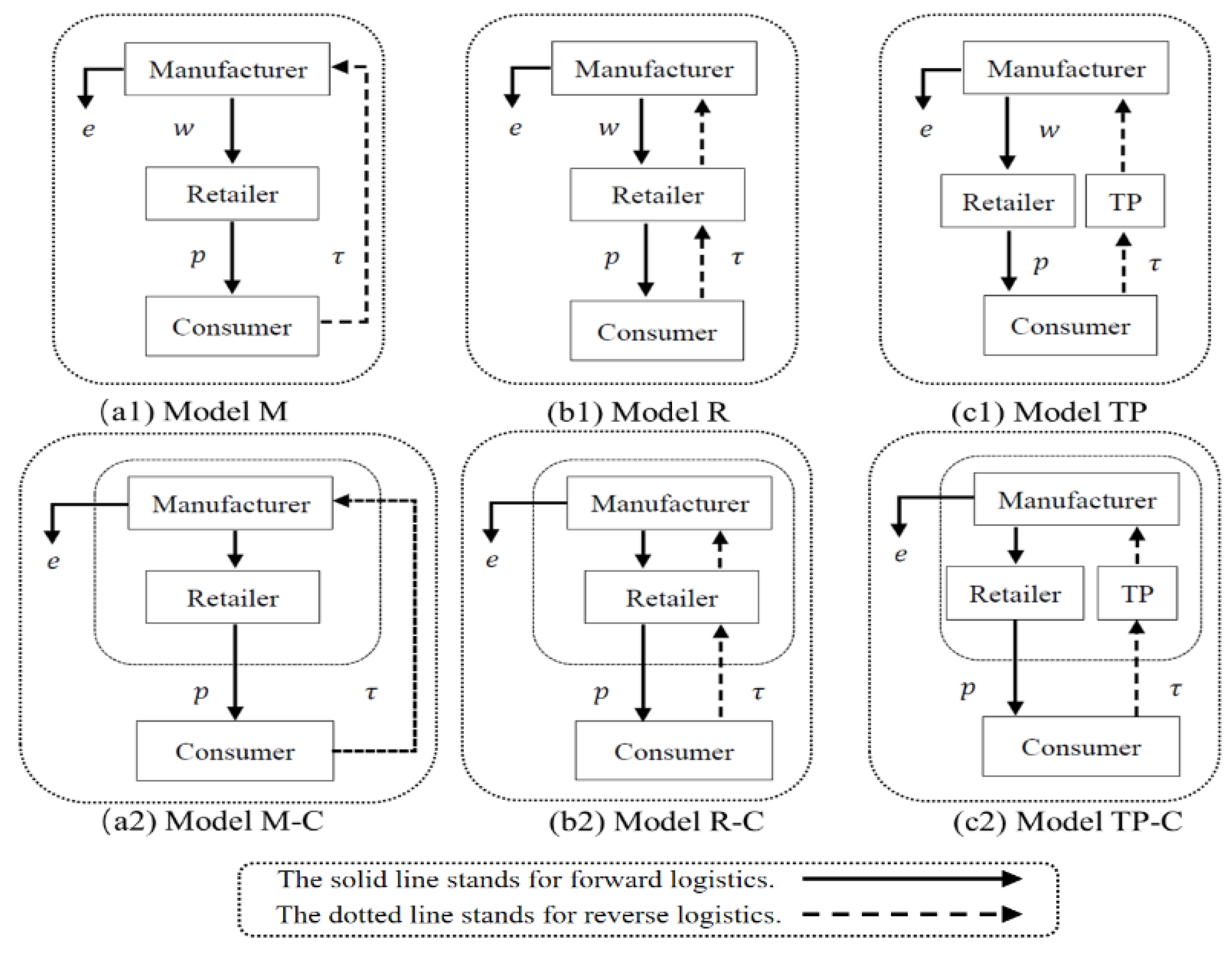
This paper studies a CLSC consisting of one manufacturer, one retailer and one third-party recycler. By considering CSR effort and uncertain demand, under three recycler recycling modes, six decision-making models are constructed in decentralized and centralized decision situations. By applying the idea of game theory, optimal decisions and the optimal level of CSR effort of all models are obtained. After that, through the numerical and sensitivity analysis, the decision-making models are verified and discussed. From the perspectives of the overall profit of the supply chain and the interests of individual participants, the optimal recycling model is discussed, and management insights are suggested. Moreover, social responsibility decisions made by the manufacturer via CSR efforts are analyzed as well.
5. Discussion and Management Insights
5.1. Result Discussion
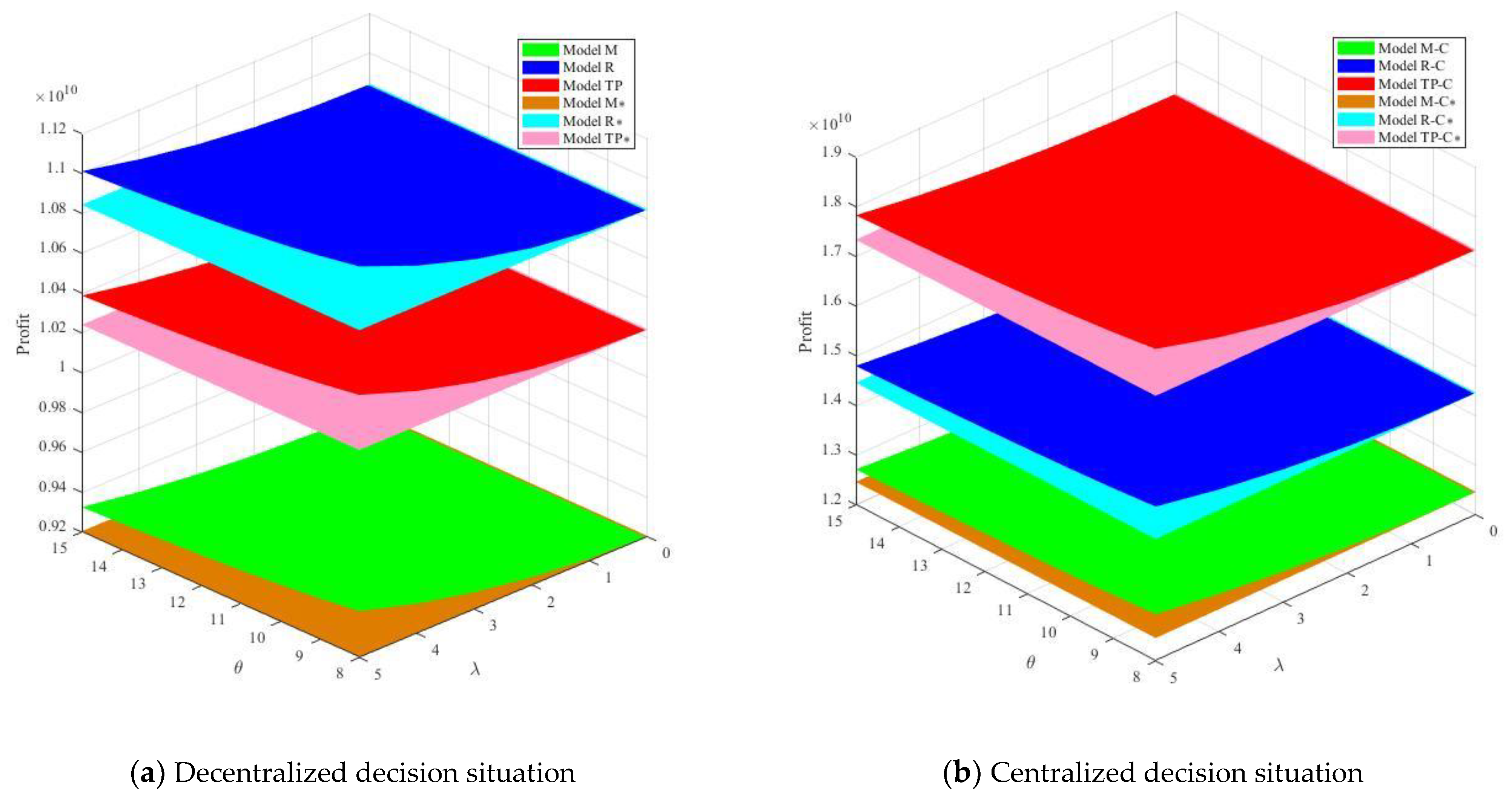
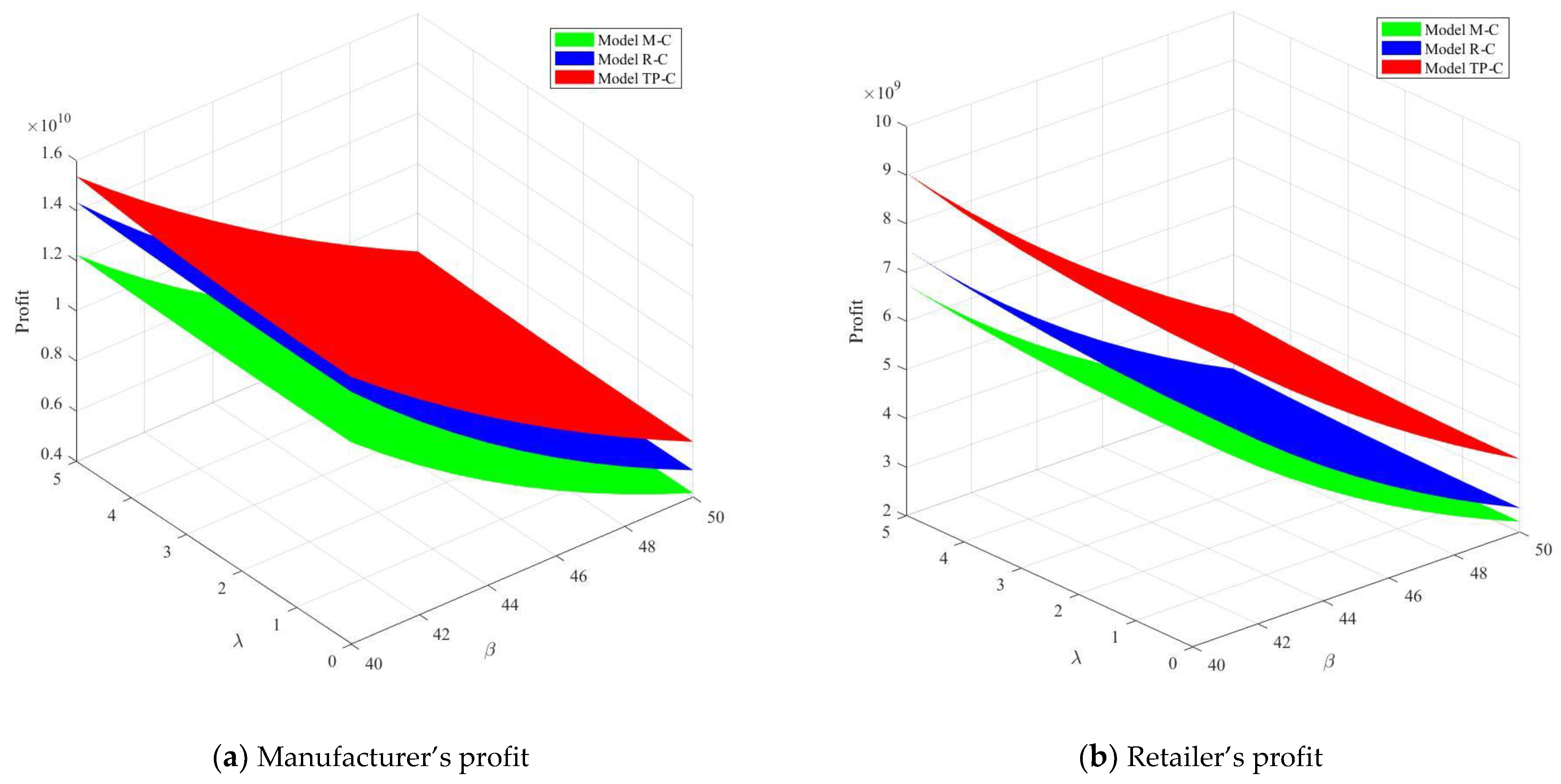
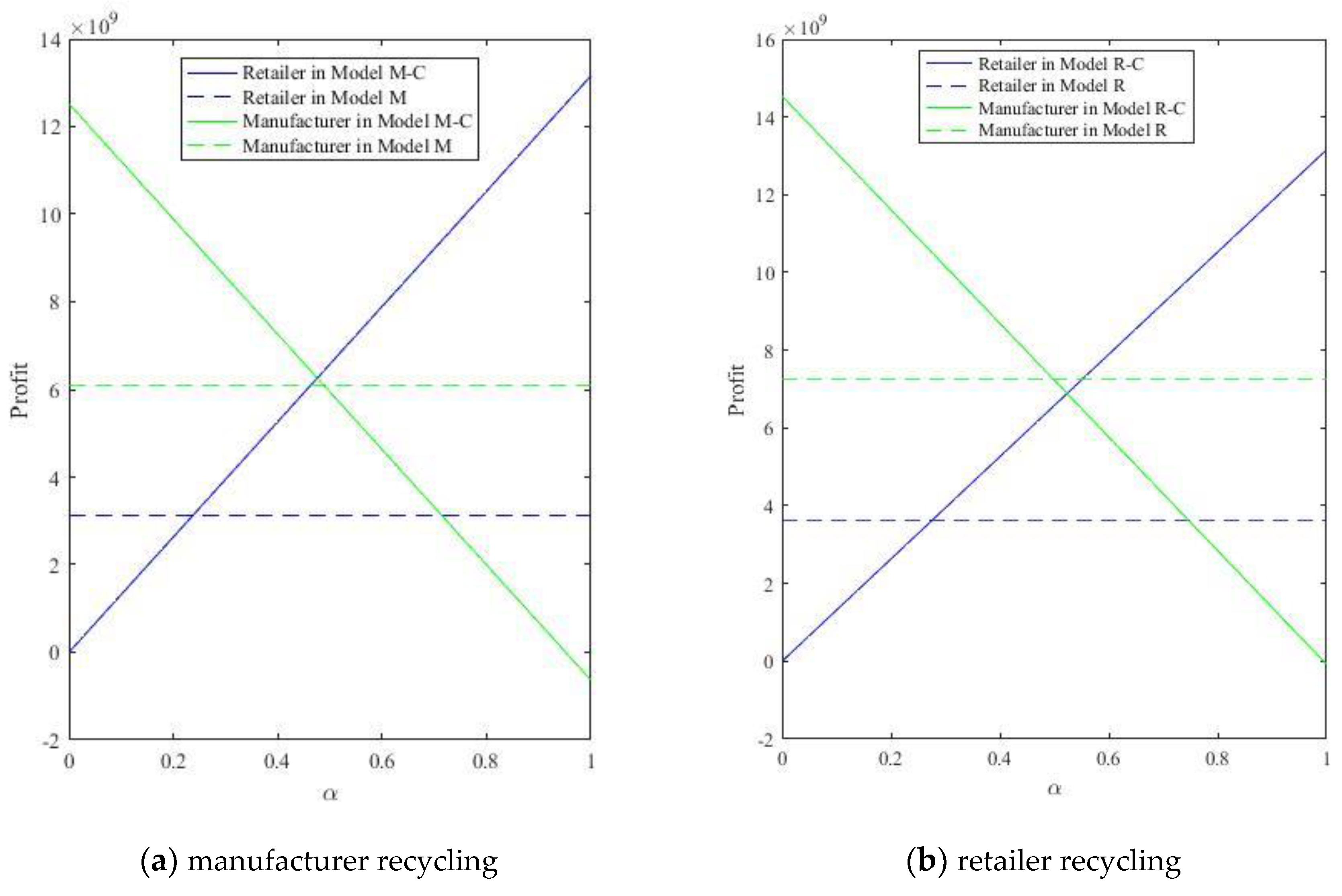
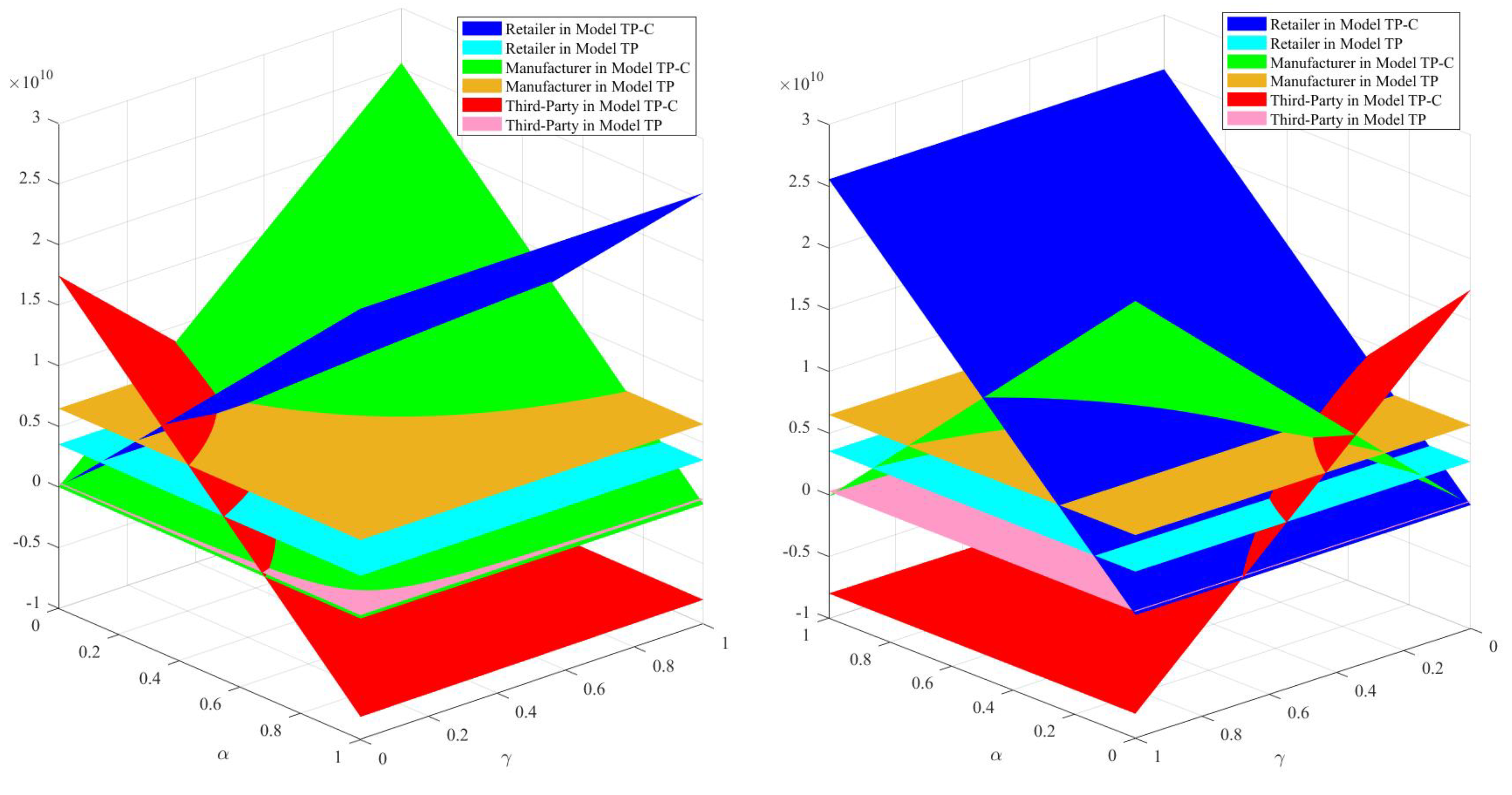
The above results show that the profit of each participant in CLSC is higher in coordination decision-making models, regardless of the selection of recycling channels.
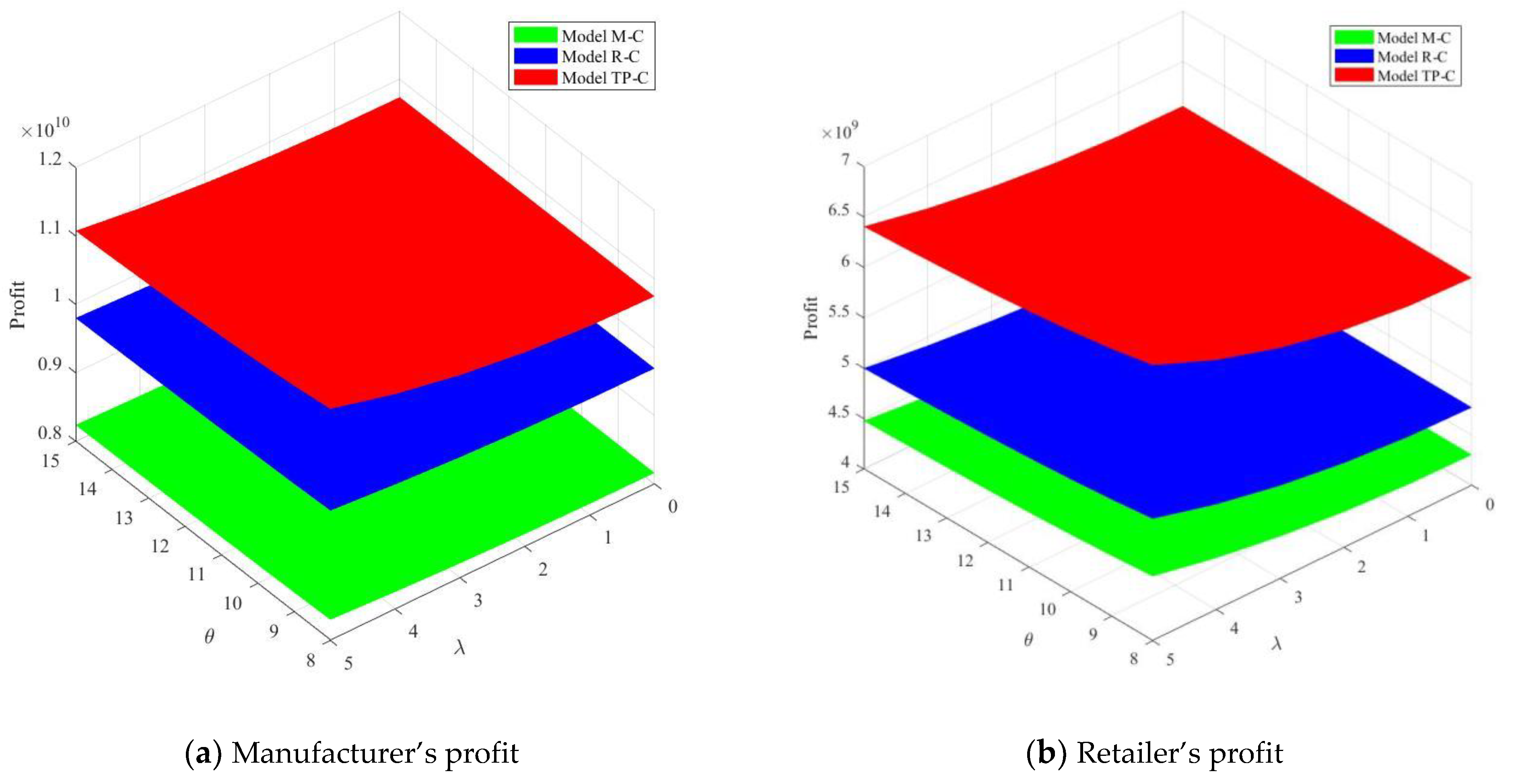
Firstly, comparing three recycling channels under coordination decision-making models, the third-party recycling channel is optimal when the recycling cost of the third party is the lowest among the three recyclers and retains a lower level. Under an appropriate profit-sharing contract, the retailer is able to earn a higher level of profit from a higher level of market demand caused by a lower level of wholesale price and retail price. The manufacturer is able to achieve a higher level of financial gains from the profit-sharing by the retailer and have greater cost savings caused by a lower level of recycling cost. In addition, although the third party does not directly gain profits from the recycling activities, in this case, it can receive subsidies from the profit-sharing by the manufacturer. Additionally, the profit of the third party increases with the increased volume of waste products recycled, and the low level of retail prices further facilitates the market demands as well as recycling activities. Thus, a virtuous cycle is achieved in the CLSC.
Secondly, the recycling cost plays an important role in influencing the overall profit of the supply chain, and the choice of recycling channel is related to the differences in recycling costs. The cost of recycling is often lower for the third-party recycler than for the other two participants due to the professionalism in the recycling business and the extensive recycling network. When the recycling cost of the third party is lower than the retailer and the difference is large enough, selecting a third-party recycling channel strategy under coordination decision-making is capable of providing greater overall profits and sufficient room for profit distribution, which ensures improved profits for all participants compared to the profits in other recycling channel strategies. On the contrary, if the recycling costs between the third party and the retailer exhibit little difference, the overall profits under these two recycling channel strategies under coordination decision-making will tend to be relatively close. Here, there may be insufficient room for ensuring the balance of profit distribution between the three participants, leading to a higher risk of no consensus impacting the profit-sharing contract. As a result, it is highly likely that the manufacturer turns to select the retailer recycling channel, as it is easier to reach a consensus on a profit-sharing contract when only two participants are involved in the supply chain. In this situation, the third party is forced to exit the recycling market, while the choice of retailer recycling channel becomes optimal.
Thirdly, it is found that the recovery rate, retail price and the profits of the overall supply chain and the participants are affected significantly by the transfer price. However, there are variations in different decision situations. In the decentralized decision situation, since there is no profit-sharing contract, the levels of transfer price have direct effects on the recycling motivation and the recycling profit of the recycler commissioned by the manufacturer (the retailer or the third party). Thus, the manufacturer should try to raise the transfer price to increase the incentive for the recycler to collect waste products. However, the pricing decisions of transfer prices made by the manufacturer differ for different recyclers. By comparing Model R and Model M, it is found that, when the retailer recycling, the retailer generates profits from sales and recycling activities, so the higher the transfer price given to the retailer, the stronger the incentive for the retailer to recycle and the more willing it is to maintain a low level of the retail price. At this time, the manufacturer should increase the transfer price as much as possible, and based on the analysis in
Section 3; it needs to pass on the cost savings of the processing waste product into new products to the retailer (namely
) in order to control its own costs and maximize the incentive for the retailer to collect waste products. With third-party recycling, the maximum transfer price that a manufacturer can offer is smaller than the one offered to the retailer, as the optimal equilibrium here is the manufacturer shares the profit generated by the recycling activity equally with the third party (namely
). Here, for the manufacturer, there is some sort of relationship between the recycling activity and the wholesale price. Thus, when the manufacturer shares the recycling profits equally with the third party, there is some room for wholesale price adjustment, allowing the manufacturer to maintain a relatively low level of the wholesale price, which can drive the retailer to maintain a relatively high level of market demand with a relatively low level of the retail price.
On the contrary, in the coordination decision-making models, with the existence of a profit-sharing contract, the transfer price paid by the manufacturer only needs to meet the requirement to cover the recycling cost of the recycler. The transfer price decreases with lower recycling costs, resulting in reduced total costs, and the overall profit of the supply chain is higher with the decrease in the recycling cost, so the total amount of profit distribution available to participants in CLSC increases as well.
Fourthly, for CSR effort, this paper finds that the CSR effort carried by the manufacturer has a positive impact on the CLSC. When the consumers’ sensitivity to CSR efforts increases, it is conducive to expanding market demand and improving the recovery rate of waste products. The CSR effort carried out by the manufacturer is beneficial to supply chain activities, no matter who determines the recycling activity. It indicates that the CSR effort carried out by the manufacturer could affect the financial gains of stakeholders, so it is the essential that the manufacturer needs to undertake heavier CSR in supply chain management.
Based on discussions above, in the situation of coordination decision-making, maximizing the overall benefits is the goal of the CLSC, while a lower level of the retail price and a higher level of the CSR effort keep the market demand at a higher level, and sales and recycling activities are both in the more active state, which minimizes the double marginalization.
5.2. Management Insights
This paper expects to provide some valuable insights into the management of power battery recycling activities based on previous discussions.
Firstly, from the perspective of the overall benefits of the supply chain, the coordination decision-making model is the best solution for CLSC recycling and remanufacturing activities for managers, which may avoid the profit loss from double marginalization. Thus, it is necessary for enterprise managers to place the enhancement of financial gains of the overall supply chain at the top. In addition, it is worth noting that the benefits of all of the participants in the CLSC also need to be ensured, as profitability is also very important to each participant in the real business world. Based on this, it is necessary to make a proper coordination plan to avoid conflicts of interest between the overall supply chain and all of the participants, so that all participants need jointly develop a profit-sharing contract that all participants are willing to accept. As discussed before, the feasible allocation ratios fall within the certain range of values, and different values of allocation ratios cause changes in the profit of each participant. Thus, managers’ decisions can be pursued in two ways when negotiating profit-sharing contracts. On the one hand, when the bargain powers of participants are close, it is desirable to choose an allocation ratio that enable the magnitude of participant’s profit growth as relatively close to others when negotiating, so that all participants are more likely to take the initiative to fulfill the contract after it is signed, which can avoid default situations. On the other hand, if there is a highly dominant participant with strong bargaining power in the supply chain, then other participants should take this factor into consideration and make appropriate compromises with it, and try to meet the dominant’s profit demands while ensuring its own interests, which is easier to reach the consensus on profit-sharing contract.
Secondly, in the power battery industry, enterprises need to integrate the concept of reverse logistics into their business operation process. To achieve this, for manufacturers, firstly, they need to focus on the recyclability of products, the reusability of materials and reducing product costs through technological advances. In addition, when selecting the recycling channel, manufacturers should select the recycler that is more conducive to supply chain overall benefits and profits for all participants by situations. Based on the previous discussion, both the third-party recycling channel and the retailer recycling channel are possibly the optimal choice of channel, depending on the differences in the magnitudes of the difference in their recycling costs. When the recycling costs of the third party are lower than the retailer and the difference is large enough, it is capable of achieving higher recovery rates and overall profits of the supply chain, so the third-party recycling channel is the optimal choice. Conversely, it may be more advantageous to select the retailer recycling channel. Moreover, it is necessary for manufacturers to care about the cash flow issue of third parties when selecting a third-party recycling channel under coordination decision-making. Based on the analysis above, in this situation, third parties can barely profit directly from recycling activities, so that the third parties may still face financial risks such as a shortage in cash flow due to the issues of heavy upfront investment or a long payback period. Thus, manufacturers can take the initiative to provide solutions such as financial support, credit guaranty or shortened settlement cycle, according to the real situations and needs of the third parties, in order to prevent third parties from exiting the market due to the above problems. Beyond that, power battery manufacturers need to actively fulfill their CSR and bare the CSR effort costs, as this effort is more beneficial to all participants in the CLSC and stakeholders. Furthermore, it is also an effective way to achieve the optimal balance of the economic benefits of the CLSC and the environmental benefits to society.
For retailers, market demand is affected by the levels of the retail price, so retailers should find ways to stabilize the retail prices at relatively reasonable levels. For example, they may try to lower costs using approaches such as optimizing the sales network and cutting inefficient promotion expenditures, thereby increasing their profit margins as much as possible. Through these efforts, retailers may have more room to keep retail prices at a relatively low level so it is possible to maintain a high level of market demand and improve the overall profit of the supply chain. For third parties, there is a tight link between the levels of their recycling costs and their competitiveness in the recycling market. Therefore, to achieve the improvement of competitive ability and ensure their positions in CLSC, third parties need to continuously lower recycling costs and enhance recycling capacity by refining the layout of recycling networks and improving the extraction process of recycling materials.
Thirdly, the support and guidance from the government are also curial to the CLSC system. Firstly, to lower the production and recycling costs, the government could promote power battery enterprises to carry out technological innovation using methods of financial subsidies or incentives for new patented technologies. Through technological advances, enterprises may achieve sufficient cost saving and competitive advantage. Moreover, to improve the recovery rate, the government could take measures such as establishing certain reward and punishment mechanisms to guide companies. For example, by learning from the NEV double-point policy promulgated in 2018, the government may introduce a similar reward and punishment policy based on the current situation of power battery recycling in China and provides enterprises with corresponding incentives or punishments according to their actual recycling performances. In additional, to guide and support increasing numbers of power battery manufacturers taking CSR activities, the government could take both compulsory measures (such as regulatory policy making) and positive incentives (such as some forms of rewards). For example, China Securities Regulatory Commission may strengthen the review of CSR-related information disclosure by A-share listed power battery companies. Or local governments may coordinate closely with power battery manufacturers and jointly carry out projects for the public good, which matches the actual needs of local society. The government could also publicly commend or reward those manufacturers who attach importance to CSR, to set good examples for others.
6. Conclusions
The recycling and remanufacturing activities of the NEV power battery have received widespread concern due to energy and environmental pollution issues. However, there are various participants involving and different recycling models existing in recycling activities of CLSC, so that it is essential to investigate the optimal decision of the CLSC, in order to ensure the effectiveness of power battery CLSC implementation and the interests of all participants. In addition, CSR has received an increasing number of concerns among enterprises and society, and it has become an important component in global business practice. Therefore, by considering CSR investment and uncertain demand and introducing the idea of game theory, this paper studied recycling channel selection in the Chinese power battery industry and undertook the following research: six decision-making models were constructed under different recycling modes and in different decision situations, and the model results were compared and discussed; the corresponding numerical and sensitivity analyses were provided, followed by a discussion of the results and management insights.
This paper finds that, firstly, in terms of the overall benefits of supply chain and recycling effectiveness, coordination decision-making is better than decentralized decision-making. Under coordination decision-making, the choice of a third-party recycling channel or retailer recycling channel has a linkage to the magnitudes of the difference in the recycling costs between recyclers. When the recycling cost of the third party is the lowest and below the recycling cost of the retailer by a certain margin, the third-party recycling channel is the optimal choice. Here, the major problem is the coordination of interests. This paper finds that establishing a reasonable profit-sharing contract is capable of achieving a win–win situation for CLSC and all participants, which can ensure the effective implementation of the coordination decision-making in practice. Secondly, when manufacturers entrust other recyclers, the optimal profits of the overall supply chain are affected by the recycling costs of the recyclers and the transfer prices of the manufacturers. Thirdly, the CSR effort carried out by manufacturers allows the manufacturer, other participants, and the overall supply to earn financial gains when consumers are sensitive to the level of CSR effort.
This research may have values in terms of theoretical and practical contribution, which mainly are related to the decision variables and models constructed. It sheds new light on studies of CLSC management, providing theoretical support for recycling practices of power battery industry. From the perspective of demand uncertainty, it investigates the optimal decision of the power battery CLSC operations and choice of recycling channel, and studies how CSR effort affects the product demand and the equilibrium of supply chain. In addition, with regard to the profit-sharing, coordination contract is developed to achieve the effective implementation of the optimal decision of CLSC, which helps to carry out reverse logistics activities in Chinese power battery industry as well as other industries.
In practice, the decision-making environments are often uncertain, so that future research may construct a dynamic game theory decision-making model by considering the information asymmetries. In addition, further research may study the impacts of other participants’ CSR efforts on the decision-making of CLSC, as this paper only considers the situation of CSR activities taken by the manufacturer. Moreover, further research may also study a dual-channel and multi-period CLSC structure with the consideration of CSR.