Article

Spatial–Temporal Pattern and Influencing Factors of Vegetation Phenology and Net Primary Productivity in the Qilian Mountains of Northwest China


1
College of Geography and Environment Science, Northwest Normal University, No.967, Anning East Road, Lanzhou 730070, China
2
Key Laboratory of Resource Environment and Sustainable Development of Oasis, Northwest Normal University, Lanzhou 730070, China
3
Key Laboratory of Ministry of Education on Virtual Geographic Environment, Nanjing Normal University, Nanjing 210023, China
*
Author to whom correspondence should be addressed.
Sustainability 2022, 14(21), 14337; https://doi.org/10.3390/su142114337
Submission received: 13 October 2022 / Revised: 27 October 2022 / Accepted: 30 October 2022 / Published: 2 November 2022
(This article belongs to the Section Environmental Sustainability and Applications)

Abstract

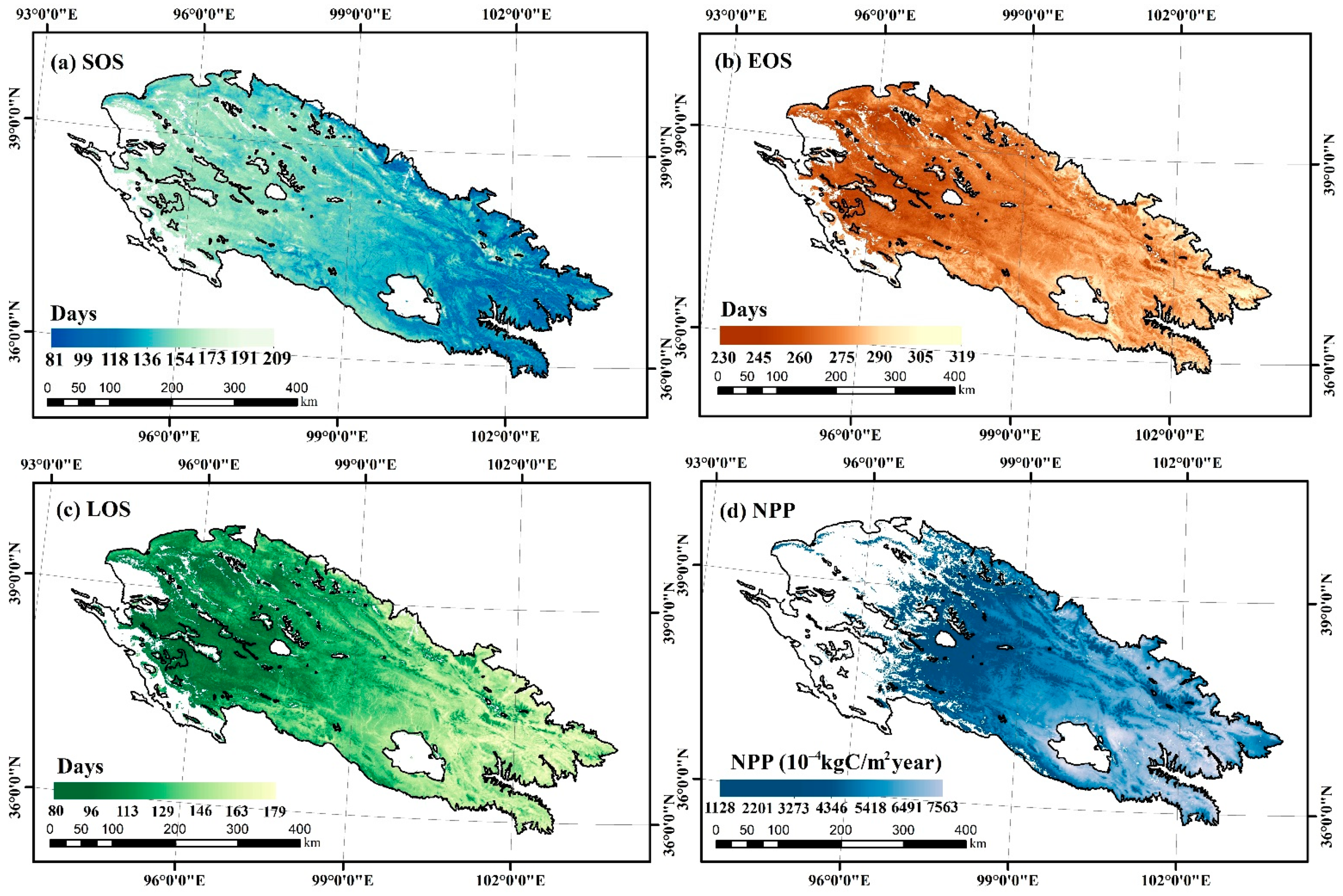
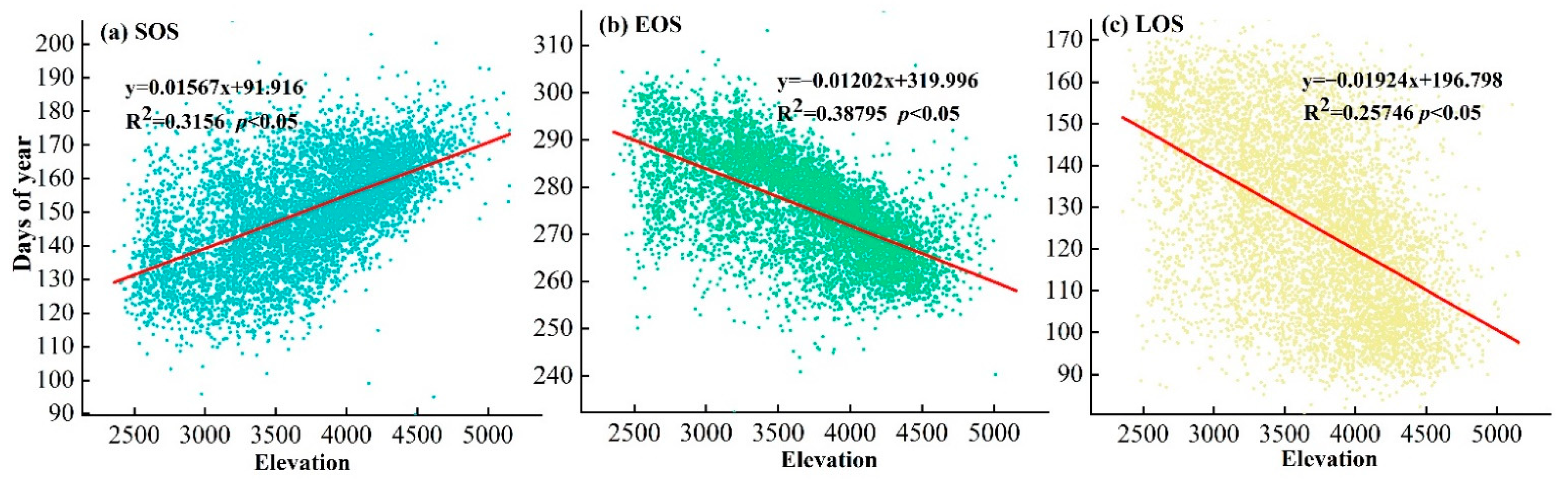
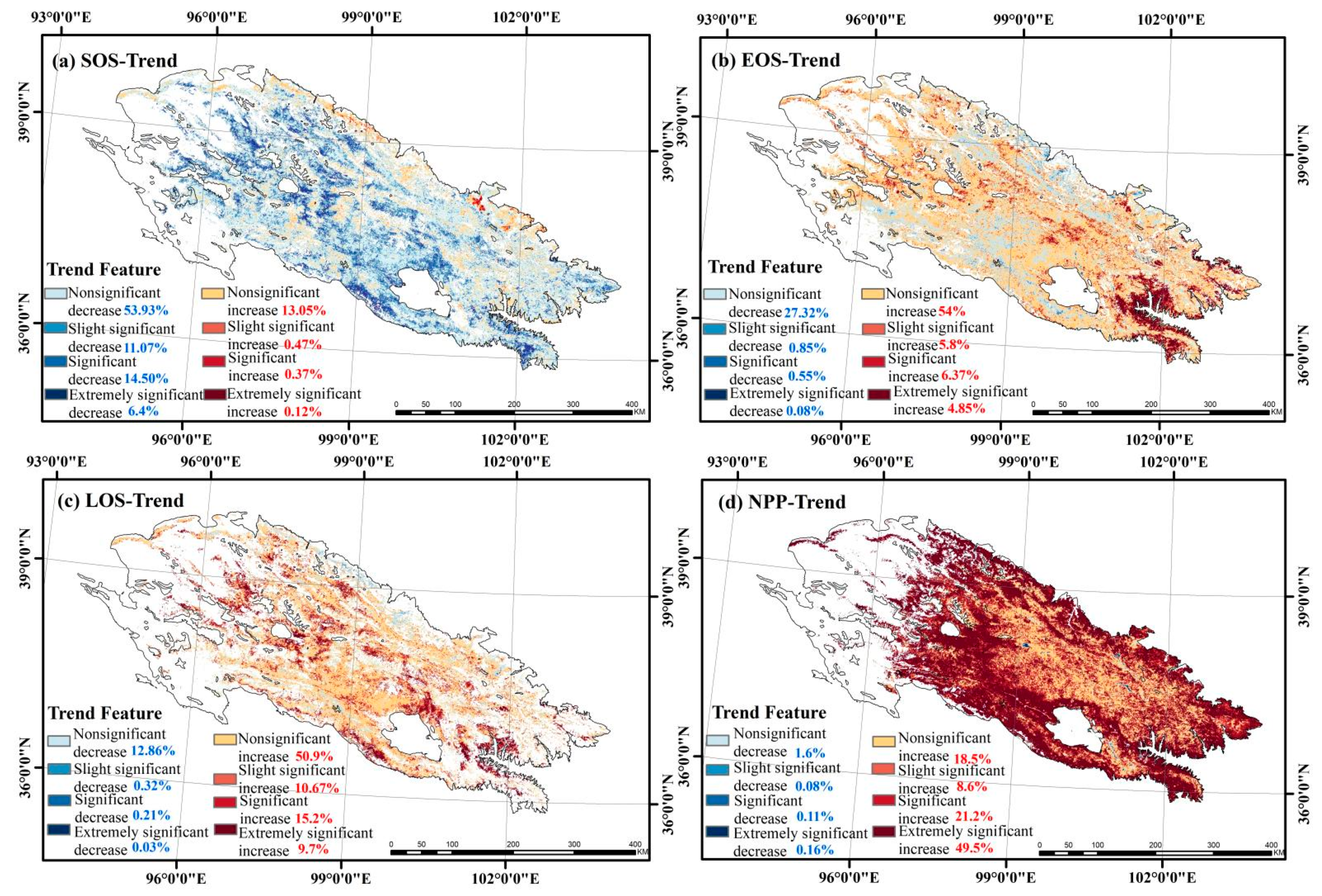
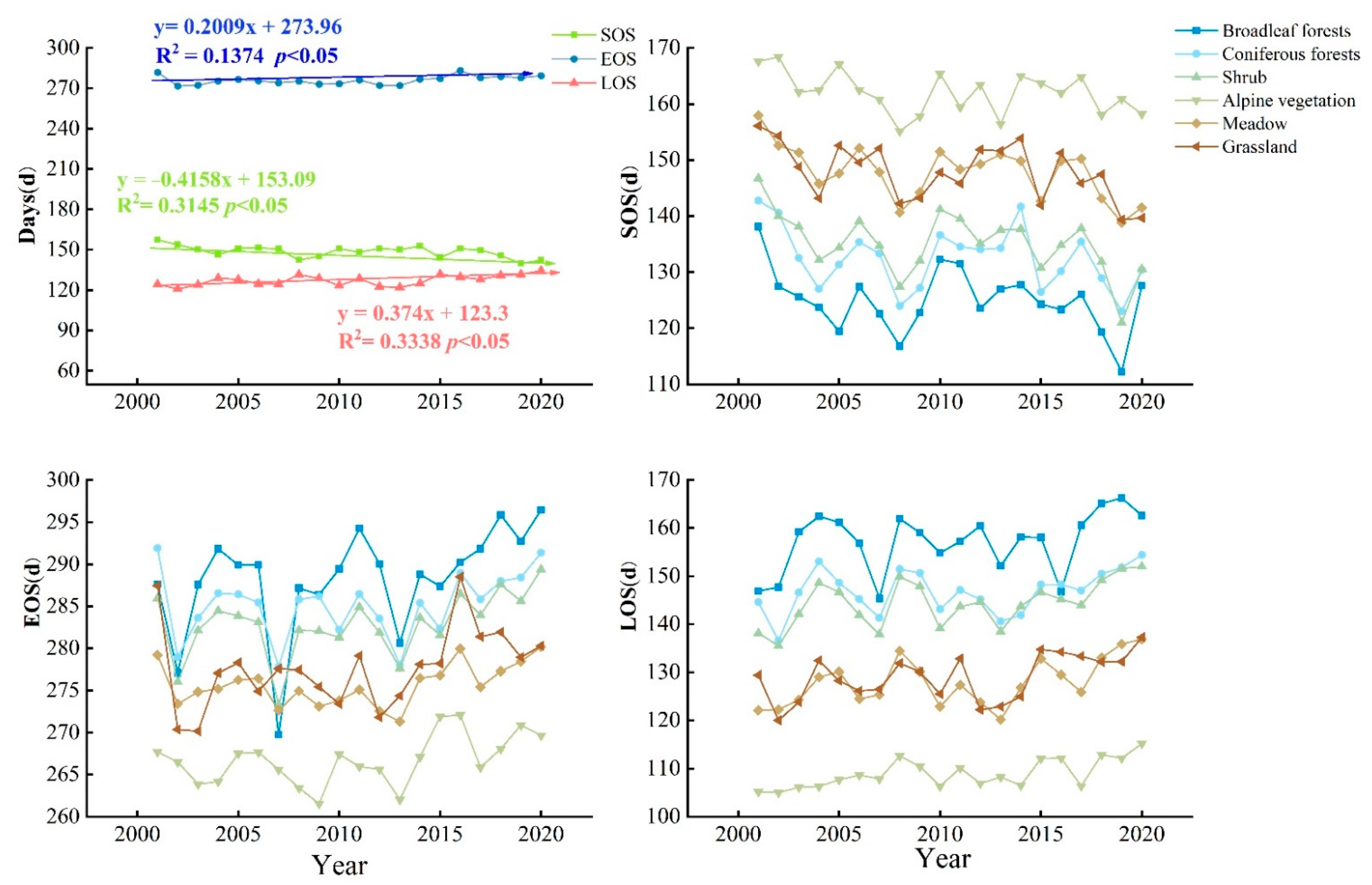
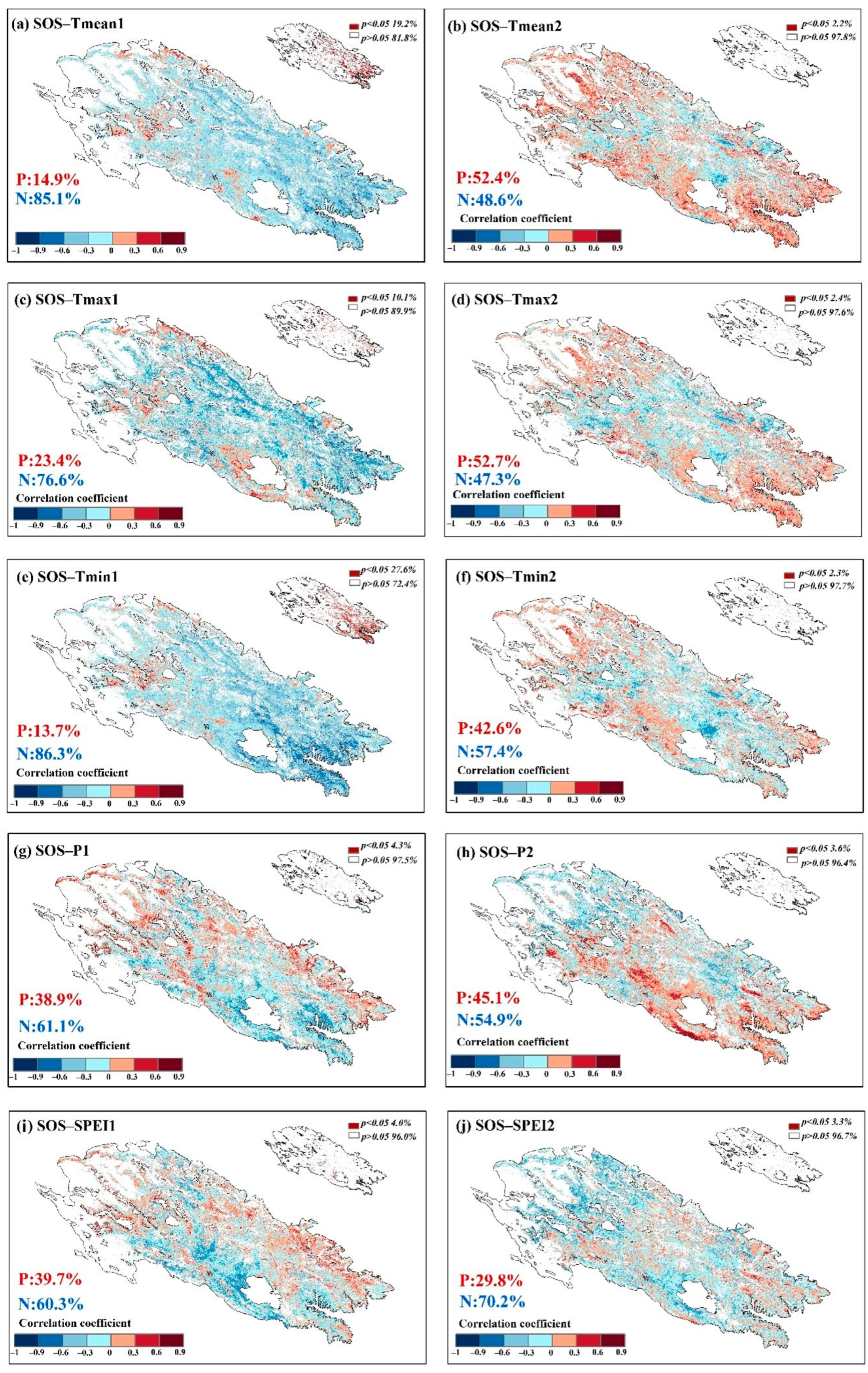
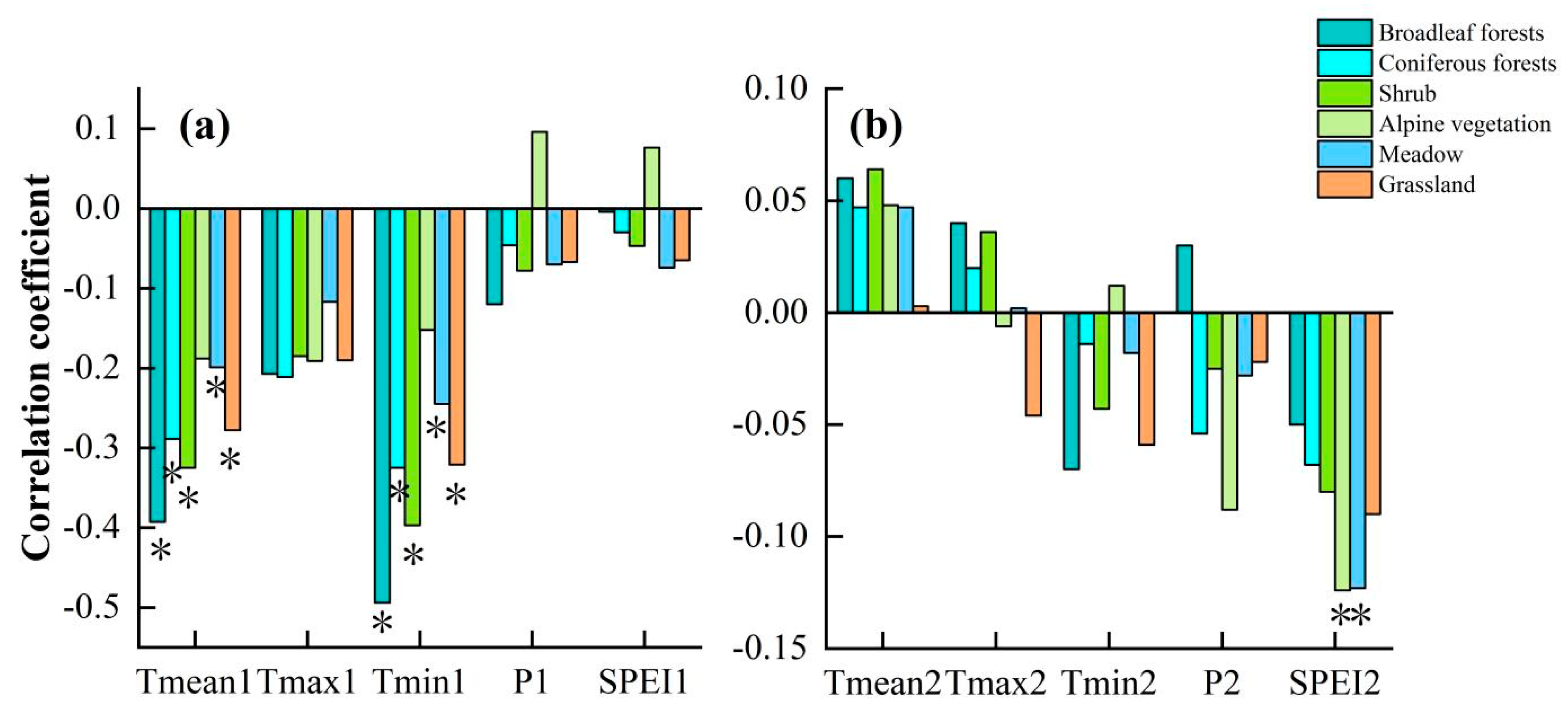
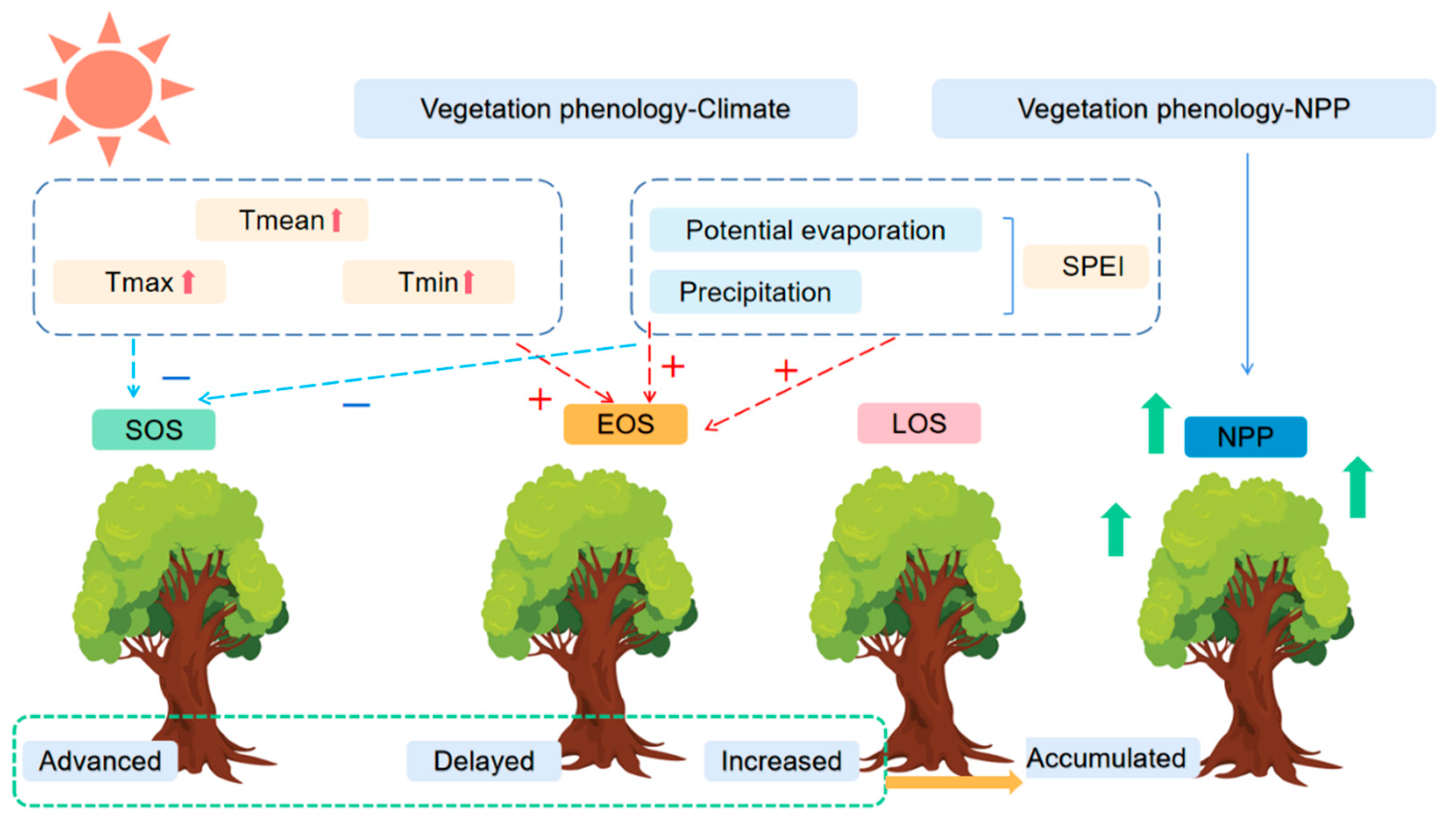
Understanding how vegetation growth responds to climate change is a critical requirement for predicting future ecosystem dynamics. Global warming causes significant changes in the vegetation characteristics of mountain ecosystems, particularly affecting vegetation phenology and net primary productivity (NPP). The Qilian Mountains are located in an arid and semiarid region, and the mechanisms of vegetation phenology in response to climate change still need to be further explored. We used MODIS data (2001–2020) to extract vegetation phenology and NPP, quantitatively evaluated their spatial–temporal dynamics, and analyzed the response mechanism of vegetation phenology–climate and vegetation phenology–NPP combined with meteorological data. The results showed that from southeast to northwest, the vegetation phenology changes significantly with the change in vegetation type, with SOS (start of the growing season) advancing at a rate of −0.415 d/year, EOS (end of the growing season) and LOS (length of the growing season) delaying at a rate of 0.20 d/year and 0.374 d/year, respectively, and NPP continues to increase. There was also an elevation gradient effect, with SOS delayed by 15.6 d/km, EOS advanced by 12.02 d/km and LOS shortened by 19.24 d/km. We found that the preseason temperature and SPEI (standardized precipitation evapotranspiration index) have a strong influence on the SOS and EOS, with the mean minimum temperature being the most significant and requiring attention, while the influence of precipitation cannot be ignored. We also found that the vegetation phenology is closely related to NPP, and SOS has the most significant effect. This study will provide a scientific basis for the response mechanisms of vegetation phenology in arid and semiarid regions under climate change. It will provide a reference for the implementation of effective ecosystem management.
Keywords: climate change; vegetation phenology; net primary productivity; responding mechanism; Qilian Mountains climate change; vegetation phenology; net primary productivity; responding mechanism; Qilian Mountains