Article

To Share or Not to Share? The Optimal Technology Investment in a Virtual Product Supply Chain

Glorious Sun School of Business and Management, Donghua University, Shanghai 200051, China
*
Author to whom correspondence should be addressed.
Sustainability 2022, 14(19), 12858; https://doi.org/10.3390/su141912858
Submission received: 23 August 2022 / Revised: 19 September 2022 / Accepted: 27 September 2022 / Published: 9 October 2022
(This article belongs to the Special Issue Sustainable Development in Production and Logistics Systems)

Abstract

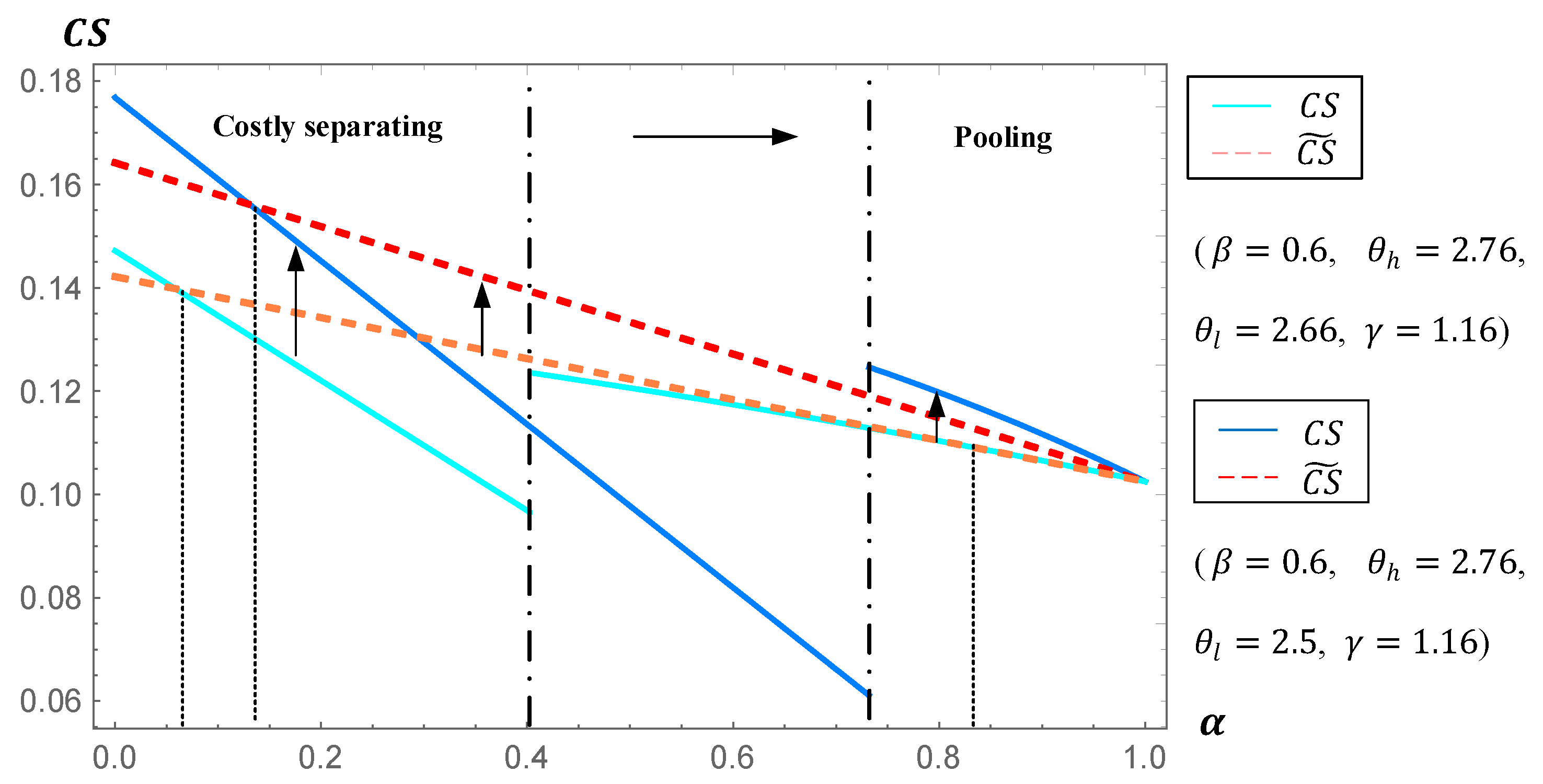
With the rapid rise of the virtual economy, the “brand + platform” virtual product distribution model led by virtual technology platforms has emerged, bringing a series of new virtual experiences to consumers. Considering that consumers have heterogeneous preferences for virtual technologies, we investigate a virtual product supply chain consisting of a brand owner, a virtual technology platform, and consumers (where the virtual technology platform has superior information about consumer preferences). We develop a signaling game model with preference information signaled by the virtual technology investment to study the optimal information-sharing strategy for the virtual product supply chain. We find that the virtual technology platform always prefers information sharing without paying any signaling cost. Moreover, we also observe that the brand owner and the platform can achieve alignment, that is, when consumers are more likely to prefer virtual technology, both the brand owner and the virtual technology platform are better off if the virtual technology platform chooses to share information with the brand owner. Finally, we analyze the consumer welfare and find that when consumers are moderately likely to prefer virtual technology, consumers can gain more benefits in the information-sharing scenario.
Keywords: virtual product; information asymmetry; information sharing; signaling; virtual technology investment virtual product; information asymmetry; information sharing; signaling; virtual technology investment