Article

Risk Monitoring Level of Stope Slopes and Landslides in High-Altitude and Cold Mines
1
School of Resources, Environment and Materials, Guangxi University, Nanning 530004, China
2
School of Environment and Resources, Xiangtan University, Xiangtan 411105, China
*
Authors to whom correspondence should be addressed.
Sustainability 2022, 14(13), 7581; https://doi.org/10.3390/su14137581
Submission received: 25 May 2022 / Revised: 14 June 2022 / Accepted: 16 June 2022 / Published: 22 June 2022
(This article belongs to the Special Issue Advances in Intelligent and Sustainable Mining)

Abstract

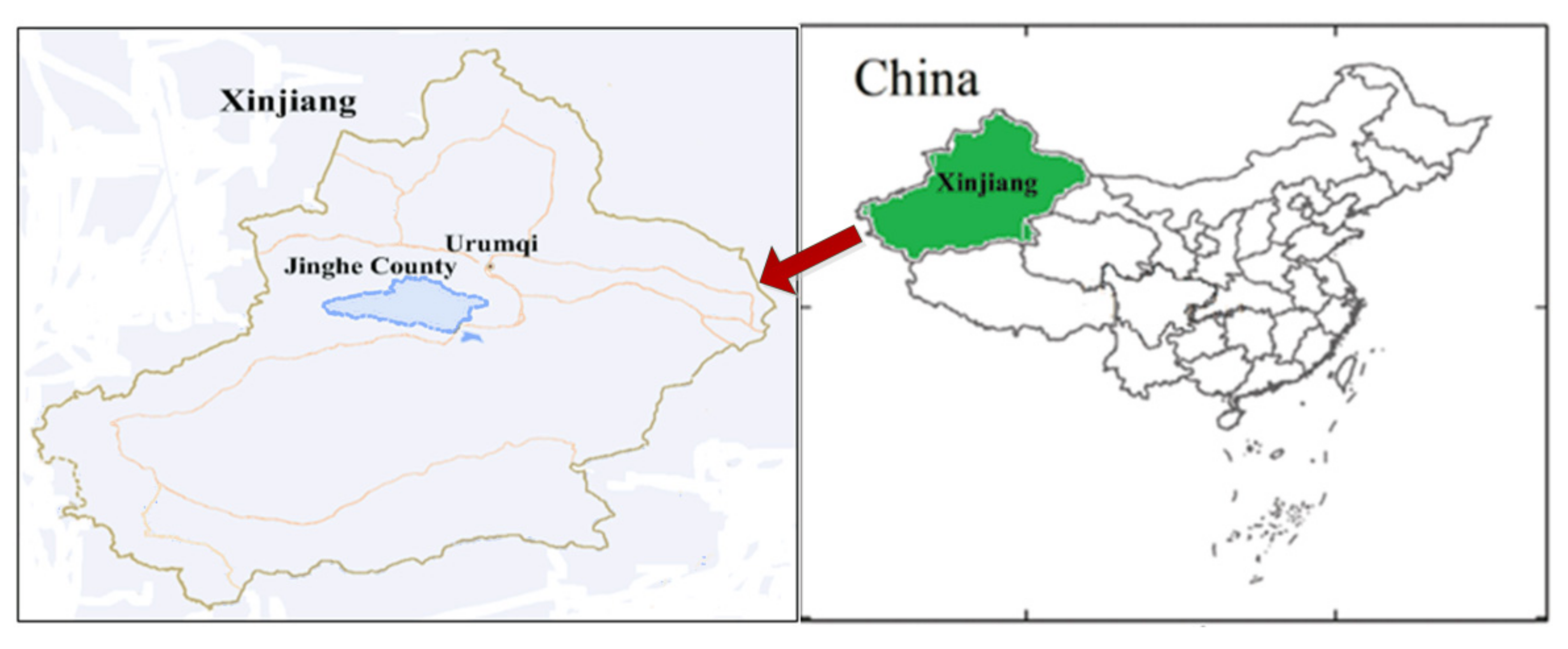
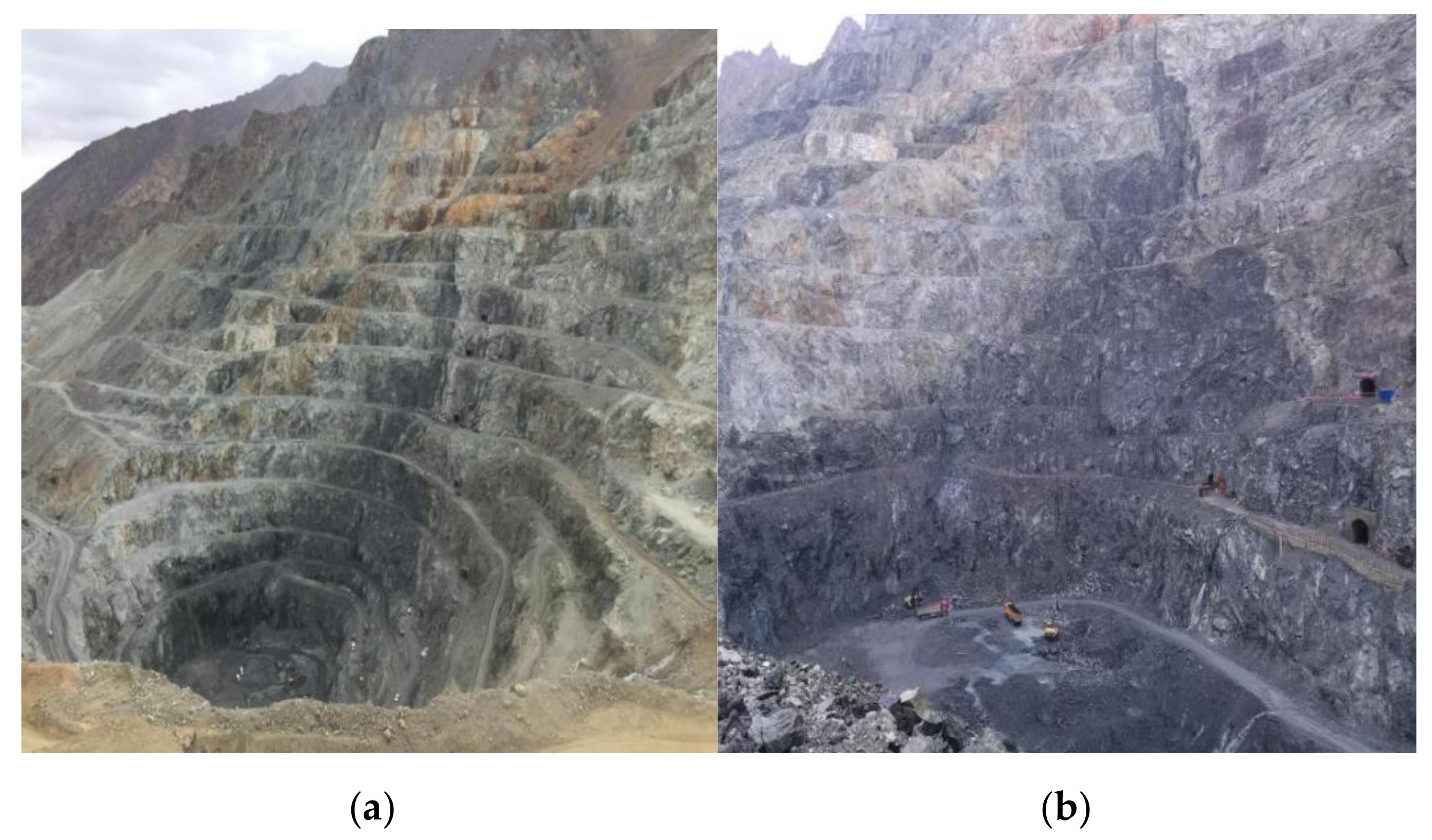
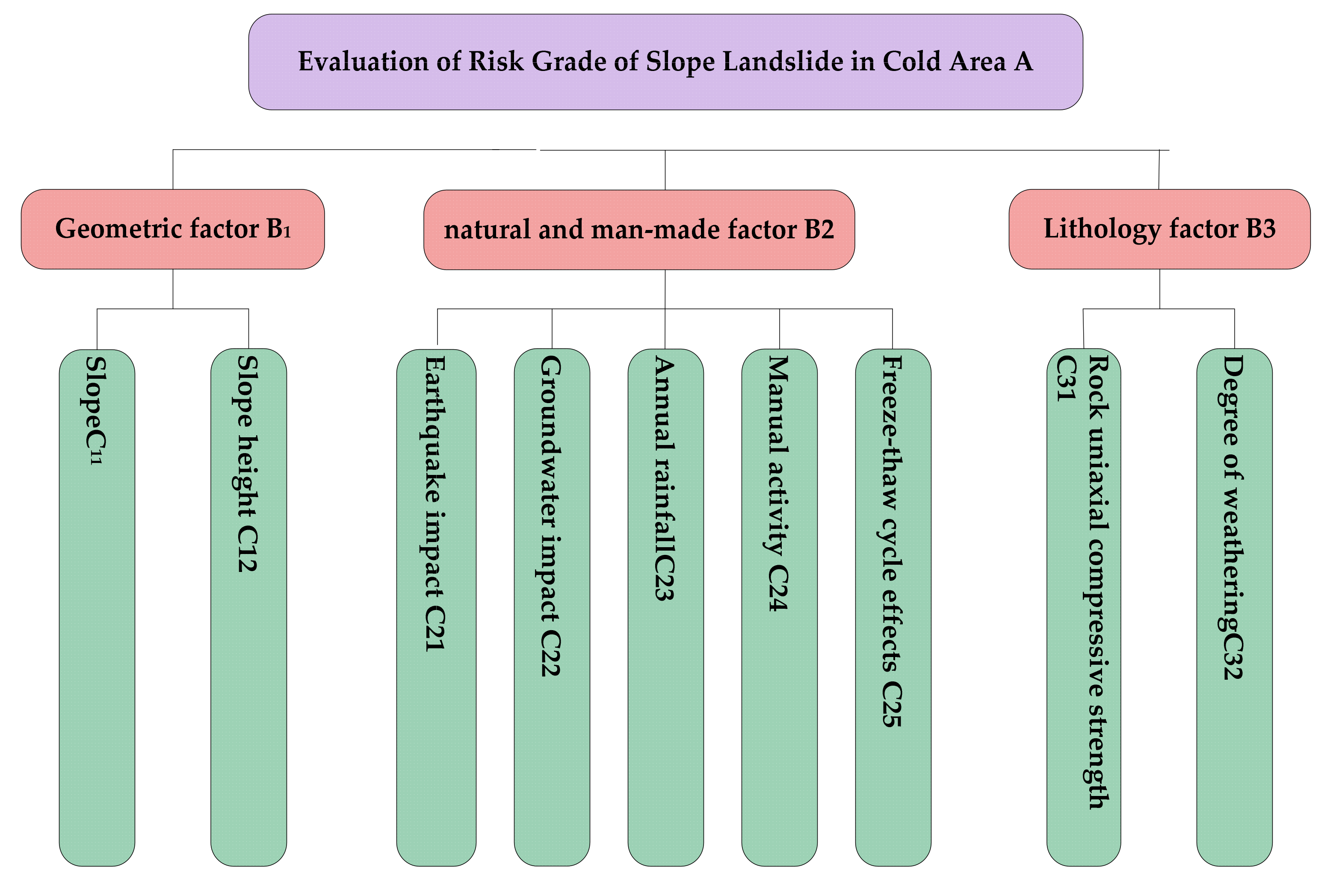
To study the landslide risk of high-altitude and cold stope slopes, the slope deformation index and landslide risk standards at home and abroad for many years were analyzed and summarized. Using the unascertained measurement model, combined with the analytic hierarchy process, using the Dongbang slope of the Beizhan Iron Mine in Hejing County, Xinjiang, as the research object, the detailed geological data of the slope were obtained, and nine factors affecting the landslide risk of the slope were analyzed. When calculating the weight of each factor, the actual situation of the slope was used as the standard, and the weight of each factor was determined by the analytic hierarchy process. Then, the undetermined measurement matrix of the slope was determined by the statistical method combined with the expert scoring results. Finally, an unconfirmed measurement model for landslide risk grade evaluation of the Dongbang slope of the Beizhan Iron Mine was formed, and the landslide risk monitoring grade evaluation was carried out on the slope in the cold area. The results show that the landslide risk monitoring level of the Dongbang slope in Beizhan Iron Mine is grade II, which indicates that there is a possibility of mild landslide risk for the slope in this cold area. The research results can provide a reference for the risk level and risk assessment of high-altitude alpine slopes.
Keywords: landslide risk; modification of deformation index; unascertained measurement model; freeze-thaw cycle; high-altitude and high-altitude slope landslide risk; modification of deformation index; unascertained measurement model; freeze-thaw cycle; high-altitude and high-altitude slope