Article

Comparing the Performance of Four Very Large Marine Protected Areas with Different Levels of Protection

by
Veronica Relano
*,
Maria Lourdes Deng Palomares
and
Daniel Pauly
Sea Around Us, Institute for the Oceans and Fisheries, University of British Columbia, Vancouver BC V6T 1Z4, Canada
*
Author to whom correspondence should be addressed.
Sustainability 2021, 13(17), 9572; https://doi.org/10.3390/su13179572
Submission received: 16 July 2021 / Revised: 17 August 2021 / Accepted: 22 August 2021 / Published: 25 August 2021

Abstract

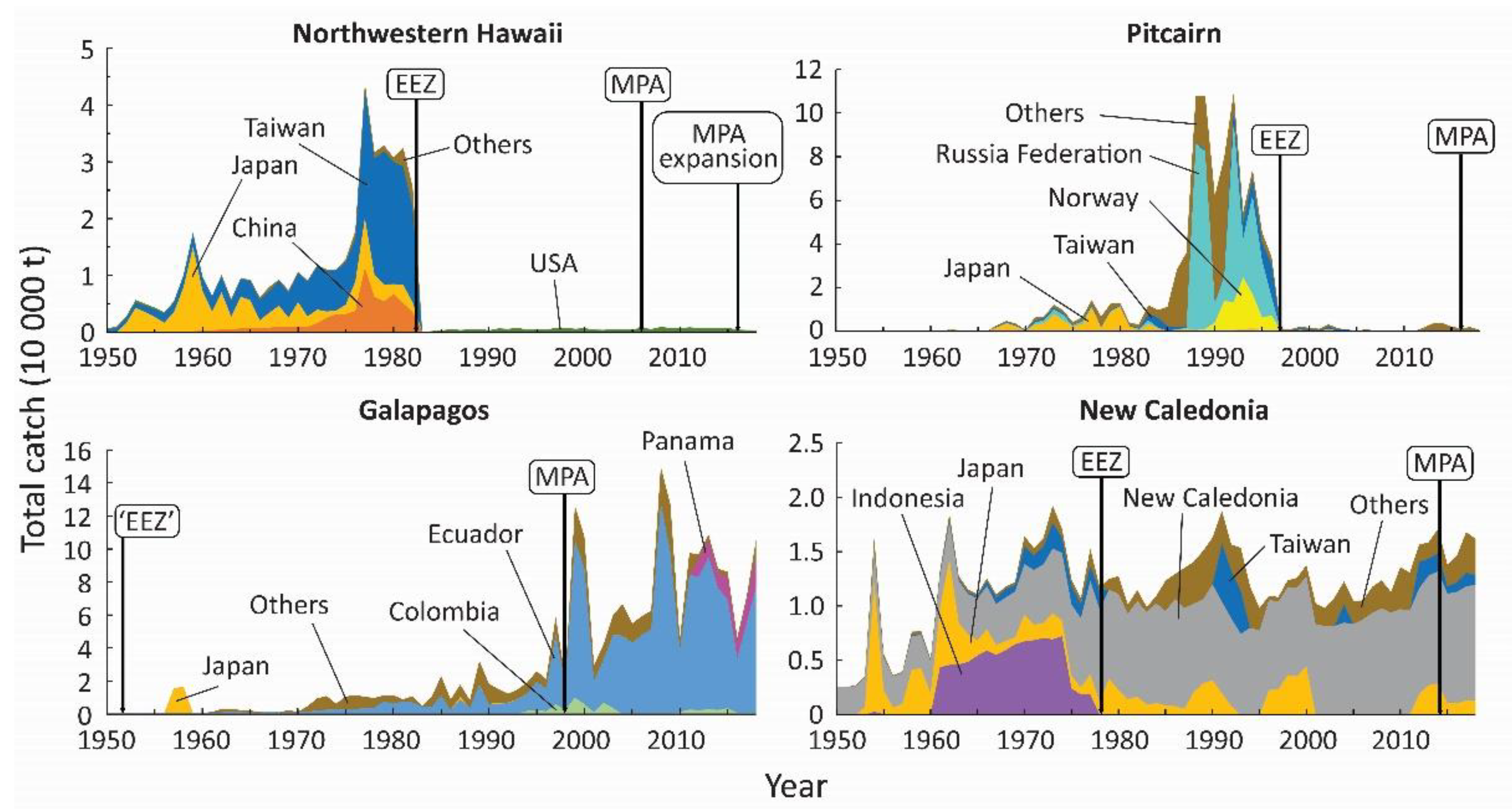
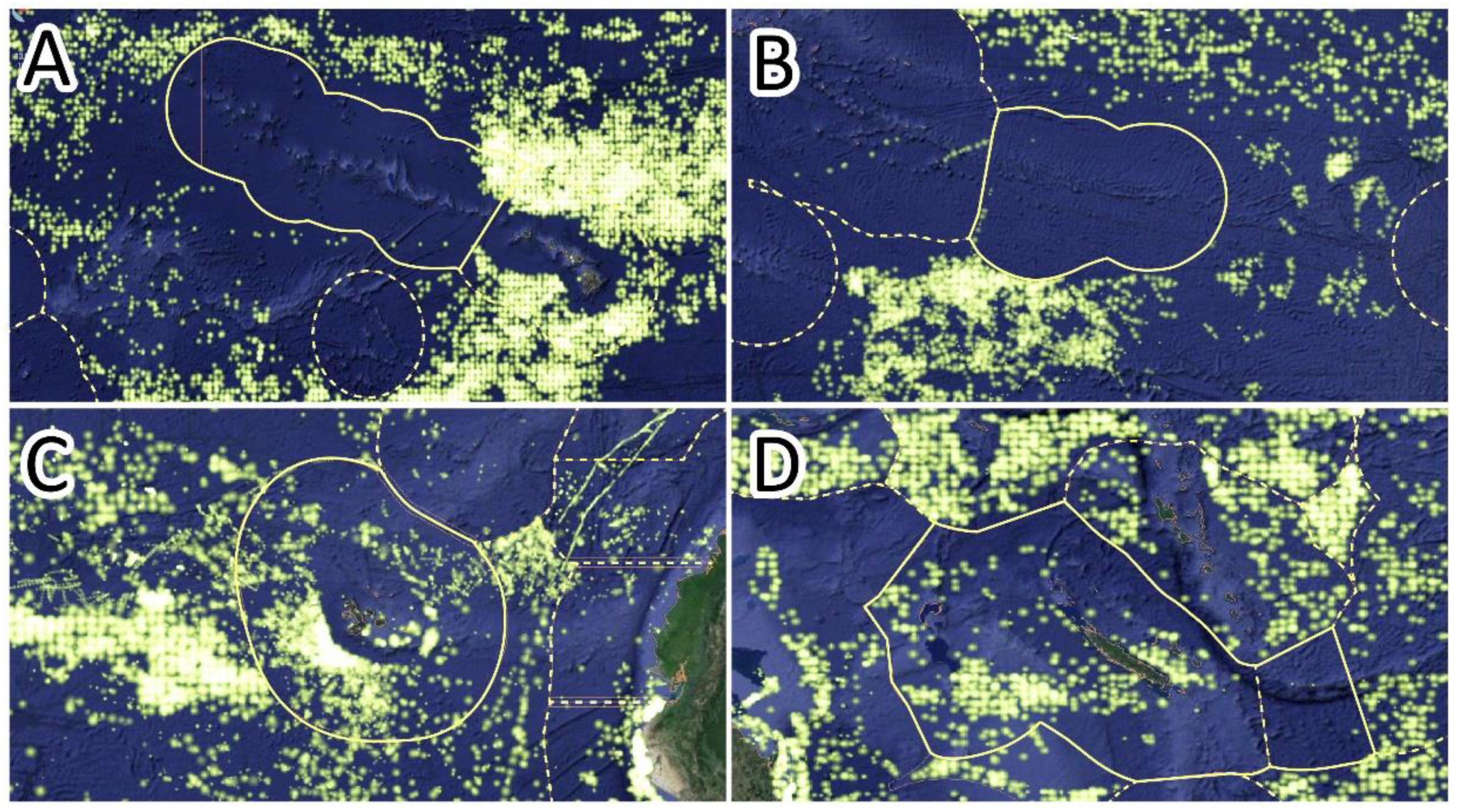
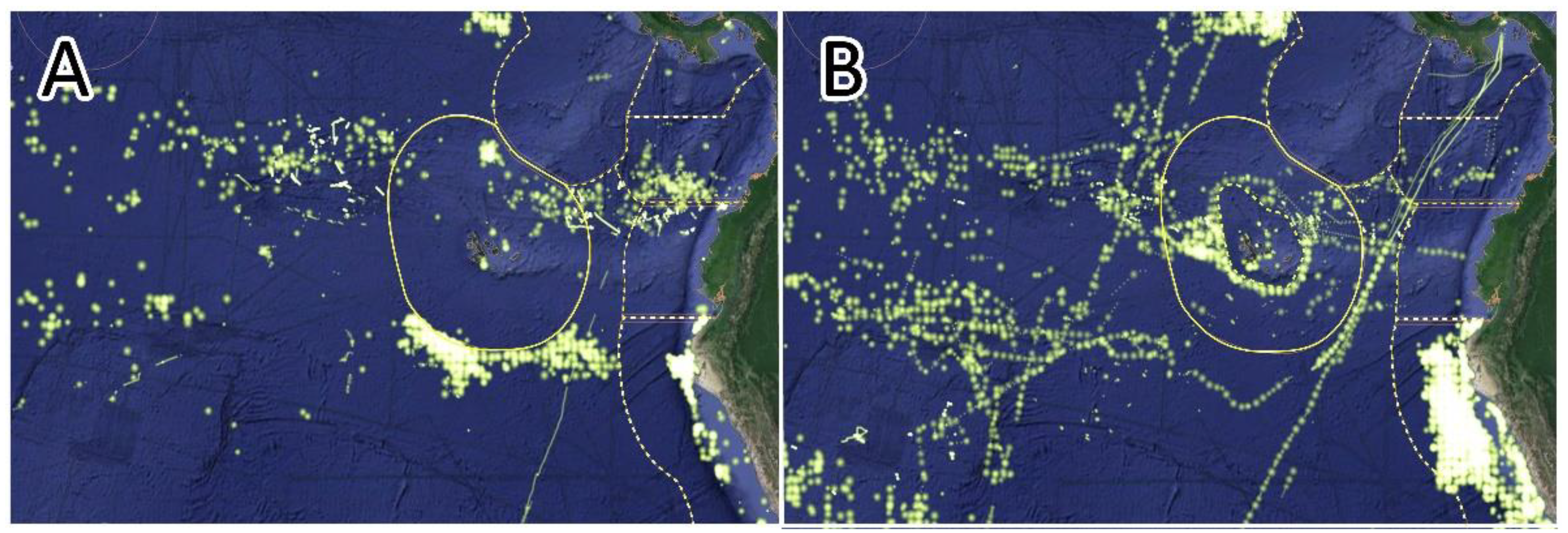
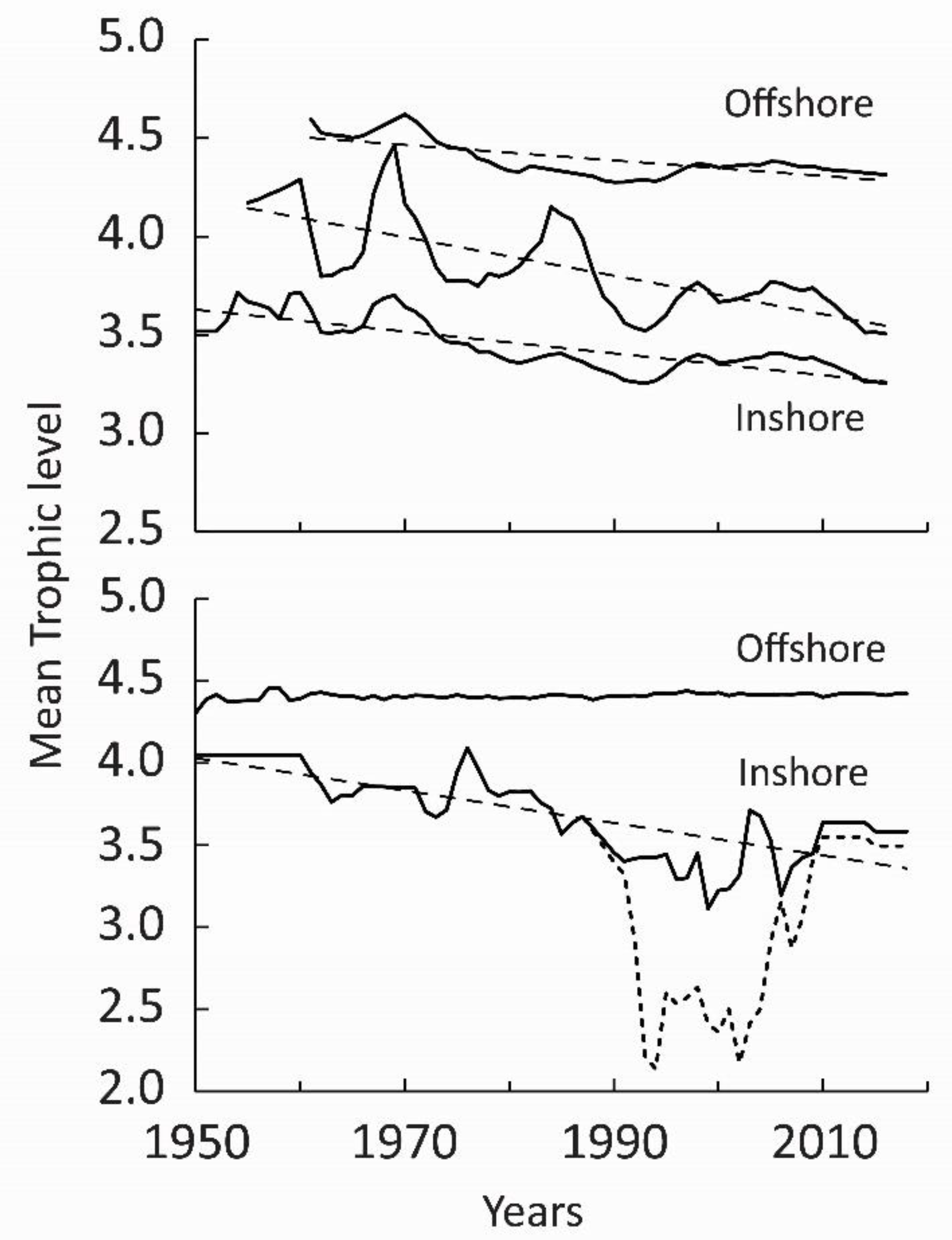
In the last decades, several targets for marine conservation were set to counter the effects of increasing fishing pressure, e.g., protecting 10% of the sea by 2020, and establishing large-scale marine protected areas (LSMPAs). Using the ‘reconstructed’ catch data for 1950 to 2018 made available by the Sea Around Us initiative, we show that the declaration of an exclusive economic zone (EEZ) in 1983 by the U.S.A. and its protection by the U.S. Coast Guard had a much bigger impact on catches around the Northwestern Hawaiian Islands than the subsequent creation of a LSMPA. This is similar to Pitcairn Islands, a UK territory. Trends differed sharply in the Galapagos and New Caledonia, where neither their EEZ declaration nor the LSMPA (by Ecuador in 1988 and by France in 2014) stopped local fisheries from continuous expansion. Our results also demonstrate that in the studied multizone LSMPAs continued local fishing induces a ‘fishing down’ effect wherein the mean trophic level (TL) declined, especially in the Galapagos, by 0.1 TL per decade. Stakeholders’ responses to a short questionnaire and satellite imagery lent support to these results in that they documented substantial fishing operations and ‘fishing the line’ within and around multizone LSMPAs. In the case of EEZs around less populated or unpopulated islands, banning foreign fishing may reduce catch much more than a subsequent LSMPA declaration. This confirms that EEZs are a tool for coastal countries to protect their marine biodiversity and that allowing fishing in an MPA, while politically convenient, may result in ‘paper parks’ within which fishing can cause the same deleterious effects as in wholly unprotected areas.
Keywords: large scale marine protected area (LSMPA); conservation priority; biodiversity; fisheries; exclusive economic zone (EEZ); ecosystem effects of fishing large scale marine protected area (LSMPA); conservation priority; biodiversity; fisheries; exclusive economic zone (EEZ); ecosystem effects of fishing