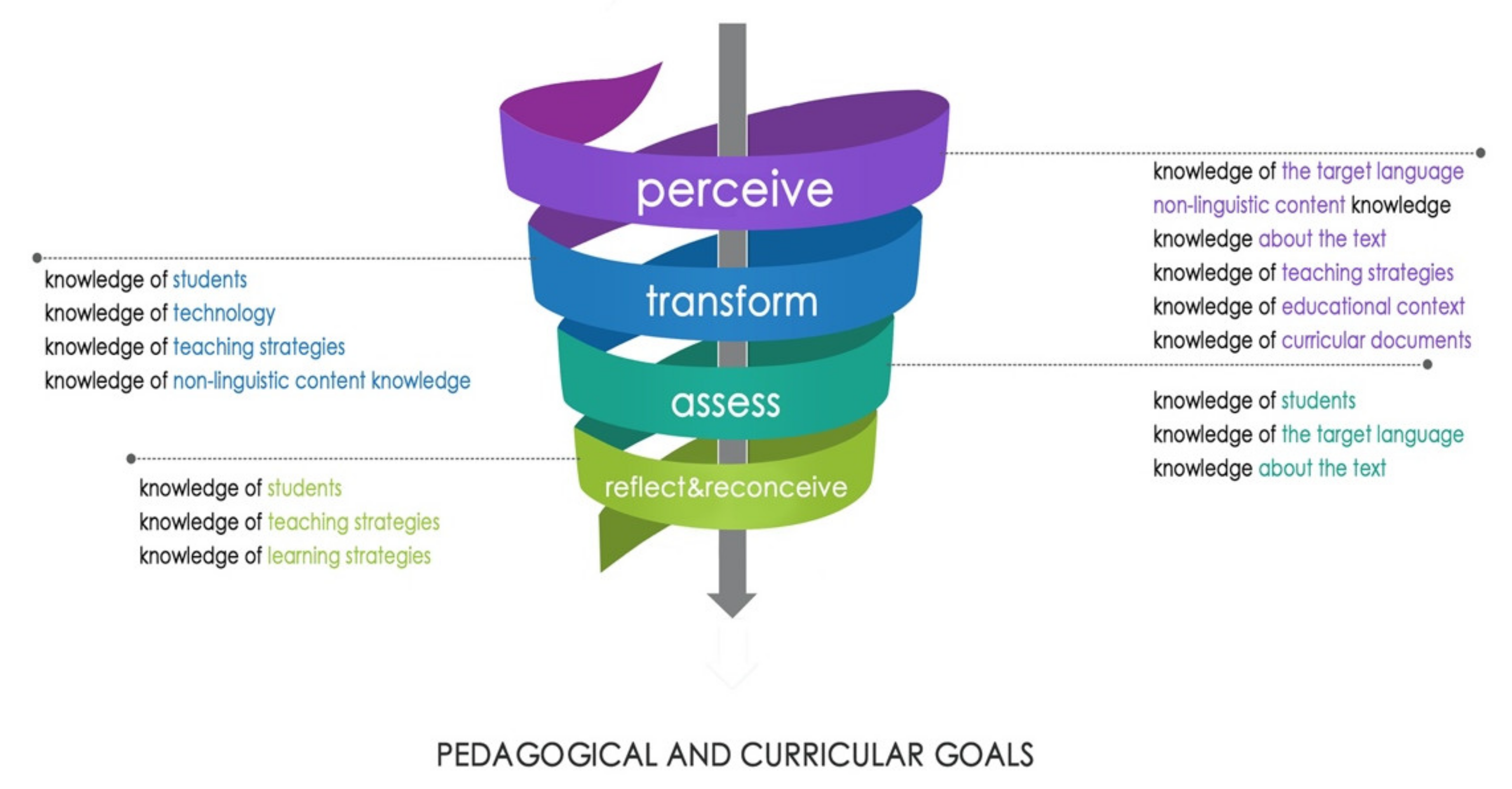
Sustaining the Effective Use of Materials in Language Classrooms: A Conceptual Understanding of Teacher Knowledge for Materials Use

Abstract
Share and Cite
Li, Z.; Xu, Y. Sustaining the Effective Use of Materials in Language Classrooms: A Conceptual Understanding of Teacher Knowledge for Materials Use. Sustainability 2021, 13, 8115. https://doi.org/10.3390/su13148115
Li Z, Xu Y. Sustaining the Effective Use of Materials in Language Classrooms: A Conceptual Understanding of Teacher Knowledge for Materials Use. Sustainability. 2021; 13(14):8115. https://doi.org/10.3390/su13148115
Chicago/Turabian StyleLi, Zhan, and Yueting Xu. 2021. "Sustaining the Effective Use of Materials in Language Classrooms: A Conceptual Understanding of Teacher Knowledge for Materials Use" Sustainability 13, no. 14: 8115. https://doi.org/10.3390/su13148115
APA StyleLi, Z., & Xu, Y. (2021). Sustaining the Effective Use of Materials in Language Classrooms: A Conceptual Understanding of Teacher Knowledge for Materials Use. Sustainability, 13(14), 8115. https://doi.org/10.3390/su13148115