Article

Evaluating Stress Relief from Architecture: A Case Study Based on Buildings in Taiwan, China and Japan

1
Department of Industrial Design, National Yunlin University of Science and Technology, Douliu 643, Taiwan
2
School of Design, National Yunlin University of Science and Technology, Douliu 643, Taiwan
3
Department of MICE Marketing & Event Management, Shu-Te University, Kaohsiung 824, Taiwan
*
Author to whom correspondence should be addressed.
Sustainability 2021, 13(14), 7899; https://doi.org/10.3390/su13147899
Submission received: 11 June 2021 / Revised: 9 July 2021 / Accepted: 13 July 2021 / Published: 15 July 2021
(This article belongs to the Section Tourism, Culture, and Heritage)

Abstract

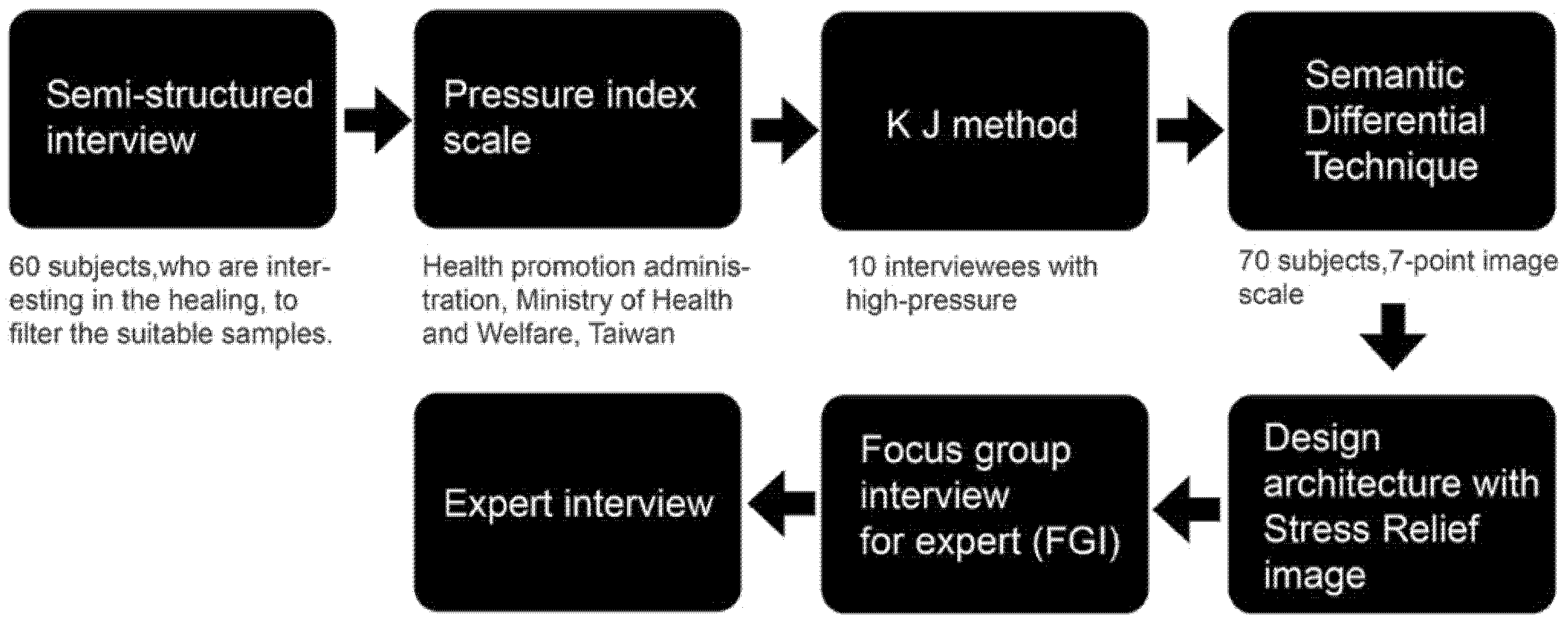
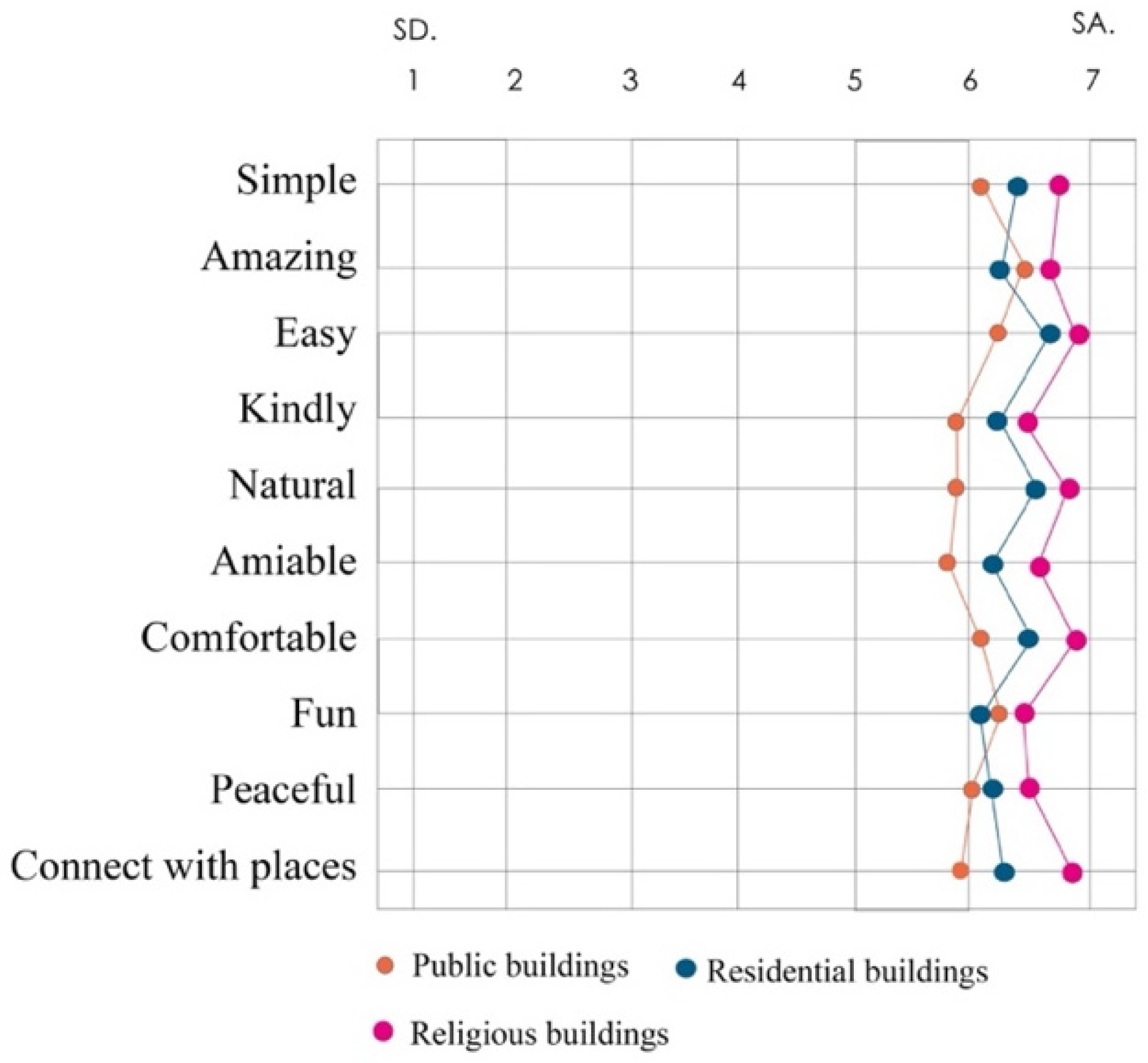
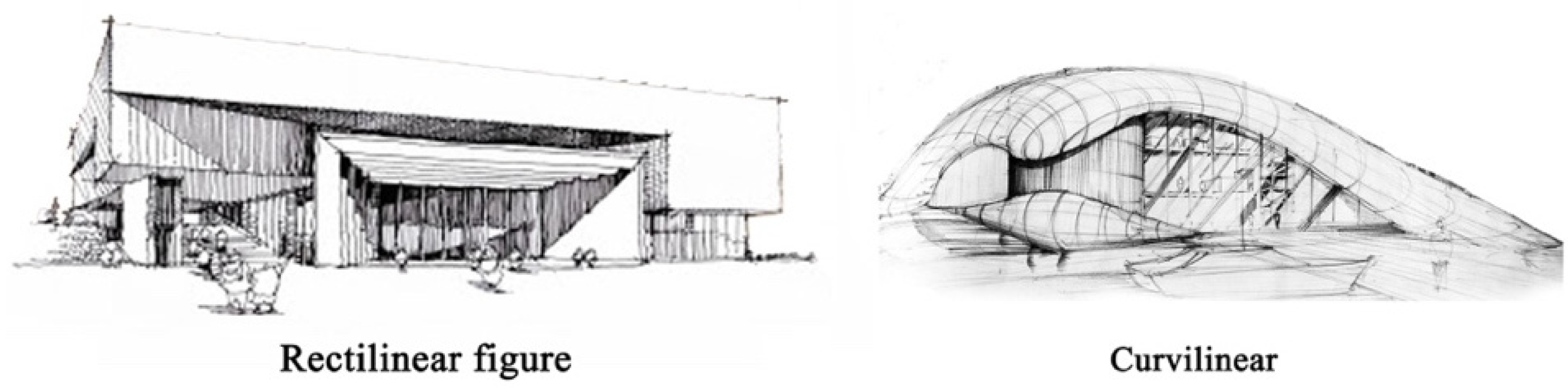
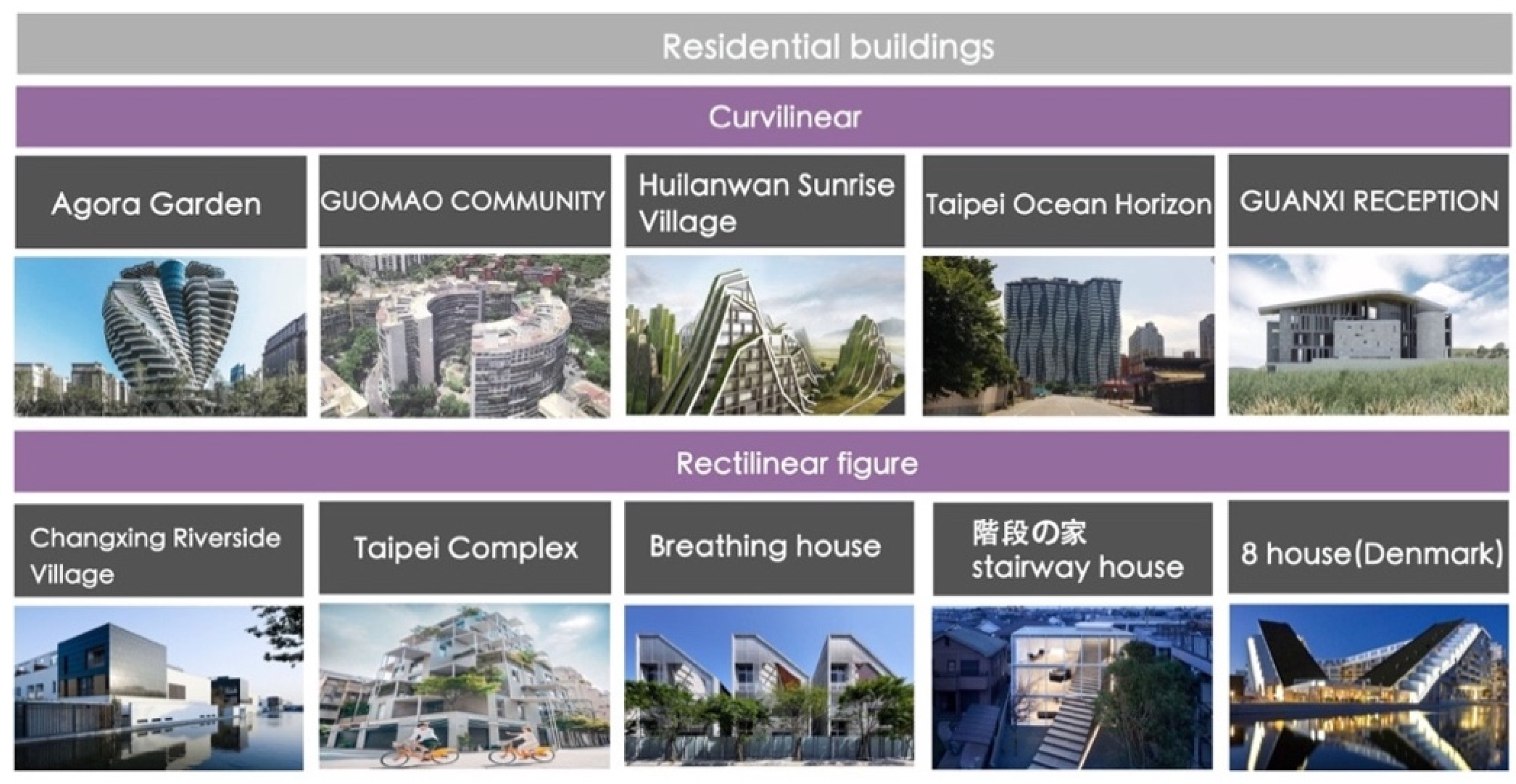
The urban landscape can be improved to reduce the stress experienced by citizens. Therefore, stress-relieving buildings constitute a crucial topic and a future trend in architecture and design. In this study, different architectural styles were investigated to explore design methods for and characteristics of stress-relieving building shapes and to identify indicators for measuring participant stress relief while viewing buildings. To understand stress relief from architecture, we performed semi-structured interviews with 60 participants who viewed images of 30 buildings. The semantic differential method with a 7-point image scale was used to rate stress relief from different architectural styles. The study results revealed that the participants perceived curvilinear buildings as interesting but do not relieve stress. The participants identified as feeling high pressure considering rectilinear patterns to relieve more stress. To support this observation, we identified three principles—city image, identity, and spiritual atmosphere—as fundamental loci of designing cities for livability. We illustrate the three principles with several cases that facilitate a detailed understanding of their applicability in biodesign practices.
Keywords: stress-relief image; evaluating; building shape stress-relief image; evaluating; building shape