Next Article in Journal
Bibliometric Network Analysis of “Water Systems’ Adaptation to Climate Change Uncertainties”: Concepts, Approaches, Gaps, and Opportunities
Previous Article in Journal
Main Problems of Cooperation Management: Insights from Slovak Companies
Article

Effects of Wood Product Utilization on Climate Change Mitigation in South Korea
1
National Institute of Forest Science, Seoul 02455, Korea
2
Department of Forest Sciences, Seoul National University, Seoul 08826, Korea
3
Research Institute of Agriculture and Life Sciences, Seoul National University, Seoul 08826, Korea
*
Author to whom correspondence should be addressed.
Academic Editor: Farooq Sher
Sustainability 2021, 13(12), 6737; https://doi.org/10.3390/su13126737
Received: 17 April 2021 / Revised: 27 May 2021 / Accepted: 4 June 2021 / Published: 14 June 2021
(This article belongs to the Section Resources and Sustainable Utilization)
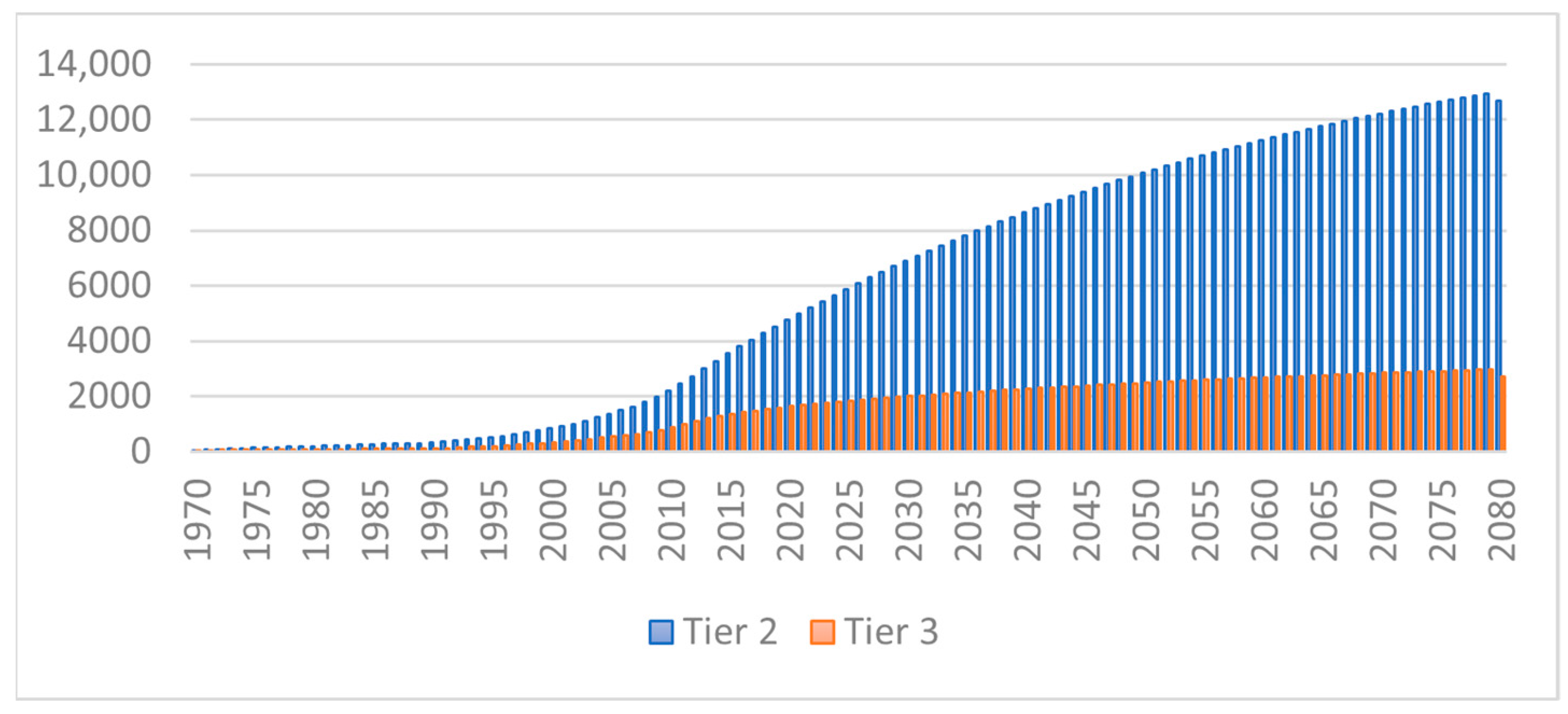
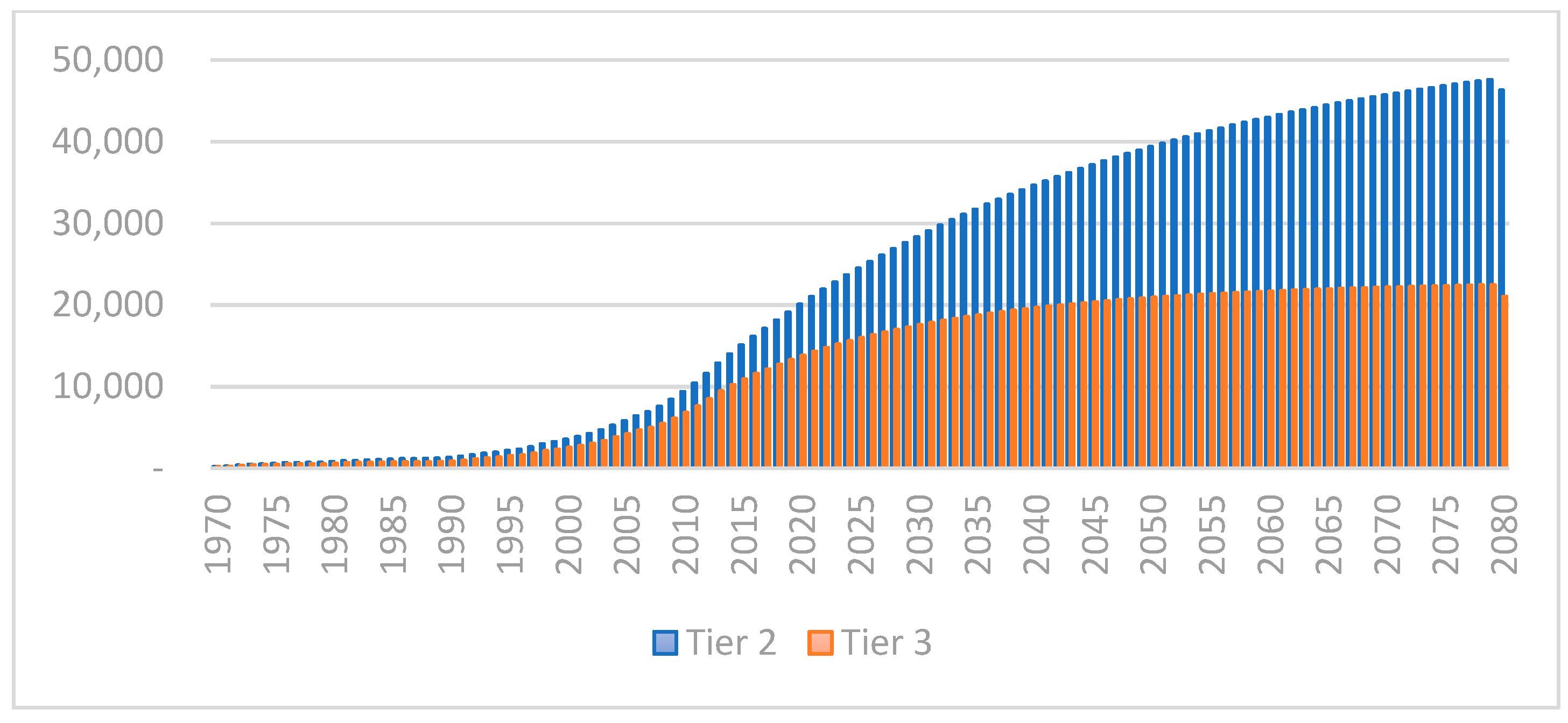
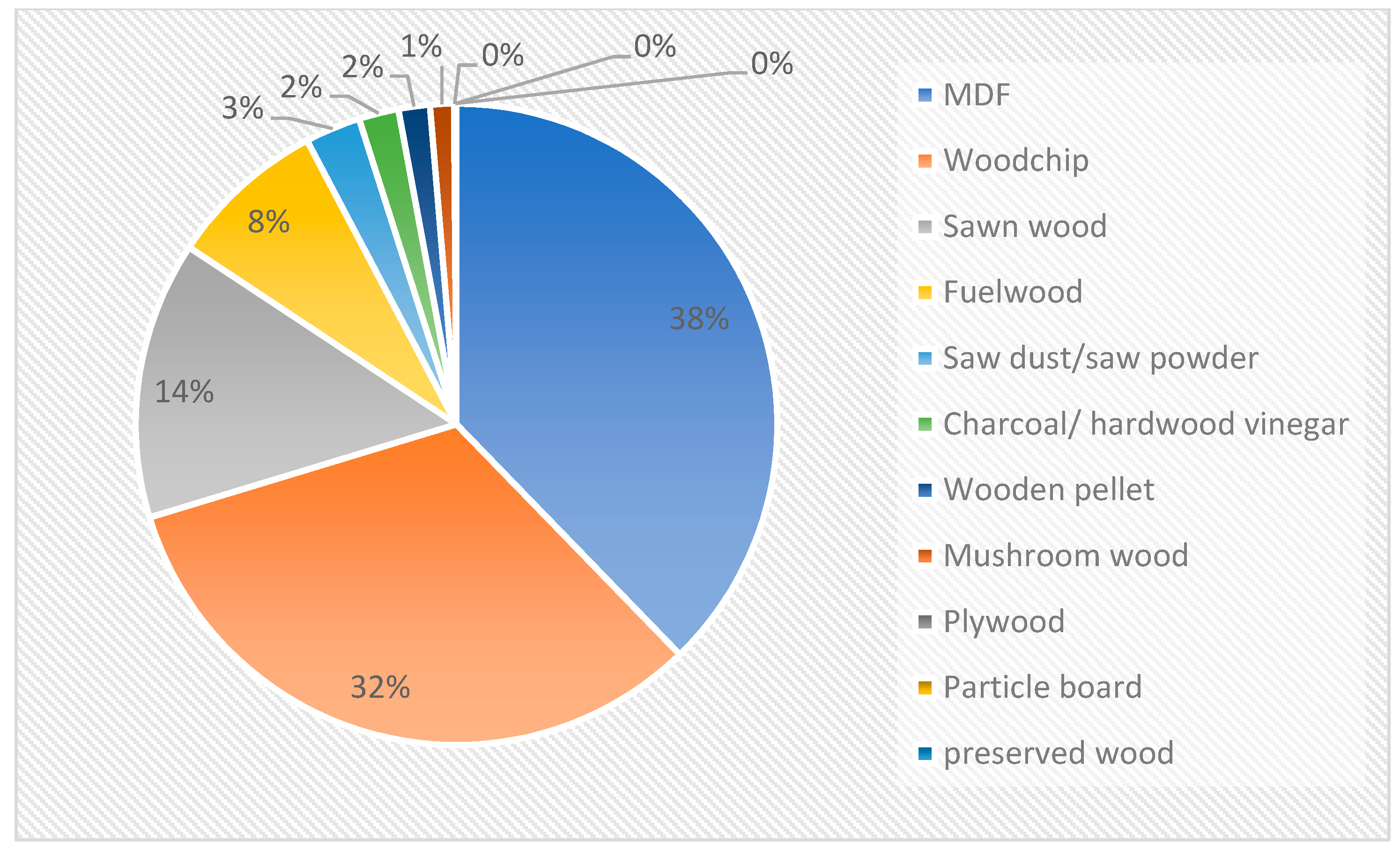
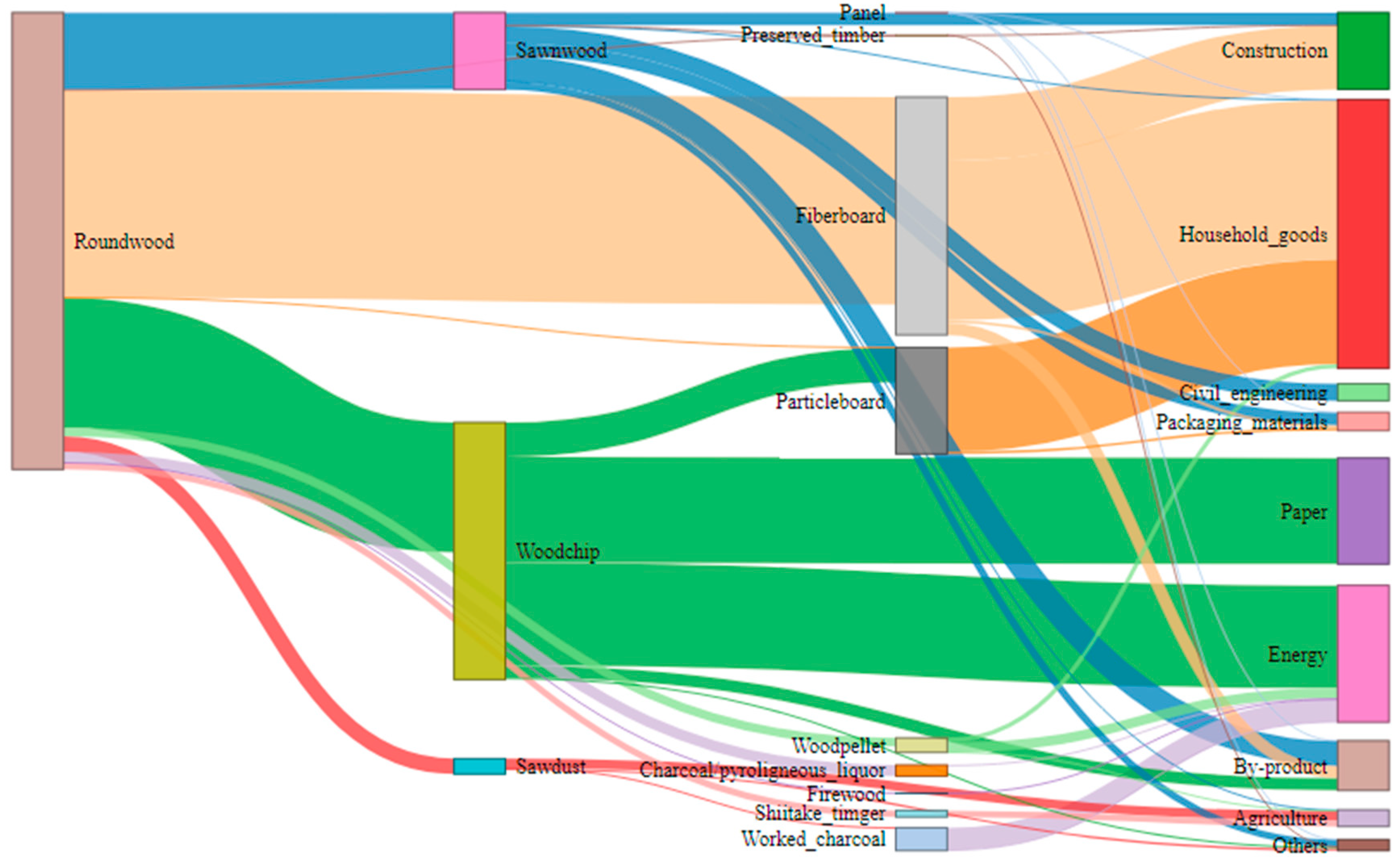
Many countries, including South Korea, decided to suspend the inclusion of harvested wood products in their Nationally Determined Contributions, as part of the carbon inventory, in 2016. The inclusion of harvested wood products in the national greenhouse gases inventory must ensure the accuracy of carbon accounting and its conformity with the policy direction. The method used for harvested wood product carbon accounting can influence the accuracy of carbon account value, as well as policy direction based on greenhouse gas accounting. This research evaluated the utilization of domestic wood resources in South Korea in terms of carbon storage impacts from the perspective of the cascading use of wood products. The study also compared the two accounting methods (Tier 2 and Tier 3) of carbon storage for the period from 1970 to 2080, assuming the current pattern of wood resource utilization for the next sixty years. The results show that the current utilization of domestic wood resources is inefficient in terms of climate change mitigation. The analysis shows that there is a significant difference between the Tier 2 and Tier 3 methods in carbon storage effects, and the amount of harvested wood products carbon stock calculated by the Tier 2 method was found to be approximately double that of Tier 3. This result implies that there is a possibility of overestimating the carbon storage of harvested wood products when using the Tier 2 method in the case of net timber-importing countries, such as South Korea. The study can provide guidance for designing timber resource management from the perspective of the cascading use of wood products in order to contribute to sustainable development goals, including climate change mitigation. View Full-Text
Keywords: harvested wood products; carbon inventory; climate change mitigation; carbon accounting method harvested wood products; carbon inventory; climate change mitigation; carbon accounting method
Show Figures

Figure 1

MDPI and ACS Style

Jang, E.-K.; Youn, Y.-C. Effects of Wood Product Utilization on Climate Change Mitigation in South Korea. Sustainability 2021, 13, 6737. https://doi.org/10.3390/su13126737

AMA Style

Jang E-K, Youn Y-C. Effects of Wood Product Utilization on Climate Change Mitigation in South Korea. Sustainability. 2021; 13(12):6737. https://doi.org/10.3390/su13126737
Chicago/Turabian Style

Jang, Eun-Kyung, and Yeo-Chang Youn. 2021. "Effects of Wood Product Utilization on Climate Change Mitigation in South Korea" Sustainability 13, no. 12: 6737. https://doi.org/10.3390/su13126737
Find Other Styles
Note that from the first issue of 2016, MDPI journals use article numbers instead of page numbers. See further details here.

Article Access Map by Country/Region

1
Back to TopTop