Article

Analysis and Evaluation of the Regional Characteristics of Carbon Emission Efficiency for China

1
Center for Energy, Environment & Economy Research, Zhengzhou University, Zhengzhou 450000, China
2
College of Tourism Management, Zhengzhou University, Zhengzhou 450000, China
3
Business School of Zhengzhou University, Zhengzhou 450000, China
*
Author to whom correspondence should be addressed.
Sustainability 2020, 12(8), 3138; https://doi.org/10.3390/su12083138
Submission received: 23 February 2020 / Revised: 4 April 2020 / Accepted: 6 April 2020 / Published: 14 April 2020

Abstract

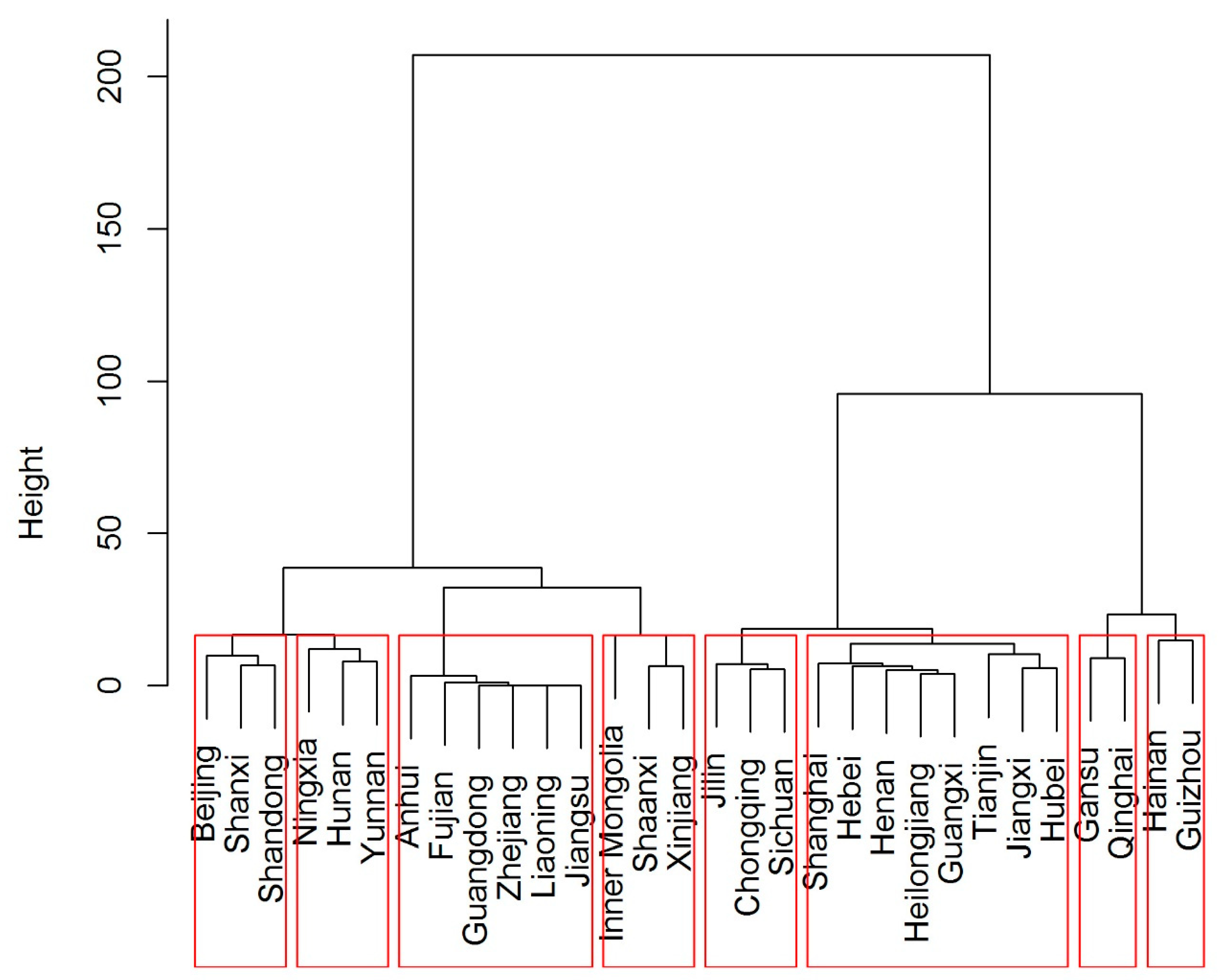
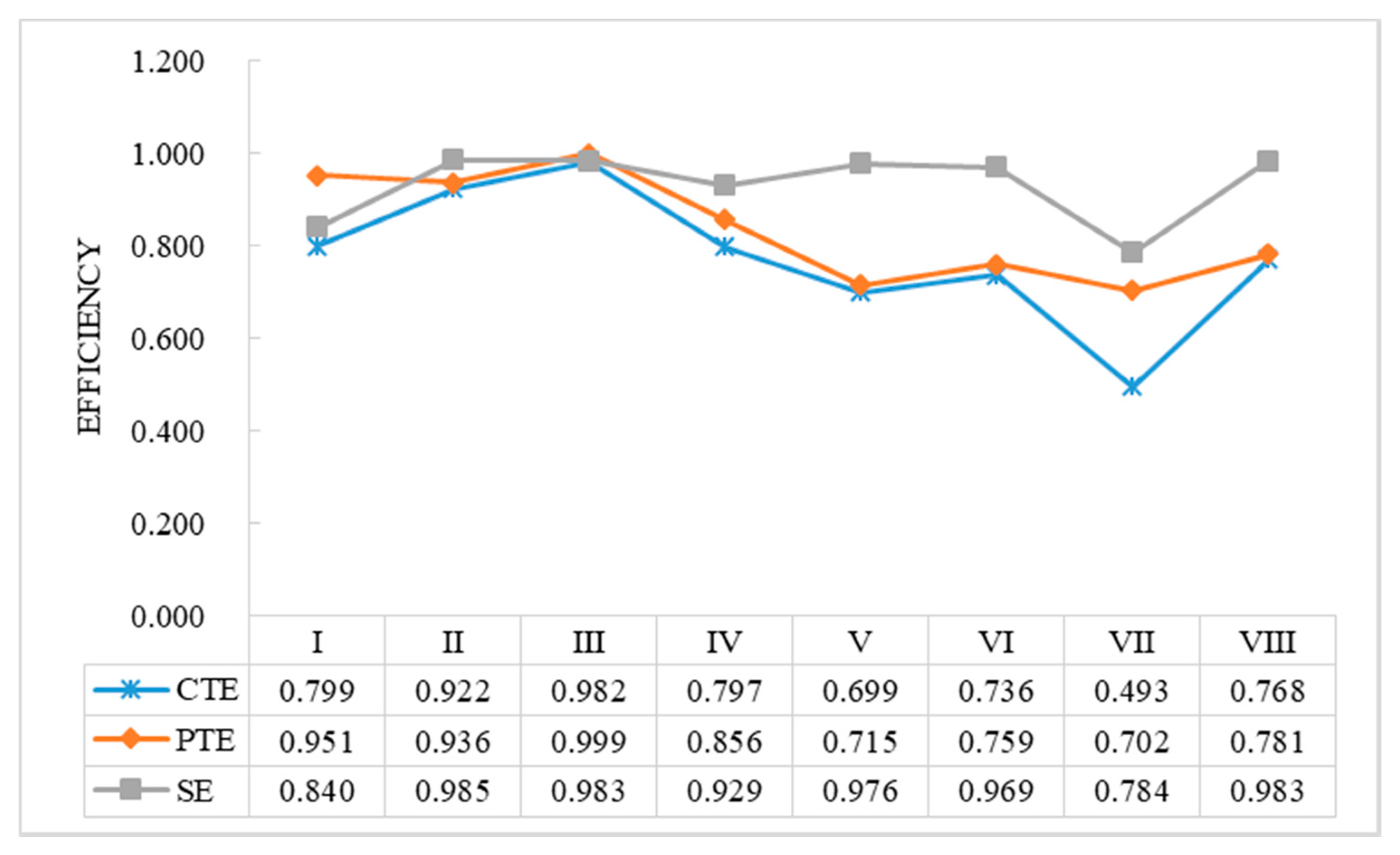
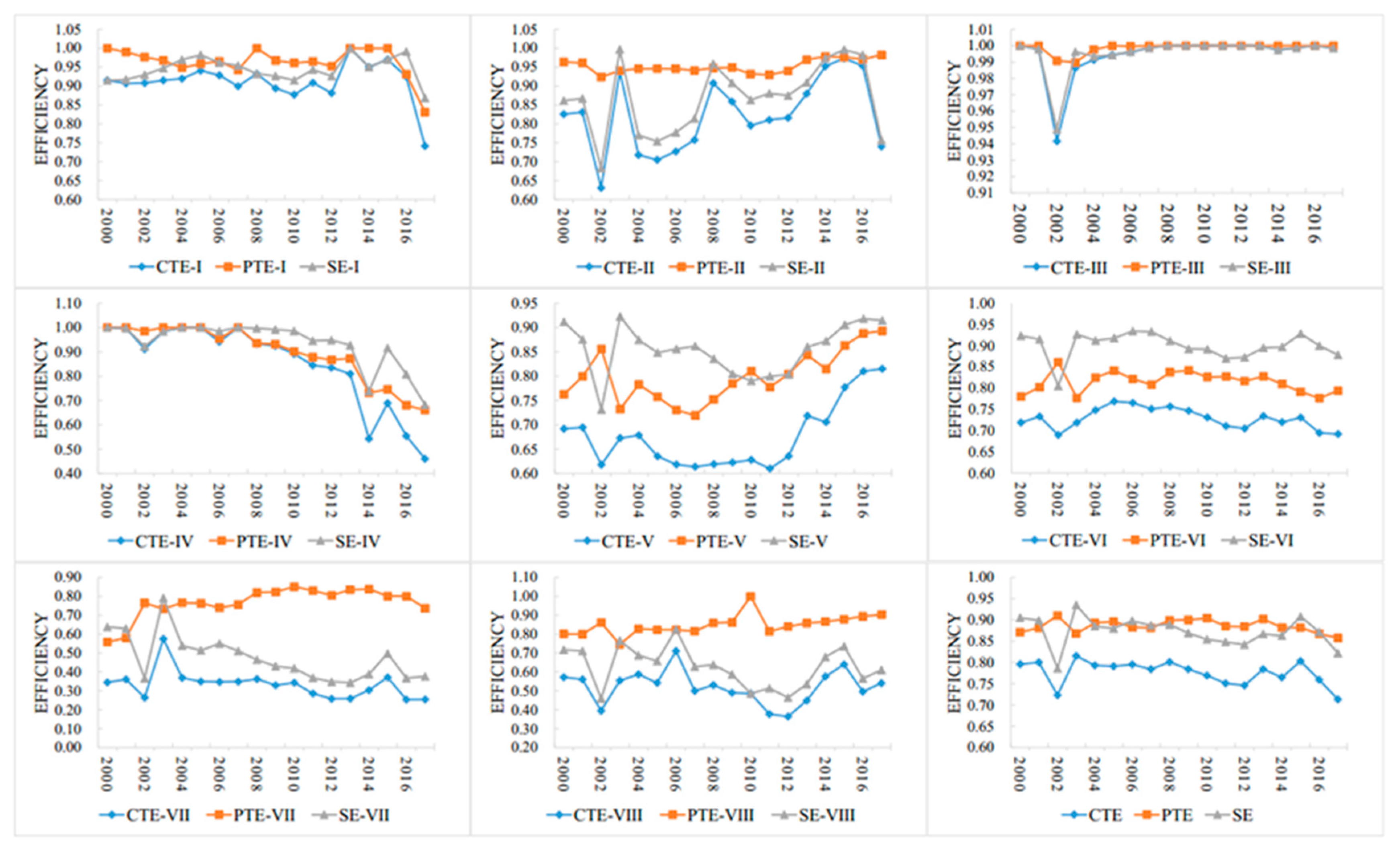
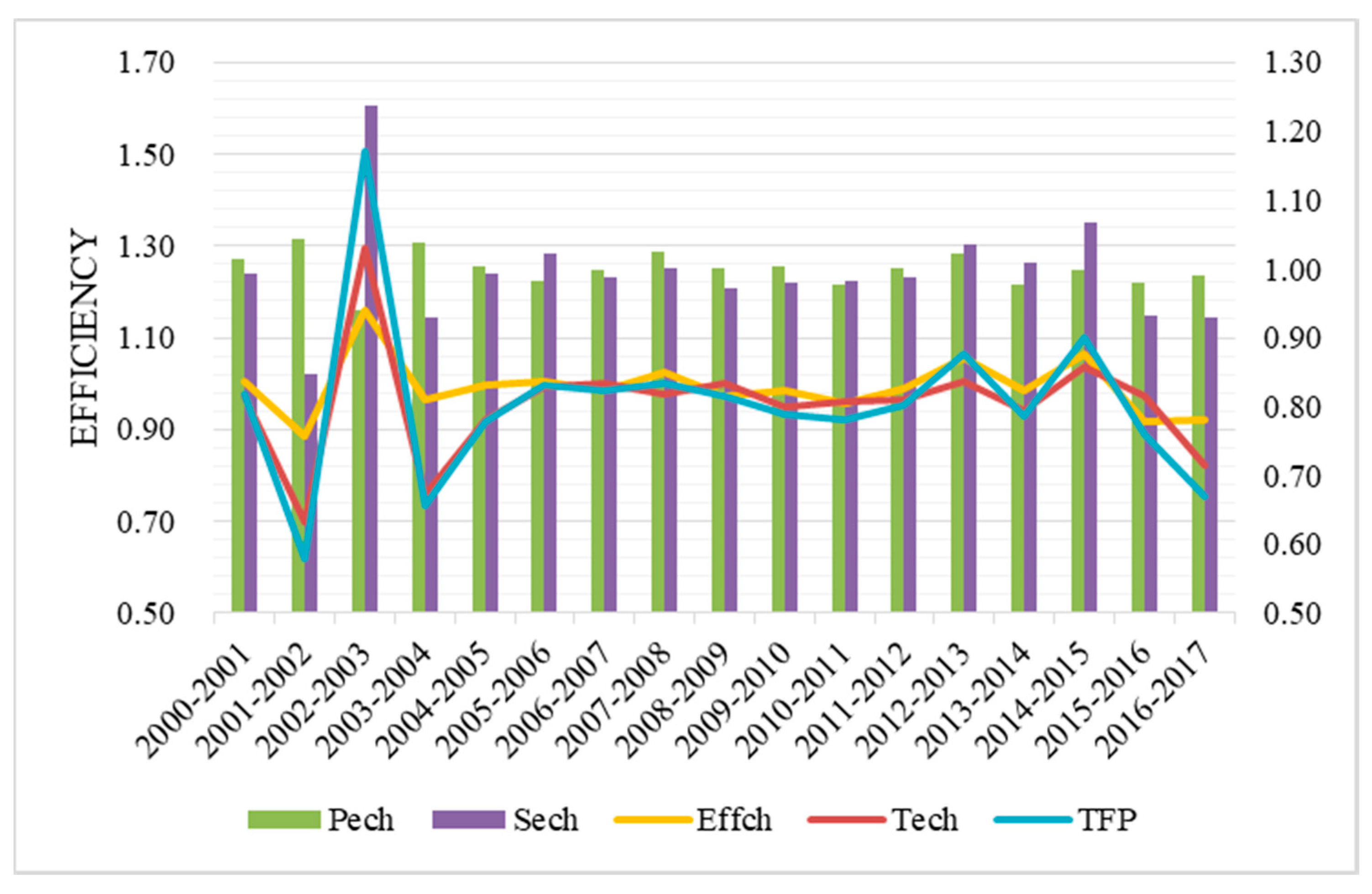
To promote economic and social development with reduced carbon dioxide emissions, the key lies in determining how to improve carbon emission efficiency (CEE). We first measured the CEE of each province by using the input-oriented three-stage Data Envelopment Analysis (DEA) and DEA-Malmquist model for the panel data of 30 provinces in China during 2000–2017. Then we explored the CEE differences and characteristics of different regions obtained by using hierarchical clustering of each province’s CEE. Finally, based on the regression model, we conducted an empirical analysis of the impact of each factor of total factor productivity (TFP) on CEE. The main findings of this research are as follows: (1) The industrial structure, energy structure, government regulation, technological innovation, and openness had a significant impact on CEE; (2) The variation trends of CEE and TFP in the eight regions we studied were convergent, while the variations of CEE among regions were diverse and all distributed stably in different ranges; (3) The eight regions’ efficiency basically showed a downward trend of eastern, central and western China; (4) Technological regression was the main reason for the decline in TFP. Technological progress and technological efficiency can contribute to an improvement in CEE. Based on the findings above, we provide decision-making references for comprehensively improving the efficiency of various regions and accelerating China’s energy conservation, emissions reduction, and coordinated development.
Keywords: carbon emission efficiency; regional characteristics; total factor productivity; three-stage DEA; Malmquist index carbon emission efficiency; regional characteristics; total factor productivity; three-stage DEA; Malmquist index