

RAF Resilience Assessment Framework—A Tool to Support Cities’ Action Planning




Abstract
1. Introduction
2. Materials and Methods
2.1. RAF—Resilience Assessment Framework Aims, Assumptions and Development Approach
- (i)
- Directing and facilitating a structured resilience diagnosis of the cities and of the strategic urban sectors, following an objective-driven approach [11] with defined assessment criteria and identifying data gaps, opportunities, threats, strengths and weaknesses, highlighting the areas for improvement.
- (ii)
- Outlining a path for the development of cities’ resilience action plans by supporting decision-making in the selection of resilience measures and the development of strategies to enhance resilience.
- (iii)
- Monitoring the resilience progress of a city or service over time, by applying it periodically, and facilitating communication among stakeholders.
- The scope is urban resilience to climate change (CC), with a focus on the water cycle, meaning that other diverse resilience drivers such as earthquakes, economic crises and cyberattacks, are not taken into account.
- The emphasis is on the city, services and infrastructure resilience, meaning that resilience aspects such as social and political are not developed for diagnosis, but they are incorporated whenever significant for city, services’ and infrastructures’ resilience.
- The services within the RAF scope are those comprised in the urban water cycle, water supply, wastewater and storm water and those having interconnections and interdependencies, closely related with the water services: waste management, electrical energy supply and mobility.
- The external context of the city and services is considered by a standard characterisation profile of the city and of the services, since it is fundamental to identify the main threats and to support the assessment, particularly the interpretation of results.
- The city and services multi-scale, multi-sectoral, multi-hazards and interdependencies are addressed, meaning that the RAF incorporates: different scales—city, services and infrastructure, the diverse sectors presented above, assessment of several hazards and of aspects related to interdependencies between different services and infrastructures.
- The continuous improvement principle [11] is followed and, since cities are dynamic, it addresses the progress of the strategies’ implementation and considers their effect, before, during and after an event and changes in circumstances.
- The long-, medium- and short-terms are incorporated considering three different and aligned assessment levels for the city, services and infrastructures (strategic—overlooking a long-term planning horizon and requiring the involvement of the entire organisation, addressing the overall city and considering its vision; tactical—overlooking a medium-term planning horizon and addressing departmental or sectoral activities in the city, services and infrastructure; and operational—referring to short-term horizon, addresses the actions to be taken in the effective implementation of measures in the city, services and infrastructure) while, as an integrated assessment, addresses the two first.
- A flexible structure is used, based on assessment metrics, allowing it to be expanded to other resilience drivers, dimensions or services.
2.2. RAF—Resilience Assessment Framework Description
2.3. Research Sites
2.3.1. General
2.3.2. Bristol
2.3.3. Barcelona
2.3.4. Lisbon
3. Results
3.1. Bristol
3.2. Barcelona
3.3. Lisbon
4. Discussion
5. Conclusions
Author Contributions
Funding
Acknowledgments
Conflicts of Interest
Appendix A

| OBJECTIVE Criterion PI | PI Unit | |
|---|---|---|
| COLLECTIVE ENGAGEMENT AND AWARENESS | ||
| Citizens and communities’ engagement | ||
| O01 | Community or “grassroots” organisations, networks and training | (-) |
| Are grassroots or community organisations participating in pre-event planning and post-event response for each neighbourhood in the city? (UNISDR Scorecard P7.1) | ||
| O02 | Civil society links | (-) |
| Are civil society organisations engaged? (UNISDR Scorecard D4.1.4 (adapted)) | ||
| O03 | Engagement of vulnerable groups of the population | (-) |
| There is evidence of disaster resilience planning with or for the relevant groups of vulnerable population, and there is a confirmation from those groups of effective engagement. (UNISDR Scorecard D7.2.2 (adapted)) | ||
| O04 | Citizen engagement techniques | (-) |
| How effective is the city at citizen engagement and communications in relation to disaster risk reduction (DRR)? (UNISDR Scorecard P7.4) | ||
| O05 | Use of mobile and e-mail “systems of engagement” to enable citizens to receive and give updates before and after a disaster | (-) |
| Use of mobile and social computing-enabled systems of engagement. All information before, during and after an event is supported by email, available on mobile devices, supported by alerts on social media, used to enable an in-bound “citizen to government” flow allowing crowd sourcing of data on events and issues. (UNISDR Scorecard D7.4.2 (adapted)) | ||
| Citizens and communities’ awareness and training | ||
| O06 | Public education and awareness | (-) |
| Existence and reach of a co-ordinated public relations and education campaign, with structured messaging and channels to ensure hazard, risk and disaster information is disseminated to the public. (UNISDR Scorecard P6.2) | ||
| O07 | Training delivery | (-) |
| Existence and reach (to all sectors) of training courses covering risk and resilience issues. (UNISDR Scorecard P6.4) | ||
| O08 | Drills | (-) |
| Do practices and drills involve both the public and professionals? (UNISDR Scorecard P9.7) | ||
| O09 | Social networks | (-) |
| Are there regular training programmes provided to the most vulnerable and at need populations in the city? | ||
| O10 | Validation of effectiveness of education | (-) |
| Knowledge of “most probable” risk scenario and knowledge of key response and preparation steps is widespread throughout city. Tested by sample survey. (UNISDR Scorecard D7.4.3 (adapted)) | ||
| LEADERSHIP AND MANAGEMENT | ||
| Government decision-making and finance | ||
| O11 | Consultative planning process | (-) |
| Existence and characteristics of formal planning consultative process? | ||
| O12 | Planning approval process | (-) |
| Characteristics of the planning approval process? | ||
| O13 | Public finances | (-) |
| Are the objectives of the city Strategy and/or Planning portfolio matched by adequate public finances? | ||
| O14 | Financial plan and budget for resilience, including contingency funds | (-) |
| Does the city have in place a specific ‘ring fenced’ (protected) budget, the necessary resources and contingency fund arrangements for local disaster risk reduction (DRR) (mitigation, prevention, response and recovery)? (UNISDR Scorecard P3.2) | ||
| Coordination and communication with stakeholders | ||
| O15 | Co-ordination with other government bodies | (-) |
| Does the city have a formal mechanism (e.g., Office, Committee, National/Regional Platform) to coordinate actions between city and other international, national, regional or local governments, which ensures integrated and flexible communication and collaboration between them? | ||
| O16 | Multi-stakeholder collaboration | (-) |
| Does the city have a formal stakeholder engagement programme (including the most socially vulnerable and at need populations)? | ||
| O17 | Access and use of digital services | (-) |
| In its stakeholder engagement programme, does the city encourage access and use of digital services? | ||
| O18 | Collaboration mechanisms | (-) |
| In its stakeholder engagement programme, does the city have mechanisms to ensure: a) regular, proactive and inclusive multi-stakeholder collaboration (including the most socially vulnerable and at need populations) (…) | ||
| Resilience-engaged city | ||
| O19 | City Master Plan making and implementation | (-) |
| Does the city master plan (or relevant strategy/plan) include and localise and/or implement objectives of Agenda 2030? | ||
| O20 | City Master Plan monitoring and review | (-) |
| Is the City Master Plan periodically monitored and reviewed, ensuring it remains relevant and is properly operational? | ||
| O21 | Hazard Assessment | (-) |
| Existence of hazard assessment(s) (knowledge of key hazards that the city faces, including likelihood of occurrence)? (UNISDR Scorecard P2.1 (adapted)) | ||
| O22 | Damage and loss estimation | (-) |
| Does risk assessment include estimations of damage and loss from potential disasters, based on current development and future urban and population growth? (UNISDR Scorecard D2.2.2 (adapted)) | ||
| O23 | Shared understanding of infrastructure risk | (-) |
| Is there a shared understanding of risks between the city and various utility providers and other regional and national agencies that have a role in managing infrastructure such as power, water, roads and trains, of the points of stress on the system and city scale risks? (UNISDR Scorecard P2.2) | ||
| O24 | Plan for resilience | (-) |
| Does the city have a municipally approved resilience plan (strategy or action plan)? And what is its timeframe? | ||
| O25 | Plan for resilience and Climate Change | (-) |
| Does the resilience plan consider climate change (projection, scenarios, impacts, etc.)? | ||
| O26 | Plan integration in the City Master Plan | (-) |
| Is the resilience plan integrated with the City Master Plan? | ||
| O27 | External support for the resilience plan | (-) |
| Is the document being developed by the city alone or with support from INGOs/UN bodies working on the subject? | ||
| O28 | Robustness of resilience plan | (-) |
| How robust is the resilience plan? | ||
| O29 | Resilience Plan monitoring and review | (-) |
| Is the resilience plan periodically monitored and reviewed, ensuring it remains relevant and operational? | ||
| O30 | Knowledge of resilience scenarios | (-) |
| Are there agreed scenarios for resilience (with relevant background information and supporting notes, updated at agreed intervals), setting out city-wide exposure and vulnerability from each hazard, or groups of hazards? (UNISDR Scorecard P2.3 (adapted)) | ||
| O31 | Data sharing | (-) |
| Extent to which data on the city’s resilience context is shared with other organisations involved with the city’s resilience. (UNISDR Scorecard P6.3) | ||
| O32 | Integration | (-) |
| Is resilience properly integrated with other key city functions/portfolios? (UNISDR Scorecard P1.3) | ||
| O33 | Organisation, coordination and participation | (-) |
| Is there a multi-agency/sectoral mechanism with appropriate authority and resources to address resilience? | ||
| O34 | Critical infrastructure as a priority | (-) |
| Is critical infrastructure resilience a city priority? (UNISDR Scorecard P8.1 (adapted)) | ||
| O35 | Critical infrastructure plan overview | (-) |
| Does the city own and implement a critical infrastructure plan or strategy? (UNISDR Scorecard P8.1 (adapted)) | ||
| O36 | Cascading impacts | (-) |
| Is there a collective understanding of potentially cascading failures between different city and infrastructure systems, under different scenarios, and a mapping of such cascading effects is available? (UNISDR Scorecard P2.4 (adapted)) | ||
| O37 | Learning from others | (-) |
| Is the city proactively seeking to exchange knowledge and learn from other cities facing similar challenges? (UNISDR Scorecard P6.6 (adapted)) | ||
| CITY PREPAREDNESS | ||
| City preparedness for disaster response | ||
| O38 | Early warning | (-) |
| Existence of Early Warning System for monitoring, forecasting and doing predictions on hazards (including climate change-related events) (UNISDR Scorecard P9.1 (adapted)) | ||
| O39 | Reach of warning | (-) |
| Percentage of population reachable by early warning systems (UNISDR Scorecard P9.1.1.1 (adapted)) | ||
| O40 | Communications | (-) |
| Would a significant loss of service be expected for a significant proportion of the city in the ‘worst case’ scenario event? (UNISDR Scorecard P8.6) | ||
| O41 | Event management plans | (-) |
| Is there a disaster management/preparedness/emergency response plan outlining city mitigation, preparedness and response to local emergencies? (UNISDR Scorecard P9.2) | ||
| O42 | Staffing/responder needs | (-) |
| Does the responsible disaster management authority have sufficient staffing capacity to support first responder duties in surge event scenario? (UNISDR Scorecard P9.3) | ||
| O43 | Equipment and relief supply needs | (-) |
| Are equipment and supply needs, as well as the availability of equipment, clearly defined? (UNISDR Scorecard P9.4) | ||
| O44 | Definition of human resources, equipment and supply needs, and availability of equipment | (-) |
| Has an estimated shortfall in human resources and equipment been identified? | ||
| O45 | Existence of agreements | (-) |
| If yes, have MOUs - or several ones - been signed, regarding mutual agreements with other cities or private sector resources, in order to cover the detected shortfall? | ||
| O46 | Health care | (-) |
| Would there be sufficient acute healthcare capabilities to deal with expected major injuries in ‘worst case’ scenario? (UNISDR Scorecard P8.7) | ||
| O47 | Food, shelter, staple goods and fuel supply | (-) |
| Would the city be able to continue to feed and shelter its population post-event? (UNISDR Scorecard P9.5) | ||
| O48 | Interoperability and interagency working | (-) |
| Is there an emergency operations’ centre, with participation from all agencies, automating standard operating procedures specifically designed to deal with “most probable” and “most severe” scenarios? (UNISDR Scorecard P9.6) | ||
| O49 | Existence of civil society focal points for citizens | (-) |
| Existence of volunteers and civil society organisations acting as focal points for citizens after an event, and regularly thereafter, to confirm safety issues, needs etc. | ||
| O50 | Social connectedness and neighbourhood cohesion | (%) |
| What is the estimated percentage of population that would be contacted by volunteers, within the 12 hours following an event and regularly thereafter? (UNISDR Scorecard D7.2.1 (adapted)) | ||
| City preparedness for climate change | ||
| O51 | Management plans for climate-related events | (-) |
| Does the city have a plan addressing climate-related events, either consisting of a specific document or integrated into the city’s planning portfolio? | ||
| O52 | Implementation of management plans for climate-related events | (-) |
| If existing, is this document being implemented through defined standard operational procedures? | ||
| O53 | Management plans for climate-related events monitoring and review | (-) |
| If existing, is this document being monitored and reviewed in less than a 5-year interval? | ||
| O54 | Knowledge of exposure and vulnerability for climate change scenarios | (-) |
| Are there agreed climate change scenarios setting out city-wide exposure and vulnerability from each hazard, or groups of hazards? (UNISDR Scorecard P2.3 (adapted)) | ||
| O55 | City status when addressing contribution to climate change | (-) |
| Comparing to the mean GHG emission per inhabitant that was considered to elaborate the official RCP scenarios, what are the current city’s emissions? | ||
| O56 | City commitment with mitigation of climate change effects | (%) |
| Has the city signed any formal agreement in order to reach an established mitigation target for GHG reduction by 2050, when comparing to 1990 values? | ||
| O57 | Planning for mitigation of climate change effects | (-) |
| Are the mitigation targets for GHG (emission reduction by 2050) being considered in the city plans and being enforced in new projects? | ||
| City preparedness for recovery and build back | ||
| O58 | Post event recovery planning—pre event | (-) |
| Is there a strategy or process in place for post-event recovery and reconstruction, including economic reboot, societal aspects etc.? (UNISDR Scorecard P10.1) | ||
| O59 | Coordination of post event recovery | (-) |
| Is the coordinating body for all post-disaster processes identified and structured, including the distribution of roles and responsibilities between relevant organisations? (UNISDR Scorecard D9.6.3 (adapted)) | ||
| O60 | Lessons learnt | (-) |
| Do post-event assessment processes include failure analysis? | ||
| O61 | Learning loops | (-) |
| If yes, does this process allow to capture lessons learned, which then feed into design and delivery of rebuilding projects? (UNISDR Scorecard P10.2 (adapted)) | ||
| O62 | Insurance | (-) |
| What level of insurance cover exists in the city, across all sectors - business and community? (UNISDR Scorecard P3.3) | ||
| O63 | Damage and loss post-event assessment | (-) |
| Does the city have a system in place to provide Post-Disaster Needs Assessment? | ||
| O64 | Current post-event assessment system | (-) |
| If yes, has such system been defined, implemented, tested and historic data is registered? | ||
| Availability and access to basic services | ||
| O65 | Water supply | (%) |
| Percentage of households with access to safe drinking water distribution. | ||
| O66 | Wastewater collection | (%) |
| Percentage of households served by wastewater collection. | ||
| O67 | Wastewater treatment | (-) |
| Provision of adequate treatment to wastewater through wastewater treatment plant. | ||
| O68 | Urban waste collection | (%) |
| Percentage of population served by regular solid waste collection (having waste picked up within 200 m from households, by a legally established entity, on at least a weekly basis). | ||
| O69 | Urban waste treatment | (-) |
| Provision of adequate treatment to solid waste through recovery methods or disposal in landfill? | ||
| O70 | Urban electrical energy network | (%) |
| Percentage of households with regular connection to the electricity network. | ||
| O71 | Urban electrical energy alternative source | (%) |
| Estimated percentage of households connected to alternative sources of electricity. | ||
| O72 | Urban gas energy network | (%) |
| Percentage of households with regular access to the gas distribution network. | ||
| O73 | Urban mobility accessing collective transportation | (%) |
| Percentage of population living less than 500 m. from any type of public stop, including trains, subway, tram, bus transportation. | ||
| O74 | Urban cycling mobility | (-) |
| Is there a public plan/strategy to develop cycling paths in the city or expend the existing network? | ||
| OBJECTIVE Criterion PI | PI Unit | |
|---|---|---|
| SPATIAL RISK MANAGEMENT | ||
| General hazard and exposure mapping | ||
| S01 | Presentation process for risk information | (-) |
| Do clear hazard maps and data on risk exist? (UNISDR Scorecard P2.5 (adapted)) | ||
| S02 | Update process for risk information | (-) |
| If yes, are these maps regularly updated? (UNISDR Scorecard P2.5 (adapted)) | ||
| S03 | Knowledge of exposure and vulnerability | (-) |
| Existence of scenarios setting out city-wide exposure and vulnerability from each hazard level. (UNISDR Scorecard D2.2.1) | ||
| S04 | Scenarios and update process for risk information | (-) |
| Risk scenarios are updated at least every three years for the following. (UNISDR Scorecard D2.5.1 (adapted)) | ||
| S05 | Damage and loss estimation | (-) |
| Damage and loss aspects taken into account by risk assessments for key identified scenarios. (UNISDR Scorecard D2.2.2) | ||
| Hazard and exposure for climate change | ||
| S06 | Potential population at risk of displacement for climate change scenarios | (-) |
| Percentage of population at risk of displacement for three months or longer according to climate change scenarios. (UNISDR Scorecard D4.1.1 (adapted)) | ||
| S07 | Urban footprint at risk for climate change scenarios | (-) |
| Percentage of urban footprint at risk, according to climate change scenarios. | ||
| S08 | Economic activity at risk for climate change scenarios | (-) |
| Percentage of economic activity at risk from climate change scenarios. (UNISDR Scorecard D4.1.2.1 (adapted)) | ||
| Resilient urban development | ||
| S09 | Land use zoning and planning | (-) |
| Is the land use plan - including zoning - informed by risk scenarios? | ||
| S10 | Land use plan monitoring and review | (-) |
| Is this plan regularly monitored and reviewed? (UNISDR Scorecard P4.1 (adapted)) | ||
| S11 | Land use zoning implementation | (-) |
| Extent to which land use zoning is implemented in the city and complied with. (UNISDR Scorecard D4.4.1 (adapted)) | ||
| S12 | New urban development | (-) |
| Is there a policy promoting physical measures in new development that enhance resilience to one or multiple hazards? (UNISDR Scorecard P4.2 (adapted)) | ||
| S13 | Urban design solutions that increase resilience | (-) |
| Does the city implement urban design solutions tasked to improve resilience? (UNISDR Scorecard D4.2.1 (adapted)) | ||
| S14 | Building codes and standards | (-) |
| Do building codes or standards exist, and do they address specific known hazards and risks for the city? Are these standards regularly updated? (UNISDR Scorecard P4.3) | ||
| S15 | Application of building codes | (-) |
| Implementation of building codes on relevant structures, certified as such by a 3rd party. (UNISDR Scorecard D4.4.2) | ||
| Impacts of climate-related event | ||
| S16 | Human loss in the last events | (-) |
| Human impact of the last climate-related event, with similar or harsher climate variables than the most probable scenario. | ||
| S17 | Damages in urban footprint in the last events | (%) |
| Impact on urban footprint of the last climate-related event, with similar or harsher climate variables than the most probable scenario. | ||
| PROVISION OF PROTECTIVE INFRASTRUCTURES AND ECOSYSTEMS | ||
| Protective infrastructures and ecosystems services | ||
| S18 | Existing protective infrastructure | (-) |
| Is existing protective infrastructure designed and built according to risk information? (UNISDR Scorecard P8.2 (adapted)) | ||
| S19 | New protective infrastructure | (-) |
| Is new protective infrastructure (in design or construction process) under development and consistent with best practice (for asset design, building and management, based on relevant risk information)? | ||
| S20 | Maintenance of protective infrastructure | (-) |
| Is protective infrastructure regularly maintained? | ||
| S21 | Awareness and understanding of ecosystem services/functions | (-) |
| Beyond just an awareness of the natural assets, does the city understand the functions that this natural capital provides for the city? (UNISDR Scorecard P5.1) | ||
| S22 | Awareness of the role that assets that provide ecosystem services play in the city’s resilience | (-) |
| Assets that provide ecosystem services are specifically identified and managed as critical assets? | ||
| S23 | Trends in ecosystem services health | (-) |
| Change in health, extent or benefit of each ecosystem service in last 5 years. (UNISDR Scorecard D5.1.2) | ||
| S24 | Maintenance of ecosystem services | (-) |
| Are ecosystem services specifically maintained and annually monitored on a defined set of key health/performance indicators? | ||
| S25 | Availability of green and blue infrastructures | (m2/inhabitant) |
| Estimated green and blue area per inhabitant. | ||
| S26 | Integration of green and blue infrastructure into city policy and projects | (-) |
| Is green and blue infrastructure being promoted on major urban development and infrastructure projects through policy? | ||
| Dependence and autonomy regarding other services considering climate change | ||
| S27 | Critical services dependence of protective infrastructures and ecosystems under climate change scenarios | (-) |
| Critical services (CS -RESCCUE services) dependence of protective infrastructures and ecosystems under climate change scenarios. | ||
| S28 | Autonomy from other services under climate change scenarios | (-) |
| Protective infrastructure and ecosystems autonomy regarding critical services (CS -RESCCUE services) loss under climate change scenarios. | ||
| S29 | Transboundary environmental issues | (-) |
| Is the city aware of ecosystem services being provided to the city from natural capital beyond its administrative borders? Are agreements in place with neighbouring administrations to support the protection and management of these assets? (UNISDR Scorecard P5.3) | ||
| OBJECTIVE Criterion PI | PI Unit | |
|---|---|---|
| WATER SERVICE PLANNING AND RISK MANAGEMENT | ||
| Strategic planning | ||
| FWts01 | Water service strategic plan making and implementation | (-) |
| Does the service have a strategic plan and is it implemented? (UNISDR Scorecard P1.1 (adapted)) | ||
| FWts02 | Plan alignment with the City Master Plan | (-) |
| If yes, is the plan aligned with the city main planning document? | ||
| FWts03 | Service plan monitoring and review | (-) |
| If existing, is the plan periodically monitored and reviewed, ensuring it remains relevant and operational? | ||
| FWts04 | Exchange of information to the city | (-) |
| Is there regular exchange of data and information between service and the city concerning the review of planning documents? | ||
| FWts05 | Land use zoning compliance | (-) |
| Do the service-specific plans comply with up-to-date land use and zoning regulations? | ||
| Resilience engaged service | ||
| FWts06 | Resilience in water service strategy and alignment with City Master Plan | (-) |
| Does the service have a resilience plan (either as an autonomous action plan or as a strategy included in the service’s strategic plan) and what is its timeframe? | ||
| FWts07 | Service strategic plan for resilience and CC | (-) |
| Does the resilience plan consider climate change (projection, scenarios, impacts, etc.)? | ||
| FWts08 | Service financial plan and budget for resilience | (-) |
| Do the service financial plans have dedicated allocations for resilience-building actions including disaster risk reduction (DRR))? | ||
| FWts09 | Water service business continuity | (-) |
| Do business continuity plans exist? | ||
| FWts10 | Co-ordination with other water services in the city | (-) |
| Is there any coordination mechanism in place with other water services/entities either at municipal or metropolitan level? | ||
| FWts11 | Learning from other water services | (-) |
| Is there any knowledge exchange with other services? | ||
| Risk management | ||
| FWts12 | Risk information related to the water service | (-) |
| Do specific service plans include risk information (such as exposure and vulnerability, damage and loss quantification, etc.) related to the service and are regularly updated? | ||
| FWts13 | Damage and loss estimation | (-) |
| Does risk assessment include estimations of damage and loss for agreed climate change scenarios, based on current development and future urban and population growth? | ||
| FWts14 | Expected water supply interruptions, not caused by water quality problems, in the city area according to CC scenarios | (% city area) |
| Percentage of the city area expected to be affected by water supply interruptions exceeding 6 h, not caused by water quality problems, according to climate change scenarios. | ||
| FWts15 | Expected water supply interruptions caused by water quality problems, in the city area according to CC scenarios | (% city area) |
| Percentage of the city area expected to be affected by interruptions exceeding 6 h, caused by water quality problems, according to climate change scenarios. | ||
| FWts16 | Expected water supply interruptions, not caused by water quality problems, for sensitive customers according to CC scenarios | (% sensitive customers) |
| % of sensitive customers expected to be affected by water supply interruptions exceeding 6 h, not caused by water quality problems, according to climate change scenarios. | ||
| FWts17 | Expected water supply interruptions caused by water quality problems, for sensitive customers according to CC scenarios | (% sensitive customers) |
| % of sensitive customers expected to be affected by interruptions exceeding 6 h, caused by water quality problems, according to climate change scenarios. | ||
| FWts18 | Expected water supply interruptions, not caused by water quality problems, for other services according to CC scenarios | (% customers other services) |
| % of customers of other services expected to be affected by water supply interruptions exceeding 6 h, not caused by water quality problems, according to climate change scenarios. | ||
| FWts19 | Expected water supply interruptions caused by water quality problems, for other services according to CC scenarios | (% customers other services) |
| % of customers of other services expected to be affected by interruptions exceeding 6 h, caused by water quality problems, according to climate change scenarios. | ||
| FWts20 | Expected water supply interruptions, not caused by water quality problems, for households according to CC scenarios | (% households) |
| % of households expected to be affected by water supply interruptions exceeding 6 h, not caused by water quality problems, according to climate change scenarios. | ||
| FWts21 | Expected water supply interruptions caused by water quality problems, for households according to CC scenarios | (% households) |
| % of households expected to be affected by interruptions exceeding 6 h, caused by water quality problems, according to climate change scenarios. | ||
| FWts22 | Expected total duration of water supply interruption, not caused by water quality problems, according to CC scenarios | (Days) |
| Total duration (days) of expected water supply interruption, not caused by water quality problems, according to climate change scenarios. | ||
| FWts23 | Expected total duration of water supply interruption, caused by water quality problems, according to CC scenarios | (Days) |
| Total duration (days) of expected water supply interruption, caused by water quality problems, according to climate change scenarios. | ||
| Reliable service | ||
| FWts24 | Water supply interruptions, not caused by water quality problems, in the city area last year | (% city area) |
| Percentage of the city area affected by water supply interruptions exceeding 6 h, not caused by water quality problems, last year. | ||
| FWts25 | Water supply interruptions caused by water quality problems, in the city area last year | (% city area) |
| Percentage of the city area affected by water supply interruptions exceeding 6 h, caused by water quality problems, last year. | ||
| FWts26 | Water supply interruptions, not caused by water quality problems, for sensitive customers last year | (% sensitive customers) |
| % of sensitive customers affected by water supply interruptions exceeding 6 h, not caused by water quality problems, last year. | ||
| FWts27 | Water supply interruptions caused by water quality problems, for sensitive customers last year | (% sensitive customers) |
| % of sensitive customers affected by water supply interruptions exceeding 6 h, caused by water quality problems, last year. | ||
| FWts28 | Water supply interruptions, not caused by water quality problems, for other services last year | (% customers other services) |
| % of customers of other services affected by water supply interruptions exceeding 6 h, not caused by water quality problems, last year. | ||
| FWts29 | Water supply interruptions caused by water quality problems, for other services last year | (% customers other services) |
| % of customers of other services affected by water supply interruptions exceeding 6 h, caused by water quality problems, last year. | ||
| FWts30 | Water supply interruptions, not caused by water quality problems, for households last year | (% households) |
| % of households affected by water supply interruptions exceeding 6 h, not caused by water quality problems, last year. | ||
| FWts31 | Water supply interruptions caused by water quality problems, for households last year | (% households) |
| % of households affected by water supply interruptions exceeding 6 h, caused by water quality problems, last year. | ||
| FWts32 | Total duration of water supply interruption, not caused by water quality problems, last year | (Days) |
| Total duration (days) of water supply interruption, not caused by water quality problems, last year. | ||
| FWts33 | Total duration of water supply interruption, caused by water quality problems, last year | (Days) |
| Total duration (days) of water supply interruption, caused by water quality problems, last year. | ||
| FWts34 | Water losses last year | (m3/(km.day)) |
| Water losses last year (water loss volume in the supply system/(total pipe length × 365)) | ||
| Flexible service | ||
| FWts35 | Water uses | (% drinking water) |
| % of drinking water being used for irrigation, street cleaning, firefighting, or other public uses. | ||
| FWts36 | Water sources | (-) |
| Which types of water supply sources are being used in the city? | ||
| FWts37 | Water sources location | (-) |
| Where are the city’s water supply sources located? | ||
| FWts38 | Service management | (-) |
| Services are appropriately managed, i.e., technological tools are used, existing competences are adequate, and a command chain is at place? | ||
| AUTONOMOUS WATER SERVICE | ||
| Service importance to the city | ||
| FWts39 | Stakeholders perception | (-) |
| Is there a mechanism to provide service score, based on stakeholders’ perception and is it applied? If yes quantify the service score from stakeholder perception. | ||
| FWts40 | Cascading impacts | (-) |
| Is there an understanding of potentially cascading failures between different services, under different scenarios? (UNISDR Scorecard P2.4 (adapted)) | ||
| Service inter-dependency with other services considering climate change | ||
| FWts41 | Critical services dependence on water service according to CC scenarios | (-) |
| To what extent are critical services (CS -RESCCUE services) dependent on the water service, based on climate change scenarios? | ||
| FWts42 | Water services autonomy from other critical services according to CC scenarios | (-) |
| To what extent is the water service dependent on other critical services (CS -RESCCUE services), based on climate change scenarios? | ||
| WATER SERVICE PREPAREDNESS | ||
| Service preparedness for disaster response | ||
| FWts43 | Water service event management plans | (-) |
| Is there a disaster management/preparedness/emergency response plan outlining service mitigation, preparedness and response to local emergencies? (UNISDR Scorecard P9.2 (adapted)) | ||
| FWts44 | Water services interdepartmental collaboration for emergency | (-) |
| Is there an emergency operations’ centre, automating standard operating procedures specifically designed to deal with “most probable” and “most severe” scenarios? (UNISDR Scorecard P9.6 (adapted)) | ||
| FWts45 | Water services early warning | (-) |
| Does the service have a plan or standard operating procedure to act on early warnings and forecasts? Is the city warned by this system? (UNISDR Scorecard P9.1 (adapted)) | ||
| FWts46 | Water service drills | (-) |
| Are practices and drills carried out internally and periodically? | ||
| Service preparedness for climate change | ||
| FWts47 | Service commitment with mitigation of CC effects | (% reduction GHG) |
| Is the service committed with an established mitigation target regarding reduction of GHG within its strategic planning? | ||
| FWts48 | Existence of agreed CC scenarios and alignment with the city CC scenarios | (-) |
| Are there agreed climate change scenarios, setting out service exposure and vulnerability, from each hazard level? Are they aligned with the city-wide climate change scenarios? | ||
| FWts49 | Knowledge of exposure and service vulnerability for CC scenarios | (-) |
| The analysis of exposure and service vulnerability for climate change scenarios addresses: a) People (…) | ||
| FWts50 | Service planning for adaptation to CC | (-) |
| Is adaptation to climate change being considered in the service plans and enforced in new projects? | ||
| FWts51 | Implemented measures to address CC mitigation and adaptation | (-) |
| What type of measures has the service implemented to address climate change mitigation and adaptation? | ||
| FWts52 | Planned measures to address CC mitigation and adaptation | (-) |
| What type of measures is the service planning to implement to address climate change mitigation and adaptation? | ||
| FWts53 | Equipment capacity of the service | (-) |
| Has the service adequate equipment capacity, in normal and emergency circumstances? | ||
| FWts54 | Staffing capacity of the service | (-) |
| Has the service adequate staffing capacity, in normal and emergency circumstances? | ||
| Service preparedness for recovery and build back | ||
| FWts55 | Water service CC recovery planning | (-) |
| Is there a strategy or process in place for post-event service recovery and reconstruction? (UNISDR Scorecard P10.1) | ||
| FWts56 | Water service damage and loss post-event assessment | (-) |
| Does the service have a system in place to provide Post-Disaster Needs Assessment? | ||
| FWts57 | Current post-event assessment system | (-) |
| If yes, has such system been defined, implemented, tested and historic data is registered? | ||
| FWts58 | Water supply interruption, not caused by water quality problems, in the city area in the last relevant climate-related event | (% city area) |
| Percentage of the city area affected by water supply interruptions exceeding 6 h, not caused by water quality, in the last climate-related event, with similar or harsher climate variables than the most probable scenario. | ||
| FWts59 | Water supply interruptions caused by water quality problems, in the city area, in the last relevant climate-related event | (% city area) |
| Percentage of the city area affected by water supply interruptions exceeding 6 h, caused by water quality problems, in the last climate-related event, with similar or harsher climate variables than the most probable scenario. | ||
| FWts60 | Water supply interruptions, not caused by water quality problems, for sensitive customers in the last relevant climate-related event | (% sensitive customers) |
| % of sensitive customers affected by water supply interruptions exceeding 6 h, not caused by water quality problems, in the last climate-related event, with similar or harsher climate variables than the most probable scenario. | ||
| FWts61 | Water supply interruptions caused by water quality problems, for sensitive customers in the last relevant climate-related event | (% sensitive customers) |
| % of sensitive customers affected by water supply interruptions exceeding 6 h, caused by water quality problems, in the last climate-related event, with similar or harsher climate variables than the most probable scenario. | ||
| FWts62 | Water supply interruptions, not caused by water quality problems, for other services in the last relevant climate-related event | (% customers other services) |
| % of customers of other services affected by water supply interruptions exceeding 6 h, not caused by water quality problems, in the last climate-related event, with similar or harsher climate variables than the most probable scenario. | ||
| FWts63 | Water supply interruptions caused by water quality problems, for other services in the last relevant climate-related event | (% customers other services) |
| % of customers of other services affected by water supply interruptions exceeding 6 h, caused by water quality problems, in the last climate-related event, with similar or harsher climate variables than the most probable scenario. | ||
| FWts64 | Water supply interruptions, not caused by water quality problems, for households in the last relevant climate-related event | (% households) |
| % of households affected by water supply interruptions exceeding 6 h, not caused by water quality problems, in the last climate-related event, with similar or harsher climate variables than the most probable scenario. | ||
| FWts65 | Water supply interruptions caused by water quality problems, for households in the last relevant climate-related event | (% households) |
| % of households affected by water supply interruptions exceeding 6 h, caused by water quality problems, in the last climate-related event, with similar or harsher climate variables than the most probable scenario. | ||
| FWts66 | Total duration of water supply interruption, caused by water quality problems, in the last relevant climate-related event | (Days) |
| Days of water supply interruption, not caused by water quality problems, in the last climate-related event, with similar or harsher climate variables than the most probable scenario. | ||
| FWts67 | Total duration of water supply interruption, caused by water quality problems in the last relevant climate-related event | (Days) |
| Days of water supply interruption, caused by water quality problems, in the last climate-related event, with similar or harsher climate variables than the most probable scenario. | ||
| FWts68 | Water service lessons learnt and learning loops | (-) |
| Are service-specific processes in place for lessons learnt, including failure analysis? If yes, are service-specific plans informed by them? | ||
| FWts69 | Insurance | (-) |
| What level of insurance cover exists in the service? | ||
| OBJECTIVE Criterion PI | PI Unit | |
|---|---|---|
| WASTEWATER SERVICE PLANNING AND RISK MANAGEMENT | ||
| Strategic planning | ||
| FWwt01 | Wastewater service strategic plan making and implementation | (-) |
| Does the service have a strategic plan and is it implemented? (UNISDR Scorecard P1.1 (adapted)) | ||
| FWwt02 | Plan alignment with the City Master Plan | (-) |
| If yes, is the plan aligned with the city main planning document? | ||
| FWwt03 | Service plan monitoring and review | (-) |
| If existing, is the plan periodically monitored and reviewed, ensuring it remains relevant and operational? | ||
| FWwt04 | Exchange of information to the city | (-) |
| Is there regular exchange of data and information between service and the city concerning the review of planning documents? | ||
| FWwt05 | Land use zoning compliance | (-) |
| Do the service-specific plans comply with up-to-date land use and zoning regulations? | ||
| Resilience engaged service | ||
| FWwt06 | Resilience in wastewater service strategy and alignment with City Master Plan | (-) |
| Does the service have a resilience plan (either as an autonomous action plan or as a strategy included in the service’s strategic plan) and what is its timeframe? | ||
| FWwt07 | Service strategic plan for resilience and CC | (-) |
| Does the resilience plan consider climate change (projection, scenarios, impacts, etc.)? | ||
| FWwt08 | Service financial plan and budget for resilience | (-) |
| Do the service financial plans have dedicated allocations for resilience-building actions (including disaster risk reduction (DRR))? | ||
| FWwt09 | Wastewater service business continuity | (-) |
| Do business continuity plans exist? | ||
| FWwt10 | Co-ordination with other wastewater services in the city | (-) |
| Is there any coordination mechanism in place with other wastewater services/entities either at municipal or metropolitan level? | ||
| FWwt11 | Learning from other wastewater services | (-) |
| Is there any knowledge exchange with other services? | ||
| Risk management | ||
| FWwt12 | Risk information related to the wastewater service | (-) |
| Do specific service plans include risk information (such as exposure and vulnerability, damage and loss quantification, etc.) related to the service and are regularly updated? | ||
| FWwt13 | Damage and loss estimation | (-) |
| Does risk assessment include estimations of damage and loss for agreed climate change scenarios, based on current development and future urban and population growth? | ||
| FWwt14 | Expected wastewater flooding in the city area according to CC scenarios | (% city area) |
| Percentage of the city area expected to be affected by flooding due to wastewater collection interruption, according to climate change scenarios. | ||
| FWwt15 | Expected wastewater treatment failures in the city area according to CC scenarios | (% city area) |
| Percentage of the city area expected to be affected by wastewater treatment failures, according to climate change scenarios. | ||
| FWwt16 | Expected wastewater flooding in sensitive customers according to CC scenarios | (% sensitive customers) |
| % of sensitive customers expected to be affected by flooding due to wastewater collection interruption, according to climate change scenarios. | ||
| FWwt17 | Expected wastewater discharges, due to failure in wastewater service to ecosystem services according to CC scenarios | (-) |
| Number of expected wastewater discharges into ecosystems services due to wastewater service interruption, according to climate change scenarios. | ||
| FWwt18 | Expected wastewater flooding in other services according to CC scenarios | (% customers other services) |
| % of customers of other services expected to be affected by flooding due to wastewater collection interruption, according to climate change scenarios. | ||
| FWwt19 | Expected wastewater flooding in households according to CC scenarios | (% households) |
| % of households expected to be affected by flooding due to wastewater collection interruption, according to climate change scenarios. | ||
| FWwt20 | Expected total duration of wastewater flooding period according to CC scenarios | (Days) |
| Total duration (days) of expected wastewater flooding due to wastewater collection interruption, according to climate change scenarios. | ||
| FWwt21 | Expected total duration of wastewater treatment failure period according to CC scenarios | (Days) |
| Total duration (days) of expected wastewater treatment failures, according to climate change scenarios. | ||
| Reliable service | ||
| FWwt22 | Wastewater flooding in the city area last year | (% city area) |
| Percentage of the city area affected by flooding due to wastewater collection interruption, last year. | ||
| FWwt23 | Wastewater treatment failures in the city area in the city area last year | (% city area) |
| Percentage of the city area affected by wastewater treatment failures, last year. | ||
| FWwt24 | Wastewater flooding in sensitive customers last year | (% sensitive customers) |
| % of sensitive customers affected by flooding due to wastewater collection interruption, last year. | ||
| FWwt25 | Wastewater discharges, due to failure in wastewater service, to ecosystem services last year | (-) |
| Number of wastewater discharges into ecosystems services due to wastewater service interruption, last year. | ||
| FWwt26 | Wastewater flooding in other services last year | (% customers other services) |
| % of customers of other services affected by flooding due to wastewater collection interruption, last year. | ||
| FWwt27 | Wastewater effective treatment in the city area last year | (%) |
| Percentage of wastewater that was collected and safely treated, last year. | ||
| FWwt28 | Wastewater flooding in households last year | (% households) |
| % of households affected by flooding due to wastewater collection interruption, last year. | ||
| FWwt29 | Total duration of wastewater flooding period last year | (Days) |
| Total duration (days) of wastewater flooding, last year. | ||
| FWwt30 | Total duration of wastewater treatment failure period last year | (Days) |
| Total duration (days) of wastewater treatment failure, last year. | ||
| FWwt31 | Estimated undue inflows into wastewater system last year | (m3/(km.day)) |
| Undue inflows (e.g., stormwater, industrial, saline, water supply inflows) into the system last year (undue wastewater inflow volume in the collection system/(total pipe length × 365)). | ||
| Flexible service | ||
| FWwt32 | Treated wastewater uses | (% treated wastewater) |
| Percentage of treated wastewater being recycled or reused (for e.g., irrigation, urban cleaning, firefighting). | ||
| FWwt33 | Wastewater disposal | (-) |
| Which solutions for wastewater disposal are used in the city? | ||
| FWwt34 | Wastewater disposal location | (-) |
| Where are the city’s wastewater disposal points located? | ||
| FWwt35 | Service management | (-) |
| Services are appropriately managed, i.e., technological tools are used, existing competences are adequate, and a command chain is in place? | ||
| AUTONOMOUS WASTEWATER SERVICE | ||
| Service importance to the city | ||
| FWwt36 | Stakeholders perception | (-) |
| Is there a mechanism to provide service score, based on stakeholders’ perception and is it applied? If yes quantify the service score from stakeholder perception. | ||
| FWwt37 | Cascading impacts | (-) |
| Is there an understanding of potentially cascading failures between different services, under different scenarios? (UNISDR Scorecard P2.4 (adapted)) | ||
| Service inter-dependency with other services considering climate change | ||
| FWwt38 | Critical services dependence on wastewater service according to CC scenarios | (-) |
| To what extent are critical services (CS -RESCCUE services) dependent on the wastewater service, based on climate change scenarios? | ||
| FWwt39 | Wastewater services autonomy from other critical services according to CC scenarios | (-) |
| To what extent is the wastewater service dependent on other critical services (CS -RESCCUE services), based on climate change scenarios? | ||
| WASTEWATER SERVICE PREPAREDNESS | ||
| Service preparedness for disaster response | ||
| FWwt40 | Wastewater service event management plans | (-) |
| Is there a disaster management/preparedness/emergency response plan outlining service mitigation, preparedness and response to local emergencies? (UNISDR Scorecard P9.2 (adapted)) | ||
| FWwt41 | Wastewater services interdepartmental collaboration for emergency | (-) |
| Is there an emergency operations’ centre, automating standard operating procedures specifically designed to deal with “most probable” and “most severe” scenarios? (UNISDR Scorecard P9.6 (adapted)) | ||
| FWwt42 | Wastewater services early warning | (-) |
| Does the service have a plan or standard operating procedure to act on early warnings and forecasts? Is the city warned by this system? (UNISDR Scorecard P9.1 (adapted)) | ||
| FWwt43 | Wastewater service drills | (-) |
| Are practices and drills carried out internally and periodically? | ||
| Service preparedness for climate change | ||
| FWwt44 | Service commitment with mitigation of CC effects | (% reduction GHG) |
| Is the service committed with an established mitigation target regarding reduction of GHG within its strategic planning? | ||
| FWwt45 | Existence of agreed CC scenarios and alignment with the city CC scenarios | (-) |
| Are there agreed climate change scenarios, setting out service exposure and vulnerability, from each hazard level? Are they aligned with the city-wide climate change scenarios? | ||
| FWwt46 | Knowledge of exposure and service vulnerability for CC scenarios | (-) |
| The analysis of exposure and service vulnerability for climate change scenarios addresses: a) People (…) | ||
| FWwt47 | Service planning for adaptation to CC | (-) |
| Is adaptation to climate change being considered in the service plans and enforced in new projects? | ||
| FWwt48 | Implemented measures to address CC mitigation and adaptation | (-) |
| What type of measures has the service implemented to address climate change mitigation and adaptation? | ||
| FWwt49 | Planned measures to address CC mitigation and adaptation | (-) |
| What type of measures is the service planning to implement to address climate change mitigation and adaptation? | ||
| FWwt50 | Equipment capacity of the service | (-) |
| Has the service adequate equipment capacity, in normal and emergency circumstances? | ||
| FWwt51 | Staffing capacity of the service | (-) |
| Has the service adequate staffing capacity, in normal and emergency circumstances? | ||
| Service preparedness for recovery and build back | ||
| FWwt52 | Wastewater service CC recovery planning | (-) |
| Is there a strategy or process in place for post-event service recovery and reconstruction? (UNISDR Scorecard P10.1) | ||
| FWwt53 | Wastewater service damage and loss post-event assessment | (-) |
| Does the service have a system in place to provide Post-Disaster Needs Assessment? | ||
| FWwt54 | Current post-event assessment system | (-) |
| If yes, has such system been defined, implemented, tested and historic data is registered? | ||
| FWwt55 | Wastewater flooding in the city area in the last relevant climate-related event | (% city area) |
| Percentage of the city area affected by flooding due to wastewater collection interruption, in the last climate-related event, with similar or harsher climate variables than the most probable scenario. | ||
| FWwt56 | Wastewater treatment failures in the city area in the last relevant climate-related event | (% city area) |
| Percentage of the city area affected by wastewater treatment failures, in the last climate-related event, with similar or harsher climate variables than the most probable scenario. | ||
| FWwt57 | Wastewater flooding in sensitive customers in the last relevant climate-related event | (% sensitive customers) |
| % of sensitive customers affected by flooding due to wastewater collection interruption, in the last climate-related event, with similar or harsher climate variables than the most probable scenario. | ||
| FWwt58 | Wastewater discharges, due to failure in wastewater service, to ecosystem services in the last relevant climate-related event | (-) |
| Number of wastewater discharges into ecosystems services due to wastewater collection interruption, in the last climate-related event, with similar or harsher climate variables than the most probable scenario | ||
| FWwt59 | Wastewater flooding for other services in the last relevant event | (% customers other services) |
| % of customers of other services affected by flooding due to wastewater collection interruption, in the last climate-related event, with similar or harsher climate variables than the most probable scenario. | ||
| FWwt60 | Wastewater effective treatment in the city area in the last relevant climate-related event | (%) |
| Percentage of wastewater that was collected and safely treated, in the last climate-related event, with similar or harsher climate variables than the most probable scenario. | ||
| FWwt61 | Wastewater flooding in households in the last relevant climate-related event | (% households) |
| % of households affected by flooding due to wastewater collection interruption, in the last climate-related event, with similar or harsher climate variables than the most probable scenario. | ||
| FWwt62 | Total duration of wastewater flooding period in the last relevant climate-related event | (Days) |
| Days of wastewater flooding, in the last climate-related event, with similar or harsher climate variables than the most probable scenario. | ||
| FWwt63 | Total duration of wastewater treatment failure period in the last relevant climate-related event | (Days) |
| Days of wastewater treatment failure, in the last climate-related event, with similar or harsher climate variables than the most probable scenario. | ||
| FWwt64 | Wastewater service lessons learnt and learning loops | (-) |
| Are service-specific processes in place for lessons learnt, including failure analysis? If yes, are service-specific plans informed by them? | ||
| FWwt65 | Insurance | (-) |
| What level of insurance cover exists in the service? | ||
| OBJECTIVE Criterion PI | PI Unit | |
|---|---|---|
| STORMWATER SERVICE PLANNING AND RISK MANAGEMENT | ||
| Strategic planning | ||
| FSwt01 | Stormwater service strategic plan making and implementation | (-) |
| Does the service have a strategic plan and is it implemented? (UNISDR Scorecard P1.1 (adapted)) | ||
| FSwt02 | Plan alignment with the City Master Plan | (-) |
| If yes, is the plan aligned with the city main planning document? | ||
| FSwt03 | Service plan monitoring and review | (-) |
| If existing, is the plan periodically monitored and reviewed, ensuring it remains relevant and operational? | ||
| FSwt04 | Exchange of information to the city | (-) |
| Is there regular exchange of data and information between service and the city concerning the review of planning documents? | ||
| FSwt05 | Land use zoning compliance | (-) |
| Do the service-specific plans comply with up-to-date land use and zoning regulations? | ||
| Resilience engaged service | ||
| FSwt06 | Resilience in stormwater service strategy and alignment with City Master Plan | (-) |
| Does the service have a resilience plan (either as an autonomous action plan or as a strategy included in the service’s strategic plan) and what is its timeframe? | ||
| FSwt07 | Service strategic plan for resilience and CC | (-) |
| Does the resilience plan consider climate change (projection, scenarios, impacts, etc.)? | ||
| FSwt08 | Service financial plan and budget for resilience | (-) |
| Do the service financial plans have dedicated allocations for resilience-building actions (including disaster risk reduction (DRR))? | ||
| FSwt09 | Stormwater service business continuity | (-) |
| Do business continuity plans exist? | ||
| FSwt10 | Co-ordination with other stormwater services in the city | (-) |
| Is there any coordination mechanism in place with other stormwater services/entities either at municipal or metropolitan level? | ||
| FSwt11 | Learning from other stormwater services | (-) |
| Is there any knowledge exchange with other services? | ||
| Risk management | ||
| FSwt12 | Risk information related to the stormwater service | (-) |
| Do specific service plans include risk information (such as exposure and vulnerability, damage and loss quantification, etc.) related to the service and are regularly updated? | ||
| FSwt13 | Damage and loss estimation | (-) |
| Does risk assessment include estimations of damage and loss for agreed climate change scenarios, based on current development and future urban and population growth? | ||
| FSwt14 | Expected stormwater flooding in the city area according to CC scenarios | (% city area) |
| Percentage of the city area expected to be affected by flooding due to stormwater drainage problems, according to climate change scenarios. | ||
| FSwt15 | Expected stormwater flooding in sensitive customers according to CC scenarios | (% sensitive customers) |
| % of sensitive customers expected to be affected by flooding due to stormwater drainage problems, according to climate change scenarios. | ||
| FSwt16 | Expected stormwater flooding in other services according to CC scenarios | (% customers other services) |
| % of customers of other services expected to be affected by flooding due to stormwater drainage problems, according to climate change scenarios. | ||
| FSwt17 | Expected stormwater flooding in households according to CC scenarios | (% households) |
| % of households expected to be affected by flooding due to stormwater drainage problems, according to climate change scenarios. | ||
| FSwt18 | Expected total duration of stormwater flooding period according to CC scenarios | (Days) |
| Total duration (days) of expected stormwater flooding due to stormwater drainage problems, according to climate change scenarios. | ||
| Reliable service | ||
| FSwt19 | Stormwater flooding in the city area last year | (% city area) |
| Percentage of the city area affected by flooding due to stormwater drainage problems, last year. | ||
| FSwt20 | Stormwater flooding in sensitive customers last year | (% sensitive customers) |
| % of sensitive customers affected by flooding due to stormwater drainage problems, last year. | ||
| FSwt21 | Stormwater flooding in other services last year | (% customers other services) |
| % of customers of other services affected by flooding due to stormwater drainage problems, last year. | ||
| FSwt22 | Stormwater flooding in households last year | (% households) |
| % of households affected by flooding due to stormwater drainage problems, last year. | ||
| FSwt23 | Total duration of stormwater flooding period last year | (Days) |
| Total duration (days) of stormwater flooding, due to stormwater drainage problems, last year. | ||
| FSwt24 | Estimated undue inflows into stormwater system last year | (m3/(km.day)) |
| Undue inflows (e.g., wastewater, industrial, saline, water supply inflows) into the system last year (undue wastewater inflow volume in the collection system/(total pipe length × 365)). | ||
| Flexible service | ||
| FSwt25 | Treated stormwater uses | (% treated stormwater) |
| % of collected stormwater being recycled or reused (for e.g., irrigation, urban cleaning, firefighting). | ||
| FSwt26 | Stormwater disposal | (-) |
| Which solutions for stormwater disposal are used in the city? | ||
| FSwt27 | Stormwater disposal location | (-) |
| Where are the city’s stormwater disposal points located? | ||
| FSwt28 | Service management | (-) |
| Services are appropriately managed, i.e., technological tools are used, existing competences are adequate, and a command chain is at place? | ||
| AUTONOMOUS STORMWATER SERVICE | ||
| Service importance to the city | ||
| FSwt29 | Stakeholders perception | (-) |
| Is there a mechanism to provide service score, based on stakeholders’ perception and is it applied? If yes quantify the service score from stakeholder perception. | ||
| FSwt30 | Cascading impacts | (-) |
| Is there an understanding of potentially cascading failures between different services, under different scenarios? (UNISDR Scorecard P2.4 (adapted)) | ||
| Service inter-dependency with other services considering climate change | ||
| FSwt31 | Critical services dependence on stormwater service according to CC scenarios | (-) |
| To what extent are critical services (CS -RESCCUE services) dependent on the stormwater service, based on climate change scenarios? | ||
| FSwt32 | Stormwater services autonomy from other critical services according to CC scenarios | (-) |
| To what extent is the stormwater service dependent on other critical services (CS -RESCCUE services), based on climate change scenarios? | ||
| STORMWATER SERVICE PREPAREDNESS | ||
| Service preparedness for disaster response | ||
| FSwt33 | Stormwater service event management plans | (-) |
| Is there a disaster management/preparedness/emergency response plan outlining service mitigation, preparedness and response to local emergencies? (UNISDR Scorecard P9.2 (adapted)) | ||
| FSwt34 | Stormwater services interdepartmental collaboration for emergency | (-) |
| Is there an emergency operations’ centre, automating standard operating procedures specifically designed to deal with “most probable” and “most severe” scenarios? (UNISDR Scorecard P9.6 (adapted)) | ||
| FSwt35 | Stormwater services early warning | (-) |
| Does the service have a plan or standard operating procedure to act on early warnings and forecasts? Is the city warned by this system? (UNISDR Scorecard P9.1 (adapted)) | ||
| FSwt36 | Stormwater service drills | (-) |
| Are practices and drills carried out internally and periodically? | ||
| Service preparedness for climate change | ||
| FSwt37 | Service commitment with mitigation of CC effects | (% reduction GHG) |
| Is the service committed with an established mitigation target regarding reduction of GHG within its strategic planning? | ||
| FSwt38 | Existence of agreed CC scenarios and alignment with the city CC scenarios | (-) |
| Are there agreed climate change scenarios, setting out service exposure and vulnerability, from each hazard level? Are they aligned with the city-wide climate change scenarios? | ||
| FSwt39 | Knowledge of exposure and service vulnerability for CC scenarios | (-) |
| The analysis of exposure and service vulnerability for climate change scenarios addresses: a) People (…) | ||
| FSwt40 | Service planning for adaptation to CC | (-) |
| Is adaptation to climate change being considered in the service plans and enforced in new projects? | ||
| FSwt41 | Implemented measures to address CC mitigation and adaptation | (-) |
| What type of measures has the service implemented to address climate change mitigation and adaptation? | ||
| FSwt42 | Planned measures to address CC mitigation and adaptation | (-) |
| What type of measures is the service planning to implement to address climate change mitigation and adaptation? | ||
| FSwt43 | Equipment capacity of the service | (-) |
| Has the service adequate equipment capacity, in normal and emergency circumstances? | ||
| FSwt44 | Staffing capacity of the service | (-) |
| Has the service adequate staffing capacity, in normal and emergency circumstances? | ||
| Service preparedness for recovery and build back | ||
| FSwt45 | Stormwater service CC recovery planning | (-) |
| Is there a strategy or process in place for post-event service recovery and reconstruction? (UNISDR Scorecard P10.1) | ||
| FSwt46 | Stormwater service damage and loss post-event assessment | (-) |
| Does the service have a system in place to provide Post-Disaster Needs Assessment? | ||
| FSwt47 | Current post-event assessment system | (-) |
| If yes, has such system been defined, implemented, tested and historic data is registered? | ||
| FSwt48 | Stormwater flooding in the city area in the last relevant climate-related event | (% city area) |
| Percentage of the city area affected by flooding due to stormwater drainage problems in the last climate-related event, with similar or harsher climate variables than the most probable scenario. | ||
| FSwt49 | Stormwater flooding in sensitive customers in the last relevant climate-related event | (% sensitive customers) |
| % of sensitive customers affected by flooding due to stormwater drainage problems in the last climate-related event, with similar or harsher climate variables than the most probable scenario. | ||
| FSwt50 | Stormwater flooding in other services in the last relevant climate-related event | (% customers other services) |
| % of customers of other services affected by flooding due to stormwater drainage problems in the last climate-related event, with similar or harsher climate variables than the most probable scenario. | ||
| FSwt51 | Stormwater flooding in households in the last relevant climate-related event | (% households) |
| % of households affected by flooding due to stormwater drainage problems in the last climate-related event, with similar or harsher climate variables than the most probable scenario. | ||
| FSwt52 | Total duration of stormwater flooding in the last relevant climate-related event | (Days) |
| Days of stormwater flooding due to stormwater drainage problems in the last climate-related event, with similar or harsher climate variables than the most probable scenario. | ||
| FSwt53 | Stormwater service lessons learnt and learning loops | (-) |
| Are service-specific processes in place for lessons learnt, including failure analysis? If yes, are service-specific plans informed by them? | ||
| FSwt54 | Insurance | (-) |
| What level of insurance cover exists in the service? | ||
| OBJECTIVE Criterion PI | PI Unit | |
|---|---|---|
| WASTE SERVICE PLANNING AND RISK MANAGEMENT | ||
| Strategic planning | ||
| FSlw01 | Waste service strategic plan making and implementation | (-) |
| Does the service have a strategic plan and is it implemented? (UNISDR Scorecard P1.1 (adapted)) | ||
| FSlw02 | Plan alignment with the City Master Plan | (-) |
| If yes, is the plan aligned with the city main planning document? | ||
| FSlw03 | Service plan monitoring and review | (-) |
| If existing, is the plan periodically monitored and reviewed, ensuring it remains relevant and operational? | ||
| FSlw04 | Exchange of information to the city | (-) |
| Is there regular exchange of data and information between service and the city concerning the review of planning documents? | ||
| FSlw05 | Land use zoning compliance | (-) |
| Do the service-specific plans comply with up-to-date land use and zoning regulations? | ||
| Resilience engaged service | ||
| FSlw06 | Resilience in waste service strategy and alignment with City Master Plan | (-) |
| Does the service have a resilience plan (either as an autonomous action plan or as a strategy included in the service’s strategic plan) and what is its timeframe? | ||
| FSlw07 | Service strategic plan for resilience and CC | (-) |
| Does the resilience plan consider climate change (projection, scenarios, impacts, etc.)? | ||
| FSlw08 | Service financial plan and budget for resilience | (-) |
| Do the service financial plans have dedicated allocations for resilience-building actions (including disaster risk reduction (DRR))? | ||
| FSlw09 | Waste service business continuity | (-) |
| Do business continuity plans exist? | ||
| FSlw10 | Co-ordination with other waste services in the city | (-) |
| Is there any coordination mechanism in place with other solid waste services/entities either at municipal or metropolitan level? | ||
| FSlw11 | Learning from other waste services | (-) |
| Is there any knowledge exchange with other services? | ||
| Risk management | ||
| FSlw12 | Risk information related to the waste service | (-) |
| Do specific service plans include risk information (such as exposure and vulnerability, damage and loss quantification, etc.) related to the service and are regularly updated? | ||
| FSlw13 | Damage and loss estimation | (-) |
| Does risk assessment include estimations of damage and loss for agreed climate change scenarios, based on current development and future urban and population growth? | ||
| FSlw14 | Expected solid waste collection interruption in the city area according to CC scenarios. | (% city area) |
| Percentage of the city area expected to be affected by solid waste collection interruptions exceeding 4 days, according to climate change scenarios. | ||
| FSlw15 | Expected solid waste treatment failure in the city area according to CC scenarios | (% city area) |
| Percentage of the city area expected to be affected by solid waste treatment problems exceeding 4 days, according to climate change scenarios. | ||
| FSlw16 | Expected solid waste collection interruption of sensitive customers according to CC scenarios | (% sensitive customers) |
| % of sensitive customers expected to be affected by solid waste collection interruption exceeding 4 days, according to climate change scenarios. | ||
| FSlw17 | Expected solid waste collection interruption for other services according to CC scenarios | (% customers other services) |
| % of customers of other services expected to be affected by solid waste collection interruption exceeding 4 days, according to climate change scenarios. | ||
| FSlw18 | Expected solid waste collection interruption in households according to CC scenarios | (% households) |
| % of households expected to be affected by solid waste collection interruption exceeding 4 days, according to climate change scenarios. | ||
| FSlw19 | Expected total duration of solid waste collection interruption period according to CC scenarios | (Days) |
| Total duration (days) of expected solid waste collection interruption, according to climate change scenario. | ||
| FSlw20 | Expected total duration of solid waste treatment failure period according to CC scenarios | (Days) |
| Total duration (days) of expected solid waste treatment failure, according to climate change scenarios. | ||
| Reliable service | ||
| FSlw21 | Solid waste collection interruption in the city area last year | (% city area) |
| Percentage of the city area affected by solid waste collection interruptions exceeding 4 days, last year. | ||
| FSlw22 | Solid waste effective treatment failure in the city area last year | (% city area) |
| Percentage of the city area affected by solid waste treatment problems exceeding 4 days, last year. | ||
| FSlw23 | Solid waste collection interruption for sensitive customers last year | (% sensitive customers) |
| % of sensitive customers affected by solid waste collection interruption exceeding 4 days, last year. | ||
| FSlw24 | Solid waste collection interruption for other services, last year | (% customers other services) |
| % of customers of other services affected by solid waste collection interruption exceeding 4 days, last year. | ||
| FSlw25 | Solid waste effective treatment in the city area last year | (% safely treated solid waste) |
| Percentage of solid waste that was collected and safely treated, last year. | ||
| FSlw26 | Solid waste collection interruption in households, last year | (% households) |
| % of households affected by solid waste collection interruption exceeding 4 days, last year. | ||
| FSlw27 | Total duration of solid waste collection interruption period last year | (Days) |
| Total duration (days) of solid waste collection interruption, last year. | ||
| FSlw28 | Total duration of solid waste treatment failure period last year | (Days) |
| Total duration (days) of solid waste treatment failure, last year. | ||
| FSlw29 | Estimated undue wastes into solid waste system last year | (-) |
| Types of undue wastes into the solid waste system. | ||
| Flexible service | ||
| FSlw30 | Treated solid waste recovered | (% treated solid waste being recovered) |
| % of treated solid waste being recovered (from recycling and reuse, energy recovery, composting…) | ||
| FSlw31 | Solid waste disposal | (-) |
| Which solutions for solid waste disposal are used in the city? | ||
| FSlw32 | Solid waste disposal location | (-) |
| Where are the city’s solid waste disposal points located? | ||
| FSlw33 | Service management | (-) |
| Services are appropriately managed, i.e., technological tools are used, existing competences are adequate, and a command chain is at place? | ||
| AUTONOMOUS WASTE SERVICE | ||
| Service importance to the city | ||
| FSlw34 | Stakeholders perception | (-) |
| Is there a mechanism to provide service score, based on stakeholders’ perception and is it applied? If yes quantify the service score from stakeholder perception. | ||
| FSlw35 | Cascading impacts | (-) |
| Is there an understanding of potentially cascading failures between different services, under different scenarios? (UNISDR Scorecard P2.4 (adapted)) | ||
| Service inter-dependency with other services considering climate change | ||
| FSlw36 | Critical services dependence on solid waste service according to CC scenarios | (-) |
| To what extent are critical services (CS -RESCCUE services) dependent on the waste service, based on climate change scenarios? | ||
| FSlw37 | Solid waste services autonomy from other critical services according to CC scenarios | (-) |
| To what extent is the waste service dependent on other critical services (CS -RESCCUE services), based on climate change scenarios? | ||
| WASTE SERVICE PREPAREDNESS | ||
| Service preparedness for disaster response | ||
| FSlw38 | Solid waste service event management plans | (-) |
| Is there a disaster management/preparedness/emergency response plan outlining service mitigation, preparedness and response to local emergencies? (UNISDR Scorecard 9.2 (adapted)) | ||
| FSlw39 | Solid waste services interdepartmental collaboration for emergency | (-) |
| Is there an emergency operations’ centre, automating standard operating procedures specifically designed to deal with “most probable” and “most severe” scenarios? (UNISDR Scorecard P9.6 (adapted)) | ||
| FSlw40 | Solid waste services early warning | (-) |
| Does the service have a plan or standard operating procedure to act on early warnings and forecasts? Is the city warned by this system? (UNISDR Scorecard P9.1 (adapted)) | ||
| FSlw41 | Solid waste service drills | (-) |
| Are practices and drills carried out internally and periodically? | ||
| Service preparedness for climate change | ||
| FSlw42 | Service commitment with mitigation of CC effects | (% reduction GHG) |
| Is the service committed with an established mitigation target regarding reduction of GHG within its strategic planning? | ||
| FSlw43 | Existence of agreed CC scenarios and alignment with the city CC scenarios | (-) |
| Are there agreed climate change scenarios, setting out service exposure and vulnerability, from each hazard level? Are they aligned with the city-wide climate change scenarios? | ||
| FSlw44 | Knowledge of exposure and service vulnerability for CC scenarios | (-) |
| The analysis of exposure and service vulnerability for climate change scenarios addresses: a) People (…) | ||
| FSlw45 | Service planning for adaptation to CC | (-) |
| Is adaptation to climate change being considered in the service plans and enforced in new projects? | ||
| FSlw46 | Implemented measures to address CC mitigation and adaptation | (-) |
| What type of measures has the service implemented to address climate change mitigation and adaptation? | ||
| FSlw47 | Planned measures to address CC mitigation and adaptation | (-) |
| What type of measures is the service planning to implement to address climate change mitigation and adaptation? | ||
| FSlw48 | Equipment capacity of the service | (-) |
| Has the service adequate equipment capacity, in normal and emergency circumstances? | ||
| FSlw49 | Staffing capacity of the service | (-) |
| Has the service adequate staffing capacity, in normal and emergency circumstances? | ||
| Service preparedness for recovery and build back | ||
| FSlw50 | Solid waste service CC recovery planning | (-) |
| Is there a strategy or process in place for post-event service recovery and reconstruction? (UNISDR Scorecard 10.1) | ||
| FSlw51 | Solid waste service damage and loss post-event assessment | (-) |
| Does the service have a system in place to provide Post-Disaster Needs Assessment? | ||
| FSlw52 | Current post-event assessment system | (-) |
| If yes, has such system been defined, implemented, tested and historic data is registered? | ||
| FSlw53 | Solid waste collection interruption in the city area in the last relevant climate-related event | (% city area) |
| % of city area with solid waste collection interruption in the last climate-related event, with similar or harsher climate variables than the most probable scenario. | ||
| FSlw54 | Solid waste effective treatment failure in the city area in the last relevant climate-related event | (% city area) |
| Percentage of the city area affected by solid waste treatment problems, in the last climate-related event, with similar or harsher climate variables than the most probable scenario. | ||
| FSlw55 | Solid waste collection interruption in sensitive customers in the last relevant climate-related event | (% sensitive customers) |
| % of sensitive customers affected by solid waste collection interruption, in the last climate-related event, with similar or harsher climate variables than the most probable scenario. | ||
| FSlw56 | Solid waste collection interruption for other services in the last relevant climate-related event | (% customers other services) |
| % of customers of other services affected by solid waste collection interruption in the last climate-related event, with similar or harsher climate variables than the most probable scenario. | ||
| FSlw57 | Solid waste effective treatment in the city area in the last relevant climate-related event | (% solid waste safely treated) |
| Percentage of solid waste that was collected and safely treated in the last climate-related event, with similar or harsher climate variables than the most probable scenario. | ||
| FSlw58 | Solid waste collection interruption in households in the last relevant climate-related event | (% households) |
| % of households affected by solid waste collection interruption in the last climate-related event, with similar or harsher climate variables than the most probable scenario. | ||
| FSlw59 | Total duration of solid waste collection interruption in the last relevant climate-related event | (Days) |
| Days of solid waste collection interruption, in the last climate-related event, with similar or harsher climate variables than the most probable scenario. | ||
| FSlw60 | Total duration of solid waste treatment failure in the last relevant climate-related event | (Days) |
| Days of solid waste treatment failure, in the last climate-related event, with similar or harsher climate variables than the most probable scenario. | ||
| FSlw61 | Solid waste service lessons learnt and learning loops | (-) |
| Are service-specific processes in place for lessons learnt, including failure analysis? If yes, are service-specific plans informed by them? | ||
| FSlw62 | Insurance | (-) |
| What level of insurance cover exists in the service? | ||
| OBJECTIVE Criterion PI | PI Unit | |
|---|---|---|
| ENERGY SERVICE PLANNING AND RISK MANAGEMENT | ||
| Strategic planning | ||
| FEne01 | Energy service strategic plan making and implementation | (-) |
| Does the service have a strategic plan and is it implemented? (UNISDR Scorecard P1.1 (adapted)) | ||
| FEne02 | Plan alignment with the City Master Plan | (-) |
| If yes, is the plan aligned with the city main planning document? | ||
| FEne03 | Service plan monitoring and review | (-) |
| If existing, is the plan periodically monitored and reviewed, ensuring it remains relevant and operational? | ||
| FEne04 | Exchange of information to the city | (-) |
| Is there regular exchange of data and information between service and the city concerning the review of planning documents? | ||
| FEne05 | Land use zoning compliance | (-) |
| Do the service-specific plans comply with up-to-date land use and zoning regulations? | ||
| Resilience engaged service | ||
| FEne06 | Resilience in energy service strategy and alignment with City Master Plan | (-) |
| Does the service have a resilience plan (either as an autonomous action plan or as a strategy included in the service’s strategic plan) and what is its timeframe? | ||
| FEne07 | Service strategic plan for resilience and CC | (-) |
| Does the resilience plan consider climate change (projection, scenarios, impacts, etc.)? | ||
| FEne08 | Service financial plan and budget for resilience | (-) |
| Do the service financial plans have dedicated allocations for resilience-building actions (including disaster risk reduction (DRR))? | ||
| FEne09 | Energy service business continuity | (-) |
| Do business continuity plans exist? | ||
| FEne10 | Co-ordination with other energy services in the city | (-) |
| Is there any coordination mechanism in place with other energy services/entities either at municipal or metropolitan level? | ||
| FEne11 | Learning from other energy services | (-) |
| Is there any knowledge exchange with other services? | ||
| Risk management | ||
| FEne12 | Risk information related to the energy service | (-) |
| Do specific service plans include risk information (such as exposure and vulnerability, damage and loss quantification, etc.) related to the service and are regularly updated? | ||
| FEne13 | Damage and loss estimation | (-) |
| Does risk assessment include estimations of damage and loss for agreed climate change scenarios, based on current development and future urban and population growth? | ||
| FEne14 | Expected energy outage in the city area according to CC scenarios | (% city area) |
| Percentage of the city area expected to be affected by energy outage exceeding 6 h, according to climate change scenarios. | ||
| FEne15 | Expected energy outage for sensitive customers according to CC scenarios | (% sensitive customers) |
| % of sensitive customers expected to be affected by energy outage exceeding 6 h, according to climate change scenarios. | ||
| FEne16 | Expected energy outage for other services according to CC scenarios | (% customers other services) |
| % of customers of other services expected to be affected by energy outage exceeding 6 h, according to climate change scenarios. | ||
| FEne17 | Expected energy outage for households according to CC scenarios | (% households) |
| % of households expected to be affected by energy outage exceeding 6 h, according to climate change scenarios. | ||
| FEne18 | Expected total duration of energy outage period according to CC scenarios | (Days) |
| Total duration (days) of expected energy outage, according to climate change scenarios. | ||
| Reliable service | ||
| FEne19 | Energy outage in the city area last year | (% city area) |
| Percentage of the city area affected by energy outage exceeding 6 h last year. | ||
| FEne20 | Energy outage for sensitive customers last year | (% sensitive customers) |
| % of sensitive customers affected by energy outage exceeding 6 h last year. | ||
| FEne21 | Energy outage for other services last year | (% customers other services) |
| % of customers of other services affected by energy outage exceeding 6 h last year. | ||
| FEne22 | Energy outage in households last year | (% households) |
| % of households affected by energy outage exceeding 6 h last year. | ||
| FEne23 | Total duration of energy outage period last year | (Days) |
| Total duration of energy outage periods last year (days). | ||
| FEne24 | Energy losses last year | (-) |
| Energy losses last year (rate of electricity losses in distribution networks measured as the ratio between losses and supplies of electricity). | ||
| Flexible service | ||
| FEne25 | Alternative energy sources | (% energy from renewable sources) |
| % of energy coming from renewable sources. | ||
| FEne26 | Energy sources | (-) |
| Which energy sources are used in the city? | ||
| FEne27 | Energy sources location | (-) |
| Where are the city’s energy source points located? | ||
| FEne28 | Service management | (-) |
| Services are appropriately managed, i.e., technological tools are used, existing competences are adequate, and a command chain is at place? | ||
| AUTONOMOUS ENERGY SERVICE | ||
| Service importance to the city | ||
| FEne29 | Stakeholders perception | (-) |
| Is there a mechanism to provide service score, based on stakeholders’ perception and is it applied? If yes, quantify the service score from stakeholder perception. | ||
| FEne30 | Cascading impacts | (-) |
| Is there an understanding of potentially cascading failures between different services, under different scenarios? (UNISDR Scorecard P2.4 (adapted)) | ||
| Service inter-dependency with other services considering climate change | ||
| FEne31 | Critical services dependence on energy service according to CC scenarios | (-) |
| To what extent are critical services (CS -RESCCUE services) dependent on the energy service, based on climate change scenarios? | ||
| FEne32 | Energy services autonomy from other critical services according to CC scenarios | (-) |
| To what extent is the energy service dependent on other critical services (CS -RESCCUE services), based on climate change scenarios? | ||
| ENERGY SERVICE PREPAREDNESS | ||
| Service preparedness for disaster response | ||
| FEne33 | Energy service event management plans | (-) |
| Is there a disaster management/preparedness/emergency response plan outlining service mitigation, preparedness and response to local emergencies? (UNISDR Scorecard P9.2 (adapted)) | ||
| FEne34 | Energy services interdepartmental collaboration for emergency | (-) |
| Is there an emergency operations’ centre, automating standard operating procedures specifically designed to deal with “most probable” and “most severe” scenarios? (UNISDR Scorecard P9.6 (adapted)) | ||
| FEne35 | Energy services early warning | (-) |
| Does the service have a plan or standard operating procedure to act on early warnings and forecasts? Is the city warned by this system? (UNISDR Scorecard P9.1 (adapted)) | ||
| FEne36 | Energy service drills | (-) |
| Are practices and drills carried out internally and periodically? | ||
| Service preparedness for climate change | ||
| FEne37 | Service commitment with mitigation of CC effects | (% reduction GHG) |
| Is the service committed with an established mitigation target regarding reduction of GHG within its strategic planning? | ||
| FEne38 | Existence of agreed CC scenarios and alignment with the city CC scenarios | (-) |
| Are there agreed climate change scenarios, setting out service exposure and vulnerability, from each hazard level? Are they aligned with the city-wide climate change scenarios? | ||
| FEne39 | Knowledge of exposure and service vulnerability for CC scenarios | (-) |
| The analysis of exposure and service vulnerability for climate change scenarios addresses: a) People (…) | ||
| FEne40 | Service planning for adaptation to CC | (-) |
| Is adaptation to climate change being considered in the service plans and enforced in new projects? | ||
| FEne41 | Implemented measures to address CC mitigation and adaptation | (-) |
| What type of measures has the service implemented to address climate change mitigation and adaptation? | ||
| FEne42 | Planned measures to address CC mitigation and adaptation | (-) |
| What type of measures is the service planning to implement to address climate change mitigation and adaptation? | ||
| FEne43 | Equipment capacity of the service | (-) |
| Has the service adequate equipment capacity, in normal and emergency circumstances? | ||
| FEne44 | Staffing capacity of the service | (-) |
| Has the service adequate staffing capacity, in normal and emergency circumstances? | ||
| Service preparedness for recovery and build back | ||
| FEne45 | Energy service CC recovery planning | (-) |
| Is there a strategy or process in place for post-event service recovery and reconstruction? (UNISDR Scorecard P10.1) | ||
| FEne46 | Energy service damage and loss post-event assessment | (-) |
| Does the service have a system in place to provide Post-Disaster Needs Assessment? | ||
| FEne47 | Current post-event assessment system | (-) |
| If yes, has such system been defined, implemented, tested and historic data is registered? | ||
| FEne48 | Energy outage in the city area in the last relevant climate-related event | (% city area) |
| Percentage of city area affected by energy outage exceeding 6 h in the last climate-related event, with similar or harsher climate variables than the most probable scenario. | ||
| FEne49 | Energy outage in sensitive customers in the last relevant climate-related event | (% sensitive customers) |
| % of sensitive customers affected by energy outage exceeding 6 h in the last climate-related event, with similar or harsher climate variables than the most probable scenario. | ||
| FEne50 | Energy outage in other services in the last relevant climate-related event | (% customers other services) |
| % of customers of other services affected by energy outage exceeding 6 h in the last climate-related event, with similar or harsher climate variables than the most probable scenario. | ||
| FEne51 | Energy outage in households in the last relevant climate-related event | (% households) |
| % of households affected by energy outage exceeding 6 h in the last climate-related event, with similar or harsher climate variables than the most probable scenario. | ||
| FEne52 | Total duration of energy outage in the last relevant climate-related event | (Days) |
| Days of energy outage in the last relevant climate-related event. | ||
| FEne53 | Energy service lessons learnt and learning loops | (-) |
| Are service-specific processes in place for lessons learnt, including failure analysis? If yes, are service-specific plans informed by them? | ||
| FEne54 | Insurance | (-) |
| What level of insurance cover exists in the service? | ||
| OBJECTIVE Criterion PI | PI Unit | |
|---|---|---|
| MOBILITY SERVICE PLANNING AND RISK MANAGEMENT | ||
| Strategic planning | ||
| FMob01 | Mobility service strategic plan making and implementation | (-) |
| Existence and implementation of a strategic plan for the mobility in the city. (UNISDR Scorecard P1.1 (adapted)) | ||
| FMob02 | Characterization of mobility needs | (-) |
| The plan includes the characterization of the following population mobility habits: a) Type of mobility solutions used (…) | ||
| FMob03 | Mobility plan monitoring and review | (-) |
| If existing, is the plan periodically monitored and reviewed, ensuring it remains relevant and operational? | ||
| FMob04 | Routes hierarchy characterization | (-) |
| The city established a hierarchy of its routes. | ||
| FMob05 | Land use zoning compliance | (-) |
| Do mobility-specific plans comply with up-to-date land use and zoning regulations? | ||
| Resilience engaged mobility | ||
| FMob06 | Resilience in Mobility service strategy | (-) |
| Resilience’s aspects are included in the mobility plan? | ||
| FMob07 | Mobility plan for Climate Change | (-) |
| The plan considers climate change (hazards, projections, scenarios, impacts, etc.)? | ||
| FMob08 | Budget for resilience | (-) |
| The mobility plan has dedicated allocations for resilience-building actions (including disaster risk reduction (DRR))? | ||
| FMob09 | Co-ordination with other Mobility services in the city | (-) |
| Is there any coordination mechanism in place between mobility services/entities either at municipal or metropolitan level? | ||
| FMob10 | Learning from other Mobility services | (-) |
| Is there any knowledge exchange with other services? | ||
| Risk management | ||
| FMob11 | Risk information related to the Mobility service | (-) |
| Does the mobility plan include risk information (such as exposure and vulnerability, identification of higher flow routes, damage and loss quantification, etc.) and is it regularly updated? | ||
| FMob12 | Damage and loss estimation | (-) |
| Does risk assessment include estimations of damage and loss for agreed climate change scenarios, based on current development and future urban and population growth? | ||
| FMob13 | Expected mobility interruption in the city area according to CC scenarios | (-) |
| No city area at risk of mobility interruptions exceeding 2 h, due to the most probable scenario, for these services: | ||
| FMob14 | Expected mobility interruption in the higher flow routes according to CC scenarios | (-) |
| Expected mobility interruption exceeding 2 hours in the higher flow routes according to climate change scenarios. | ||
| FMob15 | Expected mobility interruption for population according to CC scenarios | (-) |
| No population living in the area expected to be affected by mobility interruption exceeding 2 h, due to the most probable scenario, for these services: a) Road based (…) | ||
| FMob16 | Expected mobility interruption for long-distance passengers according to CC scenarios | (-) |
| No long-distance passengers expected to be affected by mobility interruption exceeding 2 h, due to the most probable scenario, for these services: a) Road based (…) | ||
| FMob17 | Expected mobility interruption period according to CC scenarios | (-) |
| Less than 2 h of expected mobility interruption, due to the most probable scenario, for these services: a) Road based (…) | ||
| Reliable mobility | ||
| FMob18 | Public transport spatial coverage | (% city area) |
| Public transport is available and covers: a) More than or equal to 80% of the city area (…) | ||
| FMob19 | Public transport daily coverage | (Hours/day) |
| Public transport is available. | ||
| FMob20 | Mobility interruption in the higher flow routes last year | (-) |
| Mobility interruption exceeding 2 hours in the higher flow routes last year. | ||
| FMob21 | Mobility interruption in the city area last year | (-) |
| Less than 2.5% of the city area with mobility interruptions exceeding 2 h, last year, for these services: a) Road based (…) | ||
| FMob22 | Mobility interruption for population last year | (-) |
| Less than 2.5% of the population living in the area affected by mobility interruption exceeding 2 h, last year, for these services: a) Road based (…) | ||
| FMob23 | Mobility interruption for long-distance passengers last year | (-) |
| Less than 2.5% of the long-distance passengers affected by mobility interruption exceeding 2 h, last year, for these services: a) Road based (…) | ||
| FMob24 | Total duration of mobility interruption period last year | (-) |
| Less than 0.5 days of mobility interruption, last year, for these services: a) Road based (…) | ||
| FMob25 | Routes with restrictions to circulation of heavy vehicles | (-) |
| The city has identified the routes with restriction to the circulation of heavy vehicles. | ||
| FMob26 | Routes with restrictions to circulation of medical or emergency vehicles | (-) |
| The city has identified the routes with restriction to the circulation of medical or emergency vehicles. | ||
| Flexible mobility | ||
| FMob27 | Alternative mobility | (% everyday cycling mobility) |
| % of everyday cycling mobility. | ||
| FMob28 | City mobility solutions | (-) |
| Which solutions for mobility are available in the city? | ||
| FMob29 | Modal split for city road-based solutions | (% share) |
| % share of each road-based solution. | ||
| FMob30 | Long distance mobility solutions | (-) |
| Which solutions for long distance mobility are available in the city? | ||
| FMob31 | Mobility passenger transference | (-) |
| Where are the city’s mobility central node points located? | ||
| FMob32 | Use of mobility management tools | (-) |
| Mobility in the city recurs to the following management tools: a) Traffic lighting is managed in an integrated and automatic way (…) | ||
| AUTONOMOUS MOBILITY | ||
| Service importance to the city | ||
| FMob33 | Stakeholders perception of city mobility | (-) |
| Is there a mechanism to provide service score, based on stakeholders’ perception and is it applied? If yes, quantify the service score from stakeholder perception. | ||
| FMob34 | Cascading impacts | (-) |
| Is there an understanding of potentially cascading failures between different mobility services, under different scenarios? (UNISDR Scorecard P2.4 (adapted)) | ||
| Service inter-dependency with other services considering climate change | ||
| FMob35 | Critical services dependence on mobility according to CC scenarios | (-) |
| To what extent are critical services (CS -RESCCUE services) dependent on the mobility, based on climate change scenarios? | ||
| FMob36 | Mobility autonomy from other critical services according to CC scenarios | (-) |
| To what extent is the mobility dependent on other critical services (CS -RESCCUE services), based on climate change scenarios? | ||
| MOBILITY PREPAREDNESS | ||
| Mobility preparedness for climate change | ||
| FMob37 | Mobility commitment with mitigation of CC effects | (% reduction GHG) |
| Is city mobility committed with an established mitigation target regarding reduction of GHG within its strategic planning? | ||
| FMob38 | Mobility interruption in the city area in the last relevant climate-related event | (% city area) |
| Percentage of city area affected by mobility interruption exceeding 2 h, in the last climate-related event, with similar or harsher climate variables than the most probable scenario. | ||
| FMob39 | Mobility interruption in the higher flow routes in the last relevant climate-related event | (-) |
| Mobility interruption exceeded 2 h in higher flow routes in the last climate-related event, with similar or harsher climate variables than the most probable scenario. | ||
| FMob40 | Mobility interruption for population in the last relevant climate-related event | (-) |
| Less than 2.5% of population living in the area affected by mobility interruption exceeding 2 h, in the last climate-related event, with similar or harsher climate variables than the most probable scenario, for these services: a) Road based (…) | ||
| FMob41 | Mobility interruption for long-distance passengers in the last relevant climate-related event | (-) |
| Less than 2.5% of long-distance passengers affected by mobility interruption exceeding 2 h, in the last climate-related event, with similar or harsher climate variables than the most probable scenario, for these services: a) Road based (…) | ||
| FMob42 | Mobility interruption period in the last relevant climate-related event | (-) |
| Less than 2 h that mobility services suffered from interruption, in the last climate-related event, with similar or harsher climate variables than the most probable scenario, for these services: a) Road based (…) | ||
| OBJECTIVE Criterion PI | PI Unit | |
|---|---|---|
| SAFE WATER INFRASTRUCTURE | ||
| Infrastructure assets criticality and protection | ||
| PWts01 | Water infrastructure critical assets | (-) |
| Are the critical infrastructure assets for service provision identified? | ||
| PWts02 | Component importance | (-) |
| The identification of infrastructure critical assets is based in the following: | ||
| PWts03 | Water infrastructure critical assets mapping, review and update | (-) |
| Are the infrastructure critical assets identified on hazard maps and included in data on risk? | ||
| PWts04 | Exchange of information | (-) |
| Is there a regular exchange of information regarding infrastructure critical assets, hazard maps and data on risk with the city? | ||
| PWts05 | Protective buffers mapping and information to the city | (-) |
| Have protective buffers to safeguard infrastructure assets been defined, are they clearly identified on hazard maps and data on risk and is the city informed? | ||
| Infrastructure assets robustness | ||
| PWts06 | Codes and standards for infrastructure | (-) |
| Do codes or standards for infrastructure design and construction exist and are these implemented? | ||
| PWts07 | Maintenance of infrastructure | (-) |
| Is infrastructure maintained on a regular basis (according to a preventive maintenance plan), resources for corrective maintenance are assured and all maintenance information is continuously registered? | ||
| PWts08 | Water pump failures last year | (Days) |
| Average number of days that system pumps were out of order last year. | ||
| PWts09 | Water mains bursts last year | (No./100 km) |
| Relative number of water mains bursts last year (No./system length (km) × 100 km). | ||
| PWts10 | Water service connections bursts last year | (No./1000 connections) |
| Number of water connections bursts last year (No./connections in the system × 1000 connections). | ||
| PWts11 | Hydrant failures last year | (No./1000 hydrants) |
| Average number of hydrant failures last year (No./hydrants in the system × 1000 hydrants). | ||
| PWts12 | Power failures last year | (Days) |
| Average number of days pumping stations were out of service due to power supply interruptions last year. | ||
| PWts13 | Water quality last year | (%) |
| Percentage of performed laboratory analysis that were in accordance to legal or regulatory requirements last year. | ||
| PWts14 | Level of failure of critical infrastructure asset last year | (%) |
| Percentage of critical infrastructure asset out of order last year. | ||
| PWts15 | Coverage of expenditure in infrastructure last year | (-) |
| Ratio between expenditure with rehabilitation, operation and management of infrastructure and annual operating budget of last year. | ||
| PWts16 | Time for restoration last year | (Days) |
| Maximum out-of-service period for all failures in infrastructure, including recovery time, last year (days). | ||
| PWts17 | Real water losses | (m3/(km.day)) |
| Volume of real physical water losses, through any leaks, damaged pipes or overflows (m3/(km.day)). | ||
| PWts18 | Energy efficiency in pumping stations | (kWh/m3.100m) |
| Average normalized energy consumption in PS - pumping stations = (Total energy consumption for pumping/sum (Water volume in PS i × Manometric pressure head i/100). | ||
| PWts19 | Pollution prevention | (% appropriate sludge disposal) |
| Percentage of sludge from water treatment with appropriate final disposal. | ||
| AUTONOMOUS AND FLEXIBLE WATER INFRASTRUCTURE | ||
| Infrastructure assets importance to and dependency on other services | ||
| PWts20 | Cascading impacts | (-) |
| There is knowledge concerning potentially cascading failures between the components of the infrastructure and the following infrastructure, under the agreed scenarios: | ||
| PWts21 | Infrastructure of other services dependency on water infrastructure | (-) |
| The infrastructure of the following services is dependent on water infrastructure: a) Infrastructure of the wastewater service (…) | ||
| PWts22 | Dependency on infrastructures of other services | (-) |
| The infrastructure of the water service directly depends on the infrastructure of the following services: a) Infrastructure of the wastewater service (…) | ||
| PWts23 | Level of dependency | (% customers affected) |
| Percentage of customers affected by infrastructure dependent on other services. | ||
| Infrastructure assets autonomy | ||
| PWts24 | Autonomy from infrastructures of other services | (% infrastructure) |
| Percentage of infrastructure directly dependent on other services that have an autonomy solution managed by the water service. | ||
| PWts25 | Level of autonomy | (% customers covered) |
| Percentage of customers covered by infrastructure dependent on other services that benefit from autonomy solutions (i.e., customers that benefit/customers affected). | ||
| PWts26 | Autonomy activation | (-) |
| How is infrastructure autonomy activated? Specify the time required to activate it, if possible. | ||
| PWts27 | Autonomy period | (Days) |
| Weighted average of autonomy period (Ti) of each dependent infrastructure (i) (i.e., Sum (Ti × level of autonomy i)). | ||
| PWts28 | Water storage autonomy | (Days) |
| Days of water supply autonomy provided by supply and distribution storage tanks = water inflow (m3/year)/(water storage volume (m3) × 365 ) | ||
| PWts29 | Energy self-production | (%) |
| Percentage of energy consumption coming from self-production. | ||
| Infrastructure assets redundancy | ||
| PWts30 | Redundancy | (-) |
| Is there an understanding of infrastructure redundancy, clearly identified on hazard maps and data on risk? | ||
| PWts31 | Redundancy activation | (-) |
| How is infrastructure redundancy activated? Specify the time required to activate it, if possible. | ||
| PWts32 | Level of redundancy | (% customers covered) |
| Percentage of customers covered by redundant infrastructure, i.e., with alternative infrastructure able to provide the service. | ||
| WATER INFRASTRUCTURE PREPAREDNESS | ||
| Contribution to city resilience | ||
| PWts33 | Use of design solutions to improve city resilience | (-) |
| The design of the infrastructure incorporates the use of the following solutions to improve city resilience: a) Soakaways and porous pavement (…) | ||
| PWts34 | Greenhouse gas emission target | (-) |
| Contribution to greenhouse gas emission reduction. | ||
| PWts35 | Other contributions to city resilience | (-) |
| The water infrastructure and related services provide other contributions to city resilience in emergency situation, such as: a) Shelter (…) | ||
| Infrastructure assets exposure to climate change | ||
| PWts36 | Level of exposure of critical infrastructure assets to the most probable scenario | (-) |
| Identify the critical infrastructure asset for which less than 10% is exposed to different hazards for climate change scenarios. | ||
| PWts37 | Coverage of expenditure in infrastructure for most probable scenario | (%) |
| Ratio between predicted expenditure on infrastructure affected by climate change scenarios and annual operating budget of last year. | ||
| PWts38 | Time for restoration for most probable scenario | (Days) |
| Maximum out-of-service period predicted for all failures in infrastructure, including recovery time, due to different hazards for climate change scenarios. | ||
| Preparedness for climate change | ||
| PWts39 | Implemented infrastructural measures to address CC mitigation and adaptation | (-) |
| What type of measures were implemented in infrastructure design to address climate change mitigation and adaptation? | ||
| PWts40 | Planned infrastructural measures to address CC mitigation and adaptation | (-) |
| What type of measures are being planned in infrastructure design to address climate change mitigation and adaptation? | ||
| Preparedness for recovery and build back | ||
| PWts41 | Water pump failures in the last relevant event | (Days) |
| Number of days system pumps were out of order due to the last climate-related event, with similar or harsher climate variables than the most probable scenario. | ||
| PWts42 | Water service mains failures in the last relevant event | (No./100 km) |
| Number of mains failures due to the last climate-related event, with similar or harsher climate variables than the most probable scenario (No./system length (km) × 100 km). | ||
| PWts43 | Water service connection mains bursts in the last relevant event | (No./1000 connections) |
| Number of water service connections mains bursts due to the last climate-related event, with similar or harsher climate variables than the most probable scenario (No./connections in the system × 1000 connections). | ||
| PWts44 | Hydrant bursts in the last relevant event | (No./1000 hydrants) |
| Number of hydrant bursts due to the last climate-related event, with similar or harsher climate variables than the most probable scenario (No./hydrants in the system × 1000 hydrants). | ||
| PWts45 | Power failures in the last relevant event | (Days) |
| Number of days pumping stations were out of service by power supply interruptions due to the last climate-related event, with similar or harsher climate variables than the most probable scenario. | ||
| PWts46 | Water quality compliance in the last relevant event | (%) |
| Percentage of laboratory analysis that were in accordance to legal or regulatory requirements due to the last climate-related event, with similar or harsher climate variables than the most probable scenario. | ||
| PWts47 | Level of failure of critical assets in the last relevant event | (%) |
| Percentage of critical infrastructure asset out of order due to the last climate-related event, with similar or harsher climate variables than the most probable scenario. | ||
| PWts48 | Coverage of expenditure in infrastructure in the last relevant event | (%) |
| Ratio between expenditure on infrastructure affected by the last climate-related event, with similar or harsher climate variables than the most probable scenario and annual operating budget of last year. | ||
| PWts49 | Time for restoration in the last relevant event | (Days) |
| Maximum out-of-service period for all failures in infrastructure, including recovery time, due to the last climate-related event, with similar or harsher climate variables than the most probable scenario. | ||
| OBJECTIVE Criterion PI | PI Unit | |
|---|---|---|
| SAFE WASTEWATER INFRASTRUCTURE | ||
| Infrastructure assets criticality and protection | ||
| PWwt01 | Wastewater infrastructure critical assets | (-) |
| Are the critical infrastructure assets for service provision identified? | ||
| PWwt02 | Component importance | (-) |
| The identification of infrastructure critical assets is based in the following: a) Population served (…) | ||
| PWwt03 | Wastewater infrastructure critical assets mapping, review and update | (-) |
| Are the infrastructure critical assets identified on hazard maps and included in data on risk? | ||
| PWwt04 | Exchange of information | (-) |
| Is there a regular exchange of information regarding infrastructure critical assets, hazard maps and data on risk with the city? | ||
| PWwt05 | Protective buffers mapping and information to the city | (-) |
| Have protective buffers to safeguard infrastructure assets been defined, are they clearly identified on hazard maps and data on risk and is the city informed? | ||
| Infrastructure assets robustness | ||
| PWwt06 | Codes and standards for infrastructure | (-) |
| Do codes or standards for infrastructure design and construction exist and are these implemented? | ||
| PWwt07 | Maintenance of infrastructure | (-) |
| Is infrastructure maintained on a regular basis (according to a preventive maintenance plan), resources for corrective maintenance are assured and all maintenance information is continuously registered? | ||
| PWwt08 | Wastewater pump failures last year | (Days) |
| Average number of days that system pumps were out of order last year. | ||
| PWwt09 | Wastewater sewer pipe collapses last year | (No./100 km) |
| Relative number of collapses in wastewater sewers last year (No./system length (km) × 100 km). | ||
| PWwt10 | Wastewater connection collapses last year | (No./1000 connections) |
| Number of collapses in wastewater connections last year (No./connections in the system × 1000 connections). | ||
| PWwt11 | Power failures last year | (Days) |
| Average number of days pumping stations were out of service due to power supply interruptions last year. | ||
| PWwt12 | Combined sewer overflow failures last year | (CSO discharges/total CSO devices) |
| Average number of combined sewer overflows last year. | ||
| PWwt13 | Wastewater quality last year | (%) |
| Percentage of performed laboratory analysis that were in accordance to legal or regulatory requirements last year. | ||
| PWwt14 | Level of failure of critical infrastructure assets last year | (%) |
| Percentage of critical infrastructure asset out of order last year. | ||
| PWwt15 | Coverage of expenditure in infrastructure last year | (-) |
| Ratio between expenditure with rehabilitation, operation and management of infrastructure and annual operating budget of last year. | ||
| PWwt16 | Time for restoration last year | (Days) |
| Maximum out-of-service period for all failures in infrastructure, including recovery time, last year. | ||
| PWwt17 | Real undue inflows into the wastewater infrastructure | (m3/(km.day)) |
| Volume of real physical undue inflows into the wastewater infrastructure, through joints, damaged pipes or wrong connections (m3/(km.day)). | ||
| PWwt18 | Energy efficiency in pumping stations | (kWh/m3.100m) |
| Average normalised energy consumption in PS – pumping stations = (Total energy consumption for pumping/sum (wastewater volume in PS i × Manometric pressure head i/100). | ||
| PWwt19 | Pollution prevention | (% appropriate sludge disposal) |
| Percentage of sludge from wastewater treatment with appropriate final disposal. | ||
| AUTONOMOUS AND FLEXIBLE WASTEWATER INFRASTRUCTURE | ||
| Infrastructure assets importance to and dependency on other services | ||
| PWwt20 | Cascading impacts | (-) |
| There is knowledge concerning potentially cascading failures between the components of the infrastructure and the following infrastructure, under the agreed scenarios: a) Other infrastructure of the wastewater service (…) | ||
| PWwt21 | Infrastructure of other services’ dependency on wastewater infrastructure | (-) |
| The infrastructure of the following services is dependent on wastewater infrastructure: a) Infrastructure of the water service (…) | ||
| PWwt22 | Dependency on infrastructures of other services | (-) |
| The infrastructure of the wastewater service directly depends on the infrastructure of the following services: a) Infrastructure of the water service (…) | ||
| PWwt23 | Level of dependency | (% customers affected) |
| Percentage of customers affected by infrastructure dependent on other services. | ||
| Infrastructure assets autonomy | ||
| PWwt24 | Autonomy from infrastructures of other services | (% infrastructure) |
| Percentage of infrastructure directly dependent on other services that have an autonomy solution managed by the wastewater service. | ||
| PWwt25 | Level of autonomy | (% customers covered) |
| Percentage of customers covered by infrastructure dependent on other services that benefit from autonomy solutions (i.e., customers that benefit/customers affected). | ||
| PWwt26 | Autonomy activation | (-) |
| How is infrastructure autonomy activated? Specify the time required to activate it, if possible. | ||
| PWwt27 | Autonomy period | (Days) |
| Weighted average of autonomy period (Ti) of each dependent infrastructure (i) (i.e., Sum (Ti × level of autonomy i)). | ||
| PWwt28 | Energy self-production | (%) |
| Percentage of energy consumption coming from self-production. | ||
| Infrastructure assets redundancy | ||
| PWwt29 | Redundancy | (-) |
| Is there an understanding of infrastructure redundancy, clearly identified on hazard maps and data on risk? | ||
| PWwt30 | Redundancy activation | (-) |
| How is infrastructure redundancy activated? Specify the time required to activate it, if possible. | ||
| PWwt31 | Level of redundancy | (% customers covered) |
| Percentage of customers covered by redundant infrastructure, i.e., with alternative infrastructure able to provide the service. | ||
| WASTEWATER INFRASTRUCTURE PREPAREDNESS | ||
| Contribution to city resilience | ||
| PWwt32 | Use of design solutions to improve city resilience | (-) |
| The design of the infrastructure incorporates the use of the following solutions to improve city resilience: a) Soakaways and porous pavement (…) | ||
| PWwt33 | Greenhouse gas emission target | (-) |
| Contribution to greenhouse gas emission reduction. | ||
| PWwt34 | Other contributions to city resilience | (-) |
| The wastewater infrastructure and related services provide other contributions to city resilience in emergency situation, such as: a) Shelter (…) | ||
| Infrastructure assets exposure to climate change | ||
| PWwt35 | Level of exposure of critical infrastructure assets to the most probable scenario | (-) |
| Identify the critical infrastructure asset for which less than 10% is exposed to different hazards for climate change scenarios. | ||
| PWwt36 | Coverage of expenditure in infrastructure for most probable scenario | (%) |
| Ratio between predicted expenditure with infrastructure affected by climate change scenarios and annual operating budget of last year. | ||
| PWwt37 | Time for restoration for most probable scenario | (Days) |
| Maximum out-of-service period predicted for all failures in infrastructure, including recovery time, due to different hazards for climate change scenarios. | ||
| Preparedness for climate change | ||
| PWwt38 | Implemented infrastructural measures to address CC mitigation and adaptation | (-) |
| What type of measures were implemented in infrastructure design to address climate change mitigation and adaptation? | ||
| PWwt39 | Planned infrastructural measures to address CC mitigation and adaptation | (-) |
| What type of measures are being planned in infrastructure design to address climate change mitigation and adaptation? | ||
| Preparedness for recovery and build back | ||
| PWwt40 | Wastewater pump failures in the last relevant event | (Days) |
| Number of days system pumps were out of order due to the last climate-related event, with similar or harsher climate variables than the most probable scenario. | ||
| PWwt41 | Wastewater sewer pipe failures in the last relevant event | (No./100km) |
| Number of failures in wastewater sewers due to the last climate-related event, with similar or harsher climate variables than the most probable scenario (No./system length (km) × 100 km). | ||
| PWwt42 | Wastewater connection failures in the last relevant event | (No./100km) |
| Number of failures in wastewater connections due to the last climate-related event, with similar or harsher climate variables than the most probable scenario (No./connections in the system × 1000 connections). | ||
| PWwt43 | Combined sewer overflow failures in the last relevant event | (CSO discharges/total CSO devices) |
| Number of combined sewer overflow failures due to the last climate-related event, with similar or harsher climate variables than the most probable scenario. | ||
| PWwt44 | Power failures in the last relevant event | (Days) |
| Number of days pumping stations were out of service by power supply interruptions due to the last climate-related event, with similar or harsher climate variables than the most probable scenario. | ||
| PWwt45 | Wastewater quality compliance in the last relevant event | (%) |
| Percentage of laboratory analysis that were in accordance to legal or regulatory requirements due to the last climate-related event, with similar or harsher climate variables than the most probable scenario. | ||
| PWwt46 | Level of failure of critical assets in the last relevant event | (%) |
| Percentage of critical infrastructure asset out of order due to the last climate-related event, with similar or harsher climate variables than the most probable scenario. | ||
| PWwt47 | Coverage of expenditure in infrastructure in the last relevant event | (%) |
| Ratio between expenditure on infrastructure affected by the last climate-related event, with similar or harsher climate variables than the most probable scenario and annual operating budget of last year. | ||
| PWwt48 | Time for restoration in the last relevant event | (Days) |
| Maximum out-of-service period for all failures in infrastructure, including recovery time, due to the last climate-related event, with similar or harsher climate variables than the most probable scenario. | ||
| OBJECTIVE Criterion PI | PI Unit | |
|---|---|---|
| SAFE STORMWATER INFRASTRUCTURE | ||
| Infrastructure assets criticality and protection | ||
| PSwt01 | Stormwater infrastructure critical assets | (-) |
| Are the critical infrastructure assets for service provision identified? | ||
| PSwt02 | Component importance | (-) |
| The identification of infrastructure critical assets is based in the following: a) Population served (…) | ||
| PSwt03 | Stormwater infrastructure critical assets mapping, review and update | (-) |
| Are the infrastructure critical assets identified on hazard maps and included in data on risk? | ||
| PSwt04 | Exchange of information | (-) |
| Is there a regular exchange of information regarding infrastructure critical assets, hazard maps and data on risk with the city? | ||
| PSwt05 | Protective buffers mapping and information to the city | (-) |
| Have protective buffers to safeguard infrastructure assets been defined, are they clearly identified on hazard maps and data on risk and is the city informed? | ||
| Infrastructure assets robustness | ||
| PSwt06 | Codes and standards for infrastructure | (-) |
| Do codes or standards for infrastructure design and construction exist and are these implemented? | ||
| PSwt07 | Maintenance of infrastructure | (-) |
| Is infrastructure maintained on a regular basis (according to a preventive maintenance plan), resources for corrective maintenance are assured and all maintenance information is continuously registered? | ||
| PSwt08 | Stormwater pump failures last year | (Days) |
| Average number of days that system pumps were out of order last year. | ||
| PSwt09 | Stormwater sewer pipe collapses last year | (No./100 km) |
| Relative number of pipe collapses last year (No./system length (km) × 100 km). | ||
| PSwt10 | Stormwater connection collapses last year | (No./1000 connections) |
| Number of collapses in stormwater connections last year (No./connections in the system × 1000 connections). | ||
| PSwt11 | Inlet failures last year | (No./1000 inlets) |
| Average number of inlet failures last year (No./inlets in the system × 1000 inlets). | ||
| PSwt12 | Power failures last year | (Days) |
| Average number of days pumping stations were out of service due to power supply interruptions last year. | ||
| PSwt13 | Stormwater quality last year | (%) |
| Percentage of performed laboratory analysis that were in accordance to legal or regulatory requirements last year. | ||
| PSwt14 | Level of failure of critical infrastructure assets last year | (%) |
| Percentage of critical infrastructure asset out of order last year. | ||
| PSwt15 | Coverage of expenditure in infrastructure last year | (-) |
| Ratio between expenditure with rehabilitation, operation and management of infrastructure and annual operating budget of last year. | ||
| PSwt16 | Time for restoration last year | (Days) |
| Maximum out-of-service period for all failures in infrastructure, including recovery time, last year. | ||
| PSwt17 | Real undue inflows into the stormwater infrastructure | (m3/(km.day)) |
| Volume of real physical undue inflows into the stormwater infrastructure (e.g., soil, wastewater, industrial, saline, water supply inflows), through joints, damaged pipes or wrong connections (m3/(km.day)). | ||
| PSwt18 | Energy efficiency in pumping stations | (-) |
| Average normalized energy consumption in PS - pumping stations = (Total energy consumption for pumping/sum (stormwater volume in PS i × Manometric pressure head i/100). | ||
| PSwt19 | Pollution prevention | (% appropriate sludge disposal) |
| Percentage of sludge from stormwater treatment with appropriate final disposal. | ||
| AUTONOMOUS AND FLEXIBLE STORMWATER INFRASTRUCTURE | ||
| Infrastructure assets importance to and dependency on other services | ||
| PSwt20 | Cascading impacts | (-) |
| There is knowledge concerning potentially cascading failures between the components of the infrastructure and the following infrastructure, under the agreed scenarios: a) Other infrastructure of the stormwater service (…) | ||
| PSwt21 | Infrastructure of other services’ dependency on stormwater infrastructure | (-) |
| The infrastructure of the following services is dependent on stormwater infrastructure: a) Infrastructure of the water service (…) | ||
| PSwt22 | Dependency on infrastructures of other services | (-) |
| The infrastructure of the stormwater service directly depends on the infrastructure of the following services: a) Infrastructure of the water service (…) | ||
| PSwt23 | Level of dependency | (% customers affected) |
| Percentage of customers affected by infrastructure dependent on other services. | ||
| Infrastructure assets autonomy | ||
| PSwt24 | Autonomy from infrastructures of other services | (% infrastructure) |
| Percentage of infrastructure directly dependent on other services that have an autonomy solution managed by the stormwater service. | ||
| PSwt25 | Level of autonomy | (% customers covered) |
| Percentage of customers covered by infrastructure dependent on other services that benefit from autonomy solutions (i.e., customers that benefit/customers affected). | ||
| PSwt26 | Autonomy activation | (-) |
| How is infrastructure autonomy activated? Specify the time required to activate it, if possible. | ||
| PSwt27 | Autonomy period | (Days) |
| Weighted average of autonomy period (Ti) of each dependent infrastructure (i) (i.e., Sum (Ti × level of autonomy i)). | ||
| PSwt28 | Capacity for zero floods | (Years) |
| Based on the historical data, estimative of the maximum return period without city-wide flood ensured by the existing stormwater infrastructure. | ||
| PSwt29 | Energy self-production | (%) |
| Percentage of energy consumption coming from self-production. | ||
| Infrastructure assets redundancy | ||
| PSwt30 | Redundancy | (-) |
| Is there an understanding of infrastructure redundancy, clearly identified on hazard maps and data on risk? | ||
| PSwt31 | Redundancy activation | (-) |
| How is infrastructure redundancy activated? Specify the time required to activate it, if possible. | ||
| STORMWATER INFRASTRUCTURE PREPAREDNESS | ||
| Contribution to city resilience | ||
| PSwt32 | Use of design solutions to improve city resilience | (-) |
| The design of the infrastructure incorporates the use of the following solutions to improve city resilience: a) Soakaways and porous pavement (…) | ||
| PSwt33 | Greenhouse gas emission target | (-) |
| Contribution to greenhouse gas emission reduction. | ||
| PSwt34 | Other contributions to city resilience | (-) |
| The stormwater infrastructure and related services provide other contributions to city resilience in emergency situation, such as: a) Shelter (…) | ||
| Infrastructure assets exposure to climate change | ||
| PSwt35 | Level of exposure of critical infrastructure assets to the most probable scenario | (-) |
| Identify the critical infrastructure asset for which less than 10% is exposed to different hazards for climate change scenarios. | ||
| PSwt36 | Coverage of expenditure in infrastructure for most probable scenario | (%) |
| Ratio between predicted expenditure with infrastructure affected by climate change scenarios and annual operating budget of last year. | ||
| PSwt37 | Time for restoration for most probable scenario | (Days) |
| Maximum out-of-service period predicted for all failures in infrastructure, including recovery time, due to different hazards for climate change scenarios. | ||
| Preparedness for climate change | ||
| PSwt38 | Implemented infrastructural measures to address CC mitigation and adaptation | (-) |
| What type of measures were implemented in infrastructure design to address climate change mitigation and adaptation? | ||
| PSwt39 | Planned infrastructural measures to address CC mitigation and adaptation | (-) |
| What type of measures are being planned in infrastructure design to address climate change mitigation and adaptation? | ||
| Preparedness for recovery and build back | ||
| PSwt40 | Stormwater pump failures in the last relevant event | (Days) |
| Number of days system pumps were out of order due to the last climate-related event, with similar or harsher climate variables than the most probable scenario. | ||
| PSwt41 | Stormwater sewer pipe failures in the last relevant event | (No./100 km ) |
| Number of failures in stormwater sewers due to the last climate-related event, with similar or harsher climate variables than the most probable scenario (No./system length (km) × 100 km). | ||
| PSwt42 | Stormwater connection failures in the last relevant event | (No./1000 connections ) |
| Number of failures in stormwater connections due to the last climate-related event, with similar or harsher climate variables than the most probable scenario (No./connections in the system × 1000 connections). | ||
| PSwt43 | Inlets failures in the last relevant event | (No./1000 inlets ) |
| Number of inlets failures due to the last climate-related event, with similar or harsher climate variables than the most probable scenario (No./inlets in the system × 1000 inlets). | ||
| PSwt44 | Power failures in the last relevant event | (Days) |
| Number of days pumping stations were out of service by power supply interruptions due to the last climate-related event, with similar or harsher climate variables than the most probable scenario. | ||
| PSwt45 | Stormwater quality compliance in the last relevant event | (%) |
| Percentage of laboratory analysis that were in accordance to legal or regulatory requirements due to the last climate-related event, with similar or harsher climate variables than the most probable scenario. | ||
| PSwt46 | Level of failure of critical assets in the last relevant event | (%) |
| Percentage of critical infrastructure asset out of order due to the last climate-related event, with similar or harsher climate variables than the most probable scenario. | ||
| PSwt47 | Coverage of expenditure in infrastructure in the last relevant event | (%) |
| Ratio between expenditure on infrastructure affected by the last climate-related event, with similar or harsher climate variables than the most probable scenario and annual operating budget of last year. | ||
| PSwt48 | Time for restoration in the last relevant event | (Days) |
| Maximum out-of-service period for all failures in infrastructure, including recovery time, due to the last climate-related event, with similar or harsher climate variables than the most probable scenario. | ||
| OBJECTIVE Criterion PI | PI Unit | |
|---|---|---|
| SAFE WASTE INFRASTRUCTURE | ||
| Infrastructure assets criticality and protection | ||
| PSlw01 | Solid waste infrastructure critical assets | (-) |
| Are the critical infrastructure assets for service provision identified? | ||
| PSlw02 | Component importance | (-) |
| The identification of infrastructure critical assets is based in the following: a) Population served (…) | ||
| PSlw03 | Solid waste infrastructure critical assets mapping, review and update | (-) |
| Are the infrastructure critical assets identified on hazard maps and included in data on risk? | ||
| PSlw04 | Exchange of information | (-) |
| Is there a regular exchange of information regarding infrastructure critical assets, hazard maps and data on risk with the city? | ||
| PSlw05 | Protective buffers mapping and information to the city | (-) |
| Have protective buffers to safeguard infrastructure assets been defined, are they clearly identified on hazard maps and data on risk and is the city informed? | ||
| Infrastructure assets robustness | ||
| PSlw06 | Codes and standards for infrastructure | (-) |
| Do codes or standards for infrastructure design and construction exist and are these implemented? | ||
| PSlw07 | Maintenance of infrastructure | (-) |
| Is infrastructure maintained on a regular basis (according to a preventive maintenance plan), resources for corrective maintenance are assured and all maintenance information is continuously registered? | ||
| PSlw08 | Waste collection infrastructure components failures last year | (Days) |
| Average number of days with collection infrastructure components out of service last year. | ||
| PSlw09 | Waste management service facilities unavailable last year | (% facilities) |
| Relative number of waste management facilities unavailable for longer than 4 days, last year (facilities unavailable /total number of facilities). | ||
| PSlw10 | Waste management fleet failures last year | (-) |
| Average number of days that at least 10% of the waste management fleet was out of service last year. | ||
| PSlw11 | Waste containers dumped or displaced last year | (% containers) |
| Relative number of waste containers dumped or displaced last year (number affected/total number of containers). | ||
| PSlw12 | Power failures interrupting service last year | (Days) |
| Average number of days waste management were out of service due to power supply interruptions last year. | ||
| PSlw13 | Laboratory analysis compliance | (%) |
| Percentage of laboratory analysis performed in disposal site that were in accordance to legal or regulatory requirements last year. | ||
| PSlw14 | Level of failure of critical infrastructure assets last year | (%) |
| Percentage of critical infrastructure asset out of order last year. | ||
| PSlw15 | Coverage of expenditure in infrastructure last year | (-) |
| Ratio between expenditure with rehabilitation, operation and management of infrastructure and annual operating budget of last year. | ||
| PSlw16 | Time for restoration last year | (Days) |
| Maximum out-of-service period for all failures in infrastructure, including recovery time, last year. | ||
| PSlw17 | Pollution prevention | (% appropriate leachate disposal) |
| Percentage of leachate from solid waste treatment with appropriate final disposal. | ||
| AUTONOMOUS AND FLEXIBLE WASTE INFRASTRUCTURE | ||
| Infrastructure assets importance to and dependency on other services | ||
| PSlw18 | Cascading impacts | (-) |
| There is knowledge concerning potentially cascading failures between the components of the infrastructure and the following infrastructure, under the agreed scenarios: a) Other infrastructure of the solid waste service (…) | ||
| PSlw19 | Infrastructure of other services’ dependency on solid waste infrastructure | (-) |
| The infrastructure of the following services is dependent on waste infrastructure: a) Infrastructure of the water service (…) | ||
| PSlw20 | Dependency on infrastructures of other services | (-) |
| The infrastructure of the waste service directly depends on the infrastructure of the following services: a) Infrastructure of the water service (…) | ||
| PSlw21 | Level of dependency | (% customers affected) |
| Percentage of customers affected by infrastructure dependent on other services. | ||
| Infrastructure assets autonomy | ||
| PSlw22 | Autonomy from infrastructures of other services | (% infrastructure) |
| Percentage of infrastructure directly dependent on other services that have an autonomy solution managed by the solid waste service. | ||
| PSlw23 | Level of autonomy | (% customers covered) |
| Percentage of customers covered by infrastructure dependent on other services that benefit from autonomy solutions (i.e., customers that benefit/customers affected). | ||
| PSlw24 | Autonomy activation | (-) |
| How is infrastructure autonomy activated? Specify the time required to activate it, if possible. | ||
| PSlw25 | Autonomy period | (Days) |
| Weighted average of autonomy period (Ti) of each dependent infrastructure (i) (i.e., Sum (Ti × level of autonomy i)). | ||
| PSlw26 | Waste storage autonomy | (Days) |
| Days of waste storage autonomy provided by containers and transfer locations. | ||
| PSlw27 | Energy self-production | (%) |
| Percentage of energy consumption coming from self-production. | ||
| Infrastructure assets redundancy | ||
| PSlw28 | Redundancy | (-) |
| Is there an understanding of infrastructure redundancy, clearly identified on hazard maps and data on risk? | ||
| PSlw29 | Redundancy activation | (-) |
| How is infrastructure redundancy activated? Specify the time required to activate it, if possible. | ||
| PSlw30 | Level of redundancy | (% customers covered) |
| Percentage of customers covered by redundant infrastructure, i.e., with alternative infrastructure able to provide the service. | ||
| WASTE INFRASTRUCTURE PREPAREDNESS | ||
| Contribution to city resilience | ||
| PSlw31 | Use of design solutions to improve city resilience | (-) |
| The design of the infrastructure incorporates the use of the following solutions to improve city resilience: a) Soakaways and porous pavement (…) | ||
| PSlw32 | Recovered material from waste treatment | (% recovered material) |
| % of recovered material from treatment per year (including composting, recycling and direct recovery). | ||
| PSlw33 | Greenhouse gas emission target | (-) |
| Contribution to greenhouse gas emission reduction. | ||
| PSlw34 | Other contributions to city resilience | (-) |
| The solid waste infrastructure and related services provide other contributions to city resilience in emergency situation, such as: a) Shelter (…) | ||
| Infrastructure assets exposure to climate change | ||
| PSlw35 | Level of exposure of critical infrastructure assets to the most probable scenario | (-) |
| Identify the critical infrastructure asset for which less than 10% is exposed to different hazards for climate change scenarios. | ||
| PSlw36 | Coverage of expenditure in infrastructure for most probable scenario | (%) |
| Ratio between predicted expenditure with infrastructure affected by climate change scenarios and annual operating budget of last year. | ||
| PSlw37 | Time for restoration for most probable scenario | (Days) |
| Maximum out-of-service period predicted for all failures in infrastructure, including recovery time, due to different hazards for climate change scenarios. | ||
| Preparedness for climate change | ||
| PSlw38 | Implemented infrastructural measures to address CC mitigation and adaptation | (-) |
| What type of measures were implemented in infrastructure design to address climate change mitigation and adaptation? | ||
| PSlw39 | Planned infrastructural measures to address CC mitigation and adaptation | (-) |
| What type of measures are being planned in infrastructure design to address climate change mitigation and adaptation? | ||
| Preparedness for recovery and build back | ||
| PSlw40 | Waste collection infrastructure components failures last relevant event | (Days) |
| Number of days waste collection infrastructure components were out of service due to the last climate-related event, with similar or harsher climate variables than the most probable scenario. | ||
| PSlw41 | Waste management service facilities unavailable in the last relevant event | (% facilities) |
| Number of waste management service facilities unavailable in the last climate-related event, with similar or harsher climate variables than the most probable scenario. | ||
| PSlw42 | Waste management fleet failures in the last relevant event | (-) |
| Number of waste management fleet failures due to the last climate-related event, with similar or harsher climate variables than the most probable scenario. | ||
| PSlw43 | Waste containers dumped or displaced in the last relevant event | (% containers) |
| Number of waste containers dumped or displaced due to the last climate-related event, with similar or harsher climate variables than the most probable scenario. | ||
| PSlw44 | Power failures in the last relevant event | (Days) |
| Number of days waste management facilities were out of service by power supply interruptions due to the last climate-related event, with similar or harsher climate variables than the most probable scenario. | ||
| PSlw45 | Laboratory analysis compliance in the last relevant event | (%) |
| Percentage of laboratory analysis performed in disposal site that were in accordance to legal or regulatory requirements in the last relevant event. | ||
| PSlw46 | Level of failure of critical assets in the last relevant event | (%) |
| Percentage of critical infrastructure asset out of order due to the last climate-related event, with similar or harsher climate variables than the most probable scenario. | ||
| PSlw47 | Coverage of expenditure in infrastructure in the last relevant event | (%) |
| Ratio between expenditure on infrastructure affected by the last climate-related event, with similar or harsher climate variables than the most probable scenario and annual operating budget of last year. | ||
| PSlw48 | Time for restoration in the last relevant event | (Days) |
| Maximum out-of-service period for all failures in infrastructure, including recovery time, due to the last climate-related event, with similar or harsher climate variables than the most probable scenario. | ||
| OBJECTIVE Criterion PI | PI Unit | |
|---|---|---|
| SAFE ENERGY INFRASTRUCTURE | ||
| Infrastructure assets criticality and protection | ||
| PEne01 | Energy infrastructure critical assets | (-) |
| Are the critical infrastructure assets for service provision identified? | ||
| PEne02 | Component importance | (-) |
| The identification of infrastructure critical assets is based in the following: | ||
| PEne03 | Energy infrastructure critical assets mapping, review and update | (-) |
| Are the infrastructure critical assets identified on hazard maps and included in data on risk? | ||
| PEne04 | Exchange of information | (-) |
| Is there a regular exchange of information regarding infrastructure critical assets, hazard maps and data on risk with the city? | ||
| PEne05 | Protective buffers mapping and information to the city | (-) |
| Have protective buffers to safeguard infrastructure assets been defined, are they clearly identified on hazard maps and data on risk and is the city informed? | ||
| Infrastructure assets robustness | ||
| PEne06 | Codes and standards for infrastructure | (-) |
| Do codes or standards for infrastructure design and construction exist and are these implemented? | ||
| PEne07 | Maintenance of infrastructure | (-) |
| Is infrastructure maintained on a regular basis (according to a preventive maintenance plan), resources for corrective maintenance are assured and all maintenance information is continuously registered? | ||
| PEne08 | Power station failure last year | (Days) |
| Average number of days that power stations were out of service due to infrastructure problems last year. | ||
| PEne09 | Power substation failure last year | (Days) |
| Average number of days that power substations were out of service due to infrastructure problems last year. | ||
| PEne10 | Power distribution network failures last year | (-) |
| Number of failures in the distribution network last year. | ||
| PEne11 | Local power installations failures last year | (-) |
| Number of sectional and transformation power stations and public lighting installations failures last year. | ||
| PEne12 | Level of failure of critical infrastructure assets last year | (%) |
| Percentage of critical infrastructure assets out of order by failure last year. | ||
| PEne13 | Coverage of expenditure in infrastructure last year | (-) |
| Ratio between expenditure with rehabilitation, operation and management of infrastructure and annual operating budget of last year. | ||
| PEne14 | Time for restoration last year | (Days) |
| Maximum out-of-service period for all failures in infrastructure, including recovery time, last year. | ||
| PEne15 | Use of cooling waters | (l/kWh) |
| Water use per year for cooling power stations. | ||
| AUTONOMOUS AND FLEXIBLE ENERGY INFRASTRUCTURE | ||
| Infrastructure assets importance to and dependency on other services | ||
| PEne16 | Cascading impacts | (-) |
| There is knowledge concerning potentially cascading failures between the components of the infrastructure and the following infrastructure, under the agreed scenarios: a) Other infrastructure of the energy service (…) | ||
| PEne17 | Infrastructure of other services’ dependency on energy infrastructure | (-) |
| The infrastructure of the following services is dependent on energy infrastructure: a) Infrastructure of the wastewater service (…) | ||
| PEne18 | Dependency on infrastructures of other services | (-) |
| The infrastructure of the energy service directly depends on the infrastructure of the following services: a) Infrastructure of the wastewater service (…) | ||
| PEne19 | Level of dependency | (% customers affected) |
| Percentage of customers affected by infrastructure dependent on other services. | ||
| Infrastructure assets autonomy | ||
| PEne20 | Autonomy from infrastructures of other services | (% infrastructure) |
| Percentage of infrastructure directly dependent on other services that have an autonomy solution managed by the energy service. | ||
| PEne21 | Level of autonomy | (% customers covered) |
| Percentage of customers covered by infrastructure dependent on other services that benefit from autonomy solutions (i.e., customers that benefit/customers affected). | ||
| PEne22 | Autonomy activation | (-) |
| How is infrastructure autonomy activated? Specify the time required to activate it, if possible. | ||
| PEne23 | Autonomy period | (Days) |
| Weighted average of autonomy period (Ti) of each dependent infrastructure (i) (i.e., Sum (Ti × level of autonomy i)). | ||
| Infrastructure assets redundancy | ||
| PEne24 | Redundancy | (-) |
| Is there an understanding of infrastructure redundancy, clearly identified on hazard maps and data on risk? | ||
| PEne25 | Redundancy activation | (-) |
| How is infrastructure redundancy activated? Specify the time required to activate it, if possible. | ||
| PEne26 | Level of redundancy | (% customers covered) |
| Percentage of customers covered by redundant infrastructure, i.e., with alternative infrastructure able to provide the service. | ||
| ENERGY INFRASTRUCTURE PREPAREDNESS | ||
| Contribution to city resilience | ||
| PEne27 | Use of design solutions to improve city resilience | (-) |
| The design of the infrastructure incorporates the use of the following solutions to improve city resilience: a) Soakaways and porous pavement (…) | ||
| PEne28 | Greenhouse gas emission target | (-) |
| Contribution to greenhouse gas emission reduction. | ||
| PEne29 | Other contributions to city resilience | (-) |
| The energy infrastructure and related services provide other contributions to city resilience in emergency situation, such as: a) Shelter (…) | ||
| Infrastructure assets exposure to climate change | ||
| PEne30 | Level of exposure of critical infrastructure assets to the most probable scenario | (-) |
| Identify the critical infrastructure asset for which less than 10% is exposed to different hazards for climate change scenarios. | ||
| PEne31 | Coverage of expenditure in infrastructure for most probable scenario | (%) |
| Ratio between predicted expenditure with infrastructure affected by climate change scenarios and annual operating budget of last year. | ||
| PEne32 | Time for restoration for most probable scenario | (Days) |
| Maximum out-of-service period predicted for all failures in infrastructure, including recovery time, due to different hazards for climate change scenarios. | ||
| Preparedness for climate change | ||
| PEne33 | Implemented infrastructural measures to address CC mitigation and adaptation | (-) |
| What type of measures were implemented in infrastructure design to address climate change mitigation and adaptation? | ||
| PEne34 | Planned infrastructural measures to address CC mitigation and adaptation | (-) |
| What type of measures are being planned in infrastructure design to address climate change mitigation and adaptation? | ||
| Preparedness for recovery and build back | ||
| PEne35 | Power stations failure in the last relevant event | (Days) |
| Average number of days that power stations were out of service due to infrastructure problems due to the last climate-related event, with similar or harsher climate variables than the most probable scenario. | ||
| PEne36 | Power substation failure in the last relevant event | (Days) |
| Average number of days that power substations were out of service due to infrastructure problems due to the last climate-related event, with similar or harsher climate variables than the most probable scenario. | ||
| PEne37 | Power distribution network failures in the last relevant event | (-) |
| Number of failures in the distribution network due to the last climate-related event, with similar or harsher climate variables than the most probable scenario. | ||
| PEne38 | Local power installation failures in the last relevant event | (-) |
| Number of sectional and transformation power stations and public lighting installation failures due to the last climate-related event, with similar or harsher climate variables than the most probable scenario. | ||
| PEne39 | Level of failure of critical assets in the last relevant event | (%) |
| Percentage of critical infrastructure asset out of order by failure due to the last climate-related event, with similar or harsher climate variables than the most probable scenario. | ||
| PEne40 | Coverage of expenditure in infrastructure in the last relevant event | (-) |
| Ratio between expenditure on infrastructure affected by the last climate-related event, with similar or harsher climate variables than the most probable scenario and annual operating budget of last year. | ||
| PEne41 | Time for restoration in the last relevant event | (Days) |
| Maximum out-of-service period for all failures in infrastructure, including recovery time, due to the last climate-related event, with similar or harsher climate variables than the most probable scenario. | ||
| OBJECTIVE Criterion PI | PI Unit | |
|---|---|---|
| SAFE MOBILITY INFRASTRUCTURE | ||
| Infrastructure assets criticality and protection | ||
| PMob01 | Mobility infrastructure critical assets | (-) |
| Are the critical infrastructure assets for mobility identified? | ||
| PMob02 | Component importance for city mobility | (-) |
| The identification of infrastructure critical assets for city mobility is based in the following: a) Population served (…) | ||
| PMob03 | Mobility infrastructure critical assets mapping, review and update | (-) |
| Are the infrastructure critical assets identified on hazard maps and included in data on risk? | ||
| PMob04 | Protective buffers mapping and information to the city | (-) |
| Have protective buffers to safeguard infrastructure assets been defined and are they clearly identified on hazard maps and data on risk? | ||
| Infrastructure assets robustness | ||
| PMob05 | Codes and standards for infrastructure | (-) |
| Do codes or standards for infrastructure design and construction exist and are these implemented? | ||
| PMob06 | Maintenance of infrastructure | (-) |
| Is infrastructure maintained on a regular basis (according to a preventive maintenance plan), resources for corrective maintenance are assured and all maintenance information is continuously registered? | ||
| PMob07 | Road and rail routes failures last year | (-) |
| Critical routes were out of order for less than 2 h on average last year, for these infrastructures: a) Road based (…) | ||
| PMob08 | Transport interfaces failures last year | (Hours) |
| Average number of hours that critical transport interfaces were out of order due to infrastructural failures last year. | ||
| PMob09 | Power-related failures in road and rail routes last year | (-) |
| Critical routes were out of order for less than 2 h on average, due to power-related failures, last year. | ||
| PMob10 | Power-related failures in transport interfaces last year | (Hours) |
| Average number of hours that critical transport interfaces were out of order due to power-related failures, last year. | ||
| PMob11 | Flooding-related failures in road and rail routes last year | (-) |
| Critical routes were out of order for less than 2 h on average, due to flooding, last year. | ||
| PMob12 | Flooding-related failures in transport interfaces last year | (Hours) |
| Average number of hours that critical transport interfaces were out of order due to flooding-related failures on average, last year. | ||
| PMob13 | Coverage of expenditure in infrastructure last year | (-) |
| Ratio of expenditure with rehabilitation, operation and management of infrastructure (routes and interfaces) and annual operating budget of last year between 0.9 and 1.0 or between 1.1 and 1.2, for these infrastructures: a) Road based (…) | ||
| PMob14 | Time for restoration last year | (-) |
| Mobility critical infrastructure (routes and interfaces) with a maximum out-of-service period for all failures in infrastructure, including recovery time, less than or equal to 7 h last year, for these infrastructures: a) Road based (…) | ||
| PMob15 | Clean fuel public transport | (-) |
| Existence of alternative clean fuel public transport in the city. | ||
| AUTONOMOUS AND FLEXIBLE MOBILITY INFRASTRUCTURE | ||
| Infrastructure assets importance to and dependency on other services | ||
| PMob16 | Cascading impacts | (-) |
| There is knowledge concerning potentially cascading failures between the components of the mobility infrastructure (road, train, air and water-based transport that applies) and the following infrastructure, under the agreed scenarios: a) Full knowledge between the components of the mobility infrastructure (…) | ||
| PMob17 | Infrastructure of other services’ dependency on mobility infrastructure | (-) |
| The infrastructure of the following services is dependent on mobility infrastructure: a) Infrastructure of the water service (…) | ||
| PMob18 | Dependency on infrastructures of other services | (-) |
| The infrastructure of the mobility service directly depends on the infrastructure of the following services: a) Infrastructure of the water service. | ||
| Infrastructure assets autonomy and redundancy | ||
| PMob19 | Energy self-production | (%) |
| Percentage of energy consumption coming from self-production. | ||
| PMob20 | Redundancy | (-) |
| Is there an understanding of infrastructure redundancy, clearly identified on hazard maps and data on risk? | ||
| MOBILITY INFRASTRUCTURE PREPAREDNESS | ||
| Contribution to city resilience | ||
| PMob21 | Use of design solutions to improve city resilience | (-) |
| The design of the infrastructure incorporates the use of solutions to improve city resilience: a) Renewable energy generation (…) | ||
| PMob22 | Greenhouse gas emission target | (-) |
| There is a prediction of GHG emissions reduction, aiming at the targets defined at the strategic planning level, from the following components of assets: a) Infrastructure operation (…) | ||
| PMob23 | Other contributions to city resilience | (-) |
| The mobility infrastructure and related services provide other contributions to city resilience in emergency situation, such as: a) Shelter (…) | ||
| Infrastructure assets exposure to climate change | ||
| PMob24 | Level of exposure of mobility infrastructure to the most probable scenario | (-) |
| Identify the critical assets for which less than 10% is exposed to different hazards for climate change scenarios. | ||
| PMob25 | Coverage of expenditure in infrastructure for most probable scenario | (-) |
| Ratio between predicted expenditure with infrastructure (routes and interfaces) affected by climate change scenarios and annual operating budget of last year between 0.9 and 1.0 or 1.1 and 1.2, for these infrastructures: a) Road based (…) | ||
| PMob26 | Time for restoration for most probable scenario | (-) |
| Transport networks with maximum out-of-service period for all failures in infrastructure (routes and interfaces), including recovery time, for less than 7 h, due to different hazards for climate change scenarios, for these infrastructures: a) Road based (…) | ||
| Preparedness for climate change | ||
| PMob27 | Implemented infrastructural measures to address CC mitigation and adaptation | (-) |
| What type of measures were implemented in infrastructure design to address climate change mitigation and adaptation? | ||
| PMob28 | Planned infrastructural measures to address CC mitigation and adaptation | (-) |
| What type of measures are being planned in infrastructure design to address climate change mitigation and adaptation? | ||
| Preparedness for recovery and build back | ||
| PMob29 | Road and rail routes failures in the last relevant event | (-) |
| Critical routes were out of order for less than 2 h on average due to the last climate-related event, with similar or harsher climate variables than the most probable scenario, for these infrastructures: a) Road based (…) | ||
| PMob30 | Transport interfaces failures in the last relevant event | (Hours) |
| Average number of hours that critical transport interfaces were out of order due to infrastructural failures due to the last climate-related event, with similar or harsher climate variables than the most probable scenario. | ||
| PMob31 | Power-related failures in road and rail routes in the last relevant event | (-) |
| Critical routes were out of order for less than 2 h on average, by power-related failures, due to the last climate-related event, with similar or harsher climate variables than the most probable scenario. | ||
| PMob32 | Power-related failures in transport interfaces in the last relevant event | (-) |
| Critical routes were out of order for less than 2 h due to flooding on average, due to the last climate-related event, with similar or harsher climate variables than the most probable scenario. | ||
| PMob33 | Flooding-related failures in road and rail routes in the last relevant event | (Hours) |
| Average number of hours that critical transport interfaces were out of order due to flooding-related failures on average, due to the last climate-related event, with similar or harsher climate variables than the most probable scenario. | ||
| PMob34 | Flooding-related failures in transport interfaces in the last relevant event | (Hours) |
| Average number of hours that critical transport interfaces were out of order due to power-related failures, due to the last climate-related event, with similar or harsher climate variables than the most probable scenario. | ||
| PMob35 | Coverage of expenditure in infrastructure in the last relevant event | (-) |
| Ratio of expenditure on rehabilitation, operation and management of infrastructure (routes and interfaces) affected by the last climate-related event, with similar or harsher climate variables than the most probable scenario, and annual operating budget of last year, is between 0.9 and 1.0 or 1.1 and 1.2, for these infrastructures: a) Road based (…) | ||
| PMob36 | Time for restoration in the last relevant event | (-) |
| Mobility critical infrastructure (routes and interfaces) with a maximum out-of-service period for all failures in infrastructure, including recovery time, less than or equal to 7 h due to the last climate-related event, with similar or harsher climate variables than the most probable scenario, for these infrastructures: a) Road based (…) | ||
References
- Revi, A.; Satterthwaite, D.E.; Aragón-Durand, F.; Corfee-Morlot, J.; Kiunsi, R.B.R.; Pelling, M.; Roberts, D.C.; Solecki, W. Urban areas. In Climate Change 2014: Impacts, Adaptation, and Vulnerability. Part A: Global and Sectoral Aspects. Contribution of Working Group II to the Fifth Assessment Report of the Intergovernmental Panel on Climate Change; Field, C.B., Barros, V.R., Dokken, D.J., Mach, K.J., Mastrandrea, M.D., Bilir, T.E., Chatterjee, M., Ebi, K.L., Estrada, Y.O., Genova, R.C., Eds.; Cambridge University Press: Cambridge, UK; New York, NY, USA, 2014; pp. 535–612. [Google Scholar]
- Walloth, C.; Gurr, J.M.; Schmidt, J.A. (Eds.) Understanding Complex Urban Systems: Multidisciplinary Approaches to Modelling; Springer International Publishing: Cham, Switzerland, 2014. [Google Scholar]
- Panda, A. Foreward. In Proceedings of the 8th International Conference on Building Resilience, ICBR, Lisbon, Portugal, 14–16 November 2018. [Google Scholar]
- UN-GA. Sustainable development: Disaster risk reduction. Report of the open-ended intergovernmental expert working group on indicators and terminology relating to disaster risk reduction. In Proceedings of the United Nations—General Assembly, Seventy-First Session, Agenda Item, New York, NY, USA, 1 December 2016. [Google Scholar]
- Patel, R.; Nosal, L. Defining the Resilient City. In Working Paper 6; United Nations University Centre for Policy Research: New York, NY, USA, 2016. [Google Scholar]
- Sharifi, A. A critical review of selected tools for assessing community resilience. Ecol. Indic. 2016, 69, 629–647. [Google Scholar] [CrossRef] [Scilit]
- UN-Habitat City Resilience Profiling Programme. Guide to the City Resilience Profiling Tool. United Nations Human Settlements Programme (UN-Habitat). 2018. Available online: http://urbanresiliencehub.org/wp-content/uploads/2018/10/CRPT-Guide-Pages-Online.pdf (accessed on 24 September 2018).
- UNDRR. Disaster resilience scorecard for cities. Preliminary level assessment. In United Nations International Strategy for Disaster Reduction United; Nations Office for Disaster Reduction: Geneva, Switzerland, 2017. [Google Scholar]
- UNDRR. Disaster resilience scorecard for cities. Detailed level assessment. In United Nations International Strategy for Disaster Reduction United; Nations Office for Disaster Reduction: Geneva, Switzerland, 2017. [Google Scholar]
- ARUP. City Resilience Framework. 100 Resilient Cities; The Rockefeller Foundation, ARUP: New York, NY, USA, 2015. [Google Scholar]
- ISO. ISO 9001:2015—Quality Management Systems; International Organisation for Standardisation: Geneva, Switzerland, 2015. [Google Scholar]
- ICLEI 2010. Changing Climate, Changing Communities: Guide and Workbook for Municipal Climate Adaptation, ICLEI—Local Governments for Sustainability. 2010. Available online: https://icleicanada.org/wp-content/uploads/2019/07/Guide.pdf (accessed on 10 September 2018).
- Rockefeller Foundation and Arup Group. City Resilience Framework. 2014. Available online: https://assets.rockefellerfoundation.org/app/uploads/20140410162455/City-Resilience-Framework-2015.pdf (accessed on 24 September 2018).
- World Bank. City Strength: Resilient Cities Program. World Bank Group. 2015. Available online: https://openknowledge.worldbank.org/handle/10986/22470 (accessed on 10 September 2018).
- EPA. Evaluating Urban Resilience to Climate Change: A Multi-Sector Approach; U.S. Environmental Protection Agency: Washington, DC, USA, 2017; EPA/600/R-16/365F. [Google Scholar]
- Summers, J.K.; Smith, L.M.; Harwell, L.C.; Buck, K.D. Conceptualizing holistic community resilience to climate events: Foundation for a climate resilience screening index. GeoHealth 2017, 1, 151–164. [Google Scholar] [CrossRef] [Scilit] [PubMed]
- Schipper, E.L.; Langston, L. A Comparative Overview of Resilience Measurement Frameworks—Analysing Indicators and Approaches; Working paper 422; Overseas Development Institute: London, UK, 2015. [Google Scholar]
- Abdrabo, M.; Hassaan, M. Assessing Resilience of the Nile Delta Urban Centers to Sea Level Rise Impacts. In Proceedings of the 5th Global Forum on Urban Resilience & Adaptation, Bonn, Germany, 29–31 May 2014. [Google Scholar]
- Joerin, J.; Shaw, R. Chapter 3 Mapping Climate and Disaster Resilience in Cities. In Climate and Disaster Resilience in Cities (Community, Environment and Disaster Risk Management); Shaw, R., Sharma, A., Eds.; Emerald Group Publishing Limited: Bingley, UK, 2011; Volume 6, pp. 47–61. [Google Scholar] [CrossRef] [Scilit]
- Peacock, W.G.; Brody, S.; Seitz, W.; Merrell, W.; Vedlitz, A.; Zahran, S.; Harriss, R.; Stickney, R. Advancing Resilience of Coastal Localities: Developing, Implementing, and Sustaining the Use of Coastal Resilience Indicators: A Final Report; Hazard Reduction and Recovery Center, Texas A&M University: College Station, TX, USA, 2010. [Google Scholar]
- Batica, J. Methodology for Flood Resilience Assessment in Urban Environments and Mitigation Strategy Development. Ph.D. Thesis, Universite Nice Sophia Antipolis, Nice, France, 2015. Available online: https://tel.archives-ouvertes.fr/tel-01159935/document (accessed on 25 July 2019).
- Ainuddin, S.; Routray, J.K. Earthquake hazards and community resilience in Baluchistan. Nat. Hazards 2012, 63, 909–937. [Google Scholar] [CrossRef] [Scilit]
- Yoon, D.K.; Kang, J.E.; Brody, S.D. A measurement of community disaster resilience in Korea. Environ. Plan. Manag. 2016, 59, 436–460. [Google Scholar] [CrossRef] [Scilit]
- Kwasinski, A.; Trainor, J.; Wolshon, B.; Lavelle, F.M. A Conceptual Framework for Assessing Resilience at the Community Scale; National Institute of Standards and Technology: Gaithersburg, MD, USA, 2016; NIST GCR 16-001. [Google Scholar]
- UKWIR. Resilience—Performance Measures, Costs and Stakeholder Communication; UK Water Industry Research, Report Ref. No. 17/RG/06/4; UKWIR: London, UK, 2017. [Google Scholar]
- Cox, R.S.; Hamlen, M. Community disaster resilience and the rural resilience index. Am. Behav. Sci. 2014, 59, 220–237. [Google Scholar] [CrossRef] [Scilit]
- Brugmann, J. Financing the resilient city. Environ. Urban. 2012, 24, 215–232. [Google Scholar] [CrossRef] [Scilit]
- Vallejo, L.; Mullan, M. Climate-Resilient Infrastructure: Getting the Policies Right; OECD Environment Working Papers, No. 121; OECD Publishing: Paris, France, 2017. [Google Scholar] [CrossRef]
- Pagani, G.; Fournière, H.; Cardoso, M.A.; Brito, R.S. Report with the Resilience Diagnosis for each City; RESCCUE Project: Barcelona, Spain, 2018. [Google Scholar]
- Brito, R.S.; Pereira, C.L.; Lopes, P.; Cardoso, M.A. RESCCUE RAF App—Climate change Resilience Assessment Framework tool for urban areas. In Proceedings of the ECCA 2019, European Climate Change Adaptation Conference, Lisbon, Portugal, 28–31 May 2019. [Google Scholar]
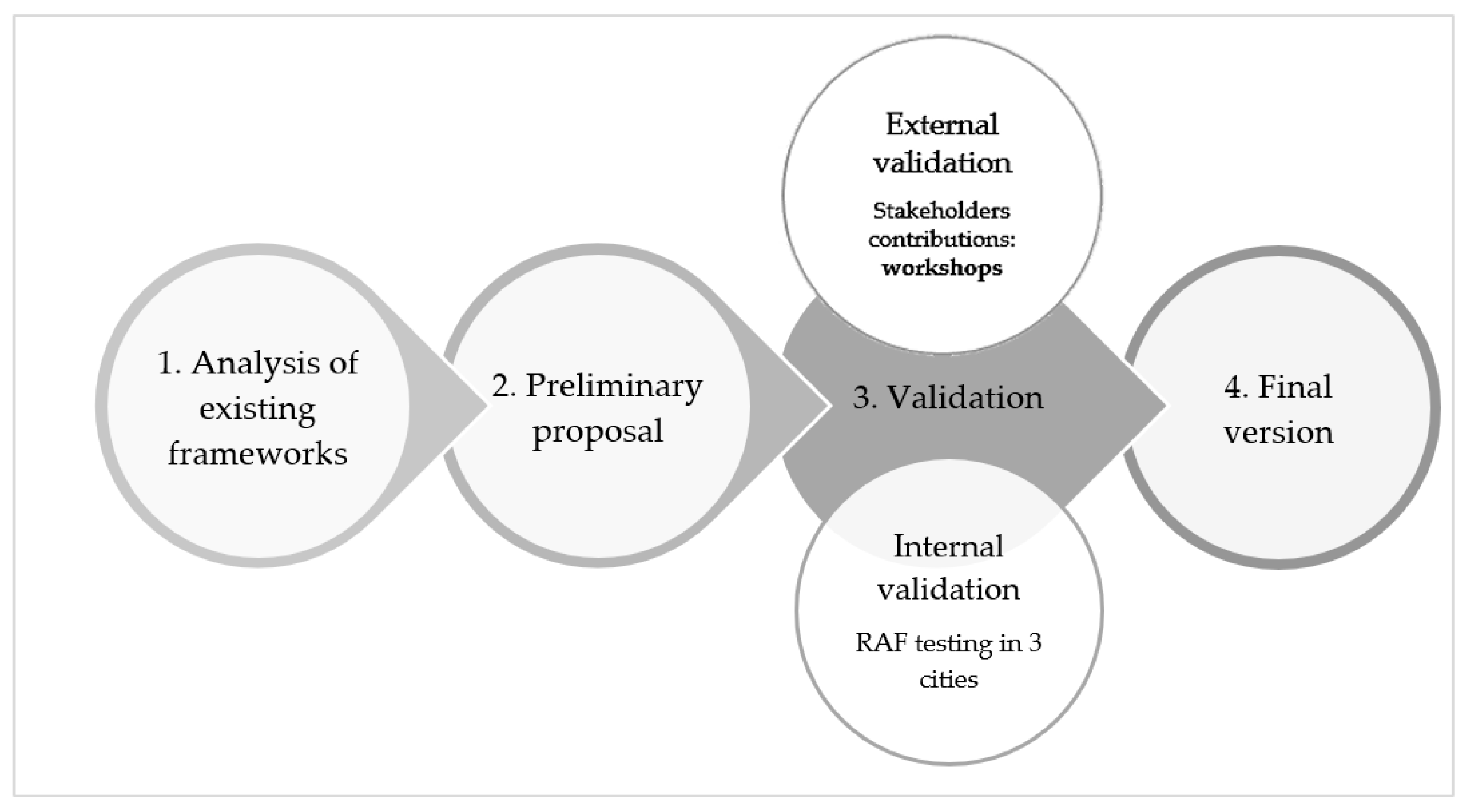
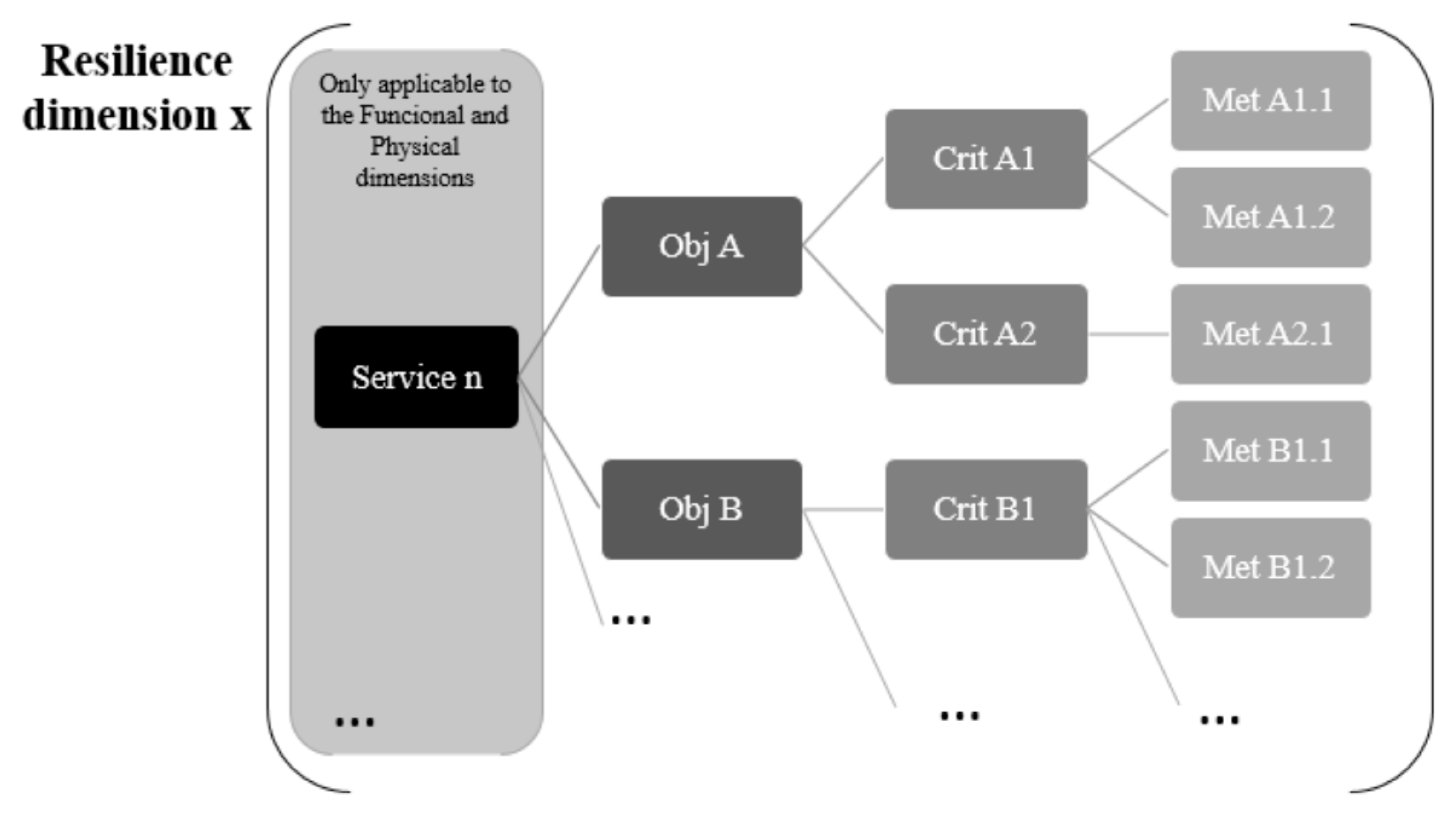
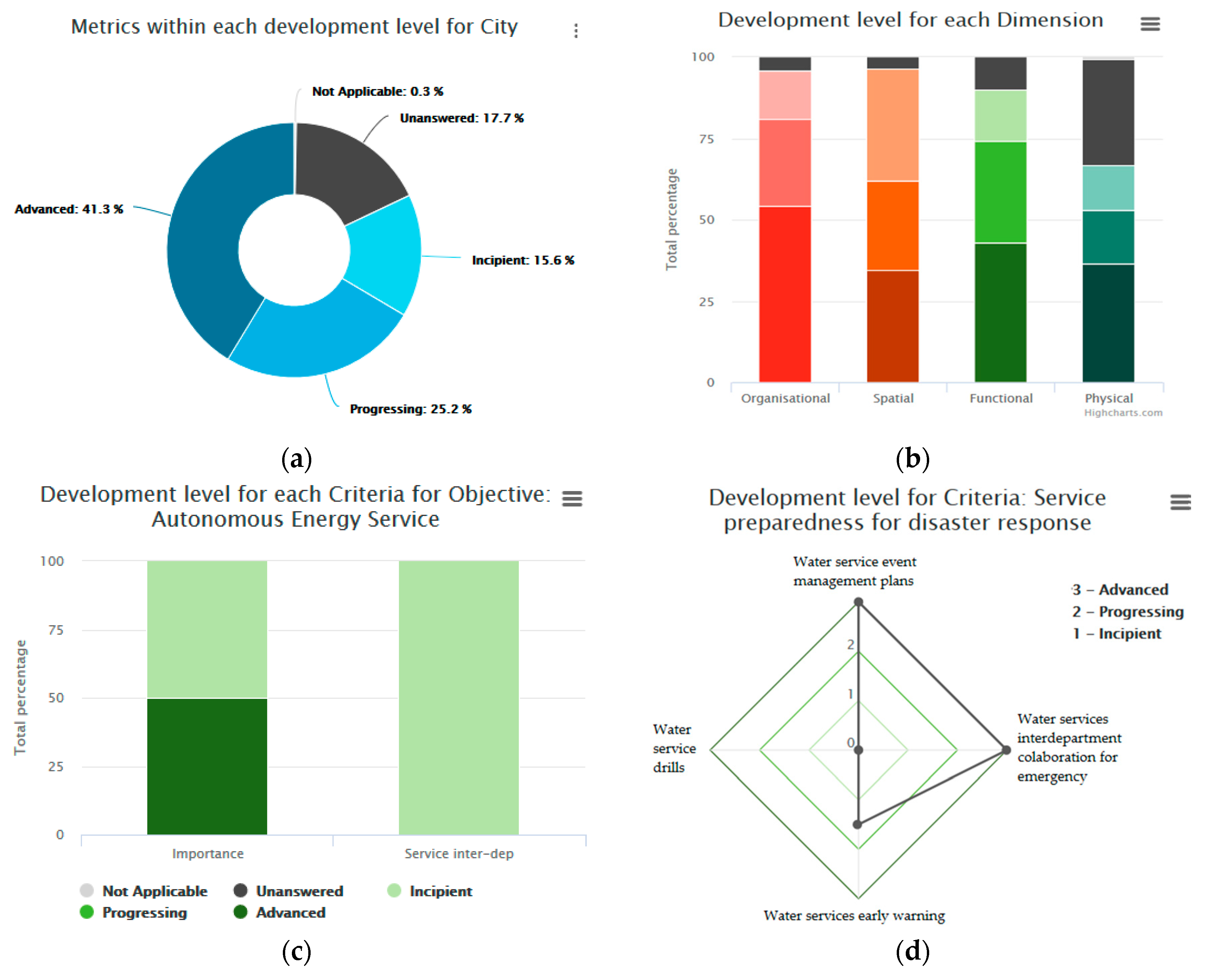
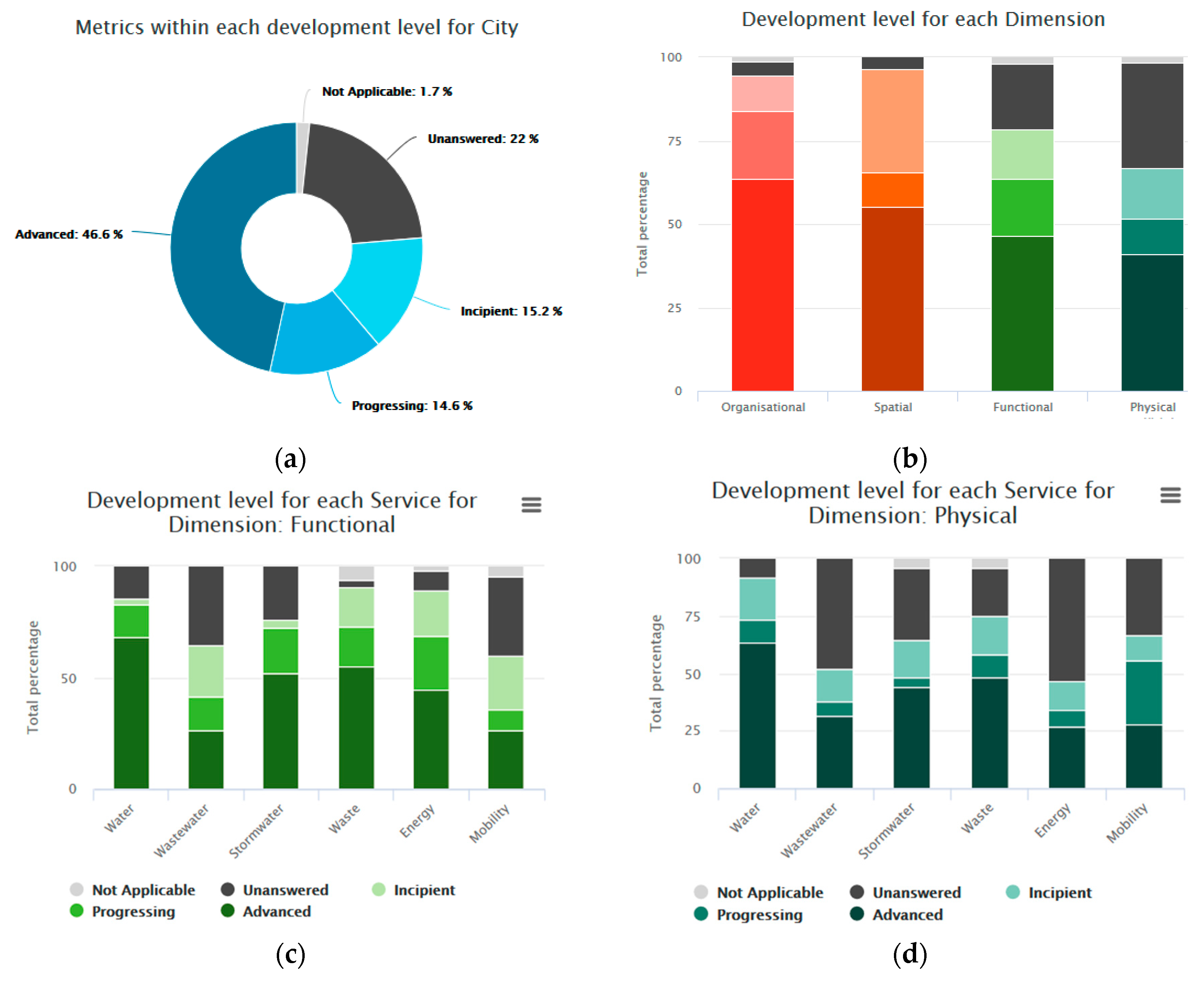
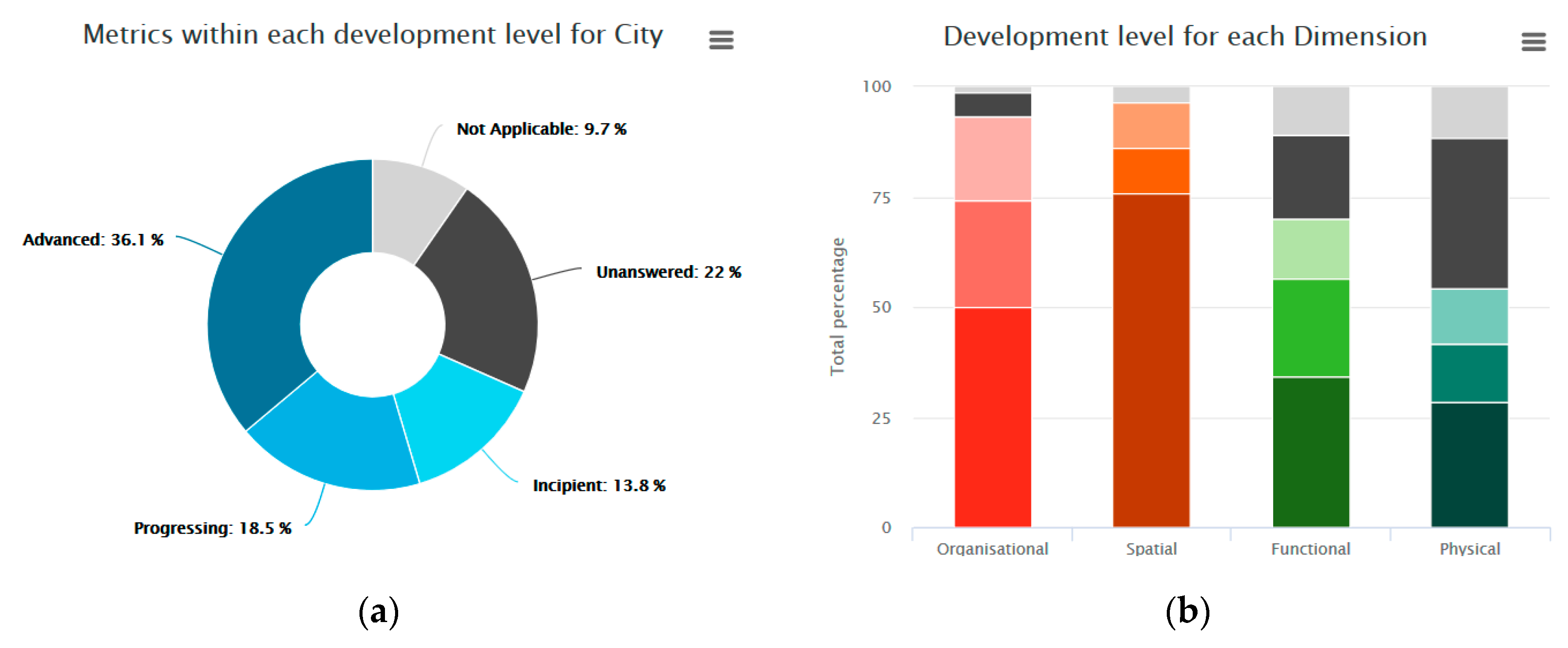
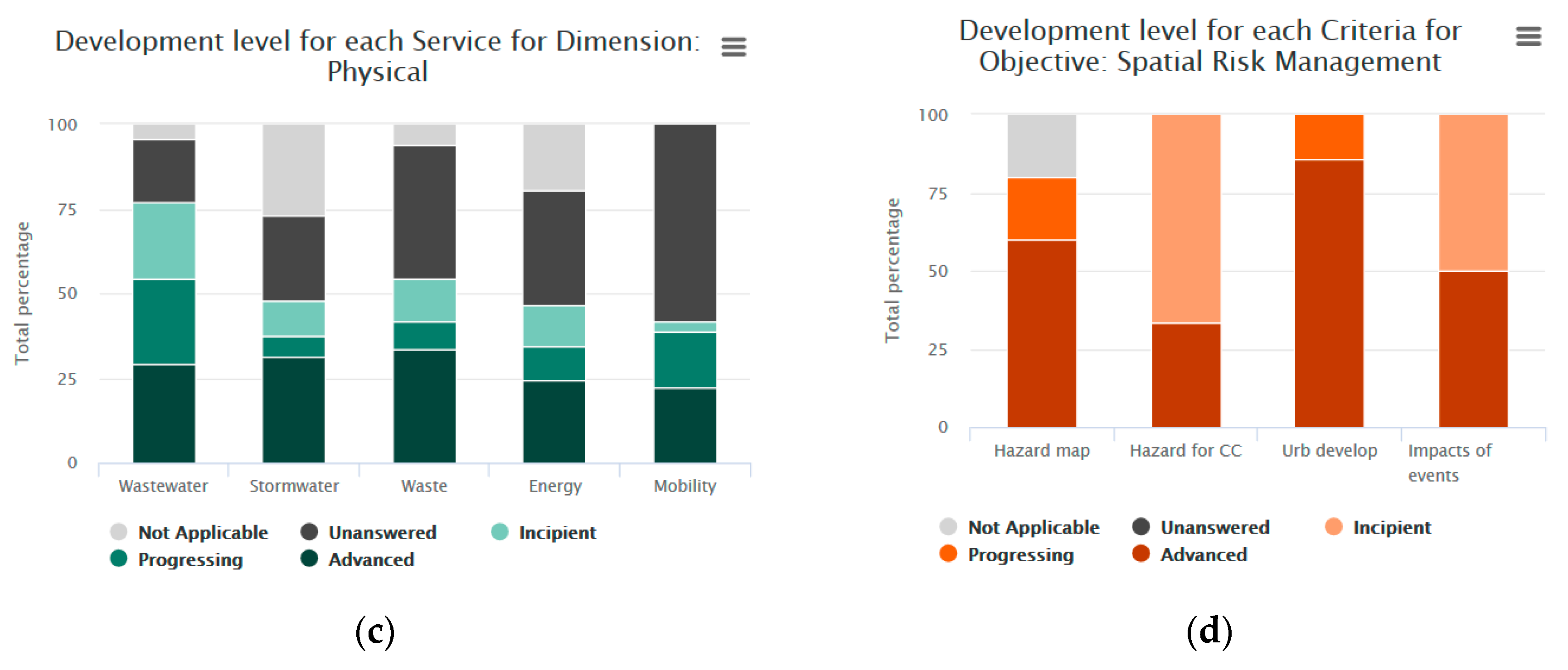
| Framework | Themes Addressed | Sectors Addressed | No. of Metrics | Reference | |||||||||||
|---|---|---|---|---|---|---|---|---|---|---|---|---|---|---|---|
| Governance | Social | Spatial | Built environment | Economy | Natural Environment | Water | Wastewater | Stormwater | Waste | Energy | Mobility | Other(s) * | |||
| EPA conceptual framework | ✓ | ✓ | ✓ | ✓ | ✓ | ✓ | ✓ | ✓ | ✓ | ✓ | ✓ | ✓ | 163 | [15] | |
| City Resilience Framework | ✓ | ✓ | ✓ | ✓ | 156 | [13] | |||||||||
| UNDRR Disaster Resilience Scorecard for cities | ✓ | ✓ | ✓ | ✓ | ✓ | ✓ | ✓ | ✓ | ✓ | ✓ | ✓ | 47 preliminaries 117 detailed | [8,9] | ||
| City Resilience Index to Sea Level Rise | ✓ | ✓ | ✓ | ✓ | ✓ | ✓ | ✓ | 13 | [18] | ||||||
| Climate Disaster Resilience Index | ✓ | ✓ | ✓ | ✓ | ✓ | ✓ | ✓ | 120 | [19] | ||||||
| Climate Disaster Resilience Index | ✓ | ✓ | ✓ | ✓ | ✓ | ✓ | ✓ | 82 | [20] | ||||||
| Climate Resilience Screening Index | ✓ | ✓ | ✓ | ✓ | ✓ | ✓ | ✓ | ✓ | ✓ | ✓ | ✓ | 117 | [16] | ||
| Flood Resilience Index | ✓ | ✓ | ✓ | ✓ | ✓ | ✓ | ✓ | ✓ | ✓ | ✓ | ✓ | 91 | [21] | ||
| Resilience Factor Index | ✓ | ✓ | ✓ | ✓ | ✓ | 17 | [22] | ||||||||
| Community disaster resilience | ✓ | ✓ | ✓ | ✓ | ✓ | ✓ | 26 | [23] | |||||||
| NIST (National Institute of Standards and Technology) Community Resilience Assess. Methodology | ✓ | ✓ | ✓ | ✓ | ✓ | ✓ | ✓ | ✓ | ✓ | ✓ | - | [24] | |||
| UKWIR (UK Water Industry Research) | ✓ | ✓ | ✓ | ✓ | 73 | [25] | |||||||||
| UN-Habitat CRPT | ✓ | ✓ | ✓ | ✓ | ✓ | ✓ | ✓ | ✓ | ✓ | ✓ | ✓ | ✓ | ✓ | 148 | [7] |
| ORGANISATIONAL | SPATIAL | ||||
| OBJECTIVE Criterion | No. total metrics | No. essential metrics | OBJECTIVE Criterion | No. total metrics | No. essential metrics |
| COLLECTIVE ENGAGEMENT AND AWARENESS | SPATIAL RISK MANAGEMENT | ||||
| Citizens and communities’ engagement | 5 | 3 | General hazard and exposure mapping | 5 | 5 |
| Citizens and communities’ awareness and training | 5 | 3 | Hazard and exposure for CC | 3 | 3 |
| LEADERSHIP AND MANAGEMENT | Resilient urban development | 7 | 4 | ||
| Government decision-making and finance | 4 | 3 | Impacts of climate-related event | 2 | 2 |
| Coordination and communication with stakeholders | 4 | 2 | PROVISION OF PROTECTIVE INFRASTRUCTURES AND ECOSYSTEMS | ||
| Resilience engaged city | 19 | 13 | Protective infrastructures and ecosystems services | 9 | 6 |
| CITY PREPAREDNESS | Dependence and autonomy regarding other services considering CC | 3 | 2 | ||
| City preparedness for disaster response | 13 | 8 | TOTAL | 29 | 22 |
| City preparedness for CC | 7 | 6 | |||
| City preparedness for recovery and build back | 7 | 5 | |||
| Availability and access to basic services | 10 | 7 | |||
| TOTAL | 74 | 50 | |||
| FUNCTIONAL | PHYSICAL | ||||
| OBJECTIVE Criterion | No. total metrics | No. essential metrics | OBJECTIVE Criterion | No. total metrics | No. essential metrics |
| SERVICE PLANNING AND RISK MANAGEMENT | SAFE INFRASTRUCTURE | ||||
| Strategic planning | 5 | 5 | Infrastructure assets criticality and protection | 5 | 5 |
| Resilience engaged service | 5–6 | 4–5 | Infrastructure assets robustness | 10–14 | 4–6 |
| Risk management | 7–12 | 2–7 | AUTONOMOUS AND FLEXIBLE INFRASTRUCTURE | ||
| Reliable service | 6–11 | 1–5 | Infrastructure assets importance to and dependency on other services | 3–4 | 3 |
| Flexible service | 4–6 | 1–4 | Infrastructure assets autonomy | 1–6 | 0–4 |
| AUTONOMOUS SERVICE | Infrastructure assets redundancy | 1–3 | 0–3 | ||
| Service importance to the city | 2 | 1 | INFRASTRUCTURE PREPAREDNESS | ||
| Service inter-dependency with other services considering CC | 2 | 0 | Contribution to city resilience | 3–4 | 2–3 |
| SERVICE PREPAREDNESS | Infrastructure assets exposure to CC | 3 | 0–3 | ||
| Service preparedness for disaster response | 0–4 | 0–4 | Preparedness for CC | 2 | 1 |
| Service preparedness for CC | 6–8 | 4 | Preparedness for recovery and build back | 7–9 | 2–4 |
| Service preparedness for recovery and build back | 0–15 | 0–8 | TOTAL | 35–50 | 17–32 |
| TOTAL | 37–71 | 18–43 | |||
| DIMENSION: SPATIAL objective: spatial risk management | ||
|---|---|---|
| Criterion: Impacts of Climate-Related Event | Unit | |
| Metric: S16 Definition Dimension Importance Metric type | Human loss in the last events Human impact of the last climate-related event, with similar or harsher climate variables than the most probable scenario Spatial Essential Open value | (-) |
| Please answer with an estimated figure [inhab.], disaggregating according to (a) number of casualties, (b) missing persons and (c) people affected—including severe injuries and displaced. This metric allows to answer with a value. Development level: assessment rule
| Develop. Level 3 if a, b and c = 0 2 if a and b = 0 and c ≤ 50 1 if a = 0, b ≤ 5 and c ≤ 50 0 if any other answer | |
| Metric: S17 Definition Dimension Importance Metric type | Damages in urban footprint in the last events Impact on urban footprint of the last climate-related event, with similar or harsher climate variables than the most probable scenario Spatial Essential Single choice | (%) |
| Consider urban footprint as a spatial extent of urbanised areas on a regional scale. Development level: assessment rule
| Develop. level 3 2 1 0 | |
© 2020 by the authors. Licensee MDPI, Basel, Switzerland. This article is an open access article distributed under the terms and conditions of the Creative Commons Attribution (CC BY) license (http://creativecommons.org/licenses/by/4.0/).
Share and Cite
Cardoso, M.A.; Brito, R.S.; Pereira, C.; Gonzalez, A.; Stevens, J.; Telhado, M.J. RAF Resilience Assessment Framework—A Tool to Support Cities’ Action Planning. Sustainability 2020, 12, 2349. https://doi.org/10.3390/su12062349
Cardoso MA, Brito RS, Pereira C, Gonzalez A, Stevens J, Telhado MJ. RAF Resilience Assessment Framework—A Tool to Support Cities’ Action Planning. Sustainability. 2020; 12(6):2349. https://doi.org/10.3390/su12062349
Chicago/Turabian StyleCardoso, Maria Adriana, Rita Salgado Brito, Cristina Pereira, Andoni Gonzalez, John Stevens, and Maria João Telhado. 2020. "RAF Resilience Assessment Framework—A Tool to Support Cities’ Action Planning" Sustainability 12, no. 6: 2349. https://doi.org/10.3390/su12062349
APA StyleCardoso, M. A., Brito, R. S., Pereira, C., Gonzalez, A., Stevens, J., & Telhado, M. J. (2020). RAF Resilience Assessment Framework—A Tool to Support Cities’ Action Planning. Sustainability, 12(6), 2349. https://doi.org/10.3390/su12062349

