Article

Lost Material Stock in Buildings due to Sea Level Rise from Global Warming: The Case of Fiji Islands


1
Material Flow Management and Resource Economy, Institute IWAR, Technische Universität Darmstadt, Franziska-Braun-Strasse 7, 64287 Darmstadt, Germany
2
Graduate School of Environmental Studies, Nagoya University, Furo-cho, Chikusa-ku, Nagoya 464-8601, Japan
3
School of Forestry & Environmental Studies, Yale University, 195 Prospect Street, New Haven, CT 06511, USA
*
Author to whom correspondence should be addressed.
Sustainability 2020, 12(3), 834; https://doi.org/10.3390/su12030834
Submission received: 6 December 2019 / Revised: 16 January 2020 / Accepted: 19 January 2020 / Published: 22 January 2020
(This article belongs to the Special Issue The Metabolism of Islands)

Abstract

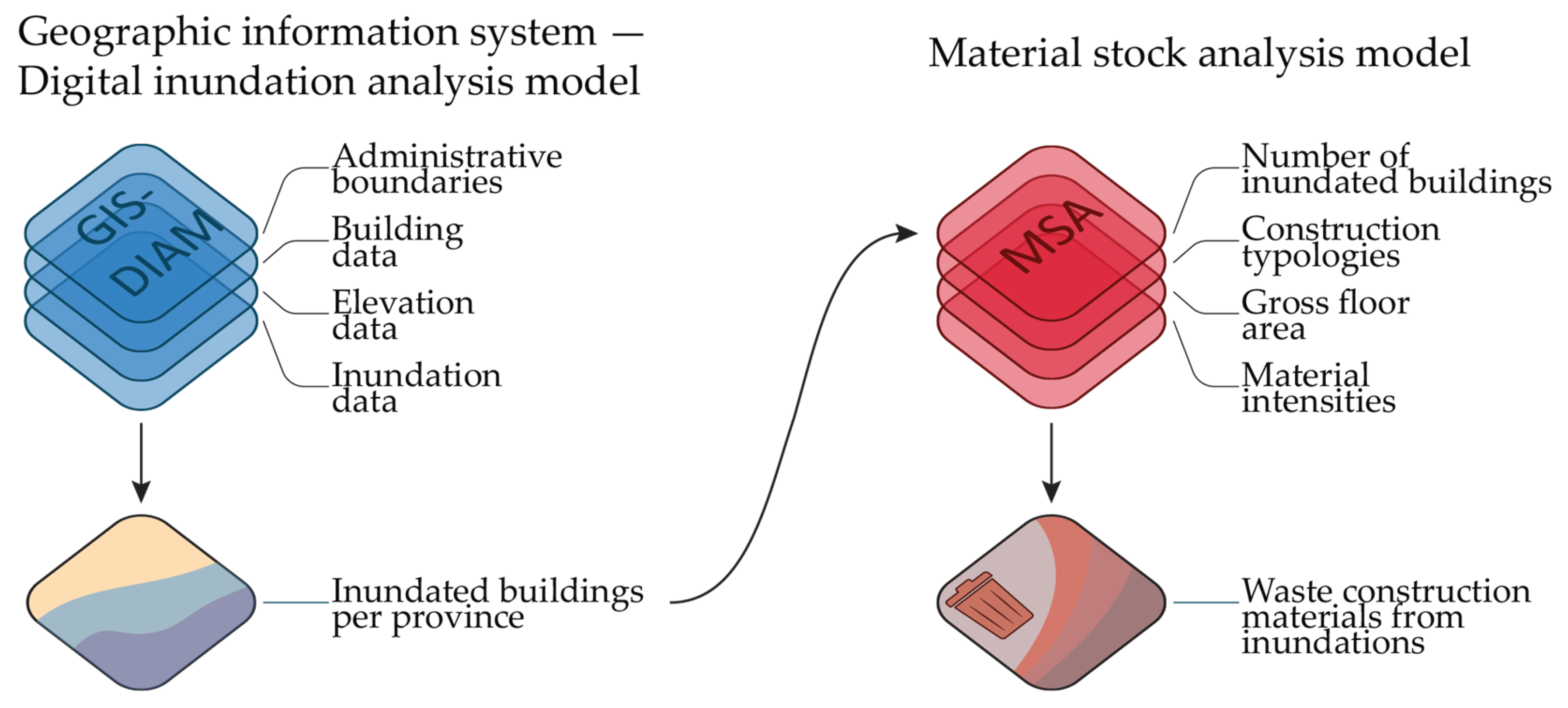
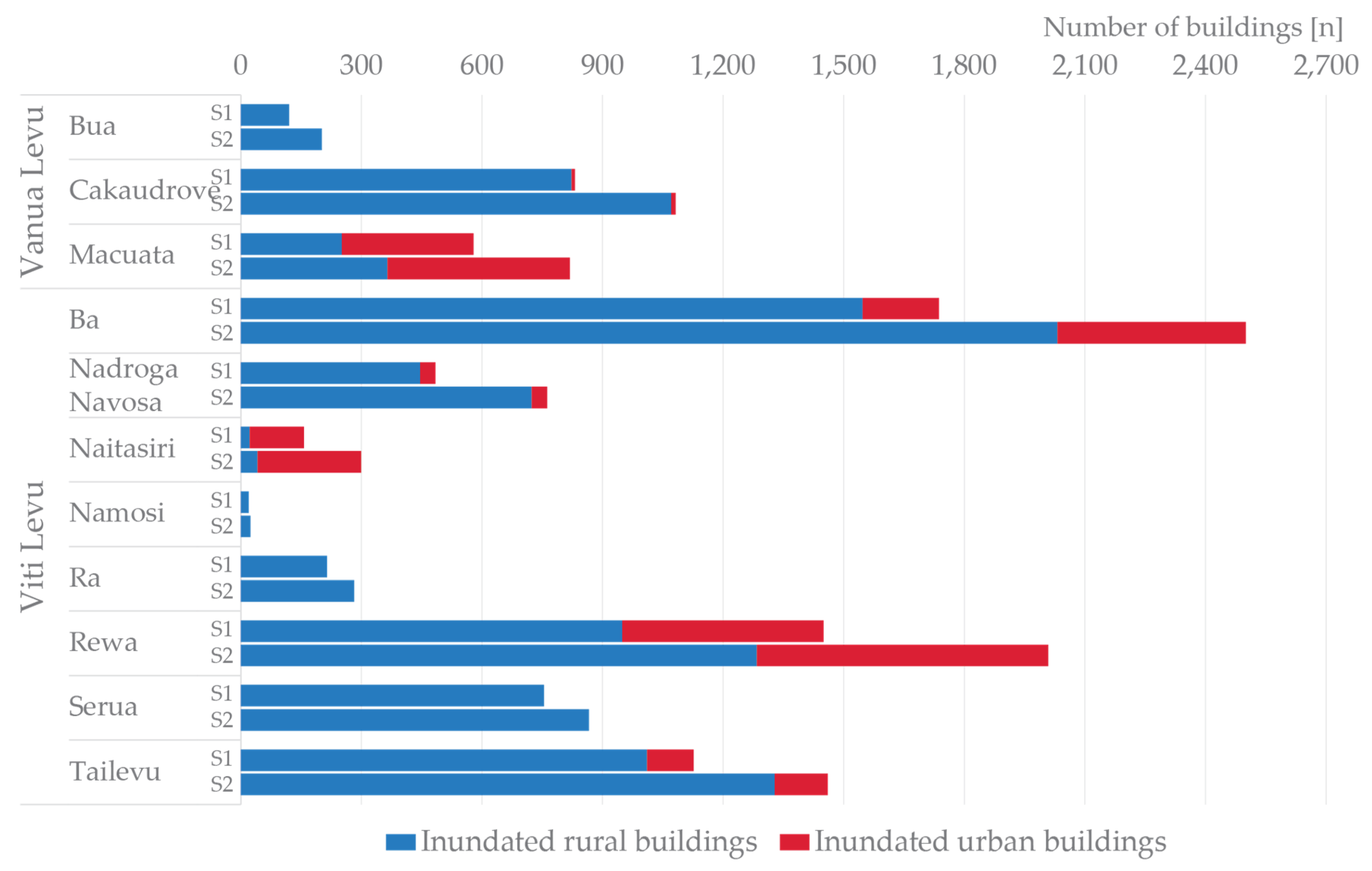
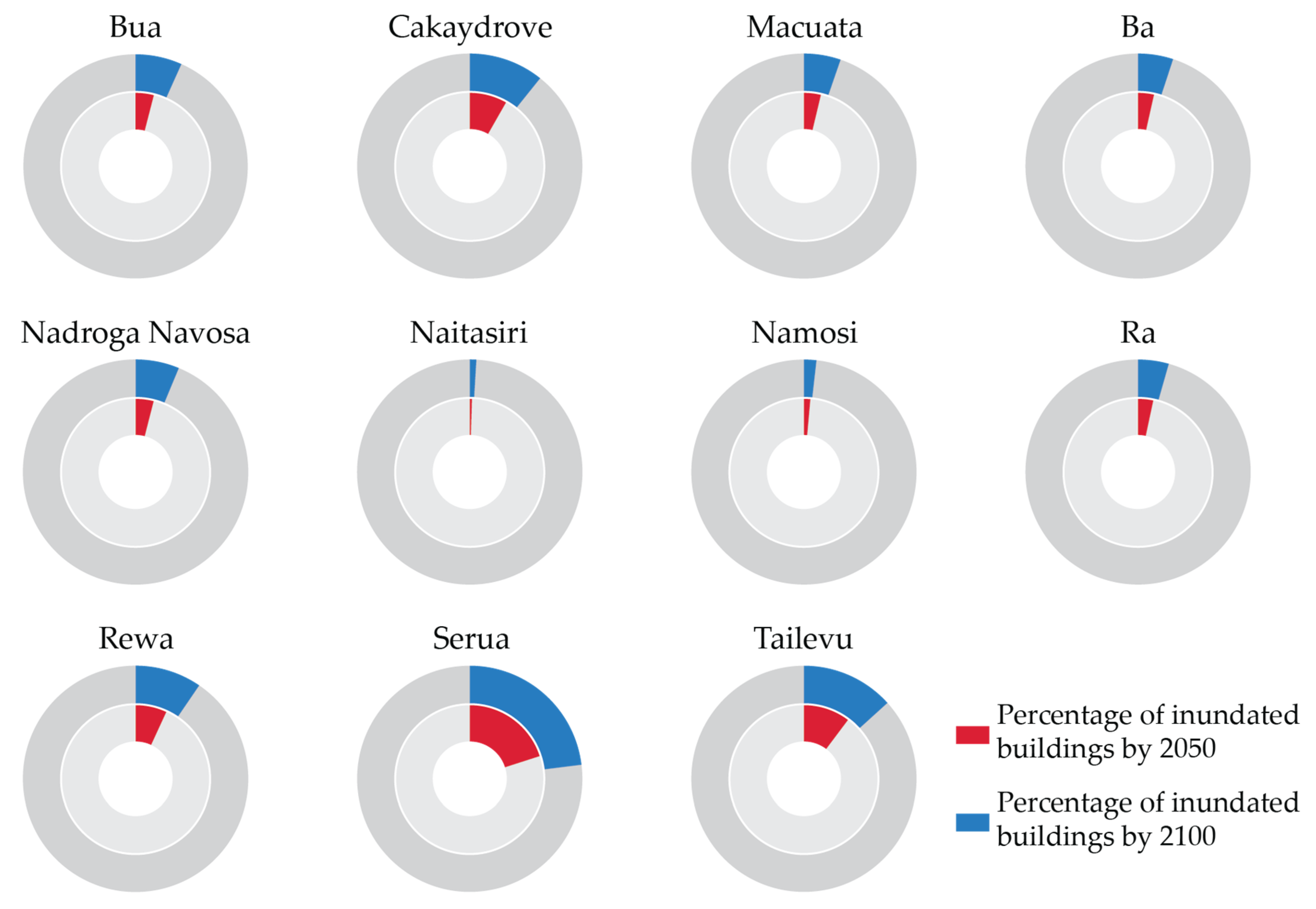
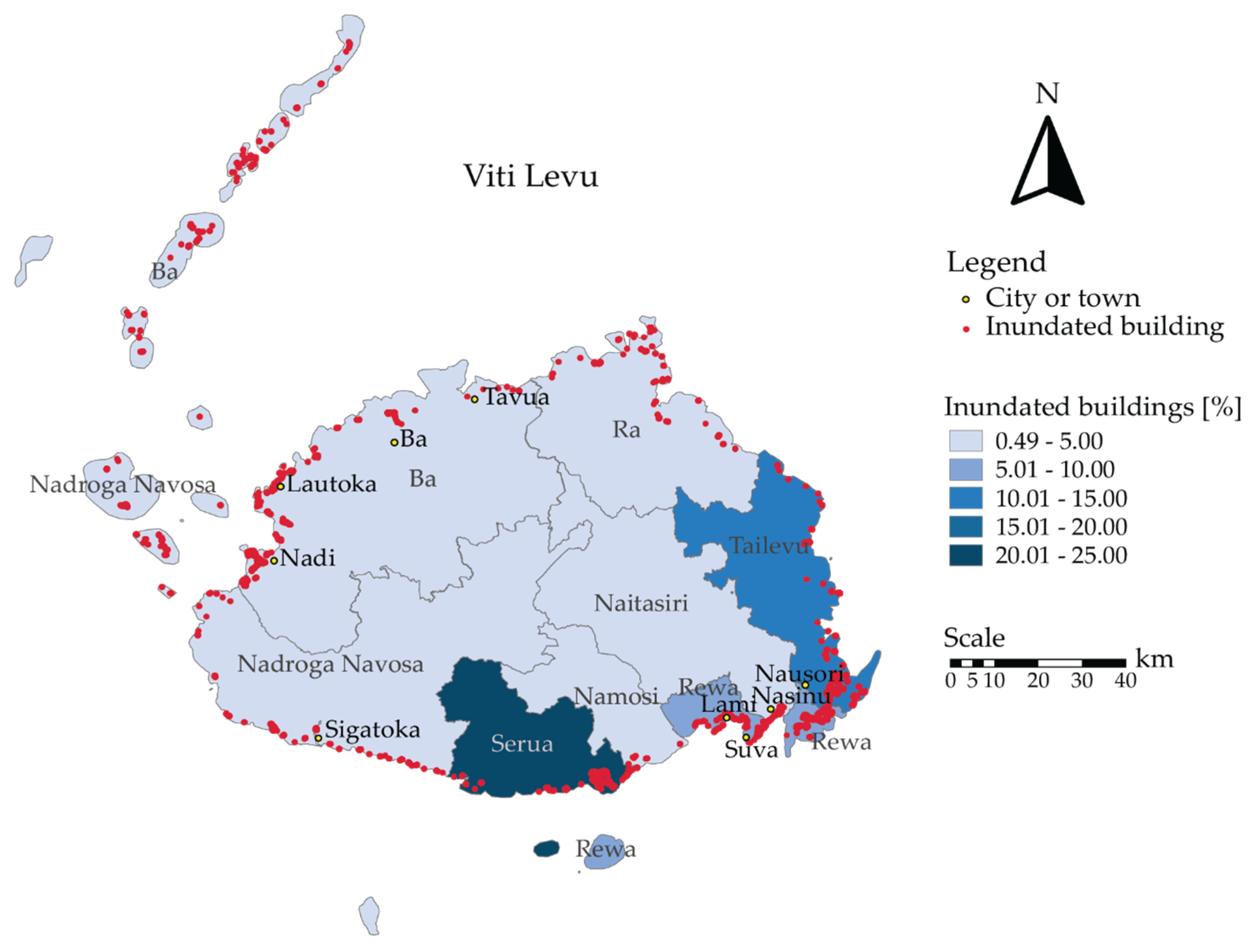
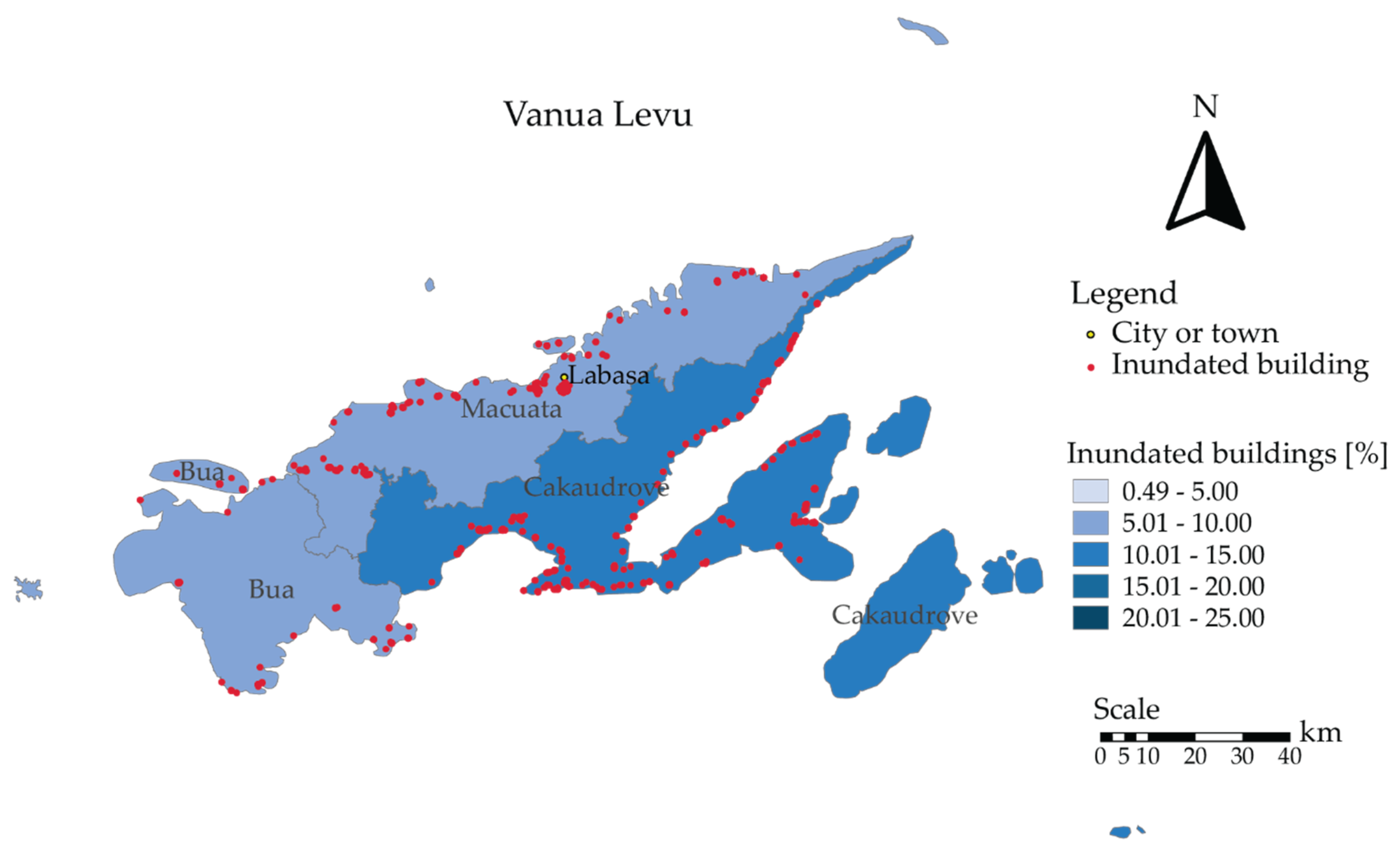
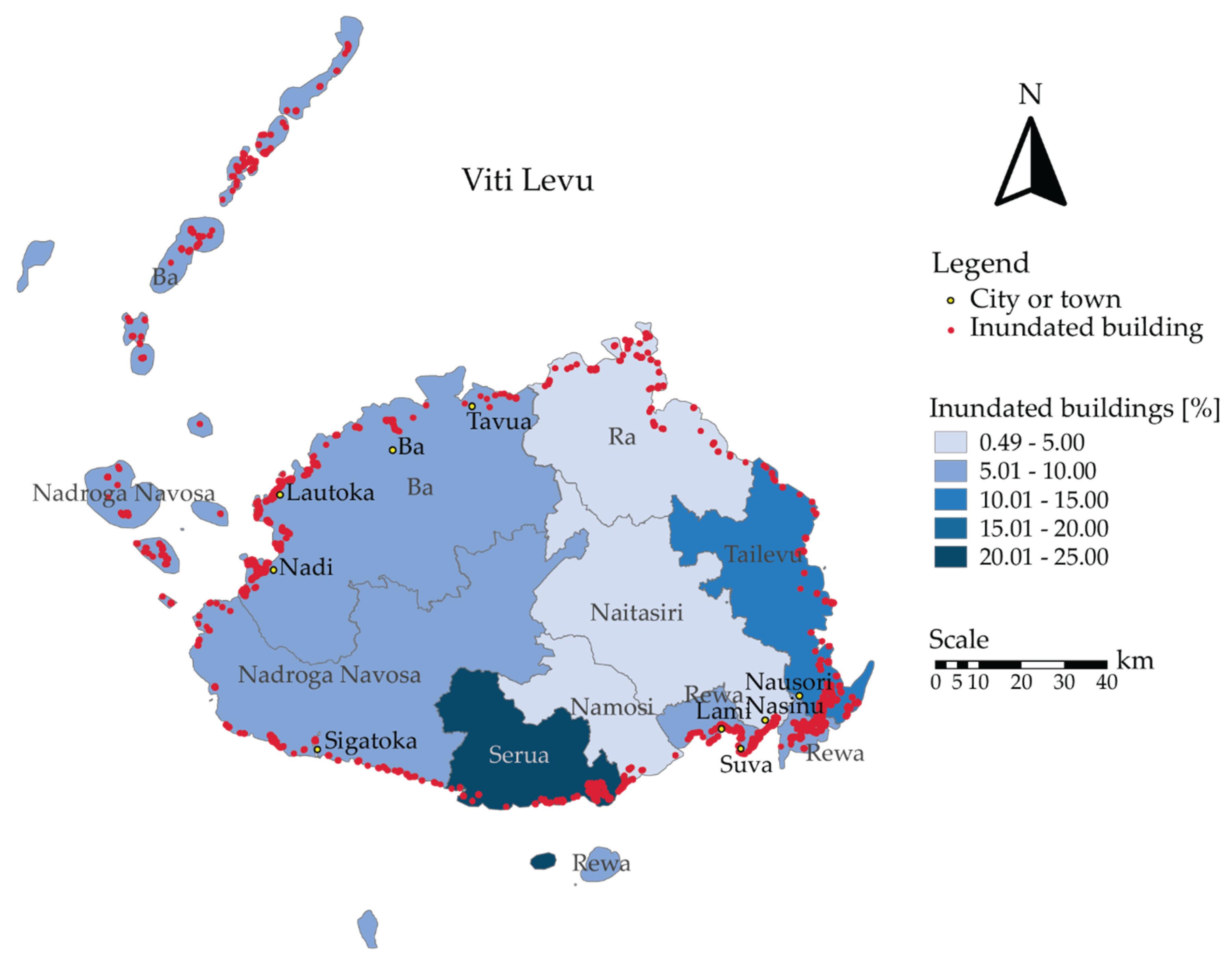
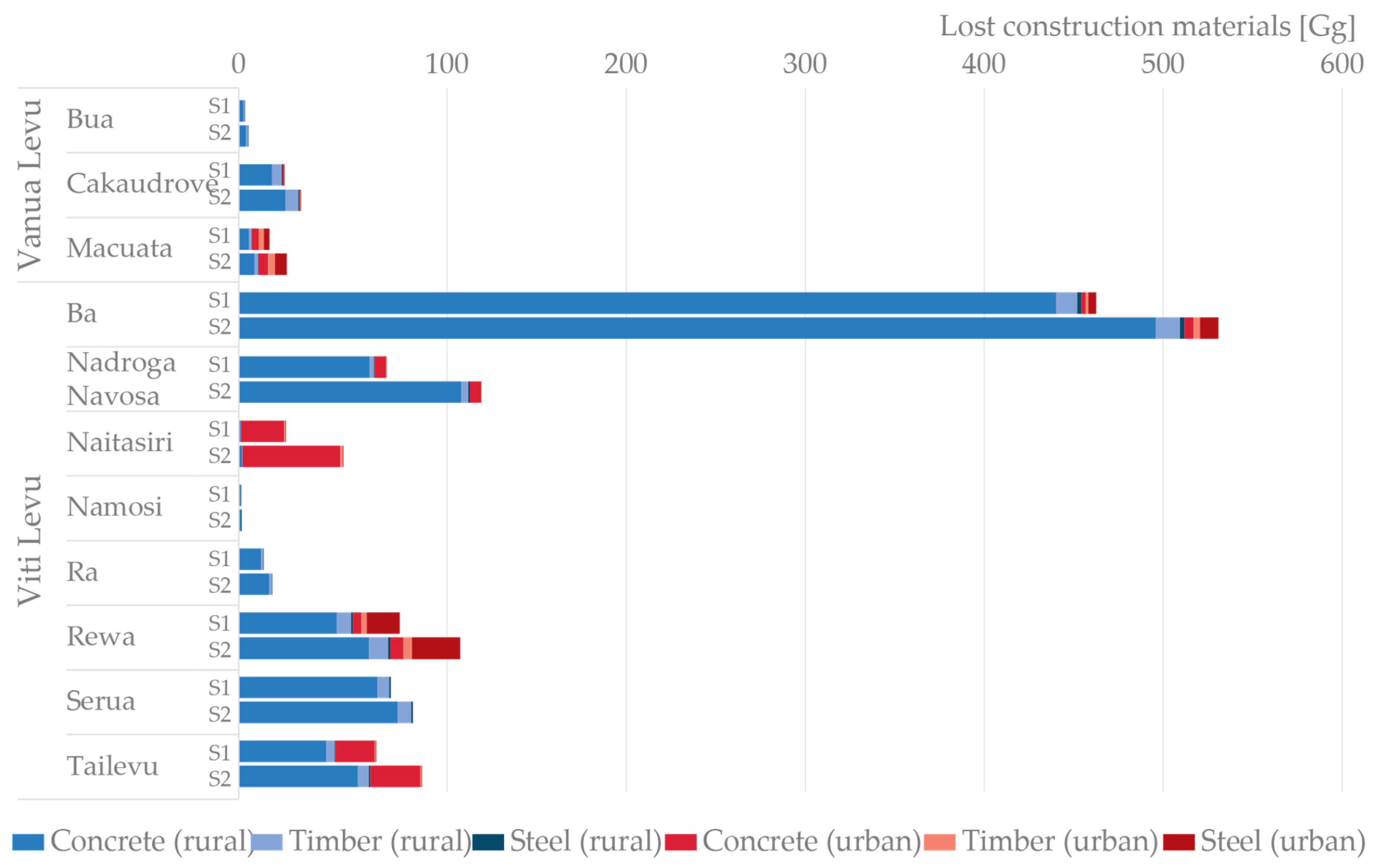
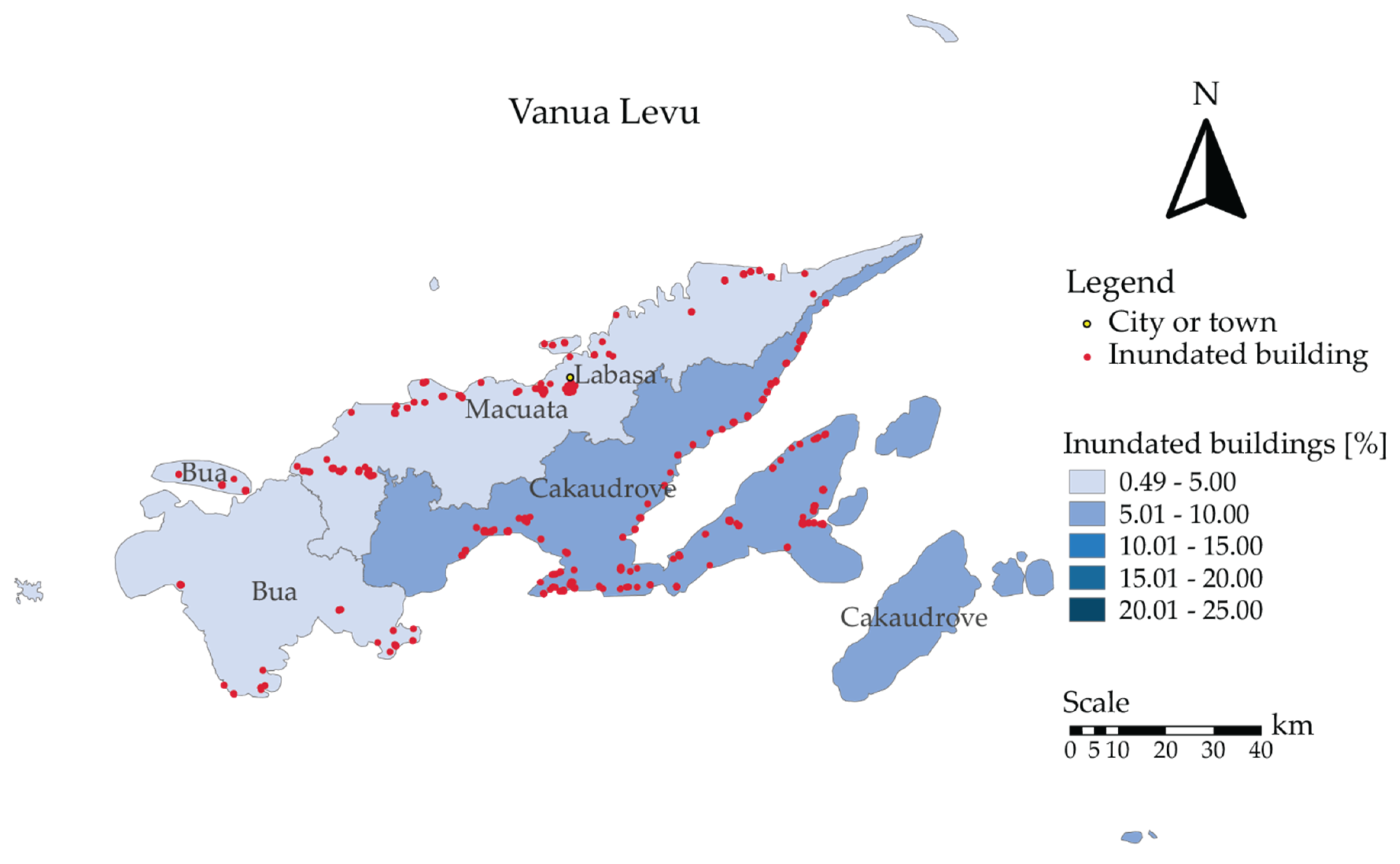
This study developed a methodology to estimate the amount of construction material in coastal buildings which are lost due to climate change-induced sea level rise. The Republic of Fiji was chosen as a case study; sea level rise is based on predictions by the Intergovernmental Panel on Climate Change for the years 2050 and 2100. This study combines the concept of a geographic information system based digital inundation analysis with the concept of a material stock analysis. The findings show that about 4.5% of all existing buildings on Fiji will be inundated by 2050 because of an expected global sea level rise of 0.22 m (scenario 1) and 6.2% by 2100 for a sea level rise of 0.63 m (scenario 2). The number of buildings inundated by 2050 is equivalent to 40% of the average number of new constructed buildings in Fiji Islands in a single year. Overall, the amount of materials present in buildings which will be inundated by 2050 is 900,000 metric tons (815,650 metric tons of concrete, 52,100 metric tons of timber, and 31,680 metric tons of steel). By 2100, this amount is expected to grow to 1,151,000 metric tons (1,130,160 metric tons of concrete, 69,760 metric tons of timber, and 51,320 metric tons of steel). The results shall contribute in enhancing urban planning, climate change adaptation strategies, and the estimation of future demolition flows in small island developing states.
Keywords: island metabolism; material stock analysis; demolition of buildings; GIS; climate change; global warming island metabolism; material stock analysis; demolition of buildings; GIS; climate change; global warming