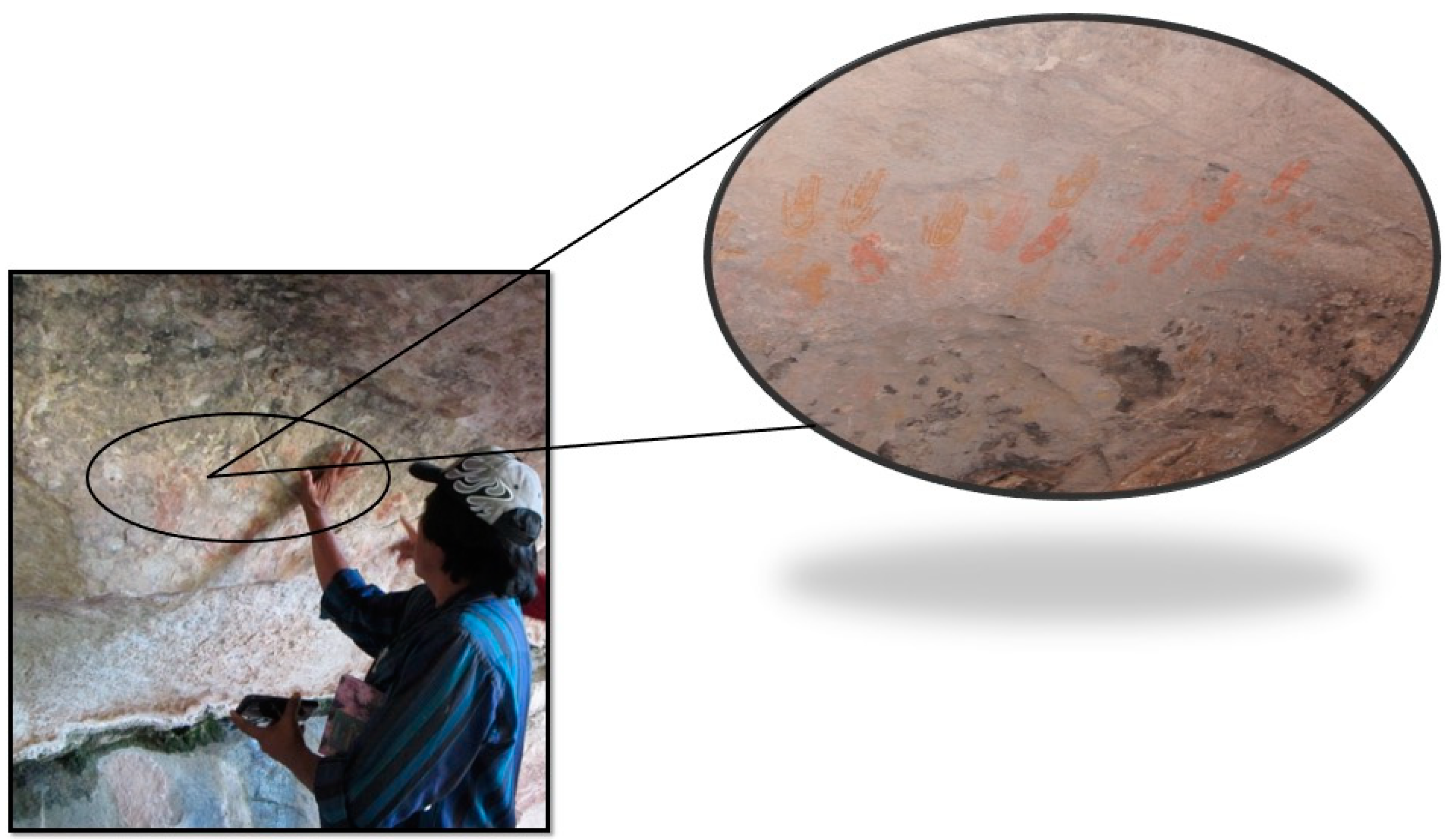
Sustainable Heritage Tourism: Native American Preservation Recommendations at Arches, Canyonlands, and Hovenweep National Parks




Abstract
1. Introduction
2. Operationalizing Concepts
3. Background
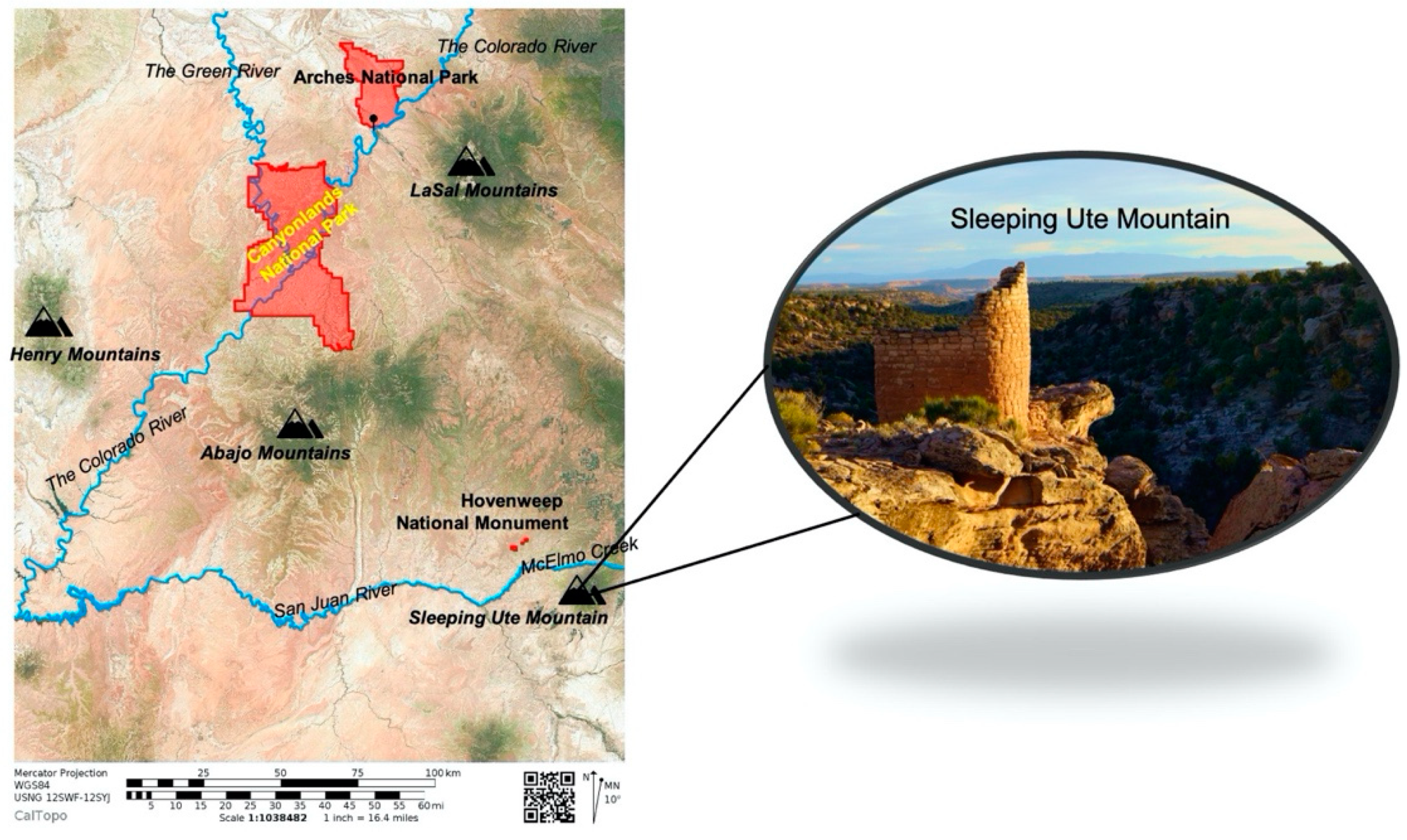
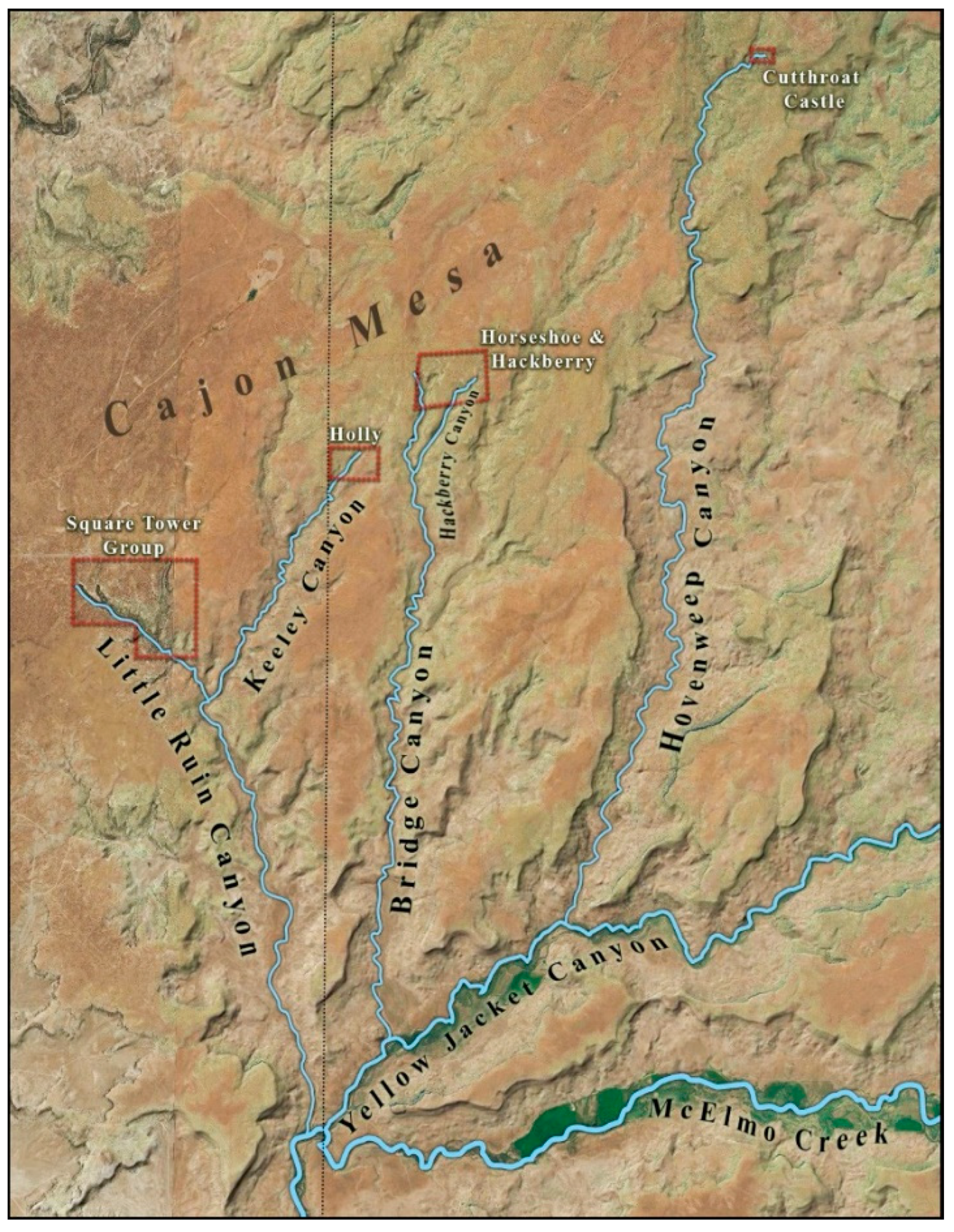
Study Area
4. Methodology
- Each tribal representative is afforded the right to a private interview. No text or tape is released without the full consent of the tribal representative. Text and tapes are returned to the tribal representative at their request.
- Ethnographers extract from the private interview pertinent site interpretations and evaluations of impacts and combine these into a composite text, which can have minority opinions.
- Ethnographers send to the tribal representatives the composite text that builds on the private individual interviews but reflect some ethnographic synthesis. This text generally does not involve references that could identify the representatives who contributed to the text but being quoted is an option. Tribal representatives have the right to add, subtract, and correct the composite text.
- Tribal government reviews evaluate, based on any other criteria, and approve or disapprove the composite text. Tribes can elect to identify and recommend selected sites as Traditional Cultural Properties (or eligible for designation as Traditional Cultural Properties) and Sacred Cultural Landscapes. At this point the entity funding the research will receive the text. Once the tribes approve the text, the content cannot be altered and will be accepted as is by the NPS.
5. Findings
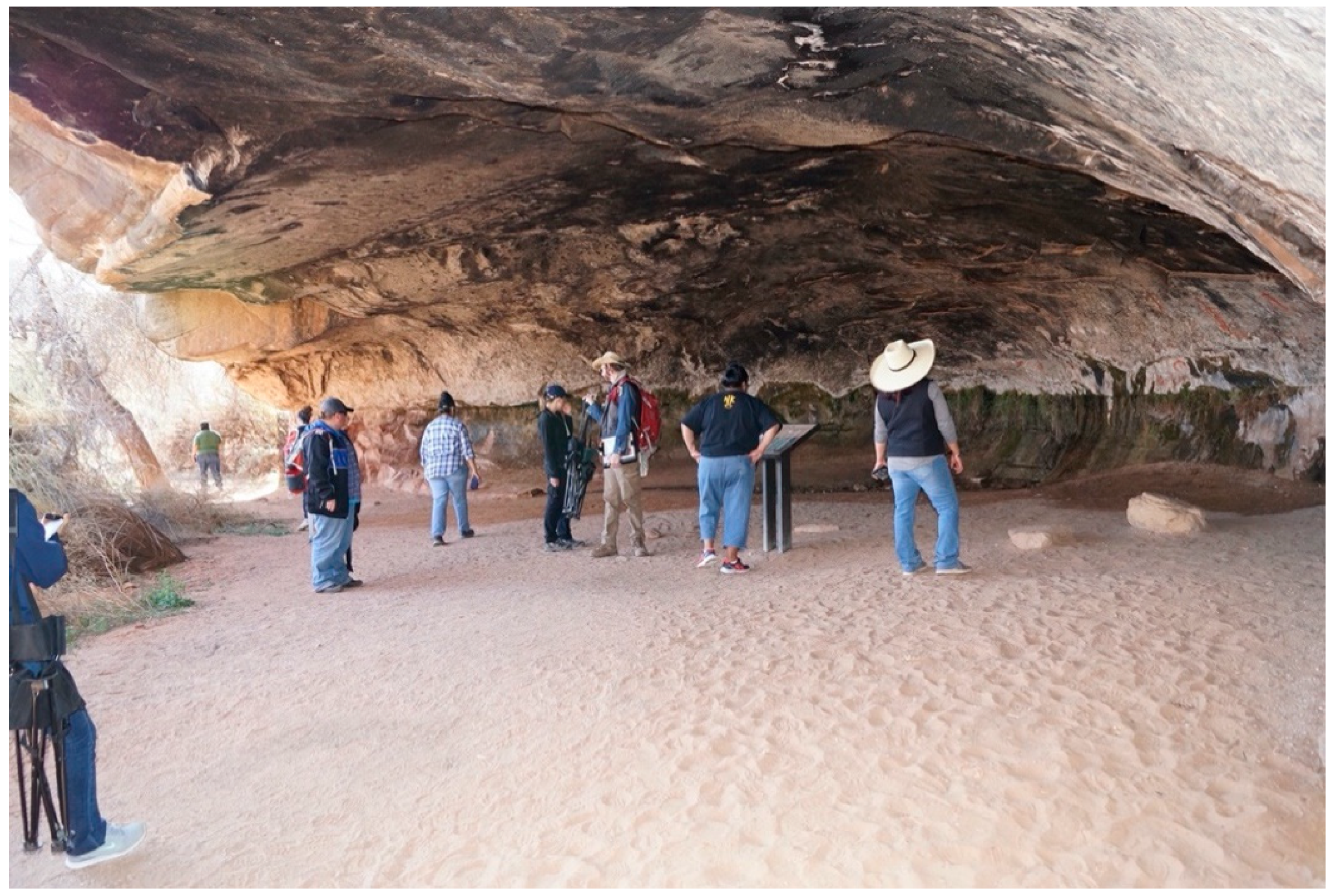
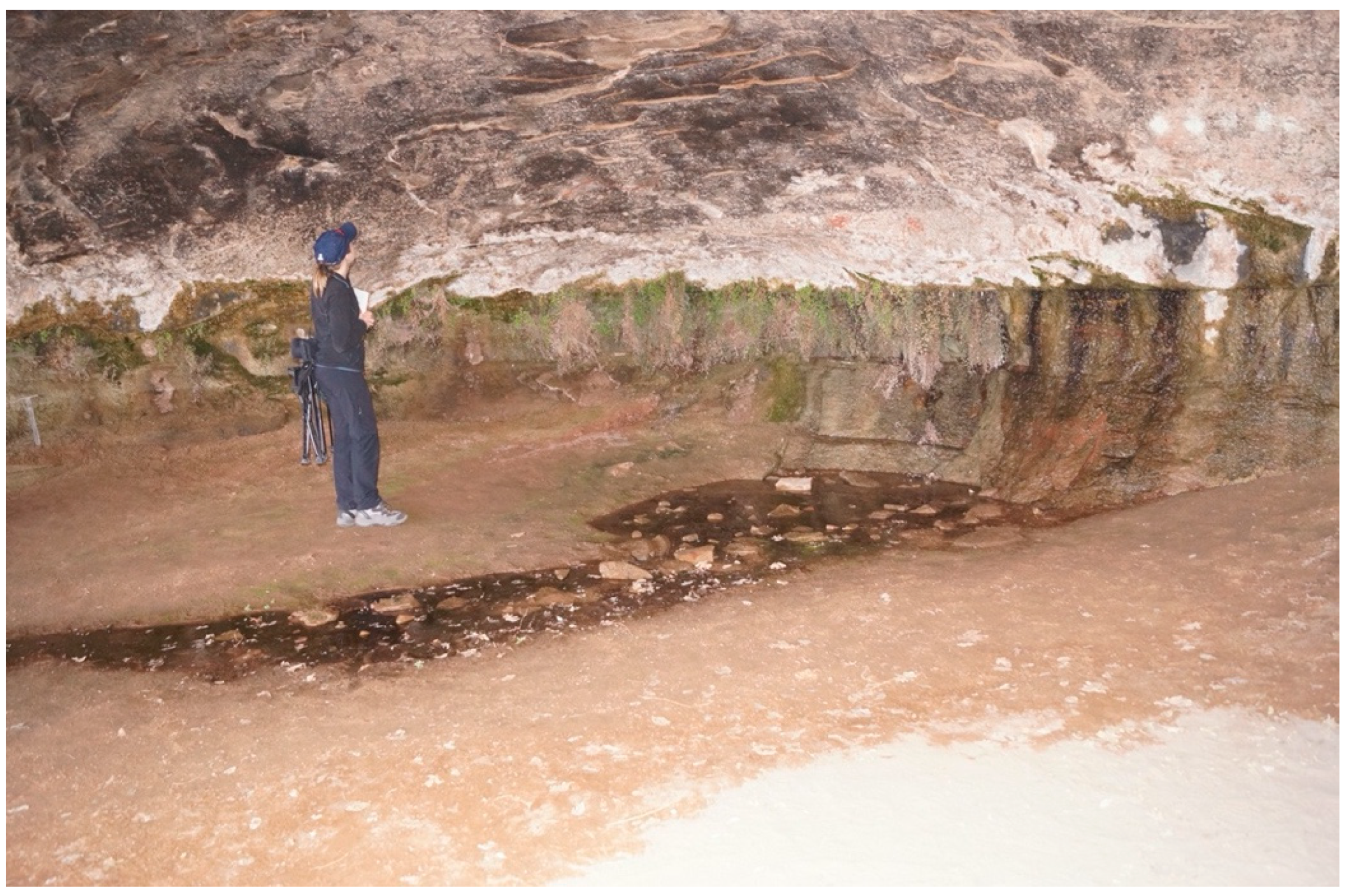
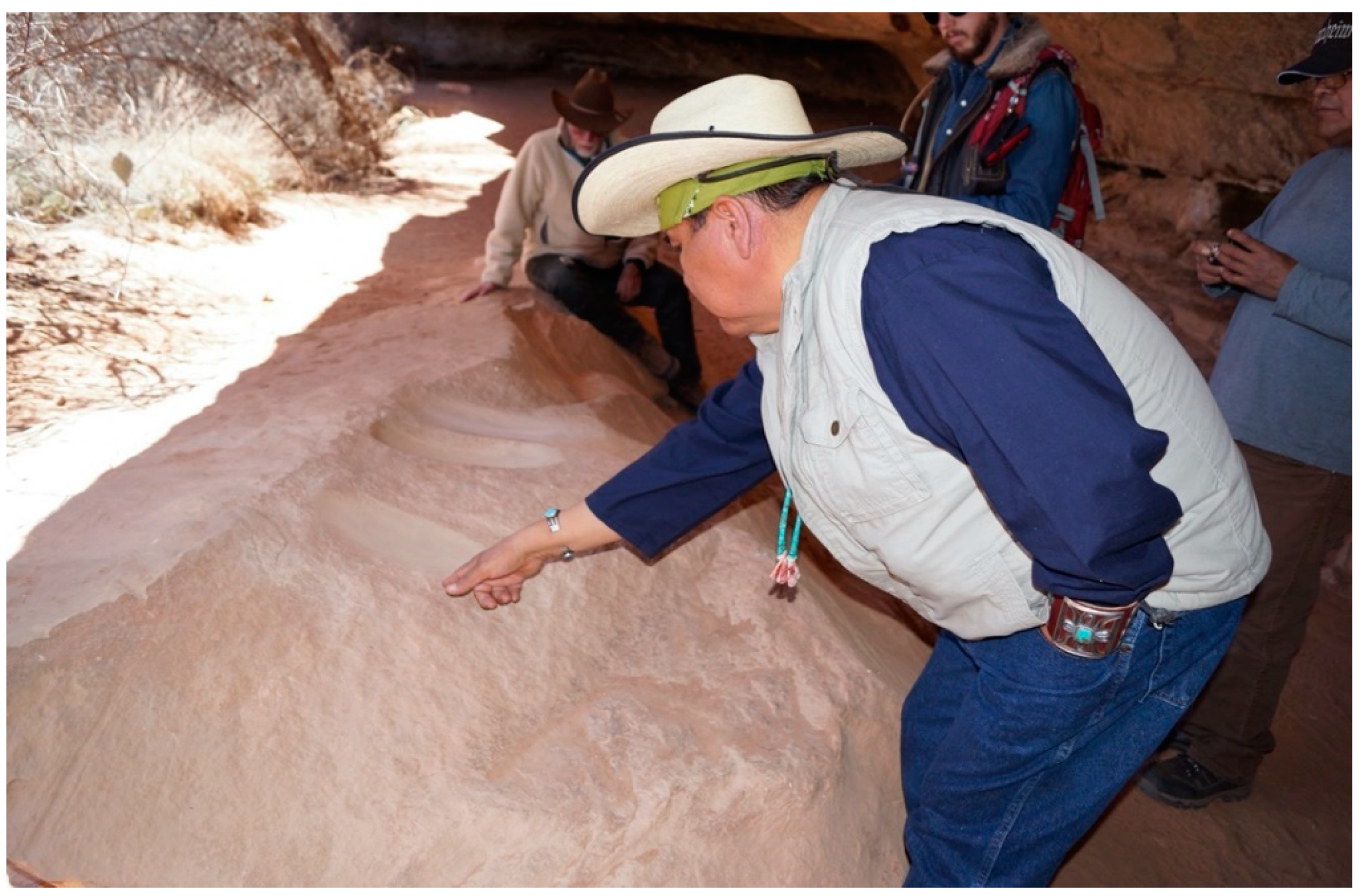
6. Case One: Meaning of a Spring
This was special. The water came from underground, filtered maybe through the rocks but it came out. It is special because of this curing ability, the pureness of the water, they were coming here just for that purpose.
Oh, there is someone here. It is not empty. There is always a presence. We do not mean to intrude; we are here today looking around and giving acknowledgement of your being there and being present.
Recommendations
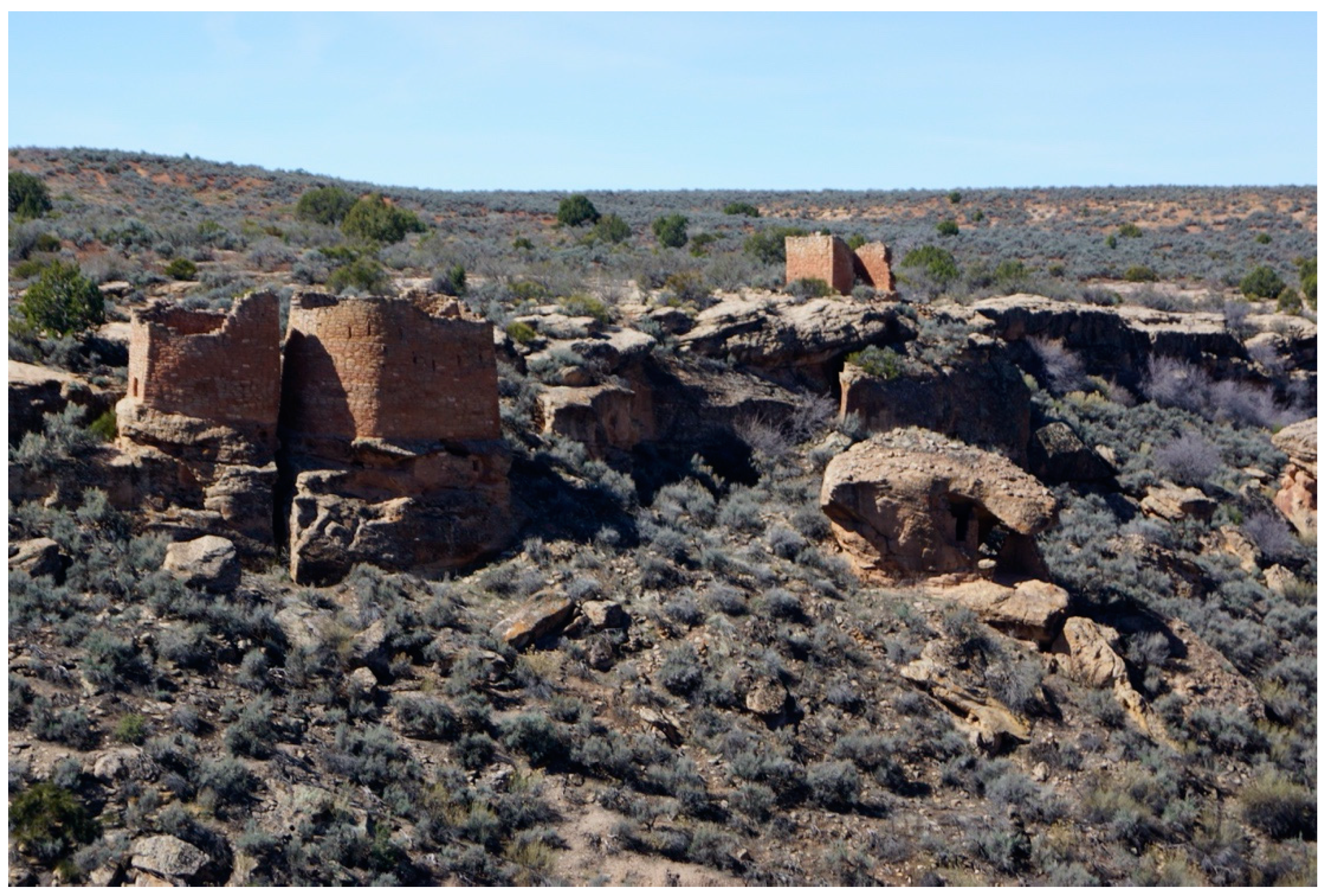
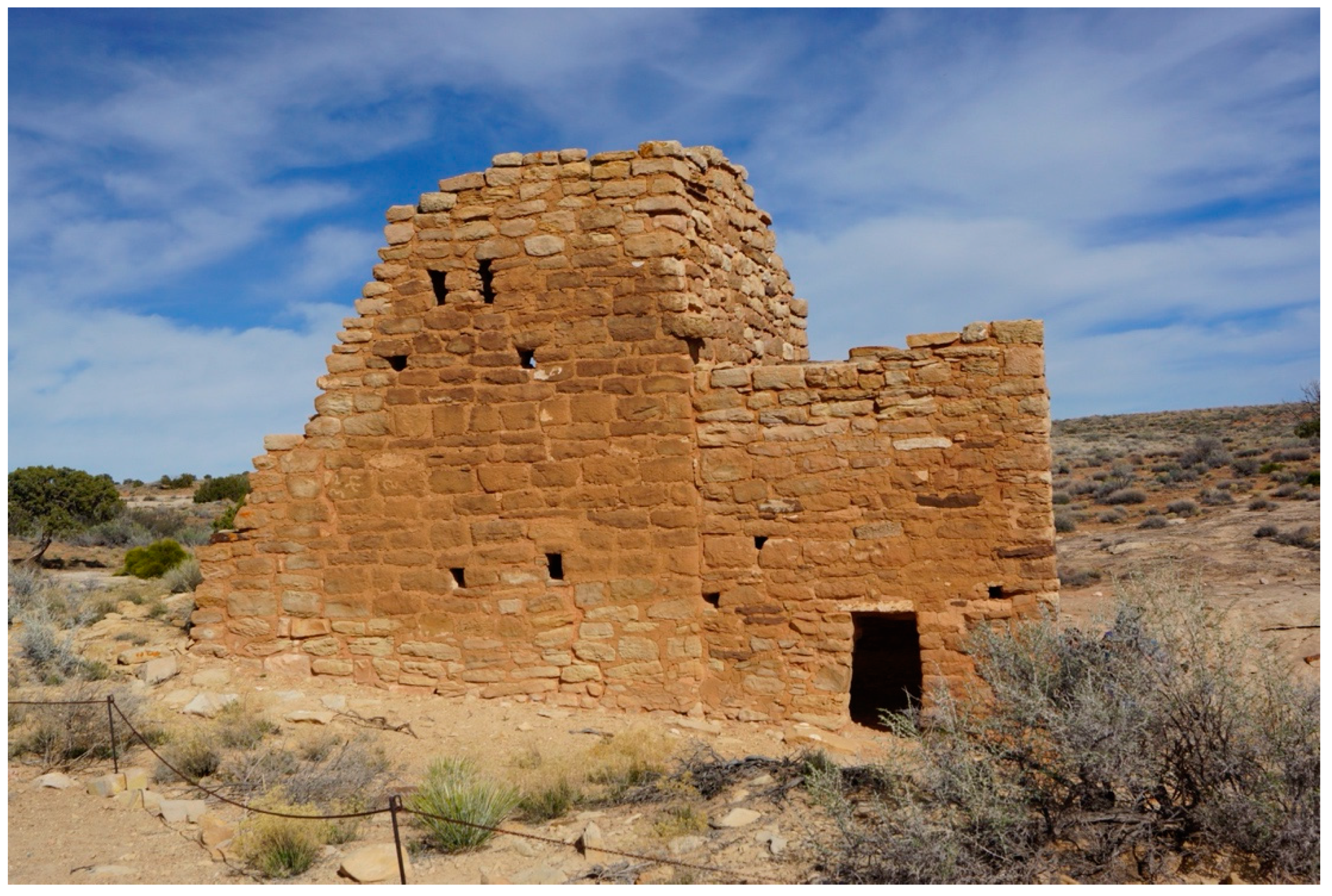
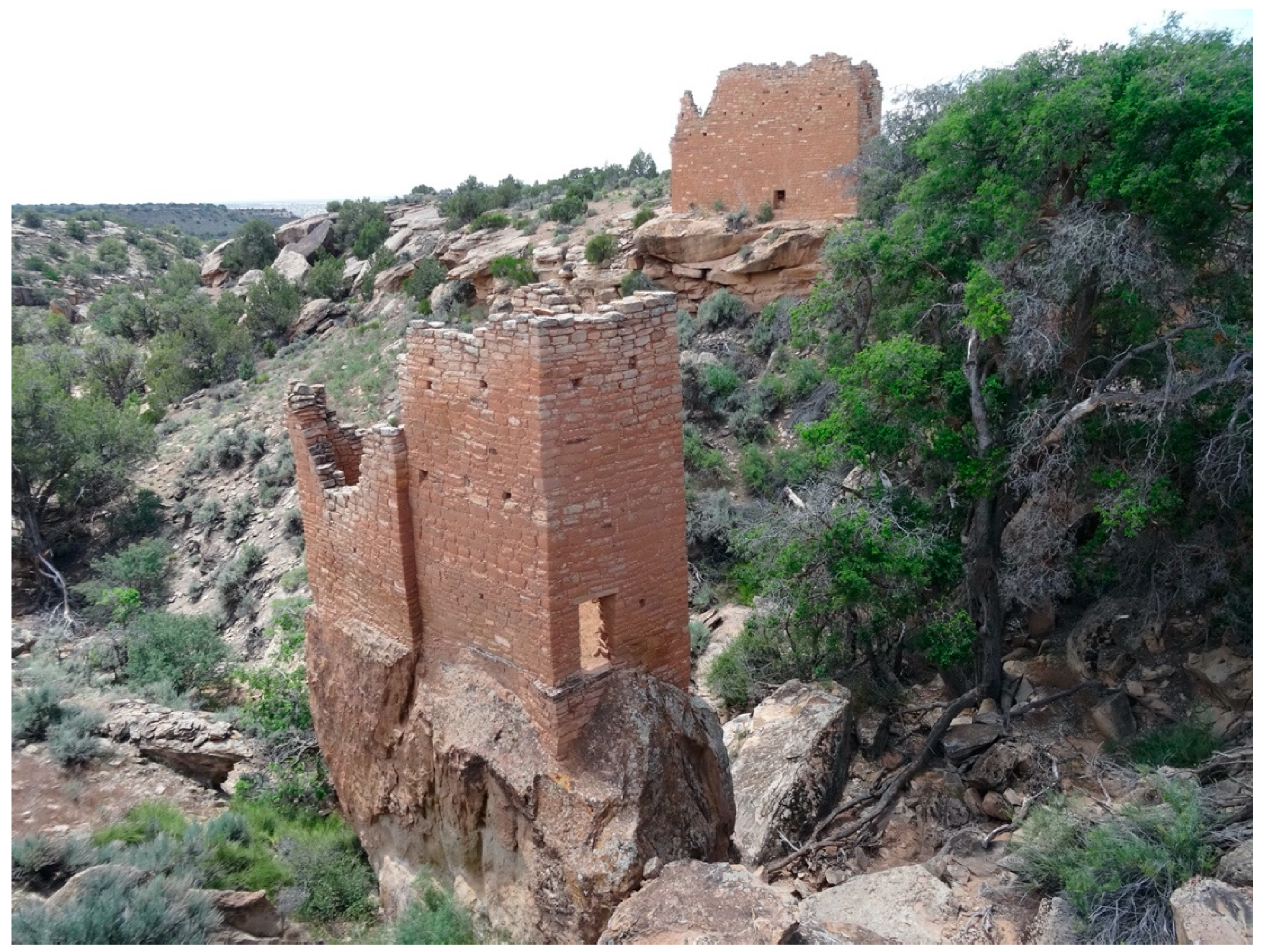
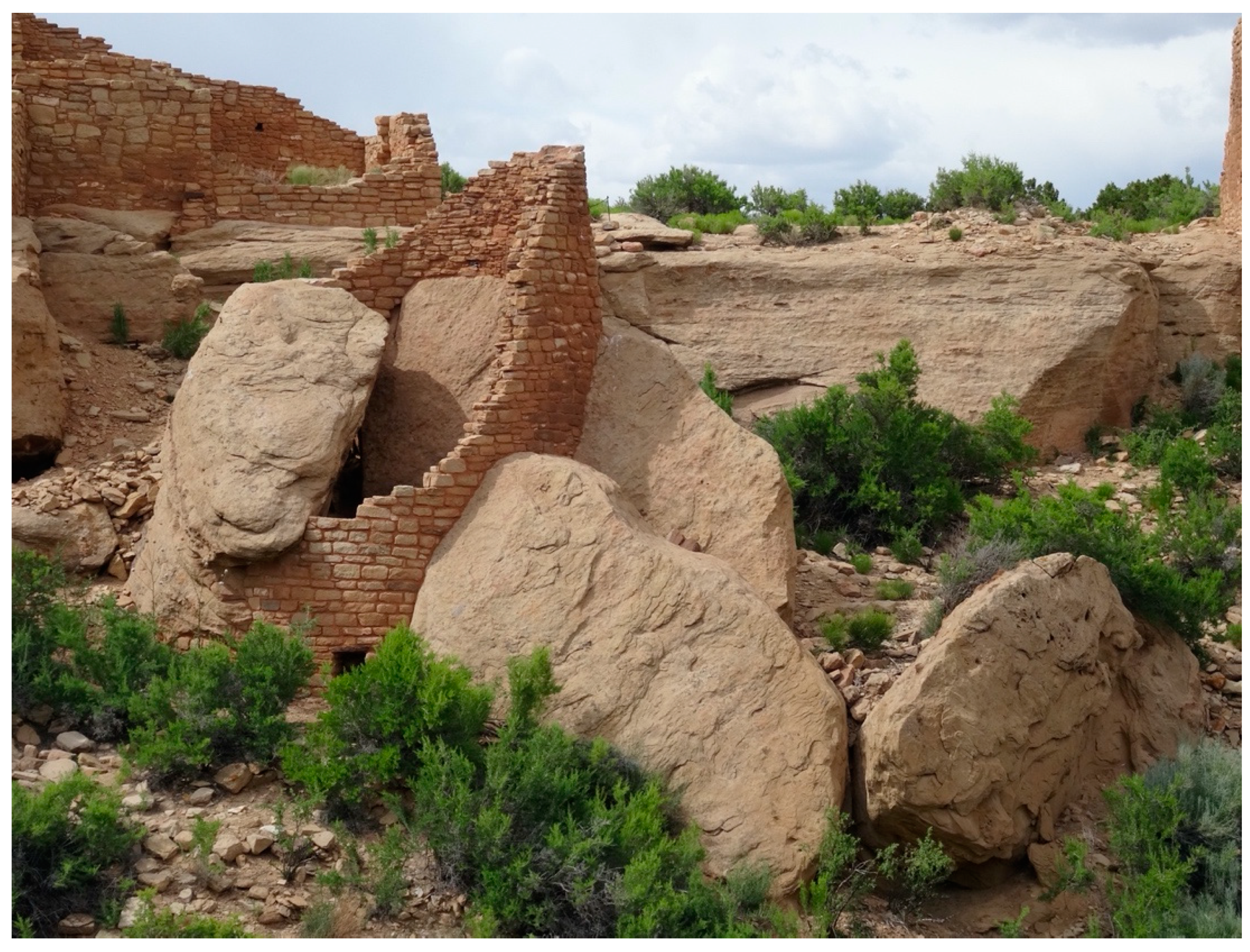
7. Case Two: Hovenweep Prayer Towers, Kivas and Springs
Look at the layout of where all these different settlements are. They are right at the [head] of the canyons, right at the beginning of where the water starts. It is not halfway down. That is the only reason that we have that, they are religious gathering spots.
The aquifer, the watershed, all have connections underground. This whole world has connected water underneath. So all of that water has to come out at a specific place. Coming out at the place where structures are built, not to defend it, but to pray for it. To have that water constantly flowing
There has to be a connection. Did we want to sit on the mesa to be close to the heavens? To be close to the spirits? Somewhere, I heard that. I see why. You want to build something that is close to the heavens. That is your connection to the spirits.
There is a special group of people that stay on top of our mesa for the whole year, they get elected, and those are called our field chiefs. So they are the ones that upkeep the village. And I am pretty sure every village had somebody to stay around and do upkeep. Important people do that. And we still carry on that tradition today. They go to the outskirts of the village and do their pilgrimage and pray around. A lot of their pilgrimage is to the mountain as well. There had to be someone to stay [here] and I am pretty sure they would do the same thing.
Recommendations
8. Case 3: Arches Day and Night
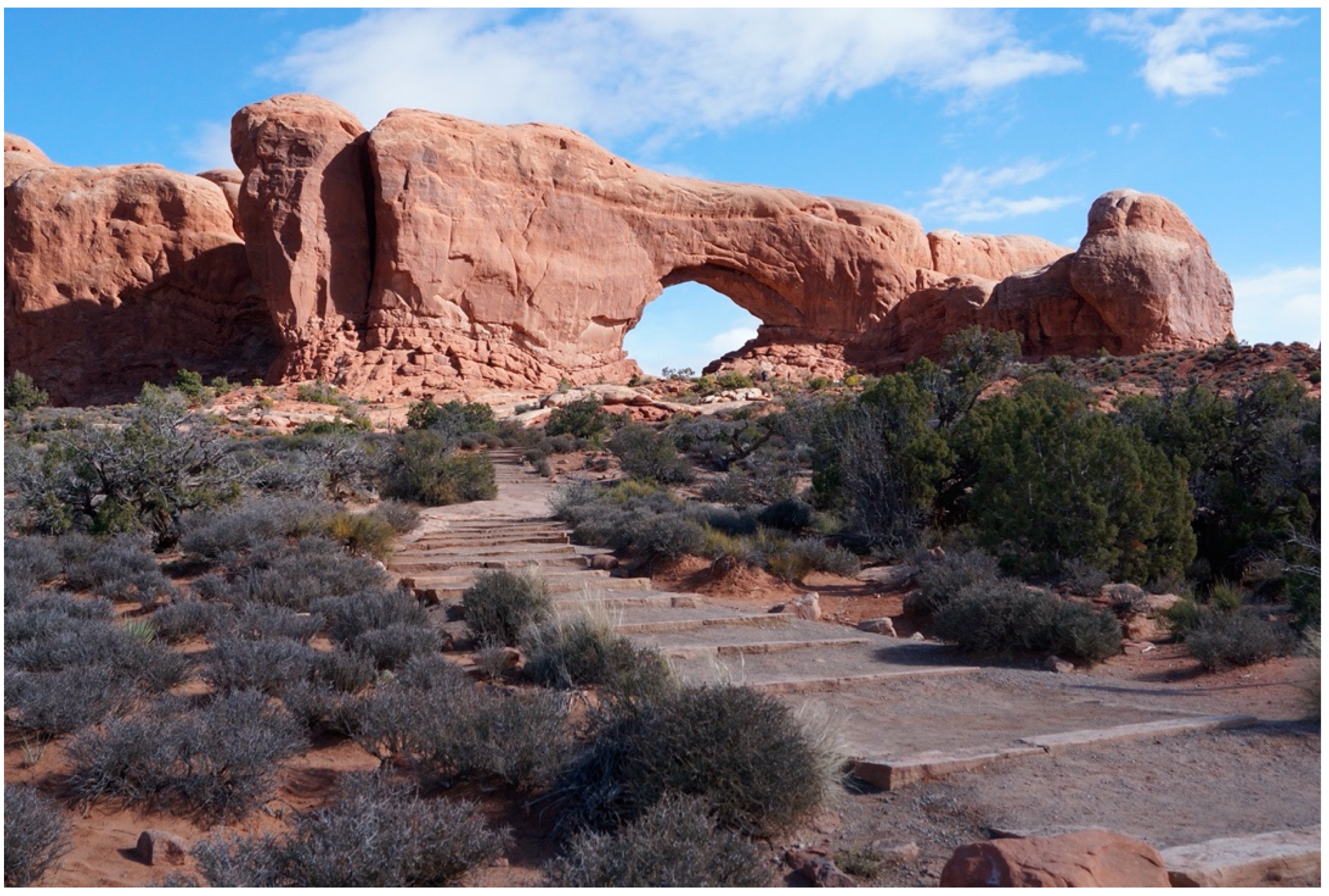
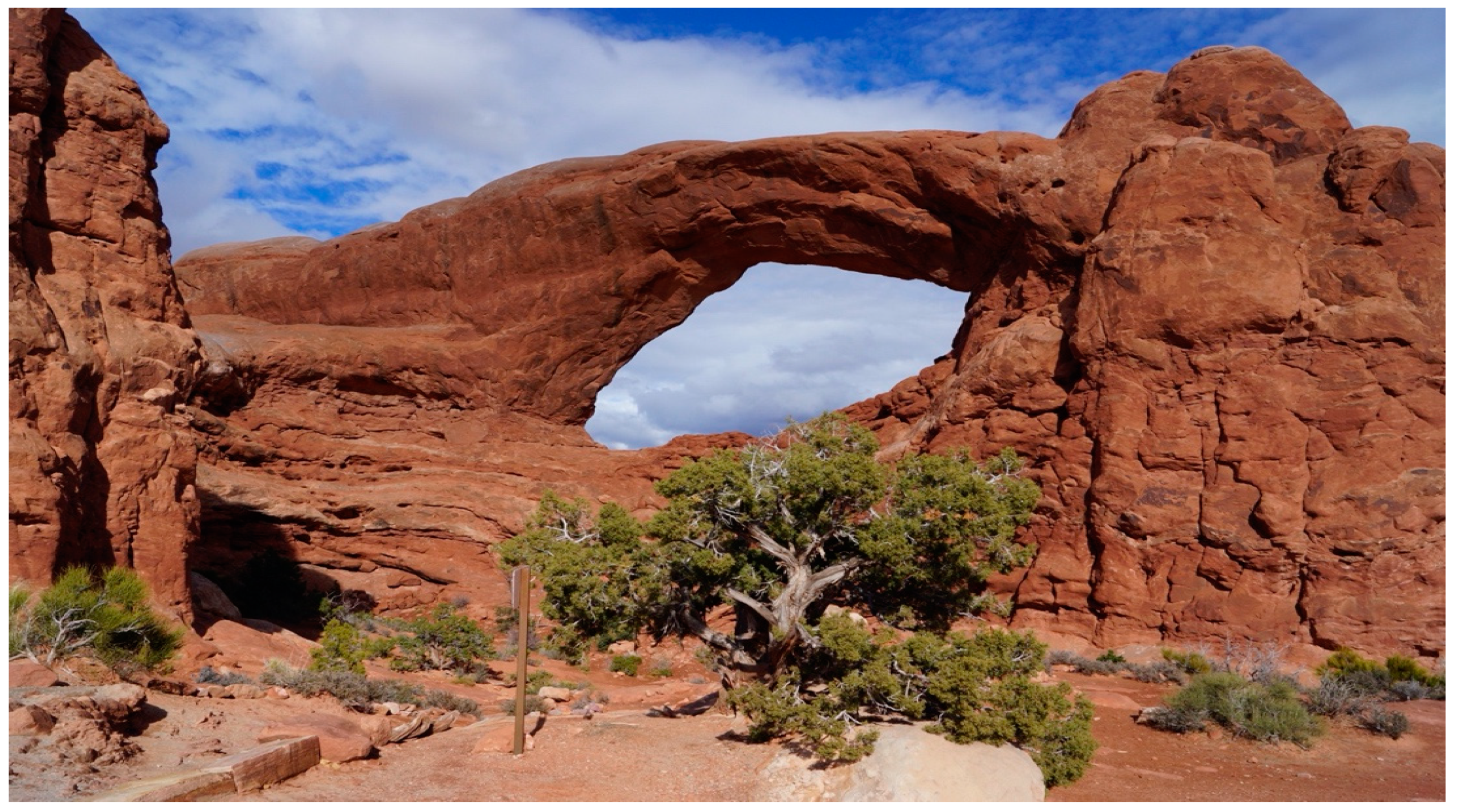
We have this place that is called the Lookout in the Grand Canyon, it is a four-wall site/structure that has four windows, north, west, south, and east directions, and it has the same use to areas like this. They use that first structure to look into the past, look into the future, looking to the directions where they can go. That structure was built by our ancestors, and when they came to these areas they had these [points at arch], it has the same power, the same meaning, they use these as windows into the future, to look into the direction they had to go. All the arches here, they all have the same power, the same significance, even if it’s a very small arch, that is has that ability for people to look in. We came up, while we were talking, how our ancestors did it, it’s tu-na-pi-quai, and it means looking through. If you look into the arch it’s like looking into a glass, so it has that power, that ability, to give our people the sense of where to go.
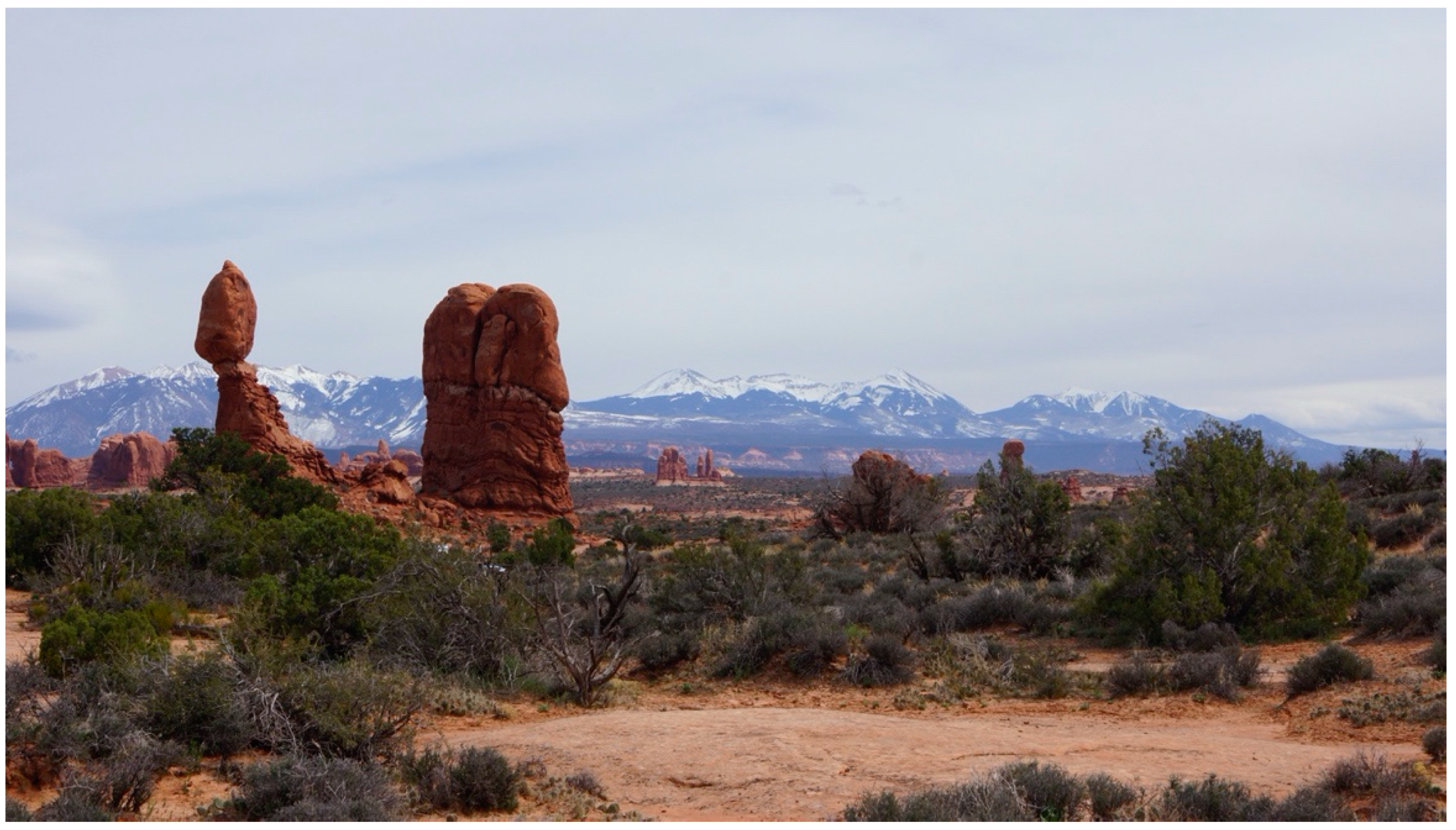
We were discussing some of the hoodoos here and that we still have that same practice in Zuni. Our religious leaders actually put stone pillars in places where we need to leave offerings in the village. So looking at these pillars here, this might have been the place where they picked up that idea of using pillars to make the shrines. Just looking at all of these hoodoos, they’re very powerful. So just being here gives a person, well for me, gives me a sense of connecting and looking into what our ancestors were doing here.
It’s not a pretty rock it hosts something very significant for us. Because I mention that, if you look into the past and walk into areas like this, and realizing our great great great grandfathers and grandmothers also walked in areas within this place here, and so it holds a really strong bond with us because of that connection back then. Even though the sand shifted, the footprints so you can’t identify them, but for us they’re still here. We consider our ancestors as being a part of this, they never left. The people that passed on that are making their final journey into the afterworld were left here. And so with that understanding that we still have a very strong bond to places like this because our ancestors are still here, their remains are still here, so we never want to break the bonds with our ancestors because the more we travel, the more we get that connection everywhere back together again.
Recommendations
9. Analysis
- Creation Story Locations and Boundaries
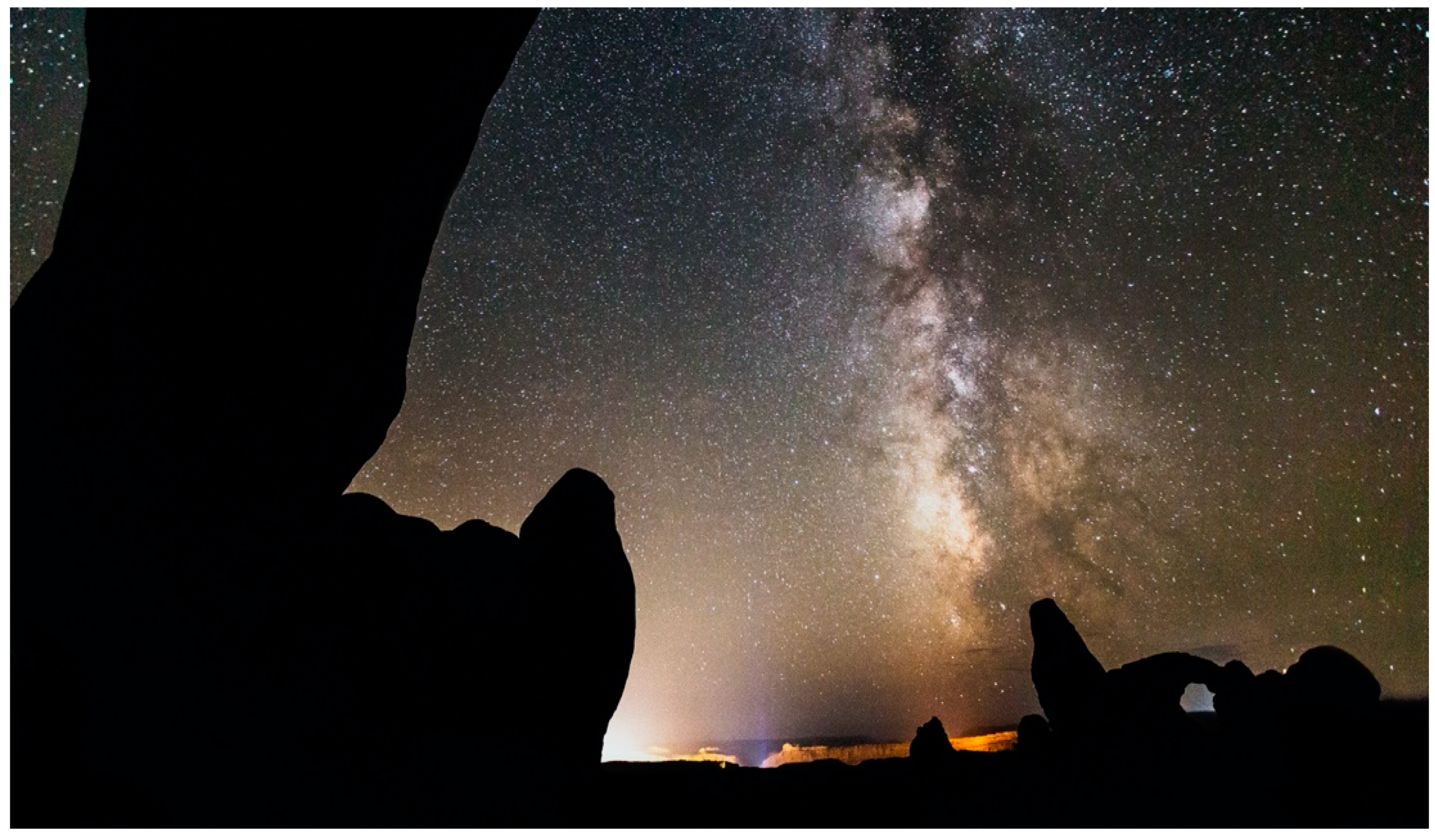
- Sacred Portals Recounting Star Migrations
- Universal Center Locations
- Historical Migration Destiny Locations
- Places of Prehistoric Revelations
- Traditional Vision Quest Sites
- Plant–Animal Relationship Locations
- Mourning and Condolence Sites
- Historical Past Occupancy Sites
- Spirit Sites
- Recent Historical Event Locations
- Plant, Animal and Mineral Gathering Sites
- Sanctified Ground
10. Conclusions
10.1. Tourist Impacts to Heritage Sites
10.2. Compliance with NPS Guidelines
10.3. Sustainable Tourism Development
Author Contributions
Funding
Acknowledgments
Conflicts of Interest
Appendix A. The BARA Methodology
Appendix A.1. Summary of BARA Interview Instruments
Appendix A.1.1. Site Form
Appendix A.1.2. Ethnoarchaeology-Rock Art Form
Appendix A.1.3. Cultural Landscapes Form
Appendix A.1.4. Cultural Landscapes—Pilgrimage Connections Form
Appendix A.2.
- 1.
- Date:______________
- 2.
- Respondent’s Name: ____________________________
- 3.
- Tribe/Organization: 3a. Ethnic Group:
- 4.
- Gender: Male Female
- 5.
- Date of Birth: ___/___/___ 5a. Age _____
- 6.
- Place of Birth (Town, Reservation): ______________ 6a. U.S. State of Birth ______________
- 7.
- Study Area Site Number (ethnographer fill this in): ________________________
- 8.
- What is the name of this place in English?8a. What is the name of this place in your native language?
- 9.
- Please describe the geography of this area or elements which stand out.
- 10.
- Would Indian people have used this area?1 = YES 2 = NO 8 = Don’t Know 9 = No Response
- 10a.
- (IF YES) Why or for what purpose would Indian people have used this area? 1 = [permanent]LIVING 2 = HUNTING 3 = [seasonal]CAMPING 4 = CEREMONY/POWER 5 = GATHERING FOOD 6 = OTHER 8 = Don’t Know 9 = No Response
- 10b.
- Comments on 10a:
- 11.
- Is this place part of a group of connected places (Is this place connected to others?) 1 = YES 2 = NO 8 = Don’t Know 9 = No Response
- 11a.
- (IF YES) What kinds of other places might this place be connected with and where are they? 1 = Comment given 8 = Don’t Know 9 = No Response
- 11b.
- (IF COMMENT GIVEN) How is this place connected to the others you mentioned? 1 = Comment given 8 = Don’t Know 9 = No Response
- 11bb.
- (IF ANSWERED 1 TO 11b) Comments given:

| Feature Type | 1 = YES | 2 = NO | List and Describe Each Specific Feature |
|---|---|---|---|
| 12a. Source for Water | 12aa. | ||
| 12b. Source for Plants | 12bb. | ||
| 12c. Source for Animals | 12cc. | ||
| 12d. Evidence of Previous Indian Use e.g.,- rock rings, historic structures, rock art | 12dd. | ||
| 12e. Geological Features e.g.,- mountain, spring, cave, canyon, landmarks | 12ee. |
- 13.
- Would Indian people have used this (Name the feature)? 1 = YES 2 = NO 8 = Don’t Know 9 = No Response
- 14.
- (IF YES) Why or for what purpose would Indian people have used this __Feature(s)__? 1 = FOOD/DRINK 2 = MEDICINE 3 = CEREMONY 4 = OTHER 8 = Don’t Know 9 = No Response
- 14a.
- Comments:
- 15.
- How would you evaluate the condition of the ___Feature(s)__?1 = EXCELLENT 2 = GOOD 3 = FAIR 4 = POOR 9 = No Response
- 16.
- Is there anything affecting the condition of the __Feature(s)__?1 = YES 2 = NO 8 = Don’t Know 9 = No Response
- 16a.
- (IF YES) What in your opinion, is affecting the condition of ____________?FEATURE TYPE B: PLANT SOURCE (List features from Table A1 on page 3)
- 17.
- Would Indian people have used the plants at this particular site?1 = YES 2 = NO 8 = Don’t Know 9 = No Response
- 18.
- (IF YES), Why or for what purpose would Indian people have used these plants? 1 = FOOD 2 = MEDICINE 3 = CEREMONY 4 = MAKING THINGS 8 = Don’t Know 9 = No Response
- 18a.
- Comments (if given):
- 19.
- How would you evaluate the condition of these plants?1 = EXCELLENT 2 = GOOD 3 = FAIR 4 = POOR 9 = No Response
- 20.
- Is there anything affecting the condition of these plants?1 = YES 2 = NO 8 = Don’t Know 9 = No Response
- 20a.
- IFYES) What in your opinion, is affecting the condition of the plants?
- 21.
- Would Indian people have used the animals at this place?1 = YES 2 = NO 8 = Don’t Know 9 = No Response
- 22.
- Why or for what purpose would Indian people have used the animals in this site? 1 = FOOD 2 = MEDICINE 3 = CEREMONY 4 = CLOTHING 5 = TOOLS 6 = OTHER 8 = Don’t Know 9 = No Response
- 22a.
- Comments:
- 23.
- How would you evaluate the condition of these animals/habitat?1 = EXCELLENT 2 = GOOD 3 = FAIR 4 = POOR 9 = No Response
- 24.
- Is there anything affecting the condition of the animals/habitat? 1 = YES 2 = NO 8 = Don’t Know 9 = No Response
- 24a.
- (IF YES) What in your opinion, is affecting the condition of the animals/habitat? FEATURE TYPE D: EVIDENCE OF PREVIOUS OCCUPATION OR USE (Specifically)
- 25.
- Would Indian people have used this site and/or artifacts?1 = YES 2 = NO 8 = Don’t Know 9 = No Response
- 26.
- Why or for what purpose would Indian people have used this site and/or artifacts? 1 = LIVING 2 = HUNTING 3 = GATHERING 4 = CAMPING 5 = CEREMONY/POWER 6 = OTHER 8 = Don’t Know 9 = No Response
- 26a.
- Comments:
- 27.
- How would you evaluate the condition of this site?1 = EXCELLENT 2 = GOOD 3 = FAIR 4 = POOR 9 = No Response
- 28.
- Is there anything affecting the condition of this site?1 = YES 2 = NO 8 = Don’t Know 9 = No Response
- 28a.
- (IF YES) What in your opinion, is affecting the condition of this site? FEATURE TYPE E: GEOLOGIC FEATURES (specifically)
- 29.
- Would Indian people have visited or used this __(Feature)__ ? 1 = YES 2 = NO 8 = Don’t Know 9 = No Response
- 30.
- Why or for what purpose would Indian people have used this __(Feature)__ ? 1 = SEEK KNOWLEDGE/POWER 2 = COMMUNICATE WITH OTHER INDIANS 3 = CEREMONY 4 = COMMUNICATE WITH SPIRITUAL BEINGS 5 = TEACHING OTHER INDIANS 6 = TERRITORIAL MARKER 7 = OTHER 8 = Don’t Know 9 = No Response
- 30a.
- Comments:
- 31.
- How would you evaluate the condition of the __(Feature)__? 1 = EXCELLENT 2 = GOOD 3 = FAIR 4 = POOR 9 = No Response
- 32.
- Is there anything affecting the condition of the __(Feature)__? 1 = YES 2 = NO 8 = Don’t Know 9 = No Response
- 32a.
- (IF YES) What in your opinion, is affecting the condition of __(Feature)__? MANAGEMENT AND ACCESS RECOMMENDATIONS
- 33.
- How would you evaluate the condition of this place? 1 = EXCELLENT 2 = GOOD 3 = FAIR 4 = POOR 9 = No Response
- 34.
- Is there anything affecting the condition of this place? 1 = YES 2 = NO 8 = Don’t Know 9 = No Response
- 34a.
- (IF YES) What in your opinion is affecting the condition of this place? Above you identified specific features at this site. What would be your recommendation for protecting each specific feature?
- 35.
- Water Source:
- 36.
- Plant Source:
- 37.
- Animal Source:
- 38.
- Traditional Use Feature:
- 39.
- Geological Feature:
- 40.
- What would be your recommendation for protecting this place?
- 41.
- Do you think Indian people would want to have access to this place?1 = YES 2 = NO 8 = Don’t Know 9 = No Response
- 41a.
- (IF YES) Why would Indian people want to come to this place?Are there any special conditions that must be met for Indian people to use this place? 1 = YES 2 = NO 8 = Don’t Know 9 = No Response
- 42a.
- (IF YES) What special conditions are needed for Indian people who want to come to this place?
- 2.
- Respondent’s Name:
- 3a.
- Tribe: 3b. Ethnic Group:
- 4.
- Gender: (Circle) 1 = M 2 = F
- 5a.
- English Name of site 5b. Site No.: NV
- 5e.
- Quad Name 5f. Compass Orientation 5g. Elevation
- 6a.
- Study Area Site #6b. Ecozone Location: 5c. Topography: 6d. Main Water Source:
- canyon wall i. delta i. River edge
- UDSZ-desert ii. side canyon ii. River flood
- OHWS-old riparian iii. wash or drain iii. Side stream
- REPS-new riparian iv. mesa top iv. Spring
- side canyon riparian v. canyon wall v. Rainfall
- dry mesa top vi. saddle vi. rock tank
- stream bed vii. talus vii. wash
- high desert flats viii. cave
- upper Mohave desert
- lower Mohave desert
- stream bank
- woodland
- 7.
- Did you know that this site was here?1 = Yes 2 = No 8 = DK 9 = NR
- 500.
- In your opinion, was/were (this/these panel(s)) made by your people? 1 = Yes 2 = No 8 = DK 9 = NR
- 501.
- Did your [respondent’s ethnic group] traditionally visit or use (this/these panel(s) or panel(s) like this/these [where?])? 1 = Yes 2 = No 8 = DK 9 = NR
- 502.
- IF YES TO #501) What were (this/these panel(s) or panel(s) like this/these) visited or used for? 1 = Ceremony (SPECIFY) 2 = To Seek Knowledge/Power 3 = Communicate w/Other Indian People 4 = Communicate with Spiritual Beings 5 = Teaching Other (ethnic group) People 6 = Territorial Marker 7 = Decoration 8 = Other (SPECIFY) 9 = Map 10 = paying respects 11 = N/A
- 502b.
- What kind of name would you give this panel?
- 503.
- Who visited or used (this/these panel(s) or panel(s) like this/these) most often? 1 = Men 2 = Women 3 = Both 7 = NA 8 = DK 9 = NR
- 504.
- Do your people currently visit or use (this/these panel(s) or panel(s) like this/these [where?])? 1 = Yes 2 = No 7 = NA 8 = DK 9 = NR
- 505.
- (If yes to #504) What are (this/these panel(s) or panel(s) like this/these) visited or used for? CIRCLE BELOW 1 = Ceremony (SPECIFY) 2 = To Seek Knowledge/Power 3 = Communicate w/Other Indian People 4 = Communicate with Spiritual Beings 5 = Teaching Other (ethnic group) People 6 = Territorial Marker 7 = Decoration 8 = Other (SPECIFY) 9 = Map 10 = paying respects 11 = N/A
- 506.
- Who visits or uses (this/these panel(s)/panel(s) like this/these) most often? 1 = Men 2 = Women 3 = Both 7 = NA 8 = DK 9 = NR
- 517.
- Are there (ethnic group stories and legends associated with (this/these panel(s) or panel(s) like this/these) 1 = Yes 2 = No 8 = DK 9 = NR
- 517a.
- If YES, What is the name of that story?
- 517b.
- Can it be told to outsiders? 1 = Yes 2 = No 8 = DK 9 = NR
- 517c.
- IF YES, will you tell us about that story? (make sure to record on tape)
- 518.
- I would like to ask you about the connections between (this/these panel(s) or panel(s) like this/these) and other resources.
- 519a.
- Are the pecking/paintings in this panel and connected in anyway with panels elsewhere? 1 = Yes 2 = No 8 = DK 9 = NR
- 520a.
- Where and how are they connected?
- 519b.
- Are archaeology sites connected with these panels? 1 = Yes 2 = No 8 = DK 9 = NR
- 520b.
- How are they connected?
- 519c.
- Are plants connected with these panels? 1 = Yes 2 = No 8 = DK 9 = NR
- 520c.
- How are they connected?
- 519d.
- Are animals connected with these panels? 1 = Yes 2 = No 8 = DK 9 = NR
- 520d.
- How are they connected?
- 519e.
- Are minerals connected with these panels? 1 = Yes 2 = No 8 = DK 9 = NR
- 520e.
- How are they connected?
- 519f.
- Is water connected with these panels? 1 = Yes 2 = No 8 = DK 9 = NR
- 520f.
- How is it connected?
- 519g.
- Is the surrounding land (geography, topog.) connected with these panels? 1 = Yes 2 = No 8 = DK 9 = NR
- 520g.
- How is it connected?
- 521.
- Did Indian people who are not (your ethnic group) use (this/these panel(s) or panel(s) like this/these)? 1 = Yes 2 = No 8 = DK 9 = NR
- 522a.
- (IF YES TO #521) Who were those Indian people?
- 522b.
- Did those people use (this/these panel(s) or panel(s) like this/these) [before, after, same time as] respondent’s ethnic group? 1 = Before 2 = After 3 = Same time as 4 = All of above 7 = NA 8 = DK 9 = NR
- 523.
- Is there a special time of the year during which (this/these panel(s) or panel(s) like this/these) were/are used? 1 = Yes 2 = No 8 = DK 9 = NR
- 524.
- (IF YES TO #523) What special time of the year?
- 525.
- Is there a special time of day/night during which (this/these panel(s) or panel(s) like this/these) were/are used? 1 = Yes 2 = No 8 = DK 9 = NR
- 526.
- (IF YES TO #525) What special time of day/night?
- 527.
- Within the site, are there any specific peckings or paintings that you would like to talk about? (IF NO, GO TO 530) 1 = Yes 2 = No 8 = DK 9 = NR
- 527a.
- Location of pecking/painting (boulder #)
- 527b.
- Photo # (roll, shot)
- 527c.
- Indian/English name for pecking/painting
- 527d.
- What is special about this pecking/painting?
- 528.
- Within the site, are there any other specific peckings or paintings that you would like to talk about? (IF NO, GO TO 530) 1 = Yes 2 = No 8 = DK 9 = NR
- 528a.
- Location of pecking/painting (boulder #)
- 528b.
- Photo # (roll, shot)
- 528c.
- Indian/English name for pecking/painting
- 528d.
- What is special about this pecking/painting?
- 529.
- Within the site, are there any other specific peckings or paintings that you would like to talk about? (IF NO, GO TO 530) 1 = Yes 2 = No 8 = DK 9 = NR
- 529a.
- Location of pecking/painting (boulder #)
- 529b.
- Photo # (roll, shot)
- 529c.
- Indian/English name for pecking/painting ;
- 529d.
- What is special about this pecking/painting?
- 530.
- Based on the rock art that you see at the site and on the ground, what Indian activities or events occurred at this site? [specify site]
- 531.
- Does the site have a personal meaning for you?1 = Yes 2 = No 8 = DK 9 = NR
- 532.
- (IF YES TO #531) What does the site mean to you?
- 533.
- How would you evaluate the overall importance of the site to you? 1 = Low 2 = Medium 3 = High 9 = NR
- 534.
- Does the style of the peckings/paintings influence the cultural significance of this rock art? 1 = Yes 2 = No 8 = DK 9 = NR
- 535.
- (IF YES TO #534) How?
- 536.
- In your opinion, what is the current condition of this site? 1 = Excellent 2 = Good 3 = Fair 4 = Poor 8 = DK 9 = NR
- 537.
- Do you feel there are human activities affecting the condition of the panels? 1 = Yes 2 = No 8 = DK 9 = NR
- 537a.
- (if Yes to # 537) What human activities are affecting the condition of the panel(s)?
- 538.
- What would be your recommendation (if any) for protecting the panel(s) from human activities?
- 539.
- Do you feel there are natural elements (wind, rain, erosion) affecting the condition of the panel(s)? 1 = Yes 2 = No 8 = DK 9 = NR
- 540.
- (IF YES TO #539) What natural elements are affecting the condition of the panel(s)? [specify general weather, other]
- 541.
- What would be your recommendation (if any) for protecting the panel(s) from natural elements?
- 542.
- Can you tell me anything else about the importance of (this/these panel(s) or panel(s) like this/these) to (respondent’s ethnic group) that we haven’t talked about?
- (1)
- Were there Indian villages in relation to this area?
- 1 = Yes, 2 = No, 8 = Don’t Know, 9 = No Response.
- (2)
- If yes, were the area villages connected with villages elsewhere in the Southern Nevada/California region?
- 1 = Yes, 2 = No, 8 = Don’t Know, 9 = No Response.
- (3)
- If yes, how were these connected?
- (4)
- Do you know what the Indian people did when they were here in the area?
- 1 = Yes, 2 = No, 8 = Don’t Know, 9 = No Response.
- (5)
- If yes, what kinds of activities -
- (6)
- farming
- (7)
- gathering plants
- (8)
- gambling
- (9)
- ceremonies
- (10)
- political meetings
- (11)
- others (specify)
- (12)
- Do you know of Indian trails that were connected with this area?
- 1 = Yes, 2 = No, 8 = Don’t Know, 9 = No Response.
- (13)
- If yes, can you tell me something about those trails - like
- * where did they go, * why did your people travel the trails, and
- (14)
- were these trails somehow special to your people? How?
- (15)
- Do you know of any songs associated with this area?
- 1 = Yes, 2 = No, 8 = Don’t Know, 9 = No Response.
- (16)
- If yes, can you tell me something about the songs—were they
- (17)
- traveling songs
- (18)
- ceremony songs, or
- (19)
- other-purpose songs
- (20)
- Do you know of any ceremonies that were conducted at or near this area ?
- 1 = Yes, 2 = No, 8 = Don’t Know, 9 = No Response.
- (21)
- If yes, can you tell me something about these ceremonies?
- * Ceremony #1—place _______________, when ______________, why ___________
- * Ceremony #2—place _______________, when _____________, why ____________
- * Ceremony #3—place _______________, when _____________, why _____________
- (22)
- Is this area at or near the place where your people were created?
- 1 = Yes, 2 = No, 8 = Don’t Know, 9 = No Response.
- (23)
- If yes, where is the Creation place?
- (24)
- Do you know if there are other places in this region that are also connected with the Creation of your people?
- 1 = Yes, 2 = No, 8 = Don’t Know, 9 = No Response.
- (25)
- If yes, what and where are those places?
- (26)
- Do you recall or have your heard about events in history that occurred at or near this area?
- 1 = Yes, 2 = No, 8 = Don’t Know, 9 = No Response.
- (27)
- Will you tell me something about those events?
- (28)
- Event #1—date __________, place __________, what happened?
- (29)
- Event #2—date __________, place __________, what happened?
- (30)
- Event #3—date __________, place __________, what happened?
- (31)
- Is there a connection between this area and nearby mountains?
- 1 = Yes, 2 = No, 8 = Don’t Know, 9 = No Response.
- (32)
- If yes, what mountains and how are they connected to this area?
- (33)
- Mt. #1: name in English _______________, name in native language______________, how connected?
- (34)
- Mt. #2: name in English _______________, name in native language ______________, how connected?
- (35)
- Mt. #3: name in English _______________, name in native language ______________, how connected?
- (36)
- Is there a connection between this area and any section of the Colorado River?
- 1 = Yes, 2 = No, 8 = Don’t Know, 9 = No Response.
- (37)
- If yes, what section of the river and how is it connected to this area?
- (38)
- River Section #1: name in English _______________, name in native language __________, how connected?
- (39)
- River Section #2: name in English _______________, name in native language __________, how connected?
- (40)
- River Section #3: name in English _______________, name in native language __________, how connected?
- (41)
- Is there a connection between this area and any of the creeks, springs, or washes in the Spring Mountains area (i.e., Deer Creek, Willow Creek, Lovell Wash, Wheeler Wash, Crystal Springs, etc.)?
- 1 = Yes, 2 = No, 8 = Don’t Know, 9 = No Response.
- (42)
- If yes, which creeks, springs, or washes and how are they connected to this area?
- (43)
- Water source #1: name in English _______________, name in native language __________, how connected?
- (44)
- Water source #2: name in English _______________, name in native language __________, how connected?
- (45)
- Water source #3: name in English _______________, name in native language __________, how connected?
- (46)
- Is this area connected to any places or events in the region that we have not already talked about?
- 1 = Yes, 2 = No, 8 = Don’t Know, 9 = No Response.
- (47)
- If yes, what other connections would you like to talk about?
- (48)
- Connection #1—place _________, event ____________, connection ___________
- (49)
- Connection #1—place _________, event ____________, connection ___________
- (50)
- Connection #1—place _________, event ____________, connection ___________
- (51)
- Is this area connected to any places or events in your traditional territory that we have not already talked about?
- 1 = Yes, 2 = No, 8 = Don’t Know, 9 = No Response.
- (52)
- If yes, what other connections would you like to talk about?
- (53)
- Connection #1—place _________, event ____________, connection ___________
- (54)
- Connection #1—place _________, event ____________, connection ___________
- (55)
- Connection #1—place _________, event ____________, connection ___________
- Date:
- Respondent’s Name:
- Tribe/Organization: 3a. Ethnic Group:
- Gender: Male Female
- Date of Birth: ____/____/____ 5a. Age _____
- Place of Birth (Town, Reservation): 6a. U.S. State of Birth
- Study Location (ethnographer fill this in):
- What is the name of this area in English? 8a. What is the name of this area in your native language?
References
- Albert, M. The Potential of Culture for Sustainable Development in Heritage Studies. In Going Beyond: Perceptions of Sustainability in Heritage Studies, No. 2; Albert, M., Bandarin, F., Roders, A., Eds.; Springer International: Berlin/Heidelberg, Germany, 2017; pp. 33–42. [Google Scholar]
- Erlewein, S. Sustainable Development and Intangible Cultural Heritage: Integrating Culture into Development. In Perceptions of Sustainability in Heritage Studies; Albert, M., Ed.; De Gruyter: Berlin, Germany, 2015; pp. 71–83. [Google Scholar]
- Roders, A. Culture as Enabler for Sustainable Development. In Going Beyond: Perceptions of Sustainability in Heritage Studies, No. 2; Albert, M., Bandarin, F., Roders, A., Eds.; Springer International: Berlin/Heidelberg, Germany, 2017; pp. 19–32. [Google Scholar]
- Albert, M.; Bandarin, F.; Roders, A. Introduction. In Going Beyond: Perceptions of Sustainability in Heritage Studies, No. 2; Albert, M., Bandarin, F., Roders, A., Eds.; Springer International: Berlin/Heidelberg, Germany, 2017; pp. 1–15. [Google Scholar]
- Soini, K.; Birkeland, I. Exploring the Scientific Discourse on Cultural Sustainability. Geoforum 2014, 51, 213–223. [Google Scholar] [CrossRef]
- Guzman, P.C.; Roders, A.; Colenbrander, B. Measuring Cultural Heritage within the Urban Context: An Analysis of Existing Dimensions and Related Urban Indicators; Department of the Built Environment, Eindhoven University of Technology: Eindhoven, The Netherlands, 2014. [Google Scholar]
- De Luca, G.; Dastgerdi, A.; Francini, C.; Liberatore, G. Sustainable Cultural Heritage Planning and Management of Overtourism in Art Cities: Lessons from Atlas World Heritage. Sustainability 2020, 12, 3929. [Google Scholar] [CrossRef]
- Tudorache, D.; Simon, T.; Frent, C.; Musteata-Pavel, M. Difficulties and Challenges in Applying the European Tourism Indicators System (ETIS) ForSustainable Tourist Destinations: The Case of Brasov County in the Romanian Carpathians. Sustainability 2017, 9, 1879. [Google Scholar] [CrossRef]
- Spoon, J. Tourism, Persistence, and Change: Sherpa Spirituality and Place in Sagarmatha (Mount Everest) National Park and Buffer Zone, Nepal. J. Ecol. Anthropol. 2011, 15, 41–57. [Google Scholar] [CrossRef][Green Version]
- National Park Service. Management Policies 2006; National Park Service, U.S Department of the Interior: Washington, DC, USA, 2006.
- Stoffle, R.; Last, C.; Evans, M. Reservation-Based Tourism: Implications of Tourist Attitudes for Native American Economic Development. Hum. Organ. 1979, 16, 300–306. [Google Scholar] [CrossRef]
- Parker, P.; King, T. National Register Bulletin 38: Guidelines for Evaluating and Documenting Traditional Cultural Properties; National Park Service, U.S Department of the Interior: Washington, DC, USA, 1990.
- McClelland, L.; Keller, J.; Keller, G.; Melnick, R. Guidelines for Evaluating and Documenting Rural Historic Landscapes; National Register Bulletin No. 30; National Park Service, U.S. Department of the Interior: Washington, DC, USA, 1999.
- Fairclough, G.; Harrison, R.; Jameson, J.; Schofield, J. The Heritage Reader; Routledge: London, UK, 2007. [Google Scholar]
- Stoffle, R.; Halmo, D.; Austin, D. Cultural Landscapes and Traditional Cultural Properties: A Southern Paiute View of the Grand Canyon and Colorado River. Am. Indian Q. 1997, 21, 229–249. [Google Scholar] [CrossRef]
- Toupal, R.; Zedeno, M.; Stoffle, R.; Barabe, P. Cultural Landscapes and Ethnographic Cartographies: Scandinavian-American and American Indian Knowledge of the Land. Environ. Sci. Policy 2001, 4, 171–184. [Google Scholar] [CrossRef]
- Rossler, M. The Landscape Approach—A Global Context for Sustainability. In Perceptions of Sustainability in Heritage Studies; Albert, M., Ed.; De Gruyter: Berlin, Germany, 2015; pp. 59–69. [Google Scholar]
- Fard, H.A.; Saboonchi, P. Landscape as Symbolic Nature Contemplation of the Representative Role of Natural Elements in the Formation of the Landscape of Kamu Village. Manzar 2020, 12, 28–37. [Google Scholar]
- Hicks, D.; McAtackney, L.; Fairclough, G. Envisioning Landscape: Situations and Standpoints in Archaeology and Heritage; Left Coast Press: Walnut Creek, CA, USA, 2007. [Google Scholar]
- Basso, K. Wisdom Sits in Places: Language and Landscape among the Western Apache; University of New Mexico: Albuquerque, NM, USA, 1996. [Google Scholar]
- Deloria, V. God Is Red; Fulcrum Publishing: Golden, CO, USA, 2003. [Google Scholar]
- Rappaport, R. Ritual and Religion in the Making of Humanity; Cambridge University Press: New York, NY, USA, 1999. [Google Scholar]
- Goldman, A. Knowledge in a Social World; Oxford University Press: New York, NY, USA, 1999. [Google Scholar]
- Stoffle, R.; Arnold, R.; Bulletts, A. Talking with Nature: Southern Paiute Epistemology and the Double Hermeneutic with a Living Planet. In Collaborative Heritage Management; Tully, G., Ridges, M., Eds.; Gorgias Press: Piscataway, NJ, USA, 2016; pp. 75–100. [Google Scholar]
- Stoffle, R.; Zedeno, N. Historical Memory and Ethnographic Perspectives on Southern Paiute Homeland. J. Calif. Great Basin Anthropol. 2001, 23, 229–248. [Google Scholar]
- Tilley, C. Phenomenology of Landscape Places, Paths, and Monuments; BERG: Providence, RI, USA, 1994. [Google Scholar]
- Tilley, C. The Materiality of Stone: Explorations in Landscape Phenomenology; BERG: New York, NY, USA, 2004. [Google Scholar]
- Decker, P. “The Utes Must Go!”: American Expansion and the Removal of a People; Fulcrum Publishing: Golden, CO, USA, 2004. [Google Scholar]
- Craig, D.; Yung, L.; Borrie, W. Blackfeet Belong to the Mountains”: Hope, Loss, and Blackfeet Claims to Glacier National Park. Conserv. Soc. 2012, 10, 232–242. [Google Scholar] [CrossRef]
- Nabokov, P.; Loendorf, L. Restoring a Presence: American Indians and Yellowstone National Park; University of Oklahoma Press: Norman, OK, USA, 2004. [Google Scholar]
- Wolfley, J. Reclaiming a Presence in Ancestral Lands: The Return of Native Peoples to the National Parks. Nat. Resour. J. 2016, 56, 55–80. [Google Scholar]
- Stocking, G.W. Philanthropoids and Vanishing Cultures: Rockefeller Funding and the End of the Museum Era I Anglo-America Anthropology. In Objects and Others: Essays on Museums and Material Culture; Stocking, G.W., Ed.; University of Wisconsin Press: Madison, WI, USA, 1988; Volume 3. [Google Scholar]
- Clifford, J. Museums as Contact Zones’ in Routes: Travel and Translation in the Late Twentieth Century; Harvard University Press: London, UK, 1997. [Google Scholar]
- Lonetree, A. Decolonizing Museums: Representing Native America in National and Tribal Museums; University of North Carolina Press: Chapel Hill, NC, USA, 2012. [Google Scholar]
- Stoffle, R.; Pickering, E.; Brooks, K.; Sittler, C.; Van Vlack, K. Ethnographic Overview and Assessment for Arches National Park; University of Arizona: Tucson, AZ, USA, 2016. [Google Scholar]
- Stoffle, R.; Pickering, E.; Sittler, C.; Lim, H.; Brooks, K.; Van Vlack, K.; Forer, C.; Albertie, M. Ethnographic Overview and Assessment for Canyonlands National Park; University of Arizona: Tucson, AZ, USA, 2017. [Google Scholar]
- Noble, D. The Mesa Verde World; School of American Research Press: Santa Fe, NM, USA, 2014. [Google Scholar]
- Arkush, B.; Pitblado, B. Paleoarchaic Surface Assemblages in the Great Salt Lake Desert, Northwestern Utah. J. Calif. Great Basin Anthropol. 2000, 22, 12–24. [Google Scholar]
- Jennings, T.; Waters, M. Pre-Clovis Lithic Technology at the Debra, L. Friedkin Site, Texas: Comparisons to Clovis Through Site-Level Behavior Technological Trait-List and Cladistic Analyses. Am. Antiq. 2014, 79, 25–44. [Google Scholar] [CrossRef]
- Pitblado, B. Peak to Peak in Paleoindian Time: Occupation of Southwest Colorado. Plains Anthropol. 1998, 43, 333–348. [Google Scholar] [CrossRef]
- Dilehay, T.; Ocampo, C.; Saavedra, J.; Sawakuchi, A.O.; Vega, R.; Pino, M.; Collins, B.; Cummings, L.; Arregui, I.; Villigran, X.; et al. New Archaeological Evidence for an Early Human Presence at Monte Verde, Chile. PLoS ONE 2015, 10, e0145471. [Google Scholar]
- Gilbert, M.T.P.; Jenkins, D.; Gotherstrom, A.; Naveran, N.; Sanchez, J.; Hofreiter, M. DNA from Pre-Clovis Human Coprolites in Oregon, North America. Science 2008, 320, 786–789. [Google Scholar] [CrossRef] [PubMed]
- Sanchez, G.; Holliday, V.; Gaines, E.; Arroyo-Cabreles, J.; Martinez-Taguen, N.; Kowler, A.; Lange, T.; Hodgins, G.; Mentzer, S.; Sanchez-Morales, I. Human (Clovis)–Gomphothere (Cuvieronius Sp.) Association ∼13,390 Calibrated YBP in Sonora, Mexico. Proc. Natl. Acad. Sci. USA 2014, 111, 10972–10977. [Google Scholar] [CrossRef]
- Stoffle, R.; Arnold, R. Confronting the Angry Rock. Ethnos 2003, 68, 230–248. [Google Scholar] [CrossRef]
- Stoffle, R.; Arnold, R.; Frank, M.; Cornelius, B.; Miller, L.; Charles, J.; Kane, G.; Ruuska, A.; Van Vlack, K. Ethnology of Volcanoes: Quali-Signs and the Cultural Centrality of Self-Voiced Places. In Engineering Mountain Landscapes: An Anthropology of Social Investment; Scheiber, L., Zedeno, M., Eds.; University of Utah Press: Salt Lake City, UT, USA, 2015; pp. 99–115. [Google Scholar]
- Stoffle, R.; Sittler, C.; Albertie, M.; Johnson, C.; Kays, C.; Penry, G. Ethnographic Overview and Assessment for Hovenweep National Monument; University of Arizona: Tucson, AZ, USA, 2019. [Google Scholar]
- Joosse, S.; Powell, S.; Bergeå, H.; Böhm, S.; Calderón, C.; Caselunghe, E.; Fischer, A.; Grubbström, A.; Hallgren, L.; Holmgren, S.; et al. Critical, Engaged and Change-Oriented Scholarship in Environmental Communication: Six Methodological Dilemmas to Think With. Environ. Commun. 2020, 14, 758–771. [Google Scholar] [CrossRef]
- Tashakkori, A.; Teddlie, C. Mixed Methodology: Combining Qualitative and Quantitative Approaches; Sage Publications: Thousand Oaks, CA, USA, 1998. [Google Scholar]
- Beebe, J. Rapid Assessment Process; Altamira Press: Walnut Creek, CA, USA, 2001. [Google Scholar]
- Campbell, D.; Fiske, D. Convergent and Discriminant Validation by the Multi-Trait-Multimethod Matrix. Psychol. Bull. 1959, 56, 81–105. [Google Scholar] [CrossRef]
- Jick, T. Mixing Qualitative and Quantitative Methods: Triangulation in Action. Adm. Sci. Q. 1979, 24, 601–611. [Google Scholar] [CrossRef]
- Hymes, D. ‘In Vain I Tried to Tell You’: Essays in Native American Ethnopoetics; University of Pennsylvania Press: Philadelphia, PA, USA, 1981. [Google Scholar]
- Stoffle, R.; Sittler, C.; Van Vlack, K.; Pickering, E.; Lim, H. Living Universe or GeoFacts: Stone Arches in Utah National Parks: Epistemological Divides in Heritage Environmental Communication. Int. J. Intang. Herit. 2020, 15, 15–27. [Google Scholar]
- Chen, N.; Wang, Y.; Li, J.; Wei, Y.; Yuan, Q. Examining Structural Relationships among Night Tourism Experience, Lovemarks, Brand Satisfaction, and Brand Loyalty on “Cultural Heritage Night” in South Korea. Sustainability 2020, 12, 6723. [Google Scholar] [CrossRef]
- Deloria, V. The World We Used to Live in; Fulcrum Publishing: Golden, CO, USA, 2006. [Google Scholar]
- Deloria, V.; Stoffle, R. Native American Sacred Sites and the Department of Defense; Department of Defense: Washington, DC, USA, 1998. [Google Scholar]
- Stoffle, R.; Zedeno, M.; Halmo, D. American Indians and the Nevada Test Site: A Model of Research and Consultation; U.S. Government Printing Office: Washington, DC, USA, 2001.
- Barcalow, K.; Spoon, J. Traditional Cultural Properties or Places, Consultation, and the Restoration of Native American Relationships with Aboriginal Lands in the Western United States. Hum. Organ. 2018, 77, 291–301. [Google Scholar] [CrossRef]
- Gathering of Certain Plants or Plant Parts by Federally Recognized Indian Tribes for Traditional Purposes; Federal Register: Washington, DC, USA, 2016. Available online: https://www.govinfo.gov/content/pkg/FR-2016-07-12/pdf/2016-16434.pdf (accessed on 24 November 2020).
- Kimmerer, R.W. Braiding Sweetgrass: Indigenous Wisdom, Scientific Knowledge and Teachings of Plants; Milkweed Editions: Minneapolis, MN, USA, 2015. [Google Scholar]
- Beltran, J. Indigenous and Traditional Peoples and Protected Areas: Principles, Guidelines, and Case Studies; Protected Area Best Practice Guidelines 4; IUCN: Gland, Switzerland, 2000. [Google Scholar]
- Stokstad, K. Pandemic Lockdown Stirs up Ecological Research. Science 2020, 369, 893. [Google Scholar] [PubMed]
- Gibson, L.; Evans, B. Economic Development and Preservation: The Case of National Parks. Yearb. Assoc. Pac. Coast Geogr. 2003, 65, 77–94. [Google Scholar] [CrossRef]
- Miller, M.; Carter, R.; Walsh, S.; Peake, S. A Conceptual Framework for Studying Global Change, Tourism, and the Sustainability of Iconic National Parks. Georg. Wright Forum 2014, 31, 256–269. [Google Scholar]
- Stoffle, R.; Evans, M.; Stoffle, B.; Kessel, C. American Indians and Fajada Butte; University of Arizona: Tucson, AZ, USA, 1994. [Google Scholar]
- Markowitz, K. Cultural Tourism: Exploration or Exploitation of American Indians? Am. Indian Law Rev. 2001, 26, 233–260. [Google Scholar] [CrossRef]
- Marion, J.; Reid, S. Minimizing Visitor Impacts to Protected Areas: The Efficacy of Low Impact Education Programs. J. Sustain. Tour. 2007, 15, 5–27. [Google Scholar] [CrossRef]
- Littlefair, C.; Buckley, R.C. Interpretation Reduces Ecological Impacts of Visitors to World Heritage Site. AMBIO A J. Hum. Environ. 2008, 37, 338–341. [Google Scholar] [CrossRef]
- Sharpley, R. Tourism and Sustainable Development: Exploring the Theoretical Divide. J. Sustain. Tour. 2010, 8, 1–19. [Google Scholar] [CrossRef]
- Sharpley, R. Tourism, Sustainable Development and the Theoretical Divide: 20 Years On. Sustain. Tour. 2020, 28, 1923–1946. [Google Scholar]
- Stoffle, R.; Loendorf, L.; Austin, D.; Bulletts, A.; Fulfrost, B. Tumpituxwinap: Southern Paiute Rock Art in the Colorado River Corridor; University of Arizona: Tucson, AZ, USA, 1995. [Google Scholar]
- Zedeno, M.; Stoffle, R.; Dewey-Hefley, G.; Shaul, D. Storied Rocks: American Indian Inventory and Interpretation of Rock Art on the Nevada Test Site; University of Arizona: Tucson, AZ, USA, 1998. [Google Scholar]
- Yaffee, S.; Phillips, A.; Frentz, I.; Hardy, P.; Maleki, S.; Thorpe, B. Ecosystem Management in the United States: An Assessment of Current Experiences; Island Press: Washington, DC, USA, 1996. [Google Scholar]
- Carroll, A.; Stoffle, R.; Van Vlack, K.; Arnold, R.; Toupal, R.; Fauland, H.; Haverland, A. Black Mountain: Traditional Use of a Volcanic Landscape. Prepared for Nellis Air Force Base- Air Command Nevada Test and Training Range Native American Program; University of Arizona: Tucson, AZ, USA, 2006. [Google Scholar]

| Park | Signage/ Museum | Site Management | Teaching/ Visiting | Resource Collection | Total |
|---|---|---|---|---|---|
| Arches | 33 | 31 | 30 | 9 | 103 |
| Canyonlands | 78 | 47 | 19 | 6 | 150 |
| Hovenweep | 76 | 8 | 12 | 0 | 96 |
| Total | 187 | 86 | 61 | 15 | 349 |
Publisher’s Note: MDPI stays neutral with regard to jurisdictional claims in published maps and institutional affiliations. |
© 2020 by the authors. Licensee MDPI, Basel, Switzerland. This article is an open access article distributed under the terms and conditions of the Creative Commons Attribution (CC BY) license (http://creativecommons.org/licenses/by/4.0/).
Share and Cite
Stoffle, R.; Seowtewa, O.; Kays, C.; Van Vlack, K. Sustainable Heritage Tourism: Native American Preservation Recommendations at Arches, Canyonlands, and Hovenweep National Parks. Sustainability 2020, 12, 9846. https://doi.org/10.3390/su12239846
Stoffle R, Seowtewa O, Kays C, Van Vlack K. Sustainable Heritage Tourism: Native American Preservation Recommendations at Arches, Canyonlands, and Hovenweep National Parks. Sustainability. 2020; 12(23):9846. https://doi.org/10.3390/su12239846
Chicago/Turabian StyleStoffle, Richard, Octavius Seowtewa, Cameron Kays, and Kathleen Van Vlack. 2020. "Sustainable Heritage Tourism: Native American Preservation Recommendations at Arches, Canyonlands, and Hovenweep National Parks" Sustainability 12, no. 23: 9846. https://doi.org/10.3390/su12239846
APA StyleStoffle, R., Seowtewa, O., Kays, C., & Van Vlack, K. (2020). Sustainable Heritage Tourism: Native American Preservation Recommendations at Arches, Canyonlands, and Hovenweep National Parks. Sustainability, 12(23), 9846. https://doi.org/10.3390/su12239846