1. Introduction
Nepal, an Asian country situated between the two fastest growing economies of India and China, is very rich of hydropower resources. With more than 6000 rivers crisscrossing the country, Nepal is rich in 83,000 MW of hydropower potential [
1]. At the same time, this country is suffering from reliable and cost-effective assurance of electricity availability in the country. Until recently, acute energy poverty was a major challenge where only 50% of its population had access to electricity [
2]. This rate in rural areas was even lower. Actually, only 5% from 10 million people who live in rural and remote areas had access to electricity [
3]. According to updates from various government agencies like Central Bureau of Statistics (CBS) Nepal, Nepal Electricity Authority (NEA), Department of Electricity Development (DoED), Water and Energy Commission Secretariat (WECS) and other international sources like World Bank (WB), SE4ALL etc. During the last years and according to the World Bank report from 2019, Nepal experienced tremendous progress in energy access, reaching over 93% of population coverage in comparison to the share of only 50% of the population having access to electricity in the years 2011–2012 [
4]. This energy access progress is based on energy (electricity) import from India and added new generation (both grid and off-grid) capacity in the country. Energy import or dependency on electricity import while huge untapped water resources existing within the country need serious thoughts [
5]. In this regard, to meet the growing energy needs (including transport and cooking); electricity produced from Nepalese rivers could be of paramount importance. The energy security can become even more acute as among the ones who have access to energy, the consumption is growing significantly [
6]. This widens even further the gap between energy supply and energy demand in Nepal. The widening gap between energy supply and demand could cause adversity on economic activities (production, services etc.) and heavy economic losses [
7] and [
8].
Therefore, hydro energy is considered by several national policy makers and international organizations as an engine for socio-economic development of the country, which can provide access to electricity to everybody and stimulate economic activity and economic growth. While considering hydropower generation, environmental concerns also be taken into account. The Himalayan environment is very fragile and is currently a subject of sediments, earthquakes, and impacts of climate change. Sediments in the Nepalese rivers is the major concern for further development. Without careful consideration of environmental concerns, hydropower development might have consequences on aquatic life, riparian ecology, and terrestrial environment.
Several efforts were taken by the national government to stimulate deployment of hydropower electricity generation capacities. One of the options is decentralized and micro-hydropower stations which can provide electricity in remote and rural areas [
9]. The government of Nepal considers various schemes of deployment of hydropower capacity including micro hydro up to 1 MW, small hydro of 1 to 25 MW, medium hydropower of 25 to 100 MW, big hydropower of 100 to 1000 MW, and large hydropower of above 1000 MW capacity [
10]. These efforts are supported by international donors.
However, the country is still not able to cover its energy needs with hydropower despite decades of efforts for its deployment. One of the reasons is the lack of human and financial resources. Another one is high project costs, which are connected with various risks for investment existing in the country. These risks are partly connected with changing policy and regulations which create uncertainty to investors. They are also connected by the lack of ability for communities’ engagement and social acceptance issues, which are leading to protests among local communities against further hydropower development. The sunk costs of investment and the longer repayment period connected with uncertainty over medium- to long-term investment made investors change their priorities away from infrastructure projects towards trade and social services, where the repayment period for investment is much shorter and uncertainties do not play so huge of a role [
2].
The assumption of this research was that uncertainty in energy policy and planning gaps in Nepal are connected with the dominance of a limited number of discourses and ignorance of other voices which might be helpful while developing a hydropower sector. The practice of energy planning was dominated for too long of a time by decisions made on an ad hoc basis [
11], which were frequently driven by donors’ interests or vested interests of national politicians, bilateral, or multilateral organizations. Such an approach did not allow for holistic development of the hydro sector and resulted in the development of strategies which were only focusing on such tasks as provision of energy and were ignoring various co-benefits of hydropower development. Nowadays, evidence exists that a multi-stakeholder and multi-sector perspective is extremely important for a sustainable development of hydropower sector [
12]. Different interest groups called stakeholders of hydropower may have different perspectives through which they think about hydropower. For proper analysis, it is important to consider the possibilities on multiple benefits like irrigation, flood control, tourism, navigation, fisheries, and similar others.
The benefits and impacts of hydropower schemes are manifold [
13] and [
14]. They depend on the location of the project, size and type of the project, the socio-economic conditions, as well as the environmental situation. Thus, prioritization has always been difficult, specifically when several alternatives and conflicting interests exist among diverse stakeholders [
15,
16,
17]. Among the five different scales of generation schemes classified in Nepal, there is no research or reporting date on assessing and positioning that scale of generation on different perspectives of hydropower. In the absence of such clarity, the country could not make best use of resources. Hence, there is a need of a multi criteria-based assessment of hydropower in Nepal in correspondence with applicable perspectives from various stakeholders.
Hydropower development in a Nepalese context needs careful analysis and prioritization. The lack of a sound policy [
18] and strategy is distracting investors [
19]. So far, there is almost no framework or robust detailed research reports enabling the best schemes to be identified. A strong policy with a detailed framework is important specifically when dealing with outside investment, agreements, or treaties on a large scale and multipurpose scheme [
20,
21,
22]. Many project proposals in the past like those at Arun, Karnali, and West Seti could not progress because of a lack of clarity in the policy and decision framework. The challenge in this research is to work on multi perspectives, several stakeholders, and their conflicting interest.
Thus, the objectives set for the study is twofold, namely: (a) to assess perspective-wise positioning of five scales of generation, and (b) to rank them on priority to recommend the most appropriate scale of hydropower scheme for Nepal. In the present research objective, to evaluate and rank five different scale of power generation (alternatives), perspectives are the means or goals to reach objectives.
This research provides an “evidence based” approach to ultimately assist stakeholders and planners to maximize benefits from hydro resources of the nation. The analysis may assist in policy formulation for the coming years. It would certainly be useful to evaluate which perspectives are more important and could influence if changes occur in coming days, specifically with changing national context like a strengthened economy, built infrastructure, human capacity enhanced.
2. Background
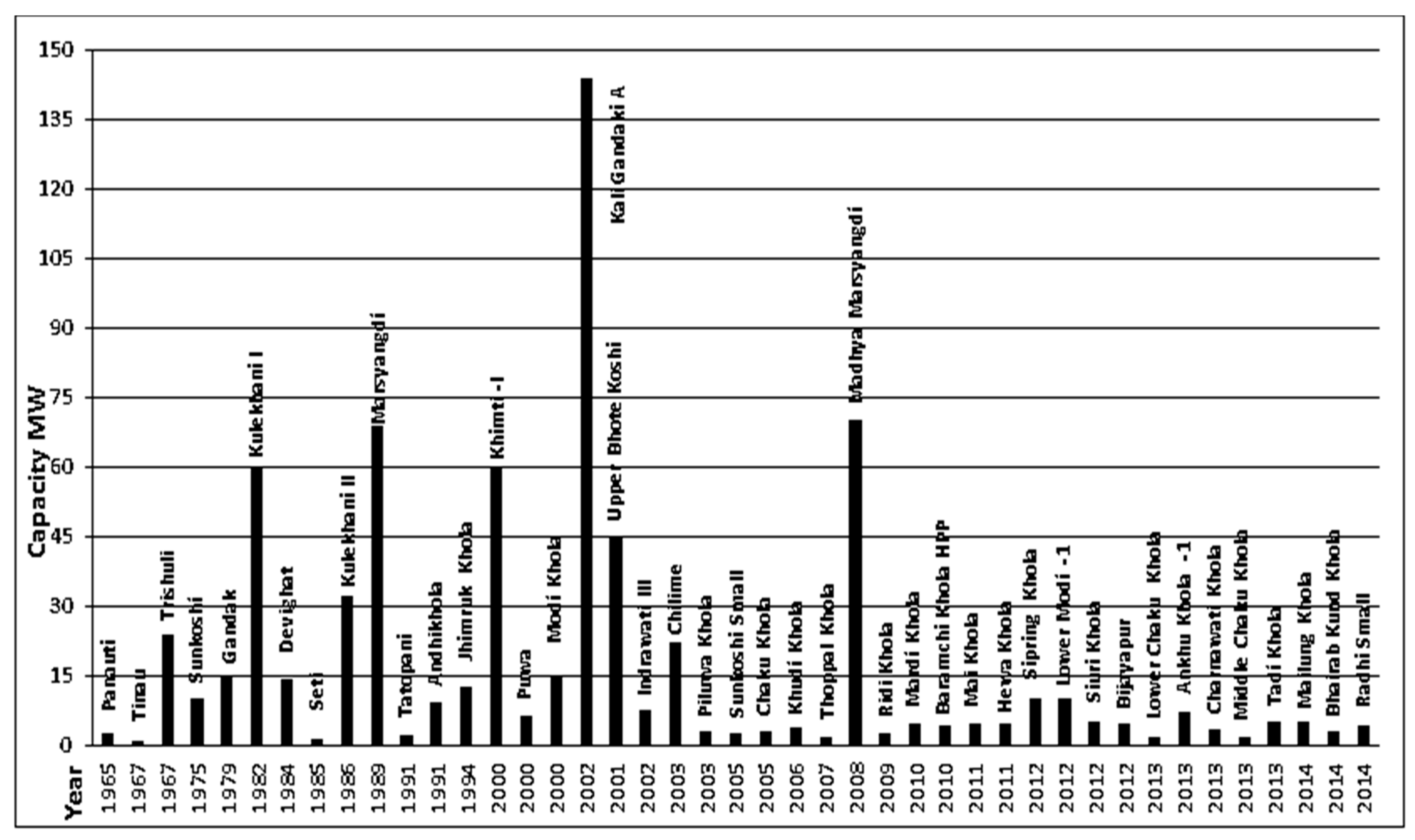
It is important to review the present status of hydropower in Nepal, as shown in
Figure 1. It reflects country capacity and experiences. Starting from the year 1990, Nepal developed several micro hydro generation projects (micro schemes) [
23], mostly with capacity below 100 kW. It also developed a few medium sized hydropower stations, many of which are currently under planning or in construction. So far, the country has completed only one big scheme Kaligandaki (144 MW) and few are under construction including Upper Tamakoshi (456 MW). Large schemes are not implemented yet, but serious discussions are ongoing. Trained human resources pool through academic institutions and training centers; and foreign universities are expanding. The NEA has already developed a strong pool of 10,000 human resources [
24] engaged in the sector.
There are various perspectives on the deployment of hydropower and available schemes in Nepal, which makes a multi-criteria analysis especially interesting. We are describing different scales of hydropower (as mentioned earlier in part 1.0) under nine different perspectives, namely technical, social, environmental, economic, financial, investment, developer’s, political, and risk perspectives.
Based on a technical perspective, the most appropriate scale is medium hydropower, but the trend indicates in the near future a preference for big scale schemes. Small and micro scale schemes are behind medium and big scale schemes on preference order, but ahead of large-scale schemes.
From a social perspective, while large schemes are not seen as acceptable, micro schemes are readily acceptable. Such micro schemes with a small amount of generation provide only limited electrification coverage. Small hydro schemes seem promising because of available social capacity and the significant amount of power contribution to cover bigger than that from micro schemes. With more power generation and better coverage capacity, medium scale schemes look most appropriate and similar trend also showed these days for big schemes. Large schemes are mainly for energy export to neighboring countries and hence have no contribution in electrification coverage within the country.
From the economic perspective, considering the immediate energy needed to strengthen the country economy and the primary as well as secondary economic benefits and resources available, big schemes suits best. Large schemes could be preferred in the long run, but presently at lowest preference because of energy export and least economic benefit contribution to the nation. Medium and small hydropower is attractive and preferred correspondingly. Micro schemes have limited contribution due to low power generation at comparatively very high cost.
From the environmental perspective, some of the environmental concerns in the Nepalese context are sedimentation, floods, climate change, landslides, and river continuity. On environmental perspectives, small hydro schemes seems best suited in Nepal. Next best is micro schemes. Medium schemes are preferred but only with additional precautionary measures on environmental concerns. While big schemes are less preferred, large plants are on least preference in present context.
Political perspective, which includes government interest on plan, policies, strategies, and priorities, at present, looks highly ambitious and the government is looking for a quick fix on energy issues. While the government is continually supporting decentralized energy development for access, recent interest is for the bigger size project (JICA, 2013) like Upper Tamakoshi (656 MW), Budhigandaki (600 MW), and Nausyalgad (400 MW). Hence, in the present energy need and following government recommendations, big schemes are the most appropriate, followed by medium scale power plants. Though the government is willing large schemes, but will be on priority only in the long run. To meet the urgent energy need, micro and small scale is definitely not an appropriate solution, but policy support for micro schemes for remote area energy access is also on preference, ahead of small schemes.
From the investment perspective, due to political unrest in the past, investors were not willing to take high risk. However, because of falling prices on the electro-mechanical equipment, confidence built in the past, and the improving political situation during recent years, developers’ interests are slowly shifting towards medium and large size projects. Still, the majority of developers are afraid of cost overrun or time overrun, which limits their interest to small and medium range. Huge upfront cost, a long gestation period, and uncertainties prevent developers from big and large-scale schemes. Due to several constraints compounded with lack of experience, Nepalese developers are highly interested in small range of scheme followed by medium schemes. Micro schemes are not interesting for developers, whereas large schemes are beyond their consideration.
In-country available financial resources could meet significant funding requirement provided appropriate financial engineering is worked out. With available resources and willingness of financing partners, medium scale schemes seem most feasible followed by big scale schemes. Large schemes are not feasible with in-country financing and are on lowest rank for now. For small hydro, private sector is already involved but looking towards medium scale schemes to benefit economies of scale. Micro schemes are not attractive for private investors, even though there is support available in terms of grants and subsidies.
Country preparedness is a very important perspective. The hydropower sector is an integral part of water resources, which integrates several other resources like agriculture, forest, tourism, etc. Intensive homework and preparation is a must for assuring proper benefits from water resources and hydropower. Additionally, support infrastructure is extremely important in hydropower sector development. Large projects, however, would probably require power export contracts with India as prerequisites and the country is not prepared to mark, but big schemes through proper preparation could be considered. The country is in very a right moment to benefit in small and medium schemes followed by micro schemes.
Hydropower by nature suffers from verities of uncertainties and risk. Time overrun and cost overrun are very common and generally increases with the size of the project [
25] (Sovacool et al., 2014). Considering all applicable risk to Nepalese hydropower sector, one can conclude that the least preferred scheme will be large followed by big size. Small hydropower development seems like the most appropriate scheme and similar will be medium. Micro schemes are also less risky but comparatively fall behind medium and small due to its severity with climate risk and revenues collection issues from poor communities.
3. Methodology
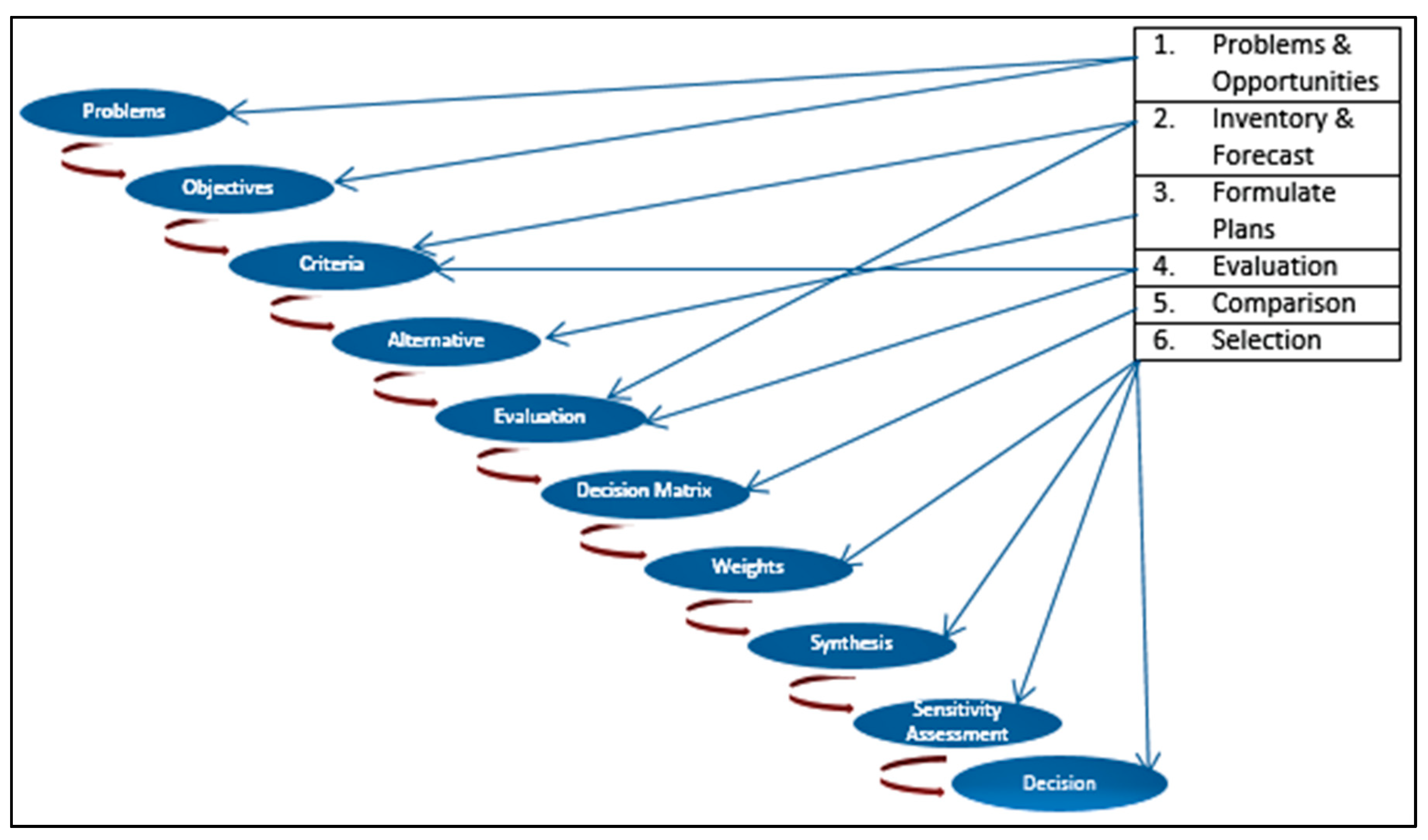
Multi-criteria decision making (MCDM) is applied following a certain process starting from problem identification to final decision recommendation [
26]. Accordingly, present research based on multi perspectives analysis of hydropower is multi criteria issue and follows the overall MCDM methodology [
27] as depicted here in
Figure 2.
Once a problem is identified along with research objectives and alternatives, one has to further follow MCDM methodological steps for developing decision framework with applicable perspectives, possible stakeholders, and corresponding weightage of perspectives. Based on available information from various sources, including all possible perspectives (decision criteria), a tentative decision framework is proposed. This further need to allocate perspectives importance (weightage) for drafting a final decision framework, for which stakeholder’s consultation is followed. In present research, an electronic survey was conducted. Data obtained is gathered for further processing in a suitable MCDM. At this stage, an important task is to identify suitable MCDMs applicable in hydropower analysis.
With the specific interest of hydropower, the mostly used Multi-Criteria Analysis (MCA) methods are fuzzy set analysis, distance to ideal point, pair wise comparison, and outranking methods [
28,
29]. Among them, widely applied in hydropower analysis is pair wise comparison and outranking methods [
30]. It is found that scoring methods are frequently applied MCDM for natural resources, water management, and energy planning including hydropower. It is important to note that MCDA are derived as indicators of the strength of various preferences from various stakeholders and results also differ from methods to methods. Hence, the use of different MCDM tools to cross verify the result is very important [
31]. For sake of simplicity, in the present research, multi perspectives analysis integrated with simple scoring could be a quick assessment to understand hydropower in Nepal. One important part of the study focused on scoring application to develop a hydropower decision framework to evaluate and rank alternatives. While results in terms of numerical tables are helpful, visual displays are often more intuitive for comparing them.
This research first conceptualized in 2013 and then followed several stages untill 2018 to complete. Details methodology followed in the present research, specifically start from identification of perspectives untill analytical scoring delivering objective of the research are presented in the following section. Here also include stakeholder’s identification, interactions details, and weightage determinations for perspectives considered in this research.
3.1. Literature Review and Perspectives Identification
To begin this research, many relevant data were obtained from various sources such as literature review, including published scientific papers and policy reports, and interviews with experts and various databases. Information was collected from several sources such as government organizations and ministries dealing with energy, water resources, forests, professional organizations including engineering, geological and environmental organizations as well as power producers and private companies. Information and data used in this analysis is from the past 20 years and the majority were sourced from Nepal. This information was useful to understand country context related with hydropower development. Relevant information and data could be organized under a different hydropower perspective [
32,
33] as shown in
Table 1.
It is important to mention that hydropower is commonly reviewed under perspectives namely technical, social (including developer’s as well as country preparedness), economic (including financial), environmental, and political. However, within Nepalese context, it is felt necessary to review financial and developer‘s preparedness and uncertainty separately while analyzing hydropower. Because of financing being the main bottleneck of hydropower development in the country, one should review this perspective separately rather than combining with economic. Similarly, developer’s perspective as well as country preparedness are very crucial for Nepal at this stage and should not be generalized by combining with social perspectives. Also, several of hydropower initiatives are failing due to different uncertainties they are confronting. Within this context, it should be reviewed separately instead of generalizing it by associating with other perspectives.
3.2. Drafting Framework and Developing Corresponding E-survey Questionnaire
Now it is mainly identified and further focused to search on issues related with suitability of different scale of hydropower generation (as mentioned in art 1.0) in Nepal and factors to be considered for comparison and evaluating their priority order. Hence, such information kept in tabular (X-cell) form could be useful for comparison of alternative options on different perspectives and making hydropower-related decisions, policies, strategies accordingly. Such decision framework in the form of X-cell table is shown in the results section of this report.
3.3. Stakeholders Identification for Electronic Survey
A survey questionnaire was drafted in years 2014/2015, and the first round of consultation followed with some of the prominent professionals, planners, and MCDM experts involved in the hydropower sector of Nepal. Following their suggestions, an electronic questionnaire was prepared with descriptions and guidelines to fill it. The survey form contained several questions and each question with alternatives to be ranked, on scale of 5 (5 highest to 1 lowest) on priority order, by the respondent. This survey contributes mainly to see ranking order of hydropower schemes classified on the basis of generation capacity and also through importance given to different perspectives helped weightage allocation for different perspectives considered in this research.
A stakeholder is any individual, group, agency, or organization affected by a project and/or with concern or interest in a development project and its outcomes, or having common resources impacted by a development project. Stakeholder engagement is critical for the success of hydropower development in terms of sustainability and efficiency [
34,
35]. It is very necessary to identify all stakeholders likely to influence or be impacted by decisions on the hydropower development and engage them from the early stages to participate on a voluntary basis in the dialogue. A stakeholder should be treated as a “Partner in Development” and not as an opponent of the project. Strengthening partnerships and mobilizing resources remain essential to achieve effective hydropower development. Therefore, the sustainable development and operation of hydropower should rely on “shared vision, shared resource, shared responsibilities, shared rights and risks, shared costs and benefits” principles [
36]. It is important that groups need to see there is a reason for them to engage, i.e., that they can influence decisions and outcomes that would be better than if they had not participated. It is crucial to understand early in the process the stakeholder interests and the power relations between these stakeholders. Hydropower involves several stakeholders who are either impacting or impacted due to the project. Some notable stakeholders could be planners, economists, governmental authorities and institutions, environmentalists, planners, engineers, sociologists, civil society, communities, contractors, owners, investors, financers, consumers, academics, researchers, suppliers, and similar others.
An electronic survey involved those stakeholders related to the hydropower sector of Nepal. Attention is also paid to balancing the number of respondents from each group of stakeholders to avoid any bias. To make the survey more reliable, a minimum of 70 responses were intended and accordingly double of this number (135) respondents were identified. This list was developed through reviewing experts listed in documents, expert lists in professional organizations or committees, web links for related organizations, and personal communication. The availability of a name and details for a respondent through various sources was the basis to list the respondent, which avoids bias and maintains the survey within the defined boundary. Their email addresses and phone contacts were collected for further follow-up if required. In the present case, the questionnaire is sent to potential informants all within a boundary related to hydropower but belonging to several groups and at different levels of professionalism. Due to outdated contact emails, many of the emails did not arrive and only 110 of potential respondents were successfully contacted. Further details on the survey are presented in
Table 2.
3.4. Weightage Allocation for Perspectives
Identifying perspectives and their influence (weightage) on hydropower decisions is a very important part of decision making. Hence, it is necessary to ensure that we are following all the required perspectives with their weightage in appropriate manner. This aspect has been achieved in two steps.
First, from the secondary sources of information (evidence-based), a tentative list of perspectives and allocated weightage were studied. All nine perspectives were evaluated for weightage based on scope of perspectives applied in this research. This allocation was further discussed with experts of MCDM and professionals of hydropower which was further fine-tuned.
In the second step, these findings were cross verified with an electronic (questionnaire) survey, where few questions were targeted on preferences of respondents. Applying weighted average, perspective weightage was further fine-tuned. Hence, in this way, agreeable wastage was allocated to different perspectives considered in this research.
3.5. Analytical Scoring
An analytical analysis and score allocation are based on evidences and reasoning over the collected information. Sometimes, it is also called evidential reasoning (ER) MCDM. For a finite number of alternatives, simple scoring based on evidential reasoning approach could be useful to analyze them [
37].
3.5.1. Analytical Scoring Fundamentals
Here are the fundamental steps of this approach: problem identification by setting of the objective, identifying the alternatives, identifying the goal (main criteria) to reach the objective, identifying attributes, i.e., criteria and sub criteria, establish a standard of measuring for qualitative and quantitative information and develop evaluation matrix, and follow scoring to evaluate alternatives.
Once alternatives and criteria are identified, then an evaluation matrix is formed. Suppose there are M alternatives and each alternative has N attributes values. A decision matrix is an M×N matrix whose element xij indicates a value or an assessment of the i-th alternative on the j-th attribute.
Further evidential reasoning (ER) framework including the concept of the attribute hierarchy, the distributed assessment structure using degree of belief, and the evidential reasoning approach used in aggregating degrees of belief from lower level attributes to higher level attributes. The most important feature of the ER framework is that it employs a degree of belief structure to represent an assessment as a distribution.
ER approach is the latest development in the MCDM area. ER approach uses an extended decision matrix, in which each attribute of an alternative is described by a distributed assessment using a belief structure. The ER approach employs an evidential reasoning and grades are used for assessing a qualitative attribute of an alternative. A commonly used set of grades for assessing the quality could be {Excellent, Good, Average, Poor, Worst} and for assessing quantity like the price, could be {Very Low, Low, Average, High, Very High}. It should be noted that there are no restrictions on how many grades and what grade names can be used for each attribute. A different number of grades can be used for different attributes. Grading is subjective to degrees of belief which basically is the confidence level of an attribute being evaluated to a grade. The belief degrees could be generated from a survey, group decision-making, or by mapping evidence related to the standards of each grade.
3.5.2. Workflow on Application of Analytical Scoring
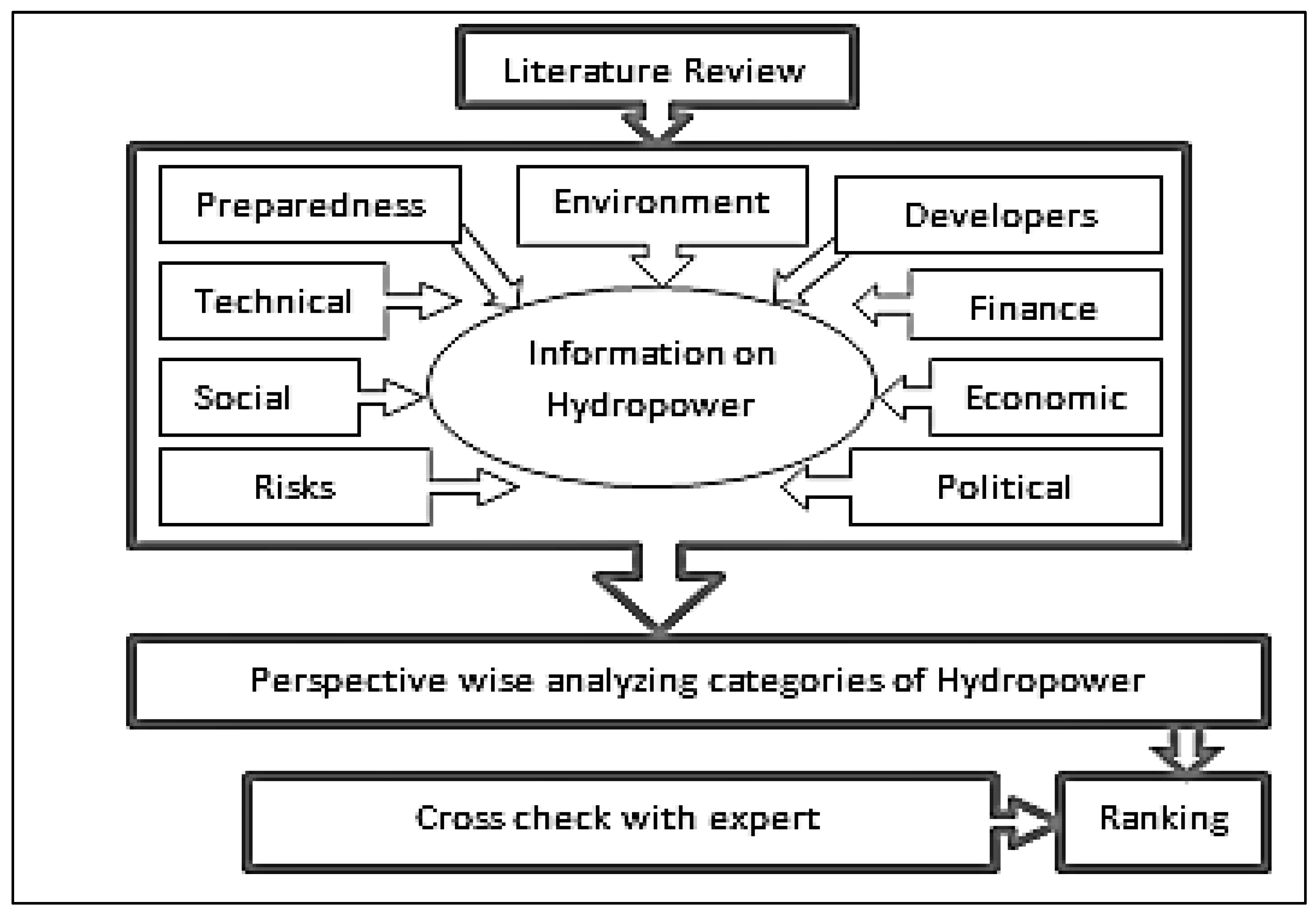
The research work follows four steps—the very first is literature review followed perspectives wise information and data synthesis; developing evaluation matrix, and finally ranking and prioritizing the alternatives. Schematic views on procedural steps are presented in
Figure 3.
In absence of required data specifically in the country like Nepal, available literature and secondhand information will be helpful to analyze within different perspectives. Such an information bank could be used for assessing and prioritizing the hydropower schemes. Alternatives under different perspectives reviewed to develop an evaluation matrix. This will be further processed with weightage assigned to perspectives. A final score against each alternative will be assessed. Alternative with the highest score is ranked top and identified as the best fit. The ranking order of alternatives follows with their corresponding scores.
3.5.3. Sensitivity Analysis
A sensitivity test of the framework thus developed is next important to perform. In addition, sensitivity analysis while applying such a tool to assess the robustness of results is very important. Sensitivity is a kind of business visualization. In many instances, due to error or uncertainty in the method or model selection, the decision maker’s preferences, context interpretation, identification of criteria, criteria weights, lack of subject knowledge, and alternative selection [
38] results may differ from what they really should be. By applying sensitivity analysis, robustness of the results is checked and discussed in the results section.
4. Results
During our research, various alternatives, from micro, to small, medium, big, and large schemes of hydropower development were evaluated from various perspectives, including technical. Social, economic, environmental, political, financial, preparedness, uncertainty, perspective of developers, and the overall priority. The evaluations were provided by experts involved into hydropower development in Nepal (
Table 3).
While evaluating each perspective against alternatives, a scale of 1 to 5 is chosen. A detailed explanation against each perspectives scoring were provided along with a questionnaire. Score 5 is for highest and correspondence to excellent positioning of that alternative on that particular perspective. Similarly, score 4 represents for good, 3 for moderate, 2 for acceptable and 1 for lowest. An evaluation matrix developed with corresponding grading of alternatives with weight is shown in the following table (
Table 4). Weight assigned for further assessment is derived in consultations with experts working in the country.
This evaluation matrix further processed with weight assigned to perspectives results into ranking or final score as shown in
Table 5 below. This will provide details of perspective-wise scores for each alternative. Finally, at the end, an overall score against each alternative is very helpful to rank them, as shown here.
Hydropower schemes (as alternatives) were evaluated with respect to the nine different perspectives and their allocated weight. One important factor in this research is about the weight of each perspective. Literature and projects documents obtained from developers [
39] and donors [
19] of hydroelectricity mostly focus on economics and financial sustainability of the project. This clearly indicates that economics and financial perspectives have higher weights. Government as the decision maker mostly encourages economics benefit within the existing policy and emphasize on ensuring social benefits. Such social and policy perspectives are also ranked with high weightage by researchers [
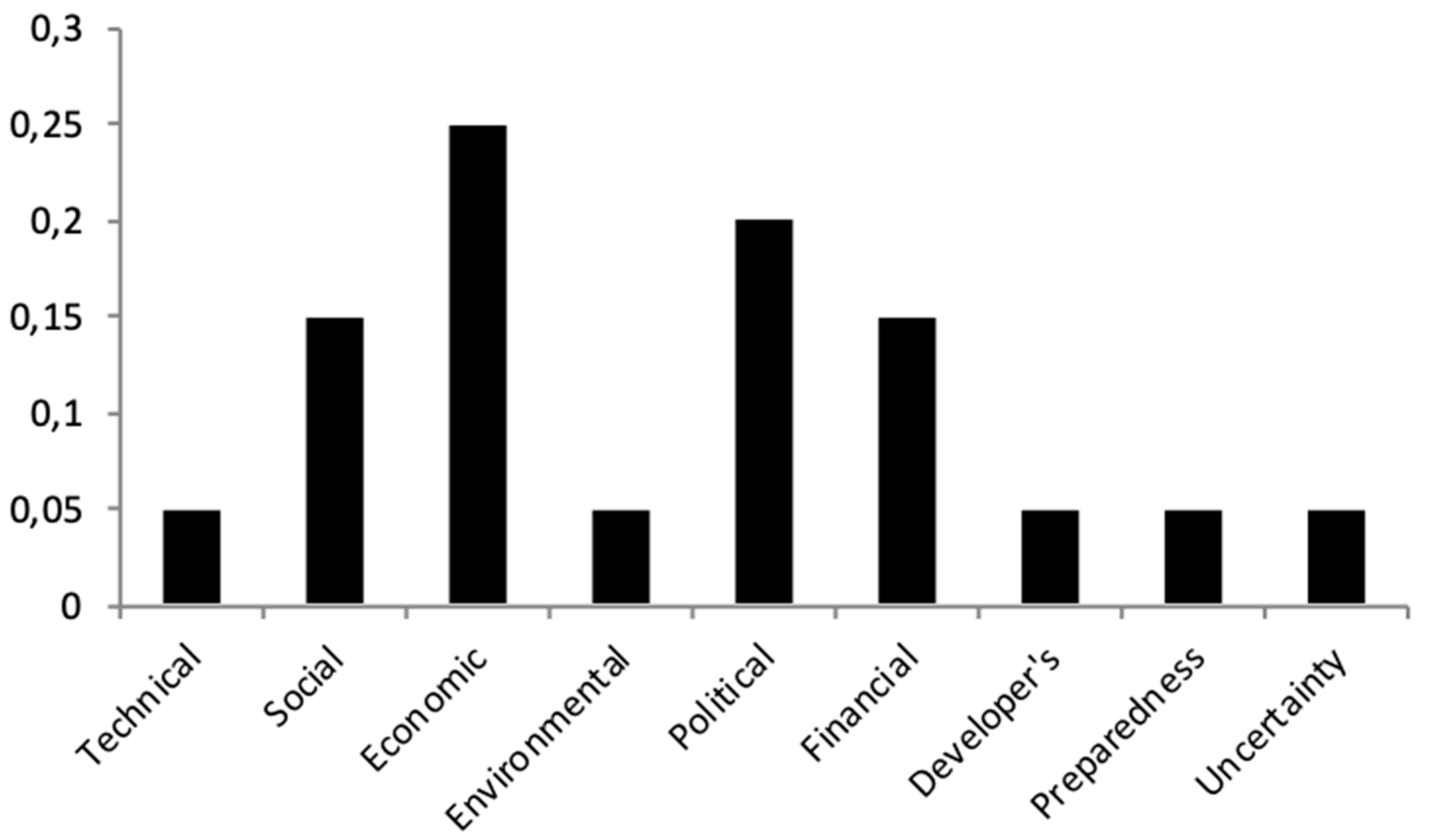
40]. Accordingly, in this analysis we consider most important as economics perspective and then after political, financial, and social. All other perspectives considered (including environment) are also important, but with comparatively less weightage. It was noticed that the environmental perspective in hydropower analysis was just getting attention but still with least weightage. Experts working in this field also agreed on the way weightage assigned in this study. The following figure (
Figure 4) shows the weight allocation comparison for all perspectives.
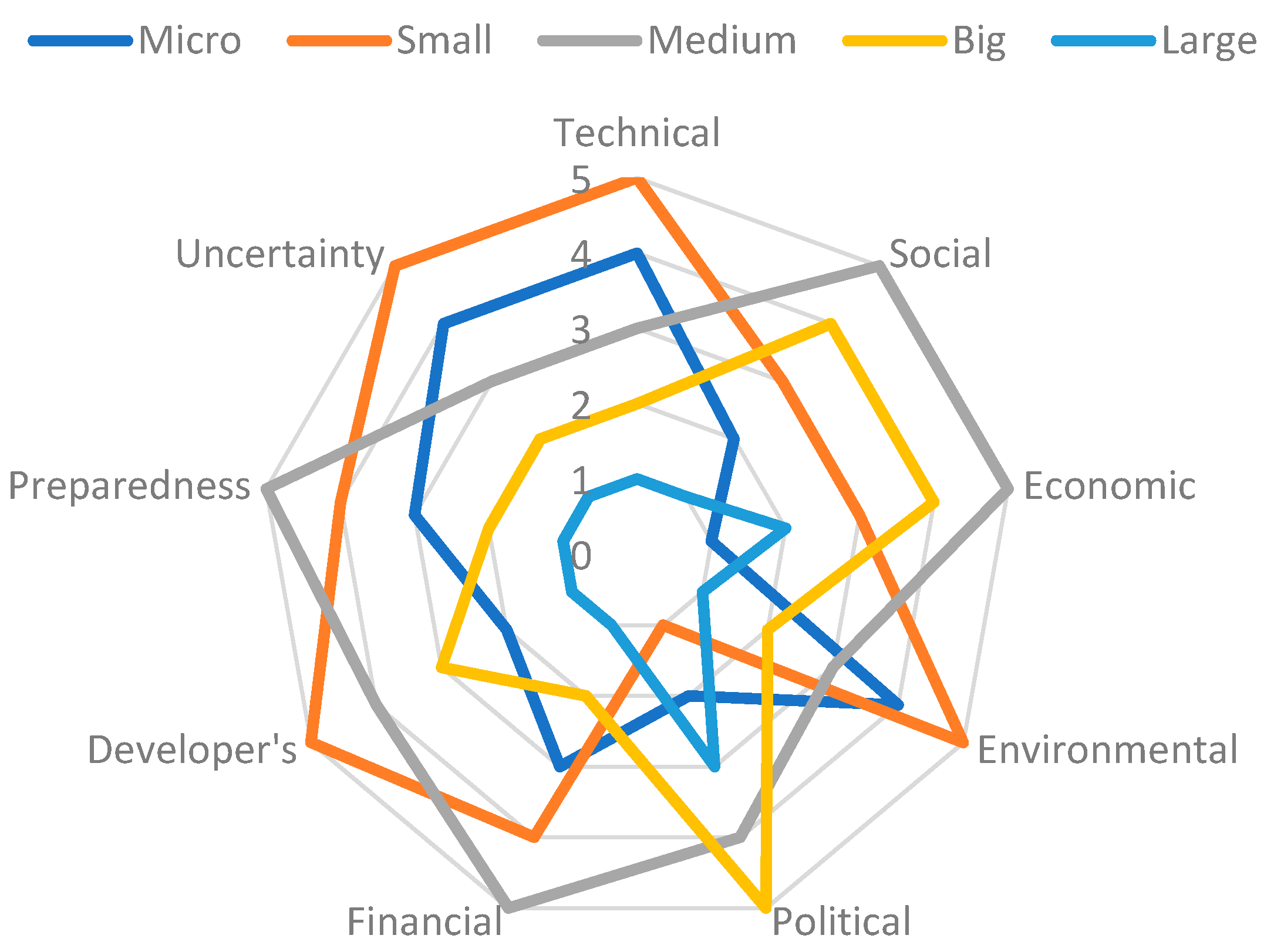
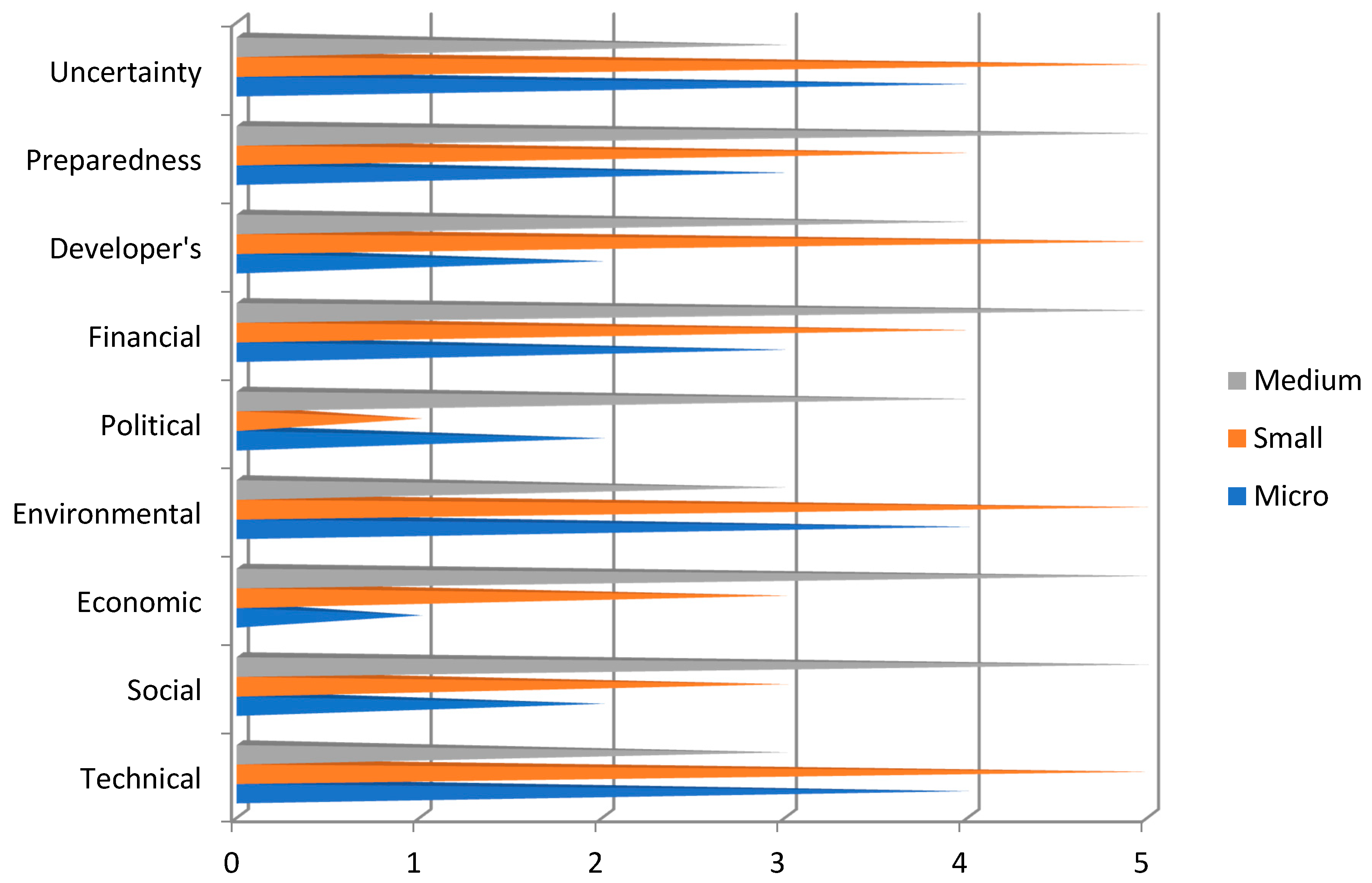
A careful look into the evaluation matrix suggests that medium schemes scored highest in the majority of perspectives, followed closely by small and then by big schemes. Large schemes scored lowest and micro remains at fourth on scoring. A quick comparison is presented in
Figure 5. This figure provides a lot of information in one place and allows to compare them quickly. For instance, one can see that large-scale schemes are poor performers whereas medium and big schemes look more dominating on almost all perspectives. In between seems small and micro schemes. Hence it gives an indication that within existing country context, it will be good to focus intensively on medium, big, and small hydropower for possible energy meet. It does not mean that other alternatives are not wanted, but they may be attractive due to specific reasons. Overall, one can say medium makes more benefit to the country.
So far, we have reviewed alternatives on simple scoring, but the scenario or ranking will be influenced if we properly allocate the weights to different perspectives. Here, one can find final score which helps to rank the alternatives is also presented in
Figure 6. For simplicity and more clarity, we are showing comparison among only 3 alternatives.
Here the final ranking obtained is different from earlier ranking obtained because of allocated weights to perspectives. Hence, weight allocation to different perspectives has an important role or influence over the final rankings of alternatives. In the final ranking based on weight assigned to each perspective in present country context, medium schemes remain on top but with strong priority lead by its competitors. It is to be noted that in earlier simple scoring medium scale schemes scoring was very closely followed by small schemes but here in this final ranking small schemes priority falls even behind big schemes. Also, big and small alternatives are closely competing with each other. Far behind them are micro schemes as fourth priority and large on the lowest priority, but their difference (gap) on priority scales has been reduced from the earlier simple scoring. Any change in country situation and weight to perspectives in the future could result change in priority, specifically among the closely competing alternatives.
Such ranking details of alternatives corresponding to different perspectives could be good information all in one place for analyst and planner. For instance, a planner may wish fast track energy project development in the country then he can review the level of uncertainty to fall into a risky plan. Also, he can work out certain perspectives performance enhancement plan to strengthen the ranking or performance expectation from that particular category of schemes. In certain cases, the planner may determine specific perspective enhancement is possible or out of command in given context. This valuable information available as in
Figure 6 or reorganized in a different graph or table could be very effective in developing an appropriate strategy or policy for obtaining desired results.
Further, it should be considered that the assessment of impacts is also related to the perspective of the analyst. A macro-economic approach may yield quite different results compared to a local impact study. As a sensitivity test by variation weights of some of the perspectives by ±5% does not change the priority results, and hence the present ranking and allocation of weights were found reasonable. Thus, we can trust the result of present research, however further cross check and verification is important.
One important observation from the present research is on shift of interest of private and public sector from its earlier preferred scale of small and medium towards medium and big schemes. With successful implementation of plants like Chilime demonstrated the capacity available within the country to handle such scale of projects. This has helped to open avenues for big scale projects like Upper Tamakoshi (456 MW), Middle Bhote Koshi (102 MW), and Chilime (111 MW) and several medium scale projects. This shows the shift of interest and capacity within the country to develop big projects. This could be one reason why big schemes are on second preference after medium scale schemes.
Another fact which is very much influencing in hydropower decision is related with low plant factor nearly 60% of run of river type and only one third generation during dry season [
41]. This is what is provoking for big schemes and recommends storage hydropower plants. Also, the private and public sector has initiated several hydropower projects and currently all together 2157 MW [
42] equivalents through 82 projects are under construction. The majority of them are small size and few of them are medium and big size. Built confidence and associated economies of scale are attracting more plants of medium and big size. With available large human resource both technical and non-technical, infrastructure developed in recent days and awareness raised many developers are interested in big schemes.
5. Conclusions and Recommendations
Our results allow us to assess the status and relative positioning (ranking) of a different scale of generation schemes in Nepal, based on various perspectives. Our methodology included the scoring method with weights allocated to perspectives ultimately delivered the assessment for each alternative with their detail (perspectives wise) and finally scores. While details of perspective wise scores could be helpful for planners or decision makers identifying the appropriate recommendation to obtain desired results or deliverables from specific alternatives, the overall score could be useful to prioritize them. This methodology could be helpful, specifically in the country where severe data gaps exist, but secondary information sources could bridge such data gap.
In general, it is observed that existing or planned infrastructure like roads, bridges, transmission lines, securities in the project area, and local participation are important decisive factor in selecting power projects to enhance its viability. Inclusion of storage type suitable size plants with economies of scale is very important to develop in present time. Nepal needs more homework in the hydropower sector to ensure national interest and avoid regrets in the long run. Furthermore, strong interconnections on hydro-schemes with significant environmental and social impacts in particular displacements of people must be fairly addressed.
The sensitivity and reliability analysis of weights allocation and data collection showed robustness of our methodology. Weight allocation may be one element that could change with certain range. Within a permissible or possible range of weightage variation, results should be reliable and such variation range determines the stability limit of perspectives considered in this research. Here, the impact on the ranking of alternatives by fluctuating weightage by ±5% was tested and the ranking score remained close to previous values and so is ranking order of alternative. It was performed for each perspective, once at a time. While changing weight for one perspective, weightage for others is adjusted to make total weightage to 1 (100%). Weightage changed for every perspective in both directions and ranking resulted in a similar order. Here, one can rely on the framework and proposed weightage for prioritization. Therefore, we assume that our developed framework is reliable and stable with regard to the sensitivity aspect of the framework proposed.
Based on the condensed information and the proposed analytical approach, a medium scale of power generation is best suited in present country context based on multi perspectives considered. Though big schemes are an excellent choice when it comes economies of scale, government preferences, and social benefits, it stands on second priority and falls behind medium scheme. It is because of funding paucity, country preparedness, environmental concerns, and associated risk. Small scale plants are up to an extent eco-friendly and moderate on economies of scale, but power contribution in nation’s energy demand will be very low. Hence, it falls behind medium and large-scale power plants on priority preference analyzed in this study. Micro schemes, effective in energy access, are receiving good policy and subsidies support. These schemes are environmentally friendly and fast implementable with community involvement. In spite of several good features, this scale of plants has a limited generation capacity to cover a wider range and enhancing enterprises or industries. Further, on economies of scale, such plants perform lowest among alternatives considered. Hence, in overall priority analyzed, it stands on fourth rank among the five alternatives. Large scale hydropower schemes are excellent on economies of scale, but export oriented feature limits its economic contribution to Nepal. Further full of uncertainties, lack of resources and country capability at present, and very high environmental as well as social risk put this scale of power generation at the lowest priority in present country context.
Prioritizations concluded so far is with respect to existing country context. This scenario could change with time, experience and capability built within country and international interest in future. The strengthened future economy of Nepal and a strong market existing in neighboring countries may place large and big hydro on priority in the long term.
The present research has some limitations. There is no specific analysis focus based on schemes like run off river, daily poundage, or storage type. Due to resource constraints and time limitation, the present research is carried with secondary data. Globally, several of advance scientific multi criteria analysis tools are available for hydropower sector analysis, which could provide more detail results, were beyond the scope of the present research. Though present study underwrites good understanding and prioritization of hydropower schemes in Nepal, analysis based on Multi Criteria Decision Analysis (MCDA) using scientific tools like Hierarchy Process (AHP), PROMETHE, and ELECTRE is highly recommended to validate and cross check the conclusions of this study. Such research may help decision makers and assist the government to make appropriate policies and adjustment to fast-track hydropower development.