Article

Effects of Organic Wastes on Soil Organic Carbon and Surface Charge Properties in Primary Saline-alkali Soil

College of Resources and Environment Sciences, Jilin Agricultural University, No. 2888 Xincheng Street, Changchun 130118, China
*
Author to whom correspondence should be addressed.
Sustainability 2019, 11(24), 7088; https://doi.org/10.3390/su11247088
Submission received: 6 November 2019 / Revised: 9 December 2019 / Accepted: 9 December 2019 / Published: 11 December 2019
(This article belongs to the Section Environmental Sustainability and Applications)

Abstract

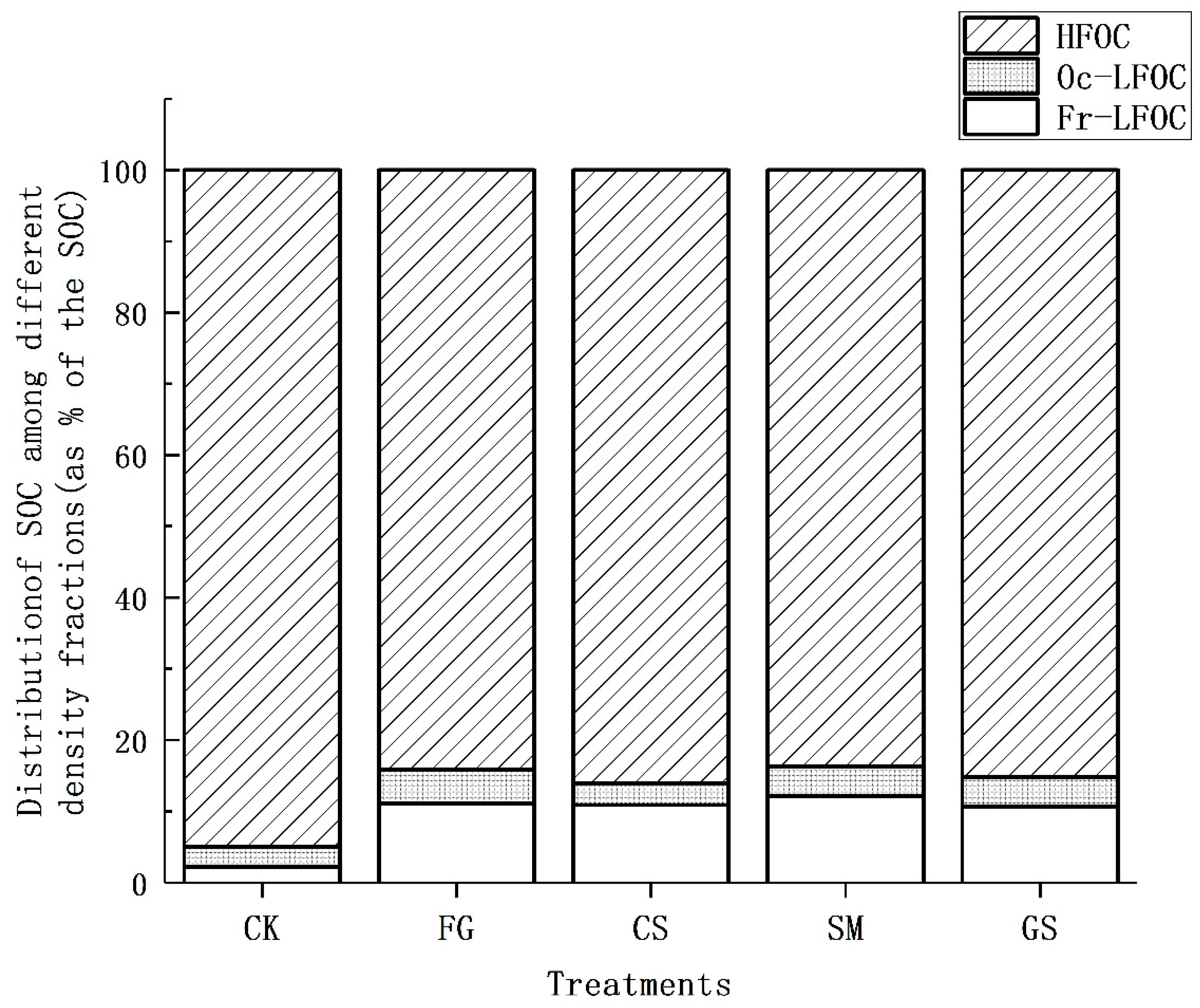
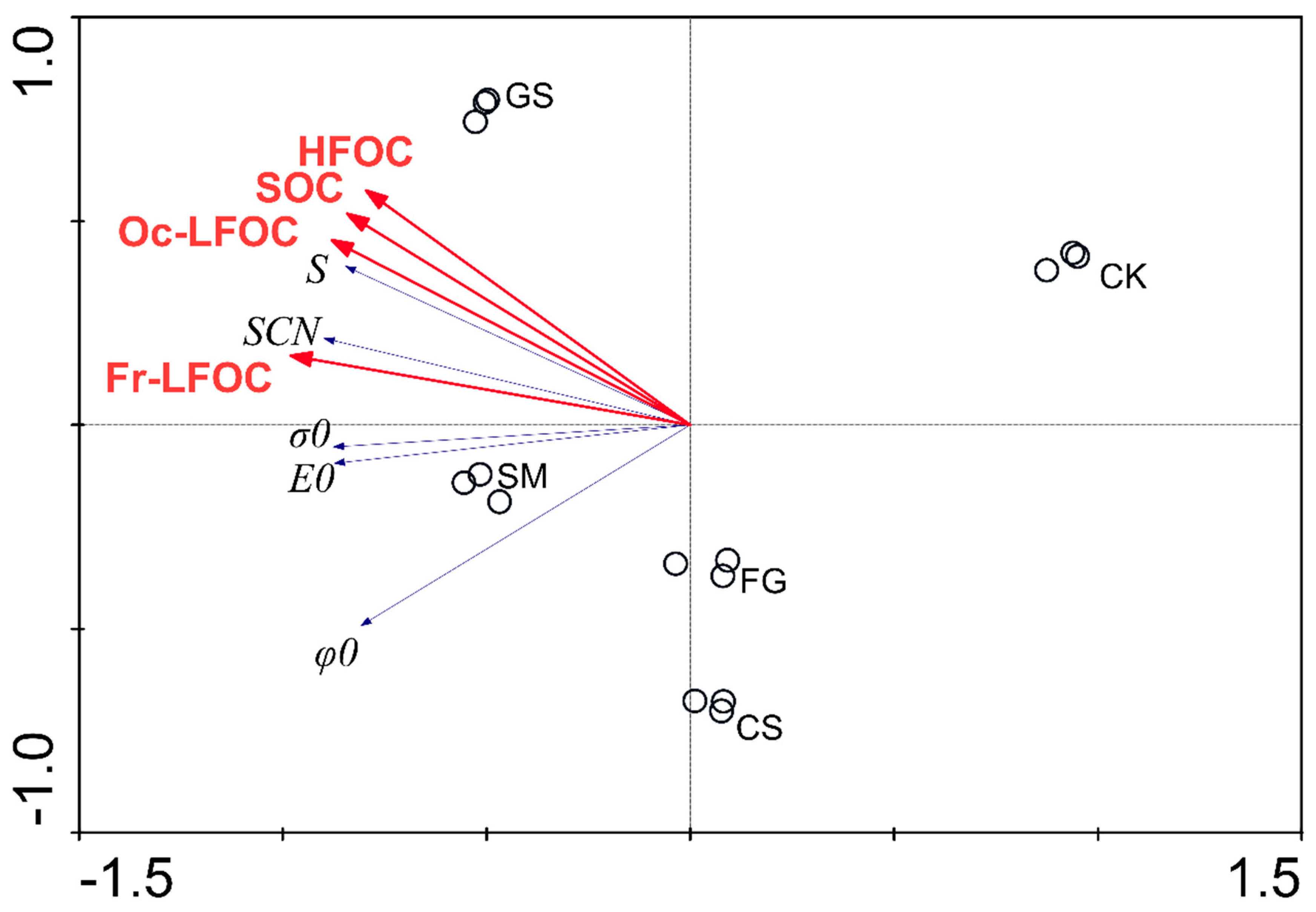
High salinity and low fertility have restricted crop production in primary saline-alkali soils. Soil organic carbon (SOC) and surface charge characteristics affect the soil fertility and soil colloid characteristics of primary saline-alkali soils, respectively. In this paper, the SOC and surface charge properties of primary saline-alkaline soil under organic wastes applications were assessed. Five treatments were involved in this experiment: chemical fertilizer combined with sheep manure (SM), corn straw (CS), fodder grass (FG), and granular corn straw (GS), while chemical fertilizer only was used as control (CK). The content of SOC was significantly different under different organic wastes application (p < 0.05). Treatment GS recorded the highest content of SOC compared with the other treatments. In addition, the content of each SOC density fraction increased after the application of organic wastes. Similarly, the application of organic wastes, increased the proportion of organic carbon in free light fraction (Fr-FLOC) and organic carbon in occluded fraction (Oc-FLOC) in the soil however the proportion of organic carbon in heavy fraction (HFOC) decreased. In this study, we found that treatment GS has a greater impact on soil surface charge properties than other treatments, and through redundancy analysis (RDA) the content of SOC and Fr-LFOC (F = 24.704, p = 0.004; F = 19.594, p = 0.002) were identified as the main factors affecting the surface charge properties of soil organic carbon. In conclusion, GS is the recommended organic waste for ameliorating primary saline-alkali soil, as compared to the other organic waste treatments.
Keywords: organic wastes; primary saline-alkali soil; soil organic carbon; surface charge properties; redundancy analysis organic wastes; primary saline-alkali soil; soil organic carbon; surface charge properties; redundancy analysis