Article

Differentiation of Rural Development Driven by Natural Environment and Urbanization: A Case Study of Kashgar Region, Northwest China


1
State Key Laboratory of Desert and Oasis Ecology, Xinjiang Institute of Ecology and Geography, Chinese Academy of Sciences, Urumqi 830011, China
2
College of Resources and Environment, University of Chinese Academy of Sciences, Beijing 100049, China
*
Authors to whom correspondence should be addressed.
Sustainability 2019, 11(23), 6859; https://doi.org/10.3390/su11236859
Submission received: 6 October 2019 / Revised: 21 November 2019 / Accepted: 28 November 2019 / Published: 2 December 2019

Abstract

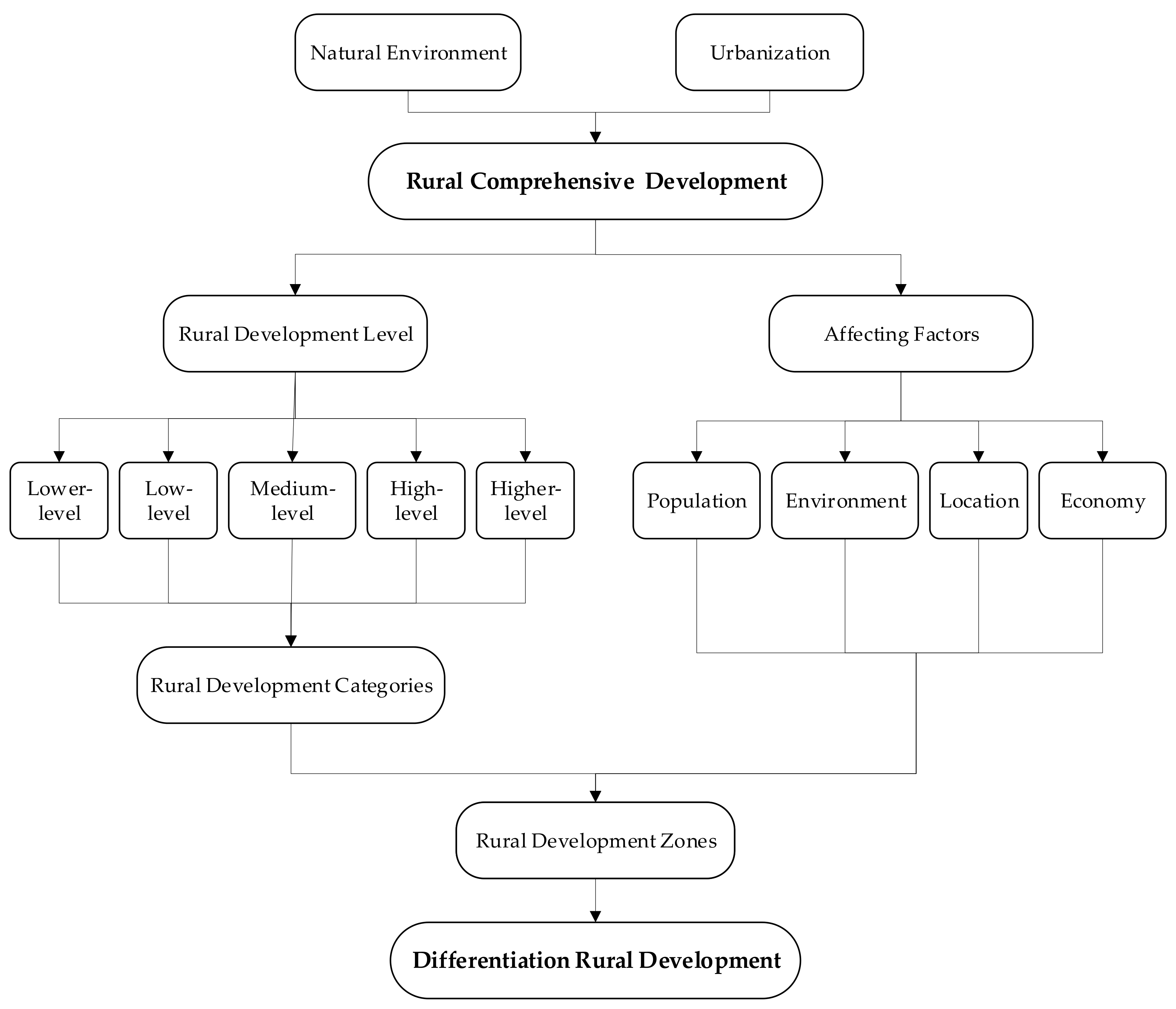
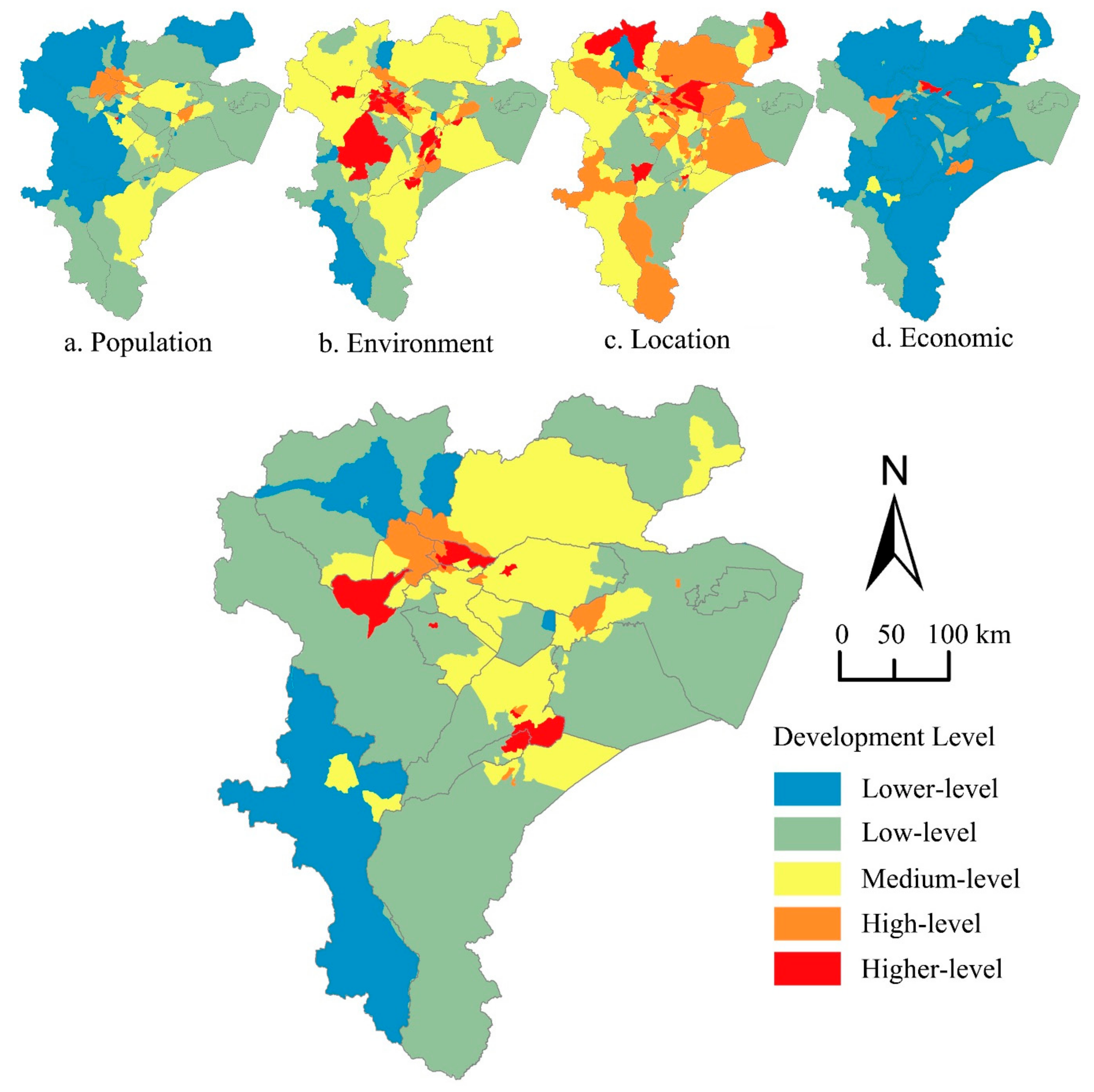
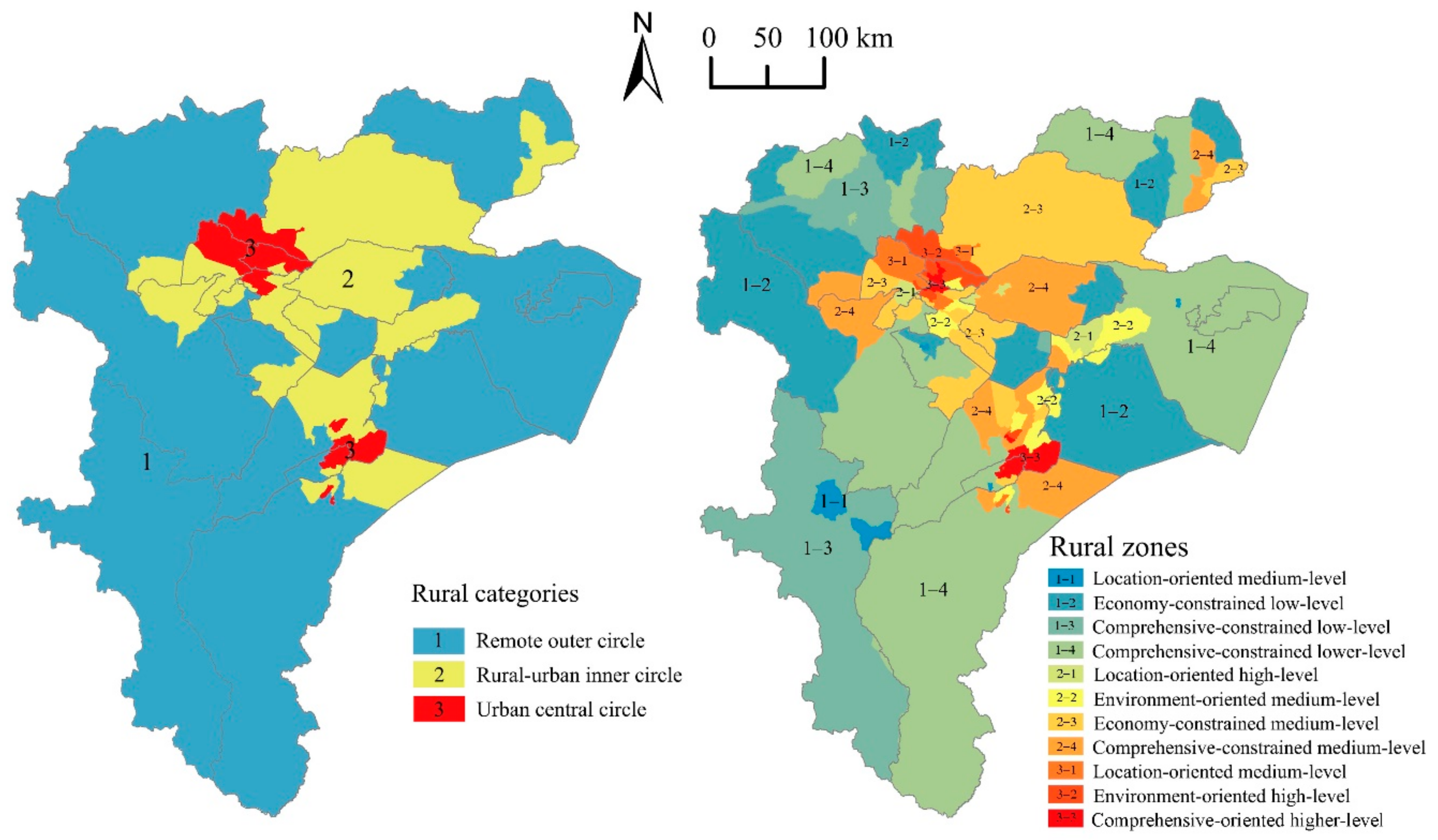
With the socio-economic transformation, the recombination of regional development factors and the followed reconstruction of the rural development elements system have profoundly changed the rural landscape of the Kashgar region in Northwest China. The factors affecting the rural production and lifestyle interact with each other, shaping different types of rural development. Accordingly, basing on the main factors influencing the rural development ability and long-term development potential, the assessment indicator system of rural comprehensive development (RCD) was established to reveal the differentiation of rural development and identify the dominant factors affecting rural development. The principal component analysis method and the cluster analysis method was used to distinguish the different types. The results show that the high-level rural development areas are mainly concentrated in the center of the region, while the low-level areas are mainly distributed in the periphery, with significant spatial differentiation characteristics. We divided the rural development into three categories and 11 zones for which the basic natural conditions and external challenges are different. The categories reflect three possible results of rural development: grow, decline, and vanish, which is in the industrialization development stage. With the transformation of human society and the change of urban–rural relationship in its mode and content, the external economy, society, and changing environment has put pressures on rural areas. Therefore, according to different rural development types, it is necessary to take measures to strengthen the rural areas to cope with external environmental challenges.
Keywords: rural development; differentiation; natural environment; urbanization; Kashgar region rural development; differentiation; natural environment; urbanization; Kashgar region