

Active Learning on Trust and Reciprocity for Undergraduates

Abstract
1. Introduction
2. Materials and Methods
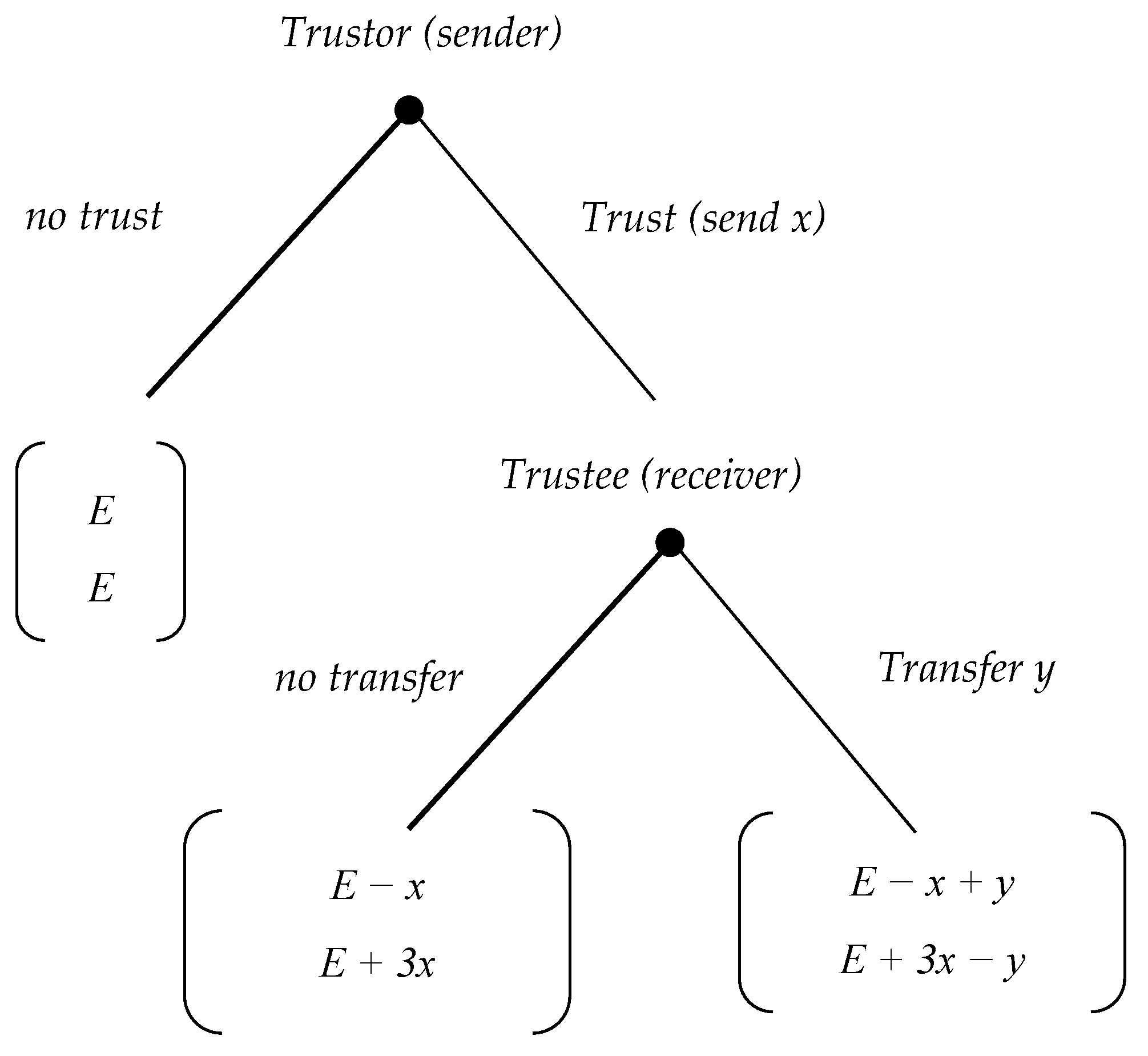
2.1. A Modified Trust Game
2.2. Participants
2.3. Hypotheses
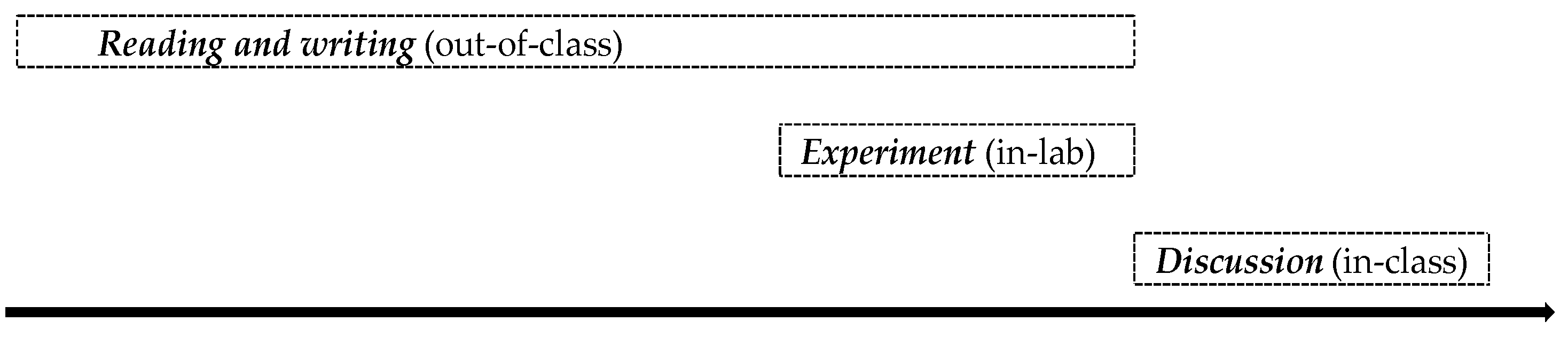
2.4. Learning Materials
2.4.1. Reading and Writing
2.4.2. Experiment
2.4.3. Discussion
3. Results
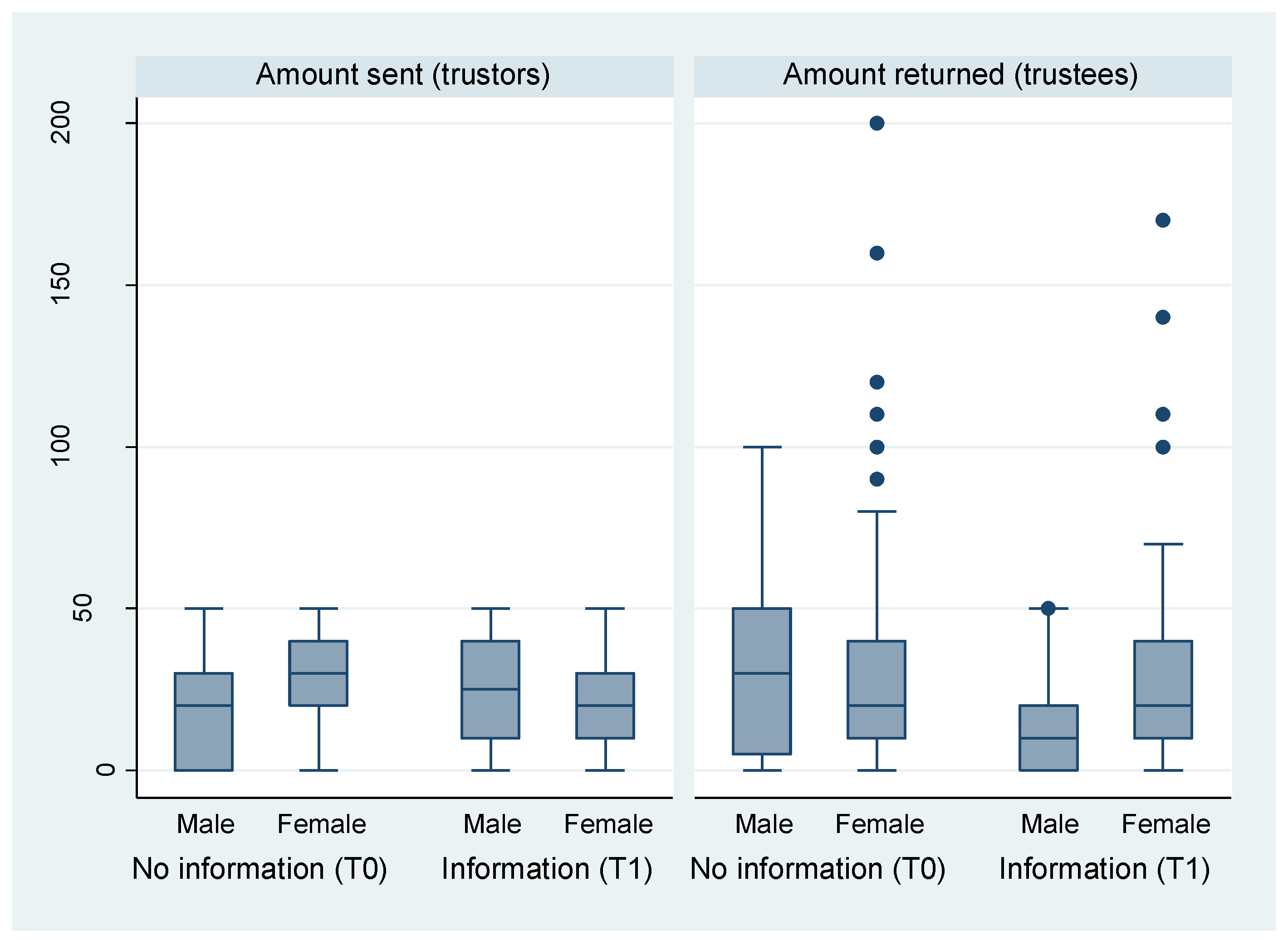
3.1. Experimental Results
3.2. Econometric Analysis
- Studies: It is a dummy variable taking value 0 for Tourism and value 1 for BA.
- Gender: It is a dummy variable taking value 0 for male and 1 for female.
- Employee: It is a dummy variable taking value 1 for students with a job.
- Home owner: It is a dummy variable taking value 1 for students living in their own home.
- Sharing a flat: It is a dummy variable taking value 1 for students living with flat-mates.
- Self-concept of trustiness: It is a general variable composed of four dummy variables: No Trust, Low Trust, Medium Trust, and High Trust.
- Self-concept about solidarity: It is a general variable composed of four dummy variables: selfish, fair, egalitarian, or altruistic.
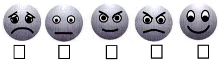
- Empathy: It is a general variable composed of five dummy variables:
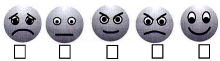
 (Sad),
  (Neutral),
  (Happy),
  (Upset), and
  (Machiavellian).
 - Trust: It is defined as λ and measured as the percentage sent by the trustor (λ = x/50).
- Reciprocity: It is defined as r and measured as the return rate paid back by the trustee.
- Treatment: It is a dummy variable taking 0 for T0 (baseline) and 1 for T1 (treatment with information)


 and
and  (Machiavellian) were statistically significant but with opposite effects. Thinking that the trustor was happy had a positive effect on the trustee’s decision, whereas thinking that the trustor was Machiavellian had a negative effect on the trustee’s decision. Interestingly, all labels related to the trustee’s self-concept about solidarity showed a positive and significant effect. Finally, the variable treatment exhibited a negative and significant coefficient in both models, showing that having information about the other’s accumulated pay-off during the MTG had a negative effect on the trustee’s return decision. We can prove that there is an effect, on average, such that having information about their partner’s accumulated earnings each period affects the return decision of trustees. However, we cannot prove the direction of such effect. In both models, the variable gender was not statistically significant, and therefore, H4 cannot be confirmed.
3.3. Students’ Reflections
4. Discussion and Further Extensions
Further Extensions
5. Conclusions
Author Contributions
Funding
Acknowledgments
Conflicts of Interest
Appendix A.

| Author(s) | Title | Summary | Scope | Sustainability Goals Development |
|---|---|---|---|---|
| José Luis San Pedro (2009) [54] | Humanistic Economic | The book deals with ecology, development, economics and politics. | The need to humanize economics science. | G1. No Poverty G8. Decent work and economic growth G10. Reduce inequalities G13. Climate action |
| Gunter Pauli (2010) [55] | Blue Economy | A proposal for an economic system where the best for health and the environment is cheapest and the necessities for life are free. | Proposing a local and environmentally respectful system of production and consumption that basically works with what you have. | G7. Affordable and clean energy G11. Sustainable cities and communities G12. Responsible production and consumption G13. Climate action |
| James Robertson (1999) [56] | The new economics of sustainable development | The ‘new economics’ is based on the systematic development of individual responsibility, the preservation of resources and the environment, respect for qualitative values and respect for feminine values. | Reflection about the need to place ethics at the heart of economic life. | G5. Gender equality G8. Decent work and economic growth G13. Climate action G15. Life on land |
| Mohamed Yunus (2008) [57] | Banker to the poor | The author presents the history of micro-credits and the challenges he and his colleagues faced in founding Grameen Bank. | To rethink the economic relationship between rich and poor people, and among economics, public policy, philanthropy, and business. | G1. No poverty G8. Decent work and economic growth G10. Reduce inequalities G11. Sustainable cities and communities |
| Mohamed Yunus (2011) [58] | Building Social Business | The book introduces the concept of social business as an innovative business model which promotes the idea of doing business in order to address a social problem, and not to maximize profit. | Proposing a complement to traditional capitalism that may serve the most pressing needs of humanity especially poverty. | G1. No poverty G8. Decent work and economic growth G10. Reduce inequalities G11. Sustainable cities and communities |
| John E. Stiglitz, Amartya Sen and Jean-Paul Fitoussi (2010) [59] | Mismeasuring our Lives: Why GDP Doesn’t add up | The limits of GDP as a measurement of the well-being of societies—considering, for example, how GDP overlooks economic inequality or the environmental impacts into economic decisions. | Assessing how our economy is serving the needs of the society. Proposing new sustainable measures of economic welfare, to measure things that matter. | G8. Decent work and economic growth G10. Reduce inequalities G11. Sustainable cities and communities G13. Climate action |
| Christian Felber (2015) [60] | Change Everything: Creating an Economy for the Common Good | A proposal for a new economic, social and political model for firms to be more solidary, egalitarian and ecological. The key to growth is that firms should work as a social tool rather than as money-making machines. | Proposing a different model based on sustainability, solidarity, cooperation and fair distribution of wealth in all sectors. | G8. Decent work and economic growth G11. Sustainable cities and communities G13. Climate action G16. Peace, justice and strong institutions |
Appendix B.
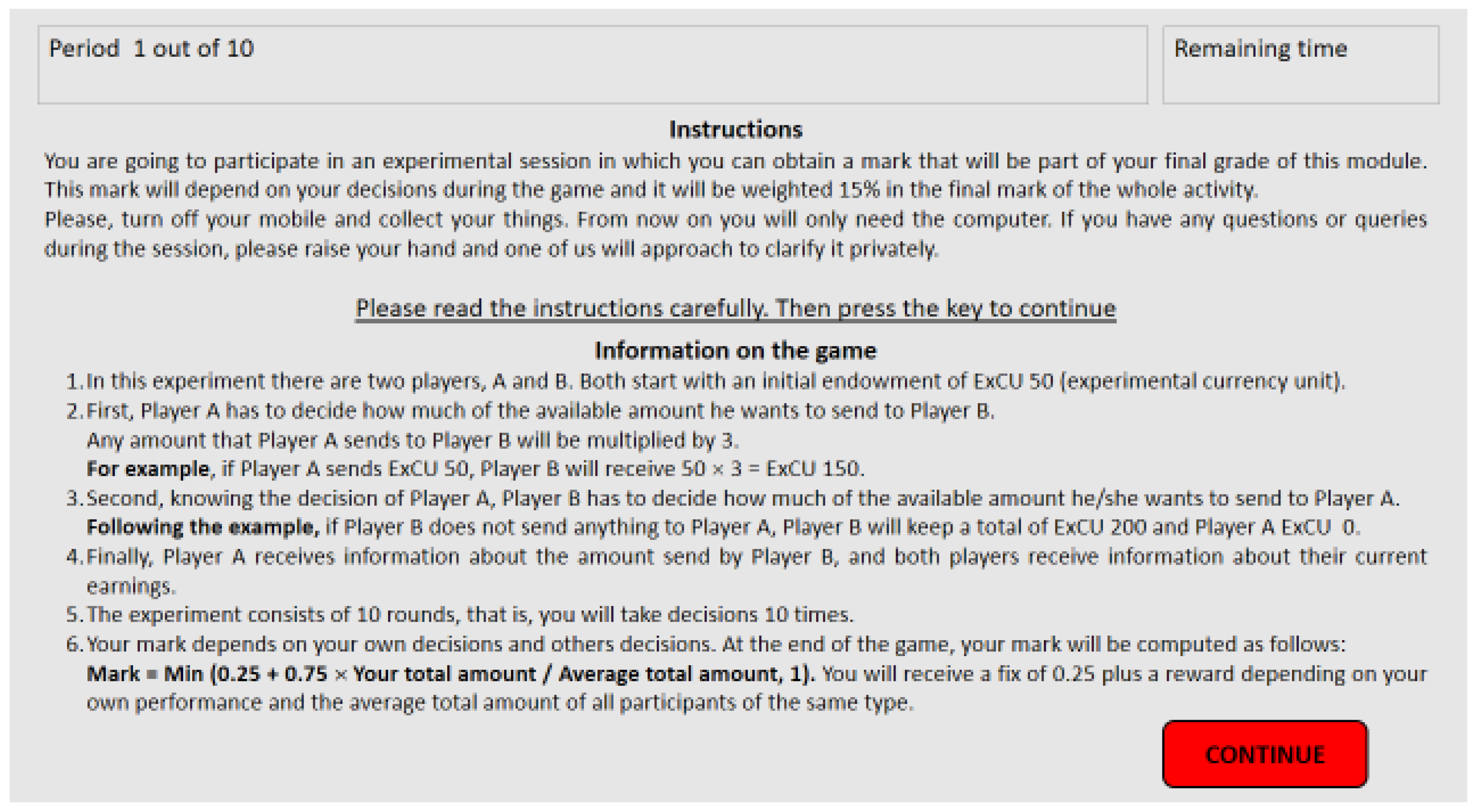
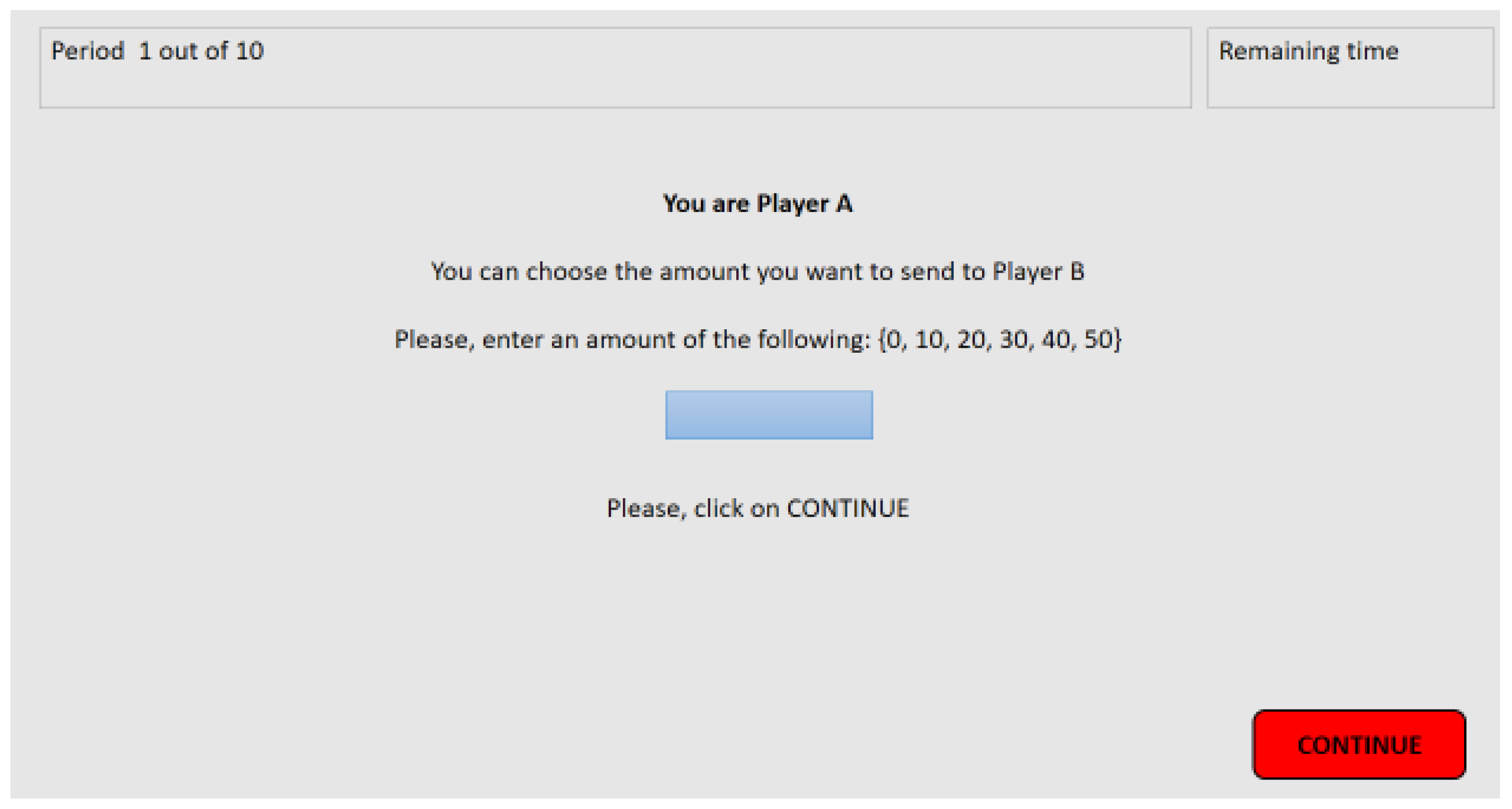
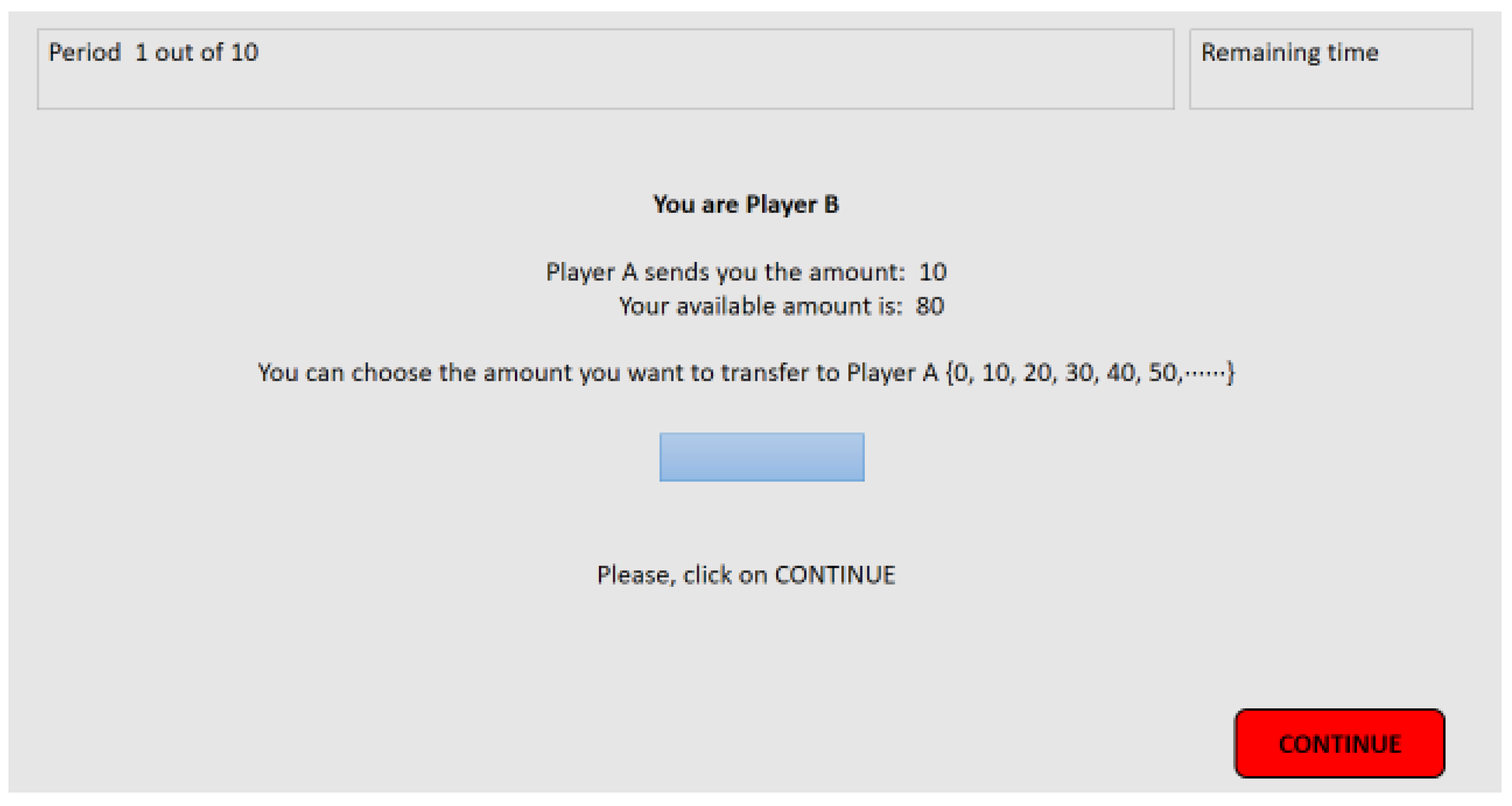
Appendix C. Questionnaire Post-Experiment
| Name and surname: | ||
| E-mail: | ||
| Gender: | Age: | I live with my parents/flatmate(s): |
| Number of siblings: | I am sibling number: | I am a student/I have a job/Grant: |
| My hobbies: | ||
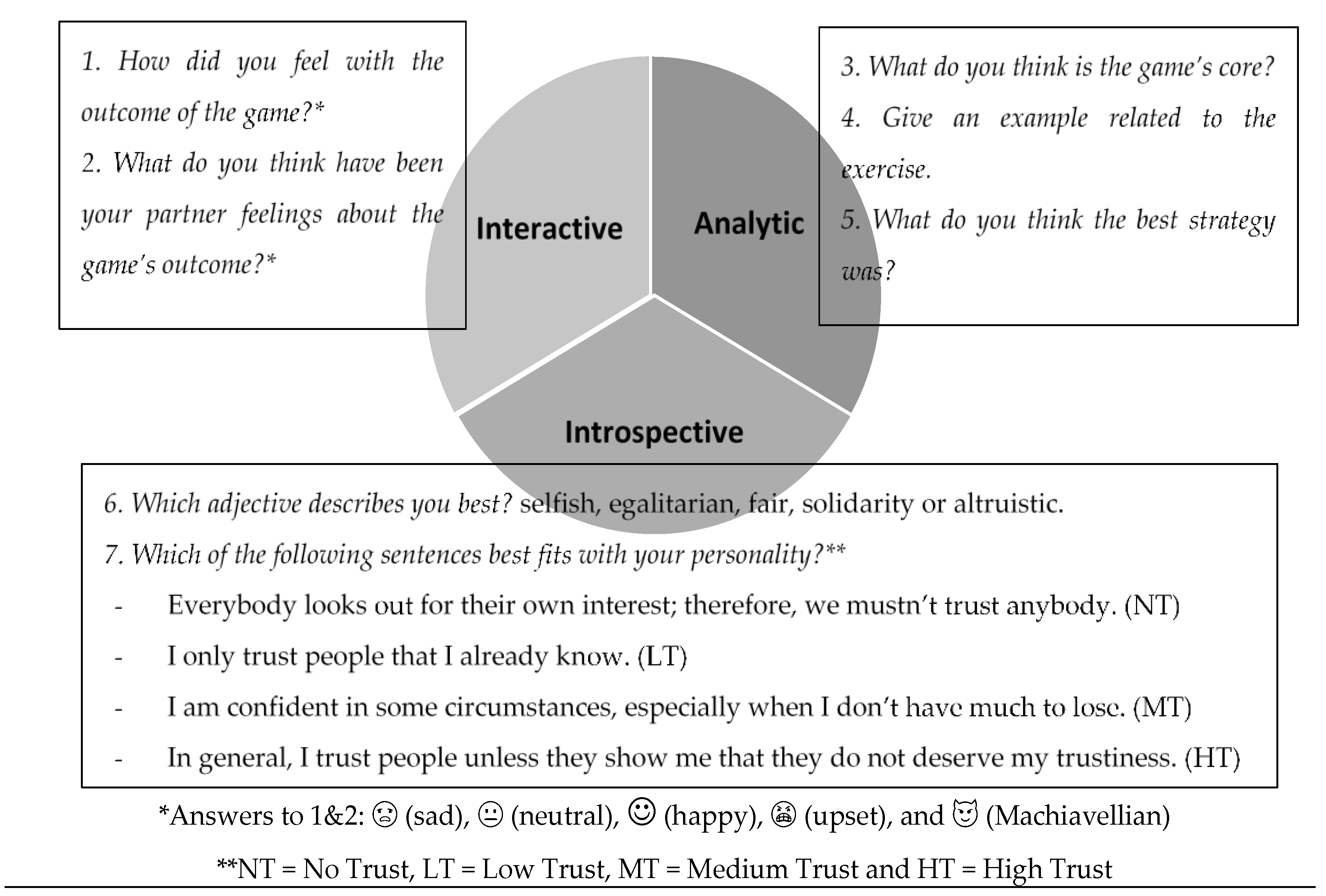
- How have you felt with your final outcome of the game? Please tick a box from the alternatives below.

- Could you please guess your partner feelings about the outcome of the game? Please tick a box from the alternatives below.

- What do you think is the moral of the game?
- Find an example from real life related with the game’s core.
- Which role did you play in the game? What was your outcome?
- Would you have played the same way if your partner in the game were a friend? Can you explain why?
- Would you have played the same way if the outcome was paid in cash at the end of the session? Can you explain why?
- How would you have behaved if playing the opposite role?
- What have you learned about yourself during the game?
- What have you learned about your partners?
- Do you think there was a ‘best strategy’ for each role in this game?
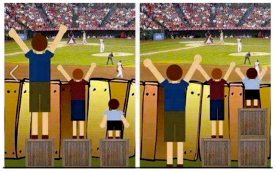
- Have a look at the picture bellow. Tell us which adjective describes you better: selfish, egalitarian, fair, solidary or altruistic.

- Which of the following sentences best fits with your personality?
- ⬜
- Everybody seeks their own interest; therefore, we must trust nobody.
- ⬜
- I only trust people that I already know.
- ⬜
- I trust everyone only in certain circumstances, namely when I do not have much to lose.
- ⬜
- In general, I trust people unless they show me that they do not deserve my trust.
- What do you think is the most effective strategy for achieving your personal, professional and social goals, an individualistic strategy or a cooperative one? Why? Point out pros and cons of each of the two alternatives.
- What values are important to you? Write them in order of priority.
- Was there something you especially disliked about the game?
- Was there something you especially liked about the game?
References
- Tavanti, M. Responsible Management Education in Practice: The Principles and Processes for Educating Socially Responsible and World Engaged Leaders. In Handbook of Research on Teaching Ethics in Business and Management Education; IGI Global: Hersey, PA, USA, 2012; pp. 546–563. ISBN 978-1613505106. [Google Scholar]
- Warburton, K. Deep learning and education for sustainability. Int. J. Sustain. High. Educ. 2003, 4, 44–56. [Google Scholar] [CrossRef]
- Lewicki, R.J.; Wiethoff, C. Trust, Trust Development, and Trust Repair. In The Handbook of Conflict Resolution: Theory and Practice; Wiley Publishing: Hoboken, NJ, USA, 2006; Volume 2, pp. 92–119. [Google Scholar]
- Putnam, R. The Distribution of Social Capital in Contemporary America. In Proceedings of the International Conference on Social Capital, Ann Arbor, MI, USA, 20–22 April 1998. [Google Scholar]
- Barber, B. The Logic and Limits of Trust; Rutgers University Press: New Brunswick, NJ, USA, 1983; ISBN 0813510023. [Google Scholar]
- Khodyakov, D. Trust as a process: A three-dimensional approach. Sociology 2007, 41, 115–132. [Google Scholar] [CrossRef]
- Glanville, J.L.; Paxton, P. How do We Learn to Trust? A Confirmatory Tetrad Analysis of the Sources of Generalized Trust. Soc. Psychol. Q. 2007, 70, 230–242. [Google Scholar] [CrossRef]
- Uslaner, E.M. The Moral Foundations of Trust; Cambridge University Press: Cambridge, UK, 2002. [Google Scholar]
- Corgnet, B.; Espín, A.M.; González, R.H.; Kujal, P.; Rassenti, S. To trust, or not to trust: Cognitive reflection in trust games. J. Behav. Exp. Econ. 2016, 64, 20–27. [Google Scholar] [CrossRef]
- MacCormack, G. Reciprocity. Man 1976, 11, 89–103. [Google Scholar] [CrossRef]
- Laval, C. Les deux crises de l’éducation. Rev. du MAUSS 2006, 28, 96–115. [Google Scholar] [CrossRef]
- Sabourin, E. Education, gift and reciprocity: A preliminary discussion. Int. J. Lifelong Educ. 2013, 32, 301–317. [Google Scholar] [CrossRef]
- Pouwer, J. The Structural-Configurational Approach: A Methodological Outline. In The Unconscious in Culture: The Structuralism of Claude Lévi-Strauss in Perspective; Dutton: New York, NY, USA, 1974; ISBN 0525473580. [Google Scholar]
- Schwimmer, E. Reciprocity and Structure: A Semiotic Analysis of Some Orokaiva Exchange Data. Man 1979, 14, 271–285. [Google Scholar] [CrossRef]
- Levitt, S.D.; List, J.A. What Do Laboratory Experiments Measuring Social Preferences Reveal About the Real World? J. Econ. Perspect. 2007, 21, 153–174. [Google Scholar] [CrossRef]
- Malek, N.P.; Hall, J.C.; Hodges, C. A Review and Analysis of the Effectiveness of Alternative Teaching Methods on Student Learning in Economics. PEER 2014, 9, 75–85. [Google Scholar]
- Kaplan, T.R.; Balkenborg, D. Using Economic Classroom Experiments. Int. Rev. Econ. Educ. 2010, 9, 99–106. [Google Scholar] [CrossRef]
- Emerson, T.L.N.; Taylor, B.A. Comparing Student Achievement across Experimental and Lecture-Oriented Sections of a Principles of Microeconomics Course. South. Econ. J. 2004, 70, 672–693. [Google Scholar] [CrossRef][Green Version]
- Dickie, M. Do Classroom Experiments Increase Learning in Introductory Microeconomics? J. Econ. Educ. 2006, 37, 267–288. [Google Scholar] [CrossRef]
- García-Martínez, J.A.; Gutiérrez-Hita, C.; Sánchez-Soriano, J. Microeconomic education, strategic incentives, and gender: An oligopoly classroom experiment with social interaction. Int. Rev. Econ. Educ. 2018, 30, 100–148. [Google Scholar] [CrossRef]
- Schumacher, E.F. Small Is Beautiful: A Study of Economics as if People Mattered; Random House: London, UK, 2011. [Google Scholar]
- Berg, J.; Dickhaut, J.; McCabe, K. Trust, Reciprocity, and Social History. Games Econ. Behav. 1995, 10, 122–142. [Google Scholar] [CrossRef]
- Johnson, N.D.; Mislin, A.A. Trust games: A meta-analysis. J. Econ. Psychol. 2011, 32, 865–889. [Google Scholar] [CrossRef]
- Smith, A. Income inequality in the trust game. Econ. Lett. 2011, 111, 54–56. [Google Scholar] [CrossRef]
- Xiao, E.; Bicchieri, C. When equality trumps reciprocity. J. Econ. Psychol. 2010, 31, 456–470. [Google Scholar] [CrossRef]
- Greiner, B.; Ockenfels, A.; Werner, P. The dynamic interplay of inequality and trust—An experimental study. J. Econ. Behav. Organ. 2012, 81, 355–365. [Google Scholar] [CrossRef]
- Calabuig, V.; Fatas, E.; Olcina, G.; Rodriguez-Lara, I. Carry a big stick, or no stick at all: Punishment and endowment heterogeneity in the trust game. J. Econ. Psychol. 2016, 57, 153–171. [Google Scholar] [CrossRef][Green Version]
- Dittrich, M. Gender differences in trust and reciprocity: Evidence from a large-scale experiment with heterogeneous subjects. Appl. Econ. 2015, 47, 3825–3838. [Google Scholar] [CrossRef]
- Croson, R.; Buchan, N. Gender and Culture: International Experimental Evidence from Trust Games. Am. Econ. Rev. 1999, 89, 386–391. [Google Scholar] [CrossRef]
- Fischbacher, U. z-Tree: Zurich toolbox for ready-made economic experiments. Exp. Econ. 2007, 10, 171–178. [Google Scholar] [CrossRef]
- Gardner, H. Frames of Mind: The Theory of Multiple Intelligences, 1st ed.; Basic Books: New York, NY, USA, 1983. [Google Scholar]
- Navarro, A. Genoeconomics: Promises and Caveats for a New Field. Ann. N. Y. Acad. Sci. 2009, 1167, 57–65. [Google Scholar] [CrossRef]
- Camerer, C.F.; Hogarth, R.M. The Effects of Financial Incentives in Experiments: A Review and Capital-Labor-Production Framework. J. Risk Uncertain. 1999, 19, 7–42. [Google Scholar] [CrossRef]
- Luccasen, R.A.; Thomas, M.K. Monetary incentives versus class credit: Evidence from a large classroom trust experiment. Econ. Lett. 2014, 123, 232–235. [Google Scholar] [CrossRef]
- Glaeser, E.L.; Laibson, D.I.; Soutter, C.L.; Scheinkman, J.A. Measuring Trust. Q. J. Econ. 2000, 115, 811–846. [Google Scholar] [CrossRef]
- Capra, C.M.; Lanier, K.; Meer, S. Attitudinal and Behavioral Measures of Trust: A New Comparison; Emory University: Atlanta, GA, USA, 2008. [Google Scholar]
- Aksoy, B.; Harwell, H.; Kovaliukaite, A.; Eckel, C. Measuring trust: A reinvestigation. South. Econ. J. 2018, 84, 992–1000. [Google Scholar] [CrossRef]
- Arlow, P. Personal characteristics in college students’ evaluations of business ethics and corporate social responsibility. J. Bus. Ethic 1991, 10, 63–69. [Google Scholar] [CrossRef]
- Gottschall, H.; García-Bayonas, M. Student attitudes towards group work among undergraduates in business administration, education and mathematics. Educ. Res. Q. 2008, 32, 3–28. [Google Scholar]
- Sautter, J.A.; Brown, T.A.; Littvay, L.; Sautter, A.C.; Bearnes, B. Attitude and divergence in business students: An examination of personality differences in business and non-business students. EJBO 2008, 13, 70–78. [Google Scholar]
- Zamagni, S. La Economía Civil y Los Bienes Relacionales. In Las Nuevas Economías. de la Economía Evolucionista a la Economía Cognitivista: Más Allá de Las Fallas de la Teoría Neoclásica; Flacso México: México city, Mexico, 2008; pp. 169–185. [Google Scholar]
- Frey, B.S.; Meier, S. Social Comparisons and Pro-social Behavior: Testing “Conditional Cooperation” in a Field Experiment. Am. Econ. Rev. 2004, 94, 1717–1722. [Google Scholar] [CrossRef]
- Neugebauer, T.; Perote, J.; Schmidt, U.; Loos, M. Selfish-biased conditional cooperation: On the decline of contributions in repeated public goods experiments. J. Econ. Psychol. 2009, 30, 52–60. [Google Scholar] [CrossRef]
- Thöni, C.; Volk, S. Conditional cooperation: Review and refinement. Econ. Lett. 2018, 171, 37–40. [Google Scholar] [CrossRef]
- Buchan, N.R.; Croson, R.T.; Solnick, S. Trust and gender: An examination of behavior and beliefs in the Investment Game. J. Econ. Behav. Organ. 2008, 68, 466–476. [Google Scholar] [CrossRef]
- Slonim, R.; Guillén, P. Gender selection discrimination: Evidence from a Trust game. J. Econ. Behav. Organ. 2010, 76, 385–405. [Google Scholar] [CrossRef]
- Garbarino, E.; Slonim, R. The robustness of trust and reciprocity across a heterogeneous U.S. population. J. Econ. Behav. Organ. 2009, 69, 226–240. [Google Scholar] [CrossRef]
- Chaudhuri, A.; Gangadharn, L. Gender Differences in Trust and Reciprocity; Department of Economics Working Paper Series 248; The University of Auckland: Auckland, New Zeland, 2003. [Google Scholar]
- Irwin, K.; Edwards, K.; Tamburello, J.A. Gender, trust and cooperation in environmental social dilemmas. Soc. Sci. Res. 2015, 50, 328–342. [Google Scholar] [CrossRef]
- Espinosa, M.P.; Kovářík, J. Prosocial behavior and gender. Front. Behav. Neurosci. 2015, 9, 88. [Google Scholar] [CrossRef]
- Sell, J.; Griffith, W.I.; Wilson, R.K. Are Women More Cooperative Than Men in Social Dilemmas? Soc. Psychol. Q. 1993, 56, 211–222. [Google Scholar] [CrossRef]
- Simpson, B.; Van Vugt, M. Sex Differences in Cooperation and Prosocial Behavior. In Advances in Group Processes; Emerald: Bingley, UK, 2009; Volume 26, pp. 81–103. [Google Scholar]
- Rodrigo-González, A.; Caballer-Tarazona, M. A model to assess students’ social responsibility behavior within a classroom experiment. Int. Rev. Econ. Educ. 2015, 18, 62–82. [Google Scholar] [CrossRef]
- Sampedro, J.L. Economía Humanista. In Economía y Desarrollo Humano: Visiones Desde Distintas Disciplinas; Editorial Universidad de Granada: Granada, Spain, 2009; pp. 13–30. [Google Scholar]
- Pauli, G.A. The Blue Economy: 10 Years, 100 Innovations, 100 Million Jobs; Paradigm Publications: Taos, NM, USA, 2010; ISBN 978-0912111902. [Google Scholar]
- Robertson, J. The New Economics of Sustainable Development. In A Report for the European Commission; Kogan Page: London, UK, 1999; ISBN 92-828-7456-7. [Google Scholar]
- Yunus, M. Banker to the Poor; Aurum Press Ltd.: London, UK, 2003; ISBN 1854109243. [Google Scholar]
- Yunus, M. Building Social Business: The New Kind of Capitalism That Serves Humanity’s Most Pressing Needs; PublicAffairs: New York, NY, USA, 2010; ISBN 1586489569. [Google Scholar]
- Stiglitz, J.E.; Sen, A.; Fitoussi, J.P. Mismeasuring Our Lives: Why GDP Doesn’t Add up; The New Press: New York, NY, USA, 2010; ISBN 9781595585196. [Google Scholar]
- Felber, C. Change Everything: Creating an Economy for the Common Good; Zed Books Ltd.: London, UK, 2015. [Google Scholar]
| Original TG | MTG |
|---|---|
| Economic experiment | Classroom experiment |
| Hand and pencil experiment | Computerized experiment |
| From 60 to 90 min | 90 min |
| 2 experimenters, 2 monitors, and 1 recorder | 2 instructors, 1 assistant |
| Undergraduate students | Undergraduate students |
| Any degree | BA and Tourism degrees |
| Monetary incentives | Class credit incentives |
| One-shot game | Repeated game for 10 rounds |
| Two treatments | Two treatments |
| No history/Social history | No information/Other’s earnings information |
| Two type players: A and B | Two type players: A and B |
| Random matching | Random re-matching |
| Each player type was located in a different room | Each player sat at individual PC’s in the lab |
| Initial endowment = $10 | Initial endowment = ExCU 50 |
| The amount x sent by player A is multiplied by 3. With x ∈ {0, 1, 2, …, 10}. | The amount x sent by player type A is multiplied by 3. With x ∈ {0, 10, 20, …, 50}. |
| The amount y returned by player B is within the set {0, 1, 2, …, 30}. | The amount y returned by player B is within the set {0, 10, 20, …, 200} |
| Decision/Level Treatment | Trust | No Trust | |||
|---|---|---|---|---|---|
| Low | Moderate | High | All | All | |
| Baseline (T0) | 16 | 27 | 31 | 74 | 16 |
| % | 21.62 | 36.49 | 41.89 | 82 | 18 |
| Information (T1) | 45 | 60 | 34 | 139 | 21 |
| % | 32.37 | 43.17 | 24.46 | 87 | 13 |
| Information Effect | 10.75% | 6.68% | −17.43% | 5% | −5% |
| Decision/Level Treatment | Selfish | Egalitarian | Altruistic | ||||||
|---|---|---|---|---|---|---|---|---|---|
| Low | Medium | High | Total | Unique | Low | Medium | High | Total | |
| Baseline (T0) | 8 | 18 | 24 | 50 | 14 | 0 | 5 | 5 | 10 |
| % | 10.81 | 24.32 | 32.43 | 67.57 | 18.92 | 0 | 6.76 | 6.76 | 13.51 |
| Information (T1) | 9 | 37 | 57 | 103 | 15 | 0 | 13 | 8 | 21 |
| % | 6.47 | 26.62 | 41.01 | 74.10 | 10.79 | 0 | 9.35 | 5.76 | 15.11 |
| Information Effect | −4.34% | 2.29% | 8.57% | 6.53% | −8.13% | 0% | 2.60% | −1% | 1.59% |
| Treatment | Baseline (T0) | Information (T1) | ||||||||
|---|---|---|---|---|---|---|---|---|---|---|
| Gap | Equality | Equality | Positive Inequality | Negative Inequality | Total | |||||
| Statistics | λ | r | λ | r | λ | r | λ | r | λ | r |
| Average | 0.49 | 0.45 | 0.46 | 0.41 | 0.35 | 0.50 | 0.43 | 0.31 | 0.43 | 0.32 |
| Median | 0.40 | 0.13 | 0.40 | 0.00 | 0.40 | 0.25 | 0.40 | 0.00 | 0.40 | 0.00 |
| St.D. | 0.35 | 1.12 | 0.25 | 1.12 | 0.10 | 1.22 | 0.32 | 1.46 | 0.31 | 1.40 |
| Min. | 0.00 | −1.00 | 0.20 | −0.67 | 0.20 | −0.50 | 0.00 | −1.00 | 0.00 | −1.00 |
| Max. | 1.00 | 4.00 | 1.00 | 3.00 | 0.40 | 2.00 | 1.00 | 6.00 | 1.00 | 6.00 |
| Quartile 1 | 0.20 | −0.40 | 0.20 | −0.33 | 0.30 | −0.50 | 0.20 | −0.67 | 0.20 | −0.67 |
| Quartile 3 | 0.80 | 1.00 | 0.60 | 1.00 | 0.40 | 1.50 | 0.60 | 0.75 | 0.60 | 1.00 |
| Obs. | 90 | 74 | 18 | 18 | 4 | 4 | 138 | 117 | 160 | 139 |
| Independent Variables | Model 1 |
|---|---|
| Studies | 0.22 * [0.0492, 0.3907] |
| Gender | 0.44 *** [0.2707, 0.6092] |
| Employee | −0.7 *** [−0.8515, −0.5484] |
| Low trustiness | −0.28 * [−0.5186, −0.0414] |
| Medium trustiness | 0.64 *** [0.3600, 0.9199] |
| High trustiness | 0.16 [−0.1105, 0.4305] |
| Treatment | −0.38 *** [−0.5586, −0.2013] |
| Constant | 0.5 *** [0.2751, 0.7248] |
| N | 250 |
| R2 | 0.3632 |
| F | 17.88 *** |
| AIC (full model: 84.24679) | 82.71658 |
| BIC (full model: 173.0654) | 168.1191 |
| Independent Variables | Model 1 | Model 2 |
|---|---|---|
| Own pay-off | 0.0006 [−0.0000, 0.0011] | 0.0006 [−0.0000, 0.0011] |
| Studies | −2.6963 *** [−4.2586, −1.1339] | |
| Home owner | 3.1409 *** [1.5467, 4.7350] | |
| Sharing a flat | 0.6086 * [0.1086, 1.1086] | |
| Machiavellian | −0.8552 * [−1.5125, −0.1978] | |
| Happy | 1.1827 *** [.7578, 1.6076] | |
| Egalitarian | 3.1067 *** [2.4664, 3.7469] | |
| Fair | 2.8601 *** [1.9125, 3.8077] | |
| Solidarity | 3.5118 *** [2.6105, 4.4130] | |
| Altruistic | 1.5055 *** [0.7485, 2.2625] | |
| Treatment | −3.4912 *** [−4.1007, −2.8816] | −2.63599 *** [0.7485, 2.2625] |
| Constant | 2.4283 *** [1.9207, 2.9538] | −0.6784 ** [−3.4300, −1.8419] |
| R2 | 0.4337 | 0.4337 |
| F | 29.87 *** | 29.87 *** |
| N | 188 | 188 |
| AIC (full model: 589.8584) | 589.8584 | 589.8584 |
| BIC (full model: 674.0059) | 674.0059 | 674.0059 |
| What Do You Think Is the Game’s Core? | Give an Example Related with the Exercise | What Do You Think Is the Best Strategy? |
|---|---|---|
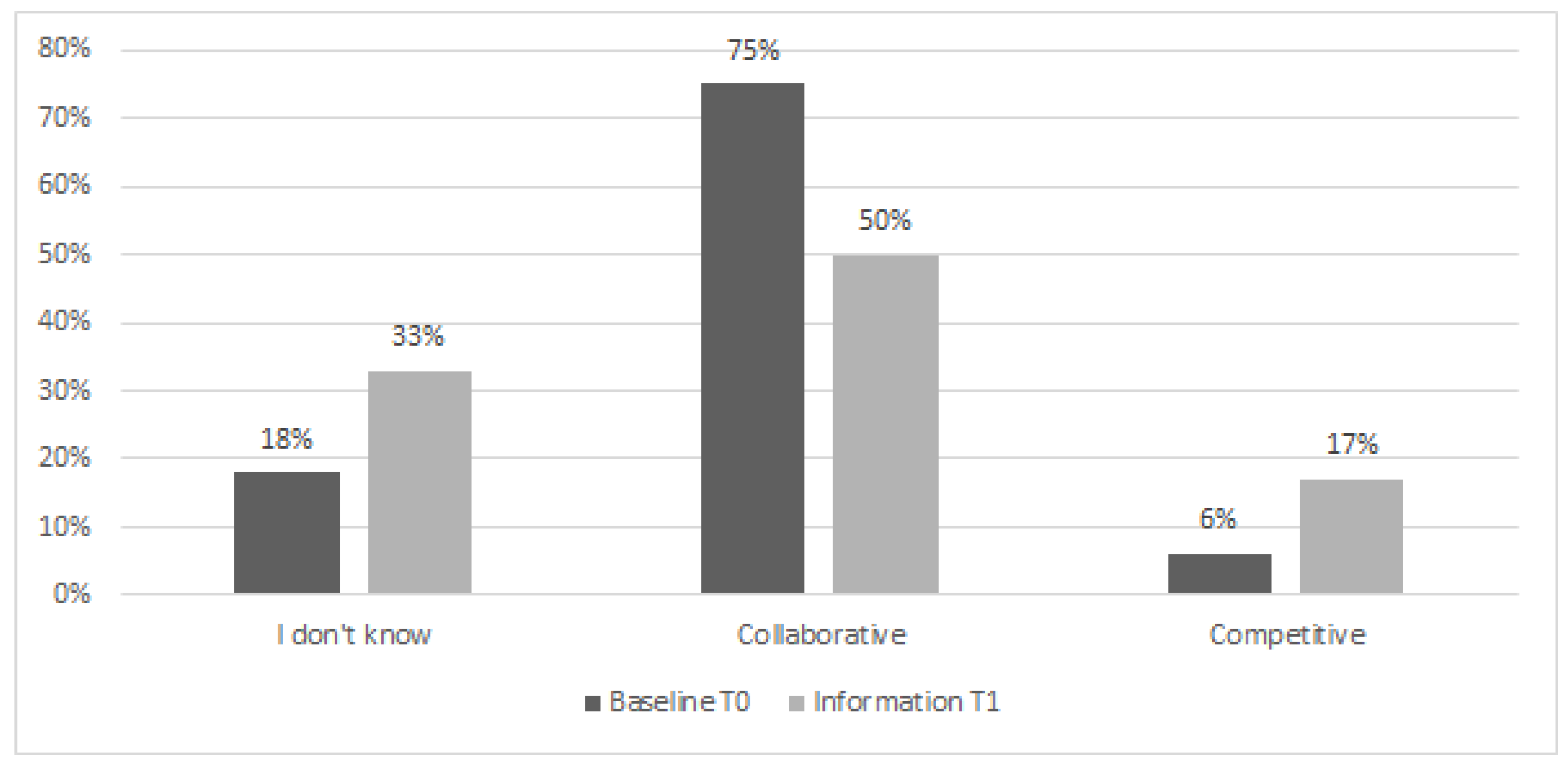
| Maximising profits Making investment decisions Distributing resources equally Observing generous and selfish behaviour Taking decisions based on others’ decisions | When one shares with others one can find both grateful and ungrateful people Workers take part in benefits The stock market Cooperative enterprises | 30% “I don’t know” 56% “Collaborative strategy” 14% “Competitive strategy” |
| What Topic Do the Readings Have in Common? | What Is the Link between the Game and the Readings? |
|---|---|
| Economics from a humanistic point of view A social and egalitarian economy A supportive model of economics based on cooperation and common development | “Everybody gets benefits when resources are shared” “Searching for the common interest” “Trust and reciprocity” “Cooperation and trust for achieving a proper wealth distribution” |
© 2019 by the authors. Licensee MDPI, Basel, Switzerland. This article is an open access article distributed under the terms and conditions of the Creative Commons Attribution (CC BY) license (http://creativecommons.org/licenses/by/4.0/).
Share and Cite
Rodrigo-González, A.; Caballer-Tarazona, M.; García-Gallego, A. Active Learning on Trust and Reciprocity for Undergraduates. Sustainability 2019, 11, 4399. https://doi.org/10.3390/su11164399
Rodrigo-González A, Caballer-Tarazona M, García-Gallego A. Active Learning on Trust and Reciprocity for Undergraduates. Sustainability. 2019; 11(16):4399. https://doi.org/10.3390/su11164399
Chicago/Turabian StyleRodrigo-González, Amalia, María Caballer-Tarazona, and Aurora García-Gallego. 2019. "Active Learning on Trust and Reciprocity for Undergraduates" Sustainability 11, no. 16: 4399. https://doi.org/10.3390/su11164399
APA StyleRodrigo-González, A., Caballer-Tarazona, M., & García-Gallego, A. (2019). Active Learning on Trust and Reciprocity for Undergraduates. Sustainability, 11(16), 4399. https://doi.org/10.3390/su11164399

