Article

Complementary Effect of Knowledge Management Strategy on Firm Performance: Evidence from Chinese Firms


1
Shanghai Institute of Tourism, Shanghai Normal University, Shanghai 200234, China
2
School of Economics and Management, Chongqing University of Posts and Telecommunications, Chongqing 400045, China
3
College of Management, Southwest Minzu University, Chengdu 610041, China
*
Author to whom correspondence should be addressed.
Sustainability 2019, 11(13), 3616; https://doi.org/10.3390/su11133616
Submission received: 25 May 2019 / Revised: 21 June 2019 / Accepted: 25 June 2019 / Published: 1 July 2019
(This article belongs to the Section Economic and Business Aspects of Sustainability)

Abstract

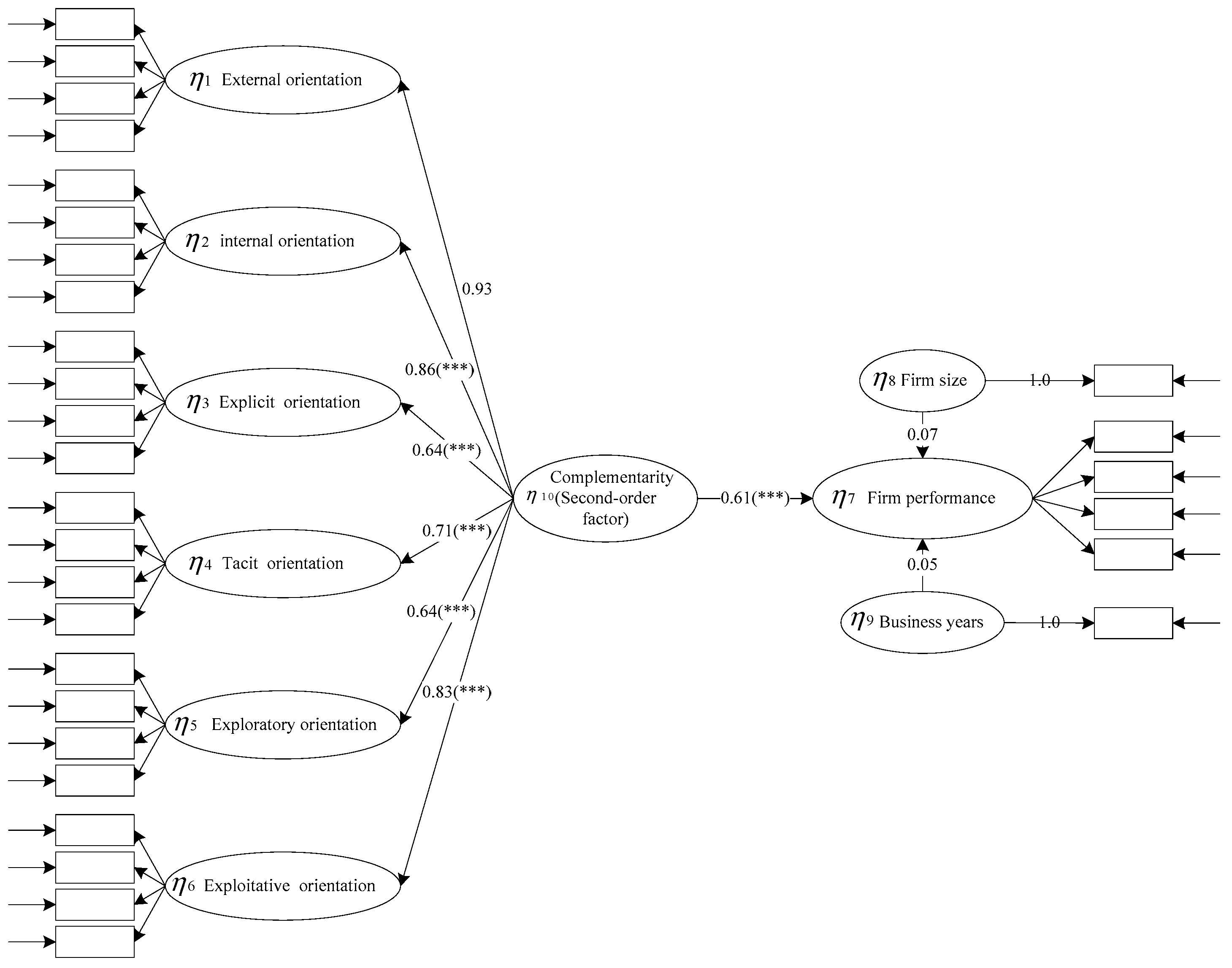
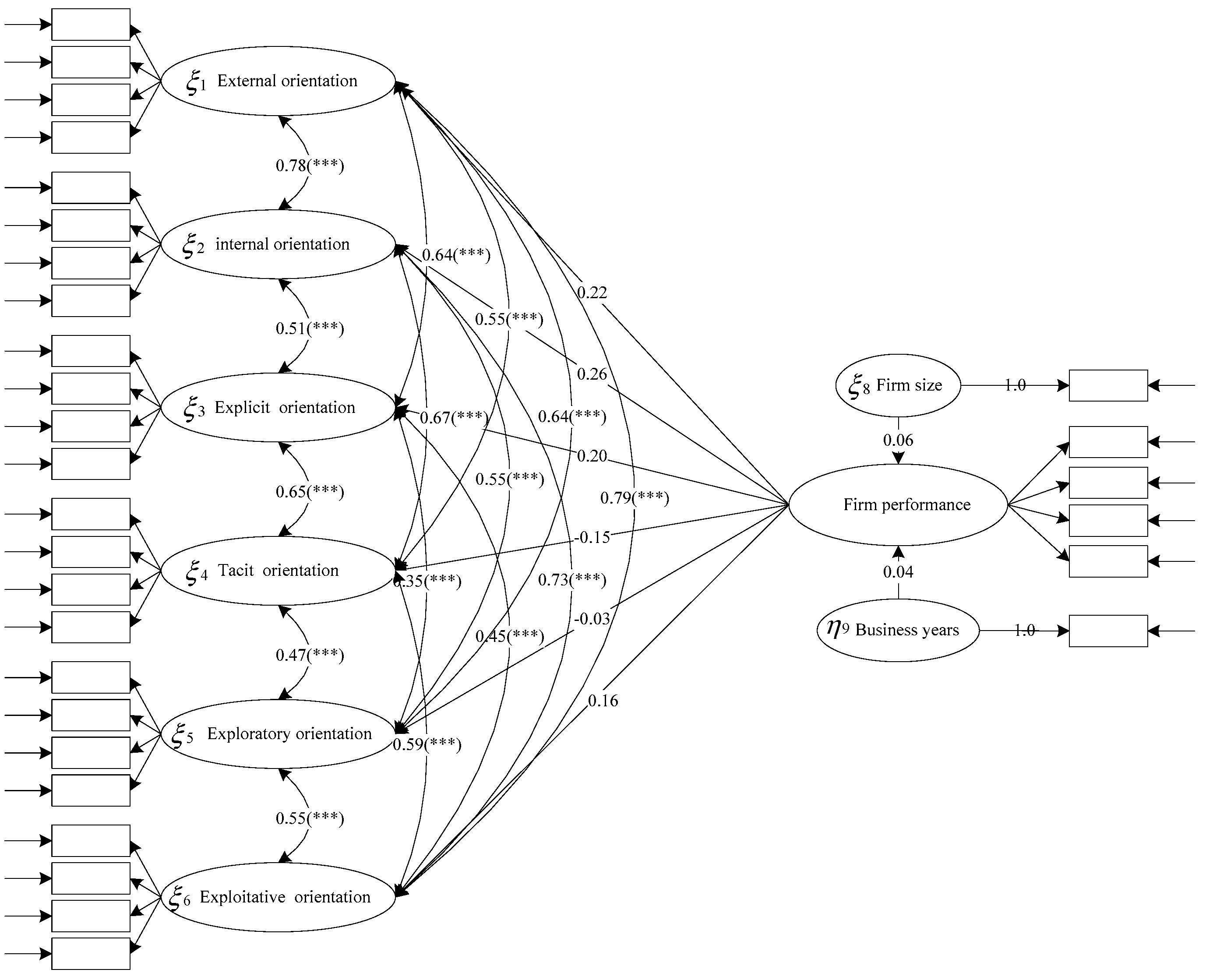
This study investigated the complementary effect of three orientations of knowledge management (KM) strategy on firm performance: external and internal, explicit and tacit, and exploratory and exploitive. We propose a theoretical framework for examining the synergistic effects of KM strategy on firm performance, and the moderating effect of organizational structure. The complementary effect among these orientations of KM strategy was studied. To test our framework, we conducted a survey with a sample of 345 Chinese firms that had applied a KM strategy. The empirical results show that: (1) different KM strategy orientations complement each other, and this complementarity is an essential link in the relationship between KM strategy and firm performance; (2) the direct effect of each orientation of KM strategy on firm performance is not significant; (3) a centralized organizational structure moderates the relationship between KM strategy and firm performance, thus the more centralized is the organizational structure, the stronger is the positive impact of the complementary effect of KM strategy on firm performance; and (4) the moderating effect of formalized organizational structure in the relationship between KM strategy and firm performance is not significant.
Keywords: KM strategy; complementary; firm performance; centralized organization; formalized organization KM strategy; complementary; firm performance; centralized organization; formalized organization