Article

Does Thinking Style Make a Difference in Environmental Perception and Orientation? Evidence from Entrepreneurs in Post-Sanction Iran


by
Asghar Afshar Jahanshahi
1,*,
Alexander Brem
2,3 and
Mohammad Shahabinezhad
4
1
CENTRUM Católica Graduate Business School, Lima, Peru, Pontificia Universidad Católica del Perú, Lima 15023, Peru
2
School of Business and Economics, Friedrich-Alexander-Universität Erlangen-Nürnberg (FAU), Fürther Str. 246c, 90429 Nuremberg, Germany
3
Technology Entrepreneurship and Innovation (TEI), University of Southern Denmark, Alsion 2, 6400 Sønderborg, Denmark
4
Department of Management, Islamic Azad University, Kerman Branch, Kerman 7635131167, Iran
*
Author to whom correspondence should be addressed.
Sustainability 2018, 10(5), 1546; https://doi.org/10.3390/su10051546
Submission received: 9 March 2018 / Revised: 7 May 2018 / Accepted: 8 May 2018 / Published: 13 May 2018

Abstract

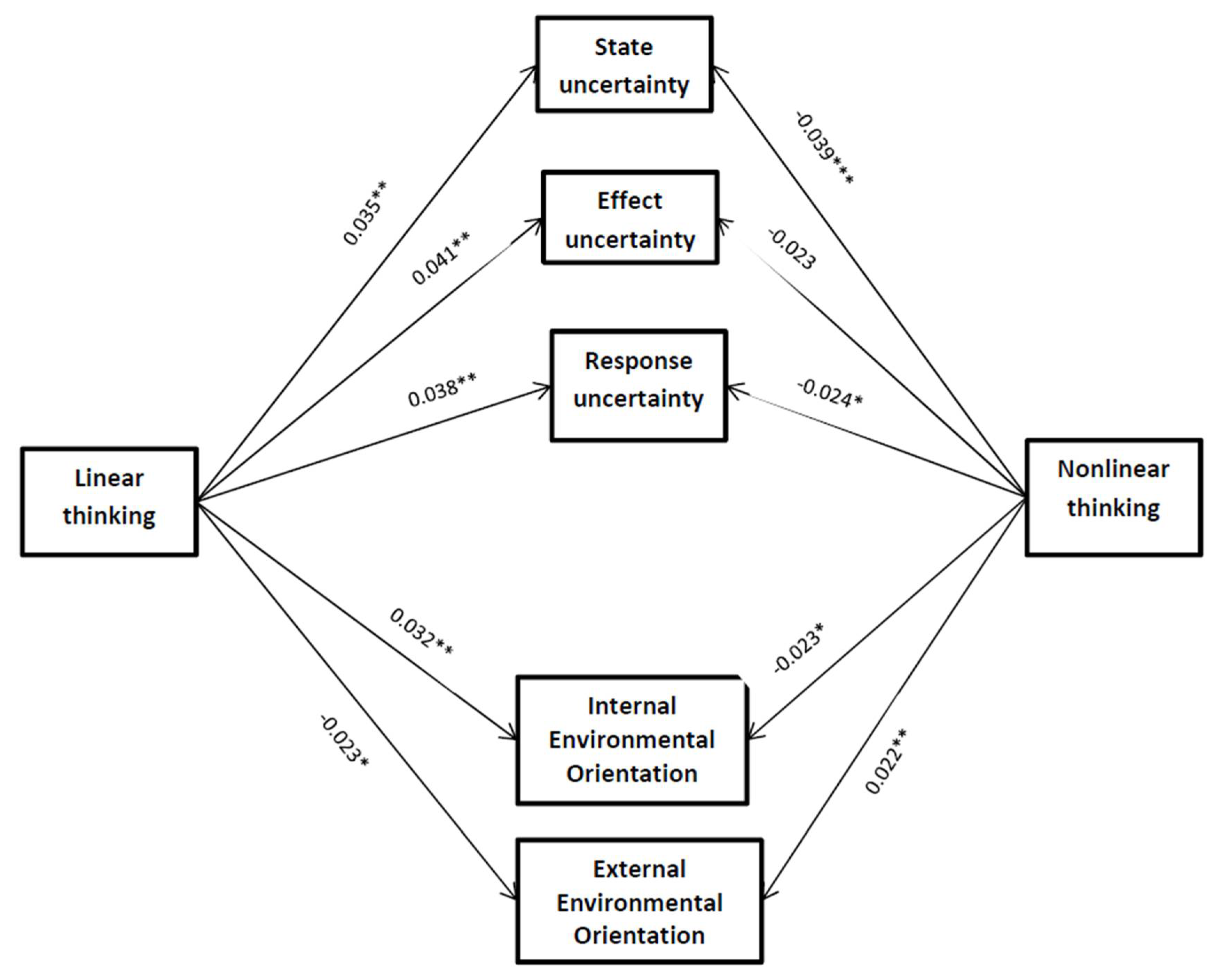
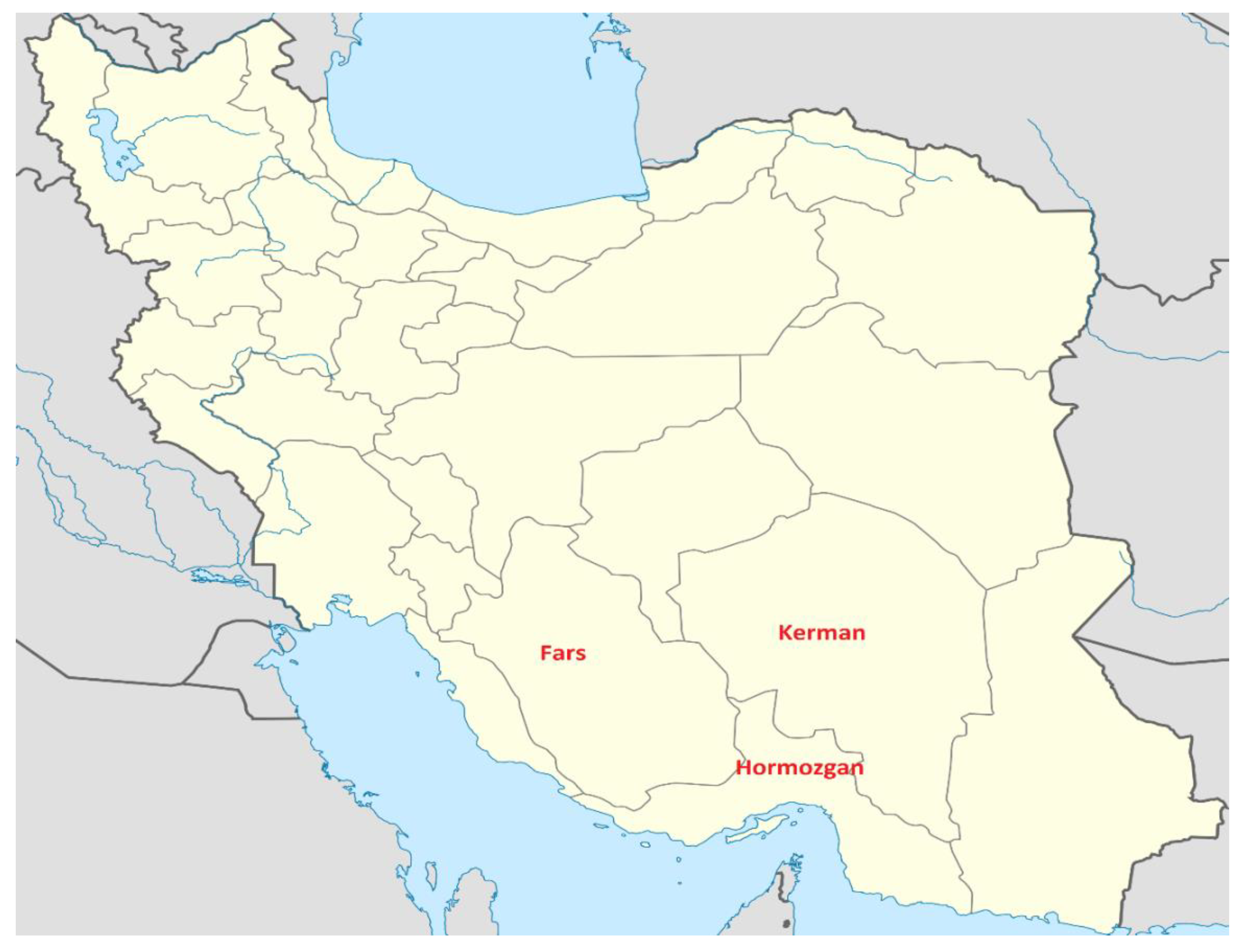
Styles of thinking set different paths for an entrepreneur’s perception and strategic action. In order to understand the environmental consequences of a thinking style, we investigated the relations between entrepreneurs’ linear and nonlinear styles of thinking with their perception of environmental uncertainty in their businesses. Furthermore, we tested the effect of the entrepreneurs’ linear and nonlinear style of thinking on their newly established firms’ orientation towards preserving the surrounding internal and external environment. Entrepreneurs with linear or rational thinking styles prefer more tangible data, information, facts, and analytical tools, and entrepreneurs with nonlinear or non-rational thinking styles rely more on internal feelings, impressions, imagination, creativity, and sensations when making important organizational decisions. By using cross-sectional survey data from 144 entrepreneurs in post-sanction Iran (2016–2017), we found that entrepreneurs with a linear style of thinking, in comparison to entrepreneurs with a nonlinear style of thinking, perceive a higher level of environmental state, effect, and response uncertainty in their business context. Furthermore, our survey results reveal that newly established firms by entrepreneurs with nonlinear styles of thinking have a more external environmental orientation, while newly established firms by entrepreneurs with a linear style of thinking have a more internal environmental orientation. Recognizing this contingency advances our understanding of how entrepreneurs perceive and enact their environments.
Keywords: style of thinking; perception of environmental uncertainty; environmental orientation; post-sanction Iran; entrepreneurship style of thinking; perception of environmental uncertainty; environmental orientation; post-sanction Iran; entrepreneurship