Article

TMT’s Attention towards Financial Goals and Innovation Investment: Evidence from China


1
School of Economics and Management, Tongji University, Shanghai 200092, China
2
School of Management, Fudan University, Shanghai 200433, China
*
Author to whom correspondence should be addressed.
Sustainability 2018, 10(11), 4236; https://doi.org/10.3390/su10114236
Submission received: 12 October 2018 / Revised: 9 November 2018 / Accepted: 12 November 2018 / Published: 16 November 2018
(This article belongs to the Special Issue Transition from China-Made to China-Innovation )

Abstract

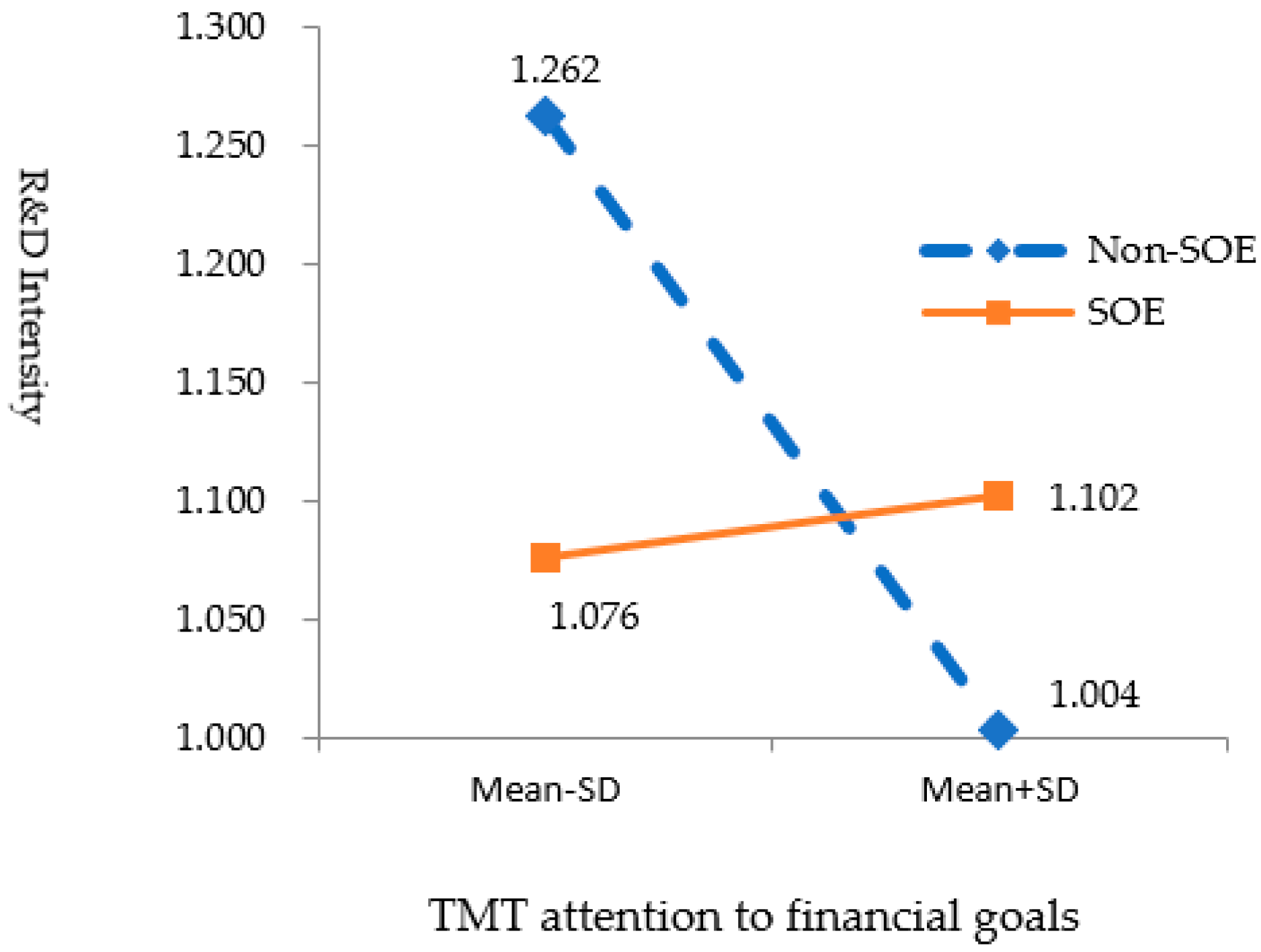
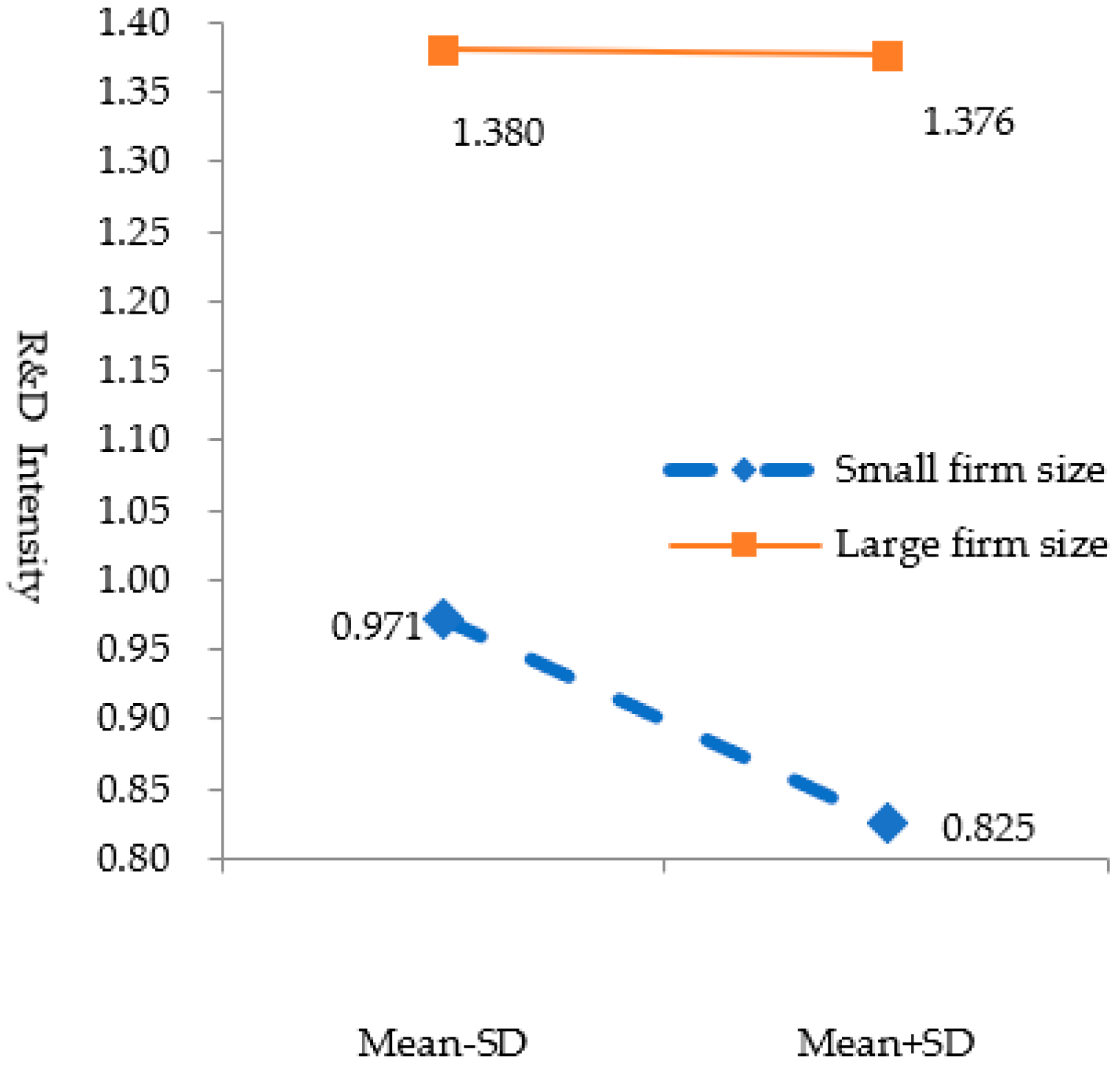
Will the top managers’ attention to financial goals such as profit targets, operating expenses or debt payback schedule affect the firm’s innovation investment? The purpose of this study was to examine the relationship between the attention that the top management team (TMT) allocate on financial goals and R&D investment in Chinese firms. The roles of ownership type and company size as moderating effects in the relationship were also analyzed. This study used a panel dataset of 484 firms listed on the Shanghai Stock Exchange from 2010 to 2014. The results show that TMT’s attention to monetary objectives was negatively related to the R&D investment. In the state-owned and large-scale enterprises, the negative relationship between the TMT’s financial orientation and R&D investment is weak compared to that in private companies and smaller enterprises, respectively. Several conclusions have been drawn. First, the attention paid by TMT to financial goals significantly affects the innovation investment of the company. Specifically, when executives press the importance of monetary targets, they reduce innovation investment, given that the effects of firm-specific characteristics are controlled. Second, corporate ownership significantly moderates the relationship. Given the same degree of attention bias toward financial targets, compared with those in private companies, executives in state-owned companies tend to be more willing to invest in corporate innovation activities. Third, as the size of the company increases, the company’s comprehensive strength and ability to resist risks would increase, which in turn raises the willingness to undertake high-cost and long-term-to-realize-benefit innovation activities, thus alleviating the effect of TMT’s pressure on financial performance.
Keywords: attention-based view; echelons theory; financial goals; innovation; R&D investment; TMT attention attention-based view; echelons theory; financial goals; innovation; R&D investment; TMT attention