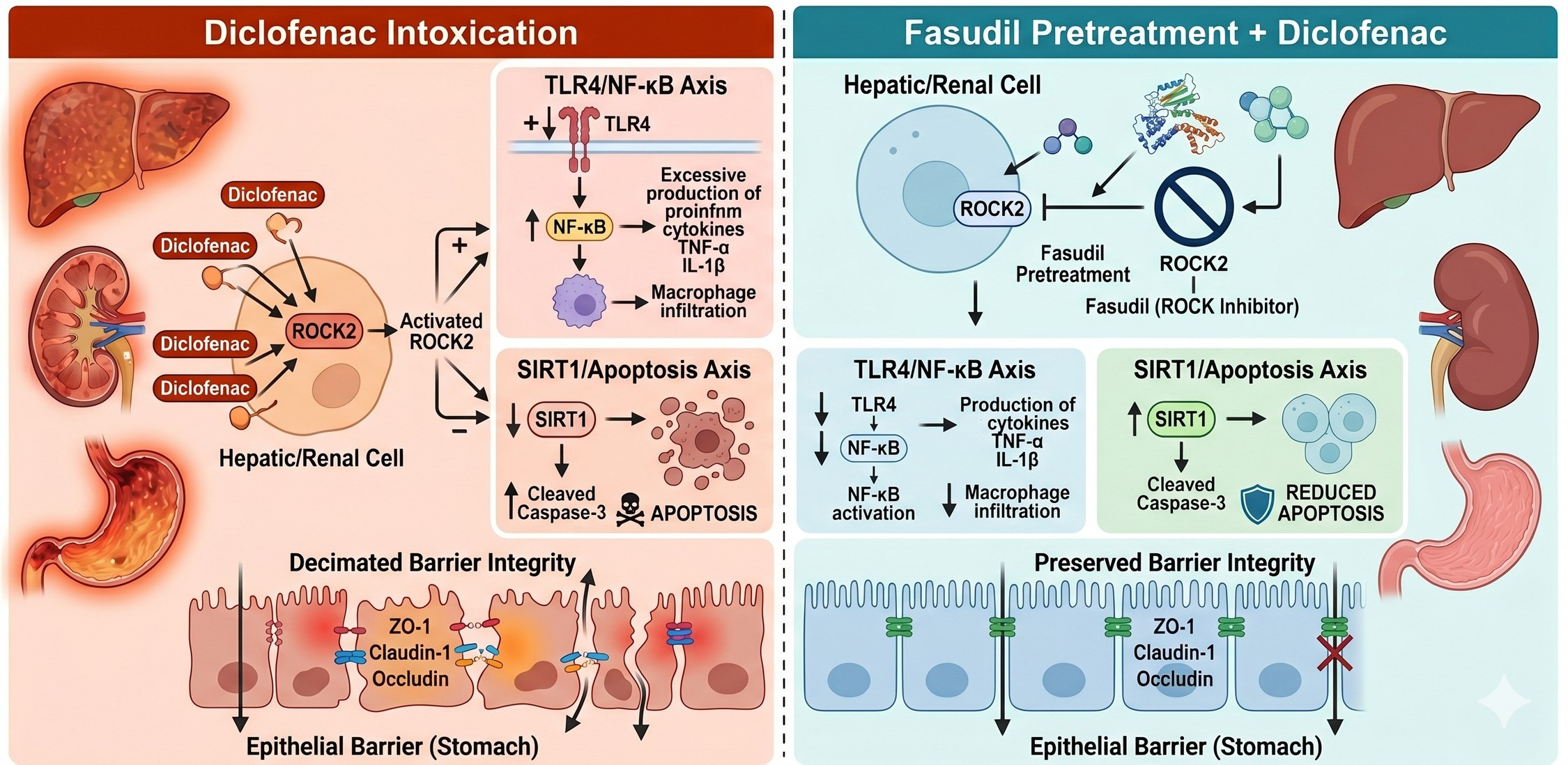

Fasudil Protects Against Diclofenac-Induced Hepatorenal and Gastric Injury via Modulation of ROCK/TLR4/SIRT1 Signaling and Preservation of Tight Junctions

Abstract
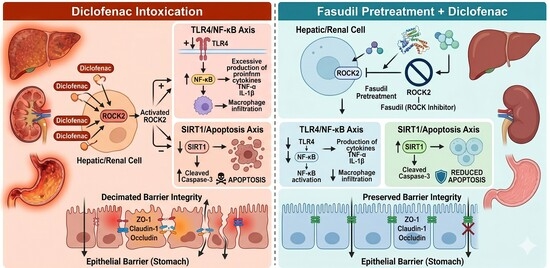
1. Introduction
2. Materials and Methods
2.1. Animals
2.2. Drugs and Chemicals
2.3. Experimental Work
- -
- Normal Control Group: Maintained on a 0.5% CMC-Na solution for seven consecutive days.
- -
- Fasudil Control Group: This group received a seven-day regimen of fasudil (30 mg/kg), delivered strictly through a gastric tube.
- -
- -
- Low-Dose Fasudil (10 mg/kg) Group: Pretreated with 10 mg/kg fasudil via gastric gavage for seven days [36]. On day 8 (24 h post-pretreatment), rats were subjected to the standard diclofenac induction (100 mg/kg IP).
- -
2.4. Sample Collection
- Histological and Immunohistochemical Analysis: A portion of the gastric body, the left kidneys, and the left hepatic lobes were preserved using a 10.0% formalin-buffered saline fixative.
- Biochemical Assessment: The right kidneys, right hepatic lobes, and residual stomach tissue were processed in ice-cold PBS using an Omni TH homogenizer (Omni International, Inc., Kennesaw, GA, USA) to yield a 10.0% (w/v) suspension.
2.5. Quantification of Hepatorenal Biomarkers
2.6. Total Protein Quantification
2.7. Quantification of Oxidative Stress Markers in Homogenized Tissues
2.8. Enzyme-Linked Immunosorbent Assay (ELISA)
2.9. Western Blotting Analysis
2.10. Morphological and Immunohistochemical Assessments
2.11. Statistical Analysis
3. Results
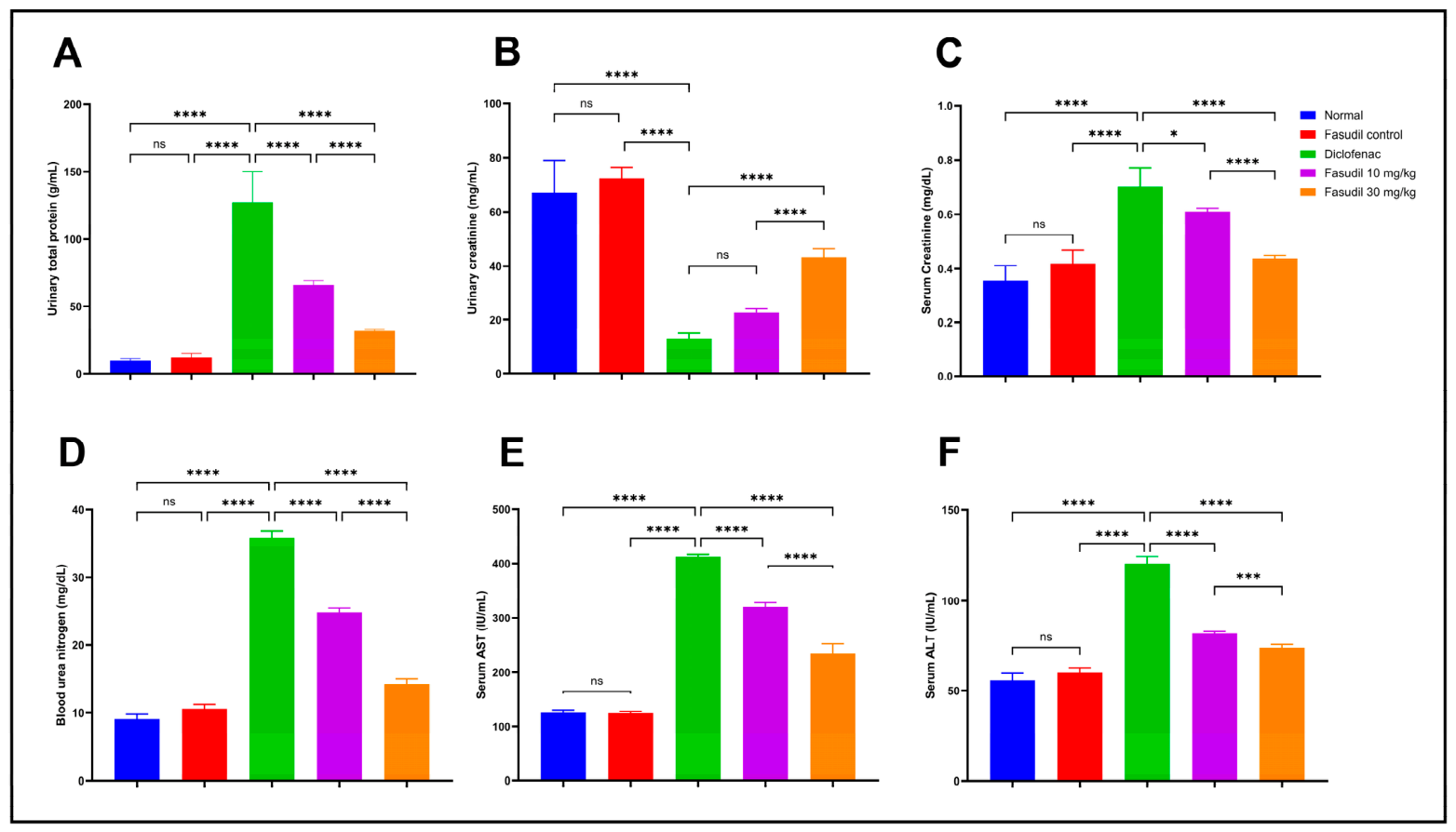
3.1. Fasudil Mitigated Diclofenac-Evoked Impairments in Renal and Hepatic Function Biomarkers
3.1.1. Urinary Kidney Function Biomarkers
3.1.2. Serum Kidney Function Biomarkers
3.1.3. Serum Liver Function Biomarkers
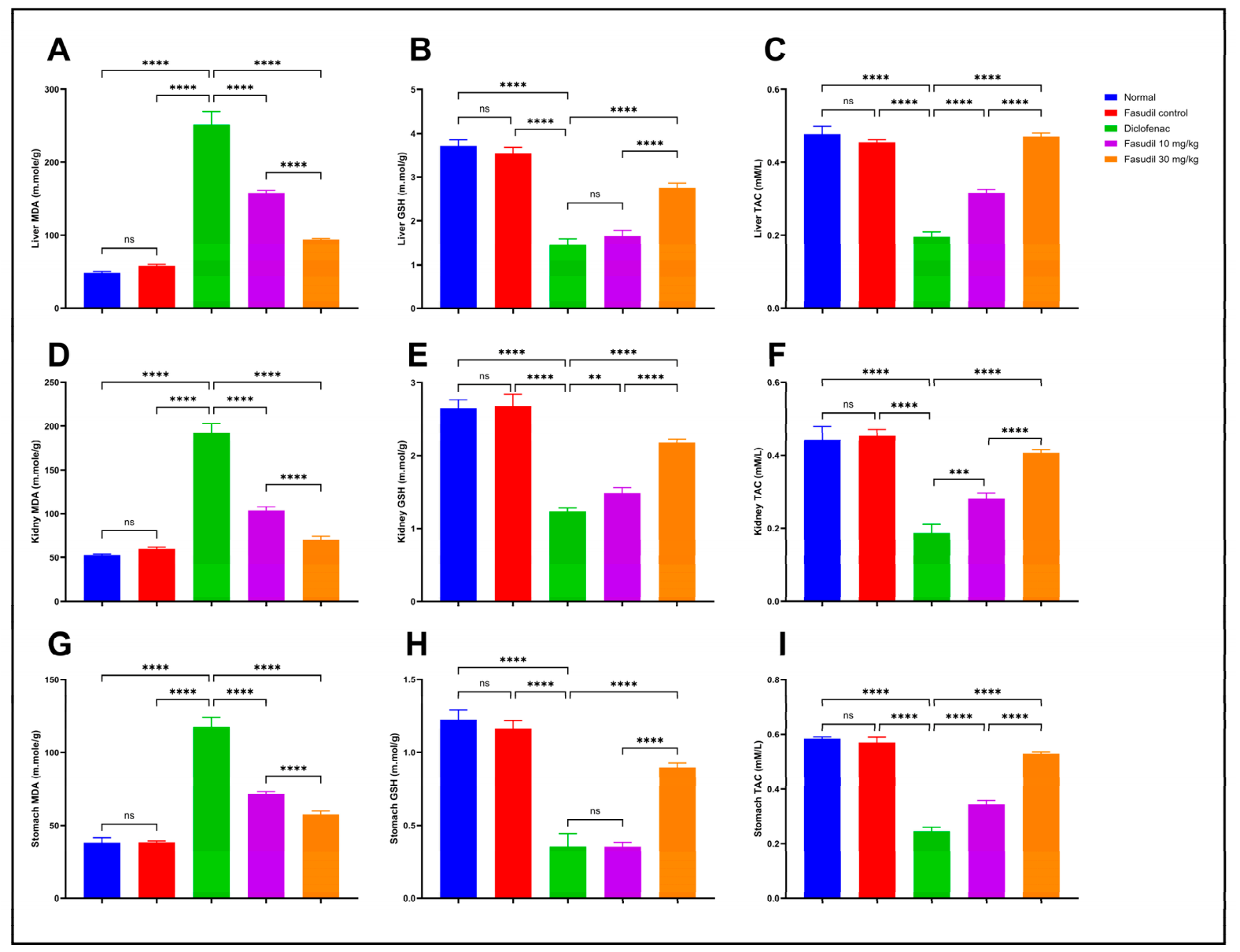
3.2. Fasudil Abrogated Diclofenac-Evoked Oxidative Stress
3.2.1. Hepatic Tissue Homogenate
3.2.2. Renal Tissue Homogenate
3.2.3. Gastric Tissue Homogenate
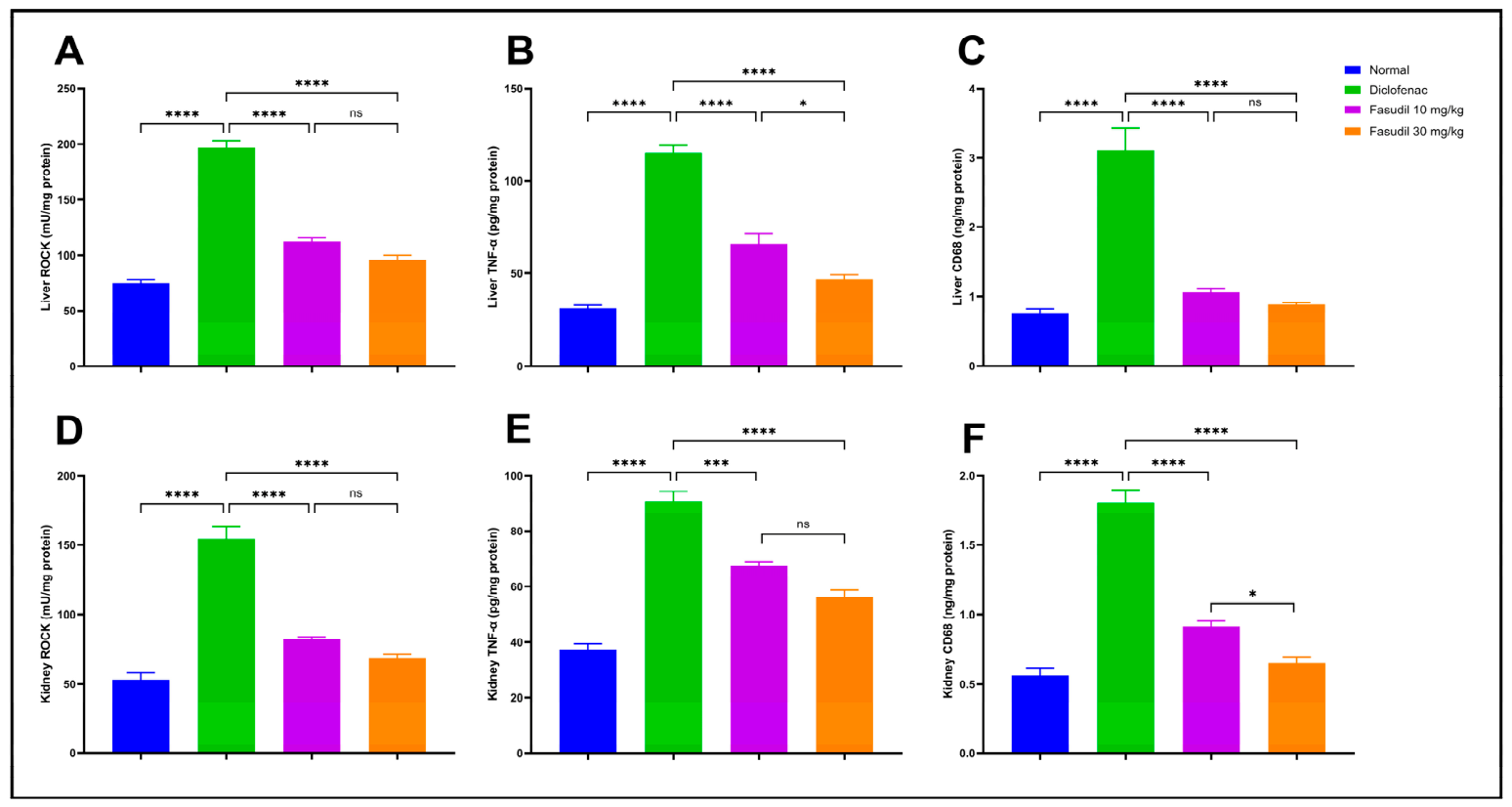
3.3. Fasudil Suppressed Diclofenac-Evoked ROCK2 Overactivity in Hepatic and Renal Tissues
3.4. Fasudil Suppressed Diclofenac-Evoked Inflammation and TLR4 Signaling in Hepatic and Renal Tissues
3.4.1. Pro-Inflammatory and Macrophage Infiltration Markers (TNF-α and CD68)
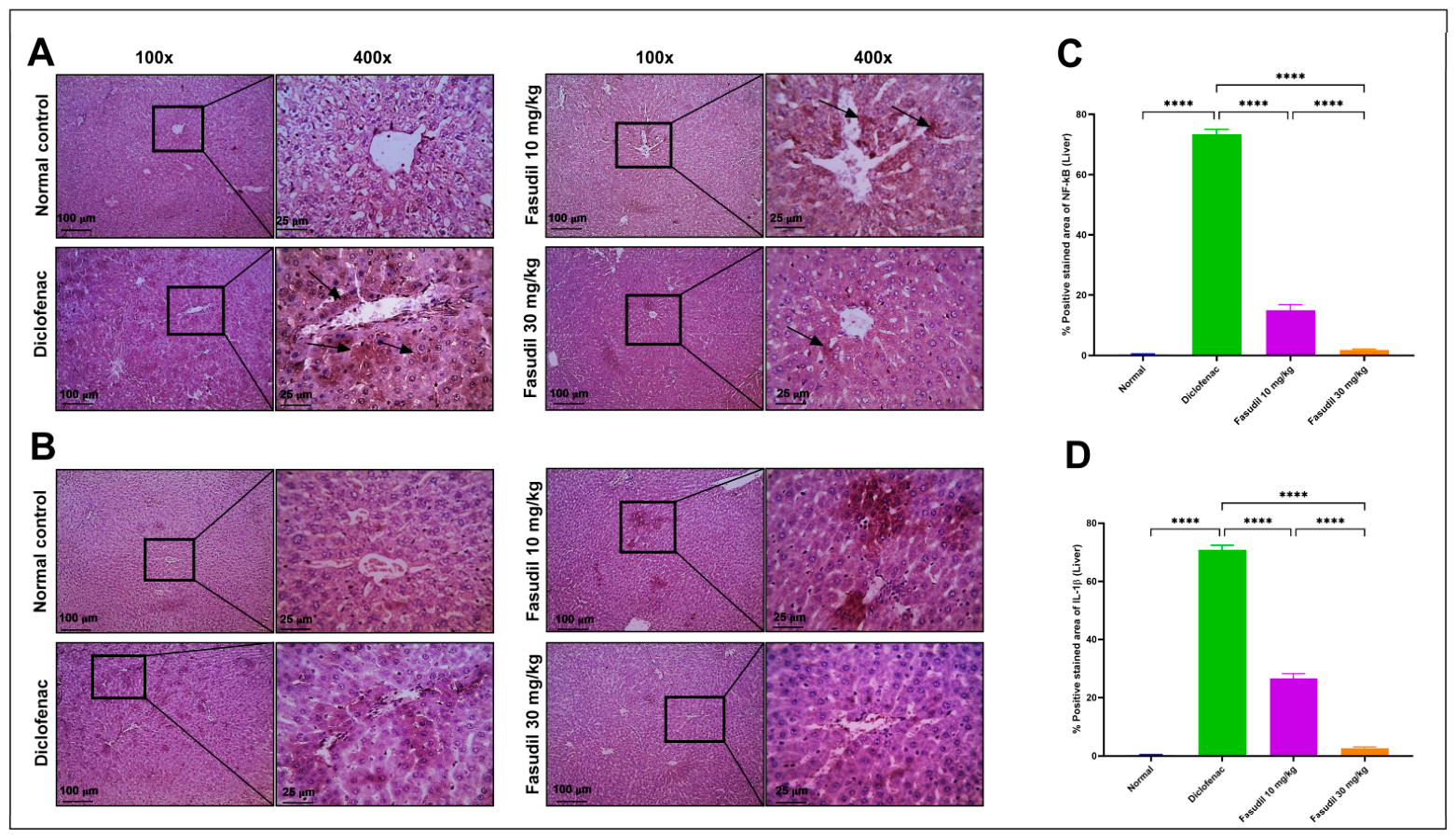
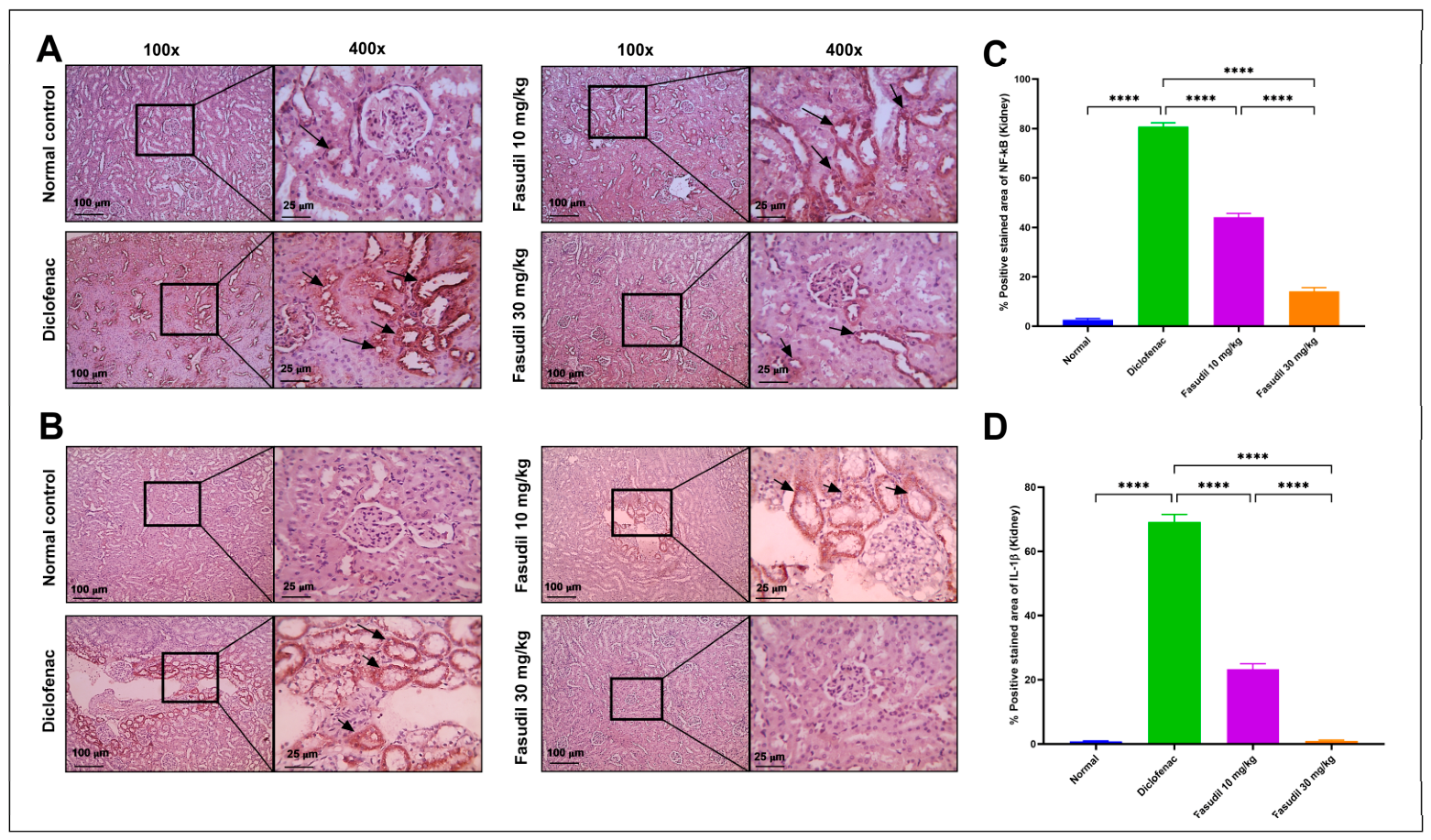
3.4.2. Inflammatory Mediators (NF-κB and IL-1β)
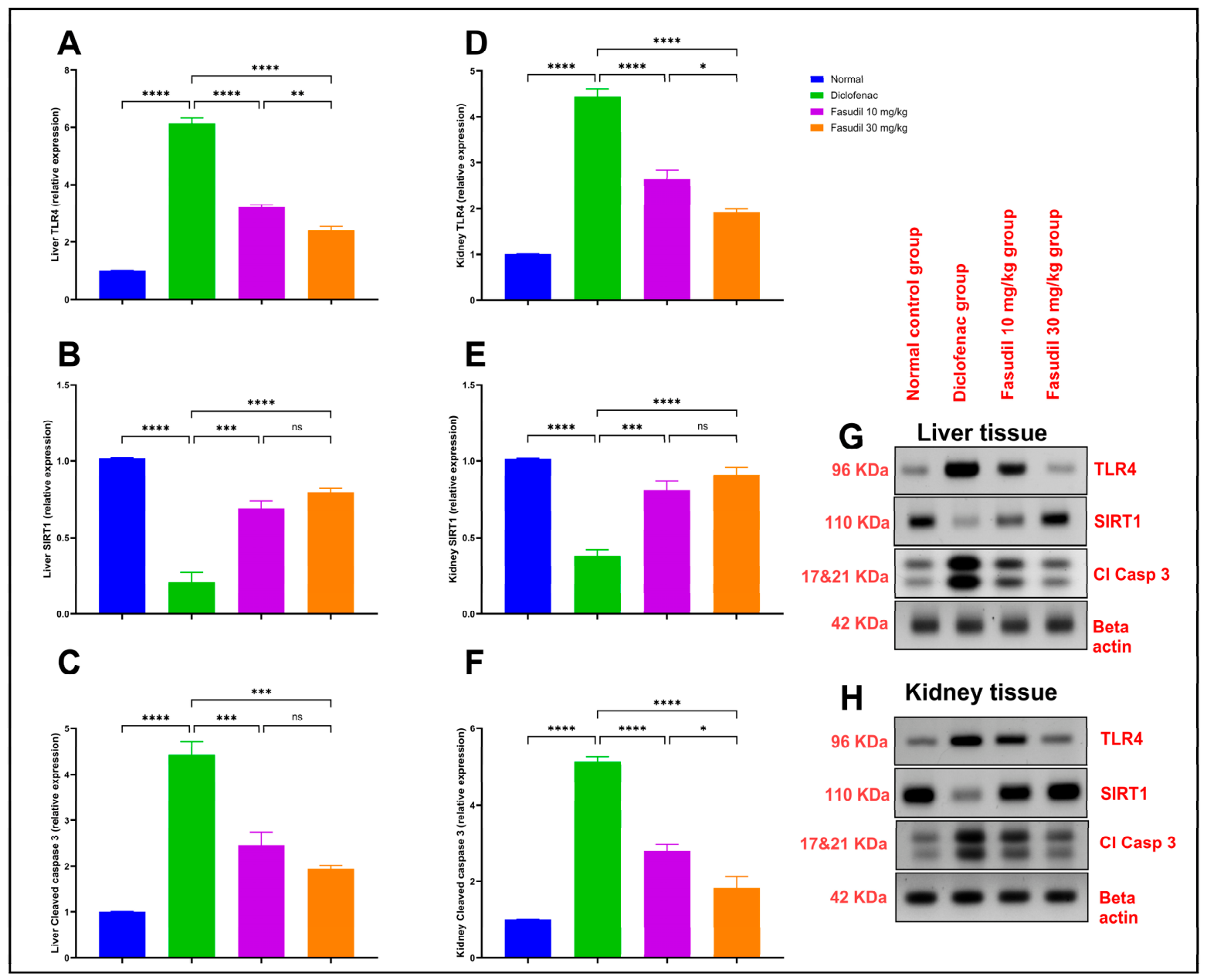
3.4.3. TLR4 Expression
3.5. Fasudil Ameliorated Diclofenac-Evoked Hepatic and Renal Apoptotic Injury via Modulation of the SIRT1/Caspase-3 Axis
3.6. Fasudil Preserved Gastric Mucosal Barrier Integrity
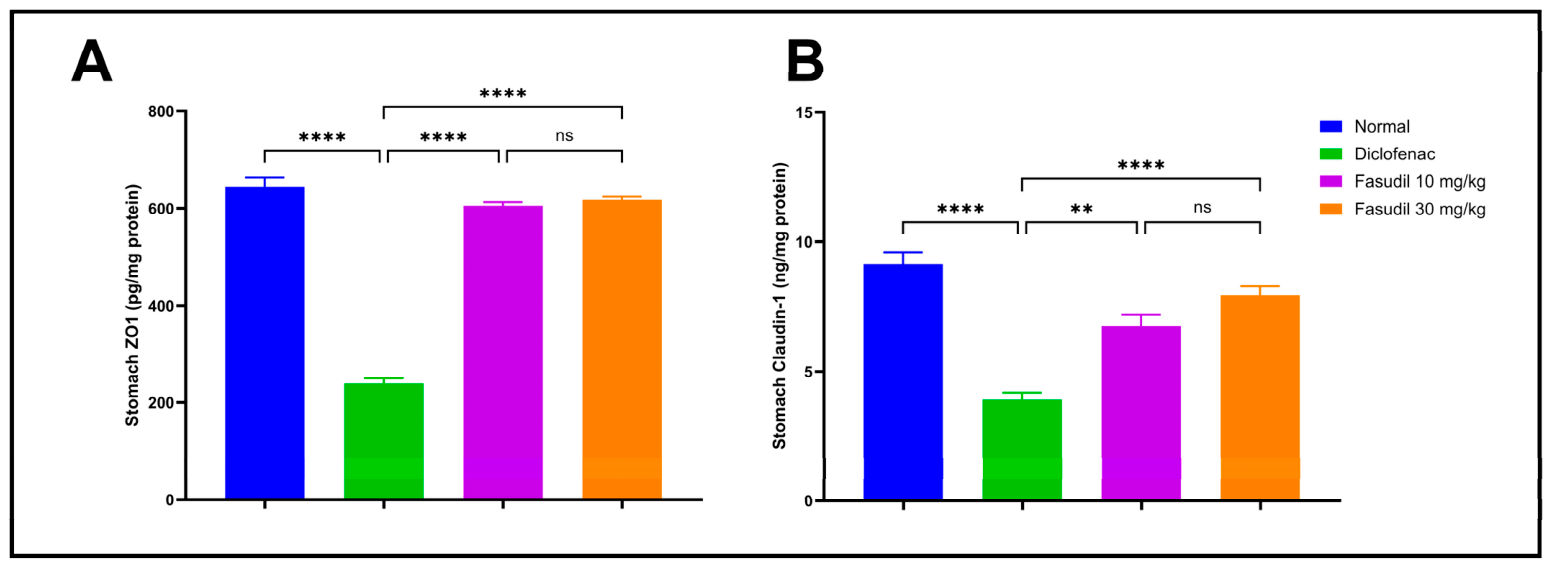
3.6.1. ZO-1 and Claudin-1
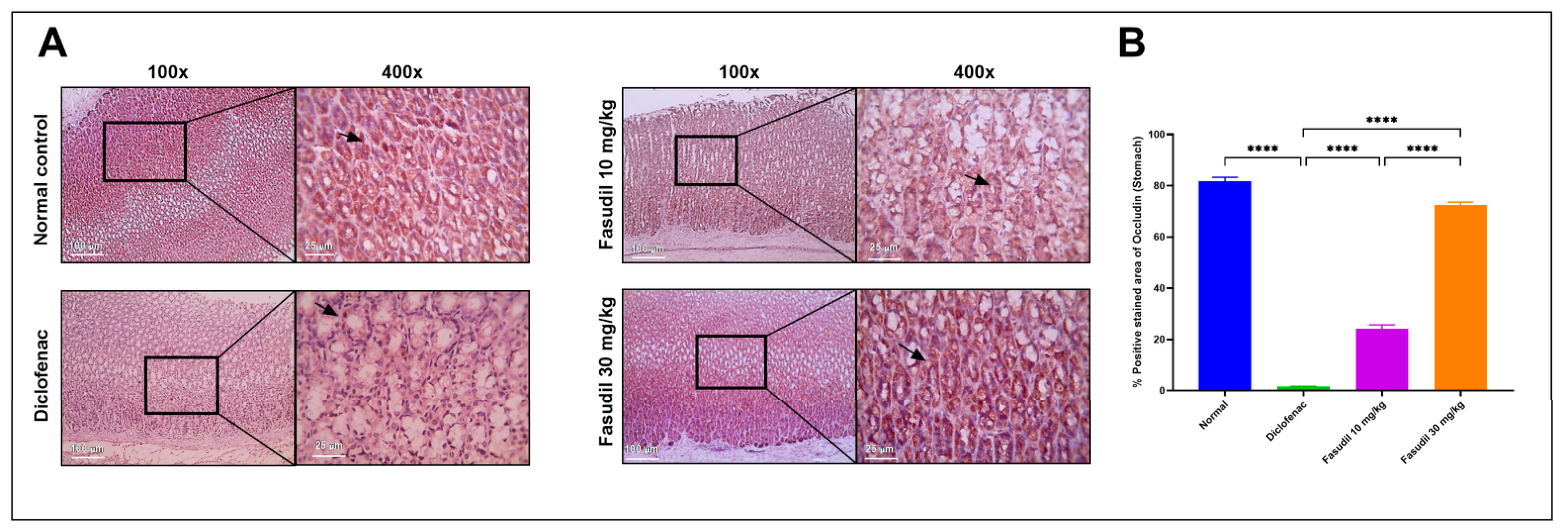
3.6.2. Occludin
3.7. Fasudil Ameliorated Histopathological Alterations in the Liver, Kidney, and Stomach Tissues
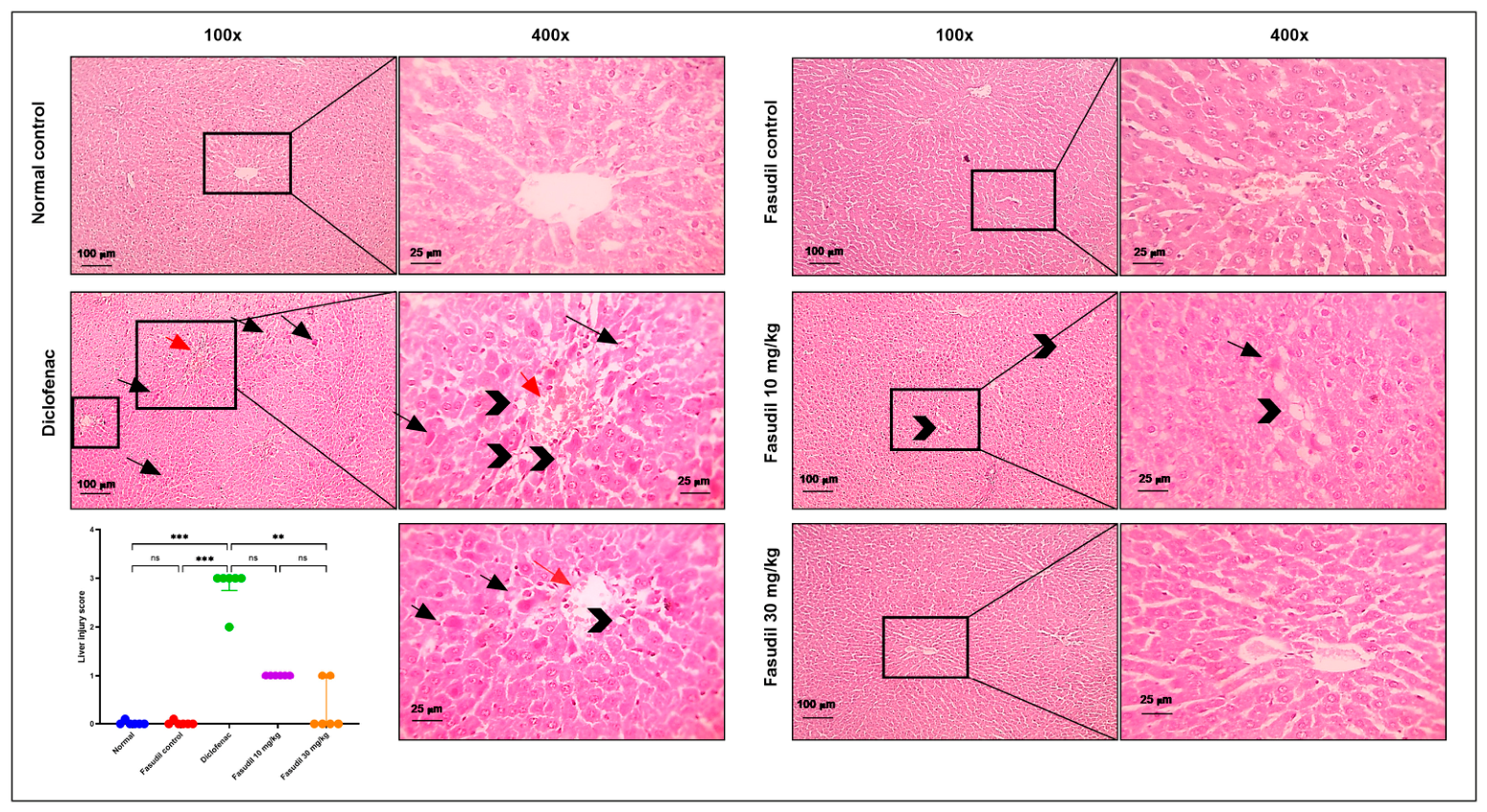
3.7.1. Hepatic Tissues
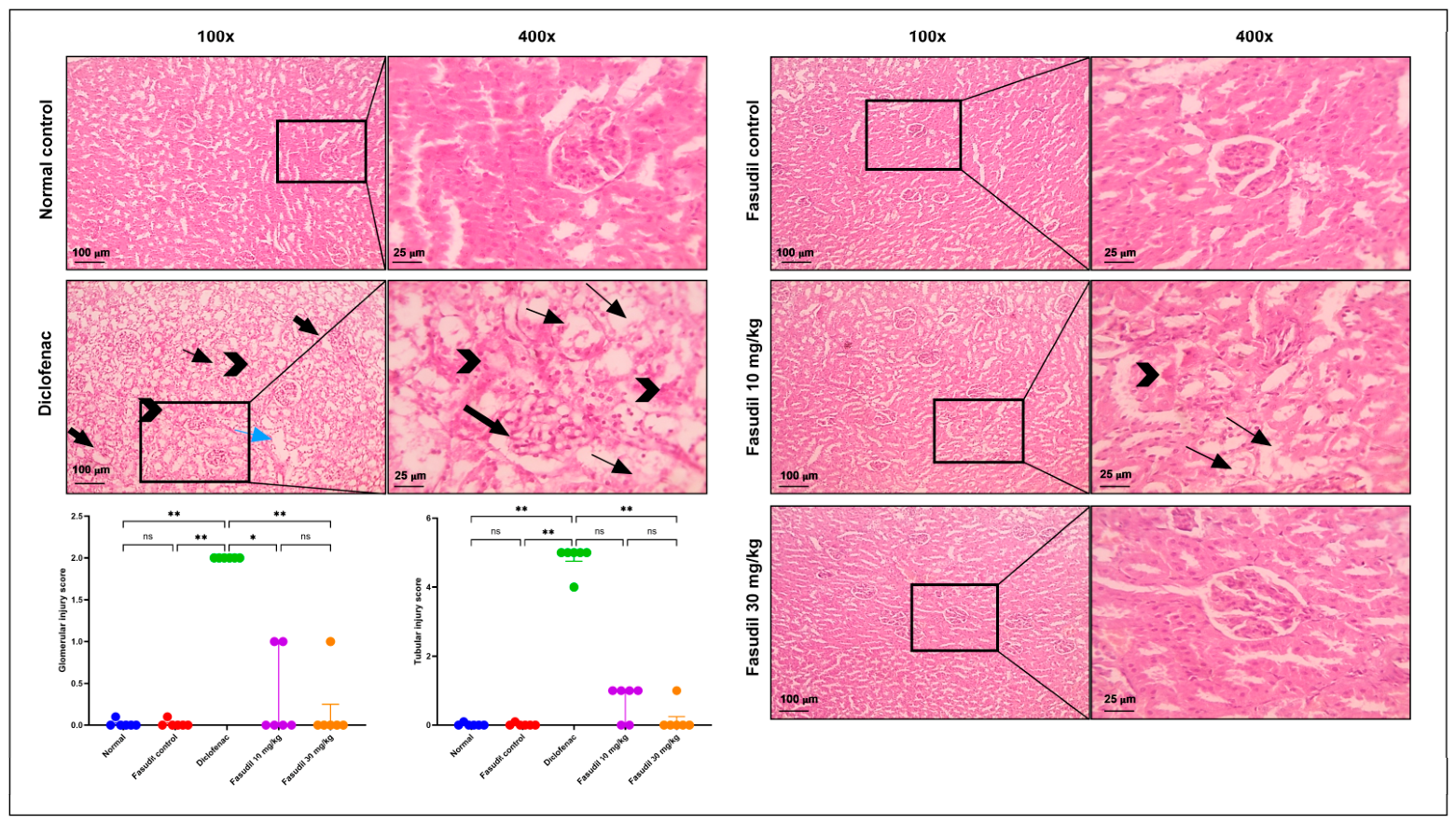
3.7.2. Renal Tissues
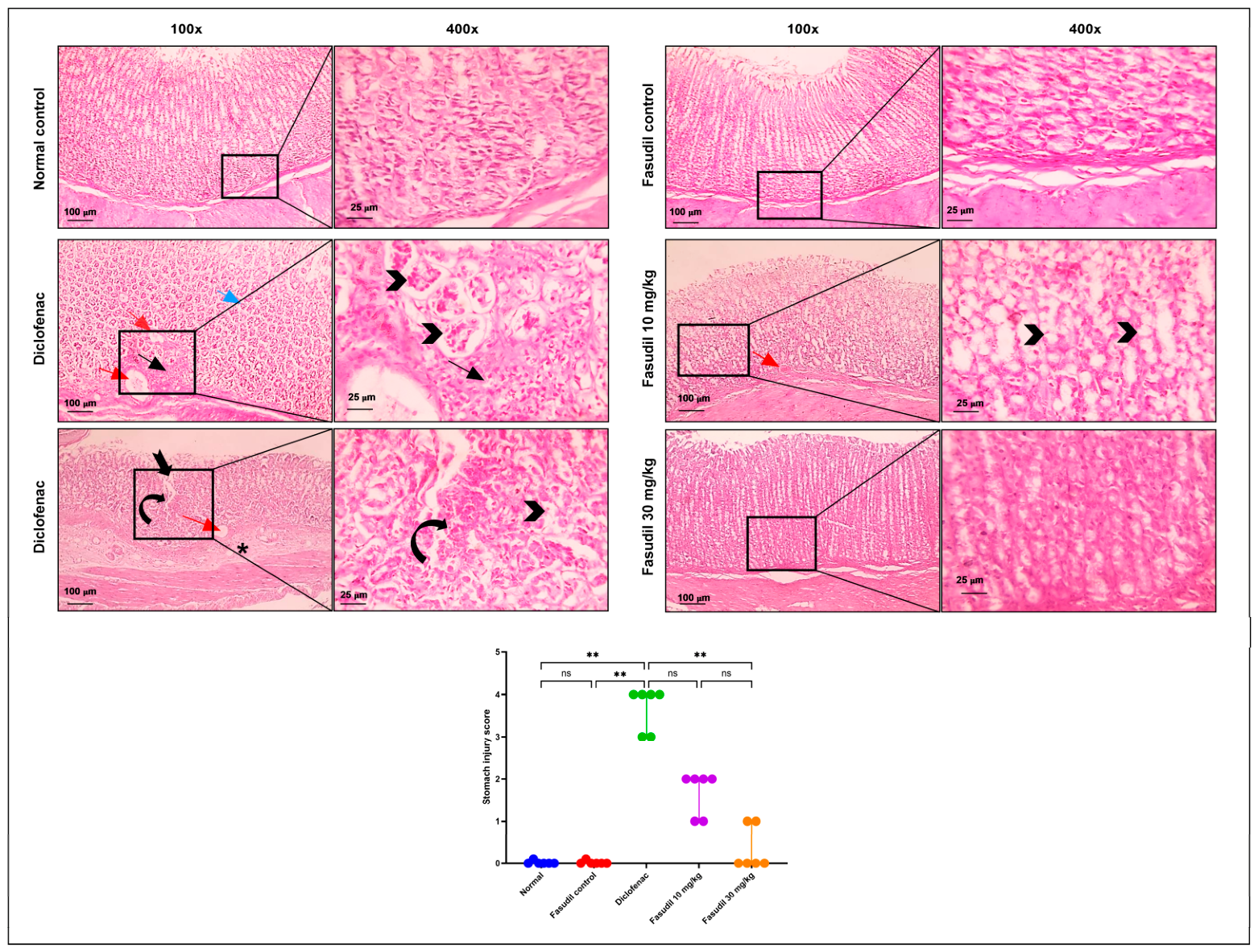
3.7.3. Gastric Tissue
4. Discussion
Limitations
5. Conclusions
Supplementary Materials
Author Contributions
Funding
Institutional Review Board Statement
Informed Consent Statement
Data Availability Statement
Acknowledgments
Conflicts of Interest
References
- Hernández-Zamora, M.; Cruz-Castillo, L.M.; Martínez-Jerónimo, L.; Martínez-Jerónimo, F. Diclofenac Produces Diverse Toxic Effects on Aquatic Organisms of Different Trophic Levels, Including Microalgae, Cladocerans, and Fish. Water 2025, 17, 1489. [Google Scholar] [CrossRef] [Scilit]
- Kunitsu, Y.; Hira, D.; Nakagawa, S.; Tsuda, M.; Morita, S.Y.; Yamamoto, Y.; Terada, T. NSAID-Induced acute kidney injury risk in patients on renin-angiotensin system inhibitors and diuretics: Nationwide cohort study. J. Pharm. Health Care Sci. 2025, 11, 77. [Google Scholar] [CrossRef] [Scilit] [PubMed]
- Khatlan, R.; Hamad, O.; Mohammed, A.; Khudhair, A.; Deen, S.; Khatlan, S.A.; Hamad, R.; Mohammed, O.; Khudhair, A. NSAIDs and Kidney Health: A Review of the Silent Threat to Renal Function. S. Asian Res. J. Biol. Appl. Biosci. 2024, 6, 228–234. [Google Scholar] [CrossRef] [Scilit]
- Björnsson, E.S. Hepatotoxicity by Drugs: The Most Common Implicated Agents. Int. J. Mol. Sci. 2016, 17, 224. [Google Scholar] [CrossRef] [Scilit] [PubMed]
- Singh, G.; Triadafilopoulos, G. Epidemiology of NSAID induced gastrointestinal complications. J. Rheumatol. Suppl. 1999, 56, 18–24. [Google Scholar] [PubMed]
- Alabi, Q.K.; Akomolafe, R.O. Kolaviron Diminishes Diclofenac-Induced Liver and Kidney Toxicity in Wistar Rats Via Suppressing Inflammatory Events, Upregulating Antioxidant Defenses, and Improving Hematological Indices. Dose-Response 2020, 18, 1559325819899256. [Google Scholar] [CrossRef] [Scilit] [PubMed]
- Alkuraishy, H.M.; Al-Gareeb, A.I.; Hussien, N.R. Diclofenac induced-acute kidney injury is linked with oxidative stress and pro-inflammatory changes in Sprague Dawley rats. J. Contemp. Med. Sci. 2019, 5, 140–144. [Google Scholar] [CrossRef] [Scilit]
- Al-Naimi, M.S.; Abu-Raghif, A.R.; Fawzi, H.A. Novel therapeutic effects of rifaximin in combination with methylprednisolone for LPS-induced oxidative stress and inflammation in mice: An in vivo study. Toxicol. Rep. 2024, 13, 101808. [Google Scholar] [CrossRef] [Scilit] [PubMed]
- Sbai, O.; Brahem, C.; Perrone, L. TXNIP and Mitochondrial Dysfunction: Effect on Nlrp3 Inflammasome Acivation and Neurodegeneration. Gerontol. Geriatr. Stud. 2024, 9, 756–759. [Google Scholar] [CrossRef] [Scilit]
- Luo, L.; Wang, S.; Liu, W.; Zhang, Z.; Zhao, M.; Liu, A. Narirutin Attenuates Cerebral Ischemia-Reperfusion Injury by Suppressing the TXNIP/NLRP3 Pathway. Neurochem. Res. 2024, 49, 692–705. [Google Scholar] [CrossRef] [Scilit] [PubMed]
- Khalil, E.M.N.; Fahmy EL-baroudy, N.H.; Mahgoub, L.A.; Nageeb, M.M. An Insight about Diclofenac induced hepato-renal toxicity: A Review Article. Zagazig Univ. Med. J. 2025, 31, 56–61. [Google Scholar]
- Chao, G.; Hong, X.; Zhang, S. Effects of Mast Cells Induced by NSAIDs Impair Intestinal Epithelial Barrier Function In Vivo and In Vitro. Inflammation 2021, 44, 1396–1404. [Google Scholar] [CrossRef] [Scilit] [PubMed]
- Yanaka, A.; Zhang, S.; Sato, D.; Tauchi, M.; Suzuki, H.; Shibahara, T.; Matsui, H.; Nakahara, A.; Hyodo, I. Geranylgeranylacetone Protects the Human Gastric Mucosa from Diclofenac-Induced Injury via Induction of Heat Shock Protein 70. Digestion 2007, 75, 148–155. [Google Scholar] [CrossRef] [Scilit] [PubMed]
- Zhuang, Y.; Wang, C.; Wu, C.; Ding, D.; Zhao, F.; Hu, C.; Gong, W.; Ding, G.; Zhang, Y.; Chen, L.; et al. Mitochondrial oxidative stress activates COX-2/mPGES-1/PGE2 cascade induced by albumin in renal proximal tubular cells. Oncotarget 2018, 9, 9235–9245. [Google Scholar] [CrossRef] [Scilit] [PubMed]
- Pavani, P.; Naveena, E.; Subhashini, P.; Srikanth, S.; Naik, K.T.; Babu, M.K. A review on non-steroidal anti-inflammatory drugs induced kidney diseases. Res. J. Pharmacol. Pharmacodyn. 2022, 14, 268–272. [Google Scholar] [CrossRef] [Scilit]
- Saadh, M.J.; Saeed, T.N.; Alfarttoosi, K.H.; Sanghvi, G.; Roopashree, R.; Thakur, V.; Lakshmi, L.; Aminov, Z.; Taher, W.M.; Alwan, M.; et al. Plasmonic Nanoparticles: Enhancing Early Breast Cancer Detection Through Biosensors. Plasmonics 2025, 20, 8067–8084. [Google Scholar] [CrossRef] [Scilit]
- Gómez-Lechón, M.J.; Ponsoda, X.; O’Connor, E.; Donato, T.; Castell, J.V.; Jover, R. Diclofenac induces apoptosis in hepatocytes by alteration of mitochondrial function and generation of ROS. Biochem. Pharmacol. 2003, 66, 2155–2167. [Google Scholar] [CrossRef] [Scilit] [PubMed]
- Ramachandran, A.; Visschers, R.G.J.; Duan, L.; Akakpo, J.Y.; Jaeschke, H. Mitochondrial dysfunction as a mechanism of drug-induced hepatotoxicity: Current understanding and future perspectives. J. Clin. Transl. Res. 2018, 4, 75–100. [Google Scholar] [CrossRef] [Scilit] [PubMed]
- Lee, S.K.; Moon, J.; Park, S.W.; Song, S.Y.; Chung, J.B.; Kang, J.K. Loss of the tight junction protein claudin 4 correlates with histological growth-pattern and differentiation in advanced gastric adenocarcinoma. Oncol. Rep. 2005, 13, 193–199. [Google Scholar] [PubMed]
- Mima, S.; Tsutsumi, S.; Ushijima, H.; Takeda, M.; Fukuda, I.; Yokomizo, K.; Suzuki, K.; Sano, K.; Nakanishi, T.; Tomisato, W.; et al. Induction of Claudin-4 by Nonsteroidal Anti-inflammatory Drugs and Its Contribution to Their Chemopreventive Effect. Cancer Res. 2005, 65, 1868–1876. [Google Scholar] [CrossRef] [Scilit] [PubMed]
- Wang, D.-W.; Zhang, W.-H.; Danil, G.; Yang, K.; Hu, J.-K. The role and mechanism of claudins in cancer. Front. Oncol. 2022, 12, 1051497. [Google Scholar] [CrossRef] [Scilit] [PubMed]
- Poritz, L.S.; Harris, L.R., 3rd; Kelly, A.A.; Koltun, W.A. Increase in the tight junction protein claudin-1 in intestinal inflammation. Dig. Dis. Sci. 2011, 56, 2802–2809. [Google Scholar] [CrossRef] [Scilit] [PubMed]
- Peng, J.; Li, H.; Olaolu, O.A.; Ibrahim, S.; Ibrahim, S.; Wang, S. Natural Products: A Dependable Source of Therapeutic Alternatives for Inflammatory Bowel Disease through Regulation of Tight Junctions. Molecules 2023, 28, 6293. [Google Scholar] [CrossRef] [Scilit] [PubMed]
- Guo, S.D.; Liu, C.Y.; Liu, R.; Zhang, Y.P.; Zuo, L.Y.; Cui, C.Y.; Cheng, J.; Lin, T. Fasudil improves neutrophilic asthma by influencing M1 macrophage polarization and the expression of the NF-κB/TLR-2/RPS3 pathway. Am. J. Transl. Res. 2026, 18, 771–787. [Google Scholar] [CrossRef] [Scilit] [PubMed]
- Wu, L.; Xian, X.; Xu, G.; Tan, Z.; Dong, F.; Zhang, M.; Zhang, F. Toll-Like Receptor 4: A Promising Therapeutic Target for Alzheimer’s Disease. Mediat. Inflamm. 2022, 2022, 7924199. [Google Scholar] [CrossRef] [Scilit] [PubMed]
- Jin, Y.; Blikslager, A.T. The Regulation of Intestinal Mucosal Barrier by Myosin Light Chain Kinase/Rho Kinases. Int. J. Mol. Sci. 2020, 21, 3550. [Google Scholar] [CrossRef] [Scilit] [PubMed]
- Pirzada, R.H.; Javaid, N.; Choi, S. The Roles of the NLRP3 Inflammasome in Neurodegenerative and Metabolic Diseases and in Relevant Advanced Therapeutic Interventions. Genes 2020, 11, 131. [Google Scholar] [CrossRef] [Scilit] [PubMed]
- Yang, C.; Miao, Y.; Yu, Q.; Wang, X. Anti-Tumor Effect of Fasudil, a ROCK Inhibitor, on Gastric Cancer in Mice. Int. J. Health Sci. 2023, 7, 95–107. [Google Scholar] [CrossRef] [Scilit]
- García-Rojo, G.; Valenzuela Martínez, I.; Aguayo, F.; Muñoz-Llanos, M.; Ramírez, D.; Fiedler, J.L. The ROCK Inhibitor Fasudil and Sertraline Share Morphological and Molecular Effects in the Hippocampus of Chronically Stressed Rats: Exploring Common Antidepressant Pathways by Network Pharmacology. ACS Pharmacol. Transl. Sci. 2025, 8, 1292–1312. [Google Scholar] [CrossRef] [Scilit] [PubMed]
- Al-Baldawi, A.H.; Samaha, M.M.; Zaghloul, M.S. Oridonin attenuates diclofenac-induced organ damage by suppressing endoplasmic reticulum stress and inflammasome activation. Front. Toxicol. 2026, 8, 1821778. [Google Scholar] [CrossRef] [Scilit] [PubMed]
- Underwood, W.; Anthony, R. AVMA Guidelines for the Euthanasia of Animals: 2020 Edition; American Veterinary Medical Association: Schaumburg, IL, USA, 2020. [Google Scholar]
- Percie du Sert, N.; Hurst, V.; Ahluwalia, A.; Alam, S.; Avey, M.T.; Baker, M.; Browne, W.J.; Clark, A.; Cuthill, I.C.; Dirnagl, U. The ARRIVE guidelines 2.0: Updated guidelines for reporting animal research. J. Cereb. Blood Flow Metab. 2020, 40, 1769–1777. [Google Scholar] [CrossRef] [PubMed]
- Charan, J.; Kantharia, N.D. How to calculate sample size in animal studies? J. Pharmacol. Pharmacother. 2013, 4, 303–306. [Google Scholar] [CrossRef] [Scilit] [PubMed]
- Goswami, S.K.; Rand, A.A.; Wan, D.; Yang, J.; Inceoglu, B.; Thomas, M.; Morisseau, C.; Yang, G.Y.; Hammock, B.D. Pharmacological inhibition of soluble epoxide hydrolase or genetic deletion reduces diclofenac-induced gastric ulcers. Life Sci. 2017, 180, 114–122. [Google Scholar] [CrossRef] [Scilit] [PubMed]
- Elnashar, A.A.; Kamal, H.I.; Magdy, M.A.; Gamal, T.; Hamid, L.; Ragab, S.F.M.; Khodier, S.A.; Mohamed, A.; Kamel, M.M.; El-shahawy, A.A.; et al. Review on Diclofenac Toxicities in Different Organs. Ain Shams J. Forensic Med. Clin. Toxicol. 2024, 42, 10–24. [Google Scholar] [CrossRef] [Scilit]
- Ma, Z.; Zhang, J.; Ji, E.; Cao, G.; Li, G.; Chu, L. Rho kinase inhibition by fasudil exerts antioxidant effects in hypercholesterolemic rats. Clin. Exp. Pharmacol. Physiol. 2011, 38, 688–694. [Google Scholar] [CrossRef] [Scilit] [PubMed]
- Takata, M.; Tanaka, H.; Kimura, M.; Nagahara, Y.; Tanaka, K.; Kawasaki, K.; Seto, M.; Tsuruma, K.; Shimazawa, M.; Hara, H. Fasudil, a rho kinase inhibitor, limits motor neuron loss in experimental models of amyotrophic lateral sclerosis. Br. J. Pharmacol. 2013, 170, 341–351. [Google Scholar] [CrossRef] [Scilit] [PubMed]
- Günther, R.; Balck, A.; Koch, J.C.; Nientiedt, T.; Sereda, M.; Bähr, M.; Lingor, P.; Tönges, L. Rho Kinase Inhibition with Fasudil in the SOD1G93A Mouse Model of Amyotrophic Lateral Sclerosis—Symptomatic Treatment Potential after Disease Onset. Front. Pharmacol. 2017, 8, 7. [Google Scholar] [CrossRef] [Scilit] [PubMed]
- Tokaryk, N. Metabolic Cage for Urine Collection from Small Animals with High Level of Performance and Low Cost. Galician Med. J. 2019, 26, 1–8. [Google Scholar] [CrossRef] [Scilit]
- Alresheedi, Y.S.; Nour, O.A.; Nader, M.A.; Zaghloul, M.S. Targeting SIRT-1/AMPK/Nrf2 Signaling Pathway by Tenofovir Protected Against Cyclophosphamide-Induced Nephrotoxicity and Cardiotoxicity in Rats. Pharmaceutics 2025, 17, 1467. [Google Scholar] [CrossRef] [Scilit] [PubMed]
- Thefeld, W.; Hoffmeister, H.; Busch, E.W.; Koller, P.U.; Vollmar, J. Reference values for the determination of GOT, GPT, and alkaline phosphatase in serum with optimal standard methods. Dtsch. Med. Wochenschr. 1974, 99, 343–351. [Google Scholar] [CrossRef] [Scilit] [PubMed]
- Kaplan, A.; Glucose, K. The CV Mosby Co, St Louis, Toronto, Princeton. ClinChem 1984, 418, 1316–1324. [Google Scholar]
- Sun, M.-C.; Hou, P.-P.; Wang, X.-Y.; Zhao, C.-H.; Cheng, B.-J.; Wang, Y.-L.; Hao, H.-W.; Zhang, T.-H.; Ye, H.-Q. Pretreatment with Lactobacillus reuteri F-9-35 attenuates ethanol-induced gastric injury in rats. Food Nutr. Res. 2018, 62, 10-29219. [Google Scholar] [CrossRef] [Scilit] [PubMed]
- Malý, O.; Zajak, J.; Hyšpler, R.; Turek, Z.; Astapenko, D.; Jun, D.; Váňová, N.; Kohout, A.; Radochová, V.; Kotek, J.; et al. Inhalation of molecular hydrogen prevents ischemia-reperfusion liver damage during major liver resection. Ann. Transl. Med. 2019, 7, 774. [Google Scholar] [CrossRef] [Scilit] [PubMed]
- Toprak, T.; Sekerci, C.; Aydın, H.; Ramazanoglu, M.; Arslan, F.; Basok, B.; Kucuk, H.; Kocakgol, H.; Aksoy, H.; Asci, S.; et al. Protective effect of chlorogenic acid on renal ischemia/reperfusion injury in rats. Arch. Ital. DI Urol. E Androl. 2020, 92, 153–157. [Google Scholar] [CrossRef] [Scilit] [PubMed]
- De Miguel, C.; Sedaka, R.; Kasztan, M.; Lever, J.M.; Sonnenberger, M.; Abad, A.; Jin, C.; Carmines, P.K.; Pollock, D.M.; Pollock, J.S. Tauroursodeoxycholic acid (TUDCA) abolishes chronic high salt-induced renal injury and inflammation. Acta Physiol. 2019, 226, e13227. [Google Scholar] [CrossRef] [Scilit] [PubMed]
- Hsu, S.M.; Raine, L. Protein A, avidin, and biotin in immunohistochemistry. J. Histochem. Cytochem. 1981, 29, 1349–1353. [Google Scholar] [CrossRef] [Scilit] [PubMed]
- Helps, S.C.; Thornton, E.; Kleinig, T.J.; Manavis, J.; Vink, R. Automatic nonsubjective estimation of antigen content visualized by immunohistochemistry using color deconvolution. Appl. Immunohistochem. Mol. Morphol. AIMM 2012, 20, 82–90. [Google Scholar] [CrossRef] [Scilit] [PubMed]
- Karvane, H.B.; Esfandiari, H.; Qutaiba, O.; Allela, B.; Mahdi, M.S.; Al-Nuaimi, A.M.A.; Al-hussein, R.K.A.; Jawad, M.J.; Ghayourvahdat, A.; Keshavarzian, A. Metabolic syndrome in association with novel dietary index, metabolic parameters, nesfatin-1 and omentin-1. BMC Endocr. Disord. 2024, 24, 257. [Google Scholar] [CrossRef] [Scilit] [PubMed]
- Karimi-Dehkordi, M.; Saghaei, F.; Hoseini, E. Inhibition of Inflammatory Signals “HMGB1, NLRP3, TNF-α, IL-1β” and Oxidative Stress in Diclofenac-Induced Hepatotoxicity in Rats Using Hydroalcoholic Extract of Dracocephalum kotschyi. Iran. J. Pharm. Res. IJPR 2025, 24, e162656. [Google Scholar] [CrossRef] [Scilit] [PubMed]
- Shihab, E.M.; Abbas, S.N.; Shareef, S.M.; Hasan, R.J.; Alsaraf, K.M.; Fawzi, H.A. Azilsartan as a novel anti-ferriptotic agent via the upregulation of the Nrf2/HO-1/SLC7A11/GPX4 axis and downregulation of inflammatory pathways in folic acid-induced acute kidney injury in male mice. Toxicol. Rep. 2026, 16, 102204. [Google Scholar] [CrossRef] [Scilit] [PubMed]
- Şahin, N.; Bora, E.S.; Çınaroğlu, O.S.; Erbaş, O. Rho-Associated Kinase Inhibitor Fasudil Protects from Sepsis-Induced Acute Kidney Injury in Rat via Suppressing STAT-3 and NLRP-3 Pathway. Curr. Issues Mol. Biol. 2025, 47, 340. [Google Scholar] [CrossRef] [Scilit] [PubMed]
- Al-Naimi, M.S.; Abu-Raghif, A.R.; Mansoor, A.F.A.; Fawzi, H.A. Isofraxidin Attenuates Lipopolysaccharide-Induced Cytokine Release in Mice Lung and Liver Tissues via Inhibiting Inflammation and Oxidative Stress. Biomedicines 2025, 13, 653. [Google Scholar] [CrossRef] [Scilit] [PubMed]
- Chen, G.Y.; Nuñez, G. Sterile inflammation: Sensing and reacting to damage. Nat. Rev. Immunol. 2010, 10, 826–837. [Google Scholar] [CrossRef] [Scilit] [PubMed]
- Płóciennikowska, A.; Hromada-Judycka, A.; Borzęcka, K.; Kwiatkowska, K. Co-operation of TLR4 and raft proteins in LPS-induced pro-inflammatory signaling. Cell. Mol. Life Sci. CMLS 2015, 72, 557–581. [Google Scholar] [CrossRef] [Scilit] [PubMed]
- Kawai, T.; Akira, S. The role of pattern-recognition receptors in innate immunity: Update on Toll-like receptors. Nat. Immunol. 2010, 11, 373–384. [Google Scholar] [CrossRef] [Scilit] [PubMed]
- O’Neill, L.A.; Golenbock, D.; Bowie, A.G. The history of Toll-like receptors—redefining innate immunity. Nat. Rev. Immunol. 2013, 13, 453–460. [Google Scholar] [CrossRef] [Scilit] [PubMed]
- Shi, J.; Gao, W.; Shao, F. Pyroptosis: Gasdermin-Mediated Programmed Necrotic Cell Death. Trends Biochem. Sci. 2017, 42, 245–254. [Google Scholar] [CrossRef] [Scilit] [PubMed]
- Shi, C.; Pamer, E.G. Monocyte recruitment during infection and inflammation. Nat. Rev. Immunol. 2011, 11, 762–774. [Google Scholar] [CrossRef] [Scilit] [PubMed]
- Sica, A.; Mantovani, A. Macrophage plasticity and polarization: In vivo veritas. J. Clin. Investig. 2012, 122, 787–795. [Google Scholar] [CrossRef] [Scilit] [PubMed]
- McIlwain, D.R.; Berger, T.; Mak, T.W. Caspase functions in cell death and disease. Cold Spring Harb. Perspect. Biol. 2013, 5, a008656. [Google Scholar] [CrossRef] [Scilit] [PubMed]
- Haigis, M.C.; Sinclair, D.A. Mammalian sirtuins: Biological insights and disease relevance. Annu. Rev. Pathol. 2010, 5, 253–295. [Google Scholar] [CrossRef] [Scilit] [PubMed]
- Kauppinen, A.; Suuronen, T.; Ojala, J.; Kaarniranta, K.; Salminen, A. Antagonistic crosstalk between NF-κB and SIRT1 in the regulation of inflammation and metabolic disorders. Cell. Signal. 2013, 25, 1939–1948. [Google Scholar] [CrossRef] [Scilit] [PubMed]
- Yang, F.; Qin, Y.; Wang, Y.; Meng, S.; Xian, H.; Che, H.; Lv, J.; Li, Y.; Yu, Y.; Bai, Y.; et al. Metformin Inhibits the NLRP3 Inflammasome via AMPK/mTOR-dependent Effects in Diabetic Cardiomyopathy. Int. J. Biol. Sci. 2019, 15, 1010–1019. [Google Scholar] [CrossRef] [Scilit] [PubMed]
- Kane, A.E.; Sinclair, D.A. Sirtuins and NAD(+) in the Development and Treatment of Metabolic and Cardiovascular Diseases. Circ. Res. 2018, 123, 868–885. [Google Scholar] [CrossRef] [Scilit] [PubMed]


Disclaimer/Publisher’s Note: The statements, opinions and data contained in all publications are solely those of the individual author(s) and contributor(s) and not of MDPI and/or the editor(s). MDPI and/or the editor(s) disclaim responsibility for any injury to people or property resulting from any ideas, methods, instructions or products referred to in the content. |
© 2026 by the authors. Licensee MDPI, Basel, Switzerland. This article is an open access article distributed under the terms and conditions of the Creative Commons Attribution (CC BY) license.
Share and Cite
Al-Baldawi, A.H.; Samaha, M.M.; Zaghloul, M.S. Fasudil Protects Against Diclofenac-Induced Hepatorenal and Gastric Injury via Modulation of ROCK/TLR4/SIRT1 Signaling and Preservation of Tight Junctions. J. Xenobiotics 2026, 16, 144. https://doi.org/10.3390/jox16040144
Al-Baldawi AH, Samaha MM, Zaghloul MS. Fasudil Protects Against Diclofenac-Induced Hepatorenal and Gastric Injury via Modulation of ROCK/TLR4/SIRT1 Signaling and Preservation of Tight Junctions. Journal of Xenobiotics. 2026; 16(4):144. https://doi.org/10.3390/jox16040144
Chicago/Turabian StyleAl-Baldawi, Ali H., Mahmoud M. Samaha, and Marwa S. Zaghloul. 2026. "Fasudil Protects Against Diclofenac-Induced Hepatorenal and Gastric Injury via Modulation of ROCK/TLR4/SIRT1 Signaling and Preservation of Tight Junctions" Journal of Xenobiotics 16, no. 4: 144. https://doi.org/10.3390/jox16040144
APA StyleAl-Baldawi, A. H., Samaha, M. M., & Zaghloul, M. S. (2026). Fasudil Protects Against Diclofenac-Induced Hepatorenal and Gastric Injury via Modulation of ROCK/TLR4/SIRT1 Signaling and Preservation of Tight Junctions. Journal of Xenobiotics, 16(4), 144. https://doi.org/10.3390/jox16040144