

From Therapeutic Drug to Xenobiotic in Cancer Repurposing: Clozapine Mechanisms, Metabolic Liabilities, and Human-Relevant Translational Approaches



Abstract
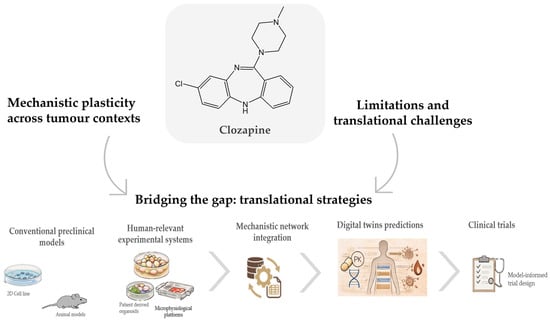
1. Introduction
2. Clozapine: Pharmacological and Pharmacokinetic Features Supporting Drug Repurposing
3. Preclinical and Mechanistic Evidence of Clozapine’s Anticancer Activity
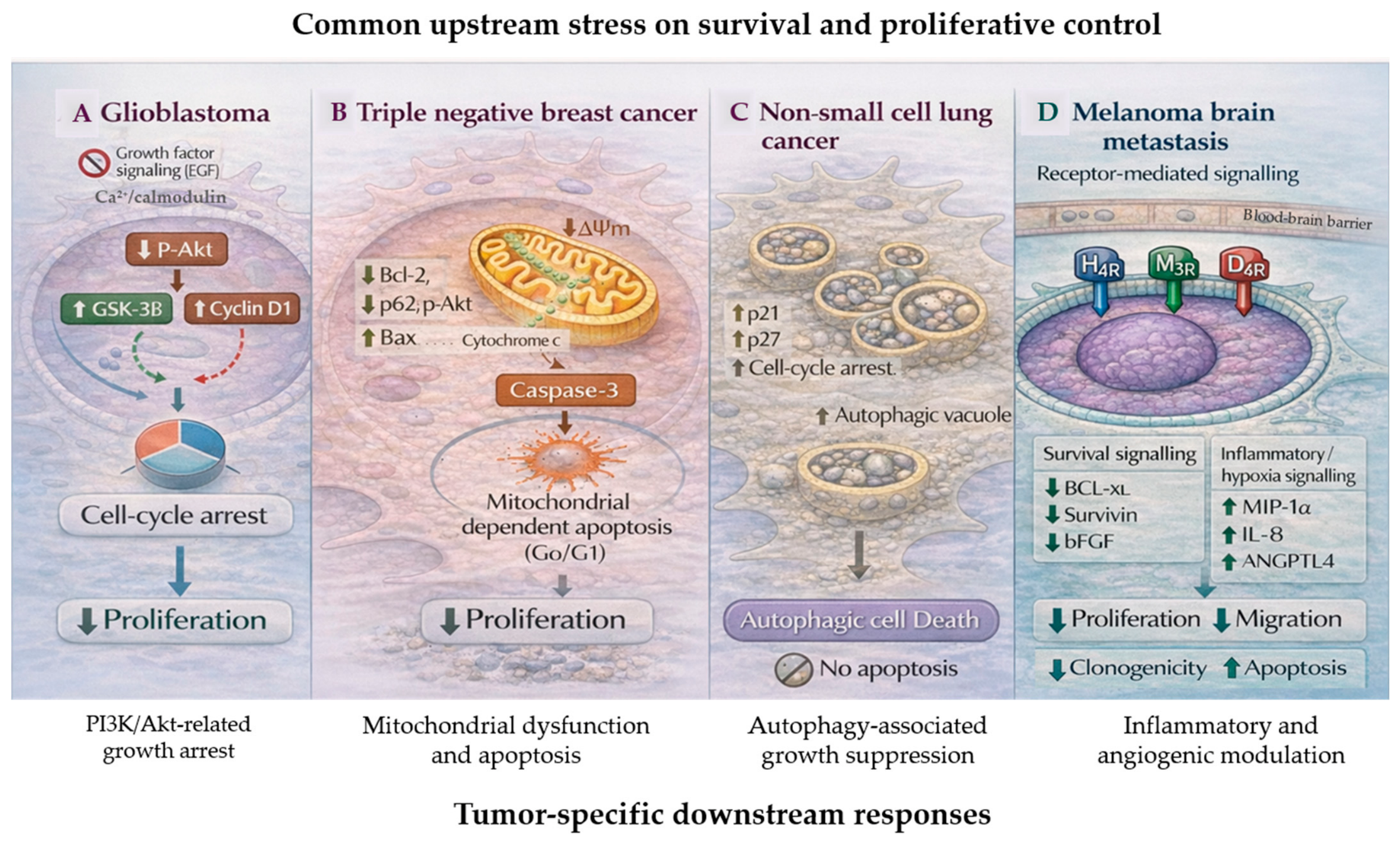
3.1. Central Nervous System Tumor Models: Convergent Disruption of Survival Signaling and Metabolic Homeostasis
3.2. Melanoma Metastasis Models: Coordinated Disruption of Survival, Inflammatory, and Angiogenic Pathways
3.3. Non-Small Cell Lung Cancer: Autophagic Execution of Growth Suppression
3.4. Breast Cancer: Mitochondrial Dysfunction and Intrinsic Apoptotic Vulnerability
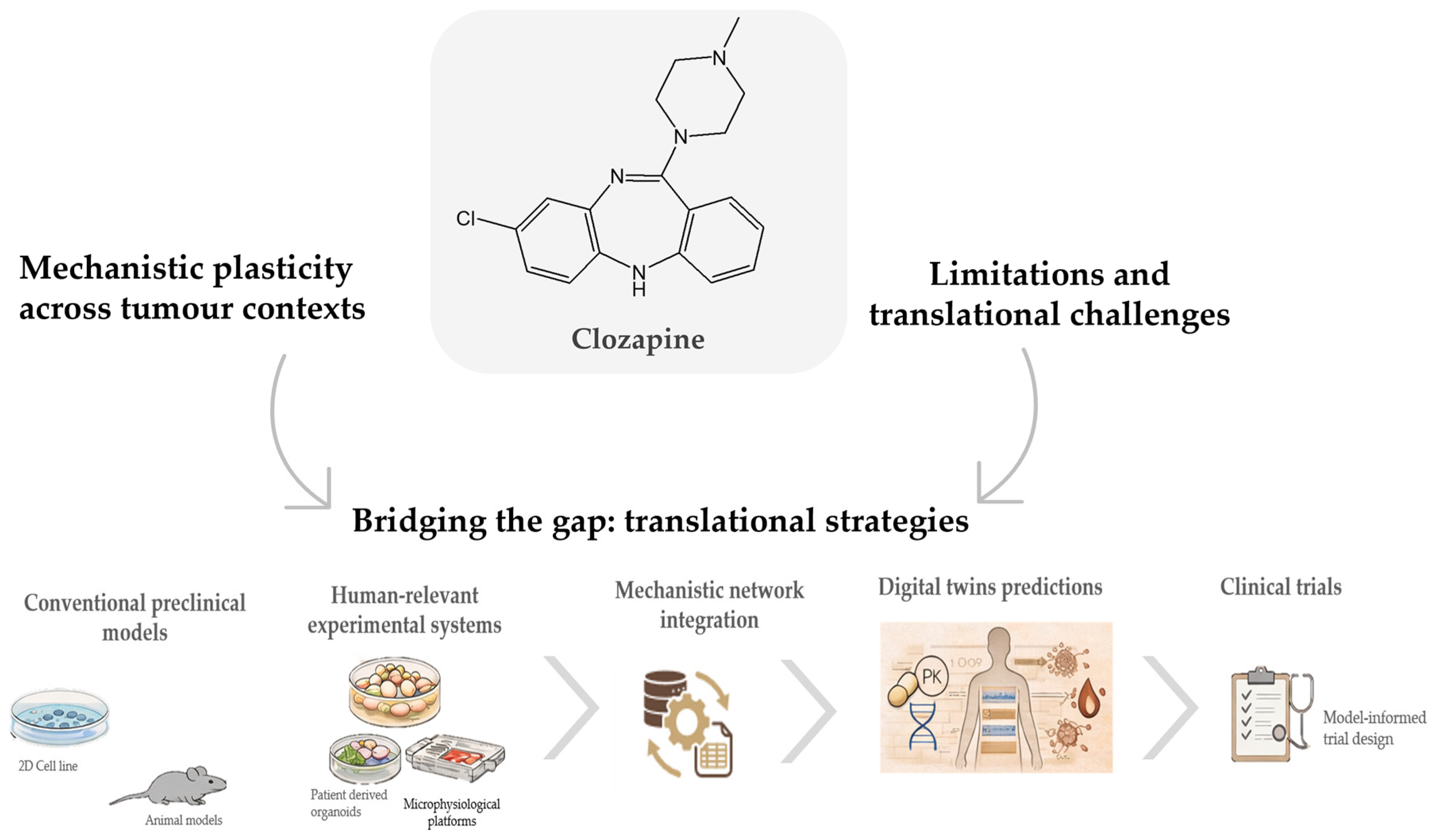
3.5. Integrative Perspective: Mechanistic Plasticity, Context-Specific Vulnerabilities and Their Translational Significance
4. Current Limitations and Translational Challenges
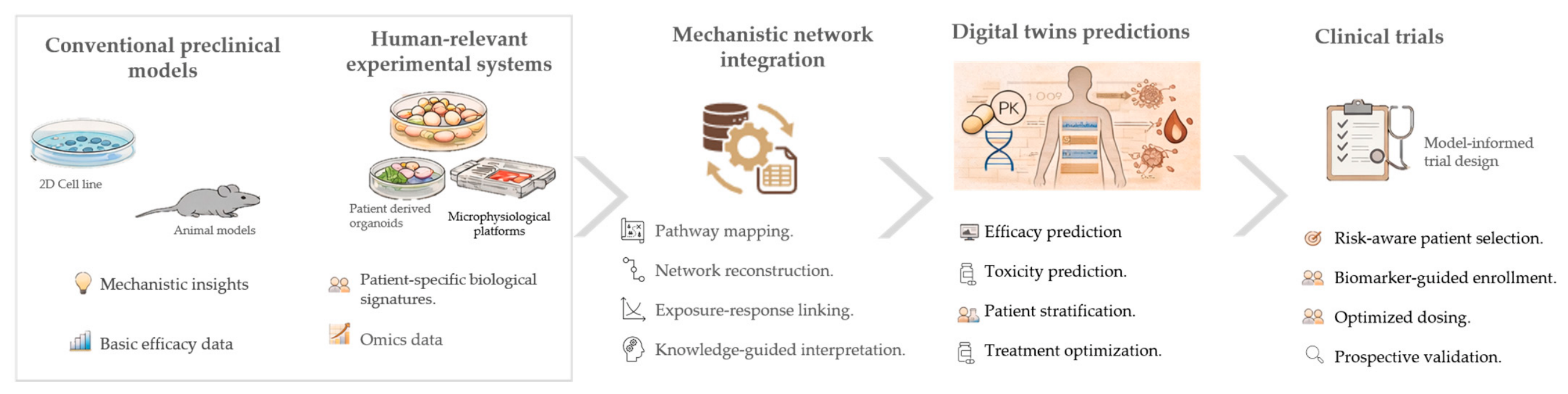
5. Human-Relevant Translational Strategies to Advance Clozapine Repurposing
6. Conclusions
Author Contributions
Funding
Institutional Review Board Statement
Informed Consent Statement
Data Availability Statement
Acknowledgments
Conflicts of Interest
Abbreviations
| CZP | Clozapine |
| DT | Digital Twins |
| MBM | Melanoma brain metastasis |
| PTEN | Phosphatase and TENsin homolog |
| EGF | Epidermal growth factor |
| NHA | Non-malignant human astrocytes |
| MIP-1α | macrophage inflammatory protein-1α |
| IL-8 | interleukin-8 |
| ANGPTL-4 | angiopoietin-like 4 |
| NSCLC | non-small cell lung cancer |
| PK/PD | pharmacokinetics/pharmacodynamics |
| PCNA | proliferating cell nuclear antigen |
References
- Elbarazi, I.; Ahmed, L.A. Alleviating the Global Burden of Cancer Through Prevention and Early Detection. Cancer Control 2025, 32, 10732748251378666. [Google Scholar] [CrossRef] [PubMed]
- Ferlay, J.; Colombet, M.; Soerjomataram, I.; Parkin, D.M.; Piñeros, M.; Znaor, A.; Bray, F. Cancer Statistics for the Year 2020: An Overview. Int. J. Cancer 2021, 149, 778–789. [Google Scholar] [CrossRef] [PubMed]
- Lovly, C.M.; Salama, A.K.S.; Salgia, R. Tumor Heterogeneity and Therapeutic Resistance. Am. Soc. Clin. Oncol. Educ. Book 2016, 36, e585–e593. [Google Scholar] [CrossRef] [PubMed]
- De Rosa, M.C.; Purohit, R.; García-Sosa, A.T. Drug Repurposing: A Nexus of Innovation, Science, and Potential. Sci. Rep. 2023, 13, 17887. [Google Scholar] [CrossRef] [PubMed]
- Pinzi, L.; Bisi, N.; Rastelli, G. How Drug Repurposing Can Advance Drug Discovery: Challenges and Opportunities. Front. Drug Discov. 2024, 4, 1460100. [Google Scholar] [CrossRef]
- Talevi, A.; Bellera, C.L. Challenges and Opportunities with Drug Repurposing: Finding Strategies to Find Alternative Uses of Therapeutics. Expert Opin. Drug Discov. 2020, 15, 397–401. [Google Scholar] [CrossRef] [PubMed]
- Grinshpoon, A.; Barchana, M.; Ponizovsky, A.; Lipshitz, I.; Nahon, D.; Tal, O.; Weizman, A.; Levav, I. Cancer in Schizophrenia: Is the Risk Higher or Lower? Schizophr. Res. 2005, 73, 333–341. [Google Scholar] [CrossRef] [PubMed]
- Barak, Y.; Achiron, A.; Mandel, M.; Mirecki, I.; Aizenberg, D. Reduced Cancer Incidence among Patients with Schizophrenia. Cancer 2005, 104, 2817–2821. [Google Scholar] [CrossRef] [PubMed]
- Brown, J.S. Treatment of Cancer with Antipsychotic Medications: Pushing the Boundaries of Schizophrenia and Cancer. Neurosci. Biobehav. Rev. 2022, 141, 104809. [Google Scholar] [CrossRef] [PubMed]
- Mahmoud, W.A.; Elbehwar, O.I.; Amer, S.K. Antipsychotics Repurposing Offers Novel Advances in Cancer Treatment. Int. J. Pharm. Qual. Assur. 2025, 16, 233–238. [Google Scholar] [CrossRef]
- Sagnak, A.; Ari, F. Drug Repositioning: Examining Antipsychotic Drugs and Their Anticancer Effects. DARU J. Pharm. Sci. 2025, 33, 24. [Google Scholar] [CrossRef] [PubMed]
- Lianos, G.D.; Alexiou, G.A.; Rausei, S.; Galani, V.; Mitsis, M.; Kyritsis, A.P. Repurposing Antipsychotic Drugs for Cancer Treatment: Current Evidence and Future Perspectives. Expert Rev. Anticancer Ther. 2022, 22, 131–134. [Google Scholar] [CrossRef] [PubMed]
- Waszkiewicz, N. The Future of Oncology in Psychiatric Medications. J. Clin. Med. 2025, 14, 6003. [Google Scholar] [CrossRef] [PubMed]
- Wang, Z.; Xu, C.; Wang, Q.; Wang, Y. Repurposing of Nervous System Drugs for Cancer Treatment: Recent Advances, Challenges, and Future Perspectives. Discov. Oncol. 2025, 16, 396. [Google Scholar] [CrossRef] [PubMed]
- Dong, C.; Chen, Y.; Li, H.; Yang, Y.; Zhang, H.; Ke, K.; Shi, X.-N.; Liu, X.; Li, L.; Ma, J.; et al. The Antipsychotic Agent Flupentixol Is a New PI3K Inhibitor and Potential Anticancer Drug for Lung Cancer. Int. J. Biol. Sci. 2019, 15, 1523–1532. [Google Scholar] [CrossRef] [PubMed]
- Suzuki, S.; Okada, M.; Kuramoto, K.; Takeda, H.; Sakaki, H.; Watarai, H.; Sanomachi, T.; Seino, S.; Yoshioka, T.; Kitanaka, C. Aripiprazole, an Antipsychotic and Partial Dopamine Agonist, Inhibits Cancer Stem Cells and Reverses Chemoresistance. Anticancer Res. 2016, 36, 5153–5162. [Google Scholar] [CrossRef] [PubMed]
- Xu, W.; Wang, Y.; Zhang, N.; Lin, X.; Zhu, D.; Shen, C.; Wang, X.; Li, H.; Xue, J.; Yu, Q.; et al. The Antipsychotic Drug Penfluridol Inhibits N-Linked Glycoprotein Processing and Enhances T-Cell–Mediated Tumor Immunity. Mol. Cancer Ther. 2024, 23, 648–661. [Google Scholar] [CrossRef] [PubMed]
- Vedam, V.A.V.; Nuthalapati, P.; Ghanta, M.K.; David, D.C.; Vijayalakshmi, M.; Potla, K.M.; Mary, Y.S. Antiproliferative Effects of Olanzapine against MCF-7 Cells and Its Molecular Interactions with Survivin. Int. J. Nutr. Pharmacol. Neurol. Dis. 2022, 12, 72–78. [Google Scholar] [CrossRef] [PubMed]
- Gammon, D.; Cheng, C.; Volkovinskaia, A.; Baker, G.B.; Dursun, S.M. Clozapine: Why Is It So Uniquely Effective in the Treatment of a Range of Neuropsychiatric Disorders? Biomolecules 2021, 11, 1030. [Google Scholar] [CrossRef] [PubMed]
- Khokhar, J.Y.; Henricks, A.M.; Sullivan, E.D.K.; Green, A.I. Unique Effects of Clozapine: A Pharmacological Perspective. In Advances in Pharmacology; Elsevier: Amsterdam, The Netherlands, 2018; Volume 82, pp. 137–162. [Google Scholar]
- Năstase, M.-G.; Vasile, A.I.; Pietreanu, A.C.; Trifu, S. Following the Action of Atypical Antipsychotic Clozapine and Possible Prediction of Treatment Response in Schizophrenia. Life 2025, 15, 830. [Google Scholar] [CrossRef] [PubMed]
- Taylor, D.M. Clozapine for Treatment-Resistant Schizophrenia: Still the Gold Standard? CNS Drugs 2017, 31, 177–180. [Google Scholar] [CrossRef] [PubMed]
- Amato, D.; Vernon, A.C.; Papaleo, F. Dopamine, the Antipsychotic Molecule: A Perspective on Mechanisms Underlying Antipsychotic Response Variability. Neurosci. Biobehav. Rev. 2018, 85, 146–159. [Google Scholar] [CrossRef] [PubMed]
- Marinho, E. Clozapine: A Special Case of an Atypical Antipsychotic. Eur. J. Med. Chem. Rep. 2024, 10, 100140. [Google Scholar] [CrossRef]
- Zhukovskaya, N.L.; Neumaier, J.F. Clozapine Downregulates 5-Hydroxytryptamine6 (5-HT6) and Upregulates 5-HT7 Receptors in HeLa Cells. Neurosci. Lett. 2000, 288, 236–240. [Google Scholar] [CrossRef] [PubMed]
- Morrison, P.D.; Jauhar, S.; Young, A.H. The Mechanism of Action of Clozapine. J. Psychopharmacol. 2025, 39, 297–300. [Google Scholar] [CrossRef] [PubMed]
- Zeng, Q.; Zhu, J.; He, Z.; Qin, H.; Zhou, W.; Hua, F.; Yang, J. Context-Dependent Roles of 5-HT and Its Receptors in Tumor Growth and Wound Healing: Mechanisms and Therapeutic Implications. Chin. J. Cancer Res. 2025, 37, 268–288. [Google Scholar] [CrossRef] [PubMed]
- Grant, C.E.; Flis, A.L.; Ryan, B.M. Understanding the Role of Dopamine in Cancer: Past, Present and Future. Carcinogenesis 2022, 43, 517–527. [Google Scholar] [CrossRef] [PubMed]
- Karmakar, S.; Lal, G. Role of Serotonin Receptor Signaling in Cancer Cells and Anti-Tumor Immunity. Theranostics 2021, 11, 5296–5312. [Google Scholar] [CrossRef] [PubMed]
- Ahangari, G.; Norioun, H. The Dual Role of Dopamine and Serotonin in Cancer Progression and Inflammation: Mechanisms and Therapeutic Potential. Neuroscience 2025, 569, 184–194. [Google Scholar] [CrossRef] [PubMed]
- Spindel, E.R. Muscarinic Receptor Agonists and Antagonists: Effects on Cancer. In Muscarinic Receptors; Fryer, A.D., Christopoulos, A., Nathanson, N.M., Eds.; Handbook of Experimental Pharmacology; Springer: Berlin/Heidelberg, Germany, 2012; Volume 208, pp. 451–468. [Google Scholar]
- Salmerón, C.; Tomás Bort, E.; Sriram, K.; Javadi-Paydar, M.; Smitham, J.E.; Pham, K.; Grose, R.P.; McCormick, P.J.; DiNardo, A.; Weitz, J.; et al. Histamine H1 Receptor: A Potential Therapeutic Target for Pancreatic Ductal Adenocarcinoma. J. Pharmacol. Exp. Ther. 2025, 392, 103573. [Google Scholar] [CrossRef] [PubMed]
- Archer, M.; Dogra, N.; Dovey, Z.; Ganta, T.; Jang, H.-S.; Khusid, J.A.; Lantz, A.; Mihalopoulos, M.; Stockert, J.A.; Zahalka, A.; et al. Role of α- and β-Adrenergic Signaling in Phenotypic Targeting: Significance in Benign and Malignant Urologic Disease. Cell Commun. Signal. 2021, 19, 78. [Google Scholar] [CrossRef] [PubMed]
- Gazova, S.; Klena, L.; Galvankova, K.; Babula, P.; Krizanova, O. Role of Adrenergic Receptors and Their Blocking in Cancer Research. Biomed. Pharmacother. 2025, 192, 118637. [Google Scholar] [CrossRef] [PubMed]
- Calaf, G.M.; Crispin, L.A.; Muñoz, J.P.; Aguayo, F.; Bleak, T.C. Muscarinic Receptors Associated with Cancer. Cancers 2022, 14, 2322. [Google Scholar] [CrossRef] [PubMed]
- Zhao, J.; Hou, Y.; Yin, C.; Hu, J.; Gao, T.; Huang, X.; Zhang, X.; Xing, J.; An, J.; Wan, S.; et al. Upregulation of Histamine Receptor H1 Promotes Tumor Progression and Contributes to Poor Prognosis in Hepatocellular Carcinoma. Oncogene 2020, 39, 1724–1738. [Google Scholar] [CrossRef] [PubMed]
- Jann, M.W.; Grimsley, S.R.; Gray, E.C.; Chang, W.-H. Pharmacokinetics and Pharmacodynamics of Clozapine. Clin. Pharmacokinet. 1993, 24, 161–176. [Google Scholar] [CrossRef] [PubMed]
- Schaber; Stevens; Gaertner; Dietz; Breyer-Pfaff. Pharmacokinetics of Clozapine and Its Metabolites in Psychiatric Patients: Plasma Protein Binding and Renal Clearance. Br. J. Clin. Pharmacol. 1998, 46, 453–459. [Google Scholar] [CrossRef] [PubMed]
- Pirmohamed, M.; Williams, D.; Madden, S.; Templeton, E.; Park, B.K. Metabolism and Bioactivation of Clozapine by Human Liver in vitro. J. Pharmacol. Exp. Ther. 1995, 272, 984–990. [Google Scholar] [CrossRef] [PubMed]
- Dragovic, S.; Gunness, P.; Ingelman-Sundberg, M.; Vermeulen, N.P.E.; Commandeur, J.N.M. Characterization of Human Cytochrome P450s Involved in the Bioactivation of Clozapine. Drug Metab. Dispos. 2013, 41, 651–658. [Google Scholar] [CrossRef] [PubMed]
- Olmos, I.; Ibarra, M.; Vázquez, M.; Maldonado, C.; Fagiolino, P.; Giachetto, G. Population Pharmacokinetics of Clozapine and Norclozapine and Switchability Assessment between Brands in Uruguayan Patients with Schizophrenia. BioMed Res. Int. 2019, 2019, 3163502. [Google Scholar] [CrossRef] [PubMed]
- Available online: https://go.drugbank.com/drugs/DB00363 (accessed on 21 June 2026).
- Manjunath, K.; Venkateswarlu, V. Pharmacokinetics, Tissue Distribution and Bioavailability of Clozapine Solid Lipid Nanoparticles after Intravenous and Intraduodenal Administration. J. Control. Release 2005, 107, 215–228. [Google Scholar] [CrossRef] [PubMed]
- Boulton, D.W.; DeVane, C.L.; Liston, H.L.; Markowitz, J.S. In Vitro P-Glycoprotein Affinity for Atypical and Conventional Antipsychotics. Life Sci. 2002, 71, 163–169. [Google Scholar] [CrossRef] [PubMed]
- Wang, J.-S.; Zhu, H.-J.; Markowitz, J.S.; Donovan, J.L.; DeVane, C.L. Evaluation of Antipsychotic Drugs as Inhibitors of Multidrug Resistance Transporter P-Glycoprotein. Psychopharmacology 2006, 187, 415–423. [Google Scholar] [CrossRef] [PubMed]
- Wang, J.-S.; Zhu, H.-J.; Markowitz, J.S.; Donovan, J.L.; Yuan, H.-J.; Devane, C.L. Antipsychotic Drugs Inhibit the Function of Breast Cancer Resistance Protein. Basic Clin. Pharmacol. Toxicol. 2008, 103, 336–341. [Google Scholar] [CrossRef] [PubMed]
- Reeves, S.; Bertrand, J.; Obee, S.J.; Hunter, S.; Howard, R.; Flanagan, R.J. A Population Pharmacokinetic Model to Guide Clozapine Dose Selection, Based on Age, Sex, Ethnicity, Body Weight and Smoking Status. Br. J. Clin. Pharmacol. 2024, 90, 135–145. [Google Scholar] [CrossRef] [PubMed]
- Shin, S.Y.; Choi, B.H.; Ko, J.; Kim, S.H.; Kim, Y.S.; Lee, Y.H. Clozapine, a Neuroleptic Agent, Inhibits Akt by Counteracting Ca2+/Calmodulin in PTEN-Negative U-87MG Human Glioblastoma Cells. Cell. Signal. 2006, 18, 1876–1886. [Google Scholar] [CrossRef] [PubMed]
- Moura, C.; Gouveia, M.J.; Vale, N. Repurposed Antipsychotics as Potential Anticancer Agents: Clozapine Efficacy and Dopaminergic Pathways in Neuroblastoma and Glioblastoma. Life 2025, 15, 1097. [Google Scholar] [CrossRef] [PubMed]
- Wikerholmen, T.; Taule, E.M.; Rigg, E.; Berle, B.F.; Sættem, M.; Sarnow, K.; Saed, H.S.; Sundstrøm, T.; Thorsen, F. Repurposing Neuroleptics: Clozapine as a Novel, Adjuvant Therapy for Melanoma Brain Metastases. Clin. Exp. Metastasis 2025, 42, 12. [Google Scholar] [CrossRef] [PubMed]
- Massari, N.A.; Medina, V.A.; Cricco, G.P.; Martinel Lamas, D.J.; Sambuco, L.; Pagotto, R.; Ventura, C.; Ciraolo, P.J.; Pignataro, O.; Bergoc, R.M.; et al. Antitumor Activity of Histamine and Clozapine in a Mouse Experimental Model of Human Melanoma. J. Dermatol. Sci. 2013, 72, 252–262. [Google Scholar] [CrossRef] [PubMed]
- Yin, Y.-C.; Lin, C.-C.; Chen, T.-T.; Chen, J.-Y.; Tsai, H.-J.; Wang, C.-Y.; Chen, S.-Y. Clozapine Induces Autophagic Cell Death in Non-Small Cell Lung Cancer Cells. Cell. Physiol. Biochem. 2015, 35, 945–956. [Google Scholar] [CrossRef] [PubMed]
- Fan, Y.-C.; Lin, S.-C.; Lai, P.-J.; Lai, P.-C.; Maurus, G.; Chen, S.-Y. A Psychiatric Medication, Clozapine, Induces Autophagy and Apoptosis in Breast Cancer Cells through Reactive Oxygen Species. PLoS ONE 2025, 20, e0326224. [Google Scholar] [CrossRef] [PubMed]
- Lazovic, A.; Markovic, B.S.; Corovic, I.; Markovic, T.; Andjelkovic, M.; Stojanovic, B.; Jovanovic, I.; Mitrovic, M. Unlocking the Molecular Mechanisms of Anticancer and Immunomodulatory Potentials of Cariprazine in Triple Negative Breast Cancer. Biomed. Pharmacother. 2025, 184, 117931. [Google Scholar] [CrossRef] [PubMed]
- Khabibov, M.; Garifullin, A.; Boumber, Y.; Khaddour, K.; Fernandez, M.; Khamitov, F.; Khalikova, L.; Kuznetsova, N.; Kit, O.; Kharin, L. Signaling Pathways and Therapeutic Approaches in Glioblastoma Multiforme. Int. J. Oncol. 2022, 60, 69. [Google Scholar] [CrossRef] [PubMed]
- Amawi, H.; Hammad, A.M.; Hall, F.S.; Hussein, N.; Rataan, A.O.; Mrayyan, A.; Al-kofahi, T.; Hmedat, A.; Ashby, C.R.; Tiwari, A.K. Revisiting Strategies to Target ABC Transporter-Mediated Drug Resistance in CNS Cancer. Cancer Biol. Med. 2025, 22, 1158–1180. [Google Scholar] [CrossRef] [PubMed]
- Perazzoli, G.; Prados, J.; Ortiz, R.; Caba, O.; Cabeza, L.; Berdasco, M.; Gónzalez, B.; Melguizo, C. Temozolomide Resistance in Glioblastoma Cell Lines: Implication of MGMT, MMR, P-Glycoprotein and CD133 Expression. PLoS ONE 2015, 10, e0140131. [Google Scholar] [CrossRef] [PubMed]
- Gampa, G.; Vaidhyanathan, S.; Wilken-Resman, B.; Parrish, K.E.; Markovic, S.N.; Sarkaria, J.N.; Elmquist, W.F. Challenges in the Delivery of Therapies to Melanoma Brain Metastases. Curr. Pharmacol. Rep. 2016, 2, 309–325. [Google Scholar] [CrossRef] [PubMed]
- Zhang, P.; Kuil, L.E.; Buil, L.C.M.; Freriks, S.; Beijnen, J.H.; Van Tellingen, O.; De Gooijer, M.C. Acquired and Intrinsic Resistance to Vemurafenib in BRAFV600E-driven Melanoma Brain Metastases. FEBS Open Bio 2024, 14, 96–111. [Google Scholar] [CrossRef] [PubMed]
- Vlachos, N.; Lampros, M.; Voulgaris, S.; Alexiou, G.A. Repurposing Antipsychotics for Cancer Treatment. Biomedicines 2021, 9, 1785. [Google Scholar] [CrossRef] [PubMed]
- Xia, Y.; Sun, M.; Huang, H.; Jin, W.-L. Drug Repurposing for Cancer Therapy. Signal Transduct. Target. Ther. 2024, 9, 92. [Google Scholar] [CrossRef] [PubMed]
- Zhang, Z.; Zhou, L.; Xie, N.; Nice, E.C.; Zhang, T.; Cui, Y.; Huang, C. Overcoming Cancer Therapeutic Bottleneck by Drug Repurposing. Signal Transduct. Target. Ther. 2020, 5, 113. [Google Scholar] [CrossRef] [PubMed]
- Stenvang, J.; Kümler, I.; Nygård, S.B.; Smith, D.H.; Nielsen, D.; Brünner, N.; Moreira, J.M.A. Biomarker-Guided Repurposing of Chemotherapeutic Drugs for Cancer Therapy: A Novel Strategy in Drug Development. Front. Oncol. 2013, 3, 313. [Google Scholar] [CrossRef] [PubMed]
- La Thangue, N.B.; Kerr, D.J. Predictive Biomarkers: A Paradigm Shift towards Personalized Cancer Medicine. Nat. Rev. Clin. Oncol. 2011, 8, 587–596. [Google Scholar] [CrossRef] [PubMed]
- Motohashi, S.; Katsuta, E.; Ban, D. Advances and Challenges in Drug Screening for Cancer Therapy: A Comprehensive Review. Bioengineering 2025, 12, 1315. [Google Scholar] [CrossRef] [PubMed]
- Weth, F.R.; Hoggarth, G.B.; Weth, A.F.; Paterson, E.; White, M.P.J.; Tan, S.T.; Peng, L.; Gray, C. Unlocking Hidden Potential: Advancements, Approaches, and Obstacles in Repurposing Drugs for Cancer Therapy. Br. J. Cancer 2024, 130, 703–715. [Google Scholar] [CrossRef] [PubMed]
- Hierro, C.; Azaro, A.; Argilés, G.; Elez, E.; Gómez, P.; Carles, J.; Rodon, J. Unveiling Changes in the Landscape of Patient Populations in Cancer Early Drug Development. Oncotarget 2017, 8, 14158–14172. [Google Scholar] [CrossRef] [PubMed][Green Version]
- Rodrigues, R.; Duarte, D.; Vale, N. Drug Repurposing in Cancer Therapy: Influence of Patient’s Genetic Background in Breast Cancer Treatment. Int. J. Mol. Sci. 2022, 23, 4280. [Google Scholar] [CrossRef] [PubMed]
- Alvir, J.M.J.; Lieberman, J.A.; Safferman, A.Z.; Schwimmer, J.L.; Schaaf, J.A. Clozapine-Induced Agranulocytosis—Incidence and Risk Factors in the United States. N. Engl. J. Med. 1993, 329, 162–167. [Google Scholar] [CrossRef] [PubMed]
- Myles, N.; Myles, H.; Xia, S.; Large, M.; Kisely, S.; Galletly, C.; Bird, R.; Siskind, D. Meta-analysis Examining the Epidemiology of Clozapine-associated Neutropenia. Acta Psychiatr. Scand. 2018, 138, 101–109. [Google Scholar] [CrossRef] [PubMed]
- Li, M.; Bai, Y.; Wang, Y.; Xing, H.; Zhang, Y.; Ding, W.; Ye, H.; Ma, L.; Wang, W.; Bao, T. A Review of Clinical Advances and Challenges in Clozapine-Induced Myocarditis. Neuropsychiatr. Dis. Treat. 2025, 21, 525–538. [Google Scholar] [CrossRef] [PubMed]
- Citrome, L.; McEvoy, J.P.; Saklad, S.R. Guide to the Management of Clozapine-Related Tolerability and Safety Concerns. Clin. Schizophr. Relat. Psychoses 2016, 10, 163–177. [Google Scholar] [CrossRef] [PubMed]
- Yuen, J.W.Y.; Kim, D.D.; Procyshyn, R.M.; White, R.F.; Honer, W.G.; Barr, A.M. Clozapine-Induced Cardiovascular Side Effects and Autonomic Dysfunction: A Systematic Review. Front. Neurosci. 2018, 12, 203. [Google Scholar] [CrossRef] [PubMed]
- Spina, E.; De Leon, J. Metabolic Drug Interactions with Newer Antipsychotics: A Comparative Review. Basic Clin. Pharmacol. Toxicol. 2007, 100, 4–22. [Google Scholar] [CrossRef] [PubMed]
- Mauri, M.C.; Paletta, S.; Di Pace, C.; Reggiori, A.; Cirnigliaro, G.; Valli, I.; Altamura, A.C. Correction to: Clinical Pharmacokinetics of Atypical Antipsychotics: An Update. Clin. Pharmacokinet. 2019, 58, 1219–1220. [Google Scholar] [CrossRef] [PubMed]
- Lee, J.; Kim, M.-G.; Jeong, H.-C.; Shin, K.-H. Physiologically-Based Pharmacokinetic Model for Clozapine in Korean Patients with Schizophrenia. Transl. Clin. Pharmacol. 2021, 29, 33. [Google Scholar] [CrossRef] [PubMed]
- Kuzo, N.; Piras, M.; Lutz, U.C.; Haen, E.; Eap, C.B.; Hiemke, C.; Paulzen, M.; Schoretsanitis, G. Therapeutic Reference Range for Clozapine Plasma Levels in Parkinson’s Disease or Dementia: A Systematic Review and Individual Participant Data Meta-Analysis. Pharmacopsychiatry 2025, 58, 263–271. [Google Scholar] [CrossRef] [PubMed]
- Wilding, J.L.; Bodmer, W.F. Cancer Cell Lines for Drug Discovery and Development. Cancer Res. 2014, 74, 2377–2384. [Google Scholar] [CrossRef] [PubMed]
- Mak, I.W.; Evaniew, N.; Ghert, M. Lost in Translation: Animal Models and Clinical Trials in Cancer Treatment. Am. J. Transl. Res. 2014, 6, 114–118. [Google Scholar] [PubMed]
- Colonna, G. Overcoming Barriers in Cancer Biology Research: Current Limitations and Solutions. Cancers 2025, 17, 2102. [Google Scholar] [CrossRef] [PubMed]
- Sharpless, N.E.; DePinho, R.A. The Mighty Mouse: Genetically Engineered Mouse Models in Cancer Drug Development. Nat. Rev. Drug Discov. 2006, 5, 741–754. [Google Scholar] [CrossRef] [PubMed]
- Garralda, E.; Dienstmann, R.; Tabernero, J. Pharmacokinetic/Pharmacodynamic Modeling for Drug Development in Oncology. Am. Soc. Clin. Oncol. Educ. Book 2017, 37, 210–215. [Google Scholar] [CrossRef] [PubMed]
- de Leon, J.; Ruan, C.-J.; Schoretsanitis, G.; De las Cuevas, C. A Rational Use of Clozapine Based on Adverse Drug Reactions, Pharmacokinetics, and Clinical Pharmacopsychology. Psychother. Psychosom. 2020, 89, 200–214. [Google Scholar] [CrossRef] [PubMed]
- Pirmohamed, M.; Park, K. Mechanism of Clozapine-Induced Agranulocytosis: Current Status of Research and Implications for Drug Development. CNS Drugs 1997, 7, 139–158. [Google Scholar] [CrossRef] [PubMed]
- Maggs, J.L.; Williams, D.; Pirmohamed, M.; Park, B.K. The Metabolic Formation of Reactive Intermediates from Clozapine, a Drug Associated with Agranulocytosis in Man. J. Pharmacol. Exp. Ther. 1995, 275, 1463–1475. [Google Scholar] [CrossRef] [PubMed]
- Willcocks, I.R.; Legge, S.E.; Nalmpanti, M.; Mazzeo, L.; King, A.; Jansen, J.; Helthuis, M.; Owen, M.J.; O’Donovan, M.C.; Walters, J.T.R.; et al. Clozapine Metabolism Is Associated With Absolute Neutrophil Count in Individuals With Treatment-Resistant Schizophrenia. Front. Pharmacol. 2021, 12, 658734. [Google Scholar] [CrossRef] [PubMed]
- Daniel, P.; Rajaree, K.M.; Rudy, L.; Jafor, S.; Prasad, S.; Avanthika, C.; Jhaveri, S. Myocarditis in Patients on Long-Term Antipsychotics—Mechanism, Management and Recent Updates. Heliyon 2023, 9, e13930. [Google Scholar] [CrossRef] [PubMed]
- Vaziri, N.; Shutt, T.E.; Karim, W.; Raedler, T.J.; Pantelis, C.; Thomas, N.; Jayaram, M.; Greenway, S.C.; Bousman, C.A. Examination of Mitochondria- and Inflammasome-Mediated Mechanisms of Clozapine-Induced Myocarditis Using Patient-Derived iPSC Cardiomyocytes. Mol. Psychiatry 2025, 30, 3491–3501. [Google Scholar] [CrossRef] [PubMed]
- Crawford, J.; Herndon, D.; Gmitter, K.; Weiss, J. The Impact of Myelosuppression on Quality of Life of Patients Treated with Chemotherapy. Future Oncol. 2024, 20, 1515–1530. [Google Scholar] [CrossRef] [PubMed]
- Liston, D.R.; Davis, M. Clinically Relevant Concentrations of Anticancer Drugs: A Guide for Nonclinical Studies. Clin. Cancer Res. 2017, 23, 3489–3498. [Google Scholar] [CrossRef] [PubMed]
- Matteoni, S.; Matarrese, P.; Ascione, B.; Buccarelli, M.; Ricci-Vitiani, L.; Pallini, R.; Villani, V.; Pace, A.; Paggi, M.G.; Abbruzzese, C. Anticancer Properties of the Antipsychotic Drug Chlorpromazine and Its Synergism With Temozolomide in Restraining Human Glioblastoma Proliferation In Vitro. Front. Oncol. 2021, 11, 635472. [Google Scholar] [CrossRef] [PubMed]
- Liu, Z.; Jiang, X.; Gao, L.; Liu, X.; Li, J.; Huang, X.; Zeng, T. Synergistic Suppression of Glioblastoma Cell Growth by Combined Application of Temozolomide and Dopamine D2 Receptor Antagonists. World Neurosurg. 2019, 128, e468–e477. [Google Scholar] [CrossRef] [PubMed]
- Mokhtari, R.B.; Sambi, M.; Shekari, F.; Satari, K.; Ghafoury, R.; Ashayeri, N.; Eversole, P.; Baluch, N.; Harless, W.W.; Muscarella, L.A.; et al. A Comprehensive Oncological Biomarker Framework Guiding Precision Medicine. Biomolecules 2025, 15, 1304. [Google Scholar] [CrossRef] [PubMed]
- Di Grazia, G.; Sánchez-Bayona, R.; Casals-Pascual, C.; Pascual, T.; Generali, D.; Gennari, A.; Vigneri, P.; Harbeck, N.; Cortés, J.; Prat, A.; et al. Dynamic Biomarkers in Hormone Receptor-Positive/HER2-Negative Breast Cancer Trials: A New Hope for Precision Oncology. npj Breast Cancer 2026, 12, 34. [Google Scholar] [CrossRef] [PubMed]
- Si, J.-X.; Liu, Z.-C.; Gu, F.; Jin, X.; Ma, Y.-Y. Nanoparticle-based Delivery Systems for Targeted Therapy in Brain Tumors: Progress, Challenges and Perspectives (Review). Int. J. Oncol. 2025, 67, 83. [Google Scholar] [CrossRef] [PubMed]
- Mehrdadi, S. Drug Delivery of Solid Lipid Nanoparticles (SLNs) and Nanostructured Lipid Carriers (NLCs) to Target Brain Tumors. Adv. Pharm. Bull. 2023, 13, 512–520. [Google Scholar] [CrossRef] [PubMed]
- Lin, J. Pharmacokinetic and Pharmacodynamic Variability: A Daunting Challenge in Drug Therapy. Curr. Drug Metab. 2007, 8, 109–136. [Google Scholar] [CrossRef] [PubMed]
- Mauri, M.C.; Paletta, S.; Maffini, M.; Colasanti, A.; Dragogna, F.; Di Pace, C.; Altamura, A.C. Clinical Pharmacology of Atypical Antipsychotics: An Update. EXCLI J. 2014, 13, 1163–1191. [Google Scholar] [PubMed]
- Zhao, R.; Feng, Q.; Xia, Y.; Liao, L.; Xie, S. Iteration of Tumor Organoids in Drug Development: Simplification and Integration. Pharmaceuticals 2025, 18, 1540. [Google Scholar] [CrossRef] [PubMed]
- Clevers, H. Modeling Development and Disease with Organoids. Cell 2016, 165, 1586–1597. [Google Scholar] [CrossRef] [PubMed]
- Olawade, D.B.; Oisakede, E.O.; Bello, O.J.; Analikwu, C.C.; Egbon, E.; Ojo, A. Digital Twins in Oncology: From Predictive Modelling to Personalised Treatment Strategies. Crit. Rev. Oncol. Hematol. 2026, 220, 105171. [Google Scholar] [CrossRef] [PubMed]
- Zhang, K.; Zhou, H.-Y.; Baptista-Hon, D.T.; Gao, Y.; Liu, X.; Oermann, E.; Xu, S.; Jin, S.; Zhang, J.; Sun, Z.; et al. Concepts and Applications of Digital Twins in Healthcare and Medicine. Patterns 2024, 5, 101028. [Google Scholar] [CrossRef] [PubMed]
- Mostafa, S.; Rafizadeh, R.; Polasek, T.M.; Bousman, C.A.; Rostami-Hodjegan, A.; Stowe, R.; Carrion, P.; Sheffield, L.J.; Kirkpatrick, C.M.J. Virtual Twins for Model-informed Precision Dosing of Clozapine in Patients with Treatment-resistant Schizophrenia. CPT Pharmacomet. Syst. Pharmacol. 2024, 13, 424–436. [Google Scholar] [CrossRef] [PubMed]
- Mostafa, S.; Polasek, T.M.; Bousman, C.; Rostami-Hodjegan, A.; Sheffield, L.J.; Everall, I.; Pantelis, C.; Kirkpatrick, C.M.J. Delineating Gene–Environment Effects Using Virtual Twins of Patients Treated with Clozapine. CPT Pharmacomet. Syst. Pharmacol. 2023, 12, 168–179. [Google Scholar] [CrossRef] [PubMed]
- Emmert-Streib, F.; Parkkila, S.; Laubenbacher, R.; Mannermaa, A.; Hood, L.; Yli-Harja, O. The Role of Digital Twins in P4 Medicine: A Paradigm for Modern Healthcare. npj Digit. Med. 2025, 8, 735. [Google Scholar] [CrossRef] [PubMed]
- Katsoulakis, E.; Wang, Q.; Wu, H.; Shahriyari, L.; Fletcher, R.; Liu, J.; Achenie, L.; Liu, H.; Jackson, P.; Xiao, Y.; et al. Digital Twins for Health: A Scoping Review. npj Digit. Med. 2024, 7, 77. [Google Scholar] [CrossRef] [PubMed]
- Silva, A.; Vale, N. Digital Twins in Personalized Medicine: Bridging Innovation and Clinical Reality. J. Pers. Med. 2025, 15, 503. [Google Scholar] [CrossRef] [PubMed]
- Maharjan, R.; Kim, N.A.; Kim, K.H.; Jeong, S.H. Transformative Roles of Digital Twins from Drug Discovery to Continuous Manufacturing: Pharmaceutical and Biopharmaceutical Perspectives. Int. J. Pharm. X 2025, 10, 100409. [Google Scholar] [CrossRef] [PubMed]
- Kamel Boulos, M.N.; Zhang, P. Digital Twins: From Personalised Medicine to Precision Public Health. J. Pers. Med. 2021, 11, 745. [Google Scholar] [CrossRef] [PubMed]
- Li, X.; Loscalzo, J.; Mahmud, A.K.M.F.; Aly, D.M.; Rzhetsky, A.; Zitnik, M.; Benson, M. Digital Twins as Global Learning Health and Disease Models for Preventive and Personalized Medicine. Genome Med. 2025, 17, 11. [Google Scholar] [CrossRef] [PubMed]



| Cancer Type/Model | Experimental System | Drug Concentration | Main Biological Effects | Proposed Mechanism of Action | Ref. |
|---|---|---|---|---|---|
| Glioblastoma | U-87MG (PTEN-deficient human GBM cells) | 20–40 µM | Inhibition of proliferation; G0/G1 cell-cycle arrest | Suppression of PI3K/Akt signaling and downstream cell-cycle control | [48] |
| Glioblastoma/ Neuroblastoma | A172 (glioblastoma), SH-SY5Y (neuroblastoma) | 0–100 µM | Reduced cell viability and metabolic activity; maintained cytotoxicity under oxidative stress | Not clearly defined in the study | [49] |
| Melanoma brain metastases | Human MBM cell lines; human astrocytes; rat brain organoids | ~10–40 µM (IC50 ≈ 26–29 µM) | ↓ proliferation, migration and clonogenicity; ↑ apoptosis; tumor selectivity vs. non-malignant cells | Modulation of survival, inflammatory, and angiogenic pathways | [50] |
| Melanoma metastatic | M1/15 human metastatic melanoma xenografts (athymic nude mice) | 1 mg/kg (s.c.) | ↓ tumor growth; ↑ median survival; ↓ mitotic index and angiogenesis | Histamine receptor-associated antitumor effects | [51] |
| Non-small cell lung cancer | A549, H1299 | 0–50 µM | ↓ proliferation; G0/G1 arrest; extensive vacuolization; autophagy | Autophagy-associated growth suppression | [52] |
| Breast cancer (ER+) | MCF-7 | 0–50 µM | ↓ proliferation and clonogenic survival; G0/G1 arrest; autophagy and apoptosis | ROS-driven oxidative stress; autophagy as survival response | [53] |
| Breast cancer (TNBC) | MDA-MB-231 | 0–100 µM | ↓ viability; cell-cycle arrest; mitochondrial dysfunction; apoptosis | Mitochondria-dependent intrinsic apoptotic signaling | [54] |
| Domain | Constraint | Translational Implication | Ref. |
|---|---|---|---|
| Safety and tolerability | Risk of agranulocytosis and severe neutropenia requiring mandatory blood monitoring | Limits use in myelosuppressed oncological populations; requires continuous vigilance | [69,70] |
| Associated adverse effects include myocarditis, cardiomyopathy, and metabolic disturbances | [71,72,73] | ||
| Pharmacokinetic variability | Substantial interindividual variability driven by CYP1A2 metabolism, influenced by smoking status, inflammation, and co-medication | Complicates dose optimization; requires therapeutic drug monitoring | [74,75] |
| Concentration gap | Anticancer-effective concentrations in vitro (10–100 µM) substantially exceed therapeutically achievable plasma levels (0.8–1.8 µM) | Raises fundamental questions regarding clinical translatability of in vitro findings | [73,76,77] |
| Dose-toxicity | Achieving anticancer-relevant concentrations would require doses exceeding psychiatric practice, amplifying toxicity risk | Defines a narrow and currently undefined therapeutic window | [71,72,73] |
| Preclinical models | Conventional models fail to capture human-specific efficacy–toxicity relationships and interindividual variability | Constrains translational value of existing preclinical data | [78,79,80,81] |
| PK/PD modeling | Absence of integrated PK/PD models linking plasma exposure to antitumor effect | Exposure–response relationship remains unquantified | [82] |
| Clinical evidence | No clinical trials conducted; available human data limited to retrospective observational studies | Insufficient to inform therapeutic conclusions; efficacy in humans undemonstrated | [83] |
Disclaimer/Publisher’s Note: The statements, opinions and data contained in all publications are solely those of the individual author(s) and contributor(s) and not of MDPI and/or the editor(s). MDPI and/or the editor(s) disclaim responsibility for any injury to people or property resulting from any ideas, methods, instructions or products referred to in the content. |
© 2026 by the authors. Licensee MDPI, Basel, Switzerland. This article is an open access article distributed under the terms and conditions of the Creative Commons Attribution (CC BY) license.
Share and Cite
Gouveia, M.J.; Vale, N. From Therapeutic Drug to Xenobiotic in Cancer Repurposing: Clozapine Mechanisms, Metabolic Liabilities, and Human-Relevant Translational Approaches. J. Xenobiot. 2026, 16, 125. https://doi.org/10.3390/jox16040125
Gouveia MJ, Vale N. From Therapeutic Drug to Xenobiotic in Cancer Repurposing: Clozapine Mechanisms, Metabolic Liabilities, and Human-Relevant Translational Approaches. Journal of Xenobiotics. 2026; 16(4):125. https://doi.org/10.3390/jox16040125
Chicago/Turabian StyleGouveia, Maria João, and Nuno Vale. 2026. "From Therapeutic Drug to Xenobiotic in Cancer Repurposing: Clozapine Mechanisms, Metabolic Liabilities, and Human-Relevant Translational Approaches" Journal of Xenobiotics 16, no. 4: 125. https://doi.org/10.3390/jox16040125
APA StyleGouveia, M. J., & Vale, N. (2026). From Therapeutic Drug to Xenobiotic in Cancer Repurposing: Clozapine Mechanisms, Metabolic Liabilities, and Human-Relevant Translational Approaches. Journal of Xenobiotics, 16(4), 125. https://doi.org/10.3390/jox16040125