

Classification, Chemical, and Toxicological Properties of Carbamate Nerve Agents


Abstract
1. Introduction
2. Methods
3. Carbamate Nerve Agents (CNAs)
3.1. First Generation of CNAs
3.2. Mechanism of Toxicity and Relationship with Structure
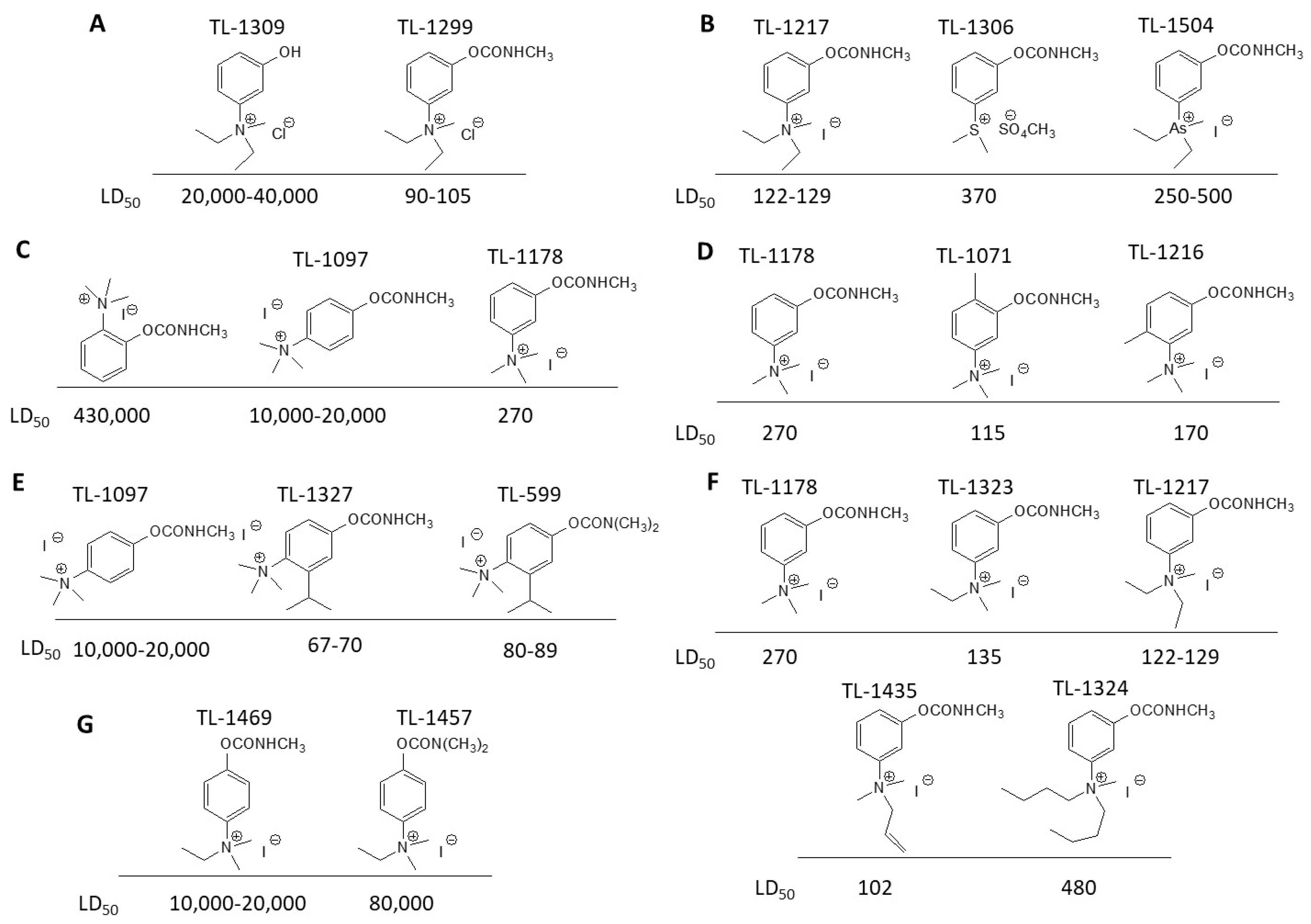
- The most toxic compounds contain both a carbamate and a quaternary ammonium salt, for example Figure 3A (comparison of TL-1309 with TL-1299). This is a universal observation and the replacement of carbamate with a hydroxy group or the deletion of the tertiary amine results in a loss of toxicity. Further, this became the basis for the generation of carbamates bearing quaternary ammonium group as CWAs;
- The replacement of the ammonium group with sulfonium or arsonium slightly reduces the toxicity, for example Figure 3B (comparison of TL-1217 with TL-1306 and TL-1504). This rule has been derived from studying five compounds and no exceptions have been detected;
- The introduction of the quaternary ammonium in the meta position relative to the carbamate group increases the toxicity of the compound (Figure 3C). In total, four pairs of compounds were examined;
- In the compounds containing the quaternary ammonium in the meta position relative to carbamate, the further introduction of a methyl group at the ortho or para position relative to the carbamate further increases toxicity, for example Figure 3D. From a comparison of 14 pairs, 13 followed the rule and only 1 pair showed approximately equal toxicity with the addition of the methyl group;
- The compounds that contain a quaternary ammonium in the para position relative to the carbamate can be converted to exceedingly toxic compounds by introducing an alkyl group (mainly isopropyl group) at the meta position relative to the carbamate (Figure 3E). This was deduced by studying nine compounds;
- Changes in the methyl substituents of quaternary ammonium slightly increase the toxicity of the compounds (Figure 3F). However, the introduction of two bulky alkyl groups, e.g., two butyl groups like the agent TL-1324, results in a reduction in toxicity. This was based on studying two pairs of compounds;
- N-methylcarbamates are usually, but not exclusively, more toxic than N,N-dimethylcarbamates (Figure 3G). Of 20 pairs examined, 14 followed this rule.
3.3. Stability
3.4. Synthesis of First-Generation CNAs
3.5. Second Generation of CNAs
3.6. Toxicity
- Most compounds that have been investigated contain the two groups (carbamate and alkyl chain) at the ortho position on the aromatic ring. This most likely indicates that ortho substitution leads to the most potent compounds;
- The introduction of a spacer containing 8–10 atoms between the two aromatic groups yields the compounds with the highest toxicity. This is directly deduced from studying the compounds that belong to subclass 3, within which, no exceptions were found;
- For subclass 3, the highest toxicity is documented in compounds containing an eight-atom spacer (e.g., EA 3990). The total number of compounds that have been examined is 10;
- It appears that the asymmetric compounds containing two quaternary nitrogens (subclasses 6–10, 12, 13, 15) exhibit lower toxicity compared to the respective symmetric compounds (subclasses 1–3). This is deduced by studying the three examples of subclass 1, the two examples of subclass 2, and the three examples from subclass 3 (that have an 8–10 atom spacer) with all the respective examples shown in subclasses 6–10, 12, 13, and 15;
- In the asymmetric compounds, the spacer between the two quaternary nitrogens should consist of 10 atoms for the maximum toxicity (this is deduced from the comparison of the compounds shown in subclass 15). The finding may have been the reason for selecting the 10-atom spacer in subclasses 5–14 and 22;
- The “half agents”, namely asymmetric agents of subclass 14 that can be considered precursors of full symmetric agents, show significantly reduced toxicity compared to their full analogs (compare EA 3887 from subclass 3 with the example compound shown in subclass 15);
- Pyrimidinium-containing compounds are more toxic than their phenyl analogs (comparison of two respective pairs between subclasses 1 and 16 and two respective pairs between subclasses 2 and 17).
3.7. Synthesis
4. Nitrosocarbamates
5. Conclusions
Funding
Institutional Review Board Statement
Informed Consent Statement
Data Availability Statement
Conflicts of Interest
References
- Pampalakis, G.; Kostoudi, S. Chemical, physical, and toxicological properties of V-agents. Int. J. Mol. Sci. 2023, 24, 8600. [Google Scholar] [CrossRef] [PubMed]
- Opravil, J.; Pejchal, J.; Finger, V.; Korabecny, J.; Rozsypal, T.; Hrabinova, M.; Muckova, L.; Hepnarova, V.; Konecny, J.; Soukup, O.; et al. A-agents, misleadingly known as “Novichoks”: A narrative review. Arch. Toxicol. 2023, 97, 2587–2607. [Google Scholar] [CrossRef] [PubMed]
- Aroniadou-Anderjaska, V.; Apland, J.P.; Figueiredo, T.H.; De Araujo Furtado, M.; Braga, M.F. Acetylcholinesterase inhibitors (nerve agents) as weapons of mass destruction: History, mechanisms of action, and medical countermeasures. Neuropharmacology 2020, 81, 108298. [Google Scholar] [CrossRef] [PubMed]
- Chemical Warfare Agents, and Related Chemical Problems, Summary Technical Report of Division 9, National Defense Research Committee, Washington DC, 1946 (Unclassified). Available online: https://ia800107.us.archive.org/0/items/DTIC_AD0234270/DTIC_AD0234270.pdf (accessed on 27 November 2023).
- Voris, D.G.R.; Cavalcante, S.F.A.; Borges, C.V.N.; Lima, A.L.S. Carbamates: Are they “Good” or “Bad Guys”? J. Braz. Chem. Soc. 2024, 35, e20240058. [Google Scholar] [CrossRef]
- Palermo, G.; Kovarik, Z.; Hotchkiss, P.J. Newly scheduled carbamate compounds: A synopsis of their properties and development, and considerations for the scientific community. Toxicology 2022, 480, 153322. [Google Scholar] [CrossRef] [PubMed]
- Ball, J.C. Binding of quaternary ammonium salts to acetylcholine receptors: Possible chemical warfare nerve agents. Mil. Med. Sci. Lett. 2013, 82, 2–24. [Google Scholar] [CrossRef]
- Nakagawa, T.; Tu, A.T. Murders with VX: Aum Shinrikyo in Japan and the assassination of Kim Jong-Nam in Malaysia. Forensic Toxicol. 2018, 36, 542–544. [Google Scholar] [CrossRef]
- Steindl, D.; Boehmerle, W.; Körner, R.; Praeger, D.; Haug, M.; Nee, J.; Schreiber, A.; Scheibe, F.; Demin, K.; Jacoby, P.; et al. Novichok nerve agent poisoning. Lancet 2021, 397, 249–252. [Google Scholar] [CrossRef] [PubMed]
- Bülbring, E.; Chou, T.C. The relative activity of prostigmine homologues and other substances as antagonists to tubocurarine. Brit. J. Pharmacol. 1947, 2, 8–22. [Google Scholar] [CrossRef] [PubMed]
- Bajgar, J.; Patocka, J. Anticholinesterase action of 3-diethylaminophenyl-N-methyl-carbamate methiodide in vitro and in vivo. Acta Biol. Med. Ger. 1976, 35, 479–484. [Google Scholar] [PubMed]
- Bajgar, J.; Patocka, J. Inhibition of cholinesterase from different sources by 3-diethylaminophenyl-N-methylcarbamate methiodide in vitro. Sb. Ved. Pr. Lek. Fak. Karlov. Univ. Hradci Kral. 1983, 26, 597–602. [Google Scholar]
- Patocka, J.; Bajgar, J. Protective effect of bis-pyridinium compounds on the rat brain acetylcholinesterase inhibition by carbamate in vitro. Biomed. Biochim. Acta 1987, 46, 455–459. [Google Scholar] [PubMed]
- Aeschlimann, J.A. Product for Destroying Animals. U.S. Patent 1,858,177, 10 May 1932. [Google Scholar]
- Stedman, E. Studies on the relationship between chemical constitution and physiological action: Part I. Position isomerism in relation to the miotic activity of some synthetic urethanes. Biochem. J. 1926, 20, 719–734. [Google Scholar] [CrossRef] [PubMed]
- Stevens, J.R.; Beutel, R.H. Physostigmine substitutes. J. Am. Chem. Soc. 1941, 63, 308–311. [Google Scholar] [CrossRef]
- Levin, A.P.; Jandorf, B.J. Inactivation of cholinesterase by compounds related to neostigmine. J. Pharmacol. Exp. Ther. 1955, 113, 206–211. [Google Scholar] [PubMed]
- Sommer, H.Z.; Wicks, G.E.; Owens, O.O. Chemical Agents. U.S Patent 4,246,416, 20 January 1981. [Google Scholar]
- Sommer, H.Z.; Owens, O.O. Chemical Agents. U.S. Patent 4,686,293, 11 April 1987. [Google Scholar]
- Sommer, H.Z.; Krenzer, J.; Miller, J.I. Chemical Agents. U.S. Patent 4,677,204, 10 June 1987. [Google Scholar]
- Sommer, H.Z.; Wicks, G.E., Jr.; Witten, B. Chemical Agents. U.S. Patent 4,672,120, 8 June 1987. [Google Scholar]
- Sommer, H.Z.; Wicks, G.E., Jr. Chemical Agents. U.S. Patent 4,241,212, 23 December 1980. [Google Scholar]
- Sommer, H.Z.; Wicks, G.E., Jr. Chemical Agents. U.S. Patent 4,672,123, 9 June 1987. [Google Scholar]
- Sommer, H.Z.; Wicks, G.E., Jr. Chemical Agents. U.S. Patent 4,672,119, 9 June 1987. [Google Scholar]
- Sommer, H.Z.; Wicks, G.E., Jr. Chemical Agents. U.S. Patent 4,672,124, 9 June 1987. [Google Scholar]
- Sommer, H.Z.; Wicks, G.E., Jr. Chemical Agents. U.S. Patent 4,672,122, 9 June 1987. [Google Scholar]
- Sommer, H.Z.; Wicks, G.E., Jr. Chemical Agents. U.S. Patent 4,672,069, 9 June 1987. [Google Scholar]
- Sommer, H.Z.; Wicks, G.E., Jr. Unsymmetrical Bis-Quaternary Amino Acids. U.S. Patent 4,246,418, 10 January 1981. [Google Scholar]
- Sommer, H.Z.; Miller, J.I. Chemical Agents. U.S. Patent 4,675,411, 23 June 1987. [Google Scholar]
- Sommer, H.Z.; Wicks, G.E., Jr. Picolyl Unsymmetrical Bis-Quaternary Carbamates. U.S. Patents 4,246,415, 20 January 1981. [Google Scholar]
- Sommer, H.Z.; Wicks, G.E., Jr. Chemical Agents. U.S. Patent 4,241,210, 23 December 1980. [Google Scholar]
- Sommer, H.Z.; Wicks, G.E., Jr. Chemical Agents. U.S. Patent 4,677,205, 30 June 1987. [Google Scholar]
- Sommer, H.Z.; Wicks, G.E., Jr. Unsymmetrical Pyrrolino Benzyl Quaternary Compounds. U.S. Patent 4,240,965, 23 December 1980. [Google Scholar]
- Sommer, H.Z.; Wicks, G.E., Jr.; Owens, O.O. Ketobenzylcarbamates. U.S. Patent 4,677,222, 30 June 1987. [Google Scholar]
- Sommer, H.Z.; Owens, O.O. Chemical Agents. U.S. Patent H443, 1 March 1988. [Google Scholar]
- Sommer, H.Z.; Wicks, G.E., Jr. Chemical Agents. U.S. Patent 4,241,218, 23 December 1980. [Google Scholar]
- Sommer, H.Z. Method for Methylating and Quaternizing. U.S. Patent 3,903,135, 2 September 1975. [Google Scholar]
- Sommer, H.Z.; Krenzer, J. Carbamates. U.S. Patent 3,919,289, 11 November 1975. [Google Scholar]
- Sommer, H.Z.; Krenzer, J. Quaternary Carbamates. U.S. Patent 3,901,937, 26 August 1975. [Google Scholar]
- Sommer, H.Z.; Wicks, G.E., Jr. Chemical Agents. U.S. Patent 4,241,211, 23 December 1980. [Google Scholar]
- Sommer, H.Z.; Owens, O.O.; Miller, J.I. Isoquinilinium Chemical Agents. U.S. Patent 4,673,745, 16 June 1987. [Google Scholar]
- Sommer, H.Z.; Wicks, G.E., Jr. Chemical Agents. U.S. Patent 4,241,209, 23 December 1980. [Google Scholar]
- Sommer, H.Z.; Miller, J.I. Haloalkyl-Carbamoxyalkyl Derivates. U.S. Patent 3,956,365, 11 May 1976. [Google Scholar]
- Sommer, H.Z.; Miller, J.I. Hydroxyquinuclidine Derivatives. U.S. Patent 3,919,241, 11 November 1975. [Google Scholar]
- Sommer, H.Z. Chemical Agents. U.S. Patent 4,692,530, 8 September 1987. [Google Scholar]
- Ward, F.P.; Pinkham, C.F.A. An Analysis of Chemical Agent Tests at Carroll Island, Maryland, in Recent Years; Edgewood Arsenal Technical Report; Department of the Army: Aberdeen Proving Ground, MD, USA, 1973.
- Bajgar, J. Organophosphates and Nerve agents (Chapter 4). In Nerve Agents Poisoning and Its Treatment in Schematic Figures and Tables, 1st ed.; Elsevier: London, UK, 2012; pp. 7–17. [Google Scholar]
- Natarelli, G.E., Jr.; Pinto, F.G.; Miller, J.I. Toxic Phosphorus Compounds. U.S. Patent 3,900,535, 19 August 1975. [Google Scholar]
- Kumar, S.; Baggi, T.R.; Zughaibi, T. Forensic toxicological and analytical aspects of carbamate poisoning-A review. J. Forensic Leg. Med. 2022, 92, 102450. [Google Scholar] [CrossRef] [PubMed]
- Stempel, A.; Buzzi, E.C. 3-pyridols in the Mannich reaction. J. Am. Chem. Soc. 1949, 71, 2969–2972. [Google Scholar] [CrossRef]
- Thompson, R.H. The action of chemical vescicants on cholinesterase. J. Physiol. 1947, 105, 370–381. [Google Scholar] [CrossRef] [PubMed]
- Zhang, Q.; Lv, J.; Xia, J.; Wang, L.; Qu, G.; Yang, Y.; Yang, Y.; Liu, S. Rapid detection of carbamate nerve agent analogues using dually functionalized gold nanoclusters. Anal. Bioanal. Chem. 2023, 415, 3275–3284. [Google Scholar] [CrossRef] [PubMed]




| Chemical (Schedule 1.16) | Example |
|---|---|
| 1. Quaternaries of dimethylcarbamoyloxypyridines 1-[N,N-dialkyl(≤C10)-N-(n-(hydroxyl, cyano, acetoxy) alkyl (≤C10)) ammonio]-n-[N-(3-dimethylcarbamoxy-α-picolinyl)-N,N-dialkyl(≤C10) ammonio]decane dibromide (n = 1–8) | 1-[N,N-dimethyl-N-(2-hydroxy)ethylammonio]-10-[N-(3-dimethylcarbamoxy-α-picolinyl)-N,N-dimethylammonio]decane dibromide (CAS no. 77104-62-2)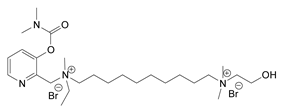 |
| 2. Bisquaternaries of dimethylcarbamoyloxypyridines 1,n-Bis[N-(3-dimethylcarbamoxy-α-picolyl)-N,N-dialkyl (≤C10) ammonio]-alkane-(2,(n-1)-dione) dibromide (n = 2–12) | 1,10-Bis[N-(3-dimethylcarbamoxy-α-picolyl)-N-ethyl-N-methylammonio]decane-2,9-dione dibromide (CAS no. 77104-00-8)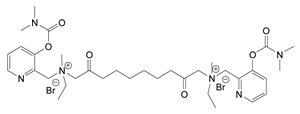 |
| Subclass | General Formula | Category–Main Structural Characteristics | Representative Example(s) | LD50 (μg∙kg−1) | Number of Compounds Tested * | Notes | Potential as CWAs | |||
|---|---|---|---|---|---|---|---|---|---|---|
| No of Benzene Rings Attached to Carbamate | No of Carbamate Groups | Position of Quaternary Ammonium Groups Attached to Benzene | Other Groups– Comments | |||||||
| I |  | 1 | 1 | - | Could have various substituents | TL-997 | 33,000 iv mice | 13 | All other tested compounds had LD50s > 40,000 (sc or iv) | - |
| II |  | 1 | 2 | - | - | TL-978 | 1400 sc mice (P) | 7 | All other tested compounds had LD50s > 10,000 (sc) | - |
| III | 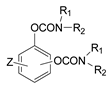 | 1 | 2 | - | Has various substituents | TL-1160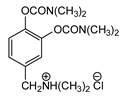 | 1000–5000 sc mice (W) | 14 | TL-1160, the most toxic analog has a quaternary ammonium, which is not present in other members | - |
| IV | Only TL-1115 | 1 | 3 | - | - | TL-1115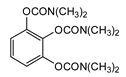 | 10,000–20,000 sc mice (W) | 1 | ||
| V |  | 1 | 1 | Ortho ** | - |  | 430,000 sc mice | 2 | All other tested compounds had LD50s > 80,000 sc | - |
| VI |  | 1 | 1 | Ortho ** | Has various alkyl substituents | SB-16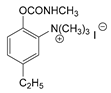 | 1250 sc mice | 11 | - | |
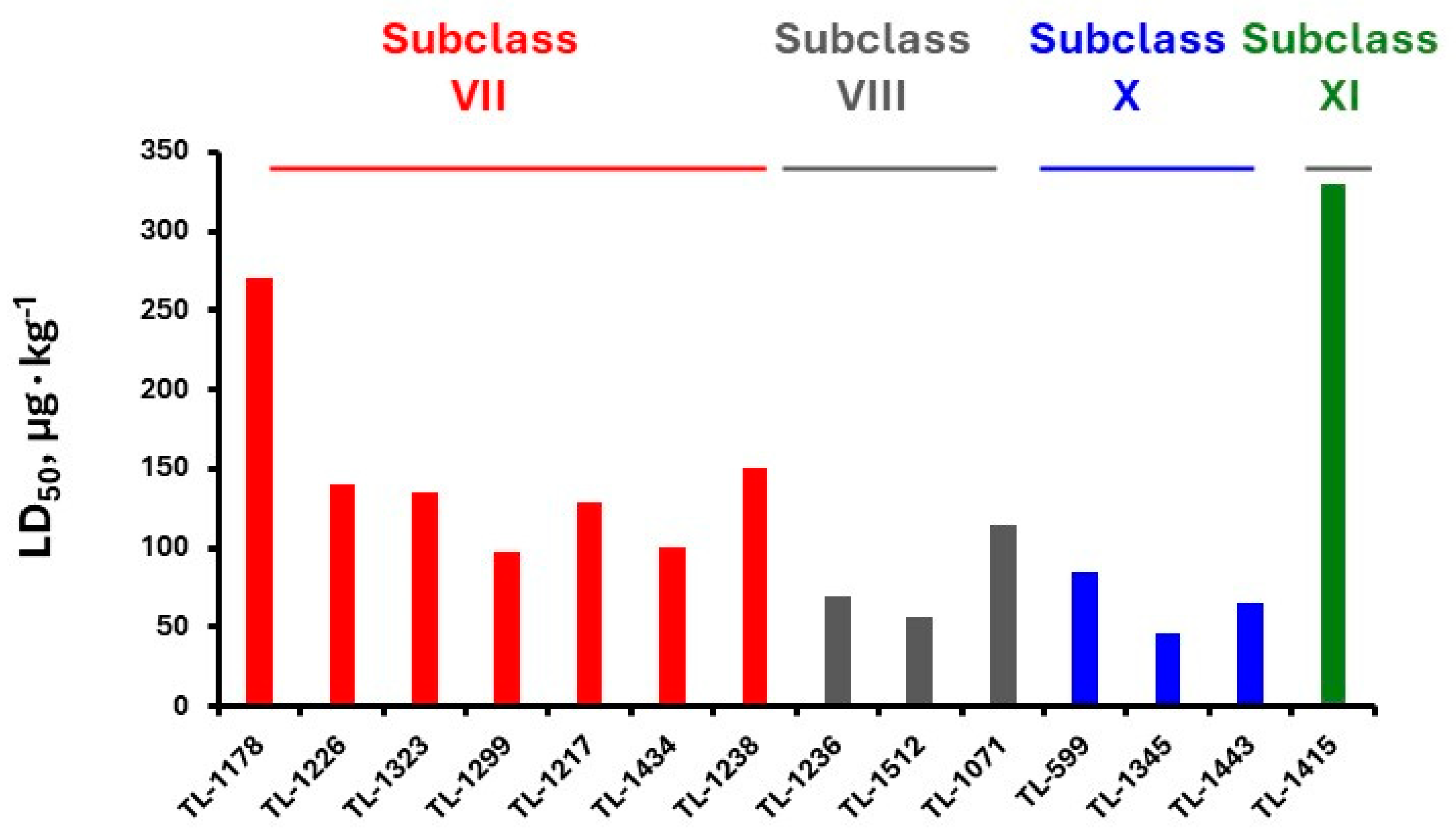
| VII | 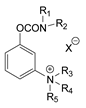 | 1 | 1 | Meta ** | T-1152 a.k.a. TL-1178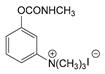 | 440 sc mice 270 sc mice (W) 260 sc rabbit 115 iv mice (W) 1000 sc dog (W) | 42 | ++ | ||
TL-1226 a.k.a. T-1690 | 270 sc mice 140 sc mice (W) 70 iv mice (W) | |||||||||
TL-1323 a.k.a. T-1194 | 135 sc mice (W) 380 sc mice 130 sc rabbit | |||||||||
TL-1299 | 90–105 sc mice (W) 100–200 sc dog (W) | |||||||||
TL-1217 a.k.a. T-1123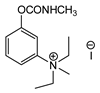 | 122–135 sc mice (W) 50–100 sc cat (W) 50 sc dog (W) 300–400 sc goat (W) 100–200 sc monkey (W) 100–200 sc sheep (W) | |||||||||
TL-1434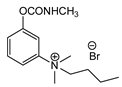 | 100 sc mice (W) 50–100 sc dog (W) 25–50 s.c. cat (W) | |||||||||
TL-1238 a.k.a. 3393 | 125–175 sc mice (W) 89 iv mice (W) 60 iv mice *** 400 sc rat (W) 100–200 sc cat (W) 300 sc dog (W) | |||||||||
| VIII | 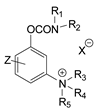 | 1 | 1 | Meta ** | Has various other substituents | TL-1236 | 64–75 sc mice (W) 35 iv mice (W) 100 sc rat (W) | 40 | ++ | |
TL-1512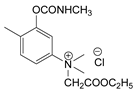 | 56 sc mice (W) | |||||||||
TL-1071 a.k.a. T-1708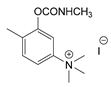 | 115 sc mice (W) | |||||||||
| IX | 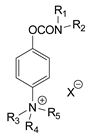 | 1 | 1 | Para | - | TL-1456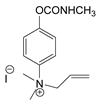 | 2500–5000 sc mice (W) | 18 | All other tested compounds had LD50s > 20,000 | - |
| X | 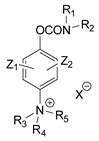 | 1 | 1 | Para | Has various other substituents | TL-599 a.k.a. SB-8 | 80–89 sc mice (W) 75 sc mice 200 sc rat (W) 168–265 ip mice (W) 100–200 sc dog (W) 200–300 sc cat (W) | 73 | + | |
TL-1345 | 45–47 sc mice (W) 103 sc rat (W) 25–50 sc rabbit (W) 50–100 sc dog (W) 100 sc cat (W) 100–200 sc monkey (W) | |||||||||
TL-1443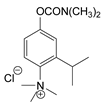 | 65 sc mice (W) | |||||||||
| XI | 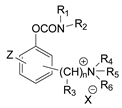 | 1 | 1 | On an alkyl chain | - | TL-1415 | 330 sc mice (W) | 37 | All other tested compounds had LD50s > 500 | +/− only TL-1415 |
| XII |  or  | 1 | 1 | Variable positions | AR-27 | 100 iv mice | 8 | All other tested compounds had LD50s > 7000 | - | |
| XIII | 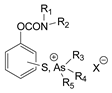 | 1 | 1 | Sulfonium or arsonium | TL-1479 | 500–1000 sc mice (W) | 5 | - | ||
| XIV |  | 1 | Variable position | Naphthalene carries the carbamate moieity | TL-1406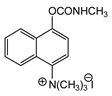 | 310 sc mice (W) | 5 | All other tested compounds had LD50s > 4000 | - | |
| XV | 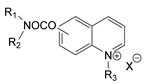 or 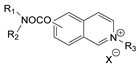 | 1 | Variable position | Quinoline or isoquinoline group carries the carbamate moiety | T-1973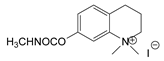 | 330 mice, no route was reported | 11 | All other tested compounds had LD50s > 500 | - | |
| XVI | 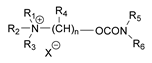 | Carbamates with aliphatic alcohol derivatives | 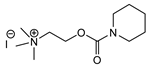 | 4000 sc mice | 28 | All other tested compounds had LD50s > 6250 | - | |||
| XVII | Based on physostigmine | Physostigmines | TL-1380 (physostigmine salicylate)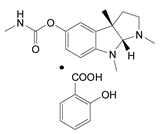 | 370 sc mice (W) 500 iv mice | 7 | All other tested compounds had LD50s > 750 | ||||
| XVIII | variable | Carbamides and carbazates | AR-26 | 250 iv mice | 5 | All other tested compounds had LD50s > 80,000 | ||||
| Subclass | General Formula | Category * | Examples | LD50 iv (μg∙kg−1) | Patent | Comment | Ref | No of Compounds Tested | Covered by CWC | |
|---|---|---|---|---|---|---|---|---|---|---|
| Rabbits | Mice | |||||||||
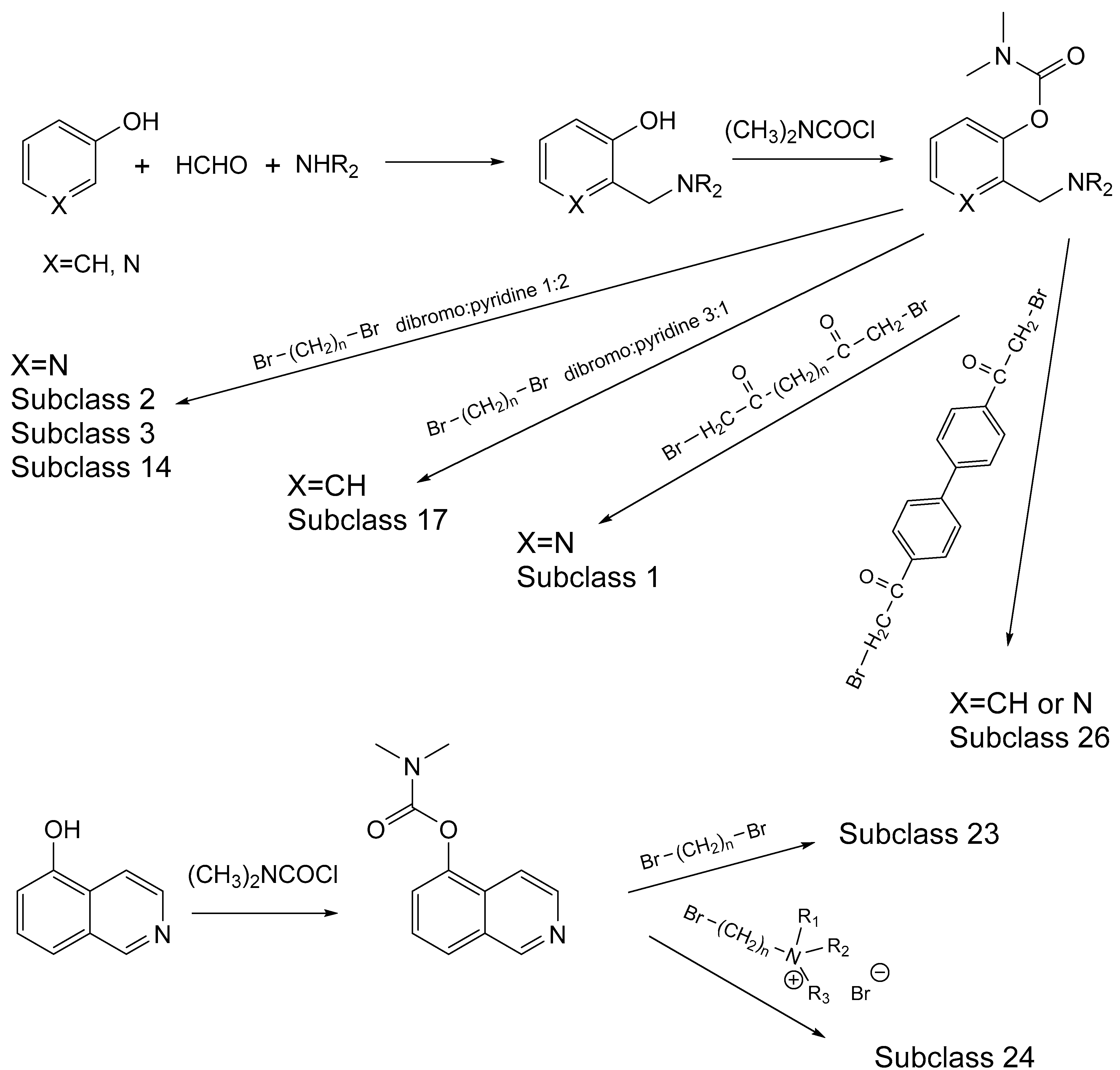
| 1 | 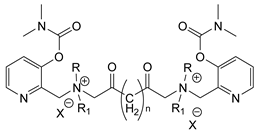 | Pyridine (2) | R = R1 = Me, X = Br, n = 6 | 2.7 | 7 | US4246416 | [18] | 18 | 2 | |
| R = Me, R1 = Et, X = Br, n = 6 | 4 | 10 | ||||||||
| R = R1 = Me, X = Br, n = 4 | 2.7 | 10 | ||||||||
| 2 |  | Pyridine (2) | R = Me, R1 = Et, X = Br, n = 10 | 4 | 11 | US4686293 | [19] | 7 | 2 | |
| R = Me, R1 = Et, X = Br, n = 8 | 4 | 6 | ||||||||
| 3 | 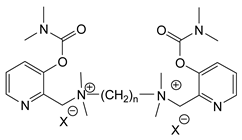 | Pyridine (2) | X = Br, n = 3 (EA 4048) | >20,000 | >32,000 | US4677204 | Sub-category of US4686293 | [20] | 10 | 2 |
| X = Br, n = 4 (EA 4038) | 5600 | 3200 | ||||||||
| X = Br, n = 5 (EA 4026) | 56 | 63 | ||||||||
| X = Br, n = 6 (EA 3948) | 17.6 | 17.8 | ||||||||
| X = Br, n = 7 (EA 4181) | 5.6 | 13 | ||||||||
| X = Br, n = 8 (EA 3990) | 2.6 | 6.3 | ||||||||
| X = Br, n = 9 (EA 4056) | 2.7 | 11 | ||||||||
| X = Br, n = 10 (EA 3887) | 4.2 | 10 | ||||||||
| X = I, n = 10 (EA 3887A) | 5 | 10 | ||||||||
| X = Br, n = 11 (EA 4057) | 5 | 9 | ||||||||
| 4 |  | Pyridine (2) | X = B(C6H5)4 (tetraphenylboron) | 8 | 32 | US4672120 | [21] | 6 | ||
| 5 | 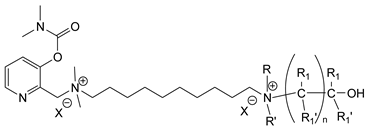 | Pyridine (1) | R = R′ = Me, R1 = R1′ = R2 = R2′ = H, X = Br, n = 1 | 45 | 9 | US4241212 | [22] | 15 | 1 | |
| R = R′ = Me, R1 = R1′ = R2 = R2′ = H, X = Br, n = 2 | 56 | 36 | ||||||||
| R = Me, R1 = R1′ = R2 = R2′ = H, R′ = (CH2)2OH, X = B(C6H5)4, n = 1 | 54 | 14 | ||||||||
| 6 |  | Pyridine (1) | R = R′ = Ζ = Butyl X = B(C6H5)4 | 5 | 28 | US4672123 | [23] | 6 | 1 | |
| R = R′ = Me, Z = Cyclohexyl X = Br | 10 | 28 | ||||||||
| 7 | 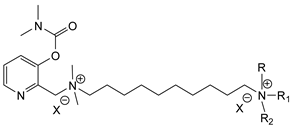 | Pyridine (1) | R, R1, R2 form 3-quinuclidinol, X = Br | 59 | 11 | US4672119 | Sub-category of US4672123 | [24] | 6 | 1 |
| R, R1 form pyrrolidine, R2 = Me, X = Br | 6 | 10 | ||||||||
| 8 | 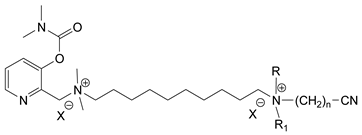 | Pyridine (1) | R = R1 = Me, X = Br, n = 1 | 56 | 10 | US4672124 | Sub-category of US4672123 | [25] | 9 | 1 |
| R = R1 = Me, X = B(C6H5)4, n = 3 | 56 | 11 | ||||||||
| 9 |  | Pyridine (1) | R = R′ = R2 = Me, R1 = R1′ = R2′ = H, Z = Me, X = B(C6H5)4 | 6.3 | 13 | US4672122 US4672069 | Sub-category of US4672123 | [26,27] | 10 | 1 |
| R = R′ = Me, R1 = R1′ = R2 = R2′ = H, Z = Propyl X = Br | 6 | 13 | ||||||||
| 10 |  | Pyridine (1) | R = R1 = Me, X = Br, n = 1 | 17 | 32 | US4246418 | Sub-category of US4672123 | [28] | 10 | 1 |
| 11 | 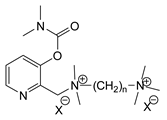 | Pyridine (1) | X = Br, n = 10 (EA 3966) | US4675411 | Sub-category of US4672123 | [29] | 15 | 1 | ||
| 12 |  | Pyridine (1) | R = R1 = Me X = B(C6H5)4 | 58 | 22 | US4246415 | As US4246416 but one carbamate | [30] | 11 | |
| 13 |  | Pyridine (2) | R = H, X = Br | 7 | 13 | US4241210 | [31] | 7 | ||
| R = p-CHNOH, X = B(C6H5)4 | 58 | 18 | ||||||||
| 14 | 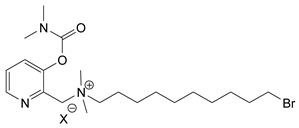 | Pyridine (1) | X = Br | 80 | 45 | US4677205 | Precursor of other carbamates, e.g., US4672119 | [32] | 6 | |
| 15 | 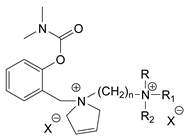 | Benzene (1) | R = R1 = R2 = Me, X = B(C6H5)4, n = 10 | 6 | 13 | US4240965 | [33] | 17 | ||
| R = R1 = R2 = Me, X = B(C6H5)4, n = 8 | 46 | 14 | ||||||||
| 16 | 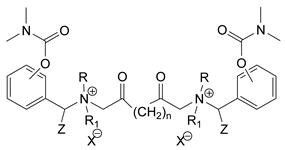 | Benzene (2) | Ortho position carbamate, R = R1 = Me, Z = H, X = Br, n = 6 | 5 | 14 | US4677222 | [34] | 23 | ||
| Ortho position carbamate, R = R1 = Z = Me, X = Br, X = B(C6H5)4, n = 6 | 6 | 18 | ||||||||
| Ortho position carbamate, Z = H, X = Br, n = 4 | 5 | 56 | ||||||||
| 17 | 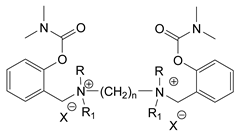 | Benzene (2) | R = Me, R1 = Et, X = Br, n = 8 | 5 | 7 | US H443 | Sub-category of US4677222 | [35] | 13 | |
| R = Me, R1 = propyl X = Br, n = 10 | 10 | 45 | ||||||||
| 18 |  | Benzene (1) | R = R1 = R2 = Me, X = Br, n = 10 | 7 | 22 | US4241218 | [36] | 14 | ||
| R = R1 = R2 = Me, X = B(C6H5)4, n = 8 | 7 | 14 | ||||||||
| 19 | 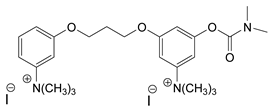 | Benzene (2) | US3903135 | [37] | 1 | |||||
| 20 | 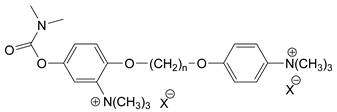 | Benzene (2) | X = hydrogen oxalate, n = 3 | 50 | 44 | US3919289 | [38] | 6 | ||
| 21 | 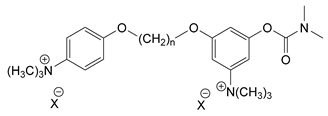 | Benzene (2) | X = I, n = 2 | 7 | 16 | US3901937 | [39] | 10 | ||
| 22 | 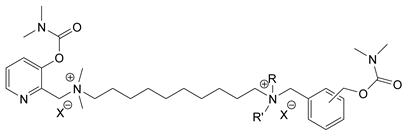 | Mixed Pyridyl Benzyl | Para position carbamate, R = R’ = Me, X = B(C6H5)4 | 8 | 18 | US4241211 | [40] | 12 | ||
| 23 | 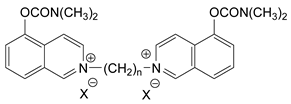 | IsoQ | X = Br, n = 8 | 6 | 16 | US4673745 | [41] | 19 | ||
| 24 | 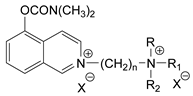 | IsoQ ** | R = R1 = R2 = Me, X = Br, n = 10 | 25 | US4241209 | [42] | 16 | |||
| 25 | 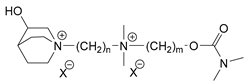 | 3-Q *** | X = Br, n = 10, m = 2 | 560 (MED 56) | US3956365 US3919241 | [43,44] | 15 | |||
| 26 | 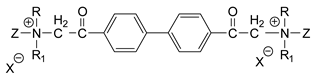 | Phenyl or pyridine | US4692530 | [45] | 7 | |||||
Examples: | 28 | 18 | ||||||||
 | 10 | 22 | ||||||||
Disclaimer/Publisher’s Note: The statements, opinions and data contained in all publications are solely those of the individual author(s) and contributor(s) and not of MDPI and/or the editor(s). MDPI and/or the editor(s) disclaim responsibility for any injury to people or property resulting from any ideas, methods, instructions or products referred to in the content. |
© 2024 by the author. Licensee MDPI, Basel, Switzerland. This article is an open access article distributed under the terms and conditions of the Creative Commons Attribution (CC BY) license (https://creativecommons.org/licenses/by/4.0/).
Share and Cite
Pampalakis, G. Classification, Chemical, and Toxicological Properties of Carbamate Nerve Agents. J. Xenobiot. 2024, 14, 1729-1756. https://doi.org/10.3390/jox14040092
Pampalakis G. Classification, Chemical, and Toxicological Properties of Carbamate Nerve Agents. Journal of Xenobiotics. 2024; 14(4):1729-1756. https://doi.org/10.3390/jox14040092
Chicago/Turabian StylePampalakis, Georgios. 2024. "Classification, Chemical, and Toxicological Properties of Carbamate Nerve Agents" Journal of Xenobiotics 14, no. 4: 1729-1756. https://doi.org/10.3390/jox14040092
APA StylePampalakis, G. (2024). Classification, Chemical, and Toxicological Properties of Carbamate Nerve Agents. Journal of Xenobiotics, 14(4), 1729-1756. https://doi.org/10.3390/jox14040092