1. Introduction
According to the World Health Organization [
1], approximately 1.5 billion people globally experience some form of hearing loss (HL), with about 430 million requiring rehabilitation for diminished hearing capacity. This trend is exacerbated by demographic shifts due to an expanding global aging population and increasing life expectancy, suggesting that the global prevalence of HL could rise to around 2.5 billion, with 700 million individuals requiring hearing rehabilitation by 2050. Notably, around 80% of those affected by moderate-to-profound HL reside in low- and middle-income countries, such as Mainland China.
Mainland China faces a pronounced HL burden, evident from a significant surge in the older population over the past two decades. According to the Seventh National Population Census [
2], individuals aged 60 and above constitute 18.7% of the total population. With China undergoing one of the fastest rates of population aging globally, the number of individuals affected by HL skyrocketed from 109 million to 407 million from 1999 to 2019 [
3]. The Report on Hearing Health in China (2025) revealed that 11.04% of adults aged 60 and above exhibit hearing loss, and this affects over 20 million people [
4]. By 2034, the older adult population is projected to reach a staggering 561 million, making up approximately 40% of the total population. Chinese older adults typically acquire HAs when their hearing loss progresses to at least a moderate to severe degree [
5,
6,
7,
8], but despite the growing needs, the HA uptake rate is low, estimated at less than 10% in Mainland China [
6,
9,
10]. There is, thus, an urgent need for comprehensive strategies to address the growing burden of HL in China.
1.1. Cultural Barriers to HA Uptake That Differentiate Chinese Older Adults
Like their counterparts in Western societies, Chinese older adults regard HAs an inevitable and normal process of aging [
11,
12,
13] but have concerns over the stigma that HAs are a visible sign of disability, as well as self-image and negative judgments about their competence [
14,
15,
16], which may discourage HA uptake. At the same time, older adults may avoid HAs as they may not recognize the need for intervention, opting instead for alternative coping strategies such as increasing the volume on televisions and relying on others to accommodate their hearing difficulties by speaking louder or repeating themselves.
1.2. Effects of Healthcare Infrastructure on HA Fitting
The lack of public funding and trained personnel may cause inconsistencies in the quality of healthcare. The cost of HAs is borne by the users or family [
17]. However, according to the Fourth National Survey on Elderly People in Urban and Rural China, the average per capita income of urban and rural older adults in 2014 was about CNY 23,900 per year and CNY 7620 (about USD 3900 and 1200) per year [
18], respectively, not only limiting the technologies they can afford but also delaying uptake to when they are absolutely needed.
There are few hearing care professionals in Mainland China, exacerbating the accessibility gap in hearing care and reducing the quality of hearing aid fittings. As there are about 20 institutions offering audiology training, hearing aid fittings are mainly carried out by dispensers [
17,
19], with Wong et al. reporting that 58.4% are not certified, while 18.6% have less than one year of experience, and 45.7% have 1 to 5 years of experience [
20].
1.3. The Need to Examine First-Time Hearing Aid Fitting Parameters
In order to understand the current hearing aid adoption situation in Mainland China, we examined hearing aid fitting parameters and patient demographics in the database of a hearing aid manufacturer. The data were reported by seniors who reported hearing aid use for the first time or by their families on their behalf. The aims of this study were as follows:
To examine the demographics of older adults considering hearing aids for the first time. Knowing this will help us target older adults and reach out to those who have not sought help.
To analyze the hearing aid fitting parameters used in initial trial sessions.
Based on previous findings [
16,
21,
22,
23,
24], we expected these older adults to have more than moderate bilateral hearing loss and thus require hearing aid fitting parameters that would be consistent with this degree of hearing loss.
2. Methods
2.1. Study Design
For the current study, data were extracted from the internal database of Oticon A/S (Smørum, Denmark), which contains anonymized data without personal identifiers, logged demographic characteristics, and HA fitting parameters from hearing care practitioners worldwide, who utilize Oticon’s fitting software (Genie 2, Oticon A/S, Smørum, Denmark) and maintain an active Internet connection. No participant recruitment was conducted as all data were extracted from existing records. This study was reviewed and approved by the Human Research Ethics Committee (HREC) of the University of Hong Kong. A consent waiver was granted as the data was anonymized.
2.2. Study Sample and Variables
Data from initial HA fitting sessions in Mainland China from 2023 were extracted from the database. The inclusion criteria were as follows: individuals (1) aged between 55 and 100 years old; (2) who had no previous experience with HAs (experience level recorded as “none” in the fitting software); and (3) whose pure-tone average air-conduction thresholds at 0.5, 1, 2, and 4 kHz in the aided ear(s) exceeded 25 dB HL but were no more than severe HL. Degrees of HL were categorized as mild (26 to 40 dB HL), moderate (41 to 55 dB HL), moderately severe (56 to 70 dB HL), and severe (71 to 90 dB HL), according to Clark [
25].
The variables extracted from the database included demographic factors, audiometric information, fitting modalities, and HA settings. Demographic variables consisted of age and gender, while audiometric data included the degree of HL and hearing thresholds from 250 to 8k Hz. Fitting modalities covered the laterality of HAs (unilateral or bilateral fitting); HA styles classified as behind-the-ear (BTE), receiver-in-canal (RIC), and custom (ITE, ITC, CIC, IIC); earpieces such as instant-fit domes and custom earmolds; and vent sizes of the earpieces. Lastly, HA settings included basic frequency-gain prescription, noise reduction (NR) levels in simple and complex listening environments, and directionality.
The adaptation manager was designed to gradually increase gain and adjust the frequency response from an initial comfortable setting to the prescribed target, ensuring smooth acclimatization for the user. It comprises three adaptation levels: Level 1 provides less overall gain and a flatter frequency response to promote high first-fit acceptance; Level 2 serves as an intermediate step; and Level 3 applies the full prescribed fitting targets. Directionality settings included an adaptive microphone, omni-directionality, and full directionality. The NR function reportedly scans the input acoustic signal 500 times per second, mapping different sound sources and estimating the signal-to-noise ratio (SNR) and noise level in each channel [
26,
27]. These parameters indicate the adversity of the listening environment. Specifically, the SNR, which ranges from −10 to +15 dB, serves as the primary determinant in classifying the environment as simple or complex and in predicting noise attenuation levels [
27]. Using default settings and the HAs in a typical sound environment, an SNR of about –5 dB is typically applied to differentiate between simple and complex listening environments. We adopted this SNR value in our analysis and interpretations. The fitting software had six default NR attenuation settings for personalization, three for each listening environment. In simple listening environments, such as a quiet living room and a family dinner setting with an SNR higher than −5 dB, NR strengths were classified as low level (−0 dB), medium (−2 dB), or high (−4 dB). In complex listening environments such as restaurants and busy streets with an SNR lower than −5 dB, NR strengths were classified as low (−6 dB), medium (−8 dB), or high (−10 dB).
3. Results
Data manipulation and analysis were performed in Python 3.10 (in the Databricks environment). Records from a total of 82,834 individuals were identified from the database, encompassing 146,304 ears fitted with HAs. Patients were selected only if they met all the criteria stated above.
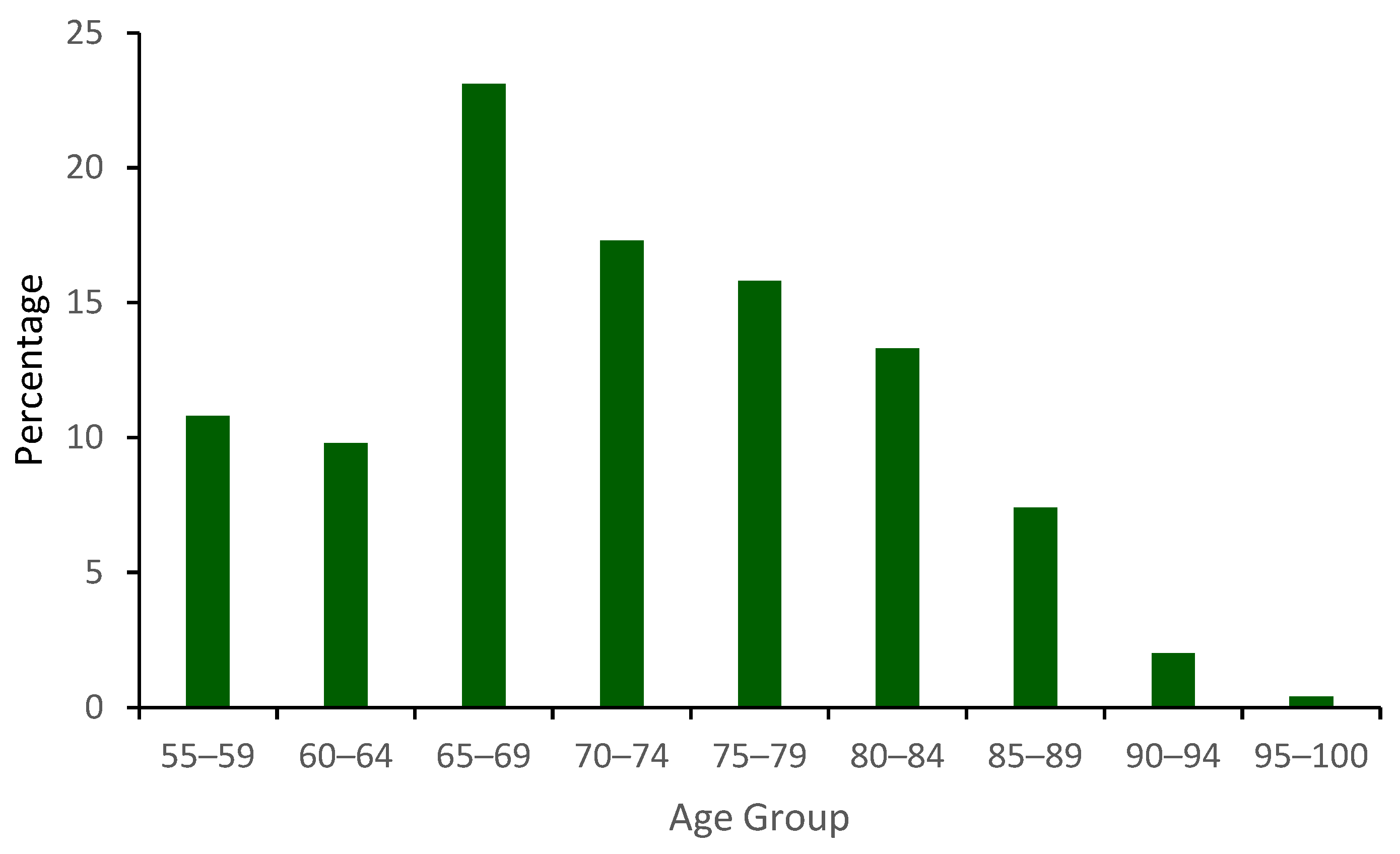
Demographic variables were analyzed based on individual data. The mean age was 71.9 years (SD = 9.18), with the highest proportion falling within the 65–69 age group (23.1%), followed by the 70–74 age group (17.3%) and the 75–79 age group (15.8%). There was a gradual decline in the number as age increased (see
Figure 1). In terms of gender distribution, there was a higher proportion of males (54.7%) compared to females (40.1%); gender information was not available for others. Bilateral fittings accounted for 76.6% of the individuals.
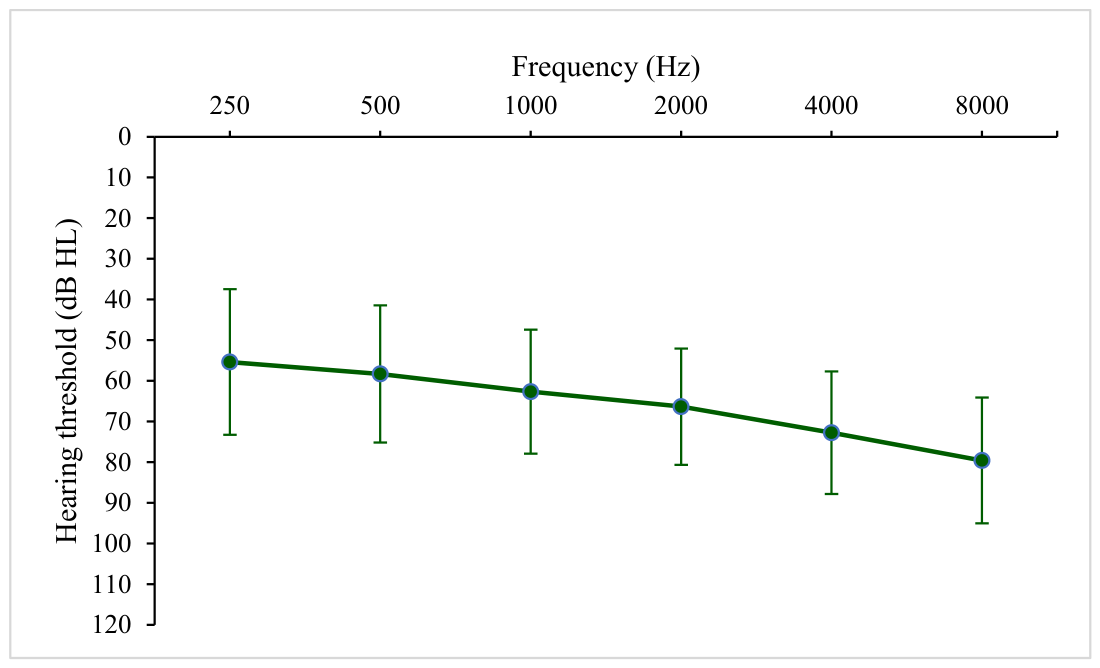
Table 1 presents the hearing characteristics and initial fitting parameters of the fitted ears. Among them, 47.7% exhibited moderately severe loss, followed by severe loss (30.4%). On average, users demonstrated sloping, moderately severe to severe loss across frequencies from 250 to 8k Hz (see
Figure 2). Identical audiometric thresholds between ears were found in 70% of individuals.
Hearing aid fitting parameters were analyzed based on ears fitted. Among the hearing aid fitting parameters, there was no missing data concerning the style of the hearing aids or earpieces; there was 0.05% missing data for noise reduction settings, directionality, and adaption level.
Over 80% of the fitted ears received RIC fittings, with 44.1% of them being prescribed with double-vented domes featuring a vent size of 1.4 mm. Most were prescribed with adaptation level 1, where the gain was lower than the prescribed target. Nearly all (93.4%) were fitted with adaptive microphones. In simple listening environments with an SNR greater than −5 dB, a low NR strength (−0 dB) was the most commonly prescribed (68.2%). In complex listening environments with an SNR lower than −5 dB, a low NR strength (−6 dB) was again the most frequently prescribed (68.3%).
4. Discussion
The current study is the first to examine hearing aid fitting practices for first-time hearing aid seekers in Mainland China. We discuss the findings considering influences from culture and hearing care infrastructure, although the information often was not derived directly from research on audiology or hearing aid fitting.
4.1. Age
The average age was approximately 71 years, and there were more individuals between 65 and 74 compared to those aged 75 or above. This trend is consistent with research from Taiwan, which found a negative correlation between HA adoption and age among Chinese older adults aged 65 to 90 [
28]. Although studies from Western societies have shown that older individuals were more inclined to adopt HAs with an increased HL severity and that there is reduced stigma with increasing age [
29,
30,
31,
32], this pattern was not observed in this study. These results should be interpreted in light of the age distribution of the general population in Mainland China. Specifically, the younger age group (65 to 74 years old) represents a larger segment of the population (9.61%) compared to the older age group (75 years and above), which accounts for 5.27% [
2]. Additionally, the severity of HL combined with the more active social participation of younger seniors could contribute to the higher percentage of this population in the demographics of this study.
Effects of Chinese Culture and Lifestyle
Wu and Sheng [
33] reported that younger Chinese seniors (aged 60–74) tend to have more active social lives with friends and neighbors after retirement than older seniors, actively engage in caregiving of their grandchildren, and frequently travel [
34]. Their larger social networks and higher rates of social interaction might make younger seniors more aware of their hearing loss and thus more willing to use HAs when daily activities and communication are impacted. Moreover, younger seniors generally have higher educational levels, with the majority having at least a primary school education, compared to older seniors, most of whom did not finish primary school education or are illiterate [
35]. Individuals with higher education levels typically have a better understanding of health-related information and are more adept at following healthcare practitioners’ recommendations for managing their health. For example, they can accurately comprehend health advice, which increases the effectiveness of medical treatment [
36,
37]. As a result, they may have greater awareness of the benefits of HAs and a higher likelihood of adopting them.
In contrast, older seniors aged 75 or above are more susceptible to social isolation due to age-related life changes such as the death of a spouse [
33,
38]. Spouses play a vital role in raising awareness of HL and encourage help-seeking behavior and HA adoption [
31,
39,
40]. They become increasingly crucial in providing support, especially when other support networks are lacking [
33,
41]. Thus, the loss of a spouse could result in reduced communication and less frequent feedback about hearing difficulties, potentially leading to the normalization or neglect of hearing problems, even in severe HL cases. These older seniors may have diminished support networks and live alone, decreasing the willingness to use HAs [
28,
42].
Although traditionally, the Confucian value of filial piety, emphasizing adult children as the primary supporters of their parents, has long influenced the beliefs of Chinese older adults, particularly older seniors [
33,
43], societal changes have weakened family relationships. The one-child policy has reduced family sizes, and urbanization has encouraged adult children to move away for work [
43,
44]. As a result, the living arrangements of Chinese older adults have shifted from traditional multigenerational households (64.9% in 2000 to 48.75% in 2015) to empty-nesting (the proportion of empty-nesters increased from 35.1% to 56.3%) [
35], reducing communication needs.
4.2. Gender
In this study, there was a higher proportion of male first-time HA users compared to females, which is consistent with previous research findings [
28,
40,
45,
46]. One contributing factor to the higher HA adoption rate among men in China is that males might be more likely to engage in full-time jobs with substantial demands and thus require better hearing sensitivity, prompting them to seek amplification more frequently than females [
40].
Traditional Chinese family roles, where men are primarily responsible for financial provision while women focus on caregiving for older family members and children, have long influenced Chinese trends. This cultural expectation has historically constrained the women’s participation in the labor force [
47]. According to data from the World Bank, in China in 2024, the labor force participation rate was significantly higher for men, at 71.1%, compared to 59.6% for women [
48]. During the working years of the current older adult population, the economy of China was predominantly driven by agricultural and industrial sectors due to rapid industrialization [
49]. As indicated by the limited or primary-level education of the majority of Chinese older adults [
18], many had worked in these sectors, which often led to them being exposed to hazardous noise levels without adequate occupational health precautions [
50]. Over 80 million Chinese workers were estimated to have been exposed to hazardous noise levels [
51]. Men, who are more likely to work in noisy environments [
46,
52], are particularly susceptible to noise-induced HL. Zhou et al. [
53] found that over 30% of Chinese male workers suffer from high-frequency HL due to prolonged exposure to hazardous noise levels. The gender disparity observed in this study also aligns with the higher prevalence of HL among males compared to females in China [
54].
4.3. Typical Hearing Sensitivity
Our study found that most first-time HA users exhibited moderately severe HL, with the average hearing thresholds ranging from moderate (55.35 ± 17.90 dB HL) at 250 Hz to severe (79.56 ± 15.45 dB HL) at 8k Hz. These results are similar to those of previous research suggesting that Chinese older adults often delay getting HAs until their HL reaches a moderate or severe stage [
7,
55]. Dispensers have also reported the majority of their patients (60%) possess a 61 to 70 dB HL [
20]. A few other studies have also reported that they might not perceive significant hearing difficulties until their HL exceeds 45 dB and that HAs are typically adopted when the loss reaches 65 dB [
5,
28].
In addition to the factors mentioned in the Introduction, this delayed recognition of HL may be attributed to the linguistic characteristics of tonal languages. Chinese is a tonal language, where the pitch or tone of a word plays a crucial role in conveying its meaning. Within this linguistic framework, the same syllable uttered with different tones can yield entirely different word interpretations. For example, “ma” can signify “mother” with tone one, “hemp” with tone two, “horse” with tone three, and “scold” with tone four in Mandarin [
56]. This tonal variation, intertwined with stress and rhythm, is typically encoded within fundamental frequencies, predominantly situated below 500 Hz. These lexical tones crucially contribute to speech understanding in noise [
57,
58] and might have contributed to the delay in hearing aid adoption.
4.4. Symmetry in Hearing Sensitivity
The symmetry in audiometric thresholds between ears suggests these are likely “quick fits” to give first-time hearing aid seekers a glimpse of amplification, rather than customized fittings to optimize hearing. That is, dispensers might have copied and pasted audiometric results from one ear to the other; entered results from soundfield testing, without differentiating the hearing thresholds in the two ears; or entered a “commonly seen” audiogram for patients. The audiograms were used to automatically suggest the default settings for each fitting parameter (i.e., type of earmold, gain, and noise reduction settings). They might have influenced the degree of customization of amplification to optimize outcomes and thus might not provide a good preview. Manufacturers should consider educating their dispensers as well as provide a mechanism in the fitting software to monitor or warn dispensers of the consequences of this practice, when dispensers are prompted by the fitting software to enter audiometric data for each ear.
4.5. HA Style and Earpieces
The choice of HA style and earpiece is vital for user satisfaction. In contrast to prior findings suggesting a higher prevalence of seniors being fitted with BTE HAs [
6,
55], our study indicates a notable shift. Over 80% of Chinese older adults in the database were prescribed with RIC-style HAs, which apparently is consistent with the global shift towards an increasing preference for RIC devices. For example, 81.7% of HAs dispensed in the United States in the first half of 2019 were RIC instruments [
59,
60,
61]. RICs offer a wide fitting range and discreet options for open fitting, enhancing comfort and reducing the occlusion effect, which is commonly reported by HA users with normal to mild low-frequency HL [
59,
62,
63].
Given that the majority of older adults in the current study exhibited low-frequency HL of at least a moderate degree, closed dome would have been recommended by the fitting software. Therefore, it is somewhat surprising that many (44.1%) were prescribed double-vented domes, as well as open domes (13.1%). While previous studies have reported that Chinese speakers complain about occlusion effects [
9,
10,
28], the choices of earpiece and vents in the current study may also reflect hearing care practitioners’ priority in ensuring comfort and acceptance of the new HAs due to their discrete ear tips, wear comfort, and improved esthetics. Previous studies also suggest that Chinese users often complain about muffled sounds, their own voice being overly loud, and excessive amplification at high frequencies [
10,
28]. These initial hearing aid settings (i.e., low gain, open fittings) are aimed at preventing these issues, and are thus not unexpected.
Despite the benefits of open fittings, they may compromise the amount of gain and the effects of noise reduction. This may lead to reduced speech clarity and potential dissatisfaction with the devices’ performance. The degree of impact can only be ascertained by measuring outcomes with these devices.
4.6. Gain Settings
Adequate amplification is crucial to improve access to sounds [
64,
65]. However, a substantial proportion of those trying hearing aids (87.2%) in this study received gains lower than the prescribed targets based on their audiometric thresholds. Previous research showed that new HA users often prefer lower gain settings compared to experienced users, regardless of the fitting formula utilized [
66,
67,
68,
69], and need time to acclimatize to amplified sounds [
67].
Many individuals with HL, especially those with presbycusis, experience a gradual, bilateral decline in hearing sensitivity over time and often are not immediately aware of it. As Chinese older adults often wait until their HL reaches a severe degree before purchasing an HA [
7,
70], they probably have become accustomed to a quieter auditory environment over time. The delay in hearing aid adoption could lead to greater adjustment to hearing background noise, and older adults may thus find amplified sounds initially startling or uncomfortably loud [
9,
10]. Thus, they may opt for lower amplification levels initially. Consequently, dispensers probably have adapted their fitting strategies to promote initial acceptance of amplification.
Although these settings are not optimal for the degree of hearing loss observed, they are consistent with previous findings concerning hearing aid parameters and outcomes in Chinese speakers (e.g., [
8,
23]).
4.7. Noise Reduction Strengths in Simple and Complex Listening Environments
Directional microphones and noise reduction algorithms could enhance overall listening comfort and speech clarity in noisy environments [
26,
71,
72,
73]. The benefits of adaptive directionality have been well documented [
74,
75]. This feature is often set as the default in many manufacturers’ fitting software, and HA practitioners, such as those in the present study, tend to favor this default setting [
76,
77]. In fact, over 90% of the fittings in the current study adopted adaptive directional microphones.
Previous research suggests that individuals with quieter lifestyles may prefer comfort-focused settings for prolonged wear. Conversely, people with active social lives may benefit from stronger NR to reduce unwanted noise and improve listening comfort, although users may not always prefer high NR settings due to potential signal distortion, which affects speech intelligibility [
78]. Consistent with prior findings, most participants (68.2%) in this study were fitted with 0 dB noise attenuation (i.e., no noise reduction) in simple environments, where higher SNRs and fewer distracting noise sources facilitate speech perception. Conversely, in complex environments with SNRs below −5 dB, the majority (68.3%) were fitted with 6 dB noise attenuation. This preference for approximately 6 dB of attenuation in more challenging listening conditions aligns with the findings of Wong et al. [
23], which indicated that most Mandarin speakers preferred some degree of NR, typically around 5 to 6 dB attenuation. However, the HA users in the current study might not have tried these settings in real-life listening environments.
4.8. Limitations and Future Directions
This study is the first to report on hearing aid fitting practices in Mainland China using an extensive dataset. Although the results offer valuable insights into hearing healthcare services on the Mainland China, several limitations must be acknowledged and warrant careful consideration when interpreting these data.
4.8.1. Uncertain Hearing Loss
The symmetry of HL in the present study could not be determined due to consistently identical audiometric thresholds between ears; as a result, individual ear analyses were not conducted. Even though it is not uncommon to observe symmetry in presbycusis between ears, findings reported here do not accurately reflect optimal fitting and should be interpreted with care. Dispensers should be warned against entering identical thresholds and be advised of the consequences to precision in hearing aid prescription. Manufacturers should highlight this issue in dispenser training.
Additionally, the dataset only included air-conduction thresholds, making it difficult to identify the specific nature of HL among first-time adopters. The absence of bone-conduction thresholds complicates the distinction between purely sensorineural HL and HL with concurrent conductive components, potentially compromising data quality.
4.8.2. Limited Information
The database utilized in this research only contained age and gender data for first-time adopters, and comprehensive demographic and geographic information was lacking. This limitation restricts our understanding of the user population, making it challenging to segment the user base effectively and identify specific patterns or trends related to different population groups (e.g., socioeconomic status, regional differences).
As we limited our inclusion of hearing loss level to no more than a severe degree, the findings do not apply to those who have profound hearing loss. Exclusion of these participants could have skewed the degree of hearing loss of first-time adopters to a lesser degree. However, due to the significant impact on daily function, older adults are not likely to wait until their hearing loss reaches a profound degree before hearing aid adoption. In other words, these participants probably would not have been included in the study in the first place.
The technology level could have affected the availability of advanced hearing aid parameters and the degree to which extent fitting parameters could have been customized to individual preferences. As information on technology level was not available, the impact could not be evaluated. Despite the majority of fitting parameters being similar across first-time adopters, future studies should examine whether technology levels would make a difference in hearing aid parameter choice and the outcomes.
4.8.3. Uncertain if Findings Can Be Generalized
Interactions among hearing aid parameters influence the overall amplification output, which may not directly reflect individual parameter settings. Here, open fittings may interact with low amplification gain settings to reduce the gain further and may make noise reduction less effective. These effects cannot be ascertained without measuring the outcomes. Premium hearing aids may offer greater flexibilities in hearing aid adjustments compared to basic models. However, in the present study, the data were not analyzed according to HA technology level. It also appears that similar HA settings were applied to most users, raising questions about whether they reflected user preferences or standard practices among dispensers.
As data was collected only when the dispensers had an active Internet connection and used the manufacturer’s fitting software, the dispensing practice could have differed in locations where Internet access was limited. It is also unclear whether the substantial proportion of bilateral fittings reflects actual purchases and willingness to use two HAs or if the data primarily represents HA trials without purchases by users. This introduces significant uncertainty regarding the actual preferences of Chinese older adults. Lastly, the dataset was sourced from a single HA manufacturer, which may limit the generalizability of the findings and introduce potential bias. However, as a number of dispensers also sell hearing aids from other manufacturers and as about 41% of dispensers have been nationally certified, based on findings from Wong et al. (2024), the practice reported here may not be limited to fittings associated with a single manufacturer [
20].
Overall, there could be bias in result interpretation, limiting the generalizability of the findings and our understanding of the factors that could contribute to variations in dispensing practice (e.g., the education background or experience of dispensers, accessibility of hearing health services) and user preferences.
4.8.4. Duplicate Records Not Accounted for
Patients could have visited multiple centers to trial hearing aids, resulting in duplicate records. As they were identified by an anonymous identifier assigned by the fitting software, we could not trace the information back to individual patients to identify or remove duplicate records. However, this factor might not have significantly skewed the findings, given the large sample and consistency in findings.
4.8.5. Future Studies Needed to Examine Outcomes
This is the first study that focused solely on initial HA fitting sessions in order to analyze dispensing practices in Mainland China. Descriptive analyses were employed. Future research can extend these findings by measuring how different fitting parameters, demographic variables, and dispenser education levels affect the outcomes. Longitudinal prospective studies can incorporate data from follow-up sessions to offer insights into how HA parameters, including earpieces and settings, are adjusted over time. We have explained the findings based on our understanding of the Chinese culture and hearing care infrastructure, as well as anecdotal reports from dispensers and audiologists. Validation is, however, needed via future studies that systematically examine these variables, their interactions, and outcomes. These studies would enable a better understanding of the evolving preferences and needs of Chinese older adults new to HAs, balancing amplification with comfort and individual preferences.
5. Conclusions
This study utilized big data to provide an overview of the characteristics and initial parameters of first-time HA users among Chinese older adults. Our study revealed that Chinese older adults typically acquire their first HAs around the age of 71, when HL reaches a moderately severe degree. Knowing the demographics of older adults who are having hearing aids fitted for the first time could help us cater marketing strategies, patient education, and family outreach. For example, we may want to promote hearing care at venues frequented by the target age groups and design marketing materials to suit their literacy level and activities. With reduced multigenerational living arrangements, independent living may be a theme we can promote.
Bilateral RIC and open fittings were prevalent, with initial gain lower than the prescribed targets, adaptive directionality, and low NR levels for both simple and complex listening environments. It was surprising that, despite the diversity in HL configurations, lifestyles, and preferences, initial fittings for first-time HA users did not vary greatly in the current study. While it is important to examine the outcomes associated with these settings, manufacturers should also consult with their dispensers regarding how they adjust fitting parameters to target future dispenser training towards critical knowledge and skills.
Due to the scarcity of studies that examine first-time hearing aid uptake and factors influencing fitting parameters, we were not able to support our discussion against the literature. Instead, we interpreted the findings against relevant findings on culture and lifestyle in Mainland China. These findings are somewhat speculative and should therefore be validated in future studies that examine their relationships.
Although we did not examine hearing care practices in other countries, we reiterate the need to provide adequate dispenser training in many parts of the world where hearing care is growing. Manufacturers could learn from the problem areas identified in the current study and highlight them in dispenser training. Artificial intelligence could be used to make educational resources available across languages, while government policies regarding dispenser training and certification should be in place to ensure proper practice.
Overall, the current study analyzed current hearing aid fitting practices in Mainland China, finding that dispenser training should be enhanced and personalized fitting should be emphasized.
Author Contributions
Conceptualization, L.L.N.W. and S.P.L.; methodology, L.L.N.W., E.N., A.P. and A.N.; validation, L.L.N.W.; formal analysis, A.P. and A.N.; writing—original draft preparation, S.P.L.; writing—review and editing, L.L.N.W. and E.N.; visualization, S.P.L.; supervision, L.L.N.W.; project administration, E.N. All authors have read and agreed to the published version of the manuscript.
Funding
This research received no external funding.
Institutional Review Board Statement
Not applicable.
Informed Consent Statement
Not applicable..
Data Availability Statement
Restrictions apply to the availability of these data. Data were obtained from Oticon A/S (Smørum, Denmark) and are available from the authors with the permission of Oticon A/S (Smørum, Denmark).
Acknowledgments
Special thanks are given to Oticon A/S for granting permission to use their data, which was pivotal in completing this study.
Conflicts of Interest
Elaine Ng, Alessandro Pasta and Asterios Nastas were employed by the company Demant A/S. The remaining authors declare that the research was conducted in the absence of any commercial or financial relationships that could be construed as a potential conflict of interest.
References
- World Health Organization. World Report on Hearing; World Health Organization: Geneva, Switzerland, 2021. [Google Scholar]
- National Bureau of Statistic of China. Main data of the Seventh National Population Census [Press Release]. 11 May 2021. Available online: https://www.stats.gov.cn/english/PressRelease/202105/t20210510_1817185.html (accessed on 3 October 2025).
- GBD 2019 Diseases and Injuries Collaborators. Global burden of 369 diseases and injuries in 204 countries and territories, 1990-2019: A systematic analysis for the Global Burden of Disease Study 2019. Lancet 2020, 396, 1204–1222. [Google Scholar] [CrossRef]
- Guo, J.; Peng, Z.; Gong, Z.; Gong, S. An interpretation of the blue book: The report on hearing health in China (2025). Lin Chuang Er Bi Yan Hou Tou Jing Wai Ke Za Zhi [J. Clin. Otorhinolaryngol. Head Neck Surg.] 2026, 40, 215–219. [Google Scholar] [CrossRef] [PubMed]
- Doyle, J.; Wong, L.L. Mismatch between aspects of hearing impairment and hearing disability/handicap in adult/elderly Cantonese speakers: Some hypotheses concerning cultural and linguistic influences. J. Am. Acad. Audiol. 1996, 7, 442–446. [Google Scholar] [PubMed]
- European Hearing Instrument Manufacturers Association (EHIMA). ChinaTrak CHN 2023. 2023. Available online: https://www.ehima.com/wp-content/uploads/2023/12/ChinaTrak_2023.pdf (accessed on 3 October 2025).
- He, P.; Wen, X.; Hu, X.; Gong, R.; Luo, Y.; Guo, C.; Chen, G.; Zheng, X. Hearing Aid Acquisition in Chinese Older Adults with Hearing Loss. Am. J. Public Health 2018, 108, 241–247. [Google Scholar] [CrossRef] [PubMed]
- Wong, L.L.N.; Yu, J.K.Y.; Chan, S.S.; Tong, M.C.F. Screening of Cognitive Function and Hearing Impairment in Older Adults: A Preliminary Study. BioMed Res. Int. 2014, 2014, 867852–867857. [Google Scholar] [CrossRef] [PubMed]
- Heine, C.; Browning, C.J.; Gong, C.H. Sensory Loss in China: Prevalence, Use of Aids, and Impacts on Social Participation. Front. Public Health 2019, 7, 5. [Google Scholar] [CrossRef]
- Ji, F.; Chen, A.T.; Wang, Q.J. Hearing loss in the aged: Status and interventions in China. Hear. Balance Commun. 2015, 13, 51–57. [Google Scholar] [CrossRef]
- Phan, N.T.; McKenzie, J.L.; Huang, L.; Whitfield, B.; Chang, A. Diagnosis and management of hearing loss in elderly patients. Aust. Fam. Physician 2016, 45, 366–369. [Google Scholar]
- Walling, A.D.; Dickson, G.M. Hearing loss in older adults. Am. Fam. Physician 2012, 85, 1150–1156. [Google Scholar]
- Wong, P.W.Y.; McPherson, D.B. Reasons for non-adoption of a hearing aid among elderly Chinese. Asian J. Gerontol. Geriatr. 2010, 5, 62–68. [Google Scholar]
- Jenstad, L.; Moon, J. Systematic Review of Barriers and Facilitators to Hearing Aid Uptake in Older Adults. Audiol. Res. 2011, 1, e25. [Google Scholar] [CrossRef]
- McMahon, C.; Mosley, C.; Pichora-Fuller, M.K.; Davis, A.; Baylor, C.; Yorkston, K.; Tremblay, K. Older adults’ perceptions of current and future hearing healthcare services in Australia, England, US and Canada. Public Health Res. Pract. 2021, 31, e3152128. [Google Scholar] [CrossRef] [PubMed]
- Zheng, H.; Wong, L.L.N.; Hickson, L. Barriers to hearing aid adoption among older adults in mainland China. Int. J. Audiol. 2022, 62, 814–825. [Google Scholar] [CrossRef] [PubMed]
- Yong, M.; Willink, A.; McMahon, C.; McPherson, B.; Nieman, C.L.; Reed, N.S.; Lin, F.R. Access to adults’ hearing aids: Policies and technologies used in eight countries. Bull. World Health Organ. 2019, 97, 699–710. [Google Scholar] [CrossRef]
- Fang, Y.; Wang, H.; Ouyang, Z. An overview report on the situation of elderly people in urban and rural China: 2000–2015. China Popul. Dev. Stud. 2019, 2, 323–345. [Google Scholar] [CrossRef]
- Chung, K.; Ma, B.; Cui, M.; Wang, S.; Xu, F. A hearing report from China. Audiol. Today 2014, 26, 42–53. [Google Scholar]
- Wong, L.; Zheng, H.; Hickson, L. Hearing aid dispensers’ perspectives on factors influencing hearing aid purchase in Mainland China. In Proceedings of the International Hearing-Aid Research Conference, Lake Tahoe, CA, USA, 21–25 August 2024. [Google Scholar]
- Chen, Y.; Wong, L.L.N.; Chen, Y.; Yu, J. Speech perception in noise is associated with different cognitive abilities in Chinese-speaking older adults with and without hearing aids. Front. Psychol.-Percept. Sci. 2022, 12, 640300. [Google Scholar] [CrossRef]
- Chen, Y.; Wong, L.L.N.; Kuehnel, V.; Qian, J.; Voss, S.C.; Wang, S. Can dual compression offer better Mandarin speech intelligibility and sound quality than fast-acting compression? Trends Hear. 2021, 25, 2331216521997610. [Google Scholar] [CrossRef]
- Wong, L.L.N.; Chen, Y.; Wang, Q.; Kuehnel, V. Efficacy of a Hearing Aid Noise Reduction Function. Trends Hear. 2018, 22, 2331216518782839. [Google Scholar] [CrossRef]
- Doyle, J.; Schaefer, C.; Dacakis, G.; Wong, L.L.N. Hearing levels and hearing handicap in Cantonese speaking Australian. Asia-Pac. J. Speech Lang. Hear. 2002, 7, 92–100. [Google Scholar] [CrossRef]
- Clark, J.G. Uses and abuses of hearing loss classification. ASHA 1981, 23, 493–500. [Google Scholar] [PubMed]
- Andersen, A.H.; Santurette, S.; Pedersen, M.S.; Alickovic, E.; Fiedler, L.; Jensen, J.; Behrens, T. Creating Clarity in Noisy Environments by Using Deep Learning in Hearing Aids. Semin. Hear. 2021, 42, 260–281. [Google Scholar] [CrossRef] [PubMed]
- Brændgaard, M. An Introduction to MoreSound Intelligence™ [White Paper]. Oticon. 2020. Available online: https://wdh01.azureedge.net/-/media/oticon/main/pdf/master/whitepaper/69674uk_tech_paper_moresound_intelligence.pdf?la=en&rev=3F19&hash=6A1037B3951F262345E45C4A725D3CC7 (accessed on 10 November 2025).
- Chang, N.C.; Dai, C.Y.; Lin, W.Y.; Chien, C.Y.; Hsieh, M.H.; Ho, K.Y. Perception of hearing impairment and the willingness to use hearing aids in an elderly population in southern Taiwan: A community-based study. Int. J. Audiol. 2016, 55, 491–498. [Google Scholar] [CrossRef]
- Knoetze, M.; Manchaiah, V.; Mothemela, B.; Swanepoel, W. Factors Influencing Hearing Help-Seeking and Hearing Aid Uptake in Adults: A Systematic Review of the Past Decade. Trends Hear. 2023, 27, 23312165231157255. [Google Scholar] [CrossRef] [PubMed]
- Maidment, D.W.; Wege, T.E. The association between non-communicable disease and hearing aid adoption in older adults with hearing loss. Int. J. Audiol. 2022, 61, 220–227. [Google Scholar] [CrossRef]
- Meyer, C.; Hickson, L. What factors influence help-seeking for hearing impairment and hearing aid adoption in older adults? Int. J. Audiol. 2012, 51, 66–74. [Google Scholar] [CrossRef]
- Sawyer, C.S.; Armitage, C.J.; Munro, K.J.; Singh, G.; Dawes, P.D. Biopsychosocial Classification of Hearing Health Seeking in Adults Aged over 50 Years in England. Ear Hear. 2020, 41, 1215–1225. [Google Scholar] [CrossRef]
- Wu, F.; Sheng, Y. Differences in social isolation between young and old elderly in urban areas of Beijing, China: A cross-sectional study. Int. J. Nurs. Sci. 2019, 7, 49–53. [Google Scholar] [CrossRef]
- Tuo, J.; Deng, R.; Tao, M.; Xu, Z.; Peng, Y.; Linghu, Y.; Huang, S.; Yu, C. Cultural factors and senior tourism: Evidence from the Chinese context. Front. Psychol. 2022, 13, 1030059. [Google Scholar] [CrossRef]
- Liu, N.N.; Wei, Y.Y.; Dang, J.W. Survey Report On the Living Conditions of China’s Urban and Rural Older Persons (2018); Social Sciences Academic Press (China): Beijing, China, 2018. [Google Scholar]
- Andrus, M.R.; Roth, M.T. Health literacy: A review. Pharmacother. J. Hum. Pharmacol. Drug Ther. 2002, 22, 282–302. [Google Scholar] [CrossRef]
- Guo, Y.; Li, Z.; Song, H.; Jiang, D.; Dong, J. Analysis of Health Literacy level and its Influencing Factors among the Elderly in a Certain City of China. SHS Web Conf. 2024, 190, 02009. [Google Scholar] [CrossRef]
- Zheng, Z.; Chen, H. Age sequences of the elderly’ social network and its efficacies on well-being: An urban-rural comparison in China. BMC Geriatr. 2020, 20, 372. [Google Scholar] [CrossRef] [PubMed]
- Simpson, A.N.; Matthews, L.J.; Cassarly, C.; Dubno, J.R. Time from Hearing Aid Candidacy to Hearing Aid Adoption: A Longitudinal Cohort Study. Ear Hear. 2019, 40, 468–476. [Google Scholar] [CrossRef]
- van Leeuwen, L.M.; Goderie, T.P.M.; van Wier, M.F.; Lissenberg Witte, B.I.; Lemke, U.; Kramer, S.E. Uptake of Hearing Aids and Hearing Assistive Technology in a Working Population: Longitudinal Analyses of The Netherlands Longitudinal Study on Hearing. Ear Hear. 2021, 42, 793–802. [Google Scholar] [CrossRef] [PubMed]
- Yang, F.; Gu, D. Widowhood, widowhood duration, and loneliness among older adults in China. Soc. Sci. Med. 2021, 283, 114179. [Google Scholar] [CrossRef] [PubMed]
- Wang, C.Y.; Ci, J.; Guan, H. Lao nian xing long huan zhe zhu ting qi ting yong qing kuang ji yu ting jue he she hui yin su de xiang guan xing [Relationship between hearing aid discontinuance and auditory and social factors in patients with senile deafness]. Chin. J. Gen. Pract. 2023, 21, 37–40+171. [Google Scholar] [CrossRef]
- Zhu, R.; Hou, W.; Wang, L.; Zhang, C.; Guo, X.; Luo, D.; Wang, F. Willingness to purchase institutionalised elderly services and influencing factors among Chinese older adults: A nationwide cross-sectional study. BMJ Open 2024, 14, e082548. [Google Scholar] [CrossRef] [PubMed]
- Sun, J.; Jiang, W.; Li, H. Social isolation and loneliness among Chinese older adults: Examining aging attitudes as mediators and moderators. Front. Psychol. 2022, 13, 1043921. [Google Scholar] [CrossRef]
- Angara, P.; Tsang, D.C.; Hoffer, M.E.; Snapp, H.A. Self-Perceived Hearing Status Creates an Unrealized Barrier to Hearing Healthcare Utilization. Laryngoscope 2021, 131, E289–E295. [Google Scholar] [CrossRef] [PubMed]
- Öberg, M.; Marcusson, J.; Nägga, K.; Wressle, E. Hearing difficulties, uptake, and outcomes of hearing aids in people 85 years of age. Int. J. Audiol. 2012, 51, 108–115. [Google Scholar] [CrossRef]
- Wang, K.; Zhang, G.; Yu, M.; Gao, Y.; Shi, Y. Number of Children and Female Labor Participation in China. Int. J. Environ. Res. Public Health 2022, 19, 8641. [Google Scholar] [CrossRef]
- World Bank Gender Data Portal. China. International Labour Organization (ILO). 7 January 2025. Available online: https://genderdata.worldbank.org/countries/china/#:~:text=In%20China%2C%20the%20labor%20force,labor%20force%20participation%20has%20decreased (accessed on 1 November 2025).
- Liu, X. Structural changes and economic growth in China over the past 40 years of reform and opening-up. China Political Econ. 2020, 3, 19–38. [Google Scholar] [CrossRef]
- Shi, Y.B.; Martin, W.H. Noise induced hearing loss in China: A potentially costly public health issue. J. Otol. 2013, 8, 51–56. [Google Scholar] [CrossRef]
- Sun, X. Occupational Noise Exposure and Worker’s Health in China. China CDC Wkly. 2021, 3, 375–377. [Google Scholar] [CrossRef]
- Li, K.Y.; Song, Y.H.; Huang, H.T.; Sui, G.D.; Chi, M.N. 1990-2019 nian quan qiu he zhong guo ting li sun shi ji bing fu dan fen xi [Analysis of global and Chinese disease burden of hearing loss from 1990 to 2019]. Occup. Health Emerg. Rescue 2023, 41, 414–420. [Google Scholar] [CrossRef]
- Zhou, J.; Shi, Z.; Zhou, L.; Hu, Y.; Zhang, M. Occupational noise-induced hearing loss in China: A systematic review and meta-analysis. BMJ Open 2020, 10, e039576. [Google Scholar] [CrossRef] [PubMed]
- Gong, R.; Hu, X.; Gong, C.; Long, M.; Han, R.; Zhou, L.; Wang, F.; Zheng, X. Hearing loss prevalence and risk factors among older adults in China. Int. J. Audiol. 2018, 57, 354–359. [Google Scholar] [CrossRef]
- Ho, E.C.; Ong, W.M.W.; Li, K.; Zhang, H.; Bei, Y.T.E.; Medapati, S.V.R.; Seneviratna, A. Factors influencing degree of hearing loss at presentation, hearing aid choice, and usage in first time hearing aid users in Singapore. Int. J. Audiol. 2018, 57, 776–783. [Google Scholar] [CrossRef]
- Jongman, A.; Wang, Y.; Moore, C.B.; Sereno, J. Perception and Production of Mandarin Chinese Tones. In Handbook of Chinese Psycholinguistics; Cambridge University Press: Cambridge, UK, 2006; pp. 209–217. [Google Scholar] [CrossRef]
- Chen, Y.; Wong, L.L.N.; Wang, S.; Chen, J.; Voss, S.C.; Kuehnel, V. The role of lexical tone information in the recognition of Mandarin sentences in listeners with hearing aids. Ear Hear. 2020, 41, 532–538. [Google Scholar] [CrossRef]
- Wong, L.; Ho, A.; Chua, E.; Soli, S. Development of the Cantonese Speech Intelligibility Index. J. Acoust. Soc. Am. 2007, 121, 2350–2361. [Google Scholar] [CrossRef]
- Cubick, J.; Caporali, S.; Lelic, D.; Catic, J.; Vikær Damsgaard, A.; Rose, S.; Ives, T.; Schmidt, E. The Acoustics of Instant Ear Tips and Their Implications for Hearing-Aid Fitting. Ear Hear. 2022, 43, 1771–1782. [Google Scholar] [CrossRef]
- Strom, K.E. Trends in Hearing Aid Styles. Hear. Rev. 2021, 28, 6, 31. [Google Scholar]
- Ho, E.C.; Seneviratna, A.; Medapati, S.V.R.; Li, K.; Ong, W.M.W.; Bei, Y.T.E. Changing patient profile, hearing aid use and disability among first-time hearing aid users in Singapore over a decade. Int. J. Audiol. 2021, 60, 1–7. [Google Scholar] [CrossRef]
- Chung, K. Challenges and recent developments in hearing aids. Part II. Feedback and occlusion effect reduction strategies, laser shell manufacturing processes, and other signal processing technologies. Trends Amplif. 2004, 8, 125–164. [Google Scholar] [CrossRef]
- Winkler, A.; Latzel, M.; Holube, I. Open Versus Closed Hearing-Aid Fittings: A Literature Review of Both Fitting Approaches. Trends Hear. 2016, 20, 233121651663174. [Google Scholar] [CrossRef]
- Beechey, T.; Buchholz, J.M.; Keidser, G. Hearing Aid Amplification Reduces Communication Effort of People with Hearing Impairment and Their Conversation Partners. J. Speech Lang. Hear. Res. 2020, 63, 1299–1311. [Google Scholar] [CrossRef]
- Mondelli, M.F.C.G.; de Souza, P.J.S. Quality of life in elderly adults before and after hearing aid fitting. Braz. J. Otorhinolaryngol. 2012, 78, 49–56. [Google Scholar] [CrossRef] [PubMed]
- Boymans, M.; Dreschler, W.A. Audiologist-Driven Versus Patient-Driven Fine Tuning of Hearing Instruments. Trends Amplif. 2012, 16, 49–58. [Google Scholar] [CrossRef]
- Keidser, G.; O’Brien, A.; Carter, L.; McLelland, M.; Yeend, I. Variation in preferred gain with experience for hearing-aid users. Int. J. Audiol. 2008, 47, 621–635. [Google Scholar] [CrossRef]
- Nelson, P.B.; Perry, T.T.; Gregan, M.; VanTasell, D. Self-Adjusted Amplification Parameters Produce Large Between-Subject Variability and Preserve Speech Intelligibility. Trends Hear. 2018, 22, 2331216518798264. [Google Scholar] [CrossRef] [PubMed]
- Perry, T.T.; Nelson, P.B.; Van Tasell, D.J. Listener Factors Explain Little Variability in Self-Adjusted Hearing Aid Gain. Trends Hear. 2019, 23, 2331216519837124. [Google Scholar] [CrossRef]
- Gao, J.M.; Zheng, X.Y. Zhong guo ting li can ji lao nian ren fu zhu qi ju shi yong xian zhuang ji qi ying xiang yin su fen xi [Use of hearing aids and assistive listening devices and its influencing factors among the elderly with disabling hearing loss in China]. Chin. J. Public Health 2021, 37, 1261–1266. [Google Scholar] [CrossRef]
- Christensen, J.H.; Whiston, H.; Lough, M.; Gil-Carvajal, J.C.; Rumley, J.; Saunders, G.H. Evaluating Real-World Benefits of Hearing Aids with Deep Neural Network-Based Noise Reduction: An Ecological Momentary Assessment Study. Am. J. Audiol. 2024, 33, 242–253. [Google Scholar] [CrossRef]
- Naithani, G.; Pietila, K.; Niemisto, R.; Paajanen, E.; Takala, T.; Virtanen, T. Subjective Evaluation of Deep Neural Network Based Speech Enhancement Systems in Real-World Conditions. In 2022 IEEE 24th International Workshop on Multimedia Signal Processing (MMSP); IEEE: Shanghai, China, 2022. [Google Scholar] [CrossRef]
- Wu, Y.H.; Stangl, E.; Chipara, O.; Hasan, S.S.; DeVries, S.; Oleson, J. Efficacy and Effectiveness of Advanced Hearing Aid Directional and Noise Reduction Technologies for Older Adults with Mild to Moderate Hearing Loss. Ear Hear. 2019, 40, 805–822. [Google Scholar] [CrossRef]
- Jespersen, C.T. Hearing Aid Directional Microphone Systems for Hearing in Noise. In Updates on Hearing Loss and Its Rehabilitation; IntechOpen: London, UK, 2023. [Google Scholar] [CrossRef]
- Ricketts, T.; Henry, P. Evaluation of an adaptive, directional-microphone hearing aid: Evaluación de un auxiliar auditivo de micrófono direccional adaptable. Int. J. Audiol. 2002, 41, 100–112. [Google Scholar] [CrossRef]
- Christensen, L.A. The Evolution of Directionality: Have Developments Led to Greater Benefit for Hearing Aid Users? Can. Audiol. 2017, 4. Available online: https://canadianaudiologist.ca/issue/volume-4-issue-4-2017/ (accessed on 29 March 2026).
- Anderson, M.C.; Arehart, K.H.; Souza, P.E. Survey of Current Practice in the Fitting and Fine-Tuning of Common Signal-Processing Features in Hearing Aids for Adults. J. Am. Acad. Audiol. 2018, 29, 118–124. [Google Scholar] [CrossRef]
- Brons, I.; Houben, R.; Dreschler, W.A. Effects of Noise Reduction on Speech Intelligibility, Perceived Listening Effort, and Personal Preference in Hearing-Impaired Listeners. Trends Hear. 2014, 18, 233121651455392. [Google Scholar] [CrossRef] [PubMed]
| Disclaimer/Publisher’s Note: The statements, opinions and data contained in all publications are solely those of the individual author(s) and contributor(s) and not of MDPI and/or the editor(s). MDPI and/or the editor(s) disclaim responsibility for any injury to people or property resulting from any ideas, methods, instructions or products referred to in the content. |