
Emotional and Cognitive Effects of Simulated Temporary Hearing Deficit with Healthy Adults


Abstract
1. Introduction
2. Materials and Methods
2.1. Participants
2.2. Apparatus and Stimuli
- (1)
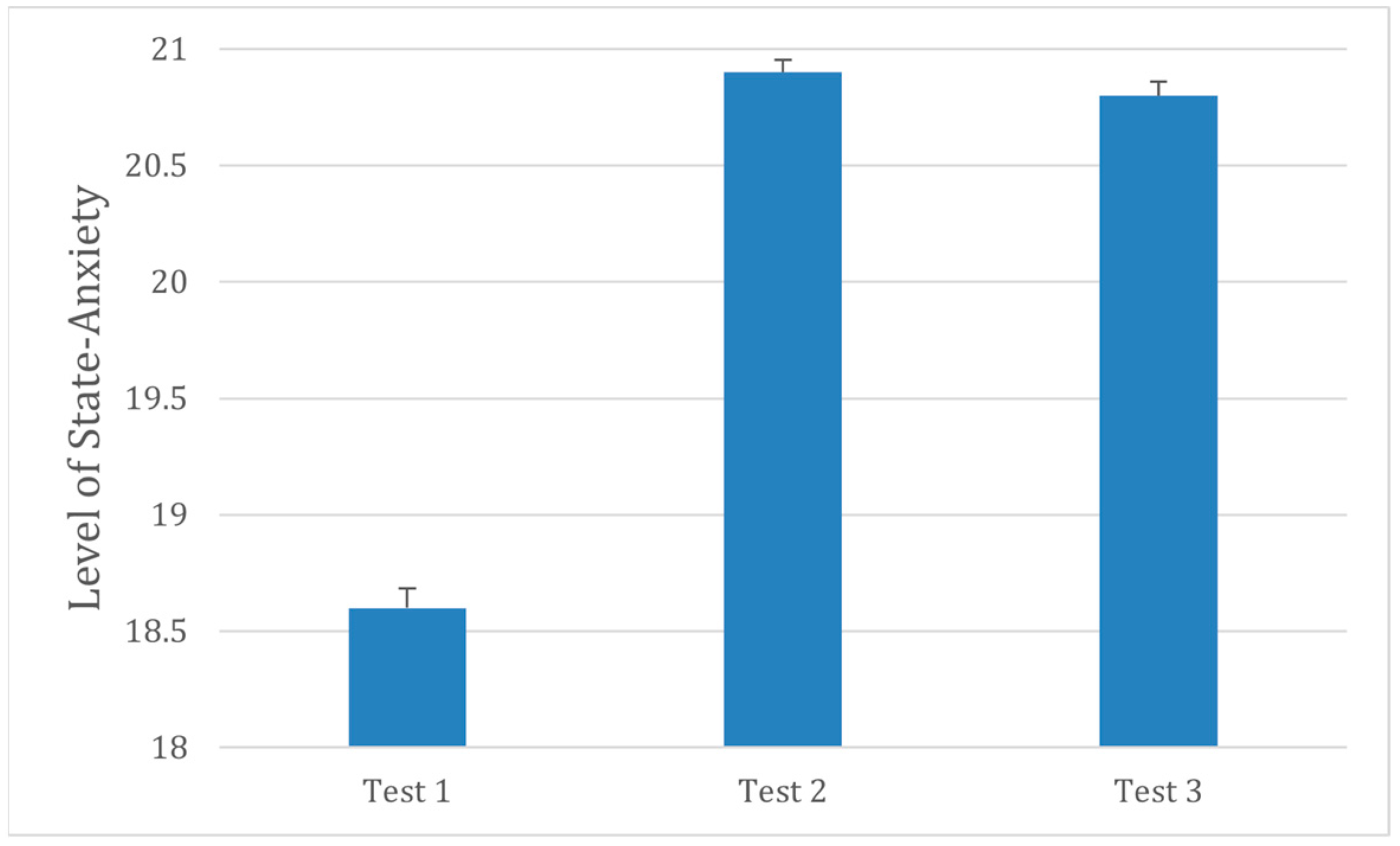
- The State-Trait Personality Inventory (STPI) by Spielberger et al. (1995) [14], validated in Hebrew [21], assessed state anxiety using 10 items rated from 1 (“not at all”) to 5 (“to a great extent”). The total score ranged from 10 to 50, with higher scores indicating greater anxiety. Reliability in this study was α = 0.762.
- (2)
- (1)
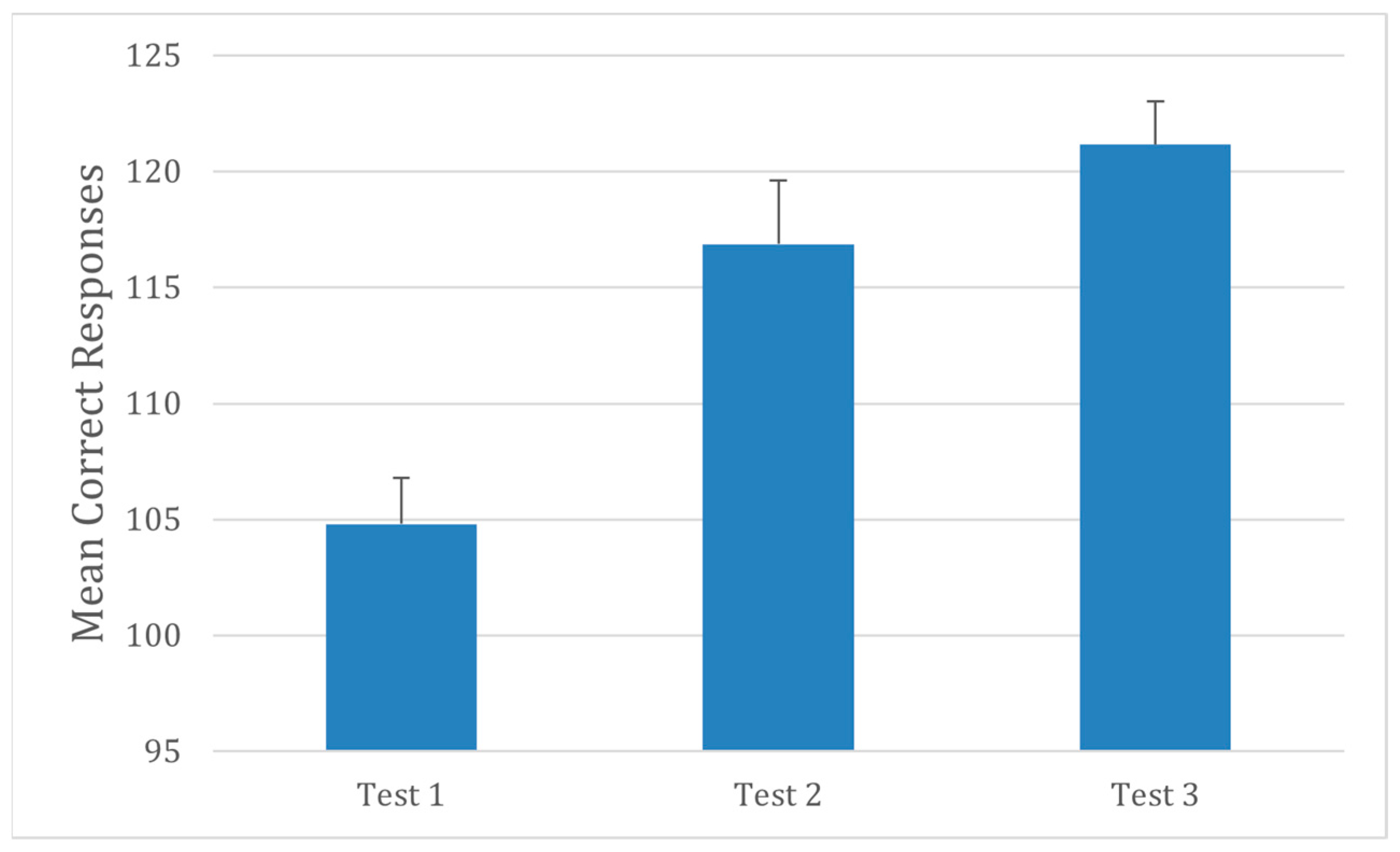
- The d2 Test of Attention [25] assessed selective attention by requiring participants to identify the letter “d” marked with two short lines. Performance was measured by the total number of correct responses within 20 s per sequence.
- (2)
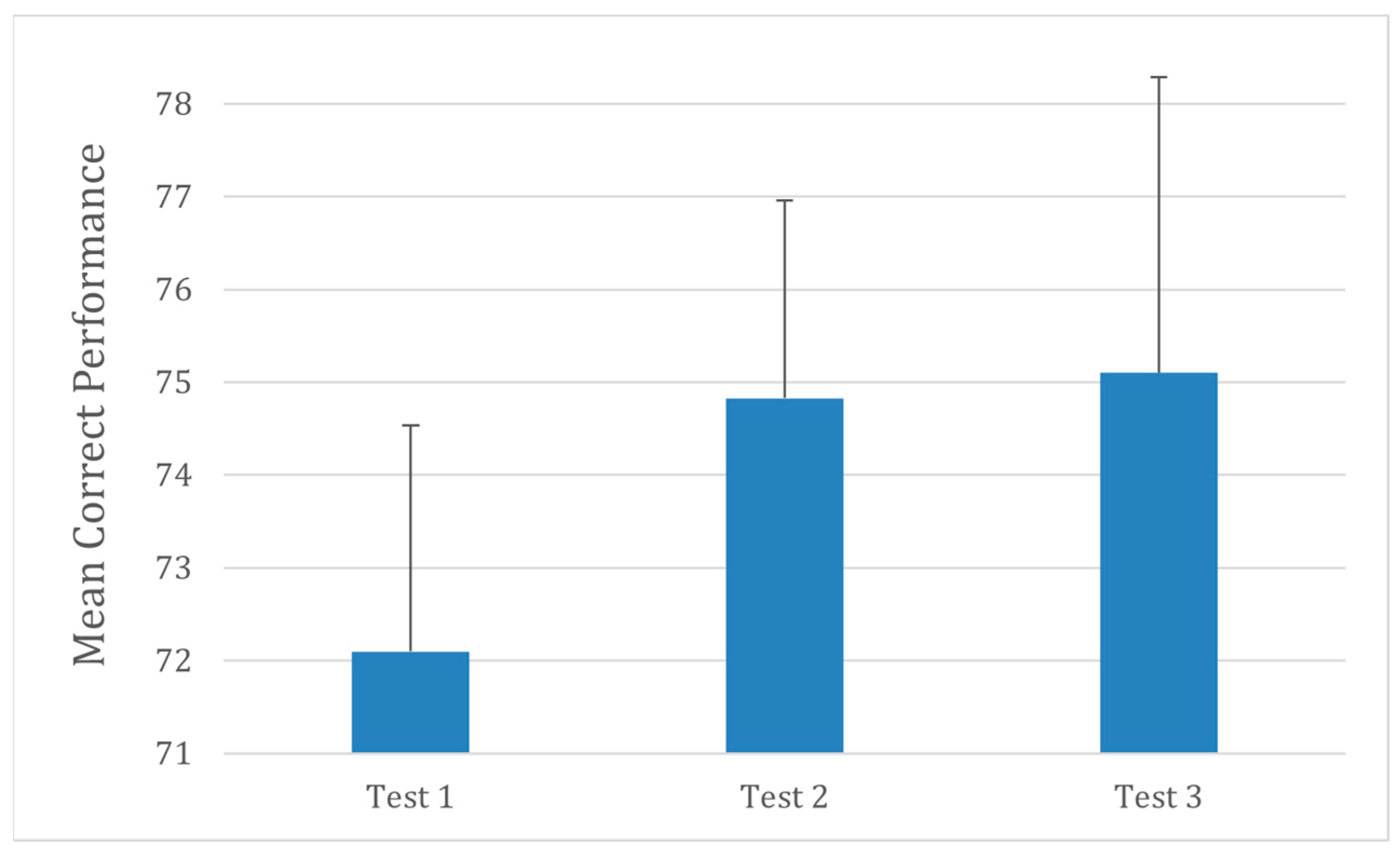
- The Coding-Digit Subtest from the Wechsler Intelligence Scale [26] measured visual processing speed and accuracy by having participants fill symbols corresponding to digits within two minutes.
2.3. Design and Procedure
3. Results
3.1. Anxiety (STPI)
3.2. Mood (VAMS)
3.3. Visual Attention (d2 Test of Attention)
3.4. Visual Processing Speed (Coding–Digit Subtest)
4. Discussion
5. Conclusions
Author Contributions
Funding
Institutional Review Board Statement
Informed Consent Statement
Data Availability Statement
Acknowledgments
Conflicts of Interest
Abbreviations
| STPI | State–Trait Personality Inventory |
| VAMS | Visual Analog Mood Scale |
| D2 | d2 Test of Attention |
| SD | Standard Deviation |
| ANOVA | Analysis of Variance |
| Hz | Hertz |
| dB | Decibel |
References
- National Institute for Health and Care Excellence. Hearing Loss in Adults; [Guideline #98]; National Guideline Center: London, UK, 2018. [Google Scholar]
- Krouse, H.J.; Magit, A.E.; O’Connor, S.; Schwartz, S.R.; Walsh, S.A. Plain language summary: Earwax (cerumen impaction). Otolaryngol. Head Neck Surg. 2017, 156, 30–37. [Google Scholar] [CrossRef]
- Michaudet, C.; Malaty, J. Cerumen impaction: Diagnosis and management. Am. Fam. Physician 2018, 98, 525–529. [Google Scholar] [PubMed]
- Mansour, S.; Magit, A.E.; Rosenfeld, R.M.; Ballachanda, B.; Earll, J.M.; Fayad, J.; Harlor, A.D.; Hirsch, B.E.; Jones, S.S.; Harlor, A.D.; et al. Clinical practice guideline: Cerumen impaction in children. Otolaryngol. Head Neck Surg. 2025, 172, S1–S42. [Google Scholar]
- Oron, Y.; Zwecker-Lazar, I.; Levy, D.; Kreitler, S.; Roth, Y. Cerumen removal: Comparison of cerumenolytic agents and effect on cognition among the elderly. Arch. Gerontol. Geriatr. 2011, 52, 228–232. [Google Scholar] [CrossRef]
- Oron, Y.; Shushan, S.; Ben-David, N.; Flaksman, H.; Korenbrot, F.; Merrick, J.; Roth, Y. Guidelines for ENT examination of adults with intellectual disabilities. J. Policy Pract. Intellect. Disabil. 2015, 12, 272–278. [Google Scholar] [CrossRef]
- Roth, Y.; Oron, Y.; Goldfarb, A. Evidence on earwax removal methods. Evid.-Based Nurs. 2011, 14, 60–61. [Google Scholar] [CrossRef] [PubMed]
- Cosh, S.; Helmer, C.; Delcourt, C.; Robins, T.G.; Tully, P.J. Depression in elderly patients with hearing loss: Current perspectives. Clin. Interv. Aging 2019, 14, 1471–1480. [Google Scholar] [CrossRef]
- Lazer, D.G.; Tucci, D.L. Hearing loss and psychiatric disorders: A review. Psychol. Med. 2019, 49, 891–897. [Google Scholar]
- Muñoz, K.; McLeod, H.; Pitt, C.; Preston, E.; Shelton, T.; Twohig, M.P. Recognizing emotional challenges of hearing loss. Hear. J. 2017, 70, 718–730. [Google Scholar] [CrossRef]
- Shoham, N.; Lewis, G.; Favarato, G. Prevalence of anxiety disorders in people with hearing impairment: A systematic review. Soc. Psychiatry Psychiatr. Epidemiol. 2019, 54, 649–660. [Google Scholar] [CrossRef]
- Pavani, F.; Bottari, D. Visual abilities in individuals with profound deafness: A critical review. In The Neural Bases of Multisensory Processes; Murray, M.M., Wallace, M.T., Eds.; Taylor & Francis: Boca Raton, FL, USA, 2012; Chapter 22. [Google Scholar]
- Casey, P.R. Adjustment Disorder: From Controversy to Clinical Practice; Oxford University Press: Oxford, UK, 2018. [Google Scholar]
- Spielberger, C.D. State-Trait Personality Inventory (STPI) [Database Record]; APA PsycTests: Washington, DC, USA, 1995. [Google Scholar]
- Arlinger, S. Negative consequences of uncorrected hearing loss: A review. Int. J. Audiol. 2003, 42, 17–20. [Google Scholar] [CrossRef]
- Tavakolizadeh, J.; Kianmehr, M.; Tamaddon-Yalmeh, M.; Bahalgardi, B.; Beheshti, M.H. Effect of Hearing Protection Devices on Anxiety and Depression of Stone Workers. J. Res. Med. Dent. Sci. 2019, 7, 21–25. [Google Scholar]
- Shende, S.A.; Mudar, R.A. Cognitive control in age-related hearing loss: A narrative review. Hear. Res. 2023, 430, 108814. [Google Scholar] [CrossRef]
- Shahidipour, Z.; Geshani, A.; Jafari, Z.; Jalaie, S.; Khosravifard, E. Auditory memory deficit in elderly with hearing loss. Iran. J. Otorhinolaryngol. 2013, 25, 169–176. [Google Scholar]
- Roy, R.A. Auditory working memory in adults with normal hearing vs. mild-moderate hearing loss. Glob. J. Otolaryngol. 2018, 13, 555862. [Google Scholar]
- Chesky, K.; Pair, M.; Yoshimura, E.; Landford, S. An evaluation of musician earplugs with college music students. Int. J Audol. 2009, 48, 661–670. [Google Scholar] [CrossRef]
- Teichman, Y.; Melink, H. A Hebrew Version of Spielberger’s State Trait Anxiety Inventory; Ramot: Tel Aviv, Israel, 1982. [Google Scholar]
- Nyenhuis, D.L.; Yamamoto, C.; Luchetta, T.; Terrien, A.; Parmentier, A. Adult and geriatric normative data and validation of the profile of mood states. J. Clin. Psychol. 1999, 55, 79–86. [Google Scholar] [CrossRef]
- Aitken, R.C. Measurement of feelings using visual analogue scales. Proc. R. Soc. Med. 1969, 62, 989–993. [Google Scholar] [PubMed]
- Ahearn, E.P. The use of visual analog scales in mood disorders: A critical review. J. Psychiatr. Res. 1997, 31, 569–579. [Google Scholar] [CrossRef]
- Brickenkamp, R.; Zillmer, E. The d2 Test of Attention; Hogrefe & Huber: Seattle, WA, USA, 1998. [Google Scholar]
- Wechsler, D. Wechsler Intelligence Scale for Children, 4th ed.; Harcourt: San Antonio, TX, USA, 2003. [Google Scholar]
- Moore, A.M.; Voytas, J.; Kowalski, D.; Maddens, M. Cerumen, hearing, and cognition in the elderly. J. Am. Med. Dir. Assoc. 2002, 3, 136–139. [Google Scholar] [CrossRef]
- Spiegel, D.R.; Jafri, R.; Bradshaw, E. A case of auditory hallucinations due to cerumen-induced transient hearing loss. J. Neuropsychiatry Clin. Neurosci. 2012, 24, E49. [Google Scholar] [CrossRef]
- Jung, N.; Wranke, C.; Hamburger, K.; Knauff, M. How emotions affect logical reasoning: Evidence from experiments with mood-manipulated participants, spider phobic, and people with exam anxiety. Front. Psychol. 2014, 5, 570. [Google Scholar] [CrossRef] [PubMed]
- Li, C.M.; Zhang, X.; Hoffman, H.J.; Cotch, M.F.; Themann, C.L.; Wilson, M.R. Hearing impairment associated with depression in US adults, 2005–2010. JAMA Otolaryngol. Head Neck Surg. 2014, 140, 293–302. [Google Scholar] [CrossRef] [PubMed]
- Sun, W.; Matsuoka, T.; Imai, A.; Oya, N.; Narumoto, J. Effects of hearing impairment, quality of life and pain on depressive symptoms in elderly people. Int. J. Environ. Res. Public Health 2021, 18, 12265. [Google Scholar] [CrossRef]
- Tambs, K. Moderate effects of hearing loss on mental health and well-being: Results from the Nord-Trøndelag hearing loss study. Psychosom. Med. 2004, 66, 776–782. [Google Scholar] [CrossRef]
- Ben Haim, S.M.; Mama, Y.; Icht, M.; Algom, D. Is the emotional Stroop task a special case of mood induction? Evidence from sustained effects of attention under emotion. Atten. Percept. Psychophys. 2014, 76, 81–97. [Google Scholar] [CrossRef]
- Bradley, M.M.; Cuthbert, B.N.; Lang, P.J. Picture media and emotion: Effects of a sustained affective context. Psychophysiology 1996, 33, 662–670. [Google Scholar] [CrossRef]
- Pereira, M.G.; Volchan, E.; Leal de Souza, G.G.; Oliveira, L.; Campagnoli, R.R.; Pinheiro, W.M.; Pessoa, L. Sustained and transient modulation of performance induced by emotional picture viewing. Emotion 2006, 6, 622–634. [Google Scholar] [CrossRef]


Disclaimer/Publisher’s Note: The statements, opinions and data contained in all publications are solely those of the individual author(s) and contributor(s) and not of MDPI and/or the editor(s). MDPI and/or the editor(s) disclaim responsibility for any injury to people or property resulting from any ideas, methods, instructions or products referred to in the content. |
© 2026 by the authors. Licensee MDPI, Basel, Switzerland. This article is an open access article distributed under the terms and conditions of the Creative Commons Attribution (CC BY) license.
Share and Cite
Moss Levy, L.; Weisler, K. Emotional and Cognitive Effects of Simulated Temporary Hearing Deficit with Healthy Adults. Audiol. Res. 2026, 16, 13. https://doi.org/10.3390/audiolres16010013
Moss Levy L, Weisler K. Emotional and Cognitive Effects of Simulated Temporary Hearing Deficit with Healthy Adults. Audiology Research. 2026; 16(1):13. https://doi.org/10.3390/audiolres16010013
Chicago/Turabian StyleMoss Levy, Leora, and Kinneret Weisler. 2026. "Emotional and Cognitive Effects of Simulated Temporary Hearing Deficit with Healthy Adults" Audiology Research 16, no. 1: 13. https://doi.org/10.3390/audiolres16010013
APA StyleMoss Levy, L., & Weisler, K. (2026). Emotional and Cognitive Effects of Simulated Temporary Hearing Deficit with Healthy Adults. Audiology Research, 16(1), 13. https://doi.org/10.3390/audiolres16010013