1. Introduction
Anemia exists when circulating red blood cells are insufficient to meet physiological oxygen-carrying needs, as defined by the World Health Organization (WHO) [
1].
Anemia might present symptomatically, for example with fatigue, dizziness, exertional breathlessness, palpitations, pale skin, exacerbations of cardiac failure, and angina, or be detected incidentally during routine screening or as part of an evaluation of almost any medical condition [
1]. Anemia is associated with poor health outcomes and increased morbidity and mortality [
2]. The standard method for assessing RBC levels is a complete blood count (CBC), with hemoglobin (Hb) concentration serving as the primary indicator [
3]. Hb thresholds for diagnosing anemia vary among different patient populations and were recently updated by the WHO in 2024 to reflect these variations more accurately [
1].
In 2021, anemia had a global prevalence of 24.3% across all age groups [
2], highlighting its widespread impact on public health. Approximately 17% of individuals over the age of 65 are affected by anemia [
4], underscoring its significant prevalence in the elderly population.
Some patients, particularly those with severe chronic anemia, require frequent blood transfusions. This is typically necessary when Hb concentration falls below 7 g/dL [
5], requiring blood transfusion. In Israel, blood transfusions are administered in hospitals [
6]. Most patients suffering from chronic anemia are elderly individuals with concomitant medical conditions, often facing mobility limitations [
7]. For these patients, frequent hospital visits for blood transfusions, including the waiting time, duration, and discharge process, can be burdensome. The repeated hospital visits not only pose physical and emotional challenges but also increase the risk of acquiring infections [
8]. This complex situation places significant strain on both the patients and their caregivers [
9].
When a patient arrives at the hospital for a blood transfusion, a CBC is typically performed to measure the Hb concentration in the blood [
10]. This test helps assess whether the patient requires a transfusion based on their current Hb level, ensuring appropriate treatment decisions are made. Unfortunately, there may be cases where a patient arrives at the hospital with a Hb level above the threshold for transfusion but still receives one due to difficulties in mobility. In such situations, the patient may be exposed to unnecessary side effects from the transfusion, without a significant improvement in their condition. Additionally, this leads to the waste of blood units, as well as time and resources that could have been used more effectively elsewhere [
11]. If a patient’s Hb concentration exceeds the transfusion threshold, and they do not receive the blood unit, this can lead to frustration and disappointment for both the patient and their family and wasted time and resources for both the patient and healthcare providers. In some cases, patients are sent to the emergency room by community physicians to receive blood transfusions without prior planning. This urgent need can sometimes result in inappropriate treatment within the emergency department [
10] as well as delays and inefficiencies.
Therefore, our proposed study aims to evaluate the use of a point-of-care (POC) device for Hb measurements under controlled outpatient clinic conditions. Importantly, the present study was designed as an initial, nurse-operated validation of a POC Hb device in a hemato-oncology outpatient clinic under supervised conditions, rather than as an evaluation of patient- or caregiver-operated home monitoring. As a prerequisite for any future evaluation of home-based monitoring, the goal of the present study was to determine whether POC Hb measurements may have potential utility in supporting transfusion-related clinical assessment while maintaining patient safety.
2. Materials and Methods
A total of 127 patients attending the hemato-oncology outpatient clinic at Carmel Medical Center were recruited, with some undergoing repeated evaluations across multiple visits. The study was approved by the local IRB committee, and all subjects who participated in the study signed an informed consent form.
In this study, we used the “Hemochroma Plus system (FPRR016; Boditech Med Inc., Chuncheon-si, Republic of Korea)”, a portable in vitro diagnostic device intended for quantification of total Hb concentration in human blood, which has been approved by the U.S. Food and Drug Administration (FDA) [
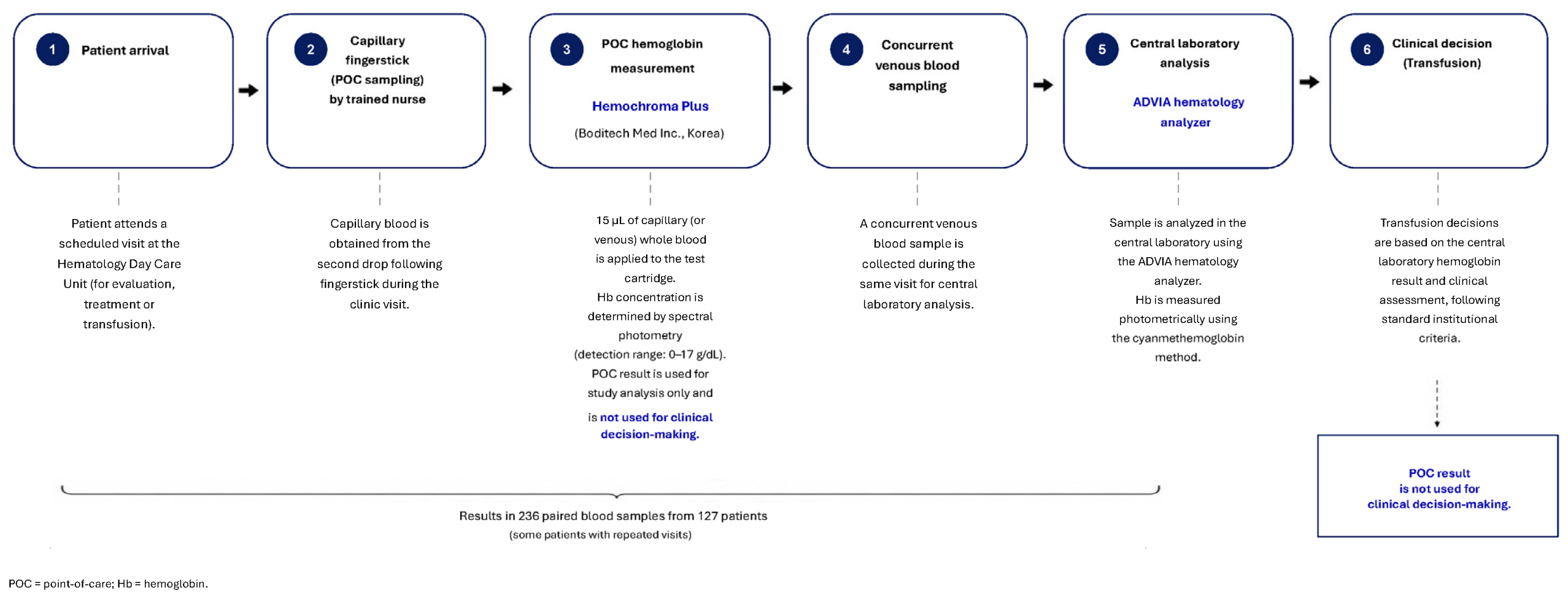
12]. The device uses 15 µL of capillary or venous whole blood, and Hb concentration is determined using spectral photometry (detection range: 0–17 g/dL). As an initial step toward potential home-based Hb monitoring, and in order to evaluate the device’s performance under controlled conditions, an initial validation protocol was developed and implemented as a nurse-operated protocol within the hemato-oncology outpatient clinic. In this phase, capillary blood samples were collected during routine outpatient clinic visits using the second drop of blood following capillary puncture. All POC measurements were performed by the same two trained outpatient hemato-oncology registered nurses throughout the study in order to minimize operator-related variability. Device-specific training was provided by a representative of the manufacturer prior to study initiation. Calibration and quality control procedures were performed throughout the study period according to the manufacturer’s instructions. Concurrent venous blood samples were analyzed using standard laboratory methods, resulting in 236 paired blood samples. The reference laboratory method was performed using the ADVIA hematology analyzer, in which Hb concentration is determined photometrically using the cyanmethemoglobin method. This analyzer served as the reference method for comparison with all POC hemoglobin measurements throughout the study.
For each study assessment, patients underwent capillary fingerstick sampling for POC Hb measurement, followed by concurrent venous blood collection for central laboratory analysis. Clinical decisions regarding blood transfusion were based on laboratory hemoglobin results and clinical assessment rather than on POC measurements.
A schematic overview of the nurse-operated POC protocol and its position within the clinical care pathway is presented in
Figure 1.
To evaluate factors that might be associated with agreement between POC and laboratory measurements, demographic and clinical data—including age, sex, tobacco usage, diagnoses, and medications—were extracted from medical records. Statistical analysis was conducted using Bland–Altman plots and Pearson correlation coefficients, employing IBM SPSS Statistics software (version 28.0, IBM, Armonk, NY, USA).
3. Results
During the study period, a total of 236 paired measurements were collected from 127 patients. The mean age of the patients was 69.9 years (standard deviation [SD] = 14.9). Of the 127 patients included in the study, 73 (57.5%) were male. 20 (15.7%) of the patients were identified as current smokers. (see
Table S1, Supplementary Materials). Vital signs, including systolic and diastolic blood pressure, pulse rate, and body temperature, were measured, with mean values falling within the normal physiological range. Similarly, the mean left ventricular ejection fraction was within normal limits (see
Table S2, Supplementary Materials).Dyslipidemia was the most common comorbidity, affecting 68 (53.5%) patients, followed closely by hypertension, which was present in 63 (49.6%) patients, while diabetes mellitus was diagnosed in 39 patients (30.7%) (see
Table S3, Supplementary Materials).
Regarding hematologic conditions, 39 patients (30.7%) were diagnosed with anemia. Multiple myeloma was identified in 46 patients (36.2%), leukemia in 9 patients (7.1%), and lymphoma in 32 patients (25.2%) (
Table S3).
Among the analyzed paired measurements, the most common medication exposures were statins (94, 39.8%), beta-1 blockers (92, 39.0%), and non-steroidal anti-inflammatory drugs (NSAIDs) (86, 36.4%) (see
Table S4, Supplementary Materials).
Among the analyzed paired measurements, Packed red blood cells (pRBCs) and/or Venofer (treatment A) was administered in 97 measurements (41.1%), Chemotherapy and/or Biological therapy (treatment B) in 135 measurements (57.2%), and Phlebotomy (treatment C) in 4 measurements (1.7%). When both treatment A and treatment B were administered during the same visit, the measurement was classified as treatment A (
Table S4).
Hemoglobin levels among laboratory measurements had a mean of 10.14 g/dL (SD = 2.67), ranging from 4.99 to 17.30 g/dL. Point-of-care hemoglobin measurements demonstrated a lower mean value of 8.95 g/dL (SD = 3.20), with a range of 3.20 to 17.70 g/dL (
Table S2). When categorizing paired measurements into two groups based on the discrepancy between hemoglobin measurements obtained from the point-of-care (POC) device and the laboratory, only 27 paired measurements (11.4%) exhibited a difference within ±0.5 g/dL (see
Table S5, Supplementary Materials). Additional subgroup analysis was performed for paired measurements with laboratory Hb values below 10 g/dL. In this subgroup, 14 of 133 paired measurements (10.5%) demonstrated a difference within ±0.5 g/dL between POC and laboratory Hb measurements (see
Table S6, Supplementary Materials). When using a threshold of ±1 g/dL to divide the paired measurements, the agreement improved slightly, with 62 paired measurements (26.3%) falling within this range (see
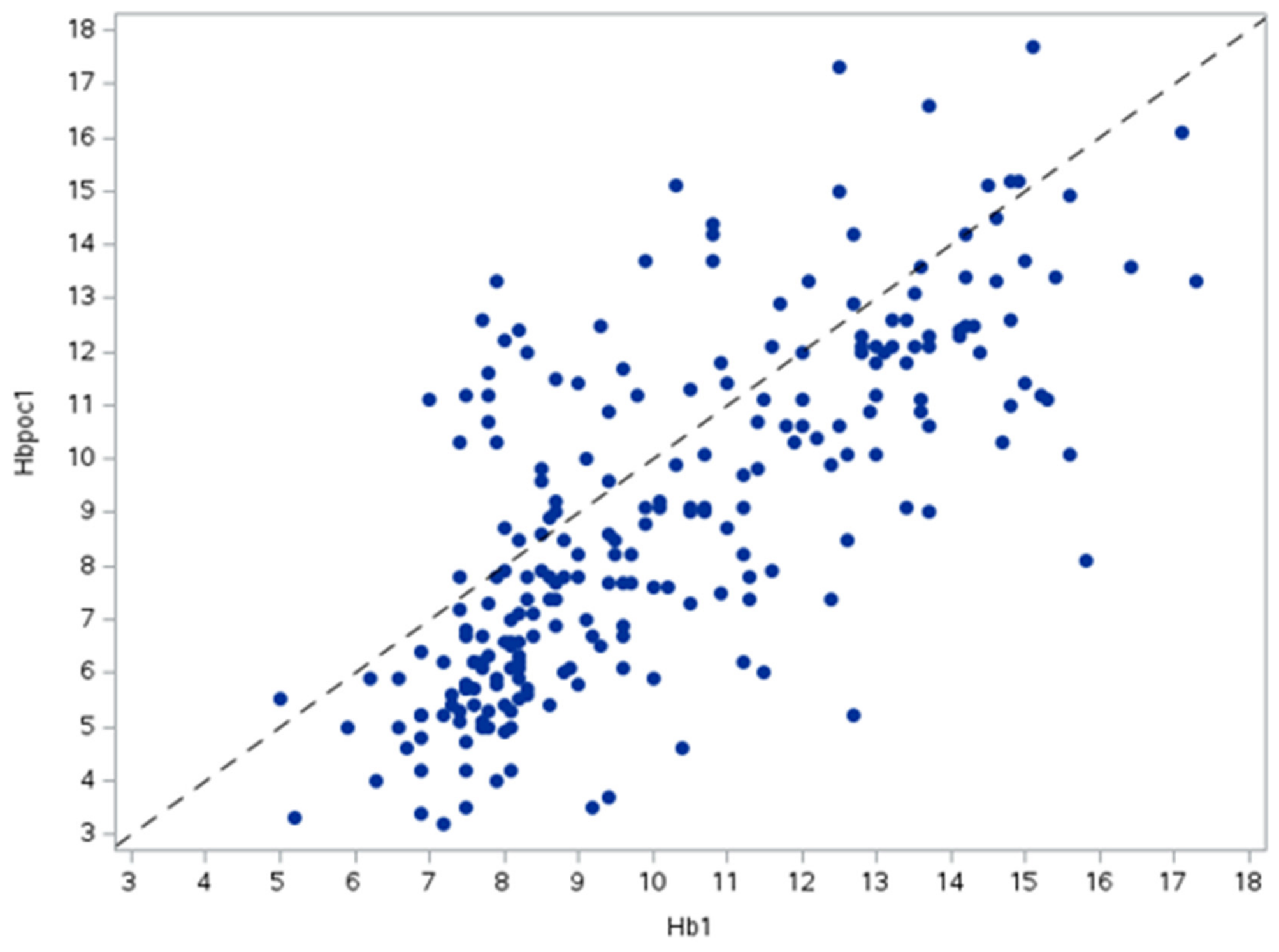
Table S7, Supplementary Materials). The correlation analysis demonstrated a moderate correlation between laboratory hemoglobin measurements (Hb1) and point-of-care (HbPOC1) measurements (r = 0.73,
p < 0.001) (
Figure 2).
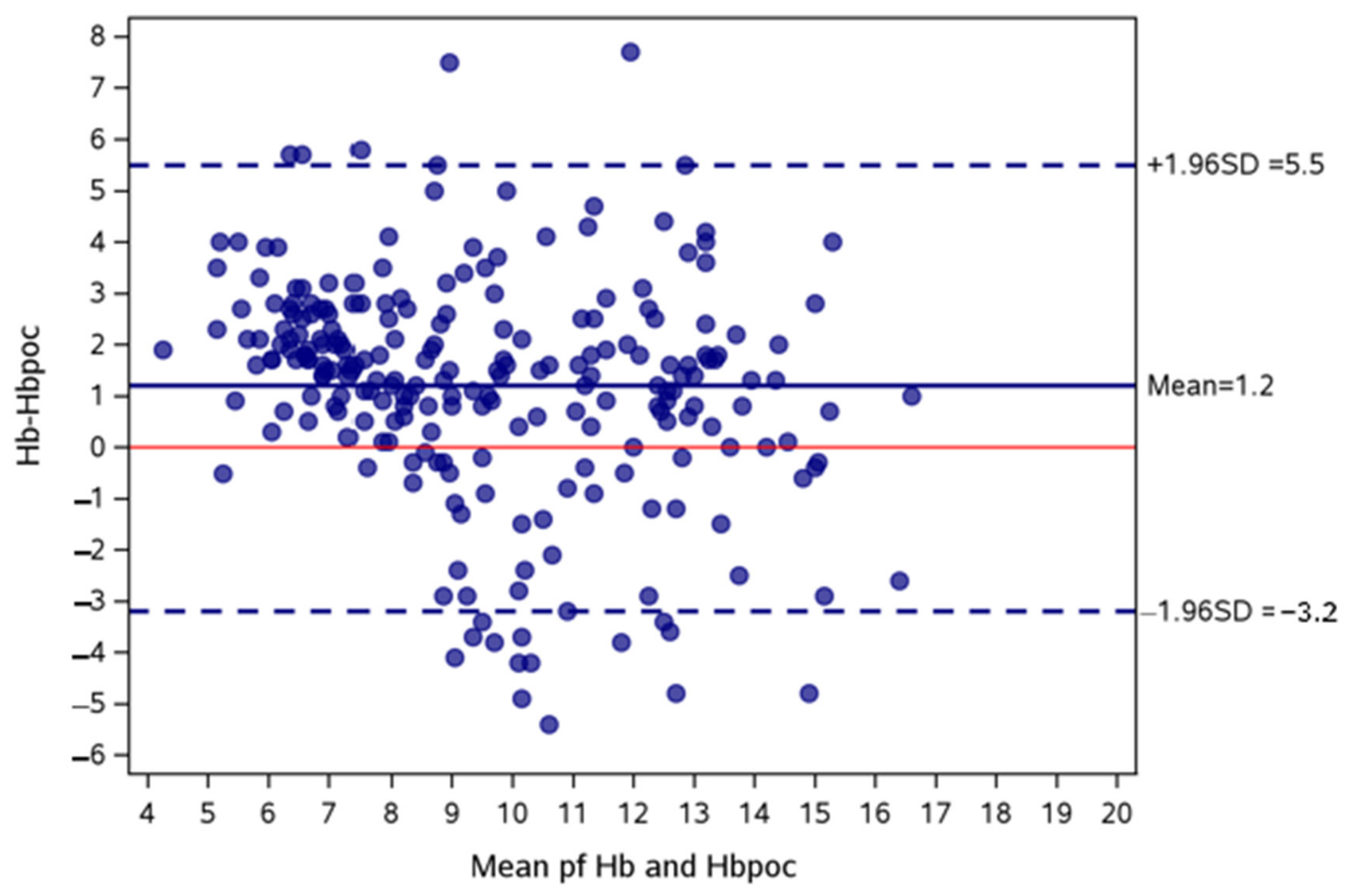
However, Bland–Altman analysis revealed a mean difference of 1.20 g/dL (SD = 1.94 g/dL), with wide limits of agreement (−3.20 to 5.50 g/dL), indicating substantial variability (
Figure 3).
Notably, no specific hemoglobin range exhibited consistently strong agreement between the two methods. To further evaluate the potential relationship between hemoglobin levels and the discrepancy between laboratory-measured hemoglobin and point-of-care device results, paired measurements were stratified into quartiles based on their laboratory hemoglobin values. Within each quartile, paired measurements were further categorized into two groups: those with a hemoglobin discrepancy exceeding ±1 g/dL and those with a discrepancy within ±1 g/dL. The proportion of paired measurements with discrepancies greater than ±1 g/dL remained consistent across quartiles, ranging from 71.2% to 76.6%. Statistical analysis revealed no significant difference in hemoglobin discrepancies across the quartiles (
p = 0.873), indicating that the magnitude of discrepancy was not associated with specific hemoglobin ranges (
Table 1).
Additionally, the analysis divided paired measurements into two groups based on the difference between hemoglobin values obtained from the laboratory and the point-of-care device: those with a difference of ≤1 g/dL and those with a difference >1 g/dL. No significant differences were found between the groups across the demographic and clinical variables analyzed, as none of the tested parameters demonstrated a statistically significant association with the magnitude of hemoglobin discrepancy (
Table 2).
In addition, we examined the potential relationship between the type of hemato-oncological treatment administered at day hospitalization (classified as treatments A, B, or C) and the difference between hemoglobin levels measured in the laboratory and those obtained using the point-of-care device. The analysis, conducted for discrepancies of ≤0.5 g/dL and ≤1 g/dL, yielded
p-values of 0.662 and 0.090, respectively, indicating no statistically significant association between treatment type and the observed hemoglobin discrepancy (see
Table S8, Supplementary Materials).
To further assess the agreement between the two measurement methods in identifying critically low hemoglobin levels (<7 g/dL), a cross-tabulation analysis was performed. The results indicated that among the 80 POC measurements classified by the POC device as having hemoglobin levels below 7 g/dL, only 14 (17.5%) were confirmed to have such levels based on laboratory testing. Notably, all 14 laboratory-confirmed measurements with hemoglobin levels below 7 g/dL were correctly identified by the POC device; however, they represented a small proportion of those classified as below the critical range by the device. The kappa coefficient for this analysis was 0.22, indicating poor agreement. Nevertheless, it is important to highlight that all 156 POC measurements classified by the POC device as having hemoglobin levels above 7 g/dL were indeed confirmed as such by laboratory testing (
Table 3).
Additional analysis using a laboratory Hb threshold of 8 g/dL identified 9 false-negative results, while 118 of 127 paired measurements with POC Hb levels ≥8 g/dL were confirmed by laboratory testing (see
Table S9, Supplementary Materials).
Finally, a receiver operating characteristic (ROC) curve was constructed to identify a cutoff for agreement between the two measurements. The analysis presented an area under the curve (AUC) of 0.523 (95% CI: 0.438–0.607;
p = 0.596) (see
Figure S1, Supplementary Materials).
4. Discussion
The primary objective of this study was to evaluate whether a POC Hb device could potentially support the monitoring of chronic transfusion recipients by helping identify patients who may not require immediate clinical evaluation, while facilitating timely assessment of those who may require transfusion. To this end, we performed an initial validation study assessing the agreement between POC and laboratory hemoglobin measurements under controlled clinical conditions.
PRBC transfusions are complex, costly, time-intensive procedures that require thorough medical evaluation, blood sample collection, laboratory analysis, crossmatching, transfusion administration, and post-transfusion hemoglobin reassessment [
10]. Despite the significant logistical and clinical burden associated with chronic transfusions, limited research has been conducted in this area, whereas substantial literature exists on the use of POC Hb devices in emergency transfusions [
10]. A relevant example of how POC testing for a hematological factor can alter clinical decisions is seen in a study using a POC device to measure coagulation function in stroke patients receiving anticoagulants. By assessing INR levels, the device helps determine if these patients are eligible for stroke treatment [
13]. This testing can alter treatment plans, allowing patients previously excluded due to anticoagulant use to receive appropriate stroke care if their INR is within a safe range. Similarly, a study evaluating non-invasive Hb monitoring (SpHb) in neonates demonstrated strong correlation and agreement with invasive venous sampling [
14]. The authors proposed that such technology may help reduce iatrogenic anemia by minimizing the need for frequent blood draws [
14]. While the population and measurement method differ from our study, these findings underscore the broader potential of alternative Hb assessment tools to improve patient care, pending further validation.
Our findings indicate that while POC Hb measurements exhibit a moderate correlation with central laboratory results, they demonstrate substantial variability, as reflected in the large SD and poor agreement between the two methods. Despite evaluating multiple demographic, clinical, and treatment-related variables, we were unable to identify a subgroup in which agreement between POC and laboratory measurements was substantially improved. However, at the critical transfusion threshold (Hb = 7 g/dL), the POC device demonstrated a high negative predictive value (NPV), as evidenced by the Bland–Altman analysis and cross-tabulation results. A supplementary subgroup analysis of paired measurements with laboratory Hb values below 8 g/dL yielded an NPV of 92.9%. These findings suggest that while POC Hb devices are not suitable for routine monitoring of chronic anemia, their potential clinical utility may differ depending on the direction of interpretation. High POC Hb values may help rule out severe anemia in settings similar to those evaluated in the present study, although this should be interpreted with caution due to the observed variability between methods. In contrast, low POC Hb values demonstrated limited rule-in utility because of the high frequency of false-positive low results and therefore should not be interpreted as evidence of severe anemia without confirmation by central laboratory testing.
At present, the findings of this study do not support the use of the device as a standalone tool for transfusion-related decision-making. Although moderate correlation was observed between POC and laboratory hemoglobin measurements, agreement between methods was limited, with wide limits of agreement and a low positive predictive value at clinically relevant transfusion thresholds. Nevertheless, the high negative predictive value observed at clinically relevant hemoglobin thresholds suggests that further investigation of its potential role as a rule-out tool may be warranted. Our data justify further evaluation of POC Hb as a potential rule-out tool, but they do not support replacing laboratory testing for transfusion decisions. If validated in larger multicenter and home-use studies, POC Hb devices might contribute to reducing unnecessary hospital visits and transfusions.
This study has several strengths, including a relatively large number of paired POC–laboratory hemoglobin measurements obtained from a clinically relevant hemato-oncology population frequently evaluated for anemia and transfusion-related care. In addition, all POC measurements were performed by trained nurses using a standardized protocol, minimizing operator-related variability. The availability of detailed demographic, clinical, and treatment-related data, including hemato-oncological treatment protocols, enabled a comprehensive evaluation of potential factors associated with agreement between POC and laboratory measurements.
Nevertheless, several limitations should be acknowledged. Although the study population was diverse, all participants were recruited from a single medical center, which may limit generalizability. In addition, some clinically relevant subgroups, such as patients undergoing phlebotomy, were represented by small numbers, limiting subgroup-specific analyses. Most notably, although the long-term motivation of this work relates to potential home-based monitoring, all POC measurements in the present study were performed by trained nurses in a controlled clinical setting. Accordingly, the present findings should be interpreted as an initial validation step conducted under supervised conditions rather than as evidence of patient- or caregiver-operated home testing. Therefore, the accuracy, feasibility, and safety of patient- or caregiver-operated home use remain unknown and require dedicated evaluation.
Future studies should validate these findings in larger multicenter cohorts and explore whether incorporating additional hematologic parameters, such as RDW (Red Blood Cell Distribution Width), may provide complementary information for transfusion-related assessment. In addition, prospective studies should evaluate the real-world performance of patient- or caregiver-operated POC Hb monitoring in home settings. Such studies may help determine whether the potential rule-out utility suggested by the present findings can be maintained when testing is performed by patients or caregivers outside the clinical environment. If validated in larger multicenter and home-use studies, POC Hb devices might contribute to reducing unnecessary hospital visits and transfusions. However, the present findings justify further evaluation as a potential rule-out tool and do not currently support replacing laboratory testing for transfusion decisions.




 ,
,