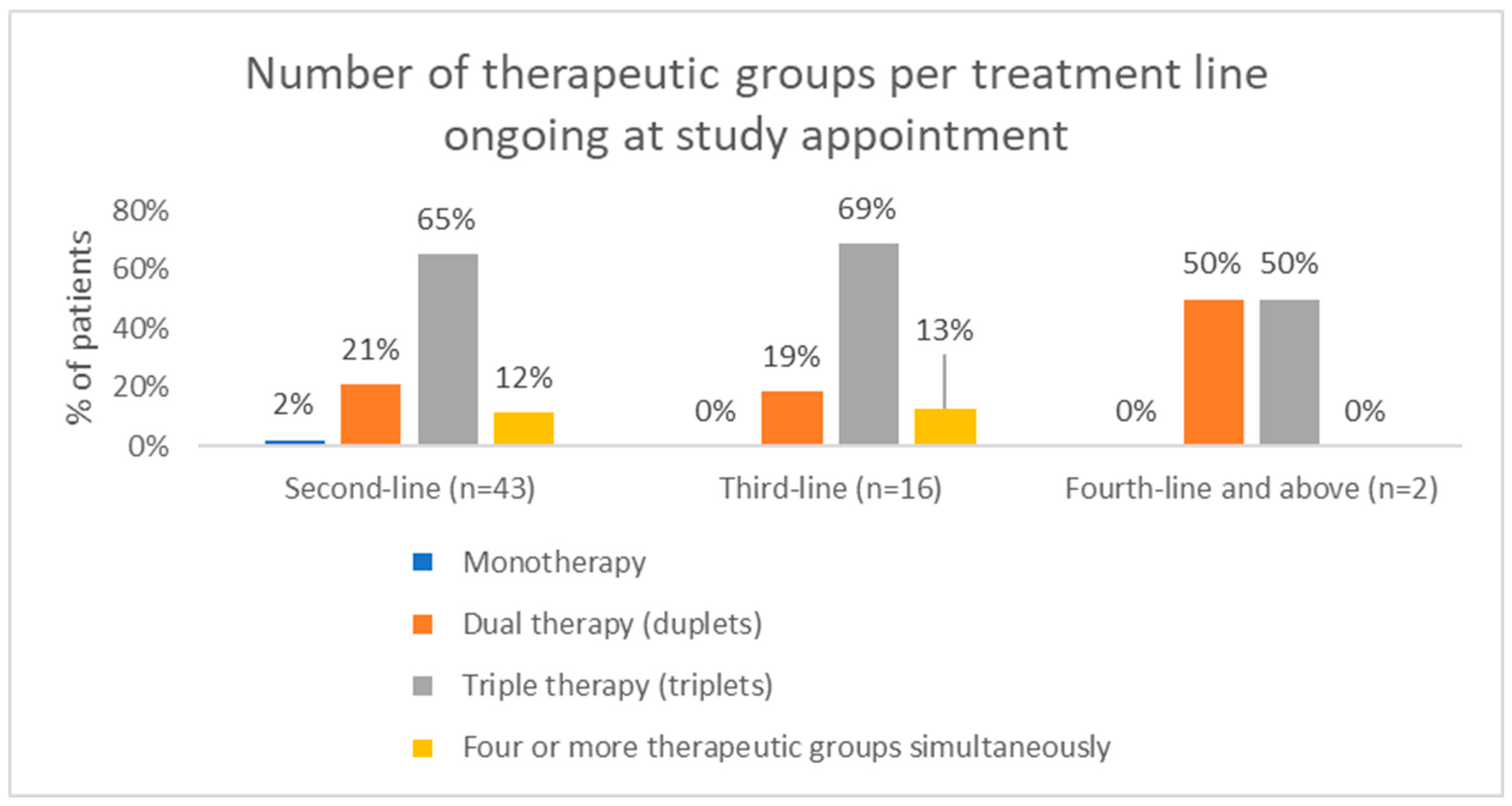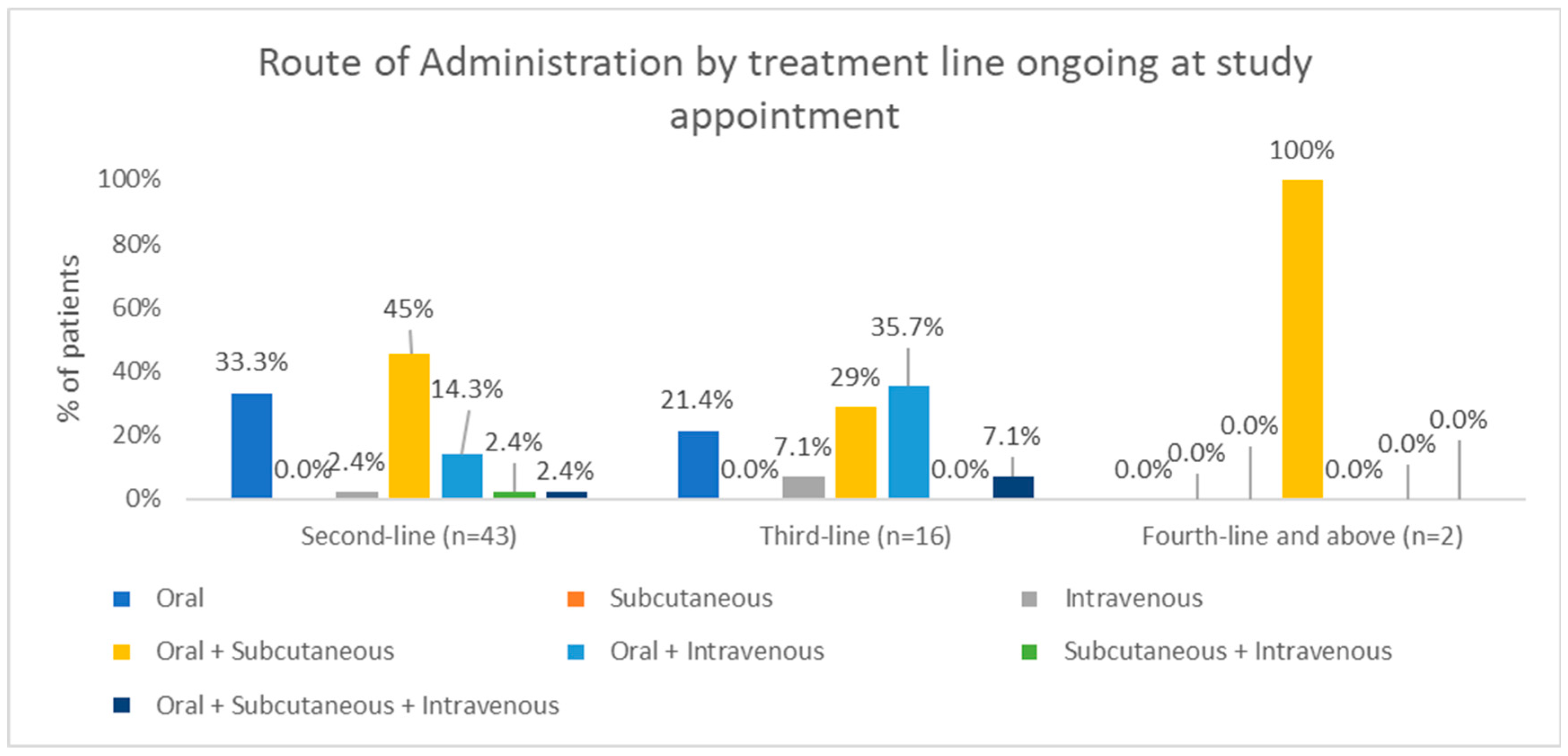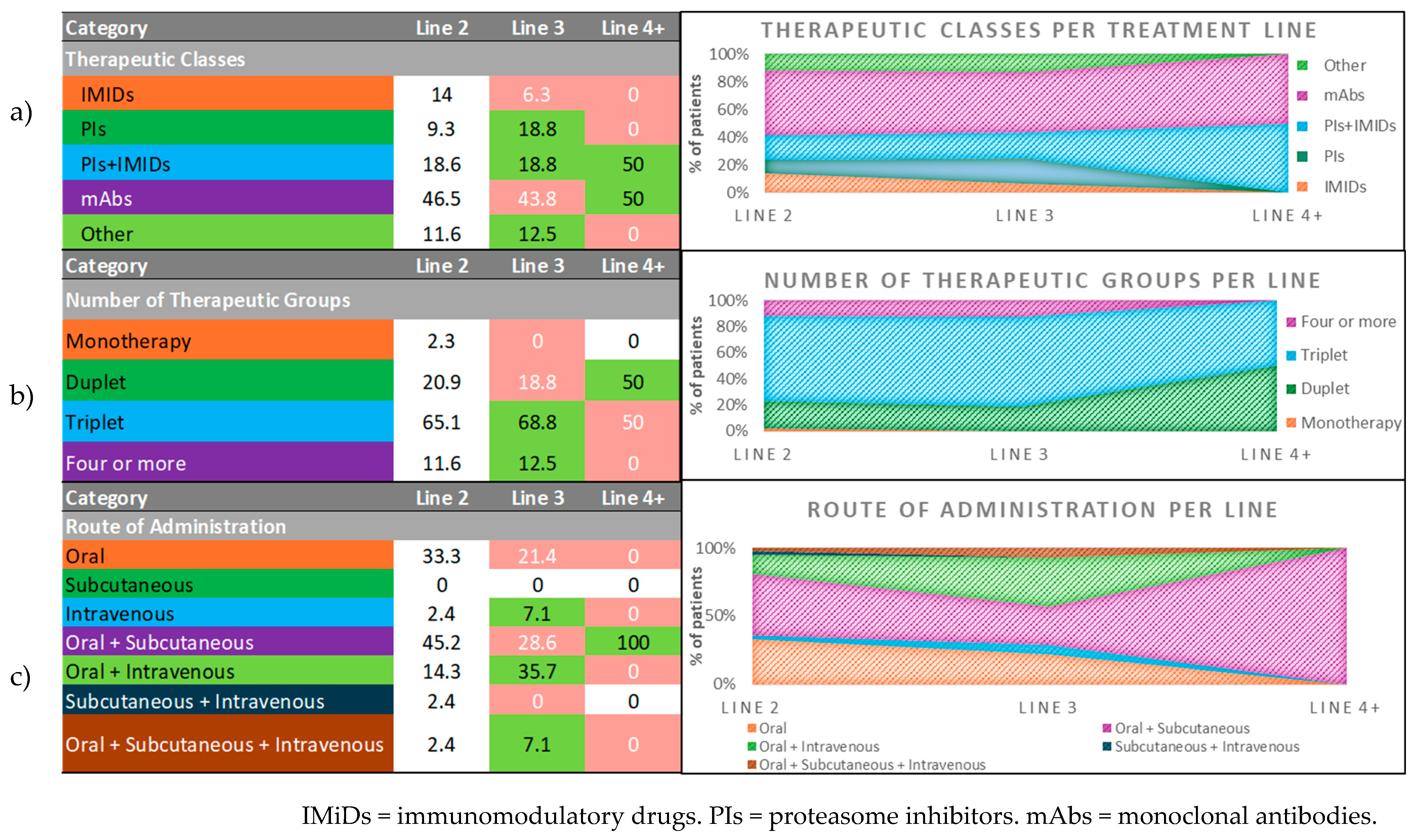

Sociodemographic, Clinical, and Therapeutic Characterization of Multiple Myeloma Patients (CharisMMa Study) with Symptomatic Relapse and/or Refractory Disease: An Observational, Multicenter Study in Portugal

 , , , ,
Abstract
1. Introduction
2. Materials and Methods
2.1. Study Design and Population
2.2. Study Data
2.3. Statistical Analysis
3. Results
3.1. Patient Disposition and Sociodemographic Characterization
3.2. Clinical Characterization
3.3. Treatment Patterns
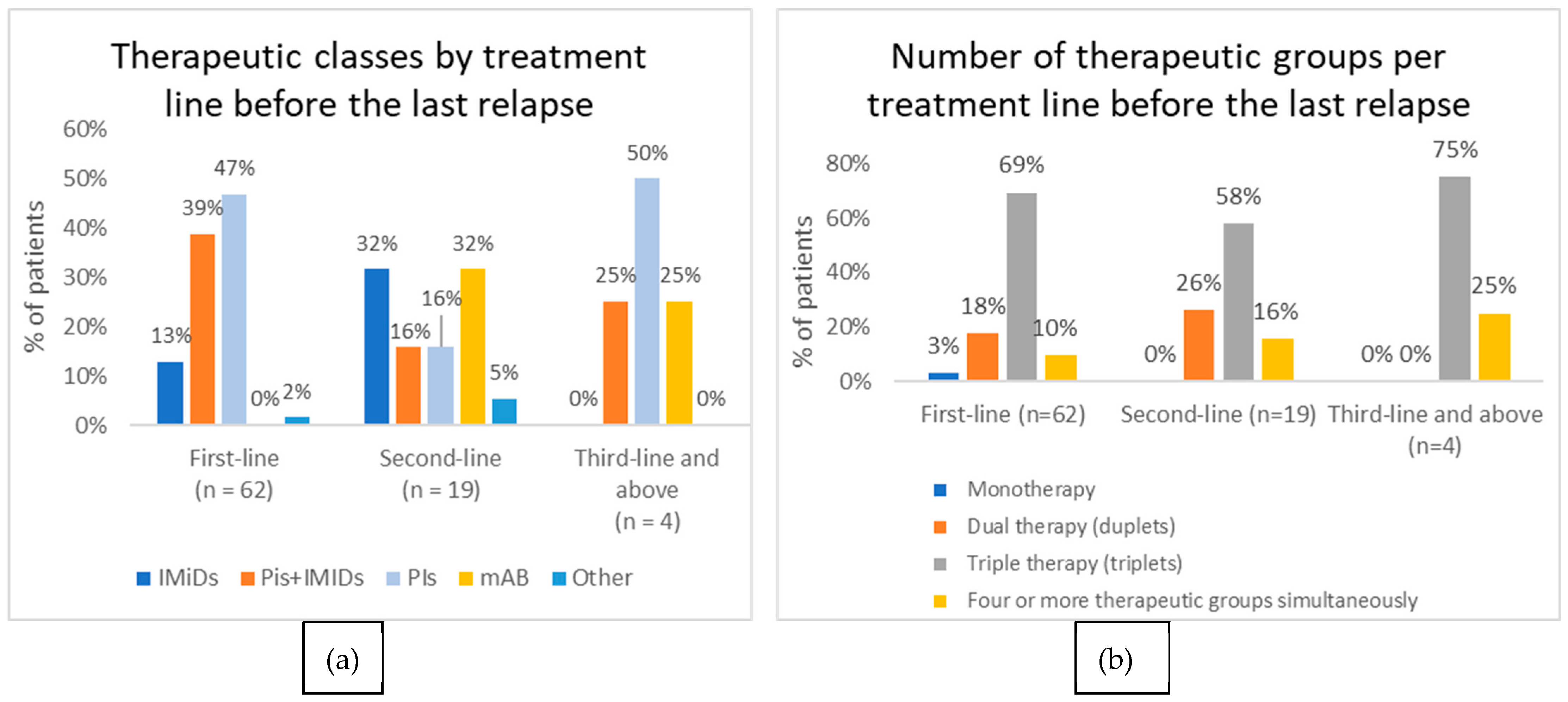
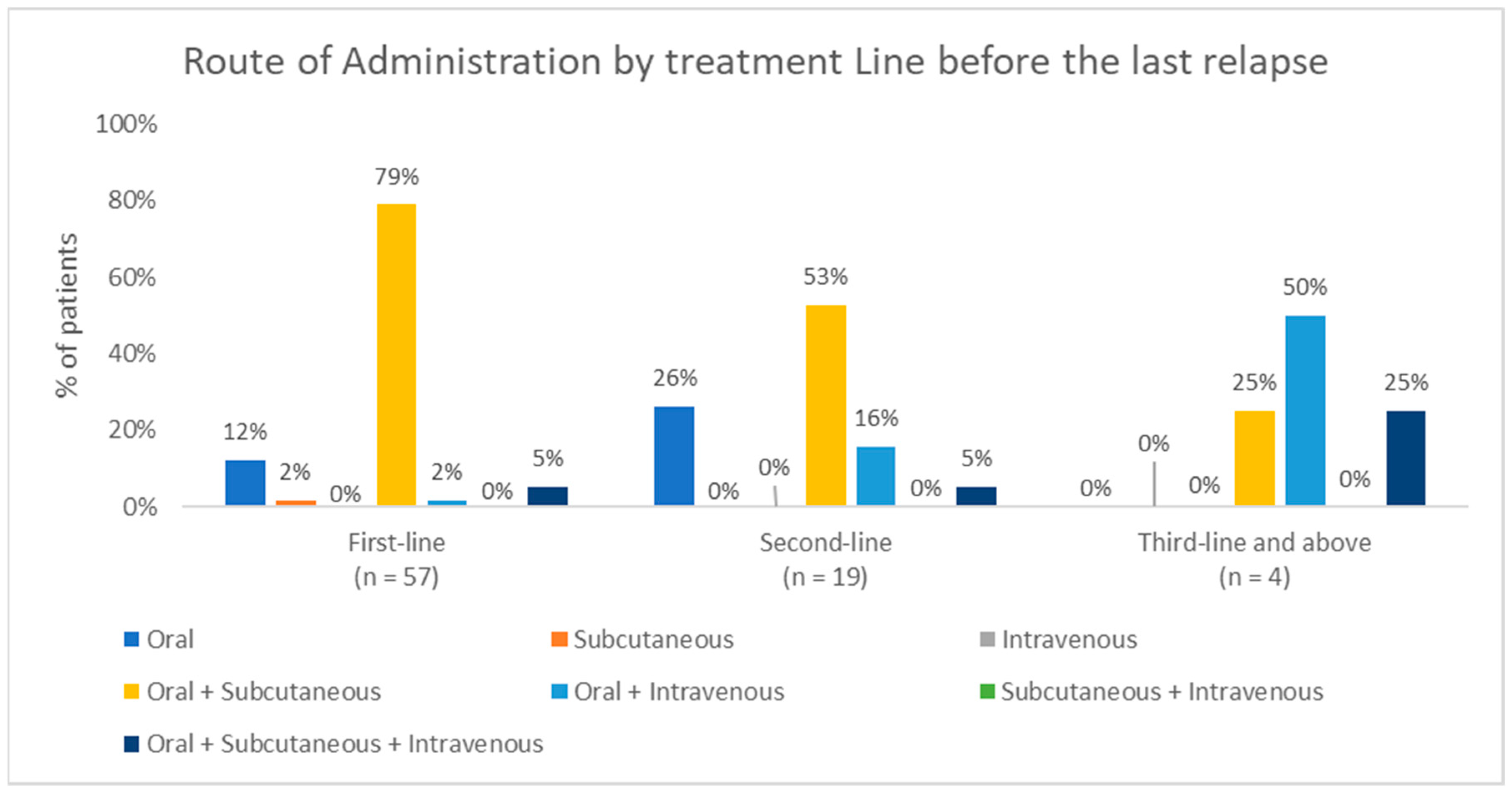
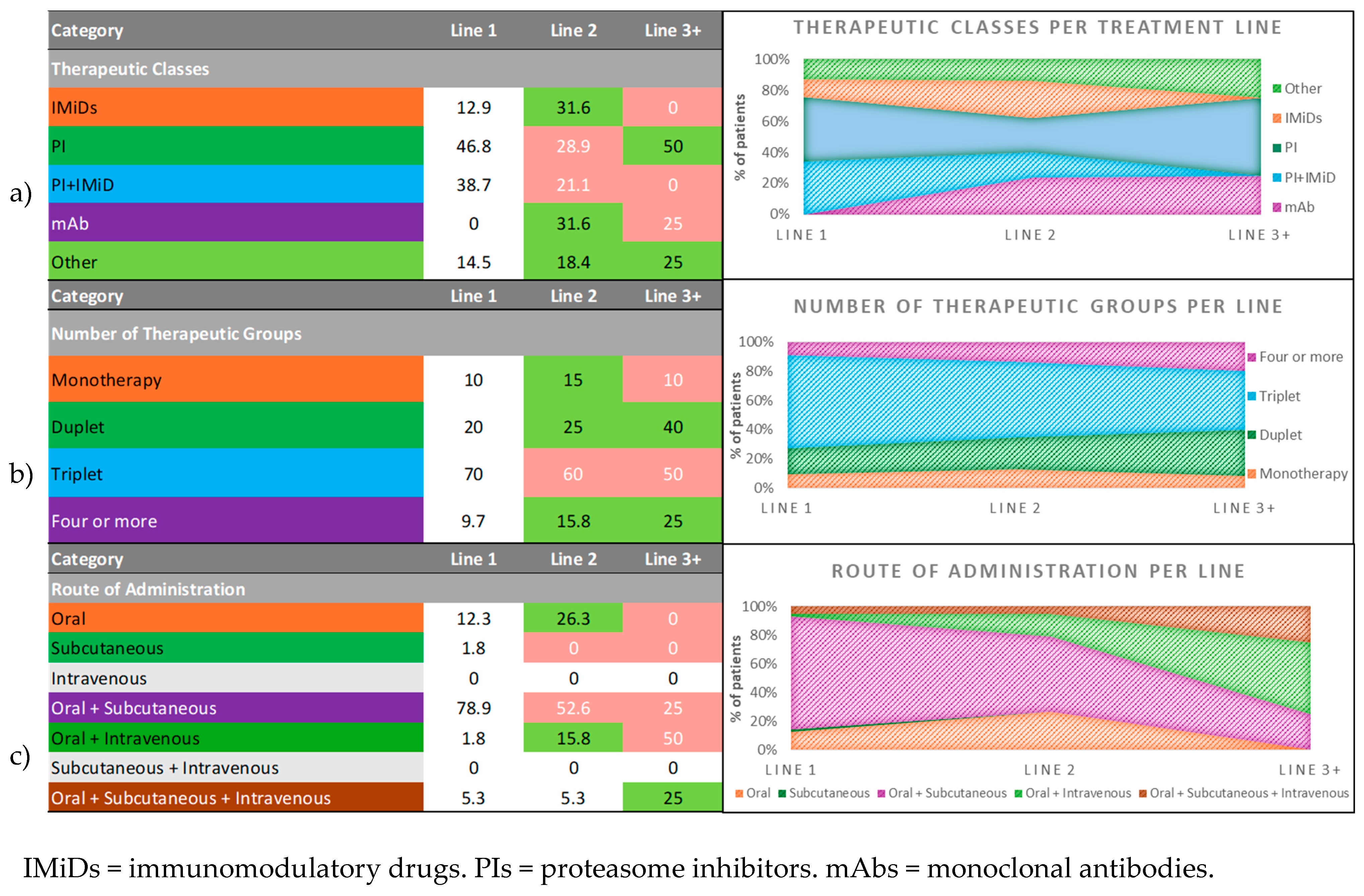
3.3.1. Before Last Relapse
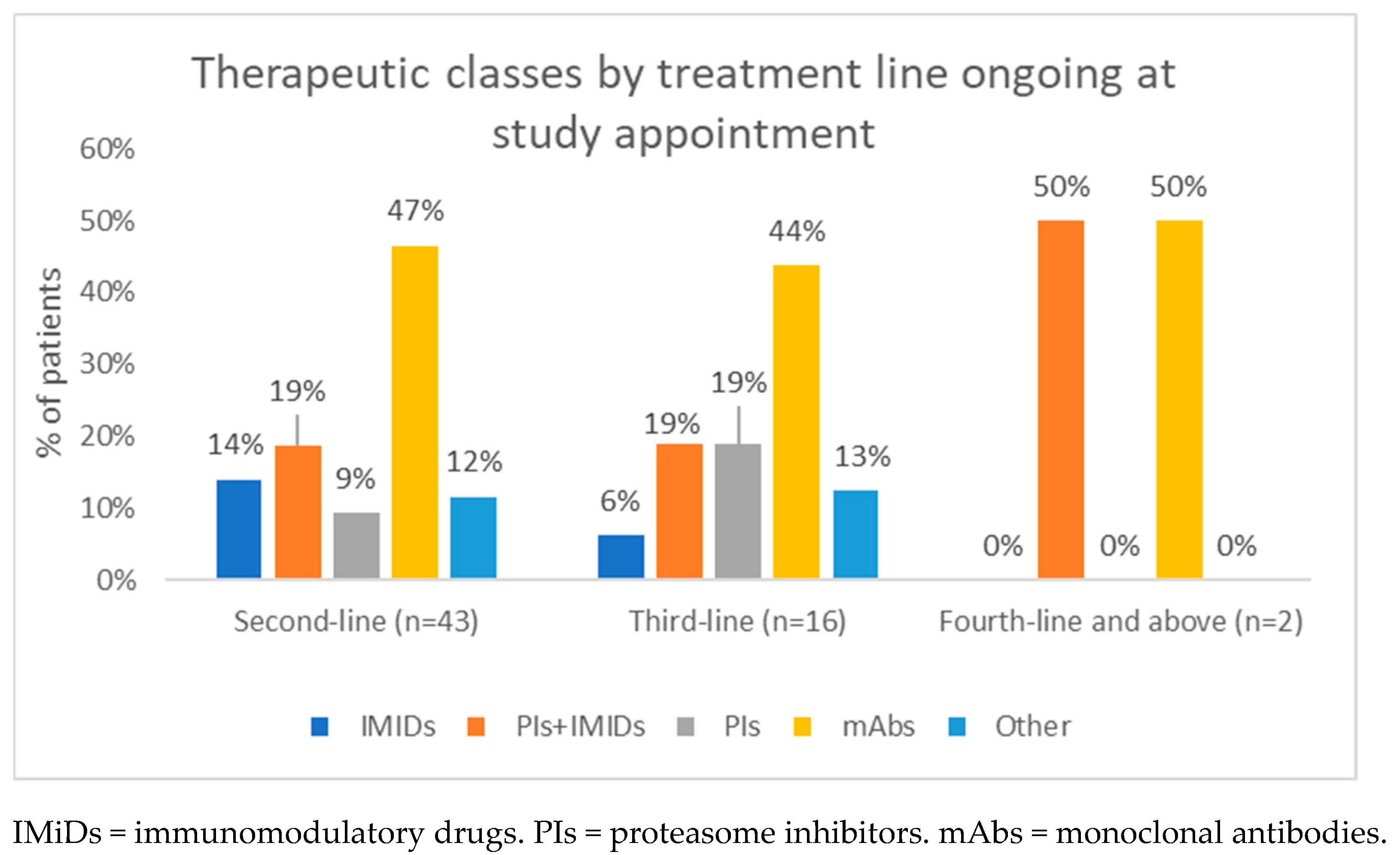
3.3.2. At Study Appointment–After Last Relapse
4. Discussion
4.1. Study Limitations
4.2. Final Remarks
Supplementary Materials
Author Contributions
Funding
Institutional Review Board Statement
Informed Consent Statement
Data Availability Statement
Acknowledgments
Conflicts of Interest
References
- WHO. Multiple Myeloma Source: Globocan 2020; WHO: Geneva, Switzerland, 2020. [Google Scholar]
- Bergantim, R.; João, C.; Geraldes, C.; Neves, M.; Trigo, F.; Neves, M.; Mendes, J.; Pedrosa, H.; Lúcio, P. Multiple Myeloma in Portugal: Incidence, Prevalence, Mortality and Treatment Pattern. EHA Library. 2020. Available online: https://library.ehaweb.org/eha/2020/eha25th/297938/rui.bergantim.multiple.myeloma.in.portugal.incidence.prevalence.mortality.and.html?f=listing=0*browseby=8*sortby=1*search=MULTIPLE+MYELOMA+IN+PORTUGAL:+INCIDENCE,+PREVALENCE,+MORTALITY+AND+TREATMENT+PATTERN (accessed on 21 December 2023).
- Urban, V.S.; Cegledi, A.; Mikala, G. Multiple myeloma, a quintessential malignant disease of aging: A geroscience perspective on pathogenesis and treatment. Geroscience 2023, 45, 727–746. [Google Scholar] [CrossRef] [PubMed]
- Huang, J.; Chan, S.C.; Lok, V.; Zhang, L.; Lucero-Prisno, D.E., 3rd; Xu, W.; Zheng, Z.J.; Elcarte, E.; Withers, M.; Wong, M.C.S.; et al. The epidemiological landscape of multiple myeloma: A global cancer registry estimate of disease burden, risk factors, and temporal trends. Lancet Haematol. 2022, 9, e670–e677. [Google Scholar] [CrossRef] [PubMed]
- Bhatt, P.; Kloock, C.; Comenzo, R. Relapsed/Refractory Multiple Myeloma: A Review of Available Therapies and Clinical Scenarios Encountered in Myeloma Relapse. Curr. Oncol. 2023, 30, 2322–2347. [Google Scholar] [CrossRef] [PubMed]
- Costa, C.; Neves, M.; Roque, A.I.; Sarmento-Ribeiro, A.B.; Gerivaz, R.; Tomé, A.; Afonso, S.; Santos, J.S.; Afonso, C.; Afonso, A.; et al. 3335 Assessment of Multiple Myeloma-Related Burden on Caregivers—A Portuguese National Study. In Proceedings of the 65th ASH Annual Meeting and Exposition, San Diego, CA, USA, 2 November 2023. [Google Scholar]
- Hulin, C.; Hansen, T.; Heron, L.; Pughe, R.; Streetly, M.; Plate, A.; Perkins, S.; Morgan, K.; Tinel, A.; Rodrigues, F.; et al. Living with the burden of relapse in multiple myeloma from the patient and physician perspective. Leuk. Res. 2017, 59, 75–84. [Google Scholar] [CrossRef]
- Dombeck, C.; Swezey, T.; Gonzalez Sepulveda, J.M.; Reeve, B.B.; LeBlanc, T.W.; Chandler, D.; Corneli, A. Patient perspectives on considerations, tradeoffs, and experiences with multiple myeloma treatment selection: A qualitative descriptive study. BMC Cancer 2023, 23, 65. [Google Scholar] [CrossRef]
- Oros, J.F.F.G.; Prieto, M.L.R.; Borda, A.; Quintero, G.; Lopez, C.A.; Melo, A.; Lacouture, M.C.F.; Tijaro-Ovalle, N.M.; Duarte, M.; Bernal, P.; et al. Improving Quality of Life and Treatment Adherence in Multiple Myeloma Patients Using Education Strategies Based on Digital and Spaced Learning. Blood 2022, 140, 13085–13087. [Google Scholar] [CrossRef]
- Steinmetz, H.T.; Singh, M.; Milce, J.; Haidar, M.; Rieth, A.; Lebioda, A.; Kohnke, J. Management of Patients with Relapsed and/or Refractory Multiple Myeloma Treated with Novel Combination Therapies in Routine Clinical Practice in Germany. Adv. Ther. 2022, 39, 1247–1266. [Google Scholar] [CrossRef]
- Gay, F.; Engelhardt, M.; Terpos, E.; Wäsch, R.; Giaccone, L.; Auner, H.W.; Caers, J.; Gramatzki, M.; van de Donk, N.; Oliva, S.; et al. From transplant to novel cellular therapies in multiple myeloma: European myeloma network guidelines and future perspectives. Haematologica 2018, 103, 197–211. [Google Scholar] [CrossRef]
- Dima, D.; Jiang, D.; Singh, D.J.; Hasipek, M.; Shah, H.S.; Ullah, F.; Khouri, J.; Maciejewski, J.P.; Jha, B.K. Multiple Myeloma Therapy: Emerging Trends and Challenges. Cancers 2022, 14, 4082. [Google Scholar] [CrossRef]
- Swan, D.; Murphy, P.; Glavey, S.; Quinn, J. Bispecific Antibodies in Multiple Myeloma: Opportunities to Enhance Efficacy and Improve Safety. Cancers 2023, 15, 1819. [Google Scholar] [CrossRef]
- Caraccio, C.; Krishna, S.; Phillips, D.J.; Schürch, C.M. Bispecific Antibodies for Multiple Myeloma: A Review of Targets, Drugs, Clinical Trials, and Future Directions. Front. Immunol. 2020, 11, 501. [Google Scholar] [CrossRef] [PubMed]
- Sheykhhasan, M.; Ahmadieh-Yazdi, A.; Vicidomini, R.; Poondla, N.; Tanzadehpanah, H.; Dirbaziyan, A.; Mahaki, H.; Manoochehri, H.; Kalhor, N.; Dama, P. CAR T therapies in multiple myeloma: Unleashing the future. Cancer Gene Ther. 2024, 31, 667–686. [Google Scholar] [CrossRef] [PubMed]
- Zhang, X.; Zhang, H.; Lan, H.; Wu, J.; Xiao, Y. CAR-T cell therapy in multiple myeloma: Current limitations and potential strategies. Front. Immunol. 2023, 14, 1101495. [Google Scholar] [CrossRef]
- Martino, E.A.; Bruzzese, A.; Iaccino, E.; Labanca, C.; Mendicino, F.; Mimmi, S.; Lucia, E.; Olivito, V.; Neri, A.; Morabito, F.; et al. Belantamab mafodotin in multiple myeloma. Expert. Opin. Biol. Ther. 2023, 23, 1043–1047. [Google Scholar] [CrossRef]
- Lonial, S.; Lee, H.C.; Badros, A.; Trudel, S.; Nooka, A.K.; Chari, A.; Abdallah, A.-O.; Callander, N.; Lendvai, N.; Sborov, D.; et al. Belantamab mafodotin for relapsed or refractory multiple myeloma (DREAMM-2): A two-arm, randomised, open-label, phase 2 study. Lancet Oncol. 2020, 21, 207–221. [Google Scholar] [CrossRef]
- Hungria, V.; Robak, P.; Hus, M.; Zherebtsova, V.; Ward, C.; Ho, P.J.; Ribas de Almeida, A.C.; Hajek, R.; Kim, K.; Grosicki, S.; et al. Belantamab Mafodotin, Bortezomib, and Dexamethasone for Multiple Myeloma. N. Engl. J. Med. 2024, 391, 393–407. [Google Scholar] [CrossRef]
- De Mel, S.; Lim, S.H.; Tung, M.L.; Chng, W.J. Implications of Heterogeneity in Multiple Myeloma. Biomed. Res. Int. 2014, 2014, 232546. [Google Scholar] [CrossRef]
- Kumar, S.; Baizer, L.; Callander, N.S.; Giralt, S.A.; Hillengass, J.; Freidlin, B.; Hoering, A.; Richardson, P.G.; Schwartz, E.I.; Reiman, A.; et al. Gaps and opportunities in the treatment of relapsed-refractory multiple myeloma: Consensus recommendations of the NCI Multiple Myeloma Steering Committee. Blood Cancer J. 2022, 12, 98. [Google Scholar] [CrossRef]
- Moreau, P.; Kumar, S.K.; San Miguel, J.; Davies, F.; Zamagni, E.; Bahlis, N.; Ludwig, H.; Mikhael, J.; Terpos, E.; Schjesvold, F.; et al. Treatment of relapsed and refractory multiple myeloma: Recommendations from the International Myeloma Working Group. Lancet Oncol. 2021, 22, e105–e118. [Google Scholar] [CrossRef]
- Ocio, E.M.; Montes-Gaisán, C.; Bustamante, G.; Garzón, S.; González, E.; Pérez, E.; Sirvent, M.; Arguiñano, J.M.; González, Y.; Ríos, R.; et al. Clinical and Sociodemographic Characteristics of Patients With Relapsed and/or Refractory Multiple Myeloma and Their influence on Treatment in the Real-World Setting in Spain: The CharisMMa Study. Clin. Lymphoma Myeloma Leuk. 2022, 22, e241–e249. [Google Scholar] [CrossRef]
- SAS Institute Inc. SAS Software 9.4 (SAS/STAT 15.2); SAS Institute Inc.: Cary, NC, USA, 2016. [Google Scholar]
- Mathew, A.; Hasan Farooqui, H.; Kumar, L. Quality of life assessment & out-of-pocket expenditure in multiple myeloma: An observational study. Indian. J. Med. Res. 2022, 154, 823–832. [Google Scholar] [CrossRef]
- Kocaata, Z.; Wilke, T.; Fischer, F.; Welte, R.; Einsele, H. Healthcare Resource Utilization and Cost of Patients with Multiple Myeloma in Germany: A Retrospective Claims Data Analysis. Pharmacoecon Open 2022, 6, 619–628. [Google Scholar] [CrossRef] [PubMed]
- Hanamura, I. Multiple myeloma with high-risk cytogenetics and its treatment approach. Int. J. Hematol. 2022, 115, 762–777. [Google Scholar] [CrossRef]
- Kumar, S.K.; Mikhael, J.R.; Buadi, F.K.; Dingli, D.; Dispenzieri, A.; Fonseca, R.; Gertz, M.A.; Greipp, P.R.; Hayman, S.R.; Kyle, R.A.; et al. Management of newly diagnosed symptomatic multiple myeloma: Updated Mayo Stratification of Myeloma and Risk-Adapted Therapy (mSMART) consensus guidelines. Mayo Clin. Proc. 2009, 84, 1095–1110. [Google Scholar] [CrossRef]
- Rajkumar, S.V. Multiple myeloma: 2024 update on diagnosis, risk-stratification, and management. Am. J. Hematol. 2024, 99, 1802–1824. [Google Scholar] [CrossRef]
- Gengenbach, L.; Graziani, G.; Reinhardt, H.; Rösner, A.; Braun, M.; Möller, M.-D.; Greil, C.; Wäsch, R.; Engelhardt, M. Choosing the Right Therapy for Patients with Relapsed/Refractory Multiple Myeloma (RRMM) in Consideration of Patient-, Disease- and Treatment-Related Factors. Cancers 2021, 13, 4320. [Google Scholar] [CrossRef]
- Dimopoulos, M.A.; Moreau, P.; Terpos, E.; Mateos, M.V.; Zweegman, S.; Cook, G.; Delforge, M.; Hájek, R.; Schjesvold, F.; Cavo, M.; et al. Multiple myeloma: EHA-ESMO Clinical Practice Guidelines for diagnosis, treatment and follow-up†. Ann. Oncol. 2021, 32, 309–322. [Google Scholar] [CrossRef]
- Sonneveld, P.; Broijl, A. Treatment of relapsed and refractory multiple myeloma. Haematologica 2016, 101, 396–406. [Google Scholar] [CrossRef]
- Rifkin, R.M.; Bell, J.A.; DasMahapatra, P.; Hoole, M.; Lowe, M.; Curran, C.; Campbell, S.; Hou, P.; Romanus, D. Treatment Satisfaction and Burden of Illness in Patients with Newly Diagnosed Multiple Myeloma. Pharmacoecon Open 2020, 4, 473–483. [Google Scholar] [CrossRef]
- Bergatim, R.; Geraldes, C.; João, C.; Lúcio, P.; Neves, M.; Trigo, F.; Ventura, M.P.; Ramos, D. P-178 Evolution of the multiple myeloma treatment landscape in Portugal: A 5-year longitudinal analysis of treatment patterns in nationwide clinical practice. Clin. Lymphoma Myeloma Leuk. 2023, 23, S133–S134. [Google Scholar] [CrossRef]
- Bylund, C.L.; Eggly, S.; LeBlanc, T.W.; Kurtin, S.; Gandee, M.; Medhekar, R.; Fu, A.; Khurana, M.; Delaney, K.; Divita, A.; et al. Survey of patients and physicians on shared decision-making in treatment selection in relapsed/refractory multiple myeloma. Transl. Behav. Med. 2023, 13, 255–267. [Google Scholar] [CrossRef]
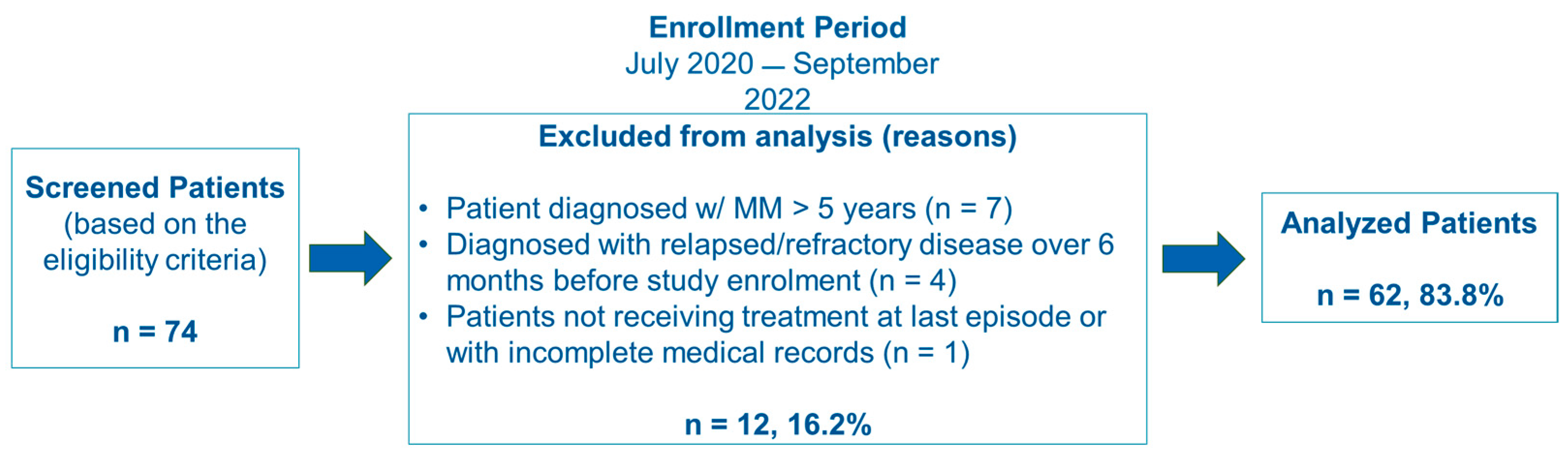



| Characteristics * | Total (n = 62) ** |
|---|---|
| Sex | |
| Male | 34 (54.8%) |
| Female | 28 (45.2%) |
| Body Mass Index (kg/m2), mean (SD) | 25.48 (3.86) |
| Area of residence | |
| Rural | 20 (32.3%) |
| Urban | 42 (67.7%) |
| Educational level (n = 58) | |
| Primary education | 38 (65.5%) |
| Secondary education | 12 (20.7%) |
| Higher education | 8 (13.8%) |
| Employment status (n = 61) | |
| Unemployed | 1 (1.6%) |
| In active employment | 11 (18.0%) |
| Temporarily/permanently disabled | 10 (16.4%) |
| Retired | 38 (62.3%) |
| Other | 1 (1.6%) |
| Cohabitation | |
| Living alone 1 | 4 (6.5%) |
| Living with relatives | 56 (90.3%) |
| Living alone with help from a caregiver | 2 (3.2%) |
| Need for financial assistance (yes) (n = 60) | 11 (18.3%) |
| Degree of dependence (n = 61) 2 | |
| Independent | 30 (49.2%) |
| Dependent Grade I | 15 (24.6%) |
| Dependent Grade II | 11 (18.0%) |
| Dependent Grade III | 5 (8.2%) |
| Physical activity (n = 60) 3 | |
| High | 1 (1.7%) |
| Moderate/low | 34 (56.7%) |
| Inactive | 25 (41.7%) |
| Currently smoking | 7 (11.3%) |
| Alcohol consumption | 5 (8.1%) |
| Characteristics * | (n = 62) |
|---|---|
| Age at diagnosis (years), mean (SD) | 65.76 (9.24) |
| R-ISS stage at MM diagnosis (n = 46) | |
| I (Low-risk) | 6 (13.0%) |
| II | 32 (69.6%) |
| III (High-risk) | 8 (17.4%) |
| Missing | 16 |
| ISS stage at MM diagnosis | |
| I (Low-risk) | 14 (22.6%) |
| II | 23 (37.1%) |
| III (High-risk) | 25 (40.3%) |
| ECOG at MM diagnosis | |
| ECOG 0 | 22 (37.3%) |
| ECOG 1 | 22 (37.3%) |
| ECOG 2 | 12 (20.3%) |
| ECOG 3 | 3 (5.1%) |
| SliM CRAB 1 signs at last relapse | 61 |
| Plasma cell bone marrow infiltration ≥ 60% | 4 (6.6%) |
| Serum FLC ratio ≥ 100 | 18 (29.5%) |
| >1 focal lesion visible on MRI ≥ 5 mm | 5 (8.2%) |
| Increased blood calcium | 7 (11.5%) |
| Renal failure | 13 (21.3%) |
| Anemia | 28 (45.9%) |
| Bone lesions | 36 (59.0%) |
| Missing | 1 |
| Cytogenetic analysis at last relapse (n = 24) | |
| Cytogenetic abnormalities—Yes | 11 (45.8%) |
| Cytogenetic risk 2 | |
| High | 8 (72.7%) |
| Missing | 38 |
| Clinical presentation at last relapse | |
| Bone fractures (n = 62) | 14 (22.6%) |
| Plasmacytomas (at least one)—medullary/extramedullary (n = 37) | 24 (64.9%) |
| Paraprotein levels in the blood serum (g/L), mean (SD) | 53.19 (105.42) |
| LDH (U/I) at last relapse (n = 57), mean (SD) Normal LDH level (≤250 IU/L), n (%) | 233 (169) 42 (73.7%) |
| Elevated LDH level (>250 IU/L), n (%) | 15 (26.3%) |
| Free light chain concentration (g/L, serum) at last relapse: | |
| Kappa (g/L) (n = 30) mean (SD) | 42.08 (123.0) |
| Lambda (g/L) (n = 19) mean (SD) | 16.08 (31.8) |
| Heavy Chain (Yes) at diagnosis, n (%) (n = 60) | 48 (80%) |
| IgA, n (%) | 13 (21.7%) |
| IgD, n (%) | 1 (1.7%) |
| IgG, n (%) | 34 (56.7%) |
| Comorbidities at last relapse | 39 (62.9%) |
Disclaimer/Publisher’s Note: The statements, opinions and data contained in all publications are solely those of the individual author(s) and contributor(s) and not of MDPI and/or the editor(s). MDPI and/or the editor(s) disclaim responsibility for any injury to people or property resulting from any ideas, methods, instructions or products referred to in the content. |
© 2025 by the authors. Licensee MDPI, Basel, Switzerland. This article is an open access article distributed under the terms and conditions of the Creative Commons Attribution (CC BY) license.
Share and Cite
Bergantim, R.; Freitas, J.G.; Gonçalves, C.; Martins, H.; Marques, H.; Coelho, H.; Seabra, P.; Roque, A.; Tavares, M.; Pinto, P.; et al. Sociodemographic, Clinical, and Therapeutic Characterization of Multiple Myeloma Patients (CharisMMa Study) with Symptomatic Relapse and/or Refractory Disease: An Observational, Multicenter Study in Portugal. Hematol. Rep. 2026, 18, 34. https://doi.org/10.3390/hematolrep18030034
Bergantim R, Freitas JG, Gonçalves C, Martins H, Marques H, Coelho H, Seabra P, Roque A, Tavares M, Pinto P, et al. Sociodemographic, Clinical, and Therapeutic Characterization of Multiple Myeloma Patients (CharisMMa Study) with Symptomatic Relapse and/or Refractory Disease: An Observational, Multicenter Study in Portugal. Hematology Reports. 2026; 18(3):34. https://doi.org/10.3390/hematolrep18030034
Chicago/Turabian StyleBergantim, Rui, José Guilherme Freitas, Cristina Gonçalves, Helena Martins, Herlander Marques, Henrique Coelho, Patrícia Seabra, Adriana Roque, Márcio Tavares, Pedro Pinto, and et al. 2026. "Sociodemographic, Clinical, and Therapeutic Characterization of Multiple Myeloma Patients (CharisMMa Study) with Symptomatic Relapse and/or Refractory Disease: An Observational, Multicenter Study in Portugal" Hematology Reports 18, no. 3: 34. https://doi.org/10.3390/hematolrep18030034
APA StyleBergantim, R., Freitas, J. G., Gonçalves, C., Martins, H., Marques, H., Coelho, H., Seabra, P., Roque, A., Tavares, M., Pinto, P., Francisco, A. R., Tato, J., & Geraldes, C. (2026). Sociodemographic, Clinical, and Therapeutic Characterization of Multiple Myeloma Patients (CharisMMa Study) with Symptomatic Relapse and/or Refractory Disease: An Observational, Multicenter Study in Portugal. Hematology Reports, 18(3), 34. https://doi.org/10.3390/hematolrep18030034