
Growth-Regulatory Effect of Thiazolyl Acetic Acid Derivatives on Lepidium sativum and Sinapis alba

 , , , , , and
Abstract
1. Introduction
2. Materials and Methods
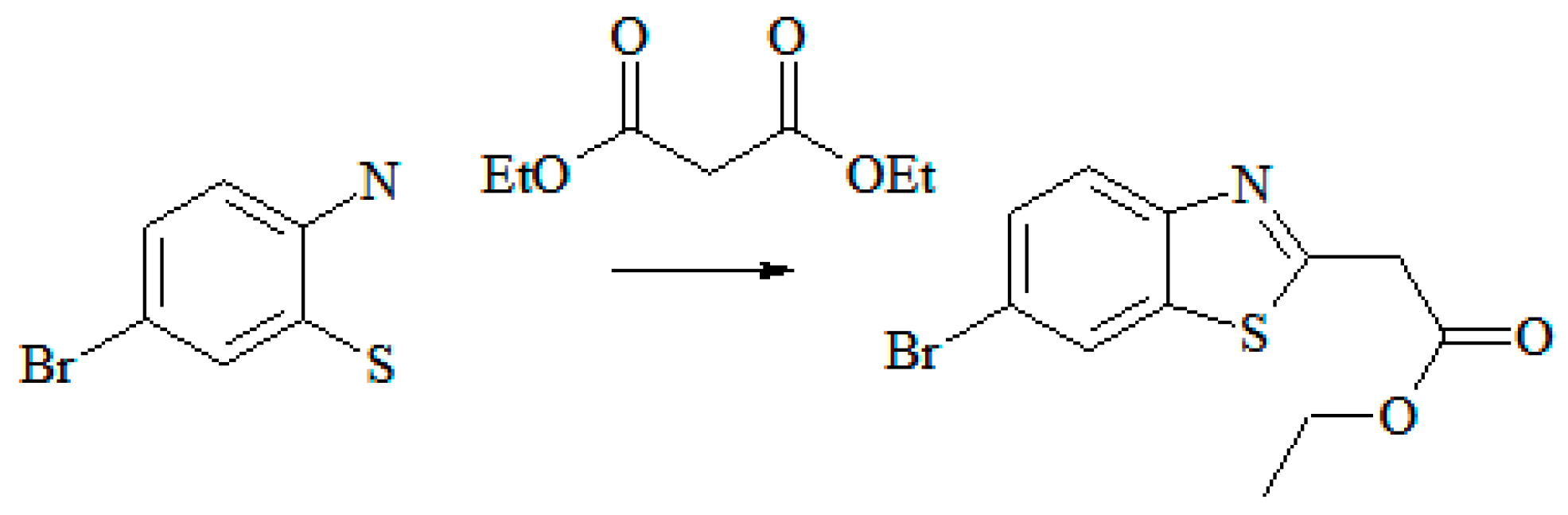
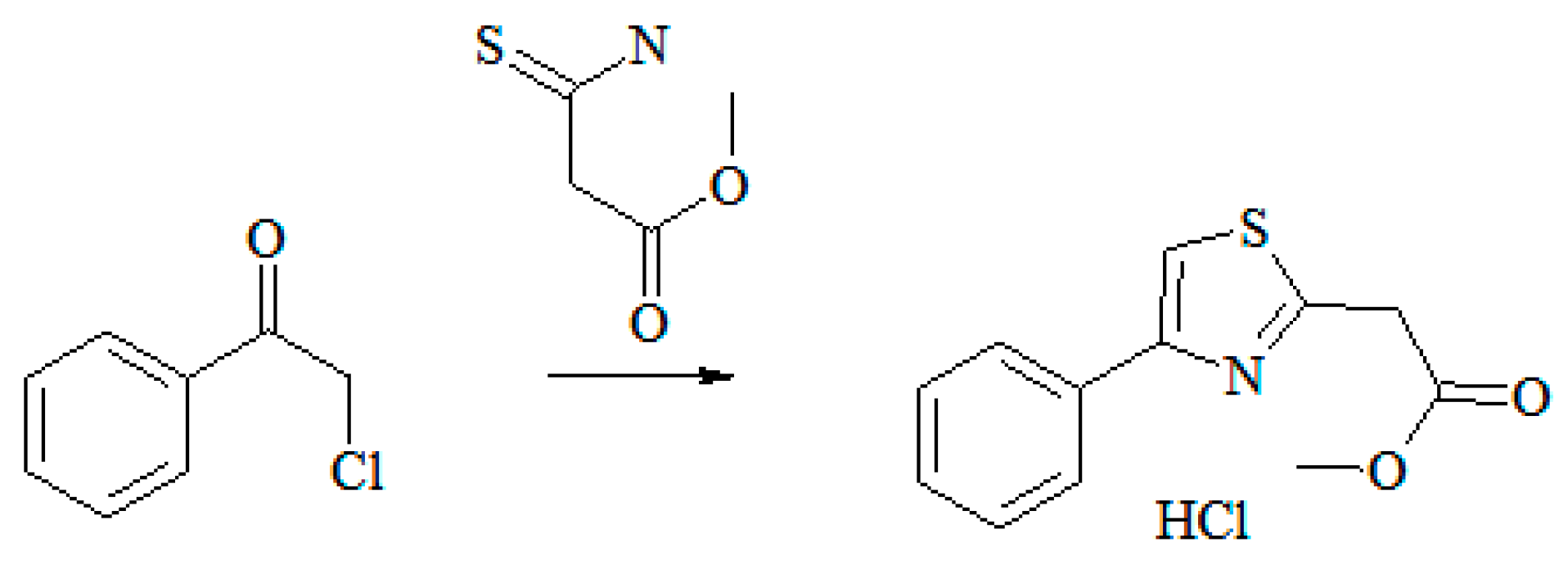
2.1. Compounds Under Investigation
2.2. Growth Test with L. sativum and S. alba for Phytotoxicity of Compounds
2.3. Statistical Analysis of Results
3. Results
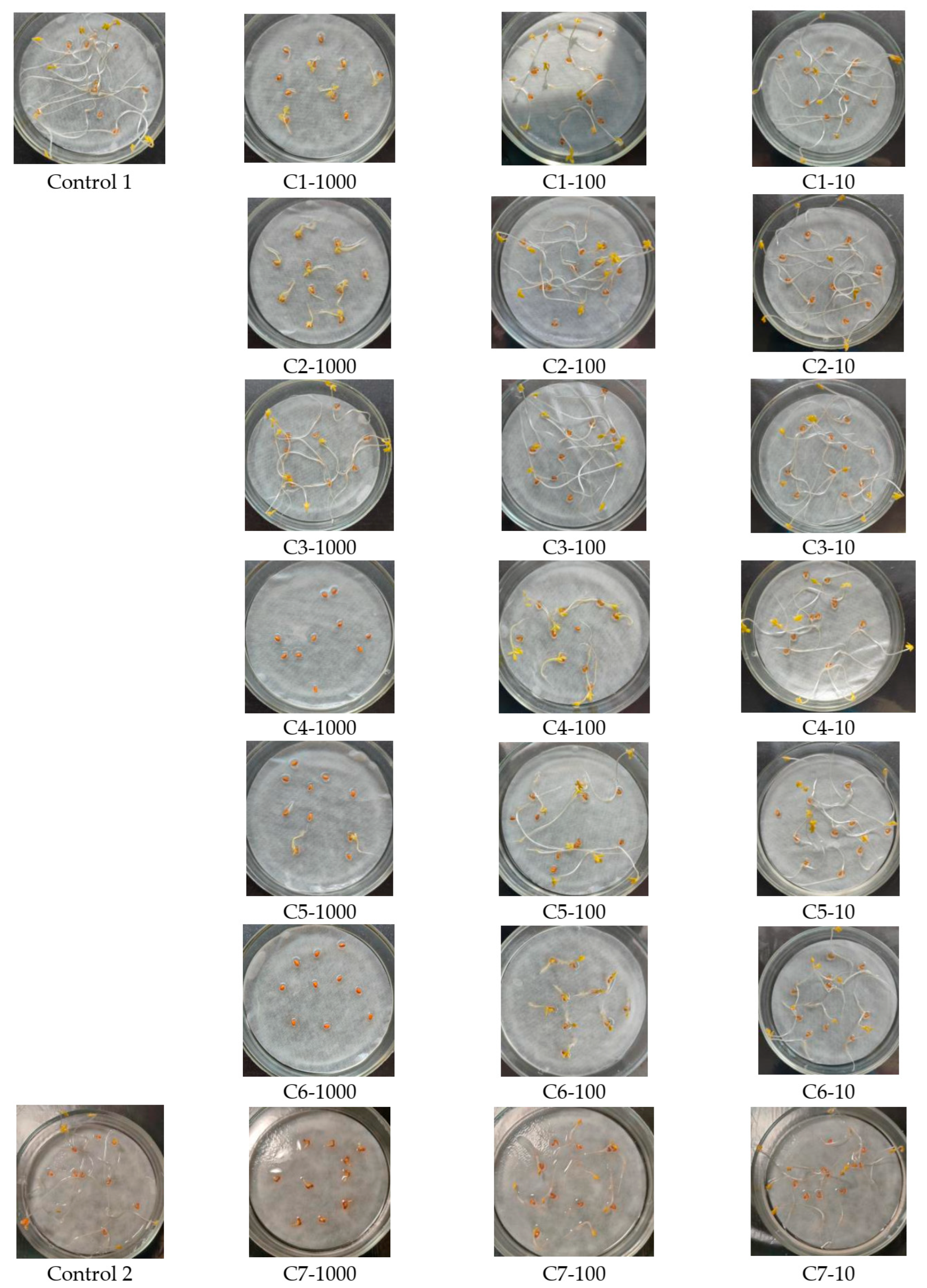
3.1. Growth Indicators of L. sativum Under the Influence of Aqueous Solutions of Thiazolyl Acetic Acid Derivatives
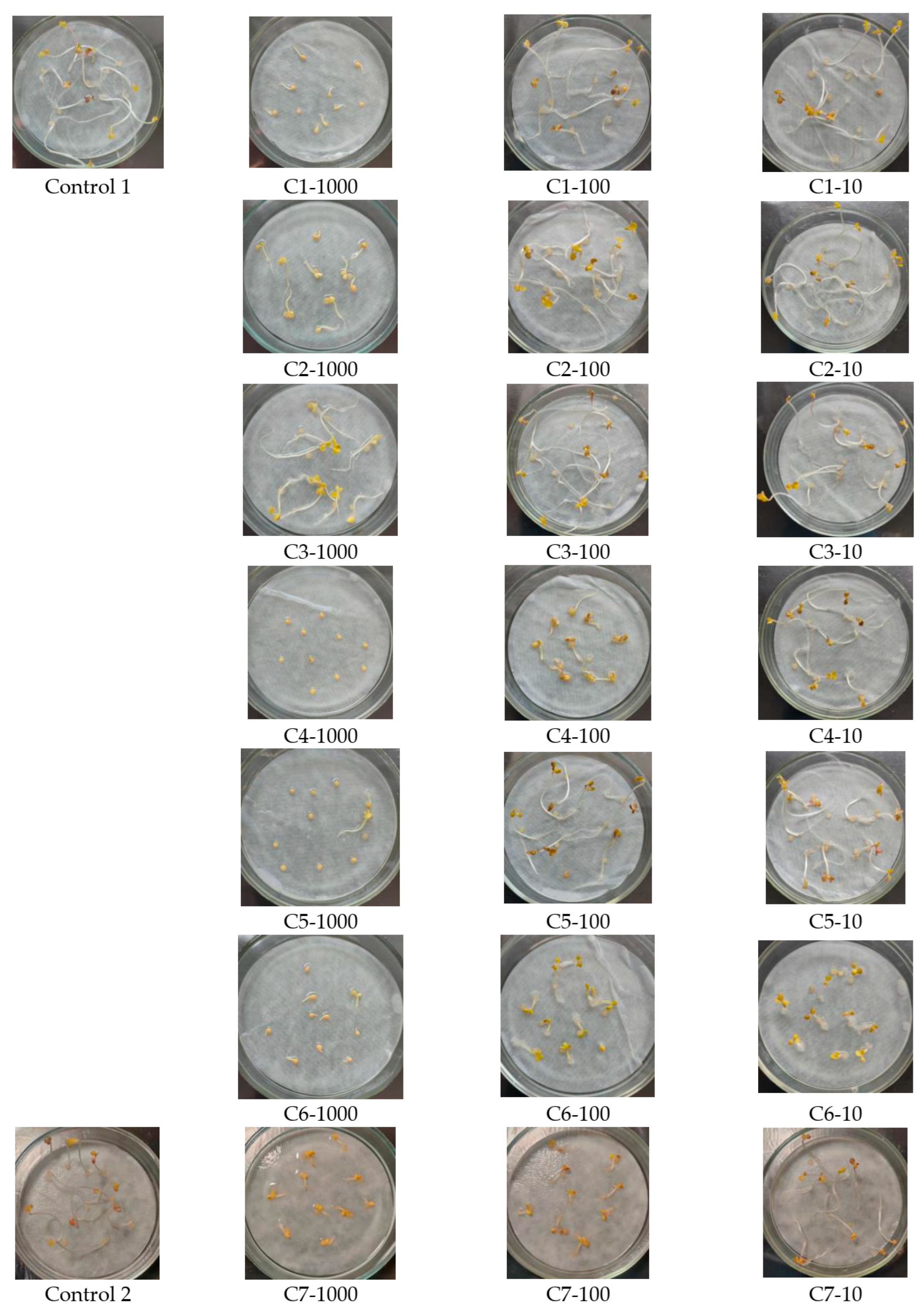
3.2. Growth Indicators of S. alba Under the Influence of Aqueous Solutions of Thiazolyl Acetic Acid Derivatives
4. Discussion
5. Conclusions
Supplementary Materials
Author Contributions
Funding
Data Availability Statement
Conflicts of Interest
Abbreviations
| GE | germination energy |
| GP | germination percentage |
| L. sativum | Lepidium sativum |
| LR | length of the roots |
| LAP | length of the above-ground part |
| NAA | naphthaleneacetic acid |
| PGRs | plant growth regulators |
| RLI | root length index |
| R/S | root/shoot ratio |
| S. alba | Sinapis alba |
| SGI | seed germination index |
| SVI | simplified vitality index |
| V. mungo | Vigna mungo |
References
- Zahid, G.; Iftikhar, S.; Shimira, F.; Ahmad, H.M.; Kaçar, Y.A. An overview and recent progress of plant growth regulators (PGRs) in the mitigation of abiotic stresses in fruits: A review. Sci. Hortic. 2023, 309, 111621. [Google Scholar] [CrossRef]
- Shahid, M.; Shafi, Z.; Ilyas, T.; Singh, U.B.; Pichtel, J. Crosstalk between phytohormones and pesticides: Insights into unravelling the crucial roles of plant growth regulators in improving crop resilience to pesticide stress. Sci. Hortic. 2024, 338, 113663. [Google Scholar] [CrossRef]
- Atanda, S.A.; Shaibu, R.O.; Agunbiade, F.O. Nanoparticles in agriculture: Balancing food security and environmental sustainability. Discov. Agric. 2025, 3, 26. [Google Scholar] [CrossRef]
- Raggi, S.; Doyle, S.M.; Robert, S. Auxin. At the crossroads between chemistry and biology. In The Chemical Biology of Plant Biostimulants; Geelen, D., Xu, L., Eds.; John Wiley and Sons: Hoboken, NJ, USA, 2020; pp. 124–153. [Google Scholar] [CrossRef]
- Rybel, B.D.; Audenaert, D.; Beeckman, T.; Kepinski, S. The past, present, and future of chemical biology in auxin research. ACS Chem. Biol. 2009, 4, 987–998. [Google Scholar] [CrossRef]
- Boutahiri, S.; Benrkia, R.; Tembeni, B.; Idowu, O.E.; Olatunji, O.J. Effect of biostimulants on the chemical profile of food crops under normal and abiotic stress conditions. Curr. Plant Biol. 2024, 40, 100410. [Google Scholar] [CrossRef]
- Dias, J.P.T. Plant growth regulators in horticulture: Practices and perspectives. Biot. Veg. 2019, 19, 3–14. [Google Scholar]
- Cardarelli, M.; El Chami, A.; Rouphael, Y.; Ciriello, M.; Bonini, P.; Erice, G.; Cirino, V.; Basile, B.; Corrado, G.; Choi, S.; et al. Plant biostimulants as natural alternatives to synthetic auxins in strawberry production: Physiological and metabolic insights. Front. Plant. Sci. 2024, 14, 1337926. [Google Scholar] [CrossRef]
- Garraway, J.L. Growth-regulating activity of some thiazole-and thiazoline-acetic acids. Pest. Manag. Sci. 1970, 1, 240–243. [Google Scholar] [CrossRef]
- Antonenko, V.; Mykhailenko, R.; Kiriyenko, S. Synthesis of thiazolyl acetic acids for the study of their phytohormonal activity in the vitalization of certain Pinophyta species. In Proceedings of the I International Scientific and Practical Conference “One World—One Health”, Słupsk, Poland, 4–5 June 2024; Available online: https://tinyurl.com/bdfsvpv2 (accessed on 9 July 2025). (In Ukrainian)
- Sidorovich, M.M.; Kundelchuk, O.P. Determination of biological properties of the new synthetic plant growth regulator—A complex of spirocarbon with boric acid by means of phytotests. Sci. Rep. Natl. Univ. Life Environ. Sci. Ukr. 2021, 17, 64–72. (In Ukrainian) [Google Scholar] [CrossRef]
- Tkachuk, N.; Zelena, L. Toxicity of some household products according to phytotesting with Lepidium sativum L. Biota Hum. Technol. 2023, 2, 99–107. (In Ukrainian) [Google Scholar] [CrossRef]
- Tkachuk, N.; Zelena, L.; Novikov, Y.; Taranenko, V. Phytotoxicity of dimethyl sulfoxide in the growth test. Biota Hum. Technol. 2024, 3, 51–60. [Google Scholar] [CrossRef]
- Janecka, B.; Fijalkowski, K. Using Lepidium as a Test of Phytotoxicity from Lead/Zinc Spoils and Soil Conditioners. In Soil Chemical Pollution, Risk Assessment, Remediation and Security; Simeonov, L., Sargsyan, V., Eds.; NATO Science for Peace and Security Series; Springer: Dordrecht, The Netherlands, 2008. [Google Scholar] [CrossRef]
- Piotrowicz-Cieślak, A.I.; Adomas, B.; Michalczyk, D.J. Different Glyphosate Phytotoxicity of Seeds and Seedlings of Selected Plant Species. Pol. J. Environ. Stud. 2010, 19, 123–129. [Google Scholar]
- Buss, W.; Masek, O. Mobile organic compounds in biochar—A potential source of contamination—Phytotoxic effects on cress seed (Lepidium sativum) germination. J. Environ. Manag. 2014, 137, 111–119. [Google Scholar] [CrossRef]
- Neboa, L.; Varela, R.O.M.; Molinillo, J.M.G.; Severino, V.G.P.; Sarria, A.L.F.; Cazal, C.M.C.; Fernandes, M.F.G.; Fernandes, J.B.; Macías, F.A. Phytotoxicity of Triterpenes and Limonoids from the Rutaceae and Meliaceae. 5α,6β,8α,12α-Tetrahydro-28-norisotoonafolin—A Potent Phytotoxin from Toona ciliata. Nat. Prod. Commun. 2015, 10, 17–20. [Google Scholar] [CrossRef]
- Khaled, A.; Sleiman, M.; Goupil, P.; Richard, C. Phytotoxic Effect of Macerates and Mulches from Cupressus leylandii Leaves on Clover and Cress: Role of Chemical Composition. Forests 2020, 11, 1177. [Google Scholar] [CrossRef]
- Bożym, M.; Król, A.; Mizerna, K. Leachate and contact test with Lepidium sativum L. to assess the phytotoxicity of waste. Int. J. Environ. Sci. Technol. 2021, 18, 1975–1990. [Google Scholar] [CrossRef]
- Abd-ElGawad, A.M.; El Gendy, A.E.-N.G.; Assaeed, A.M.; Al-Rowaily, S.L.; Alharthi, A.S.; Mohamed, T.A.; Nassar, M.I.; Dewir, Y.H.; Elshamy, A.I. Phytotoxic Effects of Plant Essential Oils: A Systematic Review and Structure-Activity Relationship Based on Chemometric Analyses. Plants 2021, 10, 36. [Google Scholar] [CrossRef]
- Ayoub, N.; Nawal, L.; Soumaya, R.; Nadia, L.; Amrani Souad, E.L. Evaluation of the phytotoxicity of a pesticide (TRACTOR 10E) based on Alpha-cypermethrin in two plant species: Lentils (Lens culinaris) and watercress (Lepidium sativum). Pollution 2023, 9, 1386–1395. [Google Scholar] [CrossRef]
- El Finou, H.; Salhi, N.; Zaid, A.; El Rhaffari, L. Phytotoxicity, antioxidant activity and chemical profile of aqueous extracts from Moroccan caper (Capparis spinosa L.). Sci. Afr. 2024, 24, e02176. [Google Scholar] [CrossRef]
- Koc-Jurczyk, J.; Jurczyk, Ł.; Podolak, A.; Pasek, A.; Dyka, M. Phytotoxicity of products of selected technological variants of chemical oxidation of leachates from municipal waste landfills. Ecohydrol. Hydrobiol. 2025, 25, 100661. [Google Scholar] [CrossRef]
- Banaszkiewicz, T.; Wysocki, K. Application of white mustard (Sinapis alba) biotest in the assessment of environmental contamination by glyphosate. Pol. J. Environ. Stud. 2012, 21, 1161–1166. [Google Scholar]
- Gvozdenac, S.; Inđić, D.; Vuković, S. Phytotoxicity of chlorpyrifos to white mustard (Sinapis alba L.) and maize (Zea mays L.): Potential indicators of insecticide presence in water. Pestic. Fitomed. 2013, 28, 265–271. [Google Scholar] [CrossRef]
- Molnárová, M.; Fargašová, A. Se(IV), Se(VI), Cu and Zn phytotoxicity in correlation to their accumulation in Sinapis alba L. seedlings. Plant Root 2016, 10, 11–20. [Google Scholar] [CrossRef][Green Version]
- Palm, E.R.; Nissim, W.G.; Adamcová, D.; Podlasek, A.; Jakimiuk, A.; Vaverková, M.D. Sinapis alba L. and Triticum aestivum L. as biotest model species for evaluating municipal solid waste leachate toxicity. J. Environ. Manag. 2022, 302, 114012. [Google Scholar] [CrossRef]
- Novak, O. Phytotoxicity Assessment of Wastewater from Industrial Pulp Production. Eng. Proc. 2023, 57, 30. [Google Scholar] [CrossRef]
- Gruľová, D.; Baranová, B.; Eliašová, A.; Brun, C.; De Martino, L.; Caputo, L.; Poračová, J.; Nastišin, Ľ.; Fejér, J.; Elshafie, H.S.; et al. Salvia pratensis L. extracts as potential eco-friendly herbicides for sustainable agricultural applications. Sci. Rep. 2025, 14, 659. [Google Scholar] [CrossRef] [PubMed]
- Pesticide Properties Data Base (PPDB). Benazolin (Ref: RD 7693). Available online: https://sitem.herts.ac.uk/aeru/ppdb/en/Reports/60.htm (accessed on 2 July 2025).
- Daina, A.; Michielin, O.; Zoete, V. SwissADME: A free web tool to evaluate pharmacokinetics, drug-likeness and medicinal chemistry friendliness of small molecules. Sci. Rep. 2017, 7, 42717. [Google Scholar] [CrossRef]
- Tully, D.C.; Chatterjee, A.K.; Petrassi, H.M.J.; Bursulaya, B.; Spraggon, G. Compounds and Compositions as Channel Activating Protease Inhibitors. U.S. Patent Application US74900107A, 15 May 2007. [Google Scholar]
- Kim, S.-H.; Johnson, J.A.; Jiang, J.; Parkhurst, B.; Phillips, M.; Pi, Z.; Qiao, J.X.; Tora, G.; Chen, A.Y.; Liu, E.; et al. Identification of substituted benzothiazole sulfones as potent and selective inhibitors of endothelial lipase. Bioorg. Med. Chem. Lett. 2019, 29, 1918–1921. [Google Scholar] [CrossRef] [PubMed]
- Aune, J.P.; Dou, H.J.-M.; Crousier, J. Alkyl, Aryl, Aralkyl, and Related Thiazole Derivatives. In Chemistry of Heterocyclic Compounds: Thiazole and Its Derivatives, Part One; Metzger, J.V., Ed.; John Wiley and Sons: Hoboken, NJ, USA, 1979; pp. 337–518. [Google Scholar] [CrossRef]
- Trapani, G.; Franco, M.; Latrofa, A.; Genchi, G.; Liso, G. Synthesis and benzodiazepine receptor binding of some 4H-pyrimido[2,1-b]benzothiazol-4-ones. Eur. J. Med. Chem. 1992, 27, 39–44. [Google Scholar] [CrossRef]
- Wu, Q.; Shi, B.; Lai, Y.; Zhang, Y.; Wu, Y.; Li, Z.; Li, Y.; Zhu, X.; Pu, Z.; Liu, Z. Genome-Wide Association Analysis of Seed Vigor-Related Traits in Wheat. Agronomy 2024, 14, 410. [Google Scholar] [CrossRef]
- Tkachuk, N.; Zelena, L.; Fedun, O. Phytotoxicity of the aqueous solutions of some synthetic surfactant-containing dishwashing liquids with and without phosphates. Environ. Eng. Manag. J. 2022, 21, 965–970. [Google Scholar] [CrossRef]
- Bagur-González, M.G.; Estepa-Molina, C.; Martín-Peinado, F.; Morales-Ruano, S. Toxicity assessment using Lactuca sativa L. bioassay of the metal(loid)s As, Cu, Mn, Pb and Zn in soluble-in-water saturated soil extracts from an abandoned mining site. J. Soils Sediments 2011, 11, 281–289. [Google Scholar] [CrossRef]
- Hammer, Ø.; Harper, D.A.T.; Ryan, P.D. PAST: Paleontological Statistics Software Package for Education and Data Analysis. Palaeontol. Electron. 2001, 4, 9. Available online: http://palaeo-electronica.org/2001_1/past/issue1_01.htm (accessed on 3 October 2025).
- Lipinski, C.; Lombardo, F.; Dominy, B.; Feeney, P. Experimental and computational approaches to estimate solubility and permeability in drug discovery and development settings. Adv. Drug Deliv. Rev. 2001, 46, 3–26. [Google Scholar] [CrossRef]
- Quareshy, M.; Prusinska, J.; Li, J.; Napier, R. A cheminformatics review of auxins as herbicides. J. Exp. Bot. 2018, 69, 265–275. [Google Scholar] [CrossRef]
- Shirai, A.; Fumoto, Y.; Shouno, T.; Maseda, H.; Omasa, T. Synthesis and biological activity of thiazolyl-acetic acid derivatives as possible antimicrobial agents. Biocontrol. Sci. 2013, 18, 59–73. [Google Scholar] [CrossRef] [PubMed]
- Jakóbiec, T.; Stankiewicz, J.; Dobek, R.; Zawisza, T. Synthesis of derivatives of 2-amino-4-p-chlorophenylthiazole-5-acetic acid. Arch. Immunol. Ther. Exp. 1978, 26, 935–941. Available online: https://eurekamag.com/research/041/521/041521960.php (accessed on 24 August 2025).
- Stankiewicz, J.; Jakóbiec, T.; Zawisza, T. Studies on derivatives of 2-amino-4-p-chlorophenylthiazole-5-acetic acid. IV. Addition reactions of thioglycolic acid to 2-N-aralkylidene derivatives of 2-amino-4-p-chlorophenylthiazole-5-acetic acid. Arch. Immunol. Ther. Exp. 1981, 29, 827–833. Available online: https://eurekamag.com/research/044/427/044427457.php (accessed on 24 August 2025).
- Sharma, P.K.; Sawhney, S. Potent antiinflammatory 3-thiazole-4(5)-acetic acids of 1,2-benzisothiazole. Bioorganic Med. Chem. Lett. 1997, 7, 2427–2430. [Google Scholar] [CrossRef]
- Chornous, V.O.; Palamar, A.O.; Grozav, A.M.; Yaremiy, I.M.; Vovk, M.V. Synthesis and the Biological Action of Thiosemicarbazones and (1,3-Thiazol-2-yl)hyd-Razones of [(1-Aryl-5-Formylimidazol-4-yl)thio]-Acetic Acids. J. Org. Pharm. Chem. 2013, 11, 55–60. (In Ukrainian) [Google Scholar] [CrossRef]
- Reddy, P.R.; Seenaiah, D.; Padmaja, A.; Padmavathi, V.; Krishna, N.S. Synthesis, antioxidant, and cytotoxic activities of bis(oxazolyl/thiazolyl/imidazolyl)amidomethanesulfonyl Acetamides. Med. Chem. Res. 2015, 24, 86–98. [Google Scholar] [CrossRef]
- Miyake, Y.; Sakai, J.; Shibata, M.; Yonekura, N.; Miura, I.; Kumakura, K.; Nagayama, K. Fungicidial Activity of Benthiavalicarb-isopropyl against Phytophthora infestans and Its Controlling Activity against Late Blight Diseases. J. Pestic. Sci. 2005, 30, 390–396. [Google Scholar] [CrossRef][Green Version]
- Zou, Y.; Zhang, Y.; Liu, X.; Song, H.; Cai, Q.; Wang, S.; Yi, C.; Chen, J. Research Progress of Benzothiazole and Benzoxazole Derivatives in the Discovery of Agricultural Chemicals. Int. J. Mol. Sci. 2023, 24, 10807. [Google Scholar] [CrossRef]
- Pesticide Properties Data Base (PPDB). Benthiazole. Available online: https://sitem.herts.ac.uk/aeru/ppdb/en/Reports/1573.htm (accessed on 22 August 2025).
- Ma, G.; Zhang, Y.; Li, X. Dufulin enhances salt resistance of rice. Pestic. Biochem. Physiol. 2022, 188, 105252. [Google Scholar] [CrossRef]
- Suma, N.; Aruldhas, D.; Hubert, J.I.; Balachandran, S.; Ronaldo, A.A.; Sasi, A.; George, J. Vibrational spectra, hydrogen bonding analysis and herbicidal activity study of mefenacet: A DFT approach. J. Mol. Struct. 2020, 1201, 127203. [Google Scholar] [CrossRef]
- Muniyappan, G.; Gurudevan, T.; Thangaraj, P.; Balamurali, A.S.; Iyadurai, A.P.; Suppaiah, R.; Subbiah, K.A.; Shanmugam, H. Benzothiazole-An Antifungal Compound Derived from Medicinal Mushroom Ganoderma lucidum against Mango Anthracnose Pathogen Colletotrichum gloeosporioides (Penz and (Sacc.)). Molecules 2023, 28, 2476. [Google Scholar] [CrossRef]
- Tian, J.; Liu, Y.; Xin, H.; Hu, C.; Li, J.; Wang, Y.; Luo, X.; Qiu, Y.; Xue, W. Discovery of novel flavonoid derivatives containing benzothiazole as potential antifungal agents. Pest. Manag. Sci. 2025, 81, 2288–2299. [Google Scholar] [CrossRef]
- BenchChem. 2-(6-Bromo-2-oxobenzo[d]thiazol-3(2H)-yl)acetic acid (Cat. No. B2700597, CAS 101774-29-2). Benchchem: American Chemical Supplier. Available online: https://www.benchchem.com/product/b2700597 (accessed on 27 December 2025).
- Min, L.; Liang, W.; Bajsa-Hirschel, J.; Ye, P.; Wang, Q.; Sun, X.; Cantrell, C.L.; Han, L.; Sun, N.; Duke, S.O.; et al. Synthesis, Herbicidal Activity, Mode of Action, and In Silico Analysis of Novel Pyrido[2,3-d]pyrimidine Compounds. Molecules 2023, 28, 7363. [Google Scholar] [CrossRef]
- Sandín-España, P.; Sevilla-Morán, B.; Villarroya-Ferruz, M.; Alonso-Prados, J.L.; Santín-Montanyá, M.I. Comparative Phytotoxicity Assays of the Herbicide Alloxydim and Its Main Identified Photoproduct in Cereal and Broadleaves Crops. Weed Sci. 2015, 63, 377–387. [Google Scholar] [CrossRef]
- Shahid, M.; Manoharadas, S.; Chakdar, H.; Alrefaei, A.F.; Albeshr, M.F.; Almutairi, M.H. Biological toxicity assessment of carbamate pesticides using bacterial and plant bioassays: An in-vitro approach. Chemosphere 2021, 278, 130372. [Google Scholar] [CrossRef] [PubMed]
- Duke, S.O.; Cedergreen, N.; Velini, E.D.; Belz, R.G. Hormesis: Is it an important factor in herbicide use and allelopathy? Outlooks Pest. Manag. 2006, 17, 29–33. [Google Scholar] [CrossRef]
- Agathokleous, E.; Belz, R.G.; Kitao, M.; Koike, T.; Calabrese, E.J. Does the root to shoot ratio show a hormetic response to stress? An ecological and environmental perspective. J. For. Res. 2019, 30, 1569–1580. [Google Scholar] [CrossRef]
- Durigan, G.; Melo, A.C.G.; Brewer, J.S. The root to shoot ratio of trees from open- and closed-canopy cerrado in south-eastern Brazil. Plant Ecol. Divers. 2012, 5, 333–343. [Google Scholar] [CrossRef]
- Luo, W.; Jiang, Y.; Lü, X.; Wang, X.; Li, M.-H.; Bai, E.; Han, X.; Xu, Z. Patterns of plant biomass allocation in temperate grasslands across a 2500-km transect in Northern China. PLoS ONE 2013, 8, e71749. [Google Scholar] [CrossRef] [PubMed]
- Perrone, P.; D’Angelo, S. Hormesis and health: Molecular mechanisms and the key role of polyphenols. Food Chem. Adv. 2025, 7, 101030. [Google Scholar] [CrossRef]
- Calabrese, E.J.; Baldwin, L.A.; Holland, C.D. Hormesis: A highly generalizable and reproducible phenomenon with important implications for risk assessment. Risk Anal. 1999, 19, 261–281. [Google Scholar] [CrossRef]
- Jeffries, B.; Wang, Z.; Graton, J.; Holland, S.D.; Brind, T.; Greenwood, R.D.R.; Le Questel, J.Y.; Scott, J.S.; Chiarparin, E.; Linclau, B. Reducing the Lipophilicity of Perfluoroalkyl Groups by CF2-F/CF2-Me or CF3/CH3 Exchange. J. Med. Chem. 2018, 61, 10602–10618. [Google Scholar] [CrossRef] [PubMed]
- Cleland, R.E. Auxin and cell elongation. In Plant Hormones and Their Role in Plant Growth and Development; Davies, P.J., Ed.; Springer: Dordrecht, The Netherlands, 1987; pp. 132–148. [Google Scholar] [CrossRef]
- Rayle, D.L.; Cleland, R.E. The acid growth theory of auxin-induced cell elongation is alive and well. Plant Physiol. 1992, 99, 1271–1274. [Google Scholar] [CrossRef]
- Skoog, F. Experiments on bud inhibition with indole-3-acetic acid. Am. J. Bot. 1939, 26, 702–707. [Google Scholar] [CrossRef]
- Park, J.M.; Radhakrishnan, R.; Kang, S.M.; Lee, I.J. IAA Producing Enterobacter sp. I-3 as a Potent Bio-herbicide Candidate for Weed Control: A Special Reference with Lettuce Growth Inhibition. Indian J. Microbiol. 2015, 55, 207–212. [Google Scholar] [CrossRef]
- Sindhu, S.S.; Sehrawat, A. Rhizosphere microorganisms: Application of plant beneficial microbes in biological control of weeds. In Microorganisms for Green Revolution. Microorganisms for Sustainability; Panpatte, D., Jhala, Y., Vyas, R., Shelat, H., Eds.; Springer: Singapore, 2017; Volume 6, pp. 391–430. [Google Scholar] [CrossRef]
- Sindhu, S.S.; Khandelwal, A.; Phour, M.; Sehrawat, A. Bioherbicidal potential of rhizosphere microorganisms for ecofriendly weed management. In Role of Rhizospheric Microbes in Soil; Meena, V., Ed.; Springer: Singapore, 2018; pp. 331–376. [Google Scholar] [CrossRef]
- Shimada, A.; Takeuchi, S.; Nakajima, A.; Tanaka, S.; Kawano, T.; Kimura, Y. Phytotoxicity of Indole-3-acetic Acid Produced by the Fungus, Pythium aphanidermatum. Biosci. Biotechnol. Biochem. 2000, 64, 187–189. [Google Scholar] [CrossRef] [PubMed][Green Version]
- Bunsangiam, S.; Thongpae, N.; Limtong, S.; Srisuk, N. Large scale production of indole-3-acetic acid and evaluation of the inhibitory effect of indole-3-acetic acid on weed growth. Sci. Rep. 2021, 11, 13094. [Google Scholar] [CrossRef]
- EU Reference Laboratory for Pesticides Requiring Single Residue Methods. Analysis of Acidic Pesticides Using QuEChERS (EN15662) and Acidified QuEChERS Method. Version 1 (Last Update: 20.05.2015). Available online: https://www.eurl-pesticides.eu/userfiles/file/eurlsrm/eurlsrm_observations_acidicpesticides.pdf (accessed on 3 July 2025).
- European Food Safety Authority. Conclusion on the peer review of the pesticide risk assessment of the active substance 1-naphthylacetic acid. EFSA J. 2011, 9, 1–54. [Google Scholar] [CrossRef]
- KEGG. Pesticides. Available online: http://www.genome.jp/kegg-bin/get_htext?br08007.keg (accessed on 3 July 2025).
- Safety Data Sheet Pomaxa. 2022, pp. 1–9. Available online: https://philagro.co.za/wp-content/uploads/2023/09/SA_PoMaxa_SDS_V1.pdf (accessed on 3 July 2025).
- Mohammed, A.A.; Arkwazee, H.A.; Mahmood, A.K.; Mustafa, H.A.; Halshoy, H.S.; Sulaiman, S.M.; Ismael, J.H.; Tahir, N.A.R. Influence of phytohormones on seed germination of Solanum linnaeanum. An. Biol. 2023, 45, 1–8. [Google Scholar] [CrossRef]
- Holt, J.S.; Chism, W.J. Herbicidal Activity of NAA (1-Naphthaleneacetic Acid) on Creeping Woodsorrel (Oxalis corniculata) in Ornamentals. Weed Sci. 1988, 36, 227–233. [Google Scholar] [CrossRef]
- Lozano, A.; Pérez-Parada, A.; Heinzen, H.; Fernández-Alba, A.R. Inclusion of 1-naphthylacetic acid and 2-(1-naphthyl)acetamide into three typical multiresidue methods for LC/MS/MS analysis of tomatoes and zucchini. J. AOAC Int. 2012, 95, 1520–1527. [Google Scholar] [CrossRef] [PubMed]
- United States Environmental Protection Agency. Office of Prevention, Pesticides and Toxic Substances (H-7508W) EPA-738-F-92-001 August 1992. R.E.D. FACTS. Indole-3-Butyric Acid. 4p. Available online: https://www3.epa.gov/pesticides/chem_search/reg_actions/reregistration/fs_PC-046701_1-Aug-92.pdf (accessed on 3 July 2025).
- Asri, N. Effects of Indole-3-butyric Acid on the Germination and Growth of Glycine max (L.) Merr. Doctoral Dissertation, Youngstown State University, Youngstown, OH, USA, 1995; 152p. Available online: https://books.google.com.ua/books/about/Effects_of_Indole_3_butyric_Acid_on_the.html?id=NBdpOgAACAAJ&redir_esc=y (accessed on 2 July 2025).
- Mayes, A.; Rea, B. Herbicidal Mixtures Comprising Benazolin. European Patent Office EP0078623A1, 11 May 1983. Available online: https://patents.google.com/patent/EP0078623A1/en (accessed on 25 December 2025).
- European Commission. EU Pesticides Database: Active Substance Details—Benazolin (Active Substance ID 442). Directorate-General for Health and Food Safety, European Union. Available online: https://ec.europa.eu/food/plant/pesticides/eu-pesticides-database/start/screen/active-substances/details/442 (accessed on 25 December 2025).
- Walker, R.H.; Jolley, E.R.; McGuire, J.A.; Murray, D.S. Benazolin and admixtures for common cocklebur (Xanthium pensylvanicum) and prickly sida (Sida spinosa) control in soybeans (Glycine max). Weed Sci. 1982, 30, 50–53. [Google Scholar] [CrossRef]
- Schafer, D.E.; Stobbe, E.H. Selectivity of Benazolin in Wild Mustard and Rape Species. Weed Sci. 1973, 21, 45–47. [Google Scholar] [CrossRef]
- Whatley, L.L.M. Efficacy and Metabolism of Benazolin and Its Interactions with Acifluorfen, Bentazon, 2,4-Db, and Mcpa. Ph.D. Dissertation, Department of Agronomy, University of Illinois at Urbana-Champaign, Urbana-Champaign, IL, USA, 1982. Available online: https://www.ideals.illinois.edu/items/71744 (accessed on 25 December 2025).



| Symbol | Chemical Structure | Name | Log P * |
|---|---|---|---|
| 1 |  | 2-[2-(3,3,3-trifluoropropyl)-1,3-thiazol-4-yl]acetic acid | 2.37 |
| 2 |  | 2-[2-[1-(2-tert-butoxycarbonyl]piperidin-4-yl)-1,3-thiazol-4-yl]acetic acid | 2.21 |
| 3 |  | 2-[2-(N-tert-butoxycarbonyl)-3-aminoethyl-1,3-thiazol-4-yl]acetic acid | 1.62 |
| 4 |  | 2-(6-bromo-1,3-benzothiazol-2-yl)acetic acid | 2.48 |
| 5 |  | 5-phenylthiazol-2-yl acetic acid | 2.19 |
| 6 |  | Composition with 3-indoleacetic acid (A), 3-indolylbutyric acid (B), 1-naphthylacetic acid (C) | 1.83(A) 1.51(B) 2.33(C) |
| 7 |  | (4-chloro-2-oxo-1,3-benzothiazol-3(2H)-yl)acetic acid (Benazolin) | 1.76 |
| Experiment Option | GE, % Relative to Control | GP, % Relative to Control | LR, % Relative to Control | LAP, % Relative to Control | SVI, % Relative to Control |
|---|---|---|---|---|---|
| C1-1000 | 80 ± 15 | 93 ± 7 | 2.0 ± 0.9 * | 12.3 ± 1.4 * | 5.2 ± 0.5 * |
| C2-1000 | 100 ± 0 | 100 ± 0 | 7.7 ± 0.7 * | 19.4 ± 0.8 * | 11.8 ± 0.6 * |
| C3-1000 | 100 ± 0 | 100 ± 0 | 45.2 ± 1.7 * | 92.1 ± 2.4 * | 61.8 ± 1.8 * |
| C4-1000 | 0 * | 0 * | 0 * | 0 * | 0 * |
| C5-1000 | 27 ± 3 * | 37 ± 7 * | 5.0 ± 1.0 * | 9.9 ± 2.0 * | 2.5 ± 0.5 * |
| C6-1000 | 0 * | 0 * | 0 * | 0 * | 0 * |
| C7-1000 | 97 ± 3 | 97 ± 3 | 2.6 ± 0.1 * | 7.3 ± 0.3 * | 3.9 ± 0.2 * |
| C1-100 | 100 ± 0 | 100 ± 0 | 14.3 ± 0.6 * | 60.1 ± 1.8 * | 30.2 ± 0.8 * |
| C2-100 | 97 ± 3 | 97 ± 3 | 35.6 ± 2.1 * | 84.5 ± 3.7 * | 50.9 ± 2.3 * |
| C3-100 | 97 ± 3 | 97 ± 3 | 92.7 ± 5.3 | 98.0 ± 5.5 | 92.7 ± 4.9 |
| C4-100 | 93 ± 3 | 93 ± 3 | 13.5 ± 1.4 * | 31.8 ± 1.8 * | 18.5 ± 1.3 * |
| C5-100 | 90 ± 6 | 93 ± 7 | 27.8 ± 4.8 * | 65.2 ± 4.1 * | 38.1 ± 3.8 * |
| C6-100 | 90 ± 10 | 90 ± 10 | 6.9 ± 0.7 * | 11.6 ± 1.0 * | 7.8 ± 0.7 * |
| C7-100 | 97 ± 3 | 97 ± 3 | 14.9 ± 0.9 * | 20.8 ± 1.0 * | 16.2 ± 0.7 * |
| C1-10 | 100 ± 0 | 100 ± 0 | 77.3 ± 4.0 * | 97.1 ± 3.8 | 83.1 ± 3.6 * |
| C2-10 | 100 ± 0 | 100 ± 0 | 61.4 ± 3.4 * | 101.9 ± 3.6 | 73.3 ± 3.1 * |
| C3-10 | 100 ± 0 | 100 ± 0 | 107.5 ± 3.4 * | 104.6 ± 2.7 | 105.7 ± 3.1 * |
| C4-10 | 100 ± 0 | 100 ± 0 | 85.4 ± 3.6 * | 76.9 ± 1.9 * | 83.0 ± 2.8 * |
| C5-10 | 93 ± 3 | 93 ± 3 | 97.8 ± 3.1 | 97.1 ± 2.7 | 90.8 ± 2.2 |
| C6-10 | 97 ± 3 | 97 ± 3 | 25.4 ± 2.0 * | 51.6 ± 1.9 * | 31.9 ± 1.6 * |
| C7-10 | 100 ± 0 | 100 ± 0 | 51.9 ± 3.4 * | 76.4 ± 4.4 * | 59.7 ± 3.1 * |
| Compound | Compound Concentration, μg/mL | Root/Shoot Ratio |
|---|---|---|
| Control 1 | 0 | 2.1 ± 0.06 |
| 1 | 1000 | 0.3 ± 0.04 * |
| 100 | 0.5 ± 0.02 * | |
| 10 | 1.9 ± 0.1 | |
| 2 | 1000 | 0.7 ± 0.1 * |
| 100 | 0.8 ± 0.05 * | |
| 10 | 1.5 ± 0.1 * | |
| 3 | 1000 | 0.9 ± 0.03 * |
| 100 | 1.9 ± 0.1 | |
| 10 | 2.5 ± 0.07 * | |
| 4 | 1000 | 0 * |
| 100 | 0.8 ± 0.06 * | |
| 10 | 2.7 ± 0.1 * | |
| 5 | 1000 | 1.0 ± 0.3 * |
| 100 | 0.8 ± 0.1 * | |
| 10 | 2.5 ± 0.1 * | |
| 6 | 1000 | 0 * |
| 100 | 1.2 ± 0.1 * | |
| 10 | 1.2 ± 0.1 * | |
| Control 2 | 0 | 2.2 ± 0.2 |
| 7 | 1000 | 0.8 ± 0.06 ** |
| 100 | 1.6 ± 0.1 ** | |
| 10 | 1.5 ± 0.1 ** |
| Research Option | SGI | RLI | Interpretation of the Results of Phytotest | Comments |
|---|---|---|---|---|
| Control | 0.00 | 0.00 | No toxicity | No inhibition of growth |
| C1-1000 | −0.07 | −0.98 | Extreme toxicity | Inhibition of growth > 90% |
| C2-1000 | 0.00 | −0.92 | Extreme toxicity | Inhibition of growth > 90% |
| C3-1000 | 0.00 | −0.55 | High toxicity | Inhibition of growth > 50% |
| C4-1000 | −1.00 | −1.00 | Lethal effect, extreme toxicity | No root growth observed |
| C5-1000 | −0.63 | −0.95 | Extreme toxicity | Inhibition of growth > 90% |
| C6-1000 | −1.00 | −1.00 | Lethal effect, extreme toxicity | No root growth observed |
| C7-1000 | −0.03 | −0.98 | Extreme toxicity | Inhibition of growth > 90% |
| C1-100 | 0.00 | −0.86 | Extreme toxicity | Inhibition of growth > 80% |
| C2-100 | −0.03 | −0.64 | High toxicity | Inhibition of growth > 60% |
| C3-100 | −0.03 | −0.07 | Slight toxicity | A slight inhibition of growth |
| C4-100 | −0.07 | −0.87 | Extreme toxicity | Inhibition of growth > 80% |
| C5-100 | −0.07 | −0.72 | High toxicity | Inhibition of growth > 70% |
| C6-100 | −0.1 | −0.93 | Extreme toxicity | Inhibition of growth > 90% |
| C7-100 | −0.03 | −0.85 | Extreme toxicity | Inhibition of growth > 80% |
| C1-10 | 0.00 | −0.23 | Slight toxicity | A slight inhibition of growth |
| C2-10 | 0.00 | −0.39 | Moderate toxicity | Inhibition of growth > 30% |
| C3-10 | 0.00 | 0.08 | No toxicity | No inhibition of growth |
| C4-10 | 0.00 | −0.15 | Slight toxicity | A slight inhibition of growth |
| C5-10 | −0.07 | −0.02 | Slight toxicity | A slight inhibition of growth |
| C6-10 | −0.03 | −0.75 | High toxicity | Inhibition of growth > 70% |
| C7-10 | 0.00 | −0.48 | Moderate toxicity | Inhibition of growth > 40% |
| Experiment Option | GE, % Relative to Control | GP, % Relative to Control | LR, % Relative to Control | LAP, % Relative to Control | SVI, % Relative to Control |
|---|---|---|---|---|---|
| C1-1000 | 80 ± 10 | 83 ± 9 | 2.5 ± 0.2 * | 10.4 ± 1.0 * | 4.0 ± 0.3 * |
| C2-1000 | 93 ± 3 | 93 ± 3 | 5.5 ± 0.5 * | 20.5 ± 1.7 * | 9.1 ± 0.7 * |
| C3-1000 | 100 ± 0 | 100 ± 0 | 19.3 ± 1.8 * | 55.3 ± 3.7 * | 29.5 ± 2.0 * |
| C4-1000 | 0 * | 0 * | 0 * | 0 * | 0 * |
| C5-1000 | 17 ± 3 * | 17 ± 3 * | 4.9 ± 1.0 * | 20.3 ± 4.4 * | 1.6 ± 0.3 * |
| C6-1000 | 80 ± 10 | 87 ± 13 | 1.6 ± 0.2 * | 5.2 ± 0.5 * | 2.3 ± 0.2 * |
| C7-1000 | 103 ± 0 | 103 ± 0 | 3.3 ± 0.1 * | 9.0 ± 0.5 * | 5.2 ± 0.2 * |
| C1-100 | 97 ± 3 | 97 ± 3 | 18.7 ± 1.6 * | 92.7 ± 4.9 | 38.5 ± 0.0 * |
| C2-100 | 97 ± 3 | 97 ± 3 | 27.0 ± 2.5 * | 81.5 ± 3.4 * | 41.2 ± 2.4 * |
| C3-100 | 100 ± 0 | 100 ± 0 | 77.7 ± 4.7 * | 105.8 ± 2.9 | 85.1 ± 3.7 * |
| C4-100 | 97 ± 3 | 100 ± 0 | 4.0 ± 0.5 * | 40.4 ± 3.7 * | 14.3 ± 1.2 * |
| C5-100 | 93 ± 3 | 93 ± 3 | 38.9 ± 4.4 * | 98.8 ± 4.6 | 52.1 ± 3.7 * |
| C6-100 | 97 ± 3 | 97 ± 3 | 3.8 ± 0.6 * | 9.0 ± 1.0 * | 5.1 ± 0.6 * |
| C7-100 | 93 ± 0 | 97 ± 3 | 5.5 ± 0.3 * | 15.2 ± 1.9 * | 8.3 ± 0.7 * |
| C1-10 | 97 ± 3 | 97 ± 3 | 36.6 ± 3.6 * | 106.8 ± 5.5 * | 69.0 ± 4.5 * |
| C2-10 | 100 ± 0 | 100 ± 0 | 44.3 ± 4.6 * | 95.6 ± 4.7 * | 74.2 ± 4.8 * |
| C3-10 | 100 ± 0 | 100 ± 0 | 82.4 ± 6.2 | 108.6 ± 5.2 * | 111.9 ± 5.8 |
| C4-10 | 93 ± 3 | 93 ± 3 | 36.5 ± 4.8 * | 87.2 ± 4.7 | 59.5 ± 4.8 * |
| C5-10 | 97 ± 3 | 97 ± 3 | 42.7 ± 5.2 * | 91.4 ± 5.0 | 68.5 ± 5.1 * |
| C6-10 | 100 ± 0 | 100 ± 0 | 4.7 ± 0.4 * | 26.4 ± 1.8 * | 13.8 ± 1.0 * |
| C7-10 | 103 ± 0 | 103 ± 0 | 43.7 ± 4.4 * | 59.2 ± 3.0 * | 50.2 ± 3.6 * |
| Compound | Compound Concentration, μg/mL | Root/Shoot Ratio |
|---|---|---|
| Control 1 | 0 | 2.5 ± 0.1 |
| 1 | 1000 | 0.7 ± 0.06 * |
| 100 | 0.5 ± 0.03 * | |
| 10 | 0.8 ± 0.08 * | |
| 2 | 1000 | 0.8 ± 0.08 * |
| 100 | 0.8 ± 0.07 * | |
| 10 | 1.1 ± 0.1 * | |
| 3 | 1000 | 0.9 ± 0.06 * |
| 100 | 1.7 ± 0.1 * | |
| 10 | 1.9 ± 0.2 * | |
| 4 | 1000 | 0 * |
| 100 | 0.3 ± 0.03 * | |
| 10 | 1.0 ± 0.1 * | |
| 5 | 1000 | 0.7 ± 0.16 * |
| 100 | 1.0 ± 0.1 * | |
| 10 | 1.1 ± 0.1 * | |
| 6 | 1000 | 0.8 ± 0.09 * |
| 100 | 1.1 ± 0.08 * | |
| 10 | 0.5 ± 0.05 * | |
| Control 2 | 0 | 2.4 ± 0.3 |
| 7 | 1000 | 0.8 ± 0.06 ** |
| 100 | 1.1 ± 0.1 ** | |
| 10 | 1.6 ± 0.2 ** |
| Research Option | SGI | RLI | Interpretation of the Results of Phytotest | Comments |
|---|---|---|---|---|
| Control | 0.00 | 0.00 | No toxicity | No inhibition of growth |
| C1-1000 | −0.17 | −0.98 | Extreme toxicity | Inhibition of growth > 90% |
| C2-1000 | −0.07 | −0.95 | Extreme toxicity | Inhibition of growth > 90% |
| C3-1000 | 0.00 | −0.81 | Extreme toxicity | Inhibition of growth > 80% |
| C4-1000 | −1.00 | −1.00 | Lethal effect, extreme toxicity | No root growth observed |
| C5-1000 | −0.83 | −0.95 | Extreme toxicity | Inhibition of growth > 90% |
| C6-1000 | −0.13 | −0.98 | Extreme toxicity | Inhibition of growth > 90% |
| C7-1000 | 0.03 | −0.97 | Extreme toxicity | Inhibition of growth > 90% |
| C1-100 | −0.03 | −0.81 | Extreme toxicity | Inhibition of growth > 80% |
| C2-100 | −0.03 | −0.73 | High toxicity | Inhibition of growth > 70% |
| C3-100 | 0.00 | −0.22 | Slight toxicity | A slight inhibition of growth |
| C4-100 | −0.03 | −0.96 | Extreme toxicity | Inhibition of growth > 90% |
| C5-100 | −0.07 | −0.61 | High toxicity | Inhibition of growth > 60% |
| C6-100 | −0.03 | −0.96 | Extreme toxicity | Inhibition of growth > 90% |
| C7-100 | −0.04 | −0.95 | Extreme toxicity | Inhibition of growth > 90% |
| C1-10 | −0.03 | −0.63 | High toxicity | Inhibition of growth > 60% |
| C2-10 | 0.00 | −0.56 | High toxicity | Inhibition of growth > 50% |
| C3-10 | 0.00 | −0.18 | Slight toxicity | A slight inhibition of growth |
| C4-10 | −0.07 | −0.64 | High toxicity | Inhibition of growth > 60% |
| C5-10 | −0.03 | −0.57 | High toxicity | Inhibition of growth > 50% |
| C6-10 | 0.00 | −0.95 | Extreme toxicity | Inhibition of growth > 90% |
| C7-10 | 0.03 | −0.56 | High toxicity | Inhibition of growth > 50% |
| Chemical Structure | Name | Agrochemicals Group | Reference |
|---|---|---|---|
 | Benazolin | The post-emergence herbicide | [30] |
 | Benthiavalicarbisopropyl | The fungicide | [48,49] |
 | Benthiazole ([(1,3-benzothiazol-2-yl)sulfanyl]methyl thiocyanate) | The fungicide | [50] |
 | Dufulin | The antiviral agent | [49,51] |
 | Mefenacet | The systemic herbicide | [49,52] |
 | Benzothiazole | The natural fungicide | [53] |
Disclaimer/Publisher’s Note: The statements, opinions and data contained in all publications are solely those of the individual author(s) and contributor(s) and not of MDPI and/or the editor(s). MDPI and/or the editor(s) disclaim responsibility for any injury to people or property resulting from any ideas, methods, instructions or products referred to in the content. |
© 2026 by the authors. Licensee MDPI, Basel, Switzerland. This article is an open access article distributed under the terms and conditions of the Creative Commons Attribution (CC BY) license.
Share and Cite
Tkachuk, N.; Antonenko, V.; Kyriienko, S.; Kohut, E.; Szikura, A.; Karpenko, Y.; Yakovenko, O.; Sahach, O.; Novikov, Y.; Lukash, O. Growth-Regulatory Effect of Thiazolyl Acetic Acid Derivatives on Lepidium sativum and Sinapis alba. Int. J. Plant Biol. 2026, 17, 14. https://doi.org/10.3390/ijpb17030014
Tkachuk N, Antonenko V, Kyriienko S, Kohut E, Szikura A, Karpenko Y, Yakovenko O, Sahach O, Novikov Y, Lukash O. Growth-Regulatory Effect of Thiazolyl Acetic Acid Derivatives on Lepidium sativum and Sinapis alba. International Journal of Plant Biology. 2026; 17(3):14. https://doi.org/10.3390/ijpb17030014
Chicago/Turabian StyleTkachuk, Nataliia, Volodymyr Antonenko, Svitlana Kyriienko, Erzsébet Kohut, Anita Szikura, Yurii Karpenko, Oleksandr Yakovenko, Oksana Sahach, Yaroslav Novikov, and Oleksandr Lukash. 2026. "Growth-Regulatory Effect of Thiazolyl Acetic Acid Derivatives on Lepidium sativum and Sinapis alba" International Journal of Plant Biology 17, no. 3: 14. https://doi.org/10.3390/ijpb17030014
APA StyleTkachuk, N., Antonenko, V., Kyriienko, S., Kohut, E., Szikura, A., Karpenko, Y., Yakovenko, O., Sahach, O., Novikov, Y., & Lukash, O. (2026). Growth-Regulatory Effect of Thiazolyl Acetic Acid Derivatives on Lepidium sativum and Sinapis alba. International Journal of Plant Biology, 17(3), 14. https://doi.org/10.3390/ijpb17030014