
Pediatric Adenotonsillectomy over 20 Years in a High-Volume Italian Centre: Positive Outcomes with Low Complications—The Sassuolo Hospital Experience

 ,
,
Abstract
1. Introduction
2. Materials and Methods
2.1. Study Design
2.2. Patient Selection and Surgical Indications
2.3. Preoperative Assessment
- Clinical Evaluation: This included a detailed medical history and physical examination, including assessment of the frequency of infections, severity of obstructive sleep apnea, and hearing impairment.
- Flexible Fiberoptic Nasopharyngoscopy: This was used to assess the degree of adenoid hypertrophy, graded on a scale of 1 to 4 (grade 1 being minimal and grade 4 representing complete obstruction of the nasopharynx).
- Audiometric and Tympanometric Assessments: Audiometry was performed to evaluate hearing loss, with behavioral audiometry used for children under 5 years of age. Tympanometry was used to assess middle ear function, particularly in cases of recurrent otitis media [8].
- Preoperative Blood Work: Routine preoperative tests were conducted to assess the child’s general health and to rule out any contraindications for surgery.
2.4. Surgical Procedures
- 1.
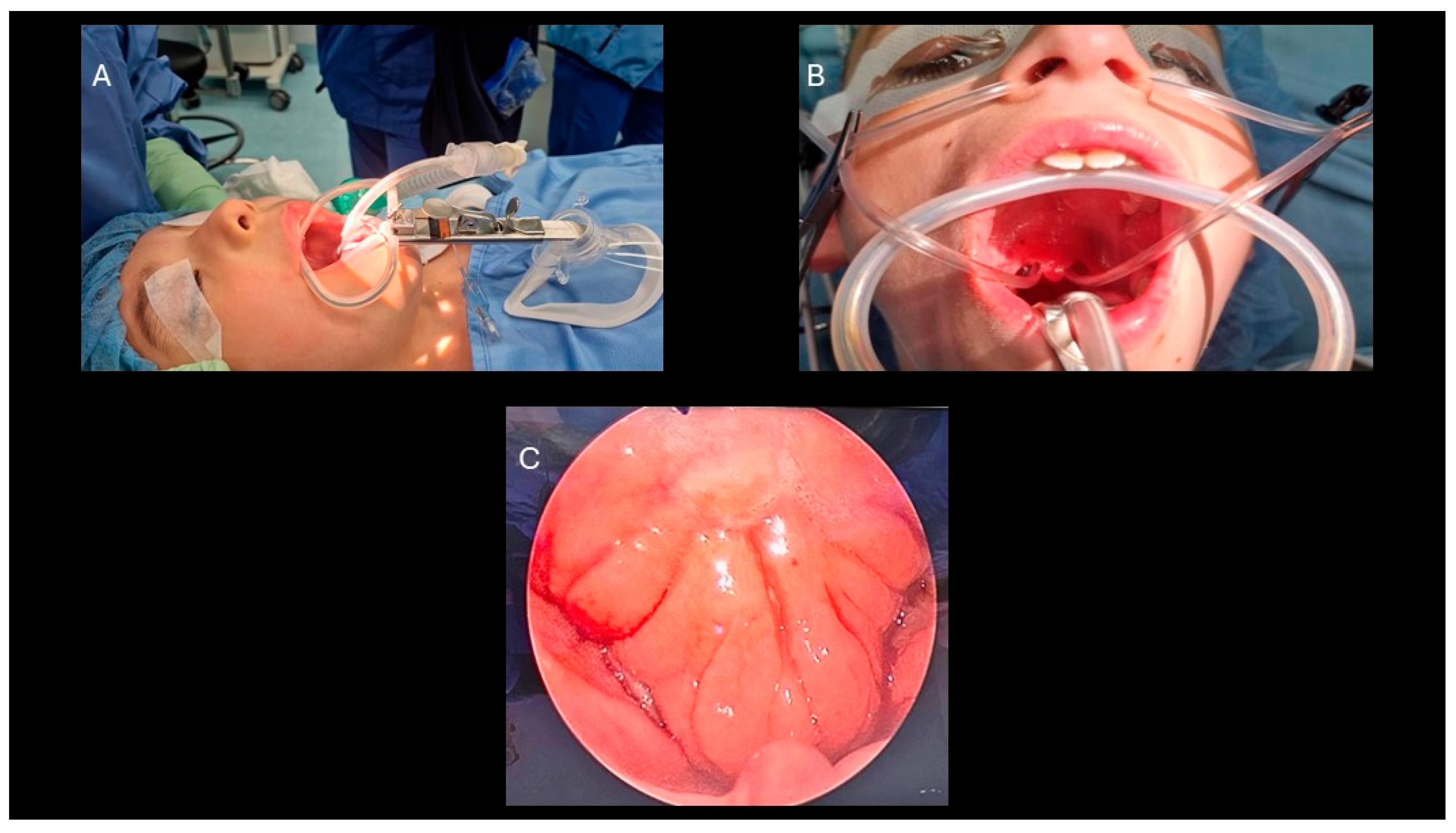
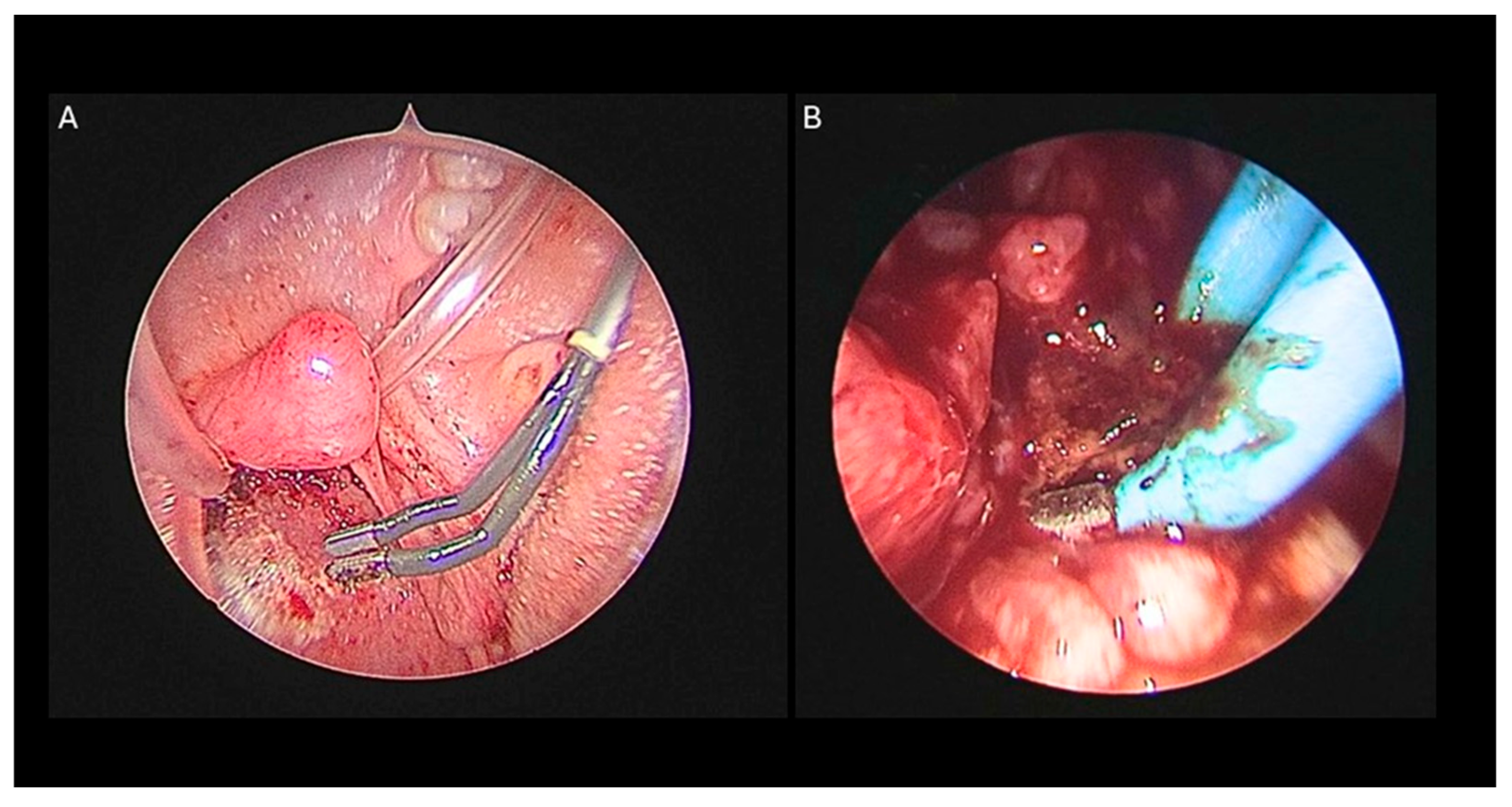
- Adenoidectomy: Adequate retraction of the soft palate was considered essential to ensure full visualization and access to the adenoids. This was achieved using two Nelaton nasal catheters, one placed in each nasal cavity, retrieved through the oropharynx and secured externally with a Klemmer clamp (Figure 1B). Before adenoid removal, a preliminary endoscopic evaluation of the nasopharynx was performed with a 45° 4 mm endoscope introduced through the oral cavity (Figure 1C). Adenoidectomy was carried out using a Negus curette, which allowed gentle curettage of the adenoid tissue from the nasopharyngeal wall. During curettage, minor bleeding from the surgical site was controlled by gentle packing of the nasopharynx with gauze to achieve hemostasis. If bleeding persisted despite manual compression, an endoscopic approach was adopted to allow more precise visualization and control. A 45° 4 mm nasal endoscope was introduced through the mouth to inspect the nasopharynx and identify bleeding vessels, which were then coagulated using diathermy (Figure 2A,B) [10].
- 2.
- Tonsillectomy: Tonsillectomy was performed using several techniques, including cold steel dissection, monopolar or bipolar electrocautery, laser dissection, and radiofrequency-based methods. The choice of technique depended on the surgeon’s experience, patient characteristics, and the available equipment. In our center, monopolar electrocautery dissection using the Colorado microdissection needle was the preferred technique. This method uses a high-frequency electrical current to cut and coagulate tissue through a fine tungsten-coated tip (5 µm), allowing precise dissection and controlled thermal spread [9]. The tonsil was dissected by carefully separating it from the surrounding pharyngeal tissues, including the muscular layer, blood vessels, and mucosa, with particular attention given to preserving the palatopharyngeal and levator veli palatini muscles. Hemostasis was achieved with gauze compression and electrocautery of small bleeding vessels. In most cases, sutures were not required in the tonsillar bed, which was left to heal by secondary intention. The technique was designed to minimize thermal injury, preserve the tonsillar pillars, and deliberately leave a small cuff of tissue at the inferior pole, which was then coagulated using bipolar forceps to reduce the risk of bleeding near the tongue base [11].
- 3.
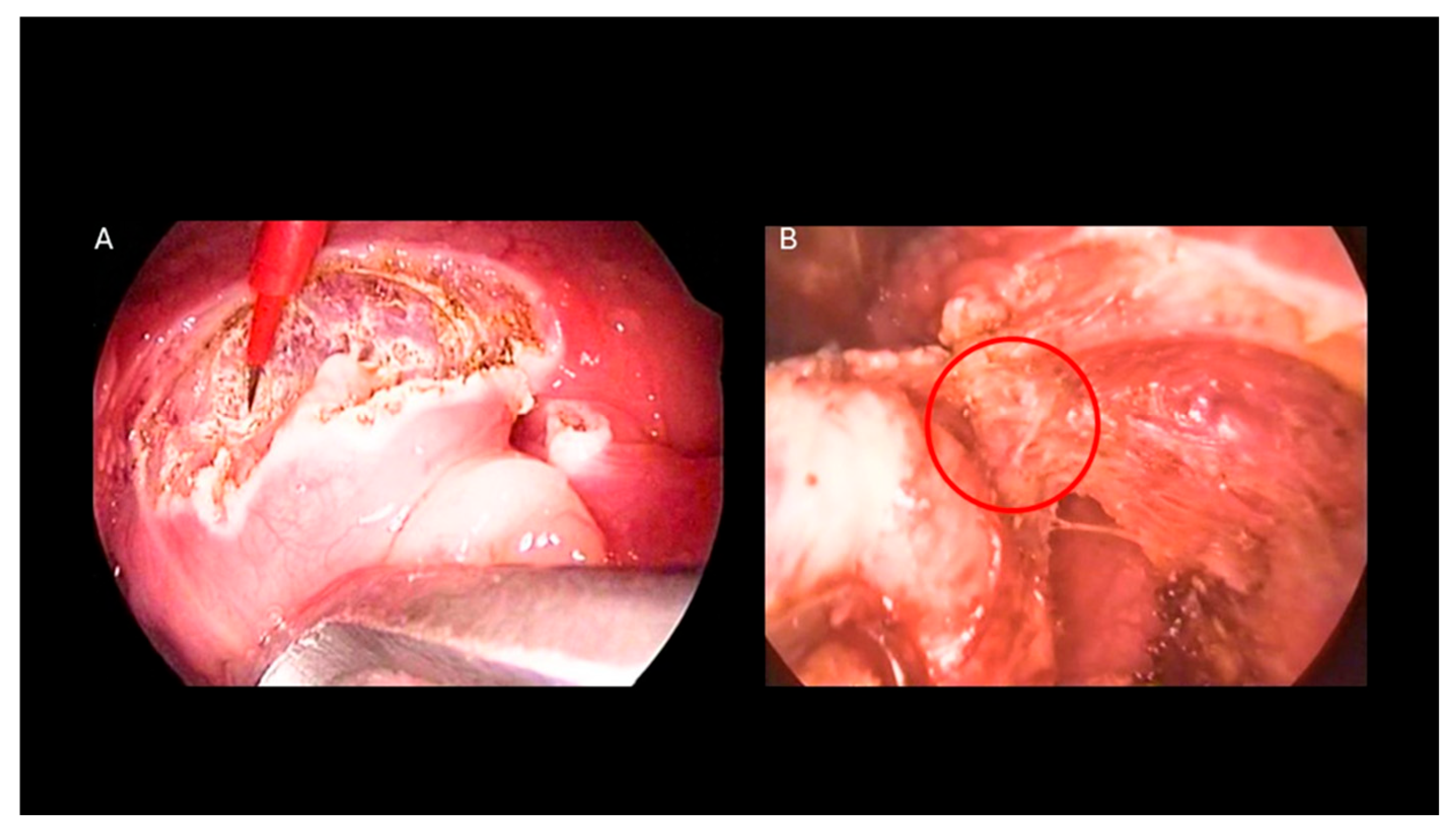
- Extracapsular vs. Intracapsular Techniques: Tonsillectomy was performed using either an extracapsular or an intracapsular approach, chosen according to the clinical indication and patient profile. In the extracapsular technique, the tonsil was completely removed, along with its fibrous capsule (Figure 3A,B). In the intracapsular technique, a small portion of tonsillar tissue was intentionally left in situ to facilitate healing and reduce the risk of postoperative hemorrhage. Intracapsular tonsillectomy is associated with lower postoperative bleeding rates, faster recovery, and reduced pain, although it carries a risk of tonsillar regrowth. In accordance with international guidelines, extracapsular dissection was typically preferred for patients with chronic or recurrent tonsillitis refractory to medical therapy, whereas the intracapsular approach was mainly used in children with OSA, for whom complete tonsillar removal is not mandatory, and in patients at increased risk of bleeding or in need of more rapid recovery (e.g., children with Down syndrome) [11].
- 4.
- Endoscopic tympanic paracentesis and transtympanic drainage placement are performed in conjunction with adenotonsillar surgery when indicated by audiometric findings. The use of the endoscopic approach allows for enhanced visualization of the tympanic membrane, facilitating the detection of any abnormalities and optimizing the procedure. This technique is aimed at improving middle ear ventilation, thereby addressing underlying dysfunctions and contributing to better postoperative outcomes [8].
- 5.
- Postoperative Care: All patients were monitored just after surgery in the post-anesthesia care unit (PACU), and after a period of observation, they went in the Pediatric unit and were discharged according to the type of surgery:
- Adenoidectomy: Patients were usually discharged on the same day. Postoperative home care included topical antibiotic nasal drops for 7 days and 7 days of home rest.
- Tonsillectomy/Adenotonsillectomy: Patients were admitted for at least one night of observation. Postoperative management included home rest and adherence to a soft, cool diet for 15 days to promote healing and reduce discomfort [12].
2.5. Complication Monitoring
2.6. Emergency Support
2.7. Statistical Analysis
3. Results
3.1. Surgical Volume and Demographics
3.2. Postoperative Hemorrhage Rates
3.3. Complication Comparison with the Literature
4. Discussion
4.1. Postoperative Hemorrhage and Surgical Revision
4.2. Pain Management and Recovery
4.3. Multidisciplinary and Psychological Support
- A total of 94% reported “significantly reduced parental anxiety”;
- A total of 89% noted “improved child cooperation” in the operating room.
4.4. The Importance of Inter-Hospital Collaboration in Otolaryngology Within Modena Province
4.5. Limitations and Future Directions
5. Conclusions
Author Contributions
Funding
Institutional Review Board Statement
Informed Consent Statement
Data Availability Statement
Acknowledgments
Conflicts of Interest
Abbreviations
References
- Bohr, C.; Shermetaro, C. Tonsillectomy and Adenoidectomy. In StatPearls [Internet]; StatPearls Publishing: Treasure Island, FL, USA, 2025. Available online: https://www.ncbi.nlm.nih.gov/books/NBK536942/ (accessed on 26 June 2023).
- Della Vecchia, L.; Passali, F.M.; Coden, E. Complications of adenotonsillectomy in pediatric age. Acta Biomed. 2020, 91, 48–53. [Google Scholar] [CrossRef] [PubMed]
- Programma Nazionale Esiti Edizione 2024. Available online: https://pne.agenas.it/ospedaliera/indicatori?noso=orl (accessed on 18 June 2025).
- Amoils, M.; Chang, K.W.; Saynina, O.; Wise, P.H.; Honkanen, A. Postoperative Complications in Pediatric Tonsillectomy and Adenoidectomy in Ambulatory vs Inpatient Setting. JAMA Otolaryngol. Head Neck Surg. 2016, 142, 344–350. [Google Scholar] [CrossRef] [PubMed]
- Cheung, P.K.F.; Walton, J.; Hobson, M.L.; Taylor, P.; Chin, M.; Boardman, S.; Cheng, A.T.L.; Birman, C.S. Management of Recurrent and Delayed Post-Tonsillectomy and Adenoidectomy Hemorrhage in Children. Ear Nose Throat J. 2021, 102, 244–250. [Google Scholar] [CrossRef] [PubMed]
- Taylor, R.; Chen, A. Postoperative Hemorrhage Rates in Pediatric Tonsillectomy: A Meta-Analysis. Laryngoscope 2015, 125, 543–550. [Google Scholar] [CrossRef]
- Randall, D.A. Current Indications for Tonsillectomy and Adenoidectomy. J. Am. Board. Fam. Med. 2020, 33, 1025–1030. [Google Scholar] [CrossRef] [PubMed]
- Marchioni, D.; Mattioli, F.; Alicandri-Ciufelli, M.; Molteni, G.; Masoni, F.; Presutti, L. Endoscopic Evaluation of Middle Ear Ventilation Route Blockage. Am. J. Otolaryngol. 2010, 31, 453–466. [Google Scholar] [CrossRef]
- Friedman, M.; Salapatas, A.M.; Bonzelaar, L.B. Microdissection needle tonsillectomy: A review of surgical outcomes. Laryngoscope 2009, 119, 620–627. [Google Scholar] [CrossRef]
- Siu, J.M.; Propst, E.J.; Wolter, N.E. Post-tonsillectomy hemorrhage in children. Can. Med. Assoc. J. 2024, 196, E1374. [Google Scholar] [CrossRef]
- Peterson, J.; Stewart, C. The Colorado Microdissection Needle in Pediatric Adenotonsillectomy: Outcomes and Benefits. Int. J. Pediatr. Otorhinolaryngol. 2017, 95, 63–67. [Google Scholar] [CrossRef]
- Mitchell, R.B.; Archer, S.M.; Ishman, S.L.; Rosenfeld, R.M.; Coles, S.; Finestone, S.A.; Friedman, N.R.; Giordano, T.; Hildrew, D.M.; Kim, T.W.; et al. Clinical Practice Guideline: Tonsillectomy in Children (Update)—Executive Summary. Otolaryngol. Neck Surg. 2019, 160, 187–205. [Google Scholar] [CrossRef]
- Cheng, S.; Englesakis, M.; Park, S.; Robertson, W.; Shingala, D.; Niimi, N.; Hayes, J.; Maynes, J.T.; Aoyama, K. Optimizing pain management in pediatric tonsillectomy: The role of NSAIDs. J. Anesth. 2025, 39, 837–840. [Google Scholar] [CrossRef] [PubMed]
- Ross, A.; Mnatsakanian, A.; Markovicz, J.; Desai, S.; Anderson, B.; Shifman, H.; Engebretsen, S.; Wentland, C.; Thottam, P.; Haupert, M. Secondary Postoperative Hemorrhage in the Pediatric Tonsillectomy Patient- is there a correlation between hemorrhage and tonsilloliths? Spartan Med. Res. J. 2023, 8, 57320. [Google Scholar] [CrossRef] [PubMed]
- IBM Corp. IBM SPSS Statistics for Windows, Version 25.0; IBM Corp: Armonk, NY, USA, 2017.
- Demir, U.L.; İnan, H.C. The Impact of Comorbid Diseases on Postoperative Complications in Children after Adenotonsillectomy: Is It a Myth? Turk. Arch. Otorhinolaryngol. 2020, 58, 141–148. [Google Scholar] [CrossRef] [PubMed]
- Perkins, J.N.; Liang, C.; Gao, D.; Shultz, L.; Friedman, N.R. Risk of post-tonsillectomy hemorrhage by clinical diagnosis. Laryngoscope 2012, 122, 2311–2315. [Google Scholar] [CrossRef]
- Hoddeson, E.K.; Gourin, C.G. Adult tonsillectomy: Current indications and outcomes. Otolaryngol. Head Neck Surg. 2009, 140, 19–22. [Google Scholar] [CrossRef]
- Achar, P.; Sharma, R.K.; De, S.; Donne, A.J. Does primary indication for tonsillectomy influence post-tonsillectomy haemorrhage rates in children? Int. J. Pediatr. Otorhinolaryngol. 2015, 79, 246–250. [Google Scholar] [CrossRef]
- Mitchell, R.B.; Pereira, K.D.; Friedman, N.R. Clinical Practice Guideline: Tonsillectomy in Children (Update). Otolaryngol. Head Neck Surg. 2019, 160, S1–S42. [Google Scholar] [CrossRef]
- Canto, G.D.L.; Pachêco-Pereira, C.; Aydinoz, S.; Bhattacharjee, R.; Tan, H.-L.; Kheirandish-Gozal, L.; Flores-Mir, C.; Gozal, D. Adenotonsillectomy Complications: A Meta-analysis. Pediatrics 2015, 136, 702–718. [Google Scholar] [CrossRef]
- Dorkar, S.N.; Nilakhe, S.S.; A L, S., Sr. A Comparative Study of Patients Undergoing Tonsillectomy Using the Cold Steel Dissection Method and Electrocautery Technique. Cureus 2025, 17, e79724. [Google Scholar] [CrossRef]
- Acevedo, J.L.; Shah, R.K.; Brietzke, S.E. Systematic review of complications of tonsillotomy versus tonsillectomy. Otolaryngol. Head Neck Surg. 2012, 146, 841–848. [Google Scholar] [CrossRef]
- Uusitalo, T.; Sakki, A.; Laajala, A.; Jero, J.; Nokso-Koivisto, J.; Piitulainen, J. Trends and Practices in Tonsil Surgery—A National Survey for Otorhinolaryngologists. Laryngoscope Investig. Otolaryngol. 2025, 10, e70178. [Google Scholar] [CrossRef]
- Rideout, B.; Dobson, D.; Glover, P.; Lemire, J. Tonsillectomy using the Colorado microdissection needle. South. Med. J. 2004, 97, 289–292. [Google Scholar] [CrossRef]
- Al-Qahtani, A.S. Post-tonsillectomy hemorrhage. Monopolar microdissection needle vs cold dissection. Saudi Med. J. 2012, 33, 50–54. [Google Scholar]
- Perkins, J.; Dahiya, R. Microdissection Needle Tonsillectomy and Postoperative Pain. Arch. Otolaryngol. Neck Surg. 2003, 129, 1285–1288. [Google Scholar] [CrossRef][Green Version]
- Chandra, R.V.; Savitharani, B.; Reddy, A.A. Comparing the outcomes of incisions made by colorado microdissection needle, electrosurgery tip, and surgical blade during periodontal surgery: A randomized controlled trial. J. Indian Soc. Periodontol. 2016, 20, 616–622. [Google Scholar] [CrossRef]



| Characteristic | Revision (n = 75) | OR (95% CI) vs. Reference | p-Value |
|---|---|---|---|
| Anatomical origin | |||
| Adenoidectomy (reference) | 12 | 1 | - |
| Tonsillectomy-related | 63 | 8.25 (2.95–23) | <0.001 |
| Tonsillar technique (n = 63) | |||
| Extracapsular (reference) | 52 | 1 | - |
| Intracapsular | 11 | 0.78 (0.37–1.65) | 0.41 |
| Risk Factor | Hemorrhage Rate (%) | OR (95% CI) vs. Reference | p-Value |
|---|---|---|---|
| Indication | |||
| OSA (reference) | 1.63 (85/5215) | 1 | - |
| Recurrent tonsillitis | 2.28 (95/4158) | 1.41 (1.05–1.89) | 0.021 |
| Otitis media | 1.59 (22/1380) | 0.98 (0.62–1.54) | 0.78 |
| Age group (revisions) | |||
| >10 years (reference) | 20% (15/75) | 1 | |
| 6–10 years | 29.3% (22/75) | 1.6 (0.8–3.2) | 0.18 |
| 3–5 years | 50.7% (38/75) | 2.1 (1.1–4) | 0.02 |
| Parameter | Colorado Microdissection Needle | Conventional Electrocautery |
|---|---|---|
| Intraoperative blood loss | 5–20 mL | 30–70 mL |
| Average operating time | 22–30 min | 25–35 min |
| Postoperative pain (day 1–5) | 20–30% lower VAS score | Higher VAS score |
| Thermal damage | <0.7 mm spread | Up to 2 mm lateral spread |
| Postoperative hemorrhage rate | 0.8–1.5% | 2–4% |
Disclaimer/Publisher’s Note: The statements, opinions and data contained in all publications are solely those of the individual author(s) and contributor(s) and not of MDPI and/or the editor(s). MDPI and/or the editor(s) disclaim responsibility for any injury to people or property resulting from any ideas, methods, instructions or products referred to in the content. |
© 2026 by the authors. Licensee MDPI, Basel, Switzerland. This article is an open access article distributed under the terms and conditions of the Creative Commons Attribution (CC BY) license.
Share and Cite
Confuorto, G.; Baldi, R.; Cigarini, E.; Lorenzo, G.D.; Menabue, S.; Spagnolo, F.; Trani, M.; Zanni, M.; Presutti, L.; Marchioni, D.; et al. Pediatric Adenotonsillectomy over 20 Years in a High-Volume Italian Centre: Positive Outcomes with Low Complications—The Sassuolo Hospital Experience. Pediatr. Rep. 2026, 18, 45. https://doi.org/10.3390/pediatric18020045
Confuorto G, Baldi R, Cigarini E, Lorenzo GD, Menabue S, Spagnolo F, Trani M, Zanni M, Presutti L, Marchioni D, et al. Pediatric Adenotonsillectomy over 20 Years in a High-Volume Italian Centre: Positive Outcomes with Low Complications—The Sassuolo Hospital Experience. Pediatric Reports. 2026; 18(2):45. https://doi.org/10.3390/pediatric18020045
Chicago/Turabian StyleConfuorto, Gennaro, Renato Baldi, Elisa Cigarini, Giorgio Di Lorenzo, Silvia Menabue, Federico Spagnolo, Margherita Trani, Massimo Zanni, Livio Presutti, Daniele Marchioni, and et al. 2026. "Pediatric Adenotonsillectomy over 20 Years in a High-Volume Italian Centre: Positive Outcomes with Low Complications—The Sassuolo Hospital Experience" Pediatric Reports 18, no. 2: 45. https://doi.org/10.3390/pediatric18020045
APA StyleConfuorto, G., Baldi, R., Cigarini, E., Lorenzo, G. D., Menabue, S., Spagnolo, F., Trani, M., Zanni, M., Presutti, L., Marchioni, D., & Gambelli, P. (2026). Pediatric Adenotonsillectomy over 20 Years in a High-Volume Italian Centre: Positive Outcomes with Low Complications—The Sassuolo Hospital Experience. Pediatric Reports, 18(2), 45. https://doi.org/10.3390/pediatric18020045