Antimicrobial Activity and Antibiotic Synergy of Saponin-Enriched Bark Extracts from Argania spinosa: Influence of Ecogeographical Origin

 ,
,  ,
,  and
and
Abstract
1. Introduction
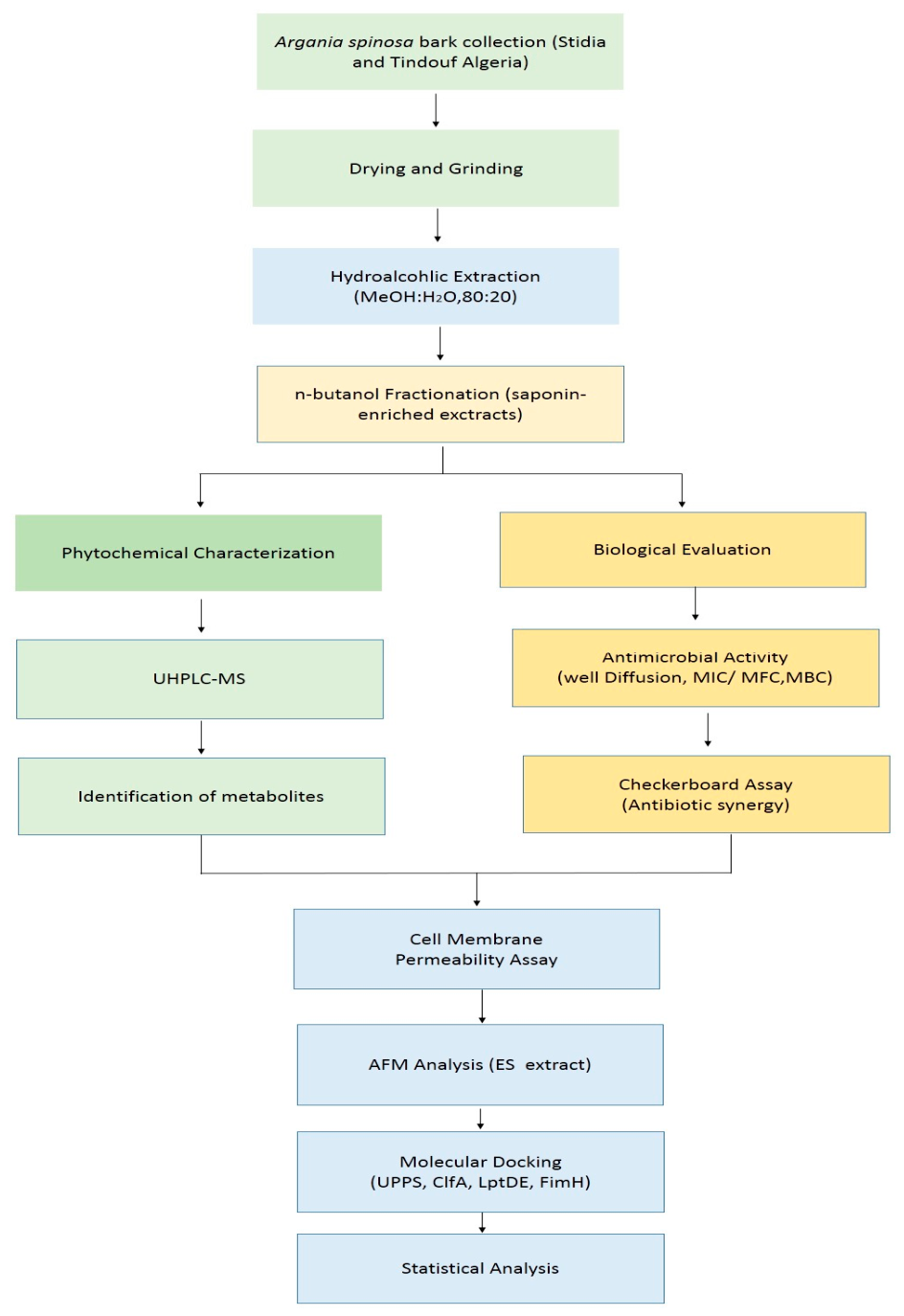
2. Materials and Methods
2.1. Plant Material
2.2. Saponin Extraction
2.3. Analysis of Secondary Metabolites of Argania spinosa Extracts
2.3.1. Determination of Total Phenolic Content (TPC)
2.3.2. Determination of Total Flavonoid Content (TFC)
2.3.3. Determination of Total Tannin Content (TTC)
2.4. High-Performance Liquid Chromatographic Analysis of Argania spinosa Extracts
2.5. Microbial Strains
2.6. Isolation and Identification of Pathogenic Microorganisms
2.7. Antimicrobial Susceptibility Testing
2.8. Antimicrobial Activity of Crude Bark Extracts Enriched in Saponins
2.8.1. Agar Well Diffusion Method
2.8.2. Minimum Inhibitory Concentration (MIC)
2.8.3. Minimum Bactericidal and Fungicidal Concentrations (MBC/MFC)
2.9. Checkerboard Assay
2.10. Bacterial Cell Permeability
2.11. Atomic Force Microscopy (AFM)
2.12. Molecular Docking Analysis
- Undecaprenyl diphosphate synthase (UPPS, PDB ID: 4H8E);
- Clumping factor A (ClfA, PDB ID: 1N67);
- Lipopolysaccharide transporter (LptDE, PDB ID: 5IV9);
- Fimbrial adhesin (FimH, PDB ID: 9AT9).
2.13. Statistical Analysis
3. Results
3.1. Phytochemical Composition of Argania spinosa (L.) Bark Extracts
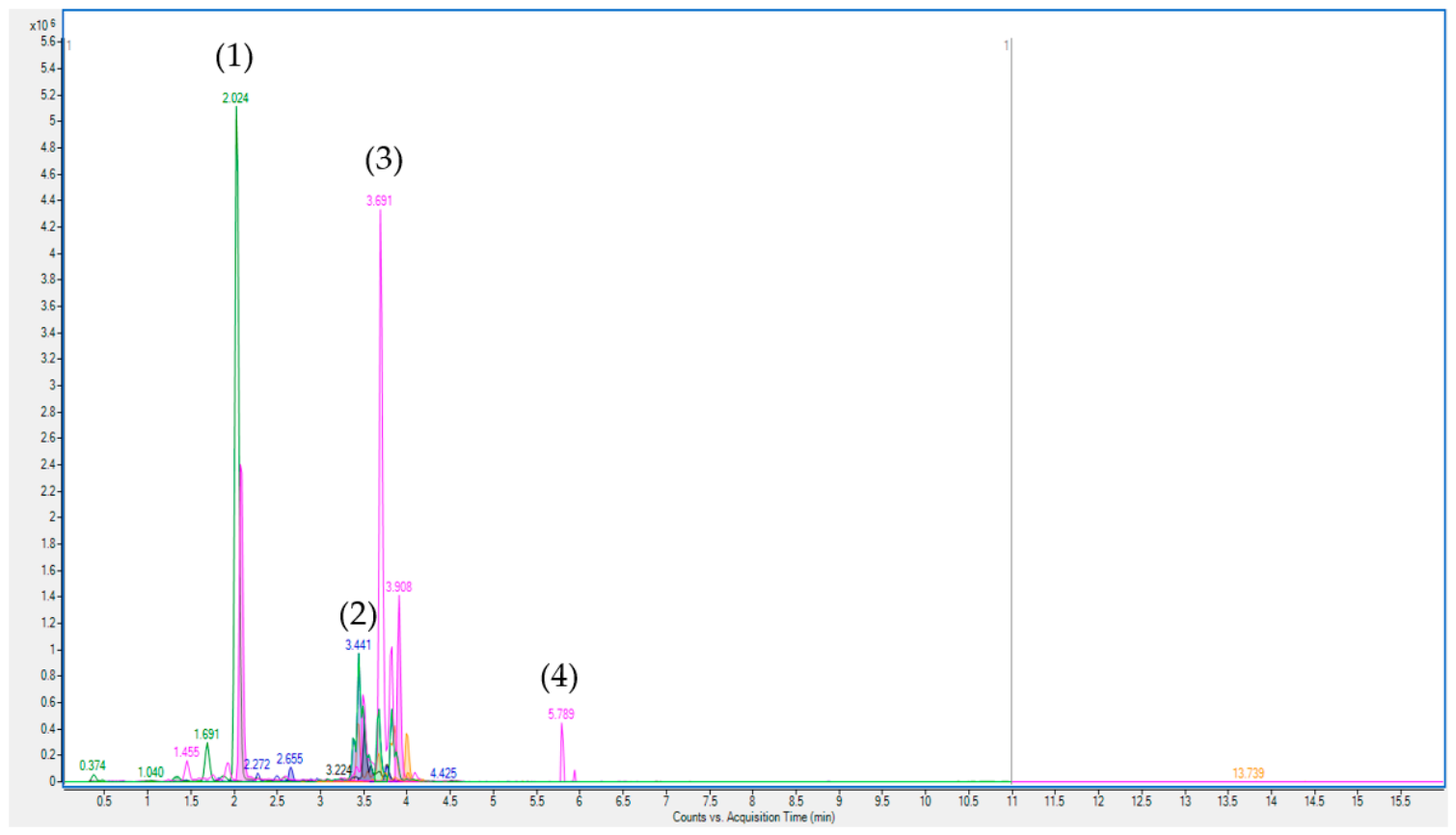
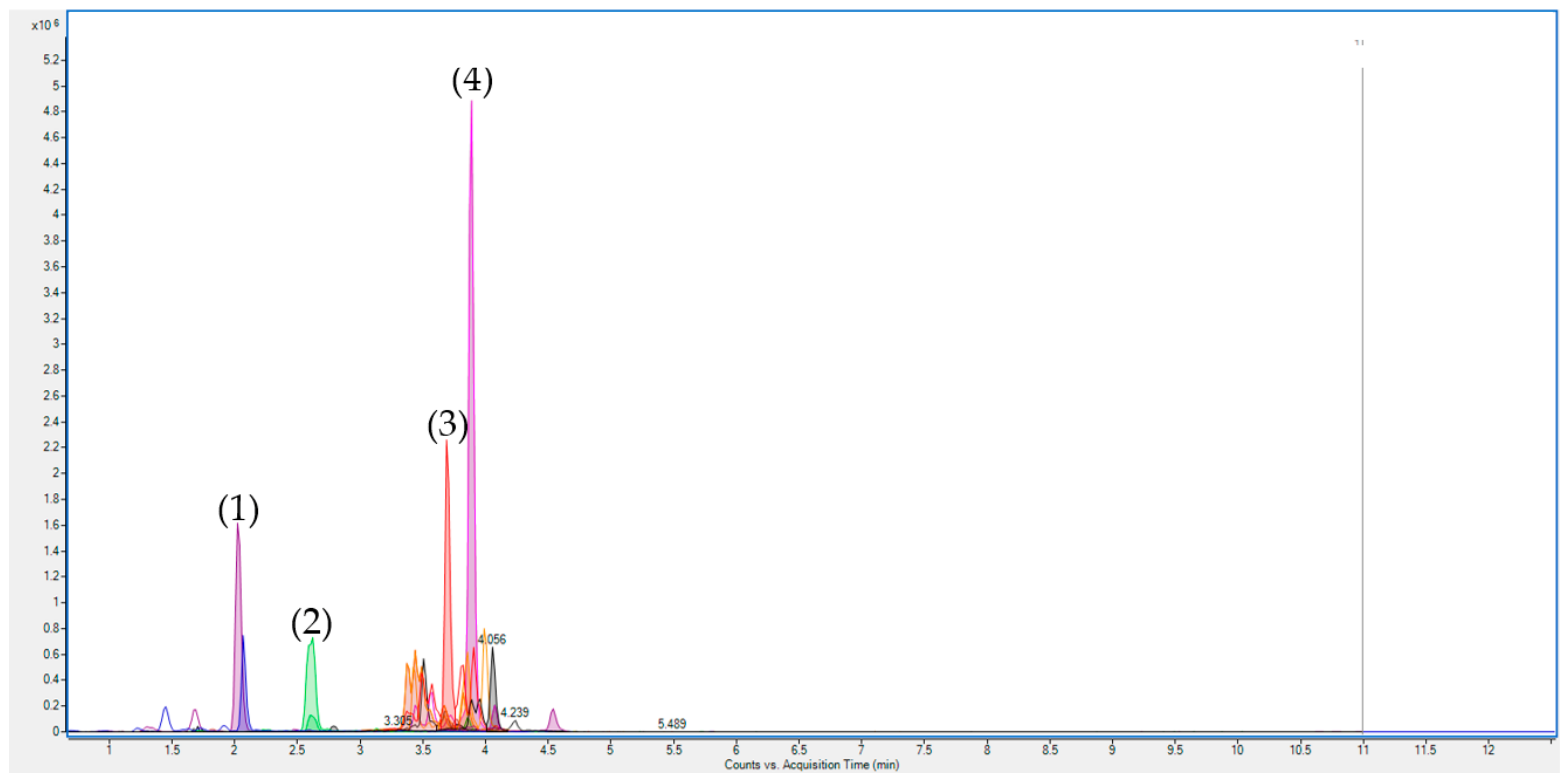
3.2. Comparative UHPLC–MS Analysis of Argania spinosa Bark Extracts
3.3. Antibiotic Susceptibility and Multidrug Resistance Profiles of the Tested Pathogenic Isolates
3.4. Comparative Antimicrobial Activity of Argania spinosa Bark Extracts Against Tested Microbial Strains
3.4.1. Antimicrobial Activity Assessed by Agar Well Diffusion Method
3.4.2. Determination of Minimum Inhibitory, Bactericidal, and Fungicidal Concentrations of Argania spinosa Bark Extracts
3.5. Checkerboard Microdilution Analysis of Argania spinosa Extracts in Combination with Aminoglycosides
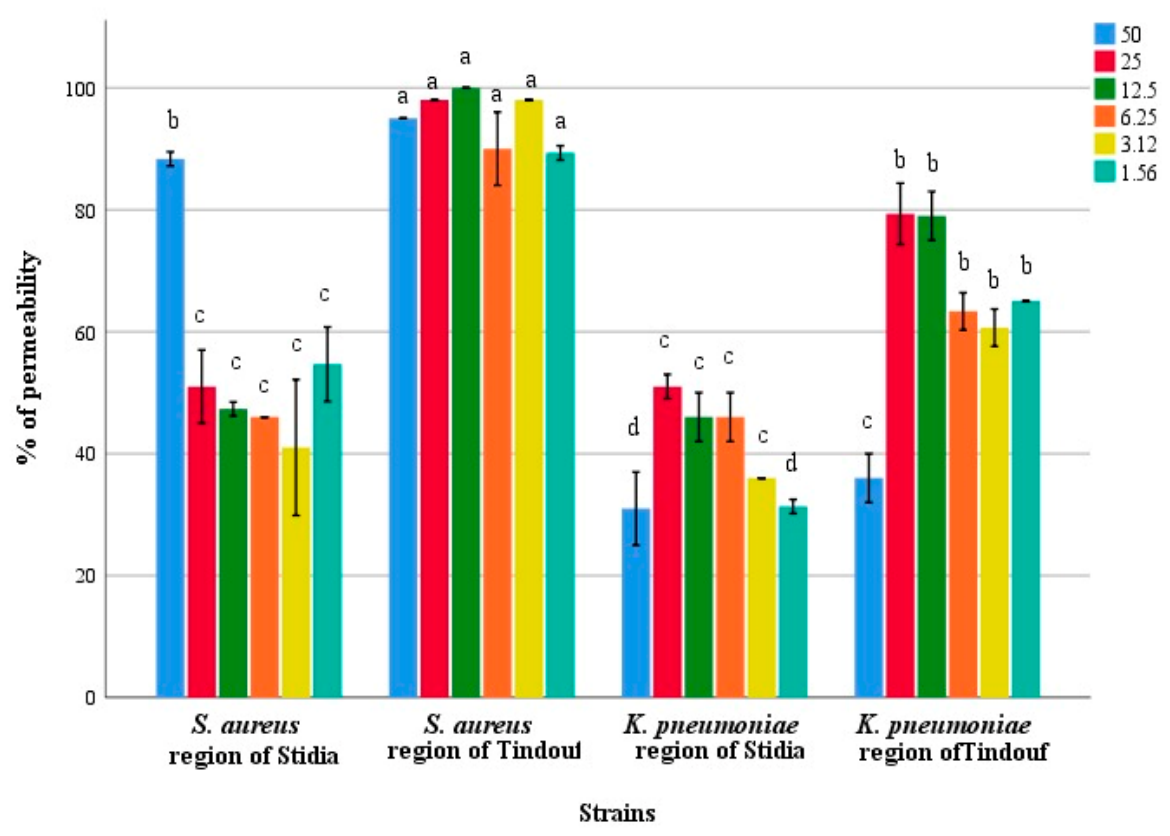
3.6. Effect of Argania spinosa Bark Extracts on Bacterial Cell Membrane Permeability
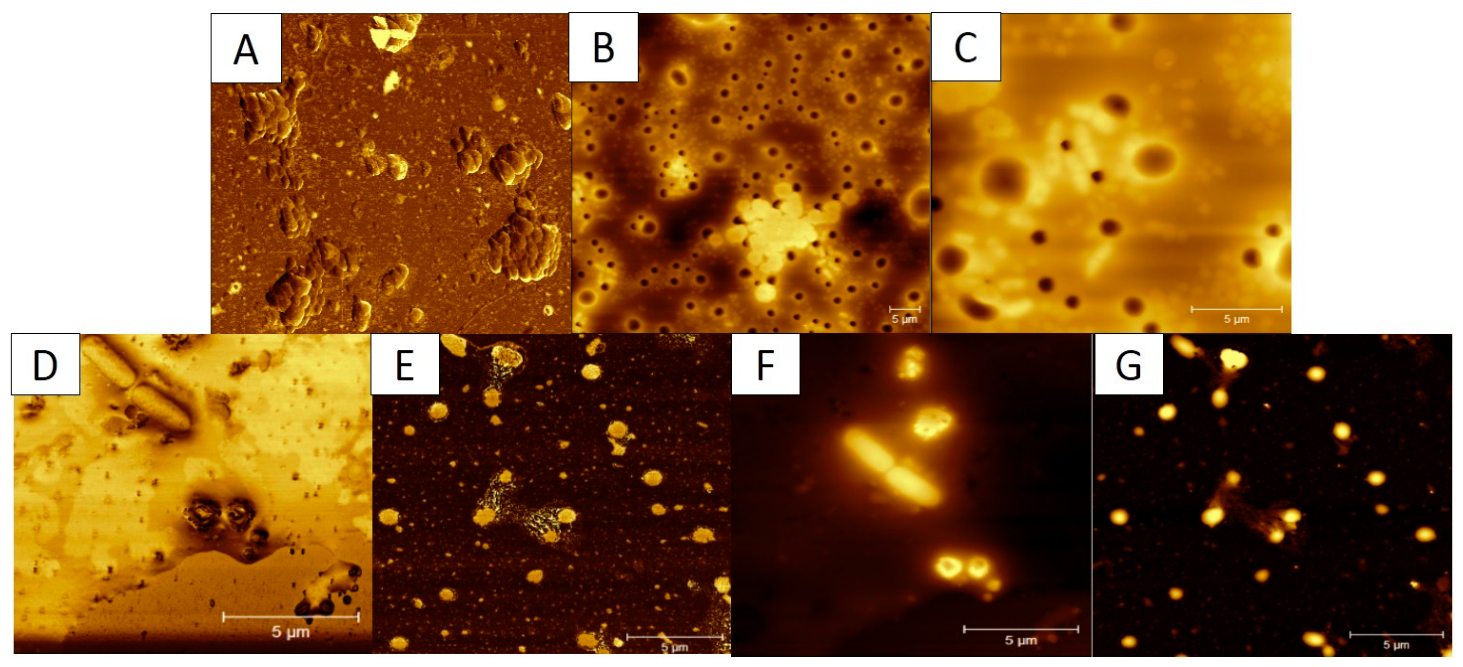
3.7. AFM Visualization of Membrane Damage in Staphylococcus aureus and Klebsiella pneumoniae Induced by the ES Extract of Argania spinosa
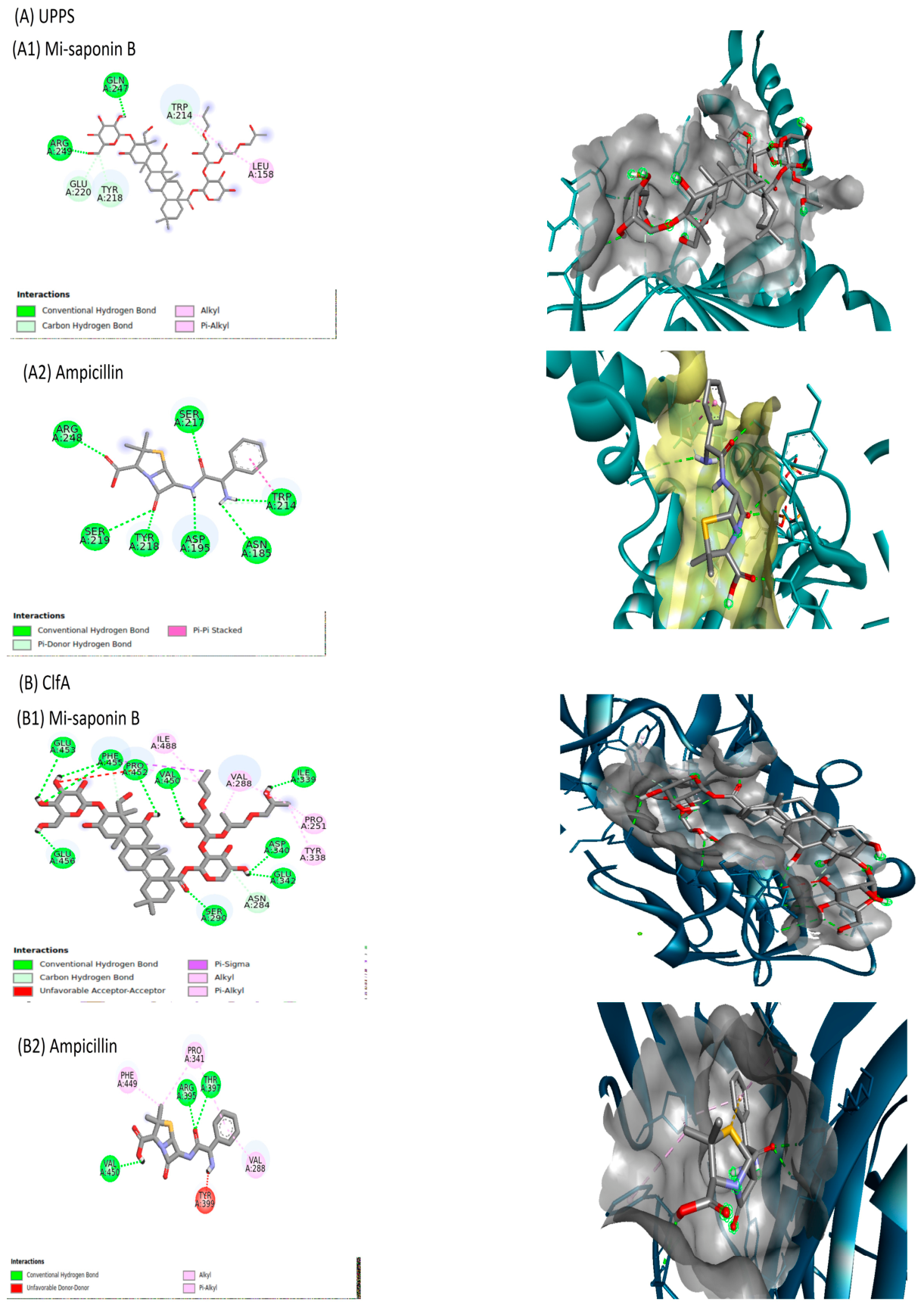
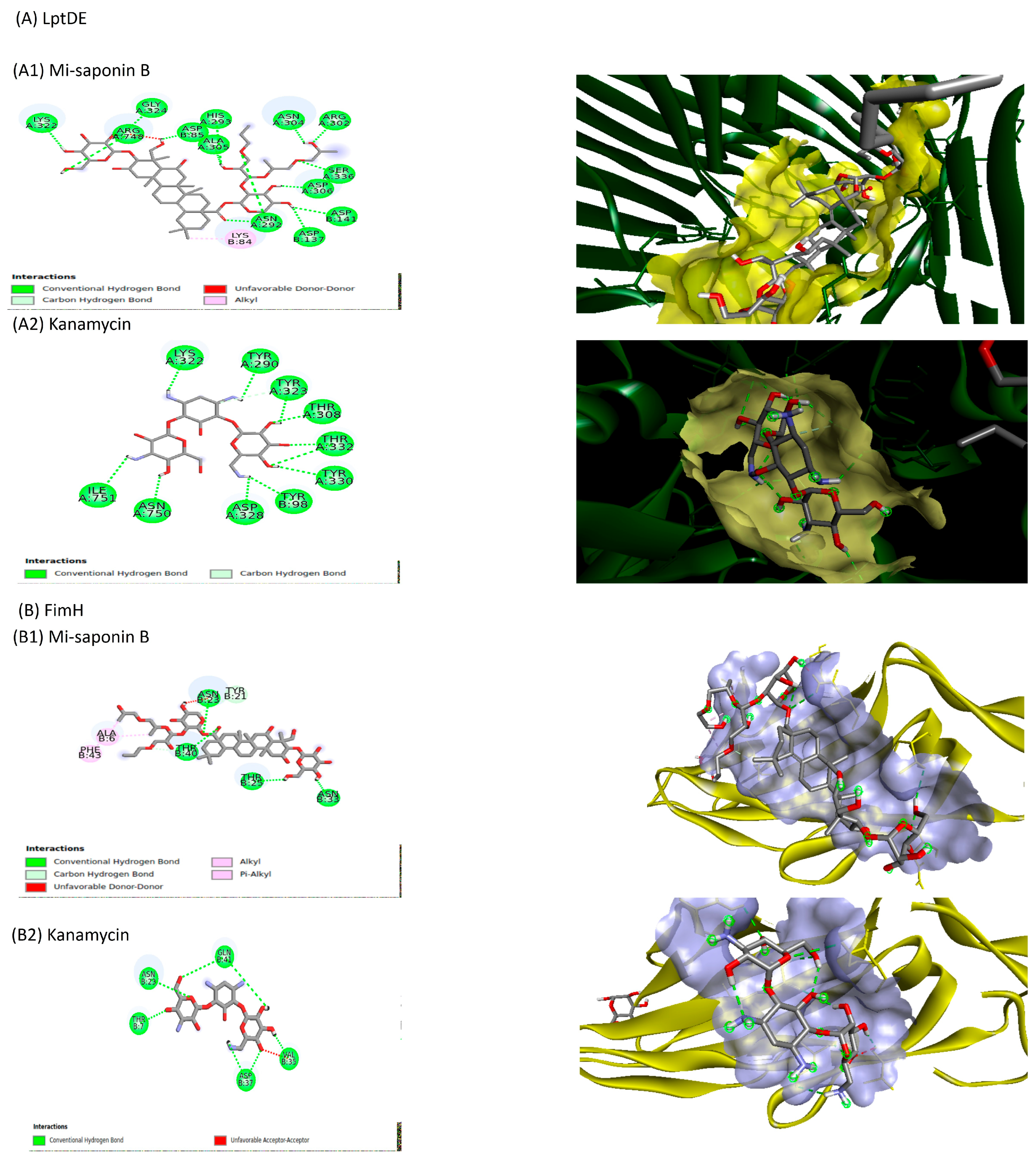
3.8. Molecular Docking Analysis of Bioactive Compounds from Argania spinosa
- UPPS, involved in cell wall biosynthesis;
- ClfA, a surface adhesion protein mediating host colonization.
- LptDE, essential for outer membrane biogenesis;
- FimH, involved in bacterial adhesion.
4. Discussion
5. Conclusions
Author Contributions
Funding
Institutional Review Board Statement
Informed Consent Statement
Data Availability Statement
Acknowledgments
Conflicts of Interest
Abbreviations
| ATCC | American Type Culture Collection |
| CE | Catechin equivalents |
| ClfA | Clumping factor A |
| ES | Extract from Stidia (coastal Algeria) |
| ET | Extract from Tindouf (southern Algeria) |
| FimH | Type 1 fimbrial adhesion |
| GAE | Gallic acid equivalents |
| LptDE | Lipopolysaccharide transport protein D/E complex |
| MBC | Minimum bactericidal concentration |
| MDR | Multidrug-resistant |
| MFC | Minimum fungicidal concentration |
| MIC | Minimum inhibitory concentration |
| RT | Retention time |
| TFC | Total flavonoid content |
| TPC | Total phenolic content |
| TTC | Total tannin content |
| UHPLC–MS | Ultra-high-performance liquid chromatography–mass spectrometry |
| UPPS | Undecaprenyl pyrophosphate synthase |
References
- Abbas, A.; Barkhouse, A.; Hackenberger, D.; Wright, G.D. Antibiotic Resistance: A Key Microbial Survival Mechanism That Threatens Public Health. Cell Host Microbe 2024, 32, 837–851. [Google Scholar] [CrossRef] [PubMed]
- Rahman, S.; Kesselheim, A.S.; Hollis, A. Persistence of Resistance: A Panel Data Analysis of the Effect of Antibiotic Usage on the Prevalence of Resistance. J. Antibiot. 2023, 76, 270–278. [Google Scholar] [CrossRef] [PubMed]
- Naghavi, M.; Vollset, S.E.; Ikuta, K.S.; Swetschinski, L.R.; Gray, A.P.; Wool, E.E.; Robles Aguilar, G.; Mestrovic, T.; Smith, G.; Han, C.; et al. Global Burden of Bacterial Antimicrobial Resistance 1990–2021: A Systematic Analysis with Forecasts to 2050. Lancet 2024, 404, 1199–1226. [Google Scholar] [CrossRef] [PubMed]
- Singh, B.; Bhat, A.; Ravi, K. Antibiotics Misuse and Antimicrobial Resistance Development in Agriculture: A Global Challenge. Environ. Health 2024, 2, 618–622. [Google Scholar] [CrossRef] [PubMed]
- Hamadalneel, Y.B.; Eltoum, S.F.; Almustafa, Z.M.; Mustafa, W.S.; Abdelsalam, F.O.; Yousif, Y.M.; Alsdeeg, A.A.; Alamin, M.F. Prevalence and Associated Factors of Multi-Drug Resistant Bacteria among Different Clinical Specimens at Wad Medani, Sudan: A Four-Year, Cross-Sectional Study. Sci. Rep. 2025, 15, 15596. [Google Scholar] [CrossRef] [PubMed]
- Ndaki, P.M.; Mwanga, J.R.; Mushi, M.F.; Konje, E.T.; Mwita, S.M.; Mshana, S.E. Drivers of Inappropriate Use of Antibiotics among Community Members in Low- and Middle-Income Countries: A Systematic Review of Qualitative Studies. BMC Public Health 2025, 25, 705. [Google Scholar] [CrossRef] [PubMed]
- El-Saadony, M.T.; Saad, A.M.; Mohammed, D.M.; Korma, S.A.; Alshahrani, M.Y.; Ahmed, A.E.; Ibrahim, E.H.; Salem, H.M.; Alkafaas, S.S.; Saif, A.M.; et al. Medicinal Plants: Bioactive Compounds, Biological Activities, Combating Multidrug-Resistant Microorganisms, and Human Health Benefits—A Comprehensive Review. Front. Immunol. 2025, 16, 1491777. [Google Scholar] [CrossRef] [PubMed]
- Chaachouay, N.; Zidane, L. Plant-Derived Natural Products: A Source for Drug Discovery and Development. Drugs Drug Candidates 2024, 3, 184–207, Correction in Drugs Drug Candidates 2026, 5, 14. https://doi.org/10.3390/ddc5010014. [Google Scholar] [CrossRef]
- Riaz, M.; Khalid, R.; Afzal, M.; Anjum, F.; Fatima, H.; Zia, S.; Rasool, G.; Egbuna, C.; Mtewa, A.G.; Uche, C.Z.; et al. Phytobioactive Compounds as Therapeutic Agents for Human Diseases: A Review. Food Sci. Nutr. 2023, 11, 2500–2529. [Google Scholar] [CrossRef] [PubMed]
- Kumar, A.; P, N.; Kumar, M.; Jose, A.; Tomer, V.; Oz, E.; Proestos, C.; Zeng, M.; Elobeid, T.; K, S.; et al. Major Phytochemicals: Recent Advances in Health Benefits and Extraction Method. Molecules 2023, 28, 877. [Google Scholar] [CrossRef] [PubMed]
- Guedes, B.N.; Krambeck, K.; Durazzo, A.; Lucarini, M.; Santini, A.; Oliveira, M.B.P.P.; Fathi, F.; Souto, E.B. Natural Antibiotics against Antimicrobial Resistance: Sources and Bioinspired Delivery Systems. Braz. J. Microbiol. 2024, 55, 2753–2766. [Google Scholar] [CrossRef] [PubMed]
- Vaou, N.; Stavropoulou, E.; Voidarou, C.; Tsigalou, C.; Bezirtzoglou, E. Towards Advances in Medicinal Plant Antimicrobial Activity: A Review Study on Challenges and Future Perspectives. Microorganisms 2021, 9, 2041. [Google Scholar] [CrossRef] [PubMed]
- Labarca-Rojas, Y.; Hernández-Bermejo, J.E.; Quero, J.L.; Herrera-Molina, F. Bioclimatic Habitat Limitations for Argan Trees (Argania spinosa (L.) Skeels) in Northern Africa and Spain. Reg. Environ. Change 2022, 22, 14. [Google Scholar] [CrossRef]
- Kechairi, R.; Benaouf, Z.; Ould Safi, M.; Megharbi, A. Ecosystems with the Endemic Argan Tree Sideroxylon spinosum L.: Their Flora and Fauna (Algerian Sahara). Biodivers. Res. Conserv. 2024, 75, 13–26. [Google Scholar] [CrossRef]
- Souad, D.; Saida, D.; Jacqueline, G.-P.; Amina, B.; Meriem, K.-H. Investigation of Argania spinosa L. (Skeels) Polyphenols Growing in Arid and Semi-Arid Conditions. Afr. J. Biotechnol. 2016, 15, 2753–2758. [Google Scholar] [CrossRef][Green Version]
- Asbbane, A.; Ibourki, M.; Hallouch, O.; Oubannin, S.; El Boukhari, A.; Bouyahya, A.; Goh, K.W.; Al Abdulmonem, W.; Ait Aabd, N.; Guillaume, D.; et al. A Comparative Evaluation of the Physico- and Bio-Chemical Characteristics and Antioxidant Activities of Six Argan (Argania spinosa (L.) Skeels) Varieties. J. Agric. Food Res. 2025, 19, 101582. [Google Scholar] [CrossRef]
- El Yamani, M.; Ijjouk, R.; Kahime, K.; Rharrabti, Y. Ethnopharmacological Knowledge and Antioxidant Propensities of Argania spinosa L. from Morocco. Adv. Pharmacol. Pharm. Sci. 2024, 2024, 6795451. [Google Scholar] [CrossRef] [PubMed]
- Villareal, M.O.; Chaochaiphat, T.; Makbal, R.; Gadhi, C.; Isoda, H. Molecular Analysis of the Melanogenesis Inhibitory Effect of Saponins-Rich Fraction of Argania Spinosa Leaves Extract. Molecules 2022, 27, 6762. [Google Scholar] [CrossRef] [PubMed]
- Tatli Cankaya, I.I.; Somuncuoglu, E.I. Potential and Prophylactic Use of Plants Containing Saponin-Type Compounds as Antibiofilm Agents against Respiratory Tract Infections. Evid. Based Complement. Altern. Med. 2021, 2021, 6814215. [Google Scholar] [CrossRef] [PubMed]
- Grzywaczyk, A.; Rojewska, M.; Smułek, W.; McNaughton, D.A.; Prochaska, K.; Gale, P.A.; Kaczorek, E. Glycyrrhiza glabra L. Saponins Modulate the Biophysical Properties of Bacterial Model Membranes and Affect Their Interactions with Tobramycin. Langmuir 2025, 41, 11705–11706–11708. [Google Scholar] [CrossRef] [PubMed]
- Alina, P.; Kiełb Ewa, P.; František, Z. Antimicrobial Activity of Saponin-Containing Plants: Review. J. Dairy Vet. Anim. Res. 2023, 12, 121–125. [Google Scholar] [CrossRef]
- Makiej, A.; Smułek, W.; Kaczorek, E. The Perspectives of Combining Antibiotics with Saponins—Herbal Excipients. Molecules 2025, 30, 4102. [Google Scholar] [CrossRef] [PubMed]
- Jones, W.P.; Kinghorn, A.D. Extraction of Plant Secondary Metabolites. In Natural Products Isolation; Sarker, S.D., Nahar, L., Eds.; Methods in Molecular Biology; Humana Press: Totowa, NJ, USA, 2012; Volume 864, p. 350. ISBN 978-1-61779-623-4. [Google Scholar]
- Singleton, V.L.; Orthofer, R.; Lamuela-Raventós, R.M. Analysis of Total Phenols and Other Oxidation Substrates and Antioxidants by Means of Folin-Ciocalteu Reagent. In Methods in Enzymology; Elsevier: Amsterdam, The Netherlands, 1999; Volume 299, pp. 152–178. ISBN 978-0-12-182200-2. [Google Scholar]
- Pérez, M.; Dominguez-López, I.; Lamuela-Raventós, R.M. The Chemistry Behind the Folin–Ciocalteu Method for the Estimation of (Poly)Phenol Content in Food: Total Phenolic Intake in a Mediterranean Dietary Pattern. J. Agric. Food Chem. 2023, 71, 17543–17553. [Google Scholar] [CrossRef] [PubMed]
- Jia, Z.; Tang, M.; Wu, J. The Determination of Flavonoid Contents in Mulberry and Their Scavenging Effects on Superoxide Radicals. Food Chem. 1999, 64, 555–559. [Google Scholar] [CrossRef]
- Sultana, S.; Hossain, M.L.; Sostaric, T.; Lim, L.Y.; Foster, K.J.; Locher, C. Investigating Flavonoids by HPTLC Analysis Using Aluminium Chloride as Derivatization Reagent. Molecules 2024, 29, 5161. [Google Scholar] [CrossRef] [PubMed]
- Schofield, P.; Mbugua, D.M.; Pell, A.N. Analysis of Condensed Tannins: A Review. Anim. Feed Sci. Technol. 2001, 91, 21–40. [Google Scholar] [CrossRef]
- Palacios, C.E.; Nagai, A.; Torres, P.; Rodrigues, J.A.; Salatino, A. Contents of Tannins of Cultivars of Sorghum Cultivated in Brazil, as Determined by Four Quantification Methods. Food Chem. 2021, 337, 127970. [Google Scholar] [CrossRef] [PubMed]
- Arbefeville, S.S.; Timbrook, T.T.; Garner, C.D. Evolving Strategies in Microbe Identification—A Comprehensive Review of Biochemical, MALDI-TOF MS and Molecular Testing Methods. J. Antimicrob. Chemother. 2024, 79, i2–i8. [Google Scholar] [CrossRef] [PubMed]
- Paray, A.A.; Singh, M.; Amin Mir, M. Gram Staining: A Brief Review. Int. J. Res. Rev. 2023, 10, 336–341. [Google Scholar] [CrossRef]
- Church, D.L.; Griener, T.; Gregson, D. Multi-Year Comparison of VITEK MS Performance for Identification of Rarely Encountered Pathogenic Gram-Positive Organisms (GPOs) in a Large Integrated Canadian Healthcare Region. Microbiol. Spectr. 2025, 13, e02545-24. [Google Scholar] [CrossRef] [PubMed]
- The European Committee on Antimicrobial Susceptibility Testing (EUCAST). Breakpoint Tables for Interpretation of MICs and Zone Diameters, Version 13.1; EUCAST: Växjö, Sweden, 2023; Available online: http://www.eucast.org (accessed on 12 June 2026).
- Ghannoum, M.A.; Clinical and Laboratory Standards Institute (Eds.) Method for Antifungal Disk Diffusion Susceptibility Testing of Yeasts; Approved Guideline, 2nd ed.; CLSI Document M44-A; Committee for Clinical Laboratory Standards: Wayne, PA, USA, 2009; ISBN 978-1-56238-703-7. [Google Scholar]
- Hossain, T.J. Methods for Screening and Evaluation of Antimicrobial Activity: A Review of Protocols, Advantages, and Limitations. Eur. J. Microbiol. Immunol. 2024, 14, 97–115. [Google Scholar] [CrossRef] [PubMed]
- Kadeřábková, N.; Mahmood, A.J.S.; Mavridou, D.A.I. Antibiotic Susceptibility Testing Using Minimum Inhibitory Concentration (MIC) Assays. npj Antimicrob. Resist. 2024, 2, 37. [Google Scholar] [CrossRef] [PubMed]
- Batista, S.; Fernández-Pittol, M.; San Nicolás, L.; Martínez, D.; Narváez, S.; Espasa, M.; Garcia Losilla, E.; Rubio, M.; Garrigo, M.; Tudó, G.; et al. Design and Validation of a Simplified Method to Determine Minimum Bactericidal Concentration in Nontuberculous Mycobacteria. Antibiotics 2025, 14, 381. [Google Scholar] [CrossRef] [PubMed]
- Luna-De-Alba, A.; Flores-Treviño, S.; Camacho-Ortiz, A.; Contreras-Cordero, J.F.; Bocanegra-Ibarias, P. Genetic Characterization of Multidrug-Resistant Acinetobacter baumannii and Synergy Assessment of Antimicrobial Combinations. Antibiotics 2024, 13, 1079. [Google Scholar] [CrossRef] [PubMed]
- Sroczyńska, J.; Guzik, U.; Smułek, W. Permethrin Insecticide Influence on Microorganisms Present in Surface Waters. Appl. Sci. 2024, 14, 11589. [Google Scholar] [CrossRef]
- Dufrêne, Y.F.; Ando, T.; Garcia, R.; Alsteens, D.; Martinez-Martin, D.; Engel, A.; Gerber, C.; Müller, D.J. Imaging Modes of Atomic Force Microscopy for Application in Molecular and Cell Biology. Nat. Nanotechnol. 2017, 12, 295–307. [Google Scholar] [CrossRef] [PubMed]
- Berman, H.M. The Protein Data Bank. Nucleic Acids Res. 2000, 28, 235–242. [Google Scholar] [CrossRef] [PubMed]
- Kim, S.; Chen, J.; Cheng, T.; Gindulyte, A.; He, J.; He, S.; Li, Q.; Shoemaker, B.A.; Thiessen, P.A.; Yu, B.; et al. PubChem 2023 Update. Nucleic Acids Res. 2023, 51, D1373–D1380. [Google Scholar] [CrossRef] [PubMed]
- Morris, G.M.; Huey, R.; Lindstrom, W.; Sanner, M.F.; Belew, R.K.; Goodsell, D.S.; Olson, A.J. AutoDock4 and AutoDockTools4: Automated Docking with Selective Receptor Flexibility. J. Comput. Chem. 2009, 30, 2785–2791. [Google Scholar] [CrossRef] [PubMed]
- Trott, O.; Olson, A.J. AutoDock Vina: Improving the Speed and Accuracy of Docking with a New Scoring Function, Efficient Optimization, and Multithreading. J. Comput. Chem. 2010, 31, 455–461. [Google Scholar] [CrossRef] [PubMed]
- Eberhardt, J.; Santos-Martins, D.; Tillack, A.F.; Forli, S. AutoDock Vina 1.2.0: New Docking Methods, Expanded Force Field, and Python Bindings. J. Chem. Inf. Model. 2021, 61, 3891–3898. [Google Scholar] [CrossRef] [PubMed]
- Sun, S. Emerging Antibiotic Resistance by Various Novel Proteins/Enzymes. Eur. J. Clin. Microbiol. Infect. Dis. 2025, 44, 1551–1566. [Google Scholar] [CrossRef] [PubMed]
- Wasihun, Y.; Alekaw Habteweld, H.; Dires Ayenew, K. Antibacterial Activity and Phytochemical Components of Leaf Extract of Calpurnia aurea. Sci. Rep. 2023, 13, 9767. [Google Scholar] [CrossRef] [PubMed]
- Azizi, S.; Dalli, M.; Roubi, M.; Moon, S.; Berrichi, A.; Maleb, A.; Kim, S.-H.; Gseyra, N.; Kim, B. Insights on Phytochemistry and Pharmacological Properties of Argania spinosa L. Skeels: A Comprehensive Review. ACS Omega 2024, 9, 36043. [Google Scholar] [CrossRef] [PubMed]
- Akihisa, T.; Abe, M.; Manosroi, J.; Manosroi, A. Triterpenoid Saponins of Sapotaceae Plants and Their Bioactivities. Chiang Mai J. Sci. 2018, 45, 2534–2553. [Google Scholar]
- El Idrissi, Y.; Elouafy, Y.; El Moudden, H.; Mghazli, N.; El Guezzane, C.; El Yadini, A.; Harhar, H.; Zarrouk, A.; Goh, K.W.; Ming, L.C.; et al. Evaluation of Antioxidant and Antimicrobial Activity of Saponin Extracts from Different Parts of Argania spinosa L. Skeels. Prog. Microbes Mol. Biol. 2023, 6, 13. [Google Scholar] [CrossRef]
- Köhler, A.; Förster, N.; Zander, M.; Ulrichs, C. Compound-Specific Responses of Phenolic Metabolites in the Bark of Drought-Stressed Salix Daphnoides and Salix Purpurea. Plant Physiol. Biochem. 2020, 155, 311. [Google Scholar] [CrossRef] [PubMed]
- Chipkar, S.; Smith, K.; Whelan, E.M.; Debrauske, D.J.; Jen, A.; Overmyer, K.A.; Senyk, A.; Hooker-Moericke, L.; Gallmeyer, M.; Coon, J.J.; et al. Water-Soluble Saponins Accumulate in Drought-Stressed Switchgrass and May Inhibit Yeast Growth during Bioethanol Production. Biotechnol. Biofuels Bioprod. 2022, 15, 116. [Google Scholar] [CrossRef] [PubMed]
- Dakiche, H.; Khali, M.; Abu-el-Haija, A.K.; Al-Maaytah, A.; Al-Balas, Q.A. Biological Activities and Phenolic Contents of Argania spinosa L (Sapotaceae) Leaf Extract. Trop. J. Pharm. Res. 2017, 15, 2566. [Google Scholar] [CrossRef]
- Qaderi, M.M.; Martel, A.B.; Strugnell, C.A. Environmental Factors Regulate Plant Secondary Metabolites. Plants 2023, 12, 447. [Google Scholar] [CrossRef] [PubMed]
- Charrouf, Z.; Wieruszeski, J.M.; Fkih-Tetouani, S.; Leroy, Y.; Charrouf, M.; Fournet, B. Triterpenoid Saponins from Argania spinosa. Phytochemistry 1992, 31, 2079–2086. [Google Scholar] [CrossRef] [PubMed]
- Henry, M.; Kowalczyk, M.; Maldini, M.; Piacente, S.; Stochmal, A.; Oleszek, W. Saponin Inventory from Argania Spinosa Kernel Cakes by Liquid Chromatography and Mass Spectrometry. Phytochem. Anal. 2013, 24, 616–622. [Google Scholar] [CrossRef] [PubMed]
- Oulad-Ali, A.; Kirchner, V.; Lobstein, A.; Weniger, B.; Anton, R.; Guillaume, D.; Charrouf, Z. Structure Elucidation of Three Triterpene Glycosides from the Trunk of Argania spinosa. J. Nat. Prod. 1996, 59, 193–195. [Google Scholar] [CrossRef] [PubMed]
- Kitagawa, I.; Inada, A.; Yosioka, I. Saponin and Sapogenol. XII. Mi-Saponin A and Mi-Saponin B, Two Major Bisdesmosides from the Seed Kernels of Madhuca longifolia (L.) Macbride. Chem. Pharm. Bull. 1975, 23, 2268–2278. [Google Scholar] [CrossRef]
- Hippola, A.; Jayakodi, Y.; Gamage, A.; Madhujith, T.; Merah, O. Nutritional, Functional Properties and Applications of Mee (Madhuca longifolia) Seed Fat. Agronomy 2023, 13, 2445. [Google Scholar] [CrossRef]
- Won, G.; Jung, J.H.; Sohn, E.J.; Park, J.E.; Kim, H.; Lee, H.-J.; Shim, B.S.; Kim, S.-H. Misaponin B Induces G2/M Arrest, Cytokinesis Failure and Impairs Autophagy. BioMed Res. Int. 2020, 2020, 5925094. [Google Scholar] [CrossRef] [PubMed]
- Khallouki, F.; Haubner, R.; Ricarte, I.; Erben, G.; Klika, K.; Ulrich, C.M.; Owen, R.W. Identification of Polyphenolic Compounds in the Flesh of Argan (Morocco) Fruits. Food Chem. 2015, 179, 191–198. [Google Scholar] [CrossRef] [PubMed]
- Mercolini, L.; Protti, M.; Saracino, M.A.; Mandrone, M.; Antognoni, F.; Poli, F. Analytical Profiling of Bioactive Phenolic Compounds in Argan (Argania spinosa) Leaves by Combined Microextraction by Packed Sorbent (MEPS) and LC-DAD-MS/MS. Phytochem. Anal. 2016, 27, 41–49. [Google Scholar] [CrossRef] [PubMed]
- Bourhim, T.; Villareal, M.O.; Couderc, F.; Hafidi, A.; Isoda, H.; Gadhi, C. Melanogenesis Promoting Effect, Antioxidant Activity, and UPLC-ESI-HRMS Characterization of Phenolic Compounds of Argan Leaves Extract. Molecules 2021, 26, 371. [Google Scholar] [CrossRef] [PubMed]
- El Fakhar, N.; Charrouf, Z.; Coddeville, B.; Leroy, Y.; Michalski, J.C.; Guillaume, D. New Triterpenoid Saponins from Argania Spinosa. J. Nat. Med. 2007, 61, 375–380. [Google Scholar] [CrossRef]
- Jesus, J.A.; Lago, J.H.G.; Laurenti, M.D.; Yamamoto, E.S.; Passero, L.F.D. Antimicrobial Activity of Oleanolic and Ursolic Acids: An Update. Evid. Based Complement. Altern. Med. 2015, 2015, 620472. [Google Scholar] [CrossRef] [PubMed]
- Wrońska, N.; Szlaur, M.; Zawadzka, K.; Lisowska, K. The Synergistic Effect of Triterpenoids and Flavonoids—New Approaches for Treating Bacterial Infections? Molecules 2022, 27, 847. [Google Scholar] [CrossRef] [PubMed]
- Li, J.; Monje-Galvan, V. Effect of Glycone Diversity on the Interaction of Triterpenoid Saponins and Lipid Bilayers. ACS Appl. Bio Mater. 2024, 7, 553–563. [Google Scholar] [CrossRef] [PubMed]
- Akinmoladun, A.C.; Falaiye, O.E.; Ojo, O.B.; Adeoti, A.; Amoo, Z.A.; Olaleye, M.T. Effect of Extraction Technique, Solvent Polarity, and Plant Matrix on the Antioxidant Properties of Chrysophyllum albidum G. Don (African Star Apple). Bull. Natl. Res. Cent. 2022, 46, 40. [Google Scholar] [CrossRef]
- Reshi, Z.A.; Ahmad, W.; Lukatkin, A.S.; Javed, S.B. From Nature to Lab: A Review of Secondary Metabolite Biosynthetic Pathways, Environmental Influences, and In Vitro Approaches. Metabolites 2023, 13, 895. [Google Scholar] [CrossRef] [PubMed]
- Alaoui, A.; Sahri, N.; Mahdi, I.; Fahsi, N.; El Herradi, E.H.; Sobeh, M. Argan: Phytochemical Profiling and Evaluation of the Antioxidant, Hypoglycemic, and Antibacterial Properties of Its Fruit Pulp Extracts. Heliyon 2024, 10, e23612. [Google Scholar] [CrossRef] [PubMed]
- Soulaimani, B. Comprehensive Review of the Combined Antimicrobial Activity of Essential Oil Mixtures and Synergism with Conventional Antimicrobials. Nat. Prod. Commun. 2025, 20, 1934578X251328241. [Google Scholar] [CrossRef]
- Hulankova, R. Methods for Determination of Antimicrobial Activity of Essential Oils In Vitro—A Review. Plants 2024, 13, 2784. [Google Scholar] [CrossRef] [PubMed]
- Yusof, M.H.Z.; Jarong, N.; Luangtongkum, T. Evaluation of Agar Dilution as an Alternative Method for Antimicrobial Susceptibility Testing and Tentative ECOFF Determination for Arcobacter butzleri. Sci. Rep. 2025, 15, 30335. [Google Scholar] [CrossRef] [PubMed]
- Tsutamoto, S.; Iwasaki, Y.; Shinohara, A.; Imamiya, R.; Samukawa, K.; Kawada-Matsuo, M.; Komatsuzawa, H.; Yamada, Y.; Mandokoro, K.; Iwao, H.; et al. Triterpenoid Saponin from Panax Ginseng Increases the Sensitivity of Methicillin-Resistant Staphylococcus Aureus to β-Lactam and Aminoglycoside Antibiotics. Microbiol. Spectr. 2024, 12, e03227-23. [Google Scholar] [CrossRef] [PubMed]
- Nasompag, S.; Siritongsuk, P.; Thammawithan, S.; Srichaiyapol, O.; Prangkio, P.; Camesano, T.A.; Sinthuvanich, C.; Patramanon, R. AFM Study of Nanoscale Membrane Perturbation Induced by Antimicrobial Lipopeptide C14 KYR. Membranes 2021, 11, 495. [Google Scholar] [CrossRef] [PubMed]
- Panda, G.; Dehury, S.; Behuria, H.G.; Biswal, B.K.; Jena, A.K.; Mohanty, I.; Hotta, S.; Padhi, S.K.; Sahu, S.K. Gymnema Saponin-Induced Lipid Flip-Flop Identifies Rigid Membrane Phenotype of Methicillin Resistant S. Aureus and Enhances It’s Antibiotic Susceptibility. Arch. Biochem. Biophys. 2025, 765, 110303. [Google Scholar] [CrossRef] [PubMed]
- Grzywaczyk, A.; Smułek, W.; Olejnik, A.; Guzik, U.; Nowak, A.; Kaczorek, E. Co-Interaction of Nitrofuran Antibiotics and the Saponin-Rich Extract on Gram-Negative Bacteria and Colon Epithelial Cells. World J. Microbiol. Biotechnol. 2023, 39, 221. [Google Scholar] [CrossRef]
- Smułek, W.; Rojewska, M.; Pacholak, A.; Machrowicz, O.; Prochaska, K.; Kaczorek, E. Co-Interaction of Nitrofurantoin and Saponins Surfactants with Biomembrane Leads to an Increase in Antibiotic’s Antibacterial Activity. J. Mol. Liq. 2022, 364, 120070. [Google Scholar] [CrossRef]
- Wei, M.; Yu, H.; Guo, Y.; Cheng, Y.; Xie, Y.; Yao, W. Antibacterial Activity of Sapindus saponins against Microorganisms Related to Food Hygiene and the Synergistic Action Mode of Sapindoside A and B against Micrococcus luteus in Vitro. Food Control 2021, 130, 108337. [Google Scholar] [CrossRef]
- Ye, Y.; Yang, Q.; Fang, F.; Li, Y. The Camelliagenin from Defatted Seeds of Camellia Oleifera as Antibiotic Substitute to Treat Chicken against Infection of Escherichia coli and Staphylococcus aureus. BMC Vet. Res. 2015, 11, 214. [Google Scholar] [CrossRef] [PubMed]
- Avato, P.; Bucci, R.; Tava, A.; Vitali, C.; Rosato, A.; Bialy, Z.; Jurzysta, M. Antimicrobial Activity of Saponins from Medicago Sp.: Structure-activity Relationship. Phytother. Res. 2006, 20, 454–457. [Google Scholar] [CrossRef] [PubMed]
- Wei, M.; Chen, Q.; Zhou, Y.; Tie, H. The Influence of Synergistic Antibacterial Saponins, Sapindoside A and B, on the Fatty Acid Composition and Membrane Properties of Micrococcus luteus. J. Sci. Food Agric. 2025, 105, 2777–2786. [Google Scholar] [CrossRef] [PubMed]
- Olchowik-Grabarek, E.; Czerkas, K.; Matchanov, A.D.; Esanov, R.S.; Matchanov, U.D.; Zamaraeva, M.; Sekowski, S. Antibacterial and Antihemolytic Activity of New Biomaterial Based on Glycyrrhizic Acid and Quercetin (GAQ) against Staphylococcus aureus. J. Funct. Biomater. 2023, 14, 368. [Google Scholar] [CrossRef] [PubMed]



| Extracts | Yield (%) | TPC (mg/g) | TFC (mg/g) | TTC (mg/g) |
|---|---|---|---|---|
| ES | 12.61 ± 0.06 | 45.20 ± 0.03 | 455.15 ± 0.171 | 509.13 ± 0.126 |
| ET | 12.65 ± 0.03 | 44.07 ± 0.03 | 187.85 ± 0.101 | 503.27 ± 0.128 |
| Compound | Formula | ES RT (min) | ES Peak Area | ET RT (min) | ET Peak Area |
|---|---|---|---|---|---|
| Catechin | C15H14O6 | 1.34 | 284,658 | 2.07 | 2,155,092 |
| Quercetin | C15H10O7 | 3.77 | 454,101 | 2.62 | 689,811 |
| Myricetin | C15H10O8 | 2.84 | 71,252 | ND | ND |
| Quercetin-O-pentoside | C20H18O11 | ND | ND | 2.79 | 224,706 |
| Hyperoside | C21H20O12 | ND | ND | 2.61 | 3,883,985 |
| Arganine G | C47H76O19 | ND | ND | 3.86 | 545,631 |
| 3-O-Bayogenin | C57H92O26 | ND | ND | 4.06 | 2,280,195 |
| Mi-saponin A | C58H94O27 | ND | ND | 3.89 | 1.50 × 10⁷ |
| Arganine C | C58H94O28 | 3.52 | 2,223,418 | 3.67 | 1,090,914 |
| Arganine J | C62H100O30 | 4.01 | 1,466,815 | 3.86 | 2,631,685 |
| Mi-saponin B | C63H102O31 | 3.91 | 5,163,479 | 3.71 | 9,286,538 |
| Arganine E | C63H102O32 | 3.46; 3.67 | 2,132,088; 5,660,354 | 3.44 | 5,454,717 |
| Antibiotic Tested | E. coli | K. pneumoniae | S. marcescens | P. mirabilis | S. epidermidis | C. albicans |
|---|---|---|---|---|---|---|
| KAN, 30 µg | S | S | NI | S | NT | NT |
| AMC, 30 µg | R | R | R | R | NT | NT |
| AMP, 10 µg | R | R | R | S | NT | NT |
| CTX, 30 µg | R | R | R | I | NT | NT |
| C, 30 µg | R | I | S | S | NT | NT |
| CIP, 5 µg | R | R | R | R | NT | NT |
| DO, 30 µg | NT | NT | NT | NT | S | NT |
| E, 15 µg | NT | NT | NT | NT | R | NT |
| FF, 50 µg | NT | NT | NT | NT | NI | NT |
| GEN, 10 µg | R | R | R | R | NT | NT |
| NA, 30 µg | R | R | S | R | NT | NT |
| NYS, 50 µg | NT | NT | NT | NT | NT | NI |
| OX, 1 µg | NT | NT | NT | NT | R | NT |
| PEF, 5 µg | R | R | S | S | NT | NT |
| PRL, 100 µg | R | R | R | S | NT | NT |
| SXT, 25 µg | R | R | R | R | NT | NT |
| TER, 30 µg | NT | NT | NT | NT | NT | NI |
| TOB, 10 µg | R | S | S | S | NT | NT |
| Strain | ES (100 mg/mL) | ET (100 mg/mL) |
|---|---|---|
| S. aureus ATCC 25923 | 34 ± 1 | 24 ± 1 |
| L. innocua 33090 | 34.66 ± 0.57 | 14.66 ± 0.57 |
| S. epidermidis | 30.33 ± 0.57 | 17.66 ± 1.15 |
| E. coli | 18.33 ± 0.57 | 25.33 ± 0.57 |
| P. mirabilis | 14 ± 1 | 25 ± 1 |
| S. marcescens | 13.66 ± 0.57 | 23 ± 1 |
| K. pneumoniae | 16 ± 1 | 20.33 ± 1.52 |
| C. albicans | 35.66 ± 0.57 | 17.33 ± 0.57 |
| Strain | ES MIC | ES MBC/MFC | ET MIC | ET MBC/MFC |
|---|---|---|---|---|
| L. innocua ATCC 33090 | 25 | 50 | 50 | 100 |
| S. aureus ATCC 25923 | 50 | 100 | 50 | 100 |
| S. epidermidis | 25 | 50 | 50 | 100 |
| E. coli | 25 | 50 | 50 | 100 |
| P. mirabilis | 50 | 100 | 50 | 100 |
| S. marcescens | 50 | 100 | 100 | 200 |
| K. pneumoniae | 50 | 100 | 100 | 200 |
| C. albicans | 50 | 100 | 50 | 100 |
| Bacterial Strain | Extract | Antibiotic | MIC-E (mg/mL) | MIC-A (µg/mL) | MIC-EC (mg/mL) | MIC-AC (µg/mL) | FICI | Interaction |
|---|---|---|---|---|---|---|---|---|
| S. aureus ATCC 25923 | ES | GEN | 50 | 256 | 25 | 64 | 0.50 | Synergistic |
| S. aureus ATCC 25923 | ET | GEN | 50 | 256 | 50 | 64 | 1.004 | Additive |
| K. pneumoniae | ES | KAN | 100 | 128 | 50 | 64 | 0.50 | Synergistic |
| K. pneumoniae | ET | KAN | 100 | 128 | 25 | 64 | 0.50 | Synergistic |
| Compounds | Binding Energy (Kcal/mol) | |||
|---|---|---|---|---|
| S. aureus | K. pneumoniae | |||
| UPPS (PDB: 4H8E) | ClfA (PDB: 1N67) | LptDE (PDB: 5IV9) | FimH (PDB: 9AT9) | |
| Arganine E | −7.7 | −9.9 | −11.4 | −7.7 |
| Arganine C | −8.8 | −9.2 | −12.1 | −7.5 |
| Arganine J | −7.7 | −10.0 | −12.0 | −7.8 |
| Myricetin | −7.3 | −9.0 | −8.0 | −6.0 |
| Catechin | −6.8 | −8.1 | −7.6 | −5.8 |
| Quercetin | −7.3 | −8.9 | −8.1 | −6.0 |
| Mi-saponin B | −9.5 | −11.2 | −12.8 | −8.4 |
| Gentamicin | −6.7 | −9.2 | - | - |
| Ampicillin | −7.6 | −8.2 | −7.7 | −5.7 |
| Kanamycin | - | - | −8.1 | −5.7 |
| Targets | Compounds | Binding Energy (Kcal/mol) | H-Bonds | Other Interactions |
|---|---|---|---|---|
| UPPS (PDB: 4H8E) | Mi-saponin B | −9.5 | Gln247, Arg249, Glu220, Trp214, Tyr218 | Leu158, Trp214 |
| Ampicillin | −7.6 | Arg248, Ser217, Tyr218, Asp195, Trp214, Asn185, Ser219 | Trp214 | |
| ClfA (PDB: 1N67) | Mi-saponin B | −11.2 | Glu453, Glu456, Pro452, Phe455, Ser290, Asp340, Asn284, Ile339, Val450, Glu342 | Ile488, Val288, Pro251, Tyr338, Phe455, Pro452 |
| Ampicillin | −8.2 | Arg395, Thr397, Val450 | Phe449, Pro341, Val288, Tyr399 | |
| LptDE (PDB: 5IV9) | Mi-saponin B | −12.8 | Gly324, Arg748, Asp85, Ala305, Asn292, Asp306, Ser336, Arg302, Asn304, Lys322, Asp85, His239, Asn292 | Lys84 |
| Kanamycin | −8.1 | Lys322, Tyr290, Tyr323, Thr308, Thr332, Tyr330, Tyr98, Asp328, Asn750, Ile751 | - | |
| FimH (PDB: 9AT9) | Mi-saponin B | −8.4 | Thr40, Thr25, Asn33, Asn23, Tyr21 | Phe43, Ala6, Asn23 |
| Kanamycin | −5.7 | Gln41, Thr7, Asp37, Val35, Asn23 | Val35 |
Disclaimer/Publisher’s Note: The statements, opinions and data contained in all publications are solely those of the individual author(s) and contributor(s) and not of MDPI and/or the editor(s). MDPI and/or the editor(s) disclaim responsibility for any injury to people or property resulting from any ideas, methods, instructions or products referred to in the content. |
© 2026 by the authors. Licensee MDPI, Basel, Switzerland. This article is an open access article distributed under the terms and conditions of the Creative Commons Attribution (CC BY) license.
Share and Cite
Benlekhal, F.; Moumen, O.; Hadjab, W.; Grzywaczyk, A.; Smułek, W.; Guzik, U.; Kharoubi, O. Antimicrobial Activity and Antibiotic Synergy of Saponin-Enriched Bark Extracts from Argania spinosa: Influence of Ecogeographical Origin. Microbiol. Res. 2026, 17, 117. https://doi.org/10.3390/microbiolres17060117
Benlekhal F, Moumen O, Hadjab W, Grzywaczyk A, Smułek W, Guzik U, Kharoubi O. Antimicrobial Activity and Antibiotic Synergy of Saponin-Enriched Bark Extracts from Argania spinosa: Influence of Ecogeographical Origin. Microbiology Research. 2026; 17(6):117. https://doi.org/10.3390/microbiolres17060117
Chicago/Turabian StyleBenlekhal, Fatma, Ouahiba Moumen, Widad Hadjab, Adam Grzywaczyk, Wojciech Smułek, Urszula Guzik, and Omar Kharoubi. 2026. "Antimicrobial Activity and Antibiotic Synergy of Saponin-Enriched Bark Extracts from Argania spinosa: Influence of Ecogeographical Origin" Microbiology Research 17, no. 6: 117. https://doi.org/10.3390/microbiolres17060117
APA StyleBenlekhal, F., Moumen, O., Hadjab, W., Grzywaczyk, A., Smułek, W., Guzik, U., & Kharoubi, O. (2026). Antimicrobial Activity and Antibiotic Synergy of Saponin-Enriched Bark Extracts from Argania spinosa: Influence of Ecogeographical Origin. Microbiology Research, 17(6), 117. https://doi.org/10.3390/microbiolres17060117