Article

Halogen-Substituted Cinnamide Derivatives with Activity Against Toxoplasma gondii Parasites

1
Department of Biology, College of Science, Qassim University, Buraidah 51452, Saudi Arabia
2
Department of Matter Sciences, University Mohamed Khider, BP 145 RP, Biskra 07000, Algeria
3
Laboratory of Natural and Bio-Active Substances, Faculty of Science, Tlemcen University, P.O. Box 119, Tlemcen 13000, Algeria
4
Department of Basic Health Sciences, College of Applied Medical Sciences, Qassim University, Buraidah 51452, Saudi Arabia
5
Department of Pharmacology and Toxicology, Institute for Nutrition and Translational Research in Metabolism (NUTRIM), Maastricht University, 6229 ER Maastricht, The Netherlands
6
Organic Chemistry Laboratory, University Bayreuth, Universitätsstrasse 30, 95440 Bayreuth, Germany
7
Department of Chemistry, College of Science, Qassim University, Buraidah 51452, Saudi Arabia
8
Laboratoire de Caractérisations, Applications et Modélisations des Matériaux, Faculté des Sciences de Tunis, Université Tunis El Manar, Tunis 1068, Tunisia
9
Biology Department, Faculty of Science and Arts, El Mekhwah, Al-Baha University, Al-Baha 65779, Saudi Arabia
*
Author to whom correspondence should be addressed.
Microbiol. Res. 2026, 17(6), 102; https://doi.org/10.3390/microbiolres17060102
Submission received: 3 April 2026 / Revised: 14 May 2026 / Accepted: 21 May 2026 / Published: 23 May 2026
(This article belongs to the Section Medical and Veterinary Microbiology)

Abstract

Resistance formation and considerable toxicities limit the application of currently available antiparasitic drugs. Thus, new drug candidates are required. Piperlongumine-based cinnamides are promising antiparasitic compounds. In this study, new synthetic cinnamide derivatives with variable halogen substituents (F, Cl, and Br) were prepared and analyzed. They were tested for activity against Toxoplasma gondii and Leishmania major parasites. Considerable activities against T. gondii parasites were observed for certain chloro- and bromo-substituted cinnamides (IC50 = 1.88–2.72 µM), while activities against L. major were less pronounced. Structure–activity relationships were investigated, which revealed notable relations of anti-toxoplasmal activity with the nature of the applied halogen substituents and a preference for chloro- and bromo-substituents in active compounds. In contrast to piperlongumine, the new active compounds have no methoxy substituents anymore and appear to be suitable for advanced antiparasitic studies. Successful docking of selected derivatives into the colchicine binding site of tubulin provided a strong hint at a possible mode of action for these cinnamides (S-scores of −6.075 and −5.993 kcal/mol). In addition, considerable drug-like properties were determined by ADME-T calculations. Thus, in conclusion, new halo-substituted cinnamides with promising activity against Toxoplasma gondii were identified. The selectivity for Toxoplasma parasites can lead to better drugs for the therapy of toxoplasmosis.

1. Introduction

Infections by protozoal parasites are posing a considerable health problem since most of these infectious diseases are neglected tropical diseases (NTDs) characterized by insufficient therapy options and increasing resistance to currently applied drugs [1]. Cutaneous leishmaniasis (CL) is the most abundant leishmaniasis manifestation (approximately one million new cases per year) and causes stigmatizing and painful skin lesions in infected persons [2,3,4]. Kinetoplastid Leishmania major, L. tropica, L. aethiopica, L. panamensis, L. mexicana, and L. amazonensis parasites are the causative agents of CL, and can be applied for the testing of new anti-leishmanial drug candidates [5]. Miltefosine, amphotericin B, paromomycin, pentamidine, and toxic pentavalent antimonials are currently applied for the therapy of leishmaniasis, but drawbacks of these therapies, such as toxicity, prolonged hospitalization with close monitoring, limited availability, and resistance formation, motivate the search for new drugs [6]. Apicomplexan Toxoplasma gondii parasites cause the neglected infectious disease toxoplasmosis, and severe infections among people with a compromised immune system and neonates necessitate the establishment of efficient therapies [7]. Antifolates (pyrimethamine, trimethoprim), sulfonamides (sulfadiazine, sulfamethoxazole), antibiotics (spiramycin, clindamycin), and the antimalarial naphthoquinone atovaquone are currently applied for toxoplasmosis therapy, but severe side-effects of anti-toxoplasmal drugs highlight the need for new drug candidates [8].
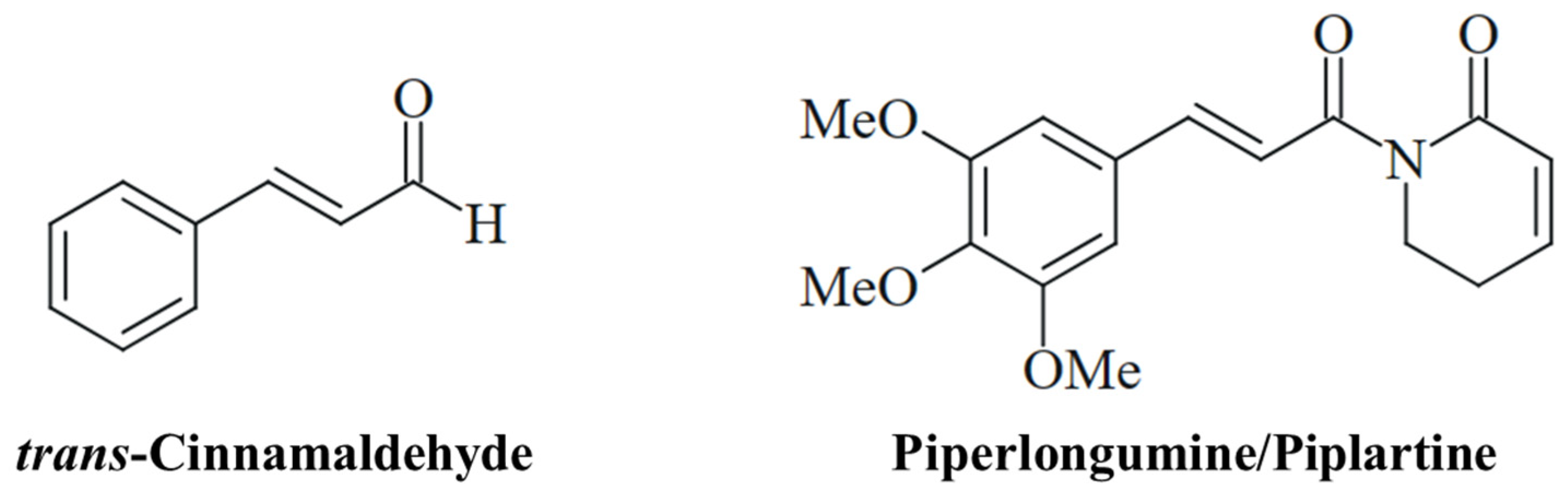
Cinnamomum plant products and ingredients are characterized by valuable pharmacological properties [9]. The essential oil of Cinnamomum species has high contents (65–80%) of the bioactive component trans-cinnamaldehyde, which has neuroprotective, anti-inflammatory, anti-hyperglycemic, anticancer, antibiotic, and antifungal properties (Figure 1) [10,11]. Several cinnamic acid derivatives showed antiparasitic activities against Plasmodium, Leishmania, nematodes, and mites [12]. Recently, the n-butanol extract of the dried leaves of the Indonesian medicinal plant Cycas rumphii, which is rich in cinnamic acid derivatives (chlorogenic acid and the hydroxycinnamic acids caffeic acid and ferulic acid), revealed anti-Toxoplasma properties in an in vivo model [13]. The cinnamide alkaloid piperlongumine/piplartine was isolated from various Piper species and exhibited anti-leishmanial and anthelmintic activities (Figure 1) [14,15]. In addition, synthetic cinnamide analogs of piperlongumine were described as NRF2 activators with anti-inflammatory and neuroprotective properties [16,17]. In line with this, the coumarin-3-yl cinnamide M220 exhibited lung- and neuroprotective effects by suppression of TNF and IFN-γ and induction of anti-inflammatory IL-10 in mice infected with Plasmodium berghei [18]. The replacement of meta-methoxy groups by halogens led to piperlongumine derivatives with distinct anti-leishmanial and anti-toxoplasmal activities likely based on interaction with tubulin [19]. L. amazonensis arginase was identified as another possible target of cinnamide derivatives [20].
Our previous finding that the replacement of a meta-methoxy group by halogens leads to antiparasitic compounds is fundamental for the present work [19]. Methoxy groups are metabolically instable and phenyl methyl ethers can be cleaved by bio-oxidation processes leading to phenolic compounds. In particular, piperlongumine was shown to undergo CYP1A2-catalyzed methoxy ether cleavage in liver microsomes forming a phenolic metabolite [21]. Various strategies to limit methoxy ether cleavage metabolism were developed. For instance, the usage of trifluoromethyl residues can reduce the disadvantageous oxidation reaction [22]. Another possibility is to remove methoxy groups from phenyl rings during drug design. In this work, we designed new halogen-substituted cinnamides lacking any methoxy group at the phenyl ring, inspired by the high anti-leishmanial activity of a recently published 3-fluorophenyl-substituted pyrimido[1,2-a]benzimidazole [23]. We describe the synthesis of the new pyrrolidin-2-one- and piperidin-2-one-based cinnamides, as well as their antiparasitic potential.

2. Materials and Methods

2.1. Chemistry

2.1.1. General

The known compounds 2a, 2c, 3a, and 3h were prepared following literature procedures and analyzed [24,25,26]. Starting compounds were obtained from TCI (Zwijndrecht, Belgium), Merck (Darmstadt, Germany), and Alfa-Aesar (Karlsruhe, Germany). Target compounds were purified by column chromatography using silica gel 60 (230–400 mesh, Merck, Darmstadt, Germany).

2.1.2. (E)-1-(3-(3-Fluororophenyl)acryloyl)pyrrolidin-2-one (2a)—Typical Procedure

3-Fluorocinnamic acid (83 mg, 0.50 mmol) was dissolved in dry CH2Cl2 (3 mL) and oxalyl chloride (218 µL, 2.54 mmol) and two drops of DMF were added. The reaction mixture was stirred at room temperature for 4 h. The solvent was evaporated in vacuum and the residue was dissolved in dry CH2Cl2. 2-Pyrrolidone (46 µL, 0.60 mmol) and Et3N (209 µL, 1.51 mmol) were added and the reaction mixture was stirred at room temperature for 24 h. The reaction mixture was purified by column chromatography (silica gel 60). Yield: 30 mg (0.13 mmol, 26%); colorless amorphous solid [24].
The syntheses and analyses of compounds 2bg and 3ah can be found in the Supplementary Materials File, together with original NMR (Figures S1–S29) and HR-MS (ESI) spectra (Figures S30–S43).

2.2. Leishmania Major Cell Isolation, Cultivation, and Activity Testing

L. major promastigotes were isolated from a patient of the Kingdom of Saudi Arabia in February 2016, and cultivated in Schneider’s Drosophila medium (Invitrogen, Waltham, MA, USA) containing 10% heat-inactivated fetal bovine serum (FBS, Invitrogen, Waltham, MA, USA) and antibiotics at 26 °C with weekly transfers. Cryopreservation of promastigotes (3 × 10⁶ parasite/mL) was carried out in liquid N2. Virulent parasites were kept by infection of female BALB/c mice (injection of 1 × 10⁶ stationary-phase promastigotes into hind footpads). After eight weeks, amastigotes were isolated from the infected mice. The BALB/c mice (males and females) used in this study were acquired from the Pharmaceutical College, King Saud University, Kingdom of Saudi Arabia, and kept in specific pathogen-free facilities. The handling of the laboratory animals followed the instructions and rules of the committee of research ethics, Deanship of Scientific Research, Qassim University, permission number 20-03-20, in line with internationally accepted standards for animal research following the 3Rs principle. The ARRIVE guidelines were employed for reporting experiments involving live animals, promoting ethical research practices. Amastigotes isolated from mice were transformed to promastigotes in Schneider’s medium (with 10% FBS and antibiotics at 26 °C). Promastigotes from less than five passages were applied for the activity tests. Logarithmic-phase L. major promastigotes were cultivated in RPMI 1640 medium (phenol red-free, Invitrogen, Waltham, MA, USA) with 10% FBS and placed on 96-well plates (106 cells mL−1, 200 μL/well). Test compounds were added to reach drug concentrations of 50, 25, 12.5, 6.25, 3.13, 1.65, and 0.75 μg mL−1. Cultures with DMSO (1%) only served as negative controls, while positive controls contained cultures with amphotericin B (50, 25, 12.5, 6.25, 3.13, 1.65, 0.75 μg mL−1). After incubation (72 h, 26 °C), the number of living promastigotes was determined (MTT colorimetric assay) upon solution of the formazan product with a detergent solution. Analysis of the samples was performed at 570 nm using an ELISA reader (xMark, Bio-Rad, Hercules, CA, USA). IC50 values were determined from three independent experiments [27].
The effects on intra-macrophageal amastigotes were studied by using peritoneal macrophages that were isolated from six–eight weeks old female BALB/c mice by aspiration. A quantity of 5 × 10⁴ cells/well in phenol red-free RPMI 1640 medium (plus 10% FBS) was added to a 96-well plate and incubated at 37 °C for 4 h in 5% CO2 to achieve cell adhesion. The medium was removed and after washing with phosphate buffered saline (PBS), promastigotes (200 μL in RPMI 1640 medium/10% FBS, 10 promastigotes: 1 macrophage) were added and the samples were incubated for 24 h (in humidified 5% CO2 at 37 °C) to promote cell infection and the differentiation of amastigotes. After washing with PBS, phenol red-free RPMI 1640 medium was added to the infected cells, which were treated with test compounds (50, 25, 12.5, 6.25, 3.13, 1.65, and 0.75 μg mL−1) and incubated at 37 °C for 72 h in humidified 5% CO2. Samples treated only with DMSO (1%) served as negative controls. Amphotericin B (reference compound, 50, 25, 12.5, 6.25, 3.13, 1.65, and 0.75 μg mL−1) served as positive control. After incubation, the medium was removed before the cells were washed, fixed, and stained (Giemsa dye) to determine the percentage of infected macrophages using a microscope, followed by calculation of the IC50 values (three independent experiments) [27,28].

2.3. Toxoplasma gondii Cultivation and Activity Testing

Vero monkey kidney cells (ATCC® CCL81™, Manassas, VA, USA) were used to cultivate T. gondii tachyzoites (RH strain, obtained from the China Agricultural University, Beijing, China). The cells were cultivated in complete RPMI 1640 medium containing 10% FBS in humidified 5% CO2 at 37 °C. Vero cells were placed in 96-well plates (5 × 10³ cells/well in 200 μL medium) and incubated at 37 °C in 5% CO2 for 24 h. The medium was removed before washing the cells with PBS. T. gondii tachyzoites in RPMI 1640 medium with 2% FBS were added to the Vero cells (ratio: 5 parasite cells/1 Vero cell). The samples were incubated at 37 °C and 5% CO2 for 5 h, and infected cells were washed with PBS and treated with compounds dissolved in DMSO (50, 25, 12.5, 6.25, 3.13, 1.65, and 0.75 μg mL−1). Samples treated only with DMSO (1%) served as negative control.
The cells were incubated at 37 °C and 5% CO2 for 72 h, and washed with PBS, followed by fixation (10% formalin). The cells were stained (1% toluidine blue) and the number of infected cells out of 200 cells (i.e., the T. gondii infection index) was investigated with an inverted photomicroscope. The following equation was applied to determine the inhibition percentage:
Inhibition (%) = (I Control − I Experimental)/(I Control) × 100.
Activities of compounds against T. gondii growth were visualized by IC50 values, which were calculated from three independent experiments [27,29].

2.4. Vero Cell and Macrophage Cytotoxicity

The MTT assay was applied to evaluate the cytotoxicity of the studied compounds. Both Vero and macrophage cells were placed in 96-well plates (5 × 10³ cells/well/200 μL) and cultivated in RPMI 1640 medium (plus 10% FBS) under 5% CO2 atmosphere at 37 °C for 24 h. After washing with PBS, cells were treated with compounds (50, 25, 12.5, 6.25, 3.13, 1.65, and 0.75 μg mL−1) for 72 h in medium with 10% FBS. Cultures solely incubated in medium plus 2% FBS served as negative controls. The medium was removed and RPMI 1640 (50 µL) containing MTT (14 µL, 5 mg mL−1) was added followed by incubation for 4 h. The supernatant was discarded once more, and the built formazan was dissolved by addition of DMSO (150 µL). The samples were analyzed colorimetrically (λ = 540 nm) with a FLUOstar OPTIMA spectrophotometer (BMG LABTECH, Ortenberg, Germany). Cytotoxicity was represented by IC50 values (three independent experiments) [30].

2.5. Computational Analyses

2.5.1. Preparation of Ligands and Targets

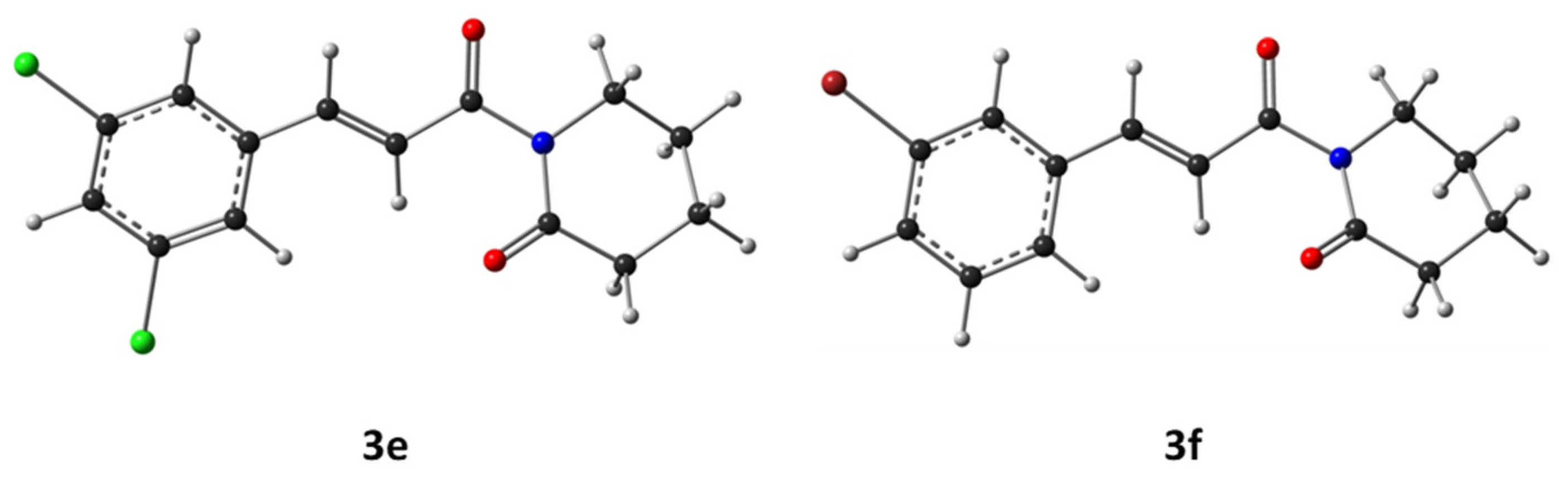
The structures of 3e and 3f were optimized using B3LYP level of theory in conjunction with base 6-311G (d, p) (Figure 2) [31,32]. The crystal structure of tubulin (PDB code: 1SA0) in complex with colchicine (resolution 3.58 Å) was obtained from the Protein Data Bank (https://www.rcsb.org, accessed on 25 December 2023) [33].

2.5.2. Molecular Docking Procedure and Validation

Docking calculations were carried out on the selected target using “MOE dock option” implemented in the Molecular Operating Environment (MOE) 2014.09 software [34]. MOE software was used to predict target–compound interactions while respecting macromolecule rigidity and allowing compound flexibility. Water, cofactors, molecules, and native ligand were removed from the PDB structure of tubulin (1SA0). The detailed docking protocol was described previously [35,36,37].
The crystallized ligand was re-docked in tubulin to validate the docking procedure. The RMSD value of the re-docked complex is between 1 and 2 Å, proving that the docking method is precise and satisfactory [38].

2.5.3. Prediction of Drug-Likeness and ADME-T

The SwissADME server (http://www.swissadme.ch/, accessed on 25 December 2023) was used to determine Lipinski, Veber and Egan rules, the number of hydrogen bond acceptors (nHA), the number of hydrogen bond donors (nHD), TPSA, nROT, MW, and LogP [39]. Additionally, pkCSM server (http://biosig.unimelb.edu.au/pkcsm/prediction, accessed on 25 December 2023) was applied to predict ADME-T parameters [38].

3. Results

3.1. Synthesis of Cinnamides

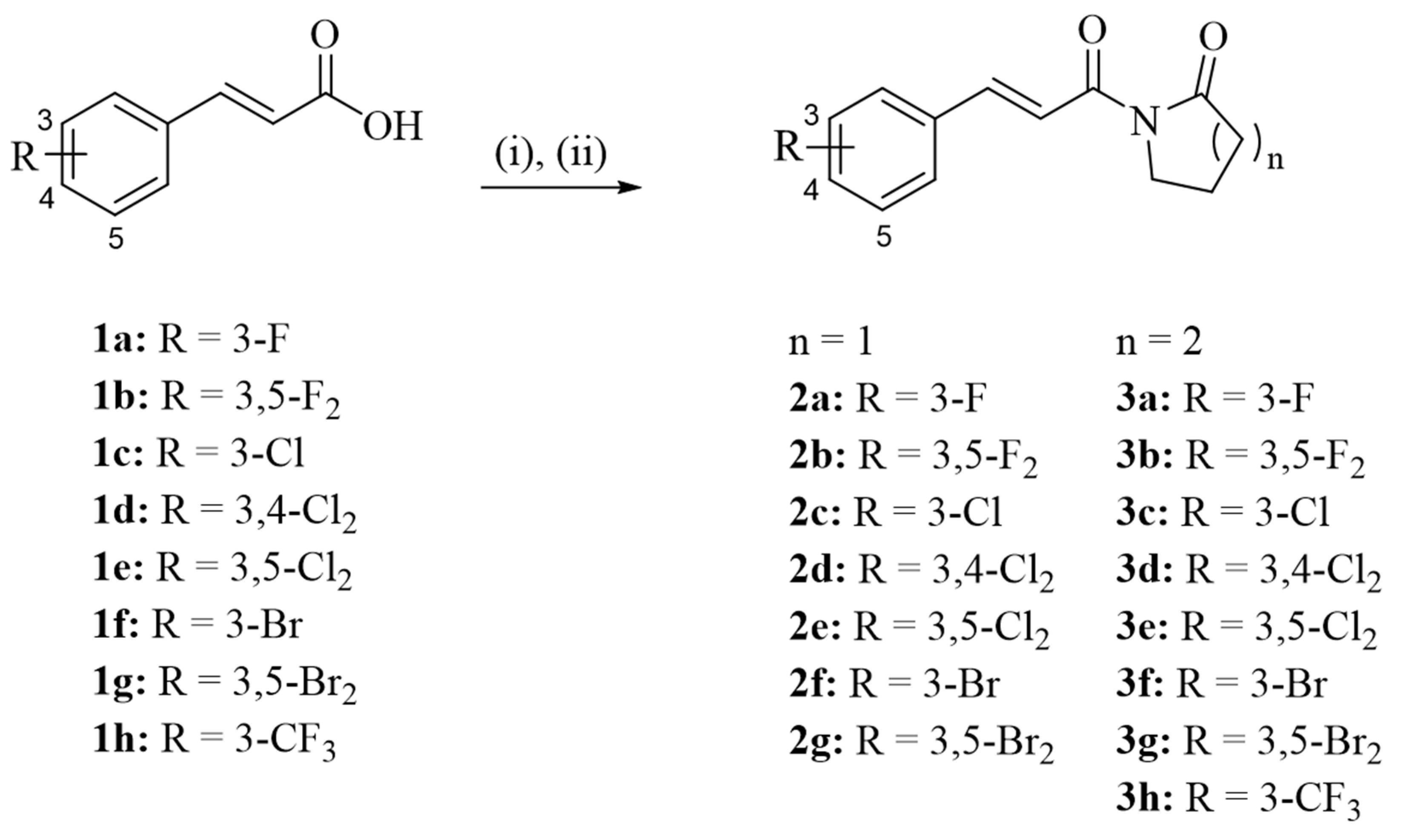
Compounds 2a, 2c, 3a, and 3h are known and were prepared from 1a, 1c, and 1h according to a literature procedure [24,25,26]. Analogously, the new compounds 2b, 2dg and 3bg were prepared from the synthetic cinnamic acid derivatives 1bg in low to moderate yields. Activation of 1ah with oxalyl chloride followed by treatment with 2-pyrrolidone or 2-piperidone provided the target compounds 2ag and 3ah (Scheme 1). The E-configuration of the cinnamides 2ag and 3ah was confirmed by the coupling constants of the olefin protons (J = 15.4–15.9 Hz) found in their 1H NMR spectra. As expected, 13C NMR spectra of the target compounds displayed two carbonyl carbons with distinct differences in chemical shifts between compound series 2 and 3 (δ = 165.4–165.9 ppm for pyrrolidin-2-one carbonyl, 168.9–169.3 ppm for piperidin-2-one carbonyl, and the cinnamoyl carbon signal at 175.7–175.8 ppm for compounds 2 and 173.9 ppm for compounds 3). IR spectra of the test compounds showed peaks associated with carbonyl groups and the methylene groups of the N-heterocycle. HR-ESIMS spectra displayed the molecular peaks of protonated compounds, and isotopes of chlorine and bromine became visible in the molecular peaks of the respective halogenated compounds.

3.2. Antiparasitic Activity

The activity of compounds 2ag and 3ah against T. gondii is shown in Table 1. In order to evaluate selectivity, their activities against Vero kidney cells and macrophages were also investigated. The clinically approved drugs atovaquone and amphotericin B served as positive controls [27].
3-Bromophenyl compound 3f (IC50 = 1.88 µM) was the most anti-toxoplasmal compound, followed by the 3,5-dichlorophenyl derivative 3e (IC50 = 2.72 µM). When compared with the activity of 3f, the activity of the positive control atovaquone was 26-fold higher. The piperidine derivatives 3 were generally more active than their close pyrrolidine analogs 2, and chloro- or bromophenyl substituents were superior to fluorophenyl substituents. Only the 3,5-difluorophenyl derivative 2b was found to be more active than its analog 3b and the other derivatives 2. The 3-fluorophenyl derivatives 2a and 3a were only weakly active, and the trifluoromethyl substituent of 3h clearly led to inactivity. The activity of the 3,5-dibromo analog 2g was also low and 10 times weaker than the activity of 3g.
All test compounds were less toxic to macrophages than the anti-leishmanial drug amphotericin B, and the most active compounds 3e and 3f showed considerable macrophage-associated SI (selectivity index) values of 15.9 and 25.6, respectively. However, toxicity to Vero cells was generally observed, leading to small Vero cell-associated SI values of the test compounds here. Only 2b, 2e, and 2f showed reduced toxicity in Vero cells when compared with their activity against T. gondii parasites (SI = 1.90–2.41).
The activities of cinnamides 2ag and 3ah against L. major promastigotes and intra-macrophageal amastigotes were also studied (Table 2). Compound 2c (IC50 = 29.0 µM) was the most anti-leishmanial derivative with moderate activity against L. major amastigotes, while 2b was the most active derivative against promastigotes (IC50 = 31.2 µM). Selectivity for L. major was low or absent, and the best SI value (2.02) for amastigotes in comparison with macrophages was observed for 2c. Notably, low or absent activities against promastigotes were observed, and most test compounds were more active against amastigotes. The majority of test compounds were active against amastigotes in the concentration range between 40 and 50 µM. 2a, 2g, and 3a were least active against amastigotes. No compound reached the salient activities of the positive control amphotericin B.

3.3. Docking Calculations and ADME-T Predictions

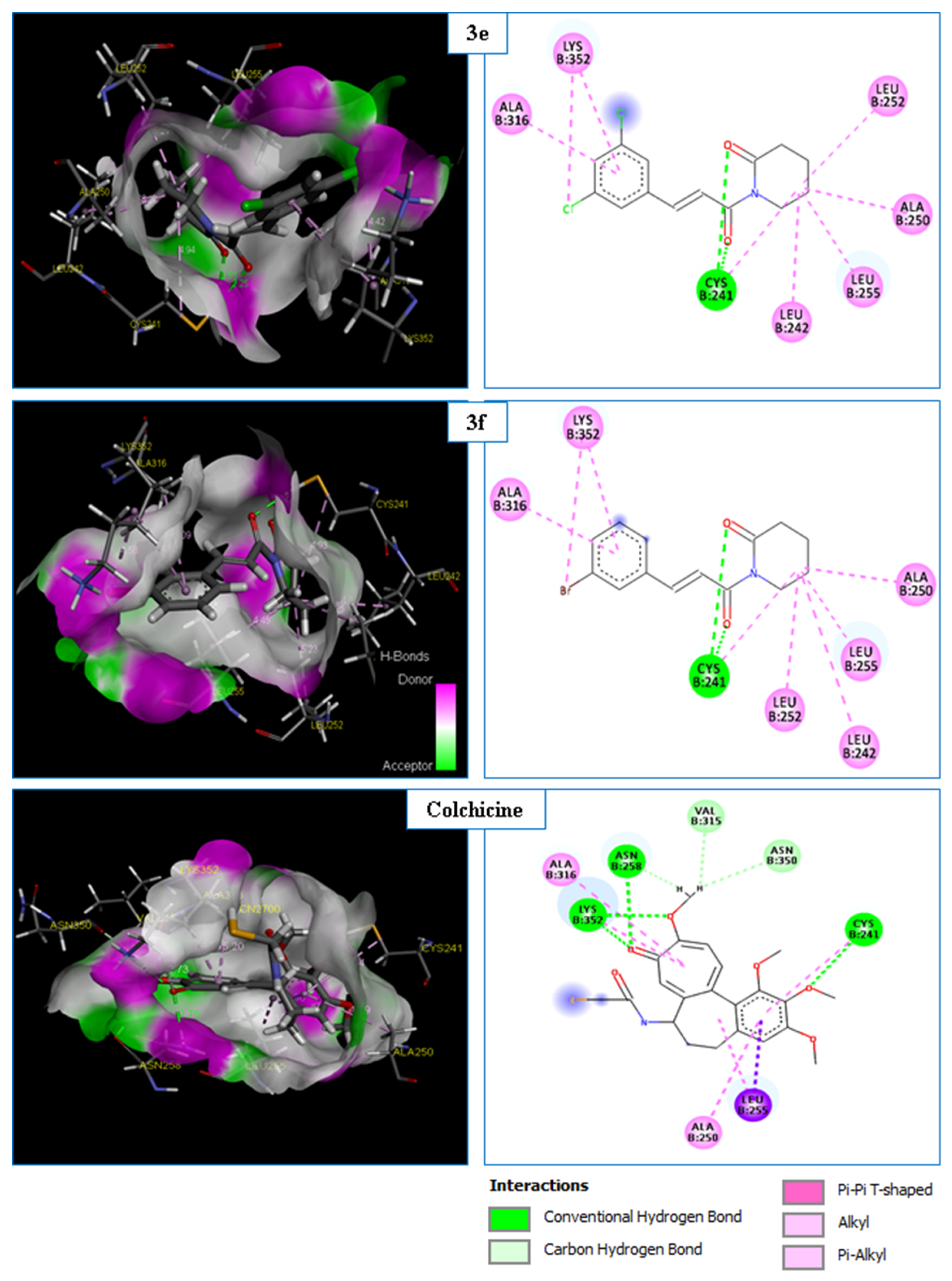
The prominent colchicine-binding site of tubulin was used for molecular docking. Visualization of the interactions between 3e and 3f and the studied target was performed using BIOVIA DS (Dassault Systèmes BIOVIA, Discovery Studio modeling environment, 2020). Compounds 3e and 3f fit well into the colchicine binding site with affinities (S-scores) of −6.075 and −5.993 kcal/mol, respectively. These affinities (S-scores) were slightly lower than the affinity of colchicine (−7.730 kcal/mol) for tubulin (Table 3).
Molecular docking results showed that each compound 3e and 3f forms two strong hydrogen bonds with CYS241, and eight hydrophobic interactions (six alkyl types and two Pi-Alkyl types) with the residues CYS241, ALA250, LEU242, LEU252, LEU255, ALA316, and LYS352 (Table 3, Figure 3).
ADME-T predictions and calculations of the physicochemical properties of 3e and 3f were performed by using SwissADME (http://www.swissadme.ch/, accessed on 25 December 2023) and pkCSM (http://biosig.unimelb.edu.au/pkcsm/prediction, accessed on 25 December 2023, Table 4) [40]. For comparison purposes, the properties of piperlongumine were calculated, too. For compounds 3e and 3f, TPSA values are less than 140 Å, hydrogen bond donors are <5 and hydrogen bond acceptors are <10. Moreover, these compounds have molecular weights below 500 g/mol, and MLog P and WLog P values less than 5. In addition, nROTB values are <11. Thus, both 3e and 3f met the criteria of drug-likeness according to the Lipinski, Veber and Egan rules.
The ADME calculations of 3e and 3f revealed acceptable cell permeability (Caco-2 values are above −5.15) and oral bioavailability (HIA values of more than 90%). Both compounds can penetrate the CNS (−3 < logPS < −2). The logBB values of 3e and 3f are 0.354 and 0.412 (i.e., logBB > 0.3), indicating a considerable tendency to cross the blood–brain barrier (BBB) (Table 4). Both compounds are not CYP2D6 substrates, but are expected to inhibit CYP1A2 and CYP2C19 isoforms. The compounds were neither OCT2 substrates, nor did they exhibit genotoxicity (AMES test) or hepatotoxicity. Moreover, 3e and 3f were predicted to not be a substrate of the efflux pump P-gp.

4. Discussion

Several new halo-substituted cinnamides were prepared in this study. The simple and cost-effective synthesis of the described cinnamides is of relevance for the development of new antiparasitic drugs and can vouchsafe drug availability in under-developed countries. They exhibited strong activity against pathogenic T. gondii parasites but not against L. major. Chloro- and bromo-substituents were superior in terms of anti-toxoplasmal activity, which also depended on the 2-pyrrolidone and 2-piperidone azacycle. This high selectivity for T. gondii is remarkable and was only observed for a 3-chloro-4,5-dimethoxycinnamide derivative published before [19]. It can be stated that halogenated cinnamide derivatives without piperlongumine-characteristic methoxy groups have the potential to selectively kill apicomplexan T. gondii parasites. In terms of structure–activity relationships, chloro- and bromo-substituents and piperidin-2-one rings were in many cases superior to fluoro-substituents and pyrrolidin-2-one in the applied T. gondii model. The growing importance of the piperidin-2-one ring system for drug design and development was reviewed recently where piperidin-2-one was dubbed a privileged scaffold [41]. Strikingly, the presence of a trifluoromethyl group led to inactivity. Altogether, this is in stark contrast to the antiparasitic activities of previously described fluorophenyl and trifluoromethylphenyl compounds [23,27]. Low toxicity to macrophages indicates a considerable safety profile; however, the observed toxicity to renal Vero cells needs to be considered and properly managed. The combination of active compounds 3e and 3f with approved antiparasitic drugs might be a reasonable strategy to reduce drug dosage and renal toxicity. In terms of piperlongumine, synergy effects were observed in Schistosoma mansoni worm parasites in combination with praziquantel or dermaseptin [42,43]. In addition, several drugs are under investigation for the treatment of acute kidney injury, which might be investigated in combination with active cinnamides [44]. To prevent kidney toxicity, suitable drug formulations might also be useful. A hydrogel formulation for brain implantation was successfully applied for piperlongumine, which might be a promising method to tackle T. gondii brain cysts by 3e and 3f without adverse effects [45].
Albeit only moderately anti-leishmanial, compound 2c was more active against intra-macrophageal amastigotes than against promastigotes. Valuable drug-relevant information about new anti-leishmanial drug candidates can be obtained from experiments using intra-macrophageal amastigotes due to the host–pathogen interaction [46]. Moreover, many approved anti-leishmanial drugs are active against intracellular/intra-macrophage amastigotes [47]. However, the moderate anti-leishmanial activity of 2c needs to be increased, either by chemical modification/optimization or by combination with other anti-leishmanial drugs, in order to obtain a promising leishmaniasis therapy. Nevertheless, the structure of 2c might serve as a starting point for sophisticated optimization efforts.
Since 3e and 3f showed reasonable activities against T. gondii parasites, they might also be promising test compounds for the treatment of infections caused by other apicomplexan parasites such as Plasmodium and Babesia species [48]. Recently, 3,4,5-trimethoxycinnamates exhibited moderate activity against Trypanosoma cruzi, the causative agent of Chagas disease, while pyrazolyl acrylamide derivatives were active against Trypanosoma brucei, which might be further therapeutic targets for the halogenated cinnamides described in this study [49,50]. It is also noteworthy that cinnamides possess immunomodulatory and anti-inflammatory activities, which were accompanied by a low toxicity to macrophages described in this work [24,51]. Inflammasome assembly and the release of pro-inflammatory cytokines and activated protease caspase-1 play a crucial role in the pathogenicity of T. gondii [52,53]. Ginger extract was found to suppress edema and inflammation accompanied by protective effects on neurons and hepatocytes in chronically T. gondii-infected mice [54]. In addition, piperlongumine inhibited NLRP3 inflammasome formation [55]. Thus, future studies on the anti-inflammatory effects of anti-toxoplasmal cinnamides appear to be promising and might provide a hint at another host-related mechanism of antiparasitic cinnamide action.
Tubulin and microtubules were identified as a promising target for the therapy of protozoal parasite infections such as leishmaniasis and toxoplasmosis [56,57]. Notably, microtubules play an important role during the T. gondii infection and cell invasion process, both in the parasite and in the attacked host cells [58,59]. The docking results suggest tubulin as a conceivable target for the cinnamides 3e and 3f (not necessarily the sole target since other targets might also play a role) which needs to be confirmed by in vitro experiments in the future. Recent studies underscored the central role of CYS241 and ALA316 in the binding to the colchicine binding site [60,61]. The comparison with previously published 3-halo-4,5-dimethoxyphenyl-based cinnamides with proven tubulin binding properties is of certain interest [19]. Compounds 3e and 3f lack the ASN258 and LYS254 interactions with the aromatic ring of the known methoxy-substituted analogs. Instead, LYS352 displayed two interactions with the arene ring and the meta-halo substituent of 3e and 3f. The S-scores of 3e and 3f were in the range of, or only slightly lower than, those of the most active methoxyphenyl-based cinnamide analogs (S-scores between −5.9 kcal/mol and −6.8 kcal/mol) [19].
The docking results show that piperidin-2-one compounds interact with the colchicine binding site in a way that differs from the mode of colchicine. While the trimethoxyphenyl residue of colchicine interacts with CYS241, this crucial contact is formed by the N-arylpiperidine moieties of 3e and 3f. In contrast, the halophenyl rings of 3e and 3f formed interactions with residues binding the colchicine tropolone ring. This tubulin interaction of the cinnamides 3e and 3f is in analogy to the tubulin binding mode of previously published piperidin-2-one-based cinnamide derivatives [19]. More detailed research about their mechanism of action in apicomplexan parasites is necessary to identify the reasons for the described Toxoplasma-selective activity of the new halogenated cinnamide derivatives. Summing up, 3e and 3f showed high affinities for the colchicine binding site of tubulin based on high negative score energies and the presence of several drug-target contacts. Their tubulin binding mode matches with the binding mode of previously published analogs, which is a strong hint at tubulin as a possible target of 3e and 3f [19]. Of note, piperlongumine also reportedly interacted with tubulin, leading to tubulin polymerization inhibition; however, the obtained docking data of 3e and 3f suggest that methoxy substituents are probably not mandatory for tubulin binding [62]. In addition, we found that LYS352 established two hydrophobic interactions (sigma hole), the first one between the chlorine (Cl) atom of the compound 3e and LYS352, and the second between the bromine (Br) atom of the compound 3f and LYS352. When the inhibitor enters the pocket containing CYS241 and LYS352, the LYS352 polarizes the inhibitor, and, by pulling the electron density of lysine away from the structure, it deepens the sigma hole on the halogen in a precise direction, leading to the formation of a strong bond [63,64].
Finally, the ADME-T calculations provided useful information about possible off-target effects and drug-likeness. Both compounds 3e and 3f obey the Lipinski, Veber, and Egan rules, indicating beneficial physicochemical attributes and considerable drug-likeness of these cinnamides based on low toxicity and acceptable drug distribution. Compound 3f (0.412) has a higher logBB than compound 3e (0.354). This suggests that 3f is slightly more lipophilic or has a more favorable molecular weight/polar surface area (PSA) profile for crossing the barrier compared to 3e. In addition, if we compare these results with the reference compound piperlongumine, we can note that piperlongumine has a lower logBB value (−0.174), which indicates a poorer distribution to the brain (lower permeability) compared to the studied compounds (3f and 3e). The high logBB values together with the prediction that both compounds are not P-gp substrates indicate that it is possible to design a new cinnamide drug for the treatment of brain diseases. Inhibition of CYP1A2 and CYP2C19 by 3e and 3f was predicted, which should be kept in mind for future drug combination experiments. Although piperlongumine was not a CYP1A2 inhibitor according to our calculations, it should be mentioned that piperlongumine was described as an in vitro inhibitor of human CYP1A2, which supports the calculated CYP1A2 inhibition by its derivatives 3e and 3f [65].

5. Conclusions

The promising activity against Toxoplasma gondii parasites (with IC50 values as low as 1.9 µM), as well as the strong selectivity for these apicomplexan parasites by new halogen-substituted piperlongumine-type cinnamides can pave the way for the development of improved anti-toxoplasmal drug candidates. This conclusion is supported by the expected amenable pharmacological and physicochemical properties of the cinnamides according to computer calculations. Molecular docking experiments suggested tubulin as a possible drug target of the active cinnamides (S-scores of −6.075 and −5.993 kcal/mol), which needs to be confirmed by future in vitro experiments.
This study has some limitations. For instance, the proposed tubulin binding is a computational hypothesis lacking biochemical validation such as tubulin polymerization assay. Tubulin binding experiments should include parasite (T. gondii) tubulin protein. Moreover, in terms of T. gondii assays, we focused solely on tachyzoites, and the response of bradyzoite-stage parasites to the cinnamides remains unexamined.

Supplementary Materials

The following supporting information can be downloaded at: https://www.mdpi.com/article/10.3390/microbiolres17060102/s1, syntheses of compounds 2bg and 3ah, original spectra of test compounds (NMR, HR-MS). Figures S1–29: NMR spectra; Figures S30–S43: HR-MS (ESI) spectra.

Author Contributions

Conceptualization, I.S.A.N. and B.B.; methodology, I.S.A.N., I.D., T.A.K., R.B.S. and B.B.; validation, I.S.A.N., T.A.K. and W.S.K.; formal analysis, I.S.A.N., W.S.K., R.B.S. and B.B.; investigation, I.S.A.N., T.A.K., R.B.S. and B.B.; resources, I.S.A.N., I.D., W.S.K., T.A.K., R.S., R.B.S., N.A. and A.O.A.-G.; software, I.D. and R.B.S.; data curation, I.S.A.N., I.D. and R.B.S.; writing—original draft preparation, B.B.; writing—review and editing, I.S.A.N., I.D., W.S.K., T.A.K., R.S., R.B.S., N.A. and A.O.A.-G.; supervision, W.S.K. and B.B.; project administration, B.B.; funding acquisition, I.S.A.N. All authors have read and agreed to the published version of the manuscript.

Funding

The authors would like to thank the Deanship of Graduate Studies and Scientific Research at Qassim University for financial support (QU-APC-2026).

Institutional Review Board Statement

The animal study protocol was approved by the committee of research ethics, Deanship of Scientific Research, Qassim University, permission number 20–03-20, and date of approval 30 December 2025.

Informed Consent Statement

Not applicable.

Data Availability Statement

The data presented in this study are available on request from the authors.

Conflicts of Interest

The authors declare no conflicts of interest.

Abbreviations

The following abbreviations are used in this manuscript:
ADME-TAbsorption, distribution, metabolism, excretion—toxicity
AmBAmphotericin B
ATOAtovaquone
BBBBlood–brain barrier
CLCutaneous leishmaniasis
CNSCentral nervous system
CYP1A2Cytochrome P450 1A2
FBSFetal bovine serum
HIAHuman intestinal absorption
IFN-γInterferon-γ
ILInterleukin
MTT3-(4,5-Dimethylthiazol-2-yl)-2,5-diphenyltetrazolium bromide
NRF2Nuclear factor erythroid 2-related factor 2
n-ROTBNumber of rotatable bonds
NTDNeglected tropical disease
OCT2Organic cation transporter 2
PBSPhosphate buffered serum
P-gpP-glycoprotein
TNFTumor necrosis factor
TPSATopological polar surface area

References

  1. Kumar, V.; Bhargava, G. Editorial: Protozoal infections: Treatment and challenges. Front. Cell. Infect. Microbiol. 2022, 12, 1002602. [Google Scholar] [CrossRef]
  2. Leishmaniasis. Available online: https://www.who.int/en/news-room/fact-sheets/detail/leishmaniasis (accessed on 30 October 2024).
  3. Bennis, I.; Belaid, L.; de Brouwere, V.; Filali, H.; Sahibi, H.; Boelaert, M. “The mosquitoes that destroy your face”. Social impact of cutaneous leishmaniasis in south-eastern Morocco, a qualitative study. PLoS ONE 2017, 12, e0189906. [Google Scholar] [CrossRef]
  4. Kassi, M.; Afghan, A.; Rehman, R.; Kasi, P.M. Marring leishmaniasis: The stigmatization and the impact of cutaneous leishmaniasis in Pakistan and Afghanistan. PLoS Negl. Trop. Dis. 2008, 2, e259. [Google Scholar] [CrossRef]
  5. Van Bocxlaer, K.; Caridha, D.; Black, C.; Vesely, B.; Leed, S.; Sciotti, R.J.; Wijnant, G.-J.; Yardley, V.; Braillard, S.; Mowbray, C.E.; et al. Novel benzoxaborole, nitroimidazole and aminopyrazoles with activity against experimental cutaneous leishmaniasis. IJP Drugs Drug Resist. 2019, 11, 129–138. [Google Scholar] [CrossRef]
  6. Sangshetti, J.N.; Khan, F.A.K.; Kulkarni, A.A.; Arote, R.; Patil, R.H. Antileishmanial drug discovery: Comprehensive review of the last 10 years. RSC Adv. 2015, 5, 32376–32415. [Google Scholar] [CrossRef]
  7. El Hajj, R.; Tawk, L.; Itani, S.; Hamie, M.; Ezzeddine, J.; El Sabban, M.; El Hajj, H. Toxoplasmosis: Current and emerging parasite druggable targets. Microorganisms 2021, 9, 2531. [Google Scholar] [CrossRef]
  8. Dunay, I.R.; Gajurel, K.; Dhakal, R.; Liesenfeld, O.; Montoya, J.G. Treatment of toxoplasmosis: Historical perspective, animal models, and current clinical practice. Clin. Microbiol. Rev. 2018, 31, e00057-17. [Google Scholar] [CrossRef]
  9. Kumar, S.; Kumari, R.; Mishra, S. Pharmacological properties and their medicinal uses of Cinnamomum: A review. J. Pharm. Pharmacol. 2019, 71, 1735–1761. [Google Scholar] [CrossRef]
  10. Sharifi-Rad, J.; Dey, A.; Koirala, N.; Shaheen, S.; El Omari, N.; Salehi, B.; Goloshvili, T.; Silva, N.C.C.; Bouyahya, A.; Vitalini, S.; et al. Cinnamomum species: Bridging phytochemistry knowledge, pharmacological properties and toxicological safety for health benefits. Front. Pharmacol. 2021, 12, 600139. [Google Scholar] [CrossRef] [PubMed]
  11. Konings, M.; Eadie, K.; Lim, W.; Fahal, A.H.; Mouton, J.; Tesse, N.; van de Sande, W.W.J. The synthetic synergistic cinnamon oil CIN-102 is active against Madurella mycetomatis, the most common causative agent of mycetoma. PLoS Negl. Trop. Dis. 2021, 15, e0009488. [Google Scholar] [CrossRef]
  12. Ruwizhi, N.; Aderibigbe, B.A. Cinnamic acid derivatives and their biological efficacy. Int. J. Mol. Sci. 2020, 21, 5712. [Google Scholar] [CrossRef]
  13. El-Seadawy, H.M.; Ragab, A.E.; El-Aasr, M.; El-Seoud, K.A.A.; Elblihy, A.A.; El-Alfy, E.; Elgawad, H.A.; Saleh, S.; Sheta, H.; Elseadawy, R. Phytochemical content of Cycas rumphii n-butanol fraction and antiprotozoal activity against Toxoplasma gondii in vivo. Sci. Rep. 2025, 15, 15697. [Google Scholar] [CrossRef] [PubMed]
  14. Ticona, J.C.; Bilbao-Ramos, P.; Flores, N.; Dea-Ayuela, M.A.; Bolás-Fernández, F.; Jiménez, I.A.; Bazzocchi, I.L. (E)-Piplartine isolated from Piper pseudoarboreum, a lead compound against leishmaniasis. Foods 2020, 9, 1250. [Google Scholar] [CrossRef] [PubMed]
  15. Daley, S.; Cordell, G.A. Alkaloids in contemporary drug discovery to meet global disease needs. Molecules 2021, 26, 3800. [Google Scholar] [CrossRef]
  16. Seo, Y.H.; Kim, J.-K.; Jun, J.-G. Synthesis and biological evaluation of piperlongumine derivatives as potent anti-inflammatory agents. Bioorg. Med. Chem. Lett. 2014, 24, 5727–5730. [Google Scholar] [CrossRef]
  17. Peng, S.; Zhang, B.; Meng, X.; Yao, J.; Fang, J. Synthesis of piperlongumine analogues and discovery of nuclear factor erythroid 2-related factor 2 (Nrf2) activators as potential neuroprotective agents. J. Med. Chem. 2015, 58, 5242–5255. [Google Scholar] [CrossRef]
  18. Gaio, P.; Cramer, A.; de Melo Oliveira, N.F.; Porto, S.; Kramer, L.; Rabelo, R.A.N.; das Dores Pereira, R.; de Oliveira Santos, L.L.; Barbosa, C.L.N.; Silva Oliveira, F.M.; et al. N-(coumarin-3-yl)cinnamamide promotes immunomodulatory, neuroprotective, and lung function-preserving effects during severe malaria. Pharmaceuticals 2024, 17, 46. [Google Scholar] [CrossRef]
  19. Khan, T.A.; Al Nasr, I.S.; Koko, W.S.; Ma, J.; Eckert, S.; Brehm, L.; Ben Said, R.; Daoud, I.; Hanachi, R.; Rahali, S.; et al. Evaluation of the antiparasitic and antifungal activities of synthetic piperlongumine-type cinnamide derivatives: Booster effect by halogen substituents. ChemMedChem 2023, 18, e202300132. [Google Scholar] [CrossRef]
  20. Da Silva, E.R.; dos Santos Simone Come, J.A.A.; Brogi, S.; Calderone, V.; Chemi, G.; Campiani, G.; de Sousa Oliveira, T.M.F.; Pham, T.-N.; Pudlo, M.; Girard, C.; et al. Cinnamides target Leishmania amazonensis arginase selectively. Molecules 2020, 25, 5271. [Google Scholar] [CrossRef] [PubMed]
  21. Moreira, F.d.L.; Habenschus, M.D.; Barth, T.; Marques, L.M.M.; Pilon, A.C.; Bolzani, V.d.S.; Vessecchi, R.; Lopes, N.P.; de Oliveira, A.R.M. Metabolic profile and safety of piperlongumine. Sci. Rep. 2016, 6, 33646. [Google Scholar] [CrossRef]
  22. Novás, M.; Matos, M.J. The role of trifluoromethyl and trifluoromethoxy groups in medicinal chemistry: Implications for drug design. Molecules 2025, 30, 3009. [Google Scholar] [CrossRef]
  23. Al Nasr, I.S.; Koko, W.S.; Khan, T.A.; Schobert, R.; Biersack, B. Antiparasitic activity of fluorophenyl-substituted pyrimido[1,2-a]benzimidazoles. Biomedicines 2023, 11, 219. [Google Scholar] [CrossRef]
  24. Wang, Z.; Mu, W.; Gong, Z.; Liu, G.; Yang, J. Meta-substituted piperlongumine derivatives attenuate inflammation in both RAW264.7 macrophages and a mouse model of colitis. Bioorg. Chem. 2021, 117, 10565. [Google Scholar] [CrossRef]
  25. Thai, K.; Gravel, M. Design, synthesis, and application of chiral electron-poor guanidines as hydrogen-bonding catalysts for the Michael reaction. Tetrahedron Asymm. 2010, 21, 751–755. [Google Scholar] [CrossRef]
  26. Mu, W.-W.; Li, P.-X.; Liu, Y.; Yang, J.; Liu, G.-Y. The potential role of the 5,6-dihydropyridin-2(1H)-one unit of piperlongumine on the anticancer activity. RSC Adv. 2020, 10, 42128–42136. [Google Scholar] [CrossRef]
  27. Al Nasr, I.S.; Hanachi, R.; Said, R.B.; Rahali, S.; Tangour, B.; Abdelwahab, S.I.; Farasani, A.; Taha, M.M.E.; Bidwai, A.; Koko, W.S.; et al. p-Trifluoromethyl- and p-pentafluorothio-substituted curcuminoids of the 2,6-di[(E)-benzylidene)]cycloalkanone type: Syntheses and activities against Leishmania major and Toxoplasma gondii parasites. Bioorg. Chem. 2021, 114, 105099. [Google Scholar] [CrossRef]
  28. Osorio, E.; Arango, G.; Jiménez, N.; Alzate, F.; Ruiz, G.; Gutiérrez, D.; Paco, M.A.; Giménez, A.; Robledo, S. Antiprotozoal and cytotoxic activities in vitro of Colombian Annonaceae. J. Ethnopharmacol. 2007, 111, 630–635. [Google Scholar] [CrossRef]
  29. Jelali, H.; Al Nasr, I.; Koko, W.; Khan, T.; Deniau, E.; Sauthier, M.; Alresheedi, F.; Hamdi, N. Synthesis, characterization and in vitro bioactivity studies of isoindolin-1-3-phosophonate compounds. J. Heterocycl. Chem. 2022, 59, 493–506. [Google Scholar] [CrossRef]
  30. Koko, W.S.; Mesaik, M.A.; Yousaf, S.; Galal, M.; Choudhary, M.I. In vitro immunomodulating properties of selected Sudanese medicinal plants. J. Ethnopharmacol. 2008, 118, 26–34. [Google Scholar] [CrossRef]
  31. Lee, C.; Yang, W.; Parr, R.G. Development of the Colle-Salvetti correlation-energy formula into a functional of the electron density. Phys. Rev. B 1988, 37, 785–789. [Google Scholar] [CrossRef]
  32. Krishnan, R.; Binkley, J.S.; Seeger, R.; Pople, J.A. Self-consistent molecular orbital methods. XX. A basis set for correlated wave functions. J. Chem. Phys. 1980, 72, 650–654. [Google Scholar] [CrossRef]
  33. Ravelli, R.B.; Gigant, B.; Curmi, P.A.; Jourdain, I.; Lachkar, S.; Sobel, A.; Knossow, M. Insight into tubulin regulation from a complex with colchicine and a stathmin-like domain. Nature 2004, 428, 198–202. [Google Scholar] [CrossRef]
  34. Molecular Operating Environment (MOE); Version 2014.09; Chemical Computing Group Inc.: Montreal, QC, Canada, 2014.
  35. Daoud, I.; Melkemi, N.; Salah, T.; Ghalem, S. Combined QSAR, molecular docking and molecular dynamics study on new acetylcholinesterase and butyrylcholinesterase inhibitors. Comput. Biol. Chem. 2018, 74, 304–326. [Google Scholar] [CrossRef]
  36. Toumi, A.; Boudriga, S.; Hamden, K.; Daoud, I.; Askri, M.; Soldera, A.; Lohier, J.F.; Strohmann, C.; Brieger, L.; Knorr, M. Diversity-oriented synthesis of spiropyrrolo[1,2-a]isoquinoline derivatives via diastereoselective and regiodivergent three-component 1,3-dipolar cycloaddition reactions: In vitro and in vivo evaluation of the antidiabetic activity of rhodanine analogues. J. Org. Chem. 2021, 86, 13420–13445. [Google Scholar] [CrossRef]
  37. Daoud, I.; Mesli, F.; Melkemi, N.; Ghalem, S.; Salah, T. Discovery of potential SARS-CoV 3CL protease inhibitors from approved antiviral drugs using: Virtual screening, molecular docking, pharmacophore mapping evaluation and dynamics simulation. J. Biomol. Struct. Dyn. 2022, 40, 12574–12591. [Google Scholar] [CrossRef]
  38. Bajda, M.; Więckowska, A.; Hebda, M.; Guzior, N.; Sotriffer, C.A.; Malawska, B. Structure-based search for new inhibitors of cholinesterases. Int. J. Mol. Sci. 2013, 14, 5608–5632. [Google Scholar] [CrossRef]
  39. Daina, A.; Michielin, O.; Zoete, V. SwissADME: A free web tool to evaluate pharmacokinetics, drug-likeness and medicinal chemistry friendliness of small molecules. Sci. Rep. 2017, 7, 42717. [Google Scholar] [CrossRef]
  40. Pires, D.E.; Blundell, T.L.; Ascher, D.B. pkCSM: Predicting small-molecule pharmacokinetic and toxicity properties using graph-based signatures. J. Med. Chem. 2015, 58, 4066–4072. [Google Scholar] [CrossRef]
  41. Rex, A.J.; Parthiban, P. Recent advances in piperidones as privileged scaffolds for drug discovery and development. Med. Chem. Res. 2026, 35, 340–376. [Google Scholar] [CrossRef]
  42. Campelo, Y.D.M.; Mafud, A.C.; Véras, L.M.C.; Guimaraes, M.A.; Yamaguchi, L.F.; Lima, D.F.; Arcanio, D.D.R.; Kato, M.J.; Mendonca, R.Z.; Pinto, P.L.S.; et al. Synergistic effects of in vitro combinations of piplartine, epiisopiloturine and praziquantel against Schistosoma mansoni. Biomed. Pharmacother. 2017, 88, 488–499. [Google Scholar] [CrossRef]
  43. de Moraes, J.; Keiser, J.; Ingram, K.; Nascimento, C.; Yamaguchi, L.F.; Bittencourt, C.R.; Bemquerer, M.P.; Leite, J.R.; Kato, M.J.; Nakano, E. In vitro synergistic interaction between amide piplartine and antimicrobial peptide dermaseptin against Schistosoma mansoni schistosomula and adult worms. Curr. Med. Chem. 2013, 20, 301–309. [Google Scholar] [CrossRef]
  44. Benoit, S.W.; Devarajan, P. Acute kidney injury: Emerging pharmacotherapies in current clinical trials. Pediatr. Nephrol. 2018, 33, 779–787. [Google Scholar] [CrossRef]
  45. Conde, J.; Pumroy, R.A.; Baker, C.; Rodrigues, T.; Guerreiro, A.; Sousa, B.B.; Marques, M.C.; de Almeida, B.P.; Lee, S.; Leites, E.P.; et al. Allosteric antagonist modulation of TRPV2 by piperlongumine impairs glioblastoma progression. ACS Cent. Sci. 2021, 7, 868–881. [Google Scholar] [CrossRef]
  46. de Mulder, G.; Ang, K.K.H.; Chen, S.; Arkin, M.R.; Engel, J.C.; McKerrow, J.H. A screen against Leishmania intracellular amastigotes: Comparison to a promastigote screen and identification of a host cell-specific hit. PLoS Negl. Trop. Dis. 2011, 5, e1253. [Google Scholar] [CrossRef]
  47. Griewank, K.; Gazeau, C.; Eichhorn, A.; von Strebut, E. Miltefosine efficiently eliminates Leishmania major amastigotes from infected murine dendritic cells without altering their immune functions. Antimicrob. Agents Chemother. 2010, 54, 652–659. [Google Scholar] [CrossRef]
  48. Rangel, G.W.; Linás, M. Re-envisioning anti-apicomplexan parasite drug discovery approaches. Front. Cell. Infect. Microbiol. 2021, 11, 691121. [Google Scholar] [CrossRef] [PubMed]
  49. Filho, C.S.M.B.; de Menezes, R.R.P.P.B.; Magalhães, E.P.; Castillo, Y.P.; Martins, A.M.C.; de Sousa, D.P. Piplartine-inspired 3,4,5-trimethoxycinnamates: Trypanocidal, mechanism of action, and in silico evaluation. Molecules 2023, 28, 4512. [Google Scholar] [CrossRef]
  50. Agarwal, D.S.; Francisco, K.R.; Beteck, R.M.; Kaur, Y.; Cheng, A.Y.; Caffrey, C.R.; Legoabe, L.J. Synthesis of pyrazolyl acrylamide-chalcone conjugates with sub-micromolar antitrypanosomal activities. Discov. Chem. 2025, 2, 291. [Google Scholar] [CrossRef]
  51. Fukui-Silva, L.; de Souza, F.C.R.; Amorim, C.S.; de Moraes, J. Piplartine as an innovative natural product with dual antiparasitic and immunomodulatory actions. J. Immunol. Res. 2026, 2026, 9793044. [Google Scholar] [CrossRef]
  52. Wang, Y.; Zhu, J.; Cao, Y.; Shen, J.; Yu, L. Insight into inflammasome signaling: Implications for Toxoplasma gondii infection. Front. Immunol. 2020, 11, 583193. [Google Scholar] [CrossRef]
  53. Ahmadpour, E.; Babaie, F.; Kazemi, T.; Mehrani Moghaddam, S.; Moghimi, A.; Hosseinzadeh, R.; Nissapatorn, V.; Pagheh, A.S. Overview of apoptosis, autophagy, and inflammatory processes in Toxoplasma gondii infected cells. Pathogens 2023, 12, 253. [Google Scholar] [CrossRef]
  54. El-kady, A.M.; Al-Megrin, W.A.I.; Abdel-Rahman, I.A.M.; Sayed, E.; Alshehri, E.A.; Wakid, M.H.; Baakdah, F.M.; Mohamed, K.; Elshazly, H.; Alobaid, H.M.; et al. Ginger is a potential therapeutic for chronic toxoplasmosis. Pathogens 2022, 11, 798. [Google Scholar] [CrossRef]
  55. Shi, J.; Xia, Y.; Wang, H.; Yi, Z.; Zhang, R.; Zhang, X. Piperlongumine is an NLRP3 inhibitor with anti-inflammatory activity. Front. Pharmacol. 2022, 12, 18326. [Google Scholar] [CrossRef] [PubMed]
  56. Morgan, R.E.; Ahn, S.; Nzimiro, S.; Fotie, J.; Phelps, M.A.; Cotrill, J.; Yakovich, A.J.; Sackett, D.L.; Dalton, J.T.; Werbovetz, K.A. Inhibitors of tubulin assembly identified through screening a compound library. Chem. Biol. Drug Des. 2008, 72, 513–524. [Google Scholar] [CrossRef]
  57. Morrissette, N.S.; Mitra, A.; Sept, D.; Sibley, L.D. Dinitroanilines bind α-tubulin to disrupt microtubules. Mol. Biol. Cell 2004, 15, 1960–1968. [Google Scholar] [CrossRef] [PubMed]
  58. Barik, S.; Andrews, J. Host–parasite interactions in Toxoplasma gondii-infected cells: Roles of mitochondria, microtubules, and the parasitophorous vacuole. Int. J. Mol. Sci. 2024, 25, 13459. [Google Scholar] [CrossRef]
  59. Zeng, J.; Fu, Y.; Qian, P.; Huang, W.; Niu, Q.; Beatty, W.L.; Brown, A.; Sibley, L.D.; Zhang, R. Atomic models of the Toxoplasma cell invasion machinery. Nat. Struct. Mol. Biol. 2026, 33, 157–170. [Google Scholar] [CrossRef] [PubMed]
  60. Duan, Y.-T.; Man, R.-J.; Tang, D.-J.; Yao, Y.-F.; Tao, X.-X.; Yu, C.; Liang, X.-Y.; Makawana, J.A.; Zou, M.-J.; Wang, Z.-C.; et al. Design, synthesis and antitumor activity of novel link-bridge and B-ring modified combretastatin A-4 (CA-4) analogues as potent antitubulin agents. Sci. Rep. 2016, 6, 25387. [Google Scholar] [CrossRef]
  61. Abu El-Azm, F.S.; El-Shahawi, M.M.; Elgubbi, A.S.; Madkour, H.M. Design, synthesis, anti-proliferative activity, and molecular docking studies of novel benzo[f]chromene, chromeno[2,3-d]pyrimidines and chromenotriazolo[1,5-c]pyrimidines. Synth. Commun. 2020, 50, 669–683. [Google Scholar] [CrossRef]
  62. Meegan, M.J.; Nathwani, S.; Twamley, B.; Zisterer, D.M.; O’Boyle, N.M. Piperlongumine (piplartine) and analogues: Antiproliferative microtubule-destabilising agents. Eur. J. Med. Chem. 2017, 125, 453–463. [Google Scholar] [CrossRef]
  63. Tang, S.; Zhou, Z.; Jiang, Z.; Zhu, W.; Qiao, D. Indole-based tubulin inhibitors: Binding modes and SARs investigations. Molecules 2022, 27, 1587. [Google Scholar] [CrossRef]
  64. Hussein, S.A.A.; Mahmood, A.A.R.; Tahtamouni, L.H.; Balakit, A.A.; Yaseen, Y.S.; Al-Hasani, R.A. New combretastatin analogs as anticancer agents: Design, synthesis, microtubules polymerization inhibition, and molecular docking studies. Chem. Biodivers. 2023, 20, e202201206. [Google Scholar] [CrossRef]
  65. Song, M.; Hwang, J.Y.; Lee, M.Y.; Jee, J.-G.; Lee, Y.M.; Bae, J.-S.; Kim, J.A.; Lee, S.H.; Lee, S. In vitro inhibitory effect of piperlongumine isolated from Piper longum on human cytochrome P450 1A2. Arch. Pharm. Res. 2014, 37, 1063–1068. [Google Scholar] [CrossRef]
Figure 1. Structures of trans-cinnamaldehyde and piperlongumine/piplartine.
Microbiolres 17 00102 g001
Figure 2. B3LYP/6-311G (d, p) optimized geometries of the most active compounds 3e and 3f.
Microbiolres 17 00102 g002
Scheme 1. Reagents and conditions: (i) Oxalyl chloride, cat. DMF, CH2Cl2, r.t., 4 h; (ii) pyrrolidin-2-one/piperidin-2-one, Et3N, CH2Cl2, r.t., 24 h, 25–72%.
Microbiolres 17 00102 sch001
Figure 3. Diagrams (2D, 3D) of the interactions of colchicine, 3e, and 3f with tubulin (colchicine binding site, pdb: 1SA0).
Microbiolres 17 00102 g003
Table 1. IC50 values (in µM) of 2ag and 3ah in cells of the Vero (African green monkey kidney epithelial) cell line, macrophages, and Toxoplasma gondii. 1 Positive controls: amphotericin B (AmB, Vero) and atovaquone (ATO, Vero and T. gondii).
Compd.IC50 (T. gondii)IC50 (Vero)IC50 (Macrophages)SI (Vero/T. gondii) 2SI (Macrophages/T. gondii) 2
2a61.4 ± 9.653.4 ± 7.262.8 ± 9.80.871.02
2b8.88 ± 1.119.7 ± 3.155.3 ± 6.92.226.23
2c35.4 ± 4.330.0 ± 4.958.5 ± 7.50.851.65
2d10.2 ± 1.713.7 ± 2.255.0 ± 6.41.345.39
2e13.1 ± 2.431.6 ± 5.058.8 ± 8.22.414.49
2f11.7 ± 1.922.1 ± 3.648.7 ± 5.21.904.16
2g49.3 ± 5.8>53.6>53.6--
3a50.2 ± 7.560.5 ± 9.463.2 ± 8.41.211.26
3b25.6 ± 3.623.0 ± 3.250.5 ± 10.00.901.97
3c6.64 ± 0.95.08 ± 0.851.2 ± 7.30.777.71
3d7.14 ± 1.08.15 ± 1.245.7 ± 6.61.146.40
3e2.72 ± 0.41.98 ± 0.343.1 ± 7.10.7315.9
3f1.88 ± 0.32.82 ± 0.448.3 ± 5.71.525.7
3g4.91 ± 0.75.48 ± 0.943.5 ± 5.91.128.86
3h>67.3>67.348.2 ± 6.5--
AmB 3--9.6 ± 1.7--
ATO 30.07 ± 0.019.5 ± 1.7-136-
1 Means of three independent experiments ± SD after 72 h. 2 Selectivity index (SI) = IC50 (Vero cells or macrophages)/IC50 (T. gondii). 3 Values were taken from [27].
Table 2. IC50 values (in µM) of 2ag and 3ah in Leishmania major promastigotes and amastigotes. 1 Positive control: amphotericin B (AmB).
Compd.IC50 (Promastigotes)IC50 (Amastigotes)SI (Macrophages/Promastigotes) 2SI (Macrophages/Amastigotes) 2
2a53.9 ± 6.360.5 ± 8.51.171.04
2b31.2 ± 5.445.1 ± 7.01.771.05
2c54.0 ± 6.829.0 ± 4.11.082.02
2d>70.457.1 ± 9.2-0.96
2e>70.454.3 ± 6.8-1.08
2f>68.046.3 ± 6.6-1.05
2g>53.6---
3a68.6 ± 8.268.7 ± 10.30.920.92
3b>75.446.9 ± 3.8-1.08
3c>75.847.4 ± 2.9-1.08
3d>67.143.1 ± 7.1-1.06
3e57.243.9 ± 6.40.750.98
3f>64.943.6 ± 5.3-1.11
3g>51.742.6 ± 7.5-1.02
3h>67.346.8 ± 6.8-1.03
AmB 30.83 ± 0.10.47 ± 0.05-16.4
1 Means of three experiments ± SD after 72 h. 2 Selectivity index (SI) = IC50 (macrophages, see Table 1)/IC50 (L. major). 3 Values were taken from [27].
Table 3. Molecular docking results of the candidates 3e, 3f and colchicine with tubulin (colchicine binding site, pdb: 1SA0).
CompoundsS-Score
(kcal/mol)
Bonds Between Atoms of Compounds and Active Site Residues
Atom of CompoundInvolved Receptor
Atoms
Involved Receptor
Residues
CategoryTypeDistance
(Å)
3e−6.075OHGCYS241H-BondConventional H-Bond2.24
OHGCYS241H-BondConventional H-Bond2.54
//CYS241HydrophobicAlkyl4.94
//ALA250HydrophobicAlkyl4.26
//LEU242HydrophobicAlkyl4.85
//LEU252HydrophobicAlkyl5.20
//LEU255HydrophobicAlkyl4.46
Cl/LYS352HydrophobicAlkyl4.41
//ALA316HydrophobicPi-Alkyl5.18
//LYS352HydrophobicPi-Alkyl4.62
3f−5.993OHGCYS241H-BondConventional H-Bond2.23
OHGCYS241H-BondConventional H-Bond2.52
//CYS241HydrophobicAlkyl4.93
//ALA250HydrophobicAlkyl4.25
//LEU242HydrophobicAlkyl4.88
//LEU252HydrophobicAlkyl5.22
//LEU255HydrophobicAlkyl4.45
Br/LYS352HydrophobicAlkyl4.58
//ALA316HydrophobicPi-Alkyl5.09
//LYS352HydrophobicPi-Alkyl4.60
Colchicine−7.730O2HGCYS241H-BondConventional H-Bond2.27
O5HD22ASN258H-BondConventional H-Bond2.75
O5HZ2LYS352H-BondConventional H-Bond1.96
O6HZ2LYS352H-BondConventional H-Bond2.31
O5HE3LYS352H-BondCarbon H-Bond2.72
H23OASN258H-BondCarbon H-Bond2.88
H24OVAL315H-BondCarbon H-Bond2.39
H24OASN350H-BondCarbon H-Bond2.80
/HD22LEU255HydrophobicPi-Sigma2.89
//LEU255HydrophobicAlkyl5.13
//ALA316HydrophobicPi-Alkyl5.20
//LYS352HydrophobicPi-Alkyl4.50
//CYS241HydrophobicPi-Alkyl5.03
//ALA250HydrophobicPi-Alkyl4.79
Table 4. ADME and drug-likeness properties of 3e, 3f, and piperlongumine (Ref).
EntryTPSA Å2n-ROTBMWMLog Pn-ON
Acceptors
n-OHNH
Donors
Lipinski’s
Violations
Veber
Violations
Egan
Violations
WLog P
<140<11<500≤5<10<5≤1≤1≤1
3e37.383298.163.4020AcceptedAcceptedAccepted
3.06
3f37.383308.173.0120AcceptedAcceptedAccepted
2.51
Ref65.076317.341.3450AcceptedAcceptedAccepted
1.55
ADME-TAbsorptionDistributionMetabolismExcretionToxicity
Caco2
(10−6 cm/s)
HIA
%
CNS
(log PS)
BBB
(log BB)
CYP1A2 InhibitorCYP2C19 InhibitorCYP2D6 SubstrateRenal OCT2
Substrate
Total
Clearance
(mL/min/kg)
AMES ToxicityHepatotoxicity
3e1.5992.12−2.360.354YESYESNONO−0.121NONO
3f1.7293.53−2.300.412YESYESNONO−0.062NONO
Ref1.22396.58−2.92−0.174NONONONO0.242NONO
TPSA: topological polar surface area. n-ROTB: number of rotatable bonds. MW: molecular weight. MLog P: logarithm of partition coefficient of compound between n-octanol and water. n-ON acceptors: number of hydrogen bond acceptors. n-OHNH donors: number of hydrogen bond donors. Caco-2: colon adenocarcinoma. HIA: human intestinal absorption. CNS: central nervous system permeability. BBB: blood–brain barrier permeability. Renal OCT2 substrate: organic cation transporter 2.
Disclaimer/Publisher’s Note: The statements, opinions and data contained in all publications are solely those of the individual author(s) and contributor(s) and not of MDPI and/or the editor(s). MDPI and/or the editor(s) disclaim responsibility for any injury to people or property resulting from any ideas, methods, instructions or products referred to in the content.