
Article

Impact of Pre-Existing Uterine Microbiome on Pregnancy Success After Embryo Transfer in Cattle

by
Nilton Luis Murga Valderrama
1,
Gleni T. Segura
1,
Jakson Ch Del Solar
2,
Hugo Frias
3,
Ana C. Romani
2,
Deiner J. Gongora-Bardales
1,
Ulises S. Quispe-Gutierrez
4,
Carla Maria Ordinola-Ramirez
5,
Richard C. Polveiro
6,
Dielson da S. Vieira
7,
Jorge Luis Maicelo Quintana
8 and
Rainer M. Lopez Lapa
2,*
1
Laboratorio de Biotecnología Animal, Reproducción y Mejoramiento Genético, Instituto de Investigación en Ganadería y Biotecnología, Facultad de Ingeniería Zootecnista, Agronegocios y Biotecnología, Universidad Nacional Toribio Rodríguez de Mendoza de Amazonas, Chachapoyas 01001, Peru
2
Laboratorio de Fisiología Molecular, Instituto de Investigación en Ganadería y Biotecnología, Facultad de Ingeniería Zootecnista, Agronegocios y Biotecnología, Universidad Nacional Toribio Rodríguez de Mendoza de Amazonas, Chachapoyas 01001, Peru
3
Instituto de Investigación en Ganadería y Biotecnología, Facultad de Ingeniería Zootecnista, Agronegocios y Biotecnología, Universidad Nacional Toribio Rodríguez de Mendoza de Amazonas, Chachapoyas 01001, Peru
4
Laboratorio de Histopatología, Embriología y Reproducción Animal, Facultad de Medicina Veterinaria y Zootecnia, Universidad Nacional Micaela Bastidas de Apurímac, Apurímac 03001, Peru
5
Facultad de Ciencias de la Salud, Universidad Nacional Toribio Rodríguez de Mendoza de Amazonas, Chachapoyas 01001, Peru
6
Faculty of Veterinary Medicine and Animal Science (FMVZ), Federal University of Uberlândia (UFU), Uberlândia 38405-302, MG, Brazil
7
Department of Basic Medical Sciences, College of Veterinary Medicine, Purdue University, West Lafayette, IN 47907, USA
8
Facultad de Ingeniería Zootecnista, Agronegocios y Biotecnología, Universidad Nacional Toribio Rodríguez de Mendoza de Amazonas, Chachapoyas 01001, Peru
*
Author to whom correspondence should be addressed.
Microbiol. Res. 2026, 17(5), 91; https://doi.org/10.3390/microbiolres17050091
Submission received: 6 March 2026 / Revised: 28 April 2026 / Accepted: 5 May 2026 / Published: 8 May 2026

Abstract

The uterine microbiome plays a critical role in maintaining pH balance, modulating the immune system, and influencing fertility, especially in artificial breeding contexts. This study examined the impact of uterine microbiota on pregnancy success in cows following embryo transfer (ET), using Illumina 16S rRNA gene sequencing of the V4 hypervariable region of samples collected from the uterine horn (UH) and the uterine body (UB) of cows during the estrous cycle preceding synchronization for ET in the Amazon region. Microbiomes from the uterine horn (UH) and the uterine body (UB) were analyzed before embryo transfer. Cows that became pregnant (UH-P and UB-P) and those that did not (UH-NP and UB-NP) were compared. Fifteen cows were grouped as follows: UB-P (three), UB-NP (five), UH-P (three), and UH-NP (four). Linear discriminant analysis effect size and heat tree analyses identified Sphingobacterium and Stenotrophomonas spp. as significantly enriched in the UB-P and UH-NP groups, respectively. Additionally, non-pregnant cows exhibited more distinctive genera than pregnant ones. These findings suggest that cows achieving pregnancy have lower microbial diversity and fewer potentially pathogenic genera. This study contributes to the emerging field of pre-pregnancy uterine microbiome research in cattle, offering evidence that microbial composition may influence reproductive success, and highlights specific taxa as potential biomarkers for pregnancy outcomes following embryo transfer.

1. Introduction

The economic impact of livestock is significant worldwide, with the livestock industry contributing approximately USD 1.4 trillion to global assets [1,2]. Recognizing the importance of reproductive efficiency for the success and economic viability of beef and dairy cattle operations, the industry has implemented improvements in nutrition and genetic selection as part of integrated strategies. These efforts have, in turn, driven a growing interest in and application of reproductive biotechnologies in recent years [3]. These technologies assist livestock rearing with the genetic selection, estrus synchronization, artificial insemination (AI), and cryopreservation of genetic material [4]. Assisted reproductive technologies (ARTs), such as in vivo and in vitro embryo production, have significantly advanced in the last decade [5].
Embryo transfer (ET) constitutes a strategic tool within reproductive biotechnologies for bovine genetic improvement. Its application enables the broader dissemination of high-value genetic material and significantly reduces the generation interval, which is particularly advantageous in programs aimed at obtaining purebred animals or introducing specific traits into commercial herds [6,7]. Although pregnancy rates achieved through ET are generally lower than those obtained by artificial insemination (AI) [8], the technique offers a crucial time advantage. For instance, obtaining a pure lineage through successive AI-based crossbreeding may require several generations, whereas ET can achieve the same objective in a single gestation period [9,10]. However, limitations in the reproductive efficiency of ET have prompted the search for factors that determine success, including physiological, environmental, and microbiological aspects of the recipient’s reproductive tract—among which the uterine microbiome stands out as a potential modulator of embryo implantation and development [11,12,13].
The uterine environment, which was long believed to be “sterile” in healthy individuals, is increasingly being recognized as a dynamic ecosystem inhabited by different microorganisms [14,15,16]. The microbiome within the reproductive system is a complex network of interconnected communities continuously engaged in processes of exchange [17,18,19]. In addition, microbiomes can be considered an integral part of the phenotype and potentially the host genome [20]. Research aims to identify new biomarkers, therapeutic targets, and management strategies to improve fertility outcomes in livestock breeding programs [21]. They plan to achieve this by elucidating the complex interactions between the uterine microbiome, host physiology, and reproductive outcomes [13].
Multi-ovulation and embryo transfer (MOET), an ART, is frequently used in livestock breeding programs to facilitate genetic progress and allow for the efficient propagation of elite genetics [22]. Although MOET protocols have been developed and implemented, pregnancy outcomes are variable and suboptimal in some cases [23]. The association between the uterine microbiome and pregnancy success after embryo transfer (ET) in cattle suggests that the endogenous microbiome could influence the uterine environment. The importance of the uterine microbiome as a critical determinant of pregnancy success after ET in cattle has been highlighted [24]. Investigating the connection between the uterine microbiome and embryo transfer outcomes is necessary to improve reproductive efficiency and enhance the success rates of assisted breeding programs in cattle [25].
Bacterial pathogens such as Escherichia coli, Trueperella (formerly known as Arcanobacterium) pyogenes, and Fusobacterium necrophorum are commonly associated with uterine infections, which are typically related to the development of postpartum uterine diseases [25]. Metataxonomic analysis of healthy ewes and cows has shown that the reproductive tract harbors resident bacterial communities, predominantly composed of Bacteroidota, Fusobacteria, and Proteobacteria, with Lactobacillus present at low abundance [26,27]. In contrast to the human vaginal tract, where Lactobacillus typically predominates and contributes to an acidic environment, the bovine vaginal environment is closer to neutral pH [26]. In addition to providing insights into pathogenic organisms, microbiota studies have also highlighted patterns in microbial distribution and diversity that may be associated with reproductive performance in cattle [28]. Laguardia-Nascimento et al. [29] analyzed the differences in the vaginal microbiomes of pregnant and non-pregnant cows and found that the latter had a greater microbial diversity. In addition, the establishment of successful pregnancies may be influenced by changes in the phylogenetic relationships and diversity of reproductive tract bacterial communities before breeding occurs [30]. Furthermore, the uterine microbiota of dairy cows can vary depending on farm management practices [31].
Ongoing studies in this field promise to advance the understanding of reproductive biology and improve the efficiency and sustainability of livestock production. Only a few studies have investigated changes in the uterine microbiome before and after the application of assisted reproductive technologies (ARTs), highlighting the limited understanding of how microbial dynamics may influence reproductive outcomes [30,32]. To our knowledge, no research has been conducted on the influence of the pre-existing uterine microbiome on pregnancy success after ET in cattle. Therefore, this study was aimed at characterizing and analyzing the uterine microbiome of cows prior to ET and to assess its association with pregnancy success.

2. Materials and Methods

2.1. Ethical Approval

This study was approved by the Institutional Committee on Research Ethics of Universidad Nacional Toribio Rodríguez de Mendoza (UNTRM) (CIEI-N°012).

2.2. Criteria for Animal Selection and Sampling

A complete gynecological examination of the reproductive tract was performed to assess the health status of the animals. Transrectal ultrasonography was carried out using a 6 MHz linear probe (ESAOTE MyLabOne Vet, Genoa, Italy) with a scanning depth of 10 cm. A complete scan of the uterine body, both uterine horns, and the ovaries was performed to rule out evident reproductive abnormalities, such as persistent corpora lutea, cysts, or other pathological alterations. Although the entire uterine body and uterine horns were examined ultrasonographically, cytobrush (Safetex®, The Andwin Corporation, Simi Valley, CA, USA) sampling was performed only in the uterine body (UB) and the cranial half of the uterine horn (UH). The cows had calved 4–5 months before the study. None had previously experienced genital or systemic infections prior to the start of the study.
Each cow underwent at least one calving; their reproductive histories are documented in Supplementary Table S1. The cows were selected from the Olleros cattle basin in the Amazonas region of Peru, and samples collected from these animals were analyzed at the Laboratory of Molecular Physiology of the Toribio Rodríguez de Mendoza National University (UNTRM).
Fifteen cows were selected; of these, six were Brown Swiss, and nine were crossbred, resulting from Brown Swiss × Creole (Criolla) crosses (Supplementary Table S1). The average age of the cows was 4.5 ± 1.5 years, and their body condition was greater than or equal to 3 on a scale of 1 to 5 (1 being very thin and 5 being very fat) [33].
Samples were collected 20 days before initiating the estrus synchronization protocol [34], using a stainless steel AI gun with disposable cervical–uterine gynecological brushes and disposable Cassou-type sanitary sleeves. The cows were immobilized in a handling chute to facilitate collection of superficial endometrial mucosa. Cows exhibiting nervous behavior were administered 2% xylazine (Xilagal®, Laboratorios Galmedic, Fernando de la Mora, Paraguay) intramuscularly at a dose of 0.3 mL per 100 kg of body weight (20 mg/mL) [35,36]. Next, the perineal region was cleaned with neutral soap and water, washed by repeating the rinse with 5% chlorhexidine hydrochloride (Retouch®, Shandong Retouch Wash and Sterilize Technology Co., Ltd., Dezhou, China) according to standard surgical principles, and carefully dried.
For sampling, a cytobrush attached to an AI gun was gently inserted through the vulva, advanced through the cervix, and positioned within the uterus. Separate sterile cytobrushes with protective sheaths were used for each sampling site: one for the uterine horn (UH) and another for the uterine body (UB). Sampling was performed first in the cranial half of the uterine horn and subsequently in the uterine body to minimize the risk of cross-contamination in the event of bleeding during collection. Once the target site was reached, the cytobrush was gently extended from the sheath and rotated against the endometrial mucosal surface to collect the sample. The collected mucosal material was placed into a 4 mL cryotube containing 2 mL of phosphate-buffered saline (Invitrogen™, Fisher Scientific, Waltham, MA, USA). Samples were then stored at −80 °C (Meling Biology & Medical, model DW-HL528S, Hefei, China) at the Laboratory of Molecular Physiology, UNTRM, for subsequent microbiome analysis.

2.3. Embryo Transfer and Pregnancy Diagnosis

Potential recipient cows were selected according to general health and reproductive status, including cyclicity and the presence of a functional corpus luteum at the time of uterine sampling. All sampled cows were between days 9 and 17 after estrus and were therefore in the luteal phase at the time of collection. Once these criteria were confirmed, uterine samples were collected, and the hormonal protocol for ovulation induction was initiated 20 days later. Both fresh and cryopreserved embryos obtained by the MOET technique were used, as detailed in Supplementary Table S1. The embryos were selected based on their stage of development (morula) and their quality (excellent), as detailed in Table S1 and following the criteria established by the International Embryo Transfer Society [37]. The identification of the parents and the breed were also recorded. A stereoscope (Nikon, SMZ1270, Tokyo, Japan) was used to select the embryos.
Prior to ET, the embryos were placed in a transfer gun (21′) with a steel-tipped sheath and directed to the cranial third of the ipsilateral UH containing the functional corpus luteum.
The diagnosis of pregnancy was made between 28 and 30 days after the transfer using transrectal ultrasonography. The ultrasound probe was inserted transrectally to locate both UHs and assess the presence of the amniotic sac, using a frequency of 7.5 MHz. Ultrasonography was performed using a Tringa Portable Linear Ultrasound Scanner (Esaote-Pie Medical) in mode B.

2.4. DNA Extraction, PCR Amplification, and Sequencing of 16S rRNA Gene

A PureLink Genomic DNA Extraction MiniKit (Invitrogen, Thermo Fisher Scientific, Waltham, MA, USA) was used to extract DNA, with some modifications to the manufacturer’s recommended protocol for the lysate of Gram-positive bacterial cells. A DNA Clean and Concentrator®-5 kit (Zymo Research, Irvine, CA, USA) was used to purify the extracted genomic DNA, and the concentration and purity of the DNA were determined by spectroscopy (optical density) on a Thermo Fisher Scientific NanoDrop® (USA) spectrophotometer and confirmed with agarose gel electrophoresis. Negative controls were included during subsequent PCR amplification; however, no extraction blank controls were included during DNA extraction.
The V4 hypervariable region of the bacterial 16S rRNA gene was amplified from genomic DNA at the Argonne Laboratory (Argonne, IL, USA), using the 515 F and 806 R primers optimized for the Illumina MiSeq platform (Illumina Inc., San Diego, CA, USA) with the MiSeq V2 Reagent Kit (Illumina Inc., San Diego, CA, USA). Degeneracy was added to both the sense and reverse primers to eliminate known biases against Crenarchaeota/Thaumarchaeota (515F, also known as 515F-Y) and the marine and freshwater Alphaproteobacteria clade SAR11 (806R).

2.5. Bioinformatics and Sequence Analysis

The samples were divided into four groups according to the success of cow pregnancies after ET and the uterine site from which they were extracted: UB-P (three samples of UB of cows with successful pregnancies after ET), UB-NP (five samples of UB of cows with unsuccessful pregnancies after ET), UH-P (three samples of the cranial half of UH from cows with successful pregnancies after ET) and UH-NP (four samples of the cranial half of UH from cows with unsuccessful pregnancies after ET).
Quantitative Insights into Microbial Ecology 2 (QIIME2) software (v. 2023.2) was used to analyze the microbiome based on the hypervariable V4 region of the 16S rRNA gene. The QIIME2 pipeline was used to demultiplex reads, trim adapter sequences, and remove ambiguous, duplicate, low-quality, and chimeric sequences using the denoise-paired method implemented in the DADA2 plugin (v. 1.26.0) [38] in order to infer the amplicon sequence variants (ASVs) present in each sample. Paired-end reads were truncated at 226 bp for forward reads and 208 bp for reverse reads. These truncation positions were selected based on read quality profiles to remove low-quality terminal bases while preserving sufficient overlap for paired-end merging. In addition, alpha rarefaction was used to remove sequences with insufficient ASVs per sample.
Taxonomic classification was performed using representative and high-quality sequences based on the SILVA v. 138 database [39] and the sklearn classifier, and taxonomy tables and ASVs were generated. The phyloseq package was used (McMurdie & Holmes, 2013) in R [40] to filter the data and remove any ASVs that were not assigned to a bacterial phylum; assigned as Archaea, chloroplastic, or mitochondrial origin; or unassigned.
All statistical analyses were performed using a variety of packages and functions included in R 4.2.2 [40]. The vegan package was used [41] to plot the alpha rarefaction curves. The alpha diversity indices were analyzed using the phyloseq package [42], based on metrics from Shannon’s diversity indices [43], richness of Chao1 [44], Abundance-Based Coverage Estimator of species richness [45], and Species Observed, in order to determine bacterial diversity. The same package was used to create alpha diversity box and mustache plots. The non-parametric Kruskal–Wallis test (α < 0.05) was used to compare alpha diversity indices between groups within each sampling region (UB-P vs. UB-NP and UH-P vs. UH-NP). Because of the limited sample size in each subgroup, this test was applied as a cautious non-parametric approach, and the resulting p values should be interpreted as exploratory rather than confirmatory.
Beta diversity for dissimilarity in community structure between different collection segments was assessed by principal coordinate ordering using weighted and unweighted UniFrac metrics, with non-metric multidimensional scaling (NMDS) and canonical principal coordinate analysis [46] using the phyloseq [42] and vegan [41] packages.
To compare taxonomic bar plots with relative and absolute abundance at the phylum and genus levels, the microbial composition in stacked bar plots was analyzed using the qiime2R [47] and good game2 [48] packages. An effect size analysis (LEfSe) was performed using the microeco package [49] to identify taxa with a linear discriminant analysis (LDA) coefficient of ±2 for effect size within the collection segments, as well as their relative abundances. The metacoder package [50] was used to generate a differential heat tree representing taxonomic abundance using a Wilcox rank sum test, followed by a Benjamin–Hochberg correction for multiple comparisons. The MicrobiotaProcess [51], Zoo [52], and VennDiagram [53] packages were used to generate lists of unique taxa shared among the groups, as well as a Venn diagram with different sites of the reproductive tract and pregnancy status. The methodology followed was based on that previously described by our research group [54].

2.6. Data Availability

The DNA sequences generated and analyzed in this study can be found in the NCBI SRA repository under BioProject PRJNA974053. Other study data are available from the corresponding author upon reasonable request.

3. Results

3.1. Summary of Collection and Sequencing Segments

Uterine mucosa samples were collected from cows, and the V4 regions of the 16S rRNA genes were sequenced. Demultiplexing of the quality-filtered readings resulted in a total of 708,919 UH sequences and 638,209 UB sequences, which were used for further analysis associated with the composition of Bos taurus uterine microbiota. The numbers of readings per UH and UB sample were 101,274,143 ± 31,330,435 (mean ± SD) and 79,776,125 ± 26,392,697, respectively. The median lengths of all readings were 259.23 bp (UH) and 256.98 bp (UB). In total, 79 UH and 258 UB taxa were identified and used in the analyses.

3.2. Alpha and Beta Diversity

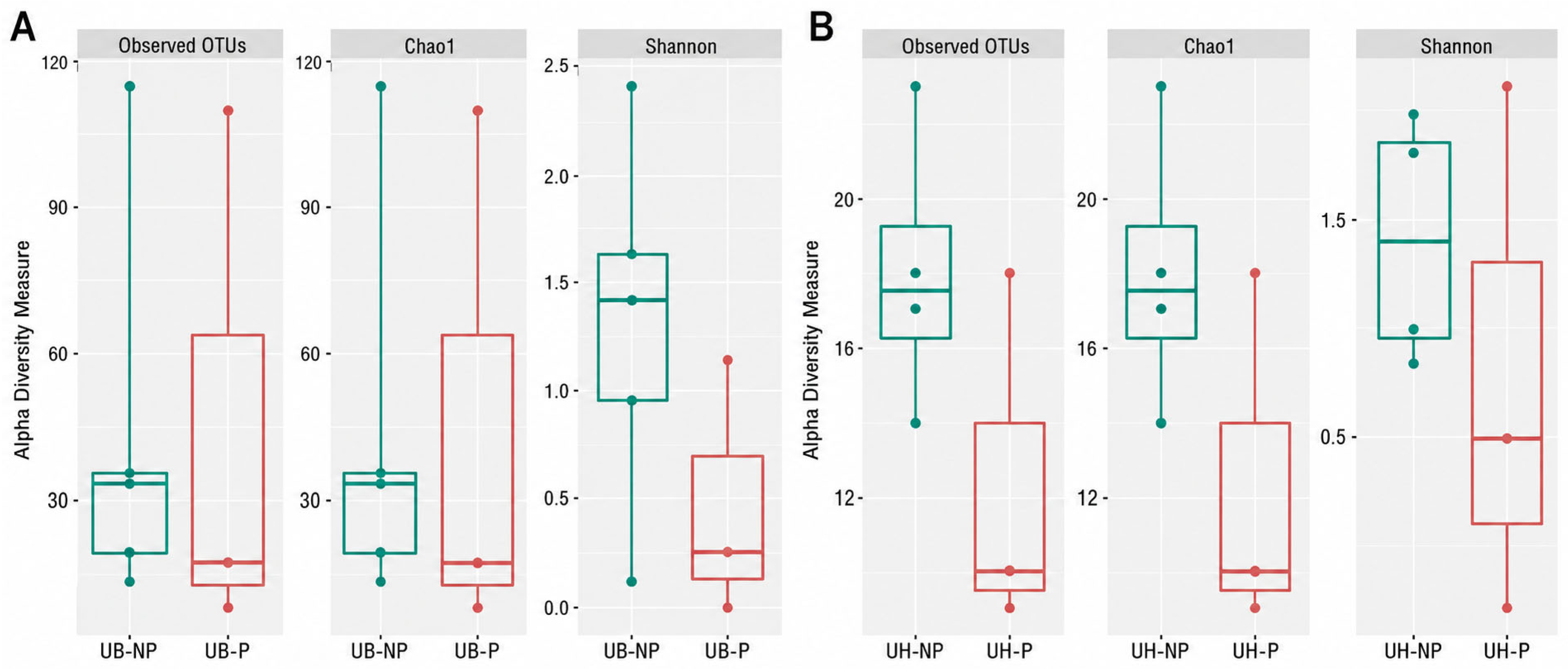
All the sample readings clustered at the saturation plateau of the rarefaction curves, demonstrating that the volume of sequencing data was sufficient and could accurately represent the vast majority of microorganisms in the samples (Supplementary File S1: Figures S1 and S2). At both uterine sites, non-pregnant cows showed numerically higher Shannon and Chao1 alpha diversity values than pregnant cows; however, these differences were not statistically significant and should therefore be interpreted only as descriptive observations rather than evidence of group differences (UB: Shannon, p = 0.395; Chao1, p = 0.958; UH: Shannon, p = 0.187; Chao1, p = 0.142; Supplementary Table S2). These numerical trends suggest that non-pregnant cows may harbor a more diverse and taxonomically rich microbiota, but this observation should be interpreted with caution. Additionally, greater variability was observed in the UB-P group (Figure 1), though again without statistical significance.
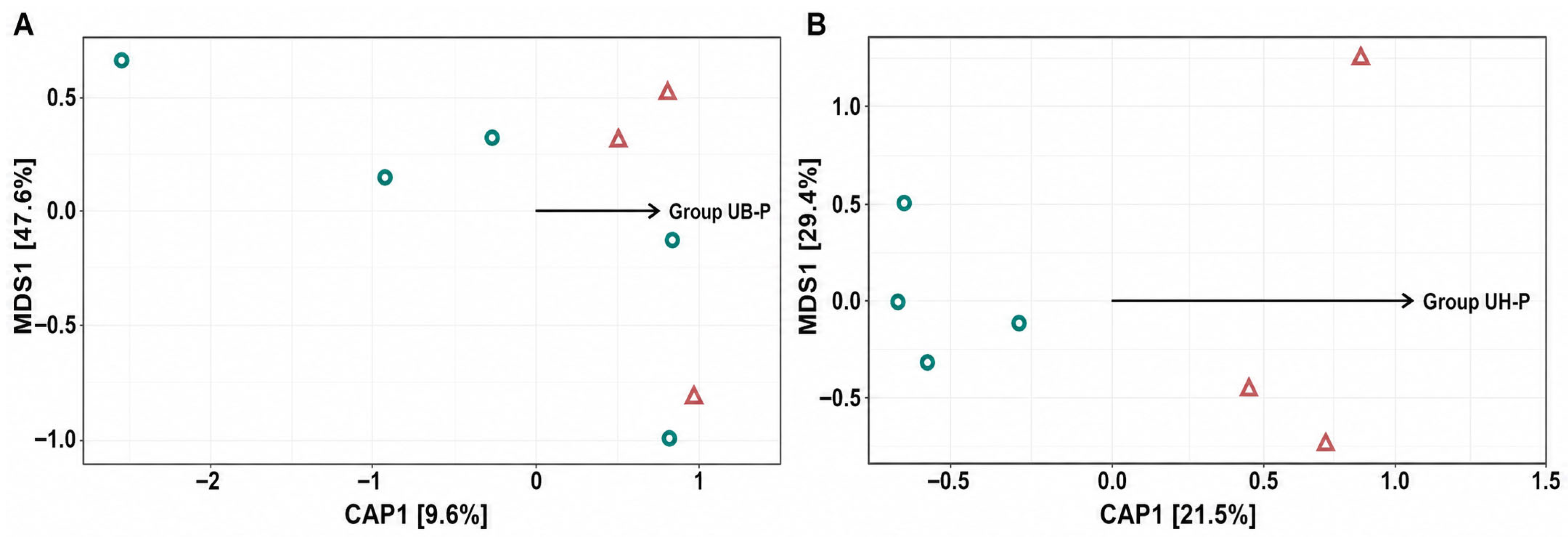
The beta diversity based on the weighted UniFrac matrix between the samples was low when comparing UH-P vs. UH-NP and UB-P vs. UB-NP (Figure 2). Therefore, there was no apparent difference among cows that did not achieve pregnancy (UH-NP and UB-NP) and those that did (UH-P and UB-P). Additionally, the difference between the UH-NP and UB-NP and UH-P and UB-P groups was not significant according to ANOSIM and PERMANOVA tests (Supplementary File S1: Table S5). The pregnant and non-pregnant groups for each uterine site (UB and UH) were separated based on the UniFrac weighted distances (which consider information on species abundance), as shown in Figures S3 and S4 (Supplementary File S1). These distances are based on phylogenetic distance measurements and were used in NMDS plots. The NMDS charts did not show an evident grouping of pregnant and non-pregnant groups for either uterine site (UB and UH).

3.3. Taxonomic Bar Chart

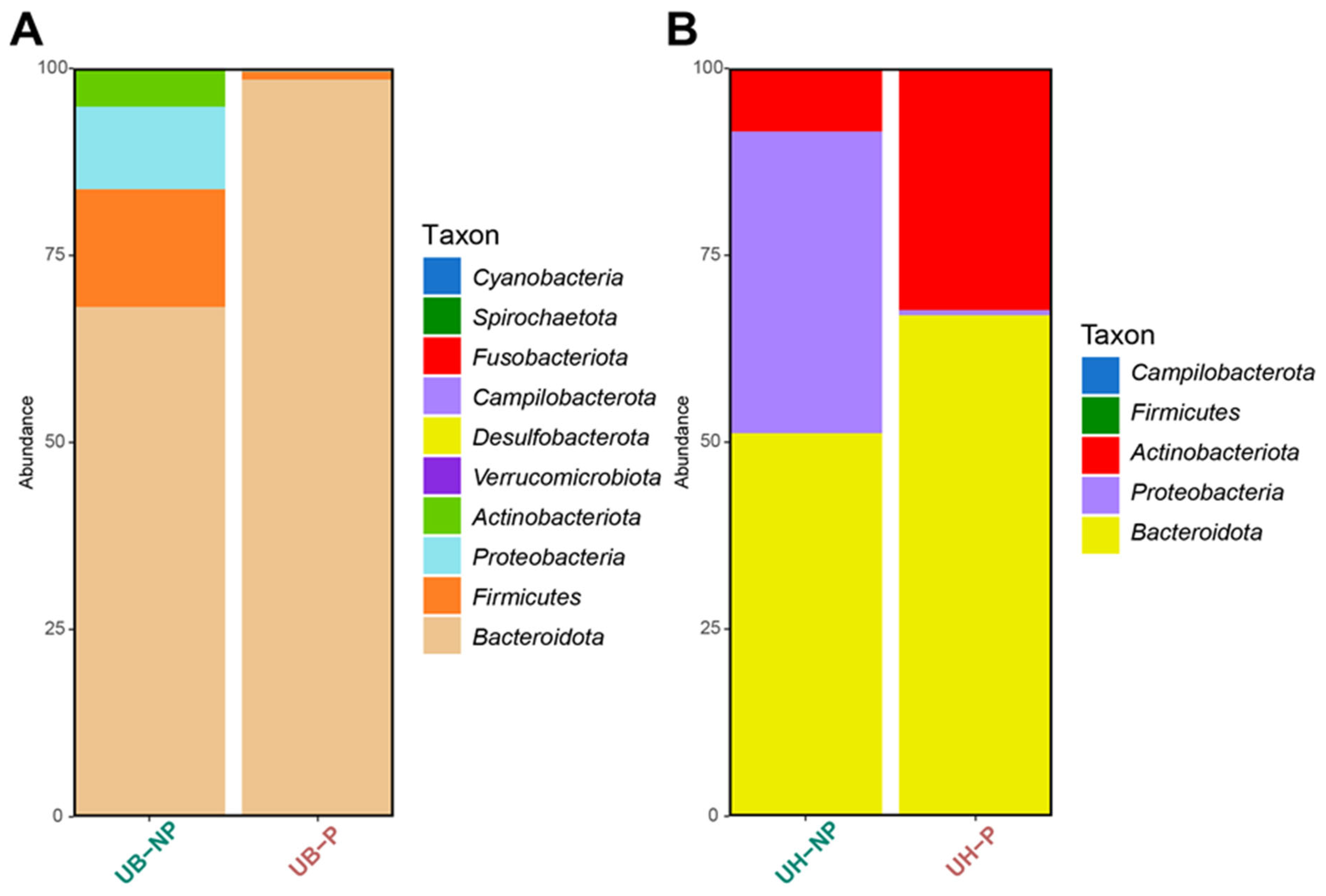
The most abundant phyla in both UB groups were Bacteroidota (UB-NP = 68.12% and UB-P =98.50%), Firmicutes (UB-NP = 15.74% and UB-P = 1.08%), and Proteobacteria (UB-NP = 11.01% and UB-P = 0.38%). In UH, the most abundant phyla were Bacteroidota (UH-NP = 51.19% and UH-P = 66.99%), Actinobacteriota (UH-NP = 8.29% and UH-P = 32.29%), and Proteobacteria (UH-NP = 40.34% and UH-P = 0.67%) (Figure 3). The absolute microbial composition is shown in Figure S5 (Supplementary File S1). The relative abundances of all phyla present in each sample are detailed in the Supplementary Material under the name “Supplementary File S2 Taxa Abundance.”
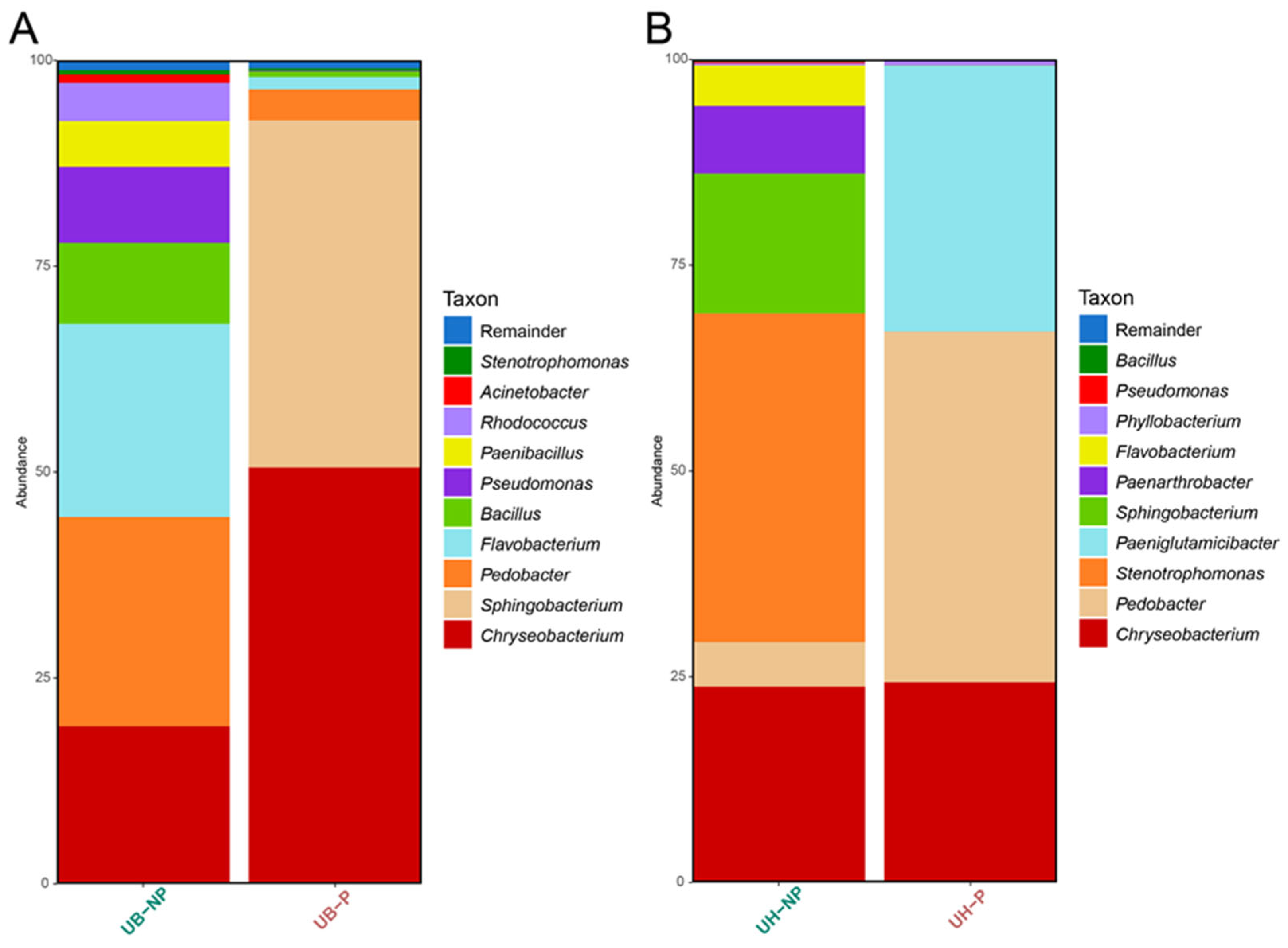
There was a significant difference in the relative frequency of genera between the UB groups. Based on individual percentages, the most abundant genera in UB-P were Chryseobacterium (50.56%), Sphingobacterium (42.14%), Pedobacter (3.76%), Flavobacterium (1.50%), and Bacillus (0.67%). In UB-NP, the most abundant genera were Pedobacter (25.39%), Flavobacterium (23.47%), Chryseobacterium (19.16%), Bacillus (9.82%), and Pseudomonas (9.24%), which was not present among the most abundant genera of UB-P. Chryseobacterium was the most frequent genus based on the mean between the groups (Figure 4). However, there was a significant difference between the individual percentages of this genus in each group (UB-P = 50.56%, UB-NP = 19.15%). The second most frequent genus according to the mean was Sphingobacterium, which showed a high percentage difference between the groups (UB-P = 42.14%, UB-NP = 0.00%). In essence, both groups have similar and highly abundant genera, although the order of the genera varies depending on the group. The results of the UH groups were similar to those of the UB groups, with Chryseobacterium being the most frequent genus (Figure 4). The most frequent genera in the UH-P group were Pedobacter (42.60%), Paeniglutamicibacter (32.29%), Chryseobacterium (24.33%), Phyllobacterium (0.60%), Pseudomonas (0.04%), and Flavobacterium (0.03%). On the other hand, the six most frequent genera in the UH-NP group were Stenotrophomonas (39.91%), Chryseobacterium (23.78%), Sphingobacterium (16.98%), Paenarthrobacter (8.23%), Pedobacter (5.43%), and Flavobacterium (4.94%). These groups contained different abundant genera, sharing only Chryseobacterium (UH-P = 24.33% and UH-NP = 23.78%) and Pedobacter (UH-P = 42.60% and UH-NP = 5.43%). The relative abundances of all genera present in each sample are detailed in the Supplementary Material under the name “Supplementary File S2 Taxa Abundance.”

3.4. Differences in Composition of Groups

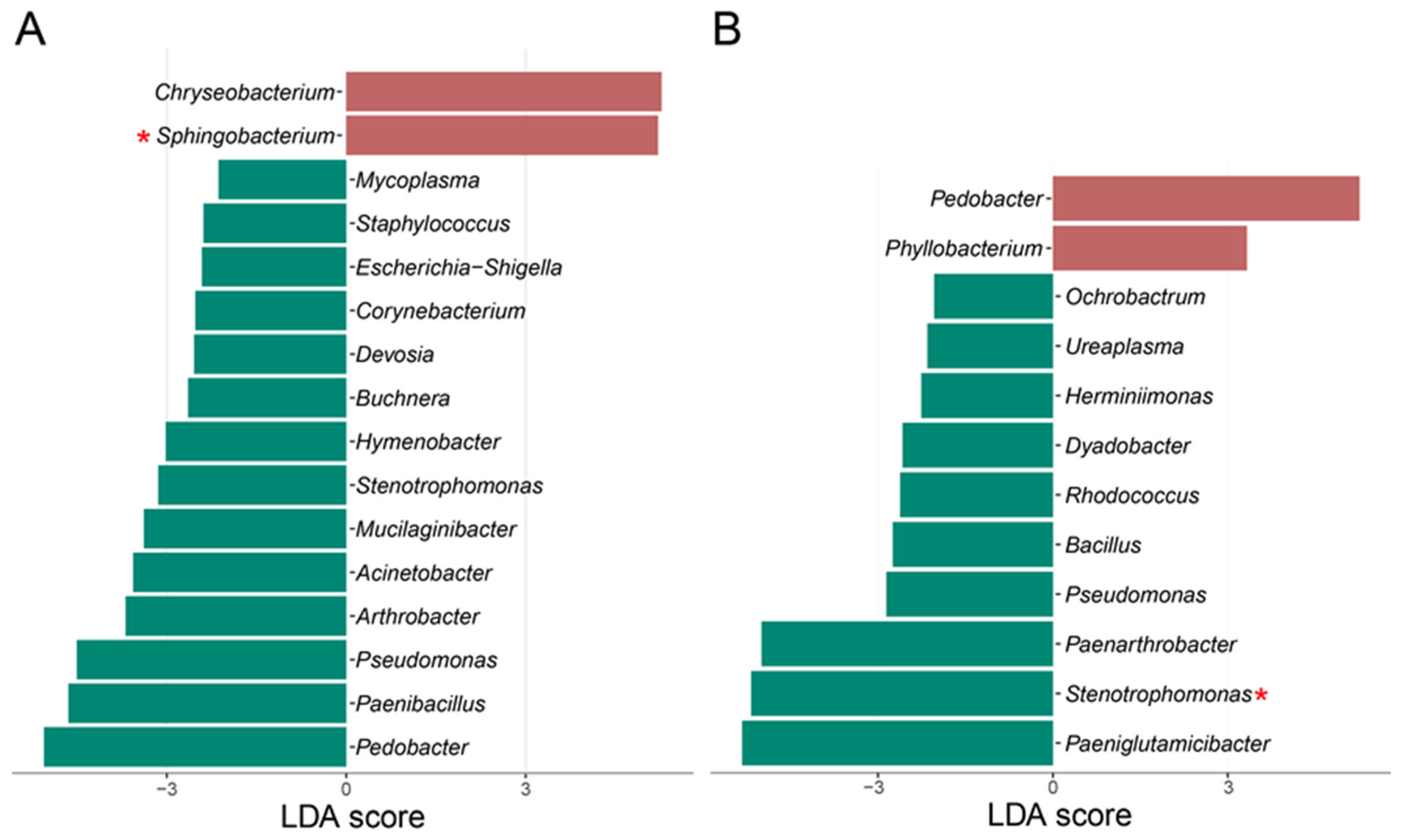
Effect size analysis (LEfSe) was used to examine variations in the relative abundances of specific genera in groups based on pregnancy success. Prior to analysis, the samples were divided based on the two different sampling sites: UB and UH. A comparison between the UB-P and UB-NP groups identified 16 genera with LDA scores > 2 (Figure 5A). Among them, Sphingobacterium showed a significant adjusted p value (LDA = 5.21, p-adj = 0.02). Nevertheless, given the limited sample size, this result should be regarded as hypothesis-generating rather ©than as evidence of a definitive biomarker. A comparison between the UH-P and UH-NP groups showed that 12 genera had LDA scores greater than 2 (Figure 5B). However, only Stenotrophomonas spp. showed a significant difference (LDA score = 5.16, p-adj = 0.03). Complete data from the LEfSe analysis are available in the Supplementary Material under the name “Supplementary File S3 LDA.”
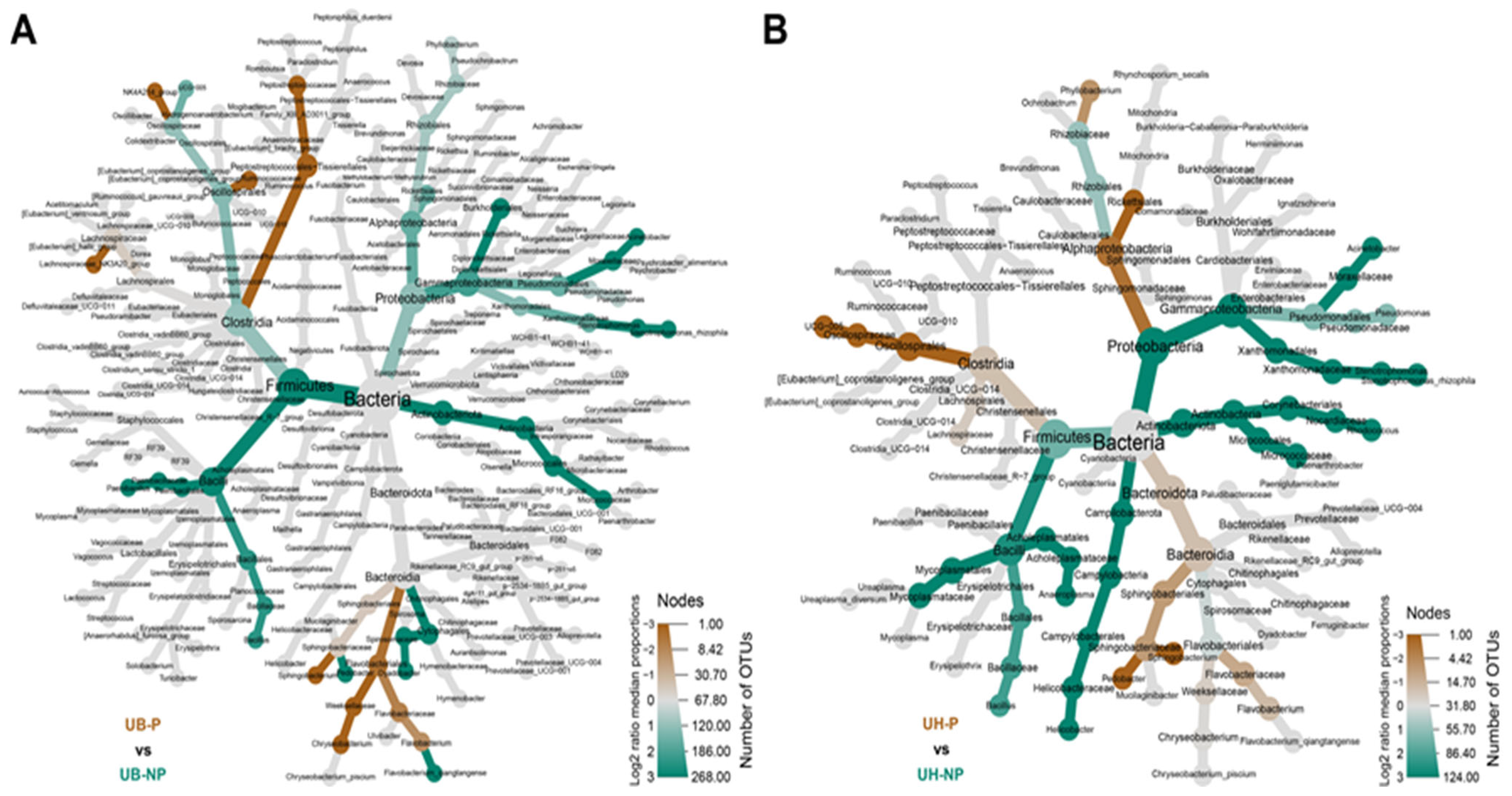
Heat tree analysis was used to compare the abundances of common taxonomic ranges in different groups at each site of the reproductive tract (Figure 6). A comparison between the UB-P and UB-NP groups revealed a significant difference in the abundance of Sphingobacterium spp. (p-adj = 0.03). Similarly, there was a significant difference in the abundance of Stenotrophomonas spp. in the UH-P and UH-NP groups (p-adj = 0.04). Complete data from the heat tree analysis are provided in the Supplementary Material under the name “Supplementary File S4 Heat Tree.”
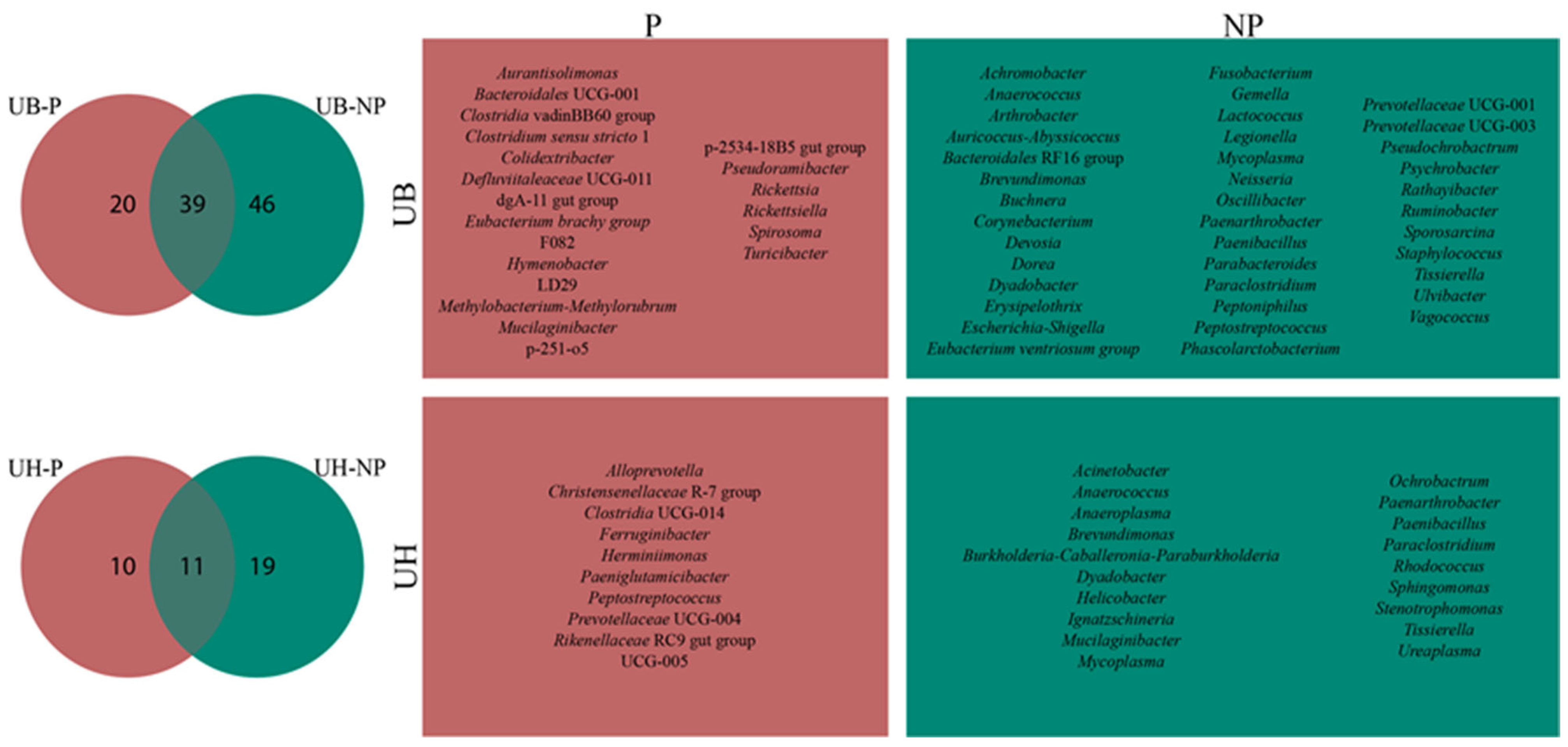
Venn diagrams enabled the visualization of the taxa distribution among the groups that achieved successful pregnancies (UB-P and UH-P) and those that did not (UB-NP and UH-NP) (Figure 7). The UB-NP and UB-P groups shared 46 genera, with 39 and 20 genera unique to UB-NP and UB-P, respectively. The UH groups shared 11 genera. The UH-NP and UH-P groups contained 19 and 10 unique genera, respectively. For both tissue samples (UB and UH), the non-pregnant groups (UB-NP and UH-NP) had more unique genera than the pregnant groups (UB-P and UH-P). These results provide valuable information about the distribution of taxa and the unique genera present in each group. The complete Venn diagram analysis is detailed in the Supplementary Material under the name “Supplementary File S5 Venn Diagram.”

4. Discussion

The importance of reproductive success in cattle generates interest in factors that can improve the efficiency and quality of bovine reproduction. Artificial reproductive technologies have been applied over the last few decades [3]. However, the success of these methods can be influenced by variables such as the uterine microbiome [3]. The effect of the pre-microbiome on cows before undergoing artificial breeding procedures remains largely unexplored. Hence, this study was aimed at characterizing and discerning disparities within the bovine microbiome, seeking to unveil its potential impact on pregnancy outcomes achieved through ET.
It is important to acknowledge the temporal gap between uterine sampling and subsequent embryo transfer (ET). Samples were collected during the estrous cycle preceding ET; thus, in the interval between sampling and transfer, key physiological events, such as synchronization treatments and the onset of the subsequent estrus, occurred, which may have transiently modulated the uterine environment and led to shifts in microbial composition [24,25].
Recent studies have documented variations in the reproductive tract microbiota associated with different estrous cycle phases and hormonal profiles (progesterone/estradiol), suggesting that microbial composition can fluctuate between the follicular (estrus) and luteal (diestrus) phases or following synchronization protocols [55,56]. Nevertheless, findings across studies are inconsistent; some report clear microbial shifts between estrous phases, while others detect no significant variation in uterine profiles between estrus and diestrus, indicating that microbial responses may depend on the sampling site, sampling technique, and the animal population studied [11,57].
This exploratory study characterized the uterine microbiome of healthy recipient cows prior to embryo transfer (ET) and examined its association with pregnancy outcome. We observed broadly similar overall microbial community structures in cows that became pregnant and those that did not, as reflected by the absence of clear differences in beta diversity. However, differential abundance analyses identified specific taxa that were enriched in one group or the other. Non-pregnant cows also tended to show slightly higher alpha diversity. These findings are preliminary and must be interpreted cautiously given the small sample size and the intervening period (hormonal synchronization and an additional estrous cycle) between sampling and ET.
In our cohort of clinically healthy cows (no reproductive disease or stress, same season), there were no significant differences in the beta-diversity of bacterial genera between pregnant and non-pregnant groups at either uterine sampling site. This suggests the overall community structures were highly similar across groups. This agrees with Koester et al. [58], who found no difference in pre-breeding vaginal microbial community structure between ewes that later did or did not conceive. In contrast, alpha diversity (within-sample richness and evenness) tended to be higher in non-pregnant cows than in pregnant cows, implying more community variability in the former. A similar trend has been reported in cattle; for example, Nellore heifers and cows that become pregnant often show lower bacterial alpha diversity than those that remain open, although such differences are typically not statistically significant [29]. It should be emphasized that, in our data, the alpha-diversity differences were only numerical trends without statistical significance, so they serve merely as preliminary hypotheses rather than robust findings.
Taxonomically, the most abundant phyla in our samples were Actinobacteria, Firmicutes, Bacteroidota, and Proteobacteria, which is consistent with previous reports for the bovine reproductive tract [29,59,60,61]. For instance, Peng et al. [62] found Bacteroidota, Proteobacteria, Fusobacteria, and Firmicutes to dominate the cow uterus. Notably, that study observed that Bacteroidota was significantly higher in cows with metritis than in healthy cows. In our healthy cohort, Bacteroidota was also abundant, but since all cows were disease-free, its high proportion did not clearly correlate with pregnancy failure. This suggests that in healthy animals, high Bacteroidota alone does not determine conception outcome. Overall, the dominant phyla we observed matched those reported in healthy cattle [62], and variations at the phylum level did not distinguish pregnant from non-pregnant groups.
At the genus level, we noted differences in relative abundance between pregnant and non-pregnant cows at each site (uterine body vs. uterine horn). For example, genera such as Pseudomonas, Stenotrophomonas, and Flavobacterium were more enriched in the non-pregnant groups. These genera have been associated elsewhere with inflammation or opportunistic infections (Flavobacterium is often found in diseased uterine microbiomes, and Stenotrophomonas is linked to bovine mastitis), but our cows were clinically healthy [33]. Thus, we cannot conclude that these bacteria caused reproductive failure. In fact, healthy bovine reproductive microbiomes are highly variable [29], and the ruminant uterus maintains a near-neutral pH without a predominant Lactobacillus population (unlike in humans). In this context, the presence of genera like Chryseobacterium (abundant in all groups) or Pedobacter likely reflects adaptation to the ruminal environment rather than serving as a specific fertility biomarker.
Our Linear Discriminant Analysis (LDA) identified Sphingobacterium as relatively enriched in pregnant cows and Stenotrophomonas in non-pregnant cows at the uterine body site. However, these findings should be interpreted strictly as correlative and hypothesis-generating. Although Sphingobacterium has rarely been associated with infections [63,64], and Stenotrophomonas includes opportunistic species that have been linked to inflammatory responses in other hosts [65], no functional data were generated in the present study to support a biological role for these genera in pregnancy outcome. Therefore, the potential mechanisms underlying these associations remain unknown, and these taxa should not be regarded as definitive biomarkers without further validation.
Comparing the two sampling sites, the uterine body (UB) harbored a greater total number of genera than the uterine horn (UH), perhaps due to greater environmental exposure. Alpha diversity did not differ significantly between sites (likely reflecting their physical proximity). Nonetheless, we observed that cows with lower overall uterine microbial diversity tended to have higher pregnancy success, a pattern also suggested by earlier work [29,66]. Additionally, unique genera found only in non-pregnant cows (from a Venn diagram analysis) included taxa associated with disease, such as Escherichia/Shigella and Ochrobactrum. This reinforces the descriptive point that non-pregnant cows had more distinctive opportunistic taxa.
An important limitation of the present study is the temporal interval between uterine sampling and embryo transfer. Samples were collected 20 days before initiation of the synchronization protocol, and therefore before the subsequent hormonal treatment and the next estrous cycle. Consequently, the microbial profiles described here may not fully represent the uterine microbiome present at the time of embryo transfer. In addition, the small sample size in each subgroup substantially limits statistical power. Therefore, both significant and non-significant findings should be interpreted with caution, particularly those related to alpha diversity. An additional limitation is that no extraction blank controls were included during DNA extraction; therefore, low-abundance taxa cannot be interpreted with complete certainty, as some may have originated from kit- or reagent-derived contamination, even though PCR negative controls were included. Our findings should therefore be interpreted as an exploratory characterization of the pre-transfer uterine microbiome rather than a direct representation of the microbial community at the time of ET. Larger longitudinal studies including sampling immediately before ET will be necessary to determine the temporal stability and reproductive relevance of these microbial profiles.

5. Conclusions

Although there were no significant differences in the microbiota between the successful and unsuccessful pregnancy groups using the MOET methodology, this study provided valuable information indicating that there are likely some differences between the uterine microbiota of successfully and unsuccessfully pregnant cows in Alto Imaza (Peru). Furthermore, this study identified potential bacteria that serve as biomarkers for diagnosing a beneficial microbial status of the uterus that contributes to successful pregnancy with the MOET method. Therefore, further research on the microbiota of the uterus of cows before ET and its association with pregnancy outcomes is essential.

Supplementary Materials

The following supporting information can be downloaded at: https://www.mdpi.com/article/10.3390/microbiolres17050091/s1, Supplementary File S1: v.04-23-26, Supplementary File S2 Taxa abundance, Supplementary File S3 LDA, Supplementary File S4 Heat tree and Supplementary File S5 Venn chart.

Author Contributions

Conceptualization, N.L.M.V. and G.T.S.; Data curation, J.C.D.S., C.M.O.-R., R.C.P. and D.d.S.V.; Formal analysis, U.S.Q.-G.; Funding acquisition, U.S.Q.-G.; Investigation, N.L.M.V. and J.C.D.S.; Methodology, G.T.S.; Project administration, H.F., J.L.M.Q. and R.M.L.L.; Resources, G.T.S. and U.S.Q.-G.; Software, A.C.R.; Supervision, H.F., C.M.O.-R., J.L.M.Q. and R.M.L.L.; Validation, R.C.P. and D.d.S.V.; Visualization, R.M.L.L.; Writing—original draft, N.L.M.V.; Writing—review and editing, J.C.D.S. and D.J.G.-B. All authors have read and agreed to the published version of the manuscript.

Funding

The author(s) declare that financial support was received by the National University Micaela Bastidas of Apurimac on the translation and publication of this manuscript. This work was funded by projects CUI N° 2254946, CUI N° 2308404 and vice-rectorate for research from the National University Toribio Rodríguez of Mendoza, Amazonas, Peru.

Institutional Review Board Statement

This study was approved on 14 May 2022 by the Institutional Committee on Research Ethics of Universidad Nacional Toribio Rodríguez de Mendoza (UNTRM) (CIEI-N°012).

Informed Consent Statement

Not applicable.

Data Availability Statement

The original data presented in the study are openly available in NCBI SRA repository under BioProject PRJNA974053. Other study data are available from the corresponding author upon reasonable request.

Conflicts of Interest

The authors declare no conflicts of interest.

References

  1. Herrero, M.; Grace, D.; Njuki, J.; Johnson, N.; Enahoro, D.; Silvestri, S.; Rufino, M.C. The Roles of Livestock in Developing Countries. Animal 2013, 7, 3–18. [Google Scholar] [CrossRef]
  2. Herrero, M.; Thornton, P.K.; Gerber, P.; Reid, R.S. Livestock, Livelihoods and the Environment: Understanding the Trade-Offs. Curr. Opin. Environ. Sustain. 2009, 1, 111–120. [Google Scholar] [CrossRef]
  3. Luecke, S.M.; Webb, E.M.; Dahlen, C.R.; Reynolds, L.P.; Amat, S. Seminal and Vagino-Uterine Microbiome and Their Individual and Interactive Effects on Cattle Fertility. Front. Microbiol. 2022, 13, 1029128. [Google Scholar] [CrossRef]
  4. Dahlen, C.; Larson, J.; Lamb, G.C. Impacts of Reproductive Technologies on Beef Production in the United States. In Current and Future Reproductive Technologies and World Food Production; Springer: New York, NY, USA, 2014; pp. 97–114. [Google Scholar]
  5. Daly, J.; Smith, H.; McGrice, H.A.; Kind, K.L.; Van Wettere, W.H.E.J. Towards Improving the Outcomes of Assisted Reproductive Technologies of Cattle and Sheep, with Particular Focus on Recipient Management. Animals 2020, 10, 293. [Google Scholar] [CrossRef]
  6. Lohuis, M.M. Potential Benefits of Bovine Embryo-Manipulation Technologies to Genetic Improvement Programs. Theriogenology 1995, 43, 51–60. [Google Scholar] [CrossRef]
  7. Mapletoft, R.J.; Hasler, J.F. Assisted Reproductive Technologies in Cattle: A Review. Rev. Sci. Tech. 2005, 24, 393–403. [Google Scholar] [CrossRef]
  8. Morotti, F.; Dos Santos, G.M.G.; Silva-Santos, K.C.; Dias, J.H.A.; Seneda, M.M. Strategic Use of Estrus Intensity to Combine Timed Artificial Insemination and Embryo Transfer in Large-Scale Cattle Reproduction Programs. Theriogenology 2025, 235, 162–167. [Google Scholar] [CrossRef]
  9. Hummel, G.L.; Austin, K.; Cunningham-Hollinger, H.C. Comparing the Maternal-Fetal Microbiome of Humans and Cattle: A Translational Assessment of the Reproductive, Placental, and Fetal Gut Microbiomes. Biol. Reprod. 2022, 107, 371–381. [Google Scholar] [CrossRef] [PubMed]
  10. Yadav, J.N.; Singh, H.K.; Yadav, V.; Diwakar, R.P. Artificial Insemination and Embryo Transfer: Emerging Technologies in the Livestock Industry. Int. J. Environ. Agric. Biotechnol. 2025, 10, 119–128. [Google Scholar] [CrossRef]
  11. Çömlekcioğlu, U.; Jezierska, S.; Opsomer, G.; Pascottini, O.B. Uterine Microbial Ecology and Disease in Cattle: A Review. Theriogenology 2024, 213, 66–78. [Google Scholar] [CrossRef] [PubMed]
  12. Moore, S.G.; Ericsson, A.C.; Poock, S.E.; Melendez, P.; Lucy, M.C. Hot Topic: 16S rRNA Gene Sequencing Reveals the Microbiome of the Virgin and Pregnant Bovine Uterus. J. Dairy. Sci. 2017, 100, 4953–4960. [Google Scholar] [CrossRef]
  13. Webb, E.M.; Holman, D.B.; Schmidt, K.N.; Pun, B.; Sedivec, K.K.; Hurlbert, J.L.; Bochantin, K.A.; Ward, A.K.; Dahlen, C.R.; Amat, S. Sequencing and Culture-Based Characterization of the Vaginal and Uterine Microbiota in Beef Cattle That Became Pregnant or Remained Open Following Artificial Insemination. Microbiol. Spectr. 2023, 11, e02732-23. [Google Scholar] [CrossRef]
  14. Heil, B.A.; Paccamonti, D.L.; Sones, J.L. Role for the Mammalian Female Reproductive Tract Microbiome in Pregnancy Outcomes. Physiol. Genom. 2019, 51, 390–399. [Google Scholar] [CrossRef] [PubMed]
  15. Lingasamy, P.; Modhukur, V.; Mändar, R.; Salumets, A. Exploring Immunome and Microbiome Interplay in Reproductive Health: Current Knowledge, Challenges, and Novel Diagnostic Tools. Semin. Reprod. Med. 2023, 41, 172–189. [Google Scholar] [CrossRef]
  16. Toson, B.; Simon, C.; Moreno, I. The Endometrial Microbiome and Its Impact on Human Conception. Int. J. Mol. Sci. 2022, 23, 485. [Google Scholar] [CrossRef]
  17. Schoenmakers, S.; Steegers-Theunissen, R.; Faas, M. The Matter of the Reproductive Microbiome. Obstet. Med. 2019, 12, 107–115. [Google Scholar] [CrossRef]
  18. Liu, S.; Chen, Y.; Zhang, K.; Tang, D.; Zhang, J.; Wang, Y.; Zhao, J.; Li, D.; Wang, T. Exploring Vaginal Microbiome: From Traditional Methods to Metagenomic next-Generation Sequencing—A Systematic Review. Front. Microbiol. 2025, 16, 1578681. [Google Scholar] [CrossRef]
  19. Wang, T.; Li, P.; Bai, X.; Tian, S.; Yang, M.; Leng, D.; Kui, H.; Zhang, S.; Yan, X.; Zheng, Q.; et al. Vaginal Microbiota Are Associated with in Vitro Fertilization during Female Infertility. iMeta 2024, 3, e185. [Google Scholar] [CrossRef] [PubMed]
  20. Rosenberg, E.; Zilber-Rosenberg, I. Microbes Drive Evolution of Animals and Plants: The Hologenome Concept. mBio 2016, 7, e01395-15. [Google Scholar] [CrossRef] [PubMed]
  21. Bicalho, M.L.S.; Santin, T.; Rodrigues, M.X.; Marques, C.E.; Lima, S.F.; Bicalho, R.C. Dynamics of the Microbiota Found in the Vaginas of Dairy Cows during the Transition Period: Associations with Uterine Diseases and Reproductive Outcome. J. Dairy. Sci. 2017, 100, 3043–3058. [Google Scholar] [CrossRef]
  22. Menchaca, A. Assisted Reproductive Technologies (ART) and Genome Editing to Support a Sustainable Livestock. Anim. Reprod. 2023, 20, e20230074. [Google Scholar] [CrossRef] [PubMed]
  23. Hansen, P.J. The Incompletely Fulfilled Promise of Embryo Transfer in Cattle—Why Aren’t Pregnancy Rates Greater and What Can We Do about It? J. Anim. Sci. 2020, 98, skaa288. [Google Scholar] [CrossRef]
  24. Gupta, D.; Sarkar, A.; Pal, Y.; Suthar, V.; Chawade, A.; Kushwaha, S.K. Bovine Reproductive Tract and Microbiome Dynamics: Current Knowledge, Challenges, and Its Potential to Enhance Fertility in Dairy Cows. Front. Microbiomes 2024, 3, 1473076. [Google Scholar] [CrossRef]
  25. Ault-Seay, T.B.; Moorey, S.E.; Mathew, D.J.; Schrick, F.N.; Pohler, K.G.; McLean, K.J.; Myer, P.R. Importance of the Female Reproductive Tract Microbiome and Its Relationship with the Uterine Environment for Health and Productivity in Cattle: A Review. Front. Anim. Sci. 2023, 4, 1111636. [Google Scholar] [CrossRef]
  26. Swartz, J.D.; Lachman, M.; Westveer, K.; O’Neill, T.; Geary, T.; Kott, R.W.; Berardinelli, J.G.; Hatfield, P.G.; Thomson, J.M.; Roberts, A.; et al. Characterization of the Vaginal Microbiota of Ewes and Cows Reveals a Unique Microbiota with Low Levels of Lactobacilli and Near-Neutral pH. Front. Vet. Sci. 2014, 1, 19. [Google Scholar] [CrossRef]
  27. Marchesi, J.R.; Ravel, J. The Vocabulary of Microbiome Research: A Proposal. Microbiome 2015, 3, 31. [Google Scholar] [CrossRef] [PubMed]
  28. Yagisawa, T.; Uchiyama, J.; Takemura-Uchiyama, I.; Ando, S.; Ichii, O.; Murakami, H.; Matsushita, O.; Katagiri, S. Metataxonomic Analysis of the Uterine Microbiota Associated with Low Fertility in Dairy Cows Using Endometrial Tissues Prior to First Artificial Insemination. Microbiol. Spectr. 2023, 11, e04764-22. [Google Scholar] [CrossRef]
  29. Laguardia-Nascimento, M.; Branco, K.M.G.R.; Gasparini, M.R.; Giannattasio-Ferraz, S.; Leite, L.R.; Araujo, F.M.G.; Salim, A.C.D.M.; Nicoli, J.R.; De Oliveira, G.C.; Barbosa-Stancioli, E.F. Vaginal Microbiome Characterization of Nellore Cattle Using Metagenomic Analysis. PLoS ONE 2015, 10, e0143294. [Google Scholar] [CrossRef] [PubMed]
  30. Ault, T.B.; Clemmons, B.A.; Reese, S.T.; Dantas, F.G.; Franco, G.A.; Smith, T.P.L.; Edwards, J.L.; Myer, P.R.; Pohler, K.G. Uterine and Vaginal Bacterial Community Diversity Prior to Artificial Insemination between Pregnant and Nonpregnant Postpartum Cows1. J. Anim. Sci. 2019, 97, 4298–4304. [Google Scholar] [CrossRef]
  31. Mulvany, P.M. 6.5 Dairy Cow Condition Scoring. BSAP Occas. Publ. 1981, 4, 349–353. [Google Scholar] [CrossRef]
  32. Smith, M.S.; Soffa, D.R.; McAnally, B.E.; Hickman-Brown, K.J.; Stockland, E.L.; Poole, R.K. On-Farm Study: Cytokine Profiles and Vaginal Microbiome of Bos Indicus Cattle before Artificial Insemination. Front. Anim. Sci. 2024, 5, 1399337. [Google Scholar] [CrossRef]
  33. Murga Valderrama, N.L.; Segura Portocarrero, G.T.; Romani Vasquez, A.C.; Frias Torres, H.; Flores Durand, G.J.; Cornejo Villanueva, V.G.; Del Solar, J.C.; Costa Polveiro, R.; Da Silva Vieira, D.; Bardales Escalante, W.; et al. Exploring the Microbiome of Two Uterine Sites in Cows. Sci. Rep. 2023, 13, 18768. [Google Scholar] [CrossRef]
  34. Madoz, L.V.; Giuliodori, M.J.; Jaureguiberry, M.; Plöntzke, J.; Drillich, M.; De La Sota, R.L. The Relationship between Endometrial Cytology during Estrous Cycle and Cutoff Points for the Diagnosis of Subclinical Endometritis in Grazing Dairy Cows. J. Dairy Sci. 2013, 96, 4333–4339. [Google Scholar] [CrossRef]
  35. Radostits, O.M.; Gay, C.C.; Hinchcliff, K.W.; Constable, P.D. Veterinary Medicine E-Book; Elsevier Health Sciences: Amsterdam, The Netherlands, 2006. [Google Scholar]
  36. Interchemie Werke ‘De Adelaar’ B.V. Xyla—Xylazine 2% Injection. Available online: https://www.interchemie.com/veterinary-medicines/xyla (accessed on 10 July 2025).
  37. International Embryo Technology Society (IETS). IETS 2020 Annual Conference International Embryo Technology Society (IETS). Available online: https://www.iets.org/cvweb/cgi-bin/eventsdll.dll/EventInfo?sessionaltcd=IETS20 (accessed on 10 July 2025).
  38. Callahan, B.J.; McMurdie, P.J.; Rosen, M.J.; Han, A.W.; Johnson, A.J.A.; Holmes, S.P. DADA2: High-Resolution Sample Inference from Illumina Amplicon Data. Nat. Methods 2016, 13, 581–583. [Google Scholar] [CrossRef]
  39. Quast, C.; Pruesse, E.; Yilmaz, P.; Gerken, J.; Schweer, T.; Yarza, P.; Peplies, J.; Glöckner, F.O. The SILVA Ribosomal RNA Gene Database Project: Improved Data Processing and Web-Based Tools. Nucleic Acids Res. 2013, 41, D590–D596. [Google Scholar] [CrossRef]
  40. R Core Team. R Language Definition; R Foundation for Statistical Computing: Vienna, Austria, 2000; Volume 3, p. 116. [Google Scholar]
  41. Oksanen, J.; Simpson, G.; Blanchet, F.G.; Kindt, R.; Legendre, P.; Minchin, P. Vegan: Community Ecology Package 2007; R Foundation for Statistical Computing: Vienna, Austria, 2007. [Google Scholar]
  42. McMurdie, P.J.; Holmes, S. Phyloseq: An R Package for Reproducible Interactive Analysis and Graphics of Microbiome Census Data. PLoS ONE 2013, 8, e61217. [Google Scholar] [CrossRef]
  43. Shannon, C.E. A Mathematical Theory of Communication. Bell Syst. Tech. J. 1948, 27, 379–423. [Google Scholar] [CrossRef]
  44. Chao, A. Nonparametric Estimation of the Number of Classes in a Population. Scand. J. Stat. 1984, 11, 265–270. [Google Scholar]
  45. Chao, A.; Lee, S.-M. Estimating the Number of Classes via Sample Coverage. J. Am. Stat. Assoc. 1992, 87, 210–217. [Google Scholar] [CrossRef]
  46. Anderson, M.J.; Willis, T.J. Canonical Analysis of Principal Coordinates: A Useful Method of Constrained Ordination for Ecology. Ecology 2003, 84, 511–525. [Google Scholar] [CrossRef]
  47. Bisanz, J.E. qiime2R: Importing QIIME2 Artifacts and Associated Data into R Sessions; Version 0.99; 2018, 13. Available online: https://github.com/jbisanz/qiime2R (accessed on 6 March 2026).
  48. Wickham, H.; Sievert, C. Ggplot2: Elegant Graphics for Data Analysis; Springer: New York, NY, USA, 2009; Volume 10. [Google Scholar]
  49. Liu, C.; Cui, Y.; Li, X.; Yao, M. Microeco: An R Package for Data Mining in Microbial Community Ecology. FEMS Microbiol. Ecol. 2021, 97, fiaa255. [Google Scholar] [CrossRef]
  50. Foster, Z.S.L.; Sharpton, T.J.; Grünwald, N.J. Metacoder: An R Package for Visualization and Manipulation of Community Taxonomic Diversity Data. PLoS Comput. Biol. 2017, 13, e1005404. [Google Scholar] [CrossRef]
  51. Xu, S.; Zhan, L.; Tang, W.; Wang, Q.; Dai, Z.; Zhou, L.; Feng, T.; Chen, M.; Wu, T.; Hu, E.; et al. MicrobiotaProcess: A Comprehensive R Package for Deep Mining Microbiome. Innovation 2023, 4, 100388. [Google Scholar] [CrossRef]
  52. Zeileis, A.; Grothendieck, G. Zoo: S3 Infrastructure for Regular and Irregular Time Series. J. Stat. Soft. 2005, 14, 1–27. [Google Scholar] [CrossRef]
  53. Chen, H.; Boutros, P.C. VennDiagram: A Package for the Generation of Highly-Customizable Venn and Euler Diagrams in R. BMC Bioinform. 2011, 12, 35. [Google Scholar] [CrossRef] [PubMed]
  54. Frias, H.; Murga Valderrama, N.L.; Flores, G.J.; Cornejo, V.G.; Del Solar, J.C.; Romani, A.C.; Bardales, W.; Segura, G.T.; Polveiro, R.C.; Vieira, D.D.S.; et al. An Analysis of the Cecum Microbiome of Three Breeds of the Guinea Pig: Andina, Inti, and Peru. Res. Vet. Sci. 2023, 161, 50–61. [Google Scholar] [CrossRef] [PubMed]
  55. Moore, S.G.; Ericsson, A.C.; Behura, S.K.; Lamberson, W.R.; Evans, T.J.; McCabe, M.S.; Poock, S.E.; Lucy, M.C. Concurrent and Long-Term Associations between the Endometrial Microbiota and Endometrial Transcriptome in Postpartum Dairy Cows. BMC Genom. 2019, 20, 405. [Google Scholar] [CrossRef]
  56. Quereda, J.J.; Barba, M.; Mocé, M.L.; Gomis, J.; Jiménez-Trigos, E.; García-Muñoz, Á.; Gómez-Martín, Á.; González-Torres, P.; Carbonetto, B.; García-Roselló, E. Vaginal Microbiota Changes During Estrous Cycle in Dairy Heifers. Front. Vet. Sci. 2020, 7, 371. [Google Scholar] [CrossRef]
  57. Gobikrushanth, M.; Dos Santos, S.J.; Champika, F.; Hill, J.E.; Dadarwal, D. Uterine Microbial Profiles in Healthy Postpartum Dairy Cows Do Not Vary with Sampling Techniques or Phases of Estrous Cycle. Theriogenology 2024, 214, 298–306. [Google Scholar] [CrossRef] [PubMed]
  58. Koester, L.R.; Petry, A.L.; Youngs, C.R.; Schmitz-Esser, S. Ewe Vaginal Microbiota: Associations with Pregnancy Outcome and Changes During Gestation. Front. Microbiol. 2021, 12, 745884. [Google Scholar] [CrossRef]
  59. Clemmons, B.A.; Reese, S.T.; Dantas, F.G.; Franco, G.A.; Smith, T.P.L.; Adeyosoye, O.I.; Pohler, K.G.; Myer, P.R. Vaginal and Uterine Bacterial Communities in Postpartum Lactating Cows. Front. Microbiol. 2017, 8, 1047. [Google Scholar] [CrossRef]
  60. Khalil, A.; Batool, A.; Arif, S. Healthy Cattle Microbiome and Dysbiosis in Diseased Phenotypes. Ruminants 2022, 2, 134–156. [Google Scholar] [CrossRef]
  61. Nesengani, L.T.; Wang, J.; Yang, Y.; Yang, L.; Lu, W. Unravelling Vaginal Microbial Genetic Diversity and Abundance between Holstein and Fleckvieh Cattle. RSC Adv. 2017, 7, 56137–56143. [Google Scholar] [CrossRef]
  62. Peng, Y.; Wang, Y.; Hang, S.; Zhu, W. Microbial Diversity in Uterus of Healthy and Metritic Postpartum Holstein Dairy Cows. Folia Microbiol. 2013, 58, 593–600. [Google Scholar] [CrossRef]
  63. Cardenas, I.; Mulla, M.J.; Myrtolli, K.; Sfakianaki, A.K.; Norwitz, E.R.; Tadesse, S.; Guller, S.; Abrahams, V.M. Nod1 Activation by Bacterial iE-DAP Induces Maternal–Fetal Inflammation and Preterm Labor. J. Immunol. 2011, 187, 980–986. [Google Scholar] [CrossRef]
  64. Gilbert, R.O. The Effects of Endometritis on the Establishment of Pregnancy in Cattle. Reprod. Fertil. Dev. 2012, 24, 252. [Google Scholar] [CrossRef] [PubMed]
  65. Di Bonaventura, G.; Pompilio, A.; Zappacosta, R.; Petrucci, F.; Fiscarelli, E.; Rossi, C.; Piccolomini, R. Role of Excessive Inflammatory Response to Stenotrophomonas maltophilia Lung Infection in DBA/2 Mice and Implications for Cystic Fibrosis. Infect. Immun. 2010, 78, 2466–2476. [Google Scholar] [CrossRef]
  66. Otero, C.; Saavedra, L.; Silva De Ruiz, C.; Wilde, O.; Holgado, A.R.; Nader-Macias, M.E. Vaginal Bacterial Microflora Modifications during the Growth of Healthy Cows. Lett. Appl. Microbiol. 2000, 31, 251–254. [Google Scholar] [CrossRef]
Figure 1. Alpha diversity indices (Observed OTUs, Chao1, and Shannon) in uterine body (A) and uterine horn (B) samples from pregnant (P, brown) and non-pregnant (NP, green) recipient cows. Boxplots show the median and interquartile range, with whiskers indicating the full range of values within each group. Note: Because of the small number of animals per group, these data are presented primarily as descriptive summaries and should be interpreted with caution. For Shannon and Chao1, the corresponding p values are provided in Supplementary Table S2 (UB: Shannon, p = 0.395; Chao1, p = 0.958; UH: Shannon, p = 0.187; Chao1, p = 0.142).
Microbiolres 17 00091 g001
Figure 2. Canonical Principal Coordinate Analysis (CAP) is built on an unweighted UniFrac distance with groups (A) uterine body and (B) uterine horn and their respective subsets denoted as non-pregnant (UB-NP and UH-NP; green circle ○) and pregnant (UB-P and UH-P; brown triangle △). The order of the arrows shows the formation of groups of samples selected in different coordinates, denoting the dissimilarity and similarity of microbiota composition.
Microbiolres 17 00091 g002
Figure 3. Bacterial microbiota composition in terms of relative abundance at the phylum level. (A) Taxonomic composition of the ten main phyla in the Uterine Body group (UB). (B) Taxonomic composition of the five main phyla in the Uterine Horn group (UH). The bars correspond to the pregnancy success status groups for the UB (UB-P and UB-NP) and UH (UH-P and UH-NP), with each color corresponding to a phylum.
Microbiolres 17 00091 g003
Figure 4. Relative abundance of bacterial microbiota composition at the genus level. (A) Taxonomic composition of the 35 main bacterial genera in the Uterine Body (UB) with different abundances between the pregnant (UB-P) and non-pregnant (UB-NP) groups, with each color corresponding to a different genus. (B) Taxonomic composition of the 35 main bacterial genera in the Uterine Horn (UH) with different abundances between the pregnant (UH-P) and non-pregnant (UH-NP) groups, with each color corresponding to a different genus.
Microbiolres 17 00091 g004
Figure 5. Linear discriminant analysis effect size (LEfSe) of differentially abundant bacterial taxa between pregnant (P) and non-pregnant (NP) cows at two reproductive tract sites: (A) uterine body (UB) and (B) uterine horn (UH). Horizontal bars represent the LDA score of each taxon. Brown bars indicate taxa enriched in the pregnant group, whereas green bars indicate taxa enriched in the non-pregnant group. Red asterisks denote taxa showing statistically significant differences in relative abundance between groups (p < 0.05).
Microbiolres 17 00091 g005
Figure 6. Heat trees comparing bacterial taxa between pregnant (P) and non-pregnant (NP) cows at two reproductive tract sites: (A) uterine body (UB) and (B) uterine horn (UH). Node and edge size are proportional to the richness, measured as the number of operational taxonomic units (OTUs), within each taxonomic group. Color intensity reflects the log2 ratio of the difference in median proportions between groups. Brown taxa are enriched in the pregnant group, green taxa are enriched in the non-pregnant group, and gray taxa are similarly represented in both groups.
Microbiolres 17 00091 g006
Figure 7. Venn diagrams showing unique and shared genera between pregnant (P) and non-pregnant (NP) cows at each reproductive tract site: uterine body (UB) and uterine horn (UH). Numbers within each subset indicate the number of genera detected exclusively in the pregnant group, exclusively in the non-pregnant group, or shared by both groups. The panels on the right list the genera unique to each subset, using the same color scheme as the Venn diagrams. Notably, the non-pregnant groups harbored a higher number of unique genera than the pregnant groups at both uterine sites.
Microbiolres 17 00091 g007
Disclaimer/Publisher’s Note: The statements, opinions and data contained in all publications are solely those of the individual author(s) and contributor(s) and not of MDPI and/or the editor(s). MDPI and/or the editor(s) disclaim responsibility for any injury to people or property resulting from any ideas, methods, instructions or products referred to in the content.