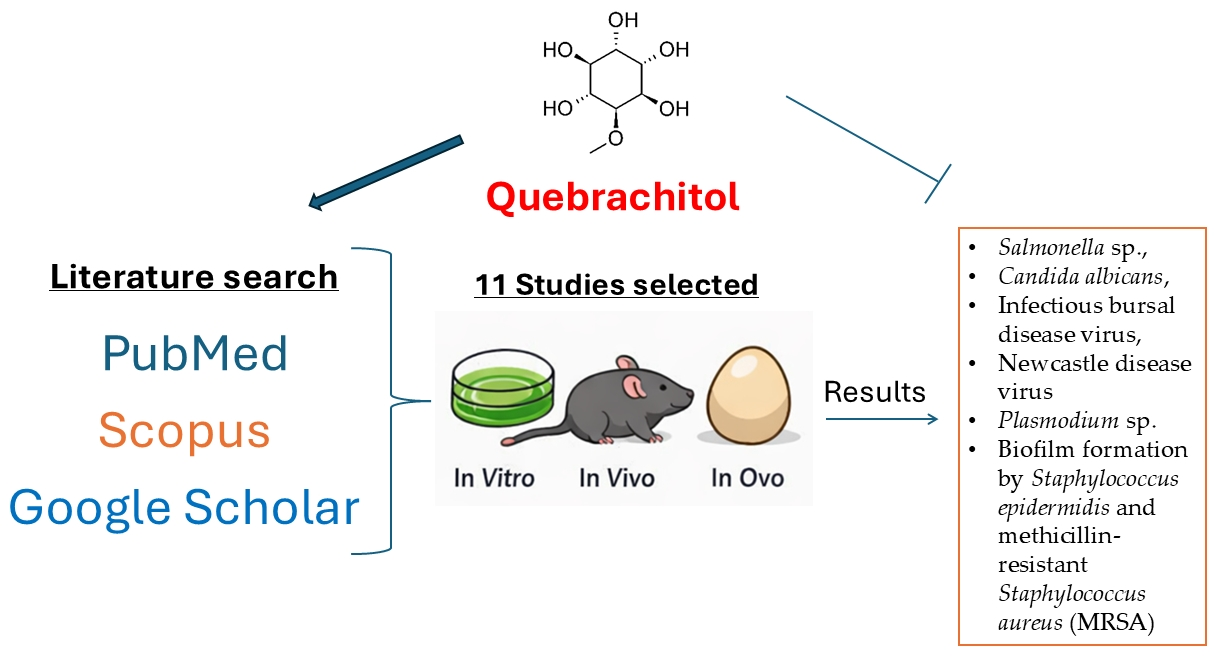

Antimicrobial Effects of Quebrachitol: A Systematic Review


 , ,
, ,
Abstract
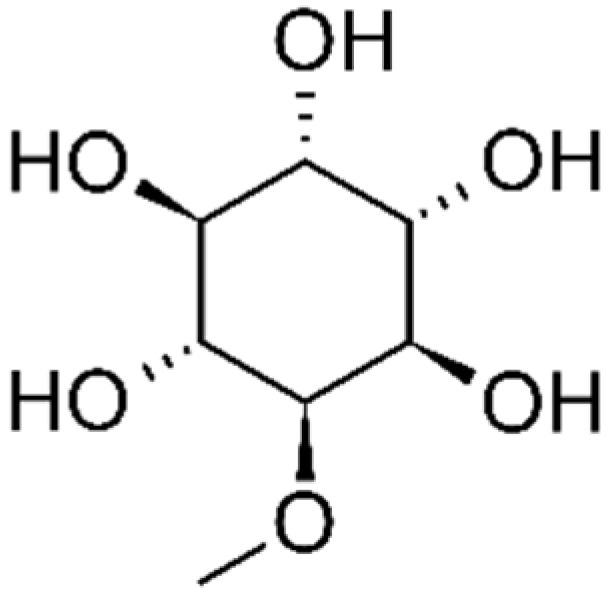
1. Introduction
2. Materials and Methods
2.1. Search Strategy
2.2. Quality and Risk of Bias Assessment
2.3. Data Synthesis and Analysis
3. Results
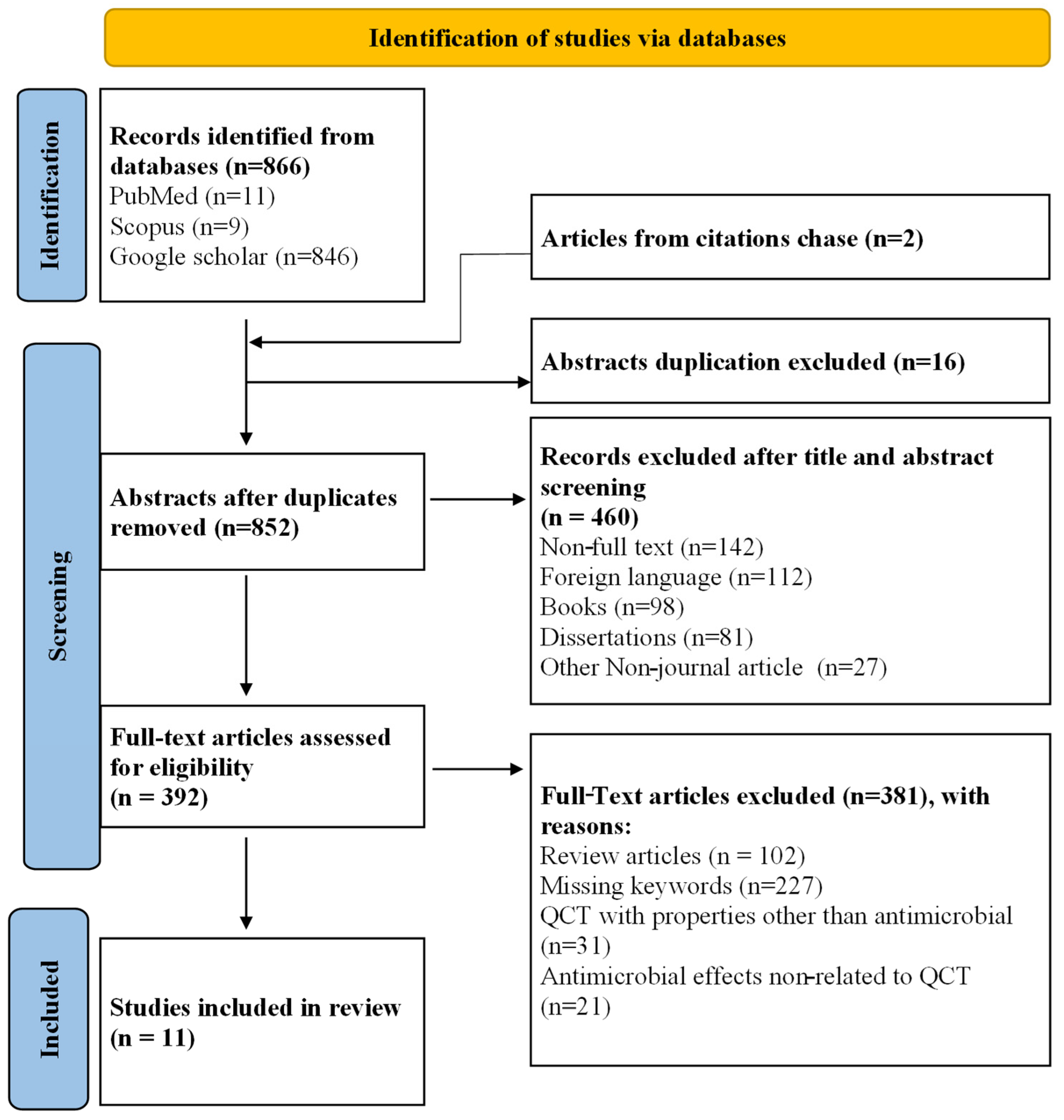
3.1. Search Results
3.2. Analysis of the Included Studies
3.3. Antibacterial Effects of Quebrachitol
3.4. Antifungal Effects of Quebrachitol
3.5. Antiviral Effects of Quebrachitol
3.6. Antiparasitic Effects of Quebrachitol
3.7. Antibiofilm Effects Against Bacteria Effects of QCT
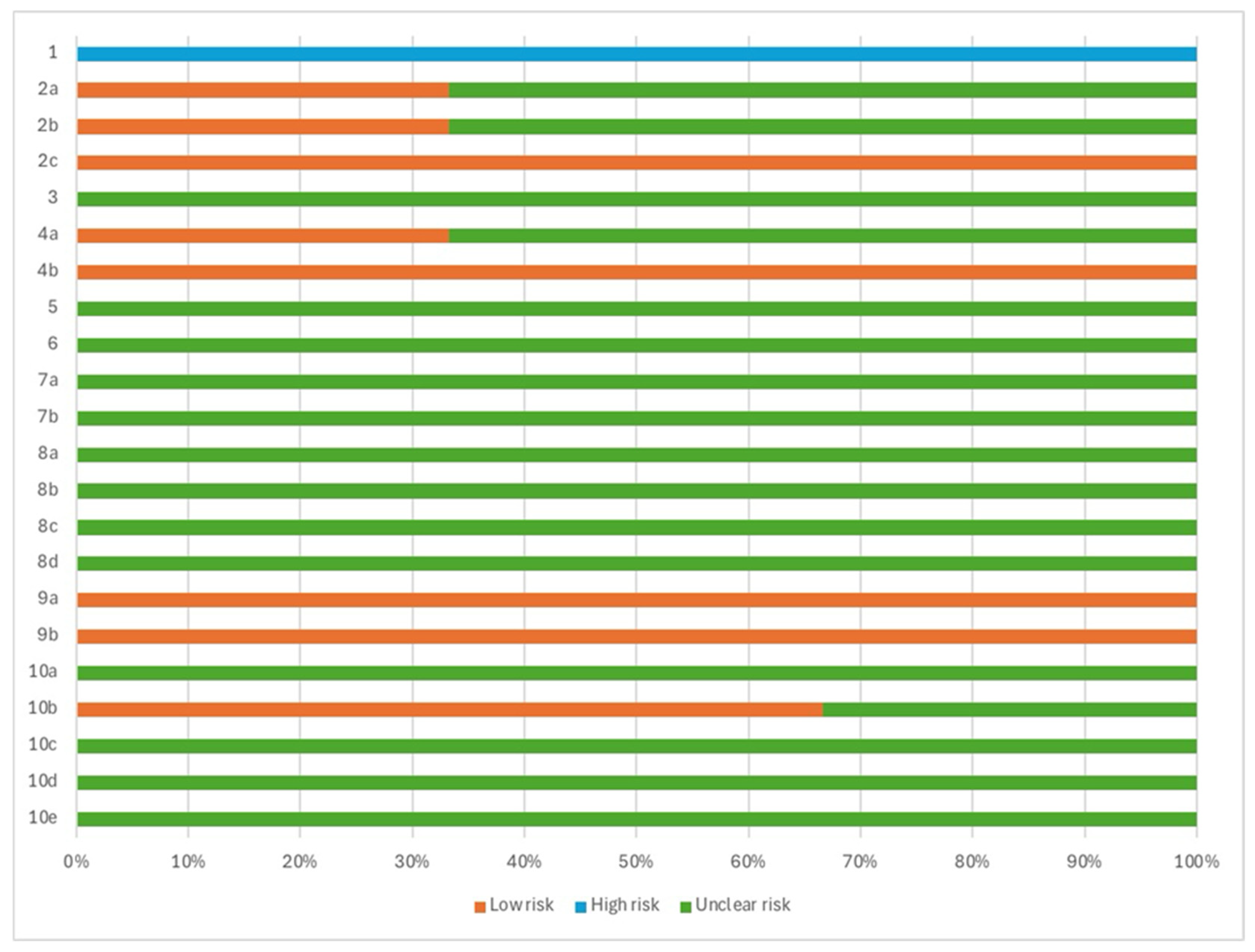
3.8. Quality Assessment of Selected Articles
4. Discussion
5. Conclusions
Author Contributions
Funding
Data Availability Statement
Acknowledgments
Conflicts of Interest
Abbreviations
| ACTs | Artemisinin-based combination therapies |
| ALP | Alkaline phosphatase |
| BIC | Biofilm inhibitory concentration |
| CC50 | 50% cytotoxic concentration |
| CLSM | Confocal laser scanning microscopy |
| ColIi | Type I collagen |
| DMSO | Dimethyl sulfoxide |
| ECM | Extracellular matrix |
| eDNA | Extracellular DNA |
| EPS | extracellular polysaccharides |
| Fib | Fibrinogen-binding protein |
| Fnbp | Fibronectin-binding protein |
| Fnbp | Fibronectin-binding proteins |
| IBDV | Immune complex infectious bursal disease virus |
| IC50 | Half-maximal inhibitory concentration |
| LDH | lactate dehydrogenase |
| MBC | minimum bactericidal concentration |
| MIC | minimum inhibitory concentration |
| MIT | Myo-inositol transport |
| MRSA | Methicillin-resistant Staphylococcus aureus |
| MSCRAMMs | Microbial surface components recognising adhesive matrix molecules |
| MST | Mean survival time |
| MTT | 3-(4,5-dimethylthiazol-2-yl)-2,5 diphenyltetrazolium bromide |
| NDV | Newcastle disease virus |
| NTDs | Neglected tropical diseases |
| OCN | Osteocalcin |
| OPN | Osteopontin |
| PAF | Platelet-activating factor |
| PCR | Polymerase chain reaction |
| PfLDH | Plasmodium falciparum lactate dehydrogenase enzyme |
| PIA | Polysaccharide intercellular adhesion |
| pLDH | Parasite-specific lactate dehydrogenase |
| PRISMA | Preferred Reporting Items for Systematic Reviews and Meta-Analyses |
| QCT | Quebrachitol |
| QS | Quorum sensing |
| QUIN | Quality Assessment Tool for In Vitro Studies |
| RoB | Risk of Bias |
| ROS | Reactive oxygen species |
| RUNX2 | RUNX family transcription factor 2 |
| SP | sulfadoxine-pyrimethamine |
| STITCH | Search tool for interactions of chemicals |
| SYRCLE | Systematic Review Centre for Laboratory Animal Experimentation |
References
- Wang, D.; Zhang, S.; Chang, Z.; Kong, D.X.; Zuo, Z. Quebrachitol: Global Status and Basic Research. Nat. Prod. Bioprospect. 2017, 7, 113–122. [Google Scholar] [CrossRef]
- de Jong, A.W.K. La présence de québrachite dans le latex de Hevea brasiliensis. Rec. Trav. Chim. Pays-Bas 1906, 25, 48–49. [Google Scholar] [CrossRef]
- Adams, R.; Pease, D.C.; Clark, J.H. Isolation of Cannabinol, Cannabidiol and Quebrachitol from Red Oil of Minnesota Wild Hemp. J. Am. Chem. Soc. 1940, 62, 2194–2196. [Google Scholar] [CrossRef]
- Díaz, M.; González, A.; Castro-Gamboa, I.; Gonzalez, D.; Rossini, C. First record of L-quebrachitol in Allophylus edulis (Sapindaceae). Carbohydr. Res. 2008, 343, 2699–2700. [Google Scholar] [CrossRef]
- Wu, Z.C.; Zhang, J.Q.; Zhao, J.T.; Li, J.G.; Huang, X.M.; Wang, H.C. Biosynthesis of quebrachitol, a transportable photosynthate, in Litchi chinensis. J. Exp. Bot. 2018, 69, 1649–1661. [Google Scholar] [CrossRef] [PubMed]
- Schilling, N.; Dittrich, P.; Kandler, O. Formation of L-quebrachitol from D-bornesitol in leaves of Acer pseudoplatanus. Phytochemistry 1972, 11, 1401–1404. [Google Scholar] [CrossRef]
- Chung, M.S.; Kim, N.C.; Long, L.; Shamon, L.; Ahmad, W.Y.; Sagrero-Nieves, L.; Kardono, L.B.; Kennelly, E.J.; Pezzuto, J.M.; Soejarto, D.D.; et al. Dereplication of saccharide and polyol constituents of candidate sweet-tasting plants: Isolation of the sesquiterpene glycoside mukurozioside IIb as a sweet principle of Sapindus rarak. Phytochem. Anal. 1997, 8, 49–54. [Google Scholar] [CrossRef]
- de Carvalho, M.G.; Carvalho Cranchi, D.; Kingston, D.G.I.; Werle, A.A. Proposed active constituents of Dipladenia martiana. Phytother. Res. 2001, 15, 715–717. [Google Scholar] [CrossRef]
- Kallio, H.; Lassila, M.; Järvenpää, E.; Haraldsson, G.G.; Jonsdottir, S.; Yang, B. Inositols and methylinositols in sea buckthorn (Hippophaë rhamnoides) berries. J. Chromatogr. B 2009, 877, 1426–1432. [Google Scholar] [CrossRef] [PubMed]
- Xue, Y.; Miao, Q.; Zhao, A.; Zheng, Y.; Zhang, Y.; Wang, P.; Kallio, H.; Yang, B. Effects of sea buckthorn (Hippophaë rhamnoides) juice and L-quebrachitol on type 2 diabetes mellitus in db/db mice. J. Funct. Foods 2015, 16, 223–233. [Google Scholar] [CrossRef]
- Mu, Y.; Tao, C.; Yuan, W.; Lv, Z. Sea buckthorn leaf L-quebrachitol extract for improved glucose and lipid metabolism in insulin resistant hepG2 cells. BioResources 2021, 17, 527–542. [Google Scholar] [CrossRef]
- Fernández-Tomé, S.; Ramos, S.; Cordero-Herrera, I.; Recio, I.; Goya, L.; Hernández-Ledesma, B. In vitro chemo-protective effect of bioactive peptide lunasin against oxidative stress in human HepG2 cells. Food Res. Int. 2014, 62, 793–800. [Google Scholar]
- Lemos, T.L.G.; Machado, L.L.; Souza, J.S.N.; Fonseca, A.M.; Maia, J.L.; Pessoa, O.D.L. Antioxidant, icthyotoxicity and brine shrimp lethality tests of Magonia glabrata. Fitoterapia 2006, 77, 443–445. [Google Scholar] [CrossRef] [PubMed]
- Kim, A.R.; Zou, Y.N.; Park, T.H.; Shim, K.H.; Kim, M.S.; Kim, N.D.; Kim, J.D.; Bae, S.J.; Choi, J.S.; Chung, H.Y. Active components from Artemisia iwayomogi displaying ONOO(−) scavenging activity. Phytother. Res. 2004, 18, 1–7. [Google Scholar]
- Li, Y.; Ma, Z.; Li, M.; Xu, R.; Jiang, S.; Zeng, L. L-quebrachitol extracted from industrial rubber serum: A study on its antioxidant activities and bone mineral density enhancing functions. Ind. Crops Prod. 2023, 201, 116943. [Google Scholar]
- Płonka, J.; Szablińska-Piernik, J.; Buszewski, B.; Baranowska, I.; Lahuta, L.B. Analyses of Antioxidative Properties of Selected Cyclitols and Their Mixtures with Flavanones and Glutathione. Molecules 2021, 27, 158. [Google Scholar] [CrossRef]
- Nobre Júnior, H.V.; Cunha, G.M.A.; Moraes, M.O.; Luciana, M.F.D.; Oliveira, R.A.; Maia, F.D.; Nogueira, M.; Lemos, T.; Rao, V. Quebrachitol (2-O-methyl-L-inositol) attenuates 6-hydroxydopamine-induced cytotoxicity in rat fetal mesencephalic cell cultures. Food Chem. Toxicol. 2006, 44, 1544–1551. [Google Scholar] [PubMed]
- Yodthong, T.; Kedjarune-Leggat, U.; Smythe, C.; Wititsuwannakul, R.; Pitakpornpreecha, T. l-Quebrachitol Promotes the Proliferation, Differentiation, and Mineralization of MC3T3-E1 Cells: Involvement of the BMP-2/Runx2/MAPK/Wnt/β-Catenin Signaling Pathway. Molecules 2018, 23, 3086. [Google Scholar]
- Zhang, F.; Cho, W.C. Therapeutic potential of RUNX1 and RUNX2 in bone metastasis of breast cancer. Expert. Opin. Ther. Targets 2023, 27, 413–417. [Google Scholar] [CrossRef]
- Moharam, B.A.; Jantan, I.; Jalil, J.; Shaari, K. Inhibitory Effects of Phylligenin and Quebrachitol Isolated from Mitrephora vulpina on Platelet Activating Factor Receptor Binding and Platelet Aggregation. Molecules 2010, 15, 7840–7848. [Google Scholar] [CrossRef]
- Bussolati, B.; Biancone, L.; Cassoni, P.; Russo, S.; Rola-Pleszczynski, M.; Montrucchio, G.; Camussi, G. PAF Produced by Human Breast Cancer Cells Promotes Migration and Proliferation of Tumor Cells and Neo-Angiogenesis. Am. J. Pathol. 2000, 157, 1713–1725. [Google Scholar] [CrossRef]
- Xu, B.; Gao, L.; Wang, L.; Tang, G.; He, M.; Yu, Y.; Ni, X.; Sun, Y. Effects of platelet-activating factor and its differential regulation by androgens and steroid hormones in prostate cancers. Br. J. Cancer 2013, 109, 1279–1286. [Google Scholar]
- Chida, N.; Yamada, K.; Ogawa, S. Utilisation of L-quebrachitol in natural product synthesis. Total synthesis and absolute configuration of (–)-oudemansin X. J. Chem. Soc. Perkin Trans. 1 1993, 17, 1957–1962. [Google Scholar]
- Chida, N.; Tobe, T.; Murai, K.; Yamazaki, K.; Ogawa, S. Stereoselective Conversion of L-Quebrachitol into a Novel Hydroxylated Caprolactam: Total Synthesis of Bengamide B. Heterocycles 1994, 38, 2383. [Google Scholar]
- Barton, D.H.R.; Bath, S.; Billington, D.C.; Gero, S.D.; Quiclet-Sire, B.; Samadi, M. Total synthesis of (–)-ovalicin and analogues from L-quebrachitol. J. Chem. Soc. Perkin Trans. 1 1995, 12, 1551–1558. [Google Scholar] [CrossRef]
- Akiyama, T.; Shima, H.; Ohnari, M.; Okazaki, T.; Ozaki, S. Synthesis of (−)-Conduritol F, (+)-Conduritol B, Cyclophellitol from L-Quebrachitol. Bull. Chem. Soc. Jpn. 1993, 66, 3760–3767. [Google Scholar]
- Zhang, M.; Liang, X.; Cai, P.; Feng, Q.; Chen, Y.; Yu, X.; Zhang, K.; Bao, X.; Chen, G. Design, synthesis and evaluation of L-quebrachitol derivatives against α-glycosidase. New J. Chem. 2023, 47, 13387–13396. [Google Scholar] [CrossRef]
- Kozikowski, A.P.; Sun, H.; Brognard, J.; Dennis, P.A. Novel PI Analogues Selectively Block Activation of the Pro-survival Serine/Threonine Kinase Akt. J. Am. Chem. Soc. 2003, 125, 1144–1145. [Google Scholar] [PubMed]
- Liu, C.; Nahorski, S.R.; Potter, B.V.L. Total synthesis from L-quebrachitol of the D-myo-inositol 1,4,5-trisphosphate analogue, L-chiro-inositol 2,3,5-trisphosphate, a potent inositol 1,4,5-trisphosphate 5-phosphatase and 3-kinase inhibitor. J. Chem. Soc. Chem. Commun. 1991, 15, 1014. [Google Scholar]
- Chida, N.; Sakata, N.; Murai, K.; Tobe, T.; Nagase, T.; Ogawa, S. Total Synthesis of Acanthacerebroside A and Astrocerebroside A via a Chiral Epoxide Intermediate Derived from L-Quebrachitol. Bull. Chem. Soc. Jpn. 1998, 71, 259–272. [Google Scholar] [CrossRef]
- de Olinda, T.M.; Lemos, T.L.G.; Machado, L.L.; Rao, V.S.; Santos, F.A. Quebrachitol-induced gastroprotection against acute gastric lesions: Role of prostaglandins, nitric oxide and K+ATP channels. Phytomedicine 2008, 15, 327–333. [Google Scholar] [CrossRef]
- Ehigiator, B.E.; Mobisson, S.K.; Wopara, I.; Chibuife, C.C.; Awarajih, U.C.; Eruotor, H.O. Cannabis sativa: A Remedy for Convulsion by Inhibition of GABAA Receptor and Significantly Delayed Onset of Seizure Latency and Death—An Experimental Validation and Molecular Docking. J. Angiother. 2021, 5, 207–217. [Google Scholar]
- Vijayakumar, K.; Bharathidasan, V.; Manigandan, V.; Jeyapragash, D. Quebrachitol inhibits biofilm formation and virulence production against methicillin-resistant Staphylococcus aureus. Microb. Pathog. 2020, 149, 104286. [Google Scholar] [CrossRef]
- Karuppiah, V.; Thirunanasambandham, R. Quebrachitol from Rhizophora mucronata inhibits biofilm formation and virulence production in Staphylococcus epidermidis by impairment of initial attachment and intercellular adhesion. Arch. Microbiol. 2020, 202, 1327–1340. [Google Scholar] [CrossRef]
- Moher, D.; Liberati, A.; Tetzlaff, J.; Altman, D.G. Preferred Reporting Items for Systematic Reviews and Meta-Analyses: The PRISMA Statement. PLoS Med. 2009, 6, e1000097. [Google Scholar] [CrossRef]
- Sheth, V.H.; Shah, N.P.; Jain, R.; Bhanushali, N.; Bhatnagar, V. Development and validation of a risk-of-bias tool for assessing in vitro studies conducted in dentistry: The QUIN. J. Prosthet. Dent. 2024, 131, 1038–1042. [Google Scholar] [PubMed]
- Hooijmans, C.R.; Rovers, M.M.; de Vries, R.B.; Leenaars, M.; Ritskes-Hoitinga, M.; Langendam, M.W. SYRCLE’s risk of bias tool for animal studies. BMC Med. Res. Methodol. 2014, 14, 43. [Google Scholar]
- Sathish Kumar, R. In Silico and In Vitro Evaluation of Anti Candidal Activity of Selected Medicinal Plants. Int. Educ. Sci. Res. J. 2016, 2, 6–14. [Google Scholar]
- Wannuch, T.; Nimpaiboon, A.; Sakdapipanich, J. More Values of L-Quebrachitol from Skim Natural Rubber Latex. Key Eng. Mater. 2015, 659, 458–462. [Google Scholar] [CrossRef]
- Nyandoro, S.S.; Joseph, C.C.; Nkunya, M.H.H.; Hosea, K.M.M. New antimicrobial, mosquito larvicidal and other metabolites from two Artabotrys species. Nat. Prod. Res. 2013, 27, 1450–1458. [Google Scholar]
- Andima, M.; Ndakala, A.; Derese, S.; Biswajyoti, S.; Hussain, A.; Yang, L.J.; Akoth, O.E.; Coghi, P.; Pal, C.; Heydenreich, M.; et al. Antileishmanial and cytotoxic activity of secondary metabolites from Taberneamontana ventricosa and two aloe species. Nat. Prod. Res. 2022, 36, 1365–1369. [Google Scholar] [PubMed]
- Mongan, T.P.; Ganapasam, S.; Hobbs, S.B.; Seyfang, A. Substrate specificity of the Leishmania donovani myo-inositol transporter: Critical role of inositol C-2, C-3 and C-5 hydroxyl groups. Mol. Biochem. Parasitol. 2004, 135, 133–141. [Google Scholar] [CrossRef]
- Nyandoro, S.S. In ovo antiviral activity of the constituents of Artabotrys monteiroae and Artabotrys modestus against Infectious Bursal Disease and Newcastle Disease Viruses. Int. J. Biol. Chem. Sci. 2018, 11, 3075. [Google Scholar] [CrossRef]
- Cushion, M.T.; Collins, M.S.; Sesterhenn, T.; Porollo, A.; Vadukoot, A.K.; Merino, E.J. Functional Characterization of Pneumocystis carinii Inositol Transporter 1. mBio 2016, 7, 10–1128. [Google Scholar] [CrossRef]
- Lunga, P.K.; Tamokou Jde, D.; Fodouop, S.P.; Kuiate, J.R.; Tchoumboue, J.; Gatsing, D. Antityphoid and radical scavenging properties of the methanol extracts and compounds from the aerial part of Paullinia pinnata. Springerplus 2014, 3, 302. [Google Scholar]
- Mishra, S.; Kumar, S.; Ramdas Khare, S.; Shukla, A.; Shanker, K.; Pal, A.; Khan, F.; Darokar, M.P. Quebrachitol from Putranjiva roxburghii Wall. (Putranjivaceae) a potent antimalarial: Pre-clinical efficacy and its interaction with PfLDH. Parasitol. Int. 2023, 92, 102675. [Google Scholar]
- Danwanichakul, P.; Pohom, W.; Yingsampancharoen, J. l-Quebrachitol from acidic serum obtained after rubber coagulation of skim natural rubber latex. Ind. Crops Prod. 2019, 137, 157–161. [Google Scholar] [CrossRef]
- Wiltshire, J.L.; Rhodes, E. Rubber from latex coagulation with sulphuric acid. J. Rubber Res. Inst. Malaya 1934, 5, 295–298. [Google Scholar]
- Makade, C.S.; Shenoi, P.R.; Bhongade, B.A.; Shingane, S.A.; Ambulkar, P.C.; Shewale, A.M. Estimation of MBC: MIC Ratio of Herbal Extracts against Common Endodontic Pathogens. J. Pharm. Bioallied Sci. 2024, 16, S1414–S1416. [Google Scholar] [CrossRef]
- Klemm, E.J.; Shakoor, S.; Page, A.J.; Qamar, F.N.; Judge, K.; Saeed, D.K.; Wong, V.K.; Dallman, T.J.; Nair, S.; Baker, S.; et al. Emergence of an Extensively Drug-Resistant Salmonella enterica serovar Typhi Clone Harboring a Promiscuous Plasmid Encoding Resistance to Fluoroquinolones and Third-Generation Cephalosporins. mBio 2018, 9, e00105-18. [Google Scholar]
- Nizamuddin, S.; Ching, C.; Kamal, R.; Zaman, M.H.; Sultan, F. Continued Outbreak of Ceftriaxone-Resistant Salmonella enterica serotype Typhi across Pakistan and Assessment of Knowledge and Practices among Healthcare Workers. Am. J. Trop. Med. Hyg. 2021, 104, 1265–1270. [Google Scholar] [CrossRef]
- Denning, D.W. Global incidence and mortality of severe fungal disease. Lancet Infect. Dis. 2024, 24, e428–e438. [Google Scholar] [CrossRef] [PubMed]
- Xu, H.; Nobile, C.J.; Dongari-Bagtzoglou, A. Glucanase induces filamentation of the fungal pathogen Candida albicans. PLoS ONE 2013, 8, e63736. [Google Scholar] [CrossRef]
- Garfoot, A.L.; Shen, Q.; Wüthrich, M.; Klein, B.S.; Rappleye, C.A. The Eng1 β-glucanase enhances Histoplasma virulence by reducing β-glucan exposure. mBio 2016, 7, e01388-15. [Google Scholar] [CrossRef]
- Reddy, G.K.K.; Padmavathi, A.R.; Nancharaiah, Y.V. Fungal infections: Pathogenesis, antifungals and alternate treatment approaches. Curr. Res. Microb. Sci. 2022, 3, 100137. [Google Scholar] [CrossRef]
- Scorzoni, L.; de Paula e Silva, A.C.A.; Marcos, C.M.; Assato, P.A.; de Melo, W.C.M.A.; de Oliveira, H.C.; Costa-Orlandi, C.B.; Mendes-Giannini, M.J.; Fusco-Almeida, A.M. Antifungal Therapy: New Advances in the Understanding and Treatment of Mycosis. Front. Microbiol. 2017, 8, 36. [Google Scholar] [CrossRef] [PubMed]
- Ramon, G.; Legnardi, M.; Cecchinato, M.; Cazaban, C.; Tucciarone, C.M.; Fiorentini, L.; Gambi, L.; Mato, T.; Berto, G.; Koutoulis, K.; et al. Efficacy of live attenuated, vector and immune complex infectious bursal disease virus (IBDV) vaccines in preventing field strain bursa colonization: A European multicentric study. Front. Vet. Sci. 2022, 9, 978901. [Google Scholar] [CrossRef] [PubMed]
- Gao, H.; Wang, Y.; Gao, L.; Zheng, S.J. Genetic Insight into the Interaction of IBDV with Host—A Clue to the Development of Novel IBDV Vaccines. Int. J. Mol. Sci. 2023, 24, 8255. [Google Scholar] [CrossRef]
- Li, C.; Wang, L.; Zheng, S. Editorial: Immunosuppressive disease in poultry. Front. Immunol. 2023, 14, 1215513. [Google Scholar] [CrossRef]
- Yuan, L.; Hensley, C.; Mahsoub, H.M.; Ramesh, A.K.; Zhou, P. Microbiota in viral infection and disease in humans and farm animals. Prog. Mol. Biol. Transl. Sci. 2020, 171, 15–60. [Google Scholar]
- Hernandez-Aguirre, I.; Cassady, K.A. Oncolytic viruses in immunotherapy. In Cancer Immunology and Immunotherapy; Academic Press: Cambridge, MA, USA, 2022; pp. 375–437. [Google Scholar]
- Jennings, M.R.; Parks, R.J. Curcumin as an antiviral agent. Viruses 2020, 12, 1242. [Google Scholar] [CrossRef] [PubMed]
- Rehman, Z.U.; Meng, C.; Sun, Y.; Safdar, A.; Pasha, R.H.; Munir, M.; Ding, C. Oxidative Stress in Poultry: Lessons from the Viral Infections. Oxidative Med. Cell. Longev. 2018, 2018, 5123147. [Google Scholar] [CrossRef] [PubMed]
- Zhao, S.; Jia, Y.; Zhang, W.; Wang, L.; Ma, Y.; Teng, K. Oral administration of Allium sativum extract protects against infectious bursal disease in chickens. Front. Agric. Sci. Eng. 2015, 2, 318. [Google Scholar] [CrossRef]
- Nyeko, R.; Otim, F.; Obiya, E.M.; Abala, C. Anti-malarial drug use, appropriateness and associated factors among children under-five with febrile illnesses presenting to a tertiary health facility: A cross sectional study. Malar. J. 2023, 22, 103. [Google Scholar] [PubMed]
- Mathieu, L.C.; Cox, H.; Early, A.M.; Mok, S.; Lazrek, Y.; Paquet, J.C.; Ade, M.-P.; Lucchi, N.W.; Grant, Q.; Udhayakumar, V.; et al. Local emergence in Amazonia of Plasmodium falciparum k13 C580Y mutants associated with in vitro artemisinin resistance. Elife 2020, 9, e51015. [Google Scholar] [CrossRef]
- Kaharudin, F.A.; Zohdi, R.M.; Mukhtar, S.M.; Sidek, H.M.; Bihud, N.V.; Rasol, N.E.; Ahmad, F.B.; Ismail, N.H. In vitro antiplasmodial and cytotoxicity activities of crude extracts and major compounds from Goniothalamus lanceolatus. J. Ethnopharmacol. 2020, 254, 112657. [Google Scholar] [CrossRef]
- Dwivedi, M.K.; Shukla, R.; Sharma, N.K.; Manhas, A.; Srivastava, K.; Kumar, N.; Singh, P.K. Evaluation of ethnopharmacologically selected Vitex negundo L. for In vitro antimalarial activity and secondary metabolite profiling. J. Ethnopharmacol. 2021, 275, 114076. [Google Scholar] [CrossRef]
- Boeno, S.I.; Vieira, I.J.C.; Braz-Filho, R.; de Souza Passos, M.; Curcino Vieira, M.G.; do Nascimento, M.F.A.; Gontijo, D.C.; de Oliveira, A.B. Antiplasmodial and cytotoxic effects of the methanol extract, canthinone alkaloids, squalene- and protolimonoid-type triterpenes from Homalolepis suffruticosa roots. J. Ethnopharmacol. 2022, 285, 114890. [Google Scholar] [CrossRef]
- Oliveira, C.I.d.; Teixeira, M.J.; Gomes, R.; Barral, A.; Brodskyn, C. Animal models for infectious diseases caused by parasites: Leishmaniasis. Drug Discov. Today Dis. Models 2004, 1, 81–86. [Google Scholar] [CrossRef]
- The World Health Organization Leishmaniasis Fact Sheet. Available online: https://www.who.int/news-room/fact-sheets/detail/leishmaniasis (accessed on 4 January 2022).
- Høiby, N. A short history of microbial biofilms and biofilm infections. Acta Pathol. Microbiol. Et Immunol. Scand. 2017, 125, 272–275. [Google Scholar] [CrossRef]
- Ghasemian, A.; Najar Peerayeh, S.; Bakhshi, B.; Mirzaee, M. The Microbial Surface Components Recognizing Adhesive Matrix Molecules (MSCRAMMs) Genes among Clinical Isolates of Staphylococcus aureus from Hospitalized Children. Iran. J. Pathol. 2015, 10, 258–264. [Google Scholar]
- Nadar, S.; Khan, T.; Patching, S.G.; Omri, A. Development of Antibiofilm Therapeutics Strategies to Overcome Antimicrobial Drug Resistance. Microorganisms 2022, 10, 303. [Google Scholar] [CrossRef]
- Silva, V.; Almeida, L.; Gaio, V.; Cerca, N.; Manageiro, V.; Caniça, M.; Capelo, J.L.; Igrejas, G.; Poeta, P. Biofilm Formation of Multidrug-Resistant MRSA Strains Isolated from Different Types of Human Infections. Pathogens 2021, 10, 970. [Google Scholar] [CrossRef]
- Fey, P.D.; Olson, M.E. Current Concepts in Biofilm Formation of Staphylococcus epidermidis. Future Microbiol. 2010, 5, 917–933. [Google Scholar] [CrossRef]
- Gellatly, S.L.; Hancock, R.E.W. Pseudomonas aeruginosa: New insights into pathogenesis and host defenses. Pathog. Dis. 2013, 67, 159–173. [Google Scholar] [CrossRef]
- Prosser, B.L.; Taylor, D.; Dix, B.A.; Cleeland, R. Method of evaluating effects of antibiotics on bacterial biofilm. Antimicrob. Agents Chemother. 1987, 31, 1502–1506. [Google Scholar] [CrossRef]
- Khatoon, Z.; McTiernan, C.D.; Suuronen, E.J.; Mah, T.F.; Alarcon, E.I. Bacterial biofilm formation on implantable devices and approaches to its treatment and prevention. Heliyon 2018, 4, e01067. [Google Scholar] [CrossRef]
- Arciola, C.R.; Campoccia, D.; Montanaro, L. Implant infections: Adhesion, biofilm formation and immune evasion. Nat. Rev. Microbiol. 2018, 16, 397–409. [Google Scholar] [CrossRef] [PubMed]
- Kuang, X.; Chen, V.; Xu, X. Novel Approaches to the Control of Oral Microbial Biofilms. Biomed. Res. Int. 2018, 2018, 6498932. [Google Scholar] [CrossRef] [PubMed]
- Yan, X.; Gu, S.; Shi, Y.; Cui, X.; Wen, S.; Ge, J. The effect of emodin on Staphylococcus aureus strains in planktonic form and biofilm formation in vitro. Arch. Microbiol. 2017, 199, 1267–1275. [Google Scholar] [CrossRef] [PubMed]
- Das, S.; Malik, M.; Dastidar, D.G.; Roy, R.; Paul, P.; Sarkar, S.; Chakraborty, P.; Maity, A.; Dasgupta, M.; Das Gupta, A.; et al. Piperine, a phytochemical prevents the biofilm city of methicillin-resistant Staphylococcus aureus: A biochemical approach to understand the underlying mechanism. Microb. Pathog. 2024, 189, 106601. [Google Scholar] [CrossRef] [PubMed]
- Wu, X.; Ma, G.L.; Chen, H.W.; Zhao, Z.Y.; Zhu, Z.P.; Xiong, J.; Yang, G.-X.; Hu, J.-F. Antibacterial and antibiofilm efficacy of the preferred fractions and compounds from Euphorbia humifusa (herba euphorbiae humifusae) against Staphylococcus aureus. J. Ethnopharmacol. 2023, 306, 116177. [Google Scholar] [CrossRef] [PubMed]
- Musini, A.; Singh, H.N.; Vulise, J.; Pammi, S.S.S.; Archana, G. Quercetin’s antibiofilm effectiveness against drug resistant Staphylococcus aureus and its validation by in silico modeling. Res. Microbiol. 2024, 175, 104091. [Google Scholar] [CrossRef]
- Mu, Y.; Zeng, H.; Chen, W. Quercetin Inhibits Biofilm Formation by Decreasing the Production of EPS and Altering the Composition of EPS in Staphylococcus epidermidis. Front. Microbiol. 2021, 12, 631058. [Google Scholar] [CrossRef]
- Egger, M.; Juni, P.; Bartlett, C.; Holenstein, F.; Sterne, J. How important are comprehensive literature searches and the assessment of trial quality in systematic reviews? Empirical study. Health Technol. Assess. 2003, 7, 1–76. [Google Scholar]
- Moher, D.; Fortin, P.; Jadad, A.R.; Jüni, P.; Klassen, T.; Le Lorier, J.; Liberati, A.; Penna, A.; Linde, K. Completeness of reporting of trials published in languages other than English: Implications for conduct and reporting of systematic reviews. Lancet 1996, 347, 363–366. [Google Scholar] [CrossRef] [PubMed]
- Jüni, P.; Holenstein, F.; Sterne, J.; Bartlett, C.; Egger, M. Direction and impact of language bias in meta-analyses of controlled trials: Empirical study. Int. J. Epidemiol. 2002, 31, 115–123. [Google Scholar]



| No | Criteria |
|---|---|
| 1 | Clear objectives/aims |
| 2 | Sample size calculation detail explanation |
| 3 | Sampling technique explanation |
| 4 | Comparison groups details |
| 5 | Methodology detail explanation |
| 6 | Operator details |
| 7 | Randomisation |
| 8 | Outcome measurement methods |
| 9 | Details on outcome accessors |
| 10 | Blinding process |
| 11 | Statistical analysis |
| Item | Type of Bias | Domain |
|---|---|---|
| 1. | Selection | Generation of sequence |
| 2. | Selection | Characteristics of baseline |
| 3. | Selection | Allocation Concealment |
| 4. | Performance | Housing randomisation |
| 5. | Performance | Blinding |
| 6. | Detection | Random outcome assessment |
| 7. | Detection | Blinding |
| 8. | Attrition | Outcome data completion |
| 9. | Reporting | Selection of Outcome reports |
| 10. | Other | Miscellaneous bias |
| Author, Year | Source of Quebrachitol (Parts) | Microorganism | Study Model (In Vitro, In Vivo, or Both) | QCT Comparators | Methods | Purpose | References |
|---|---|---|---|---|---|---|---|
| Lunga et al., 2014 | Paulina pinnata L. (leaves) | Salmonella sp.—S. typhi, S. paratyphi A, S. paratyphi B, S. typhimurium | Both | [45] | |||
| In vitro | Ciprofloxacin, gentamicin | Broth microdilution | Determination of minimum inhibitory concentration (MIC) and minimum bactericidal concentration (MBC) | ||||
| In vivo | Ciprofloxacin, oxytetracycline | Animal (rats) groups: reference (non-infected), control (distilled water), Comparators antibiotic, treated rats with leaf extract of P. pinnata L. at MIC, 2MIC, 4MIC, and 8MIC. | Determination of antibacterial effects | ||||
| Faecal collection for calculation of Salmonella sp. load | |||||||
| Wannuch et al., 2015 | Hevea brasiliensis Muell. Arg. (Latex from bark) | Staphylococcus aureus, Streptococcus mutans | In vitro | Nil | Disc diffusion antibiotic sensitivity | Determine bacterial inhibition | [39] |
| Cushion et al., 2016 | Reagent from Sigma Aldrich | Pneumocystis carinii | In vivo | Myoinositol, inositol derivatives | Inositol uptake assay done on infected lung tissue of rats | Assessment of inositol transport activity of P. carinii for organism survival. | [44] |
| Kumar, 2016 | Acalypha indica L. (leaves) | Candida albicans | In vitro | Ciprofloxacin, cefotaxime | Disc diffusion | Antifungal analysis | [38] |
| Nyandoro et al., 2013 | Artabotrys modestus Diels. (Stem bark) | S. aureus, Escherichia coli, Candida albicans, Cryptococcus neoformans | In vitro | Ampicillin | Agar diffusion, microplate dilution assay | Antibacterial and antifungal analysis | [40] |
| Nyandoro, 2017 | Artabotrys modestus Diels. (Stem bark) | Immune complex infectious bursal disease virus (IBDV), Newcastle disease virus (NDV) | In ovo | Placebo: dimethyl sulfoxide (DMSO) | Allantoic or amniotic inoculation assay | Antiviral activity analysis | [43] |
| Viral hemagglutination test | Assessment of infectivity of the virus | ||||||
| Andima et al., 2021 | Taberneamontana ventricosa Hochst. ex A.DC. (Stem bark) | Leishmania donovani | In vitro | Nil | 3-(4,5-dimethylthiazol-2-yl)-2,5 diphenyltetrazolium bromide (MTT) micro method | Evaluation of Leishmania sp. inhibition | [41] |
| Mongan et al., 2004 | Reagent from Sigma Aldrich | L. donovani | In vitro | Myoinositol, inositol derivatives | Inositol uptake assay | Assessment of inositol transport activity of L. donovani for organism survival. | [42] |
| Mishra et al., 2023 | Putranjiva roxburghii Wall. (Twigs) | Plasmodium falciparum | In vitro | Chloroquine | Parasite-specific lactate dehydrogenase (pLDH) assay | Anti-plasmodium analysis | [46] |
| MTT | Cytotoxicity analysis | ||||||
| Plasmodium berghei | In vivo | Chloroquine | 6 groups of mice: water (negative), chloroquine (positive), butanol, quebrachitol at 30 mg/kg,60 mg/kg, and 120 mg/kg. | Determine parasite suppression percentage and mean survival time (MST) | |||
| Microscopic evaluation of blood stained with Giemsa | |||||||
| Karuppiah et al., 2020 | Rhizophora mucronata Lam. (Leaves) | Streptococcus epidermidis | In vitro | DMSO | Microdilution | Antibacterial activity | [34] |
| Confocal laser scanning microscopy (CLSM) analysis | Antibiofilm efficacy and activity on different surfaces | ||||||
| Phenolsulphuric acid method | Exopolysaccharides assessment | ||||||
| Colorimetric method | Lipid estimation | ||||||
| Lowry’s method | Protein estimation | ||||||
| CLSM analysis | Biofilm architecture, formation of different materials | ||||||
| Physico-chemical interactions assay | Evaluation of organism adherence to non-biological surfaces | ||||||
| Spectrophotometry | Biofilm aggregation assessment | ||||||
| Phenotypic assay | Autolytic process evaluation | ||||||
| Spectrofluorometry, optical microscopy | Evaluation of adherence to biotic surfaces | ||||||
| CLSM analysis | Evaluation of production of lipase | ||||||
| Azocasein assay | Quantification of protease | ||||||
| Real-time polymerase chain reaction (PCR) | Analysis of gene expression | ||||||
| Vijayakumar et al., 2020 | Reagent from Sigma Aldrich | Methicillin-resistant Staphylococcus aureus | In vitro | Placebo | Broth microdilution | Antibacterial activity | [33] |
| Crystal violet staining with absorbance at 570 nm | Antibiofilm potential | ||||||
| Microscopic evaluation | Effect on biofilm architecture, disruption | ||||||
| CLSM analysis | Antibiofilm activity on different surfaces | ||||||
| Microbial adhesion to hydrocarbon (MATH) assay | Biofilm adhesion evaluation | ||||||
| Phenolsulphuric acid method | Exopolysaccharides assessment | ||||||
| CLSM analysis | Biofilm architecture, formation on different materials | ||||||
| Phenotypic assay | Autolytic process and staphyloxanthin synthesis evaluation | ||||||
| Spectrophotometry | Biofilm aggregation assessment | ||||||
| Microdilution | Quantification of hemolysis | ||||||
| Real-time PCR | Analysis of gene expression | ||||||
| No. | Author, Year | Types of Antimicrobial Effects | Study Model (In Vitro, In Vivo, Both) | Names of Microorganism | Presence (Yes) or Absence (No) * | Reference |
|---|---|---|---|---|---|---|
| 1 | Lunga et al., 2014 | Antibacterial | Both | Salmonella sp. (Gram-negative) | Yes (Bacteriostatic effects on Salmonella paratyphi A, S. paratyphi B, Salmonella typhi; bactericidal effects on Salmonella typhimurium) | [45] |
| 2 | Wannuch et al., 2015 | Antibacterial | In vitro | Staphylococcus aureus (Gram-positive), Streptococcus mutans (Gram-positive) | No | [39] |
| 3 | Cushion et al., 2016 | Antifungal | In vivo | Pneumocystis carinii (yeast-like fungus) | No | [44] |
| 4 | Kumar, 2016 | Antifungal | In vitro | Candida albicans (yeast) | Yes (Observed inhibition zones) | [38] |
| 5 | Nyandoro et al., 2013 | Antifungal | In vitro | C. albicans, Cryptococcus neoformans (yeast) | No | [40] |
| 6 | Nyandoro, 2017 | Antiviral | In ovo | Infectious bursal disease virus, Newcastle disease virus | Yes (viral titre reduction) | [43] |
| 7 | Andima et al., 2021 | Antiparasitic | In vitro | Leishmania donovani | No | [41] |
| 8 | Mongan et al., 2004 | Antiparasitic | In vitro | L. donovani | No | [42] |
| 9 | Mishra et al., 2023 | Antiparasitic | Both | Plasmodium sp. | Yes (Inhibition and cytotoxicity) | [46] |
| 10 | Vijayakumar et al., 2020 | Antibiofilm | In vitro | Methicillin-resistant S. aureus (MRSA) | Yes (Antibiofilm effects and virulence inhibition) | [33] |
| 11 | Karuppiah et al., 2020 | Antibiofilm | In vitro | Staphylococcus epidermidis (Gram-positive) | Yes (Biofilm inhibitory) | [34] |
| Author, Year | Microorganism | Results | Inhibition/Killed | Mechanism | Antimicrobial Effects | |||||||||
|---|---|---|---|---|---|---|---|---|---|---|---|---|---|---|
| Lunga et al., 2014 [45] | In vitro | QCT | Ciprofloxacin | Gentamicin | ||||||||||
| Minimum inhibitory concentration, MIC (μg/mL) | Minimum bactericidal concentration, MBC (μg/mL) | MBC/MIC | MIC (μg/mL) | MBC (μg/mL) | MBC/MIC | MBC (μg/mL) | MBC/MIC | |||||||
| Salmonella typhi (Gram-negative), | 50 | 100 | 8 | 6.25 | 0.781 | 4 | 12.5 | 2 | Inhibition | Bacteriostatic | Antibacterial | |||
| Salmonella paratyphi A (Gram-negative), | 12.5 | 100 | 8 | 1.562 | 0.781 | 4 | 6.25 | 4 | Inhibition | Bacteriostatic | ||||
| S. paratyphi B (Gram-negative), | 12.5 | 100 | 8 | 3.125 | 1.562 | 1 | 12.5 | 4 | Inhibition | Bacteriostatic | ||||
| Salmonella typhimurium (Gram-negative) | 100 | 100 | 4 | 3.13 | 3.125 | 4 | 6.25 | 2 | Killed | Bactericidal | ||||
| In vivo on rats infected with S. typhimurium | QCT | Ciprofloxacin (7.14 mg/kg bw) | Oxytetracycline (5.00 mg/kg bw) | |||||||||||
| Dosage (mg/kg bw) | Healing time (days) | White blood cell (WBC) count (103 mm−3) | Lymphocytes (%) | Healing time (days) | WBC count (103 mm−3) | Lymphocytes (%) | Healing time (days) | WBC count (103 mm−3) | Lymphocytes (%) | Inhibition | Leukocytes and lymphocytes proliferation | Antibacterial | ||
| 55.75 (MIC) | 8 | 5.32 ± 0.534 | 51.000 ± 6.082 | 4 | 5.833 ± 1.264 | 52.333 ± 3.785 | 4 | 4.040 ± 0.065 | 45.000 ± 6.000 | |||||
| 111.5 (2MIC) | 6 | 6.266 ± 0.862 | 54.666 ± 4.163 | |||||||||||
| 223.00 (4MIC) | 5 | 7.553 ± 0.642 | 65.333 ± 7.094 | |||||||||||
| 446 (8MIC) | 4 | 6.606 ± 1.572 | 65.333 ± 5.859 | |||||||||||
| Wannuch et al., 2015 [39] | In vitro Staphylococcus aureus (Gram-positive), Streptococcus mutans (Gram-positive) | QCT | Nil | Nil | No significant inhibitions on S. aureus and S. mutans | |||||||||
| Dosage | Areas of inhibition (cm) | |||||||||||||
| S. aureus | S. mutans | |||||||||||||
| 0 (control) | 0.9 ± 0.1 | 0 | ||||||||||||
| 1 | 1.0 ± 0.1 | 0 | ||||||||||||
| 5 | 1.3 ± 0.3 | 0 | ||||||||||||
| 10 | 1.0 ± 0.0 | 0 | ||||||||||||
| 100 | 1.0 ± 0.1 | 0 | ||||||||||||
| Author, Year | Microorganism | Results | Inhibition/Killed | Mechanism | Antimicrobial Effects | ||
|---|---|---|---|---|---|---|---|
| Kumar, 2016 [38] | In vitro | Methanol extract containing QCT | Ciprofloxacin | Cefotaxime | Inhibition | Interacts with Glu27, and other residues to inhibit exo-glucanase, and hyphae formation and induces catalysis. | Antifungal |
| Candida albicans (yeast) | Zone of inhibition (mm) | Zone of inhibition (mm) | Zone of inhibition (mm) | ||||
| 17 | 30 | 19 | |||||
| In silico | 6 Bonds with LEU-304, LEU-304, TYR-29, ASP-145, GLU-27, ASN-146 | ||||||
| Nyandoro et al., 2013 [40] | In vitro C. albicans, Cryptococcus neoformans (yeast) | QCT | Artapetalin B and Artabotrol | Nil | Nil | No inhibition of fungus | |
| Inactive | Artapetalin B and artabotrol showed inhibition | ||||||
| Cushion et al., 2016 [44] | In vivo Pneumocystis carinii (yeast-like fungus) | QCT | Myo-inositol | Nil | Nil | Failure to inhibit the MIT system of P. carinii. Thus, P. carinii survived. | |
| No significant inhibition of the myo-inositol transport system of P. carinii | Myo-inositol showed significant competition and inhibited myo-inositol transport (MIT) system by P. carinii. | ||||||
| Author, Year | Microorganism | Results | Inhibition/Killed | Mechanism | Antimicrobial Effects | ||||||||
|---|---|---|---|---|---|---|---|---|---|---|---|---|---|
| Nyandoro, 2017 [43] | In ovo/in vitro | QCT (360 μg/mL) | Solvent control (dimethyl sulfoxide) | Negative control (no virus) | Inhibition | Unclear—virucidal/inhibitory/preventive | Antiviral | ||||||
| Immune complex infectious bursal disease virus (IBDV) | Eggs (alive/dead) | Embryo weight (g) | Embryo formation | Eggs (alive/dead) | Embryo weight (g) | Embryo formation | Eggs (alive/dead) | Embryo weight (g) | Embryo formation | ||||
| Alive | 7.449 | Complete | Dead | 1.67 | Incomplete | Alive | 7.626 | Complete | |||||
| Newcastle disease virus (NDV) | Eggs (alive/dead) | Embryo weight (g) | Embryo formation | Eggs (alive/dead) | Embryo weight (g) | Embryo formation | Eggs (alive/dead) | Embryo weight (g) | Embryo formation | ||||
| Alive | 5.293 | Complete | Dead | 3.359 | Incomplete | Alive | 6.708 | Complete | |||||
| Hemagglutinin test | |||||||||||||
| Positive (titre 1:259) | Positive (titre 1:1024) | Negative | |||||||||||
| Author, Year | Micro-Organism | Results | Inhibition/Killed | Mechanism | Antimicrobial Effects | |||||||||
|---|---|---|---|---|---|---|---|---|---|---|---|---|---|---|
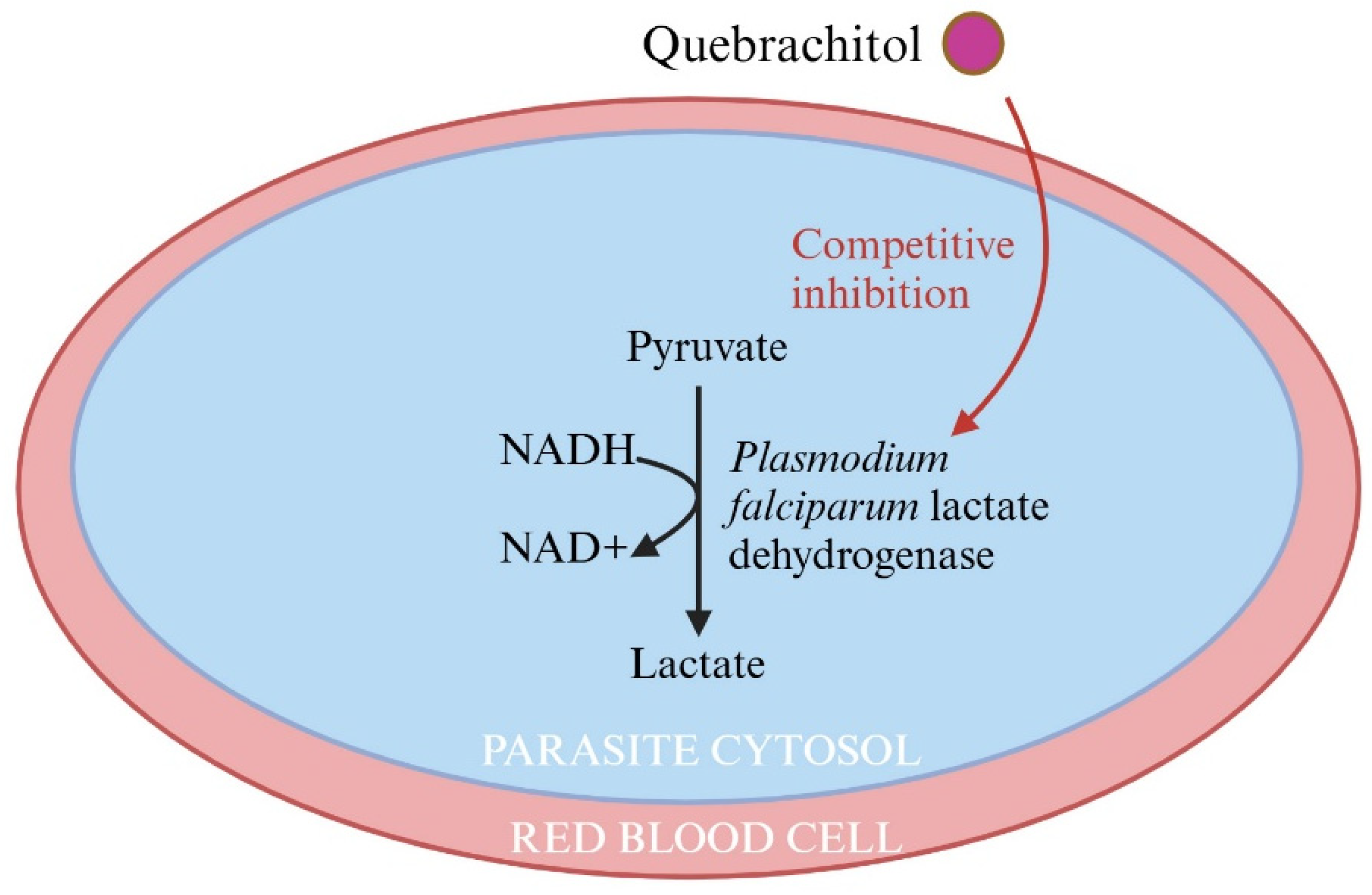
| Mishra et al., 2023 [46] | In vitro | QCT | Chloroquine | Inhibition | Binding to P. falciparum lactate dehydrogenase enzyme (PfLDH) hydrophobic pocket, inhibiting the lactate dehydrogenase (LDH), and leading to malarial cell death | Antimalarial | ||||||||
| Plasmodium falciparum | IC50 (μg/mL) | CC50 (μg/mL) | SI | IC50 (μg/mL) | CC50 (μg/mL) | SI | ||||||||
| 0.87 ± 0.04 | 137.56 ± 04.45 | 158.11 | 0.029 ± 0.002 | 43.9 ± 02.28 | 1908.69 | |||||||||
| In vivo | QCT | Chloroquine (10 mg/kg/d) | PRT Butanol (500 mg/kg/d) | |||||||||||
| Plasmodium berghei | Dosage (mg/kg) | Chemosuppression (%) | Mean survival time (MST) (days) | Haemoglobin (g/dL) | Chemosuppression (%) | MST (days) | Haemoglobin (g/dL) | Chemosuppression (%) | MST (days) | Haemoglobin (g/dL) | ||||
| 30 | 73.26 | 14.36 | 8.18 ± 0.56 | 100 | >28.00 | 11.64 ± 0.38 | 21.35 ± 7.40 | 8.93 | 6.14 ± 0.64 | |||||
| 60 | 61.88 | 11.86 | 7.39 ± 0.19 | |||||||||||
| 120 | 42.33 | 10.28 | 7.46 ± 0.61 | |||||||||||
| In silico | Highest interaction with PfLDH hydrophobic pocket | |||||||||||||
| Andima et al., 2021 [41] | In vitro Leishmania donovani | QCT | Voacristine, vobasine, aloenin, chrysophanol, and miltefosine | Nil | Nil | No inhibition on L. donovani promastigotes. Other agents showed inhibition of arginase, ornithine decarboxylase, and spermidine synthase leading to polyamine synthesis and thereby inhibiting L. donovani survival. | ||||||||
| No inhibition on L. donovani promastigotes | Inhibition by voacristine, vobasine, aloenin, chrysophanol, and miltefosine | |||||||||||||
| Mongan et al., 2004 [42] | In vitro L. donovani | QCT | Myo-inositol | Modest or no inhibition | Nil | No significant inhibition on the MIT system of L. donovani. Other isomers showed that the most important L. donovani inhibitors were isomer substrates with myo-inositol C-2. C-3 and C-5 hydroxyl groups. Thus, these agents can be used to deliver cytotoxic agents to inhibit Leishmania sp. | ||||||||
| No inhibition of myo-inositol transport (MIT) system of L. donovani | Myo-inositol inhibited 96 +/− 2% myo-inositol transport system of L. donovani with specificity on carbon-2, carbon-3 and carbon-5 hydroxyl groups | |||||||||||||
| Author, Year | Vijayakumar et al., 2020 [33] | Karuppiah et al., 2020 [34] | |
|---|---|---|---|
| Microorganism | Methicillin-resistant Staphylococcus aureus | Staphylococcus epidermidis | |
| Quebrachitol Results | Qualitative assay | Biofilm inhibition | Biofilm inhibition |
| Biofilm inhibitory concentration (μg/mL) | 100 | 75 | |
| Biofilm suppression (%) | 86% | 84% | |
| Antibacterial activity | Negative | Negative | |
| Microscopic evaluation | Reduced biofilm, microcolonies formation | Significantly reduced biofilm, microcolonies formation | |
| Matrix composition of biofilm | Reduced 79% production of extracellular polysaccharides and 76% hydrophobicity (p < 0.05) | Significantly reduced 76% protein, 72% carbohydrate, 44% lipid | |
| Formation of biofilm on abiotic surfaces | Reduced biofilm significantly on steel, silicone, titanium | Significant reduction in biofilm on steel, glass, silicone, and titanium | |
| Bacterial adherence to abiotic surfaces | Significantly reduced 72% adherence to hydrophilic surfaces and 75% to hydrophobic surfaces. | Significant reduction of 55% adherence to hydrophilic surfaces and 78% to hydrophobic surfaces | |
| Bacterial adherence to biotic surfaces | Significantly reduced 59% adherence to a surface coated with fibrinogen and 62% to collagen Type I coated surfaces. | Reduced 67% to surface coated with fibrinogen and 62% to collagen Type I coated surfaces. | |
| Disruption of mature biofilm | Significantly disrupt biofilm architecture. | - | |
| Autolysis assay | Reduced autolysis of bacteria | Significantly reduced autolysis of bacteria, reduced dispersion of extracellular DNA | |
| First attachment assay | - | Reduced initial binding | |
| Bacterial accumulation or aggregation assay | Bacterial clumping reduced 85% | Bacterial clumping was delayed and reduced by 82% | |
| Haemolysis and production of lipase | Reduced 69% haemolysis and 77% lipase (p < 0.05) | - | |
| Synthesis of staphyloxanthin | Staphyloxanthin synthesis significantly reduced by 79%, disruption of Methicillin-resistant Staphylococcus aureus defence. | - | |
| Hydrogen peroxide susceptibility assay | Significant reduction in hydrogen-peroxide-resistant cells | - | |
| Production of hydrolases | - | Significantly reduced 69% lipase, and 78% protease. Reduced bacterial virulence. | |
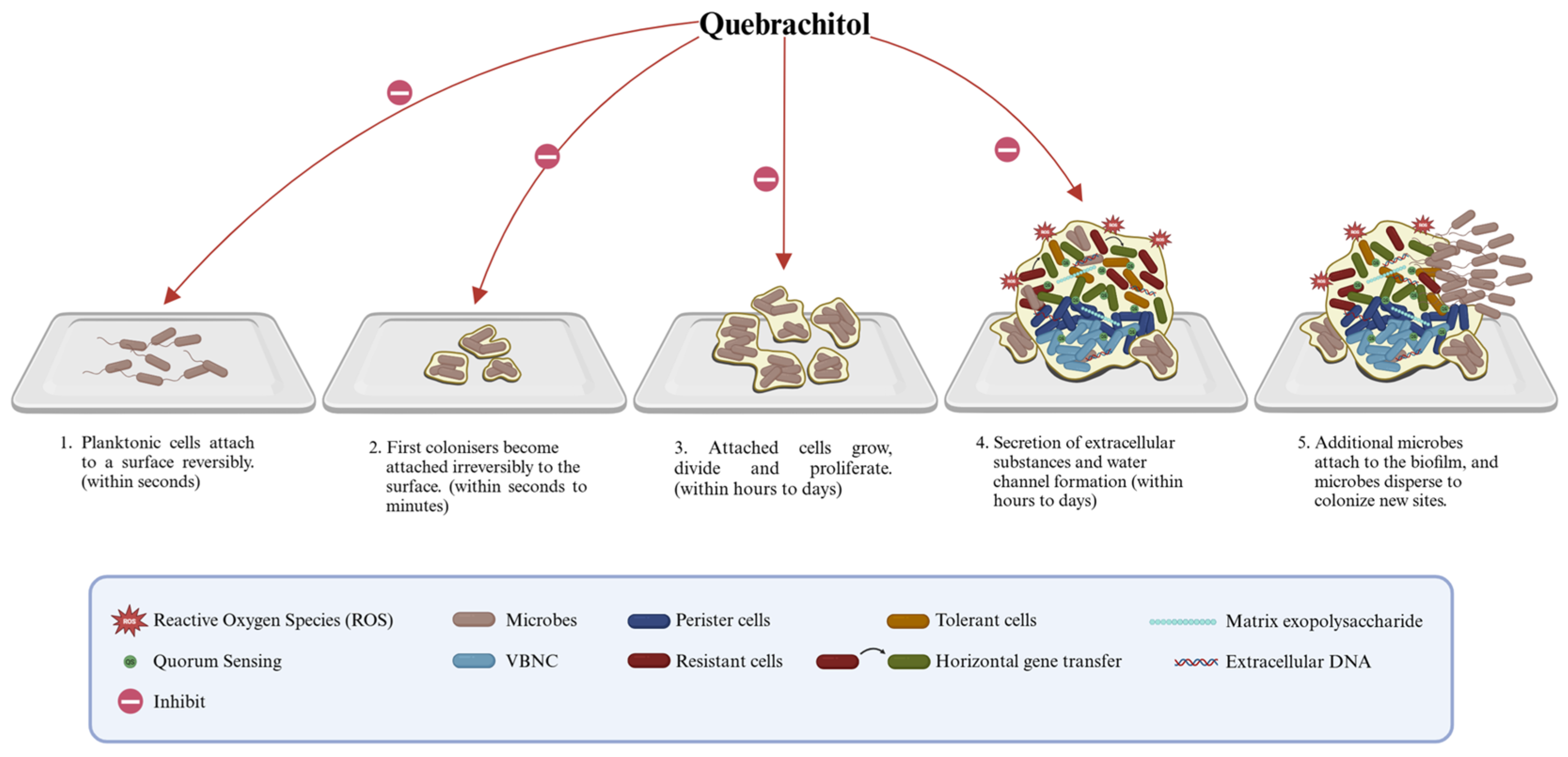
| Analysis of expressions of genes | Significant downregulation of sarA, agrA, atlA, geh, hla, cna, clfA, crtM, and fnbA. Also reduced expression of agrC, icaD, fnbB. Increased sigB | Significant downregulation of AgrA, Embp, icaA, icaD, atlE, Aap. Also reduced icaC, FnbpA, FnbpB | |
| Inhibition/killed | No direct antibacterial effects, positive biofilm inhibition | No direct antibacterial effects, positive biofilm inhibition | |
| Mechanism | Reduced biofilm formation, adherence, aggregation, autolysis, virulence, and staphyloxanthin antioxidant effects. | Reduce biofilm adherence, binding, aggregation, and matrix composition. | |
| Antimicrobial effects | Antibiofilm | Antibiofilm | |
| Study/ | 1 | 2 | 3 | 4 | 5 | 6 | 7 | 8 | 9 | 10 | 11 | 12 | Total Score | Final Score (%) | Risk of Bias |
|---|---|---|---|---|---|---|---|---|---|---|---|---|---|---|---|
| Criteria | |||||||||||||||
| Andima et al., 2021 [41] | 2 | × | 0 | 2 | 2 | 0 | × | 2 | × | × | 2 | 2 | 12 | 75 | Low |
| Lunga et al., 2014 [45] | 2 | × | 2 | 2 | 2 | 0 | × | 2 | × | × | 2 | 2 | 14 | 87.5 | Low |
| Kumar, 2016 [38] | 2 | × | 2 | 2 | 2 | 0 | × | 1 | × | × | 0 | 2 | 11 | 68.75 | Medium |
| Wannuch et al., 2015 [39] | 2 | × | 1 | 2 | 2 | 0 | × | 2 | × | × | 0 | 2 | 11 | 68.75 | Medium |
| Nyandoro et al., 2013 [40] | 2 | × | 2 | 1 | 2 | 0 | × | 1 | × | × | 0 | 1 | 9 | 56.25 | Medium |
| Mishra et al., 2023 [46] | 2 | × | 2 | 2 | 2 | 0 | × | 2 | × | × | 2 | 2 | 14 | 87.5 | Low |
| Karuppiah et al., 2020 [34] | 2 | × | 2 | 2 | 2 | 0 | × | 2 | × | × | 2 | 2 | 14 | 87.5 | Low |
| Vijayakumar et al., 2020 [33] | 2 | × | 2 | 2 | 2 | 0 | × | 2 | × | × | 2 | 2 | 14 | 87.5 | Low |
| Mongan et al., 2004 [42] | 2 | × | 2 | 1 | 2 | 0 | × | 2 | × | × | 0 | 1 | 10 | 50 | Medium |
| Nyandoro, 2017 [43] | 2 | × | 2 | 2 | 2 | 0 | × | 2 | × | × | 0 | 2 | 12 | 75 | Low |
Disclaimer/Publisher’s Note: The statements, opinions and data contained in all publications are solely those of the individual author(s) and contributor(s) and not of MDPI and/or the editor(s). MDPI and/or the editor(s) disclaim responsibility for any injury to people or property resulting from any ideas, methods, instructions or products referred to in the content. |
© 2026 by the authors. Licensee MDPI, Basel, Switzerland. This article is an open access article distributed under the terms and conditions of the Creative Commons Attribution (CC BY) license.
Share and Cite
Jong, D.E.Y.H.; Lee, S.Y.; Liew, Y.K.; Oo, P.S.; Arifin, A.H.; Ngai, Z.N.; Chin, B.Y.; Salvamani, S.; Koh, R.Y. Antimicrobial Effects of Quebrachitol: A Systematic Review. Microbiol. Res. 2026, 17, 52. https://doi.org/10.3390/microbiolres17030052
Jong DEYH, Lee SY, Liew YK, Oo PS, Arifin AH, Ngai ZN, Chin BY, Salvamani S, Koh RY. Antimicrobial Effects of Quebrachitol: A Systematic Review. Microbiology Research. 2026; 17(3):52. https://doi.org/10.3390/microbiolres17030052
Chicago/Turabian StyleJong, Doris Evelyn Yah Hui, Siang Yin Lee, Yun Khoon Liew, Phyu Synn Oo, Amar Harris Arifin, Zi Ni Ngai, Beek Yoke Chin, Shamala Salvamani, and Rhun Yian Koh. 2026. "Antimicrobial Effects of Quebrachitol: A Systematic Review" Microbiology Research 17, no. 3: 52. https://doi.org/10.3390/microbiolres17030052
APA StyleJong, D. E. Y. H., Lee, S. Y., Liew, Y. K., Oo, P. S., Arifin, A. H., Ngai, Z. N., Chin, B. Y., Salvamani, S., & Koh, R. Y. (2026). Antimicrobial Effects of Quebrachitol: A Systematic Review. Microbiology Research, 17(3), 52. https://doi.org/10.3390/microbiolres17030052