Article

Molecular Biodiversity and De Novo Transcriptomic Analysis of Boletus griseipurpureus: Investigating Associated Genes During Symbiosis with Specific Hosts

by
Alisa Nakkaew
1,2,* and
Kotchakorn Praopring
1,2
1
Center for Genomic and Bioinformatics Research, Faculty of Science, Prince of Songkla University, Hat Yai 90110, Songkhla, Thailand
2
Division of Biological Science, Molecular Biotechnology and Bioinformatics, Faculty of Science, Prince of Songkla University, Hat Yai 90110, Songkhla, Thailand
*
Author to whom correspondence should be addressed.
Microbiol. Res. 2026, 17(3), 47; https://doi.org/10.3390/microbiolres17030047
Submission received: 8 January 2026 / Revised: 10 February 2026 / Accepted: 21 February 2026 / Published: 25 February 2026

Abstract

Boletus griseipurpureus is an ectomycorrhizal mushroom characterized by a bitter flavor. In this study, specimens were collected from three host plants—Acacia auriculiformis (BgAa), Melaleuca cajuputi (BgMc), and Eucalyptus camaldulensis (BgEc)—and initially classified based on pileus morphology. Molecular biodiversity was investigated using internal transcribed spacer (ITS) DNA barcoding, and comprehensive phylogenetic analysis revealed that B. griseipurpureus populations in southern Thailand clustered according to their symbiotic host species. De novo transcriptome assembly of B. griseipurpureus associated with different hosts was performed to generate unigene datasets, followed by functional gene annotation. A total of 1157 differentially expressed genes (DEGs) were identified and linked to ectomycorrhizal symbiosis. The genes involved in biosynthesis and metabolic processes exhibited host-dependent expression patterns. Furthermore, expression profiles of five selected genes—major facilitator superfamily (MFS) substrate transporter, phosphatase II, hexose transporter, terpenoid synthase, and fungal hydrophobin—were consistent between DEG analysis and semi-quantitative RT-PCR validation. These findings suggest that these genes play important roles in ectomycorrhizal symbiosis and the biosynthesis of bioactive compounds in B. griseipurpureus, with expression influenced by host association. This study provides valuable insights into the molecular biodiversity and gene regulation underlying ectomycorrhizal symbiosis, contributing to a better understanding of the biological processes in B. griseipurpureus.

1. Introduction

Ectomycorrhizal mushrooms (ECMs) play an essential role in nutrient exchange and metal element transfer and form extensive hyphal networks surrounding the root tips of host plants [1]. Boletus griseipurpureus Corner, a synonym of Tylopilus griseipurpureus, is an ectomycorrhizal fungus belonging to the subfamily Boletoideae within the phylum Basidiomycota. It is an edible ectomycorrhizal mushroom characterized by a bitter taste, high protein content, and low levels of fat and carbohydrates [2]. As an ECM fungus, B. griseipurpureus colonizes plant roots and facilitates the uptake of water and mineral nutrients for its host trees [3,4]. Despite its ecological importance, the molecular regulation and functional mechanisms underlying the symbiotic relationship between ECM fungi—particularly B. griseipurpureus—and their host plants remain poorly understood. Early molecular studies using genomic and transcriptomic approaches have provided insights into host specificity among ECM fungi. For example, Bruns et al. demonstrated that phylogenetic analysis based on internal transcribed spacer (ITS) DNA barcoding could identify host-specific associations between Rhizopogon ellenae species and Sarcodes sanguinea, revealing correlations with geographic distribution [5].
Since the rapid advancement in next-generation sequencing (NGS) technologies, transcriptome analysis has become a powerful tool for investigating molecular mechanisms involved in ECM symbiosis [6,7]. Transcriptome profiling of Tuber melanosporum ectomycorrhizae during symbiosis with Corylus avellana revealed compartment-specific gene expression patterns and identified effector candidates important for establishing plant-specific symbiosis [8]. The genus Suillus is one of the most extensively studied ECM groups and is known for its strong association with trees of the Pinaceae. Studies on the rare ectomycorrhizal generalist Suillus subaureus demonstrated atypical host associations with both Pinus and Quercus, distinguishing it from other Suillus species [9]. Additionally, phylogenetic analyses have shown that Larix is the ancestral host genus of Suillus, and recent studies have highlighted the role of ectomycorrhizae in tree nutrition [4]. Although increasing amounts of data on host-specific associations in ectomycorrhizal symbionts have been generated through DNA barcoding and RNA sequencing technologies, molecular identification of host specificity and transcriptome-level analyses of B. griseipurpureus have not yet been reported.
In southern Thailand, B. griseipurpureus is commonly found during the rainy season and forms ectomycorrhizal associations with several host plant species, including Melaleuca cajuputi, Melaleuca leucadendron, Eucalyptus camaldulensis, Acacia auriculiformis, and Gustavia gracillima [2]. The species has traditionally been identified based on macroscopic morphological characteristics. Previous studies have reported B. griseipurpureus associated with M. cajuputi, A. auriculiformis, and E. camaldulensis in southern Thailand, noting variations in pileus coloration across different forest types [10,11]. However, the molecular characteristics of B. griseipurpureus associated with specific host species have not been investigated.
In this study, B. griseipurpureus specimens were collected in southern Thailand from three host plants: Acacia auriculiformis, Melaleuca cajuputi, and Eucalyptus camaldulensis. Morphological analyses were conducted to elucidate the genetic diversity of B. griseipurpureus and to assess host-associated molecular variation. In addition, transcriptome profiling of B. griseipurpureus during ectomycorrhizal symbiosis with different host species was performed and analyzed. The results provide insights into host-specific symbiotic recognition mechanisms, facilitate the identification of novel genes involved in ectomycorrhizal symbiosis, and enhance understanding of the biological processes governing B. griseipurpureus. Ultimately, this work may support strategies to promote the prevalence and sustainable utilization of B. griseipurpureus.

2. Materials and Methods

2.1. Morphological Analysis and Molecular Phylogenetic Analysis

To examine the morphological characteristics of Boletus griseipurpureus from different forest types, specimens were collected from three host-associated forested areas: Melaleuca cajuputi (samet tree; BgMc), Acacia auriculiformis (acacia tree; BgAa), and Eucalyptus camaldulensis (eucalyptus tree; BgEc). Fruiting bodies from each specimen were sampled in triplicate at the same developmental stage on the morning of 29 January 2019. All the adhering soil residues were removed from the outer surfaces by sequential treatment with 70% ethanol for 1 min and 5% Clorox for 2 min, followed by three washes with sterile water, frozen in liquid nitrogen, and stored at −80 °C prior to DNA and RNA extraction. Macroscopic morphological characteristics were examined following standard procedures [12]. Fresh fruiting bodies were then ground into a powder, and genomic DNA was extracted using a genomic DNA mini kit (tissues) (Geneaid, New Taipei City, Taiwan) according to the manufacturer’s instructions. The purified DNA was quantified, and 50 ng of genomic DNA was used as a template for polymerase chain reaction (PCR) amplification of the internal transcribed spacer (ITS) region using ITS1 and ITS2 primers (Supplementary Table S1). PCR amplification was performed using HotStarTaq DNA polymerase (Qiagen, Hilden, Germany) in a final reaction volume of 25 μL, following the manufacturer’s protocol. The amplified ITS products were ligated into the pGEM®-T Easy Vector System (Promega, Madison, WI, USA). Recombinant plasmids were selected and subjected to DNA sequencing. The resulting sequences were analyzed using the BLASTN (2.10.0) program against the National Center for Biotechnology Information (NCBI) database for species identification.
To investigate phylogenetic relationships among B. griseipurpureus isolates, a total of 67 ITS sequences from the genus Boletus, together with 14 reference nucleotide sequences, were included in the analysis. Multiple sequence alignments were performed using ClustalX version 2.1, and the aligned sequences were saved in the PHYLIP format. Phylogenetic analyses were conducted using the PHYLIP software package version 3.698. Bootstrap analysis with 1000 replicates was performed using the Seqboot program, and genetic distance matrices were calculated using the Dnadist program. Neighbor-joining trees were constructed based on the distance matrices, and a consensus tree was generated using the Consensus program. The resulting phylogenetic tree was visualized and edited using TreeView version 3.2.

2.2. RNA-Seq Library Preparation and Sequencing of B. griseipurpureus

Fruiting bodies were thoroughly cleaned, and 1 g from each of the three replicates from each variant was pooled, immediately frozen in liquid nitrogen, and ground into a fine powder [13]. Total RNA was extracted from the powdered samples using a Plant Total RNA Mini Kit (Geneaid, New Taipei City, Taiwan) according to the manufacturer’s instructions. RNA concentration and purity were assessed using a NanoDrop 2000 spectrophotometer (Thermo Fisher Scientific Inc., Waltham, MA, USA), and RNA integrity was evaluated using an Agilent 2100 Bioanalyzer (Agilent Technologies Inc., Santa Clara, CA, USA). High-quality RNA samples were subsequently used for RNA-seq library preparation and sequencing. RNA-seq libraries were constructed following the standard Illumina HiSeq library preparation protocol and sequenced by Beijing Genomics Institute (BGI, Beijing, China). Paired-end sequencing was performed on the Illumina HiSeq platform, generating a total of more than 30.0 Gb of raw sequencing data.

2.3. De Novo Transcriptome Analysis of B. griseipurpureus

Raw sequencing reads were filtered to obtain high-quality clean reads by removing adapter sequences, reads containing more than 5% unknown nucleotides (N), and low-quality reads with a quality score below 15, as performed by Beijing Genomics Institute (BGI). The resulting clean reads were saved in FASTQ format. Prior to de novo assembly, sequencing quality was assessed using FASTQC v0.11.8 via the OmicsBox software version 1.2 (BioBam Bioinformatics, Valencia, Spain). Clean paired-end reads from all the samples, including BgAa_1.fq, BgEc_1.fq, and BgMc_1.fq (forward reads) and BgAa_2.fq, BgEc_2.fq, and BgMc_2.fq (reverse reads), were used for de novo transcriptome assembly using Trinity v2.10.0 with default parameters.
Trinity generated contig sequences that were assembled into transcripts and output as a FASTA file (Trinity.fasta). To reduce redundancy, the assembled transcripts were clustered into unigenes using CD-HIT, and the resulting unigene dataset was saved as Trinity_cd_hit.fasta. These unigenes were subsequently used for functional annotation and Gene Ontology (GO) analysis. Functional annotation of unigenes was performed using the OmicsBox software by searching against multiple databases, including the NCBI non-redundant protein (NR) database, InterProScan, Gene Ontology (GO), and Kyoto Encyclopedia of Genes and Genomes (KEGG). BLASTX searches against the NR database were conducted using an e-value threshold of 1 × 10⁻³ with the taxonomy filter set to Basidiomycota. The GO enrichment analysis was performed using an e-value cutoff of 1 × 10⁻⁶ with the same taxonomic filter. Annotated unigenes were categorized into three main GO classes: cellular component, molecular function, and biological process.

2.4. Differentially Expressed Gene Analysis of B. griseipurpureus

Clean RNA-seq reads from three B. griseipurpureus libraries were aligned to the reference transcriptome using Bowtie2 v2.3.4.3. Paired-end forward and reverse FASTQ files were used for read mapping. The number of mapped reads per transcript was quantified using RSEM v1.3.3 through the OmicsBox software and subsequently used for differential gene expression analysis. Relative transcript abundance was estimated and normalized using the trimmed mean of M-values (TMM) method implemented in the NOISeq v2.30.0 package. Low-abundance genes were filtered using a cutoff of 1 count per million (CPM). Differentially expressed genes (DEGs) were identified based on a probability (q-value) threshold of >0.9, as defined by the NOISeq model [14]. Expression patterns of DEGs were visualized using heatmaps generated from TMM-normalized logCPM values, and p < 0.05 was used as the cut-off criterion. Hierarchical clustering was performed using average linkage with Euclidean distance as the similarity measure, and heatmaps were generated using the Heatmapper software version 1.0 [15].

2.5. Transcriptomic Validation Using Semi-Quantitative RT-PCR

To eliminate potential genomic DNA contamination, the total RNA extracted from B. griseipurpureus was treated with DNase I (Thermo Fisher Scientific, Waltham, MA, USA). First-strand complementary DNA (cDNA) was synthesized using the SuperScriptTM III First-Strand Synthesis System (Invitrogen, Carlsbad, CA, USA) following the manufacturer’s instructions. The synthesized cDNA was diluted to a concentration of 250 ng/µL and used as a template for PCR amplification. Semi-quantitative RT-PCR was performed in 20 μL reaction mixtures containing gene-specific primers (Supplementary Table S2). PCR products were separated by electrophoresis on 1.5% agarose gels, stained with ethidium bromide, and visualized under ultraviolet light. Band intensities of target genes and internal control genes were quantified using the Quantity One® 1-D Analysis Software version 4.6.6 (Bio-Rad, Hercules, CA, USA). Relative gene expression levels were calculated by normalizing target gene intensities to those of the internal control. Mean values and standard deviations were calculated from three biological replicates.

3. Results

3.1. Morphological Characteristics Analysis of B. griseipurpureus

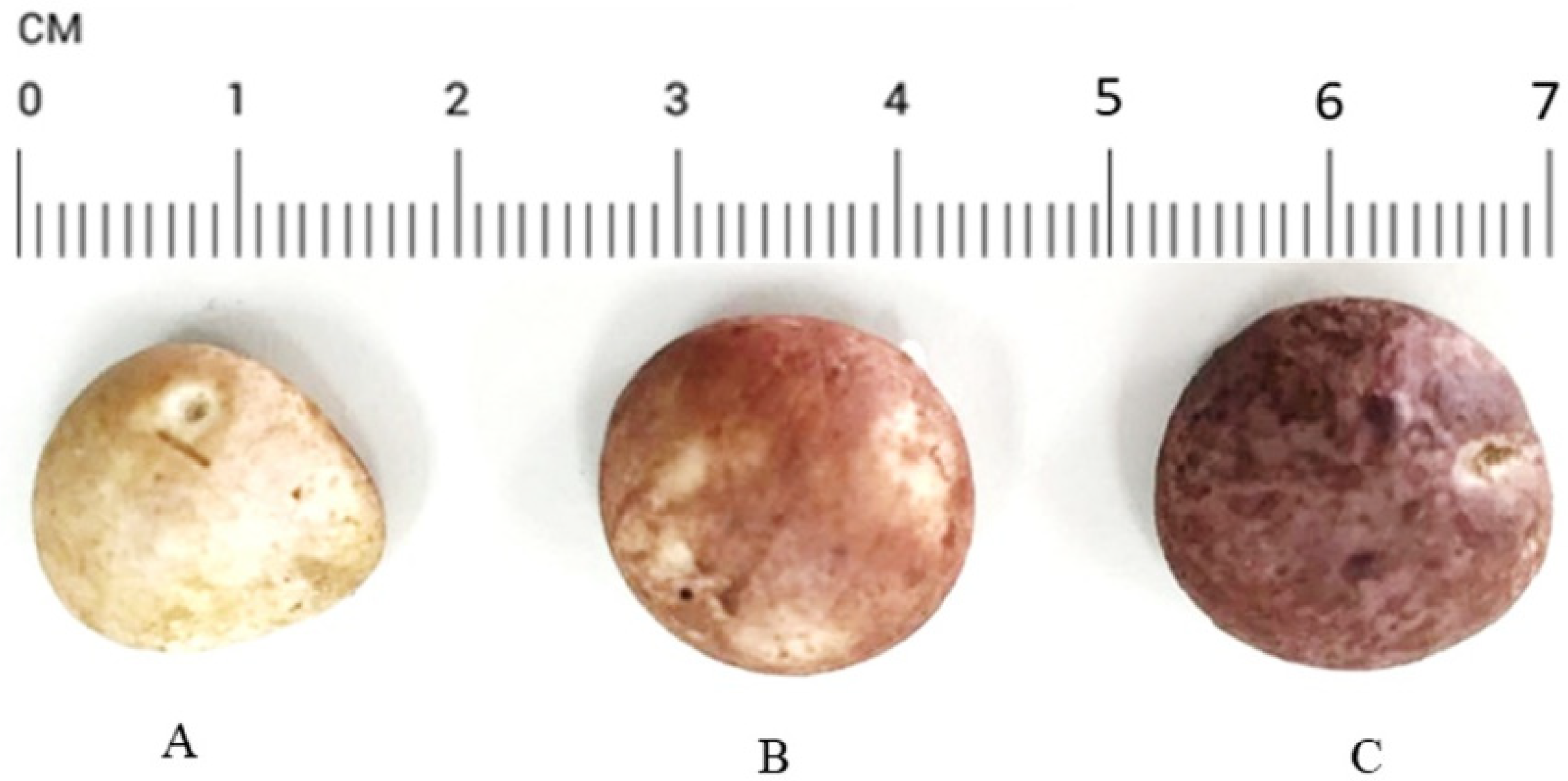
Microscopic characteristics of B. griseipurpureus were examined by observing basidiospores under a compound light microscope. Basidiospore morphology could not be assessed for BgEc. Therefore, microscopic analyses were performed only for specimens associated with Acacia auriculiformis (BgAa) and Melaleuca cajuputi (BgMc). Basidiospores of BgAa exhibited an average width of 4.08 ± 0.61 μm and an average length of 10.56 ± 1.55 μm. Similarly, basidiospores of BgMc showed an average width of 3.96 ± 0.38 μm and an average length of 10.11 ± 1.00 μm. Basidiospores from both BgAa and BgMc displayed similar shapes and surface characteristics (Supplementary Figure S1). Macroscopic characteristics of fruiting bodies from each host-associated isolate were also examined and compared at the same developmental stage. Distinct differences in pileus coloration were observed among the three host-associated groups. In the early developmental stage, BgEc exhibited the lightest brown pileus, followed by BgAa, whereas BgMc displayed a characteristic brownish-purple pileus (Figure 1).

3.2. Molecular Biodiversity Analysis of B. griseipurpureus

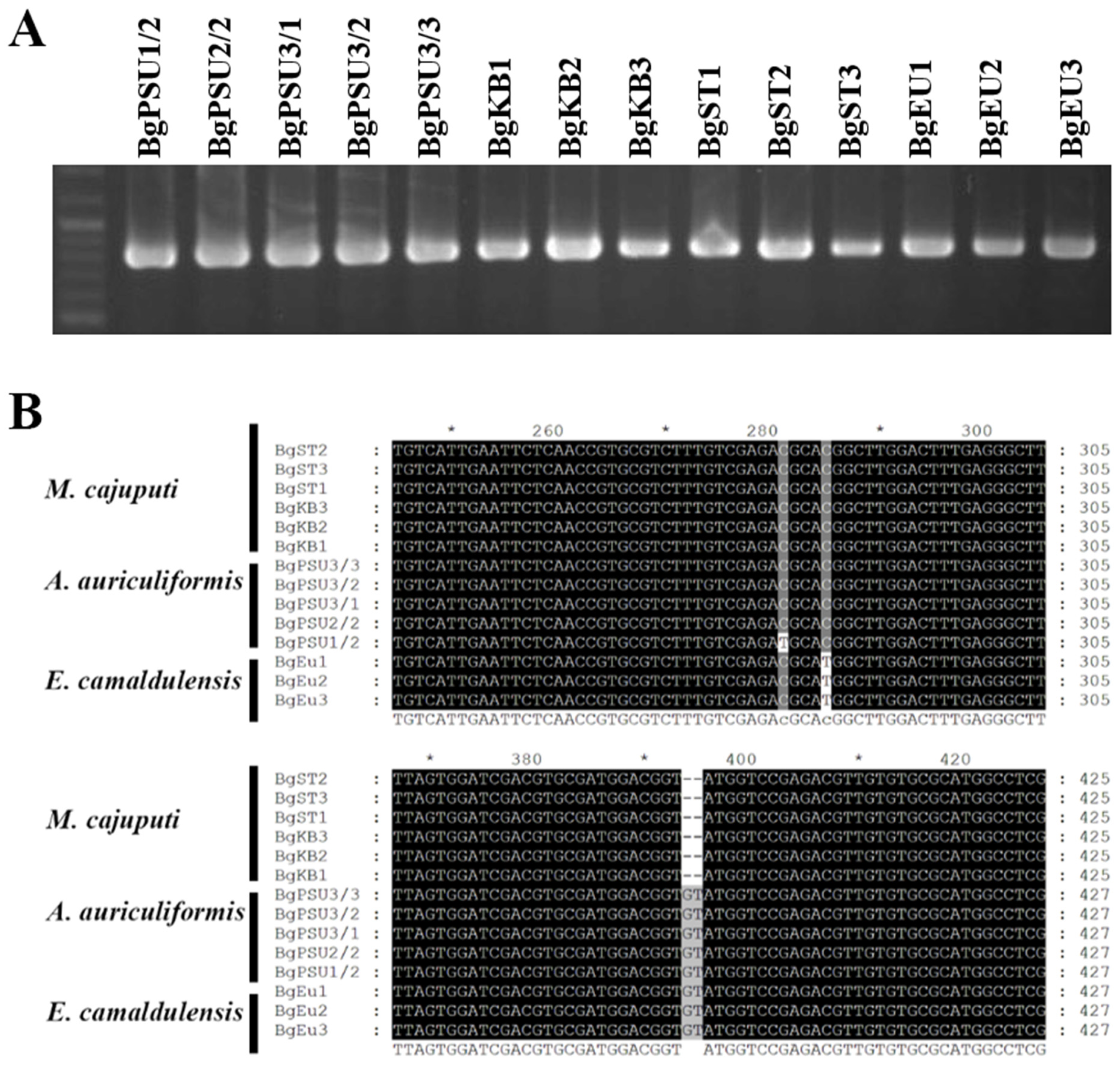
PCR amplification of the nuclear ribosomal internal transcribed spacer (ITS) region was successfully obtained from fourteen B. griseipurpureus samples collected from three specific host plants (Figure 2A). The amplified ITS fragments were sequenced for molecular biodiversity analysis. The ITS region of B. griseipurpureus associated with A. auriculiformis and E. camaldulensis was 449 bp in length, whereas that of B. griseipurpureus associated with M. cajuputi was 447 bp (Supplementary Figure S2). Multiple sequence alignment of ITS regions from the three host-associated groups revealed distinct nucleotide variations. A single nucleotide polymorphism (SNP) was identified at position 285, and an insertion/deletion (InDel) polymorphism was detected at positions 394–395 (Figure 2B). These polymorphic sites enabled clear discrimination among B. griseipurpureus strains associated with different host species, indicating host-associated molecular biodiversity.
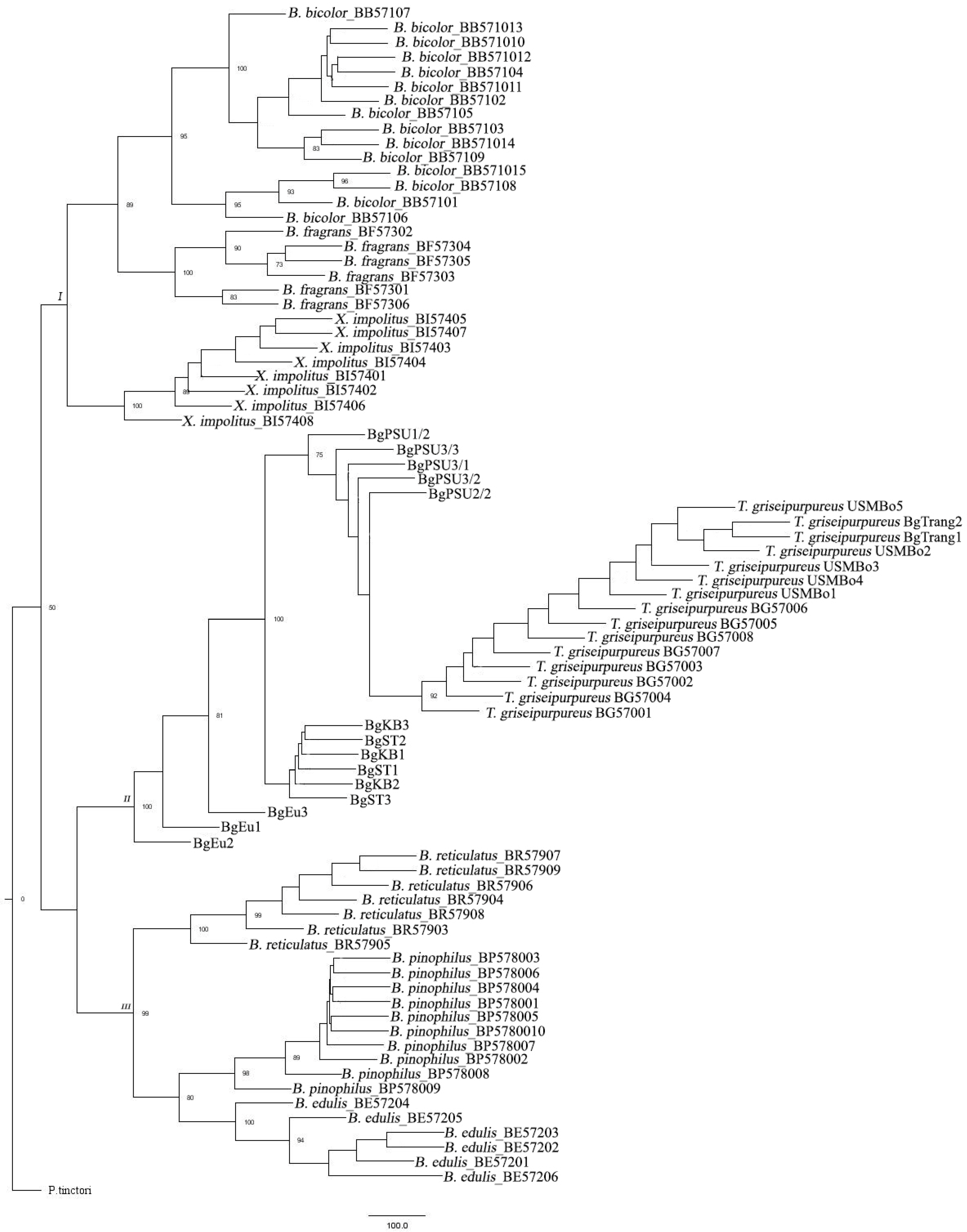
In addition, the resulting phylogenetic tree clearly separated the Boletaceae ITS sequences into three major clades (Figure 3). The first clade comprised Boletus bicolor and Xerocomus impolitus, including Boletus fragrans. The second clade consisted of fifteen ITS sequences of B. griseipurpureus from the NCBI database, together with the fourteen ITS sequences of B. griseipurpureus obtained in this study from the three host species (M. cajuputi, A. auriculiformis, and E. camaldulensis). The third clade included ITS sequences from other Boletus species, such as B. edulis, B. pinophilus, and B. reticulatus. Phylogenetic clustering confirmed that all B. griseipurpureus isolates formed a distinct, well-supported group. Furthermore, isolates associated with each specific host species clustered within the same subgroup, indicating host-associated phylogenetic differentiation within B. griseipurpureus.

3.3. De Novo Assembly and Functional Analysis of B. griseipurpureus from Three Specific Hosts

The clean reads for the three libraries (BgAa, BgMc, and BgEc) have been deposited in BioProject PRJNA981456. Sequencing quality metrics indicated that all the libraries had Q20 values above 97% and Q30 values above 93%, confirming high sequencing accuracy (Table 1). De novo assembly of the high-quality reads generated 22345 unigenes with a GC content of 52.87% and an average transcript length of 2565 bp (Table 2). These unigenes were used for subsequent functional annotation and Gene Ontology analysis to investigate the molecular features of B. griseipurpureus in association with specific hosts.
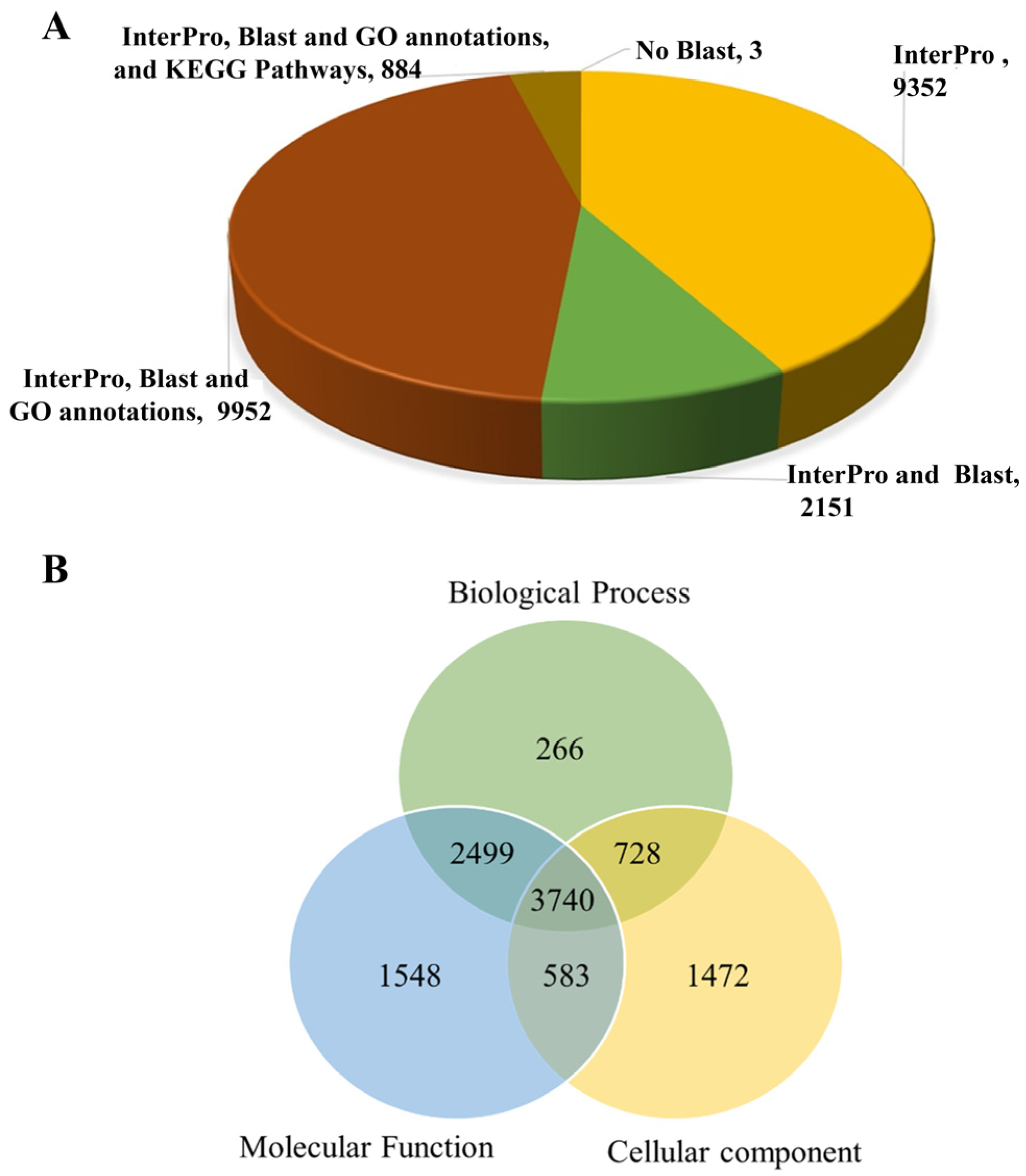
A total of 22,345 unigenes of B. griseipurpureus were functionally annotated using four databases: InterPro, BLAST, Gene Ontology (GO), and KEGG. Among these, 884 unigenes were successfully matched across all four databases. Specifically, 9355 unigenes were annotated in the InterPro database, 2151 unigenes were shared between the NCBI and InterPro databases, and 9952 unigenes were annotated in InterPro, BLAST, and GO databases simultaneously (Figure 4A). GO annotation was performed for 10836 unigenes, which were classified into three main categories: biological process, cellular component, and molecular function. Of these, 7233 unigenes were assigned to biological processes, 6523 to cellular components, and 8370 to molecular functions. A subset of unigenes-266, 1472, and 1548-were assigned exclusively to biological process, cellular component, and molecular function categories, respectively, while 3740 unigenes were annotated in all three GO categories (Figure 4B).
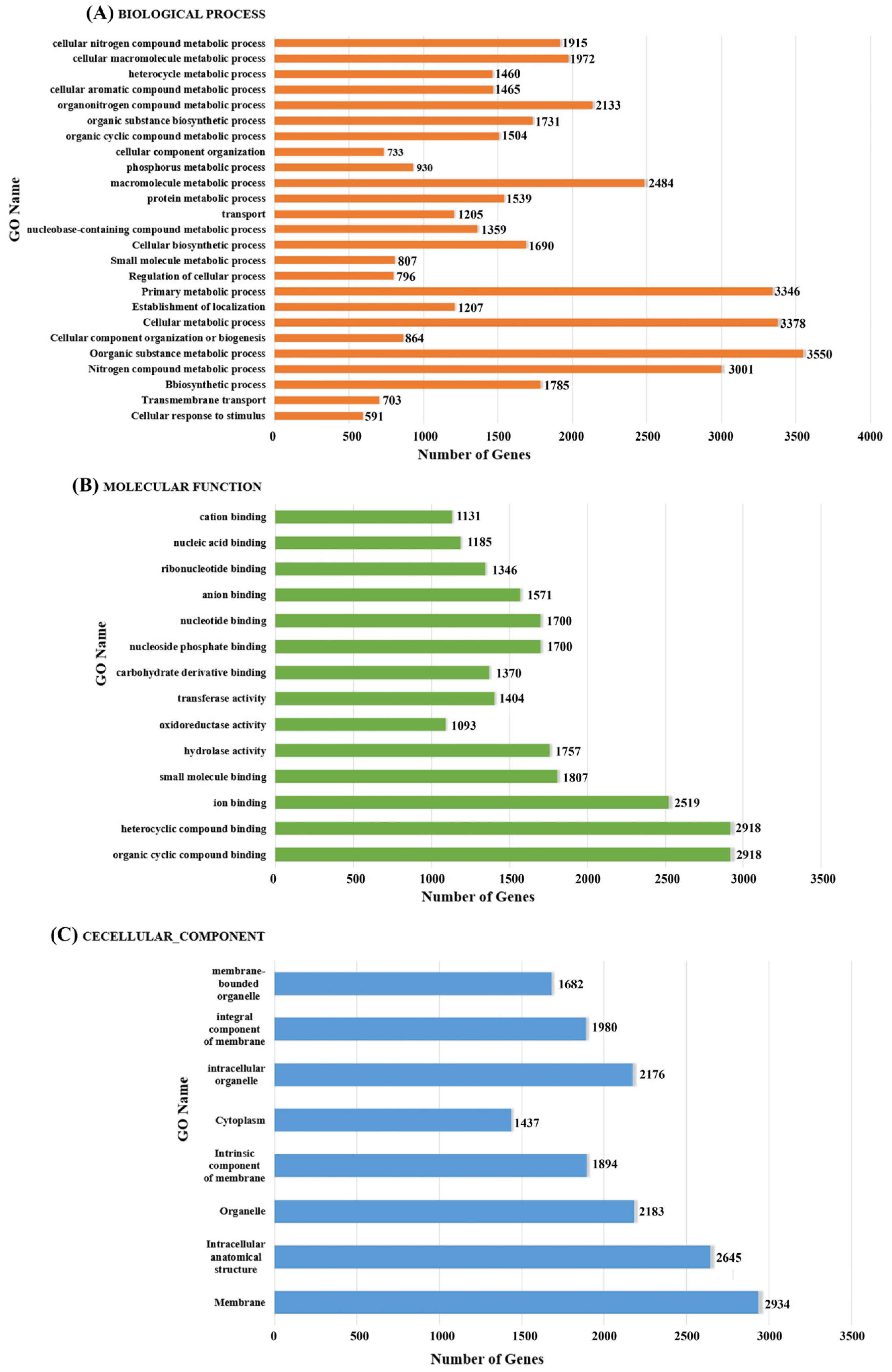
Further analysis revealed that biological processes were distributed into 56 subcategories, molecular functions into 25 subcategories, and cellular components into 15 subcategories. Among the biological process subcategories, the most represented were cellular process (4814 unigenes), metabolic process (3989 unigenes), and organic substance metabolic process (3550 unigenes). In the molecular function category, catalytic activity (4603 unigenes), binding (3977 unigenes), and organic cyclic compound binding (2918 unigenes) were the most abundant. For cellular components, the top subcategories were cellular anatomical entity (4790 unigenes), membrane (2934 unigenes), and intracellular anatomical structure (2645 unigenes), showing the highest subcategory representation overall (Figure 5).

3.4. Differentially Expressed Genes (DEGs) and Pathway Enrichment Analysis

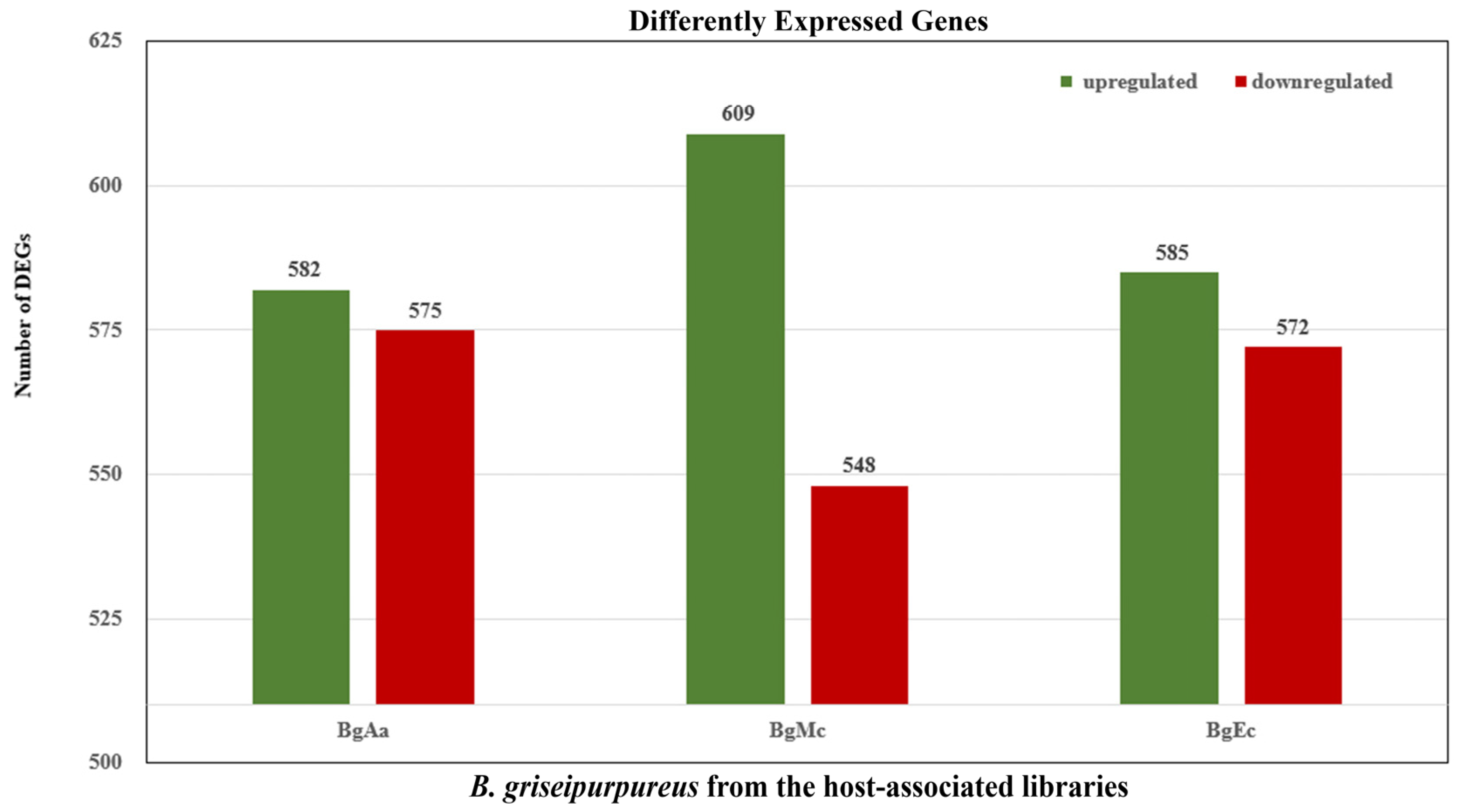
DEG analysis of B. griseipurpureus from the three host-associated libraries (BgAa, BgMc, and BgEc) was performed. A total of 1157 DEGs were identified across the three libraries (p ≤ 0.05). In the BgAa library (A. auriculiformis), 582 unigenes were upregulated and 575 unigenes were downregulated. In the BgMc library (M. cajuputi), 609 unigenes were upregulated and 545 unigenes were downregulated, while in the BgEc library (E. camaldulensis), 585 unigenes were upregulated and 572 unigenes were downregulated (Figure 6). Based on expression patterns, the DEGs from the three libraries were further grouped into four main clusters, reflecting distinct transcriptional profiles associated with the specific host trees.
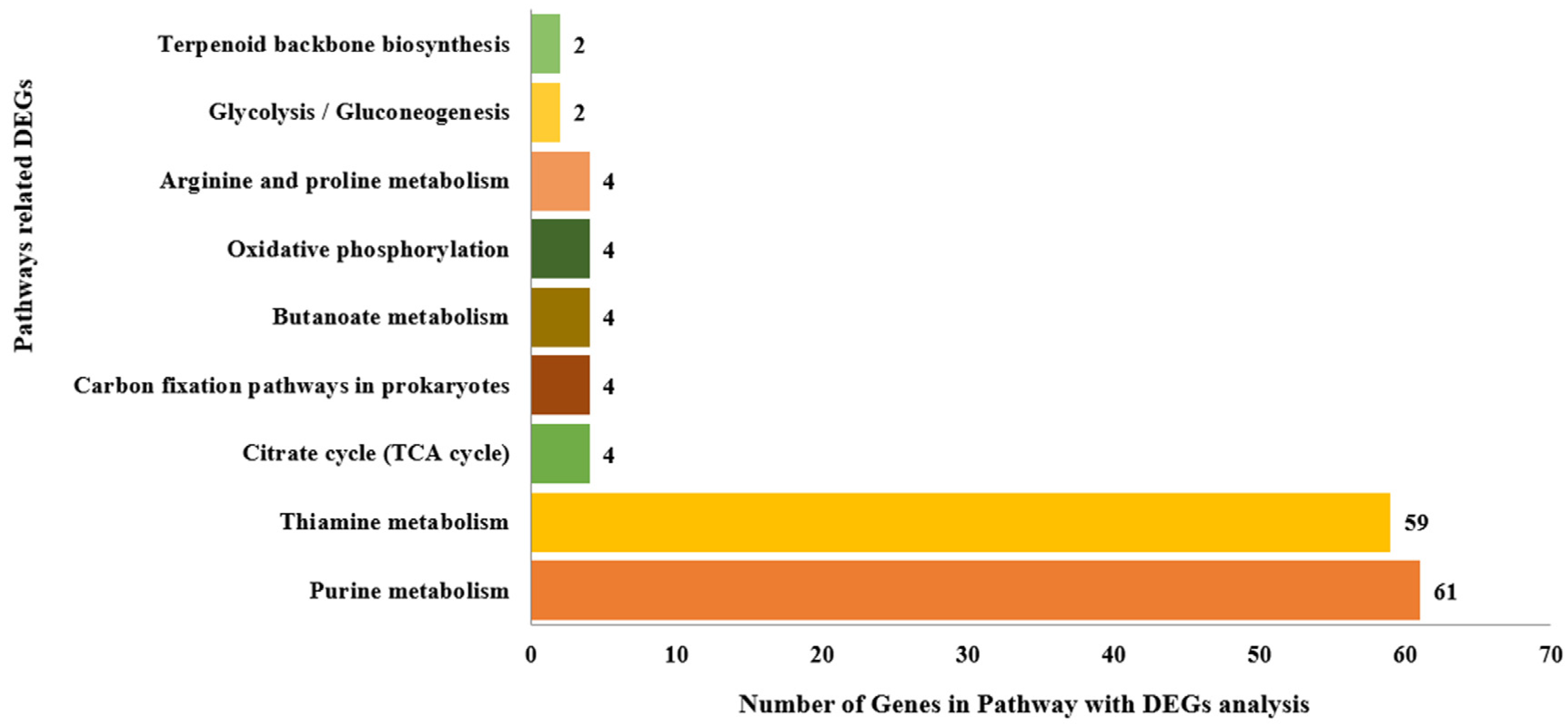
The KEGG pathway enrichment analysis was performed for the identified DEGs, and 938 unigenes were successfully mapped to KEGG pathways. The ten most enriched pathways included amino acid biosynthesis (e.g., purine and thiamine metabolism), the citrate cycle, oxidative phosphorylation, glycolysis/gluconeogenesis (including genes such as hexose transporter, fructose-bisphosphate aldolase, and acetate-CoA ligase), and terpenoid backbone biosynthesis (including 3-hydroxy-3-methylglutaryl-CoA reductase and isopentenyl diphosphate isomerase) (Figure 7). From the expression profiles of 39 selected DEGs, two pathways were highlighted as particularly relevant: glycolysis/gluconeogenesis (map00010) and terpenoid backbone biosynthesis (map00900). These pathways likely play key roles in energy metabolism and the biosynthesis of secondary metabolites during ectomycorrhizal symbiosis with specific host trees.
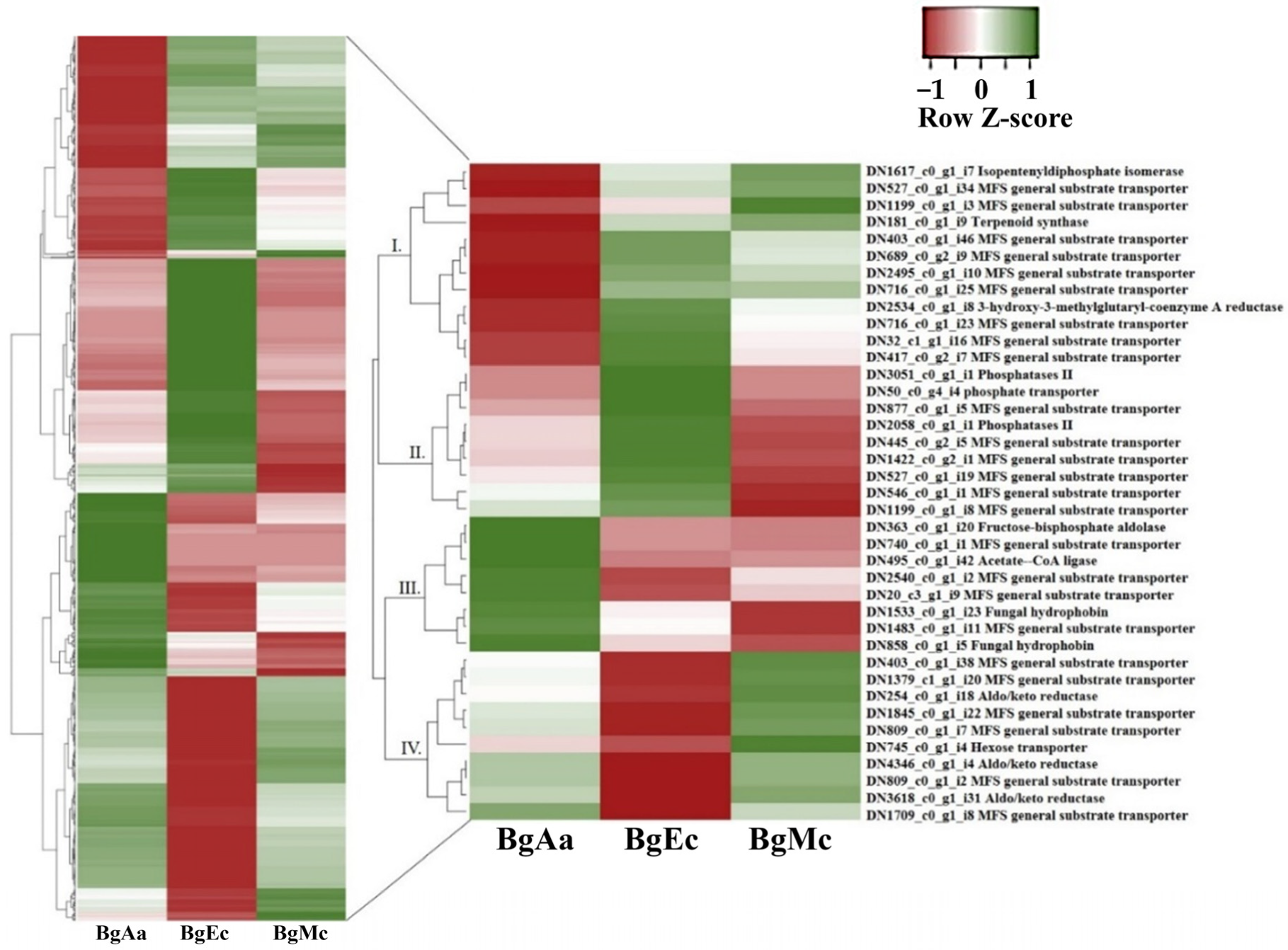
The heatmap analysis using the Heatmapper software was conducted to visualize the expression profiles of DEGs in the three libraries. DEGs associated with ectomycorrhizal (ECM) symbiosis in B. griseipurpureus were grouped into four clusters based on their expression patterns (Figure 8). Unigenes involved in MFS transporters and the biosynthesis of terpenoid secondary metabolites, such as terpenoid synthase (DN181_c0_g1_i9), isopentenyl diphosphate isomerase (DN1617_c0_g1_i7), and 3-hydroxy-3-methylglutaryl-CoA reductase (DN2534_c0_g1_i8), were highly expressed in the BgMc (M. cajuputi) and BgEc (E. camaldulensis) libraries. The genes implicated in phosphate metabolism, including phosphatase II (DN3051_c0_g1_i1 and DN2058_c0_g1_i1) and phosphate transporter (DN50_c0_g4_i4), were more highly expressed in BgMc. Conversely, the genes associated with glycolysis and host recognition, such as fungal hydrophobin (DN858_c0_g1_i5 and DN1533_c0_g1_i23), showed higher expression in BgAa (A. auriculiformis), while the hexose transporter (DN745_c0_g1_i4), involved in defense against oxidative stress during ECM symbiosis, was highly expressed in BgEc (Figure 8). These results suggest host-dependent transcriptional regulation of key genes involved in nutrient transport, secondary metabolite biosynthesis, and host interaction during ECM symbiosis.

3.5. Transcriptome Validation of DEGs Using Semi-Quantitative RT-PCR

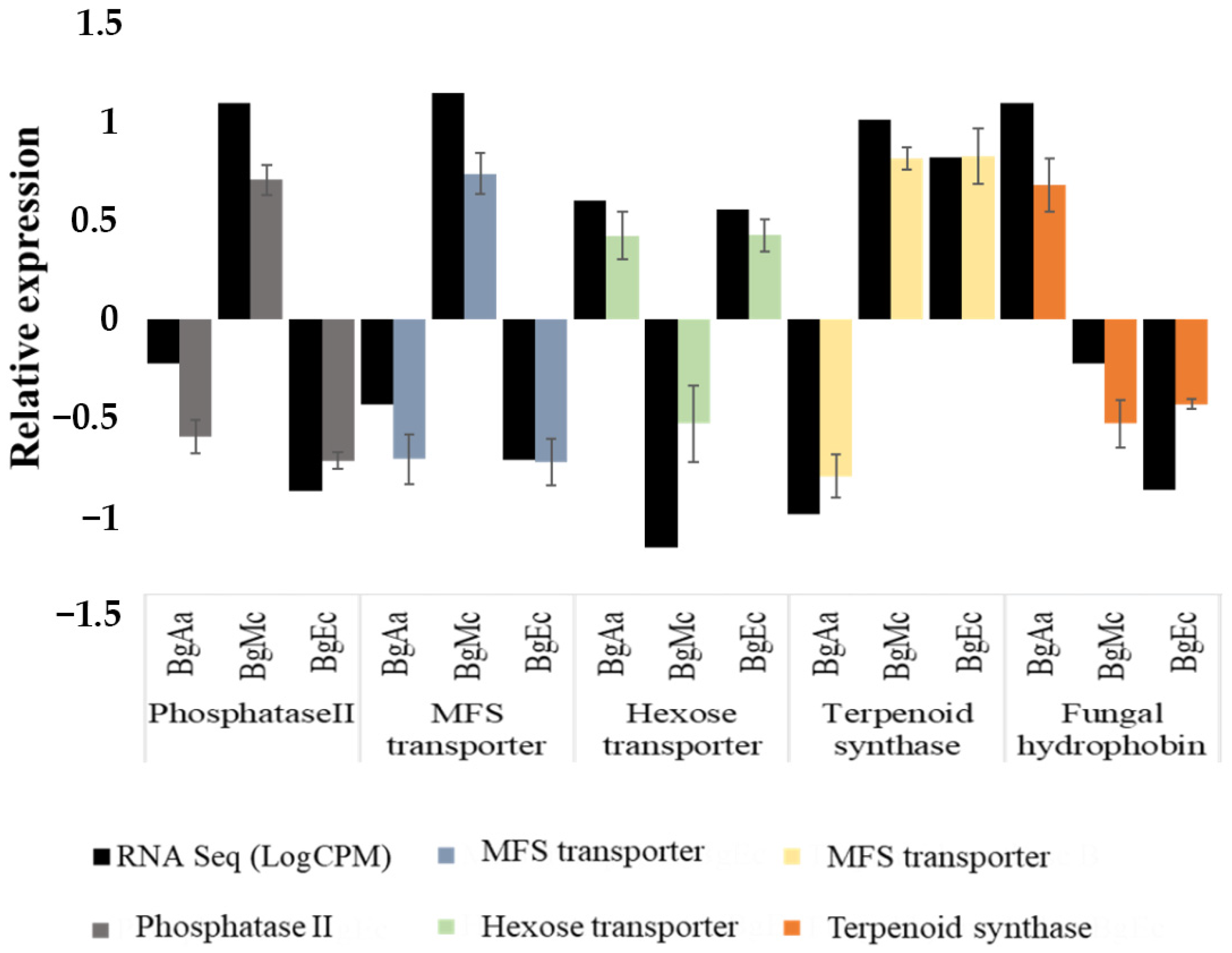
To validate the RNA-seq results, five DEGs associated with MFS general substrate transporters, phosphate metabolism, and defense against oxidative stress during ECM symbiosis were selected for the semi-quantitative RT-PCR (semi-qRT-PCR) analysis (Supplementary Figure S3). The relative expression levels of these five unigenes across the three host-associated libraries (BgAa, BgMc, and BgEc) were examined (Figure 9). The hexose transporter showed the lowest relative expression among the five genes in all three libraries. For the MFS general substrate transporter and phosphatase II, relative expression levels were similar in BgMc (M. cajuputi) and BgEc (E. camaldulensis), whereas BgAa (A. auriculiformis) showed lower expression compared to the other two libraries. Conversely, fungal hydrophobin exhibited higher expression in BgAa than in BgMc and BgEc. Overall, the semi-qRT-PCR results confirmed the RNA-seq findings, as four of the five selected genes showed expression patterns consistent with the transcriptome data, validating the reliability of the sequencing results.

4. Discussion

Boletus griseipurpureus is an ectomycorrhizal (ECM) fungus that occurs exclusively in wild forests and is highly valued for its nutritional content, distinctive bitter taste, and antimicrobial activity. It is widely consumed in Thailand and Southeast Asia [16]. However, the molecular genetic variety of B. griseipurpureus remains poorly understood, and knowledge of the molecular mechanisms underlying its symbiosis with host plants is limited.
In this study, basidiospores and complete fruiting bodies were examined, revealing variation in macroscopic characteristics, particularly pileus coloration, among specimens collected from forests dominated by different tree species. Variation among forest types may reflect differences in nutrient metabolism and nutrient availability within forest ecosystems [17,18]. Previous studies by Brundrett and Tedersoo have shown that host plants in the genera Acacia, Melaleuca, and Eucalyptus have influenced the evolution of ectomycorrhizal fungi and form associations with plant roots that facilitate soil nutrient acquisition. Soil fertility and nutrient compositions strongly influence the development and morphology of ectomycorrhizal structures, contributing to both functional and structural variation. Similarly, in oyster mushrooms, cap color variation (e.g., black, yellow, or pink) has been linked to differences in pigment composition, particularly melanin [19,20]. This suggests that pigment-related variability may also explain the observed differences in pileus coloration in B. griseipurpureus. Additionally, the molecular biodiversity analysis revealed the presence of a single-nucleotide polymorphism (SNP) and an insertion/deletion polymorphism (InDel) within the ITS region of B. griseipurpureus, demonstrating host-specific genetic differentiation within this species [21,22]. These findings are comparable to previous ITS-based phylogenetic studies of Boletus edulis, which exhibits substantial morphological variation associated with its native host range [23]. Similar patterns have also been reported in B. reticuloceps from southwestern China, which forms ectomycorrhizal associations with multiple host plants, including Picea and Abies species [24]. Furthermore, Tuber indicum (black truffle), an ectomycorrhizal species forming mutualistic symbioses primarily with members of the Pinaceae and Fagaceae, has been shown to exhibit pronounced geographic structuring across the Hengduan Mountains region of China [25]. Molecular analyses based on ITS and large subunit ribosomal RNA (LSU) sequences, together with morphological characteristics, have also demonstrated that Tylopilus himalayanus and Tylopilus pseudoballoui represent newly described species from Sikkim and Uttarakhand, India [12].
In recent years, transcriptome analyses have been successfully applied to several ECM mushroom species to elucidate the molecular interactions between fungi and their host plants [6,7,26]. De novo transcriptome analysis of B. griseipurpureus represents a valuable approach for advancing our understanding of its genetic makeup and ectomycorrhizal (ECM) symbiotic mechanisms. Gene Ontology (GO) annotation showed that most unigenes were distributed within the molecular function category, a pattern consistent with findings from Tricholoma matsutake ECM samples collected from different habitats in Sichuan, China [27]. Functional categorization of differentially expressed genes (DEGs) among the three host-associated varieties revealed numerous unigenes involved in nutrient exchange during symbiosis and the biosynthesis of compounds. The validation of five representative DEGs by semi-quantitative RT-PCR showed expression trends consistent with the RNA-seq results, supporting the overall reliability of the transcriptomic data. However, it relies on endpoint amplification and gel densitometry, which can reduce accuracy, particularly for genes with moderate expression differences. Nevertheless, semi-quantitative RT-PCR provides a cost-effective method for transcriptomic validation. In future studies, a larger number of DEGs should be validated using quantitative RT-PCR (qRT-PCR) to achieve more precise quantification of gene expression changes.
Notably, the DEG analysis indicated that genes encoding major facilitator superfamily (MFS) transporters were the most abundant and were highly expressed in the BgMc samples collected under Melaleuca trees. Soils in Melaleuca forests are known to contain relatively high concentrations of macronutrients and heavy metals [1]. Elevated expression of MFS transporter genes may therefore contribute to detoxification processes, potentially explaining the reduced accumulation of toxic secondary metabolites observed in B. griseipurpureus inhabiting Melaleuca forests. This interpretation is consistent with previous studies in Penicillium expansum and other fungi, in which MFS transporters play key roles in detoxification and stress tolerance [28,29].
Furthermore, the genes involved in terpenoid biosynthesis—including terpenoid synthase, isopentenyl diphosphate isomerase, and 3-hydroxy-3-methylglutaryl-CoA reductase—were highly expressed in the BgMc and BgEc samples, as confirmed by both RNA-seq and semi-quantitative RT-PCR analyses. The elevated expression of these genes is likely associated with the pronounced bitter taste and terpenoid accumulation. Similar results have been reported in Hypsizygus marmoreus, where terpene synthase genes were linked to terpenoid abundance in small fruiting bodies and were suggested to play roles in developmental regulation [30]. Likewise, in Pisolithus microcarpus, enhanced expression of terpene synthase genes and terpenes was observed during symbiosis with Eucalyptus grandis [31]. In addition, phosphatase II showed high expression levels in the BgMc samples. ECM fungi are known to secrete phosphatases that hydrolyze organic phosphorus compounds into inorganic phosphate (Pi), which can then be absorbed by host plants via Pi transporters [32]. Our findings are consistent with studies on Pisolithus species, which reported variable phosphatase activities during ECM symbiosis under different soil nutrient conditions [33]. Comparative expression analysis further revealed that hexose transporter genes were expressed at lower levels in BgMc but showed higher expression in the BgEc and BgAa samples. Similar expression patterns have been observed for PiHXT5 in Piriformospora indica, where transcript levels decreased under low monosaccharide availability, and in Laccaria bicolor, where hexose transporter genes were upregulated under carbon-deficient conditions [34]. In addition, the hexose transporter gene TbHXT was highly expressed in black truffles under carbon starvation [35], consistent with transcriptomic analyses of Panax quinquefolius and Citrullus lanatus, in which homologous genes were upregulated during mycorrhizal inoculation [36,37]. Then, our results demonstrated host-dependent differences in hydrophobin expression among the B. griseipurpureus samples. Similar host-specific expression patterns have been reported in Tricholoma terreum, where hyd1 expression was higher when associated with Pinus sylvestris than with Picea abies [38,39,40], while hyd5 was more strongly induced during symbiosis between T. vaccinum and P. abies. Hydrophobins are small amphipathic proteins that assemble into surface layers on fungal structures and play critical roles in symbiosis, host interaction, and stress tolerance. Moreover, hydrophobin expression has been shown to respond to metal stress, and increased expression may enhance metal resistance and reduce the uptake of toxic compounds [39,41].

5. Conclusions

Boletus griseipurpureus is an edible ectomycorrhizal mushroom found in Melaleuca (BgMc), Acacia (BgAa), and Eucalyptus (BgEc) forests in southern Thailand. Molecular diversity analysis based on the internal transcribed spacer (ITS) region demonstrated that these three B. griseipurpureus formed a distinct clade and consistently clustered according to host specificity. Phenotypic variation, particularly in pileus coloration, may be influenced by host-associated environmental factors, including differences in soil nutrient availability among forest types. De novo transcriptome assembly generated a comprehensive unigene dataset, providing valuable insights into gene functions associated with host-dependent symbiosis. Differential gene expression analysis revealed genes involved in ectomycorrhizal symbiosis and the biosynthesis of bioactive compounds, with genes encoding major facilitator superfamily (MFS) transporters being the most abundant. Five representative genes were selected for validation, and their expression patterns were consistent with the RNA-seq results, confirming the reliability of the transcriptomic analysis. Overall, our findings indicate that host-specific expression of genes involved in ectomycorrhizal symbiosis and secondary metabolite biosynthesis contributes to both molecular and phenotypic diversity in B. griseipurpureus. However, because B. griseipurpureus is an edible, non-cultivated mushroom, direct experimental manipulation to validate gene function remains challenging and requires further investigation. Nevertheless, future studies integrating compound isolation and metabolomic analyses will aim to identify specific bioactive compounds; examine their relationships with varying soil nutrient properties; and elucidate differences in their composition, abundance, and associated metabolic pathways.

Supplementary Materials

The following supporting information can be downloaded at https://www.mdpi.com/article/10.3390/microbiolres17030047/s1. Table S1. List of primer used for PCR amplification; Table S2. List of primer used for Semi-quantitative RT-PCR; Table S3. Sample test result from BGI institution; Table S4. Quality control using FASTQC via OmicsBox software basic statistics from FASTQC via OmicxBox; Figure S1. Microscope feature of BgAa (A) and BgMc (B) under the compound light microscope; Figure S2. Nucleotide alignments of the ITS region of Boletus griseipurpureus from three specific hosts, A. auriculiformis (BgPSU1-5), M. cajuputi (BgKB1-3 and BgST1-3) and E. camaldulensis (BgEu1-3); Figure S3. Semi-quantitative RT-PCR resulted on difference target genes for three biological replicates, Phosphatases II, MFS general substrate transporter, Hexose transporter, Terpenoid synthase, and fungal hydrophobin. Lane1 is 100bp ladder, Lane2 is BgAa, Lane3 is BgMc and Lane4 is BgEc, respectively. Each replicate can be amplified repeatedly in triplicate, which 18s rRNA used as an internal control.

Author Contributions

Conceptualization, A.N.; data curation, K.P.; formal analysis, K.P. and A.N.; funding acquisition, A.N.; investigation, K.P. and A.N.; methodology, A.N.; project administration, A.N.; resources, A.N.; supervision, A.N.; validation, K.P. and A.N.; visualization, K.P. and A.N.; writing—original draft, K.P. and writing—review & editing, A.N. All authors have read and agreed to the published version of the manuscript.

Funding

This research was supported by the National Science, Research and Innovation Fund (NSRF) and Prince of Songkla University (Grant No SCI6505048S and SCI6505049S) and the Thailand Research Fund (grant NO. MRG6080140). Moreover, Kotchakorn Praopring (6110220054) was funded by the Faculty of Science Research Fund, Prince of Songkla University.

Institutional Review Board Statement

Not applicable.

Informed Consent Statement

Not applicable.

Data Availability Statement

The original contributions presented in the study are included in the article. Further inquiries can be directed to the corresponding author.

Acknowledgments

The authors thank the Centre of Genomics and Bioinformatics Research, Faculty of Science, for advice and kind support, and the authors would also like to thank the Department of Molecular Biotechnology and Bioinformatics, Faculty of Science, Prince of Songkla University, Songkhla, for all the technical support.

Conflicts of Interest

The authors declare no conflicts of interest.

References

  1. Bonfante, P.; Genre, A. Mechanisms underlying beneficial plant-fungus interactions in mycorrhizal symbiosis. Nat. Commun. 2010, 1, 48. [Google Scholar] [CrossRef] [PubMed]
  2. Joshy, C.G.; Ratheesh, G.; Ninan, G.; Ashok Kumar, K.; Ravishankar, C.N. Optimizing air-frying process conditions for the development of healthy fish snack using response surface methodology under correlated observations. J. Food Sci. Technol. 2020, 57, 2651–2658. [Google Scholar] [CrossRef] [PubMed]
  3. Tomlin, H.; Piccinini, A.M. A complex interplay between the extracellular matrix and the innate immune response to microbial pathogens. Immunology 2018, 155, 186–201. [Google Scholar] [CrossRef] [PubMed]
  4. Lofgren, L.A.; Nguyen, N.H.; Vilgalys, R.; Ruytinx, J.; Liao, H.L.; Branco, S.; Kuo, A.; LaButti, K.; Lipzen, A.; Andreopoulos, W.; et al. Comparative genomics reveals dynamic genome evolution in host specialist ectomycorrhizal fungi. New Phytol. 2021, 230, 774–792. [Google Scholar] [CrossRef]
  5. Bruns, T.D.; Bidartondo, M.I.; Taylor, D.L. Host specificity in ectomycorrhizal communities: What do the exceptions tell us? Integr. Comp. Biol. 2002, 42, 352–359. [Google Scholar] [CrossRef]
  6. Dauphin, B.; Pereira, M.D.; Croll, D.; Anastácio, T.C.; Fauchery, L.; Guinet, F.; Costa, M.D.; Martin, F.; Peter, M.; Kohler, A. Genetic variation among progeny shapes symbiosis in a basidiomycete with poplar. New Phytol. 2025, 248, 157–177. [Google Scholar] [CrossRef]
  7. Zhao, X.Q.; Aslam, M.M.; Chen, M.X.; Das, D. Plant-Fungi Mutualism, Alternative Splicing, and Defense Responses: Balancing Symbiosis and Immunity. Int. J. Mol. Sci. 2025, 26, 5197. [Google Scholar] [CrossRef]
  8. Hacquard, S.; Tisserant, E.; Brun, A.; Legue, V.; Martin, F.; Kohler, A. Laser microdissection and microarray analysis of Tuber. melanosporum ectomycorrhizas reveal functional heterogeneity between mantle and Hartig net compartments. Environ. Microbiol. 2013, 15, 1853–1869. [Google Scholar] [CrossRef]
  9. Kennedy, P.G.; Gagne, J.; Perez-Pazos, E.; Lofgren, L.A.; Nguyen, N.H. Does fungal competitive ability explain host specificity or rarity in ectomycorrhizal symbioses? PLoS ONE 2020, 15, e0234099. [Google Scholar] [CrossRef]
  10. Seehanan, S.; Petcharat, V. Some Species of Wild Boletes in Thailand. J. Agric. Technol. 2008, 4, 109–118. [Google Scholar]
  11. Wu, G.; Feng, B.; Xu, J.P.; Zhu, X.T.; Li, Y.C.; Zeng, N.K.; Hosen, M.I.; Yang, Z.L. Molecular phylogenetic analyses redefine seven major clades and reveal 22 new generic clades in the fungal family Boletaceae. Fungal Divers. 2014, 69, 93–115. [Google Scholar] [CrossRef]
  12. Chakraborty, D.; Vizzini, A.; Das, K. Two new species and one new record of the genus Tylopilus (Boletaceae) from Indian Himalaya with morphological details and phylogenetic estimations. Mycokeys 2018, 103–124. [Google Scholar] [CrossRef] [PubMed]
  13. Ko, B.K.; Van Raamsdonk, J.M. RNA Sequencing of Pooled Samples Effectively Identifies Differentially Expressed Genes. Biology 2023, 12, 812. [Google Scholar] [CrossRef] [PubMed]
  14. Tarazona, S.; García-Alcalde, F.; Dopazo, J.; Ferrer, A.; Conesa, A. Differential expression in RNA-seq: A matter of depth. Genome Res. 2011, 21, 2213–2223. [Google Scholar] [CrossRef] [PubMed]
  15. Babicki, S.; Arndt, D.; Marcu, A.; Liang, Y.J.; Grant, J.R.; Maciejewski, A.; Wishart, D.S. Heatmapper: Web-enabled heat mapping for all. Nucleic Acids Res. 2016, 44, W147–W153. [Google Scholar] [CrossRef]
  16. Aung-aud-chariya, A.; Bangrak, P.; Lumyong, S.; Phupong, W.; Aggangan, N.S.; Kamlangdee, N. RNA Polymerase II Second Largest Subunit Molecular Identification of Boletus griseipurpureus Corner From Thailand and Antibacterial Activity of Basidiocarp Extracts. Jundishapur. J. Microb. 2015, 8, e15552. [Google Scholar] [CrossRef]
  17. Fan, D.; Yang, Z.Q.; Guo, J.Y.; Qin, F.C.; He, H.F.; Han, W.J. Study on Plant Diversity and Soil Properties of Different Forest Types in Pisha Sandstone Area and Their Correlation. Forests 2025, 16, 211. [Google Scholar] [CrossRef]
  18. Toju, H.; Sato, H.; Yamamoto, S.; Kadowaki, K.; Tanabe, A.S.; Yazawa, S.; Nishimura, O.; Agata, K. How are plant and fungal communities linked to each other in belowground ecosystems? A massively parallel pyrosequencing analysis of the association specificity of root-associated fungi and their host plants. Ecol. Evol. 2013, 3, 3112–3124. [Google Scholar] [CrossRef]
  19. Brundrett, M.C.; Tedersoo, L. Evolutionary history of mycorrhizal symbioses and global host plant diversity. New Phytol. 2018, 220, 1108–1115. [Google Scholar] [CrossRef]
  20. Zhang, Y.; Wu, X.L.; Huang, C.Y.; Zhang, Z.H.; Gao, W. Isolation and identification of pigments from oyster mushrooms with black, yellow and pink caps. Food Chem. 2022, 372, 131171. [Google Scholar] [CrossRef]
  21. Giusti, A.; Ricci, E.; Gasperetti, L.; Galgani, M.; Polidori, L.; Verdigi, F.; Narducci, R.; Armani, A. Building of an Internal Transcribed Spacer (ITS) Gene Dataset to Support the Italian Health Service in Mushroom Identification. Foods 2021, 10, 1193. [Google Scholar] [CrossRef] [PubMed]
  22. Nakkaew, A.; Masjon, T.; Voravuthikunchai, S.P. Genomic and Transcriptional Profiling Analysis and Insights into Rhodomyrtone Yield in Rhodomyrtus tomentosa (Aiton) Hassk. Plants 2023, 12, 3156. [Google Scholar] [CrossRef] [PubMed]
  23. Beugelsdijk, D.C.M.; van der Linde, S.; Zuccarello, G.C.; den Bakker, H.C.; Draisma, S.G.A.; Noordeloos, M.E. A phylogenetic study of Boletus section Boletus in Europe. Persoonia 2008, 20, 1–7. [Google Scholar] [CrossRef] [PubMed]
  24. Feng, B.; Liu, J.W.; Xu, J.P.; Zhao, K.; Ge, Z.W.; Yang, Z.L. Ecological and physical barriers shape genetic structure of the Alpine porcini (Boletus reticuloceps). Mycorrhiza 2017, 27, 261–272. [Google Scholar] [CrossRef]
  25. Feng, B.; Zhao, Q.; Xu, J.P.; Qin, J.; Yang, Z.L. Drainage isolation and climate change-driven population expansion shape the genetic structures of Tuber indicum complex in the Hengduan Mountains region. Sci. Rep. 2016, 6, 21811. [Google Scholar] [CrossRef]
  26. Kang, W.J.; Jiang, Z.H.; Chen, Y.G.; Wu, F.; Liu, C.; Wang, H.F.; Shi, S.L.; Zhang, X.X. Plant transcriptome analysis reveals specific molecular interactions between alfalfa and its rhizobial symbionts below the species level. BMC Plant Biol. 2020, 20, 293. [Google Scholar] [CrossRef]
  27. Ding, X.; Wang, P.P.; Hou, Y.L.; Wang, M.; Hou, W.R.; Li, Y.M. Genetic Diversity and RNA-seq Transcriptome Analysis of Tricholoma matsutake from Sichuan Province, China. Pol. J. Environ. Stud. 2016, 25, 2327–2338. [Google Scholar] [CrossRef]
  28. Hayashi, K.; Schoonbeek, H.J.; De Waard, M.A. Bcmfs1, a novel major facilitator superfamily transporter from Botrytis cinerea, provides tolerance towards the natural toxic compounds camptothecin and cercosporin and towards fungicides. Appl. Environ. Microbiol. 2002, 68, 4996–5004. [Google Scholar] [CrossRef]
  29. Samaras, A.; Ntasiou, P.; Myresiotis, C.; Karaoglanidis, G. Multidrug resistance of Penicillium expansum to fungicides: Whole transcriptome analysis of MDR strains reveals overexpression of efflux transporter genes. Int. J. Food Microbiol. 2020, 335, 108896. [Google Scholar] [CrossRef]
  30. Son, S.Y.; Park, Y.J.; Jung, E.S.; Singh, D.; Lee, Y.W.; Kim, J.G.; Lee, C.H. Integrated Metabolomics and Transcriptomics Unravel the Metabolic Pathway Variations for Different Sized Beech Mushrooms. Int. J. Mol. Sci. 2019, 20, 6007. [Google Scholar] [CrossRef]
  31. Plett, J.M.; Wojtalewicz, D.; Plett, K.L.; Collin, S.; Kohler, A.; Jacob, C.; Martin, F. Sesquiterpenes of the ectomycorrhizal fungus alter root growth and promote host colonization. Mycorrhiza 2024, 34, 69–84. [Google Scholar] [CrossRef] [PubMed]
  32. Cairney, J.W.G. Ectomycorrhizal fungi: The symbiotic route to the root for phosphorus in forest soils. Plant Soil. 2011, 344, 51–71. [Google Scholar] [CrossRef]
  33. Costa, F.A.; de Souza, J.C.; Rondon, J.N.; Kasuya, M.C.M. Activity of Acid Phosphatases in Ectomycorrhizal Fungi. J. Agric. Sci. 2016, 8, 78. [Google Scholar] [CrossRef]
  34. Lopez, M.F.; Dietz, S.; Grunze, N.; Bloschies, J.; Weiss, M.; Nehls, U. The sugar porter gene family of Laccaria bicolor: Function in ectomycorrhizal symbiosis and soil-growing hyphae. New Phytol. 2008, 180, 365–378. [Google Scholar] [CrossRef] [PubMed]
  35. Ceccaroli, P.; Saltarelli, R.; Polidori, E.; Barbieri, E.; Guescini, M.; Ciacci, C.; Stocchi, V. Sugar transporters in the black truffle Tuber. melanosporum: From gene prediction to functional characterization. Fungal Genet. Biol. 2015, 81, 52–61. [Google Scholar] [CrossRef]
  36. Ran, Z.F.; Yang, X.T.; Zhang, Y.Q.; Zhou, J.; Guo, L.P. Transcriptional responses for biosynthesis of ginsenoside in arbuscular mycorrhizal fungi-treated Panax quinquefolius L. seedlings using RNA-seq. Plant Growth Regul. 2021, 95, 83–96. [Google Scholar] [CrossRef]
  37. Ma, J.; Zhao, Q.Y.; Zaman, S.; Anwar, A.; Li, S. The transcriptomic analysis revealed the molecular mechanism of Arbuscular Mycorrhizal Fungi (AMF) inoculation in watermelon. Sci. Hortic. 2024, 332, 113184. [Google Scholar] [CrossRef]
  38. Raudaskoski, M.; Kothe, E. Novel findings on the role of signal exchange in arbuscular and ectomycorrhizal symbioses. Mycorrhiza 2015, 25, 243–252. [Google Scholar] [CrossRef]
  39. Bayry, J.; Aimanianda, V.; Guijarro, J.I.; Sunde, M.; Latge, J.P. Hydrophobins--unique fungal proteins. PLoS Pathog. 2012, 8, e1002700. [Google Scholar] [CrossRef]
  40. Mankel, A.; Krause, K.; Kothe, E. Identification of a hydrophobin gene that is developmentally regulated in the ectomycorrhizal fungus Tricholoma terreum. Appl. Environ. Microb. 2002, 68, 1408–1413. [Google Scholar] [CrossRef]
  41. Sammer, D.; Krause, K.; Gube, M.; Wagner, K.; Kothe, E. Hydrophobins in the Life Cycle of the Ectomycorrhizal Basidiomycete Tricholoma vaccinum. PLoS ONE 2016, 11, e0167773. [Google Scholar] [CrossRef]
Figure 1. Pileus coloration of early-stage B. griseipurpureus associated with three host plant species: (A) light brown pileus from E. camaldulensis (BgEc); (B) brownish-purple pileus from A. auriculiformis (BgAa); and (C) brownish-purple pileus from M. cajuputi (BgMc).
Microbiolres 17 00047 g001
Figure 2. PCR amplification and multiple sequence alignment of the internal transcribed spacer (ITS) region of B. griseipurpureus associated with three host plant species: (A) PCR products of the ITS region from B. griseipurpureus collected from A. auriculiformis (BgPSU1-5), M. cajuputi (BgKB1-3 and BgST1-3), and E. camaldulensis (BgEu1-3). (B) Multiple sequence alignment of ITS sequences showing nucleotide polymorphisms among host-associated isolates, black shading represents 100% conservation and dark gray and light gray shading represents 80% and 60% conservation, respectively.
Microbiolres 17 00047 g002
Figure 3. Phylogenetic tree of B. griseipurpureus and selected Boletaceae species based on ITS sequences. The tree was constructed using the neighbor-joining method with 1000 bootstrap replicates.
Microbiolres 17 00047 g003
Figure 4. The functional annotation (A) based on the NCBI databases using OmicxBox and distributed against four databases: InterPro, Blast and GO annotations, and KEGG pathways. Gene Ontology annotations (B) of the Boletus griseipurpureus transcriptome dataset were divided into three categories: biological process, cellular component and molecular function.
Microbiolres 17 00047 g004
Figure 5. The top of the Gene Ontology (GO) annotations of the DEGs from the B. griseipurpureus transcriptome were distributed in three main categories: biological process (A), molecular function (B), and cellular component (C).
Microbiolres 17 00047 g005
Figure 6. Analysis of differentially expressed genes in three B. griseipurpureus-associated host trees. The distribution of significantly upregulated (green) and downregulated (red) unigenes is shown for each host-associated library.
Microbiolres 17 00047 g006
Figure 7. Differentially expressed genes (DEGs) associated with the top 10 enriched KEGG pathways in the Boletus griseipurpureus transcriptome. For each pathway, the corresponding DEGs are shown on the right side of each bar. The x-axis represents the number of up- and downregulated genes identified in the DEG analysis.
Microbiolres 17 00047 g007
Figure 8. Expression profiles of selected DEGs in B. griseipurpureus from three host trees. DEGs are clustered into four groups based on expression patterns. Green bars indicate upregulated genes, and red bars indicate downregulated genes. Genes related to ECM symbiosis, terpenoid biosynthesis, phosphate metabolism, glycolysis, and host recognition are highlighted. The X axis represents B. griseipurpureus from three host trees, Y axis represents DEGs. The green color means a high expression level, while the red color means a low expression level.
Microbiolres 17 00047 g008
Figure 9. Comparison of expression levels measured using RNA-Seq and semi-quantitative RT-PCR. The Y-axis is the RNA-seq data (logCPM value), and the X-axis is the name of the five target genes.
Microbiolres 17 00047 g009
Table 1. Clean read quality metrics of the raw reads from three specific hosts (BgAa, BgMc, and BgEc) of Boletus griseipurpureus.
SampleTotal Raw Reads (M)Total Clean Reads (M)Total Clean Bases (Gb)Clean Reads Q20 (%)Clean Reads Q30 (%)Clean Reads Ratio (%)
BgAc (SRR27054180)72.2869.5610.4397.1193.3396.23
BgEu (SRR27054179)78.8569.8810.4897.4993.888.62
BgMg (SRR27054178)72.2870.0910.5197.0593.2296.97
Table 2. De novo assembly of Boletus griseipurpureus.
Contig LengthStat Based on All TranscriptsStats Based on Longest Isoform per Gene
N1016,67415,137
N2012,78911,028
N3010,2478295
N4066086355
N5025944675
Median856347
Average25651180.24
Disclaimer/Publisher’s Note: The statements, opinions and data contained in all publications are solely those of the individual author(s) and contributor(s) and not of MDPI and/or the editor(s). MDPI and/or the editor(s) disclaim responsibility for any injury to people or property resulting from any ideas, methods, instructions or products referred to in the content.