Article

Gamsia batmanii sp. nov. Isolated from a Common Bent-Wing Bat and the Review of the Genus Gamsia


1
Faculty of Biology, University of Belgrade, Studentski Trg 16, 11000 Belgrade, Serbia
2
Organisation for Respect and Care of Animals—ORCA, Vojislava Ilića 94, 11000 Belgrade, Serbia
*
Author to whom correspondence should be addressed.
Microbiol. Res. 2026, 17(1), 9; https://doi.org/10.3390/microbiolres17010009 (registering DOI)
Submission received: 22 December 2025 / Revised: 29 December 2025 / Accepted: 31 December 2025 / Published: 3 January 2026

Abstract

Cave ecosystems represent environmentally constrained habitats that host diverse and highly specialized fungal communities. Many cave-dwelling fungi act as decomposers, transient colonizers, or cave fauna symbionts. During a mycological survey of Sesalačka cave (Serbia), a previously undescribed species was isolated from the skin of a Miniopterus schreibersii. The aim of this study was to characterize this isolate using an integrative taxonomic approach combining morphology, physiology, and multilocus phylogenetics. The fungus was cultured on different media under and its morphophysiological traits were recorded. DNA sequences of ITS, LSU, SSU, and TEF1α were compared with existing Gamsia species and phylogenetic analysis placed the isolate within the Gamsia clade, forming a well-supported lineage the most closely related to G. aggregata, but differing from it by 8–12 base pairs across loci. Distinctive morphological features of this species include obovoid to pyriform polyblastic conidia, hyaline to pale-brown annelloconidia, and reduced conidiophores, clearly separating the species from described congeners. It is psychrotolerant and does not grow at 37 °C, suggesting it is a cave-associated saprobe rather than a mammalian pathogen. This study expands the known diversity of Gamsia species and contributes to the growing evidence that subterranean habitats harbor numerous undescribed fungal kingdom members.

1. Introduction

Caves are regarded as extreme environments, and fungi, as omnipresent and highly adaptable organisms, can easily colonize many microniches within such habitats. Many species are saprobes, which live on organic substrata, or can establish symbiotic relationships with other cave organisms [1]. They are main decomposers in subterranean site, serve as a food source for other organisms, and have a role in biodeterioration of stone substrates [2,3,4]. Fungal dwellers in caves are often associated with cave fauna elements either as a food source for troglobites and troglophiles [5] or as parasites on bats and insects. Pseudogymnoascus destructans causes white-nose syndrome in bats [6]. Similarly, species in the genus Arthrorhynchus are parasites that live only on bat flies and have been found in many caves [7,8]. Caves can be regarded as one of the hotspots of fungal diversity, and many novel species have been isolated from subterranean ecosystems: Aspergillus cavernicola, Cephalotrichum oligotrophicum, Chrysosporium speluncarum, Cutaneotrichosporon cavernicola, Mortierella rhinolophicola, Neopestalotiopsis cavernicola, Penicillium speluncae, Talaromyces cavernicola, and many others [5,9,10]. Some of these newly described species, such as Mortierella rhinolophicola, are isolated from bats (in this case Rhinolophus affinis) [11]. Fungal species isolated from bats are not only pathogens but could be part of the normal microbiome of bat skin or wing membrane [12]. Although the presence of fungi in caves contributes to the overall biodiversity of these ecosystems, some species are reported to have unique biochemical properties and, therefore, could be the potential source for novel organic compounds, i.e., they can be of interest for various biotechnological applications [13].
Gamsia is a small genus of saprobic fungi of the family Microascaceae, characterized by the presence of brown-colored polyblastic conidia born on short conidiophores as well as the hyaline catenate conidia born on annelides of longer conidiophores. This genus, along with Hennebertia, was simultaneously classified as a separate one to accommodate previously described Wardomyces species that have 1-septate annelloconidia [14]. which were, at that point, competing synonyms [15]. The selection of the name Gamsia was afterwards settled when Ellis [16] adopted only this name. The members of this genus were mainly isolated from air, soil, and plant matter; to date, no species have been isolated from mammals, including bats [16,17,18]. Some species were even associated with the loss of weight and tensile strength in maplewood [18]. However, the literature data about the members of this genus are scarce in general, although a novel species has been described recently [19]. Given the abovementioned, the aim of this study was to describe a novel Gamsia species isolated from bat skin from a cave environment in Serbia.

2. Materials and Methods

2.1. Fungal Isolation and Cultivation Conditions

The specimen was isolated via sterile cotton swab sampling from the skin of a young female common bent-wing bat (Miniopterus schreibersii) from Sesalačka cave, Serbia (43°42′1.648″ N, 21°59′14.338″ E), during the field study on the 17 July 2024. The age class of bat was determined based on the degree of cartilage ossification in the phalanges, following the standard protocol for bat age assessment [20]. The swabs were transferred to the laboratory and inoculated to potato dextrose agar (PDA, BIOLIFE) medium and incubated at 4 ± 1 °C with the aim to isolate psychrophilic and/or psychrotolerant fungi. After 30 days of incubation, the unidentified fungal colony was reinoculated on PDA, malt extract agar (MEA, Sigma-Aldrich, St. Louis, MO, USA), and oatmeal agar (OA: oatmeal flakes 30 g and agar 15 g, per liter) to obtain axenic cultures, which were incubated at 25 ± 1 °C, and the growth was monitored daily. To assess the growth on oligotrophic substrata, reinoculation was performed on synthetic nutrient-deficient agar medium (SNA: KH2PO4 1 g, KNO3 1 g, MgSO4 · 7H2O 0.5 g, KCl 0.5 g, glucose 0.2 g, sucrose 0.2 g, agar 20 g, per liter) at the same temperature. Furthermore, potential acid production was monitored on creatine sucrose agar (CREA: creatine 3 g, sucrose 30 g, KCl 0.5 g, MgSO4 · 7H2O 0.4 g, FeSO4 · 7H2O 0.01 g, K2HPO4 · 3H2O 1.3 g, bromocresol purple 0.05 g, agar 15 g, per liter). Additionally, to assess growth at low temperatures, the isolate was reinoculated on PDA and incubated at 4 ± 1 °C for 14 days, and, to examine the growth at mammalian body temperature, incubation was carried out at 37 ± 1 °C for the same time period. Finally, to document the growth at high osmotic pressure, the isolate was reinoculated on Dichloran glycerol agar (DG18, Sigma-Aldrich) medium (25 ± 1 °C, 14 days). All reinoculations were performed in six repetitions.

2.2. Morphological Observation

The isolate was initially characterized on the basis of macroscopic characteristics of colonies and microscopic characteristics of reproductive structures using a Zeiss Axio Imager M.1 optical microscope (Zeiss, Jena, Germany). Microscopic slides were prepared from 14-day-old cultures grown on PDA at 25 ± 1 °C by mounting the samples in glycerol. Morphological features of colonies, conidiophores, and conidia were documented, and one hundred spores and conidiophores were measured (length and width) using AxioVision Release 4.6 software. Identification was confirmed with DNA sequence analyses.

2.3. DNA Extraction and Amplification

Approximately 100 mg of mycelium was collected for genomic DNA extraction that was carried out with the Quick-DNA Fungal/Bacterial Miniprep kit (Zymo Research, Irvine, CA, USA) according to the manufacturer’s instructions (Zymo Research). Four genomic regions were amplified by polymerase chain reaction (PCR) using appropriate primers: the internal transcribed spacer (ITS), 28S ribosomal DNA (LSU), 18S ribosomal DNA (SSU), and translation elongation factor 1 alpha (TEF1α). PCR amplification of the ITS region was conducted using the primers ITS1/ITS4 [21] in the following conditions: an initial denaturation at 95 °C (5 min), 30 amplification cycles of 95 °C (30 s), 55 °C (30 s), and 72 °C (1 min), and a final extension at 72 °C (7 min). LSU amplification was performed with LR0R/LR5 primers [22], while SSU was performed with NS1/NS4 [23]: an initial denaturation at 94 °C (5 min), 35 amplification cycles of 94 °C (1 min), 52 °C (30 s), and 72 °C (1 min), and a final extension at 72 °C (7 min). TEF1α amplification was carried out with EF-983F/EF-2218R primers [24]: an initial denaturation at 94 °C (4 min), 40 amplification cycles of 94 °C (1 min), touchdown annealing at 56–62 °C for the first seven cycles followed by 33 cycles at 62 °C (30 s) and 72 °C (1 min), and a final extension at 72 °C (8 min). Amplification reactions were conducted in the SuperCycler Thermal Cycler SC300T (Kyratec, Brisbane, Australia). The reaction mixture (25 μL) contained 1 μL DNA, 12.5 μL 2X PCR TaqNova-RED master mix (Blirt, Danzig, Poland), 1 μL of each primer, and 9.5 μL of nuclease-free water (Thermo Fisher Scientific, Vilnius, Lithuania). Amplicons were separated by electrophoresis (1% agarose gels in 0.5 × TBE buffer) and visualized by Midori green staining under UV illumination. The products were sent for commercial purification and sequencing at Macrogen (Amsterdam, The Netherlands). Finally, sequences were compared with other related sequences from the NCBI database using the BLAST program (BLAST+ 2.7.1 of the NCBI) for identification, after which they were deposited in the NCBI GenBank.

2.4. Phylogenetic Analyses

Phylogenetic analyses were performed by using the MUSCLE algorithm of MEGA 12 software. Cladograms were constructed using maximum likelihood phylogeny with aligned datasets of sequences obtained in this study and other sequences available in the NCBI GenBank database, both Gamsia strains and species of related genera (Table 1). The reliability of the constructed phylogenetic tree was evaluated with 1000 bootstrap replicas for branch stability. The Kimura 2-parameter model was determined as the best for estimating genetic distances between tested sequences—measured in terms of nucleotide substitutions per site. Graphium penicillioides strain CBS 102632 was used as the outgroup.

3. Results

Description of the novel species
Gamsia M. Morelet, Ann. Soc. Sci. Nat. Arch. Toulon et du Var 21: 105 (1969).
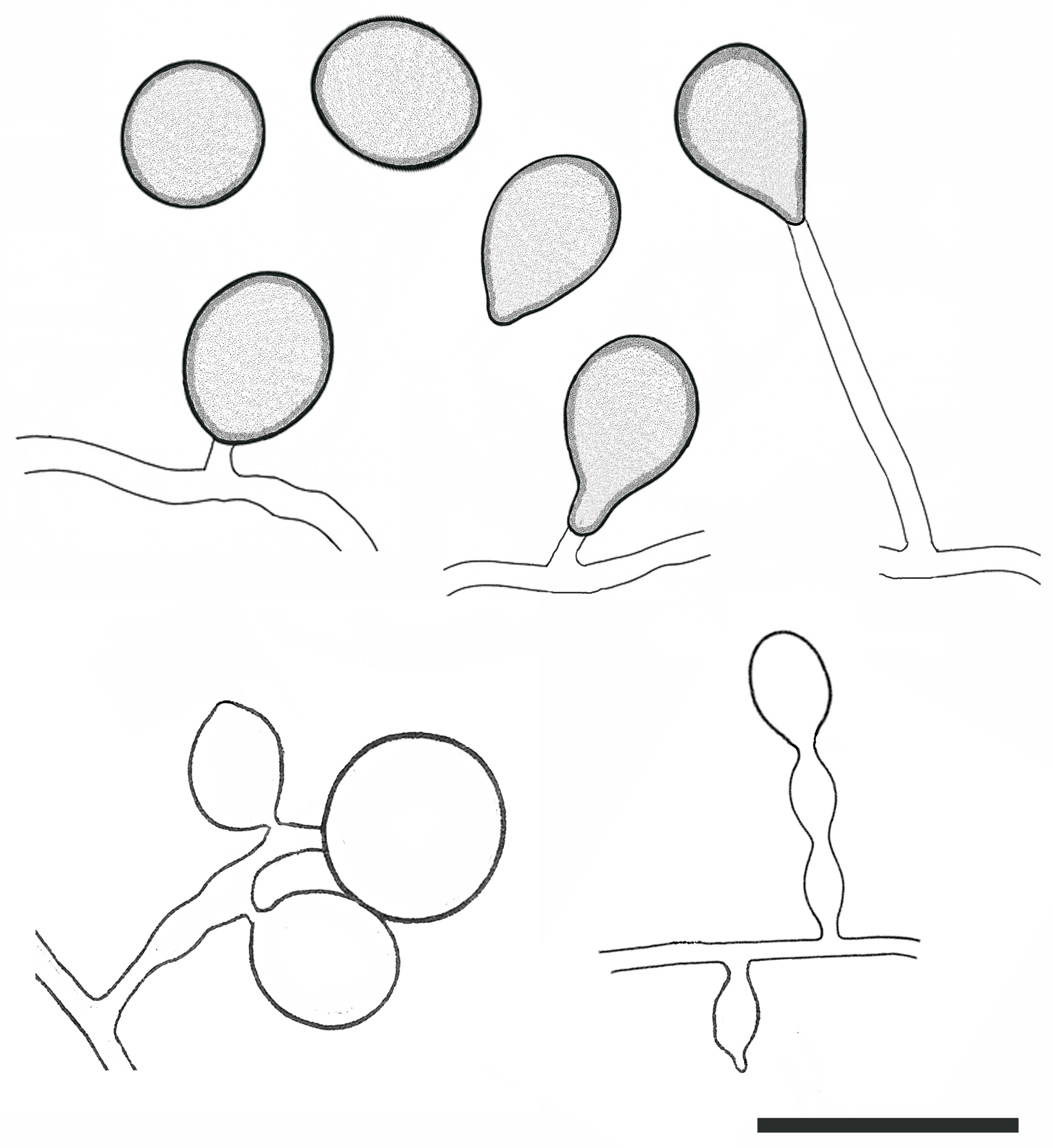
Gamsia batmanii M. Stupar & Ž. Savković sp. nov., Figure 1 and Figure 2.
Typus: Serbia, Eastern Serbia, Sokobanja, Sesalačka cave (43°42′1.648″ N, 21°59′14.338″ E), from skin swab of a common bent-wing bat (Miniopterus schreibersii), July 2024, Stupar M. and Savković Ž. (BEOFB1120000, holotype designated here, dried culture on PDA, Myco/812 deposited at the Herbarium of the Institute of Botany and Botanical Garden “Jevremovac” of the Faculty of Biology, University of Belgrade, Serbia).
Mycobank: MB861456
Etymology: named after the Batman superhero, which alludes to the fact that it was isolated from a species of bat.
Latin diagnosis: Coloniae in agaro MEA planae, velutinae, brunneae ad virides-olivaceas, 18–21 mm attingentes in 14 diebus ad 25 °C; in agaro PDA coloniae velutinae et sulcatae, medio pallide brunneae, ad marginem albae, 30–32 mm attingentes; et in agaro OA coloniae caeruleo-virides obscurae, cum halo distinctivo flavo, 13–16 mm latae. Coloniae e reverso brunneae in agaris PDA et MEA, in OA virides obscurae. Morphus asexualis repraesentatus a duobus generibus conidiophorum. (I) Conidiophora brevia, aut ad cellulas conidiogenas reducta, polyblastica, subcylindrica ad cylindrica, interdum inflata, hyalinas, pariete levi. Conidia aseptata, subglobosa, obovoidea ad pyriformia, ad basim plana, cum apice rotundato, pallida ad atrobrunnea, 5.9–8.8 × 5.5–6.5 μm, pariete levi et crasso, et saepe cum rima conspicua longitudinali germinali. (II) Conidia annelidica in conidiophoris longis, interdum inflatis, gignuntur, aseptata, subglobosa ad obovoidea, hyalina ad pallide brunnea, apice rotundato leviterque complanato, 6.5–7.9 × 5.3–6.0 μm. Morphus sexualis non observatus.
Cultural characteristics: Colonies on MEA flat, velvety, and brown to olive green, attaining 18–21 mm in 14 days at 25 °C; on PDA colonies velvety and sulcate, light brown at the middle, and white at the periphery, attaining 30–32 mm; and on OA colonies dark blue-green, with a distinctive yellow halo, 13–16 mm. Colony reverse brown (PDA and MEA) and dark green on OA.
Micromorphology: The asexual morph represented by two types of conidiophores. (I) Conidiophores short or reduced to conidiogenous cells, polyblastic, subcylindrical to cylindrical, sometimes inflated, hyaline, and smooth-walled. Conidia aseptate, subglobose, obovoid to pyriform, flat at the base, with a rounded apex, pale to dark brown, 5.9–8.8 × 5.5–6.5 μm, smooth and thick-walled, and often with a conspicuous longitudinal germ slit. (II) Annelidic conidia borne on long, sometimes inflated, conidiophores, aseptate, subglobose to obovoid, hyaline to pale brown, with rounded, somewhat flattened apex, 6.5–7.9 × 5.3–6.0 μm. Sexual morph not observed.
Physiology: Colonies on SNA (25 ± 1 °C) slow growing, attaining 7–10 mm in 14 days. Colonies on PDA at 4 ± 1 °C attaining 11–12 mm (14 days). No growth at 37 ± 1 °C (7 days). No growth on DG18 (7 days). No acid production on CREA.
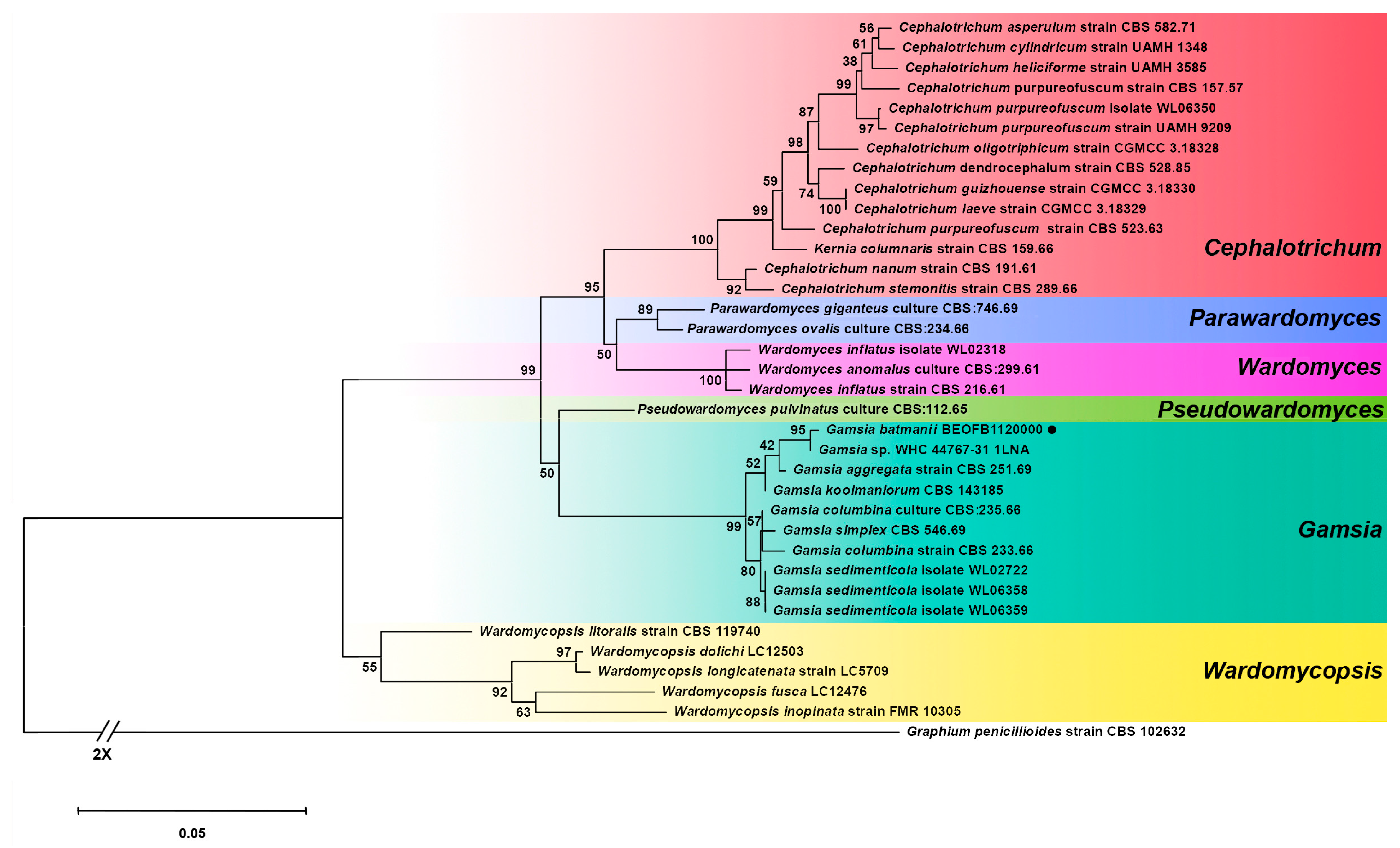
Molecular characterization: Identified fungal isolate grouped together with Gamsia species in a well-supported clade (bootstrap value (bsv) = 99, Figure 3). The closest related sequence was Gamsia sp. NWHC 44767-31 1LNA (bsv = 95), which differs from our isolate’s ITS sequence by only 3 base pairs (bp), suggesting it possibly resembles the same species (99.39% homology). Furthermore, the isolate obtained in this study differs from both G. aggregata and G. kooimanorum by 8 bp in the ITS region sequence (98.37% and 98.50% homology, respectively). When concerning LSU, it differs by 12 bp from G. aggregata (98.56%) and 16 bp from G. columbina (98.16%). Additionally, it differs by 5 bp from G. columbina (98.06%) and by 12 bp from G. aggregata (97.13%) in the TEF1α sequence. Finally, the obtained SSU sequence was not comparable to any of the Gamsia sequences in the NCBI database, with the closest homology recorded for Scopulariopsis crassa (99.23%).

4. Discussion

4.1. Overview of the Genus Gamsia

Description: Colonies are grey, greenish to black, compact, and slow-growing. Hyphae are mostly superficial, hyaline, thin, and smooth-walled. The asexual morph is represented by conidiophores, which are mostly undifferentiated, unbranched or sometimes branched once or twice, laterally borne on the hyphae, septate, hyaline, and smooth-walled. Conidiogenous cells and conidia of two types are present: (I) conidiogenous cells are polyblastic, cylindrical, with a swollen apical part, hyaline, and smooth-walled; conidia are borne solitary in lateral succession and form large apical clusters, are 1-celled, ovoid, broadly ellipsoidal, bullet-shaped, or pyriform, flat at the base, brown to black, smooth- and thick-walled, and often have a longitudinal germ slit; (II) conidiogenous cells are annellidic, sometimes grouped in sporodochia, subulate to cylindrical, hyaline, and smooth-walled; conidia are catenate, 1–2-celled, oval to ellipsoidal, truncate at the base, hyaline to pale brown, smooth, and thin-walled [15,25].

Type Species: Gamsia Columbina (Demelius) Sandoval-Denis, Guarro and Gene

The genus Gamsia, along with the genus Hennebertia, was initially erected by Morelet [14] to accommodate certain Wardomyces species that have 1-septate (two-celled) annelloconidia, and, therefore, the two names were competing synonyms. The selection of Gamsia was finally settled when Ellis [16] took up only this name. However, a morphological study by Sandoval-Denis et al. [15] demonstrated that the conidial septation is not a constant character in the genus. Conversely, according to the same authors, the lack of well-differentiated conidiophores and the conidial arrangement with large apical clusters, which resemble the echinobotryum-like synasexual morphs of Cephalotrichum species more than those of Wardomyces, justify the separation of the two genera, which was also supported by phylogenetic results. Up to date, there are five recognized species, including the one described in this study. Characteristics of species are given in Table 2.
It should be noted that some authors reported six Gamsia species, excluding the one presented in this manuscript [19], and the possible explanation for this claim might be the fact that G. dimera and G. simplex are, according to Sandoval-Denis et al. [15], synonyms for G. columbina. Namely, several studies have discussed the relationship between the species originally included in Wardomyces, i.e., W. columbinus (syn. G. columbina), W. dimerus (syn. G. dimera), W. ovalis (syn. Paravardomyces ovalis), and W. simplex (syn. G. simplex) [14,17,27,28], all forming two types of conidia in culture. Nevertheless, a molecular phylogenetic study by Sandoval-Denis et al. [15] showed that W. columbinus, a species described with only aseptate annelloconidia, belongs to the same clade as W. dimerus and W. simplex. Furthermore, it was reported that both aseptate and septate annelloconidia are present in cultures of W. dimerus and W. simplex. Therefore, conidial septation is not a reliable criterion for generic delimitation of Gamsia [17,28], and the species name W. columbinus has priority over W. dimerus and W. simplex [15].

4.2. Placement of the Novel Species, Interspecific Differences and Ecology

Phylogenetically, G. batmanii is closely related to G. aggregata (Malloch) Kiffer and M. Morelet and G. kooimaniorum Sand.-Den. (Figure 3), but it differs by 32 bp from that species in the ITS-LSU-TEF1α dataset. The fact that it is grouped together with Gamsia sp. NWHC 44767-31 1LNA (bsv = 95), with a difference in the ITS sequence of only 3 bp, suggests that they resemble the same species. The origin of this isolate is unclear, but the GenBank sequence metadata suggest that it might be isolated from a bat species. Furthermore, G. batmanii is somewhat morphologically similar in the shape and color of polyblastic conidia to C. aggregata, although those of G. batmani are larger, and they produce morphologically different anneloconidia (hyaline and 2-celled in G. aggregata). It should be noted that G. aggregata is also morphologically similar to G. columbina, but the latter is characterized by larger and pointed solitary conidia [15]. G. kooimaniorum and G. sedimenticola are similar in the shape of polyblastic conidia, both being ovoid, with a rounded-to-pointed apex, with similar dimensions, although anneloconidia of the former are aseptate, oval, and ellipsoidal to bullet-shaped, and those of the latter are 0–1 septate, oval, and hyaline.
Based on available data, it could be asserted that all Gamsia species are saprobes, being isolated from soil, sediment, decaying wood, and dung, and due to the fact that they grow well on standard mycological media. G. batmanii is indeed isolated from the bat skin, but its inability to grow at 37 °C suggests that it is probably not a mammalian pathogen but a mere transient. This species is also psychrotolerant, due to the positive growth at 4 °C, which is expected due to the fact it was isolated from a cave environment. Although psychrotolerants are not cold specialists, and they have optimal growth between 20 and 30 °C, they can survive and grow in cold environments such as caves [29,30]. Furthermore, the growth on SNA suggests the oligotrophic nature of this species, which is in concordance with the fact that it was isolated from an environment that is, in general, regarded to have a limited supply of nutrients [31].

4.3. Fungal Dwellers of Bats—Diversity and Significance

Due to the extreme conditions in cave environments, the subterranean ecosystems are known to harbor significant biodiversity [5]. It is known that many diverse fungal communities have recently been documented from bat species (such as members of the Myotis, Eptesicus, and Plecotus genera) and their hibernacula [32,33]. Furthermore, some fungal dwellers even play a role in maintaining defense against pathogenic species, such as the well known pathogen Pseudogymnoascus destructans in bats during hibernation [34]. It is asserted that this species is responsible for the death of millions of bats in North America [35]. Additionally, bats are also recognized as natural reservoirs and carriers of certain microbial species (notably Histoplasma capsulatum), which cause significant pathogenicity in humans–showing at the same time strong immunity against many of them. Namely, in different bat species–prevalently insectivores–both filamentous and yeast forms, such as Aspergillus, Fusarium, Cryptococcus, and Candida species, may cause opportunistic infections in humans [35]. Therefore, systematic sampling of cave ecosystems, especially their flora and fauna, is likely to reveal additional novel fungal taxa with ecological and even biotechnological and medical significance.

5. Conclusions

This study describes Gamsia batmanii, a previously unknown member of the Microascaceae isolated from the skin of Miniopterus schreibersii in a Serbian cave. Morphological, physiological, and multilocus phylogenetic analyses clearly distinguish this species from all currently recognized Gamsia taxa. The physiological analyses demonstrated that it is a psychrotolerant, transient, cave-associated saprobe. The discovery of G. batmanii underscores the high, still-underexplored fungal diversity of subterranean environments. Continued systematic sampling of cave ecosystems is likely to reveal additional novel fungal lineages with ecological and biotechnological significance.

Author Contributions

Conceptualization, Ž.S.; methodology, Ž.S., M.J., J.B., S.A. and M.S.; fieldwork, J.B., M.J. and S.A.; software, Ž.S.; validation, Ž.S.; formal analysis, Ž.S. and M.S.; investigation, Ž.S. and M.S.; resources, Ž.S. and M.S.; data curation, Ž.S. and M.S.; writing—original draft preparation, Ž.S.; writing—review and editing, M.S. and J.B.; visualization, Ž.S.; supervision, Ž.S.; project administration, Ž.S.; funding acquisition, M.S. and Ž.S. All authors have read and agreed to the published version of the manuscript.

Funding

This research was funded by the Ministry of Science, Technological Development and Innovation of the Republic of Serbia, grant number 451-03-136/2025-03/200178.

Institutional Review Board Statement

All bat captures and handling procedures were conducted following the official permit issued by the Ministry of Environmental Protection of the Republic of Serbia (Nr 000015981202414850004003501087).

Informed Consent Statement

Not applicable.

Data Availability Statement

The datasets generated and analyzed during this study are included in the article. Further inquiries can be directed to the corresponding author.

Conflicts of Interest

The author Marija Jovanović is an employee of MDPI, however she does not work for the journal Microbiology Research at the time of submission and publication.

References

  1. Wasti, I.G.; Fui, F.S.; Kassim, M.H.S.; Dawood, M.M.; Hasan, N.H.; Subbiah, V.K.; Seelan, J.S.S. Fungi from Dead Arthropods and Bats of Gomantong Cave, Northern Borneo, Sabah (Malaysia). J. Cave Karst Stud. 2020, 82, 261–275. [Google Scholar] [CrossRef]
  2. Bastian, F.; Jurado, V.; Novakova, A.; Alabouvette, C.; Saiz-Jimenez, C. The Microbiology of Lascaux Cave. Microbiology 2010, 156, 644–652. [Google Scholar] [CrossRef]
  3. Hoyt, J.R.; Kilpatrick, A.M.; Langwig, K.E. Ecology and Impacts of White-Nose Syndrome on Bats. Nat. Rev. Microbiol. 2021, 19, 196–210. [Google Scholar] [CrossRef]
  4. Zhu, H.Z.; Jiang, C.Y.; Liu, S.J. Microbial Roles in Cave Biogeochemical Cycling. Front. Microbiol. 2022, 13, 950005. [Google Scholar] [CrossRef]
  5. Savković, Ž.; Popović, S.; Stupar, M. Unveiling the Subterranean Symphony: A Comprehensive Study of Cave Fungi Revealed through National Center for Biotechnology Sequences. J. Fungi 2025, 11, 286. [Google Scholar] [CrossRef] [PubMed]
  6. Garzoli, L.; Bozzetta, E.; Varello, K.; Cappelleri, A.; Patriarca, E.; Debernardi, P.; Riccucci, M.; Boggero, A.; Girometta, C.; Picco, A.M. White-Nose Syndrome Confirmed in Italy: A Preliminary Assessment of Its Occurrence in Bat Species. J. Fungi 2021, 7, 192. [Google Scholar] [CrossRef] [PubMed]
  7. Haelewaters, D.; Page, R.A.; Pfister, D.H. Laboulbeniales Hyperparasites (Fungi, Ascomycota) of Bat Flies: Independent Origins and Host Associations. Ecol. Evol. 2018, 8, 8396–8418. [Google Scholar] [CrossRef] [PubMed]
  8. Burazerović, J.; Jovanović, M.; Savković, Ž.; Breka, K.; Stupar, M. Finding the Right Host in the Darkness of the Cave—New Insights into the Ecology and Spatio-Temporal Dynamics of Hyperparasitic Fungi (Arthrorhynchus nycteribiae, Laboulbeniales). Microb. Ecol. 2025, 88, 23. [Google Scholar] [CrossRef]
  9. Zhang, Z.F.; Zhao, P.; Cai, L. Origin of Cave Fungi. Front. Microbiol. 2018, 9, 1407. [Google Scholar] [CrossRef]
  10. Cunha, A.O.; Bezerra, J.D.; Oliveira, T.G.; Barbier, E.; Bernard, E.; Machado, A.R.; Souza-Motta, C.M. Living in the Dark: Bat Caves as Hotspots of Fungal Diversity. PLoS ONE 2020, 15, e0243494. [Google Scholar] [CrossRef]
  11. Karunarathna, S.C.; Dong, Y.; Karasaki, S.; Tibpromma, S.; Hyde, K.D.; Lumyong, S.; Xu, J.; Sheng, J.; Mortimer, P.E. Discovery of Novel Fungal Species and Pathogens on Bat Carcasses in a Cave in Yunnan Province, China. Emerg. Microbes Infect. 2020, 9, 1554–1566. [Google Scholar] [CrossRef]
  12. Ogórek, R.; Kurczaba, K.; Cal, M.; Apoznański, G.; Kokurewicz, T. A Culture-Based ID of Micromycetes on the Wing Membranes of Greater Mouse-Eared Bats (Myotis myotis) from the “Nietoperek” Site (Poland). Animals 2020, 10, 1337. [Google Scholar] [CrossRef]
  13. Cyske, Z.; Jaroszewicz, W.; Żabińska, M.; Lorenc, P.; Sochocka, M.; Bielańska, P.; Węgrzyn, G. Unexplored Potential: Biologically Active Compounds Produced by Microorganisms from Hard-to-Reach Environments and Their Applications. Acta Biochim. Pol. 2021, 68, 565–574. [Google Scholar] [CrossRef]
  14. Morelet, M. Micromyètes du Var et d’Ailleurs (2me Note). Ann. Soc. Sci. Nat. Archéol. Toulon Var 1969, 21, 104–106. [Google Scholar]
  15. Sandoval-Denis, M.; Guarro, J.; Cano-Lira, J.F.; Sutton, D.A.; Wiederhold, N.P.; de Hoog, G.S.; Gené, J. Phylogeny and Taxonomic Revision of Microascaceae with Emphasis on Synnematous Fungi. Stud. Mycol. 2016, 83, 193–233. [Google Scholar] [CrossRef]
  16. Ellis, M.B. More Dematiaceous Hyphomycetes; Commonwealth Mycological Institute: London, UK, 1976. [Google Scholar]
  17. Gams, W. Two New Species of Wardomyces. Trans. Br. Mycol. Soc. 1968, 51, 798–802. [Google Scholar] [CrossRef]
  18. Domsch, K.H.; Gams, W.; Anderson, T.H. Compendium of Soil Fungi, 2nd ed.; IHW Verlag: Eching, Germany, 2007. [Google Scholar]
  19. Wang, M.-M.; Yang, S.-Y.; Li, Q.; Zheng, Y.; Ma, H.-H.; Tu, Y.-H.; Li, W.; Cai, L. Microascaceae from the Marine Environment, with Descriptions of Six New Species. J. Fungi 2024, 10, 45. [Google Scholar] [CrossRef]
  20. Brunet-Rossinni, A.K.; Wilkinson, G.S. Methods for age estimation and the study of senescence in bats. In Ecological and Behavioral Methods for the Study of Bats; Kunz, T.H., Parsons, S., Eds.; Johns Hopkins University Press: Baltimore, MD, USA, 2009; pp. 315–325. [Google Scholar]
  21. White, T.J.; Bruns, T.; Lee, S.J.W.T.; Taylor, J. Amplification and Direct Sequencing of Fungal Ribosomal RNA Genes for Phylogenetics. In PCR Protocols: A Guide to Methods and Applications; Academic Press: San Diego, CA, USA, 1990; pp. 315–322. [Google Scholar]
  22. Vilgalys, R.; Hester, M. Rapid Genetic Identification and Mapping of Enzymatically Amplified Ribosomal DNA from Several Cryptococcus Species. J. Bacteriol. 1990, 172, 4238–4246. [Google Scholar] [CrossRef] [PubMed]
  23. Sung, G.H.; Spatafora, J.W.; Zare, R.; Hodge, K.T.; Gams, W. A Revision of Verticillium sect. Prostrata. II. Phylogenetic Analyses of SSU and LSU Nuclear rDNA Sequences from Anamorphs and Teleomorphs of the Clavicipitaceae. Nova Hedwig. 2001, 72, 311–328. [Google Scholar] [CrossRef]
  24. Rehner, S.A.; Buckley, E. A Beauveria Phylogeny Inferred from Nuclear ITS and EF1-α Sequences: Evidence for Cryptic Diversification and Links to Cordyceps Teleomorphs. Mycologia 2005, 97, 84–98. [Google Scholar] [CrossRef]
  25. Crous, P.W.; Wingfield, M.J.; Burgess, T.I.; Carnegie, A.J.; Hardy, G.; Smith, D.; Summerell, B.A.; Cano-Lira, J.F.; Guarro, J.; Houbraken, J.; et al. Fungal Planet Description Sheets: 625–715. Persoonia 2017, 39, 270. [Google Scholar] [CrossRef]
  26. Malloch, D. Wardomyces aggregatus sp. nov. and Its Possible Relationship to Gymnodochium fimicolum. Can. J. Bot. 1970, 48, 883–885. [Google Scholar] [CrossRef]
  27. Hennebert, G.L. Echinobotryum, Wardomyces and Mammaria. Trans. Br. Mycol. Soc. 1968, 51, 749–762. [Google Scholar] [CrossRef]
  28. Sugiyama, J.; Kawasaki, Y.; Kurata, H. Wardomyces simplex (Hyphomycetes) and Its Annellospores. Bot. Mag. Tokyo 1969, 82, 353–358. [Google Scholar] [CrossRef]
  29. Dix, N.J.; Webster, J. Fungi of Extreme Environments. In Fungal Ecology; Springer: Dordrecht, The Netherlands, 1995; pp. 322–340. [Google Scholar]
  30. Stupar, M.; Savković, Ž.; Pećić, M.; Jerinkić, D.; Jakovljević, O.; Popović, S. Some Like It Rock ’N’ Cold: Speleomycology of Ravništarka Cave (Serbia). J. Fungi 2025, 11, 706. [Google Scholar] [CrossRef]
  31. Jiang, J.R.; Cai, L.; Liu, F. Oligotrophic Fungi from a Carbonate Cave, with Three New Species of Cephalotrichum. Mycology 2017, 8, 164–177. [Google Scholar] [CrossRef]
  32. Borzęcka, J.; Piecuch, A.; Kokurewicz, T.; Lavoie, K.H.; Ogórek, R. Greater mouse-eared bats (Myotis myotis) hibernating in the Nietoperek Bat Reserve (Poland) as a vector of airborne culturable fungi. Biology 2021, 10, 593. [Google Scholar] [CrossRef]
  33. Becker, P.; van den Eynde, C.; Baert, F.; D’hooge, E.; De Pauw, R.; Normand, A.C.; Piarroux, R.; Stubbe, D. Remarkable fungal biodiversity on northern Belgium bats and hibernacula. Mycologia 2023, 115, 484–498. [Google Scholar] [CrossRef]
  34. Tong, X. Asian bat skin mycobiome maintains defense against Pseudogymnoascus destructans during hibernation. Microbiol. Spectr. 2025, 13, e00611-25. [Google Scholar] [CrossRef]
  35. Federici, L.; Masulli, M.; De Laurenzi, V.; Allocati, N. An overview of bats microbiota and its implication in transmissible diseases. Front. Microbiol. 2022, 13, 1012189. [Google Scholar] [CrossRef]
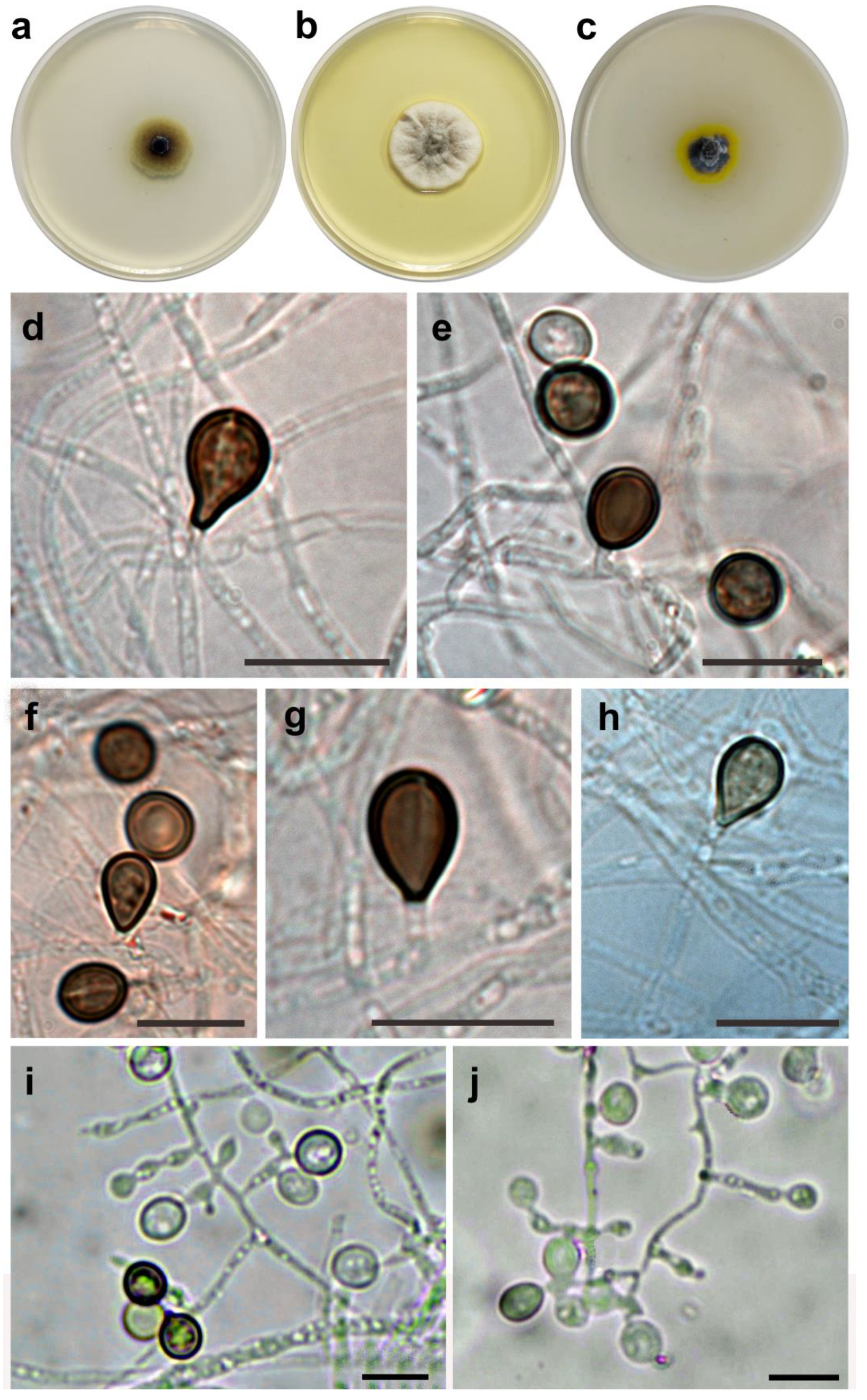
Figure 1. Gamsia batmanii isolate BEOFB1120000: (ad) 14-day-old colonies grown at 25 °C, (a) MEA, (b) PDA, (c) OA, (dj) conidiophores and conidia. Scale bar = 10 μm.
Microbiolres 17 00009 g001
Figure 2. Drawing of Gamsia batmanii showing conidiophores and conidia. Scale bar = 10 μm.
Microbiolres 17 00009 g002
Figure 3. Multilocus phylogenetic tree of Gamsia isolates and related Microascaceae species using the maximum likelihood method of three genomic regions (ITS, LSU, and TEF1α). The bar indicates the number of nucleotide substitutions per position. Graphium penicillioides strain CBS 102632 served as the outgroup. The isolate obtained in this study is marked with a black circle.
Microbiolres 17 00009 g003
Table 1. Sequnces examined for phylogenetic analysis in this study, with information on the source, origin, and GenBank accession number of the sequences. The isolate examined in this study is given in bold.
Strain/IsolateGenBank Accession NumberIsolation SourceCountry (geo_loc_name)
LSUITSTEF1α
Cephalotrichum asperulum CBS 582.71LN851007LN850960KX924043SoilArgentina: Buenos Aires
C. purpureofuscum
CBS 157.57
LN851031LN850984LN851084TuberThe Netherlands: Wageningen
C. cylindricum UAMH 1348LN851012LN850965LN851066Seed of sorghumUSA: Kansas
C. dendrocephalum CBS 528.85LN851013LN850966LN851067Cultivated soilIraq: Basrah
C. gorgonifer UAMH 3585LN851025LN850978LN851078Mushroom compostCanada: Alberta
C. guizhouense CGMCC 3.18330MF419758MF419788MF419728Air from caveChina: Guizhou
C. stemonitis CBS 289.66LN851032LN850985LN851085Dung of deerAustralia: Tasmania
C. leave CGMCC 3.18329MF419778MF419808MF419748Limestone from caveChina: Guizhou
C. purpureofuscum CBS 523.63LN851014LN850967LN851068Wheat field soilGermany: Schleswig-Holstein
C. nanum CBS 191.61LN851016LN850969LN851070Dung of deerEngland: Surrey
C. oligotriphicum CGMCC 3.18328MF419771MF419801MF419741Limestone from caveChina: Guizhou
C. purpureofuscum UAMH 9209LN851018LN850971LN851072Indoor airCanada: British Columbia,
C. purpureofuscum WL06350OR339942OR339896OR347707Sargassum confusumChina: Shenzhen, Guangdong
C. stemonitis CBS 103.19LN850952LN850951LN850953SeedNetherlands: Wageningen
Gamsia aggregata CBS 251.69LM652500LM652378-Dung of carnivoreUSA
G. batmanii *PX589482PX589483PX667539Miniopterus schreibersiiSerbia: Sesalačka cave
G. columbina CBS 233.66LN851039LN850990LN851092Sandy soilGermany: Giesen
G. columbina CBS 235.66-MH858785-Wheat field soilGermany: Schleswig-Holstein
G. kooimaniorum CBS 143185-NR_159824-Garden soilThe Netherlands
G. sedimenticola WL02722OR339947OR339900OR347712Intertidal sedimentChina: Qingdao, Shandong
G. sedimenticola WL06358OR339948OR339901OR347713Intertidal sedimentChina: Qingdao, Shandong
G. sedimenticola WL06359OR339949OR339902OR347714Intertidal sedimentChina: Qingdao, Shandong
G. simplex CBS 546.69LM652501LM652379LN851094Milled Oryza sativaJapan
Gamsia sp. NWHC 44767-31 1LNA-MK793938-East bats?USA: Madison
Graphium penicillioides CBS 102632KY852485KY852474-Populus nigraCzech Republic
Kernia columnaris CBS 159.66LN851010LN850963LN851064Dung of hairSouth Africa: Johannesburg
Parawardomyces giganteus CBS 746.69MH871180MH859408LN851096Insect frass in dead logCanada: Ontario
P. ovalis CBS 234.66LN851050MH858784LN851101Wheat field soilGermany: Schleswig-Holstein
Pseudowardomyces pulvinatus CBS 112.65MH870142MH858508LN851102Salt marshEngland: Cheshire
Wardomyces anomalus CBS 299.61MH869626MH858058LN851095Air cell of eggCanada: Ontario
W. inflatus CBS 216.61LM652553LM652496LN851098Wood, Acer sp.Canada: Quebec
W. inflatus WL02318OR339982OR339937OR347750Intertidal sedimentChina: Huludao, Liaoning
Wardomycopsis dolichi LC12503MK329043MK329138MK336073SoilChina: Guilin, Guangxi
Wa. fusca LC12476MK329047MK329142MK336077SoilChina: Guilin, Guangxi
Wa. fumicola CBS 487.66LM652554LM652497-SoilCanada: Ontario
Wa. inopinata FMR 10305LM652555LM652498-SoilIndia
Wa. litoralis CBS 119740LN851055LN851000LN851107Beach soilSpain: Castellon
Wa. longicatenata CGMCC 3.17947KU746756KU746710KX855255AirChina: Guizhou
* SSU region GenBank accession number for this isolate: PX589485—not used in phylogenetic analysis.
Table 2. Characteristics of Gamsia species.
SpeciesConidiophoresBlastic ConidiaAnnelidic ConidiaIsolation SourceReference
Gamsia batmaniiShort or reduced to conidiogenous cells, polyblastic; annelides solitary.Subglobose, obovoid to pyriform, with rounded apex (5.9–8.8 × 5.5–6.5 μm)Aseptate, subglobose to obovoid, with rounded apex (6.5–7.9 × 5.3–6.0 μm)Bat skin, Sesalačka cave, SerbiaThis study
Gamsia aggregataPolyblastic conidiogenous cells on short conidiophores; annelides solitary or grouped in sporodochiaBroadly ellipsoidal to ovoid, with rounded apex (4–7.5 × 3.5–5 μm)2-celled, ellipsoidal (8–10.5 × 3.5–5 μm)Dung of carnivore, Wycamp Lake, MichiganMalloch [26]
Gamsia kooimanorumMostly undifferentiated, unbranched or rarely laterally branched once, with polyblastic conidiogenous cells; annelides unbranched, rarely branched one or two times from a short, cylindrical and swollen basal cell, mostly grouped in dense sporodochiaOvoid to broadly ellipsoidal, with rounded to pointed apex (7–9 × 5–6.5 mm)Aseptate, oval, ellipsoidal to bullet-shaped, apex rounded (7.5–8.5 × 4.5–5.5 μm)Garden soil, Vleuten, The NetherlandsCrous et al. [25]
Gamsia columbinaPolyblastic conidiogenous cells on short conidiophores; annellides solitary or grouped in sporodochiaOval to ellipsoidal, with slightly pointed apex (6–13 × 3.5–6.5 μm)1–2-celled, oval (5–10.5 × 2.5–5.5 μm)Air, soil and decaying wood, Austria, Germany, Japan, The NetherlandsSandoval-Denis et al. [15]
Gamsia sedimenticolaReduced to conidiogenous cells, with 1–3 apical conidiogenous lociOvoid, with rounded to pointed apex (7–9 × 5–6.5 μm)Broadly ellipsoidal, 0–1-septateIntertidal sediment of a mudflat, Qingdao city, ChinaWang et al. [19]
Disclaimer/Publisher’s Note: The statements, opinions and data contained in all publications are solely those of the individual author(s) and contributor(s) and not of MDPI and/or the editor(s). MDPI and/or the editor(s) disclaim responsibility for any injury to people or property resulting from any ideas, methods, instructions or products referred to in the content.