
Article

A One Health Perspective: Occurrence Study of Carbapenem-Resistant Bacteria and Other Emerging Pathogens from Recycled Wastewater Used in Agriculture

by
Maria Martínez-Ruiz
1,
Miriam Hernández-Porto
1,2,
Cintia Hernández-Sánchez
1,3,
Ángeles Arias
1,*,
José Carlos de Gracia
2,
Adolfo Perdomo-González
4,
Raquel Pérez-Reverón
4 and
Francisco Javier Díaz Peña
4
1
Departamento de Obstetricia y Ginecología, Pediatría, Medicina Preventiva fo y Salud Pública, Toxicología, Medicina Legal y Forense y Parasitología, Universidad de La Laguna, Tenerife, 38202 Canary Islands, Spain
2
Servicio de Microbiología del Hospital Universitario de Canarias, Carretera de Ofra s/n, La Laguna, Tenerife, 38202 Canary Islands, Spain
3
Instituto Universitario de Enfermedades Tropicales y Salud Pública de Canarias, Universidad de La Laguna, Avda, Astrofísico Fco, Sánchez s/n, La Laguna, Tenerife, 38202 Canary Islands, Spain
4
Departamento de Biología Animal, Edafología y Geología, Facultad de Ciencias, Universidad de La Laguna, Avda, Astrofísico Fco, Sánchez s/n, La Laguna, Tenerife, 38202 Canary Islands, Spain
*
Author to whom correspondence should be addressed.
Microbiol. Res. 2026, 17(1), 20; https://doi.org/10.3390/microbiolres17010020
Submission received: 29 August 2025 / Revised: 29 December 2025 / Accepted: 31 December 2025 / Published: 14 January 2026

Abstract

Recycled wastewater is vital for the circular economy, especially on water-scarce islands. This study explored the presence of Carbapenem-Resistant Enterobacterales and other emerging pathogens in irrigation water on four Canarian Islands, applying a One Health perspective. Using membrane filtration and MALDI-TOF mass spectrometry, 69 bacterial isolates were identified. The findings revealed that 78% were Gram-negative bacilli like Pseudomonas aeruginosa, Acinetobacter spp., Enterobacteriaceae, etc., while 22% were Gram-positive bacteria, including Enterococcus spp. The main mechanisms of carbapenem resistance in Pseudomonas spp. and Acinetobacter spp. were oxacillinases, followed by metallo-β-lactamases (MBL). In Enterobacteriaceae, characterization of carbapenemase types was less frequent, with oxacillinase 48 (OXA-48) being the most prevalent. The detection of multidrug-resistant organisms in recycled wastewater highlights an urgent need for routine microbiological monitoring in water management to protect both public health and agricultural sustainability.

1. Introduction

Water stress constitutes a critical challenge for many countries, with implications for present and future generations [1,2]. Currently, over 2.4 billion individuals reside in regions experiencing water scarcity. The confluence of high population density, recurrent droughts, and anthropogenic pressures exacerbates environmental vulnerability, particularly in isolated regions such as oceanic islands [3,4].
Waterborne pathogens in aquatic ecosystems are already responsible for hundreds of millions of human illness cases annually [5]. Emerging evidence indicates that climate change is exacerbating this burden by promoting the proliferation and impact of numerous pathogenic microorganisms [6,7,8]. Monitoring the health effects associated with these hazards remains challenging, as many waterborne diseases are either undetected or underreported. Furthermore, risks are expected to escalate in response to global warming, intensified precipitation events, and the increasing frequency of floods [6]
One of the primary solutions to the global water crisis lies in improving irrigation systems for agriculture, which accounts for nearly 72% of global freshwater withdrawals [9,10,11,12]. One effective approach to mitigating water scarcity is wastewater reuse. Recycled wastewater undergoes physicochemical and biological treatments to comply with regulatory standards for different end-uses [13,14,15,16]. Despite undergoing treatment, recycled wastewater may still harbor pathogenic microorganisms, including multidrug-resistant bacteria. The overuse of antibiotics, coupled with insufficient wastewater treatment, has led to the dissemination of antibiotic residues into the environment [12,14,17,18]. This disruption of the One Health paradigm poses significant risks to human, animal, and ecosystem health [19,20]. Recycled wastewater, often reused for agricultural purposes, can contain a complex mixture of contaminants, including pathogenic microorganisms, heavy metals, and contaminants of emerging concern (CECs). These substances may pose direct threats to human and animal health and, in the case of CECs, potential long-term risks to ecosystems [21]. Agricultural reuse of recycled wastewater inherently connects multiple environmental compartments—such as wastewater treatment plants, surface water, groundwater, soil, and crops—facilitating the transfer and persistence of these contaminants. Consequently, the consumption of crops irrigated with contaminated water represents a tangible, non-negligible risk to human health [22].
The World Health Organization (WHO) considers bacterial resistance as a major global health threat due to the alarming rise in infections caused by multidrug-resistant bacteria, both in healthcare settings and in the community [23]. Multidrug-resistant bacteria are defined as those exhibiting resistance to one or more antibiotics from at least three distinct classes [24]. Antibiotic-resistant bacteria (ARB) and antibiotic resistance genes (ARGs) are continuously released into aquatic environments, with hospital effluents recognized as important contributors to the spread of antimicrobial resistance beyond clinical settings [25]. Among the most concerning forms of antimicrobial resistance is carbapenem resistance, mediated by carbapenemase production and transmitted via plasmids among bacteria of various species [23]. These plasmids often carry genes conferring resistance to other antibiotics belonging to different antibiotic families [26,27,28]. The widespread use of carbapenems has driven the emergence of resistance to this critical group of antimicrobial drugs [29].
Wastewater treatment plants (WWTPs) and their associated disinfection process’s function are critical barriers to limit the environmental dissemination of ARB [30,31]. Following discharge from the treatment plant into recycled water and storage facilities for reuse, recycled water is generally not subjected to systematic sanitary monitoring. Previous studies have demonstrated that the quality of recycled water exhibits variability throughout the distribution network, and it has been observed that its characteristics may change prior to use at different locations, such as within pipelines, storage tanks, and other points along the system [32]. It has been widely documented that one of the main factors contributing to variability in recycled water quality is the formation of biofilms within distribution systems. Biofilm development is generated by multiple interacting factors and environmental conditions. Furthermore, several studies have highlighted the role of biofilms as potential sinks for ARGs in aquatic ecosystems [33,34,35,36].
The variability observed in recycled water quality can be attributed to the multifactorial interactions between treatment performance and post-treatment management practices. Key determinants include storage conditions, which exert a strong influence on microbial persistence, regrowth, and community shifts, as well as geographic and hydrological drivers—such as the high agricultural demand characteristic of certain regions—that impose additional stress on water reuse systems [7,8]. Furthermore, the structural and operational attributes of distribution infrastructures, particularly the reliance on open reservoirs, extended retention times, and long conveyance networks, have been consistently associated with conditions favorable to biofilm development [32]. The subsequent establishment of biofilms not only facilitates the diversification and stabilization of microbial communities but also poses potential risks for water quality deterioration and the persistence and dissemination of antibiotic resistance genes (ARGs) within aquatic environments [37].
In response to these challenges, the Methodological Spanish Guide for the Development of Recycled Water Risk Management Plans for Agricultural Use was developed in 2024 [38]. This framework seeks to provide robust technical criteria that enable more reliable, safe, and sustainable management of recycled water resources, while also integrating considerations of microbial ecology, infrastructure resilience, and agricultural water demand. However, although progress has been made with the development of these guidelines, the absence of binding regulatory frameworks mandating their adoption represents a major limitation for their practical implementation and constitutes a significant barrier to their systematic application.
The absence of post-treatment surveillance in recycled water may constitute a potential public health risk, particularly in contexts where recycled water is likely to come into direct contact with human populations [22]. It is important to underscore that climate change is profoundly altering the physical, chemical, and biological characteristics of aquatic systems, including storage tanks, which are subjected to extreme temperature fluctuations. These alterations may adversely affect human health and socioeconomic stability by disrupting aquatic microbial communities [6,7,8].
Although wastewater and WWTPs have been extensively investigated to assess the prevalence of ARB, the contribution of recycled water storage practices to the dissemination of ARB remains comparatively underexplored. This study aims to determine the prevalence of emerging and carbapenemase-producing bacteria in recycled wastewater samples collected from irrigation points for agriculture in water-stressed oceanic islands.

2. Materials and Methods

2.1. Study Area and Fieldwork

This study was carried out in the Canary Islands Archipelago (Spain), located in the Atlantic Ocean near the African coast. The Canary Islands have different water needs between islands, with some experiencing water stress. Desertification, high population density (278.77 inhabitants/km2), tourism (17.77 million tourists in 2024), insufficient rainfall, water losses in the network or inadequate management are among the stressors contributing to a water demand that exceeds supply [4,39,40].
The easternmost islands of the Canary Islands demonstrate the greatest water stress, demanding the use of recycled wastewater and desalination, also in agriculture [4]. Currently, agricultural production on these territories relies heavily on non-conventional water resources [41].
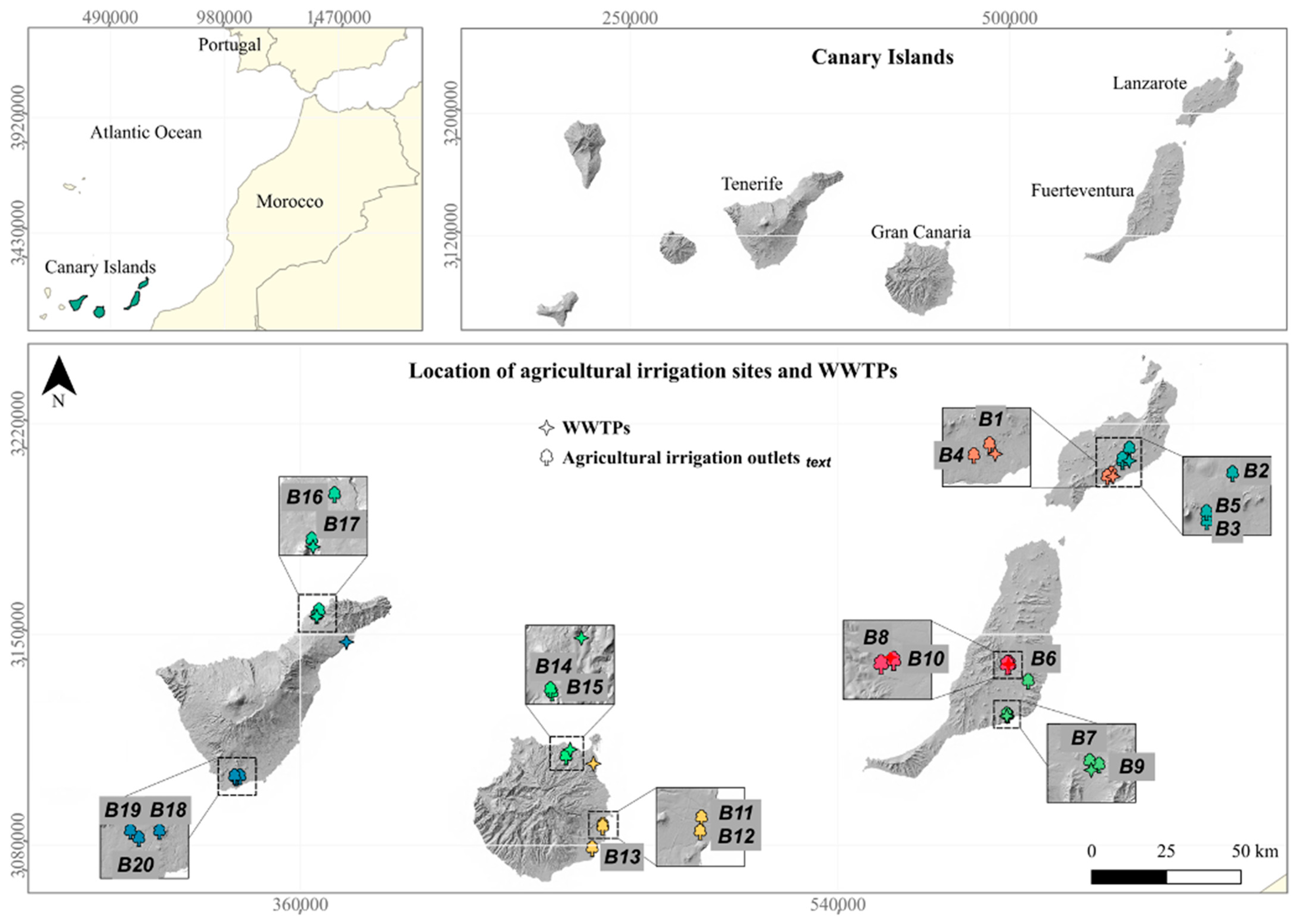
In each water stress island, 5 different sampling points were taken from agricultural water storage for irrigation. Samples were assigned numbers according to the following order: Fuerteventura (B1, B2, B3, B4 and B5), Lanzarote (B6, B7, B8, B9 and B10), Gran Canaria (B11, B12, B13, B14 and B15) and Tenerife (B16, B17, B18, B19 and B20) (Figure 1). Table 1 provides the sample identifiers, together with the island and sampling location, the supplying WWTP, the type of crop irrigated, and the water-storage conditions. For storage, a distinction is made between open and closed tanks, as well as cases in which no storage is used because the water is drawn directly from the WWTP supply.
Samples were collected between 13 October and 29 November 2023 from the irrigation outlet of each water storage tank. Samples were collected in sterilized 500 mL bottles, ensuring the exclusion of air contact, and transported to the laboratory of Preventive Medicine and Public Health of the University of La Laguna, Tenerife, for analysis within 24 h in accordance with the guidelines outlined in Regulation (EU) 2020/741 for bacteriological analysis [42].

2.2. Microbial Culturing

From the initial sample volume, only 100 mL was used to prepare four serial tenfold dilutions for each sampling point, yielding a final dilution of 10−4. Owing to the anticipated high bacterial growth and to prevent filter biofouling, a 10 mL aliquot from each dilution was passed through a 0.45 µm membrane filter, using the membrane filtration method. The filters were then incubated on selective and differential media: Tergitol® 7 Agar OXOID at 44 °C and Slanetz-Bartley Agar Base (Scharlau, Sentmenat, Spain), thiosulfate-citrate-bile-sucrose (TCBS) Agar OXOID®, and MacConkey M3 OXOID® at 37 °C for 24 h.
For the isolation and identification of the target microbial groups, several selective and differential culture media were employed. Tergitol® 7 agar was used as a selective and differential medium for the isolation of coliforms. In this medium, yellow colonies corresponded to Escherichia coli, yellow–green colonies indicated other coliforms, and blue colonies denoted non-fermenting microorganisms. TCBS agar (Thiosulfate Citrate Bile Salts Sucrose agar) was utilized as a selective medium designed specifically for the isolation of species of the genus Vibrio. Similarly, Slanetz–Bartley medium served as the selective medium for the isolation of Enterococcus species. MacConkey agar, in contrast, was used for its selective properties against Gram-negative bacilli and its differential capabilities based on lactose fermentation: non-fermenting bacteria produced colorless colonies, whereas lactose-fermenting bacteria formed pink colonies. Finally, colonies grown on MacConkey agar were subjected to an oxidase test to distinguish Enterobacteriaceae from other Gram-negative bacilli. Subsequent analyses involved the individual identification of each isolated microorganism.
Filters yielding 20–80 colony-forming units (CFU) were selected to repeat the process in triplicate further incubation over 24 h. The most probable number (MPN) per 100 mL was determined for each microorganism.

2.3. Identification and Antimicrobial Susceptibility Testing

Once pure isolates were obtained, they were subsequently identified to the species or genus level using matrix-assisted laser desorption/ionization time-of-flight mass spectrometry MALDI-TOF MS (VITEK-MS, bioMerieux, Lyon, France) automated system as previous described by Ashfaq et al. (2022) and Puljko et al. (2024) [43,44]. Enterobacteriaceae and non-fermentative Gram-negative bacilli (NFGNB) were screened for carbapenemase production using CHROMID CARBA SMART agar as previously described in other studies [45,46]. Colonies exhibiting typical growth were then confirmed and characterized using the ROSCO Diagnostica Carbapenemasa Klebsiella pneumoniae (KPC), MBL and Oxacillinase detection kits [47]. The kits contain Imipenem 10 μg alone and combined with specific inhibitors: MBLs are detected by synergy with dipicolinic acid (DPA) or EDTA, and KPCs by comparing inhibition zones with Phenylboronic Acid and Cloxacillin High to distinguish KPC from AmpC activity. P. aeruginosa and Acinetobacter spp. were also tested for these carbapenemase types, using Imipenem alone and in combination with the same inhibitors to detect MBL and KPC activity [48]. Vancomycin susceptibility of Enterococcus was determined using the disk diffusion method using vancomycin disc and Muller–Hinton agar, according to the European Committee on Antimicrobial Susceptibility Testing (EUCAST) guidelines [49]. Diameters of inhibition halos surrounding the disc were measured and expressed in millimeters. Results were interpreted as sensitive, intermediate or resistant, following the EUCAST criteria [49].

3. Results and Discussion

3.1. Microbial Diversity Across Islands

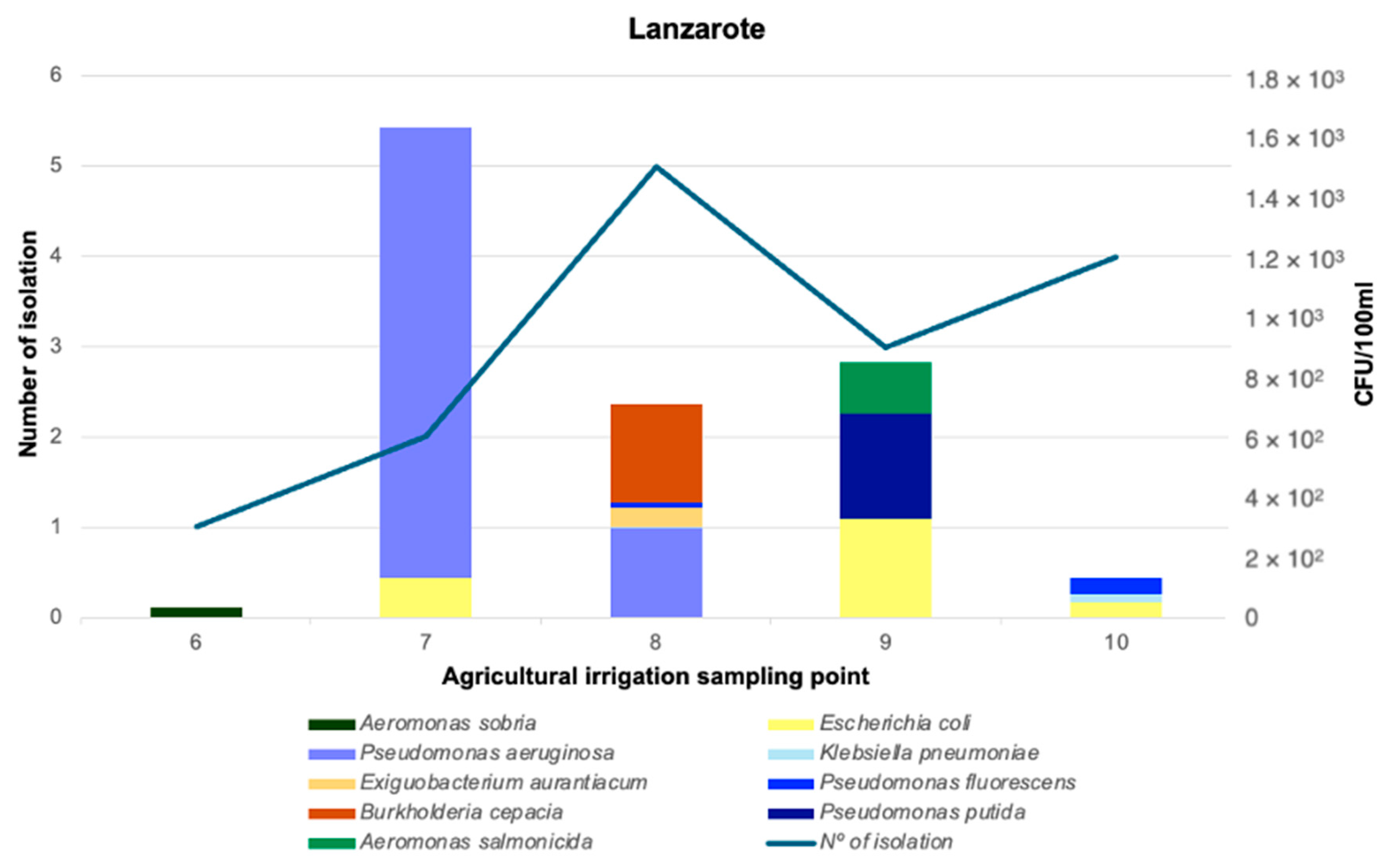
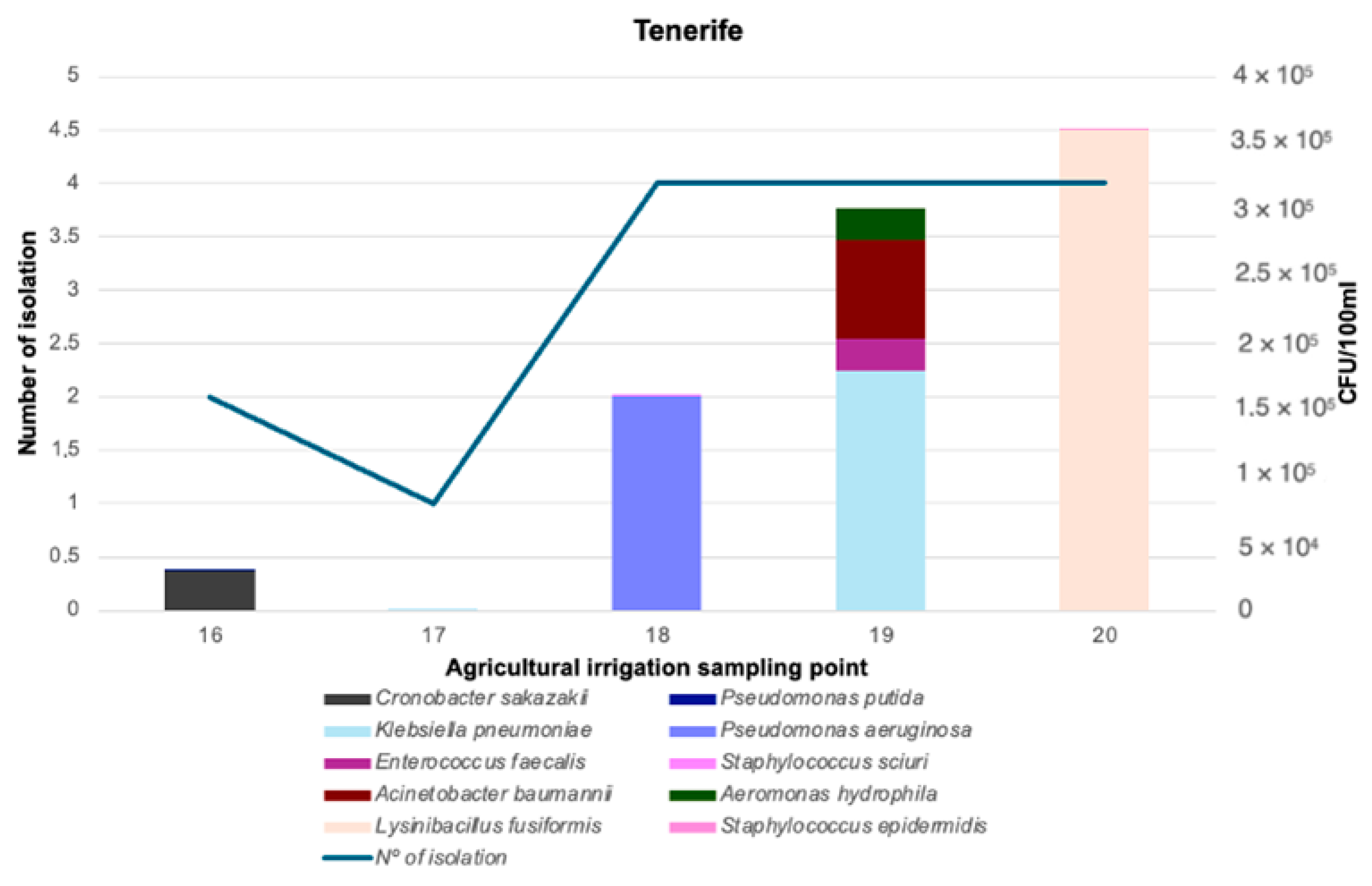
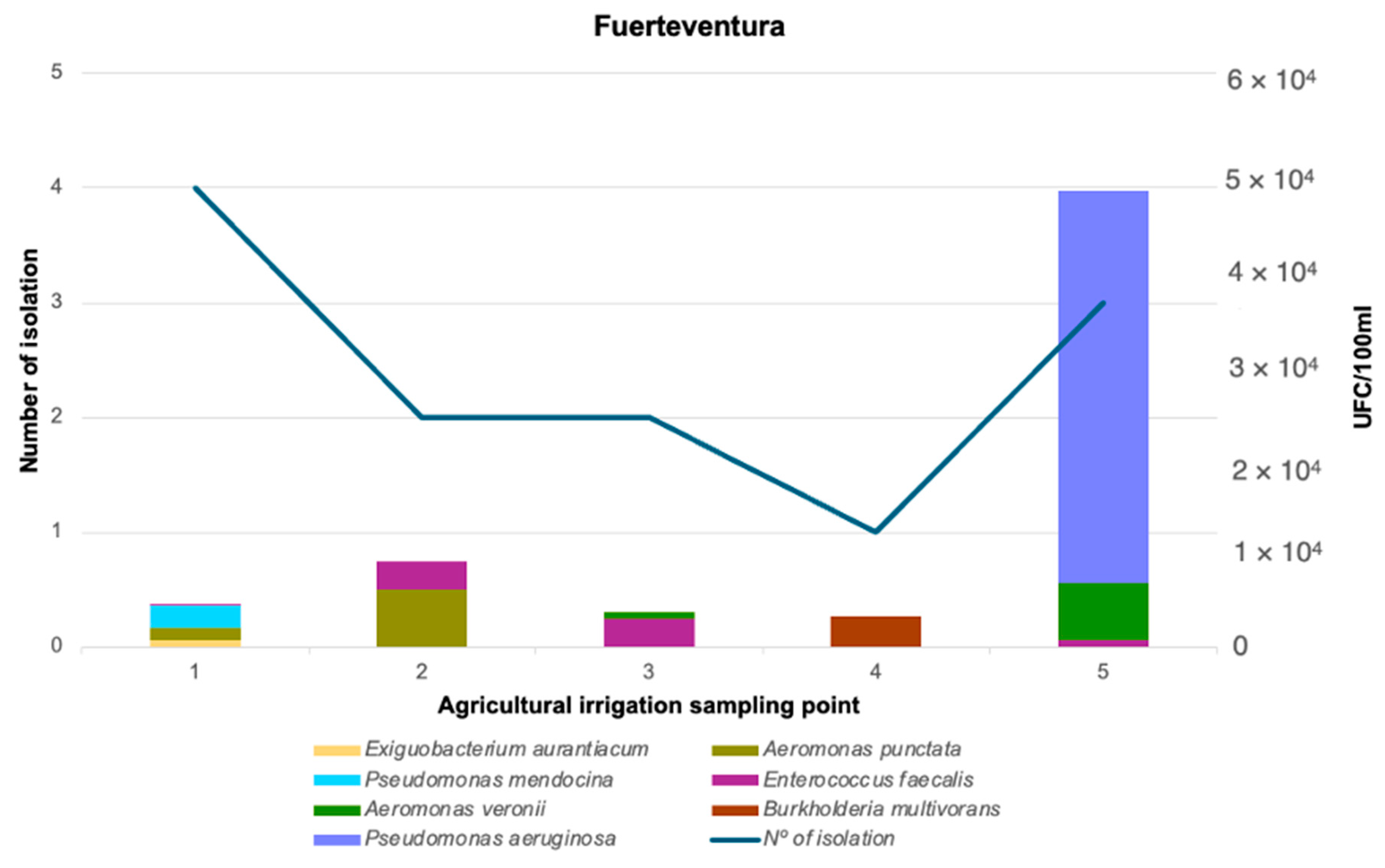
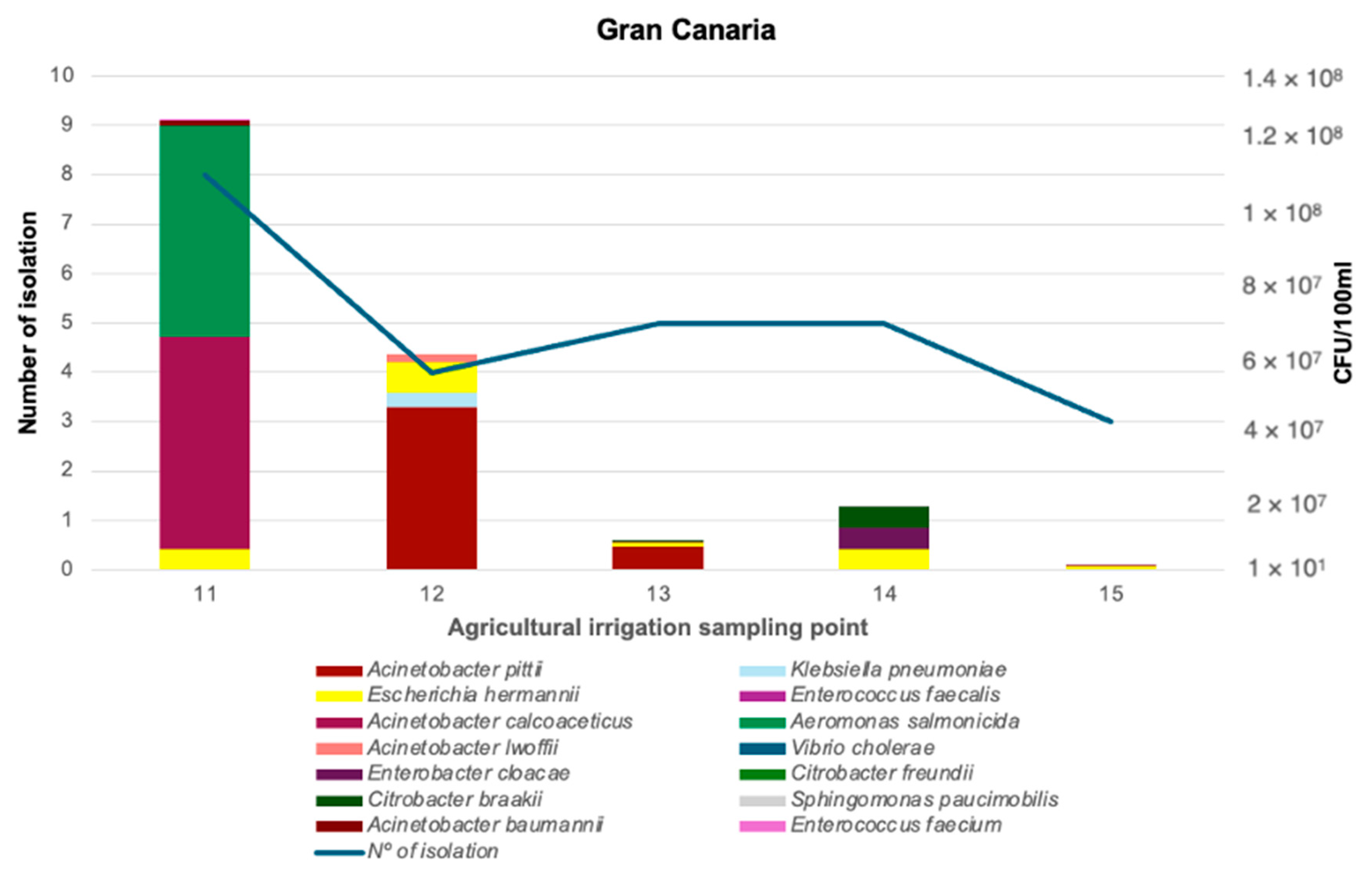
Focusing on the analysis of bacterial isolates obtained from the irrigation outlets sampled on each island, the results of the microbial diversity observed in each recycled wastewater irrigation outlet are represented in Figure 2, Figure 3, Figure 4 and Figure 5. The figures display the microbial counts (CFU/mL) for each irrigation outlet grouped by island. Each bar represents a different outlet, allowing for a visual comparison of microbial load across sampling sites. The colors represented in the bars of the bar chart correspond to the different species isolated, with the bar height indicating the number of CFU per 100 mL. The graph also includes a line that indicates the number of isolations. Also, information on each bacterial isolation and the microbiological counts (CFU/100 mL) is extensively presented in Supplementary Materials (Tables S1–S4).
Analyses of recycled water from Fuerteventura consistently showed the lowest diversity of isolated microorganisms, together with a low prevalence of antimicrobial-resistant strains. Overall, the microbiological load in Fuerteventura was relatively low compared with the samples obtained from Tenerife and Gran Canaria.
Sampling points B1 and B5—both characterized by storage in open tanks—showed the highest number of distinct microbial taxa and the greatest CFU/100 mL concentrations, in contrast with other sites where the tanks were closed or covered (B2, B3 and B4).
Samples from Lanzarote exhibited the lowest CFU/100 mL concentrations compared with the other islands studied. The low microbial load observed at irrigation outlets B7, B8, B9, and B10 is attributed to their direct connection to the WWTP. The lack of an intermediate reservoir appears to have limited biofilm development and, consequently, microbial growth. Sample B6—the only one associated with storage in a closed pond—yielded the isolation of only Aeromonas sobria, an organism typically regarded as environmental.
Samples from Gran Canaria showed the poorest overall microbiological quality and the highest prevalence of carbapenem-resistant microorganisms among all islands investigated. The most common resistance mechanism identified corresponded to oxacillinase enzymes, as reported in Table S5 of the Supplementary Material.
A clear heterogeneity was observed among the irrigation outlets on this island. Outlet B13 was the only site in Gran Canaria where no microorganisms with antimicrobial resistance were detected. Both B13 and B15 were supplied by closed storage tanks; however, the suboptimal storage conditions associated with outlet B15 may account for the high number of resistance mechanisms identified there. In line with previous observations, open storage tanks displayed a higher total microbiological load. Notably, outlet B11 from Gran Canaria Island exhibited the highest density and diversity of microorganisms, with a total of eight distinct species identified (Acinetobacter pittii, Klebsiella pneumoniae, Escherichia hermannii, Acinetobacter baumannii, Enterococcus faecalis, Enterococcus faecium, Acinetobacter calcoaceticus, and Aeromonas salmonicida). The high prevalence of microorganisms and the elevated microbiological load observed on the island may be associated with multiple factors, the influence of which has not yet been fully elucidated. One potential explanation is the inadequate management of storage tanks, which could facilitate the proliferation of microbial agents. In addition, climatic conditions constitute a critical factor that is difficult to control; semi-tropical temperatures, favorable for microbial growth, combined with environmental variability, may enhance biofilm formation, microbial dispersal, and the emergence of these organisms.
In addition, the intensive livestock activity characteristic of Gran Canaria is a relevant factor to consider. According to data from the Canary Islands Institute of Statistics [39], this island, with a surface area of 156,151.87 hectares, reported 87,523 heads of livestock. This figure is particularly noteworthy when compared with Tenerife, the largest island in the archipelago (203,352 hectares), where 75,367 livestock animals were reported in the same year [50]. The high livestock density in Gran Canaria, relative to its available area, may be associated with an increased propagation and persistence of microorganisms table in the environment.
Although Tenerife and Gran Canaria are the two islands with the highest population density and water stress in the archipelago, the samples from Tenerife exhibited better microbiological quality than those from Gran Canaria. It is noteworthy that most recycled water in Tenerife is supplied directly from the wastewater treatment plant, without intermediate storage in tanks. Only one of the five sampling points in Tenerife relied on a storage system (an open tank), whereas the remaining recycled water was extracted directly from the distribution network.
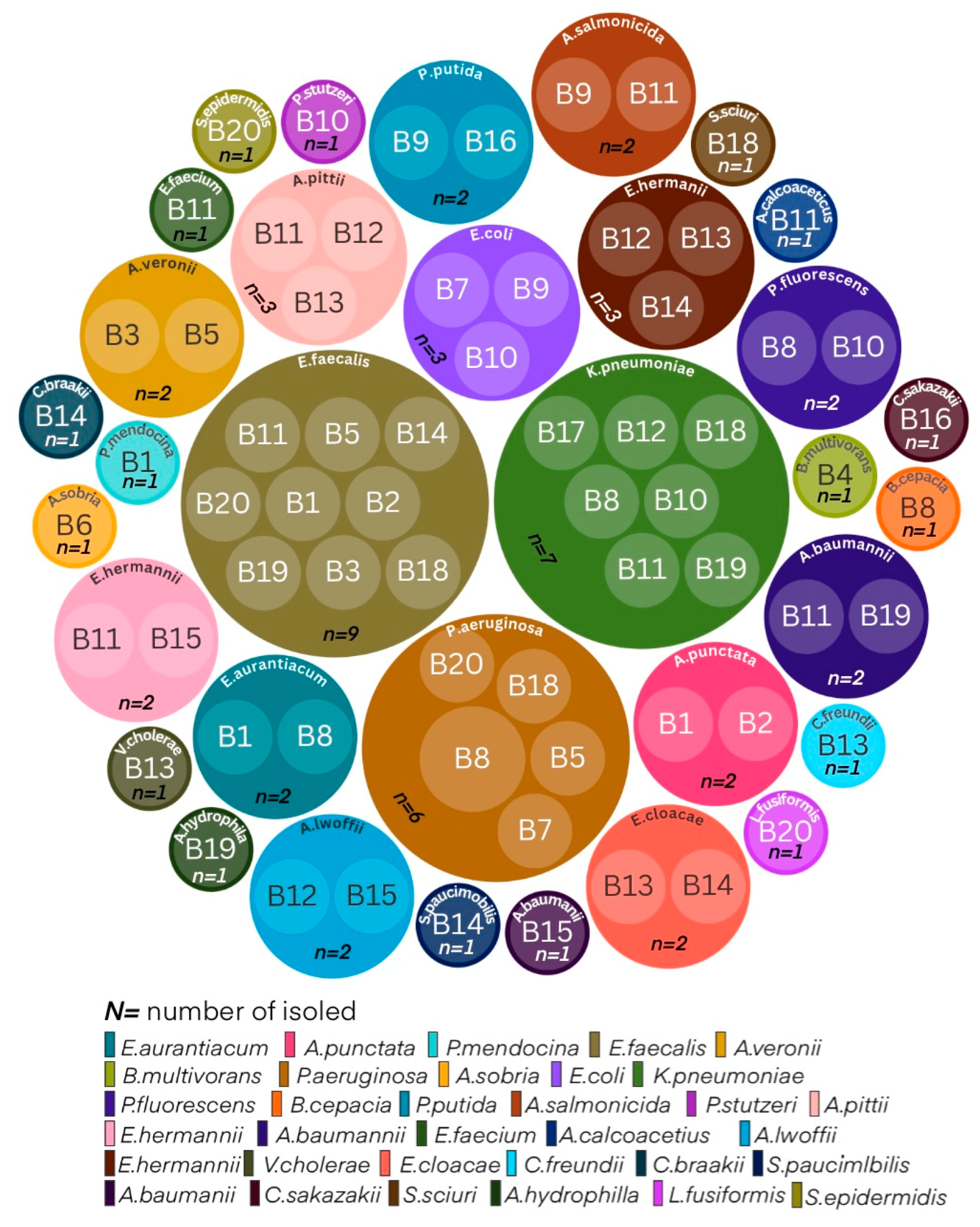
Figure 6 illustrates the distribution of the microorganisms detected, each represented by a distinct color. The name of each species is displayed at the top, and the number of irrigation outlets in which each microorganism was identified is indicated by the corresponding enumeration.
Dominant among these were E. faecalis, followed by K. pneumoniae. These species are frequently encountered in treated wastewater due to their common origin in the human gut microbiome. While recycled wastewater regulations often prioritize E. coli as an indicator organism, this does not preclude the presence of other potential pathogens [51,52,53]. The presence of Enterococcus spp. especially E. faecalis, and Enterobacteriaceae, which are commonly found in the intestinal microbiota of mammals, indicated fecal contamination in the water bodies [50,52,53,54]. In many countries, the detection of E. coli serves as a specific marker for fecal contamination from human, animal, or untreated wastewater sources. According to Regulation EU 2020/741 on minimum requirements for water reuse, recycled wastewater for agricultural use is restricted to a maximum of 100 CFU/100 mL of E. coli, while the WHO has established guidelines primarily focused on E. coli within the Enterobacteriaceae family [42,55].
Vancomycin-resistant E. faecalis and E. faecium represent a significant clinical challenge in hospital settings, as they are capable of rapidly spreading within healthcare environments and causing infections that are notoriously difficult to treat. Data from the 2023 European Antimicrobial Resistance Surveillance Network (EARS-Net) indicate that 19.8% of E. faecium isolates and 24.3% of E. faecalis isolates were resistant to vancomycin [56]. These findings underscore the importance of implementing environmental surveillance strategies to detect potential reservoirs of resistance, thereby contributing to a more comprehensive understanding of its dissemination pathways.
From a total of 69 isolates, 32 corresponded to different microorganisms. The predominant groups identified were Gram-negative bacilli (54 isolates, 78%) and Gram-positive bacteria (15 isolates, 22%). On the one hand, fermenting Gram-negative bacilli represented 29 isolates (54%), with Enterobacteriaceae being the most representative family group (20 isolates, 37%). On the other hand, non-fermenting Gram-negative bacilli accounted for 25 isolates (46%), the most relevant species being P. aeruginosa (6 isolates, 25%), A. pittii (3 isolates, 12%), and A. baumannii (3 isolates, 12%). The counts of the isolates mentioned are presented in Table 2, Table 3 and Table 4.
Among the Enterobacteriaceae, Table 3 shows that K. pneumoniae was the most prevalent species, representing 35% of the isolates (7/20). This was followed by E. hermannii (25%, 5 isolates), E. coli (15%, 3 isolates), and E. cloacae (10%, 2 isolates), highlighting a predominance of clinically relevant opportunistic pathogens in the irrigation outlets.
Among the Gram-positive bacteria, Table 4 shows that Enterococcus spp. represented the most relevant genus, with 10 isolates (66%). Notably, E. faecalis accounted for the majority of these (9 isolates, 90%), positioning it as the most frequently recovered species in this study and underscoring its clinical relevance as a well-recognized opportunistic pathogen.
The ESKAPE group—an acronym proposed by Rice in 2008 to designate E. faecium, Staphylococcus aureus, K. pneumoniae, A. baumannii, P. aeruginosa, and Enterobacter spp.—encompasses pathogens of critical clinical relevance. These microorganisms account for a significant global burden of morbidity and mortality, particularly within healthcare settings, where they are leading causes of severe and frequently fatal nosocomial infections. Beyond their clinical impact, the ability of ESKAPE pathogens to persist in environmental reservoirs and disseminate across human, animal, and ecological domains highlights their importance within the One Health framework and emphasizes the urgent need for integrated strategies aimed at surveillance, prevention, and control [57].
Analysis of bacterial isolation from recycled wastewater intended for agricultural use revealed significant heterogeneity in bacterial composition among different islands, and even within individual islands, depending on the specific water outlet. Pathogens’ variability may be attributed to water storage and exposure to open storage tanks accessible to wild animals, domestic animals, or farm animals that may inhabit the vicinity of the storage area. Given the predominantly open-air water storage conditions, it is imperative to establish regulatory limits not only at the treatment plant discharge point but also to implement comprehensive hygiene and sanitation guidelines for water storage practices by farmers.

3.2. Resistance Mechanisms and Key Pathogens Detected

To elucidate the carbapenem-resistance mechanisms identified in this study, Table S5 in the Supplementary Material presents the distribution of carbapenem-resistant Gram-negative bacilli isolates and their associated resistance mechanisms (KPC, MBL, OXA-48, Extended Spectrum Beta-Lactamases (ESBL) with porin loss, and AmpC with porin loss) by island and irrigation point. A total of 34 microorganisms have been found in 14 of the 20 irrigation outlet sampling points.
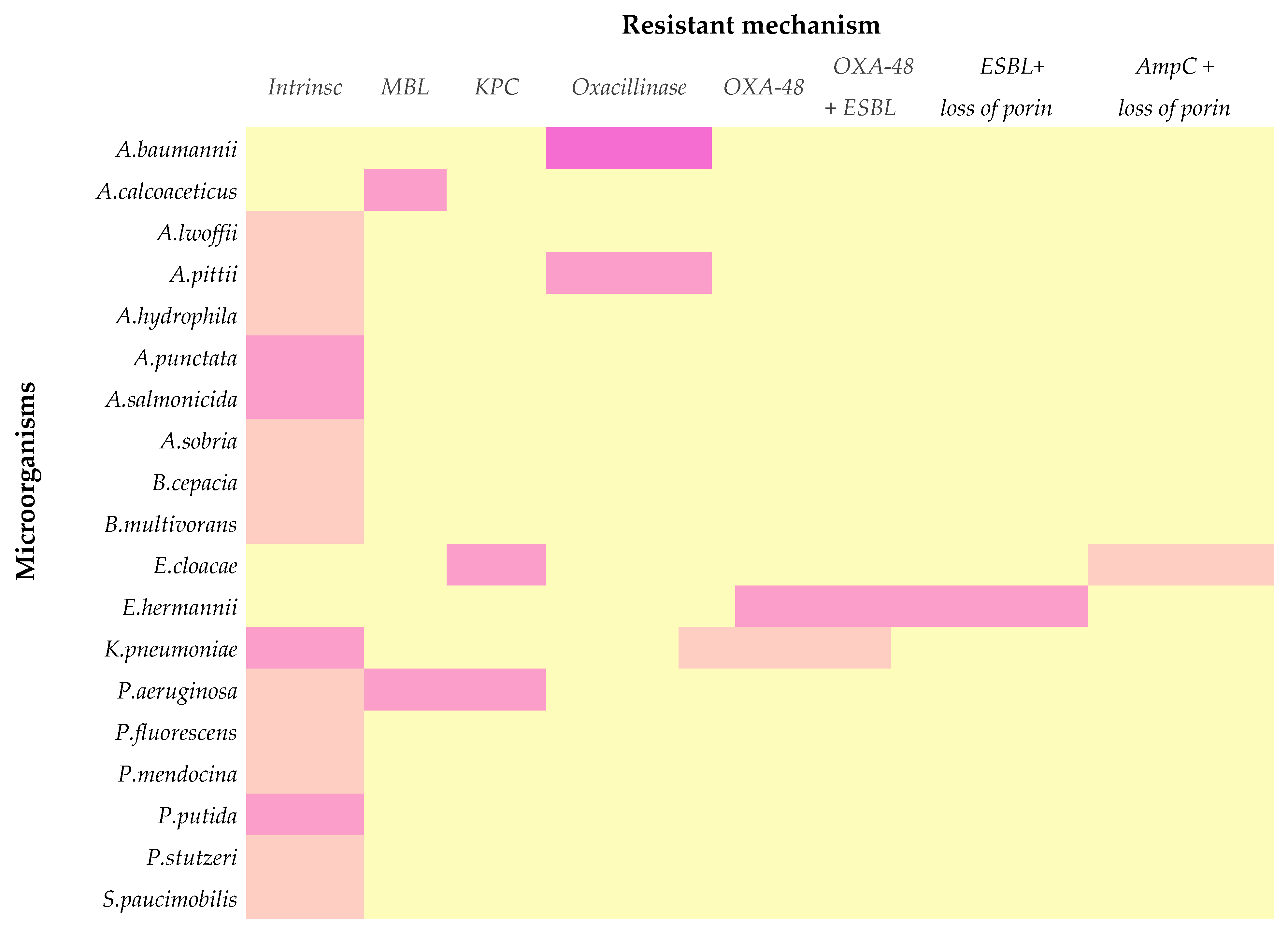
Figure 7 presents the different resistance mechanisms identified in the recycled water analyzed in this study, including intrinsic resistance, porin loss, etc. The colored cells indicate the detection of each resistance mechanism in the microorganisms evaluated. Color intensity reflects the frequency of each mechanism among the strains analyzed, with darker tones corresponding to mechanisms observed more frequently. The main mechanisms of carbapenem resistance in Pseudomonas spp. and Acinetobacter spp. were oxacillinases, followed by metallo-β-lactamases (MBL). In Enterobacteriaceae, characterization of carbapenemase types was less frequent, with OXA-48 being the most prevalent.
The high prevalence of cases categorized as “intrinsic/other resistance mechanism” may reflect the presence of species-specific intrinsic resistance determinants, porin alterations or efflux pump overexpression, low-level or inducible carbapenemase expression, newly emerging enzyme variants not detected by phenotypic assays, or the combined action of multiple mechanisms that confer resistance but remain undetectable using conventional phenotypic methods. Moreover, as shown in Supplementary Table S5, the P. aeruginosa isolates from sample B8, the Enterobacter cloacae isolate from B14, and the P. aeruginosa isolate from B18 display distinct resistance mechanisms despite originating from the same irrigation outlet. This observation suggests that the site may constitute a critical point for the horizontal transmission of resistance genes.
Regarding antibiotic resistance, all enterococcal isolates were susceptible to vancomycin, which aligns with the low prevalence of this resistance reported in Canary Islands hospitals [58]. Among Gram-negative bacilli (n = 54), 64% demonstrated non-intrinsic carbapenem resistance. Enterobacteriaceae accounted for 24% of these resistant isolates and were most prevalent in Gran Canaria. According to the Global Antimicrobial Resistance and Use Surveillance System (GLASS), E. coli represents one of the principal pathogens associated with antibiotic resistance. Data from 76 countries in 2022 indicated that 42% of E. coli isolates exhibited resistance to third-generation cephalosporins, while 35% demonstrated resistance to methicillin. K. pneumoniae ranked second in prevalence, with both species belonging to the family Enterobacteriaceae. These bacteria, along with other members of the same family, are major contributors to a broad spectrum of intestinal infections [59]. Carbapenems are frequently employed as the last line of therapy against multidrug-resistant bacterial infections. However, over the past decade, numerous studies have reported the emergence of carbapenem-resistant Enterobacteriaceae, mediated by diverse resistance mechanisms [44].
The role of the environment as a reservoir and vehicle for the dissemination of resistance genes has been increasingly investigated in recent years. Hospital wastewater has been identified as a major hotspot, facilitating the horizontal transfer of resistance genes. For instance, a study conducted in India reported the isolation of an E. coli strain producing NDM-4, harboring the bleomycin resistance gene (bleMBL) on a plasmid associated with the complete IS Aba125 sequence, suggesting that hospital effluents represent an important reservoir of resistance determinants. Similarly, the release of antibiotics into municipal wastewater, together with human excretions, contributes to the selection of such bacteria in surface and/or groundwater. Supporting evidence includes the detection of K. pneumoniae strains producing VIM-1 in rivers in Spain [60].
There is also evidence of the transmission of resistance genes among Enterobacteriaceae strains in agriculture–aquaculture interface systems, as reflected in a recent study in Egypt on the presence of β-lactamases and CRE, where several resistant Enterobacteriaceae strains were isolated, predominantly carrying the carbapenem-resistance gene blaKPC, either alone or in combination with β-lactamase genes (blaCTX-M-15, blaSHV, blaTEM, and blaPER-1) [61].
In this study P.aeruginosa, A. baumannii, and Enterobacteriaceae, pathogens classified as critical priority by the WHO, were detected. Additionally, it is important to highlight the presence of primary pathogens such as Vibrio cholerae (Gran Canaria), diverse Aeromonas spp., and Burkholderia cepacia complex (Lanzarote and Fuerteventura). This bacterium is widely distributed across diverse environmental settings and is characterized by remarkable metabolic flexibility, together with a high mutation rate that facilitates adaptation. These traits enable it to persist under nutrient-limited conditions and even to exploit certain antimicrobials as a carbon source. From an epidemiological perspective, it is mainly associated with opportunistic infections in immunocompromised individuals, particularly in patients with cystic fibrosis [62].
Expanding the scope of investigation to a broader spectrum of pathogens reveals the significant public health threat posed by multidrug-resistant microorganisms, particularly those exhibiting carbapenem resistance. The facile transfer of resistance genes [63] among these pathogens underscores the importance of adopting a One Health perspective to mitigate the escalating global crisis of antibiotic resistance [63]. Indeed, authors such as Peter et al. 2017 have reported the transmission of blaVIM resistance genes from P. putida isolates to P. aeruginosa, the former being primarily associated with environmental niches and the latter representing a pathogen of major clinical importance [64].
The carbapenem resistance profile is quite alarming since we have detected that over 64% of the isolates presented resistance, with 24% of them being Enterobacteriaceae and 38% of these being produced by the presence of OXA-48 and KPC carbapenemases, which coincides.
Most of isolates microorganisms were identified as NFGNB, consistent with their prevalence in environmental niches. However, P. aeruginosa and A. baumannii, which are more commonly associated with clinical settings, were also detected. It is important to highlight that P. aeruginosa is one of the main pathogens that cause nosocomial infections, primarily affecting immunocompromised patients, those with invasive devices, severe burns, and post-surgical patients [56,65]. The main resistance mechanisms identified in P. aeruginosa in our study were two isolates producing metallo-β-lactamases (MBL) and two isolates producing KPC-type carbapenemases. These findings are of particular clinical relevance due to their significant impact on therapeutic options. In recent years, Spain has reported an increasing number of MBL-producing strains, particularly of the VIM and IMP types [58]. This trend has been associated with the growing detection of resistance to novel agents used in the management of multidrug-resistant P. aeruginosa, such as ceftolozane-tazobactam and ceftazidime-avibactam (CZA) [59,66].
Similarly, the use of CZA has led to the emergence of P. aeruginosa strains resistant to this antibiotic, a phenomenon in which several resistance mechanisms have been described that directly compromise its efficacy. Among these, the emergence of KPC-type carbapenemase variants is particularly noteworthy [67]. In 2017, Shields et al. reported for the first time the development of resistance to CZA in patients infected with K. pneumoniae, attributed to mutations in the blaKPC-3 gene [68]. In the case of P. aeruginosa, reports are relatively scarce; however, several KPC variants capable of conferring resistance to this antibiotic have been identified, such as blaKPC-31 [69].
P. aeruginosa strains possess multiple intrinsic resistance mechanisms against carbapenems, the most frequent being the alteration of outer membrane permeability through modifications or loss of the OprD porin. Additional mechanisms include the overexpression of efflux systems, the synthesis of carbapenemase enzymes capable of inactivating these compounds, and the hyperproduction of chromosomal AmpC β-lactamases [70,71,72]. Moreover, this species exhibits a remarkable ability to acquire additional resistance via horizontal transfer of antimicrobial resistance genes, which are often located within integrons and mobile genetic elements such as plasmids and transposons [73]. On the other hand, A. baumannii is also associated with nosocomial infections, including bacteremia, pneumonia, and infections of the skin and urinary tract [74], mainly in critical care units as an opportunistic pathogen [75,76]. A. baumannii can withstand desiccation, exhibit tolerance to biocides, and remain viable even under conditions of limited nutrient availability [77,78]. Acinetobacter strains were isolated in Gran Canaria from four out of five irrigation outlets and in one outlet in Tenerife. Among these isolates, the primary resistance mechanism identified is the production of oxacillinases, enzymes that belong to the class D β-lactamases. In A. baumannii, six oxacillinase groups have been described to date: OXA-51, OXA-23, OXA-40/24, OXA-58, OXA-143, and OXA-48 [47,79,80]. Recent reports indicate that these strains have disseminated globally [80], causing hospital outbreaks in countries such as the United States, Canada, and Spain, among others [73]. Moreover, multidrug resistance is a common feature of this microorganism due to its extraordinary adaptive capacity. A. baumannii isolates can acquire resistance through several mechanisms, including horizontal gene transfer, natural transformation, the emergence of mutations, and the mobilization of genetic elements that modulate the expression of intrinsic genes, such as blaOXA-51-like gene conferring carbapenem resistance, as well as through the acquisition of additional resistance genes [73,75,77,78].
Carbapenemase dissemination, predominantly nosocomial, has prompted studies adopting a One Health investigation into broader transmission pathways, including hospital wastewater or undercooked food. Consequently, European regulatory frameworks are undergoing revision to encompass agricultural and food sectors in carbapenem resistance surveillance [76]. The detection of carbapenem-resistant environmental Pseudomonas species, such as P. putida and P. stutzeri, underscores their potential role as reservoirs for the horizontal transfer of carbapenemase genes to clinically significant pathogens like P. aeruginosa.
A One Health approach highlights the significance of P. aeruginosa, A. baumannii, and Carbapenem-Resistant Enterobacteriaceae as primary pathogens in human health. These microorganisms, classified as critical priority pathogens by the WHO [81], along with Vibrio cholerae non-O1/O139 strain, have been detected in recycled wastewater used for irrigation in Gran Canaria. This bacterium has also been found predominantly in Mediterranean coastal lagoons [82]. V. cholerae is a halophilic, Gram-negative, facultative anaerobic bacterium widely distributed in aquatic and estuarine environments [83]. Non-O1/non-O139 strains are not responsible for cholera, as they lack the cholera toxin; however, they are capable of colonizing the gastrointestinal tract, causing self-limiting acute gastroenteritis, and have also been linked to extraintestinal infections such as those of the biliary and urinary tracts, soft tissues, and skin, as well as bacteremia, pneumonia, meningitis, and otitis externa [83,84]. Although bacteremia due to these serogroups is relatively rare, studies indicate that it is associated with higher mortality compared to other V. cholerae infections, particularly in immunocompromised patients [85]. From a One Health perspective, the persistence of V. cholerae in aquatic environments, including irrigation water, raises important concerns regarding its potential role as an environmental reservoir.
The detection of Aeromonas spp. in Fuerteventura and Tenerife, this genus is among the predominant bacterial groups in treated wastewater [86]. Specifically, the species Aeromonas hydrophila, A. caviae, and A. veronii are considered clinically relevant due to their pathogenic potential in humans. The infections they cause range from self-limiting gastroenteritis to more severe conditions affecting the heart, skin, eyes, and other organs, which can ultimately progress to fatal septicemia [87]. Moreover, multidrug resistance has been reported in Aeromonas spp. isolates obtained from fish as well as from various aquatic sources, including rivers and wastewater treatment plant effluents. These bacteria also exhibit intrinsic resistance mechanisms, supported by mutations in specific genes, efflux pump overexpression, and the acquisition of resistance determinants through horizontal gene transfer, all of which enhance their antimicrobial resistance capacity [88]. Aquatic habitats provide favorable conditions for the development of these processes. In addition, biofilm formation on aquatic environments has been documented, offering protection to the bacteria and facilitating the exchange of resistance genes [37]. Due to their characteristics, high prevalence in aquatic environments, and diverse antibiotic resistance mechanisms, this genus can serve as a valuable indicator of contamination and the dissemination of antibiotic resistance within aquatic ecosystems, including effluents from wastewater treatment plants [89].
Underscores the importance of establishing rigorous standards for the hygienic quality of recycled wastewater used for irrigation, also under storage conditions, particularly when food contamination is at risk. These findings suggest potential transmission pathways to humans, including consumption of crops irrigated with contaminated water, contact with livestock carrying resistant bacteria, and exposure to contaminated groundwater. To improve this situation, regular environmental and foodborne pathogen monitoring could be implemented, providing targeted education and training for farmers on hygienic practices and improving the storage and handling of water and crops to reduce contamination risks.

3.3. Limitations of This Study

In cases where carbapenem resistance mechanisms could not be identified due to limitations of phenotypic techniques, sequencing methods would be required. However, the study detected resistance mechanisms to β-lactam antibiotics, including MBL, KPC, and OXA-48, which significantly reduce therapeutic options for infections caused by these microorganisms. Our findings demonstrate that recycled wastewater used in agriculture can serve as a reservoir for these microorganisms and promote their dissemination, highlighting the importance of One Health policies and continued environmental surveillance to mitigate and control this public health threat.

4. Conclusions

The microorganisms detected in recycled water—including opportunistic pathogens and multidrug-resistant bacteria with clinically relevant resistance mechanisms—demonstrate that storage and distribution systems can act as reservoirs and amplifiers of microbiological contamination.
Although E. coli levels complied with European regulatory limits for recycled irrigation water, the elevated presence of other Enterobacteriaceae and the detection of opportunistic pathogens such as Vibrio cholerae, Aeromonas veronii, and A. hydrophila demonstrate substantial microbial diversity in the recycled water used in the Canary Islands. These findings highlight the insufficiency of E. coli as a sole indicator of microbiological safety and underscore the need for complementary monitoring parameters and appropriate post-treatment measures.
These findings demonstrate that recycled wastewater stored for agricultural use can act as a reservoir and amplification site for multidrug-resistant bacteria, particularly carbapenemase-producing strains. Storage tanks, through biofilm formation, not only increase overall bacterial load but also promote the horizontal transfer of resistance genes, contributing to a diverse resistance landscape in which acquired carbapenemases (e.g., OXA-48, KPC, MBL) coexist with intrinsic mechanisms. The high proportion of Gram-negative isolates displaying non-intrinsic carbapenem resistance underscores the potential for environmental dissemination of clinically relevant resistance determinants, representing a significant public health concern in the context of wastewater reuse.
The marked microbiological deterioration and higher prevalence of carbapenem resistance observed in Gran Canaria—coinciding with the greater number of open storage tanks—suggest that environmental conditions, management practices, and livestock density may collectively facilitate the dissemination of resistant microorganisms. The identification of high-priority human pathogens, including multiple ESKAPE members and other relevant species such as Vibrio cholerae, Burkholderia cepacia complex, and Aeromonas spp., underscores the urgent need for systematic and geographically informed environmental surveillance to better assess and mitigate associated public health risks.
From a One Health perspective, wastewater reuse in agriculture offers important benefits in water-scarce regions but presents interconnected risks when hygienic and sanitary safeguards are insufficient. The potential horizontal transfer of antimicrobial resistance genes, along with the emergence of pathogenic microorganisms, underscores the possibility of contamination and entry into the food chain. Ensuring safe and sustainable implementation requires strengthened post-treatment surveillance, improved storage and management practices, and coordinated action among stakeholders. Such integrated measures are essential to protect environmental integrity, food security, and public health.

Supplementary Materials

The following supporting information can be downloaded at https://www.mdpi.com/article/10.3390/microbiolres17010020/s1. Table S1: Bacterial isolations and their corresponding microbiological counts from each irrigation sampling point on the island of Fuerteventura; Table S2: Bacterial isolations and their corresponding microbiological counts from each irrigation sampling point on the island of Lanzarote; Table S3: Bacterial isolations and their corresponding microbiological counts from each irrigation sampling point on the island of Gran Canaria; Table S4: Bacterial isolations and their corresponding microbiological counts from each irrigation sampling point on the island of Tenerife; Table S5: Multidrug-resistant microorganisms and the resistance mechanisms detected in samples from each sampling point.

Author Contributions

Conceptualization M.M.-R., M.H.-P., C.H.-S. and Á.A.; methodology M.M.-R., M.H.-P., C.H.-S., Á.A., A.P.-G., R.P.-R. and F.J.D.P.; software, M.M.-R.; validation, M.H.-P. and J.C.d.G.; formal analysis, M.M.-R., M.H.-P., C.H.-S. and Á.A.; investigation M.M.-R., M.H.-P., C.H.-S., Á.A. and J.C.d.G.; resources M.H.-P., C.H.-S. and F.J.D.P.; data curation M.M.-R., M.H.-P. and C.H.-S.; writing—original draft preparation, M.M.-R., M.H.-P., C.H.-S.; M.M.-R., M.H.-P., C.H.-S., Á.A., J.C.d.G., A.P.-G., R.P.-R. and F.J.D.P.; visualization, M.M.-R., M.H.-P., and Á.A.; supervision, M.H.-P., and Á.A.; project administration, M.H.-P., and Á.A.; funding acquisition, C.H.-S. and F.J.D.P. All authors have read and agreed to the published version of the manuscript.

Funding

This study was funded by the Cajacanarias Foundation and “LA CAIXA” Foundation through the project “Recycled wastewater as a potential source of microplastics and other emerging contaminants in agricultural soils” (2022CLISA22).

Institutional Review Board Statement

Not applicable.

Informed Consent Statement

Not applicable.

Data Availability Statement

Data presented in this study are available upon request from the corresponding author.

Acknowledgments

The authors extend their gratitude to the owners of the agricultural fields where the sampling was conducted for their collaboration and support in this research. María Martínez Ruiz, Cintia Hernández Sánchez, Miriam Hernández Sánchez and Ángeles Arias acknowledge the funding from Cátedra de Sostenibilidad y Medio Ambiente Cabildo de Tenerife.

Conflicts of Interest

The authors declare no conflicts of interest.

Abbreviations

The following abbreviations are used in this manuscript:
WHOWorld Health Organization
CFUColony-forming units
MALDI-TOF MSMatrix-assisted laser desorption/ionization mass spectrometry
NFGNBNon-fermentative Gram-negative bacilli
KPCCarbapenemasa Klebsiella pneumoniae
MBLMetalo-β-lactamasa
OXAOxacillinases
ESBLExtended Spectrum Beta-Lactamases
WWTPWaste Water Treatment Plant

References

  1. Atay, I.; Saladié, Ò. Water Scarcity and Climate Change in Mykonos (Greece): The Perceptions of the Hospitality Stakeholders. Tour. Hosp. 2022, 3, 765–787. [Google Scholar] [CrossRef]
  2. Bernabé-Crespo, M.B.; Loáiciga, H. Managing Potable Water in Southeastern Spain, Los Angeles, and Sydney: Transcon-tinental Approaches to Overcome Water Scarcity. Water Resour. Manag. 2024, 38, 1299–1313. [Google Scholar] [CrossRef]
  3. Schallenberg-Rodríguez, J.; Veza, J.M.; Blanco-Marigorta, A. Energy Efficiency and Desalination in the Canary Islands. Renew. Sustain. Energy Rev. 2014, 40, 741–748. [Google Scholar] [CrossRef]
  4. Aguilera-Klink, F.; Pérez-Moriana, E.; Sánchez-García, J. The Social Construction of Scarcity. The Case of Water in Tenerife (Canary Islands). Ecol. Econ. 2000, 34, 233–245. [Google Scholar] [CrossRef]
  5. Dwight, R.H.; Fernandez, L.M.; Baker, D.B.; Semenza, J.C.; Olson, B.H. Estimating the Economic Burden from Illnesses Associated with Recreational Coastal Water Pollution—A Case Study in Orange County, California. J. Environ. Manag. 2005, 76, 95–103. [Google Scholar] [CrossRef]
  6. Seymour, J.R.; McLellan, S.L. Climate Change Will Amplify the Impacts of Harmful Microorganisms in Aquatic Ecosystems. Nat. Microbiol. 2025, 10, 615–626. [Google Scholar] [CrossRef]
  7. Mora, C.; McKenzie, T.; Gaw, I.M.; Dean, J.M.; von Hammerstein, H.; Knudson, T.A.; Setter, R.O.; Smith, C.Z.; Webster, K.M.; Patz, J.A.; et al. Over Half of Known Human Pathogenic Diseases Can Be Aggravated by Climate Change. Nat. Clim. Change 2022, 12, 869–875. [Google Scholar] [CrossRef]
  8. Jacob, J.; Moilleron, R.; Thiebault, T.; Jung, Y.-J.; Aung Khant, N.; Kim, H.; Namkoong, S. Impact of Climate Change on Waterborne Diseases: Directions towards Sustainability. Water 2023, 15, 1298. [Google Scholar] [CrossRef]
  9. Ingrao, C.; Strippoli, R.; Lagioia, G.; Huisingh, D. Water Scarcity in Agriculture: An Overview of Causes, Impacts and Approaches for Reducing the Risks. Heliyon 2023, 9, e18507. [Google Scholar] [CrossRef]
  10. Levintal, E.; Kniffin, M.L.; Ganot, Y.; Marwaha, N.; Murphy, N.P.; Dahlke, H.E. Agricultural Managed Aquifer Recharge (Ag-MAR)—A Method for Sustainable Groundwater Management: A Review. Crit. Rev. Environ. Sci. Technol. 2023, 53, 291–314. [Google Scholar] [CrossRef]
  11. Radcliffe, J.C. Current Status of Recycled Water for Agricultural Irrigation in Australia, Potential Opportunities and Areas of Emerging Concern. Sci. Total Environ. 2022, 807, 151676. [Google Scholar] [CrossRef] [PubMed]
  12. Mainardis, M.; Cecconet, D.; Moretti, A.; Callegari, A.; Goi, D.; Freguia, S.; Capodaglio, A.G. Wastewater Fertigation in Agriculture: Issues and Opportunities for Improved Water Management and Circular Economy. Environ. Pollut. 2022, 296, 118755. [Google Scholar] [CrossRef] [PubMed]
  13. Cosenza, A.; Carnesi, M.; Calantoni, D.; Ferrante, M.; Mannina, G. Transition to Circular Economy in the Water Sector by Legislative Perspectives for the Sicilian Region (Italy). In Resource Recovery from Wastewater Treatment; Lecture Notes in Civil Engineering Volume 524; Springer: Cham, Switzerland, 2024; pp. 457–463. [Google Scholar] [CrossRef]
  14. Maffettone, R.; Manoli, K.; Drei, P.; Cacciatori, C.; Bellini, R.; Gawlik, B.M. Water Reuse in the European Union: Risk Management Approach According to the Regulation (EU) 2020/741. In Water Reuse and Unconventional Water Resources; Springer: Cham, Switzerland, 2024; pp. 413–442. [Google Scholar] [CrossRef]
  15. Ricciardo Calderaro, M.; Fusco, A.; Caterina Amitrano, C.; Ricciardo Calderaro, M.; Fusco, A.; Amitrano, C.C. The European Union Regulation 2020/741: From the Management of Water Resources to the EU Legislation for Its Reuse. In Water Reuse and Unconventional Water Resources; Springer: Cham, Switzerland, 2024; pp. 395–412. [Google Scholar] [CrossRef]
  16. Shemer, H.; Wald, S.; Semiat, R. Challenges and Solutions for Global Water Scarcity. Membranes 2023, 13, 612. [Google Scholar] [CrossRef] [PubMed]
  17. Hristov, J.; Barreiro-Hurle, J.; Salputra, G.; Blanco, M.; Witzke, P. Reuse of Treated Water in European Agriculture: Po-tential to Address Water Scarcity under Climate Change. Agric. Water Manag. 2021, 251, 106872. [Google Scholar] [CrossRef]
  18. Liu, X.; Liu, W.; Tang, Q.; Liu, B.; Wada, Y.; Yang, H. Global Agricultural Water Scarcity Assessment Incorporating Blue and Green Water Availability Under Future Climate Change. Earths Future 2022, 10, e2021EF002567. [Google Scholar] [CrossRef]
  19. McEwen, S.A.; Collignon, P.J. Antimicrobial Resistance: A One Health Perspective. Microbiol. Spectr. 2018, 6, 521–547. [Google Scholar] [CrossRef]
  20. Salam, M.A.; Al-Amin, M.Y.; Salam, M.T.; Pawar, J.S.; Akhter, N.; Rabaan, A.A.; Alqumber, M.A.A. Antimicrobial Re-sistance: A Growing Serious Threat for Global Public Health. Healthcare 2023, 11, 1946. [Google Scholar] [CrossRef]
  21. Penserini, L.; Cantoni, B.; Gabrielli, M.; Sezenna, E.; Saponaro, S.; Antonelli, M. An Integrated Human Health Risk As-sessment Framework for Alkylphenols Due to Drinking Water and Crops’ Food Consumption. Chemosphere 2023, 325, 138259. [Google Scholar] [CrossRef]
  22. Penserini, L.; Cantoni, B.; Antonelli, M. Modelling the Impacts Generated by Reclaimed Wastewater Reuse in Agriculture: From Literature Gaps to an Integrated Risk Assessment in a One Health Perspective. J. Environ. Manag. 2024, 371, 122715. [Google Scholar] [CrossRef]
  23. Wise, M.G.; Karlowsky, J.A.; Mohamed, N.; Hermsen, E.D.; Kamat, S.; Townsend, A.; Brink, A.; Soriano, A.; Paterson, D.L.; Moore, L.S.P.; et al. Global Trends in Carbapenem- and Difficult-to-Treat-Resistance among World Health Organi-zation Priority Bacterial Pathogens: ATLAS Surveillance Program 2018–2022. J. Glob. Antimicrob. Resist. 2024, 37, 168–175. [Google Scholar] [CrossRef]
  24. Dandachi, I.; Chaddad, A.; Hanna, J.; Matta, J.; Daoud, Z. Understanding the Epidemiology of Multi-Drug Resistant Gram-Negative Bacilli in the Middle East Using a One Health Approach. Front. Microbiol. 2019, 10, 461659. [Google Scholar] [CrossRef]
  25. Hassoun-Kheir, N.; Stabholz, Y.; Kreft, J.U.; de la Cruz, R.; Romalde, J.L.; Nesme, J.; Sørensen, S.J.; Smets, B.F.; Graham, D.; Paul, M. Comparison of Antibiotic-Resistant Bacteria and Antibiotic Resistance Genes Abundance in Hospital and Community Wastewater: A Systematic Review. Sci. Total Environ. 2020, 743, 140804. [Google Scholar] [CrossRef]
  26. Carattoli, A. Resistance Plasmid Families in Enterobacteriaceae. Antimicrob. Agents Chemother. 2009, 53, 2227–2238. [Google Scholar] [CrossRef] [PubMed]
  27. Carattoli, A. Plasmids in Gram Negatives: Molecular Typing of Resistance Plasmids. Int. J. Med. Microbiol. 2011, 301, 654–658. [Google Scholar] [CrossRef] [PubMed]
  28. Carattoli, A. Plasmids and the Spread of Resistance. Int. J. Med. Microbiol. 2013, 303, 298–304. [Google Scholar] [CrossRef] [PubMed]
  29. Lamba, M.; Graham, D.W.; Ahammad, S.Z. Hospital Wastewater Releases of Carbapenem-Resistance Pathogens and Genes in Urban India. Environ. Sci. Technol. 2017, 51, 13906–13912. [Google Scholar] [CrossRef]
  30. Guo, J.; Li, J.; Chen, H.; Bond, P.L.; Yuan, Z. Metagenomic Analysis Reveals Wastewater Treatment Plants as Hotspots of Antibiotic Resistance Genes and Mobile Genetic Elements. Water Res. 2017, 123, 468–478. [Google Scholar] [CrossRef]
  31. Drigo, B.; Brunetti, G.; Aleer, S.C.; Bell, J.M.; Short, M.D.; Vasileiadis, S.; Turnidge, J.; Monis, P.; Cunliffe, D.; Donner, E. Inactivation, Removal, and Regrowth Potential of Opportunistic Pathogens and Antimicrobial Resistance Genes in Recycled Water Systems. Water Res. 2021, 201, 117324. [Google Scholar] [CrossRef]
  32. Jjemba, P.; Johnson, W.; Bukhari, Z.; Lechevallier, M. Review of the Leading Challenges in Maintaining Reclaimed Water Quality during Storage and Distribution. J. Water Reuse Desalination 2014, 4, 209–237. [Google Scholar] [CrossRef]
  33. Reichert, G.; Hilgert, S.; Alexander, J.; Rodrigues de Azevedo, J.C.; Morck, T.; Fuchs, S.; Schwartz, T. Determination of Antibiotic Resistance Genes in a WWTP-Impacted River in Surface Water, Sediment, and Biofilm: Influence of Seasonality and Water Quality. Sci. Total Environ. 2021, 768, 144526. [Google Scholar] [CrossRef]
  34. Song, P.; Xiao, Y.; Muhammad, T.; Li, Y. Impact of Key Water Quality Factors on Microbial Community and Biofilm Formation in Reclaimed Water Distribution Systems. J. Environ. Chem. Eng. 2025, 13, 117554. [Google Scholar] [CrossRef]
  35. Brienza, M.; Sauvêtre, A.; Ait-Mouheb, N.; Bru-Adan, V.; Coviello, D.; Lequette, K.; Patureau, D.; Chiron, S.; Wéry, N. Reclaimed Wastewater Reuse in Irrigation: Role of Biofilms in the Fate of Antibiotics and Spread of Antimicrobial Re-sistance. Water Res. 2022, 221, 118830. [Google Scholar] [CrossRef]
  36. Attrah, M.; Schärer, M.R.; Esposito, M.; Gionchetta, G.; Bürgmann, H.; Lens, P.N.L.; Fenner, K.; van de Vossenberg, J.; Robinson, S.L. Disentangling Abiotic and Biotic Effects of Treated Wastewater on Stream Biofilm Resistomes Enables the Discovery of a New Planctomycete Beta-Lactamase. Microbiome 2024, 12, 164. [Google Scholar] [CrossRef]
  37. Bhattacharyya, A.; Haldar, A.; Bhattacharyya, M.; Ghosh, A. Anthropogenic Influence Shapes the Distribution of Anti-biotic Resistant Bacteria (ARB) in the Sediment of Sundarban Estuary in India. Sci. Total Environ. 2019, 647, 1626–1639. [Google Scholar] [CrossRef]
  38. Plan de Gestión Del Riesgo Del Agua Regenerada. Available online: https://www.miteco.gob.es/es/agua/temas/concesiones-y-autorizaciones/reutilizacion-aguas-depuradas/plan-de-gestion-del-riesgo-del-agua-regenerada.html (accessed on 29 August 2025).
  39. ISTAC Instituto Canario de Estadística. Available online: https://www.obidic.es/agentes/generacion-de-conocimiento-tecnologias/entidades-de-i-d-i?view=article&id=71:instituto-canario-de-estadistica-istac&catid=19 (accessed on 13 March 2021).
  40. Quesada-Ruiz, L.C.; García-Romero, L.; Ferrer-Valero, N. Mapping Environmental Crime to Characterize Human Impacts on Islands: An Applied and Methodological Research in Canary Islands. J. Environ. Manag. 2023, 346, 118959. [Google Scholar] [CrossRef]
  41. Pérez-Reverón, R.; Grattan, S.R.; Perdomo-González, A.; Pérez-Pérez, J.A.; Díaz-Peña, F.J. Marginal Quality Waters: Adequate Resources for Sustainable Forage Production in Saline Soils? Agric. Water Manag. 2024, 305, 109142. [Google Scholar] [CrossRef]
  42. European Regulation 2020/741; European Regulation 2020/741 on Minimum Requirements for Water Reuse. European Union: Brussels, Belgium, 2020.
  43. Ashfaq, M.Y.; Da’na, D.A.; Al-Ghouti, M.A. Application of MALDI-TOF MS for Identification of Environmental Bacteria: A Review. J. Environ. Manag. 2022, 305, 114359. [Google Scholar] [CrossRef] [PubMed]
  44. Puljko, A.; Barišić, I.; Dekić Rozman, S.; Križanović, S.; Babić, I.; Jelić, M.; Maravić, A.; Udiković-Kolić, N. Molecular Epidemiology and Mechanisms of Carbapenem and Colistin Resistance in Klebsiella and Other Enterobacterales from Treated Wastewater in Croatia. Environ. Int. 2024, 185, 108554. [Google Scholar] [CrossRef]
  45. Dikoumba, A.C.; Onanga, R.; Jean-Pierre, H.; Didelot, M.N.; Dumont, Y.; Ouedraogo, A.S.; Ngoungou, E.B.; Godreuil, S. Prevalence and Phenotypic and Molecular Characterization of Carbapenemase-Producing Gram-Negative Bacteria in Gabon. Am. J. Trop. Med. Hyg. 2022, 108, 268–274. [Google Scholar] [CrossRef] [PubMed]
  46. Lee, S.Y.; Octavia, S.; Chew, K.L. Detection of OXA-Carbapenemase-Producing Enterobacteriaceae with ChromID CARBA SMART Screening Plate. Pathology 2019, 51, 108–110. [Google Scholar] [CrossRef]
  47. Hopkins, K.L.; Meunier, D.; Mustafa, N.; Pike, R.; Woodford, N. Evaluation of Temocillin and Meropenem MICs as Diagnostic Markers for OXA-48-like Carbapenemases. J. Antimicrob. Chemother. 2019, 74, 3641–3643. [Google Scholar] [CrossRef]
  48. Sun, K.; Xu, X.; Yan, J.; Zhang, L. Evaluation of Six Phenotypic Methods for the Detection of Carbapenemases in Gram-Negative Bacteria with Characterized Resistance Mechanisms. Ann. Lab. Med. 2017, 37, 305. [Google Scholar] [CrossRef]
  49. Hegstad, K.; Giske, C.G.; Haldorsen, B.; Matuschek, E.; Schønning, K.; Leegaard, T.M.; Kahlmeter, G.; Sundsfjord, A. Performance of the EUCAST Disk Diffusion Method, the CLSI Agar Screen Method, and the Vitek 2 Automated Antimicrobial Susceptibility Testing System for Detection of Clinical Isolates of Enterococci with Low- and Medium-Level VanB-Type Vancomycin Resistance: A Multicenter Study. J. Clin. Microbiol. 2014, 52, 1582–1589. [Google Scholar] [CrossRef] [PubMed]
  50. Stec, J.; Kosikowska, U.; Mendrycka, M.; Stępień-Pyśniak, D.; Niedźwiedzka-Rystwej, P.; Bębnowska, D.; Hrynkiewicz, R.; Ziętara-Wysocka, J.; Grywalska, E. Opportunistic Pathogens of Recreational Waters with Emphasis on Antimicrobial Re-sistance—A Possible Subject of Human Health Concern. Int. J. Environ. Res. Public Health 2022, 19, 7308. [Google Scholar] [CrossRef] [PubMed]
  51. Denissen, J.; Havenga, B.; Reyneke, B.; Khan, S.; Khan, W. Comparing Antibiotic Resistance and Virulence Profiles of Enterococcus Faecium, Klebsiella Pneumoniae, and Pseudomonas Aeruginosa from Environmental and Clinical Settings. Heliyon 2024, 10, 30215. [Google Scholar] [CrossRef] [PubMed]
  52. Liu, Y.; Yang, K.; Wang, Y.; Hao, C.; Li, Y.; Zhu, H.; Lai, B.; Liu, Y.; Li, J. Intestinal Bacteria Aerosols from Hospital and Municipal Wastewater Treatment: Seasonal Variations, Dispersal Characteristics and Toxic Effects. Environ. Res. 2025, 271, 121058. [Google Scholar] [CrossRef]
  53. Tsvetanova, Z.; Boshnakov, R. Antimicrobial Resistance of Waste Water Microbiome in an Urban Waste Water Treatment Plant. Water 2025, 17, 39. [Google Scholar] [CrossRef]
  54. Deblais, L.; Ahmedo, B.U.; Ojeda, A.; Mummed, B.; Wang, Y.; Mekonnen, Y.T.; Demisie Weldesenbet, Y.; Hassen, K.A.; Brhane, M.; McKune, S.; et al. Assessing Fecal Contamination from Human and Environmental Sources Using Escherichia Coli as an Indicator in Rural Eastern Ethiopian Households—A Cross-Sectional Study from the EXCAM Project. Front. Public Health 2025, 12, 1484808. [Google Scholar] [CrossRef]
  55. Water Sanitation and Health. Available online: https://www.who.int/teams/environment-climate-change-and-health/water-sanitation-and-health/sanitation-safety/guidelines-for-safe-use-of-wastewater-greywater-and-excreta (accessed on 26 February 2025).
  56. Corona-Nakamura, A.L.; Miranda-Novales, M.G.; Leaños-Miranda, B.; Portillo-Gómez, L.; Hernández-Chávez, A.; Ant-hor-Rendón, J.; Aguilar-Benavides, S. Epidemiologic Study of Pseudomonas Aeruginosa in Critical Patients and Reservoirs. Arch. Med. Res. 2001, 32, 238–242. [Google Scholar] [CrossRef]
  57. Rice, L.B. Federal Funding for the Study of Antimicrobial Resistance in Nosocomial Pathogens: No ESKAPE. J. Infect. Dis. 2008, 197, 1079–1081. [Google Scholar] [CrossRef]
  58. Riera, E.; Cabot, G.; Mulet, X.; García-Castillo, M.; del Campo, R.; Juan, C.; Cantón, R.; Oliver, A. Pseudomonas Aeruginosa Carbapenem Resistance Mechanisms in Spain: Impact on the Activity of Imipenem, Meropenem and Doripenem. J. Antimicrob. Chemother. 2011, 66, 2022–2027. [Google Scholar] [CrossRef]
  59. Ruedas-López, A.; Alonso-García, I.; Lasarte-Monterrubio, C.; Guijarro-Sánchez, P.; Gato, E.; Vázquez-Ucha, J.C.; Vallejo, J.A.; Fraile-Ribot, P.A.; Fernández-Pérez, B.; Velasco, D.; et al. Selection of AmpC β-Lactamase Variants and Metal-lo-β-Lactamases Leading to Ceftolozane/Tazobactam and Ceftazidime/Avibactam Resistance during Treatment of MDR/XDR Pseudomonas Aeruginosa Infections. Antimicrob. Agents Chemother. 2022, 66, e0206721. [Google Scholar] [CrossRef]
  60. Beg, A.Z.; Khan, A.U. Genome Analyses of BlaNDM-4 Carrying ST 315 Escherichia Coli Isolate from Sewage Water of One of the Indian Hospitals. Gut Pathog. 2018, 10, 17. [Google Scholar] [CrossRef] [PubMed]
  61. Hamza, D.; Dorgham, S.; Ismael, E.; El-Moez, S.I.A.; Elhariri, M.; Elhelw, R.; Hamza, E. Emergence of β-Lactamase- and Carbapenemase-Producing Enterobacteriaceae at Integrated Fish Farms. Antimicrob. Resist. Infect. Control. 2020, 9, 67. [Google Scholar] [CrossRef] [PubMed]
  62. Tavares, M.; Kozak, M.; Balola, A.; Sá-Correia, I. Burkholderia Cepacia Complex Bacteria: A Feared Contamination Risk in Water-Based Pharmaceutical Products. Clin. Microbiol. Rev. 2020, 33, 10–1128. [Google Scholar] [CrossRef] [PubMed]
  63. McEwen, S.A.; Collignon, P.J. Antimicrobial Resistance: A One Health Perspective. In Antimicrobial Resistance in Bacteria from Livestock and Companion Animals; John Wiley & Sons: Hoboken, NJ, USA, 2018; pp. 521–547. [Google Scholar] [CrossRef]
  64. Peter, S.; Oberhettinger, P.; Schuele, L.; Dinkelacker, A.; Vogel, W.; Dörfel, D.; Bezdan, D.; Ossowski, S.; Marschal, M.; Liese, J.; et al. Genomic Characterisation of Clinical and Environmental Pseudomonas Putida Group Strains and Determination of Their Role in the Transfer of Antimicrobial Resistance Genes to Pseudomonas Aeruginosa. BMC Genom. 2017, 18, 859. [Google Scholar] [CrossRef]
  65. Fazeli, H.; Akbari, R.; Moghim, S.; Esfahani, B. Phenotypic Characterization and PCR-Ribotypic Profile of Pseudomonas Aeruginosa Isolated from Cystic Fibrosis Patients in Iran. Adv. Biomed. Res. 2013, 2, 18. [Google Scholar] [CrossRef]
  66. Pérez-Vázquez, M.; Sola-Campoy, P.J.; Zurita, Á.M.; Ávila, A.; Gómez-Bertomeu, F.; Solís, S.; López-Urrutia, L.; Gónza-lez-Barberá, E.M.; Cercenado, E.; Bautista, V.; et al. Carbapenemase-Producing Pseudomonas Aeruginosa in Spain: In-terregional Dissemination of the High-Risk Clones ST175 and ST244 Carrying BlaVIM-2, BlaVIM-1, BlaIMP-8, BlaVIM-20 and BlaKPC-2. Int. J. Antimicrob. Agents 2020, 56, 106026. [Google Scholar] [CrossRef]
  67. Hu, Y.; Shen, W.; Lin, D.; Wu, Y.; Zhang, Y.; Zhou, H.; Zhang, R. KPC Variants Conferring Resistance to Ceftazidime-Avibactam in Pseudomonas Aeruginosa Strains. Microbiol. Res. 2024, 289, 127893. [Google Scholar] [CrossRef]
  68. Shields, R.K.; Chen, L.; Cheng, S.; Chavda, K.D.; Press, E.G.; Snyder, A.; Pandey, R.; Doi, Y.; Kreiswirth, B.N.; Nguyen, M.H.; et al. Emergence of Ceftazidime-Avibactam Resistance Due to Plasmid-Borne BlaKPC-3 Mutations during Treatment of Carbapenem-Resistant Klebsiella Pneumoniae Infections. Antimicrob. Agents Chemother. 2017, 61, e02097-16. [Google Scholar] [CrossRef]
  69. Faccone, D.; de Mendieta, J.M.; Albornoz, E.; Chavez, M.; Genero, F.; Echegorry, M.; Ceriana, P.; Mora, A.; Seah, C.; Corso, A.; et al. Emergence of KPC-31, a KPC-3 Variant Associated with Ceftazidime-Avibactam Resistance, in an Extensively Drug-Resistant ST235 Pseudomonas Aeruginosa Clinical Isolate. Antimicrob. Agents Chemother. 2022, 66, e0064822. [Google Scholar] [CrossRef]
  70. Monroy-Pérez, E.; Herrera-Gabriel, J.P.; Olvera-Navarro, E.; Ugalde-Tecillo, L.; García-Cortés, L.R.; Moreno-Noguez, M.; Martínez-Gregorio, H.; Vaca-Paniagua, F.; Paniagua-Contreras, G.L. Molecular Properties of Virulence and Antibiotic Resistance of Pseudomonas Aeruginosa Causing Clinically Critical Infections. Pathogens 2024, 13, 868. [Google Scholar] [CrossRef] [PubMed]
  71. Pang, Z.; Raudonis, R.; Glick, B.R.; Lin, T.J.; Cheng, Z. Antibiotic Resistance in Pseudomonas Aeruginosa: Mechanisms and Alternative Therapeutic Strategies. Biotechnol. Adv. 2019, 37, 177–192. [Google Scholar] [CrossRef] [PubMed]
  72. Estepa, V.; Rojo-Bezares, B.; Azcona-Gutiérrez, J.M.; Olarte, I.; Torres, C.; Sáenz, Y. Caracterización de Mecanismos de Resistencia a Carbapenémicos En Aislados Clínicos de Pseudomonas Aeruginosa En Un Hospital Español. Enferm. Infecc. Microbiol. Clin. 2017, 35, 141–147. [Google Scholar] [CrossRef] [PubMed]
  73. Kurihara, M.N.L.; de Sales, R.O.; Silva, K.E. da; Maciel, W.G.; Simionatto, S. Multidrug-Resistant Acinetobacter Baumannii Outbreaks: A Global Problem in Healthcare Settings. Rev. Soc. Bras. Med. Trop. 2020, 53, e20200248. [Google Scholar] [CrossRef]
  74. Castanheira, M.; Mendes, R.E.; Gales, A.C. Global Epidemiology and Mechanisms of Resistance of Acinetobacter Bau-mannii-Calcoaceticus Complex. Clin. Infect. Dis. 2023, 76, S166–S178. [Google Scholar] [CrossRef]
  75. Lee, C.R.; Lee, J.H.; Park, M.; Park, K.S.; Bae, I.K.; Kim, Y.B.; Cha, C.J.; Jeong, B.C.; Lee, S.H. Biology of Acinetobacter Baumannii: Pathogenesis, Antibiotic Resistance Mechanisms, and Prospective Treatment Options. Front. Cell Infect. Microbiol. 2017, 7, 249706. [Google Scholar] [CrossRef]
  76. Woodford, N.; Wareham, D.W.; Guerra, B.; Teale, C. Carbapenemase-Producing Enterobacteriaceae and Non-Enterobacteriaceae from Animals and the Environment: An Emerging Public Health Risk of Our Own Making? J. Antimicrob. Chemother. 2014, 69, 287–291. [Google Scholar] [CrossRef]
  77. Nguyen, M.; Joshi, S.G. Carbapenem Resistance in Acinetobacter Baumannii, and Their Importance in Hospital-Acquired Infections: A Scientific Review. J. Appl. Microbiol. 2021, 131, 2715–2738. [Google Scholar] [CrossRef]
  78. Pfeifer, Y.; Wilharm, G.; Zander, E.; Wichelhaus, T.A.; Göttig, S.G.; Hunfeld, K.P.; Seifert, H.; Witte, W.; Higgins, P.G. Molecular Characterization of BlaNDM-1 in an Acinetobacter Baumannii Strain Isolated in Germany in 2007. J. Antimicrob. Chemother. 2011, 66, 1998–2001. [Google Scholar] [CrossRef]
  79. Rodríguez, C.H.; Nastro, M.; Famiglietti, A. Carbapenemases in Acinetobacter Baumannii. Review of Their Dissemination in Latin America. Rev. Argent Microbiol. 2018, 50, 327–333. [Google Scholar] [CrossRef]
  80. Li, J.; Li, Y.; Cao, X.; Zheng, J.; Zhang, Y.; Xie, H.; Li, C.; Liu, C.; Shen, H. Genome-Wide Identification and Oxacillinase OXA Distribution Characteristics of Acinetobacter spp. Based on a Global Database. Front. Microbiol. 2023, 14, 1174200. [Google Scholar] [CrossRef] [PubMed]
  81. WHO. Publishes List of Bacteria for Which New Antibiotics Are Urgently Needed. Available online: https://www.who.int/news/item/27-02-2017-who-publishes-list-of-bacteria-for-which-new-antibiotics-are-urgently-needed (accessed on 29 August 2025).
  82. Cantet, F.; Hervio-Heath, D.; Caro, A.; Le Mennec, C.; Monteil, C.; Quéméré, C.; Jolivet-Gougeon, A.; Colwell, R.R.; Monfort, P. Quantification of Vibrio Parahaemolyticus, Vibrio Vulnificus and Vibrio Cholerae in French Mediterranean Coastal Lagoons. Res. Microbiol. 2013, 164, 867–874. [Google Scholar] [CrossRef] [PubMed]
  83. Igere, B.E.; Onohuean, H.; Adomi, P.O.; Bashiru, A. Phenicol Antibiotic Resistance Status amongst Environmental Non-O1/Non-O139 Vibrio Cholerae and Clinical O1/O139 Vibrio Cholerae Strains: A Systematic Review and Meta-Synthesis. Microbe 2025, 8, 100474. [Google Scholar] [CrossRef]
  84. Maraki, S.; Christidou, A.; Anastasaki, M.; Scoulica, E. Non-O1, Non-O139 Vibrio Cholerae Bacteremic Skin and Soft Tissue Infections. Infect. Dis. 2016, 48, 171–176. [Google Scholar] [CrossRef]
  85. Rodríguez, J.Y.; Duarte, C.; Rodríguez, G.J.; Montaño, L.A.; Benítez-Peñuela, M.A.; Díaz, P.; López, O.; Álvarez-Moreno, C.A. Bacteremia by Non-O1/Non-O139 Vibrio Cholerae: Case Description and Literature Review. Biomedica 2023, 43, 323–329. [Google Scholar] [CrossRef]
  86. Al-Jassim, N.; Ansari, M.I.; Harb, M.; Hong, P.Y. Removal of Bacterial Contaminants and Antibiotic Resistance Genes by Conventional Wastewater Treatment Processes in Saudi Arabia: Is the Treated Wastewater Safe to Reuse for Agricultural Irrigation? Water Res. 2015, 73, 277–290. [Google Scholar] [CrossRef]
  87. Pessoa, R.B.G.; de Oliveira, W.F.; Correia, M.T. dos S.; Fontes, A.; Coelho, L.C.B.B. Aeromonas and Human Health Disorders: Clinical Approaches. Front. Microbiol. 2022, 13, 868890. [Google Scholar] [CrossRef]
  88. Fernández-Bravo, A.; Figueras, M.J. An Update on the Genus Aeromonas: Taxonomy, Epidemiology, and Pathogenicity. Microorganisms 2020, 8, 129. [Google Scholar] [CrossRef]
  89. Dias, C.; Borges, A.; Saavedra, M.J.; Simões, M. Biofilm Formation and Multidrug-Resistant Aeromonas spp. from Wild Animals. J. Glob. Antimicrob. Resist. 2018, 12, 227–234. [Google Scholar] [CrossRef]
Figure 1. Irrigation outlets (represented as tree symbols), and Wastewater Treatment Plants (star symbols). Colors indicate the correspondence between each treatment plant and the sampling points supplied with its recycled water.
Microbiolres 17 00020 g001
Figure 2. Bacterial isolates from Fuerteventura irrigation outlets. Y-axis: Number of isolates. X-axis: Irrigation outlet sampling points. Colors indicate different bacterial species (see legend). Blue line: Total bacterial isolates per sampling point.
Microbiolres 17 00020 g002
Figure 3. Bacterial isolates from Lanzarote irrigation outlets. Y-axis: Number of isolates. X-axis: Irrigation outlet sampling points. Colors indicate different bacterial species (see legend). Blue line: Total bacterial isolates per sampling point.
Microbiolres 17 00020 g003
Figure 4. Bacterial isolates from Gran Canaria irrigation outlets. Y-axis: Number of isolates. X-axis: Irrigation outlet sampling points. Colors indicate different bacterial species (see legend). Blue line: Total bacterial isolates per sampling point.
Microbiolres 17 00020 g004
Figure 5. Bacterial isolates from Tenerife irrigation outlets. Y-axis: Number of isolates. X-axis: Irrigation outlet sampling points. Colors indicate different bacterial species (see legend). Blue line: Total bacterial isolates per sampling point.
Microbiolres 17 00020 g005
Figure 6. Distribution and prevalence of bacterial species across all sampling points. Bubble height indicates the number of irrigation outlets where each species was detected.
Microbiolres 17 00020 g006
Figure 7. Distribution of the resistance mechanisms identified in the strains studied. Purple colours indicate the detection of each resistance mechanism and yellow the absence of mechanism. Color intensity reflects the frequency of each mechanism.
Microbiolres 17 00020 g007
Table 1. Metadata of Samples, Including WWTP Supply, Irrigated Crop Type, and Water-Storage Conditions.
Sample IDIslandLocalityStorageCrop Type
B1FuerteventuraGran
Tarajal
Open tankFruit trees
B2FuerteventuraPozo
Negro
Covered tankForage
B3FuerteventuraCasillas
Morales
Closed tankFruit trees
B4FuerteventuraGran
Tarajal
Closed tankOrnamental
B5FuerteventuraCasillas
Morales
Open tankFruit trees
B6LanzaroteZonzamasClosed tankVegetables
B7LanzaroteVega de
Machín
No storage Vegetables
B8LanzaroteTiasNo storageVegetables
B9LanzaroteVega de
Machín
No storageVegetables
B10LanzaroteTíasNo storageVegetables
B11Gran CanariaEl BurreroOpen tankVegetables
B12Gran CanariaEl BurreroOpen tankVegetables
B13Gran CanariaPozo
Izquierdo
Closed tankFruit trees
B14Gran CanariaArucasOpen tankVegetables
B15Gran CanariaArucasClosed tankFruit trees and vegetables
B16TenerifeValle
Guerra
Open tankFruit trees
B17TenerifeValle
Guerra
No storageFruit trees
B18TenerifeGuazaNo storageFruit trees
B19TenerifeGuazaNo storageFruit trees
B20TenerifeGuazaNo storageFruit trees
Table 2. Counts of the most relevant non-fermenting Gram-negative (NFGN) species isolated at each sampling point.
Irrigation Sampling PointMicroorganismCFU/100 mL
B5Pseudomonas aeruginosa4.1 × 104
B7Pseudomonas aeruginosa1.5 × 104
B8Pseudomonas aeruginosa2.9 × 102
B8Pseudomonas aeruginosa6.7 × 100
B18Pseudomonas aeruginosa1.6 × 105
B20Pseudomonas aeruginosa1.6 × 102
B11Acinetobacter baumannii1.2 × 106
B15Acinetobacter baumannii6.0 × 104
B19Acinetobacter baumannii7.3 × 104
B11Acinetobacter pittii1.9 × 105
B12Acinetobacter pittii4.6 × 107
B13Acinetobacter pittii6.5 × 106
Table 3. Counts of the most relevant Enterobacteriaceae species isolated at each sampling point.
Irrigation Sampling PointMicroorganismCFU/100 mL
B8Klebsiella pneumoniae6.7 × 100
B10Klebsiella pneumoniae3 × 101
B11Klebsiella pneumoniae1.5 × 105
B12Klebsiella pneumoniae4.1 × 107
B17Klebsiella pneumoniae5 × 100
B18Klebsiella pneumoniae6 × 102
B19Klebsiella pneumoniae1.8 × 105
B7Escherichia coli1.3 × 100
B9Escherichia coli3.3 × 100
B10Escherichia coli5 × 101
B11Escherichia hermannii5.7 × 106
B12Escherichia hermannii8.8 × 106
B13Escherichia hermannii1.3 × 106
B14Escherichia hermannii6.0 × 107
B15Escherichia hermannii8.3 × 105
B13Enterobacter cloacae3.0 × 106
B14Enterobacter cloacae6.0 × 107
Table 4. Counts of the most relevant Gram-positive bacteria species isolated at each sampling point.
Irrigation Sampling PointMicroorganismCFU/100 mL
B11Enterococcus faecium9.3 × 100
B1Enterococcus faecalis5.2 × 101
B2Enterococcus faecalis3 × 103
B3Enterococcus faecalis3 × 103
B5Enterococcus faecalis7.7 × 102
B11Enterococcus faecalis1.3 × 102
B14Enterococcus faecalis2.8 × 103
B18Enterococcus faecalis7.3 × 101
B19Enterococcus faecalis2.4 × 104
B20Enterococcus faecalis2.3 × 102
Disclaimer/Publisher’s Note: The statements, opinions and data contained in all publications are solely those of the individual author(s) and contributor(s) and not of MDPI and/or the editor(s). MDPI and/or the editor(s) disclaim responsibility for any injury to people or property resulting from any ideas, methods, instructions or products referred to in the content.