Systematic Review

Clostridioides difficile Infection (CDI) Disease Burden (Cases, Hospitalizations, and Deaths) in China: A Systematic Literature Review


1
Medical Evidence Development, Bacterial Vaccines Real World Evidence and Epidemiology, Pfizer, Collegeville, PA 19426, USA
2
Department of Epidemiology and Biostatistics, School of Public Health, Fudan University, Shanghai 200032, China
3
National Institute for Communicable Disease Control and Prevention, Chinese Center for Disease Control and Prevention, Beijing 102206, China
4
National Immunization Program, Chinese Center of Disease Control and Prevention, Beijing 100050, China
5
RTI Health Solutions, Durham, NC 27713, USA
6
Vaccine Medical, Pfizer, Shanghai 200041, China
7
Global Vaccines Medical Affairs, Pfizer, Kirkland, QC H9J 2M5, Canada
8
Global Vaccines Medical Affairs, Pfizer, Tadworth, Surrey KT20 7NS, UK
*
Author to whom correspondence should be addressed.
Infect. Dis. Rep. 2026, 18(4), 67; https://doi.org/10.3390/idr18040067
Submission received: 9 April 2026 / Revised: 27 June 2026 / Accepted: 29 June 2026 / Published: 3 July 2026

Abstract

Background/Objectives: Although Clostridioides difficile infection (CDI) is a key cause of global morbidity and mortality, the burden of CDI in mainland China is not well-defined. The objective of this systematic literature review was to summarize the available epidemiologic evidence on the CDI disease burden (cases, hospitalizations, and deaths) in mainland China. Methods: Six databases (three global [PubMed, Embase, Cochrane] and three Chinese [Chinese National Knowledge Infrastructure, Chinese Science Citation, Wanfang]) were searched on 5 August 2025 using CDI-related and epidemiological search terms. No date or language limits were applied. Real-world epidemiologic studies of adults and/or children with laboratory-confirmed CDI in mainland China reporting population-based CDI incidence, hospital-based CDI incidence, and/or CDI admission rates were included. All studies not meeting these criteria were excluded. Risk-of-bias (RoB) assessment was performed using the Newcastle–Ottawa Scale. Results were summarized descriptively. Results: In total, 11 articles formed the evidence base for this review; each was a single-center, hospital-based study conducted in one of six cities in mainland China and published between 2014 and 2023. RoB assessment indicated that the evidence base was appropriate for this study. No study reported population-based CDI incidence. In total, 10 studies reported hospital-based CDI incidence (0 to 82.0/10,000 patient-days), and four reported CDI admission rates (0 to 23.1/1000 admissions). Eight studies reported mortality rates, which varied across studies. Conclusions: Several single-center, hospital-based studies demonstrate that CDI is present in hospitals in mainland China, but there are no published population-based CDI incidence estimates. These results should be interpreted considering this study’s limitations, including potential publication and selection bias, heterogeneity, and limited generalizability. Overall, the burden of CDI is poorly understood in mainland China. Thus, prospective epidemiological studies, including those with sensitive detection methods, are needed to examine CDI burden across multiple cities in mainland China. These efforts would help illuminate the CDI burden and guide prevention efforts. (PROSPERO ID 1140152; registered 17 March 2026; funding by Pfizer Inc.).

1. Introduction

Clostridioides difficile infection (CDI) is a leading cause of healthcare- and community-associated infections, bringing about substantial morbidity and mortality globally [1]. With an increasing incidence of infections and associated deaths in recent decades [2,3], CDI represents a critical global public health concern [4]. A high proportion of patients with CDI require hospitalization [5], and, even after appropriate treatment, CDI is frequently recurrent [6]. Patients with CDI typically present with diarrhea and sometimes fever and abdominal pain [7], with symptom severity ranging from mild to severe [1]. The symptoms and potential complications of CDI, including pseudomembranous colitis, toxic megacolon, bowel perforation, sepsis, and organ dysfunction [1], may lead to intensive care unit (ICU) admission and, ultimately, death [8].
CDI diagnosis requires laboratory diagnosis, which relies on appropriate testing of stool samples for toxigenic C. difficile and/or the presence of toxin to distinguish CDI cases from other causes of diarrhea [1,9]. Many countries have established public health surveillance for laboratory-confirmed CDI cases [9]. However, most surveillance systems are hospital based and so do not include laboratory-confirmed CDI cases that are not hospitalized [9]. Population-based CDI surveillance programs exist in some countries and provide population-based CDI incidence, hospitalizations, and deaths among individuals who are and are not hospitalized [9,10]. Global estimates of the incidence of healthcare- and community-associated CDI suggest incidence can vary with geographical location, along with other factors, including antibiotic use, older age, and hospitalization [6].
Estimates of CDI disease burden have not been published in China. Available data from a hospital-based study in Hong Kong suggest a lower incidence of hospitalized CDI in China than in the United States. This lower incidence is likely due to underreporting resulting from the underuse of standard-of-care stool specimen collection and testing practices in China [9,11]. However, population-based data from Hong Kong suggest an increase in the incidence of CDI from 2006 to 2014 [11], potentially due to increased stool specimen collection frequency and enhanced laboratory testing practices.
The objective of this systematic literature review (SLR) was to determine the available epidemiologic evidence on the CDI disease burden (cases, hospitalizations, and deaths) in mainland China.

2. Materials and Methods

This SLR, including its protocol, was registered on the PROSPERO website (study ID 1140152, registered 17 March 2026; Systematic Literature Review: Epidemiologic Burden of Clostridium difficile Infection in China). This SLR was conducted in accordance with Preferred Reporting Items for Systematic Reviews and Meta-Analyses (PRISMA) guidelines [12]. The PRISMA checklist is available in Table S1.

2.1. Article Selection Criteria

This SLR identified studies conducted in adults and/or children with laboratory-confirmed CDI in mainland China (i.e., excluding Hong Kong, Macao, Taiwan, and the islands in the South China Sea). Studies included in the data extraction and report were those with real-world epidemiologic data, including retrospective cohort studies (e.g., database analyses, medical record reviews, and registry studies) and prospective observational studies (e.g., cohort studies and case series studies). Outcomes of interest included population-based CDI incidence, hospital-based CDI incidence, and CDI admission rates. All studies not meeting these criteria were excluded prior to data extraction and report. To help identify additional primary studies, SLRs and meta-analyses potentially reporting relevant outcomes were included only for bibliography review but were otherwise excluded.

2.2. Databases and Search Strategy

Database searches were conducted on 5 August 2025 using 3 global electronic databases—MEDLINE and MEDLINE In-Process (PubMed platform), Embase (Elsevier Platform), and the Cochrane database—as well as 3 Chinese databases: China National Knowledge Infrastructure (CNKI) database, Chinese Science Citation Database (using Web of Science), and Wanfang Database. Searches consisted of CDI-related terms defining the population, terms restricting studies to mainland China, and terms specifying a broad spectrum of epidemiologic outcomes (i.e., incidence, prevalence, morbidity, and mortality). Search terms contained restrictions to limit returns to studies, including human subjects, and excluded commentaries, letters, editorials, and case reports. Studies on risk factors, prevention, and treatment responses were also excluded. Database-specific syntax was applied in each of the databases (Tables S2–S7). No date limits were applied. The search was not restricted by language.

2.3. Screening Process

Records were identified from database searches, duplicate search results were removed using EndNote reference management software (version 25 and above), and the unique references were uploaded to Nested Knowledge (Nested Knowledge Inc., Saint Paul, MN, USA, https://nested-knowledge.com/ (accessed on 1 October 2025, version 1.102.1 and above). Nested Knowledge, an artificial intelligence–powered online literature review platform, was used to manage the screening process. Articles were reviewed by researchers fluent in the published language using the same 2-stage dual-screening process. Disagreements were adjudicated by a senior researcher who was blinded to initial screening decisions. First, the titles and abstracts of unique records were screened, and records not meeting predefined eligibility criteria were excluded. Then, remaining articles advanced to full-text review, where they were further assessed for eligibility. Articles not meeting predefined eligibility criteria were excluded, and the remaining studies formed the evidence base for data extraction and reporting.

2.4. Data Extraction and Report

A single researcher manually extracted data from the full-text articles that formed the evidence base, as well as from their associated Supplementary Materials (where available and applicable). Data points extracted from individual studies included reference information (full citation and year of publication) and study characteristics (study objectives, as stated by the authors; study designs; study durations; study periods; descriptions of study populations; data sources; key inclusion and exclusion criteria; hospital/medical center names and descriptions; city/province names; CDI testing methods; and study limitations, as stated by the authors). Baseline characteristics of patients with laboratory-confirmed CDI were also extracted, including specification of adults and/or children in the study, age, sex, key underlying conditions, healthcare setting, duration of hospitalization, key information on antibiotics usage prior to or during CDI, and key information on other medication usage prior to or during CDI. Also, outcomes of CDI epidemiologic burden were extracted: hospital-based incidence, CDI admission rate, population-based incidence, and mortality rate (if reported). All extracted and calculated data points were verified against the primary sources by an independent researcher who was not involved in the data extraction process. Data were tabulated via Excel (version 2408 and above) and summarized descriptively. Meta-analyses and subgroup analyses were neither planned nor feasible given the limited number and heterogeneity of the identified studies.
To compare the results across studies, data from hospital-based studies were expressed as hospital-based CDI incidence (hospitalized CDI cases per 10,000 patient-days) and/or CDI admission rates (hospitalized CDI cases per 1000 hospital admissions). Risk-of-bias assessments were performed by an independent researcher using the Newcastle–Ottawa Scale (a validated tool for appraising non-randomized observational studies [13]), with results confirmed by a second researcher.

3. Results

3.1. Selection of Articles for Data Extraction and Report

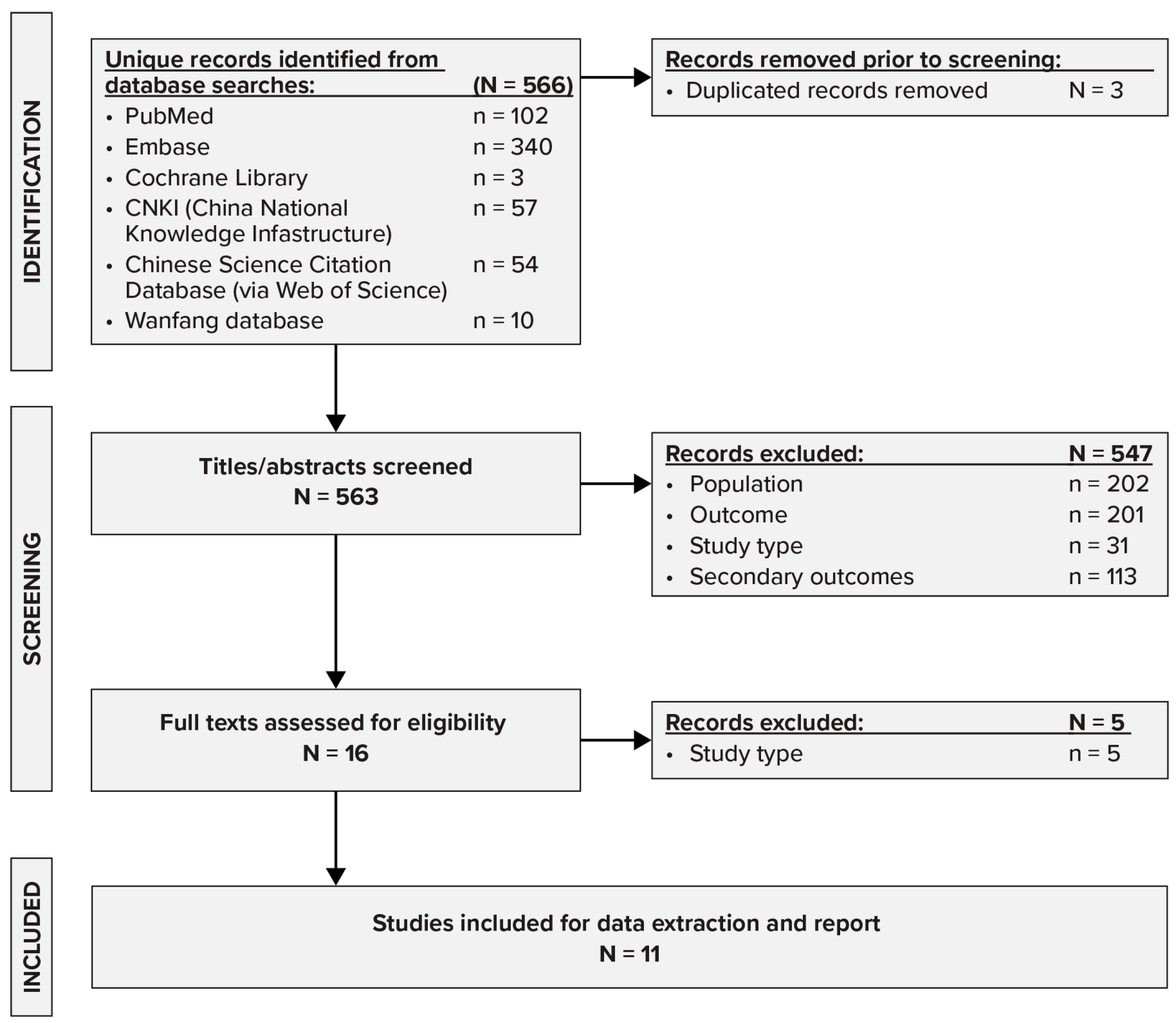
A total of 847 references were identified (Table S8); after the removal of duplicates, a total of 563 unique records were included for screening. All 563 articles were written in either English or Chinese. Of the 563 records screened on the basis of their title/abstract, 547 records were excluded. Most records excluded at this step did not match the eligibility criteria in terms of population or outcomes. A total of 16 records advanced to full-text review, five of which were excluded due to study type. At the end of screening, 11 articles were retained for data extraction and reporting and formed the evidence base for this review. Bibliography reviews of SLRs or meta-analyses did not result in identification of additional primary studies. Figure 1 presents the study selection process (i.e., PRISMA diagram).
Based on the risk-of-bias assessment, all 11 studies included for data extraction and report demonstrated a low risk of bias (Figure S1). Despite some limitations, the evidence base was considered sufficiently rigorous to support reliable estimates of CDI incidence in hospital settings in China.

3.1.1. Characteristics of Studies Included in the Data Extraction and Report

All of the 11 studies included for data extraction and report were single-center, hospital-based studies (Table 1). Of these, four were retrospective studies and five were prospective studies, as stated by the authors. One study was described as a case–control study, and one study was described as a cross-sectional study; however, following review of the detailed methodology and results, these two were deemed retrospective in nature. Thus, there were six retrospective studies in total.
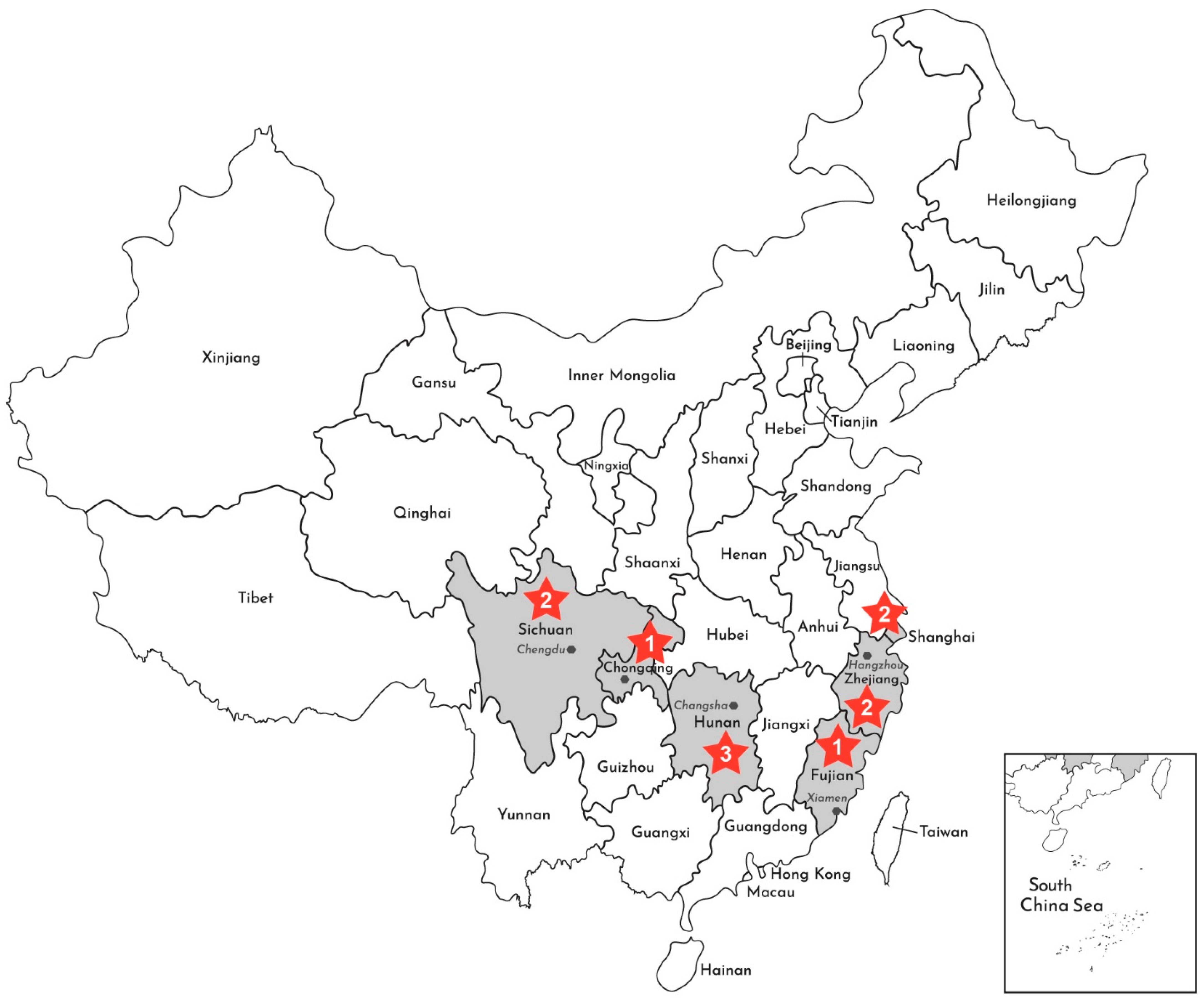
None of the 11 studies reported population-based CDI incidence, 10 reported hospital-based CDI incidence, and four reported CDI admission rates. Of the 11 studies (Figure 2), three were from Xiangya Hospital in Changsha (Hunan province), two were from the West China Hospital in Chengdu (Sichuan), two were from the First Affiliated Hospital in Hangzhou (Zhejiang), two were from Renji Hospital in Shanghai (direct administered municipality [DAM]), one was from a hospital in Chongqing (DAM), and one was from a hospital in Xiamen (Fujian).
Among the 11 studies included for data extraction and report, publication years ranged from 2014 to 2023, study duration ranged from 4 months to 7 years, and dates of sample collection for patients tested for CDI ranged from 2009 to 2020. Although patient selection varied, all studies involved laboratory-tested stool samples with laboratory confirmation of CDI cases based on 1 or more of the following laboratory tests: stool culture, polymerase chain reaction nucleic acid amplification test (PCR-NAAT), C. difficile toxin assay, or mass spectrometry (Supplemental Table S9).

3.1.2. Patient Characteristics

Among the 11 studies included for data extraction and report, the mean age of the study populations ranged from approximately 29 years [15] to 65 years [16]. Most studies were conducted on adults. In two studies that included both adults and children, the populations were mostly adults (age range, 17 to 46 years among patients with CDI in Gu et al. [15] and ≥ 16 years in Zhang et al. [24]). Two of the studies did not specifically state whether the study population included adults or children, although baseline age data suggested they were adults (Qin et al. [20]: mean age of 56.1 years, standard deviation [SD] of 21.7; Dai et al. [14]: mean age of 54.5 years, SD of 17.4). The proportion of males was generally high, ranging from approximately 57% [15] to 83% [16]. Eight of the included studies reported various baseline underlying comorbidities in the study populations, including but not limited to diabetes, hypertension, liver disease, cancer, respiratory failure, neurological diseases, and heart disease [14,15,16,17,18,19,21,22].
All 11 of the studies included for data extraction and report were single-center, hospital-based studies of hospitalized patients. Five studies included only patients hospitalized in ICUs [16,17,19,21,24]. Lengths of stay in the hospital ranged from <2 weeks to >2 months, but the most reported duration was approximately 1 month. Four of the included studies reported information on the duration of hospitalization before CDI onset. Dai et al. [14] reported a median of 7 days from admission to the onset of diarrhea and a median of 14 days from admission to the diagnosis of hospital-acquired CDI. Wang et al. [21] reported a median of 11 days (interquartile range [IQR], 12 days) before CDI. Patients included in Meng et al. [19] had to have diarrhea after 48 h following admission to the hospital. The fourth study, a retrospective study over a 7-year period (2009 to 2016), specifically reported a median of 14 days (IQR, 6–29) of hospitalization prior to CDI onset and a median of 14 days (IQR, 7–31) after CDI onset [22].
The use of antibiotics prior to CDI onset was commonly reported in the studies included for data extraction and report (n = 6). Frequently reported antibiotics that patients with CDI received before developing CDI included carbapenems, cephalosporin, β-lactams/β-lactamase inhibitors, and fluoroquinolone [14,15,16,17,21,22]. The use of other medications prior to CDI onset were also reported in six of the selected studies, with proton pump inhibitors, chemotherapies, glucocorticoids, and immunosuppressants being the most commonly reported [14,15,16,17,21,22].

3.2. Epidemiologic Burden

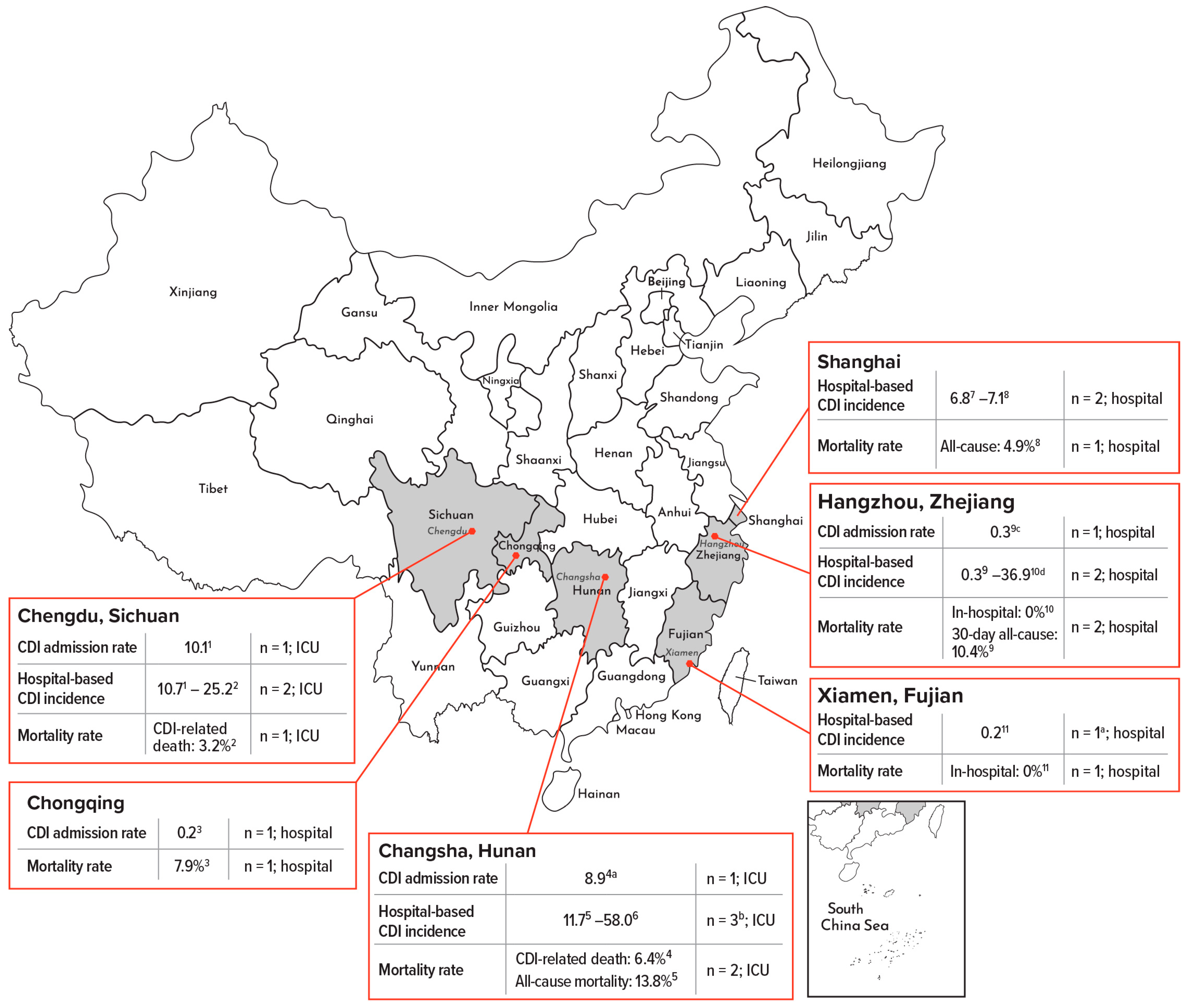
Figure 3 summarizes the results of hospital-based CDI incidence, CDI admission rate, and CDI mortality rate by locations of the single-center hospitals that conducted each hospital-based study. The three hospitals with results for all three outcomes were in Chengdu (Sichuan province), Changsha (Hunan), and Hangzhou (Zhejiang). Hospital-based CDI incidence and CDI mortality rates were available from hospitals in Xiamen (Fujian) and Shanghai (DAM). CDI admission rates and CDI mortality rates were available from the hospital in Chongqing (DAM).

3.2.1. Hospital-Based CDI Incidence

Hospital-based CDI incidence was reported in 10 of the studies included for data extraction and report, ranging from 0 to 82.0 hospitalized CDI cases per 10,000 patient-days (Figure 3 and Table 2).
Table 2. Summary of hospital-based CDI incidence reported by studies included for data extraction and report.
Reference (Year)Study DesignHealthcare SettingPatient PopulationLocationDurationIncidence a
Gu et al. [15] (2015)RetrospectiveHospitalReceiving chemotherapyFirst Affiliated Hospital of Zhejiang University; Hangzhou, Zhejiang4 y18.9
Receiving HSCTs36.9
Xu et al. [22] (2017)RetrospectiveHospitalInpatients with confirmed hospital-acquired CDIFirst Affiliated Hospital of Zhejiang University; Hangzhou, Zhejiang7 y (85 mo)0.3
Qin et al. [20] (2017)RetrospectiveHospitalHospitalized patientsRenji Hospital; Shanghai16 mo6.8
Yang et al. [23] (2020)RetrospectiveHospitalPatients with CDIRenji Hospital; Shanghai5 y7.1
Ma et al. [18] (2023)Cross-sectional (retrospective)HospitalInpatients with loose stool samplesFirst Affiliated Hospital of Xiamen University; Xiamen, Fujian4 yOverall: 0.2
2017: 0.3
2018: 0.3
2019: 0.1
2020: 0.2
Li et al. [16] (2017)Prospective ICUPatients with hospital-acquired pneumonia and hospital-onset diarrheaXiangya Hospital; Changsha, Hunan12 mo11.7
Li et al. [17] (2018)Prospective ICUICU patients with ≥ 3 episodes of diarrhea occurring within a 24-h period at least 48 h following admissionXiangya Hospital; Changsha, Hunan15 moOverall: 14.1
GICU: 17.4
NICU: 21.3
NSICU: 9.9
RICU: 0
Meng et al. [19] (2021)Prospective ICUHospitalized adults with presumptive antibiotic-associated diarrhea in 4 ICUsXiangya Hospital; Changsha, Hunan8 moOverall: 58.0
GICU: 82.0
NICU: 75.7
NSICU: 15.3
RICU: 26.4
Wang et al. [21] (2014)Prospective ICUPatients with ICU-onset diarrheaWest China Hospital; Chengdu, Sichuan8–9 mo (35 wk)25.2
Zhang et al. [24] (2016)Prospective ICUPatients with ICU-onset diarrheaWest China Hospital; Chengdu, Sichuan4 mo10.7
CDI = Clostridioides difficile infection; GICU = general ICU; HSCT = hematopoietic stem cell transplant; ICU = intensive care unit; NICU = neurology ICU; NSICU = neurosurgery ICU; RICU = respiratory ICU. a Incidence is reported as number of cases per 10,000 patient-days.
Seven studies provided evidence on changes in the hospital-based CDI incidence over time. Ma et al. [18] reported hospital-based CDI incidence from 2017 to 2020 and noted “a downward trend” during this 4-year period. Two prospective studies focused on patients admitted to ICUs and reported detailed, hospital-based CDI incidence results by types of ICU, namely Li et al. [17] and Meng et al. [19]. Although these two studies were conducted by the same research group in the Xiangya Hospital in Changsha (Hunan), the more recent study, Meng et al. [19], reported higher hospital-based CDI incidence both overall and in different specialty ICUs. The authors attributed the higher hospital-based CDI incidence to a more frequent administration of broad-spectrum antibiotics in the most recent years and to more sensitive C. difficile detection methods. Another two prospective studies from the West China Hospital in Chengdu (Sichuan) reported differing hospital-based CDI incidence: 25.2 hospitalized CDI cases per 10,000 ICU-days in Wang et al. [21] and 10.7 hospitalized CDI cases per 10,000 ICU-days in Zhang et al. [24]. Zhang et al. [24] attributed the lower incidence to improved infection control practice. From the First Affiliated Hospital of Zhejiang University in Hangzhou (Zhejiang), Xu et al. [22] (2017) reported lower hospital-based CDI incidence compared with Gu et al. [15] (2015); no discussion was provided on this difference.
Figure 3. Hospital-based CDI incidence, CDI admission rate, and mortality results by location of the studies included for data extraction and report. CDI = Clostridioides difficile infection; HSCT = hematopoietic stem cell transplant; ICU = intensive care unit. Notes: “n” indicates number of studies reporting the relevant outcomes in this location. For CDI admission rate, listed values are number per 1000 admissions. For hospital-based CDI incidence, listed incidence values are per 10,000 patient-days. For mortality rate, listed values are percentages. Sources were as follows: 1 Zhang et al. [24]; 2 Wang et al. [21]; 3 Dai et al. [14]; 4 Li et al. [17]; 5 Li et al. [16]; 6 Meng et al. [19]; 7 Qin et al. [20]; 8 Yang et al. [23]; 9 Xu et al. [22]; 10 Gu et al. [15]; 11 Ma et al. [18]. a The listed admission rate is for the overall study population; admission rates in individual specialty ICUs are listed in Table 3. b The listed incidences are based on data in the overall study populations; incidence data in individual specialty ICUs are listed in Table 2. c The listed admission rate is the average annual rate over the 85-month study period; this study also reported range of annual admission over the study period (see Table 3). d The listed incidence is among patients receiving HSCTs, which was the highest value for the purpose of presenting the range in this location; this study also reported incidence among patients receiving chemotherapy (see Table 2).
Idr 18 00067 g003

3.2.2. CDI Admission Rate

CDI admission rates were reported in 4 of the 11 studies included for data extraction and report. The CDI admission rates ranged from 0 to 23.1 hospitalized CDI cases per 1000 admissions (Figure 3 and Table 3). When excluding the zero-case outlier in the respiratory ICU by Li et al. [17], CDI admission rates in the ICU setting were from 4.9 to 23.1 hospitalized CDI cases per 1000 admissions [17,24] and 0.2 to 0.3 hospitalized CDI cases per 1000 admissions in the general hospital setting [14,22] (Table 3).

3.2.3. CDI Mortality Rate

CDI mortality rates were reported in 8 of the 11 studies included for data extraction and report. Overall, CDI mortality rates and associated definitions varied across studies (Figure 3 and Table 4). Two studies reported CDI-related mortality rates, both for patients in the ICU, and rates ranged from 3.2% [21] to 6.4% [17]. The six remaining studies reported mortality rates in patients with C. difficile, which may or may not have been due to CDI [14,15,16,18,22,23]. Of these six studies, three reported all-cause mortality (ranging from 4.9% in the hospital setting [23] to 13.8% in the ICU setting [16]), one of which reported 30-day all-cause mortality [22]. The remaining three studies reported in-hospital mortality (0% for both Gu et al. [15] and Ma et al. [18]; 7.9% for Dai et al. [14]).

4. Discussion

This SLR was conducted to synthesize evidence on the CDI disease burden (cases, hospitalizations, and deaths) in mainland China. Although 11 single-center, hospital-based studies provided estimates of hospital-based CDI incidence in hospitalized patients with CDI or CDI admission rates, no published estimates of population-based CDI incidence in mainland China were identified in this study. Further, mortality definitions and rates varied across reporting studies. Thus, the burden of CDI remains poorly understood in mainland China. Prospective epidemiological studies using best-practice detection methods are needed to fully understand the CDI burden in mainland China and guide prevention strategies.
In the 11 studies included for data extraction and report, nearly half of the patients were hospitalized in an ICU. The 11 studies reported on patients who were predominantly adult males and patients who had a variety of underlying comorbidities. Length of hospital stay for patients with CDI was typically 1 month; however, because not all studies differentiated between the original reasons for hospitalization (i.e., hospitalization originally due to CDI or hospitalization due to another disease, such as pneumonia [16], liver failure, or malignancy) [21,22], it was not possible to determine the specific length of stay associated with CDI. Information on antibiotic use prior to onset of CDI was reported by 6 of the 11 included studies, but the association between antibiotic use and CDI was not assessed in any of the studies included in this SLR. Many studies have demonstrated that antibiotic use increases the risk of CDI [1]. For example, an SLR and meta-analysis across the Americas, Europe, East Asia, and the Pacific found that the use of third- and fourth-generation cephalosporin and carbapenem antibiotics was associated with an increased risk of CDI in the healthcare setting [25].
The 11 studies forming the evidence base for this SLR reported a wide range of hospital-based CDI incidence, from 0 to 82.0 hospitalized CDI cases per 10,000 patient-days. The most informative study was conducted in collaboration with the United States Centers for Disease Control and Prevention (CDC) in four ICUs at Xiangya Hospital of Central South University in Changsha (Hunan province) and tested the stool samples of all ICU patients with hospital-onset diarrhea using PCR-NAAT [17]. This study found a hospital-based incidence of 14.1 hospitalized CDI cases per 10,000 patient-days [17], which is higher than the 6.9 to 7.6 hospitalized CDI cases per 10,000 patient-days estimated for two medical centers in South Carolina [26].
The evidence for change in hospital-based CDI incidence over time in mainland China was mixed. Hospital-based CDI incidence increased over time in some locations, which was attributed to more sensitive C. difficile detection methods (Xiamen) and more frequent administration of broad-spectrum antibiotics (Changsha). By contrast, hospital-based CDI incidence decreased over time in other locations, which was attributed to improved infection control practices (Chengdu). In the First Affiliated Hospital of Zhejiang University in Hangzhou (Zhejiang), the hospital-based CDI incidence was higher in 2015 than in 2017, which may be attributable to the different patient populations included. Gu et al. [15] included patients with underlying compromised immunity (e.g., receiving chemotherapy or hematopoietic stem cell transplantation), whereas Xu et al. [22] included a more general sample of patients.
For the two studies included for data extraction and report that were conducted only among patients in an ICU, CDI admission rates ranged from 4.9 to 23.1 hospitalized CDI cases per 1000 admissions. Overall, CDI admission rates in mainland China were slightly higher than those in the general hospital setting (0.2–0.3 hospitalized CDI cases per 1000 admissions), consistent with a previous meta-analysis across Asia, Europe, and North America that suggested increased prevalence of CDI in the ICU setting [27]. CDI in the ICU context has been associated with increased mortality risk, alongside increased age and the presence of comorbidities, and lower cure rates [28,29]. In the current SLR of studies in mainland China, CDI-related mortality rates were 3.2% to 6.4% in patients hospitalized with CDI (n = 2 studies) and 0% to 13.8% in patients hospitalized with C. difficile (which may or may not have been due to CDI) (n = 6 studies). Taken together, these data underscore that CDI is a considerable public health concern in China.

Limitations

There are several limitations of this SLR that should be considered when interpreting its results. First, there are limitations inherent to SLRs, including publication bias and study heterogeneity. Although the risk-of-bias assessment indicated that the evidence base was appropriate to address the study objectives, cross-study comparisons should be approached with caution. Given the limited number and heterogeneity of the identified studies, meta-analyses and subgroup analyses were neither planned nor feasible. Study heterogeneity also likely influenced the variation in reported outcomes, such as differences in patient selection, diagnostic algorithms and case definitions, selected denominators, follow-up durations, and outcome definitions (e.g., mortality). It should also be acknowledged that regional variability in both healthcare access and diagnostic capacity may impact these findings. For example, testing density (i.e., frequency of tests relative to the size of the patient population) has been reported in a previous retrospective study to have a large effect on CDI rates [30]. Specifically, low testing density, as well as other factors like the lack of standardized diagnostic methods, can result in CDI burden being underreported [30,31].
This SLR indicated that a limited number of studies have been conducted to assess the burden of CDI in mainland China. Specifically, available evidence comes from six cities, and data are limited to a single hospital in each city, which limit generalizability and may introduce selection bias. For example, the overrepresentation of urban, tertiary-care hospitals likely does not reflect CDI burden in rural or lower-resource settings. Also, the identification of CDI cases relied on standard-of-care stool specimen collection and testing practices, which, as noted above, may differ across hospitals. Still, studies in this SLR consistently demonstrated the presence of CDI in hospitals in mainland China whenever specimens were collected and tested. Importantly, none of the 11 studies reported population-based CDI incidence, an important gap to be addressed in future prospective epidemiological studies. Other important subjects for future research aimed at understanding the CDI disease burden in mainland China include examining healthcare-associated and community-associated CDI and molecular characterization of C. difficile isolates from patients with CDI.

5. Conclusions

Population-based estimates of the incidence of CDI in mainland China are not available, limiting the evaluation of the CDI disease burden. However, multiple single-center, hospital-based studies demonstrate that CDI is present in hospitals in mainland China. Reported hospital-based CDI incidence ranged from 0 to 82.0 hospitalized CDI cases per 10,000 patient-days, and CDI admission rates ranged from 0 to 23.1 hospitalized CDI cases per 1000 admissions; mortality rates also varied. Still, the burden of CDI is poorly understood in mainland China. Given the limitations of the current available evidence on the CDI disease burden in mainland China, prospective epidemiological studies with sensitive detection methods are needed to further understand the burden of CDI in mainland China and guide prevention efforts.

Supplementary Materials

The following supporting information can be downloaded at: https://www.mdpi.com/article/10.3390/idr18040067/s1. Table S1: PRISMA checklist; Table S2: Embase literature search strategy (5 August 2025); Table S3: PubMed literature search strategy (5 August 2025); Table S4: Cochrane literature search strategy (5 August 2025); Table S5: China National Knowledge Infrastructure literature search strategy (5 August 2025); Table S6: Chinese Science Citation Database (via Web of Science) search strategy (5 August 2025); Table S7: Wanfang literature search strategy (5 August 2025); Table S8: Summary of number of search results; Table S9: Patient selection approaches of the included studies; Figure S1: Summary of risk-of-bias assessment of included studies.

Author Contributions

Conceptualization, F.J.A., G.Z., Y.W., Z.Y., J.Y., S.K., E.N.G., and S.S.; methodology, F.J.A., J.Y., S.K., D.K.T., E.N.G., and S.S.; software, J.Y. and D.K.T.; validation, J.Y. and D.K.T.; formal analysis, J.Y., S.K., and D.K.T.; investigation, J.Y. and D.K.T.; resources, F.J.A., J.Y., D.K.T., E.N.G., A.S., S.S., and J.F.; data curation, J.Y. and D.K.T.; writing—original draft preparation, F.J.A., J.Y., S.K., and D.K.T.; writing—review and editing, all authors; visualization, F.J.A., E.N.G., A.S., S.S., and J.F.; supervision, F.J.A., S.K., and J.F.; project administration, F.J.A., S.K., E.N.G., and J.F.; funding acquisition, F.J.A., S.K., E.N.G., and J.F. All authors have read and agreed to the published version of the manuscript.

Funding

This study was sponsored by Pfizer. Medical writing support and the article processing charge was funded by Pfizer. The sponsor had no role in the design, execution, interpretation, or writing of the study.

Institutional Review Board Statement

Not applicable.

Informed Consent Statement

Not applicable.

Data Availability Statement

The original contributions presented in this study are included in the article/Supplementary Materials. Further inquiries can be directed to the corresponding author.

Acknowledgments

The authors would like to thank Yiwei Zhang and Ziyi Xiao from RTI Health Solutions for their valuable technical assistance in the screening of articles in Chinese. The authors also thank Meryem Bektas and Neil Shieh of RTI Health Solutions for conducting the risk-of-bias assessments. Lastly, the authors thank Lacey Lopez of RTI Health Solutions and Alex Lowe of Caeruleum Communications Ltd. for providing medical writing assistance. The editorial and graphics services were provided by John Forbes, S. Daniel Siepert, Greg Wye, and Emily Gill of RTI Health Solutions. Mary Levine of RTI Health Solutions provided project management and administrative support throughout this project. A condensed version of this work was previously presented as a poster (Angulo FJ, Zhao G, Yuan W et al.—Systematic Literature Review of the Clostridioides difficile Infection [CDI] Disease Burden in Mainland China; European Society of Clinical Microbiology and Infectious Diseases Congress; Munich, Germany; 17–21 April 2026). The present manuscript represents a substantially expanded and developed version of that presentation, offering greater details and discussion, and therefore does not constitute dual publication.

Conflicts of Interest

Frederick J. Angulo, Elisa N. Gonzalez, Anli Sun, Steven Shen, and Jamie Findlow are employees of Pfizer and may hold shares and/or stock options in the company. At the time of this study, Jin Yang, Shahnaz Khan, and Daniel K. Tran were full-time employees of RTI Health Solutions, a subsidiary of RTI International, which was retained by Pfizer to conduct the research that is the subject of this manuscript; their compensation is unconnected to the studies on which they work. Genming Zhao, Yuan Wu, and Zundong Yin have no conflicts of interest to declare.

Abbreviations

The following abbreviations are used in this manuscript:
CDCCenters for Disease Control and Prevention
CDI Clostridioides difficile infection
CNKIChina National Knowledge Infrastructure
DAMDirect administered municipality
GICUGeneral ICU
HSCTHematopoietic stem cell transplant
ICUIntensive care unit
IQRInterquartile range
NICUNeurology ICU
NSICUNeurosurgery ICU
PCR-NAATPolymerase chain reaction nucleic acid amplification test
PRISMAPreferred Reporting Items for Systematic Reviews and Meta-Analyses
RICURespiratory ICU
SDStandard deviation
SLRSystematic literature review

References

  1. Di Bella, S.; Sanson, G.; Monticelli, J.; Zerbato, V.; Principe, L.; Giuffrè, M.; Pipitone, G.; Luzzati, R. Clostridioides difficile infection: History, epidemiology, risk factors, prevention, clinical manifestations, treatment, and future options. Clin. Microbiol. Rev. 2024, 37, e0013523. [Google Scholar] [CrossRef] [Scilit] [PubMed]
  2. Wang, X.; Pan, J.; Fu, T.; Pu, Z.; Liu, K. Global and regional trends in Clostridioides difficile infection: An analysis from 1990 to 2021. J. Glob. Antimicrob. Resist. 2025, 43, 59–67. [Google Scholar] [CrossRef] [Scilit] [PubMed]
  3. Akorful, R.A.A.; Odoom, A.; Awere-Duodu, A.; Donkor, E.S. The global burden of Clostridioides difficile infections, 2016–2024: A systematic review and meta-analysis. Infect. Dis. Rep. 2025, 17, 31. [Google Scholar] [CrossRef] [Scilit] [PubMed]
  4. Smits, W.K.; Garey, K.W.; Riley, T.V.; Han, Y.W.; Young, V.B.; Heritage, J.; Lillis, C.J.; Lyras, D.; Rupnik, M.; Johnson, S. Clostridioides difficile should be considered a bacterial priority pathogen. Lancet Microbe 2025, 6, 101184. [Google Scholar] [CrossRef] [Scilit] [PubMed]
  5. Malik, S.; Uwagbale, E.; Adeniranc, O.A.; Sethi, A.; Tariq, R. Trends in admissions and outcomes of hospitalizations related to Clostridioides difficile infection: A nationwide analysis from 2005–2020. Ann. Gastroenterol. 2025, 38, 311–318. [Google Scholar] [CrossRef] [Scilit] [PubMed]
  6. Finn, E.; Andersson, F.L.; Madin-Warburton, M. Burden of Clostridioides difficile infection (CDI)—A systematic review of the epidemiology of primary and recurrent CDI. BMC Infect. Dis. 2021, 21, 456. [Google Scholar] [CrossRef] [Scilit] [PubMed]
  7. Bartlett, J.G.; Gerding, D.N. Clinical recognition and diagnosis of Clostridium difficile infection. Clin. Infect. Dis. 2008, 46, S12–S18. [Google Scholar] [CrossRef] [Scilit] [PubMed]
  8. Abou Chakra, C.N.; McGeer, A.; Labbé, A.C.; Simor, A.E.; Gold, W.L.; Muller, M.P.; Powis, J.; Katz, K.; Garneau, J.R.; Fortier, L.C.; et al. Factors associated with complications of Clostridium difficile infection in a multicenter prospective cohort. Clin. Infect. Dis. 2015, 61, 1781–1788. [Google Scholar] [CrossRef] [Scilit] [PubMed]
  9. Angulo, F.J.; Furtado, M.; Gonzalez, E.; Zhang, P.; Kelly, P.H.; Moïsi, J.C. Incidence of public health surveillance-reported Clostridioides difficile infections in thirteen countries worldwide: A narrative review. Anaerobe 2024, 88, 102878. [Google Scholar] [CrossRef] [Scilit] [PubMed]
  10. Lessa, F.C.; Mu, Y.; Bamberg, W.M.; Beldavs, Z.G.; Dumyati, G.K.; Dunn, J.R.; Farley, M.M.; Holzbauer, S.M.; Meek, J.I.; Phipps, E.C.; et al. Burden of Clostridium difficile infection in the United States. N. Engl. J. Med. 2015, 372, 825–834. [Google Scholar] [CrossRef] [Scilit] [PubMed]
  11. Ho, J.; Dai, R.Z.W.; Kwong, T.N.Y.; Wang, X.; Zhang, L.; Ip, M.; Chan, R.; Hawkey, P.M.K.; Lam, K.L.Y.; Wong, M.C.S.; et al. Disease burden of Clostridium difficile infections in adults, Hong Kong, China, 2006–2014. Emerg. Infect. Dis. 2017, 23, 1671–1679. [Google Scholar] [CrossRef] [Scilit] [PubMed]
  12. Page, M.J.; McKenzie, J.E.; Bossuyt, P.M.; Boutron, I.; Hoffmann, T.C.; Mulrow, C.D.; Shamseer, L.; Tetzlaff, J.M.; Akl, E.A.; Brennan, S.E.; et al. The PRISMA 2020 statement: An updated guideline for reporting systematic reviews. Syst. Rev. 2021, 10, 89. [Google Scholar] [CrossRef] [Scilit] [PubMed]
  13. Wells, G.; Shea, B.; O’Connell, D.; Peterson, J.; Welch, V.; Losos, M.; Tugwell, P. The Newcastle-Ottawa Scale (NOS) for Assessing the Quality of Nonrandomised Studies in Meta-Analyses. Available online: http://www.ohri.ca/programs/clinical_epidemiology/oxford.asp (accessed on 26 May 2026).
  14. Dai, W.; Yang, T.; Yan, L.; Niu, S.; Zhang, C.; Sun, J.; Wang, Z.; Xia, Y. Characteristics of Clostridium difficile isolates and the burden of hospital-acquired Clostridium difficile infection in a tertiary teaching hospital in Chongqing, Southwest China. BMC Infect. Dis. 2020, 20, 277. [Google Scholar] [CrossRef] [Scilit] [PubMed]
  15. Gu, S.L.; Chen, Y.B.; Lv, T.; Zhang, X.W.; Wei, Z.Q.; Shen, P.; Li, L.J. Risk factors, outcomes and epidemiology associated with Clostridium difficile infection in patients with haematological malignancies in a tertiary care hospital in China. J. Med. Microbiol. 2015, 64, 209–216. [Google Scholar] [CrossRef] [Scilit] [PubMed]
  16. Li, C.; Duan, J.; Liu, S.; Meng, X.; Fu, C.; Zeng, C.; Wu, A. Assessing the risk and disease burden of Clostridium difficile infection among patients with hospital-acquired pneumonia at a university hospital in Central China. Infection 2017, 45, 621–628. [Google Scholar] [CrossRef] [Scilit] [PubMed]
  17. Li, C.; Li, Y.; Huai, Y.; Liu, S.; Meng, X.; Duan, J.; Klena, J.D.; Rainey, J.J.; Wu, A.; Rao, C.Y. Incidence and outbreak of healthcare-onset healthcare-associated Clostridioides difficile infections among intensive care patients in a large teaching hospital in China. Front. Microbiol. 2018, 9, 566. [Google Scholar] [CrossRef] [Scilit] [PubMed]
  18. Ma, X.; Li, Z.; Zheng, Y.; Fang, L.; Lin, H.; Xu, H.; Hong, G. A cross-sectional study of Clostridium difficile infection in inpatients with antibiotic associated diarrhea. Clin. Lab. 2023, 69, 700–705. [Google Scholar] [CrossRef] [Scilit] [PubMed]
  19. Meng, X.; Huang, X.; Peng, Z.; Wang, Y.; Liu, S.; Zeng, C.; Duan, J.; Wen, X.; Fu, C.; Wu, A.; et al. Antibiotic resistances and molecular characteristics of Clostridioides difficile in ICUs in a teaching hospital from Central South China. Front. Med. 2021, 8, 745383. [Google Scholar] [CrossRef] [Scilit] [PubMed]
  20. Qin, J.; Dai, Y.; Ma, X.; Wang, Y.; Gao, Q.; Lu, H.; Li, T.; Meng, H.; Liu, Q.; Li, M. Nosocomial transmission of Clostridium difficile genotype ST81 in a general teaching hospital in China traced by whole genome sequencing. Sci. Rep. 2017, 7, 9627. [Google Scholar] [CrossRef] [Scilit] [PubMed]
  21. Wang, X.; Cai, L.; Yu, R.; Huang, W.; Zong, Z. ICU-onset Clostridium difficile infection in a university hospital in China: A prospective cohort study. PLoS ONE 2014, 9, e111735. [Google Scholar] [CrossRef] [Scilit] [PubMed]
  22. Xu, Q.; Chen, Y.; Gu, S.; Lv, T.; Zheng, B.; Shen, P.; Quan, J.; Fang, Y.; Li, L. Hospital-acquired Clostridium difficile infection in mainland China: A seven-year (2009–2016) retrospective study in a large university hospital. Sci. Rep. 2017, 7, 9645. [Google Scholar] [CrossRef] [Scilit] [PubMed]
  23. Yang, Z.; Huang, Q.; Qin, J.; Zhang, X.; Jian, Y.; Lv, H.; Liu, Q.; Li, M. Molecular epidemiology and risk factors of Clostridium difficile ST81 infection in a teaching hospital in Eastern China. Front. Cell. Infect. Microbiol. 2020, 10, 578098. [Google Scholar] [CrossRef] [Scilit] [PubMed]
  24. Zhang, X.; Wang, X.; Yang, J.; Liu, X.; Cai, L.; Zong, Z. Colonization of toxigenic Clostridium difficile among ICU patients: A prospective study. BMC Infect. Dis. 2016, 16, 397. [Google Scholar] [CrossRef] [Scilit] [PubMed]
  25. Slimings, C.; Riley, T.V. Antibiotics and healthcare facility-associated Clostridioides difficile infection: Systematic review and meta-analysis 2020 update. J. Antimicrob. Chemother. 2021, 76, 1676–1688. [Google Scholar] [CrossRef] [Scilit] [PubMed]
  26. Puri, S.; Hughes, H.Y.; McCrackin, M.D.; Williford, R.; Gebregziabher, M.; Salgado, C.D.; Curry, S.R. Potential for the current National Healthcare Safety Network (NHSN) >3 days after admission definition of laboratory-identified, healthcare-facility-onset, Clostridioides difficile infection (HO-CDI) to overestimate rates. Infect. Control Hosp. Epidemiol. 2020, 41, 467–468. [Google Scholar] [CrossRef] [Scilit] [PubMed]
  27. Karanika, S.; Paudel, S.; Zervou, F.N.; Grigoras, C.; Zacharioudakis, I.M.; Mylonakis, E. Prevalence and clinical outcomes of Clostridium difficile infection in the intensive care unit: A systematic review and meta-analysis. Open Forum Infect. Dis. 2016, 3, ofv186. [Google Scholar] [CrossRef] [Scilit] [PubMed]
  28. Baek, J.E.; Choi, I.H.; Cho, Y.W.; Kim, J.; Lee, Y.J.; Kim, M.C.; Kim, K.O.; Cho, Y.S. Clinical characteristics and outcomes of Clostridioides difficile infection in the intensive care unit: A KASID multi-centre study. J. Hosp. Infect. 2023, 139, 106–112. [Google Scholar] [CrossRef] [Scilit] [PubMed]
  29. Garcia-Carretero, R.; Vazquez-Gomez, O.; Rodriguez-Maya, B.; Gil-Prieto, R.; Gil-de-Miguel, A. Risk factors for recurrence and in-hospital mortality in patients with Clostridioides difficile: A nationwide study. J. Clin. Med. 2025, 14, 4907. [Google Scholar] [CrossRef] [Scilit] [PubMed]
  30. Davies, K.; Davis, G.; Barbut, F.; Eckert, C.; Petrosillo, N.; Pisapia, R.; Gärtner, B.; Berger, F.K.; Reigadas, E.; Bouza, E.; et al. Factors affecting reported Clostridioides difficile infection rates; the more you look the more you find, but should you believe what you see? Anaerobe 2020, 62, 102178. [Google Scholar] [CrossRef] [Scilit] [PubMed]
  31. Davies, K.; Davis, G.; Barbut, F.; Eckert, C.; Petrosillo, N.; Wilcox, M.H. Variability in testing policies and impact on reported Clostridium difficile infection rates: Results from the pilot Longitudinal European Clostridium difficile Infection Diagnosis surveillance study (LuCID). Eur. J. Clin. Microbiol. Infect. Dis. 2016, 35, 1949–1956. [Google Scholar] [CrossRef] [Scilit] [PubMed]
Figure 1. PRISMA diagram. CDI = Clostridioides difficile infection; PRISMA = Preferred Reporting Items for Systematic Reviews and Meta-Analyses; SLR = systematic literature review.
Idr 18 00067 g001
Figure 2. Locations of the studies included for data extraction and report. Note: Numbers in the map indicate number of studies conducted in the marked location.
Idr 18 00067 g002
Table 1. Summary of the studies included for data extraction and report.
Reference (Year)Study SiteStudy DesignDates of Sample Collection for Patients Tested for CDIPopulation-Based IncidenceHospital-Based IncidenceCDI Admission Rate
Dai et al. [14] (2020)First Affiliated Hospital of Chongqing Medical University; ChongqingCase–control (retrospective analysis)June 2014–March 2016
Gu et al. [15] (2015)First Affiliated Hospital of Zhejiang University; Hangzhou, ZhejiangRetrospectiveSeptember 2009–August 2013
Li et al. [16] (2017)Xiangya Hospital; Changsha, HunanProspectiveJanuary 2014–December 2014
Li et al. [17] (2018)Xiangya Hospital; Changsha, HunanProspectiveJune 2013–September 2014
Ma et al. [18] (2023)First Affiliated Hospital of Xiamen University; Xiamen, FujianCross-sectional (retrospective analysis)January 2017–December 2020
Meng et al. [19] (2021)Xiangya Hospital; Changsha, HunanProspectiveApril 2017–November 2017
Qin et al. [20] (2017)Renji Hospital; ShanghaiRetrospectiveMay 2014–August 2015
Wang et al. [21] (2014)West China Hospital; Chengdu, SichuanProspectiveMay 2012–January 2013
Xu et al. [22] (2017)First Affiliated Hospital, Zhejiang University School of Medicine; Hangzhou, ZhejiangRetrospectiveSeptember 2009–September 2016
Yang et al. [23] (2020)Renji Hospital; ShanghaiRetrospectiveSeptember 2014–August 2019
Zhang et al. [24] (2016)West China Hospital; Chengdu, SichuanProspectiveAugust 2014–November 2014
CDI = Clostridioides difficile infection. “✓” denotes outcome of interest reported, or that there were data in the article that allowed for calculation of the outcome of interest. “—” denotes outcome of interest not reported in the article, and that no other data could be used to calculate the outcome of interest.
Table 3. Summary of CDI admission rate reported in studies included for data extraction and report.
Reference
(Year)
Study DesignSettingPatientsLocationDurationCDI Admission Rate a
Dai et al. [14] (2020)Case–control (retrospective)HospitalInpatients with diarrheaFirst Affiliated Hospital of Chongqing Medical University; Chongqing21 mo0.2
Xu et al. [22] (2017)RetrospectiveHospitalInpatients with confirmed hospital-acquired CDIFirst Affiliated Hospital of Zhejiang University; Hangzhou, Zhejiang7 y (85 mo)0.3 (range, 0.3–0.4 annually over the 85-mo study period)
Li et al. [17] (2018)ProspectiveICUICU patients with ≥3 episodes of diarrhea occurring within a 24-h period at least 48 h following admissionXiangya Hospital; Changsha, Hunan15 moOverall: 8.9
GICU: 9.7
NICU: 23.1
NSICU: 4.9
RICU: 0
Zhang et al. [24] (2016)ProspectiveICUPatients with ICU-onset diarrheaWest China Hospital; Chengdu, Sichuan4 mo10.1
CDI = Clostridioides difficile infection; GICU = general ICU; ICU = intensive care unit; NICU = neurology ICU; NSICU = neurosurgery ICU; RICU = respiratory ICU. a CDI admission rate is reported as number of cases per 1000 admissions.
Table 4. Summary of mortality rate reported in studies included for data extraction and report.
Reference
(Year)
Study DesignSettingPatientsLocationDurationMortality in CDI, n (%)
CDI-related mortality rate
Li et al. [17] (2018)Prospective ICUICU patients with ≥3 episodes of diarrhea occurring within a 24-h period at least 48 h following admissionXiangya Hospital; Changsha, Hunan15 moICU-onset and ICU-associated—3/47 (6.4%)
Notes: Three patients died due to CDI (severe diarrhea and toxic megacolon)—6.4%; the other three died from their initial underlying disease (i.e., central nervous system infection, respiratory failure, and chronic obstructive pulmonary disease)—6.4%
Wang et al. [21] (2014)Prospective ICUPatients with ICU-onset diarrheaWest China Hospital; Chengdu, Sichuan8–9 mo (35 wk)ICU-onset—1/31 (3.2%)
Notes: CDI was considered the attributable cause for one death and contributing cause for another two deaths
Mortality rate of patients with C. difficile (may or may not be attributable to CDI)
Li et al. [16] (2017)Prospective ICUPatients with hospital-acquired pneumonia and hospital-onset diarrheaXiangya Hospital; Changsha, Hunan12 moAll-cause—4/29 (13.8%)
Notes: For deaths in the CDI-positive group, cause of death could not be determined as CDI
Yang et al. [23] (2020)RetrospectiveHospitalPatients with CDIRenji Hospital; Shanghai5 yAll-cause—18 (4.9%)
Xu et al. [22] (2017)RetrospectiveHospitalInpatients with confirmed hospital-acquired CDIFirst Affiliated Hospital of Zhejiang University; Hangzhou, Zhejiang7 y (85 mo)30-day all-cause—32 (10.4%)
Gu et al. [15] (2015)RetrospectiveHospitalPatients who received chemotherapy or HSCT and had CDIFirst Affiliated Hospital of Zhejiang University; Hangzhou, Zhejiang4 yIn-hospital—0%
Ma et al. [18] (2023)Cross-sectional (retrospective)HospitalInpatients with loose stool samplesFirst Affiliated Hospital of Xiamen University; Xiamen, Fujian4 yIn-hospital—0%
Dai et al. [14] (2020)Case–control (retrospective)HospitalInpatients with diarrheaFirst Affiliated Hospital of Chongqing Medical University; Chongqing21 moIn-hospital (unrelated to CDI)—7.9%
CDI = Clostridioides difficile infection; HSCT = hematopoietic stem cell transplant; ICU = intensive care unit.
Disclaimer/Publisher’s Note: The statements, opinions and data contained in all publications are solely those of the individual author(s) and contributor(s) and not of MDPI and/or the editor(s). MDPI and/or the editor(s) disclaim responsibility for any injury to people or property resulting from any ideas, methods, instructions or products referred to in the content.