Case Report

Salvage Treatment of Ventilator-Associated Pneumonia Using Sulbactam–Durlobactam in a Preterm Neonate: A Case Report


by
Suzana Zivojinovic
1,2,†,
Tijana Prodanovic
1,2,*,†,
Nikola Prodanovic
2,3,
Rasa Medovic
1,2,
Milica Cekerevac
1,2,
Dragana Savic
1,2,
Bojana Markovic
1,2 and
Slobodan Jankovic
2,4
1
Department of Pediatrics, Faculty of Medical Sciences, University of Kragujevac, 34000 Kragujevac, Serbia
2
University Clinical Center Kragujevac, 34000 Kragujevac, Serbia
3
Department of Surgery, Faculty of Medical Sciences, University of Kragujevac, 34000 Kragujevac, Serbia
4
Department of Pharmacology and Toxicology, Faculty of Medical Sciences, University of Kragujevac, 34000 Kragujevac, Serbia
*
Author to whom correspondence should be addressed.
These authors contributed equally to this work.
Infect. Dis. Rep. 2026, 18(3), 54; https://doi.org/10.3390/idr18030054
Submission received: 5 April 2026 / Revised: 21 May 2026 / Accepted: 28 May 2026 / Published: 1 June 2026

Abstract

Background: Ventilator-associated pneumonia (VAP) is a leading cause of nosocomial infections in neonatal intensive care units (NICUs) and is associated with significant morbidity, mortality, and prolonged hospitalization, particularly in preterm neonates. Management is complicated by the emergence of multidrug-resistant (MDR) and extensively drug-resistant (XDR) pathogens, with very limited evidence supporting the use of reserve antibiotics in this population. Case Presentation: We report a male neonate born at 25 weeks of gestation (birth weight 740 g) who developed severe VAP caused by XDR Acinetobacter calcoaceticus-baumannii complex and Pseudomonas aeruginosa. After failure of multiple antibiotic regimens, including ampicillin, amikacin, meropenem, vancomycin, cefepime with inhaled colistin, tigecycline, and ceftazidime-avibactam combined with fosfomycin, the infant was treated with sulbactam–durlobactam (25 mg/kg/dose every 6 h) in combination with ceftazidime-avibactam. After 12 days of this regimen, the neonate was successfully extubated. Conclusions: This case highlights the therapeutic challenges of XDR infections in extremely preterm neonates and suggests that sulbactam–durlobactam may represent a viable salvage treatment option. Further pharmacokinetic and clinical studies are needed to establish optimal dosing and safety in the neonatal population.

1. Introduction

Ventilator-associated pneumonia (VAP) is a nosocomial pulmonary infection occurring in patients who require invasive mechanical ventilation for more than 48 h and who present without signs of pneumonia or incubating infection at the time of admission [1]. The incidence of nosocomial infections in neonatal intensive care units (NICUs) is approximately 30% in developing countries, with VAP being one of the leading causes of hospital-acquired infections in preterm neonates. This type of pneumonia significantly contributes to increased morbidity and mortality, requires prolonged hospitalization, and consequently increases healthcare costs [2].
Reported VAP incidence rates vary considerably, reflecting differences in gestational age, diagnostic criteria, and geographic location. In the United States, the incidence ranges from 0.3 to 1.6 cases per 1000 ventilator-days in NICUs [3]. Risk factors for nosocomial pneumonia in neonates and preterm infants include an underdeveloped immune system, sepsis, duration of mechanical ventilation, number of reintubations, use of broad-spectrum antibiotics, and administration of corticosteroids [1,4].
The most common causative organisms of VAP are Klebsiella pneumoniae, Acinetobacter baumannii, coagulase-negative staphylococci, and Pseudomonas aeruginosa [5,6,7]. Diagnosis of neonatal VAP is largely based on criteria defined by the Centers for Disease Control and Prevention (CDC) for infants younger than one year of age. According to CDC criteria, diagnosis requires at least 48 h of invasive mechanical ventilation, a positive chest radiograph (new or progressive and persistent infiltrate, consolidation, cavitation, or pneumatocele), impaired gas exchange, and the presence of at least three of the following: temperature instability, bradycardia or tachycardia, leukopenia or leukocytosis, respiratory distress, and appearance of mucopurulent secretions on tracheal aspiration. The tracheal aspirate culture is most commonly used to identify the causative organism; however, due to the difficulty in distinguishing true infection from colonization, results must always be correlated with clinical, laboratory, and radiographic findings [8,9].
Available data on the treatment of neonatal VAP largely relies on experience derived from the management of neonatal sepsis. In most centers, empirical antibiotic therapy for early-onset pulmonary infection typically includes ampicillin plus an aminoglycoside, with subsequent adjustment based on susceptibility testing once the causative organism is identified. For late-onset pneumonia, the choice of empirical therapy depends on local bacterial resistance patterns. Vancomycin and cephalosporins (cefotaxime) are commonly used to cover neonatal pathogens, including coagulase-negative staphylococci and methicillin-resistant Staphylococcus aureus (MRSA). When Pseudomonas aeruginosa infection is suspected, a combination of an aminoglycoside and an antipseudomonal beta-lactam, such as ceftazidime, cefepime, or piperacillin-tazobactam, is recommended. The recommended duration of therapy for uncomplicated pneumonia is 7 to 10 days. Inhaled antibiotic administration may reduce drug toxicity by limiting systemic absorption. Several studies have demonstrated a positive effect of combined intravenous and inhaled colistin in preterm neonates with VAP caused by Acinetobacter baumannii [10]. Prevention measures include ensuring a clean environment for intubated neonates (hand hygiene, sterile equipment handling), appropriate head-of-bed positioning to prevent gastric reflux, and daily reassessment of readiness for extubation [11].
We present a case of an extremely preterm neonate who developed VAP caused by extensively drug-resistant XDR Acinetobacter calcoaceticus-baumannii complex and Pseudomonas aeruginosa, who required escalating antibiotic therapy and was ultimately treated with off-label sulbactam–durlobactam.

2. Case Description

A male neonate was born vaginally at 25 weeks of gestation with a birth weight of 740 g, length of 36 cm, head circumference of 23 cm, and chest circumference of 21 cm. The amniotic fluid was turbid, and antenatal lung maturation therapy had not been administered. At birth, the neonate was cyanotic with a weak cry and clinical signs of respiratory distress. Apgar scores were 3 and 4 at one and five minutes, respectively.
Immediately after birth, the neonate was transferred to level III NICU, where non-invasive respiratory support with continuous positive airway pressure (CPAP) was initiated. Following chest radiography, endotracheal intubation and mechanical ventilation commenced due to deteriorating respiratory status. Porcine surfactants were administered endotracheally according to standard protocol. Blood cultures and tracheal aspirates were obtained, and empirical antibiotic therapy was initiated with ampicillin and amikacin, along with prophylactic fluconazole.
On the second day of life, due to a septic clinical presentation and abnormal laboratory parameters (white blood cell [WBC] count 99.68 × 10⁹/L, neutrophils 80.1%, lymphocytes 14.0%, platelets 478 × 109/L, C-reactive protein [CRP] 4.11 mg/L), antibiotic therapy was empirically changed to meropenem (20 mg/kg/dose every 12 h) and vancomycin (10 mg/kg/dose every 18 h), preceded by appropriate microbiological sampling.
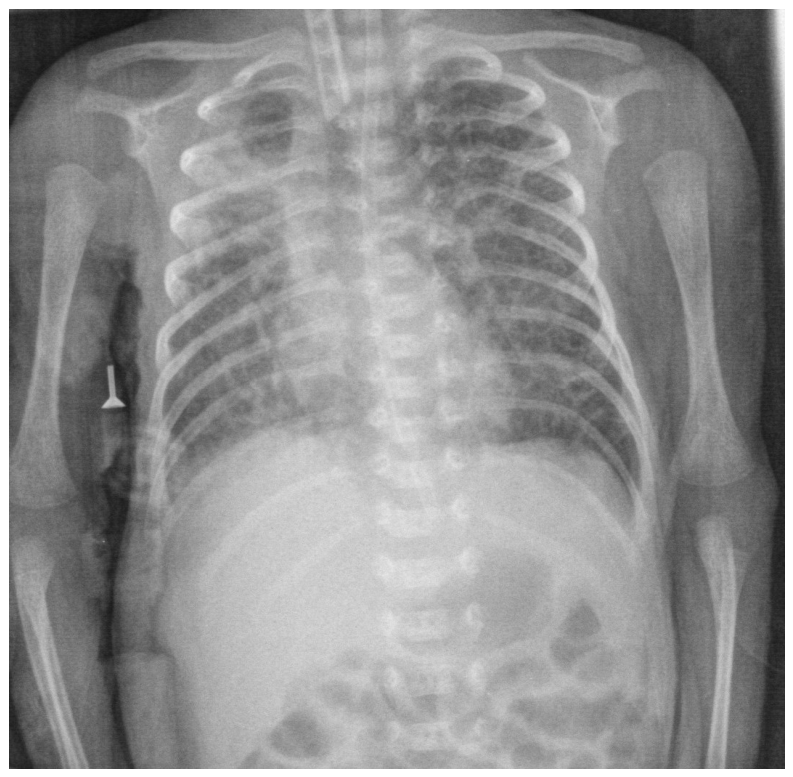
In response to treatment, CRP decreased to 2.6 mg/L, and the white blood cell count gradually declined during the first two weeks of life. By the end of the second week, the white blood cell count was 29.02 × 10⁹/L, neutrophils 50.9%, lymphocytes 40.9%, and platelets 315 × 109/L. During the first two weeks, two unsuccessful extubation attempts were made. Due to the requirement for higher mechanical ventilation parameters, increased secretion suctioning, and radiographically confirmed pneumonia (Figure 1), a standardized endotracheal tracheal aspirate was collected on day 17 of life using a closed-suction sterile technique. The aspirate yielded Acinetobacter spp. susceptible to tigecycline, with intermediate susceptibility to ampicillin-sulbactam and cefepime (complete antibiogram is provided in Table 1). Antibiotic therapy was modified to cefepime (30 mg/kg/dose every 12 h) with inhaled colistin (500,000 IU every 12 h). This therapeutic choice was guided by the full susceptibility profile and by the absence of validated high-dose ampicillin-sulbactam pharmacokinetic/pharmacodynamic data for neonates of this weight class (<750 g), which precluded reliable bactericidal sulbactam exposure; inhaled colistin was added to minimize systemic toxicity while providing additional coverage against the Acinetobacter isolate. The chest radiograph on day 17 showed new bilateral infiltrates with consolidation (Figure 1), fulfilling CDC neonatal VAP criteria together with clinical and laboratory parameters described above.
On day 24 of life, due to clinical deterioration, markedly elevated inflammatory markers (interleukin-6 [IL-6]: 677.4 pg/mL), and pathological radiographic findings, cefepime was discontinued and tigecycline was initiated according to the antibiogram (1.2 mg/kg/dose every 12 h) for the following two weeks. Repeated tracheal aspirates isolated XDR strains of Acinetobacter calcoaceticus-baumannii complex and Pseudomonas aeruginosa. On day 38, the antibiotic regimen was modified to fosfomycin (50 mg/kg/dose every 12 h) and ceftazidime–avibactam (25 mg/kg/dose every 8 h). Due to further deterioration of gas exchange and worsening radiographic findings, high-frequency ventilation was initiated with a fraction of inspired oxygen (FiO2) of 0.85. The XDR Acinetobacter calcoaceticus-baumannii complex persisted in subsequent tracheal aspirates.
On day 43 of life, following a recommendation by the clinical pharmacologist, and after obtaining written informed parental consent given the off-label use of the drug in the neonatal age group, sulbactam–durlobactam was initiated (25 mg/kg/dose every 6 h—this amount refers to the sulbactam component alone) in combination with continued ceftazidime–avibactam. During the treatment course, renal function tests (urea and creatinine) and liver function tests Aspartate Aminotransferase (AST) and Alanine Aminotransferase (ALT) were monitored regularly, with no values outside the reference range. After 12 days of this regimen, the neonate was successfully extubated. In the subsequent period, the infant intermittently required nasal CPAP and supplemental oxygen via nasal cannula. The neonate was discharged from the neonatology ward at 42 weeks of corrected gestational age with a diagnosis of mild bronchopulmonary dysplasia (BPD), with a discharge weight of 3540 g (Table 2).

3. Discussion

In this case of a preterm neonate with severe pneumonia and systemic infection, initial empirical therapy consisted of a combination of vancomycin and meropenem to provide broad-spectrum coverage against potential causative pathogens, including both Gram-positive and Gram-negative bacteria [12,13,14,15]. However, this initial therapy proved ineffective in our patient.
Tigecycline, a broad-spectrum glycylcycline antibiotic active against multidrug-resistant (MDR) and XDR pathogens, has shown good clinical efficacy and acceptable tolerability in severe pediatric infections, particularly those caused by Acinetobacter baumannii [16,17]. Despite tigecycline administration, our patient achieved only partial clinical improvement, highlighting the complexity of managing multidrug-resistant infections in preterm neonates and the need for further antibiotic modification and intensive supportive care.
Given the failure of preceding therapies, the introduction of ceftazidime–avibactam (CAZ-AVI) in our preterm neonate proved to be a critical strategy for infection control. Although still limited in its study in neonates, this antibiotic combination enables effective targeting of multidrug-resistant Gram-negative bacteria, including extended-spectrum β-lactamases (ESBL)-producing and Klebsiella pneumoniae carbapenemase (KPC-)positive Klebsiella pneumoniae strains [18,19]. Combination with fosfomycin or amikacin, based on previous studies, may further reduce the risk of secondary infections and the emergence of resistance [20]. A randomized controlled trial involving 120 neonates (aged ≤ 28 days) demonstrated that fosfomycin can be safely used as an adjunct to standard therapy for neonatal sepsis, without significant effects on serum sodium levels or gastrointestinal adverse events, with proposed dosing effective across different neonatal age and weight groups [21].
Following the limited clinical response to prior reserve antibiotics (vancomycin, meropenem, tigecycline, and CAZ-AVI combined with fosfomycin), the therapeutic regimen was modified by incorporating sulbactam–durlobactam (SUL-DUR). Sulbactam is a beta-lactam antibiotic with intrinsic bactericidal activity against Acinetobacter spp. through inhibition of penicillin-binding proteins (PBPs), particularly PBP1 and PBP3. Durlobactam is a diazabicyclooctane (DBO) non-beta-lactam beta-lactamase inhibitor that potently inhibits class A (including KPC), class C (AmpC), and class D (OXA-type) serine beta-lactamases, thereby restoring sulbactam activity against isolates that would otherwise be resistant. Major resistance mechanisms discussed include: (1) overexpression of OXA-23 or OXA-51-type carbapenemases with reduced susceptibility to durlobactam; (2) metallo-beta-lactamases (class B, e.g., NDM, VIM) which are not inhibited by durlobactam; (3) loss of outer membrane porins (e.g., OmpA, CarO) reducing drug penetration; and (4) upregulation of efflux pumps (e.g., AdeABC, AdeFGH) [22]. Although this combination is approved for adult patients with hospital-acquired and ventilator-associated pneumonia caused by the Acinetobacter baumannii-calcoaceticus complex, its use in children and neonates remains rare, with only isolated clinical reports of SUL-DUR administration in infants with severe sepsis caused by carbapenem-resistant Acinetobacter, resulting in clinical improvement without serious adverse effects. These findings suggest that sulbactam–durlobactam may represent a useful therapeutic option in severe MDR/XDR infections when conventional and other reserve therapies have proven inadequate, but further clinical studies are needed to define the optimal dosing regimen and safety profile in the neonatal population [23].
The decision to combine sulbactam–durlobactam with ceftazidime–avibactam, rather than with meropenem or imipenem/cilastatin as recommended in current adult guidelines, was driven by several patient-specific factors. Meropenem had been part of multiple prior regimens without achieving microbiological eradication, making re-exposure unlikely to provide meaningful synergistic benefit against an XDR strain selected under prolonged carbapenem pressure. Additionally, the concurrent XDR Pseudomonas aeruginosa infection favored retention of CAZ-AVI, which retains activity against many carbapenem-resistant Pseudomonas isolates and thus provided rational dual-pathogen coverage that a carbapenem could not replicate. CAZ-AVI had also already been initiated on day 38 with partial clinical stabilization, and its continuation avoided additional nephrotoxic exposure in an extremely preterm neonate with immature renal function. It should also be noted that the recommendation for SUL-DUR combined with a carbapenem derives exclusively from adult trial data, with no neonatal evidence to confirm that this strategy is either necessary or optimal in a population with substantially different pharmacokinetics. Recent consensus-based pediatric dosing recommendations for novel β-lactam agents in antimicrobial-resistant Gram-negative infections emphasize a structured extrapolation of pharmacokinetic and pharmacodynamic principles in the absence of direct pediatric data. In this context, Lockowitz et al. provide a comprehensive expert-derived framework for dosing of select β-lactam antibiotics in neonates, infants, children, and adolescents, highlighting the reliance on available pharmacokinetic data, adult studies, and established pediatric experience with related agents [24]. Specifically, for sulbactam–durlobactam, pediatric pharmacokinetic data are currently unavailable, and dosing strategies are therefore inferred from the well-established use of ampicillin–sulbactam in children and general β-lactam PK/PD behavior in pediatric populations. Although adult data demonstrate favorable pharmacodynamic target attainment and clinical efficacy in carbapenem-resistant Acinetobacter baumannii infections, pediatric use remains extrapolative and requires careful consideration of PK/PD principles until dedicated pediatric studies become available [24]. A Phase 1b clinical study has been initiated to investigate the pharmacokinetics and safety of SUL-DUR from birth to 18 years of age in patients with Acinetobacter baumannii-calcoaceticus complex (ABC) infections, including term and preterm neonates older than 7 days. These initiatives indicate growing interest in SUL-DUR as a potential therapeutic option in severe MDR/XDR infections in children, but additional clinical studies are needed to establish optimal dosing regimens and adverse effect profiles [25].
The delayed introduction of SUL-DUR on day 43 reflected the procedural requirements of responsible off-label prescribing in neonates—including clinical pharmacologist consultation and written informed parental consent—rather than failure to recognize earlier the need for escalation. This highlights a broader systemic challenge: the regulatory steps essential for patient protection in off-label neonatal prescribing can introduce clinically significant delays in the context of life-threatening XDR infections, underscoring the need for streamlined compassionate use pathways in neonatal intensive care settings.
Several limitations of this case report must be acknowledged. First, as an inherent limitation of single-patient case reports, no causal relationship between sulbactam–durlobactam administration and clinical improvement can be established with certainty; a delayed bactericidal effect of prior antibiotic courses or spontaneous resolution of colonization cannot be entirely excluded as contributing factors to the observed outcome. Second, the microbiological diagnosis of VAP was based on endotracheal tracheal aspirate cultures rather than bronchoalveolar lavage, which limits the ability to definitively distinguish true lower respiratory tract infection from airway colonization. Third, molecular characterization of resistance genes (e.g., metallo-beta-lactamase PCR, whole-genome sequencing) was not performed due to the unavailability of this diagnostic infrastructure at our institution, thereby precluding definitive characterization of the resistance mechanisms operative in the XDR isolates. Fourth, several antibiotic choices in this case—specifically the use of cefepime combined with inhaled colistin, tigecycline without concurrent high-dose ampicillin-sulbactam, and sulbactam–durlobactam without a carbapenem partner—deviated from current international evidence-based recommendations for the treatment of carbapenem-resistant Acinetobacter baumannii-calcoaceticus complex infections. Tigecycline monotherapy for severe VAP remains controversial, especially in an extremely premature neonate. These decisions were driven by the extreme prematurity of the patient (birth weight 740 g, 25 weeks of gestation), the absence of validated pharmacokinetic/pharmacodynamic data supporting adequate sulbactam exposure at standard doses in neonates of this weight class, the unavailability of real-time sulbactam therapeutic drug monitoring, established carbapenem resistance precluding the addition of meropenem to the sulbactam–durlobactam regimen, and real-time clinical judgment under resource constraints. These deviations are recognized as limitations and should be considered when interpreting the clinical response and the apparent efficacy of the final antibiotic regimen. Fifth, long-term safety and neurodevelopmental follow-up data beyond the hospital discharge at 42 weeks of corrected gestational age are not yet available, as structured follow-up assessments at 3 and 6 months of corrected age are planned but have not been completed at the time of manuscript submission. Sixth, in this case, a delayed response to prior antibiotics could not be excluded with certainty. Finally, the very limited published experience with sulbactam–durlobactam in neonates means that the dosing regimen used in this case (25 mg/kg/dose every 6 h) was empirically derived and cannot be considered validated; prospective pharmacokinetic studies in this population are urgently needed.

4. Conclusions

This case underscores the urgent need for evidence-based guidance on the use of novel reserve antibiotics in the neonatal population. The off-label administration of sulbactam–durlobactam was undertaken as a last-resort measure in a life-threatening situation, with written parental consent and pharmacological guidance. Tolerability was satisfactory, as evidenced by clinical and laboratory monitoring throughout the treatment course. Our report adds to the very limited body of literature on SUL-DUR in neonates and supports the initiation of controlled pharmacokinetic and safety studies in this vulnerable age group.

Author Contributions

Conceptualization, S.Z., T.P. and S.J.; methodology, S.J.; software, N.P.; validation, S.Z., T.P. and N.P.; formal analysis, T.P., S.Z. and S.J.; investigation, R.M., D.S., M.C. and B.M.; resources, R.M., M.C. and B.M.; data curation, S.Z. and T.P.; writing—original draft preparation, S.Z. and T.P.; writing—review and editing, S.J.; visualization, N.P.; supervision, S.J.; project administration, S.Z. and T.P.; funding acquisition, S.Z. and T.P. All authors have read and agreed to the published version of the manuscript.

Funding

This research received no external funding.

Institutional Review Board Statement

The study was conducted in accordance with the Declaration of Helsinki, and approved by the Ethics Committee of University Clinical Center Kragujevac (No 01/26-265, date of approval 16 April 2026).

Informed Consent Statement

Written informed consent has been obtained from the patient’s parents as the patient is under-aged.

Data Availability Statement

The data presented in this study are available upon request from the corresponding author due to the GDPR protocols of the hospitals involved in the treatment of the reported patient.

Acknowledgments

During the preparation of this manuscript, the authors used Claude (Anthropic, claude.ai, version claude-sonnet-4-6) for the purposes of translation from Serbian and manuscript formatting. The authors have reviewed and edited the output and take full responsibility for the content of this publication.

Conflicts of Interest

The authors declare no conflicts of interest.

Abbreviations

The following abbreviations are used in this manuscript:
VAPVentilator-associated pneumonia
NICUsNeonatal intensive care units
MDRMultidrug-resistant
XDRExtensively drug-resistant
CDCCenters for Disease Control and Prevention
MRSAMethicillin-resistant Staphylococcus aureus
CPAPContinuous positive airway pressure
CRPC-reactive protein
FiO2Fraction of inspired oxygen
BPDBronchopulmonary dysplasia
PK/PDPharmacokinetic/pharmacodynamic
CAZ-AVICeftazidime–avibactam
SUL-DURSulbactam–durlobactam
ABCAcinetobacter baumannii-calcoaceticus complex

References

  1. Rangelova, V.; Kevorkyan, A.; Raycheva, R.; Krasteva, M. Ventilator-Associated Pneumonia in the Neonatal Intensive Care Unit—Incidence and Strategies for Prevention. Diagnostics 2024, 14, 240. [Google Scholar] [CrossRef]
  2. Raycheva, R.; Rangelova, V.; Kevorkyan, A. Cost Analysis for Patients with Ventilator-Associated Pneumonia in the Neonatal Intensive Care Unit. Healthcare 2022, 10, 980. [Google Scholar] [CrossRef] [PubMed]
  3. Hooven, T.; Randis, T.M.; Polin, R.A. Pneumonia in the newborn infant. In Manual of Neonatal Respiratory Care, 4th ed.; Donn, S.M., Sinha, S.K., Eds.; Springer: New York, NY, USA, 2017; pp. 573–591. [Google Scholar]
  4. Korang, S.K.; Nava, C.; Mohana, S.P.; Nygaard, U.; Jakobsen, J.C. Antibiotics for hospital-acquired pneumonia in neonates and children. Cochrane Database Syst. Rev. 2021, 11, CD013864. [Google Scholar]
  5. Deng, C.; Li, X.; Zou, Y.; Wang, J.; Wang, J.; Namba, F.; Hiroyuki, Y.; Yu, J.; Yamauchi, Y.; Guo, C. Risk factors and pathogen profile of ventilator-associated pneumonia in a neonatal intensive care unit in China. Pediatr. Int. 2011, 53, 332–337. [Google Scholar] [CrossRef]
  6. Cai, X.D.; Cao, Y.; Chen, C.; Yang, Y.; Wang, C.Q.; Zhang, L.; Ding, H. Investigation of nosocomial infection in the neonatal intensive care unit. Zhongguo Dang Dai Er Ke Za Zhi Chin. J. Contemp. Pediatr. 2010, 12, 81–84. (In Chinese) [Google Scholar]
  7. Scamardo, M.S.; Dolce, P.; Esposito, E.P.; Raimondi, F.; Triassi, M.; Zarrilli, R. Trends, risk factors and outcomes of healthcare-associated infections in a neonatal intensive care unit in Italy during 2013–2017. Ital. J. Pediatr. 2020, 46, 34. [Google Scholar] [CrossRef]
  8. Gunalan, A.; Sistla, S.; Sastry, A.S.; Venkateswaran, R. Concordance between the National Healthcare Safety Network (NHSN) surveillance criteria and Clinical Pulmonary Infection Score (CPIS) criteria for diagnosis of ventilator-associated pneumonia (VAP). Indian J. Crit. Care Med. 2021, 25, 296–298. [Google Scholar] [CrossRef]
  9. Centers for Disease Control and Prevention (CDC). Pneumonia (Ventilator-Associated [VAP] and Non-Ventilator-Associated Pneumonia [PNEU]) Event; CDC: Atlanta, GA, USA, 2023.
  10. Hussain, K.; Salat, M.S.; Ambreen, G.; Mughal, A.; Idrees, S.; Sohail, M.; Iqbal, J. Intravenous vs intravenous plus aerosolized colistin for treatment of ventilator-associated pneumonia—A matched case-control study in neonates. Expert Opin. Drug Saf. 2020, 19, 1641–1649. [Google Scholar] [CrossRef] [PubMed]
  11. Alriyami, A.; Kiger, J.R.; Hooven, T.A. Ventilator-Associated Pneumonia in the Neonatal Intensive Care Unit. NeoReviews 2022, 23, e448–e461. [Google Scholar] [CrossRef] [PubMed]
  12. Helbel, C.; Ferreira, C.B.; Previato, C.F.A.; da Rocha, E.M.T.; Silva, G.H.O.; Mascarenhas, D.C.; Melo, G.d.A.N.d.; Batistela, V.R.; Louro, E.; Gonçalves, S.T.; et al. Vancomycin in neonatal patients: Systematic review and call for standardized dosing and monitoring practices. Eur. J. Clin. Pharmacol. 2025, 82, 14. [Google Scholar] [CrossRef]
  13. Alsultan, A.; Al Munjem, M.F.; Atiq, K.M.; Aljehani, Z.K.; Al Muqati, H.; Almohaizeie, A.; Ballal, D.A.; Refaei, T.M.; Al Jeraisy, M.; Assiri, A.; et al. Population pharmacokinetics of vancomycin in very low birth weight neonates. Front. Pediatr. 2023, 11, 1093171. [Google Scholar] [CrossRef]
  14. Cohen-Wolkowiez, M.; Poindexter, B.; Bidegain, M.; Weitkamp, J.-H.; Schelonka, R.L.; Randolph, D.A.; Ward, R.M.; Wade, K.; Valencia, G.; Burchfield, D.; et al. Safety and effectiveness of meropenem in infants with suspected or complicated intra-abdominal infections. Clin. Infect. Dis. 2012, 55, 1495–1502. [Google Scholar] [CrossRef]
  15. Shabaan, A.E.; Nour, I.; Elsayed Eldegla, H.; Nasef, N.; Shouman, B.; Abdel-Hady, H. Conventional versus prolonged infusion of meropenem in neonates with Gram-negative late-onset sepsis: A randomized controlled trial. Pediatr. Infect. Dis. J. 2017, 36, 358–363. [Google Scholar] [CrossRef] [PubMed]
  16. Mastrolia, M.V.; Galli, L.; De Martino, M.; Chiappini, E. Use of tigecycline in pediatric clinical practice. Expert Rev. Anti Infect. Ther. 2017, 15, 605–612. [Google Scholar] [CrossRef] [PubMed]
  17. Zeng, J.; Zhang, L.; Gao, M.; Wu, J.; Wu, H.; Chen, J.; Chen, X.; Tang, W. Tigecycline treatment in an infant with extensively drug-resistant Acinetobacter baumannii bacteremia. Int. J. Infect. Dis. 2017, 61, 23–26. [Google Scholar] [CrossRef] [PubMed]
  18. Asfour, S.S.; Alaklobi, F.A.; Abdelrahim, A.; Taha, M.Y.; Asfour, R.S.; Khalil, T.M.; Al-Mouqdad, M.M. Intravenous ceftazidime-avibactam in extremely premature neonates with carbapenem-resistant Enterobacteriaceae: Two case reports. J. Pediatr. Pharmacol. Ther. 2022, 27, 192–197. [Google Scholar] [CrossRef]
  19. Dermitzaki, N.; Balomenou, F.; Serbis, A.; Atzemoglou, N.; Giaprou, L.; Baltogianni, M.; Giapros, V. Multi-drug resistant Gram-negative sepsis in neonates: The special role of ceftazidime/avibactam and ceftolozane/tazobactam. Medicines 2025, 12, 17. [Google Scholar] [CrossRef]
  20. Iosifidis, E.; Chorafa, E.; Agakidou, E.; Kontou, A.; Violaki, A.; Volakli, E.; Christou, E.-I.; Zarras, C.; Drossou-Agakidou, V.; Sdougka, M.; et al. Use of ceftazidime-avibactam for the treatment of extensively drug-resistant or pandrug-resistant Klebsiella pneumoniae in neonates and children <5 years of age. Pediatr. Infect. Dis. J. 2019, 38, 812–815. [Google Scholar] [CrossRef]
  21. Obiero, C.W.; Williams, P.; Murunga, S.; Thitiri, J.; Omollo, R.; Walker, A.S.; Egondi, T.; Nyaoke, B.; Correia, E.; Kane, Z.; et al. Randomised controlled trial of fosfomycin in neonatal sepsis: Pharmacokinetics and safety in relation to sodium overload. Arch. Dis. Child. 2022, 107, 802–810. [Google Scholar] [CrossRef]
  22. McLeod, S.M.; O’Donnell, J.P.; Narayanan, N.; Mills, J.P.; Kaye, K.S. Sulbactam-durlobactam: A β-lactam/β-lactamase inhibitor combination targeting Acinetobacter baumannii. Future Microbiol. 2024, 19, 563–576. [Google Scholar] [CrossRef]
  23. Fu, C.; Tang, X.; Guo, X.; Huang, L.; Gao, J.; Yang, R. Sulbactam-durlobactam combination therapy for carbapenem-resistant Acinetobacter baumannii sepsis with cutaneous involvement in an infant with acute monocytic leukemia: A case report. Front. Pharmacol. 2025, 16, 1633982. [Google Scholar] [CrossRef] [PubMed]
  24. Lockowitz, C.R.; Hsu, A.J.; Chiotos, K.; Bio, L.L.; Dassner, A.M.; Gainey, A.B.; Girotto, J.E.; Iacono, D.; Morrisette, T.; Stimes, G.; et al. Suggested Dosing of Select β-Lactam Agents for the Treatment of Antimicrobial-Resistant Gram-Negative Infections in Children. J. Pediatr. Infect. Dis. Soc. 2025, 14, piaf004. [Google Scholar] [CrossRef] [PubMed]
  25. ClinicalTrials.gov. A Study to Assess Sulbactam Durlobactam in Pediatric Patients with Acinetobacter baumannii–calcoaceticus Complex Infection; Identifier: NCT06801223; Updated 12 January 2026. Available online: https://clinicaltrials.gov/ct2/show/NCT06801223 (accessed on 19 February 2026).
Figure 1. Chest X-ray showing bilateral, irregular loss of transparency of the lung parenchyma.
Idr 18 00054 g001
Table 1. Susceptibility profile of Acinetobacter and Pseudomonas aeruginosa isolates.
AntibioticAcinetobacter SpeciesAcinetobacter calcoaceticus-baumannii ComplexPseudomonas aeruginosa
Ampicillin–sulbactamIRNot tested
Piperacillin–tazobactamRRR
CefotaximeRRR
CefepimeSRR
CeftazidimeRRR
CeftriaxoneRRR
Imipenem–cilastatinRRR
Imipenem–cilastatin–relebactamRRR
MeropenemRRR
AmikacinRRR
GentamycinRRR
TobramycinNot testedNot testedI
CiprofloxacinRRR
LevofloxacinRRR
ColistineNot testedNot testedS
TigecyclineSSInherently resistant, not tested
R—resistant; S—sensitive; I—intermediate. Note: Interpretation of microbiologic data remains limited due to the unavailability of minimal inhibitory concentrations (MICs).
Table 2. Management timeline of the patient.
Day of HospitalizationRespiratory Support (Ventilation Mode/Settings)Microbiological ResultsInflammatory Markers (CRP/IL-6/WBC)Antibiotic Therapy Changes
Day 0Mechanical ventilationBlood cultures and tracheal aspirate obtained Ampicillin + amikacin + fluconazole prophylaxis
Day 2Mechanical ventilation WBC 99.68 × 10⁹/L; neutrophils 80.1%; CRP 4.11 mg/LSwitched to meropenem + vancomycin
Days 1–14Mechanical ventilation; 2 failed extubation attempts CRP ↓ to 2.6 mg/L; WBC ↓ to 29.02 × 10⁹/LContinued meropenem + vancomycin
Day 17Mechanical ventilation (increased settings)Acinetobacter spp. IL-6: 20.2 pg/mL; WBC ↓ to 24.11 × 10⁹/LSwitched to cefepime + inhaled colistin
Day 24Mechanical ventilation; worsening gas exchangeXDR Acinetobacter calcoaceticus-baumannii complex + Pseudomonas aeruginosaIL-6: 677.4 pg/mLCefepime discontinued → tigecycline
Day 38High-frequency ventilation (FiO2 0.85)Persistent XDR Acinetobacter calcoaceticus-baumannii complexWBC ↓ to 13.54 × 10⁹/LFosfomycin + ceftazidime–avibactam
Day 43High-frequency ventilationPersistent XDR Acinetobacter calcoaceticus-baumannii complex Sulbactam–durlobactam + ceftazidime–avibactam
~Day 55Intermittent CPAP/nasal cannula oxygenClearance of infection (no new isolate reported) Antibiotics discontinued
Day 119: DischargeBreathing room airNo new positive culturesStable inflammatory markersNo ongoing antibiotic therapy
Note: ↓: decrease; →: treatment switch; ~: approximately.
Disclaimer/Publisher’s Note: The statements, opinions and data contained in all publications are solely those of the individual author(s) and contributor(s) and not of MDPI and/or the editor(s). MDPI and/or the editor(s) disclaim responsibility for any injury to people or property resulting from any ideas, methods, instructions or products referred to in the content.