
The Evolution of Artificial Intelligence in Ocular Toxoplasmosis Detection: A Scoping Review on Diagnostic Models, Data Challenges, and Future Directions

 ,
,  , ,
, ,  ,
,  ,
,
Abstract
1. Introduction
- State of the Evidence. What is the scope and nature of the existing evidence regarding the development and validation of AI models for the diagnosis of Ocular Toxoplasmosis?
- The Data Landscape and Its Challenges. What are the characteristics—including size, source, modality (particularly the incorporation of OCTA), and availability—of the datasets used to train and validate these AI models?
- Pathways to Clinical Translation. What is the state of progress regarding the clinical validation and implementation readiness of these AI tools?
2. Materials and Methods
2.1. Study Design
2.2. Identification of Relevant Studies
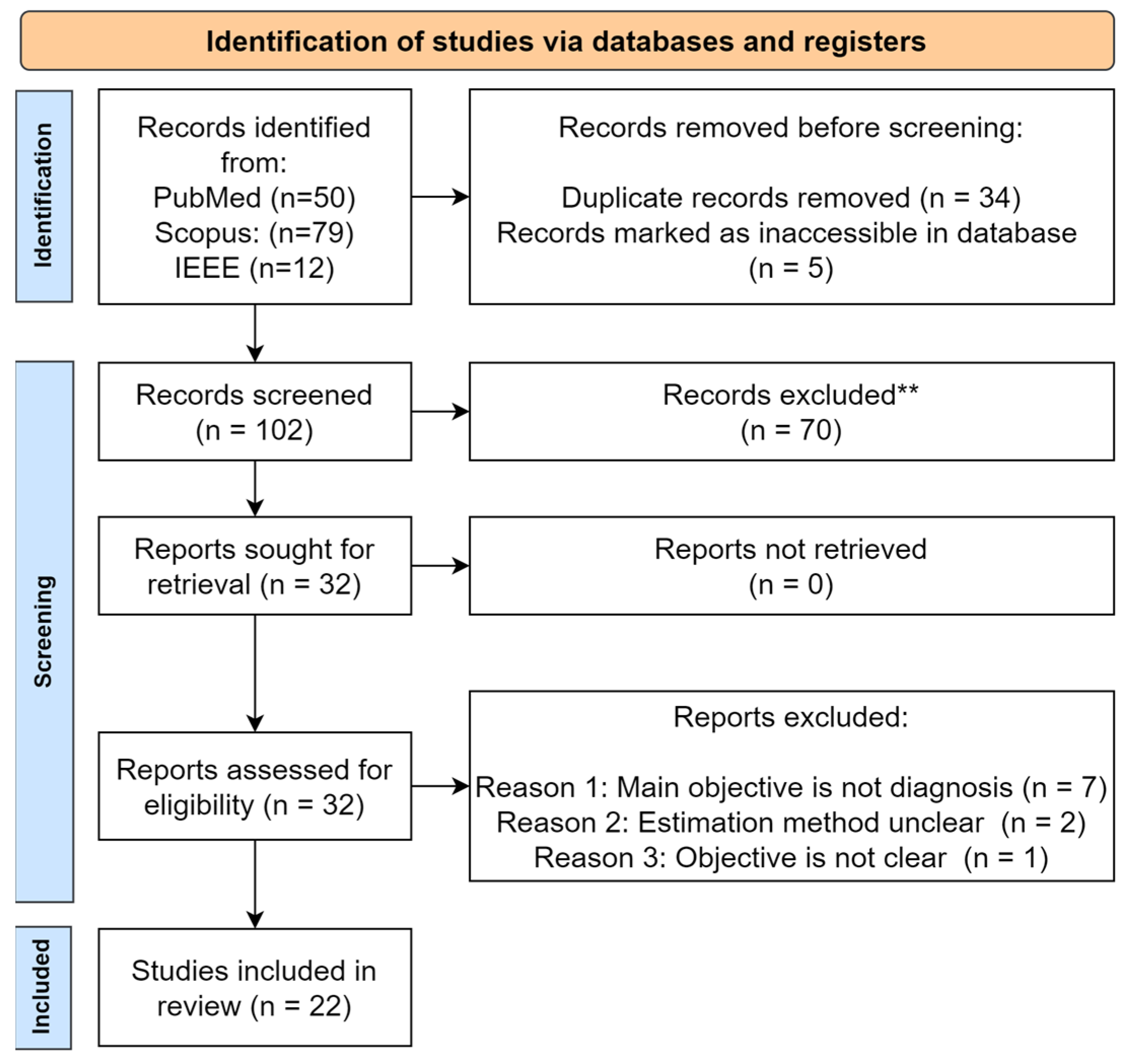
2.3. Selection of Articles
2.3.1. Data Screening
2.3.2. Inclusion and Exclusion Criteria
2.4. Data Charting
2.5. Summarizing and Reporting the Results
2.6. Protocol and Registration
3. Results
3.1. Subsection
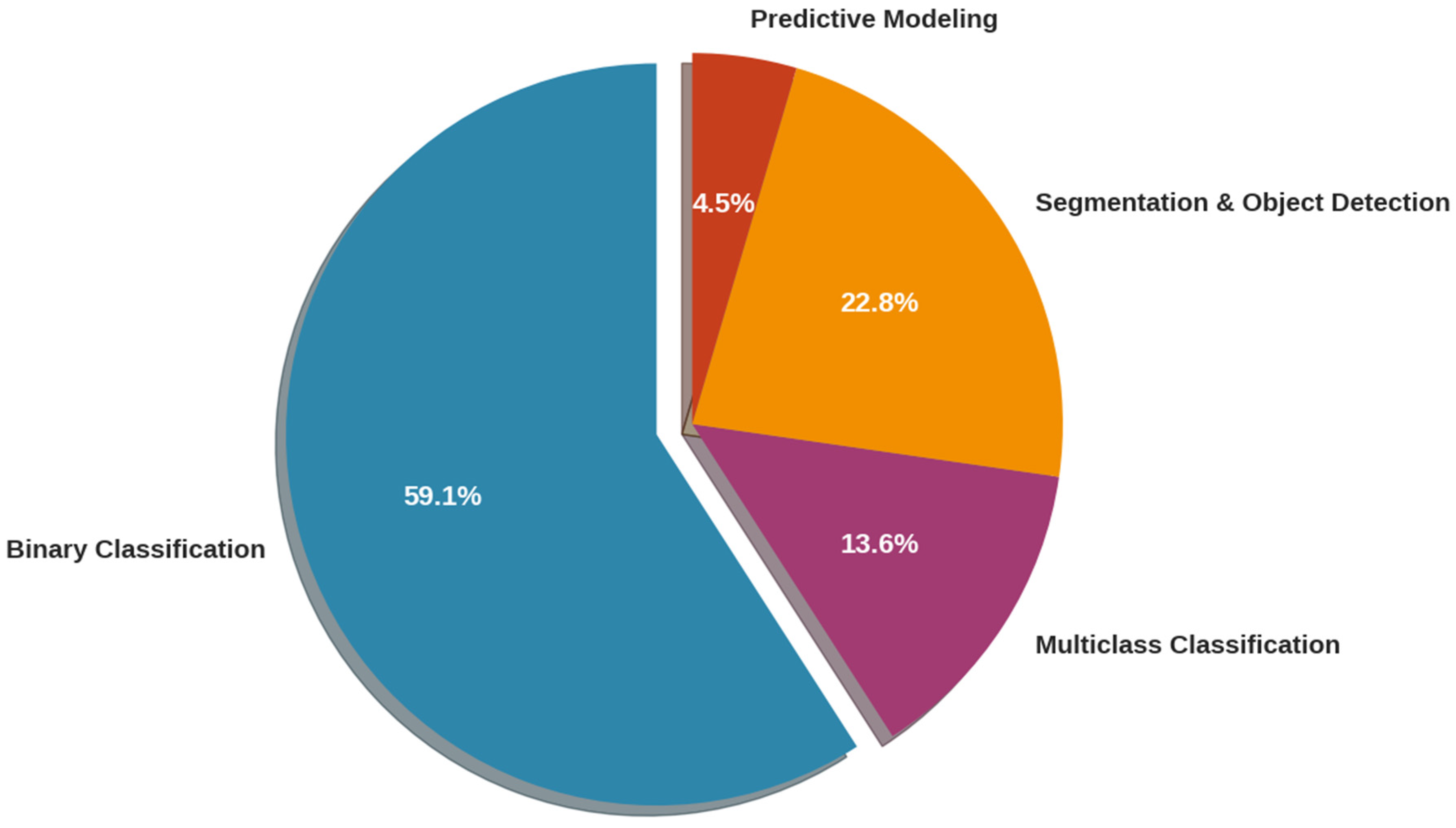
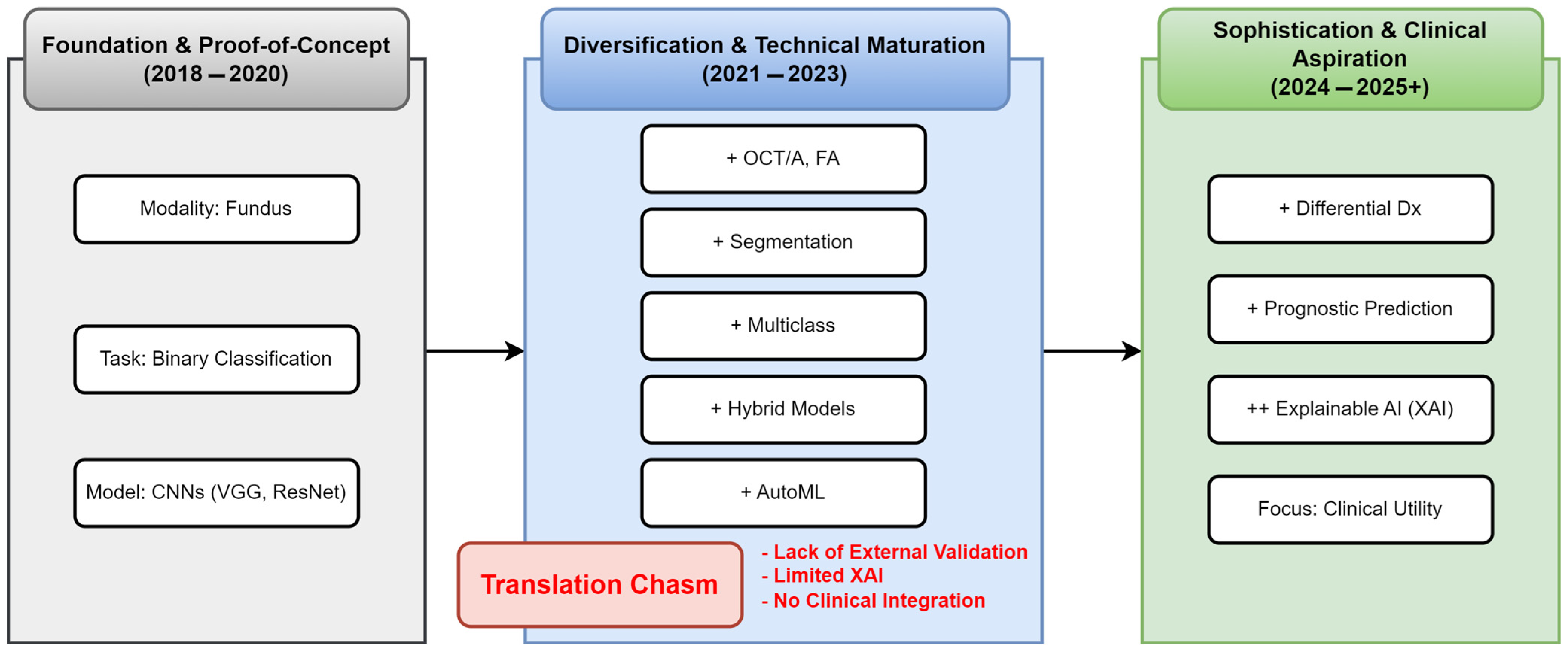
3.2. Methodological Evolution and Study Characteristics
3.3. The Data Landscape and Its Challenges
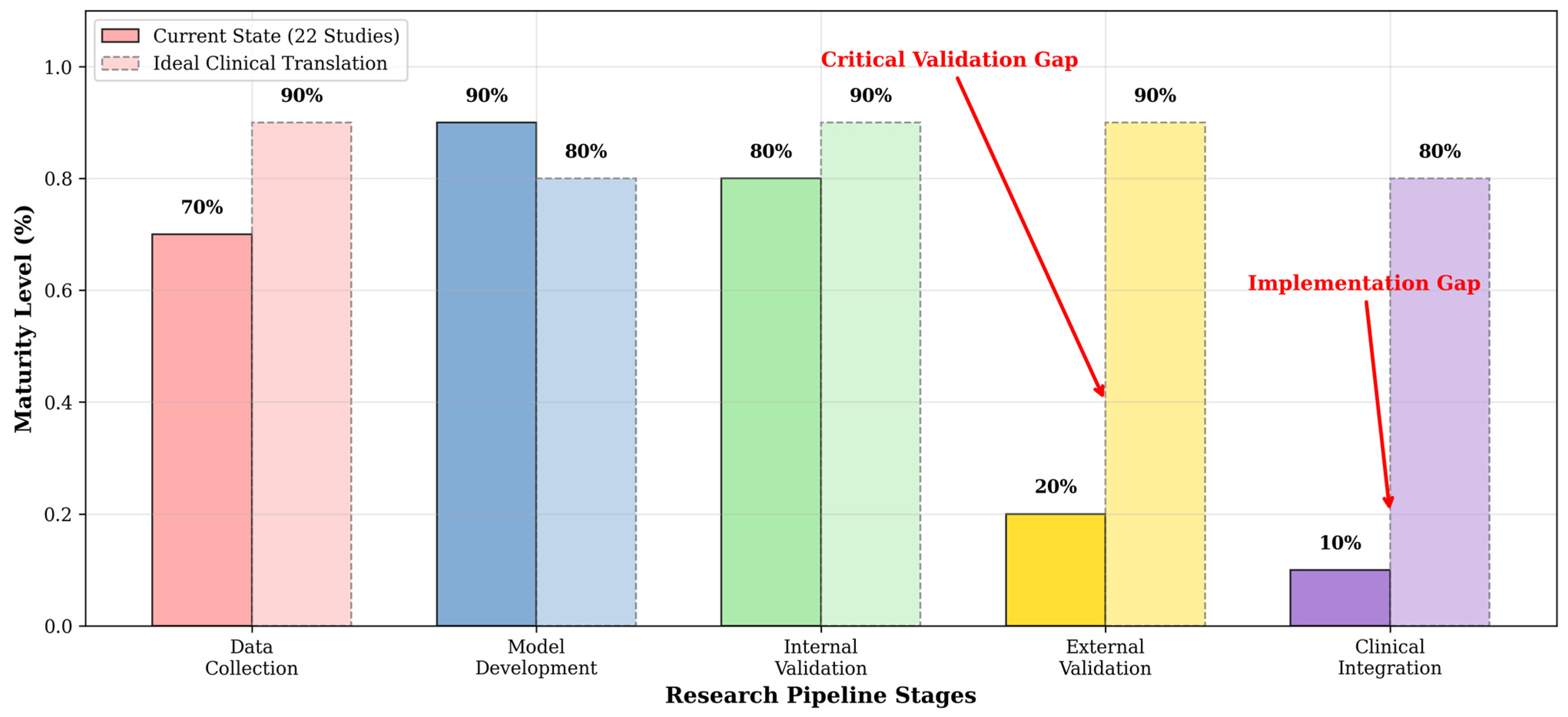
3.4. Pathways to Clinical Translation
3.5. AI Research Trends and Trajectories
4. Discussion
4.1. Summary of Key Findings
4.2. Interpretation of the Evidence
4.3. Implications for Clinical Practice and Research
4.3.1. For Researchers: A Call for Standardization, Transparency, and Clinical Relevance
4.3.2. For Clinicians: Strategic Engagement with an Evolving Technology
5. Limitations
6. Recommendations
- Focus on Differential Diagnosis: Move beyond binary (healthy vs. diseased) or simple multiclass (active vs. inactive) classification. Research must prioritize developing AI models that assist in the clinically critical task of differential diagnosis, distinguishing OT from other infectious posterior uveitis, such as acute retinal necrosis, syphilitic retinitis, or fungal chorioretinitis [48]. This aligns with the complex reality faced by ophthalmologists and is where AI support would be most valuable.
- Collaborate to Create Large, Multi-Center Datasets: The most significant bottleneck to progress is data. Isolated efforts will remain insufficient. The field must embrace large-scale collaboration to create curated, multi-center, and publicly available datasets. These datasets must encompass diverse patient demographics, imaging devices, and global regions to capture the full heterogeneity of OT manifestations. International consortia, akin to the PROTON Study Group [22], are essential to pool resources and expertise.
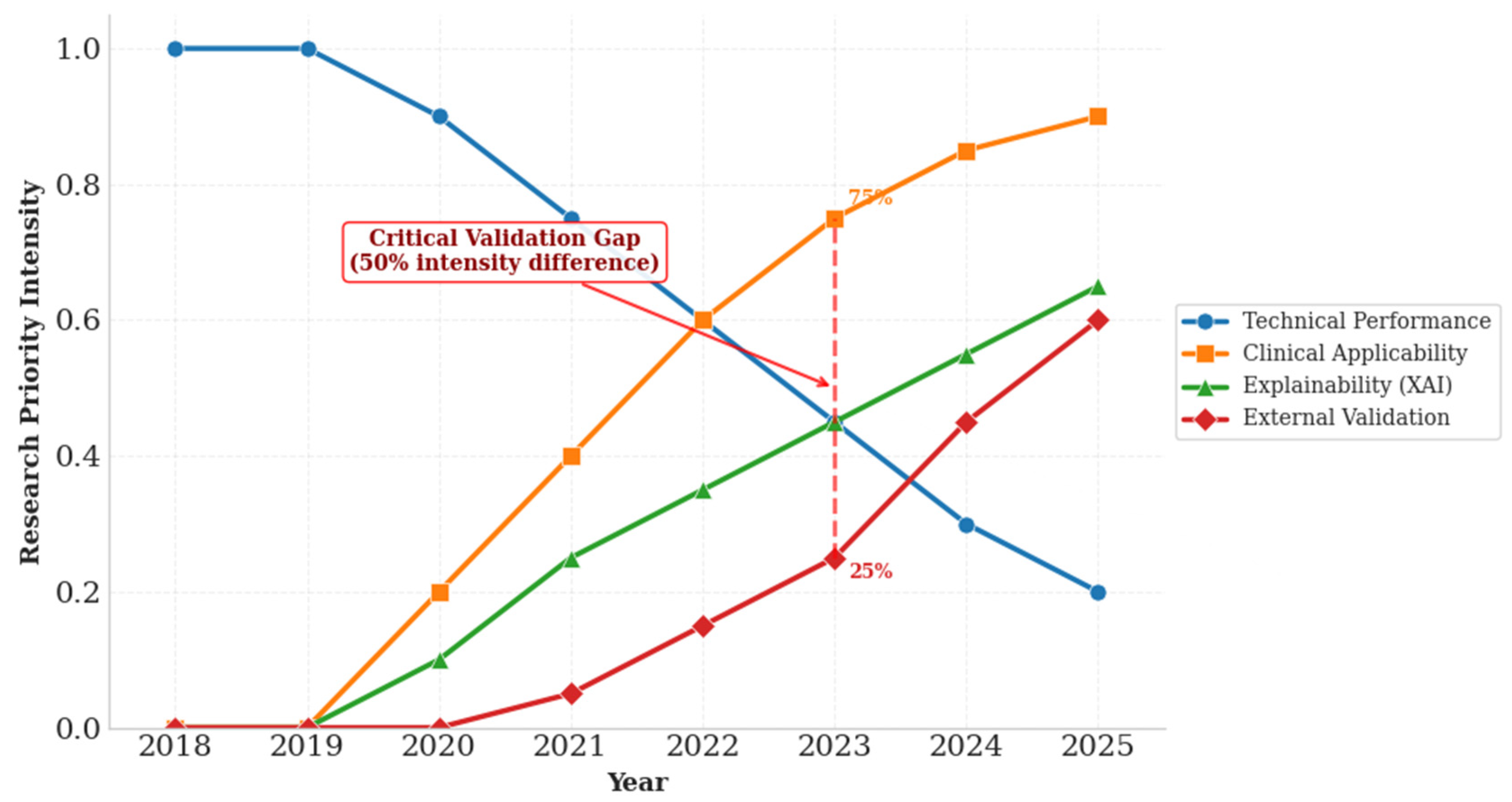
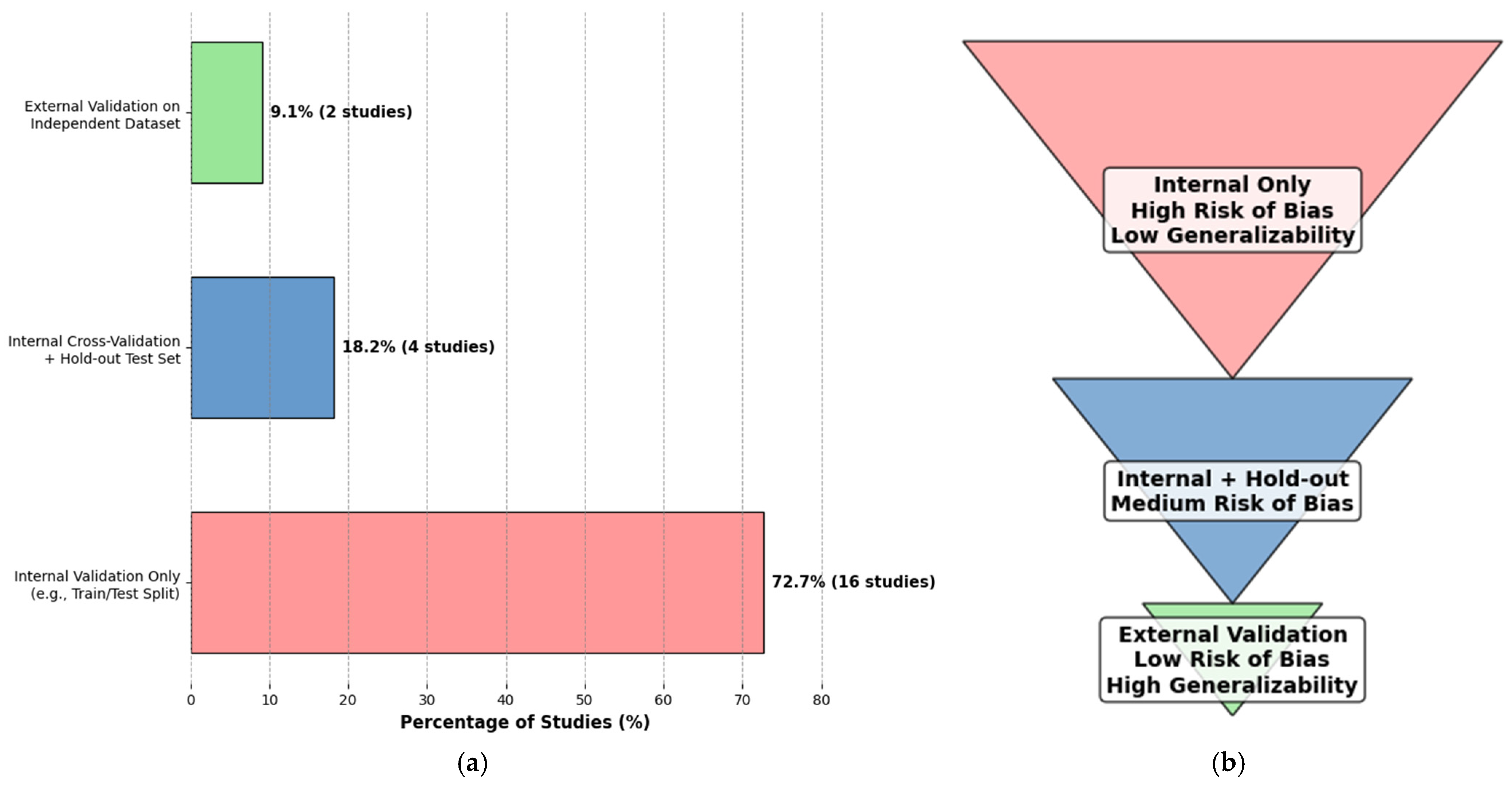
- Prioritize Rigorous External Validation: Internal validation is a necessary but insufficient step. Rigorous external validation on completely independent datasets must become a non-negotiable standard for any study claiming clinical relevance [26,28]. This is the only way to truly assess model generalizability and prevent the field from being misled by over-optimistic performance metrics derived from overfitting.
- Integrate XAI as a Core Component: Explainable AI (XAI) cannot be an optional add-on. To build clinician trust and facilitate adoption, XAI methodologies must be a core, integral component of model development from the outset. Techniques such as Grad-CAM or SHAP should be employed to make the model’s decision-making process transparent, interpretable, and auditable [22,34].
- Conduct Prospective Clinical Trials: The ultimate test of any diagnostic tool is its performance in real-time clinical practice. The field must progress to prospective studies that evaluate AI tools not on retrospective datasets, but embedded within live clinical workflows. These trials should assess critical endpoints beyond accuracy, such as diagnostic speed, clinician confidence, change in management decisions, and ultimately, patient outcomes.
- Integrating AI with the serological test as a common diagnostic tool for toxoplasmosis would be a future innovative tool. Previous research showed the use of Artificial Intelligence (AI) combined with a traditional author-designed questionnaire, coproscopic methods, and serology as a valuable tool in diagnosing human intestinal parasites demonstrated significant advantages, including high accuracy for negative cases and significant time efficiency. Automated data processing, structured database design, and real-time performance metric computation reduced the time required for diagnosis compared to traditional approaches [50].
7. Conclusions
Supplementary Materials
Author Contributions
Funding
Institutional Review Board Statement
Informed Consent Statement
Data Availability Statement
Acknowledgments
Conflicts of Interest
Abbreviations
| AI | Artificial Intelligence |
| AUC | Area Under the Curve |
| CE | European Conformity |
| CNN | Convolutional Neural Networks |
| DL | Deep Learning |
| FDA | U.S. Food and Drug Administration |
| IoU | Intersection over Union |
| OCTA | Optical Coherence Tomography Angiography |
| OT | Ocular Toxoplasmosis |
| OTFID | Ocular Toxoplasmosis Fundus Images Dataset |
| PACS | Picture Archiving and Communication System |
| SHAP | Shapley Additive Explanations |
| SVM | Support Vector Machine |
| XAI | Explainable AI |
References
- Goh, E.J.H.; Putera, I.; La Distia Nora, R.; Mahendradas, P.; Biswas, J.; Chee, S.-P.; Testi, I.; Pavesio, C.E.; Curi, A.L.L.; Vasconcelos-Santos, D.V.; et al. Ocular Toxoplasmosis. Ocul. Immunol. Inflamm. 2023, 31, 1342–1361. [Google Scholar] [CrossRef]
- De-La-Torre, A.; Mejiá-Salgado, G.; Schares, G. The importance of translational research in the study of ocular toxoplasmosis: Insights from the 17th International Congress on Toxoplasmosis 2024. FEMS Microbes 2025, 6, xtaf003. [Google Scholar] [CrossRef] [PubMed]
- Karami, M.; Gorgani-Firouzjaee, T.; Rostami-Mansour, S.; Shirafkan, H. Prevalence of Ocular Toxoplasmosis in the General Population and Uveitis Patients: A Systematic Review and Meta-Analysis. Ocul. Immunol. Inflamm. 2024, 32, 1003–1016. [Google Scholar] [CrossRef]
- Sofia, O.; Wahyudi, I.N.S.A.; Susianti, H.; Fitri, L.E.; Prayitnaningsih, S. Optical Coherence Tomography Angiography Findings in Ocular Toxoplasmosis with Multiple Recurrences. Int. Med. Case Rep. J. 2023, 16, 35–43. [Google Scholar] [CrossRef]
- Greigert, V.; Pfaff, A.W.; Sauer, A.; Filisetti, D.; Candolfi, E.; Villard, O. Biological Diagnosis of Ocular Toxoplasmosis: A Nine-Year. Msphere 2019, 4, e00636-19. [Google Scholar] [CrossRef]
- Patnaik, G.; Pyare, R.; Kaushik, V.; Dutta Majumder, P. Ocular toxoplasmosis following anti-tumour necrosis factor-α therapy combined with oral methotrexate therapy: A case report and review of literature. Eur. J. Ophthalmol. 2023, 34, 113–117. [Google Scholar] [CrossRef]
- Souza, G.; de Souza, C.E.; Finamor, L.P.; Muccioli, C.; Andrade, G.; Belfort, R.; Nascimento, H. Not Always Toxoplasmosis: Active Retinochoroiditis Presumably Secondary to Herpes in Eyes with Hyperpigmented Retinochoroidal Previous Scars. Ocul. Immunol. Inflamm. 2024, 33, 1425–1428. [Google Scholar] [CrossRef] [PubMed]
- Vendhan, D.K.E.; Gautam, D.A.; Logesh, D.H.S.; Balakrishnan, D.K. An Interesting Case of Acute Chorioretinitis Due to Ocular Toxoplasmosis. Sch. J. Appl. Med. Sci. 2021, 9, 1745–1749. [Google Scholar] [CrossRef]
- Aktas, K. Presumed acute unilateral toxoplasma papillitis without vitritis: A case report. Eur. Eye Res. 2024, 4, 233–236. [Google Scholar] [CrossRef]
- Ferro Desideri, L.; Rutigliani, C.; Corazza, P.; Nastasi, A.; Roda, M.; Nicolo, M.; Traverso, C.E.; Vagge, A. The upcoming role of Artificial Intelligence (AI) for retinal and glaucomatous diseases. J. Optom. 2022, 15, S50–S57. [Google Scholar] [CrossRef]
- Mohamed Jebran, P.; Sufia, B. Deep Learning-Based Diabetic Retinopathy Detection: A Survey. Int. J. Organ. Collect. Intell. 2021, 11, 38–48. [Google Scholar] [CrossRef]
- Deepa, R.; Nanda, K.; Vaishnavi, S.; Deepa, R.; Nanda Kumar, P. A Ophthalmology Study on Eye Glaucoma and Retina Applied in AI and Deep Learning Techniques. J. Phys. Conf. Ser. 2021, 1947, 012053. [Google Scholar] [CrossRef]
- Colquhoun, H.L.; Levac, D.; O’Brien, K.K.; Straus, S.; Tricco, A.C.; Perrier, L.; Kastner, M.; Moher, D. Scoping reviews: Time for clarity in definition, methods, and reporting. J. Clin. Epidemiol. 2014, 67, 1291–1294. [Google Scholar] [CrossRef] [PubMed]
- Gray, A. Body as voice: Restorative dance/movement psychotherapy with survivors of relational trauma. In The Routledge International Handbook of Embodied Perspectives in Psychotherapy; Routledge: Oxfordshire, UK, 2019; pp. 147–160. [Google Scholar] [CrossRef]
- Page, M.J.; McKenzie, J.E.; Bossuyt, P.M.; Boutron, I.; Hoffmann, T.C.; Mulrow, C.D.; Shamseer, L.; Tetzlaff, J.M.; Akl, E.A.; Brennan, S.E.; et al. The PRISMA 2020 statement: An updated guideline for reporting systematic reviews. BMJ 2021, 372, n71. [Google Scholar] [CrossRef]
- Alam, S.S.; Shuvo, S.B.; Ali, S.N.; Ahmed, F.; Chakma, A.; Jang, Y.M. Benchmarking Deep Learning Frameworks for Automated Diagnosis of Ocular Toxoplasmosis: A Comprehensive Approach to Classification and Segmentation. IEEE Access 2024, 12, 22759–22777. [Google Scholar] [CrossRef]
- Ferdous, S.R.; Rifat, M.R.A.; Ayan, M.J.; Rahman, R. An Approach to Classify Ocular Toxoplasmosis Images using Deep Learning Models. In Proceedings of the 2023 26th International Conference on Computer and Information Technology (ICCIT), Cox’s Bazar, Bangladesh, 13–15 December 2023; pp. 1–6. [Google Scholar]
- Abeyrathna, D.; Subramaniam, M.; Chundi, P.; Hasanreisoglu, M.; Halim, M.S.; Ozdal, P.C.; Nguyen, Q. Directed Fine Tuning Using Feature Clustering for Instance Segmentation of Toxoplasmosis Fundus Images. In Proceedings of the 2020 IEEE 20th International Conference on Bioinformatics and Bioengineering (BIBE), Cincinnati, OH, USA, 26–28 October 2020; pp. 767–772. [Google Scholar]
- Perera, B.D.K.; Wickramarathna, W.A.A.I.; Chandrasiri, S.; Wanniarachchi, W.A.P.W.; Dilshani, S.H.N.; Pemadasa, N. UveaTrack: Uveitis Eye Disease Prediction and Detection with Vision Function Calculation and Risk Analysis. In Proceedings of the 2022 IEEE 13th Annual Information Technology, Electronics and Mobile Communication Conference (IEMCON), Vancouver, BC, Canada, 12–15 October 2022; pp. 88–93. [Google Scholar]
- Pho, K.; Amin, M.K.M.; Yoshitaka, A. Segmentation-Driven RetinaNet for Protozoa Detection. In Proceedings of the 2018 IEEE International Symposium on Multimedia (ISM), Taichung, Taiwan, 10–12 December 2018; pp. 279–286. [Google Scholar]
- Atas, F.; Kaya, M.; Toprak, T.; Akbulut Yagci, B.; Selver, A.; Saatci, A.O. Measurement of the active toxoplasma retinochoroiditis lesion size during the disease course with swept-source optical coherence tomography angiography: A retrospective image analysis. Int. Ophthalmol. 2021, 41, 4127–4135. [Google Scholar] [CrossRef]
- Rojas-Carabali, W.; Cifuentes-González, C.; Utami, A.; Agarwal, M.; Kempen, J.H.; Tsui, E.; Finger, R.P.; Sen, A.; Chan, A.; Schlaen, A. Machine Learning for Predicting Recurrent Course in Uveitis Using Baseline Clinical Characteristics. Investig. Ophthalmol. Vis. Sci. 2025, 66, 67. [Google Scholar] [CrossRef]
- Cruz-Abrams, O.; Dodds Rojas, R.; Abramson, D.H. Machine learning demonstrates clinical utility in distinguishing retinoblastoma from pseudo retinoblastoma with RetCam images. Ophthalmic Genet. 2025, 46, 180–185. [Google Scholar] [CrossRef]
- Alawfi, B.S. Integrating AI in Ophthalmology: A Deep Learning Approach for Automated Ocular Toxoplasmosis Diagnosis. Int. J. Adv. Comput. Sci. Appl. 2025, 16, 752–760. [Google Scholar] [CrossRef]
- Tiwari, S.; Sahu, K.; Vijh, S.; Awasthi, C. Deep Learning-Based Classification of Ocular Toxoplasmosis Fundus Images: A Comparative Study of CNN and SVM Models. Procedia Comput. Sci. 2025, 259, 1189–1197. [Google Scholar] [CrossRef]
- Cifuentes-González, C.; Rojas-Carabali, W.; Mejía-Salgado, G.; Flórez-Esparza, G.; Gutiérrez-Sinisterra, L.; Perdomo, O.J.; Gómez-Marín, J.E.; Agrawal, R.; de-la-Torre, A. Is Automated Machine Learning useful for ocular toxoplasmosis identification and classification of the inflammatory activity? AJO Int. 2024, 1, 100079. [Google Scholar] [CrossRef]
- Kulkarni, P.; Habib, S.N.; Bidargaddi, A.P.; Shubham, N.B.; Chaitanya, U.M.; Meena, S.M. Optimizing Few-Shot Learning via Reptile Meta-Learning Approach for Toxoplasmosis Chorioretinitis Detection. In Proceedings of the 2024 5th International Conference for Emerging Technology (INCET), Belgaum, India, 24–26 May 2024; pp. 1–7. [Google Scholar]
- Milad, D.; Antaki, F.; Bernstein, A.; Touma, S.; Duval, R. Automated Machine Learning versus Expert-Designed Models in Ocular Toxoplasmosis: Detection and Lesion Localization Using Fundus Images. Ocul. Immunol. Inflamm. 2024, 32, 2061–2067. [Google Scholar] [CrossRef]
- Dhirachaikulpanich, D.; Xie, J.; Chen, X.; Li, X.; Madhusudhan, S.; Zheng, Y.; Beare, N.A.V. Using Deep Learning to Segment Retinal Vascular Leakage and Occlusion in Retinal Vasculitis. Ocul. Immunol. Inflamm. 2024, 32, 2291–2298. [Google Scholar] [CrossRef] [PubMed]
- Zaman, A.; Choudhury, P.K.; Chowdhury, R.R.; Anika, A.A.; Ramisa, S.R. Automated identification of ocular toxoplasmosis in fundoscopic images utilizing deep learning models. In Proceedings of the 2024 27th International Conference on Computer and Information Technology (ICCIT), Cox’s Bazar, Bangladesh, 20–22 December 2024; pp. 3284–3289. [Google Scholar]
- Cardozo, O.; Ojeda, V.; Parra, R.; Mello-Román, J.C.; Vázquez Noguera, J.L.; García-Torres, M.; Divina, F.; Grillo, S.A.; Villalba, C.; Facon, J.; et al. Dataset of fundus images for the diagnosis of ocular toxoplasmosis. Data Brief 2023, 48, 109056. [Google Scholar] [CrossRef] [PubMed]
- Tiwari, R.G.; Maheshwari, H.; Gautam, V.; Agarwal, A.K.; Trivedi, N.K. Enhancing Toxoplasmosis Chorioretinitis Detection: A Hybrid ResNet-YOLO Classifier with Fitness Sorted-Shark Smell Optimization. In Proceedings of the 2023 12th International Conference on System Modeling & Advancement in Research Trends (SMART), Moradabad, India, 22–23 December 2023; pp. 77–82. [Google Scholar]
- Noguera, J.L.V.; Parra, R.; Ojeda, V.; Garcia-Torres, M.; Mello-Roman, J.C.; Villaba, C.; Cardozo, O. Multiclass Classification of Ocular Toxoplasmosis from Fundus Images with Residual Neural Networks. In Proceedings of the 2023 18th Iberian Conference on Information Systems and Technologies (CISTI), Aveiro, Portugal, 20–23 June 2023; pp. 20–23. [Google Scholar] [CrossRef]
- Parra, R.; Ojeda, V.; Vázquez Noguera, J.L.; García-Torres, M.; Mello-Román, J.C.; Villalba, C.; Facon, J.; Divina, F.; Cardozo, O.; Castillo, V.E.; et al. A Trust-Based Methodology to Evaluate Deep Learning Models for Automatic Diagnosis of Ocular Toxoplasmosis from Fundus Images. Diagnostics 2021, 11, 1951. [Google Scholar] [CrossRef]
- Jabs, D.A.; Belfort, R.; Bodaghi, B.; Graham, E.; Holland, G.; Lightman, S.; Oden, N.; Palestine, A.; Smith, J.; Thorne, J.; et al. Classification Criteria for Toxoplasmic Retinitis. Am. J. Ophthalmol. 2021, 228, 134–141. [Google Scholar] [CrossRef] [PubMed]
- Parra, R.; Ojeda, V.; Noguera, J.L.V.; Torres, M.G.; Román, J.C.M.; Villalba, C.; Facon, J.; Divina, F.; Cardozo, O.; Castillo, V.E.; et al. Automatic Diagnosis of Ocular Toxoplasmosis from Fundus Images with Residual Neural Networks. Stud. Health Technol. Inform. 2021, 281, 173–177. [Google Scholar] [CrossRef]
- Chakravarthy, A.D.; Abeyrathna, D.; Subramaniam, M.; Chundi, P.; Halim, M.S.; Hasanreisoglu, M.; Sepah, Y.J.; Nguyen, Q.D. An Approach Towards Automatic Detection of Toxoplasmosis using Fundus Images. In Proceedings of the 2019 IEEE 19th International Conference on Bioinformatics and Bioengineering (BIBE), Athens, Greece, 28–30 October 2019; pp. 710–717. [Google Scholar]
- Ting, D.S.W.; Pasquale, L.R.; Peng, L.; Campbell, J.P.; Lee, A.Y.; Raman, R.; Tan, G.S.W.; Schmetterer, L.; Keane, P.A.; Wong, T.Y. Artificial intelligence and deep learning in ophthalmology. Br. J. Ophthalmol. 2019, 103, 167–175. [Google Scholar] [CrossRef]
- Gulshan, V.; Peng, L.; Coram, M.; Stumpe, M.C.; Wu, D.; Narayanaswamy, A.; Venugopalan, S.; Widner, K.; Madams, T.; Cuadros, J.; et al. Development and validation of a deep learning algorithm for detection of diabetic retinopathy in retinal fundus photographs. JAMA-J. Am. Med. Assoc. 2016, 316, 2402–2410. [Google Scholar] [CrossRef]
- Kelly, C.J.; Karthikesalingam, A.; Suleyman, M.; Corrado, G.; King, D. Key challenges for delivering clinical impact with artificial intelligence. BMC Med. 2019, 17, 195. [Google Scholar] [CrossRef]
- Kaushal, A.; Altman, R.; Langlotz, C. Geographic distribution of US cohorts used to train deep learning algorithms. JAMA-J. Am. Med. Assoc. 2020, 324, 1212–1213. [Google Scholar] [CrossRef] [PubMed]
- Ribeiro, M.T.; Singh, S.; Guestrin, C. “Why should I trust you?” Explaining the predictions of any classifier. In Proceedings of the 22nd ACM SIGKDD International Conference on Knowledge Discovery and Data Mining, San Francisco, CA, USA, 13–17 August 2016; pp. 1135–1144. [Google Scholar] [CrossRef]
- Amann, J.; Blasimme, A.; Vayena, E.; Frey, D.; Madai, V.I. Explainability for artificial intelligence in healthcare: A multidisciplinary perspective. BMC Med. Inform. Decis. Mak. 2020, 20, 310. [Google Scholar] [CrossRef] [PubMed]
- Liu, X.; Faes, L.; Kale, A.U.; Wagner, S.K.; Fu, D.J.; Bruynseels, A.; Mahendiran, T.; Moraes, G.; Shamdas, M.; Kern, C.; et al. A comparison of deep learning performance against health-care professionals in detecting diseases from medical imaging: A systematic review and meta-analysis. Lancet Digit. Health 2019, 1, e271–e297. [Google Scholar] [CrossRef]
- Fahim, Y.A.; Hasani, I.W.; Kabba, S.; Ragab, W.M. Artificial intelligence in healthcare and medicine: Clinical applications, therapeutic advances, and future perspectives. Eur. J. Med. Res. 2025, 30, 848. [Google Scholar] [CrossRef]
- Agrawal, R.; Thng, Z.X.; Gupta, A.; Toy, B.C.; Dick, A.D.; Smith, J.R.; Chee, S.-P.; Gupta, V.; Rao, N.A. Infectious Uveitis: Conversations with the Experts. Ocul. Immunol. Inflamm. 2023, 31, 1333–1341. [Google Scholar] [CrossRef]
- Pichi, F.; Invernizzi, A.; Tucker, W.R.; Munk, M.R. Optical coherence tomography diagnostic signs in posterior uveitis. Prog. Retin. Eye Res. 2020, 75, 100797. [Google Scholar] [CrossRef]
- Romero-Santos, S.; Parra-Tanoux, D.; Cifuentes-González, C.; Muñoz-Ortiz, J.; Mejía-Salgado, G.; de-la-Torre, A. Systemic and Bilateral Severe Ocular Toxoplasmosis Resembling Autoimmune Phenomena: A Case Report. Ocul. Immunol. Inflamm. 2024, 32, 2273–2279. [Google Scholar] [CrossRef]
- Miyagaki, M.; Zong, Y.; Yang, M.; Zhang, J.; Zou, Y.; Ohno-Matsui, K.; Kamoi, K. Ocular Toxoplasmosis: Advances in Toxoplasma gondii Biology, Clinical Manifestations, Diagnostics, and Therapy. Pathogens 2024, 13, 898. [Google Scholar] [CrossRef] [PubMed]
- Graupera, M.G. The Use of Artificial Intelligence (AI) Combined with the Traditional Author Designed Questionnaires Coproscopic and Serological Methods as a Valuable Tool in Diagnosing Intestinal Human Parasites. Ph.D. Thesis, Department of Natural Health Science, Faculty of Natural Health Science, Selinus University, Ragusa, Italy, 2025. [Google Scholar]



| Country/Region | Study Focus/AI Task | Imaging/Data Type | Dataset Size (Images/Patients) | AI Model/Architecture Used | Key Performance Metrics |
|---|---|---|---|---|---|
| South Korea, Bangladesh, USA [16] | Classification & Segmentation of OT lesions | Retinal Fundus | 412 images | CNNs (VGG16, ResNet50, etc.), U-Net variants | Acc > 97%, F1 > 97%, AUC > 0.97, Dice > 0.79 |
| Bangladesh [17] | OT Classification (Active, Inactive, Healthy) | Fundus photography | ~700 images (after augment.) | ANN, CNN with VGG16 | Accuracy ~85%, F1-score ~0.85 |
| USA, Turkey, Argentina [18] | Instance Segmentation of OT lesions | Fundus Photography | 246 images | Mask R-CNN (ResNet101) | Mask IoU > 0.70, AP@50 > 0.80 |
| Sri Lanka [19] | Uveitis Diagnosis & Risk Analysis App | Eye photos + Symptoms | ~500+ records | Decision Tree, CNN, Ridge Regression | Accuracy: 87.01% (Disease), 85.41% (Subtype) |
| Japan & Malaysia [20] | Protozoa Detection in Micrographs | Microscopic images | 38 train, 31 test images | Segmentation-driven RetinaNet (ResNet50) | mAP, Precision, Recall |
| Turkey [21] | Lesion Size Monitoring in OT | SS-OCTA | 14 eyes | MATLAB-based analysis (MATLAB R2023a, MathWorks, Natick, MA, USA) | Pixel reduction %, Correlation with VA |
| Multi-center (Global) [22] | Predicting Uveitis Recurrence | Clinical Data (Tabular) | 966 patients | Random Forest, XGBoost, SVM | AUC > 0.80, Accuracy > 75% |
| USA [23] | Retinoblastoma vs. Pseudo-RB Classification | RetCam Fundus | 5566 images | ResNet-101, ViT | Sensitivity 98.6%, Accuracy 97.3%, Specificity 97.0% |
| Saudi Arabia [24] | OT Diagnosis with Hybrid Model | Retinal Fundus | 3659 images (after augment.) | RetinaCoAt (CNN + Transformer) | Accuracy 98%, F1 0.98, AUC 1.00 |
| India [25] | OT Classification (CNN vs. SVM) | Fundus photography | Not specified | CNN, SVM with VGG16, MobileNetV2 | Accuracy, Precision, Recall, F1-score |
| Colombia & Singapore [26] | AutoML for OT Diagnosis & Activity Classification | Color Fundus Photography | 681 + 72 (external) images | AutoML (Amazon SageMaker AutoML (2023), AWS, Seattle, WA, USA; Google Cloud AutoML (2023), Google, Mountain View, CA, USA) | Sensitivity 0.97, Specificity 0.98 (AWS); Ext. Val. Acc 87.5% |
| India [27] | Few-Shot OT Detection | Fundus photography | 412 images | MetaEyeNet (Reptile + CNNs) | Accuracy: 75.6–84.76% |
| Canada [28] | AutoML vs. Custom Model for OT | Fundus photography | 304 images | Google AutoML (Google Cloud AutoML (2023), Google, Mountain View, CA, USA) vs. ResNet18 | Accuracy 93.5%, Sensitivity 100% |
| UK, China, Thailand [29] | Segment Leakage & Occlusion in Retinal Vasculitis | Fluorescein Angiography (FA) | 463 FA images | UNet++, DeeplabV3+ | Dice: Leakage 0.63, Occlusion 0.70 |
| Bangladesh [30] | Automated OT Detection with CNN & Ensemble | Fundus photography | 5200 images (after augment.) | Custom CNN, Ensemble (VGG16, VGG19, MobileNet) | Accuracy 97%, AUC high |
| Paraguay, Spain, Brazil [31] | OT Dataset Description | Fundus photography | 412 images | ResNet (related study) | N/A |
| India [32] | Hybrid Model for OT Detection | Fundus images | 291 images | Hybrid ResNet + YOLO | Accuracy 99.2% |
| Paraguay, Spain [33] | Multiclass OT Classification | Fundus photography | 412 images | ResNet18 | Accuracy 86.7%, Sensitivity 91.2% |
| Paraguay, Spain, Brazil [34] | Interpretable DL for OT Diagnosis | Fundus images | 160 images | CNN, VGG16, ResNet18 | Accuracy, Sensitivity, Specificity, Trust Score |
| International (Global) [35] | Standardized Classification for Toxoplasmic Retinitis | Fundus, Clinical Exam | 803 cases | Multinomial Logistic Regression | Accuracy 92.1–93.3% |
| Paraguay, Spain, Brazil [36] | ResNet18 for OT Diagnosis | Fundus photography | 160 images | ResNet18 | Accuracy up to 93.75%, Sensitivity up to 100% |
| USA, Turkey, Argentina [37] | Automated OT Detection with CNN | Color Fundus Photography | 246 patients + controls | Hybrid CNN (VGG16-based) | AUC up to 0.949, Sensitivity 0.919 |
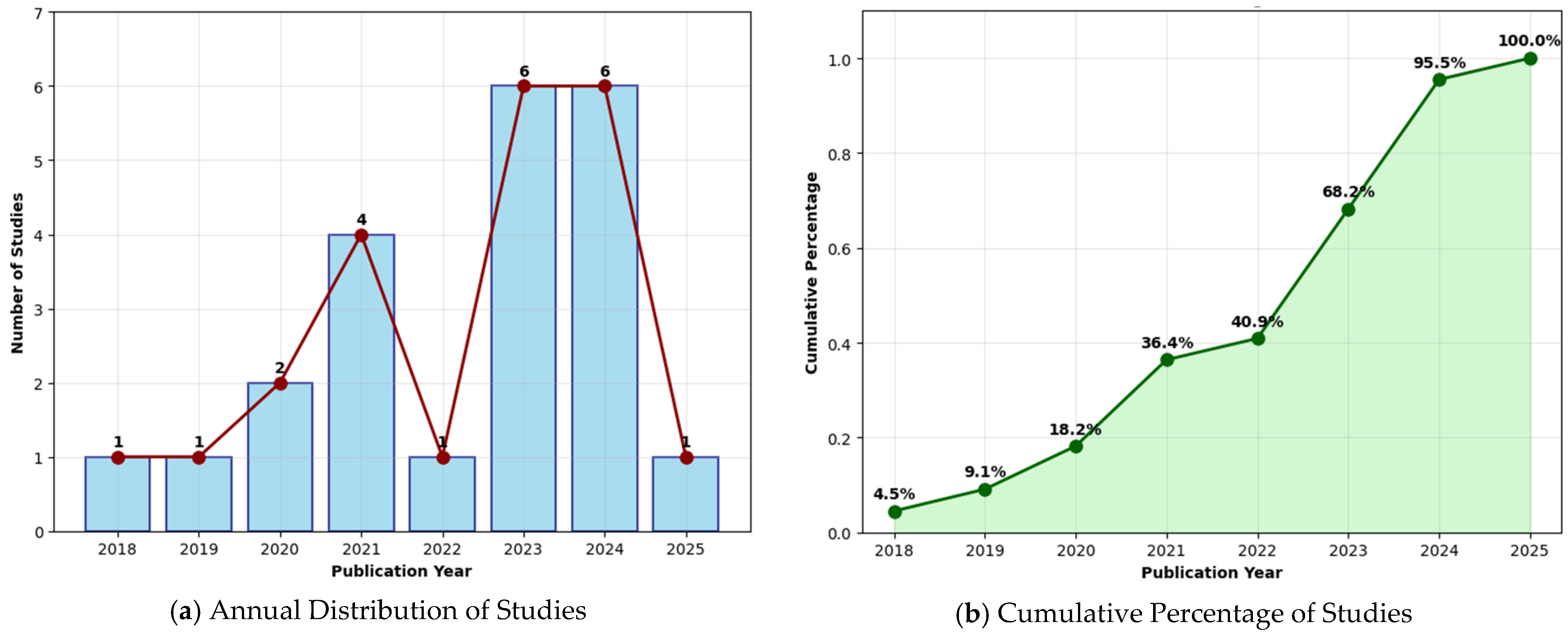
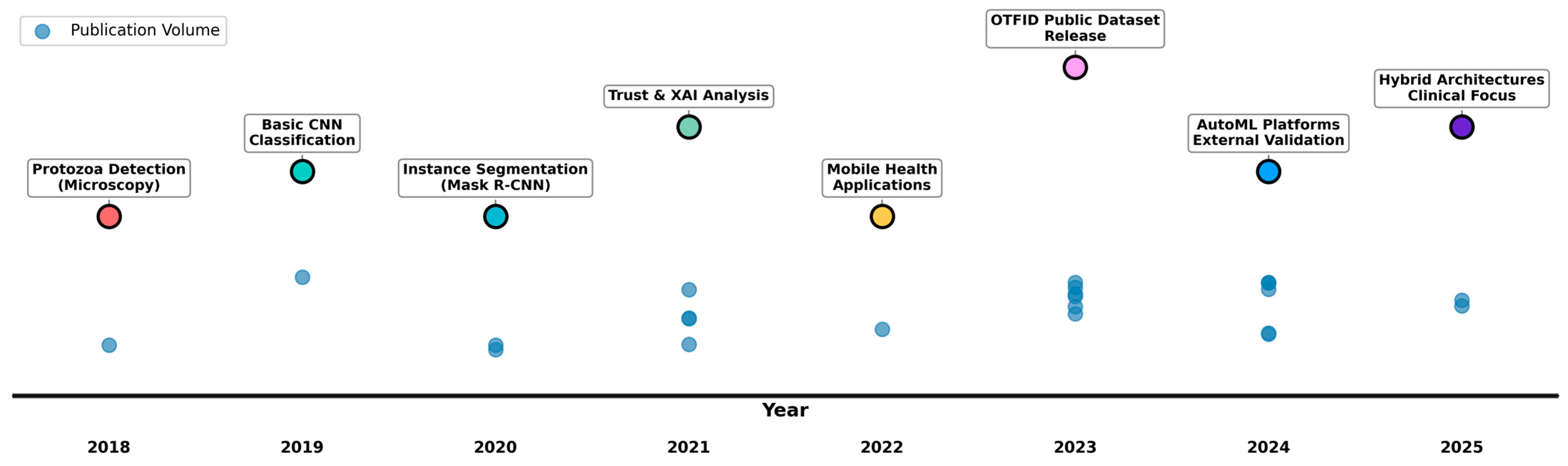
| Publication Year | Number of Studies | Cumulative Percentage |
|---|---|---|
| 2018 | 1 | 4.50% |
| 2019 | 1 | 9.10% |
| 2020 | 2 | 18.20% |
| 2021 | 4 | 36.40% |
| 2022 | 1 | 40.90% |
| 2023 | 6 | 68.20% |
| 2024 | 6 | 95.50% |
| 2025 | 1 | 100.00% |
| Total | 22 |
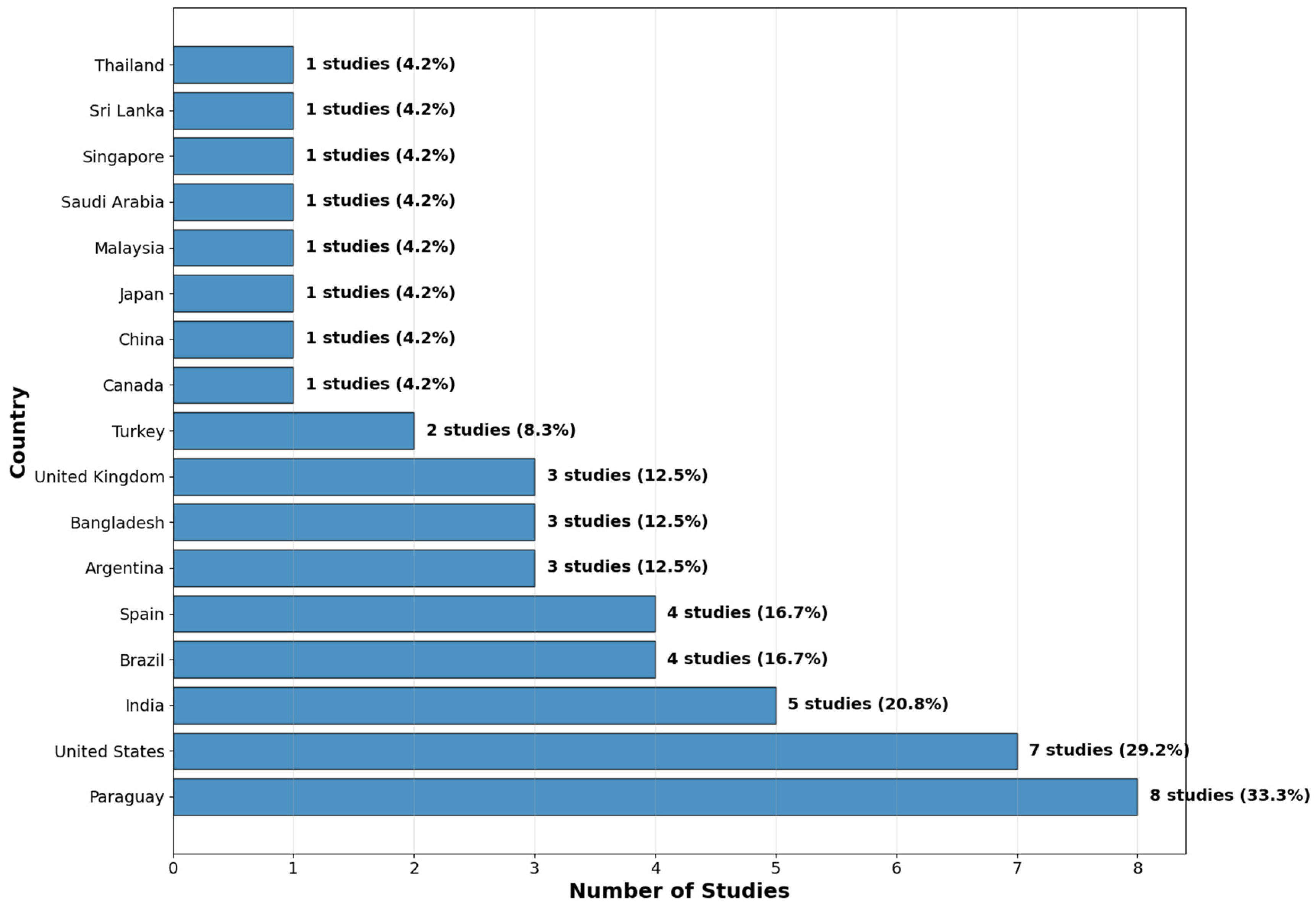
| Country | Number of Studies * | Percentage of Studies (n = 22) |
|---|---|---|
| Paraguay | 6 | 27.30% |
| United States | 5 | 22.70% |
| Spain | 4 | 18.20% |
| Brazil | 3 | 13.60% |
| India | 3 | 13.60% |
| Argentina | 2 | 9.10% |
| Bangladesh | 2 | 9.10% |
| United Kingdom | 2 | 9.10% |
| Canada | 1 | 4.50% |
| China | 1 | 4.50% |
| Japan | 1 | 4.50% |
| Malaysia | 1 | 4.50% |
| Saudi Arabia | 1 | 4.50% |
| Singapore | 1 | 4.50% |
| Sri Lanka | 1 | 4.50% |
| Thailand | 1 | 4.50% |
| Turkey | 1 | 4.50% |
| Total Affiliations | 34 |
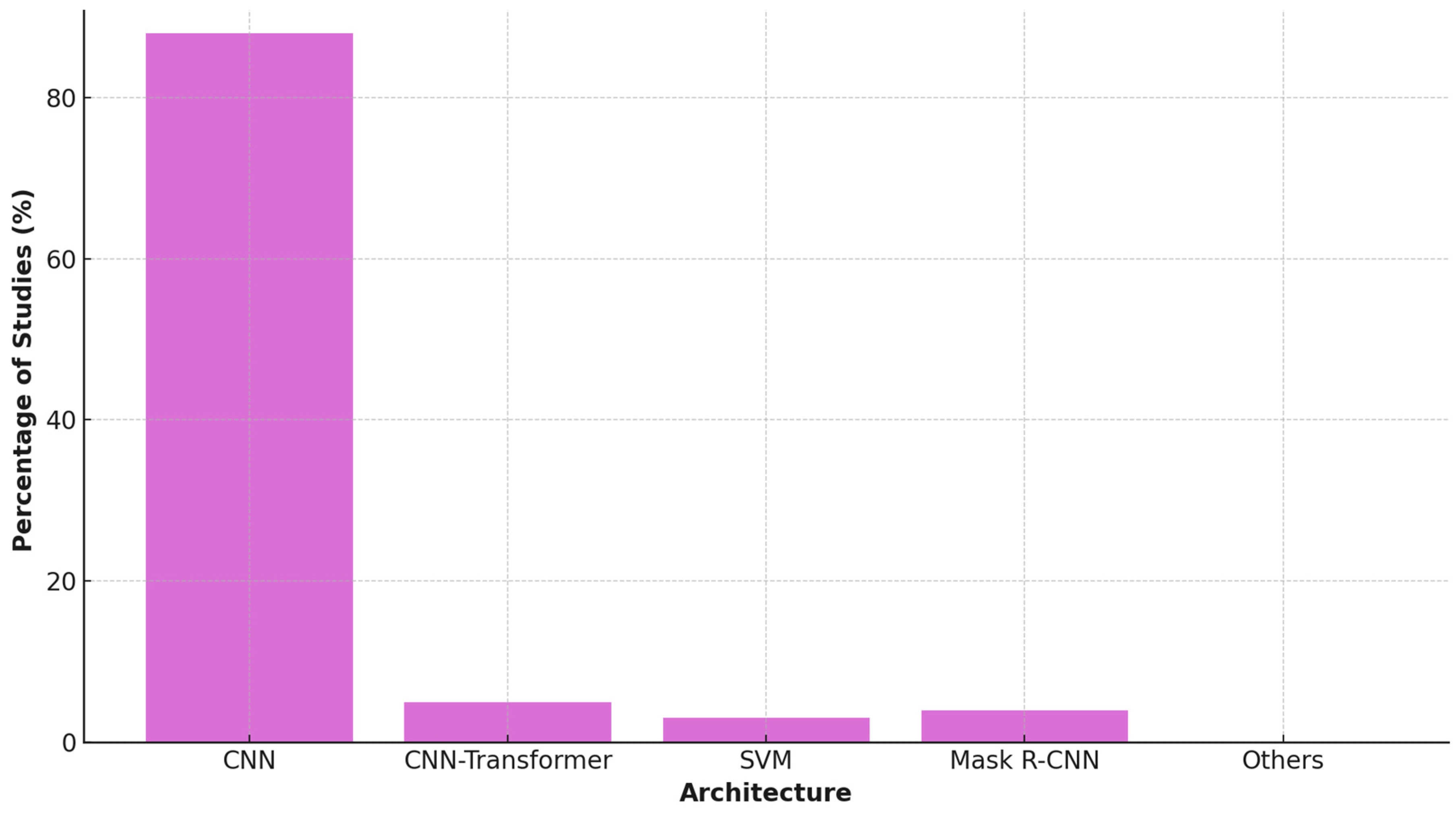
| Architecture | Prevalence in OT Studies | Key Advantages in OT Context | Key Limitations/Challenges in OT Context | Clinical Translation Implication |
|---|---|---|---|---|
| CNNs (e.g., VGG16) | Very High |
|
| Good for initial proof-of-concept; requires careful regularization and large datasets for robust performance. |
|
| |||
| ||||
| ResNet & Variants | High |
|
| One of the most suitable current architectures for OT, balancing performance and data efficiency. |
|
| |||
| ||||
| Transformer-Based/Hybrid | Emerging/Low |
|
| Not yet practical for most OT applications due to data scarcity; represents a future direction. |
|
| |||
| ||||
| AutoML Platforms | Emerging/Low |
|
| Useful for rapid prototyping and benchmarking, but may lack the specificity of bespoke models. |
|
| |||
|
| |||
| Instance Segmentation (e.g., Mask R-CNN) | Low |
|
| High clinical value for monitoring lesion size, but hindered by current data annotation bottlenecks. |
|
|
| Characteristic | Findings (n = 22 Studies) | Implications & Challenges |
|---|---|---|
| Dataset Size (Images) | Wide heterogeneity; most studies operate with small datasets, increasing overfitting risk and limiting model complexity. | |
| Data Source | Notable lack of external validation; nascent stage in open science initiatives and data sharing. | |
| Imaging Modality |
| Underutilization of advanced modalities (OCT/OCTA) that provide detailed structural and vascular data. |
| Commonly Reported Challenges | Leads to biased models, questions real-world performance, and severely limits clinical trust due to the “black box” problem. | |
| ||
|
Disclaimer/Publisher’s Note: The statements, opinions and data contained in all publications are solely those of the individual author(s) and contributor(s) and not of MDPI and/or the editor(s). MDPI and/or the editor(s) disclaim responsibility for any injury to people or property resulting from any ideas, methods, instructions or products referred to in the content. |
© 2025 by the authors. Licensee MDPI, Basel, Switzerland. This article is an open access article distributed under the terms and conditions of the Creative Commons Attribution (CC BY) license (https://creativecommons.org/licenses/by/4.0/).
Share and Cite
Suprianto, D.; Fitri, L.E.; Sofia, O.; Sabarudin, A.; Mahmudy, W.F.; Prabowo, M.H.; Surareungchai, W. The Evolution of Artificial Intelligence in Ocular Toxoplasmosis Detection: A Scoping Review on Diagnostic Models, Data Challenges, and Future Directions. Infect. Dis. Rep. 2025, 17, 148. https://doi.org/10.3390/idr17060148
Suprianto D, Fitri LE, Sofia O, Sabarudin A, Mahmudy WF, Prabowo MH, Surareungchai W. The Evolution of Artificial Intelligence in Ocular Toxoplasmosis Detection: A Scoping Review on Diagnostic Models, Data Challenges, and Future Directions. Infectious Disease Reports. 2025; 17(6):148. https://doi.org/10.3390/idr17060148
Chicago/Turabian StyleSuprianto, Dodit, Loeki Enggar Fitri, Ovi Sofia, Akhmad Sabarudin, Wayan Firdaus Mahmudy, Muhammad Hatta Prabowo, and Werasak Surareungchai. 2025. "The Evolution of Artificial Intelligence in Ocular Toxoplasmosis Detection: A Scoping Review on Diagnostic Models, Data Challenges, and Future Directions" Infectious Disease Reports 17, no. 6: 148. https://doi.org/10.3390/idr17060148
APA StyleSuprianto, D., Fitri, L. E., Sofia, O., Sabarudin, A., Mahmudy, W. F., Prabowo, M. H., & Surareungchai, W. (2025). The Evolution of Artificial Intelligence in Ocular Toxoplasmosis Detection: A Scoping Review on Diagnostic Models, Data Challenges, and Future Directions. Infectious Disease Reports, 17(6), 148. https://doi.org/10.3390/idr17060148