1. Introduction
Coronavirus disease 2019 (COVID-19), caused by severe acute respiratory syndrome coronavirus 2 (SARS-CoV-2), was declared a global pandemic by the World Health Organization (WHO) in March 2020 [
1]. As in many countries worldwide, Saudi Arabia faced a substantial burden from the COVID-19 pandemic, which placed significant pressure on the national healthcare system due to repeated waves of infection, high hospitalization rates, and the high prevalence of chronic non-communicable diseases in the population. This burden was especially evident among individuals with pre-existing comorbidities such as DM, hypertension, cardiovascular disease, and obesity, which are highly prevalent in Saudi Arabia and have been associated with worse COVID-19 outcomes.
Although it is primarily a respiratory disease, there is increasing evidence of systemic effects, including significant involvement of the gastrointestinal (GI) tract [
2]. SARS-CoV-2 binds to angiotensin-converting enzyme 2 (ACE2) receptors, which are abundant in the digestive tract, disrupting the gut microbiota and contributing to symptoms such as diarrhea, nausea, and vomiting [
3]. In addition to acute gastrointestinal manifestations, emerging evidence indicates that SARS-CoV-2-related intestinal involvement may persist beyond the acute phase, contributing to long-term gastrointestinal dysfunction and symptom recurrence.
Nutritional status plays a crucial role during COVID-19 and influences susceptibility to infection, disease severity, and recovery [
4]. Malnutrition exacerbates disease progression, prolongs hospitalization, and increases risk of death [
5]. Patients with pre-existing comorbidities, such as diabetes mellitus (DM), hypertension (HTN), and chronic kidney disease (CKD), are at greater nutritional risk and demonstrate poorer treatment outcomes [
6]. Acute COVID-19 symptoms such as anosmia, dysgeusia, and gastrointestinal complaints can impair food intake and increase the risk of malnutrition [
7]. Although most patients recover within a few weeks, a significant number still suffer from persistent symptoms after four weeks, a condition referred to by the CDC (Centers for Disease Control and Prevention) as Long COVID [
8]. Early post-infection assessments may underestimate the true burden of post-COVID-19 syndrome, as gastrointestinal and nutritional symptoms often emerge or persist months after hospital discharge and are not consistently included in initial follow-up reports. New research suggests that long-term gastrointestinal tract dysfunction, including altered gut motility, malabsorption, and dysbiosis, may contribute to persistent nutritional deficiencies [
9]. Survivors often report appetite loss, food aversions and unintentional weight changes, raising concerns about chronic malnutrition [
10]. However, most studies focus on the acute phase or short-term follow-up (≤1 year), leaving critical gaps in our understanding of long-term nutritional and GI outcomes [
11].
The interplay between persistent gastrointestinal symptoms, nutritional risk, and pre-existing conditions in COVID-19 survivors has not yet been adequately explored. Limited longitudinal data are available to determine whether persistent GI symptoms predict long-term nutritional risk and whether pre-existing comorbidities worsen nutritional deterioration over extended follow-up periods, especially in Middle Eastern populations.
Therefore, the primary outcome of this study was to assess the prevalence and pattern of persistent gastrointestinal symptoms during long-term follow-up among hospitalized COVID-19 survivors. The secondary outcomes were to evaluate nutritional risk using the Malnutrition Screening Tool (MST), examine changes in food intake and physical activity, and explore associations between gastrointestinal symptoms and nutritional and lifestyle factors, stratified by comorbidity status.
This study is unique for its extended follow-up period and focus on a Saudi Arabian cohort, addressing a significant regional and temporal gap in the literature. The findings aim to inform post-COVID-19 follow-up strategies to improve long-term nutritional and digestive health.
2. Materials and Methods
2.1. Study Design, Setting, and Population
This research utilized a retrospective cohort design paired with prospective follow-up to evaluate the link between nutritional risk and the long-term persistence of gastrointestinal (GI) symptoms among COVID-19 survivors. The study focused on adult patients (≥18 years) treated within the Internal Medicine Department and Intensive Care Unit (ICU) at King Salman Specialist Hospital in Ha’il, Saudi Arabia. The enrollment window spanned from January 2021 to January 2023, with all cases verified through polymerase chain reaction (PCR) testing for SARS-CoV-2.
Eligibility and Participant Selection:
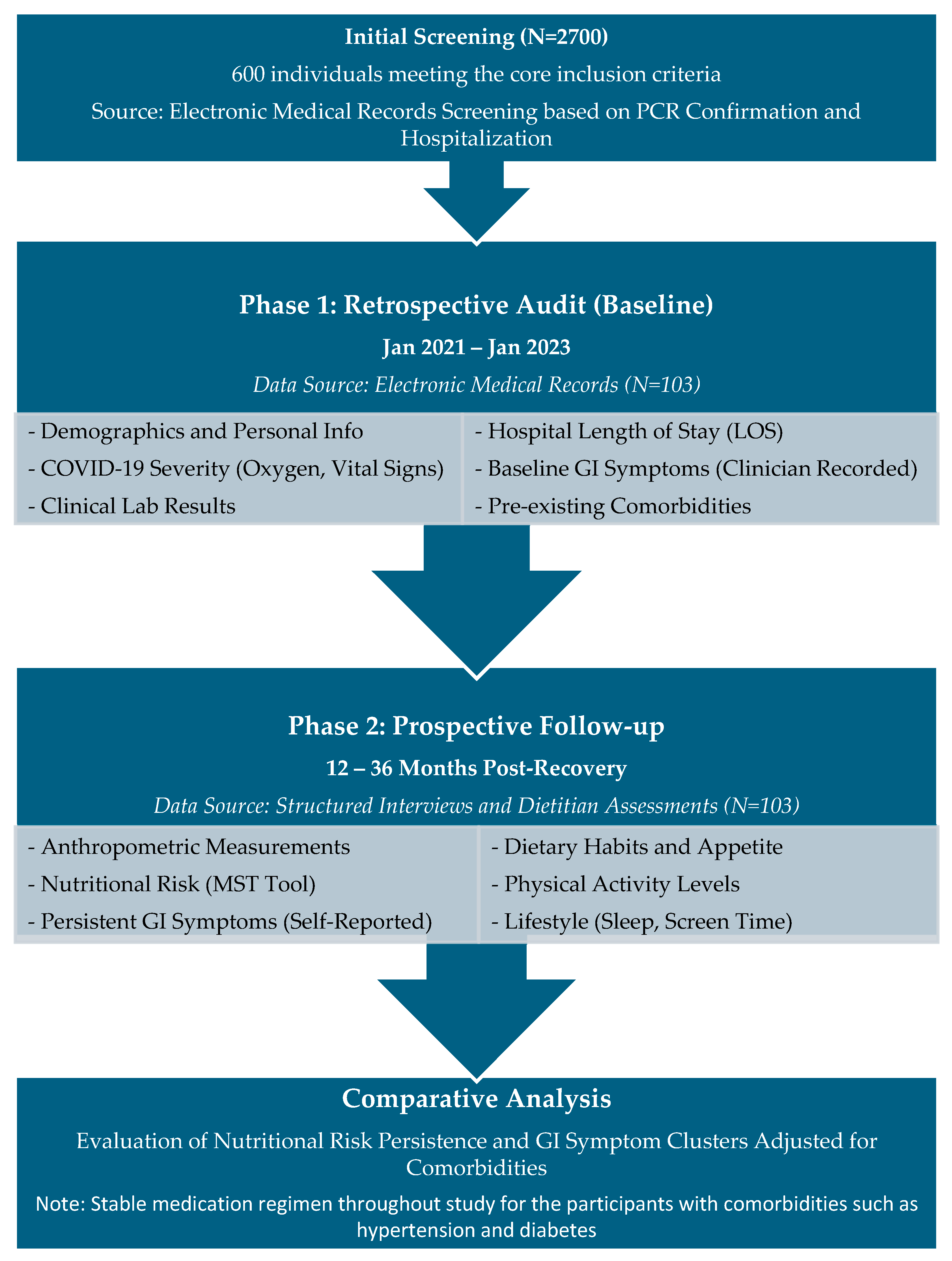
Initially, 2700 electronic medical records were screened, with 600 individuals meeting the core inclusion criteria. Participants were excluded if they had confounding medical histories, such as pre-existing GI disorders, renal failure, malignancy, or immunodeficiency. Other exclusion factors included pregnancy, residency outside the Ha’il region, or a lack of informed consent.
Ultimately, 103 survivors consented to participate (a 17% response rate). This participation level is characteristic of post-pandemic research, where “study fatigue” and the psychological impact of severe illness often limit enrollment. Despite these challenges, the cohort remains representative of those motivated to engage in long-term recovery monitoring.
Data collection strategy:
As shown in
Figure 1, the flowchart demonstrates the study’s longitudinal continuity. While the data collection method evolved from EMR extraction to survey-based interviews, the target variables (GI health and nutritional risk) were consistently tracked. The stability of comorbidity medications ensures that longitudinal changes in GI symptoms are more likely associated with the post-COVID clinical course rather than pharmaceutical variance.
The study tracked patient progress across two distinct chronological phases:
Phase I: Baseline (Acute Hospitalization): Trained dietitians conducted a retrospective audit of admission records to document the initial clinical state. This included anthropometric data, vital signs, oxygen requirements, laboratory markers, and pre-existing comorbidities. Detailed records of the history of present illness (e.g., onset date and symptoms prior to admission) and hospital length of stay (LOS) were also recorded.
Phase II: This study comprised a long-term, prospective follow-up designed to capture a comprehensive cross-sectional view of participants’ health status at varying intervals post-infection. Recruitment and assessment occurred between 12 and 36 months following initial recovery, defined as a documented negative PCR test or formal discharge from hospital or quarantine facilities. To ensure methodological rigor across this one-to-three-year window, each participant underwent a standardized 45 min face-to-face clinical visit. The visit structure was strictly timed to maintain consistency: the initial 15 min were dedicated to objective anthropometric measurements including weight, height, and body mass index (BMI) recorded by trained dietitians. This was followed by a 20 min semi-structured interview conducted by a trained dietitian using a digital interface (google form) to minimize data entry errors. The final 10 min focused on a detailed review of gastrointestinal symptoms.
Researchers cross-referenced current medication regimens for comorbidities, such as hypertension and diabetes, to ensure they remain stable from the point of hospital admission. This stability minimizes the risk of medication-induced symptom variance, suggesting that observed changes in appetite or gastrointestinal health were more likely attributable to post-viral sequelae than pharmacological interventions.
Instrumentation and Validation:
The assessment tool utilized in this phase was a hybrid instrument specifically developed to balance comparability with existing literature and sensitivity to post-COVID-19 sequelae. The questionnaire was adapted from established sources, incorporating standardized components from the Global Physical Activity Questionnaire (GPAQ) and validated dietary frequency scales. To ensure the instrument’s psychometric integrity, a robust validation process was used. Content validity was established through a formal review by a panel of three independent experts in clinical nutrition, ensuring the items accurately captured the evolving self-reported data required by the protocol. The adapted tool then underwent a pilot study involving a small cohort of post-COVID patients (n = 15) to confirm linguistic clarity and cultural relevance. Statistical analysis of the pilot data demonstrated strong internal consistency, with Cronbach’s alpha coefficient of 0.81, confirming the instrument’s reliability for multidimensional lifestyle and symptomatic assessments in this population.
The study’s cohort of 103 participants is consistent with the typical sample sizes documented in COVID-19 nutrition studies. In their systematic review and meta-analysis, Feng et al. [
12] examined 17 studies, with sample sizes ranging from 27 to 760 individuals, that used the Nutrition Risk Score (NRS-2002) instrument to evaluate malnutrition risk in hospitalized COVID-19 patients. Importantly, 41% of the included studies had sample sizes of 101 participants or fewer, suggesting that similar research has significantly added to the body of scientific information.
The successful detection of significant connections within the meta-analysis pooled data shows that the current sample size functions within the defined parameters and provides adequate statistical power for identifying clinically meaningful differences. Furthermore, a significant geographical research vacuum was identified in Middle Eastern populations by the systematic review, which makes this work a useful addition to the global COVID-19 malnutrition research landscape [
12].
2.2. Clinical Characteristics and Anthropometric Measurements
Clinical parameters were extracted from electronic medical records and included demographic information, severity of COVID-19 infection, comorbidities, and GI symptoms. During the follow-up visit, a validated questionnaire was completed in a face-to-face interview with participants to collect information about their post-COVID-19 dietary habits, supplement intake, GI symptoms, and physical activity. Height and weight were measured twice: once at hospital admission from the patient record and again at follow-up. Body mass index (BMI) was calculated as weight divided by height squared. The validated Malnutrition Screening Tool (MST) was used to identify malnutrition—or lack thereof—in participants using data from patient medical records at hospital admission and then during the follow-up visit [
13].
Instead of performing a thorough nutritional assessment, MST is designed to identify individuals at risk of malnutrition. It mainly evaluates recent inadvertent weight loss and reduced food consumption linked to appetite problems. The European Society for Clinical Nutrition and Metabolism (ESPEN) recommends using validated tools such as MST for the first nutritional risk screening in hospitalized patients, and this approach is in line with their guidelines. Height and weight were measured at hospital admission and during follow-up using a calibrated MDW Digital Fitness Scale and an MDW 3000L mechanical column scale with an integrated stadiometer, manufactured by Adam Equipment (UK-headquartered weighing instrument company) [
14].
2.3. Ethical Considerations
This study was approved by the Standing Committee on Research Ethics (REC) of the University of Ha’il (H-2021-251). The study followed the National Health and Medical Research Council Ethical Conduct in Human Research and the Helsinki Declaration, with informed consent provided by all participants before commencement. We ensured that they fully understood the aims, methods, potential risks, and benefits of the study. To protect the participant’s privacy, all data collected will be anonymized and kept strictly confidential. Only authorized researchers will have access to this data, and effective measures will be taken to prevent unauthorized access or disclosure.
2.4. Statistical Analysis
Data analysis was conducted using IBM SPSS Statistical Software for Windows, version 27.0 (IBM Corp, Armonk, NY, USA). For descriptive statistics, continuous variables, such as age (in years), were summarized using the mean ± standard deviation (SD). All categorical variables, including gender, education, employment status, marital status, monthly income, weight status, malnutrition risk, and GI symptoms— were presented as frequencies (n) and percentages (%). Inferential statistics were performed using Chi-square (χ2) tests to compare the distribution of categorical variables, such as sociodemographic characteristics, weight status, malnutrition risk, and the prevalence of post-recovery GI symptoms, between participants with comorbidities and that without. The Chi-square test was also used to assess the association between the presence of post-recovery GI symptoms and various nutritional and lifestyle factors. For all statistical tests, a p-value of less than 0.05 was considered statistically significant. To determine the adequacy of the sample size, a post hoc power analysis was performed. For the primary bivariate comparisons between participants with comorbidities (n = 71) and those without (n = 32), the total sample of 103 was sufficient to detect a medium-to-large effect size (Cohen’s d = 0.60 or w = 0.30) with a statistical power (1 − β) of 0.80 and an alpha level of 0.05. This confirms that the study was appropriately powered for the bivariate and descriptive methods employed.
Multivariate regression analysis was not performed due to sample size limitations. According to Green’s guidelines [
15] for regression analysis, a sample size of 103 participants would be insufficient to support multiple predictor variables in regression modeling without risking model overfitting and inaccurate parameter estimates, particularly when stratified by comorbidity status (71 with comorbidities vs. 32 without). In accordance with established statistical principles, which recommending a minimum of 10–15 observations per predictor variable to prevent regression model overfitting, the decision to restrict analysis to bivariate approaches was maintained. As this population has received limited academic attention, these methods provide vital and reliable baseline data without the risk of producing deceptive results that may not generalize outside of the study sample. The results of the bivariate analyses are interpretable and offer a strong basis for comprehending the correlations between variables in this understudied group [
15].
The absence of detailed quantitative dietary data analysis is justified primarily by the nature of the data collected and the study’s immediate clinical focus. The results presented only include categorical substitute measures of dietary and nutritional behavior, such as food intake change since COVID-19 diagnosis (increased, decreased, no change), meal omission (yes/no), and malnutrition risk assessed via the MST score. Furthermore, detailed and specific food intake information was not recorded in the patients’ medical records, which restricted any quantitative analysis of specific nutrients or caloric consumption. The prescribed special diets during hospitalization (e.g., diabetic, low sodium) reflected standard hospital management protocols rather than quantitative measures of actual patient intake or post-recovery dietary habits. Therefore, these data were not suitable for inferential analysis of the etiology of post-recovery gastrointestinal (GI) symptoms. The analysis was thus limited to examining statistically significant associations between clinical and behavioral factors (e.g., malnutrition risk, weight change, meal omission) and GI symptoms, as the specific dietary intake data needed for a more comprehensive nutritional analysis were unavailable.
The study achieved 100% data completeness for all 103 participants, eliminating the need for statistical imputation or case exclusion. This was ensured through a prospective design featuring face-to-face interviews conducted by trained dietitians and a digital data-entry system with mandatory fields for real-time validation. By capturing all data point during the clinical visit, the study maximized statistical power and avoided the biases typically associated with missing data in small cohorts.
3. Results
Table 1 summarizes the socio-demographic characteristics of the 103 COVID-19 patients included in the study, comprising 71 individuals with comorbidities and 32 without, with the former group being notably older than the latter (mean age: 58.2 vs. 48.2 years). Overall, the sample showed a nearly equal gender distribution, although there were slightly more male patients with comorbidities, while females predominated in the non-comorbid group.
Patients without comorbidities had higher educational attainment and to be employed compared with those with comorbidities. Most participants were married across both groups. The majority of the samples reported a monthly income of SAR ≤10,000, with similar income distributions observed regardless of comorbidity status.
Table 2 outlines the relationship between weight status and malnutrition risk among COVID-19 patients according to comorbidity status at hospital admission and follow-up. Among patients with comorbidities, obesity was the predominant weight category across all time points and nutritional risk groups, although its prevalence decreased slightly at follow-up among those at risk of malnutrition. In this subgroup, an increase in the proportion of overweight individuals at malnutrition risk was observed over time. Among patients without comorbidities, weight distribution was more balanced, with obesity remaining common but relatively stable across assessments. No underweight cases were reported in this group.
Overall, obesity was highly prevalent among COVID-19 patients, while shifts toward overweight status among those at malnutrition risk, particularly in patients with comorbidities, suggest dynamic changes in nutritional risk during hospitalization and recovery.
Table 3 illustrates the prevalence of post-recovery GI symptoms among COVID-19 patients, stratified by comorbidity status. Among 103 COVID-19 patients, approximately 41% experienced at least one GI symptom after recovery.
The most common symptoms were abdominal pain (15.5%) and diarrhea (12.6%), with no significant difference between patients with or without comorbidities. Other symptoms such as loss of appetite, nausea/vomiting, and irritable bowel syndrome (IBS) occur at similar rates across both groups. Overall, the presence of comorbidities did not significantly influence the prevalence or type of post-recovery GI symptoms.
The post-recovery gastrointestinal symptoms evaluated included abdominal pain, diarrhea, constipation, nausea, vomiting, appetite loss, and symptoms consistent with irritable bowel syndrome (IBS), as reported by participants during follow-up. IBS-related symptoms were identified based on self-reported functional gastrointestinal complaints, such as abdominal pain associated with altered bowel habits, rather than formal clinical subtyping. Vomiting and nausea were recorded as nonspecific gastrointestinal symptoms, and no etiological classification or underlying causes were assessed because of the retrospective nature of the study.
Table 4 examines the association between GI symptoms and various demographic, nutritional, and lifestyle factors in post-recovery COVID-19 patients. Among the 103 post-COVID-19 patients, those experiencing gastrointestinal (GI) symptoms showed significant associations with several nutritional and behavioral factors. Specifically, over half of the symptomatic individuals reported weight loss (54.8%) compared to 29.5% of asymptomatic patients, indicating a strong link between weight change and GI symptoms (
p = 0.014). Additionally, decreased food intake was more prevalent among those with symptoms (59.5%) versus those without (23.0%) (
p = 0.001). Malnutrition risk, assessed by the MST score, was also significantly higher in the symptomatic group (61.9%) compared to the asymptomatic group (29.5%) (
p = 0.001).
Meal omission was more common among symptomatic (61.9%) than asymptomatic patients (39.3%) (p = 0.024). Furthermore, a decline in physical activity levels was significantly associated with GI symptoms, with 76.2% of symptomatic patients reporting reduced activity compared to 50.8% of asymptomatic patients (p = 0.003). However, participation in regular exercise did not differ significantly between groups.
Overall, these findings suggest that nutritional decline, weight loss, and decreased physical activity are closely linked to persistent GI symptoms in post-COVID-19 patients.
The distribution of comorbid conditions among the COVID-19 patients included in the study showed that comorbidities were present in 71 patients (68.9%); furthermore, patients could have several diseases at the same time. In these 71 patients, type 2 DM was the most common comorbidity, affecting 17 patients (23.6%). This was followed by type 2 DM combined with hypertension (HTN) in 12 patients (16.7%) and HTN alone in 5 (6.9%). In addition, four patients each (5.5%) had either type 1 DM or asthma with hypertension. The remaining patients had various combinations of diseases, including cardiovascular disease (CVD), ischemic heart disease (IHD), type 1 DM, CVD with IHD and type 2 DM, and type 2 DM with HTN and CKD, as well as HTN with chronic obstructive pulmonary disease (COPD), DM, and asthma.
These findings highlight the substantial burden of metabolic and cardiovascular comorbidities among hospitalized COVID-19 patients and underscore the potential influence of chronic diseases on infection outcomes and recovery trajectories.
The types of special diets provided to COVID-19 patients during hospitalization varied according to the length of hospital stay. Patients with longer hospitalizations, many of whom had comorbidities such as DM and hypertension (HTN), were more likely to receive specialized therapeutic diets. These included diabetic diets, low-sodium diets, and renal-specific regimens designed to manage underlying chronic conditions and support recovery during prolonged treatment.
Across all hospitalization durations, the diabetic diet was the most frequently prescribed dietary intervention, remaining predominant even among patients with shorter stays (1–10 days). In contrast, patients with shorter hospitalizations, often those without comorbidities or with less severe illness, were primarily placed on standard hospital diets without the need for substantial dietary modification.
Overall, these findings underscore the influential role of comorbidities in determining inpatient dietary management, with longer hospital stays associated with greater reliance on individualized, condition-specific nutritional interventions.
4. Discussion
In recent years, the COVID-19 pandemic has affected people from different population groups around the world. Research shows that people with pre-existing comorbidities are more susceptible to severe consequences than those without. Understanding the clinical–demographic characteristics, nutritional risk, and comorbidities of COVID-19 patients could be a key element in minimizing disease symptoms, as well as achieving a full, if not better, recovery to pre-COVID pandemic health status and a lower mortality rate.
Our findings on the prevalence of comorbidities are consistent with those of previous studies. Any comorbidity is a determining factor for a poor prognosis, and diseases such as hypertension, diabetes, respiratory diseases, CVD, and their vulnerability states carry a higher risk of severe illness or death [
16]. Some studies have shown a link between hypertension and other CVD and COVID-19 [
17,
18]. Our data showed that 68.9% of participants had comorbidities, mainly DM and hypertension, which is consistent with worldwide studies linking metabolic disorders to severe COVID-19. The higher mean age of patients with comorbidities (58.24 vs. 48.22 years) is consistent with age as a major risk factor for poor outcomes [
18]. Socio-demographic differences are noteworthy: comorbid patients had lower educational attainment (26.8% vs. 12.5% with no formal schooling) and higher unemployment (67.6% vs. 31.3%), highlighting the role of socioeconomic inequalities in health burden [
16]. The prevalence of low-income earners (≤10,000 SR: 65% overall) further emphasizes the need for targeted interventions to address access barriers to care and nutrition.
Respiratory disease leads to acute respiratory distress syndrome (ARDS). In addition, one study reported that diabetes, smoking, and heart disease are mainly responsible for MERS-CoV disease [
19]. SARS-CoV-2 is based on a high affinity for the ACE-2 receptor, which is present in large quantities not only in the epithelial cells of the lungs, but also in the intestine, kidneys, and blood [
20]. The expression of ACE2 receptors is increased in some comorbidities, such as hypertension and diabetes. SARS-CoV-2 attacks cells via ACE2 receptors. Therefore, comorbidities contribute to COVID-19 case severity [
21]. The innate immune response and macrophage and lymphocyte function are reduced in the presence of comorbidities, which may make individuals more susceptible to COVID-19 pathogenesis [
22]. The possible mechanism behind this increased susceptibility could therefore be explained by an individual’s immune function. As shown in our study population, the incidence of COVID-19 infection was more than twice as high in patients with pre-existing comorbidities as in patients without. Global malnutrition, especially protein–energy malnutrition, is the main cause of immunodeficiency [
23]. In the high-risk population for adverse outcomes of COVID-19, including the elderly and people with comorbidities, nutritional status plays an important role at all stages of infection [
24]. Recent post-COVID-19 follow-up studies have shown that malnutrition and nutritional risk may persist for months to years after acute infection, particularly among older adults and individuals with chronic comorbidities, reinforcing the long-term clinical importance of nutritional screening in COVID-19 survivors [
25]. Another study showed that the prevalence of malnutrition 4–5 months after acute illness was 22%. Participants who were not hospitalized during acute COVID-19 disease had a higher prevalence of malnutrition (26%) than those who required hospitalization (19%). In addition, malnutrition was found in 25% of COVID-19 survivors over the age of 65, compared to 21% of younger participants [
25].
Also, when examining the frequency of gastrointestinal symptoms and nutritional risk between the two groups in our study—those with and without comorbidities—at the time of hospital admission and at follow-up visits, we found that the subgroup of patients with comorbidities had a higher nutritional risk of 55.6%, while in the subgroup without it was 87.1%. Previous studies have shown that the prevalence of malnutrition in hospitalized COVID-19 patients ranges from 14 to 70%, depending on the study population, intensity of care, and screening/assessment tool used [
26]. In our study, a comparison of gastrointestinal symptoms between patients with and without risk of malnutrition using the MST assessment on admission revealed appetite disturbances in 16.7% of patients at risk of malnutrition and comorbidities, compared with 0.0% of patients without. In contrast, these symptoms were more common in patients with comorbidities. This finding is consistent with recent large-scale cohort and review studies that report persistent gastrointestinal symptoms, including abdominal pain, diarrhea, and functional gastrointestinal disorders, as part of long COVID syndromes extending well beyond the acute phase of infection [
27,
28].
During the follow-up period (mean 26.6 months), the data indicated that COVID-19 may affect the gastrointestinal mucosa over a longer period. The incidence of gastrointestinal symptoms was significantly higher in patients with pre-existing comorbidities (43.7%) than in patients without (34.4%), as shown in
Table 3. Consequently, 56.3% of patients with comorbidities reported no gastrointestinal symptoms, while 65.5% of patients without comorbidities were symptom-free. Several studies have shown various gastrointestinal symptoms as part of COVID-19 infection manifestation [
29]. Fever, cough, and fatigue remain the most common symptoms, but data has shown that gastrointestinal symptoms (such as anorexia, nausea, vomiting, diarrhea, and abdominal pain) can also occur, albeit to a lesser extent than respiratory symptoms [
30]. In our study population, abdominal pain was the most frequently reported gastrointestinal symptom (15.5%), followed by diarrhea (12.6%) and constipation (11.7%), while vomiting was less common (7.8%) in both patient groups. Appetite loss with or without constipation was the second most common symptom and occurred more frequently in patients without comorbidities (9.4%) than in those with (9.9%). Constipation accompanied by appetite loss occurred in only 2.9% of the study population. IBS, characterized by symptoms such as abdominal pain, constipation, loss of appetite, diarrhea, and nausea, was reported at similar frequencies in patients with and without comorbidities (7.0% vs. 6.3%, respectively). New-onset gastrointestinal disorders were uncommon in both groups. Acute gastritis was reported only in patients without comorbidities (3.1%), while peptic ulcer was reported only in patients with comorbidities (1.4%).
The underlying reason for this may be explained by the results of previous studies suggesting that ACE2 receptors, which are primarily present in the airway mucosa, are also abundant in the digestive system, particularly in enterocytes in the lining of the ileum and colon [
31,
32]. Recent mechanistic studies suggest that persistent gut dysbiosis, low-grade inflammation, and altered gut–immune interactions may contribute to prolonged gastrointestinal symptoms in long COVID patients [
33]. The attachment of the SARS-CoV-2 virus to the ACE2 receptors of the digestive system is thought to disrupt the normal intestinal flora and lead to various gastrointestinal symptoms, especially diarrhea [
29]. Emerging evidence indicates that SARS-CoV-2 infection disrupts the intestinal ecosystem, leading to gut dysbiosis with reduced microbial diversity and altered composition. This disruption may contribute to persistent gastrointestinal symptoms and prolonged inflammatory responses after acute infection. Therefore, a key therapeutic goal in managing post-COVID gastrointestinal manifestations is restoring intestinal eubiosis through nutritional optimization and targeted supportive interventions. In another study, diarrhea and vomiting were described in 9% and 7% of patients, respectively. They are thought to play an important role in the development of malnutrition, a risk factor in critically ill patients [
34]. A robust immune system is essential for fighting COVID-19 effectively. The patients were therefore given various nutritional supplements during their hospitalization, including zinc, oral nutrition, multivitamins, and vitamins D and C. These supplements were provided to both study groups. Patients with pre-existing comorbidities received all of these supplements more frequently. However, multivitamins and vitamin C were not administered at discharge. In addition, the remaining supplements were prescribed in lower doses after hospitalization, according to the results. As described in detail in the literature, the intake of various supplements, such as essential fatty acids, linoleic acids, essential amino acids, and the above-mentioned vitamins and minerals, can improve immune response, especially when immunity may also be due to a deficiency, such as in viral infections [
35]. It is important to know that vitamin D deficiency is often associated with an increased risk of respiratory infections, which could be crucial in viral infections such as COVID-19 [
36]. On the contrary, in a recent clinical trial of patients hospitalized with COVID-19, a single high dose of vitamin D3 did not significantly reduce hospital stay compared to a placebo [
37]. Therefore, these results do not conclusively support the use of a high dose of vitamin D3 for treating COVID-19.
Nutritional status appears to be a crucial factor determining COVID-19 patient outcome; however, there is no clear information on the effectiveness of early nutritional intervention in COVID-19 patients [
38,
39]. In this study, special attention was paid to diabetic patients during hospitalization (1–10 days) through diabetic (most common), enteral diabetic, high-protein, soft diabetic, low-potassium and high-concentration potassium, low-potassium high-protein, and low-potassium diabetic diets. In addition, high-protein diabetic and diabetic enteral diets were most used during prolonged hospitalization. Regarding the association between COVID-19 severity and length of hospitalization in patients with and without comorbidities, most patients in our study had moderate severity and were hospitalized for 1 to 10 days, with 44 patients (61.1%) falling into this category. Patients with comorbidities had more severe COVID-19 cases than those without comorbidities. Severe COVID-19 cases require longer hospital stays than moderate ones. Recent evidence shows that malnutrition prolongs hospitalization for COVID-19 patients. In turn, prolonged hospitalization and ICU admission are associated with significant muscle mass and strength loss, decreased physical function, and a higher risk of malnutrition [
40,
41].
Patient demographic characteristics were analyzed to compare health status at admission and follow-up, with particular attention paid to patients classified as malnourished according to the MST score. The analysis examined the differences between age groups during hospitalization and follow-up, which ranged from 9 to 47 months. A significant shift in age distribution was observed between these periods. It was also found that the risk of death was 1.5 and 3.8 times higher in those with a comorbidity or more than 10 comorbidities compared to those without underlying conditions [
42]. In this study, the majority of patients were either overweight or obese, with relatively few having a normal body weight. Obesity has been found to increase susceptibility to infection, as it tends to impair immune function [
43]. Previous studies suggest that several aspects may play a role, including chronic inflammatory status, delayed immune response, and the complex relationships and interactions between adipose tissue and the immune system [
44]. Since obese people have more adipose tissue, where large amounts of ACE2-expressing cells are found, this could indicate that they have a greater amount of ACE2.
In addition, COVID-19 has an increased affinity for ACE2 [
45], which is a putative receptor for entry into host cells [
46]. No clear association was observed between current weight status and gastrointestinal symptoms. In contrast, significant associations were found between gastrointestinal symptoms and changes in food intake, meal omission, physical activity, and risk of malnutrition (
Table 4). These associations reflect correlations observed in bivariate analyses and should not be interpreted as causal relationships. From enrollment to follow-up, changes in weight status were observed in patients without comorbidities. Specifically, the number of overweight patients decreased from five to three, and the number of obese patients decreased from six to four. Similar changes in weight status were also observed among patients with comorbidities during the same period. A plausible explanation for COVID-19 virulence in obesity and hostile outcomes is the increasing problem of micronutrient and protein deficiencies due to monotonous diets. This is a feature that is commonly observed in sarcopenic obesity, a condition characterized by concomitant low muscle mass and obesity [
47].
Given the global prevalence of this disease, there is considerable concern about exploring future therapeutic options to treat these chronic disorders. One area of focus is complementary and alternative medicine (CAM). As outlined by the National Center for Complementary and Integrative Health (NCCIH), CAM describes healthcare systems, practices, and medical devices that are not typically considered part of conventional medical care [
48].
In our study, we found that various complementary or natural supplements were used, including garlic, ginger, honey, turmeric, nigella and sativa, after recovery from COVID-19 and in the period between hospital discharge and follow-up visits. These supplements, which we refer to as complementary medicines, were used either individually or in combination. We compared the use of these complementary medicines in patients with and without comorbidities to assess their impact on the frequency of gastrointestinal symptoms after recovery. It was found that patients who did not take these complementary medicines had more gastrointestinal symptoms. Patients with comorbidities reported abdominal pain, nausea, diarrhea, and vomiting in 14 cases, compared with two cases in patients without. In addition, loss of appetite was reported at similar frequencies in patients with and without comorbidities (9.9% vs. 9.4%;
p = 0.939). IBS and appetite loss were more common among those who used honey than with the other materials. Conversely, ingestion of ginger was associated with a lower incidence of gastrointestinal symptoms in patients without comorbidities. In a previous large sample study of 276 patients using complementary medicine, ginger was the most commonly used herbal medicine in COVID-19 patients [
49]. In an earlier study, complementary medicines appeared to improve the course of the disease, shortening the time to resolution of fever and reducing the rate of progression to severe cases [
50].
Another important factor that could help in establishing the link between gastrointestinal symptoms, comorbidity, and nutritional risk is the level of physical activity of COVID-19 patients. In our study, patients suffering from abdominal pain, diarrhea, nausea, and vomiting were more likely to have lower levels of physical activity compared to patients without comorbidities.
Conversely, patients with appetite loss, regardless of whether it was associated with constipation, were more likely to have reduced physical activity if they had no comorbidities. A statistically significant correlation (p-value = 0.003) was found between the extent of gastrointestinal symptoms and physical activity. Overall, physical activity decreased in all patients, although there were slight differences between the two groups.
As found in a previous study, longer periods of illness, less participation in daily activities, and sedentary behavior were observed, as well as an associated deterioration in quality of life [
51]. Another study found no correlation between COVID-19 infection duration and the level of physical activity and independence. However, it was observed that people with a longer duration of illness could not regain their previous level of physical activity [
52].
Study limitations should be considered when interpreting these findings. The modest sample size restricted analyses to bivariate methods and prevented multivariable adjustment for potentially confounding effects, limiting the precision of association estimates. The low participation rate (17%) also raises concerns about selection bias, reflecting challenges commonly observed in longitudinal post-COVID-19 research.
The single-center design in a tertiary hospital in Saudi Arabia limits the generalizability of these findings to broader populations and care settings. Additionally, including only hospitalized COVID-19 patients may underrepresent individuals with milder disease presentations, limiting the applicability to the full COVID-19 survivorship spectrum. As a retrospective investigation, reliance on medical records and self-reported health histories may have resulted in the incomplete capture of pre-existing gastrointestinal disorders; undiagnosed functional GI conditions cannot be fully excluded, thereby limiting the causal attribution of persistent GI symptoms to COVID-19.
Due to retrospective use of routinely collected clinical data, nutritional assessment was based on the MST, which is a validated screening instrument but not a comprehensive dietary assessment method. Despite these limitations, this study provides valuable baseline data and highlights important associations between nutritional risk and persistent gastrointestinal symptoms in COVID-19 survivors within a Middle Eastern cohort, informing priorities for future prospective research.
An additional limitation is the absence of a COVID-19-negative control group, which prevents direct comparison between individuals with and without prior SARS-CoV-2 infection and limits definitive attribution of the observed long-term gastrointestinal and nutritional outcomes solely to long COVID.
In addition, gastrointestinal symptoms, weight changes, dietary intake, and physical activity were self-reported and collected up to three years after acute infection, introducing the potential for recall bias and misclassification. The extended interval between infection and follow-up may have affected the accuracy of symptom reporting and limits confidence in the temporal persistence of reported outcomes.
Furthermore, the absence of repeated longitudinal assessments prevents confirmation of symptom trajectories over time, as outcomes were assessed at a single follow-up point rather than through serial measurements.
In addition, no significant association was found between current weight status and gastrointestinal symptoms, and differences in nutritional management practices should be interpreted descriptively rather than as evidence of effectiveness. Taken together, these methodological considerations underscore that the identified associations should be interpreted cautiously and do not support causal inference.




 ,
,