Review

Noonan Syndrome: A Comprehensive Review from Clinical Delineation to the Molecular Era of RASopathies and Lifelong Cardiologic Management


by
Giuseppe Calcaterra
1,
Maria Giulia Gagliardi
2,
Carlo Bassano
3,*,
Rosalinda Palmieri
4,
Giuseppe Vadalà
5,
Pier Paolo Bassareo
6 and
Marco Cappa
2
1
Independent Researcher, 90100 Palermo, Italy
2
Research Unit for Innovative Therapies in Endocrinopathies, Bambino Gesù Children’s Hospital, 00165 Rome, Italy
3
Department of Surgical Sciences, Tor Vergata University School of Medicine, Viale Oxford 81, 00133 Rome, Italy
4
ACHD Unit, Bambino Gesù Children Hospital, 00165 Rome, Italy
5
Department of Cardiology, University of Palermo, 90100 Palermo, Italy
6
Department of Cardiology, School of Medicine, University College of Dublin, D04V1W8 Dublin, Ireland
*
Author to whom correspondence should be addressed.
Cardiogenetics 2026, 16(2), 11; https://doi.org/10.3390/cardiogenetics16020011
Submission received: 9 January 2026 / Revised: 22 April 2026 / Accepted: 30 April 2026 / Published: 22 May 2026
(This article belongs to the Section Rare Disease-Genetic Syndromes)

Abstract

Noonan syndrome (NS) is a paradigmatic rare, genetically heterogeneous, multisystem disorder belonging to the RASopathies family, caused by dysregulated RAS/MAPK signaling. It is characterized by distinctive craniofacial features, postnatal short stature, and a high prevalence of congenital cardiac defects, with pulmonary valve stenosis (PS) and hypertrophic cardiomyopathy (HCM) being the hallmark lesions. First described by Dr. Jacqueline Noonan in 1968, the molecular era began with the discovery of PTPN11 mutations in 2001, revolutionizing diagnosis, risk stratification, and understanding of pathogenesis. Strong genotype–phenotype correlations now guide prognosis and personalized management; for instance, RAF1 and RIT1 variants confer a high risk of severe, early-onset HCM, while PTPN11 is strongly linked to dysplastic PS. Cardiac involvement remains the central determinant of long-term outcomes, requiring continuous surveillance from the prenatal period through adulthood. Management is inherently multidisciplinary, addressing endocrine, hematologic, neurodevelopmental, and oncologic aspects. Recent consensus statements emphasize the critical need for structured transition from pediatric to adult care. Novelty arises from the potential of MEK inhibitors as targeted therapies for severe HCM and lymphatic complications. This review provides a comprehensive update on NS, integrating foundational clinical knowledge with contemporary molecular insights, advanced cardiologic management, and emerging frontiers in therapy and diagnostics, underscoring the necessity of a proactive, lifelong, and personalized care approach.

1. Introduction: From a Cardiologist’s Insight to a Molecular Pathway

The story of Noonan Syndrome (NS) is a compelling narrative in modern medicine, exemplifying how astute clinical observation can pave the way for profound molecular discovery. In 1968, Dr. Jacqueline Noonan, a pediatric cardiologist, published her seminal paper, “Hypertelorism with Turner Phenotype: A New Syndrome with Associated Congenital Heart Disease” [1]. She described nine patients, both male and female, who shared a recognizable pattern: characteristic facies (hypertelorism, ptosis, and low-set ears), short stature, and congenital heart disease, most commonly valvar pulmonary stenosis. Crucially, she distinguished this condition from Turner syndrome by its occurrence in both sexes and its association with normal karyotypes. This foundational work established NS as a distinct clinical entity.
For over three decades, diagnosis relied solely on clinical criteria, with the variable expressivity posing significant challenges. The landscape transformed in 2001 with the landmark discovery that germline gain-of-function mutations in PTPN11, encoding the non-receptor protein tyrosine phosphatase SHP-2, were the primary cause of NS [2]. This revelation was pivotal, as SHP-2 is a positive regulator of the Ras/mitogen-activated protein kinase (RAS/MAPK) signaling pathway. NS was thus redefined as a “RASopathy,” a family of developmental disorders caused by constitutive activation of this crucial signal transduction cascade [3]. This molecular understanding provided a unified pathogenic mechanism explaining the multisystem involvement, from cardiac development and growth to cognition and cancer predisposition.
Subsequent research has unveiled remarkable genetic heterogeneity, with over 20 genes implicated to date, accounting for approximately 80–90% of cases [4]. This genetic delineation has moved NS from a purely clinical diagnosis to a molecularly classifiable condition, enabling genotype-driven prognostic stratification and personalized management. The journey from Dr. Noonan’s clinical description to the current molecular era underscores the synergy between bedside observation and bench research, a synergy that continues to drive advances in the care of individuals with this complex syndrome.

2. Epidemiology and Genetics

2.1. Epidemiology

NS is one of the most common non-chromosomal syndromes associated with congenital heart disease. Its estimated birth prevalence ranges between 1 in 1000 to 1 in 2500 live births, with no ethnic or gender predilection [5,6]. It is inherited in an autosomal dominant pattern with high penetrance but variable expressivity. A significant proportion of cases (approximately 60%) result from de novo germline mutations, explaining the frequent absence of a family history [4]. Notably, some genes, like LZTR1, can also follow an autosomal recessive pattern of inheritance [7]. Somatic mosaicism has also been reported and can lead to milder or atypical presentations [8,9].
Prenatal Detection and Clinical Significance. NS represents a significant proportion of prenatally detected anomalies. It is the most common monogenic Mendelian disorder associated with increased nuchal translucency (NT) in the first trimester, accounting for approximately 10% of all cases with increased NT and a normal karyotype [10]. Early detection of cardiac lesions associated with NS, such as hypertrophic cardiomyopathy or pulmonary stenosis, can facilitate targeted clinical monitoring and inform management planning during pregnancy and after birth. This underscores the importance of considering NS in the differential diagnosis of first-trimester ultrasound abnormalities [10,11].

2.2. Genetics and the RASopathy Family: An Evolving Landscape

The RAS/MAPK pathway is a highly conserved signal transduction cascade that regulates fundamental cellular processes, including proliferation, differentiation, survival, and metabolism. Germline gain-of-function mutations in its components lead to dysregulated signaling, causing the multisystem developmental anomalies characteristic of RASopathies [3]. NS sits at the center of this spectrum.
While most RASopathies result from gain-of-function mutations, Noonan Syndrome with Multiple Lentigines (NSML, formerly LEOPARD syndrome) is an exception, often caused by specific PTPN11 mutations that reduce SHP-2 phosphatase activity yet still lead to pathway dysregulation through dominant-negative effects [12,13].
NSML is considered a subtype within the RASopathy spectrum but is often discussed separately due to its distinct clinical features, including lentigines and severe early-onset HCM.
The genetic architecture of NS is complex and continually expanding. The major genes, their protein functions, and approximate frequencies are:
PTPN11 (Protein Tyrosine Phosphatase Non-Receptor Type 11): Encodes SHP-2. Mutations account for ~50% of cases and are the prototype for dysregulated RAS/MAPK signaling in NS [2,8].
SOS1 (Son Of Sevenless Homolog 1): A guanine nucleotide exchange factor (GEF) for RAS. Mutations cause ~10–15% of cases [14], with a high incidence of congenital heart disease (approaching 90% in some cohorts).
RAF1 (RAF1 Proto-Oncogene, Serine/Threonine Kinase): A direct effector kinase in the MAPK cascade. Mutations account for ~5–10% of cases and are strongly linked to HCM [15].
RIT1 (Ras-like without CAAX 1): A RAS-related small GTPase. Mutations cause ~5–10% of cases and, like RAF1, confer a high risk of HCM [16].
LZTR1 (Leucine Zipper-like Transcription Regulator 1): Acts as an adaptor for ubiquitination and degradation of RAS GTPases. Mutations can cause both autosomal dominant and recessive forms of NS (~1–2% of cases) [17].
KRAS, NRAS, BRAF, MRAS, RRAS2, SOS2, A2ML1: Collectively account for a smaller percentage of cases, often with overlapping or more severe phenotypes [4,17,18]. Several genes (e.g., BRAF, KRAS, MAP2K1) are shared with other RASopathies such as Cardio-Facio-Cutaneous syndrome. Clinical differentiation relies on distinct phenotypic features, as detailed in Section 5.2 [3,18,19].

2.3. Refined Genotype–Phenotype Correlations

The identification of numerous causal genes has enabled the establishment of robust genotype–phenotype correlations, which are indispensable for anticipatory guidance, surveillance, and personalized management [9,17,18].
  • PTPN11: The most common genotype. Notably, mutations in exons 7, 12, and 13 of PTPN11 are strongly associated with NSML, which carries a significantly higher risk of hypertrophic cardiomyopathy compared to other PTPN11-related NS [20,21]. Moreover, it is associated with pulmonary valve stenosis (often dysplastic), bleeding diathesis, and juvenile myelomonocytic leukemia (JMML) risk. Notably, it carries a relatively low risk for HCM.
  • SOS1: Typically associated with a milder neurocognitive profile, normal or less impaired growth, a higher prevalence of ectodermal findings (curly hair, hyperkeratosis), and a lower incidence of significant intellectual disability. However, lymphatic dysplasia may be more prominent [9,22].
  • RAF1 and RIT1: Considered “HCM predisposition genes”. Variants in these genes are associated with a very high prevalence (up to 80–90%) of hypertrophic cardiomyopathy, which is often severe, of early onset (even prenatal), and carries a significant mortality risk [12,13,23,24]. They also show a lower frequency of pulmonary stenosis.
  • LZTR1: Phenotype can resemble PTPN11-related NS but is also associated with an increased risk of HCM and gliomas. Biallelic recessive mutations often present with a more severe phenotype [7,16].
  • KRAS: Often associated with a severe NS phenotype, including a high risk of lethal, early-onset HCM, severe intellectual disability, and increased oncogenic potential [12,13,17].
  • BRAF and MAP2K1: While more commonly associated with Cardio-Facio-Cutaneous (CFC) syndrome, certain mutations can cause a NS phenotype, sometimes with endocrine deficiencies like hypopituitarism [18,25].
This genetic stratification transforms the clinical approach from reactive to proactive, allowing for tailored cardiologic screening (e.g., more frequent echocardiograms for RAF1 carriers), oncologic surveillance, and informed genetic counseling.

3. Clinical Description: A Multisystem Disorder with Lifelong Implications

NS presents with a remarkably broad phenotypic spectrum, ranging from subtle features diagnosed in adulthood to a severe, life-threatening neonatal form. This variability underscores the necessity of a holistic, system-by-system approach to care [5,6,26].

3.1. Craniofacial and Physical Characteristics

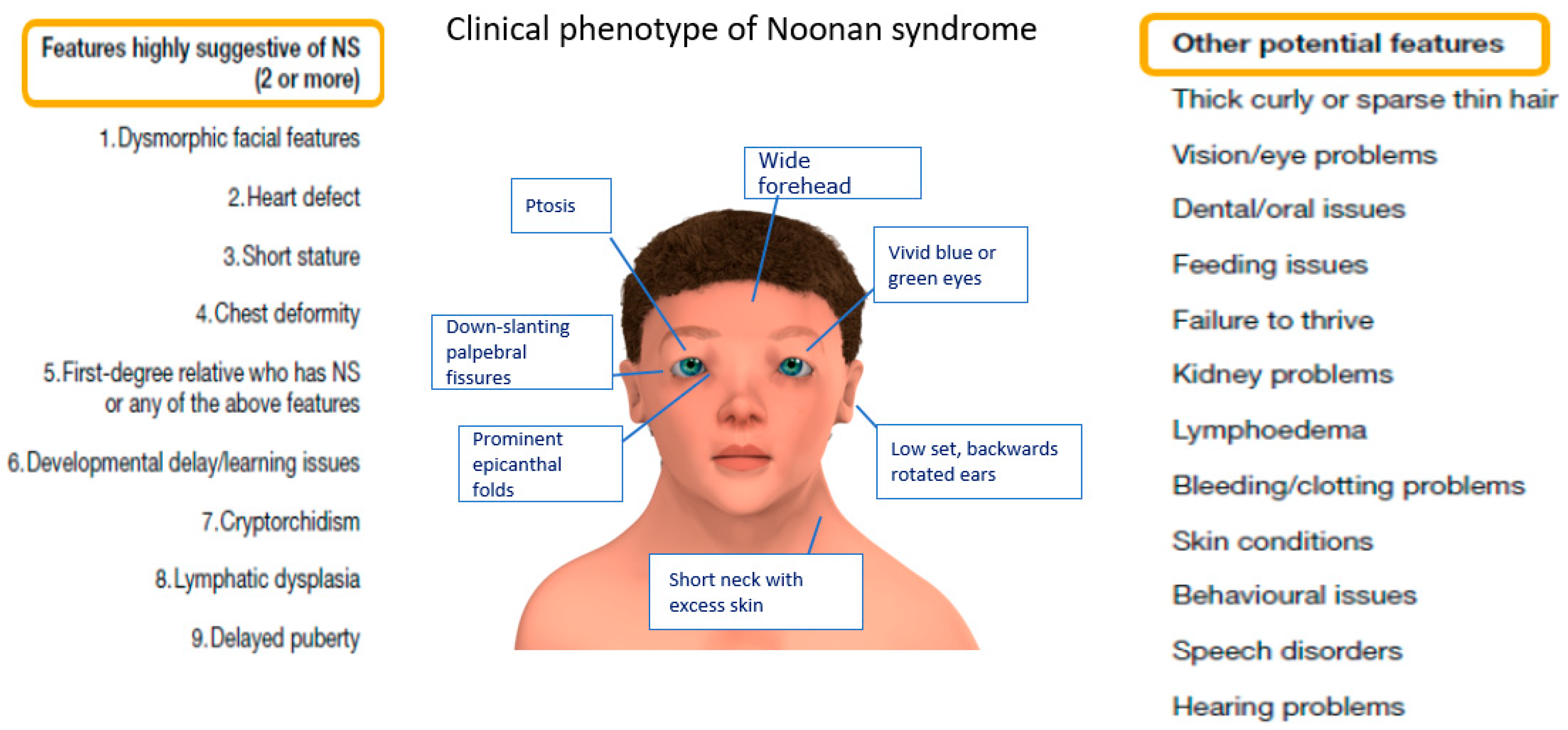
The facial gestalt is most distinctive in infancy and childhood, evolving predictably with age [5,27]. Neonates and infants typically present with a tall forehead, hypertelorism, down-slanting palpebral fissures, ptosis, low-set and posteriorly rotated ears, a deep philtrum, and micrognathia. A short neck with webbing (pterygium colli) or prominent trapezii is common. With age, the face becomes more triangular and elongated; the eyes appear less prominent, and the nasal bridge sharpens. In adults, prominent nasolabial folds and a high anterior hairline are characteristic. The phenotypic features are shown in Figure 1. Other frequent physical findings include curly hair, chest deformities (pectus excavatum or carinatum), cubitus valgus, and joint hypermobility or contractures.

3.2. Non-Cardiac Systemic Manifestations

Growth and Endocrinological aspects: Postnatal growth delay is nearly universal, with birth length often normal but growth velocity declining in the first years. Mean adult height is around −2 SD. The etiology is multifactorial, involving growth hormone (GH) insensitivity, neurosecretory GH dysfunction, and possibly primary skeletal dysplasia [28,29]. Delayed puberty is common in both sexes. Recombinant growth hormone therapy is effective for short stature in NS but is not universally indicated. Caution is warranted in patients with existing or high-risk HCM (e.g., RAF1, RIT1, KRAS mutations), as GH may exacerbate hypertrophy. Pre-treatment cardiac evaluation and ongoing monitoring are mandatory [30,31]. Moreover, the use of specific Growth Charts is needed in order to avoid false positive interpretation of growth treatment efficacy [32].
Neurodevelopment and Behavior: Approximately one-third of individuals have mild intellectual disability, with a larger proportion experiencing specific learning disabilities, speech delay, and motor clumsiness. Behavioral issues such as attention-deficit/hyperactivity disorder (ADHD), social difficulties, and alexithymia (difficulty identifying emotions) are prevalent [33]. Early intervention with educational, speech, and occupational therapy is crucial.
Hematology and Oncology: Coagulation defects are present in up to 70% of patients; most commonly factor XI, XII, or VIII deficiencies and von Willebrand disease, posing a significant bleeding risk during surgery [34]. There is a well-established increased risk of childhood hematologic malignancies, particularly JMML (associated with PTPN11 and KRAS), with a cumulative cancer risk by age 20 estimated at 4–8% [35]. Solid tumors (e.g., neuroblastoma, rhabdomyosarcoma) are also increased. Surveillance for solid tumors (e.g., gliomas in LZTR1, neuroblastoma in KRAS) should be considered in high-risk genotypes. Annual complete blood counts are recommended in early childhood to screen for JMML, particularly in PTPN11- and KRAS-related NS [35,36].
Lymphatic System: Lymphatic abnormalities range from peripheral lymphedema to more severe manifestations like fetal hydrops or intestinal lymphangiectasia. SOS2 mutations are particularly associated with a high burden of lymphatic involvement. Onset can be prenatal or postnatal, spanning from infancy to adulthood [36,37,38].
Gastrointestinal apparatus: Severe feeding difficulties in infancy are common, contributing to failure to thrive and often requiring tube feeding [39].
Sensory systems: Ocular findings (strabismus, refractive errors) and hearing loss (both conductive and sensorineural) are frequent and require regular screening [40].
Skeletal manifestations: Skeletal manifestations are common and include pectus excavatum or carinatum, scoliosis (affecting ~15% of individuals), joint hypermobility, and occasional contractures [41].
Renal and Urologic: Mild structural renal anomalies may be present.

4. Cardiological Aspects: The Central Determinant of Prognosis

Cardiac involvement is the most critical factor influencing morbidity and mortality in NS, affecting 80–90% of individuals [42,43]. A deep understanding of its spectrum, genetic correlates, and management is paramount.

4.1. Spectrum of Congenital and Acquired Heart Disease

Pulmonary Valve Stenosis (PS): The most common defect (50–60%). It is typically “dysplastic”, characterized by thickened, nodular, and immobile valve leaflets, often with supravalvular narrowing. This pathology makes it less responsive to balloon valvuloplasty compared to isolated PS, frequently necessitating surgical valvotomy or valve replacement [42,43].
Hypertrophic Cardiomyopathy (HCM): The second most common anomaly (20–30%) and a major cause of mortality. It can be present at birth (often severe) or develop in infancy/childhood. The hypertrophy pattern is variable (asymmetric, concentric, apical) and may be obstructive or non-obstructive. Early-onset HCM (<6 months) carries a grave prognosis [42,43,44].
Other Congenital Defects: Atrial and ventricular septal defects (ASD/VSD) are common. Mitral valve dysplasia is also frequent and can affect surgical planning and long-term outcomes [43,44]. Coarctation of the aorta, atrioventricular septal defect, and tetralogy of Fallot are reported less frequently.
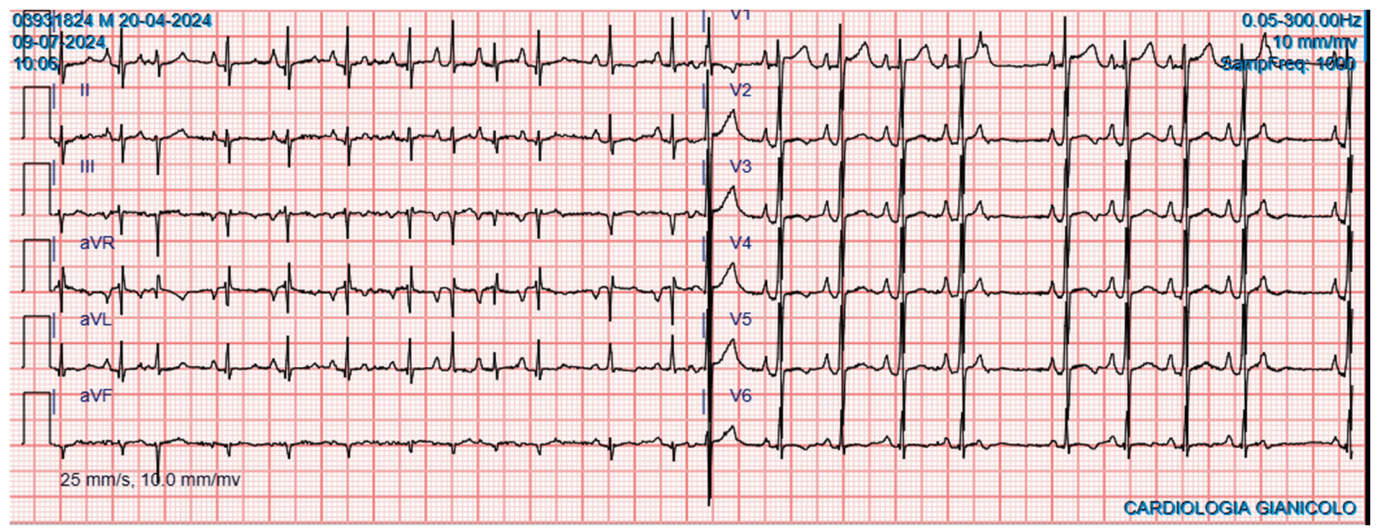
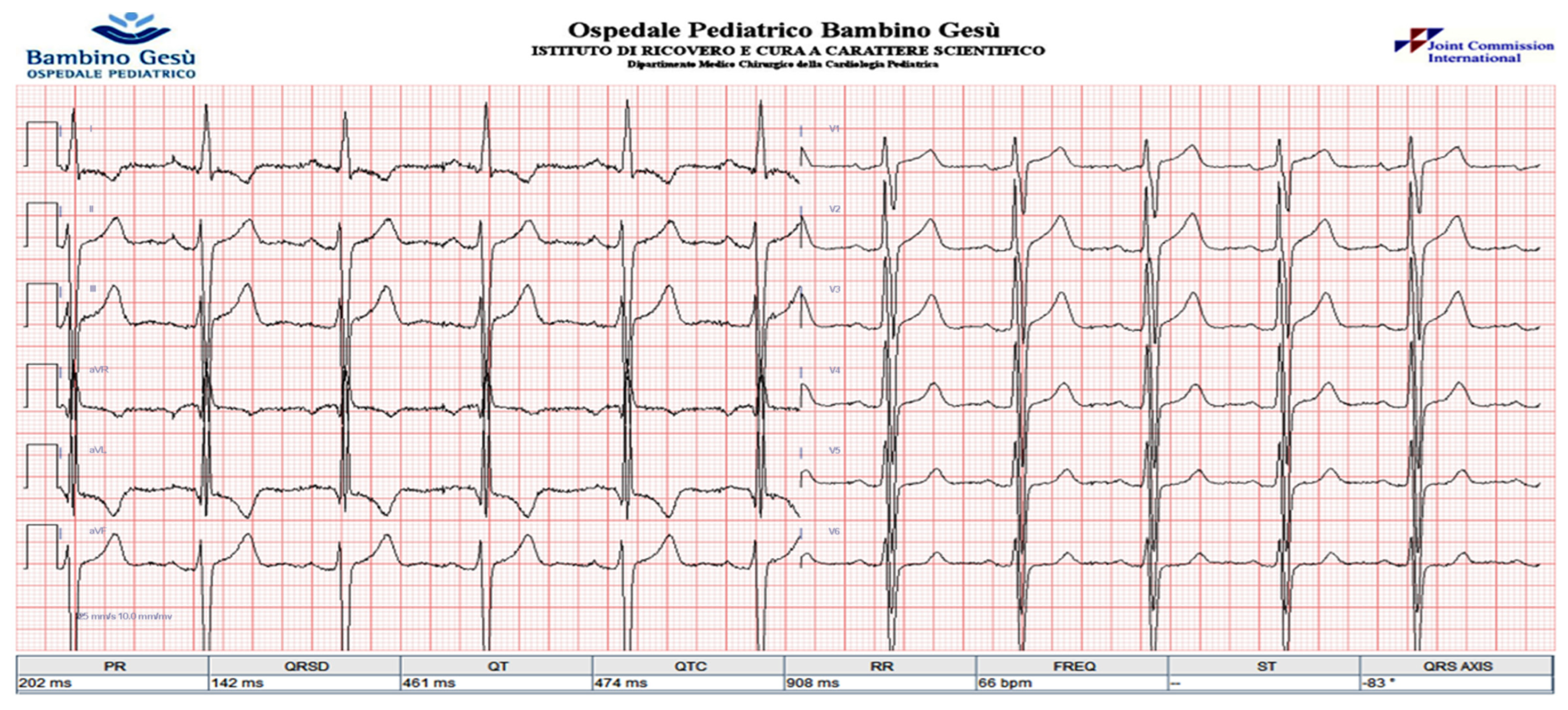
Electrocardiographic (ECG) hallmarks: ECG offers valuable diagnostic clues. In PS, a characteristic pattern includes a superior QRS axis (northwest axis), dominant S-wave in V1 and R-wave in V6 (“left-axis pattern”), and abnormal Q-waves in inferolateral leads (Figure 2). In HCM, voltage criteria for ventricular hypertrophy and deep T-wave inversions may be present (Figure 3) [45].
The ECG tracings presented are real clinical examples from an international reference center and are representative of the typical findings observed in NS. The display format follows standard clinical practice and accurately illustrates the described electrocardiographic patterns.
Vascular Complications in Adulthood: Emerging data indicates an increased risk of non-obstructive vascular issues in adults, including coronary artery dilation/ectasia and Moyamoya disease, necessitating awareness during long-term follow-up [45,46,47].

4.2. Echocardiographic and Advanced Imaging

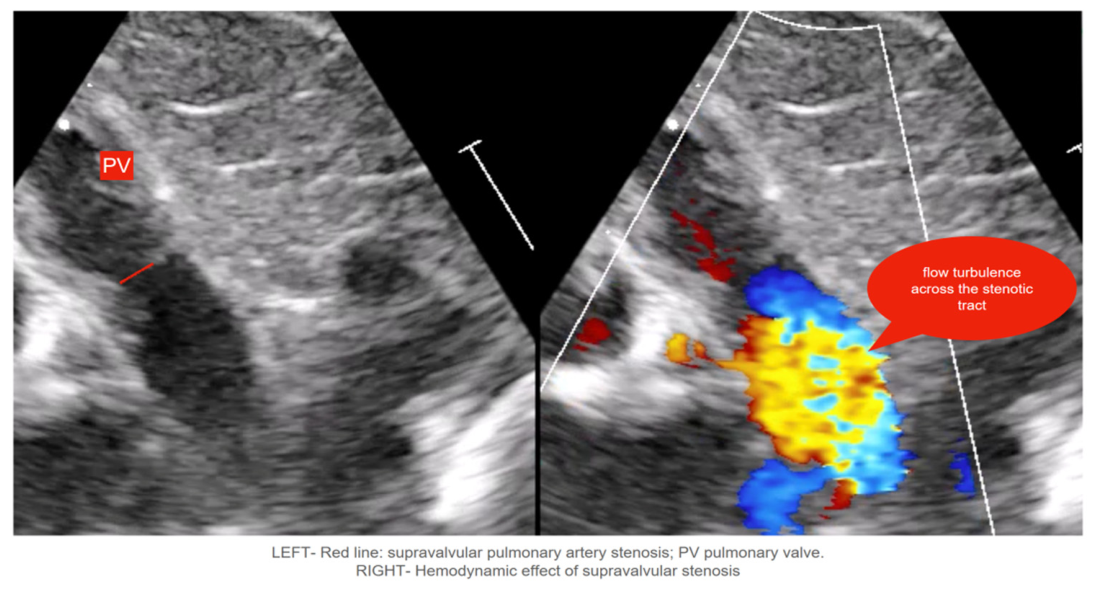
Echocardiography is the cornerstone for diagnosis and serial monitoring. For PS (often supravalvular), it delineates valve morphology and quantifies stenosis severity via Doppler (Figure 4).
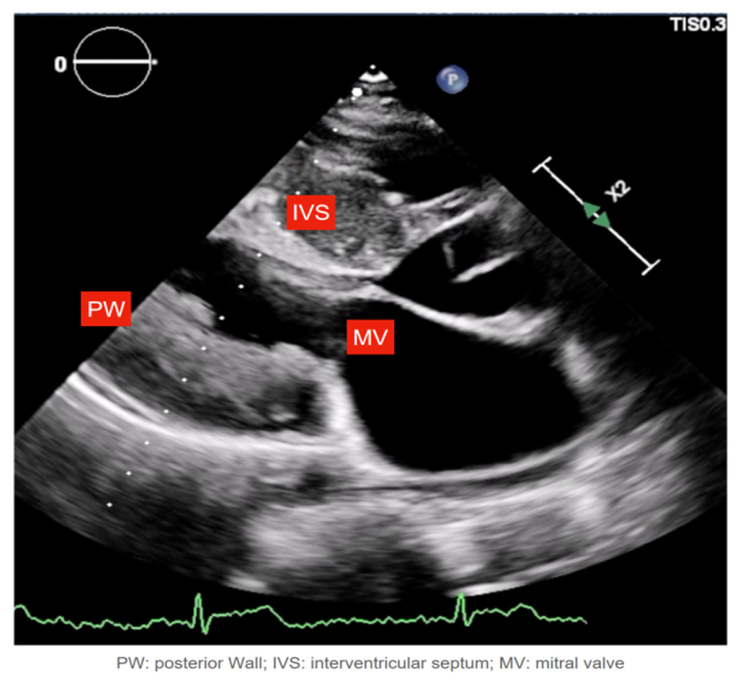
The echocardiographic images are authentic clinical examples from a high-volume reference center and accurately represent the spectrum of cardiac abnormalities in NS. The Z-score for left ventricular wall thickness in Figure 5 was calculated using the Detroit-based pediatric echocardiographic reference data by Lopez et al., 2010 [48], which is a validated and widely employed normative dataset in pediatric cardiology.
Tissue Doppler Imaging (TDI) and Speckle-Tracking Echocardiography (STE) can detect subclinical systolic and diastolic dysfunction, often preceding overt hypertrophy [48]. Cardiac magnetic resonance (CMR) is increasingly valuable for precise tissue characterization, quantification of fibrosis, and risk stratification in HCM.
Late gadolinium enhancement on cardiac MRI may identify focal fibrosis and has emerging prognostic value in pediatric HCM, including RASopathy-related forms [49,50].

5. Diagnosis and Differential Diagnosis

5.1. Modern Diagnostic Algorithm

The diagnosis integrates clinical evaluation and molecular genetics [5,44,51].
Clinical Suspicion: Raised by characteristic facial features, short stature, congenital heart defect (especially PS/HCM), family history, or suggestive prenatal findings (cystic hygroma, hydrops, increased nuchal translucency).
Molecular Confirmation: First-line testing is a targeted next-generation sequencing (NGS) panel for RASopathy genes. This is cost-effective and yields a diagnosis in most cases. For atypical presentations or negative panels, whole-exome sequencing (WES) is recommended.
Prenatal Diagnosis: Offered when a parent is affected or suggestive fetal ultrasound findings (cystic hygroma, increased NT, HCM, PS) are present, using chorionic villus sampling or amniocentesis [11].

5.2. Differential Diagnosis

Primarily involves other RASopathies, which share overlapping features but have distinct nuances. Several genes (e.g., BRAF, KRAS, MAP2K1) are shared with other RASopathies such as Cardio-Facio-Cutaneous syndrome. Clinical differentiation relies on distinct phenotypic features [3,52]:
Cardio-Facio-Cutaneous (CFC) Syndrome: More severe intellectual disability, sparse/curly hair, and ichthyosis-like skin changes. Often caused by BRAF, *MAP2K1/2* mutations.
Costello Syndrome: Coarse facial features, severe feeding difficulties, loose skin, papillomata, and an extremely high cancer risk (rhabdomyosarcoma, neuroblastoma). Caused by HRAS mutations.
Neurofibromatosis Type 1 (NF1): Overlaps due to café-au-lait spots but distinguished by neurofibromas, optic pathway gliomas, and Lisch nodules.
Noonan Syndrome with Multiple Lentigines (NSML/LEOPARD Syndrome): Characterized by widespread lentigines, sensorineural deafness, and HCM. Often caused by specific PTPN11 mutations with reduced SHP-2 activity that paradoxically lead to pathway dysregulation through dominant-negative effects [20,21,22].

6. Management and Treatment: A Multidisciplinary Imperative

Lifelong care requires a coordinated team: Cardiologist, clinical Geneticist, Endocrinologist, Hematologist, developmental Pediatrician and others [26,53,54].

6.1. Multidisciplinary Care Principles

Growth: rhGH therapy is FDA/EMA-approved for short stature in NS. Recombinant growth hormone therapy is effective for short stature in NS but is not universally indicated. Caution is warranted in patients with existing or high-risk HCM (e.g., RAF1, RIT1, KRAS mutations), as GH may exacerbate hypertrophy. Pre-treatment cardiac evaluation and ongoing monitoring are mandatory [30,31]. Treatment should follow specific NS growth charts, with careful monitoring of IGF-1 levels and cardiac status [31,32].
Development: Early intervention programs (physical, occupational, speech therapy) are essential. Individualized educational plans address learning disabilities.
Hematology: Preoperative coagulation screening (including thromboelastography) is mandatory. Management of bleeding risk may require desmopressin (DDAVP) or specific factor replacement [34].
Oncology: Awareness of JMML symptoms (pallor, fever, and splenomegaly) is key. Surveillance for solid tumors (e.g., gliomas in LZTR1, neuroblastoma in KRAS) should be considered in high-risk genotypes. Annual complete blood counts are recommended in early childhood to screen for JMML, particularly in PTPN11- and KRAS-related NS [35,36].
Transition to Adult Care: A structured, planned transition program is critical to address adult-onset issues like progressive HCM, fertility, and psychosocial challenges [53,54].

6.2. Specific Cardiologic Management

Pulmonary Stenosis: Balloon valvuloplasty is the first-line treatment for non-dysplastic PS. For dysplastic or supravalvular PS, surgical intervention (valvotomy, valve reconstruction, or replacement) is often necessary and may require reintervention [42,43]. In some cases, dysplastic pulmonary valves with only moderate gradients may show spontaneous improvement over time as the valve becomes more mobile with growth, obviating the need for intervention [43,44,54].
Hypertrophic Cardiomyopathy: Management parallels sarcomeric HCM but with unique considerations. First-line medical therapy for symptomatic obstructive HCM consists of high-dose beta-blockers (e.g., propranolol up to 4–6 mg/kg/day). Calcium channel blockers may be considered in non-obstructive forms or if beta-blockers are contraindicated [55,56,57]. Diuretics are used cautiously for heart failure. For refractory symptomatic obstructive HCM, septal reduction therapy (surgical myectomy or alcohol septal ablation) may be considered, though data in NS are limited.
Sudden cardiac death (SCD) risk stratification is crucial; an implantable cardioverter-defibrillator (ICD) is indicated for secondary prevention and for high-risk primary prevention (e.g., massive hypertrophy, unexplained syncope) [42,53,54]. Risk stratification for sudden cardiac death in NS-related HCM remains challenging. The HCM Risk-Kids score and ECG risk markers may be useful, as family history is often non-informative in de novo cases [58,59].

7. Novelties in Diagnosis and Management

Targeted Therapies: The Promise of MEK Inhibition

The understanding of NS as a RAS/MAPK pathway disorder has opened the door for targeted therapies. MEK1/2 is a central kinase downstream of RAS and RAF. MEK inhibitors (MEKis), such as trametinib and selumetinib, originally developed for cancer, are showing transformative potential in treating severe, life-threatening complications of NS and related RASopathies [53,54].
Overview of MEK Inhibitor Studies in RASopathy-Related HCM and Lymphatic Complications: mTOR inhibitors (e.g., sirolimus) have also been explored in preclinical models and case reports, showing potential to reduce hypertrophy [53]. MEK inhibitors have also shown utility in managing refractory atrial arrhythmias in RASopathies [53].
For HCM: Several case reports and small series have demonstrated dramatic regression of ventricular hypertrophy and improvement in cardiac function in patients with RAF1 or RIT1-related severe, refractory HCM using MEKis [60,61]. This represents a paradigm shift from purely symptomatic management to potentially disease-modifying therapy.
For Lymphatic Complications: MEKis have shown remarkable efficacy in treating complex, refractory lymphatic disorders (e.g., chylothorax, pulmonary lymphangiectasia) in RASopathies, often allowing for the discontinuation of other invasive interventions [53].
Challenges include long-term safety, optimal dosing, duration, and patient selection. Clinical trials are ongoing to establish efficacy and safety profiles in the pediatric RASopathy population.

8. Lifelong Follow-Up, Transition and Prognosis

NS is a lifelong condition. The prognosis is highly variable and primarily dependent on cardiac and oncologic complications [43,54]. Most individuals with mild cardiac disease have a normal life expectancy. However, those with severe, infantile-onset HCM or certain malignancies face significant mortality risks.
A seamless transition from pediatric to adult care is a critical vulnerable period. An ideal transition program involves a dedicated coordinator, joint pediatric-adult clinics, and a comprehensive “transition passport” summarizing medical history, genetic data, and care plans [51].
Adult care must be provided by specialists familiar with NS, particularly ACHD cardiologists, to manage late-onset HCM, vascular complications and other adult health issues.

9. Future Directions and Conclusions

The journey of Noonan syndrome from a clinical observation to a molecularly defined RASopathy exemplifies how modern medicine can decode a rare disorder, yet the scenery ahead looks even more compelling.
Retrospective, genotype-stratified cohort studies and registries are urgently needed to define long-term risks and optimize surveillance, as prospective studies over decades are impractical.
Expanding the therapeutic arsenal with further development and refinement of RAS/MAPK pathway inhibitors (e.g., SHP2 inhibitors, ERK inhibitors) in different clinical manifestations. Integrating precision medicine not just for prognosis but also to guide all aspects of management, from cardiologic surveillance frequency to cancer screening protocols and therapeutic choices.
In conclusion, NS demands a proactive, multidisciplinary, and lifelong care model. Early molecular diagnosis enables personalized risk assessment and management. Cardiac manifestations remain central, requiring expertise in diagnosis, genotype-informed surveillance, and now, potentially, targeted medical therapy.

Author Contributions

Conceptualization, G.C., M.C. and M.G.G.; writing—original draft preparation, G.C., M.G.G., C.B., R.P., G.V., P.P.B. and M.C.; writing—review and editing, all authors; visualization, G.C. and R.P. All authors have read and agreed to the published version of the manuscript.

Funding

This research received no external funding.

Institutional Review Board Statement

Not applicable.

Informed Consent Statement

Not applicable.

Data Availability Statement

No new data were created or analyzed in this study.

Conflicts of Interest

The authors declare no conflicts of interest.

References

  1. Noonan, J.A. Hypertelorism with Turner phenotype. A new syndrome with associated congenital heart disease. Am. J. Dis. Child. 1968, 116, 373–380. [Google Scholar] [CrossRef]
  2. Tartaglia, M.; Mehler, E.L.; Goldberg, R.; Zampino, G.; Brunner, H.G.; Kremer, H.; van der Burgt, I.; Crosby, A.H.; Ion, A.; Jeffery, S. Mutations in PTPN11, encoding the protein tyrosine phosphatase SHP-2, cause Noonan syndrome. Nat. Genet. 2001, 29, 465–468. [Google Scholar] [CrossRef]
  3. Rauen, K.A. The RASopathies. Annu. Rev. Genom. Hum. Genet. 2013, 14, 355–369. [Google Scholar] [CrossRef] [PubMed]
  4. Tartaglia, M.; Aoki, Y.; Gelb, B.D. The molecular genetics of RASopathies: An update on novel disease genes and new disorders. Am. J. Med. Genet. C Semin. Med. Genet. 2022, 190, 425–439. [Google Scholar] [CrossRef] [PubMed]
  5. Roberts, A.E.; Allanson, J.E.; Tartaglia, M.; Gelb, B.D. Noonan syndrome. Lancet 2013, 381, 333–342. [Google Scholar] [CrossRef]
  6. Romano, A.A.; Allanson, J.E.; Dahlgren, J.; Gelb, B.D.; Hall, B.; Pierpont, M.E.; Roberts, A.E.; Robinson, W.; Takemoto, C.M.; Noonan, J.A. Noonan syndrome: Clinical features, diagnosis, and management guidelines. Pediatrics 2010, 126, 746–759. [Google Scholar] [CrossRef]
  7. Johnston, J.J.; van der Smagt, J.J.; Rosenfeld, J.A.; Pagnamenta, A.T.; Alswaid, A.; Baker, E.H.; Blair, E.; Borck, G.; Brinkmann, J.; Craigen, W. Autosomal recessive Noonan syndrome associated with biallelic LZTR1 variants. Genet. Med. 2018, 20, 1175–1185. [Google Scholar] [CrossRef]
  8. Tartaglia, M.; Cordeddu, V.; Chang, H.; Shaw, A.; Kalidas, K.; Crosby, A.; Patton, M.A.; Sorcini, M.; van der Burgt, I.; Jeffery, S. Paternal germline origin and sex-ratio distortion in transmission of PTPN11 mutations in Noonan syndrome. Am. J. Hum. Genet. 2004, 75, 492–497. [Google Scholar] [CrossRef]
  9. Tartaglia, M.; Kalidas, K.; Shaw, A.; Song, X.; Musat, D.L.; van der Burgt, I.; Brunner, H.G.; Bertola, D.R.; Crosby, A.; Ion, A. PTPN11 mutations in Noonan syndrome: Molecular spectrum, genotype-phenotype correlation, and phenotypic heterogeneity. Am. J. Hum. Genet. 2002, 70, 1555–1563. [Google Scholar] [CrossRef] [PubMed]
  10. Stuurman, K.E.; Joosten, M.; van der Burgt, I.; Elting, M.; Yntema, H.G.; van de Laar, I.M.B.H.; Rammeloo, L.A.; van Trier, D.C.; van Haelst, M.M.; Santen, G.W.E. Prenatal ultrasound findings and a genotype-phenotype study in a large cohort of fetuses with RASopathies. Genet. Med. 2024, 26, 101078. [Google Scholar]
  11. Scott, A.; Di Giosaffatte, M.; Pinna, V.; Daniele, P.; Breckpot, J.; Van Houdt, J.; Boogaard, A.; Bartholdi, D.; Zweier, C.; Verheij, J. When to test fetuses for RASopathies? Proposition from a systematic analysis. Genet. Med. 2021, 23, 1116–1124. [Google Scholar] [CrossRef]
  12. Tartaglia, M.; Gelb, B.D.; Zenker, M. Noonan syndrome and clinically related disorders. Best Pract. Res. Clin. Endocrinol. Metab. 2011, 25, 161–179. [Google Scholar] [CrossRef]
  13. Monda, E.; Prosnitz, A.; Aiello, R.; Verrillo, F.; Caiazza, M.; Cirillo, A.; Fusco, A.; Lioncino, M.; Mauriello, A.; Palmiero, G. Natural history of hypertrophic cardiomyopathy in Noonan syndrome with multiple lentigines. Circ. Genom. Precis. Med. 2023, 16, e003816. [Google Scholar] [CrossRef] [PubMed]
  14. Roberts, A.E.; Araki, T.; Swanson, K.D.; Montgomery, K.T.; Schiripo, T.A.; Joshi, V.A.; Li, L.; Yassin, Y.A.; Tamburino, A.M.; Neel, B.G. Germline gain-of-function mutations in SOS1 cause Noonan syndrome. Nat. Genet. 2007, 39, 70–74. [Google Scholar] [CrossRef]
  15. Pandit, B.; Sarkozy, A.; Pennacchio, L.A.; Carta, C.; Oishi, K.; Martinelli, S.; Pogna, E.A.; Schackwitz, W.; Ustaszewska, A.; Landstrom, A. Gain-of-function RAF1 mutations cause Noonan and LEOPARD syndromes with hypertrophic cardiomyopathy. Nat. Genet. 2007, 39, 1007–1012. [Google Scholar] [CrossRef]
  16. Aoki, Y.; Niihori, T.; Banjo, T.; Okamoto, N.; Mizuno, S.; Kurosawa, K.; Ogata, T.; Takada, F.; Yano, M.; Ando, T. Gain-of-function mutations in RIT1 cause Noonan syndrome. Am. J. Hum. Genet. 2013, 93, 173–180. [Google Scholar] [CrossRef] [PubMed]
  17. Schubbert, S.; Zenker, M.; Rowe, S.L.; Böll, S.; Klein, C.; Bollag, G.; van der Burgt, I.; Musante, L.; Kalscheuer, V.; Wehner, L.E. Germline KRAS mutations cause Noonan syndrome. Nat. Genet. 2006, 38, 331–336. [Google Scholar] [CrossRef] [PubMed]
  18. Nava, C.; Hanna, N.; Michot, C.; Pereira, S.; Pouvreau, N.; Niihori, T.; Aoki, Y.; Matsubara, Y.; Arveiler, B.; Lacombe, D. Cardio-facio-cutaneous and Noonan syndromes due to mutations in the RAS/MAPK signalling pathway: Genotype-phenotype relationships and overlap with Costello syndrome. J. Med. Genet. 2007, 44, 763–771. [Google Scholar] [CrossRef]
  19. Rauen, K.A. Defining the RASopathy spectrum. Am. J. Med. Genet. A 2022, 188, 398–401. [Google Scholar]
  20. Leoni, C.; Blandino, R.; Delogu, A.B.; De Rosa, G.; Onesimo, R.; Verucci, E.; Colafati, G.S.; Caciolo, C.; Palumbi, R.; Bana, C. Genotype-cardiac phenotype correlations in a large single-center cohort of patients affected by RASopathies. Am. J. Med. Genet. A 2022, 188, 431–445. [Google Scholar] [CrossRef]
  21. Digilio, M.C.; Conti, E.; Sarkozy, A.; Mingarelli, R.; Dottorini, T.; Marino, B.; Pizzuti, A.; Dallapiccola, B. Grouping of multiple-lentigines/LEOPARD and Noonan syndromes on the PTPN11 gene. Am. J. Hum. Genet. 2002, 71, 389–394. [Google Scholar] [CrossRef]
  22. Lepri, F.R.; Scavelli, R.; Digilio, M.C.; Gnazzo, M.; Grotta, S.; Dentici, M.L.; Pisaneschi, E.; Sirleto, P.; Capolino, R.; Baban, A. SOS1 mutations in Noonan syndrome: Molecular spectrum, structural insights on pathogenic effects, and genotype-phenotype correlations. Hum. Mutat. 2011, 32, 760–772. [Google Scholar] [CrossRef] [PubMed]
  23. Limongelli, G.; Pacileo, G.; Marino, B.; Digilio, M.C.; Sarkozy, A.; Elliott, P.; Versacci, P.; Calabro, P.; De Zorzi, A.; Di Salvo, G. Prevalence and clinical significance of cardiovascular abnormalities in patients with Noonan syndrome. Ital. Heart J. 2004, 5, 292–298. [Google Scholar]
  24. Calcagni, G.; Limongelli, G.; D’Ambrosio, A.; Gesualdo, F.; Digilio, M.C.; Baban, A.; Albanese, S.B.; Versacci, P.; De Luca, E.; Adorisio, R. Cardiac defects, morbidity and mortality in patients affected by RASopathies: A single-center experience. Am. J. Med. Genet. A 2018, 176, 994–1001. [Google Scholar]
  25. Gualtieri, A.; Kyprianou, N.; Gregory, L.C.; Vignola, J.; Nicholson, A.G.; Tan, R.; Inoue, S.I.; Scagliotti, V.; Casado, P.; Blackburn, J. Activating mutations in BRAF disrupt the hypothalamo-pituitary axis leading to hypopituitarism in mice and humans. Nat. Commun. 2021, 12, 2028. [Google Scholar] [CrossRef]
  26. Stagi, S.; Cappa, M.; Gagliardi, M.G.; Tartaglia, M.; Maghnie, M.; for the Italian Multidisciplinary Noonan Syndrome Working Group. Multidisciplinary Treatment of Patients With Noonan Syndrome: A Consensus Statement. JAMA Netw. Open 2025, 8, e2537603. [Google Scholar] [CrossRef]
  27. van der Burgt, I. Noonan syndrome. Orphanet J. Rare Dis. 2007, 2, 4. [Google Scholar] [CrossRef] [PubMed]
  28. Rodríguez, F.; Gaete, X.; Cassorla, F. Etiology and treatment of growth delay in Noonan syndrome. Front. Endocrinol. 2021, 12, 691240. [Google Scholar] [CrossRef]
  29. Dahlgren, J.; Noordam, C. Growth, endocrine features, and growth hormone treatment in Noonan syndrome. J. Clin. Med. 2022, 11, 2034. [Google Scholar] [CrossRef]
  30. Tidblad, A.; Bottai, M.; Kieler, M.; Albertsson-Wikland, K.; Sävendahl, L.; Gustafsson, J.; Dahlgren, J. Association of Childhood Growth Hormone Treatment with long-term cardiovascular morbidity. JAMA Pediatr. 2021, 175, e205199. [Google Scholar] [CrossRef] [PubMed]
  31. Wolf, C.M.; Zenker, M.; Burkitt-Wright, E.; Cappa, M.; Draaisma, J.; Gazzin, A.; Hauschild, M.; Joss, S.; Kerr, B.; Lederer, I. Management of cardiac aspects in children with Noonan syndrome: Results from European clinical practice survey among paediatric cardiologists. Eur. J. Med. Genet. 2022, 65, 104372. [Google Scholar] [CrossRef] [PubMed]
  32. Cappa, M.; d’Aniello, F.; Digilio, M.C.; Romano, A.; Ferrari, P.; Garelli, D.; Ferretti, E.; Genovese, E.; Tamburrano, G.; Mazzanti, L. Noonan Syndrome Growth Charts and Genotypes: 15-year Longitudinal Single-Center Study. Horm. Res. Paediatr. 2024, 22, 113. [Google Scholar] [CrossRef] [PubMed]
  33. Wingbermühle, E.; Roelofs, R.L.; Oomens, W.; van der Burgt, I.; Kessels, R.P.C.; Egger, J.I.M. Cognitive phenotype and psychopathology in Noonan syndrome spectrum disorders through various Ras/MAPK pathway associated gene variants. J. Clin. Med. 2022, 11, 4735. [Google Scholar] [CrossRef]
  34. Briggs, B.J.; Savla, D.; Ramchandran, N.; McDonald, A.; Kenna, M.; Bhoj, E.J.; Hakonarson, H.; Krantz, I.D.; Zackai, E.H.; Gripp, K.W. The evaluation of hematologic screening and perioperative management in patients with Noonan syndrome. J. Pediatr. 2020, 220, 154–158.e6. [Google Scholar] [CrossRef] [PubMed]
  35. Kratz, C.P.; Franke, L.; Peters, H.; Kohlschmidt, N.; Kazmierczak, B.; Finckh, U.; Bier, A.; Eichhorn, B.; Blank, C.; Kraus, C. Cancer spectrum and frequency among children with Noonan, Costello, and cardio-facio-cutaneous syndromes. Br. J. Cancer 2015, 112, 1392–1397. [Google Scholar] [CrossRef]
  36. Perrino, M.R.; Das, A.; Scollon, S.R.; Mitchell, S.G.; Berg, J.M.; Grebe, T.A.; Starr, J.L.; Zelley, K.; Nichols, K.E.; Kratz, C.P. Update on pediatric cancer surveillance recommendations for patients with RASopathies. Clin. Cancer Res. 2024, 30, 4834–4843. [Google Scholar] [CrossRef]
  37. Sieutjes, J.; Kleimeier, L.; Leenders, E.; Klein, W.; Draaisma, J. Lymphatic abnormalities in Noonan syndrome spectrum disorders: A systematic review. Mol. Syndromol. 2022, 13, 1–11. [Google Scholar] [CrossRef]
  38. Gelb, B.D.; Tartaglia, M. Noonan syndrome and the RASopathies: Genotype-phenotype relationships and recent advances. Am. J. Med. Genet. C Semin. Med. Genet. 2022, 190, 381–384. [Google Scholar]
  39. Onesimo, R.; Giorgio, V.; Viscogliosi, G.; Leoni, C.; Agazzi, C.; Zampino, G.; Tartaglia, M.; Digilio, M.C.; Marino, M.; Maghnie, M. Management of nutritional and gastrointestinal issues in RASopathies. Am. J. Med. Genet. C Semin. Med. Genet. 2022, 190, 478–493. [Google Scholar] [CrossRef]
  40. van Trier, D.C.; van der Burgt, I.; Draaijer, R.W.; Cruysberg, J.R.M.; Noordam, C.; Draaisma, J.M.T. Ocular findings in Noonan syndrome: A retrospective cohort study of 105 patients. Eur. J. Pediatr. 2018, 177, 1293–1298. [Google Scholar] [CrossRef]
  41. Shaw, A.C.; Kalidas, K.; Crosby, A.H.; Jeffery, S.; Patton, M.A. The natural history of Noonan syndrome: A long-term follow-up study. Arch. Dis. Child. 2007, 92, 128–132. [Google Scholar] [CrossRef]
  42. Linglart, L.; Gelb, B.D. Congenital heart defects in Noonan syndrome: Diagnosis, management, and treatment. Am. J. Med. Genet. C Semin. Med. Genet. 2020, 184, 73–80. [Google Scholar] [CrossRef]
  43. Abumehdi, M.; Mehta, C.; Affi, A.R.S.A.; Salih, C.; Austin, C.; McGowan, R.; Hacking, S.; Pushparajah, K.; Hussain, T. Supravalvar pulmonary stenosis: A risk factor for reintervention in Noonan syndrome. Catheter. Cardiovasc. Interv. 2022, 99, 1538–1544. [Google Scholar]
  44. Stamm, C.; Friehs, I.; Moran, A.M.; Zurakowski, D.; Bacha, E.; Mayer, J.E.; Jonas, R.A.; del Nido, P.J. Surgery for bipartite pulmonary valve in Noonan’s syndrome. Ann. Thorac. Surg. 2001, 72, 277–279. [Google Scholar]
  45. Lioncino, M.; Monda, E.; Verrillo, F.; Palmiero, G.; Cirillo, A.; Caiazza, M.; Rubino, M.; Esposito, A.; Fusco, A.; Curtom, G. Hypertrophic cardiomyopathy in RASopathies: Diagnosis, clinical characteristics, prognostic implications, and management. Heart Fail. Clin. 2022, 18, 19–29. [Google Scholar] [CrossRef]
  46. Sznajer, Y.; Keren, B.; Baumann, C.; Pereira, S.; Alberti, C.; Elion, J.; Cave, H.; Verloes, A. The spectrum of cardiac anomalies in Noonan syndrome as a result of mutations in the PTPN11 gene. Pediatrics 2007, 119, e1325–e1331. [Google Scholar] [CrossRef] [PubMed]
  47. Takayama, R.; Fujii, S.; Naito, T.; Hirabayashi, S.; Kojima, S.; Hattori, A.; Morioka, I. Moyamoya syndrome in a patient with Noonan syndrome. Brain Dev. 2016, 38, 440–443. [Google Scholar]
  48. Lopez, L.; Colan, S.D.; Frommelt, P.C.; Ensing, G.J.; Kendall, K.; Younoszai, A.K.; Lai, W.W.; Geva, T. Recommendations for quantification methods during the performance of a pediatric echocardiogram: A report from the Pediatric Measurements Writing Group of the American Society of Echocardiography Pediatric and Congenital Heart Disease Council. J. Am. Soc. Echocardiogr. 2010, 23, 465–495. [Google Scholar] [CrossRef]
  49. Calcagni, G.; Adorisio, R.; Martinelli, S.; Grutter, G.; Baban, A.; Versacci, P.; Digilio, M.C.; Drago, F.; Emma, F.; Marino, B. Clinical profile and long-term follow-up of children with hypertrophic cardiomyopathy in Noonan syndrome. J. Am. Heart Assoc. 2021, 10, e019900. [Google Scholar]
  50. Alvarez, P.A.; Ponnapureddy, R.; Voruganti, D.; Duque, E.R.; Briasoulis, A. Noninvasive measurement of arterial blood pressure in patients with continuous-flow left ventricular assist devices: A systematic review. Heart Fail. Rev. 2021, 26, 47–55. [Google Scholar] [CrossRef] [PubMed]
  51. Zenker, M.; Edouard, T.; Blair, J.C.; Cappa, M. Noonan syndrome: Improving recognition and diagnosis. Arch. Dis. Child. 2022, 107, 1073–1078. [Google Scholar] [CrossRef]
  52. García-Miñaúr, S.; Burkitt-Wright, E.; Verloes, A.; Dominguez-Garrido, E.; Carcavilla, A.; Lanes, A.; Lapunzina, P.; López-González, V.; Parrón-Pajares, M.; Pozo-Román, J. European medical education initiative on Noonan syndrome. Eur. J. Med. Genet. 2022, 65, 104371. [Google Scholar] [CrossRef]
  53. Gelb, B.D.; Yohe, M.E.; Wolf, C.; Andelfinger, G. New perspectives on treatment opportunities in RASopathies. Am. J. Med. Genet. C Semin. Med. Genet. 2022, 190, 541–560. [Google Scholar] [CrossRef]
  54. Binder, G.; Grathwol, S.; von Loeper, K.; Blumenstock, G.; Kaulitz, R.; Freiberg, C.; Weber, M.; Lissewski, C.; Zenker, M. Health and quality of life in adults with Noonan syndrome. J. Pediatr. 2012, 161, 501–505.e1. [Google Scholar] [CrossRef]
  55. Gimeno, J.R.; Lacunza, J.; García-Alberola, A.; Monserrat, L.; Martínez-Mateo, V.; de la Morena, G.; Valdés, M. Penetrance and risk profile in asymptomatic relatives of patients with hypertrophic cardiomyopathy. Rev. Esp. Cardiol. 2009, 62, 988–996. [Google Scholar]
  56. Ostman-Smith, I.; Wettrell, G.; Riesenfeld, T.; Holmgren, D.; Ergander, U.; Ericsson, S.; Sunnegårdh, J. A cohort study of childhood hypertrophic cardiomyopathy: Improved survival following high-dose beta-adrenoreceptor antagonist treatment. J. Am. Coll. Cardiol. 1999, 34, 1813–1822. [Google Scholar] [CrossRef] [PubMed]
  57. Östman-Smith, I. Beta-Blockers in Pediatric Hypertrophic Cardiomyopathies. Rev. Recent Clin. Trials. 2014, 9, 82–85. [Google Scholar] [CrossRef]
  58. Norrish, G.; Kaski, J.P. The risk of sudden death in children with hypertrophic cardiomyopathy. Heart Fail. Clin. 2022, 18, 9–18. [Google Scholar] [CrossRef]
  59. Östman-Smith, I.; Sjöberg, G.; Alenius Dahlqvist, J.; Larsson, P.; Fernlund, E. Sudden cardiac death in childhood hypertrophic cardiomyopathy is best predicted by a combination of electrocardiogram risk-score and HCMRisk-Kids score. Acta Paediatr. 2021, 110, 3105–3111. [Google Scholar] [CrossRef]
  60. Andelfinger, G.; Marquis, C.; Raboisson, M.J.; Théoret, Y.; Waldmüller, S.; Wiegand, G.; Gelb, B.D.; Zenker, M.; Berger, F.; Fiebig, B. MEK inhibition in a newborn with RAF1-associated Noonan syndrome and hypertrophic cardiomyopathy. N. Engl. J. Med. 2019, 381, 767–769. [Google Scholar]
  61. Dori, Y.; Smith, C.L.; Pinto, E.; Snyder, K.; March, M.E.; Hakonarson, H.; Escobar, F.; Kalish, J.M.; Perlman, H.; Goldmuntz, E. Severe lymphatic disorder resolved with MEK inhibition in a patient with Noonan syndrome and SOS1 mutation. Pediatrics 2020, 146, e20200167. [Google Scholar] [CrossRef]
Figure 1. Typical clinical facial phenotype of a young boy with PTPN11-positive Noonan syndrome. Note hypertelorism, ptosis, low-set posteriorly rotated ears, shallow philtrum, and micrognathia.
Cardiogenetics 16 00011 g001
Figure 2. Resting 12-lead ECG from a 4-year-old girl with valvar pulmonary stenosis (PTPN11). The ECG shows sinus rhythm. Note the superior/left QRS axis, positive in AVL (approximately −45°), characterized by a positive R wave in lead I and a negative QRS complex in aVF. This finding is consistent with the characteristic “left-axis” pattern classically described in Noonan syndrome, which contrasts with the right axis deviation typically expected in isolated valvar pulmonary stenosis. Additional findings include a dominant R wave and positive T wave in V1, and a tall R wave in V6 with an isodiphasic T wave. There are also supraventricular ectopic beats (one blocked) and P waves that appear pointed, compatible with right atrial enlargement/strain (‘P pulmonale’).
Cardiogenetics 16 00011 g002
Figure 3. Twelve-lead ECG from a 17-year-old boy with RIT1-associated hypertrophic cardiomyopathy. The tracing reveals striking repolarization abnormalities. Giant positive T waves are present in leads V2 through V5, and a left-ventricular strain pattern (T wave inversion in leads I and aVL) is evident.
Cardiogenetics 16 00011 g003
Figure 4. Echocardiographic still frame (parasternal short-axis view) showing supravalvular pulmonary stenosis with post-stenotic dilation of the main pulmonary artery in a neonate with a PTPN11 mutation.
Cardiogenetics 16 00011 g004
Figure 5. Two-dimensional echocardiography (parasternal long-axis view) demonstrating concentric left-ventricular hypertrophy (interventricular septum 28 mm, posterior wall 24 mm) in a 17-year-old patient with RAF1-related hypertrophic cardiomyopathy.
Cardiogenetics 16 00011 g005
Disclaimer/Publisher’s Note: The statements, opinions and data contained in all publications are solely those of the individual author(s) and contributor(s) and not of MDPI and/or the editor(s). MDPI and/or the editor(s) disclaim responsibility for any injury to people or property resulting from any ideas, methods, instructions or products referred to in the content.