
Noonan Syndrome: A Comprehensive Review from Clinical Delineation to the Molecular Era of RASopathies and Lifelong Cardiologic Management

 , , ,
, , ,
Abstract
1. Introduction: From a Cardiologist’s Insight to a Molecular Pathway
2. Epidemiology and Genetics
2.1. Epidemiology
2.2. Genetics and the RASopathy Family: An Evolving Landscape
2.3. Refined Genotype–Phenotype Correlations
- PTPN11: The most common genotype. Notably, mutations in exons 7, 12, and 13 of PTPN11 are strongly associated with NSML, which carries a significantly higher risk of hypertrophic cardiomyopathy compared to other PTPN11-related NS [20,21]. Moreover, it is associated with pulmonary valve stenosis (often dysplastic), bleeding diathesis, and juvenile myelomonocytic leukemia (JMML) risk. Notably, it carries a relatively low risk for HCM.
- RAF1 and RIT1: Considered “HCM predisposition genes”. Variants in these genes are associated with a very high prevalence (up to 80–90%) of hypertrophic cardiomyopathy, which is often severe, of early onset (even prenatal), and carries a significant mortality risk [12,13,23,24]. They also show a lower frequency of pulmonary stenosis.
3. Clinical Description: A Multisystem Disorder with Lifelong Implications
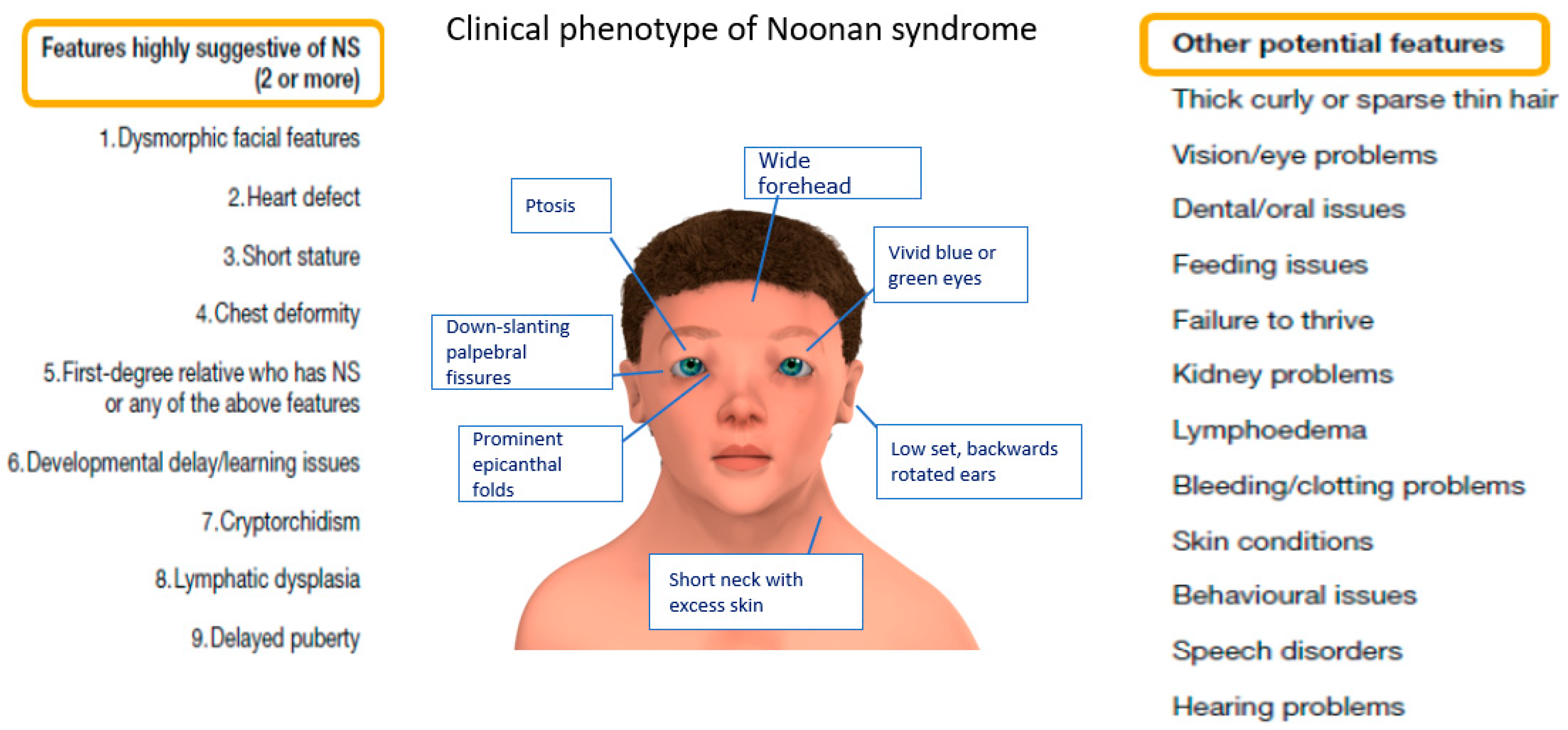
3.1. Craniofacial and Physical Characteristics
3.2. Non-Cardiac Systemic Manifestations
4. Cardiological Aspects: The Central Determinant of Prognosis
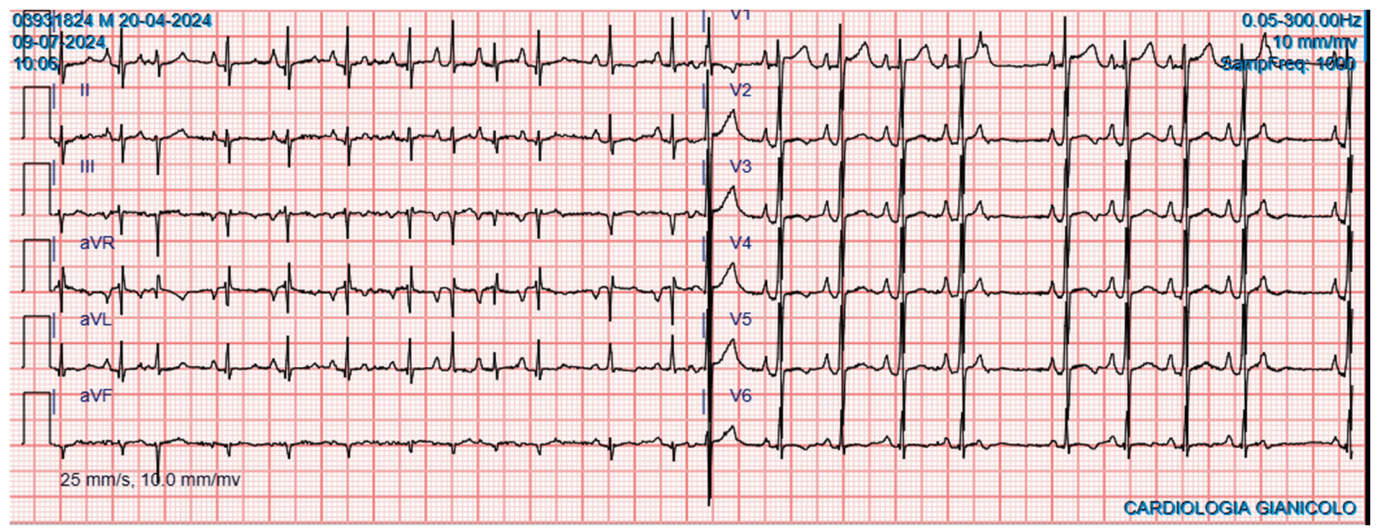
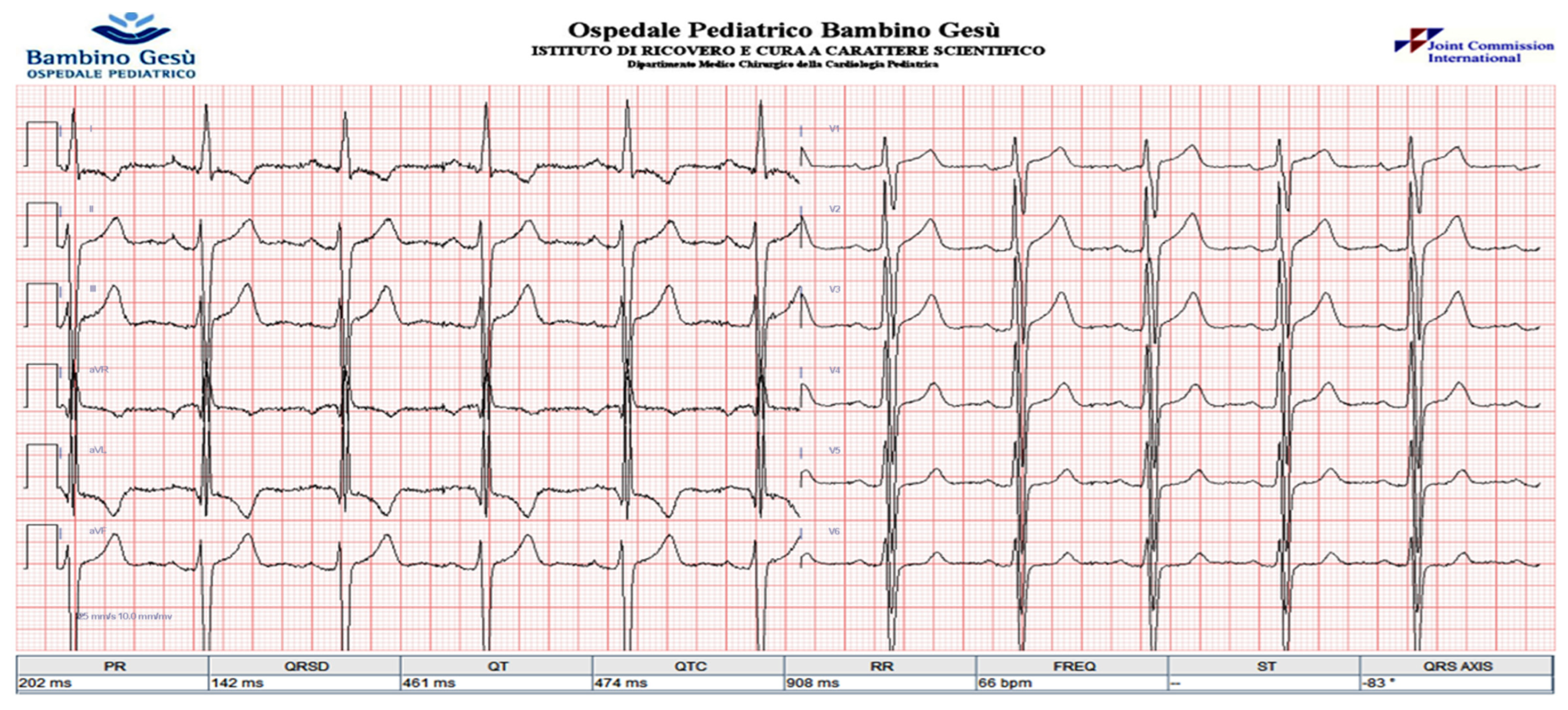
4.1. Spectrum of Congenital and Acquired Heart Disease
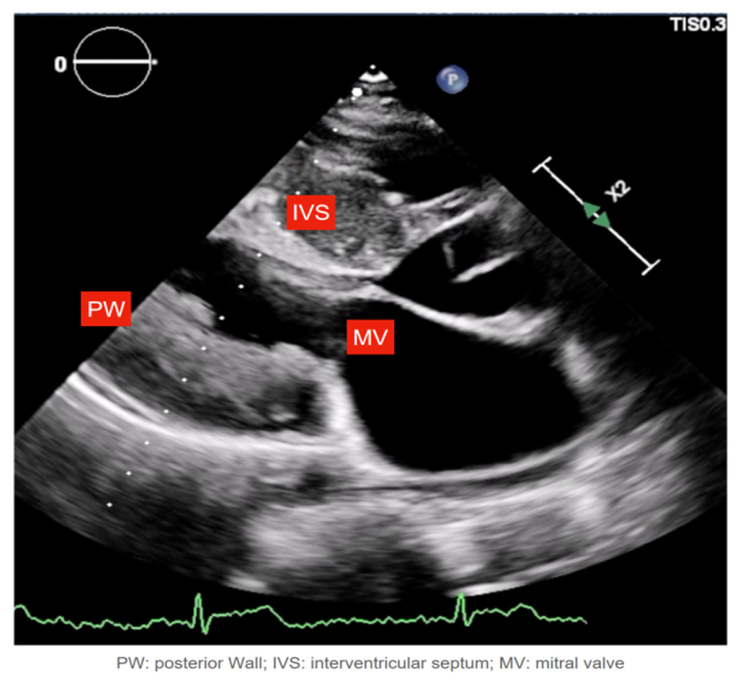
4.2. Echocardiographic and Advanced Imaging
5. Diagnosis and Differential Diagnosis
5.1. Modern Diagnostic Algorithm
5.2. Differential Diagnosis
6. Management and Treatment: A Multidisciplinary Imperative
6.1. Multidisciplinary Care Principles
6.2. Specific Cardiologic Management
7. Novelties in Diagnosis and Management
Targeted Therapies: The Promise of MEK Inhibition
8. Lifelong Follow-Up, Transition and Prognosis
9. Future Directions and Conclusions
Author Contributions
Funding
Institutional Review Board Statement
Informed Consent Statement
Data Availability Statement
Conflicts of Interest
References
- Noonan, J.A. Hypertelorism with Turner phenotype. A new syndrome with associated congenital heart disease. Am. J. Dis. Child. 1968, 116, 373–380. [Google Scholar] [CrossRef]
- Tartaglia, M.; Mehler, E.L.; Goldberg, R.; Zampino, G.; Brunner, H.G.; Kremer, H.; van der Burgt, I.; Crosby, A.H.; Ion, A.; Jeffery, S. Mutations in PTPN11, encoding the protein tyrosine phosphatase SHP-2, cause Noonan syndrome. Nat. Genet. 2001, 29, 465–468. [Google Scholar] [CrossRef]
- Rauen, K.A. The RASopathies. Annu. Rev. Genom. Hum. Genet. 2013, 14, 355–369. [Google Scholar] [CrossRef] [PubMed]
- Tartaglia, M.; Aoki, Y.; Gelb, B.D. The molecular genetics of RASopathies: An update on novel disease genes and new disorders. Am. J. Med. Genet. C Semin. Med. Genet. 2022, 190, 425–439. [Google Scholar] [CrossRef] [PubMed]
- Roberts, A.E.; Allanson, J.E.; Tartaglia, M.; Gelb, B.D. Noonan syndrome. Lancet 2013, 381, 333–342. [Google Scholar] [CrossRef]
- Romano, A.A.; Allanson, J.E.; Dahlgren, J.; Gelb, B.D.; Hall, B.; Pierpont, M.E.; Roberts, A.E.; Robinson, W.; Takemoto, C.M.; Noonan, J.A. Noonan syndrome: Clinical features, diagnosis, and management guidelines. Pediatrics 2010, 126, 746–759. [Google Scholar] [CrossRef]
- Johnston, J.J.; van der Smagt, J.J.; Rosenfeld, J.A.; Pagnamenta, A.T.; Alswaid, A.; Baker, E.H.; Blair, E.; Borck, G.; Brinkmann, J.; Craigen, W. Autosomal recessive Noonan syndrome associated with biallelic LZTR1 variants. Genet. Med. 2018, 20, 1175–1185. [Google Scholar] [CrossRef]
- Tartaglia, M.; Cordeddu, V.; Chang, H.; Shaw, A.; Kalidas, K.; Crosby, A.; Patton, M.A.; Sorcini, M.; van der Burgt, I.; Jeffery, S. Paternal germline origin and sex-ratio distortion in transmission of PTPN11 mutations in Noonan syndrome. Am. J. Hum. Genet. 2004, 75, 492–497. [Google Scholar] [CrossRef]
- Tartaglia, M.; Kalidas, K.; Shaw, A.; Song, X.; Musat, D.L.; van der Burgt, I.; Brunner, H.G.; Bertola, D.R.; Crosby, A.; Ion, A. PTPN11 mutations in Noonan syndrome: Molecular spectrum, genotype-phenotype correlation, and phenotypic heterogeneity. Am. J. Hum. Genet. 2002, 70, 1555–1563. [Google Scholar] [CrossRef] [PubMed]
- Stuurman, K.E.; Joosten, M.; van der Burgt, I.; Elting, M.; Yntema, H.G.; van de Laar, I.M.B.H.; Rammeloo, L.A.; van Trier, D.C.; van Haelst, M.M.; Santen, G.W.E. Prenatal ultrasound findings and a genotype-phenotype study in a large cohort of fetuses with RASopathies. Genet. Med. 2024, 26, 101078. [Google Scholar]
- Scott, A.; Di Giosaffatte, M.; Pinna, V.; Daniele, P.; Breckpot, J.; Van Houdt, J.; Boogaard, A.; Bartholdi, D.; Zweier, C.; Verheij, J. When to test fetuses for RASopathies? Proposition from a systematic analysis. Genet. Med. 2021, 23, 1116–1124. [Google Scholar] [CrossRef]
- Tartaglia, M.; Gelb, B.D.; Zenker, M. Noonan syndrome and clinically related disorders. Best Pract. Res. Clin. Endocrinol. Metab. 2011, 25, 161–179. [Google Scholar] [CrossRef]
- Monda, E.; Prosnitz, A.; Aiello, R.; Verrillo, F.; Caiazza, M.; Cirillo, A.; Fusco, A.; Lioncino, M.; Mauriello, A.; Palmiero, G. Natural history of hypertrophic cardiomyopathy in Noonan syndrome with multiple lentigines. Circ. Genom. Precis. Med. 2023, 16, e003816. [Google Scholar] [CrossRef] [PubMed]
- Roberts, A.E.; Araki, T.; Swanson, K.D.; Montgomery, K.T.; Schiripo, T.A.; Joshi, V.A.; Li, L.; Yassin, Y.A.; Tamburino, A.M.; Neel, B.G. Germline gain-of-function mutations in SOS1 cause Noonan syndrome. Nat. Genet. 2007, 39, 70–74. [Google Scholar] [CrossRef]
- Pandit, B.; Sarkozy, A.; Pennacchio, L.A.; Carta, C.; Oishi, K.; Martinelli, S.; Pogna, E.A.; Schackwitz, W.; Ustaszewska, A.; Landstrom, A. Gain-of-function RAF1 mutations cause Noonan and LEOPARD syndromes with hypertrophic cardiomyopathy. Nat. Genet. 2007, 39, 1007–1012. [Google Scholar] [CrossRef]
- Aoki, Y.; Niihori, T.; Banjo, T.; Okamoto, N.; Mizuno, S.; Kurosawa, K.; Ogata, T.; Takada, F.; Yano, M.; Ando, T. Gain-of-function mutations in RIT1 cause Noonan syndrome. Am. J. Hum. Genet. 2013, 93, 173–180. [Google Scholar] [CrossRef] [PubMed]
- Schubbert, S.; Zenker, M.; Rowe, S.L.; Böll, S.; Klein, C.; Bollag, G.; van der Burgt, I.; Musante, L.; Kalscheuer, V.; Wehner, L.E. Germline KRAS mutations cause Noonan syndrome. Nat. Genet. 2006, 38, 331–336. [Google Scholar] [CrossRef] [PubMed]
- Nava, C.; Hanna, N.; Michot, C.; Pereira, S.; Pouvreau, N.; Niihori, T.; Aoki, Y.; Matsubara, Y.; Arveiler, B.; Lacombe, D. Cardio-facio-cutaneous and Noonan syndromes due to mutations in the RAS/MAPK signalling pathway: Genotype-phenotype relationships and overlap with Costello syndrome. J. Med. Genet. 2007, 44, 763–771. [Google Scholar] [CrossRef]
- Rauen, K.A. Defining the RASopathy spectrum. Am. J. Med. Genet. A 2022, 188, 398–401. [Google Scholar]
- Leoni, C.; Blandino, R.; Delogu, A.B.; De Rosa, G.; Onesimo, R.; Verucci, E.; Colafati, G.S.; Caciolo, C.; Palumbi, R.; Bana, C. Genotype-cardiac phenotype correlations in a large single-center cohort of patients affected by RASopathies. Am. J. Med. Genet. A 2022, 188, 431–445. [Google Scholar] [CrossRef]
- Digilio, M.C.; Conti, E.; Sarkozy, A.; Mingarelli, R.; Dottorini, T.; Marino, B.; Pizzuti, A.; Dallapiccola, B. Grouping of multiple-lentigines/LEOPARD and Noonan syndromes on the PTPN11 gene. Am. J. Hum. Genet. 2002, 71, 389–394. [Google Scholar] [CrossRef]
- Lepri, F.R.; Scavelli, R.; Digilio, M.C.; Gnazzo, M.; Grotta, S.; Dentici, M.L.; Pisaneschi, E.; Sirleto, P.; Capolino, R.; Baban, A. SOS1 mutations in Noonan syndrome: Molecular spectrum, structural insights on pathogenic effects, and genotype-phenotype correlations. Hum. Mutat. 2011, 32, 760–772. [Google Scholar] [CrossRef] [PubMed]
- Limongelli, G.; Pacileo, G.; Marino, B.; Digilio, M.C.; Sarkozy, A.; Elliott, P.; Versacci, P.; Calabro, P.; De Zorzi, A.; Di Salvo, G. Prevalence and clinical significance of cardiovascular abnormalities in patients with Noonan syndrome. Ital. Heart J. 2004, 5, 292–298. [Google Scholar]
- Calcagni, G.; Limongelli, G.; D’Ambrosio, A.; Gesualdo, F.; Digilio, M.C.; Baban, A.; Albanese, S.B.; Versacci, P.; De Luca, E.; Adorisio, R. Cardiac defects, morbidity and mortality in patients affected by RASopathies: A single-center experience. Am. J. Med. Genet. A 2018, 176, 994–1001. [Google Scholar]
- Gualtieri, A.; Kyprianou, N.; Gregory, L.C.; Vignola, J.; Nicholson, A.G.; Tan, R.; Inoue, S.I.; Scagliotti, V.; Casado, P.; Blackburn, J. Activating mutations in BRAF disrupt the hypothalamo-pituitary axis leading to hypopituitarism in mice and humans. Nat. Commun. 2021, 12, 2028. [Google Scholar] [CrossRef]
- Stagi, S.; Cappa, M.; Gagliardi, M.G.; Tartaglia, M.; Maghnie, M.; for the Italian Multidisciplinary Noonan Syndrome Working Group. Multidisciplinary Treatment of Patients With Noonan Syndrome: A Consensus Statement. JAMA Netw. Open 2025, 8, e2537603. [Google Scholar] [CrossRef]
- van der Burgt, I. Noonan syndrome. Orphanet J. Rare Dis. 2007, 2, 4. [Google Scholar] [CrossRef] [PubMed]
- Rodríguez, F.; Gaete, X.; Cassorla, F. Etiology and treatment of growth delay in Noonan syndrome. Front. Endocrinol. 2021, 12, 691240. [Google Scholar] [CrossRef]
- Dahlgren, J.; Noordam, C. Growth, endocrine features, and growth hormone treatment in Noonan syndrome. J. Clin. Med. 2022, 11, 2034. [Google Scholar] [CrossRef]
- Tidblad, A.; Bottai, M.; Kieler, M.; Albertsson-Wikland, K.; Sävendahl, L.; Gustafsson, J.; Dahlgren, J. Association of Childhood Growth Hormone Treatment with long-term cardiovascular morbidity. JAMA Pediatr. 2021, 175, e205199. [Google Scholar] [CrossRef] [PubMed]
- Wolf, C.M.; Zenker, M.; Burkitt-Wright, E.; Cappa, M.; Draaisma, J.; Gazzin, A.; Hauschild, M.; Joss, S.; Kerr, B.; Lederer, I. Management of cardiac aspects in children with Noonan syndrome: Results from European clinical practice survey among paediatric cardiologists. Eur. J. Med. Genet. 2022, 65, 104372. [Google Scholar] [CrossRef] [PubMed]
- Cappa, M.; d’Aniello, F.; Digilio, M.C.; Romano, A.; Ferrari, P.; Garelli, D.; Ferretti, E.; Genovese, E.; Tamburrano, G.; Mazzanti, L. Noonan Syndrome Growth Charts and Genotypes: 15-year Longitudinal Single-Center Study. Horm. Res. Paediatr. 2024, 22, 113. [Google Scholar] [CrossRef] [PubMed]
- Wingbermühle, E.; Roelofs, R.L.; Oomens, W.; van der Burgt, I.; Kessels, R.P.C.; Egger, J.I.M. Cognitive phenotype and psychopathology in Noonan syndrome spectrum disorders through various Ras/MAPK pathway associated gene variants. J. Clin. Med. 2022, 11, 4735. [Google Scholar] [CrossRef]
- Briggs, B.J.; Savla, D.; Ramchandran, N.; McDonald, A.; Kenna, M.; Bhoj, E.J.; Hakonarson, H.; Krantz, I.D.; Zackai, E.H.; Gripp, K.W. The evaluation of hematologic screening and perioperative management in patients with Noonan syndrome. J. Pediatr. 2020, 220, 154–158.e6. [Google Scholar] [CrossRef] [PubMed]
- Kratz, C.P.; Franke, L.; Peters, H.; Kohlschmidt, N.; Kazmierczak, B.; Finckh, U.; Bier, A.; Eichhorn, B.; Blank, C.; Kraus, C. Cancer spectrum and frequency among children with Noonan, Costello, and cardio-facio-cutaneous syndromes. Br. J. Cancer 2015, 112, 1392–1397. [Google Scholar] [CrossRef]
- Perrino, M.R.; Das, A.; Scollon, S.R.; Mitchell, S.G.; Berg, J.M.; Grebe, T.A.; Starr, J.L.; Zelley, K.; Nichols, K.E.; Kratz, C.P. Update on pediatric cancer surveillance recommendations for patients with RASopathies. Clin. Cancer Res. 2024, 30, 4834–4843. [Google Scholar] [CrossRef]
- Sieutjes, J.; Kleimeier, L.; Leenders, E.; Klein, W.; Draaisma, J. Lymphatic abnormalities in Noonan syndrome spectrum disorders: A systematic review. Mol. Syndromol. 2022, 13, 1–11. [Google Scholar] [CrossRef]
- Gelb, B.D.; Tartaglia, M. Noonan syndrome and the RASopathies: Genotype-phenotype relationships and recent advances. Am. J. Med. Genet. C Semin. Med. Genet. 2022, 190, 381–384. [Google Scholar]
- Onesimo, R.; Giorgio, V.; Viscogliosi, G.; Leoni, C.; Agazzi, C.; Zampino, G.; Tartaglia, M.; Digilio, M.C.; Marino, M.; Maghnie, M. Management of nutritional and gastrointestinal issues in RASopathies. Am. J. Med. Genet. C Semin. Med. Genet. 2022, 190, 478–493. [Google Scholar] [CrossRef]
- van Trier, D.C.; van der Burgt, I.; Draaijer, R.W.; Cruysberg, J.R.M.; Noordam, C.; Draaisma, J.M.T. Ocular findings in Noonan syndrome: A retrospective cohort study of 105 patients. Eur. J. Pediatr. 2018, 177, 1293–1298. [Google Scholar] [CrossRef]
- Shaw, A.C.; Kalidas, K.; Crosby, A.H.; Jeffery, S.; Patton, M.A. The natural history of Noonan syndrome: A long-term follow-up study. Arch. Dis. Child. 2007, 92, 128–132. [Google Scholar] [CrossRef]
- Linglart, L.; Gelb, B.D. Congenital heart defects in Noonan syndrome: Diagnosis, management, and treatment. Am. J. Med. Genet. C Semin. Med. Genet. 2020, 184, 73–80. [Google Scholar] [CrossRef]
- Abumehdi, M.; Mehta, C.; Affi, A.R.S.A.; Salih, C.; Austin, C.; McGowan, R.; Hacking, S.; Pushparajah, K.; Hussain, T. Supravalvar pulmonary stenosis: A risk factor for reintervention in Noonan syndrome. Catheter. Cardiovasc. Interv. 2022, 99, 1538–1544. [Google Scholar]
- Stamm, C.; Friehs, I.; Moran, A.M.; Zurakowski, D.; Bacha, E.; Mayer, J.E.; Jonas, R.A.; del Nido, P.J. Surgery for bipartite pulmonary valve in Noonan’s syndrome. Ann. Thorac. Surg. 2001, 72, 277–279. [Google Scholar]
- Lioncino, M.; Monda, E.; Verrillo, F.; Palmiero, G.; Cirillo, A.; Caiazza, M.; Rubino, M.; Esposito, A.; Fusco, A.; Curtom, G. Hypertrophic cardiomyopathy in RASopathies: Diagnosis, clinical characteristics, prognostic implications, and management. Heart Fail. Clin. 2022, 18, 19–29. [Google Scholar] [CrossRef]
- Sznajer, Y.; Keren, B.; Baumann, C.; Pereira, S.; Alberti, C.; Elion, J.; Cave, H.; Verloes, A. The spectrum of cardiac anomalies in Noonan syndrome as a result of mutations in the PTPN11 gene. Pediatrics 2007, 119, e1325–e1331. [Google Scholar] [CrossRef] [PubMed]
- Takayama, R.; Fujii, S.; Naito, T.; Hirabayashi, S.; Kojima, S.; Hattori, A.; Morioka, I. Moyamoya syndrome in a patient with Noonan syndrome. Brain Dev. 2016, 38, 440–443. [Google Scholar]
- Lopez, L.; Colan, S.D.; Frommelt, P.C.; Ensing, G.J.; Kendall, K.; Younoszai, A.K.; Lai, W.W.; Geva, T. Recommendations for quantification methods during the performance of a pediatric echocardiogram: A report from the Pediatric Measurements Writing Group of the American Society of Echocardiography Pediatric and Congenital Heart Disease Council. J. Am. Soc. Echocardiogr. 2010, 23, 465–495. [Google Scholar] [CrossRef]
- Calcagni, G.; Adorisio, R.; Martinelli, S.; Grutter, G.; Baban, A.; Versacci, P.; Digilio, M.C.; Drago, F.; Emma, F.; Marino, B. Clinical profile and long-term follow-up of children with hypertrophic cardiomyopathy in Noonan syndrome. J. Am. Heart Assoc. 2021, 10, e019900. [Google Scholar]
- Alvarez, P.A.; Ponnapureddy, R.; Voruganti, D.; Duque, E.R.; Briasoulis, A. Noninvasive measurement of arterial blood pressure in patients with continuous-flow left ventricular assist devices: A systematic review. Heart Fail. Rev. 2021, 26, 47–55. [Google Scholar] [CrossRef] [PubMed]
- Zenker, M.; Edouard, T.; Blair, J.C.; Cappa, M. Noonan syndrome: Improving recognition and diagnosis. Arch. Dis. Child. 2022, 107, 1073–1078. [Google Scholar] [CrossRef]
- García-Miñaúr, S.; Burkitt-Wright, E.; Verloes, A.; Dominguez-Garrido, E.; Carcavilla, A.; Lanes, A.; Lapunzina, P.; López-González, V.; Parrón-Pajares, M.; Pozo-Román, J. European medical education initiative on Noonan syndrome. Eur. J. Med. Genet. 2022, 65, 104371. [Google Scholar] [CrossRef]
- Gelb, B.D.; Yohe, M.E.; Wolf, C.; Andelfinger, G. New perspectives on treatment opportunities in RASopathies. Am. J. Med. Genet. C Semin. Med. Genet. 2022, 190, 541–560. [Google Scholar] [CrossRef]
- Binder, G.; Grathwol, S.; von Loeper, K.; Blumenstock, G.; Kaulitz, R.; Freiberg, C.; Weber, M.; Lissewski, C.; Zenker, M. Health and quality of life in adults with Noonan syndrome. J. Pediatr. 2012, 161, 501–505.e1. [Google Scholar] [CrossRef]
- Gimeno, J.R.; Lacunza, J.; García-Alberola, A.; Monserrat, L.; Martínez-Mateo, V.; de la Morena, G.; Valdés, M. Penetrance and risk profile in asymptomatic relatives of patients with hypertrophic cardiomyopathy. Rev. Esp. Cardiol. 2009, 62, 988–996. [Google Scholar]
- Ostman-Smith, I.; Wettrell, G.; Riesenfeld, T.; Holmgren, D.; Ergander, U.; Ericsson, S.; Sunnegårdh, J. A cohort study of childhood hypertrophic cardiomyopathy: Improved survival following high-dose beta-adrenoreceptor antagonist treatment. J. Am. Coll. Cardiol. 1999, 34, 1813–1822. [Google Scholar] [CrossRef] [PubMed]
- Östman-Smith, I. Beta-Blockers in Pediatric Hypertrophic Cardiomyopathies. Rev. Recent Clin. Trials. 2014, 9, 82–85. [Google Scholar] [CrossRef]
- Norrish, G.; Kaski, J.P. The risk of sudden death in children with hypertrophic cardiomyopathy. Heart Fail. Clin. 2022, 18, 9–18. [Google Scholar] [CrossRef]
- Östman-Smith, I.; Sjöberg, G.; Alenius Dahlqvist, J.; Larsson, P.; Fernlund, E. Sudden cardiac death in childhood hypertrophic cardiomyopathy is best predicted by a combination of electrocardiogram risk-score and HCMRisk-Kids score. Acta Paediatr. 2021, 110, 3105–3111. [Google Scholar] [CrossRef]
- Andelfinger, G.; Marquis, C.; Raboisson, M.J.; Théoret, Y.; Waldmüller, S.; Wiegand, G.; Gelb, B.D.; Zenker, M.; Berger, F.; Fiebig, B. MEK inhibition in a newborn with RAF1-associated Noonan syndrome and hypertrophic cardiomyopathy. N. Engl. J. Med. 2019, 381, 767–769. [Google Scholar]
- Dori, Y.; Smith, C.L.; Pinto, E.; Snyder, K.; March, M.E.; Hakonarson, H.; Escobar, F.; Kalish, J.M.; Perlman, H.; Goldmuntz, E. Severe lymphatic disorder resolved with MEK inhibition in a patient with Noonan syndrome and SOS1 mutation. Pediatrics 2020, 146, e20200167. [Google Scholar] [CrossRef]



Disclaimer/Publisher’s Note: The statements, opinions and data contained in all publications are solely those of the individual author(s) and contributor(s) and not of MDPI and/or the editor(s). MDPI and/or the editor(s) disclaim responsibility for any injury to people or property resulting from any ideas, methods, instructions or products referred to in the content. |
© 2026 by the authors. Licensee MDPI, Basel, Switzerland. This article is an open access article distributed under the terms and conditions of the Creative Commons Attribution (CC BY) license.
Share and Cite
Calcaterra, G.; Gagliardi, M.G.; Bassano, C.; Palmieri, R.; Vadalà, G.; Bassareo, P.P.; Cappa, M. Noonan Syndrome: A Comprehensive Review from Clinical Delineation to the Molecular Era of RASopathies and Lifelong Cardiologic Management. Cardiogenetics 2026, 16, 11. https://doi.org/10.3390/cardiogenetics16020011
Calcaterra G, Gagliardi MG, Bassano C, Palmieri R, Vadalà G, Bassareo PP, Cappa M. Noonan Syndrome: A Comprehensive Review from Clinical Delineation to the Molecular Era of RASopathies and Lifelong Cardiologic Management. Cardiogenetics. 2026; 16(2):11. https://doi.org/10.3390/cardiogenetics16020011
Chicago/Turabian StyleCalcaterra, Giuseppe, Maria Giulia Gagliardi, Carlo Bassano, Rosalinda Palmieri, Giuseppe Vadalà, Pier Paolo Bassareo, and Marco Cappa. 2026. "Noonan Syndrome: A Comprehensive Review from Clinical Delineation to the Molecular Era of RASopathies and Lifelong Cardiologic Management" Cardiogenetics 16, no. 2: 11. https://doi.org/10.3390/cardiogenetics16020011
APA StyleCalcaterra, G., Gagliardi, M. G., Bassano, C., Palmieri, R., Vadalà, G., Bassareo, P. P., & Cappa, M. (2026). Noonan Syndrome: A Comprehensive Review from Clinical Delineation to the Molecular Era of RASopathies and Lifelong Cardiologic Management. Cardiogenetics, 16(2), 11. https://doi.org/10.3390/cardiogenetics16020011