Article

Multi-Level Fuzzy Comprehensive Evaluation of Ride Comfort in Electric Motorcycles Under Varying Road Conditions


School of Mechanical and Vehicle Engineering, Chongqing Jiaotong University, Chongqing 400074, China
*
Author to whom correspondence should be addressed.
World Electr. Veh. J. 2026, 17(5), 251; https://doi.org/10.3390/wevj17050251
Submission received: 9 January 2026 / Revised: 2 February 2026 / Accepted: 9 February 2026 / Published: 7 May 2026
(This article belongs to the Section Vehicle Control and Management)

Abstract

To address the complexities inherent in evaluating electric motorcycle ride comfort across diverse road profiles and operating speeds, this study establishes a systematic evaluation framework utilizing a multi-level fuzzy comprehensive assessment approach. Empirical investigations were conducted on asphalt, Belgian block, and speed-bump terrains at varying velocities. Triaxial acceleration data were acquired from the seat, footrest, and handlebar interfaces to compute weighted Root Mean Square (RMS) acceleration, Vibration Dose Value (VDV), and Power Spectral Density (PSD). By synthesizing subjective ratings, a correlation between tactile perception and objective metrics was derived to calibrate the two-level fuzzy model. Analysis reveals that vibration energy is predominantly concentrated in the vertical low-frequency domain (0–20 Hz) independent of test conditions. Notably, a 50% increase in velocity precipitated a 22.4% decrement in the comprehensive ride comfort index, degrading the classification from “Moderate” to “Fair.” The proposed framework provides a rigorous quantitative paradigm for vibration mitigation strategies and informed speed management in electric vehicle engineering.

1. Introduction

Ride comfort in motorcycles is intrinsically linked to rider well-being, operational safety, and the fatigue life of critical components. This challenge is exacerbated in electric motorcycles, which are characterized by limited suspension travel and relatively low sprung mass. Consequently, developing a robust and practical evaluation methodology is of significant engineering imperative. Prior research has predominantly concentrated on vertical vibration responses of the vehicle center of mass under random road excitations [1,2,3], utilizing single-point or unidirectional metrics—such as RMS acceleration or peak acceleration—as primary indices [4,5,6,7,8]. Furthermore, many investigations have been restricted to singular road profiles or speed conditions [9,10,11,12], thereby constraining the generalizability of vibration characterization under complex, multi-variable operating scenarios.
Regarding evaluation methodologies, traditional subjective assessments depend on the tactile perception of test riders [13,14]; while intuitive, these are susceptible to individual bias and physiological variability. Conversely, objective paradigms assess ride comfort through physical vibration metrics and standardized thresholds [15,16]. For instance, ISO 2631-1 stipulates that weighted Root Mean Square (RMS) acceleration values exceeding 2.0 m/s2 denote an “extremely uncomfortable” state, establishing a critical upper boundary for vertical vibration tolerance. However, while objective methods yield repeatable data, they often fail to capture the nuances of human perception. Consequently, the effective integration of subjective perception with objective data remains a pivotal challenge in ride comfort evaluation. Fuzzy comprehensive evaluation [17,18,19,20] and multilevel assessment methods [21,22,23] offer robust mechanisms to address the multi-factor coupling and inherent ambiguity within the human–vehicle–road system, providing a theoretical basis for a unified evaluation framework.
Addressing these limitations, this study focuses on the electric motorcycle under typical operating conditions, including random asphalt, Belgian block, and impulse inputs from speed bumps. Triaxial vibration responses at three critical rider-vehicle interfaces—seat, footrest, and handlebar—are systematically analyzed in both time and frequency domains across varying speeds and road excitations. Objective indices, specifically weighted RMS acceleration and Vibration Dose Value (VDV), are synthesized with subjective ratings to construct a multilevel fuzzy comprehensive evaluation model. This enables the quantitative characterization of a comprehensive ride comfort index. While the Analytic Hierarchy Process (AHP) and fuzzy logic are established mathematical tools, their specific adaptation to the distinct dynamic constraints of electric motorcycles—namely low mass, short suspension travel, and high sensitivity to road excitations—remains under-investigated. Therefore, the novelty of this study lies in the systematic construction and calibration of a framework tailored specifically for this vehicle class. The primary objectives of this investigation are threefold: (i) to expand the vibration database for two-wheeled vehicles across diverse road profiles, multiple measurement points, and multi-axis scenarios; (ii) to establish a comprehensive ride comfort evaluation framework that accurately reflects perceptual nuances; and (iii) to elucidate the interplay between vehicle speed and road surface topology, offering methodological guidance and empirical data for vibration optimization and rational speed management.

2. A Multilevel Fuzzy Comprehensive Evaluation Model for Ride Comfort

Rooted in fuzzy set theory, the fuzzy comprehensive evaluation method translates qualitative assessments into quantitative metrics, rendering it particularly efficacious for complex systems characterized by multi-factor coupling. A multilevel evaluation strategy further refines this process by stratifying factors hierarchically, assigning specific weights at each tier, and synthesizing them into a composite index. Given that ride comfort in electric motorcycles is governed by the intricate interplay of vibration transmission, human perception, and variable operating conditions, the phenomenon exhibits inherent ambiguity and structural layering. Consequently, a two-level fuzzy comprehensive evaluation framework is implemented to rigorously quantify the ride comfort index.

2.1. Construction of the Fuzzy Evaluation Set and Fuzzy Relation Matrix R

2.1.1. Construction of the Fuzzy Evaluation Set

To quantify the mapping relationship between the total weighted Root Mean Square (RMS) acceleration ( a w ) and subjective ride quality [24] under random road excitations, this study incorporates the logarithmic psychophysical response of the human body to vibration and noise [25,26,27]. According to this principle, the subjective magnitude of sensation is proportional to the logarithm of the stimulus amplitude. Adopting a logarithmic scale facilitates a higher fidelity alignment with physiological perception characteristics: narrower discretization intervals are assigned to the extremum regions (high and low comfort) to capture heightened sensitivity, whereas expanded intervals are utilized for the intermediate “moderate” range where perceptual discrimination is attenuated. The specific classification criteria are detailed in Table 1. Notably, the ‘Ride Comfort Grade’ employs a normalized inverse scale, where a value of 1.0 represents the optimal baseline of ‘No discomfort,’ with the index diminishing monotonically as vibration intensity escalates.
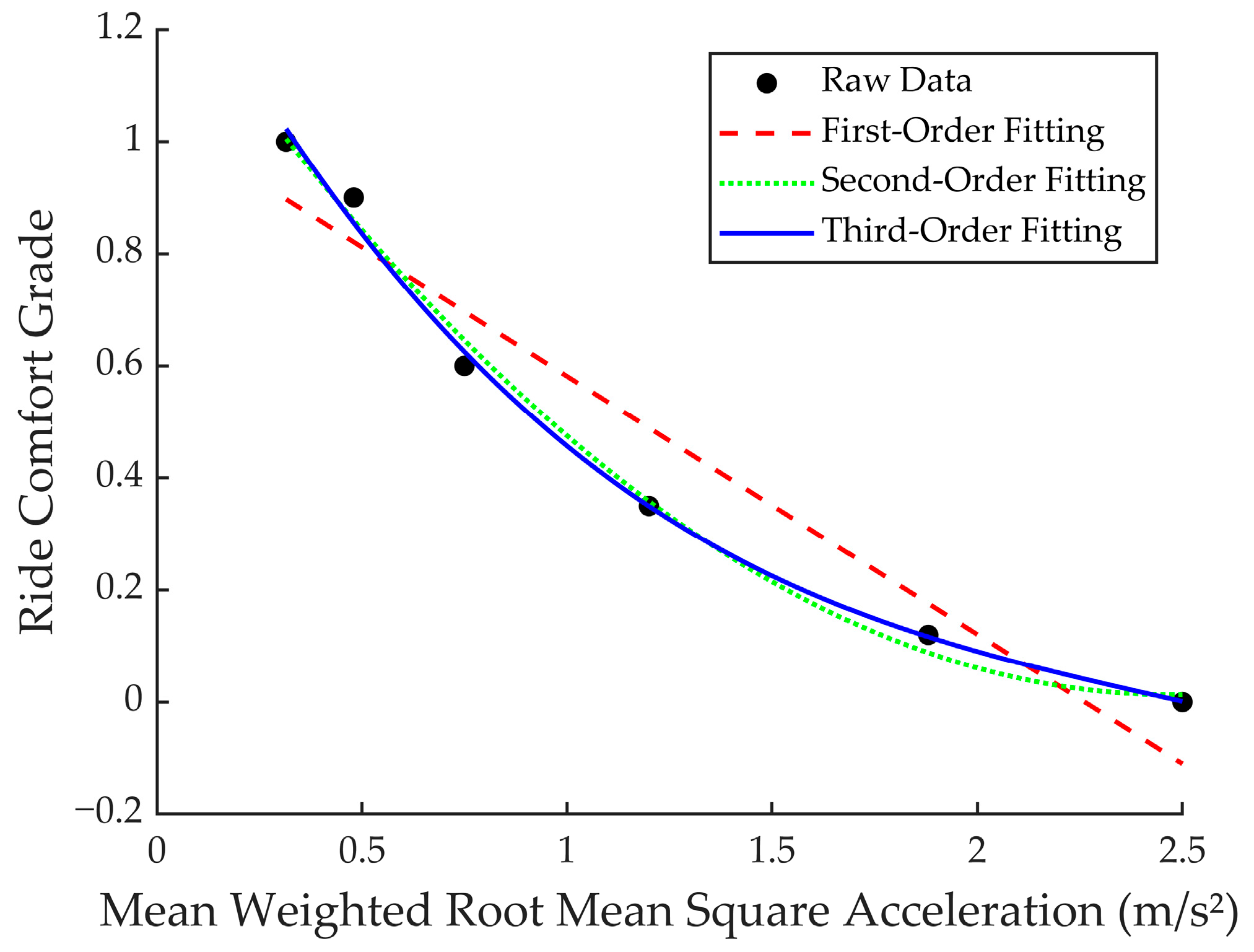
Figure 1 depicts the regression curves of varying orders correlating subjective and objective ride comfort evaluations under random road excitations.
As depicted in Figure 1, a comparative regression analysis was performed to determine the optimal functional mapping by evaluating linear, quadratic, and cubic polynomial models. Statistical validation reveals that lower-order models are insufficient for capturing the nonlinear psychophysical characteristics inherent in human vibration perception, yielding suboptimal goodness-of-fit (R2 < 0.9). In contrast, the cubic polynomial model demonstrates superior regression fidelity, achieving a coefficient of determination (R2) of 0.9961 and a Root Mean Square Error (RMSE) of 0.023. These metrics confirm that the cubic model accurately characterizes the nonlinear correlation between subjective ratings and the objective weighted RMS index, thereby establishing a rigorous mathematical foundation for the ride comfort evaluation framework.
r = 0.06708 a w 3 + 0.4949 a w 2 1.3824 a w + 1.4112
where a w denotes the total weighted Root Mean Square (RMS) acceleration of the vehicle, expressed in m/s2.
Conventional fuzzy evaluation paradigms typically employ triangular or trapezoidal membership functions with fixed breakpoints; however, their piecewise linear nature renders outcomes highly sensitive to threshold delineation. To circumvent this limitation, the continuous cubic polynomial defined in Equation (1) is utilized as the membership function, with its topology fully constrained by the standardized parameters in Table 1. By instituting a continuous nonlinear mapping, this methodology eliminates the uncertainty associated with arbitrary interval discretization. Furthermore, it ensures that the comfort index exhibits differentiable continuity—avoiding stepwise artifacts—in response to minor vibrational perturbations, thereby significantly augmenting numerical stability and robustness.
For impulse excitations, the mapping between Vibration Dose Value (VDV) and subjective evaluation [28] adopts a stratification strategy analogous to the random road scenario. Commensurate with the nonlinear psychophysics of vibration perception, compressed intervals are allocated to the extremum regions to capture heightened sensitivity, while expanded intervals are applied to the intermediate “moderate” range where perceptual discrimination is attenuated. The specific classification thresholds and rating mappings are detailed in Table 2.
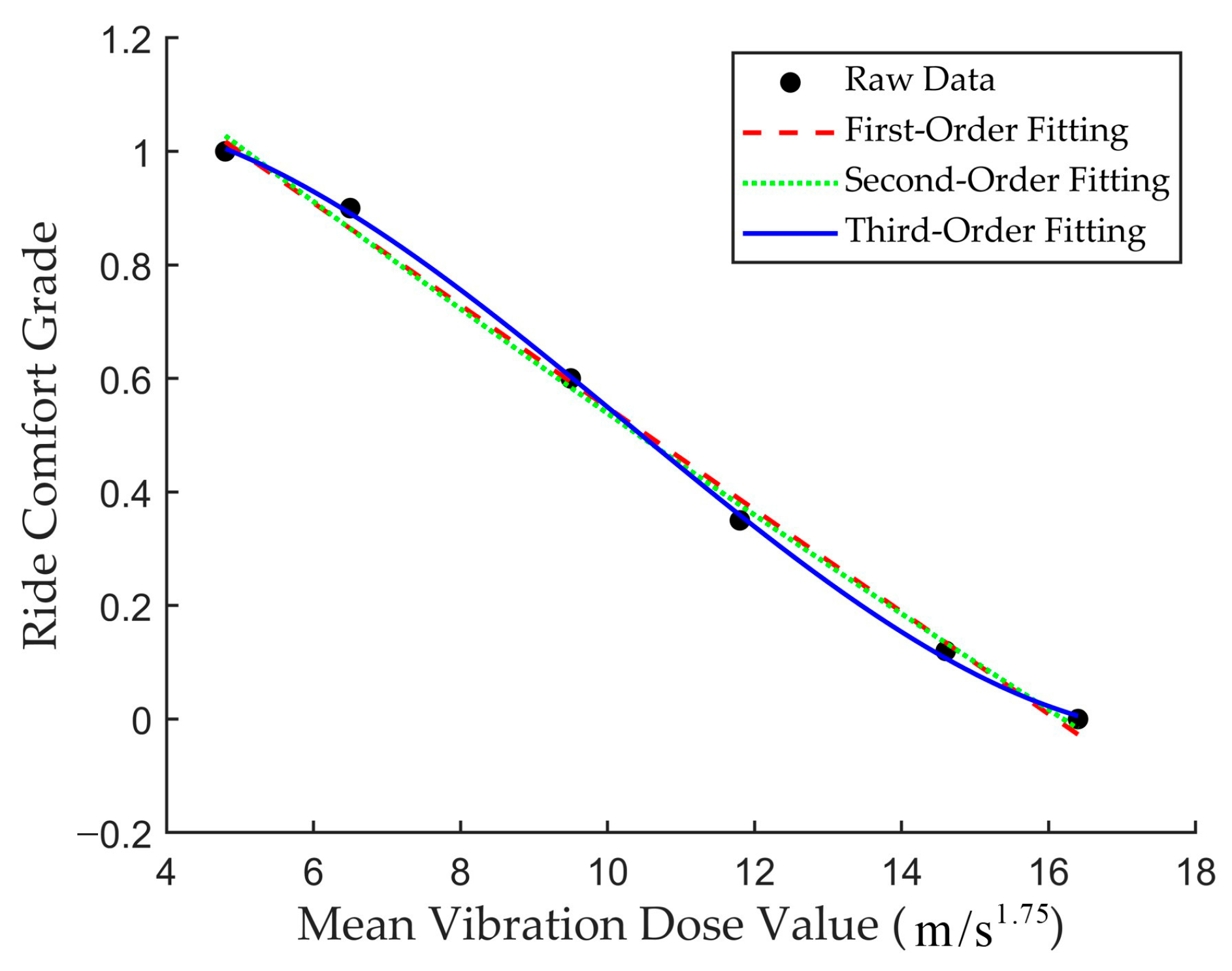
Figure 2 illustrates the regression curves of varying orders correlating subjective and objective ride comfort evaluations under impulse road excitations.
As illustrated in Figure 2, a comparative regression analysis was performed to identify the optimal function mapping Vibration Dose Value (VDV) to subjective comfort ratings under impulse excitation. The analysis reveals that the cubic polynomial model exhibits superior regression fidelity compared to alternative formulations, yielding a coefficient of determination (R2) of 0.9995 and a Root Mean Square Error (RMSE) of 0.082. This high correlation confirms the model’s efficacy in capturing the complex psychophysical variations associated with impulse-induced vibration. Consequently, the cubic polynomial formulation is adopted to constitute the mathematical core of the ride comfort evaluation paradigm.
r = 6.116 a v 3 × 10 4 0.01886 a v 2 + 0.08699 a v + 0.9541
where a v denotes the vibration dose value (VDV) of the vehicle, expressed in m/s1.75.

2.1.2. Construction of the Fuzzy Relation Matrix R

The ride comfort evaluation values obtained from the motorcycle at m measurement points under n experimental conditions can be arranged to form a fuzzy relation matrix R of size m × n .
R = r 11 r 1 n r m 1 r m n
where r i j denotes the ride comfort value of the vehicle at the i-th measurement point under the j-th experimental condition.

2.2. Construction of the Factor Weight Set Based on the Analytic Hierarchy Process

2.2.1. Construction of the Judgment Matrix, Weight Determination, and Consistency Verification

To rigorously evaluate ride comfort in electric motorcycles, this study selects three representative operating scenarios—random asphalt pavements, Belgian block surfaces, and impulse inputs induced by speed bumps—prioritizing the optimization of long-term comfort in urban commuting environments. The relative significance of these vibration modalities is quantitatively assessed based on occurrence frequency, cumulative fatigue effects, and rider expectations. Furthermore, the seat, footrest, and handlebar are identified as the critical rider-vehicle interfaces governing vibration transmission and the resultant ride quality.
The Analytic Hierarchy Process (AHP) [29,30,31] is utilized to transmute qualitative judgments regarding the influence of road topologies and contact interfaces into quantitative weighting coefficients. This is achieved through a systematic protocol encompassing hierarchy construction, pairwise comparison, weight computation, and consistency verification. This methodology facilitates the objective quantification of multifactorial influences, ensuring both logical verifiability and methodological reproducibility. Within the AHP framework, factors at a common hierarchical level undergo pairwise comparison to generate a judgment matrix. Relative importance is determined by referencing a baseline factor, with the degree of importance quantified according to the specific criteria detailed in Table 3.
Utilizing the fundamental 1–9 scale, a judgment matrix is formulated via pairwise comparisons of the evaluation factors. In this structure, the elements of the principal diagonal are defined as unity, while the matrix exhibits reciprocal symmetry, as formalized in Equation (4).
A = a 11 a 1 i a 1 j a 1 n       a i 1 a i i a i j a i n       a j 1 a j i a j j a j n       a n 1 a n i a n j a n m
where i and j denote the row and column indices, respectively, and a i j represents the relative importance ratio of factor u i with respect to factor u j . Based on the judgment matrix A , the maximum eigenvalue λ m a x is computed, and a consistency test is subsequently performed to obtain the consistency ratio (CR).
The computational protocol for the Consistency Ratio (CR) is delineated below. In this process, the weight vector is derived via an approximate normalization technique utilizing column-wise arithmetic means, effectively extracting the weighting priorities intrinsic to the judgment matrix.
w i = 1 n j = 1 n a i j i = 1 n a i j i = 1,2 , , n
a i j = a i j i = 1 n a i j
Each column of the judgment matrix is normalized by dividing its elements by the sum of the corresponding column, yielding the normalized matrix a i j . The normalized matrix is then summed row-wise, and the resulting values are divided by the matrix order n to obtain an approximate solution of the weight vector w i based on the column vector average method. The maximum eigenvalue λ m a x is calculated according to Equation (7).
λ m a x = 1 n i = 1 n A W i W i
where A W denotes the product of the judgment matrix A and the weight vector W ; the consistency ratio (CR) is calculated according to Equation (8).
C R = C I R I
where C I denotes the consistency index, which is defined as shown in Equation (9).
C I = λ m a x n n 1
where R I represents the average random consistency index of the judgment matrix. The corresponding R I values for judgment matrices of orders 1–9 are listed in Table 4.
When C R < 0.1 , the consistency of the judgment matrix is considered acceptable; when C R 0.1 , the consistency is deemed insufficient and the judgment matrix should be revised accordingly. After the judgment matrix passes the consistency test, the corresponding eigenvector ξ is normalized, and the normalized result is taken as the weight vector of the factor set, expressed as W = [ w 1 , w 2 , , w n ] .
The comprehensive ride comfort evaluation factor set comprises two primary dimensions: experimental operating conditions and sensor measurement locations. The weighting coefficients for each constituent factor are systematically derived utilizing the Analytic Hierarchy Process (AHP).
The weight set of the measurement point locations is obtained as follows: W p = P 1 P 2 P n ,   i = 1 m P i = 1 . The weight set of the experimental conditions is obtained as follows: W T = T 1 T 2 T n ,   i = 1 n T i = 1 .

2.2.2. Establishment of the Hierarchical Fuzzy Evaluation Model

First-Level Fuzzy Evaluation: Different Measurement Point Locations
E 1 = W P R
Second-Level Fuzzy Evaluation: Different Experimental Conditions
E 2 = W T E 1 T

2.3. Calculation and Analysis of the Comprehensive Ride Comfort Index

Predicated on the evaluation thresholds stipulated in the National Standard Test Method for Ride Comfort of Automobiles (GB/T 4970-2009) [24], a quantitative mapping is established between the comprehensive ride comfort index and subjective psychophysical perception. Consequently, the index is stratified into discrete evaluation tiers. The resulting grading hierarchy and classification framework are synthesized in Table 5, providing a standardized benchmark for the comparative quantitative assessment of ride comfort performance.
The comprehensive ride comfort index, E z , encapsulates the synthesized output of the multi-level evaluation framework. The definitive ride comfort classification is subsequently derived by mapping the computed magnitude of E z against the grading taxonomy outlined in the table.

3. Full-Vehicle Experimental Study and Result Analysis of Comprehensive Ride Comfort Evaluation

3.1. Experimental Basis and Standards

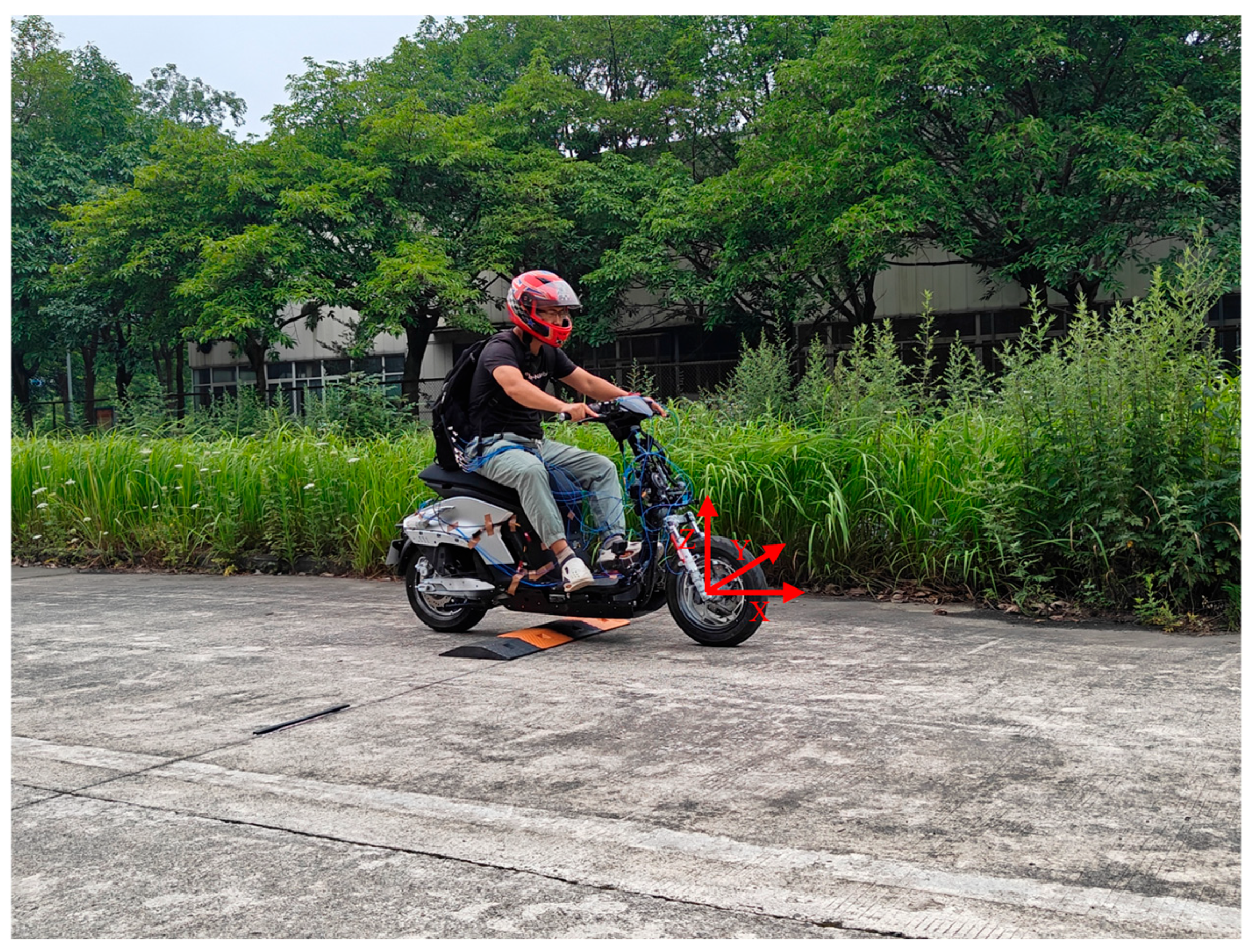
Full-scale vehicle trials were executed in strict compliance with the protocols outlined in QC/T 1042-2016 (Test Method for Vibration Comfort of Motorcycles and Mopeds) [16] and GB/T 4970-2009 (Test Method for Ride Comfort of Automobiles) [24]. The experimental vehicle platform is depicted in Figure 3. A multi-channel data acquisition system developed by 2D Debus & Diebold (Karlsruhe, Germany), specifically designed for motorcycle dynamic testing, was deployed to capture triaxial acceleration signals synchronously. After the experiments, the acquired data were imported into WinARace software (2D Debus & Diebold, Karlsruhe, Germany) for organization and preliminary analysis. Subsequent numerical computations, including cubic polynomial regression and the multi-level fuzzy comprehensive evaluation, were implemented using MATLAB R2022b (The MathWorks, Inc., Natick, MA, USA).
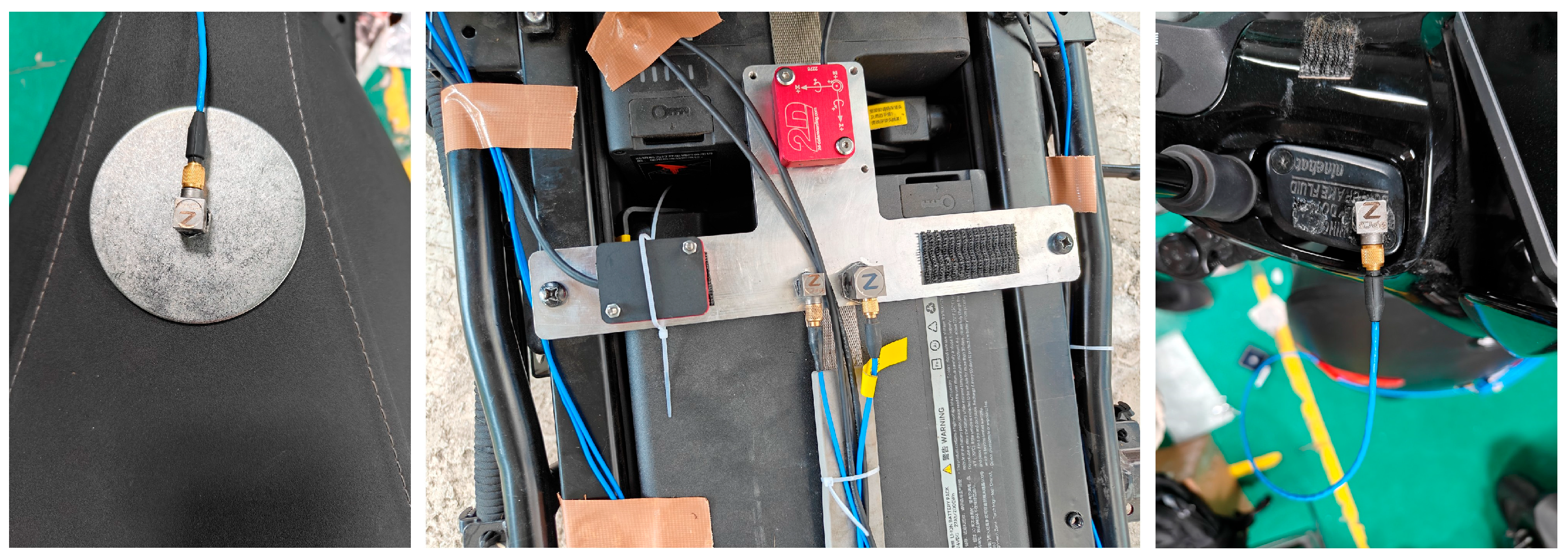
To rigorously characterize vibration energy transmission paths and accurately isolate low-frequency excitation sources, a multi-channel data acquisition system was deployed to capture triaxial acceleration signals synchronously at the seat, footrest, and handlebar interfaces. This temporal synchronization strategy is critical for distinguishing between forced vibrations induced by pavement irregularities, modal resonances stemming from chassis structural dynamics, and localized responses at specific mounting points. By analyzing spectral signatures and phase relationships under these synchronized conditions, the physical integrity and analytical reliability of the dataset are preserved. The schematic arrangement of these measurement points is illustrated in Figure 4.
Coordinate definition adhered to the ISO 8855 [32] standard to ensure directional fidelity: the X-axis represents the longitudinal forward direction, the Y-axis the lateral leftward direction, and the Z-axis the vertical upward direction. To minimize mounting resonance and alignment errors, sensors were affixed using custom-designed rigid metal adapters (see Figure 4). Installation precision was enforced utilizing a high-fidelity spirit level, constraining the Z-axis verticality alignment tolerance to within ±2°. Furthermore, the selected triaxial accelerometers demonstrated low cross-axis sensitivity (<3%). Given that pre-test calibration and baseline offset verification confirmed that artifacts arising from cross-axis coupling were negligible, complex decoupling matrix corrections were deemed unnecessary for the subsequent data processing.

3.2. Experimental Condition Setup

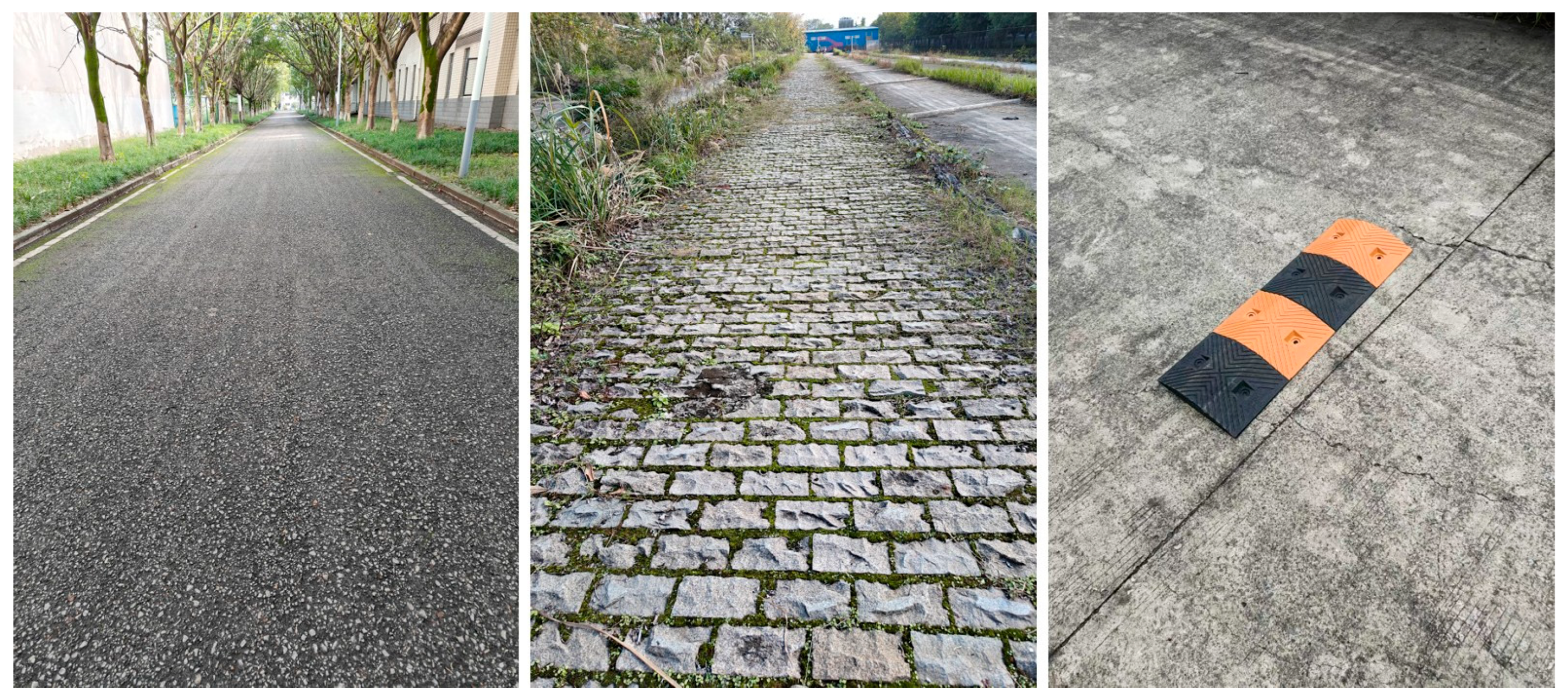
To comprehensively evaluate the ride comfort performance of the electric motorcycle, full-vehicle validation tests were executed under three representative operating scenarios: random asphalt pavement, Belgian block surfaces, and impulse inputs induced by speed bumps. These road topologies, visualized in Figure 5, encompass both standard commuting profiles and transient disturbance events, thereby enabling a multidimensional characterization of the vehicle’s dynamic response. To accurately simulate realistic operational envelopes, the experimental matrix integrated multiple steady-state velocities across diverse surface conditions. The specific speed–road permutations and testing parameters are detailed in Table 6, ensuring the dataset is both statistically representative and engineering-relevant.
Strict experimental protocols were enforced to minimize extraneous variables and enhance reproducibility. All trials were conducted by a single experienced operator (male, 75 kg, 175 cm) to mitigate inconsistencies arising from inter-rider variability and sprung mass fluctuations. Tire pressures were regulated within manufacturer specifications (180 kPa front; 220 kPa rear), and the traction battery State of Charge (SOC) was maintained above 80% to ensure uniform power delivery. Each experimental condition underwent five iterations; following outlier rejection, valid datasets were averaged for analysis. While this investigation utilizes a specific vehicle model, its structural architecture is paradigmatic of urban lightweight electric motorcycles. Consequently, the derived vibration transmission characteristics offer valid engineering benchmarks for analogous vehicle platforms.

3.3. Experimental Results and Analysis Under Random Road Conditions

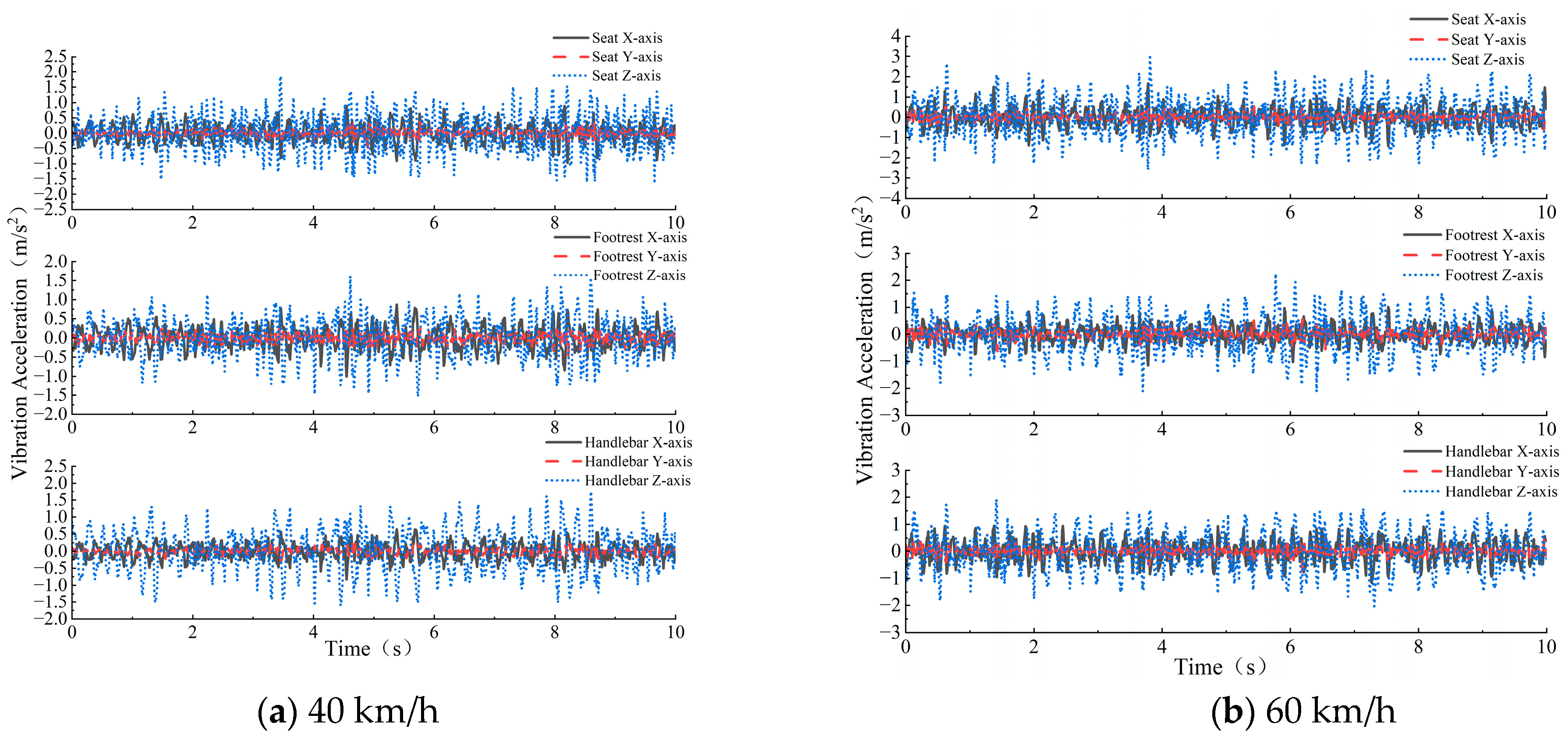
To ensure the quasi-stationarity required for weighted Root Mean Square (RMS) acceleration evaluation, rigorous protocols were implemented regarding vehicle speed control and data segmentation. Specifically, an experienced test rider stabilized the throttle prior to entering the test section, with real-time GPS monitoring confining speed deviations to within ±2 km/h of the target. During post-processing, transient intervals corresponding to acceleration and deceleration were excluded to eliminate non-stationary artifacts. Consequently, a 10 s steady-state signal segment was isolated for RMS calculation and spectral analysis to guarantee data fidelity. Figure 6 presents the triaxial vibration accelerations acquired from full-vehicle experiments under random road excitations, illustrating a comparative analysis across varying operating conditions.
As evidenced in Figure 6, vibration amplitudes across all measurement interfaces exhibit a marked escalation corresponding to increased vehicle velocity under random road excitations. This trend aligns with fundamental vehicle dynamics, thereby corroborating the validity of the experimental configuration. Table 7 details the constituent axial weighted Root Mean Square (RMS) accelerations and the resultant composite magnitudes for each location.
As delineated in Table 7, under random road excitations at velocities of 40 and 60 km/h, the vibration response exhibits pronounced directional anisotropy across all measurement interfaces. The vertical (Z-axis) component consistently predominates, whereas the lateral (Y-axis) component remains minimal. At 40 km/h, the seat interface registers a vertical weighted RMS acceleration of 0.534 m/s2 (Resultant: 0.542 m/s2). This magnitude significantly exceeds the composite values recorded at the footrest (0.206 m/s2) and handlebar (0.398 m/s2), indicating that the rider’s torso is subjected to the peak vibration load.
Elevating the velocity to 60 km/h precipitates a global intensification of vibration amplitudes. Specifically, the seat’s vertical RMS surges to 0.826 m/s2 (Resultant: 0.834 m/s2), while the resultant values at the footrest and handlebar escalate to 0.261 m/s2 and 0.567 m/s2, respectively. In synthesis, random road excitations induce a non-linear, speed-dependent amplification of vehicle vibration. The seat and handlebar act as the primary transmission pathways, thereby constituting the critical determinants of subjective ride comfort.
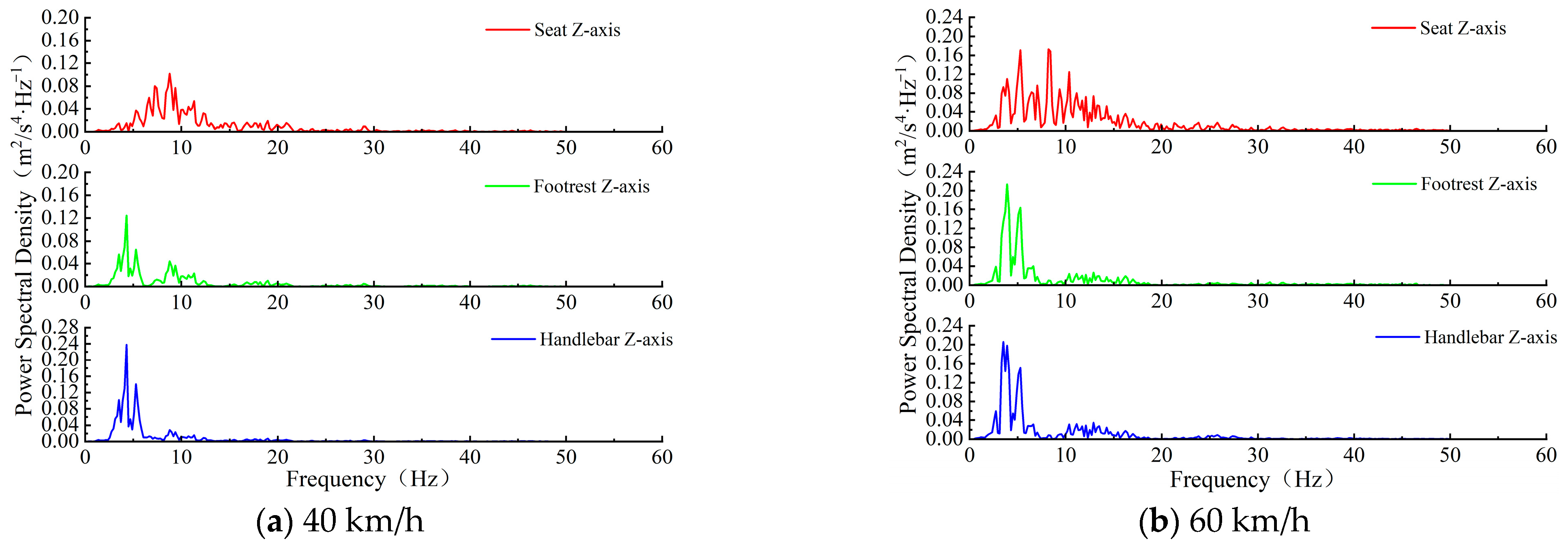
To elucidate the frequency-domain characteristics, the Power Spectral Density (PSD) of the dominant vertical (Z-axis) acceleration was computed for each measurement point, as illustrated in Figure 7.
As illustrated in Figure 7, under random road excitations at both test velocities, the vertical (Z-axis) vibration energy is predominantly concentrated within the 0–20 Hz frequency bandwidth, with the 2–10 Hz interval constituting the dominant spectral domain. Conversely, energy components exceeding 40 Hz exhibit substantial attenuation. The transition from 40 km/h to 60 km/h precipitates a broadband elevation of the Power Spectral Density (PSD) curves across all measurement interfaces. This amplification is particularly acute at the seat and handlebar, which display intensified spectral peaks, whereas the footrest amplitude remains comparatively subdued. These spectral characteristics underscore that high-speed operation significantly exacerbates the transmission of low-frequency vibration energy to the rider’s torso and upper extremities.

3.4. Experimental Results and Analysis Under Belgian Block Road Conditions

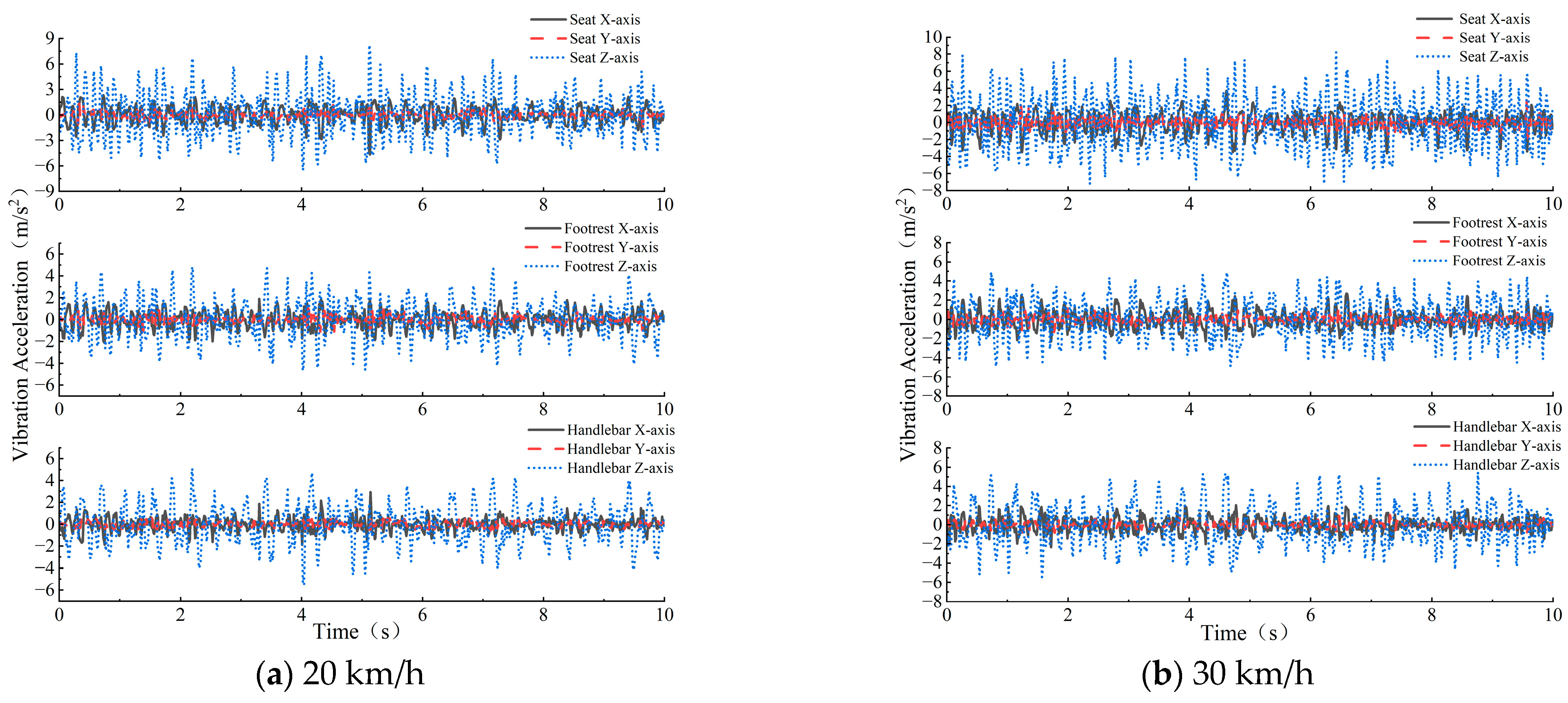
Figure 8 presents the triaxial vibration acceleration profiles acquired at each measurement interface under Belgian block pavement excitations, facilitating a comparative assessment across the tested operational conditions.
As illustrated in Figure 8, vibration amplitudes across all measurement interfaces exhibit a substantial intensification proportional to vehicle velocity under Belgian block excitations. This characteristic dynamic response corroborates the validity of the experimental configuration. Table 8 tabulates the constituent axial weighted Root Mean Square (RMS) accelerations alongside the resultant composite magnitudes for each measurement location.
As delineated in Table 8, the vibration response on Belgian block surfaces exhibits a distinct vertical dominance across all measurement interfaces. The vertical (Z-axis) weighted RMS accelerations consistently exceed the longitudinal (X-axis) and lateral (Y-axis) components, with lateral vibration remaining minimal. At 20 km/h, the seat interface sustains the maximum load, registering a vertical weighted RMS of 2.001 m/s2 (Resultant: 2.022 m/s2). In comparison, the footrest and handlebar record significantly lower vertical intensities of 1.359 m/s2 and 0.905 m/s2, respectively.
Accelerating to 30 km/h induces a systemic escalation in vibration magnitude. The seat’s vertical RMS surges to 2.341 m/s2 (Resultant: 2.366 m/s2), while the footrest and handlebar values rise to 1.543 m/s2 and 1.073 m/s2, respectively. This speed-dependent amplification, particularly evident at the seat and handlebar interfaces, implies a substantial degradation of ride quality and subjective comfort.
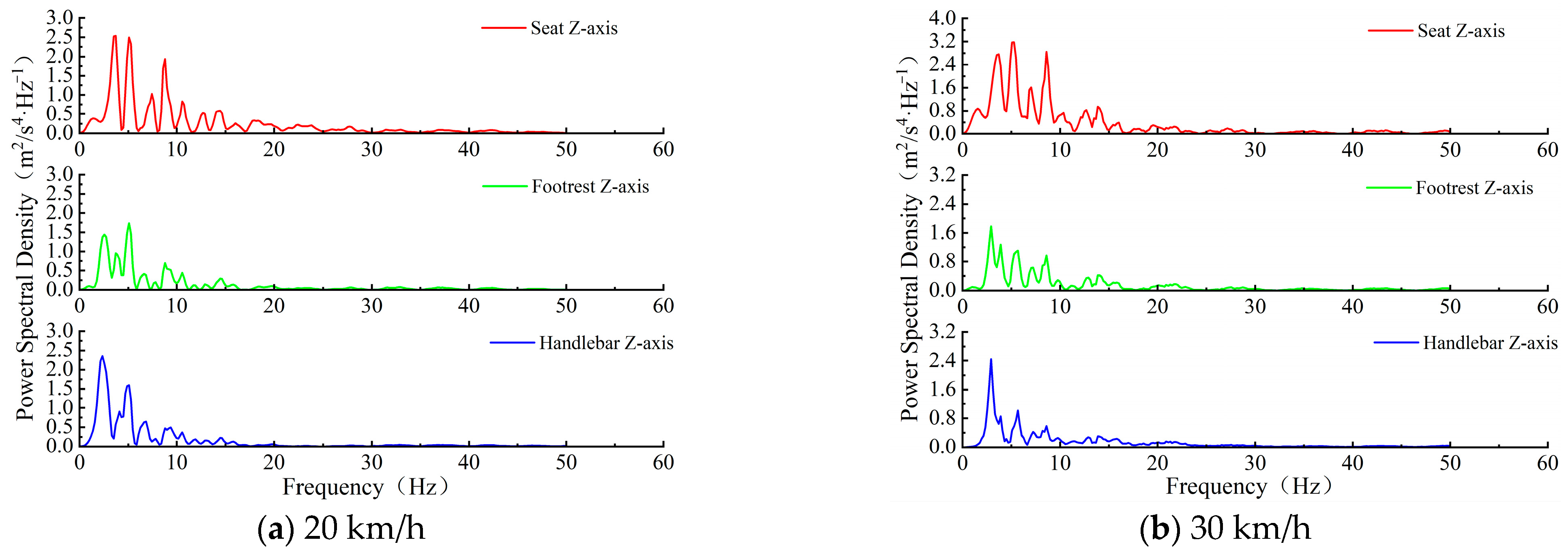
To elucidate the frequency-domain distribution of these dominant vertical vibrations, the Power Spectral Density (PSD) profiles for each measurement point were computed and are depicted in Figure 9.
As depicted in Figure 9, under Belgian block excitations, the vertical (Z-axis) vibration energy is predominantly confined within the 0–20 Hz bandwidth, with the 2–12 Hz interval constituting the primary spectral concentration. Conversely, energy content exceeding 40 Hz is negligible. At 20 km/h, the seat interface exhibits the maximum Power Spectral Density (PSD) peak, significantly surpassing the magnitudes observed at the footrest and handlebar. Accelerating to 30 km/h precipitates a systemic amplification of spectral amplitudes within the dominant frequency band across all measurement points. Most notably, the handlebar experiences a disproportionate surge in low-frequency energy, indicating that increased velocity critically exacerbates the transmission of vertical vibration to the rider’s upper extremities and torso.

3.5. Experimental Results and Analysis Under Impulse Road Conditions

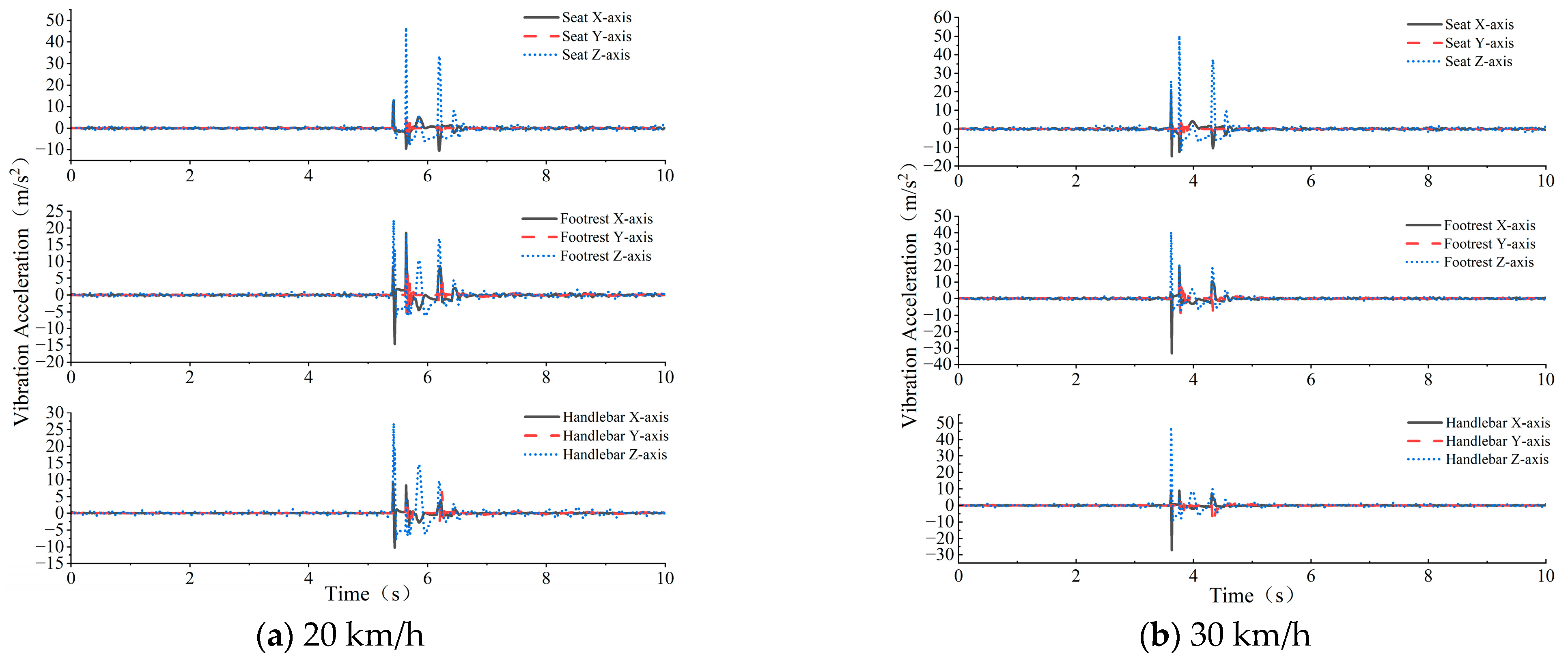
Figure 10 presents the triaxial vibration acceleration profiles acquired at each measurement interface under impulse road excitations, enabling a comparative assessment of the vehicle’s transient response across the tested operational scenarios.
As illustrated in Figure 10, the dynamic response to speed-bump impulses is characterized by marked directional anisotropy across all measurement interfaces. Specifically, peak acceleration amplitudes are predominantly aligned with the vertical (Z) axis, exhibiting magnitudes significantly exceeding those observed in the lateral (Y) direction. The corresponding triaxial Vibration Dose Values (VDVs) derived for each measurement location are tabulated in Table 9.
As delineated in Table 9, under speed-bump impulse excitations, the Vibration Dose Values (VDVs) exhibit pronounced vertical (Z-axis) dominance and a positive correlation with vehicle velocity across all measurement interfaces. A distinct methodological shift is observed here: while Table 7 and Table 8 utilized weighted RMS acceleration for quasi-stationary regimes, Table 9 adopts VDV to quantify impulse responses. This distinction arises from the fundamental physical limitations of the RMS metric. As a second-moment statistic (time-averaged mean of squared acceleration), RMS reflects average energy levels; consequently, it tends to smooth transient high-amplitude shocks, leading to an underestimation of perceived human discomfort during discrete impulse events. Conversely, the VDV formulation relies on the quartic integration (fourth power) of acceleration history. This mathematical structure amplifies sensitivity to high-crest-factor transients, rendering VDV a superior metric for quantifying the cumulative physical stress accumulated during impulsive impact scenarios.
Quantitatively, at 20 km/h, the resultant VDVs at the seat and handlebar reach 9.764 m/s1.75 and 5.899 m/s1.75, respectively, significantly surpassing the footrest value of 2.056 m/s1.75. Accelerating to 30 km/h precipitates a marked escalation in VDV across all interfaces. Notably, the handlebar exhibits the steepest rate of increase, indicating that high-speed traversal of impulse irregularities disproportionately exacerbates the severity of shock transmission to the rider’s upper extremities.
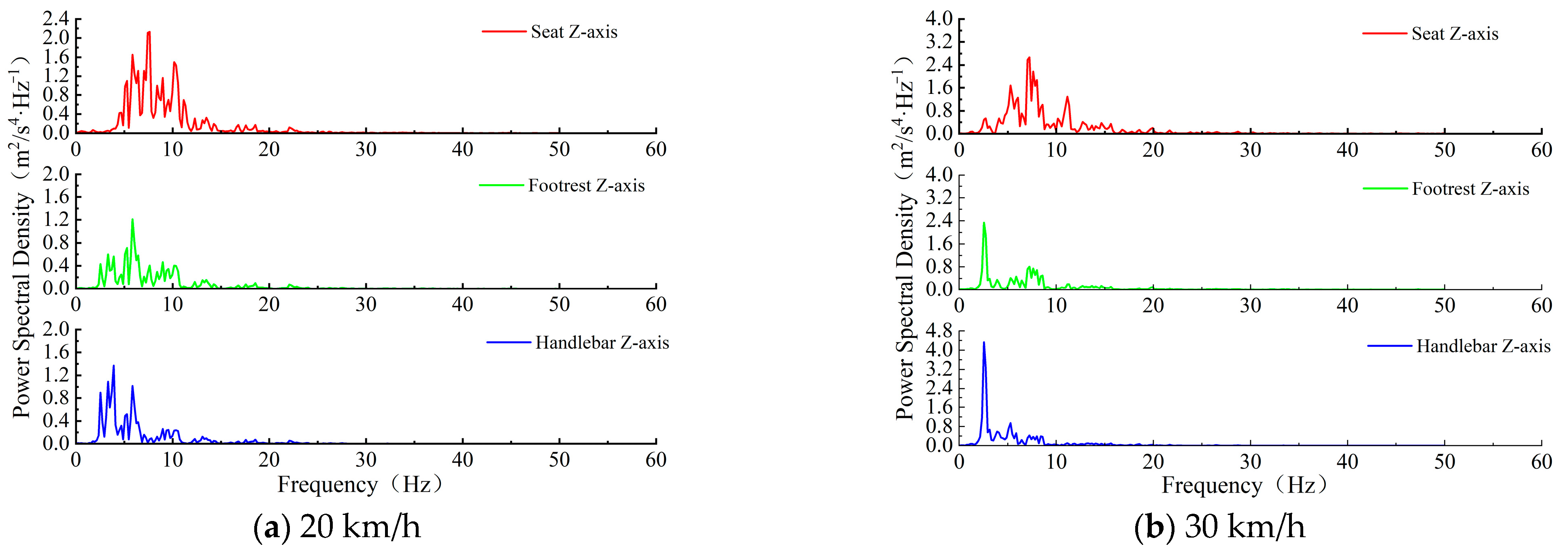
To characterize the frequency content of these transient signals, the Power Spectral Density (PSD) of the dominant vertical acceleration was computed for each measurement point, as presented in Figure 11.
As depicted in Figure 11, during speed-bump traversal at velocities of 20 and 30 km/h, the vertical (Z-axis) acceleration energy is predominantly localized within the 0–20 Hz frequency bandwidth across all measurement interfaces. Specifically, the 2–10 Hz interval constitutes the dominant spectral domain, with the seat interface exhibiting the maximal spectral magnitude. Relative to the 20 km/h baseline, increasing the velocity to 30 km/h precipitates a marked escalation in both spectral amplitudes within the dominant band and overall energy levels. This trend indicates that higher traversal speeds significantly exacerbate the intensity of low-frequency vertical excitations, thereby inducing a substantial degradation in ride quality.

4. Results of the Comprehensive Ride Comfort Evaluation

4.1. Construction of the Fuzzy Relation Matrix and Determination of Factor Sets and Weight Sets at Different Hierarchical Levels

4.1.1. Construction of the Fuzzy Relation Matrix

Leveraging the established ride comfort assessment models, a quantitative evaluation was conducted on the vibration responses at the seat, footrest, and handlebar interfaces across the three representative road scenarios for both experimental configurations. The resulting quantitative metrics formed the basis for synthesizing the fuzzy relation matrices, R1 and R2, as formulated below:
R 1 = 0.797 0.086 0.575 1.147 0.773 1.059 0.935 0.465 0.936 , R 2 = 0.563 0.023 0.453 1.083 0.705 1.042 0.774 0.361 0.424

4.1.2. Determination of Factor Sets and Their Corresponding Weight Sets at Different Hierarchical Levels

The formulation of judgment matrices was predicated on the established hierarchical structural model. Given the bilayered architecture of the evaluation criteria, distinct judgment matrices were synthesized for each respective level. To ensure methodological rigor and objectivity, factor weights were derived through consultation with a specialized expert panel. This cohort comprised 15 subject matter experts, stratified into 10 senior vehicle dynamics engineers from leading Original Equipment Manufacturers (OEMs) and 5 academic researchers specializing in automotive engineering. Each expert performed independent pairwise comparisons of the criterion-layer factors utilizing the Saaty 1–9 fundamental scale. To mitigate the variance associated with individual cognitive bias, these discrete judgments were aggregated via the geometric mean method, yielding the definitive judgment matrices detailed in Table 10 and Table 11.
According to Equation (6), the judgment matrices were normalized using the column vector normalization method, and the corresponding statistical results are presented in Table 12 and Table 13, respectively.
According to Equation (5), the weight vectors corresponding to the measurement points and road conditions are obtained as W p = ( 0.59,0.16,0.25 ) and W T = ( 0.63,0.26,0.11 ) , respectively. Subsequently, the consistency index (CI) of the judgment matrices was examined in accordance with Equations (7) and (9), with the matrix order set to n = 3 . The calculation results indicate that the maximum eigenvalues λ m a x for the measurement-point and road-condition matrices are 3.054 and 3.029, respectively, with corresponding CI values of 0.027 and 0.015.
The consistency ratio (CR) was then calculated according to Equation (8), where the random consistency index (RI) was obtained from Table 4 and takes a value of 0.58 for n = 3 . The results show that the CR values for the two criterion levels are 0.047 and 0.026, respectively, both of which are less than 0.1, indicating that the consistency requirements of the judgment matrices are satisfied. Accordingly, the final weight allocation was determined, and a summary of the results is presented in Table 14.

4.2. Establishment of the Hierarchical Fuzzy Comprehensive Evaluation

First-Level Fuzzy Evaluation: Different Measurement Point Locations
Experiment 1
E 11 = W P R 1 = 0.59 0.16 0.25 0.797 0.086 0.575 1.147 0.773 1.059 0.935 0.465 0.936 = 0.8875 0.2907 0.7427
Experiment 2
E 12 = W P R 2 = 0.59 0.16 0.25 0.563 0.023 0.453 1.083 0.705 1.042 0.774 0.361 0.424 = 0.6990 0.2166 0.5400
Second-Level Fuzzy Evaluation: Different Experimental Conditions
Experiment 1
E 21 = W T E 11 T = 0.63 0.26 0.11 0.8875 0.2907 0.7427 = 0.7164
Experiment 2
  E 22 = W T E 12 T = 0.63 0.26 0.11 0.6990 0.2166 0.5400 = 0.5561

4.3. Calculation and Analysis of the Comprehensive Ride Comfort Index

As tabulated in Table 15, a comparative analysis of the comprehensive ride comfort index was executed across two experimental velocities under three representative road topologies (random asphalt, Belgian block, and impulse surfaces). The results demonstrate a significant inverse correlation between vehicle velocity and ride quality: Test 1 yielded a comprehensive evaluation index of 0.7164, whereas the 50% velocity increase in Test 2 depressed this value to 0.5561—a decrement of approximately 22.4%. This degradation is not merely numerical but indicative of the coupled interaction between the vehicle’s suspension dynamics and the spectral characteristics of the road excitation.
Power Spectral Density (PSD) analysis reveals that vibration energy is predominantly localized within the 2–10 Hz bandwidth. This frequency domain significantly overlaps with both the fundamental natural frequency of the motorcycle suspension (approximately 2–4 Hz) and the critical biological resonance range of the human body (4–8 Hz). Increasing the vehicle speed by 50% precipitates a marked escalation in the equivalent temporal frequency of road irregularities. This results in a broadband elevation of input energy, intensifying resonance amplification phenomena near the suspension’s natural frequencies. Constrained by the lightweight structural architecture and fixed damping coefficients of the test vehicle, the system exhibits limited capacity to attenuate high-energy excitations within this resonant band. Consequently, this leads to increased transmissibility of weighted acceleration to the rider, manifesting as a substantial reduction in the comprehensive comfort index.
From the perspective of subjective psychophysics, the low-velocity condition correlates with “moderately uncomfortable” (Grade III), while the high-velocity scenario deteriorates to “uncomfortable” (Grade IV). This concordance between the objective index and subjective classification validates the model’s reliability. Furthermore, weight sensitivity analysis confirms the model’s robustness: subjecting the seat measurement weight to perturbations of ±10% to ±20% (with compensatory adjustments to footrest and handlebar weights) leaves the comfort grading hierarchy invariant. In all permutation scenarios, the low-speed performance consistently supersedes the high-speed condition. Thus, the proposed evaluation model proves resilient to specific weight configurations. Ultimately, under identical road and structural constraints, strategic modulation of operational velocity serves not only to enhance ride comfort but also to mitigate vibration-induced risks on impulsive terrains, providing actionable engineering guidelines for real-world speed regulation.

5. Conclusions

This study conceptualized and validated a systematic ride comfort assessment framework for electric motorcycles, bridging the gap between objective vibration metrics and subjective psychophysical perception via a two-stage fuzzy comprehensive evaluation approach. The principal conclusions are summarized as follows:
(1)
Comprehensive field trials conducted across asphalt, Belgian block, and impulse terrains confirmed that vertical (Z-axis) acceleration is the governing vector for rider discomfort. Across all experimental configurations, both weighted RMS and VDV metrics were dominated by the Z-axis component. Spectral analysis further revealed that vibration energy is predominantly localized within the <20 Hz bandwidth, identifying low-frequency vertical excitation as the critical determinant of ride quality.
(2)
A unified comfort index was established by synthesizing multi-dimensional vibration data—encompassing varied road topologies, sensor locations, and triaxial inputs—with subjective ratings. This was achieved through a calibrated objective–subjective mapping mechanism embedded within a hierarchical two-level fuzzy evaluation model, ensuring a robust correlation between physical measurements and human perception.
(3)
Quantitative analysis demonstrated a significant inverse correlation between vehicle velocity and ride comfort. Under identical structural and environmental constraints, a 50% increase in velocity precipitated a 22.4% reduction in the comprehensive comfort index (from 0.7164 to 0.5561). This quantitative decrement corresponded to a qualitative degradation in the comfort classification from Grade III (“Fairly Uncomfortable”) to Grade IV (“Uncomfortable”), highlighting the pronounced sensitivity of the system to speed variations.
(4)
The established framework provides a rigorous quantitative baseline for characterizing ride comfort under coupled operational variables (road–speed–location). Consequently, it offers validated methodological support for vibration-oriented design optimization and informs evidence-based guidelines for rational speed regulation under representative operating scenarios.

Author Contributions

Conceptualization, X.R.; methodology, formal analysis, X.R. and G.Y.; software, validation, G.Y. and S.N.; writing, X.R. and G.Y.; supervision, project administration, X.R. All authors have read and agreed to the published version of the manuscript.

Funding

This work was supported by the Chongqing Technical Innovation and Application Development Special Project (cstc2020jscx-msxmX0161).

Data Availability Statement

The original contributions presented in this study are included in the article. Further inquiries can be directed to the corresponding author.

Conflicts of Interest

The authors declare no conflicts of interest.

References

  1. Xu, Z.; Yang, J.; Zhang, Z. Multi-objective optimization of motorcycle suspension parameters based on multi-condition parallel tasks. J. Vib. Shock 2013, 32, 7–13. (In Chinese) [Google Scholar]
  2. Pandey, P.; Ito, M.; Sanada, T. Road surface evaluation considering scooter rider safety and comfort. J. JSC 2024, 12, 24–21038. [Google Scholar] [CrossRef]
  3. Jiménez-Canoas, R.; Collazos-Burbano, D.A.; García-Melo, J.I. Experimental analysis of passenger comfort with variable preloaded rear springs on a low-cylinder motorcycle. Sensors 2023, 23, 6204. [Google Scholar] [CrossRef]
  4. Saad, F.; Hamid, M.N.A.; Yusuf, Z.N.M. Motorcycle footrest vibration analysis for design enhancement. J. Phys. Conf. Ser. 2025, 3156, 012018. [Google Scholar] [CrossRef]
  5. Lenahatu, A.; Yamin, M. Ride test on vehicles travelling over speed bumps: Simulation with CarSim software. Int. J. Innov. Mech. Eng. Adv. Mater. 2024, 6, 107–113. [Google Scholar] [CrossRef]
  6. Wang, F.; Easa, S. Analytical evaluation of ride comfort on asphalt concrete pavements. J. Test. Eval. 2016, 44, 1671–1682. [Google Scholar] [CrossRef]
  7. Zou, X. Ride Comfort Analysis of Motorcycles Based on Road Simulation. Ph.D. Thesis, Southwest Jiaotong University, Chengdu, China, 2010. (In Chinese) [Google Scholar]
  8. Cheli, F.; Pezzola, M.; Agostoni, S. Objectification of the subjective riding comfort perception of motorcycles. In 19th Mediterranean Conference on Control & Automation (MED); IEEE: New York, NY, USA, 2011; pp. 928–933. [Google Scholar] [CrossRef]
  9. Magdziak-Tokłowicz, M.; Biskup, A.; Grzyb, M.; Prowans, M.; Szymczyk, J. The significance of telemetric data collection in electric motorcycles. Combust. Engines 2025, 202, 67–73. [Google Scholar] [CrossRef]
  10. Do, T.T.; Dinh, T.N.; Ly, V.D. Techno-economic assessment and strategic proposal for designing and optimizing the required powered battery for an electric motorcycle under varying driving cycle tests. Int. J. Renew. Energy Dev. 2025, 14, 1181–1200. [Google Scholar] [CrossRef]
  11. Zhang, Z.; Xu, Z.; He, Y. Ride comfort analysis of motorcycles based on multibody dynamics. China Mech. Eng. 2010, 21, 1000–1004. (In Chinese) [Google Scholar]
  12. Ran, X.; Chen, K.; Zhao, H. Ride comfort optimization analysis of large-displacement motorcycle suspension systems based on surrogate models. J. Mech. Strength 2022, 44, 119–125. (In Chinese) [Google Scholar]
  13. Krishna, K.; Hegde, S.; Mahesha, G.T. Whole-body vibration and rider comfort determination of an electric two-wheeler test rig. Methods 2023, 12, 559. [Google Scholar] [CrossRef]
  14. Zou, X.; Shi, X.; Shi, Q. Motorcycle comfort evaluation based on speed and frequency weighting. China Mech. Eng. 2011, 22, 481–484. (In Chinese) [Google Scholar]
  15. BS 6841; Measurement and Evaluation of Human Exposure to Whole-Body Mechanical Vibration and Repeated Shock. British Standards Institution: London, UK, 1987.
  16. QC/T 1042–2016; Ministry of Industry and Information Technology of the People’s Republic of China. Test Method for Vibration Comfort of Motorcycles and Mopeds. Science and Technology Literature Press: Beijing, China, 2016.
  17. Dimitrova, Z.; Maréchal, F. Techno-economic design of hybrid electric vehicles using multi-objective optimization techniques. Energy 2015, 91, 630–644. [Google Scholar] [CrossRef]
  18. Abdou, I.; Tkiouat, M. An AHP application for failure risk-based ranking of electric vehicle projects. Int. J. Anal. Hierarchy Process 2021, 13, 510–529. [Google Scholar] [CrossRef]
  19. Wu, L.; Chen, G.; Wu, L. Application of fuzzy safety evaluation method in automobile enterprises. Appl. Mech. Mater. 2015, 773, 413–418. [Google Scholar] [CrossRef]
  20. Yu, G.; Liu, Q. Research on fuzzy multiple attribute route evaluation decision method. World J. Eng. Technol. 2019, 7, 65–72. [Google Scholar] [CrossRef]
  21. Bhoraskar, A.; Fartyal, A.; Palanivelu, S. Ride comfort analysis of motor vehicles using analytical and experimental procedures. Int. J. Veh. Struct. Syst. 2022, 14, 619–626. [Google Scholar] [CrossRef]
  22. Zhu, K.; Yang, S. A review of Saaty’s viewpoint on the inapplicability of fuzzy logic to AHP. Syst. Eng. Theory Pract. 2014, 34, 197–206. (In Chinese) [Google Scholar]
  23. Sun, L.; Zhu, L.; Zhang, X. Identification of key technological elements based on fuzzy analytic hierarchy process. Sci. Technol. Eng. 2020, 20, 9816–9821. (In Chinese) [Google Scholar]
  24. GB/T 4970–2009; Standardization Administration of China. Test Method for Vehicle Ride Comfort. Standards Press of China: Beijing, China, 2009.
  25. Stroesser, S.; Angrick, C.; Zwosta, T. Theory Behind a Novel Method for the Quantification of Subjective Ride Comfort Phenomena; SAE Technical Paper 2025-01-0456; SAE International: Warrendale, PA, USA, 2025. [Google Scholar]
  26. George, W.; Pandey, A.K.; Teja, K.S. Multibody analysis for ride comfort of motorcycle. In International Mechanical Engineering Congress and Exposition–India, Hyderabad, India, 10–13 September 2025; ASME: New York, NY, USA, 2025; Paper No. V005T10A093. [Google Scholar] [CrossRef]
  27. Fechner, G.T. Elements of Psychophysics; Li, J., Translator; Renmin University of China Press: Beijing, China, 2015. (In Chinese) [Google Scholar]
  28. Gao, J. Nonlinear Simulation Analysis and Experimental Study of Vehicle Ride Comfort. Ph.D. Thesis, Dalian Jiaotong University, Dalian, China, 2021. (In Chinese) [Google Scholar]
  29. Gärtner, Q.; Bianchi, A.; Mulrav, H. Combining the analytic hierarchy process, fuzzy expert systems, and the exponential risk priority number for holistic evaluation of innovation projects in manufacturing. Prod. Manuf. Res. 2024, 12, 2378200. [Google Scholar] [CrossRef]
  30. Sharma, P.; Singh Ghatorha, K.; Cepova, L. A hybrid FAHP–entropy–TOPSIS model for selecting the facility layout in small-scale manufacturing. Front. Mech. Eng. 2025, 11, 1666571. [Google Scholar] [CrossRef]
  31. Muyulema-Allaica, J.C.; Menéndez-Zaruma, C.M.; Balseca-Castro, J.E. Hybrid AHP–DEMATEL model for prioritizing key resilience and sustainability drivers in agri-food supply chains. J. Eur. Syst. Autom. 2025, 58, 841. [Google Scholar] [CrossRef]
  32. ISO 8855:2011; Road Vehicles—Vehicle Dynamics and Road-Holding Ability—Vocabulary. International Organization for Standardization: Geneva, Switzerland, 2011.
Figure 1. Fitting results of different-order models for subjective and objective ride comfort evaluations under random road excitations.
Wevj 17 00251 g001
Figure 2. Fitting results of different-order models for subjective and objective ride comfort evaluations under impulse road excitations.
Wevj 17 00251 g002
Figure 3. Electric motorcycle used in the experiment with the defined XYZ reference system.
Wevj 17 00251 g003
Figure 4. Schematic of the installation positions of the triaxial accelerometer.
Wevj 17 00251 g004
Figure 5. Three types of typical road surfaces.
Wevj 17 00251 g005
Figure 6. Time-domain acceleration responses along each axis at different test pointsunder random asphalt road conditions.
Wevj 17 00251 g006
Figure 7. Comparison of vibration acceleration power spectral density under random asphalt road conditions.
Wevj 17 00251 g007
Figure 8. Time-domain acceleration responses along each axis at different test pointsunder Belgian block road conditions.
Wevj 17 00251 g008
Figure 9. Comparison of vibration acceleration power spectral density under Belgian block road conditions.
Wevj 17 00251 g009
Figure 10. Time-domain acceleration responses along each axis at different test pointsunder impulse road conditions.
Wevj 17 00251 g010
Figure 11. Comparison of vibration acceleration power spectral density under impulse road conditions.
Wevj 17 00251 g011
Table 1. Correspondence between the weighted Root Mean Square (RMS) acceleration and subjective evaluation.
Total Weighted Root Mean Square (RMS) Acceleration of Vibration (m/s2)Human Subjective
Evaluation
Mean Weighted Root Mean Square (RMS) Acceleration (m/s2)Ride Comfort Grade
<0.315No discomfort0.3151.0
0.315–0.63Slight discomfort0.480.9
0.5–1.0Fairly uncomfortable0.750.6
0.8–1.6Uncomfortable1.20.35
1.25–2.5Very uncomfortable1.880.12
>2.5Extremely uncomfortable2.50
Table 2. Correspondence between the vibration dose value and subjective evaluation.
Vibration Dose Value (m/s1.75)Human Subjective
Evaluation
Mean Vibration Dose Value (m/s1.75)Ride Comfort Grade
<4.8No discomfort4.81.0
4.8–8.2Slight discomfort6.50.9
8.2–10.7Fairly uncomfortable9.50.6
10.7–12.8Uncomfortable11.80.35
12.8–16.4Very uncomfortable14.60.12
>16.4Extremely uncomfortable16.40
Table 3. Scale of Judgment Values for Factor Importance.
Importance ValueDefinition
1Equal importance
3Slightly more important
5Obviously more important
7Strongly more important
9Extremely more important
(2, 4, 6, 8)Intermediate values
Table 4. R I Values for Judgment Matrices of Orders 1–9.
n123456789
R I 0.000.000.580.901.121.241.321.411.45
Table 5. Correspondence between the comprehensive ride comfort index and human subjective perception.
Human Subjective
Evaluation
Comprehensive   Evaluation   Value   E z Evaluation Grade
No discomfort>1Grade I (Excellent)
Slight discomfort0.9–1.0Grade II (Good)
Fairly uncomfortable0.6–0.9Grade III (Moderate)
Uncomfortable0.35–0.6Grade IV (Fair)
Very uncomfortable0.12–0.35Grade V (Poor)
Extremely uncomfortable< 0.12Grade VI (Very Poor)
Table 6. Experimental conditions.
Road ConditionAsphalt RoadBelgian Block RoadImpulse Road
Test Vehicle SpeedExperiment 140 km/h20 km/h20 km/h
Experiment 260 km/h30 km/h30 km/h
Table 7. Weighted RMS Acceleration along Each Axis and the Resultant Weighted RMS Acceleration at Different Measurement Points under random road conditions.
Test SpeedSeat (m/s2)Footrest (m/s2)Handlebar (m/s2)
X-AxisY-AxisZ-AxisX-AxisY-AxisZ-AxisX-AxisY-AxisZ-Axis
40 km/h0.09210.01340.5340.2340.08620.4920.1360.07040.367
0.5420.2060.398
60 km/h0.1150.02150.8260.2810.1120.6240.3030.09110.471
0.8340.2610.567
Table 8. Weighted RMS Acceleration along Each Axis and the Resultant Weighted RMS Acceleration at Different Measurement Points under Belgian block road conditions.
Test SpeedSeat (m/s2)Footrest (m/s2)Handlebar (m/s2)
X-AxisY-AxisZ-AxisX-AxisY-AxisZ-AxisX-AxisY-AxisZ-Axis
20 km/h0.2820.08162.0010.6330.2191.3590.3530.1690.905
2.0220.5680.986
30 km/h0.3350.08582.3410.7420.2821.5430.4340.1981.073
2.3660.6481.174
Table 9. VDV Acceleration along Each Axis and the Resultant VDV Acceleration at Different Measurement Points.
Test SpeedSeat (m/s1.75)Footrest (m/s1.75)Handlebar (m/s1.75)
X-AxisY-AxisZ-AxisX-AxisY-AxisZ-AxisX-AxisY-AxisZ-Axis
20 km/h2.5161.0449.3763.6941.5534.4882.0441.2855.382
9.7642.0565.899
30 km/h4.0221.10410.0746.6141.7438.7845.4542.1359.528
10.9033.90811.184
Table 10. Judgment Matrix of the Criterion Layer for Different Measurement Points.
Measurement Point LocationSeatFootrestHandlebar
Seat133
Footrest1/311/2
Handlebar1/321
Table 11. Judgment Matrix of the Criterion Layer for Different Road Conditions.
Typical Road ConditionsAsphalt PavementBelgian Block PavementImpulse Road Surface
Asphalt Pavement135
Belgian Block Pavement1/313
Impulse Road Surface1/51/31
Table 12. Column-Normalized Results of the Criterion-Layer Judgment Matrix for Different Measurement Points.
Measurement Point LocationSeatFootrestHandlebar
Seat0.6000.5000.667
Footrest0.2000.1670.111
Handlebar0.2000.3330.222
Table 13. Column-Normalized Results of the Criterion-Layer Judgment Matrix for Different Road Conditions.
Typical Road
Conditions
Asphalt
Pavement
Belgian Block
Pavement
Impulse Road
Surface
Asphalt Pavement0.6520.6920.556
Belgian Block Pavement0.2170.2310.333
Impulse Road Surface0.1310.0770.111
Table 14. Factor sets and weight sets at different hierarchical levels.
Factor Sets at Different Hierarchical LevelsWeight Sets at Different Hierarchical Levels
Measurement Point LocationSeat59% W p = 0.59         0.16         0.25   i = 1 m P i = 1
Footrest16%
Handlebar25%
Typical Road ConditionsAsphalt Road Condition63% W T = 0.63         0.26         0.11   i = 1 n T i = 1
Belgian Block Road Condition26%
Impulse Road Condition11%
Table 15. Comparison of comprehensive ride comfort evaluation values.
Evaluation ItemExperiment 1Experiment 2Change Rate
Comprehensive Ride Comfort Index0.71640.556122.4%
Human Subjective EvaluationFairly uncomfortableUncomfortableDecrease in Ride Comfort
Evaluation GradeGrade III (Moderate)Grade IV (Fair)Downgrade of Evaluation Grade
Disclaimer/Publisher’s Note: The statements, opinions and data contained in all publications are solely those of the individual author(s) and contributor(s) and not of MDPI and/or the editor(s). MDPI and/or the editor(s) disclaim responsibility for any injury to people or property resulting from any ideas, methods, instructions or products referred to in the content.