Article

Temporal Convolutional Network–Transformer Hybrid Architecture with Hippo Optimization for Lithium Battery SOC Estimation


1
School of Mechanical and Electrical Engineering, Huainan Normal University, Huainan 232001, China
2
College of Electrical and Information Engineering, Anhui University of Science and Technology, Huainan 232001, China
*
Author to whom correspondence should be addressed.
World Electr. Veh. J. 2026, 17(5), 236; https://doi.org/10.3390/wevj17050236
Submission received: 2 April 2026 / Revised: 25 April 2026 / Accepted: 25 April 2026 / Published: 29 April 2026
(This article belongs to the Section Storage Systems)

Abstract

As an important state parameter in battery management systems, accurate state of charge (SOC) estimation is of great significance for the safe and reliable use of batteries. In this paper, a Temporal Convolutional Network–Transformer (TCN–Transformer) model is proposed for achieving accurate estimation of SOC. First, the TCN is integrated in series with the Transformer model. This integration not only extracts the local characteristics of time-series data but also captures broader spatiotemporal correlations, thereby enhancing the feature representation and achieving highly accurate estimation. However, since the hyperparameter settings of neural networks have a significant impact on model performance, this study employs the advanced hippo optimization (HO) algorithm to determine the optimal values for the number of filters, filter size, number of residual blocks, and number of encoder layers, ultimately improving the model’s stability and efficiency. Finally, the proposed model was tested under various dynamic driving conditions at different temperatures. Experimental validation on the CALCE dataset demonstrates that the proposed HO–TCN–Transformer achieves RMSE and MAE both under 0.7%, representing an approximately 50% overall error reduction compared to the standalone TCN. Cross-validation across five folds confirms robust performance with <7% standard deviation.

1. Introduction

With the in-depth promotion of the ‘dual-carbon’ strategy, China’s new energy industry has experienced rapid and sustained growth. The use of petroleum produces a large amount of environmentally unfriendly chemicals and greenhouse gases, and lithium-ion batteries have become the first choice for replacing petroleum in many fields due to their advantages of high energy density, long lifespan, and environmental friendliness, including civilian electronic equipment, electric vehicles (EVs), and energy storage systems, etc. [1]. To fully leverage the advantages of lithium-ion batteries, a battery management system (BMS) is required to monitor the battery’s status. The state of charge (SOC), as one of the most critical parameters in a BMS, has received extensive attention.
Especially in the EV field, accurate and real-time SOC estimation serves not only as a critical safeguard for battery safety and reliability—preventing hazardous conditions such as overcharging and over-discharging to ensure normal vehicle operation within a secure state—but also as an essential data foundation for user trip planning and alleviating range anxiety [2]. However, as an indirect electrochemical state indicator, SOC cannot be directly measured by physical sensors. Consequently, it can only be estimated indirectly from measurable external characteristic parameters such as terminal voltage, operating current and temperature [3,4], rendering this “immeasurability” the fundamental technical bottleneck in precise SOC estimation.

1.1. Literature Review

The state of charge (SOC) of a battery refers to its current charge level of the battery. The SOC of a battery is directly related to the available energy and range of the battery, and there are many methods for estimating the SOC of a battery, which can be roughly classified into the following four categories:
Ampere-time integration method [5,6,7]: The SOC is obtained by calculating the integral of the current over time, but this method has a high demand for an accurate initial SOC value, and also a high demand for the accuracy of the current sensor. Moreover, the accuracy of SOC estimation is easily affected by the current drift, leading to the accumulated estimation error during the integration process [8].
Open-circuit voltage (OCV) method [9,10]: The OCV method estimates the SOC based on the mapping relationship between SOC and OCV, but the conditions for the accurate measurement of OCV are more demanding, requiring the battery to be rested for a long time, making it difficult to apply in practice [11].
Model-driven approach: Model-based approaches estimate the SOC through a battery model and a nonlinear state estimation algorithm, offering the advantages of real-time execution and closed-loop feedback. Common battery models include electrochemical models (EMs) and equivalent circuit models (ECMs) [12]. Guo W et al. [13] studied the capacity issue of NCM (nickel–cobalt–manganese) batteries under fast-charging conditions and proposed an electrochemical digital twin model analysis method to optimize the battery charging strategy. Error correction models are relatively simple, reflect some information about the cell’s internals, and facilitate online estimation of SOC. Various filters and observers have been used to form closed-loop SOC estimation, such as the Kalman filter, H-infinity filter, and proportional–integral observer [14,15,16]. Wu et al. [17] proposed an MCC–AEKF algorithm based on a second-order equivalent circuit model, which improved the estimation results under non-Gaussian noise. Xu [18] et al. combined the electrochemical model with an equivalent circuit model to achieve the joint estimation of SOC and SOH. However, the model-based approach relies heavily on the accuracy of the battery model. The accuracy of SOC estimation decreases gradually with the aging of the battery and changes in model parameters.
Data-driven approach: Data-driven approaches use machine learning and neural networks to model battery state of charge (SOC) based on extensive training data, without considering the battery’s internal mechanisms. Chao et al. [19] applied RNNs to estimate the SOC of LIBs and compared RNNs with other methods across various datasets. In traditional RNNs, the vanishing gradient problem limits the ability to capture long-term dependencies, as gradients diminish to a level where effective learning stops. Many improvements have been made to overcome the vanishing gradient problem in RNN-based architectures, such as LSTM. Ma et al. [20] used an LSTM neural network model to improve SOC estimation accuracy and robustness. Gao et al. [21] proposed a GRU neural network model to improve SOC estimation accuracy and robustness for LiFePO4 battery energy storage systems. Xi et al. [22] established a SOC estimation technology with time-delay RNNs and LSTMs to identify potential sources of poor performance due to over-excited neurons. Despite good results, LSTMs still struggle to capture relationships in long time series, variable-length sequences, and complex multivariate inputs, causing information loss and less accurate estimations. Chen et al. [23] introduced a denoising autoencoder neural network (DAE–NN) to extract useful data features by reducing noise and increasing the dimensionality of the battery measurement data. Wang et al. [24] introduced a temporal optimization module into a Temporal Convolutional Network (TCN) based model to suppress data noise and improve estimation accuracy, achieving a MAE below 1% and RMSE below 2% in SOC estimation.
While existing studies have improved battery SOC estimation, two deficiencies remain. First, under complex real-world conditions with temperature fluctuations and drastic current changes, single deep learning models exhibit limited feature learning capabilities, potentially overlooking critical sequential features and long-term dependencies in battery behavior [25,26]. Second, hyperparameter selection significantly impacts estimation accuracy, however, manual tuning is complicated and time-consuming.
This paper proposes a TCN–Transformer fusion network optimized by the hippopotamus optimization algorithm (HOA). The TCN captures local temporal features, while the Transformer models global dependencies; their fusion efficiently extracts complex relationships from battery data and adapts to varying operating conditions. The HOA simulates the foraging, migration, and social behaviors of hippopotamuses, effectively exploring the hyperparameter space, avoiding local optima, and reducing the randomness and workload of manual parameter adjustment.

1.2. The Contributions of This Paper

A new TCN–transformer fusion model for battery SOC estimation is proposed. This model effectively integrates local feature extraction, key sequence-related feature extraction, and long-term dependency capturing to provide a richer information base for SOC estimation. It solves the problem of incomplete feature capture in single models, thus improving the estimation accuracy in complex environments.
The hippo optimization algorithm is applied to the hyperparameter optimization of TCN-Transformer model, which solves the problems of time-consuming and labor-intensive hyperparameter tuning in deep learning models
A large number of experiments were conducted on the HO–TCN–Transformer model, and the results verified that the model can achieve high-precision battery SOC estimation under different operating environments across various datasets, providing a new solution for SOC estimation.

2. Materials and Methods

2.1. Hippo Optimization Algorithm

The hippo optimization algorithm (HO) was selected for TCN–Transformer hyperparameter tuning based on three key justifications:
1. Discrete Space Handling: All target parameters are integers, for which gradient-based methods fail. The HO’s biologically inspired position-update mechanism naturally handles this discrete search space, avoiding rounding approximations. 2. Avoid local optima: Different combinations of hyperparameters may yield similar validation performance, creating multiple local-optima traps. During the defense phase, the HO’s Levy walk exhibits a heavy-tailed distribution, enabling it to make long-distance jumps with a high probability. During the escape phase, the step size adaptively contracts to ensure eventual convergence to the global optimum neighborhood. 3. Computational efficiency: HO requires only validation loss evaluations without expensive surrogate models, offering significant advantages over Bayesian Optimization for lengthy training cycles. Its self-adaptive mechanisms eliminate manual calibration, enabling out-of-the-box deployment [27,28].
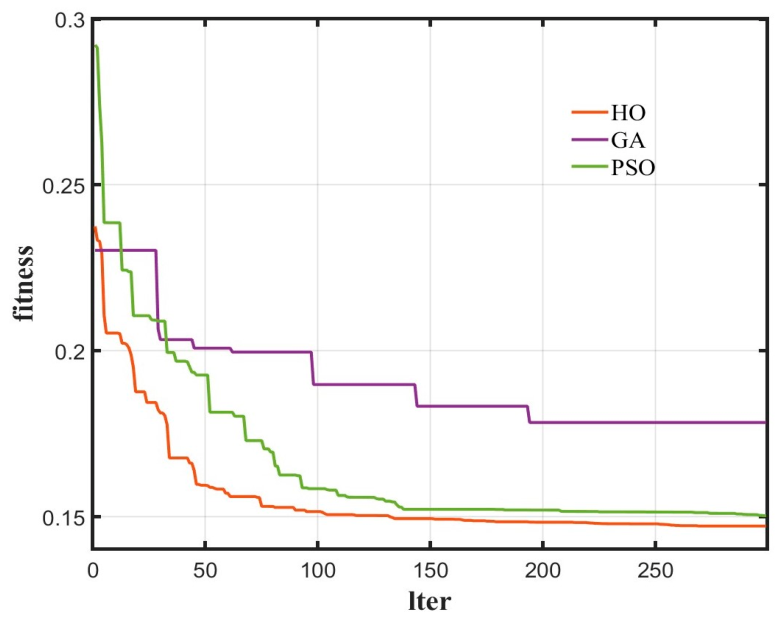
In order to verify the advantage of HO algorithm, Figure 1 shows the adaptation degree curves during the optimization process of different algorithms, which clearly show that HO optimization algorithm is significantly better than PSO algorithm and GA algorithm, both in terms of convergence speed and adaptation degree.
The iterative steps of HO are as follows:
(1).
The population size and maximum number of iterations, optimization parameters and their upper and lower bounds are set. The population generation formula is shown in Equation (1):
H i : H i j = I b j + r ( u b j I b j ) i = 1 , 2 , , N ;   j = 1 , 2 , , m
where Hi denotes the ith candidate solution, i.e., the ith hippo location, Ibj, ubj denote the upper and lower bounds of the jth variable to be optimized, respectively. N denotes the number of hippos in the population and m denotes the number of variables to be optimized in the problem.
(2).
The wandering and predator-attacking behaviors of hippopotamuses are simulated, representing two different strategies to improve the global search ability of the model. The wandering behavior can be expressed as Equation (2)
H i b i = x i j + h 1 ( Y I 2 M G i ) , exp ( u τ ) > 0.6 E , e l s e
where H i b i indicates the next position of the hippopotamus cub in the population. u is the current iteration number, τ is the maximum iteration number. If e x p ( τ u ) is greater than 0.6, it means that the hippopotamus cub starts to wander; otherwise, the cub is still inside the population, and MGi refers to the average value of a number of randomly selected hippopotamuses.
The mathematical model of the hippopotamus’s posture when facing a predator is shown in Equations (3)–(5):
H i p i = R L P j + E ( 1 D ) , F p r j < F i ( R L P j + E ( 1 2 × D + r 9 ) , F p r j F i i = N 2 + 1 , N 2 + 2 , , N ;   j = 1 , 2 , , m
E = f c d × cos ( 2 π g )
Pj is the position of the predator in the space generated by the parameters to be optimized, D is the distance between the hippopotamus and the predator, f is a uniform random number between 2 and 4, c is a uniform random number between 1 and 1.5, and d is a uniform random number between 2 and 3. g denotes a uniform random number between −1 and 1. g is a random vector with a Levy distribution for the hippopotamus. r 9 is an m-dimensional random vector. RL is a random vector with Levy distribution representing sudden changes in predator position when attacking hippos. The mathematical model of Levy’s random motion is calculated as in Equation (5):
L e v y ( ϑ ) = 0.05 × ω × Γ ( 1 + ϑ ) sin ( π ϑ 2 ) Γ ( 1 + ϑ 2 ) ϑ 2 D 1 2 1 ϑ u 1 ϑ
where ω and ϑ are random numbers between 0 and 1, 4 is the Gamma function.
(3).
Finally, the behavior of the hippopotamus fleeing from a predator is simulated; the use of the random variable s improves the local search ability of the hippopotamus algorithm. The mathematical expression is shown in Equations (6) and (7).
H i H s = x i j + r 10 ( I b j u + s 1 ( u b j u I b j u ) ) i = 1 , 2 , , N ; j = 1 , 2 , m
H i H s is used to generate a safe region near the hippo with a higher fitness value, and all the hippos update their positions towards this safe region position. τ is the maximum number of iterations, u is the current number of iterations, and r10 denotes the random number generated in the range of 0 and 1. s is selected according to Equation (7):
s = 2 × r 11 1 r 12 r 13
r 11 denotes a random vector between 0 and 1, r 12 is a normally distributed random number, and the r 13 is a random number generated between 0 and 1.
Through the mathematical model of the three behaviors described above, the population is updated and fitness values are calculated. The individual with the optimal fitness value obtained in each iteration is saved as the hippopotamus leader. The loop iterates steps (2) and (3) until the termination condition is reached.

2.2. Method for SOC Estimation

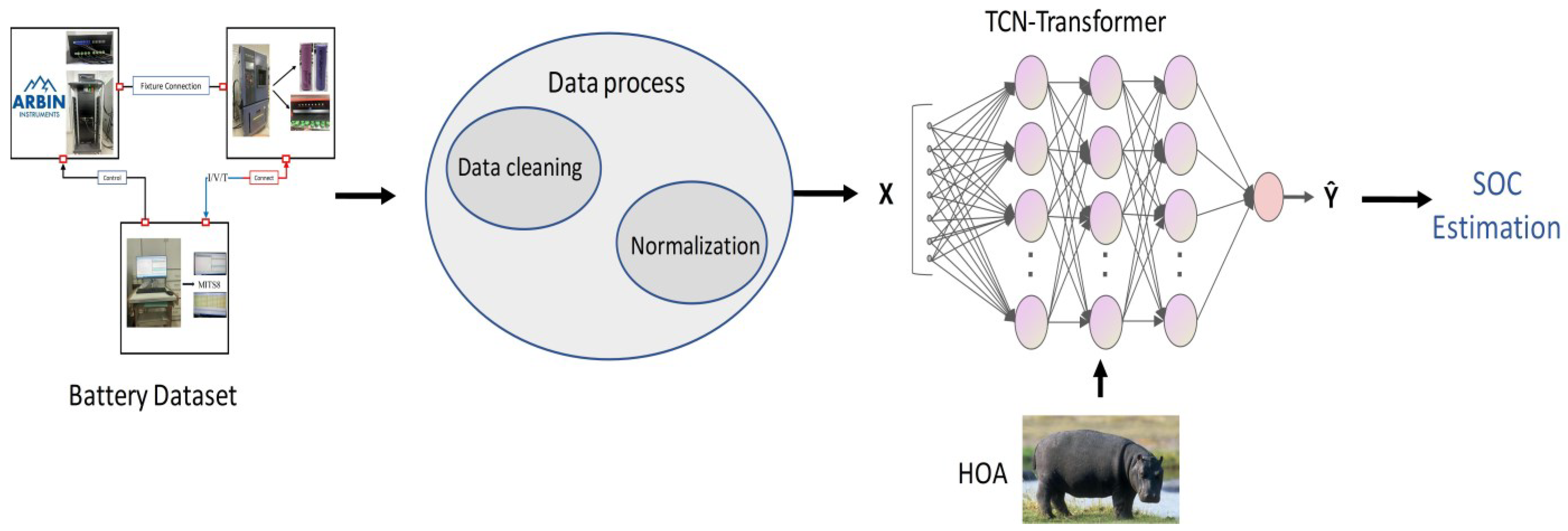
In order to improve the estimation accuracy of battery SOC, this paper proposes a TCN–Transformer battery SOC estimation model based on the hippo optimization algorithm. The specific steps of the proposed algorithm are shown in Figure 2.

2.2.1. Data Pre-Processing

Data cleaning:
Data cleaning includes the correction of outliers and the filling of missing values. In this study, the MATLAB R2023b data cleaner was used to process the battery data, using mean values to fill or replace missing values and outliers. The filled-value expression is as shown in Equation (8):
M e a n ( X i ) = X i + 1 + X i 1 2
Normalization:
Max–min normalization is a commonly used data preprocessing method that eliminates differences in magnitude between different features by scaling all feature values to the same range through the minimum and maximum values of the data. The formula for max–min normalization is:
x = x min ( x ) max ( x ) min ( x )
where x in Equation (9) is the original data and x is the normalized data.

2.2.2. TCN–Transformer Fusion Model

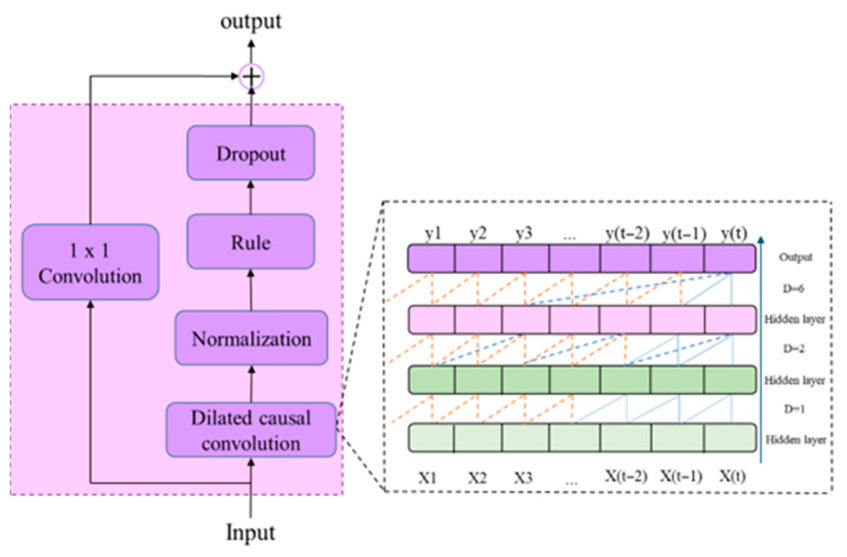
The Temporal Convolutional Network (TCN) [29], proposed by Shaojie Bai et al., represents a novel neural network architecture tailored for sequence modeling. Its design draws inspiration from both convolutional neural networks (CNN) and recurrent neural networks (RNN), striving to integrate their respective strengths. Specifically, it leverages the CNN’s prowess in spatial feature extraction, commonly utilized in image recognition tasks, and the RNN’s capability in processing sequential data along with its temporal feature modeling advantage. Overall, the TCN emerges as a potent tool in the realm of sequence modeling. Through the strategic combination of causal convolution, dilation convolution, and residual concatenation, the TCN not only effectively captures short-term dynamics within time series data but also preserves its sensitivity to long-term dependencies, enabling it to handle complex sequence modeling tasks with remarkable efficiency and accuracy. Its structure is shown in Figure 3. For the lithium-ion battery charge state, we can achieve efficient capture of key information with its powerful time-series estimation, and feature extraction capabilities, achieving accurate estimation of battery SOC values under different operating conditions.
Causal convolution is a type of convolution operation that differs from traditional convolution by ensuring the output at time step t is only influenced by the input values at that time step and the previous time steps, without being affected by future input values. This design maintains the causal relationship when processing time-series data, avoiding information leakage and ensuring the appropriateness of the model’s outputs [30]. In this way, the TCN neural network maintains logical consistency between outputs and inputs in time-series analyses, avoiding bias caused by future information.
Furthermore, TCN introduces the concept of dilated convolution, which is designed to capture long-term dependencies by broadening the receptive field of the convolutional kernel. Dilated convolution captures a wider range of information by inserting ‘spacers’ between elements of the convolution kernel, expanding the convolution’s receptive field while keeping the kernel size constant [31]. As in the left part of Figure 3, it presents the design of an expanding causal convolutional heap with filter size k = 2 and expansion factors d = [1], [2], [4].
Through this expansive convolution, the TCN can increase the receptive field at each layer by expanding it exponentially, allowing the model to capture long-range dependencies.
As the depth of the network increases and the number of parameters within the model expands, there is a risk of encountering gradient vanishing or explosion. Consequently, residual connections are incorporated into TCNs to ensure stability as the number of layers’ increases. Each residual block consists of two layers of causal dilated convolution and a Rectified Linear Unit (ReLU) [32]. Additionally, weight normalization and dropout layers are applied after the causal convolution to enhance the network’s generalization capabilities. The right branch represents the residual connection.
The residual connection mechanism enebles the network to capture the differences between inputs and outputs more effectively. Incorporating residual connections in deep networks not only enhances training efficiency but also facilitates the direct learning of input–output discrepancies through skip connections. This approach effectively mitigates the prevalent challenges of gradient explosion and vanishing in networks with many layers [33].
The Transformer model, a sophisticated deep learning architecture, hinges on self-attention to excel at capturing dependencies across extensive distances and to enable parallel processing [34]. This approach differentiates it within the deep learning domain. By employing matrix operations, the Transformer can detect relationships among input sequence vectors, regardless of their order, which is particularly beneficial for analyzing time-series with sparse dependencies and for enhancing feature detection capabilities.
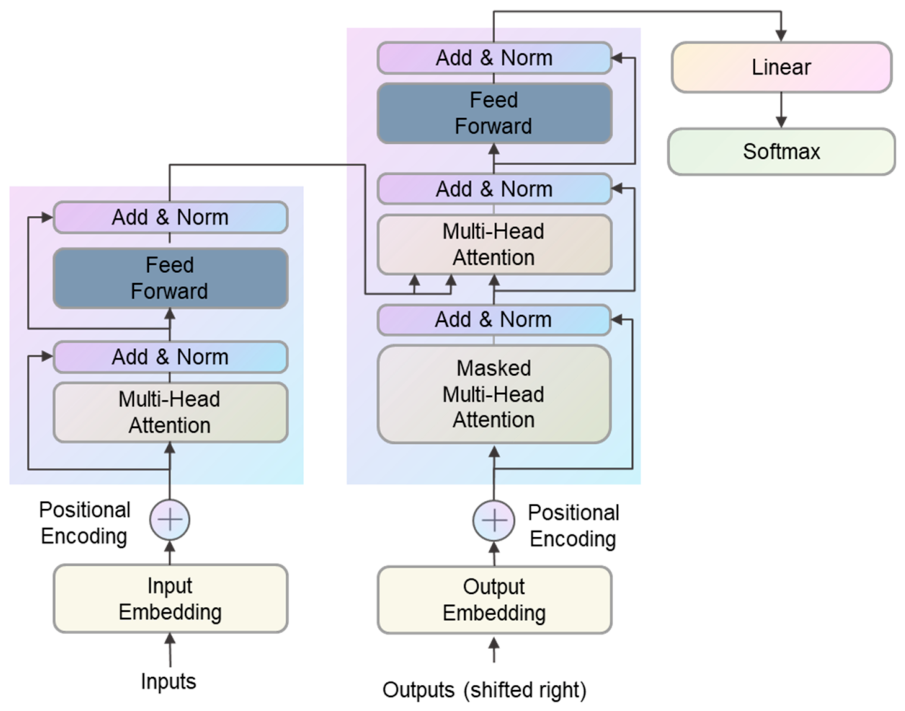
Additionally, the self-attention mechanism enables the model to perform computations in parallel, eliminating the sequential processing constraints of traditional RNNs. This design choice significantly boosts the model’s efficiency, leading to faster training and inference times. The model structure is shown in Figure 4.
The most important parts of the Transformer model are the encoder and decoder parts [35], where the encoder processes the input sequence to generate a context vector, and the decoder uses this context vector to generate the target sequence step by step. This structure performs well in handling sequence-to-sequence problems [36,37].
The temporal order of the sequence is significant and the Transformer itself is not equipped to handle sequence data: therefore, a positional encoding is added after the input. Positional encoding mainly encodes the input sequence by a sine–cosine function, which is a matrix used to represent the temporal order in the sequence. For the input sequence s, the expression for positional encoding can be expressed as:
P E ( p o s , 2 i ) = s i n p o s ( 10,000 2 i / d m o d e l ) P E ( p o s , 2 i + 1 ) = c o s p o s ( 10,000 2 i / d m o d e l )
In Equation (10), pos denotes the position in the sequence, i denotes the dimension, and dmodel is the dimension of the model. In this way, the model can capture the relationship between different positions in the sequence.
In the Transformer architecture, the self-attention mechanism endows the model with the flexibility to recognize the interactions between any elements within a sequence. By dynamically adjusting the attention weights for different elements in the sequence, it effectively reveals their intrinsic connections. This mechanism allows the model to capture the complex dependencies within sequential data [38]. The mathematical expression for the self-attention mechanism is given in Equation (11):
A t t e n t i o n   ( Q , K , V ) = S o f t max ( Q K T d k ) V
Attention is the attention function, and Q (Query), K (Key), and V (Value) are three important concepts that represent different transformation forms of the input sequence, used to calculate attention weights and outputs. dk is the feature dimension of queries, keys, and values. The softmax function is used to convert attention scores into a probability distribution, representing the level of attention each element in the sequence pays to the others. This helps the model better understand and process the input data, thereby improving the model’s performance.
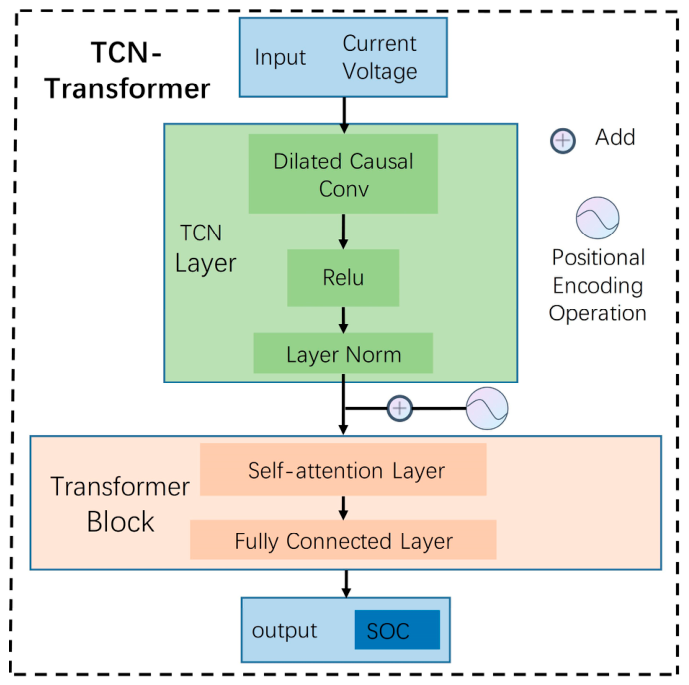
Based on the powerful global spatiotemporal feature extraction capability of temporal convolutional neural network (TCN) and the superiority of Transformer model in long time series information processing, this paper proposes a SOC estimation model combining TCN and Transformer. In this hybrid model, the processed battery data (including key parameters such as current, voltage, etc.) are firstly input to the TCN layer. In this layer, local features related to SOC, which reflect the instantaneous state changes in the battery at different time steps, are extracted from the data by causal convolution and dilation convolution operations. Subsequently, the extracted local features are passed to the Transformer layer, which is able to capture the long-term dependencies of the battery state using the self-attention mechanism, further extracting the temporal features to achieve accurate modeling of the battery SOC. Ultimately, these integrated features, incorporating local and global information, are regressed and estimated via a fully connected layer to obtain the estimated SOC of the battery. Figure 5 shows the structure of the TCN–Transformer network.
In summary, within this model, the TCN is responsible for extracting local features and capturing short-term dependencies in the battery data, while the Transformer handles the extraction of global features and long-range dependencies. The two components complement each other, working together to enhance the accuracy of estimations.

2.2.3. Model Hyperparameter Optimization

In this study, the hippo optimization algorithm is used to optimize the number of filters, the filter size, number of residual blocks and the number of encoder layers. The range of values for the parameters to be optimized is shown in Table 1.
In addition to the hyperparameters, the other fixed parameters of the model are set as in Table 2.

3. Results and Discussion

3.1. Datasets

The battery dataset is divided into the experimental dataset and the CACLE battery public dataset, and the basic parameters of the battery are shown in Table 3.
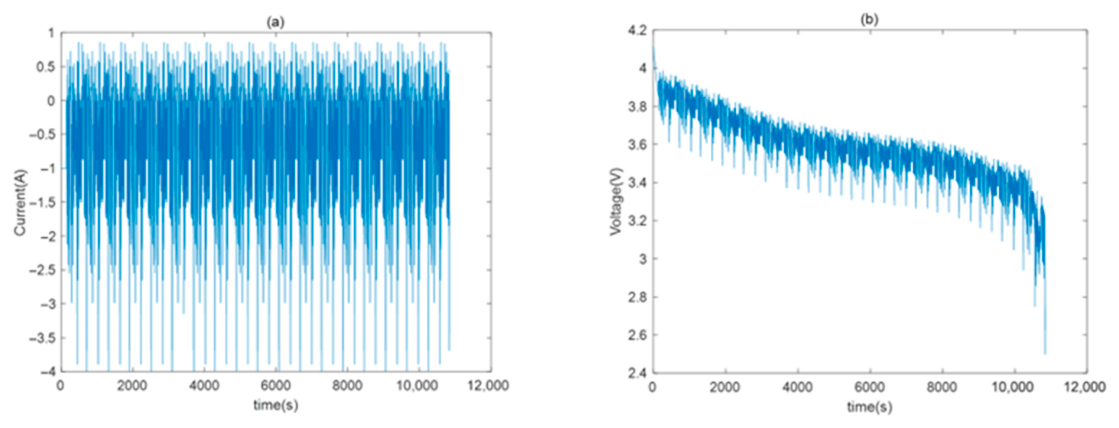
CALCE datasets: In this experiment, the data used to validate the proposed algorithm are from a publicly available dataset from the University of Maryland [39]. The dataset comprises current and voltage data from several distinct dynamic driving cycles, namely the Dynamic Stress Test (DST), the Supplemental Federal Test Procedure (US06), and the Federal Urban Driving Schedule (FUDS). All tests were conducted at 0 °C, 25 °C, and 45 °C, discharging from 0.8 SOC and 0.5 SOC to the low cutoff voltage. In addition to the dynamic operating conditions experimental data, the dataset also includes battery capacity test data. Figure 6 shows the current and voltage curves for the US06 operating conditions at 25 °C.
Public dataset division: Training set: Constant current (1C) discharge data and BJDST condition data. Test set: DST, FUDS, and US06 condition data.
Experiment data: The experimental object is model INR18650-30Q Samsung lithium-ion battery. The battery is tested at 25 °C ambient temperature, including maximum capacity calibration test (1C constant-current constant-voltage charging, 1C constant-current discharging), the US06 dynamic working condition test, and FUDS dynamic working condition test.
Experimental dataset division: When the US06 condition is the test set, the 1C constant current discharge data and the FUDS condition data are the training set. When the FUDS is the test set, the 1C constant current discharge data and the US06 data are the training set.
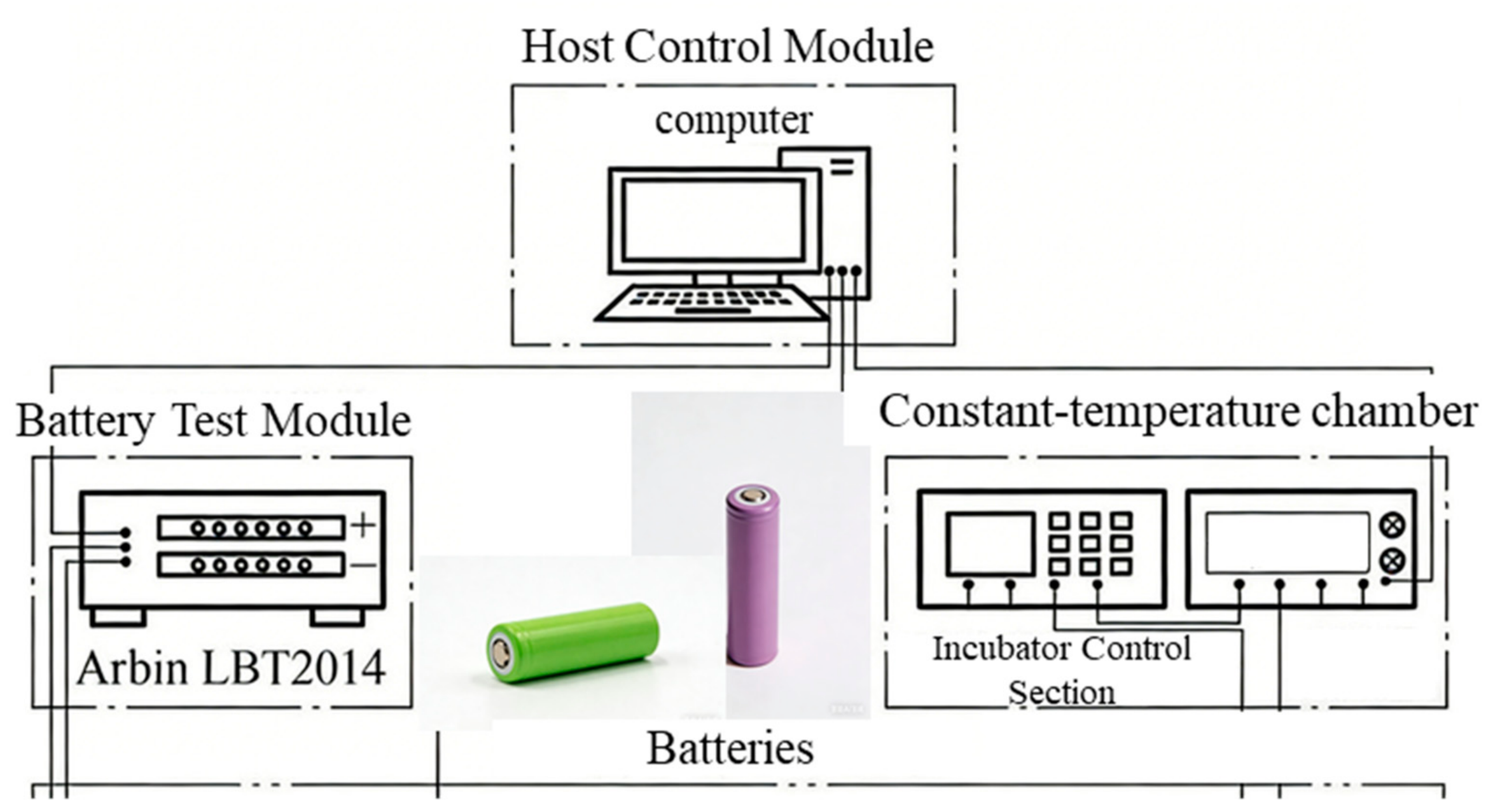
The experimental platform is shown in Figure 7. The battery test experiment platform mainly consists of a host computer, an Arbin battery tester and a constant temperature and humidity box. Th Arbin battery tester is used to perform the battery charging and discharging experiments; the host computer is used to program and control the Arbin battery tester, and the collected data (temperature, current, voltage and charging and discharging capacity) are saved to an Excel file, and the constant humidity and humidity box is used to control the environment temperature during the test.

3.2. Assessment Indicators

Root Mean Square Error (RMSE), Mean Absolute Error (MAE), and Goodness of Fit ( R 2 ) were used to assess the SOC estimation performance of the TCN–Transformer model. The relevant calculation formulae are as follows:
R M S E = 1 n i = 1 n ( y i y i ) 2
M A E = 1 n i = 1 n y i y i
where n is the total number of the data, y i is the real value of the i -th data point, and y i is the estimated value of the i -th data point.

3.3. SOC Estimation Results

3.3.1. SOC Estimation Validation

Temperature has a significant impact on the State of Charge (SOC) of a battery. The rate of internal chemical reactions varies at different temperatures, which directly affects the charging and discharging processes of the battery. At low temperatures, the internal resistance of the battery increases, which may cause a greater voltage drop when the battery discharges. High temperatures can increase the risk of thermal runaway, which may lead to battery damage or safety incidents. Therefore, to accurately estimate the SOC of a battery, the impact of temperature must be considered.
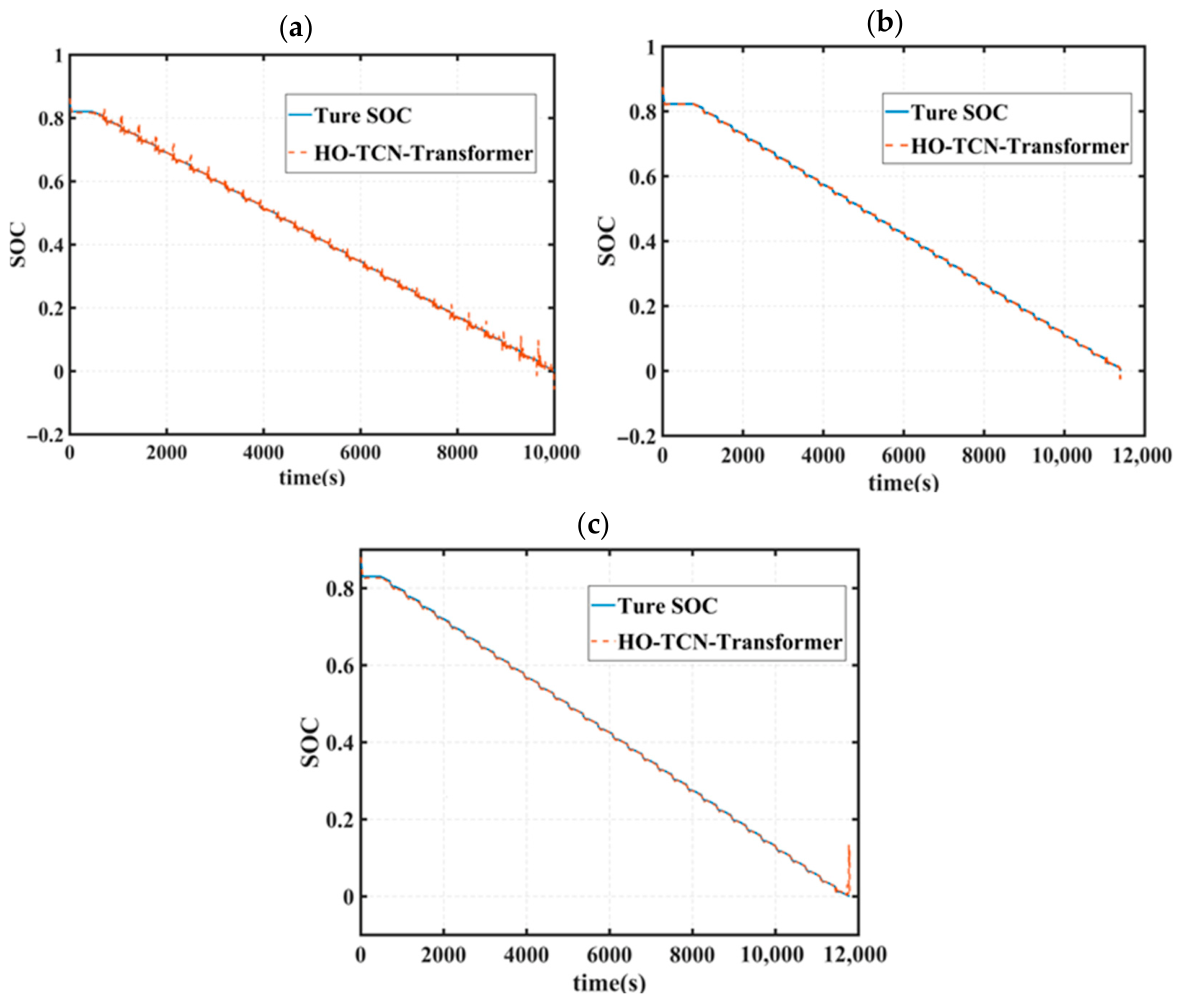
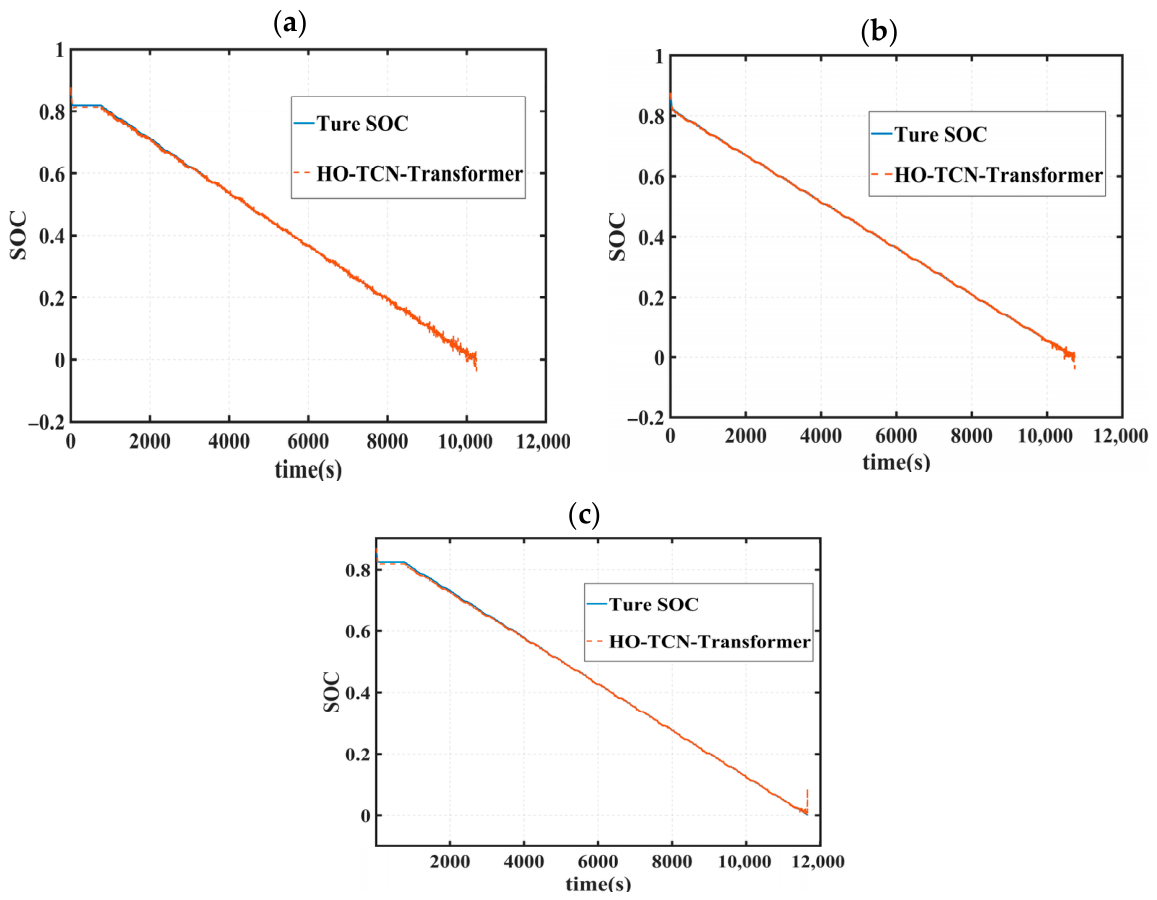
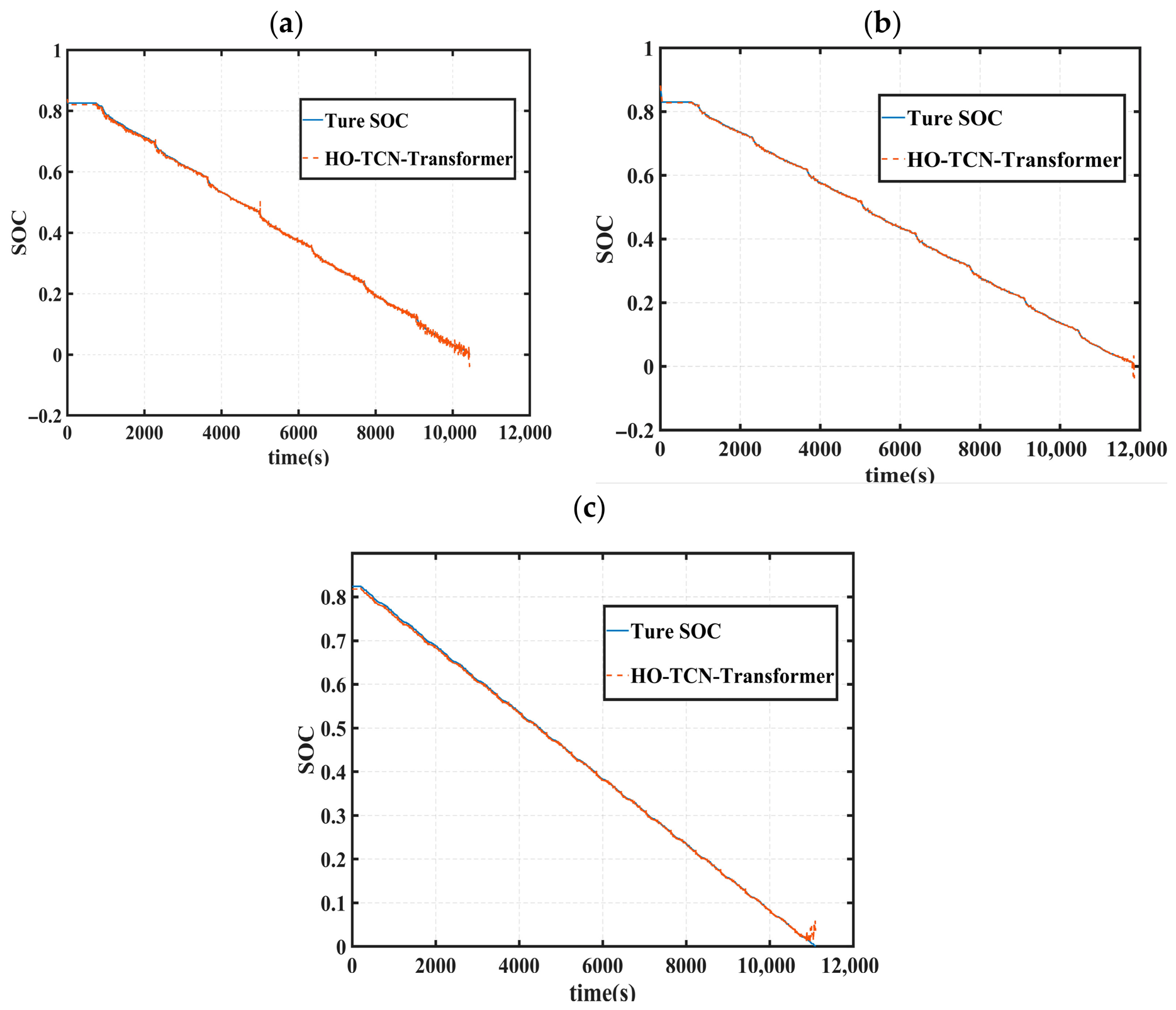
To validate the performance of the algorithm under different temperature conditions, DST and US06 driving cycle data at various temperatures were utilized for testing. The test results are presented in Figure 8, Figure 9 and Figure 10.
Figure 9 and Figure 10 show that the estimation error increases significantly as the discharge approaches its end; this is attributed to the more pronounced battery polarization effect in the low SOC region, which increases system complexity and fitting difficulty. Nevertheless, the proposed hybrid model maintains high estimation accuracy throughout the entire SOC estimation cycle. Furthermore, Figure 10 presents the estimated trajectories under US06 conditions, exhibiting characteristics similar to those observed under DST and FUDS conditions. These results demonstrate the model’s robust adaptability across diverse driving conditions and temperature ranges, highlighting its strong generalization and practical value for battery management systems.
Table 4 present the R-squared, RMSE, and MAE of the HO–TCN–Transformer algorithm at different temperatures. The results indicate that the algorithm is capable of accurately estimating SOC under various temperature conditions, demonstrating the model’s cross-temperature generalization capability. The coefficient of determination is very close to 1. Especially at 25 °C under DST conditions, R-squared is the highest, which is due to the higher proportion of data at 25 °C in the training set.

3.3.2. Ablation Comparison

(1)
CALCE datasets
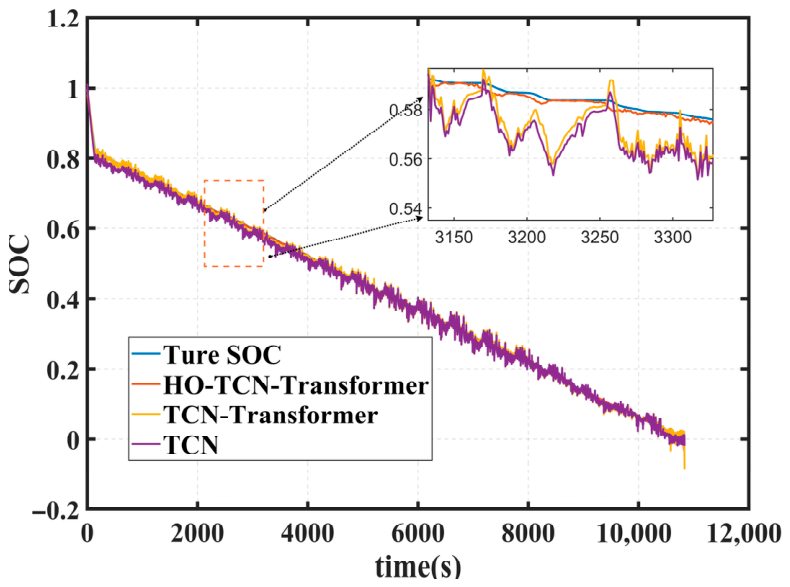
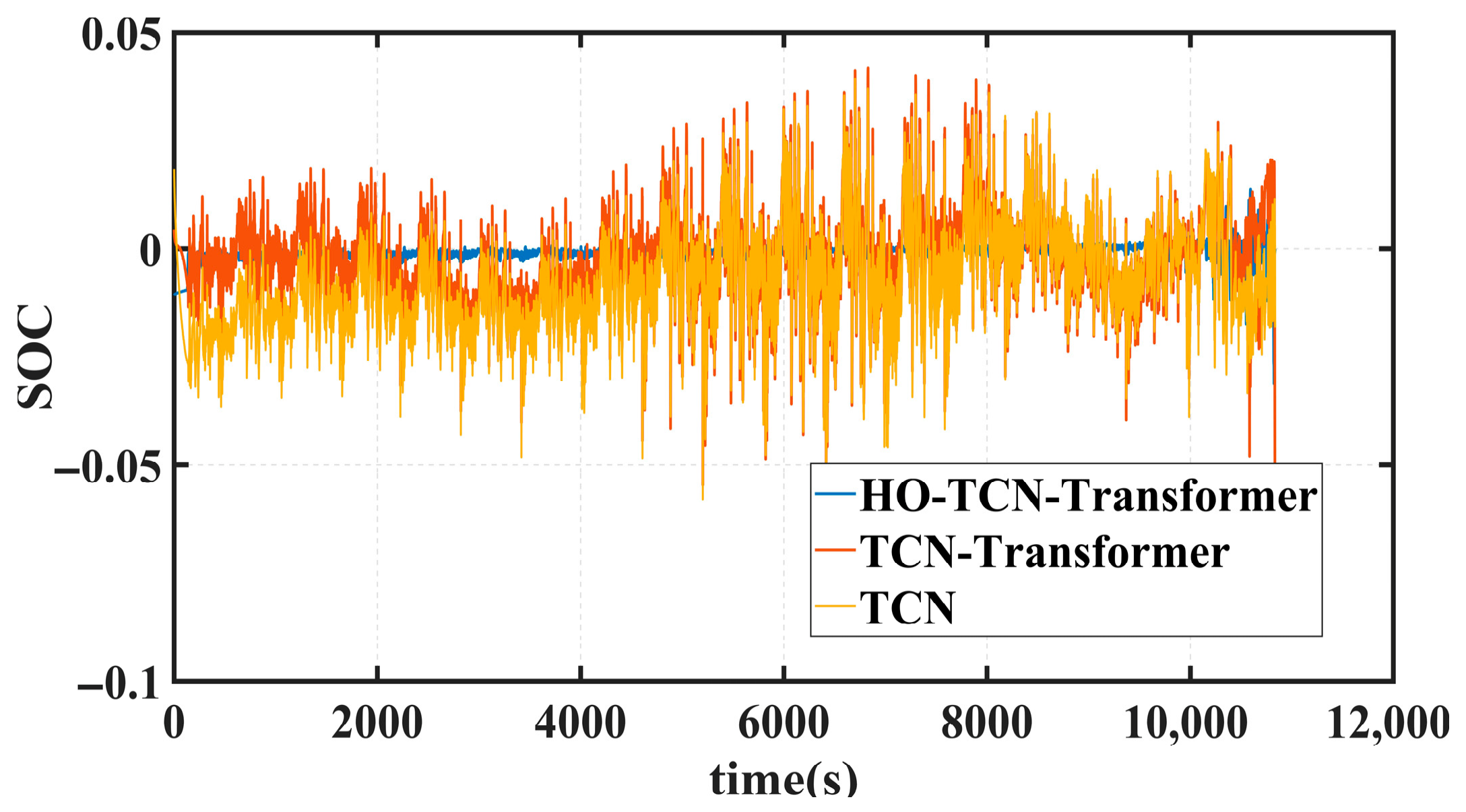
To verify the effectiveness of the improvements, a comparison was conducted between the TCN, TCN-Transformer, and HO–TCN–Transformer models. The models were trained using an identical training set, and their performance was assessed using test sets consisting of data from three driving conditions at 25 °C: US06, FUDS, and DST.
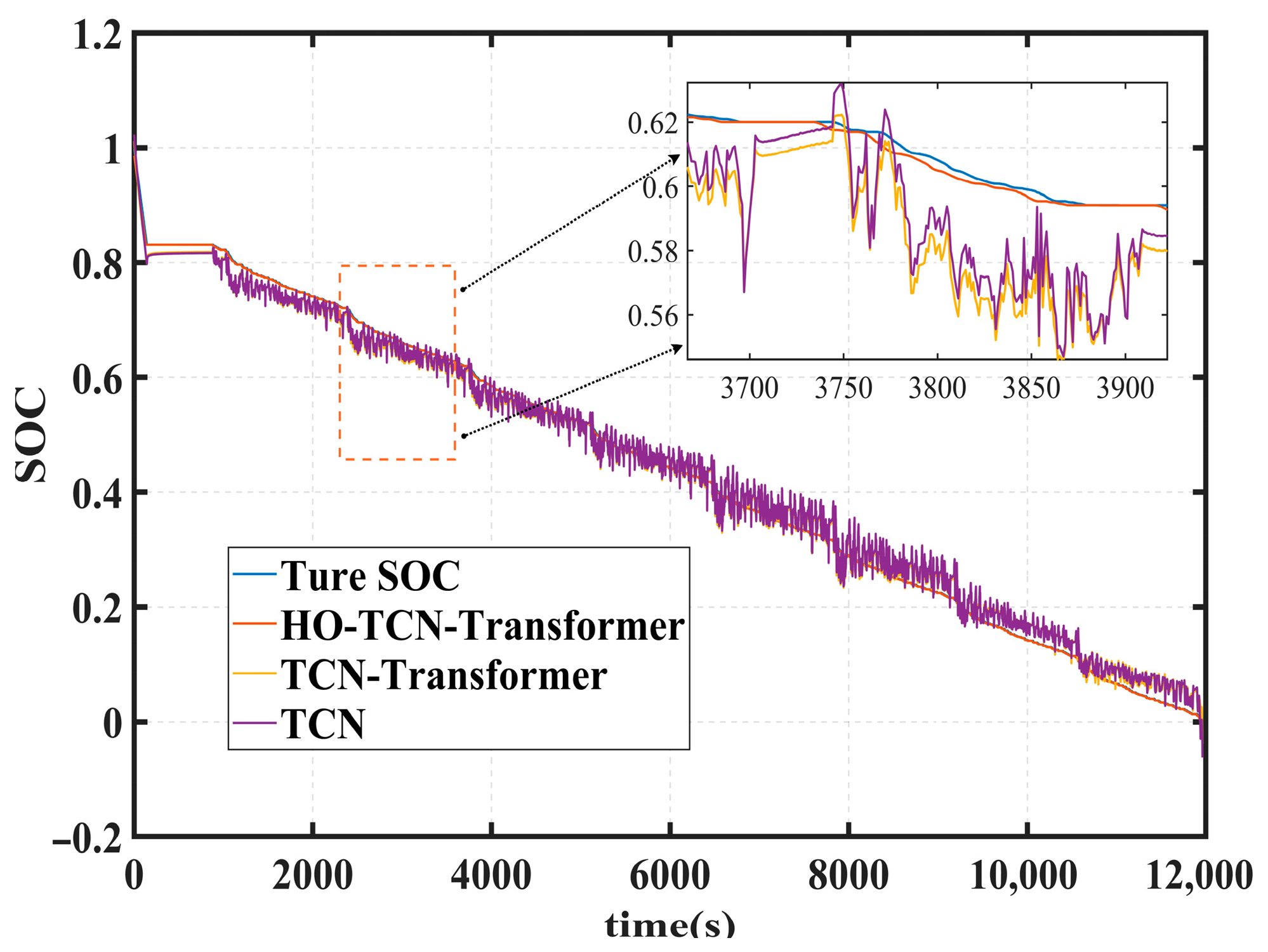
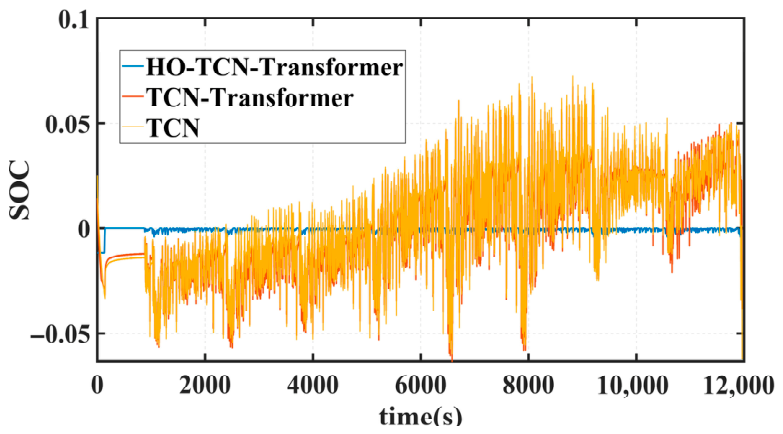
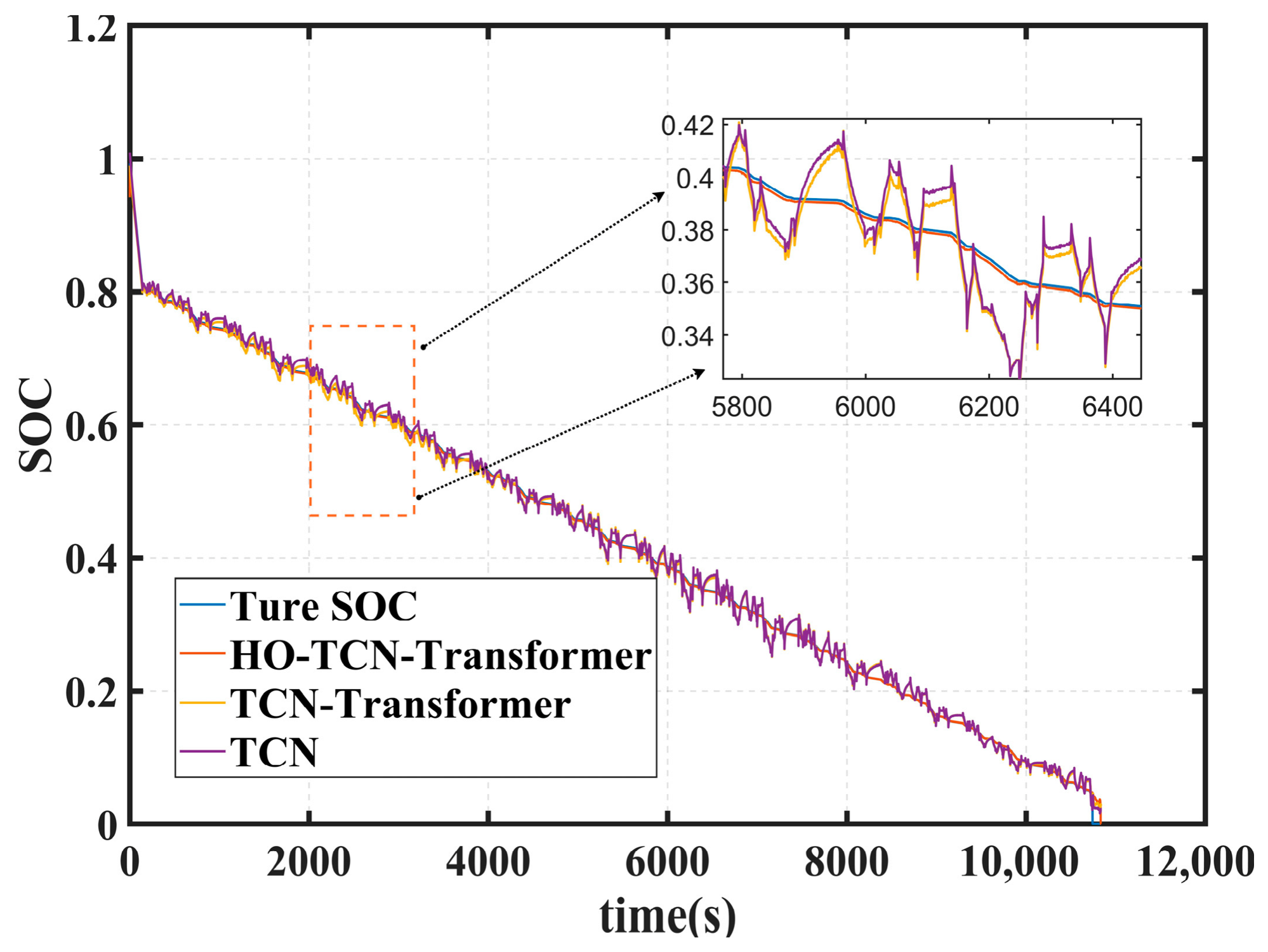
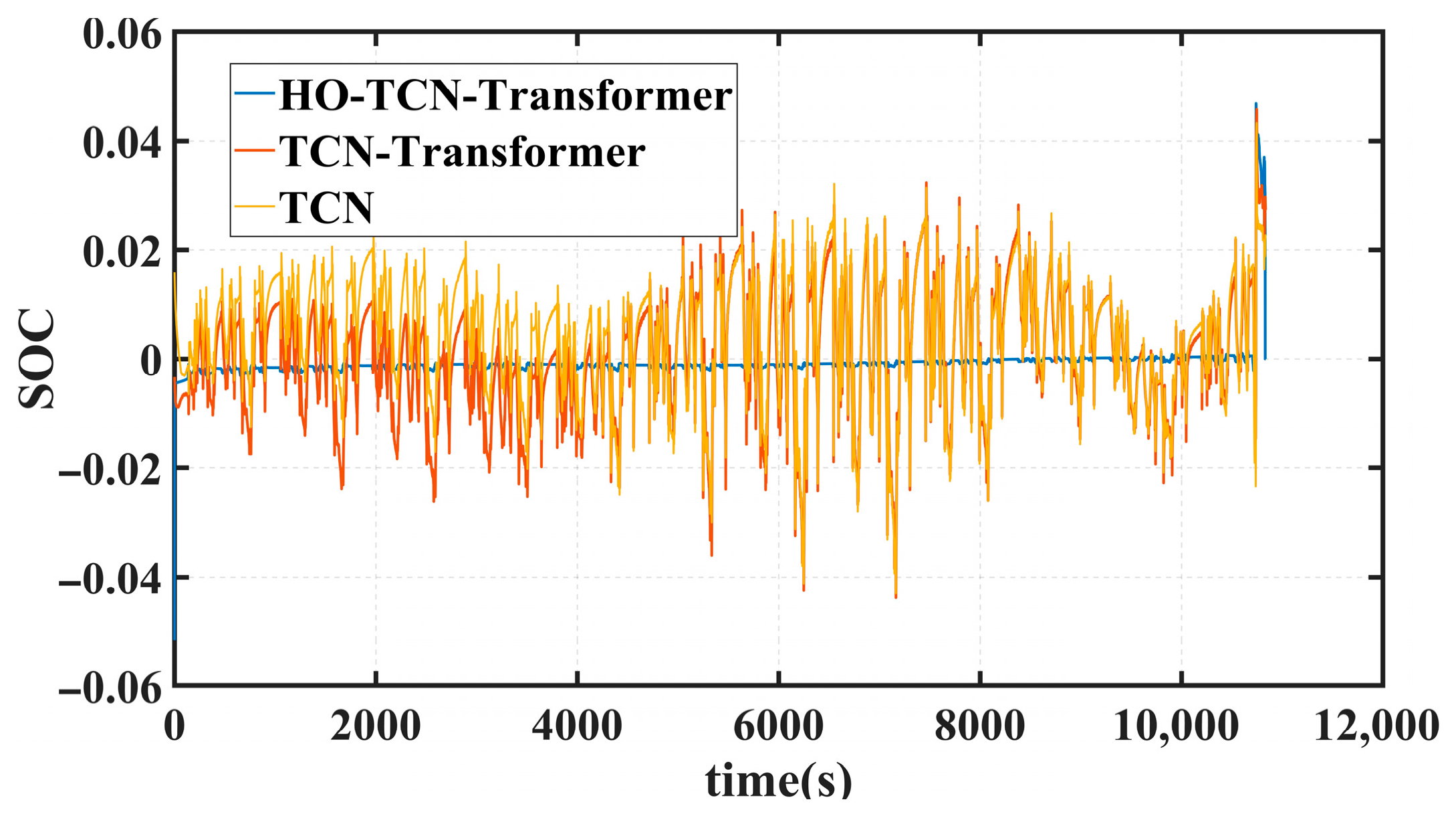
Figure 11, Figure 12, Figure 13, Figure 14, Figure 15 and Figure 16 intuitively display the comparison of SOC estimation trajectories and estimation errors among the various models under the three driving conditions. From the figures, the performance differences among the three models are clearly evident. Observing the SOC trajectories, the HO–TCN–Transformer’s estimated trajectory aligns most closely with the actual trajectory. While the TCN model and the TCN–Transformer model also capture the general trend of the true SOC reasonably well, a closer inspection reveals significant discrepancies. The error plots corroborate this finding, showing that the HO–TCN0Transformer model has a much smaller range of error fluctuations compared to the other two models.
The quantitative experimental results were recorded in Table 5. The results compiled in the tables demonstrate that across all tested conditions—US06, FUDS, and DST—the HO–TCN–Transformer model consistently achieves the highest level of goodness of fit, along with a significant reduction in error metrics. Specifically, the RMSE and MAE of the HO–TCN–Transformer model are reduced by at least approximately 50% compared to the TCN model, and by at least approximately 38% compared to the TCN–Transformer model. This indicates that the performance of the HO–TCN–Transformer model is comprehensively superior to the models before its improvements, and the effectiveness of the model improvement has been further confirmed.
(2)
Experiment data
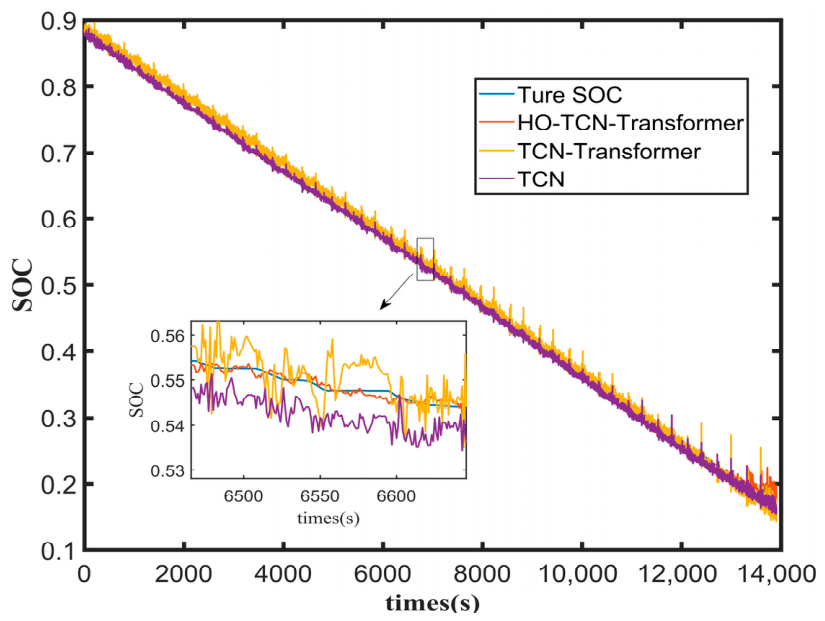
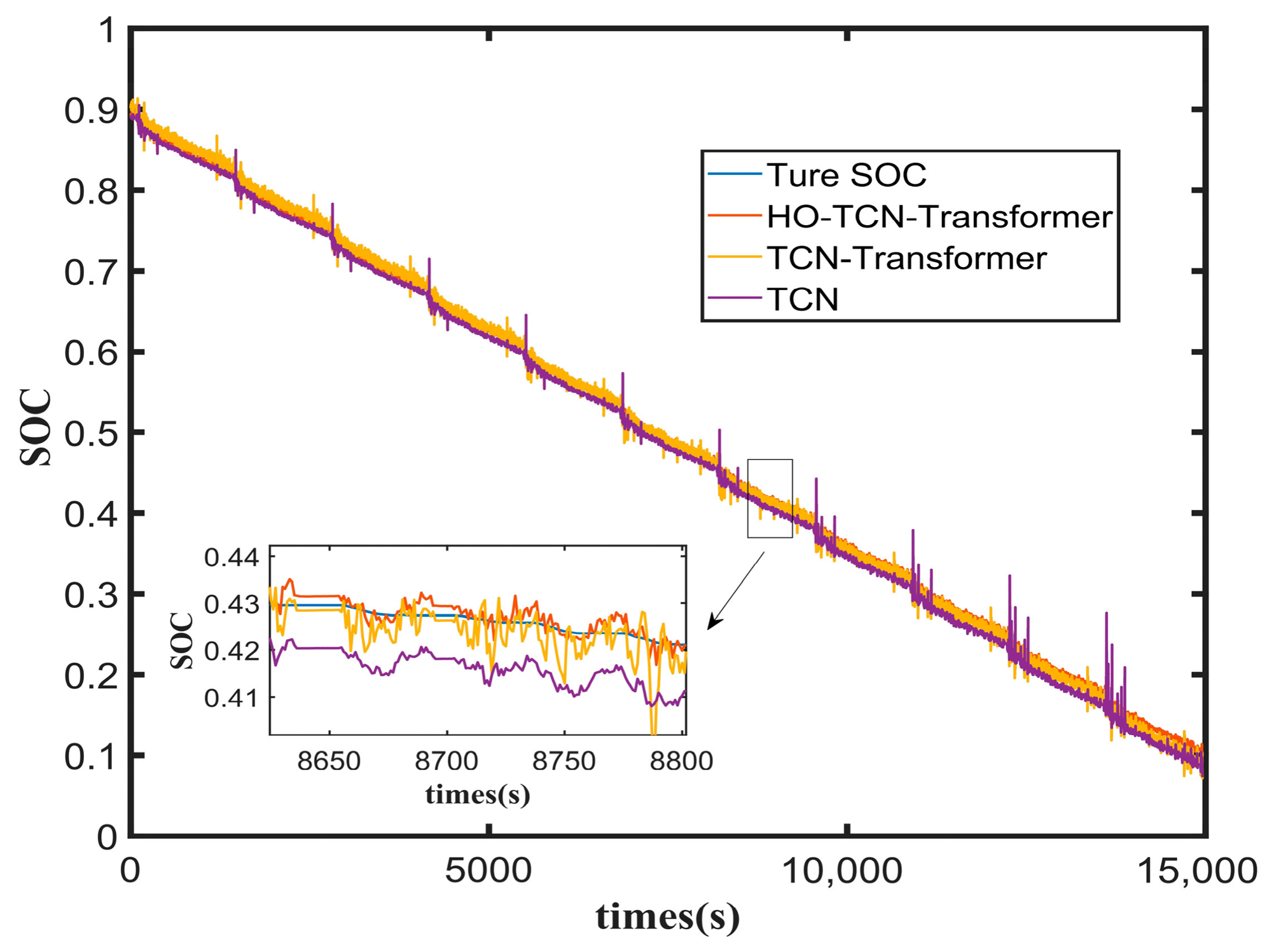
To verify the model’s generalization capability across different battery types, Figure 17 and Figure 18 show the SOC trajectories validated on the experimental dataset. The SOC estimation curve graph clearly shows that the fusion model has stronger estimation ability and its estimation curve is closer to the true curve. The introduction of the hippo optimization algorithm improves the fitness between the model and the dataset, thus obtaining higher accuracy.
Table 6 shows the quantization errors of the algorithm. Under US06 and FUDS operating conditions, the HO–TCN0Transformer model shows comparable estimation accuracy to the TCN–Transformer model (with the error being approximately 7–27% higher under US06 and approximately 16–32% lower under FUDS), while the errors are reduced by approximately 38–46% compared to the TCN model.

3.3.3. Comparison with Other Models

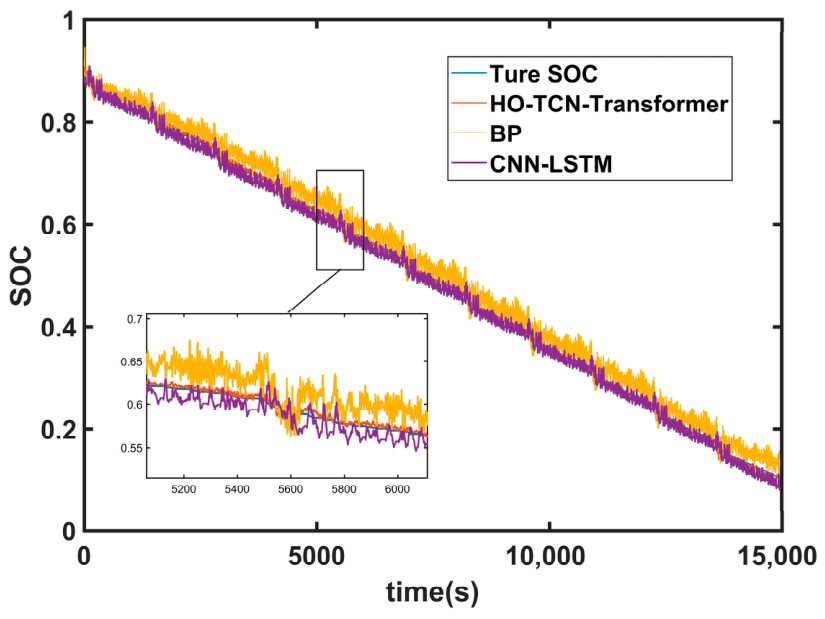
To better illustrate the proposed model’s superiority, this study conducts comparisons with common models like CNN–LSTM and BP neural networks on the self-built dataset. As shown in Figure 19, using the FUDS condition as an example, the blue curve represents the true SOC, and the orange one represents the HO–TCN–Transformer model’s estimated curve. It can be clearly seen that the new model has smaller fluctuations near the true curve and is closer to the actual SOC values.
Subsequently, this paper compares the proposed method with those published in recent years. The results of the comparison are shown in Table 7.
In general, after a comprehensive assessment, the proposed HO–TCN–Transformer model shows greater applicability in terms of accuracy and robustness among the three models.

4. Conclusions

This study proposes the HO–TCN–Transformer model for SOC estimation of lithium-ion batteries. The model enhances the TCN by integrating the TCN model with a Transformer in series, which strengthens the model’s ability to extract long-distance sequence features, ultimately aiming to improve the model’s accuracy. Additionally, the use of the hippo optimization algorithm to find more adaptive combinations of hyperparameters improves the performance and efficiency of the model. Furthermore, using battery data from different temperatures under the DST, US06 and driving conditions to validate the model, the results show that the proposed model has good estimation performance. Although the error slightly increases under low-temperature conditions, the RMSE is still below 0.5%. This indicates that the model has robust performance across various temperatures. Furthermore, experiments on different battery types confirm the model’s strong generalization capability across diverse cell chemistries and specifications. Comparison with the TCN and TCN–Transformer models verified the superiority of the developed model.
However, hybrid models inevitably increase computational complexity. Specifically, the proposed HO–TCN–Transformer hybrid model takes approximately 3 min on average to complete a full cycle (from training to output estimation), whereas the TCN model requires only about 2 min, representing an increase in computational overhead of approximately 50% compared to the standalone TCN architecture.
Future work should focus on reducing computational complexity through model pruning or lightweight attention mechanisms for embedded deployment, extending the framework to multi-cell pack configurations, and integrating aging-aware mechanisms for joint SOC–SOH estimation [45].

Author Contributions

Conceptualization, Y.W. and L.X.; methodology, L.W.; software, Y.W.; validation, Y.W.; formal analysis, Y.W.; investigation, L.X.; resources, L.X. and L.W.; data curation, L.X.; writing—original draft preparation, Y.W.; writing—review and editing, L.X. and Y.W.; visualization, Y.W.; supervision, L.X.; project administration, L.W. All authors have read and agreed to the published version of the manuscript.

Funding

This research was funded by Open Foundation of State Key Laboratory of Deep Coal Mining Response and Disaster Prevention and Control (Grant No. SKLMRDPC22KF16); Anhui Provincial Key Laboratory of Joint Discipline Construction for Human-Robot Collaborative Robots.

Data Availability Statement

The datasets generated and/or analyzed during the current study are available in the CALCE battery team repository, “https://calce.umd.edu/battery-data#INR (accessed on 17 November 2025)”.

Acknowledgments

The authors acknowledge the KIMI K2.6 AI software for assistance with English language polishing.

Conflicts of Interest

The authors declare no conflicts of interest.

Abbreviations

The following abbreviations are used in this manuscript:
SOCState of Charge
BMSBattery Management System
EVElectric Vehicle
ECMEquivalent Circuit Model
EMElectromotive Force
OCVOpen Circuit Voltage
RMSERoot Mean Square Error
TCNTemporal Convolutional Network
RNNRecurrent Neural Network
QQuery
HOHippopotamus Optimization
PSOParticle Swarm Optimization
LSTMLong Short-Term Memory
CNNConvolutional Neural Network
DSTDynamic Stress Test
US06US06 Supplemental FTP Driving Schedule
BJDSTBeijing Dynamic Stress Test
FUDSFederal Urban Driving Schedule
ReLURectified Linear Unit

References

  1. Shen, W.; Han, W.; Wallington, T.J.; Winkler, S.L. China electricity generation greenhouse gas emission intensity in 2030: Implications for electric vehicles. Environ. Sci. Technol. 2019, 53, 6063–6072. [Google Scholar] [CrossRef] [PubMed]
  2. Tong, L.; Li, Y.; Xu, Y.; Fang, J.; Wen, C.; Zheng, Y.; Zhang, H.; Peng, B.; Yang, F.; Zhang, J.; et al. A combined method for state-of-charge estimation for lithium-ion batteries based on IGWO-ASRCKF and ELM under various aging levels. J. Energy Storage 2025, 124, 116843. [Google Scholar] [CrossRef]
  3. Zhao, Z.; Kou, F.; Pan, Z.; Chen, L.; Luo, X.; Yang, T. High-accuracy state-of-charge fusion estimation of lithium-ion batteries by integrating the Extended Kalman Filter with feature-enhanced Random Forest. J. Energy Storage 2025, 118, 116275. [Google Scholar] [CrossRef]
  4. Lai, X.; Wang, S.; Ma, S.; Xie, J.; Zheng, Y. Parameter sensitivity analysis and simplification of equivalent circuit model for the state of charge of lithium-ion batteries. Electrochim. Acta 2020, 330, 135239. [Google Scholar] [CrossRef]
  5. Zhou, K.; Wang, X.; Li, Y. Battery state of charge estimation solution based on optimized Ah counting and online calibration strategy for electric vehicle. Int. J. Low-Carbon Technol. 2024, 19, 1780–1786. [Google Scholar] [CrossRef]
  6. Mehraj, N.; Mateu, C.; Bastida, H.; Li, Y.; Ding, Y.; Sciacovelli, A.; Cabeza, L.F. Artificial intelligence in state of charge estimation: Pioneering approaches across energy storage systems. Energy 2025, 335, 138166. [Google Scholar] [CrossRef]
  7. Truchot, C.; Dubarry, M.; Liaw, B.Y. State-of-charge estimation and uncertainty for lithium-ion battery strings. Appl. Energy 2014, 119, 218–227. [Google Scholar] [CrossRef]
  8. Ofoegbu, E.O. State of charge (SOC) estimation in electric vehicle (EV) battery management systems using ensemble methods and neural networks. J. Energy Storage 2025, 114, 115833. [Google Scholar] [CrossRef]
  9. Zhang, C.; Jiang, J.; Zhang, L.; Liu, S.; Wang, L.; Loh, P.C. A generalized SOC-OCV model for lithium-ion batteries and the SOC estimation for LNMCO battery. Energies 2016, 9, 900. [Google Scholar] [CrossRef]
  10. Pakjoo, M.; Piegari, L. Experimental Comparison of Different Techniques for Estimating Li-Ion Open-Circuit Voltage. Batteries 2026, 12, 32. [Google Scholar] [CrossRef]
  11. Yang, Y.; Zhao, L.; Yu, Q.; Liu, S.; Zhou, G.; Shen, W. State of charge estimation for lithium-ion batteries based on cross-domain transfer learning with feedback mechanism. J. Energy Storage 2023, 70, 108037. [Google Scholar] [CrossRef]
  12. Ahmed, F.; Abulsaud, K.; Massoud, A.M. On equivalent circuit model-based state-of-charge estimation for lithium-ion batteries in electric vehicles. IEEE Access 2025, 13, 69950–69966. [Google Scholar] [CrossRef]
  13. Guo, W.; Sun, Z.; Guo, J.; Li, Y.; Vilsen, S.B.; Stroe, D.I. Digital Twin-Assisted Degradation Diagnosis and Quantification of NMC Battery Aging Effects During Fast Charging. Adv. Energy Mater. 2024, 14, 2401644. [Google Scholar] [CrossRef]
  14. Fan, Y.; Huang, Z.; Li, H.; Bin Kaleem, M.; Zhang, R.; Liu, W. State of charge estimation for lithium-ion batteries with enhanced open-circuit voltage model. Measurement 2025, 251, 117124. [Google Scholar] [CrossRef]
  15. Huang, C.; Sun, J.; Wang, X. State of charge estimation approach based on physics-data fusion model and adaptive Kalman filter for lithium battery. J. Energy Storage 2026, 141, 119291. [Google Scholar] [CrossRef]
  16. Zou, R.; Duan, Y.; Wang, Y.; Pang, J.; Liu, F.; Sheikh, S.R. A novel convolutional informer network for deterministic and probabilistic state-of-charge estimation of lithium-ion batteries. J. Energy Storage 2023, 57, 106298. [Google Scholar] [CrossRef]
  17. Wu, C.; Hu, W.; Meng, J.; Xu, X.; Huang, X.; Cai, L. State-of-charge estimation of lithium-ion batteries based on MCC-AEKF in non-Gaussian noise environment. Energy 2023, 274, 127316. [Google Scholar] [CrossRef]
  18. Xu, Z.; Wang, J.; Lund, P.D.; Zhang, Y. Co-estimating the state of charge and health of lithium batteries through combining a minimalist electrochemical model and an equivalent circuit model. Energy 2022, 240, 122815. [Google Scholar] [CrossRef]
  19. Chaoui, H.; Ibe-Ekeocha, C.C. State of charge and state of health estimation for lithium batteries using recurrent neural networks. IEEE Trans. Veh. Technol. 2017, 66, 8773–8783. [Google Scholar] [CrossRef]
  20. Bobobee, E.D.; Wang, S.; Takyi-Aninakwa, P.; Liu, G.; Koukoyi, E. State of charge estimation of lithium-ion batteries using improved multi-attention long short-term memory extended Kalman filtering model. Eng. Appl. Artif. Intell. 2025, 158, 111526. [Google Scholar] [CrossRef]
  21. Gao, W.; Zhu, Z.; Qiao, D.; Guo, D.; Lai, X.; Shi, J.; Xu, Z.; Qian, Z.; Han, X.; Zheng, Y. Real-data-driven state of charge estimation for energy storage systems: A gated recurrent unit approach leveraging calibration opportunities. J. Energy Storage 2026, 157, 121632. [Google Scholar] [CrossRef]
  22. Xi, Z.; Wang, R.; Fu, Y.; Mi, C. Accurate and reliable state of charge estimation of lithium ion batteries using time-delayed recurrent neural networks through the identification of overexcited neurons. Appl. Energy 2022, 305, 117962. [Google Scholar] [CrossRef]
  23. Zhao, Y.; Li, Y.; Cao, Y.; Wang, Y. Improving lightweight state-of-charge estimation of lithium-ion battery using residual network and gated recurrent neural network. J. Energy Storage 2025, 116, 115934. [Google Scholar] [CrossRef]
  24. Wang, J.; Ye, Y.; Wu, M.; Zhang, F.; Cao, Y.; Zhang, Z. Time-convolution optimization network for power battery SOC estimation. J. Chongqing Univ. Technol. 2024, 38, 39–46. [Google Scholar] [CrossRef]
  25. Hu, C.; Cheng, F.; Ma, L.; Li, B. State of charge estimation for lithium-ion batteries based on TCN-LSTM neural networks. J. Electrochem. Soc. 2022, 169, 030544. [Google Scholar] [CrossRef]
  26. Zhang, W.; Hao, H.; Zhang, Y. State of Charge Estimation of Lithium-Ion Batteries for Electric Aircraft with Swin Transformer. IEEE/CAA J. Autom. Sin. 2025, 12, 645–647. [Google Scholar] [CrossRef]
  27. Wu, T.; Pan, L.; An, X. A noise cancellation method for the oscillation signal of hydropower units by integrating HO-VMD. J. Hydropower Gener. 2024, 43, 107–115. [Google Scholar] [CrossRef]
  28. Amiri, M.H.; Mehrabi Hashjin, N.; Montazeri, M.; Mirjalili, S.; Khodadadi, N. Hippopotamus optimization algorithm: A novel nature-inspired optimization algorithm. Sci. Rep. 2024, 14, 5032. [Google Scholar] [CrossRef] [PubMed]
  29. Wu, L.; Yu, J.; Dai, Y.; Gao, T.; Zhang, J. Photovoltaic Power Generation Forecasting Based on TCN-Transformer Model. In 2024 5th International Conference on Artificial Intelligence and Electromechanical Automation (AIEA); IEEE: New York, NY, USA, 2024; Available online: https://ieeexplore.ieee.org/document/10692906 (accessed on 2 September 2025).
  30. Farha, Y.A.; Gall, J. Ms-tcn: Multi-stage temporal convolutional network for action segmentation. In Proceedings of the IEEE/CVF Conference on Computer Vision and Pattern Recognition; IEEE: New York, NY, USA, 2019; pp. 3575–3584. Available online: https://ieeexplore.ieee.org/document/8805688 (accessed on 20 December 2025).
  31. Hewage, P.; Behera, A.; Trovati, M.; Pereira, E.; Ghahremani, M.; Palmieri, F.; Liu, Y. Temporal convolutional neural (TCN) network for an effective weather forecasting using time-series data from the local weather station. Soft Comput. 2020, 24, 16453–16482. [Google Scholar] [CrossRef]
  32. Xu, G.; Wang, X.; Wu, X.; Leng, X.; Xu, Y. Development of residual learning in deep neural networks for computer vision: A survey. Eng. Appl. Artif. Intell. 2024, 142, 109890. [Google Scholar] [CrossRef]
  33. Gong, L.; Yu, M.; Jiang, S.; Cutsuridis, V.; Pearson, S. Deep learning based estimation on greenhouse crop yield combined TCN and RNN. Sensors 2021, 21, 4537. [Google Scholar] [CrossRef]
  34. Vaswani, A. Attention is all you need. arXiv 2017. [Google Scholar] [CrossRef]
  35. Zou, Y.; Wang, S.; Cao, W.; Hai, N.; Fernandez, C. Enhanced transformer encoder long short-term memory hybrid neural network for multiple temperature state of charge estimation of lithium-ion batteries. J. Power Sources 2025, 632, 236411. [Google Scholar] [CrossRef]
  36. Hatamizadeh, A.; Kautz, J. Mambavision: A hybrid mamba-transformer vision backbone. In Proceedings of the Computer Vision and Pattern Recognition Conference; IEEE: New York, NY, USA, 2025; pp. 25261–25270. [Google Scholar] [CrossRef]
  37. Zhu, L.; Wang, X.; Ke, Z.; Zhang, W.; Lau, R. Biformer: Vision transformer with bi-level routing attention. In Proceedings of the IEEE/CVF Conference on Computer Vision and Pattern Recognition; IEEE: New York, NY, USA, 2023; pp. 10323–10333. [Google Scholar] [CrossRef]
  38. Yeh, C.; Chen, Y.; Wu, A.; Chen, C.; Viégas, F.; Wattenberg, M. Attentionviz: A global view of transformer attention. IEEE Trans. Vis. Comput. Graph. 2023, 30, 262–272. [Google Scholar] [CrossRef] [PubMed]
  39. Pecht, M. Battery Data Set; CALCE, CALCE Battery Research Group: Maryland, MD, USA, 2017; Available online: https://calce.umd.edu/battery-data#INR (accessed on 17 November 2025).
  40. Hou, J.; Xu, J.; Lin, C.; Jiang, D.; Mei, X. State of charge estimation for lithium-ion batteries based on battery model and data-driven fusion method. Energy 2024, 290, 130056. [Google Scholar] [CrossRef]
  41. Chen, J.; Zhang, Y.; Wu, J.; Cheng, W.; Zhu, Q. SOC estimation for lithium-ion battery using the LSTM-RNN with extended input and constrained output. Energy 2023, 262, 125375. [Google Scholar] [CrossRef]
  42. Li, S.; Yang, S.; Jiang, Z.; Jiang, W.; Zhu, Z.; Ma, Y. An online state of charge estimation method: Support vector machine battery model fusing a filtering algorithm. Electr. Power Syst. Res. 2026, 253, 112530. [Google Scholar] [CrossRef]
  43. Yang, M.; Shi, H.; Zhu, Y.; Zou, Y.; Xiong, L.; Huang, Q. A novel polynomial-activated neural network with locally weighted scatterplot smoothing for small-sample state-of-charge estimation in lithium-ion batteries. J. Energy Storage 2026, 149, 120325. [Google Scholar] [CrossRef]
  44. Zou, Y.; Wang, S.; Hai, N.; Blaabjerg, F.; Fernandez, C.; Cao, W. Enhanced quantile regression long short-term memory hybrid neural network for the state of charge point and interval estimation of lithium-ion batteries. Energy 2025, 332, 137201. [Google Scholar] [CrossRef]
  45. Hussein, H.M.; Aghmadi, A.; Abdelrahman, M.S.; Rafin, S.M.S.H.; Mohammed, O. A review of battery state of charge estimation and management systems: Models and future prospective. WIREs Energy Environ. 2024, 13, E507. [Google Scholar] [CrossRef]
Figure 1. Optimization algorithm fitness curves.
Wevj 17 00236 g001
Figure 2. Schematic of the proposed SOC estimation model flow.
Wevj 17 00236 g002
Figure 3. TCN structure diagram.
Wevj 17 00236 g003
Figure 4. Transformer Model Structure.
Wevj 17 00236 g004
Figure 5. TCN-Transformer Model Structure.
Wevj 17 00236 g005
Figure 6. Current and voltage curves for 25 °C under US06 condition (a) current (b) voltage.
Wevj 17 00236 g006
Figure 7. Schematic Diagram of a Battery Testing Platform.
Wevj 17 00236 g007
Figure 8. SOC estimation trajectory under DST conditions (a) 0 °C (b) 25 °C (c) 45 °C.
Wevj 17 00236 g008
Figure 9. SOC estimation trajectories under different temperatures in US06 conditions (a) 0 °C (b) 25 °C (c) 45 °C.
Wevj 17 00236 g009
Figure 10. SOC estimation trajectories under different temperatures in FUDS conditions. (a) 0 °C (b) 25 °C (c) 45 °C.
Wevj 17 00236 g010
Figure 11. Estimated trajectories of US06 conditions.
Wevj 17 00236 g011
Figure 12. Estimated errors of US06 conditions.
Wevj 17 00236 g012
Figure 13. Estimated trajectories of FUDS conditions.
Wevj 17 00236 g013
Figure 14. Estimated errors of FUDS conditions.
Wevj 17 00236 g014
Figure 15. Estimated trajectories of DST conditions.
Wevj 17 00236 g015
Figure 16. Estimated errors of DST conditions.
Wevj 17 00236 g016
Figure 17. Estimated trajectories of US06 conditions.
Wevj 17 00236 g017
Figure 18. Estimated trajectories of FUDS conditions.
Wevj 17 00236 g018
Figure 19. Comparison of estimated trajectories under FUDS conditions.
Wevj 17 00236 g019
Table 1. Range of values of parameters to be optimized.
ParametersParameter Value
filter size[3, 10]
Number of filters[10, 50]
Number of residual blocks[1, 5]
Number of encoder layers[1, 6]
Table 2. HO–TCN–Transformer Model Parameter Setting.
ParametersParameter Value
HOSearch Agents30
Max_iterations50
bound[−10, 10]
TCN layerDilatation factor2^(I − 1)
feature settingsCurrent, voltage
numBlocks2
Transformer layerMaximum position code length128
Number of heads of multi-attention mechanisms4
Training parametersOptimizerAdam
Iterations30
Dropout Layer Discard Rate0.1
Learning Rate0.001
Table 3. Battery Basic Parameters.
DatasetBattery Capacity (Ah)Cathode MaterialsUpper/Lower Cutoff Voltage (V)Battery Type
CALCE2LiNiMnCo/Graphite4.2/2.5Cylindrical Battery
Experiment3.35NCM4.2/2.75Cylindrical Battery
Table 4. Estimation results under different temperatures and operating conditions.
ConditionTemperatureR2 (%)RMSE (%)MAE (%)
DST0 °C99.95980.6930.588
25 °C99.99360.5110.506
45 °C99.96130.5940.488
US060 °C99.96610.6020.513
25 °C99.99130.6370.525
45 °C99.97960.5560.541
FUDS0 °C99.96570.6650.532
25 °C99.9890.5390.468
45 °C99.98010.6370.528
Table 5. Results of ablation experiments under various operating conditions.
ConditionMethodR2 (%)RMSE (%)MAE (%)
US06HO–TCN–Transformer99.96760.6490.532
TCN–Transformer99.78681.1020.86
TCN99.6291.4021.209
FUDSHO–TCN–Transformer99.97630.5250.491
TCN–Transformer99.21052.161.74
TCN99.12932.251.79
DSTHO–TCN–Transformer99.98980.5320.493
TCN–Transformer99.76621.1070.91
TCN99.6771.8031.44
Table 6. SOC estimation results on the experimental dataset under dynamic conditions.
ConditionMethodR2 (%)RMSE (%)MAE (%)
US06HO–TCN–Transformer99.98980.5940.525
TCN–Transformer99.93140.5560.415
TCN99.79480.950.882
FUDSHO–TCN–Transformer99.91020.6850.508
TCN–Transformer99.81431.0130.605
TCN98.75151.160.94
Table 7. Comparison of errors with other algorithms.
MethodTemperatureErrorsPresentation Time
EKF–XGBoost [40]25 °CRMSE = 0.56% (US06)
MAE = 0.78%
2024
LSTM–EKF [20]25 °CRMSE = 0.82% (FUDS)
MAE = 0.64%
2025
EI–LSTM–CO [41]25 °CRMSE = 0.5% (FUDS)
MAXE = 2.3%
2023
AEKF+SVM [42]UnknownRMSE = 0.8735% (FUDS)
MAE = 0.7614%
2026
PAN–LS [43]25 °CRMSE = 0.95% (FUDS)
MAE = 0.66%
2026
CNN–QRLSTM–Attention [44]25 °CRMSE = 0.676% (FUDS)
MAE = 0.490%
2025
HO–TCN–Transformer25 °CRMSE = 0.539% (FUDS)
MAE = 0.468% (FUDS)
this study
Disclaimer/Publisher’s Note: The statements, opinions and data contained in all publications are solely those of the individual author(s) and contributor(s) and not of MDPI and/or the editor(s). MDPI and/or the editor(s) disclaim responsibility for any injury to people or property resulting from any ideas, methods, instructions or products referred to in the content.